Introduction
Trichotillomania (TTM) or hair-pulling disorder is classified as an obsessive-compulsive spectrum disorder according to the fifth edition of the Diagnostic and Statistical Manual of Mental Disorders (DSM-5). 1 This chronic condition is characterized by urges to remove one’s body hair leading to hair loss. The most common sites reported are the scalp, eyelashes, eyebrows, beard, and pubic hair.Reference Grant and Chamberlain 2 Those suffering from TTM often report feelings of unattractiveness, humiliation, and low self-confidence.Reference Bottesi, Cerea, Razzetti, Sica, Frost and Ghisi 3
Patients with TTM most often seek care at dermatology and psychodermatology services, and the management of this disorder is a clinical challenge.Reference Grant and Chamberlain 2 , Reference Carr, Mortimer, Martin, Kaur and Goulding 4 Relatively, few studies on the epidemiology of TTM have been conducted, and the exact prevalence of this disorder in the community remains unclear but appears to range from 1% to 3% with a marked predominance among females.Reference Panza, Pittenger and Bloch 5 Most studies have been conducted in clinical settings or otherwise have enrolled convenience samples (eg, university students), and suggest that TTM may be associated with several psychiatric comorbidities including depression and anxiety.Reference Grant and Chamberlain 2 , Reference Grzesiak, Reich, Szepietowski, Hadrys and Pacan 6 In addition, the independent impact of TTM on health-related quality of life (QoL) has been a matter of debate with a study reporting no impact of TTM on QoL relative to healthy controls,Reference Keuthen NJ, Franklin, Bohne, Loh, Levy and Deckersbach 7 while two other studies verified that people with TTM may have more impaired QoL than nonpsychiatric controls.Reference Houghton, Maas and Twohig 8 , Reference Odlaug, Kim and Grant 9 Moreover, the impact of TTM on different QoL domains remains largely unknown.
The present study aims to: (a) investigate the prevalence of TTM in a large Brazilian sample; (b) provide an extensive characterization of sociodemographic and psychopathological correlates of TTM; and (c) determine the independent impact of TTM on QoL dimensions.
Methods
Study design and participants
Consecutive participants (N = 9603) were recruited from a large online survey in Brazil, which is a project that aims to investigate the prevalence and correlates of several diseases and psychopathological conditions using validated self-reported measures. Methodological details of this large cross-sectional study are provided elsewhere. 10–12 Online surveys have been previously adopted to estimate the prevalence and correlates of psychiatric conditions.Reference Schwartz, Zhang, Stucky, Michael and Rapkin 13 , Reference Hori, Takao and Kawachi 14 To access this survey, participants had to be 18 years old or older.
Potential participants were all individuals living in Brazil who had Internet access. No incentives were granted for participation in this survey. Numerous questions to assess attention/validation were employed throughout to assess data quality. Participants who did not provide valid responses to these questions were excluded from analyses.
From the initial sample, 7639 participants were eligible (ie, provided correct responses to the validation/attention questions) and were included in final analyses (response rate: 79.7%). There were no significant differences in background sociodemographic variables between participants who were eligible compared to those excluded from analyses (data available upon request).
This online survey collected sociodemographic data and included several validated self-reported instruments (see below).
Measures
Minnesota Impulsive Disorders Interview (MIDI)
The MIDI is a 36-item semi-structured interview that screens for several disorders including pathological gambling, trichotillomania, kleptomania, pyromania, intermittent explosive disorder, compulsive buying, and compulsive sexual behavior. The presence of each disorder is initially assessed with a general question, which if answered affirmatively, allows the interviewer to respond to other questions. The TTM module comprises a 6-item tool and a positive screening is established if all questions are answered affirmatively.Reference Grant 15 This 6-item questionnaire was translated to Brazilian Portuguese, and then back translated into English. Two bilingual authors (M.O.M. and A.F.C.) compared the back-translated version to the original version of the MIDI, and modifications to ensure semantic equivalence were performed. This Brazilian Portuguese version of the MIDI was tested in a pilot sample of five outpatients of the psychiatry service of the Walter Cantídio University Hospital, who reported no difficulties in understanding any of its items. Six experts in the field of obsessive-compulsive and related disorders provided a qualitative assessment of the content validity of the TTM module of the MIDI. In brief, experts were asked to provide comments on each item regarding grammar, wording, scaling, and item allocation, as well as the accuracy, clarity, style, and relevance of the translation. We calculated the content validity index (CVI) as described in detail in previous studies.Reference Lawshe 16 , Reference Camara, Kohler, Frey, Hyphantis and Carvalho 17 To compute the CVI, members of the expert panel were asked to rate each MIDI item in terms of relevance, clarity, and simplicity on a Likert scale ranging from 1 to 4. The CVI for each item was computed as the number of experts assigning a rate of 3 or 4 to the item divided by the total number of experts. The overall TTM-MIDI CVI value was obtained by averaging all items. The overall CVI of the Brazilian Portuguese version of the TTM-MIDI was 0.92 (range for individual items: 0.50-1.00), thus supporting its content validity. The final Brazilian Portuguese version of the TTM-MIDI is available upon request to the corresponding author of this manuscript. The MIDI was considered a positive screen if all questions were answered affirmatively. The Cronbach’s alpha of MIDI in the current sample was 0.83 (95% confidence interval [CI]: 0.82-0.84) indicating adequate internal consistency reliability.
Hypomania checklist (HCL-32)
The HCL-32 consists of 32 yes/no questions and investigates the presence of hypomanic symptoms.Reference Angst, Adolfsson and Benazzi 18 It also includes eight severity and functional impact items related to the duration of episodes and to positive and negative consequences over different areas of functioning. We used the validated Brazilian Portuguese version of the HCL-32 with the recommended cutoff of 19 for nonclinical samples.Reference Soares, Moreno, Moura, Angst and Moreno 19 For a positive screening for a bipolar spectrum disorder (BD), participants had to endorse impairment in at least one area of functioning due to the presence of hypomanic symptoms. A previous meta-analysis supports the accuracy of the HCL-32 for the screening of BD.Reference Carvalho, Takwoingi and Sales 20 In the current sample, the reliability of the HCL-32 instrument was adequate (Cronbach’s alpha = 0.82; 95% CI: 0.81-0.82).
Patient Health Questionnaire 9 (PHQ-9)
We used the validated Brazilian Portuguese version of the PHQ-9 to assess severity of depressive symptoms.Reference Santos, Tavares and Munhoz 21 , Reference Kroenke, Spitzer and Williams 22 A positive screening for major depressive disorder (MDD) was established through a previously reported algorithm.Reference Santos, Tavares and Munhoz 21 In addition, we used question 9 of the PHQ-9 to screen for the presence of suicidal ideation.Reference Choi and Lee 23 The Cronbach’s alpha of the PHQ-9 in the current sample was 0.89 (95% CI: 0.88-0.89).
Fagerström Test for Nicotine Dependence (FTND)
DSM-IV nicotine dependence was assessed using the validated Brazilian Portuguese version of the FTND,Reference Meneses-Gaya, Zuardi, de Azevedo Marques, Souza, Loureiro and Crippa 24 a 6-item self-report questionnaire with scores ranging from 0 to 10.Reference Heatherton, Kozlowski, Frecker and Fagerstrom 25 A cut-off score of 4 on the FTND was considered as indicative of nicotine dependence in the current study. The Cronbach’s alpha of the FTND in the current sample was 0.74 (95% CI: 0.71-0.76).
Alcohol Use Disorders Identification Test (AUDIT)
Alcohol use disorder was assessed using the validated Brazilian Portuguese version of the AUDIT,Reference Lima, Freire, Silva, Teixeira, Farrell and Prince 26 a 10-item self-report questionnaire developed by the World Health Organization (WHO) to screen for the presence of alcoholism.Reference Saunders, Aasland, Babor, Fuente and Grant 27 A score ≥ 8 was considered indicative of the presence of an alcohol use disorder.Reference Saunders, Aasland, Babor, Fuente and Grant 27 In the current study, the AUDIT had adequate reliability (Cronbach’s alpha = 0.83; 95% CI: 0.82-0.83).
Early Trauma Inventory Self Report–Short Form (ETISR-SF)
Exposure to early trauma was assessed using the validated Brazilian Portuguese version of the ETISR-SF.Reference Osorio, Salum, Donadon, Forni-Dos-Santos, Loureiro and Crippa 28 This is self-report inventory comprises 27 items grouped into 4 dimensions (general trauma, physical abuse, emotional abuse, and sexual abuse).Reference Bremner, Bolus and Mayer 29 The ETISR-SF exhibited adequate internal consistency reliability in the current sample (Cronbach’s alpha = 0.86; 95% CI: 0.86-0.87).
Symptom Checklist-90–Revised Inventory (SCL-90R)
Psychopathological dimensions were assessed using the Brazilian Portuguese version of the Symptom Checklist-90–Revised Inventory (SCL-90R).Reference Carissimi 30 , Reference Derogatis and Melisaratos 31 This is a 90-item, 5-point, Likert-type scale, which assesses several psychopathological dimensions: somatization, obsessive-compulsive, interpersonal sensitivity, depression, anxiety, hostility, phobic anxiety, paranoid ideation, and psychoticism. In this study, Cronbach’s alpha for the SCL-90R dimensions ranged from 0.79 (95% CI: 0.79-0.80) for paranoid ideation to 0.92 (95% CI: 0.91-0.92) for the depression dimension.
World Health Organization QoL instrument—abbreviated version (WHOQOL-BREF)
We used the validated Brazilian Portuguese version of the WHOQOL-BREF to assess QoL.Reference Fleck, Louzada and Xavier 32 This scale consists of 26 items assessing QoL in four dimensions: physical, psychological, social, and environment QoL 33 Each item is rated on a 5-point, Likert-type scale, and scores are transformed on a scale from 0 to 100, with higher scores indicating higher QoL. Cronbach’s alpha values were 0.80 (95% CI: 0.80-0.81), 0.83 (95% CI: 0.82-0.84), 0.68 (95% CI: 0.67-0.70), and 0.79 (95% CI: 0.78-0.79) for the physical, psychological, social, and environment domains of the WHOQOL-BREF, respectively.
Ethics
The website (www.temperamentoesaudemental.org) provided an encrypted and confidential source for data collection. The research ethics committee of the Walter Cantídio University Hospital approved all research procedures under the protocol number 1.058.252. To access the surveys, participants were required to sign a digital informed consent form.
Statistical analysis
Sociodemographic and psychopathological variables were compared between participants with TTM and those without TTM. Normally distributed continuous variables were compared using Student’s t-test for independent samples. Categorical variables were compared using Pearson’s chi-square (χ2) or Fisher’s exact tests as appropriate. Different logistic regression models were performed with a positive screen for TTM as the dependent variable, and a positive screen for MDD, BD, alcohol or tobacco use disorder, trauma, suicidal ideation, as well as SCL-90R psychopathological domain scores as independent variables. For the association of TTM and psychopathological dimensions, the scores of each SCL-90R domain were entered as continuous independent variables in the model. For the association of TTM and suicidal ideation, the PHQ-9 question 9 response was entered in the model as a categorical variable. For the associations between TTM and trauma domains, the scores of each individual ETISR-SF domain were entered as continuous independent variables. All other independent variables were categorical. All multivariable models were adjusted for age, sex, occupation, previous use of psychotropic drugs, education level, ethnicity, and other background variables as indicated. Multivariable models that assessed the association of probable TTM and suicidal ideation as well as exposure to early life trauma additionally controlled for the presence of a positive screening for MDD, BD, nicotine dependence, and alcohol dependence.
Separate analysis of covariance (ANCOVA) models were built to assess independent associations of probable TTM (predictor variable) and each WHOQOL-BREF domain (dependent variables). Each model was adjusted by age, sex, occupation, family history of mental disorders, previous use of psychotropic drugs, education level, ethnicity, marital status, gross monthly income, presence of a positive screening for a major depressive episode, bipolar spectrum disorder, a positive screen for suicidal ideation, nicotine dependence, and alcoholism (reflected as a positive screening based on the AUDIT). In addition, we estimated effect sizes of statistically significant associations of probable TTM and QoL domains with partial eta squared (ηp 2); effect sizes were regarded as small, medium, and large when 0.01 < ηp 2 < 0.06, 0.06 ≤ ηp 2 < 0.14, and ηp 2 ≥ 0.14, respectively.Reference Cohen 34
The internal consistency reliability of each instrument used in the current study was estimated through Cronbach’s alpha coefficients (and 95% CIs). Statistical significance was set at an alpha level of 0.05. All statistical analyses were performed using SPSS (IBM, Armonk, NY) version 22.0 for Windows.
Results
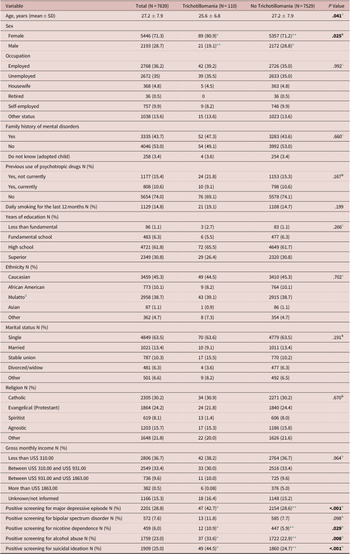
Table 1 summarizes the sociodemographic variables of the sample, which was predominantly comprised of women (71.3%), with a mean age of 27.2 ± 7.9 years. The prevalence of probable TTM was 1.4% (95% CI: 1.2-1.7). In addition, the prevalence of probable TTM was significantly higher among women with a total prevalence of 1.63% in women, compared to 0.95% in men (P = 0.025). TTM was not associated with other sociodemographic variables.
Sociodemographic Characteristics of Study Participants. Bold values: P < 0.05.

a Independent samples Student’s t test.
b Pearson’s chi-square test.
c Fisher’s exact test.
d Refers to an ethnic group of mixed White and Black ancestry.
* Observed was higher than expected in this cell (adjusted residual >2).
** Observed was lower than expected in this cell (adjusted residual <−2).
Psychopathological Correlates of TTM
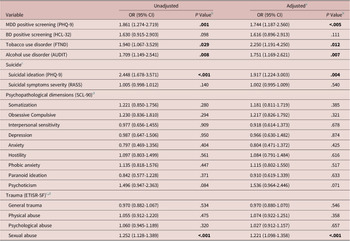
Associations of mental health correlates and a positive screen for TTM are presented in Table 2. The presence of probable TTM was independently associated with a positive screen for MDD, tobacco use disorder, and alcohol use disorder. Participants with probable TTM were also more likely to exhibit suicidal ideation.
Association of Mental Health Correlates and Trichotillomania.

Abbreviations: AUDIT, Alcohol Use Disorders Identification Test; BD, bipolar disorder; CI, confidence intervals; ETISR-SF, Early Trauma Inventory Self Report—Short Form); FTND, Fagerström Test for Nicotine Dependence; HCL-32, Hypomania Checklist; MDD, major depressive disorder; PHQ-9, Patient Health Questionnaire 9; RASS, Risk Assessment Suicidality Scale; SCL-90, Symptom Checklist-90.
a Adjusted for age, gender, education, ethnicity, occupation, and history of psychotropic medication use.
b Bold values are significant at an α level of 0.05 after Bonferroni correction for multiple comparisons
c Adjusted for a positive screening for MDD or BD, and tobacco or alcohol use disorder.
d Per unit increase in dimension score.
Finally, TTM was independently associated with exposure to childhood sexual abuse, but not with general traumatic experiences, psychological abuse, and physical abuse.
Correlation between probable TTM and QoL domains
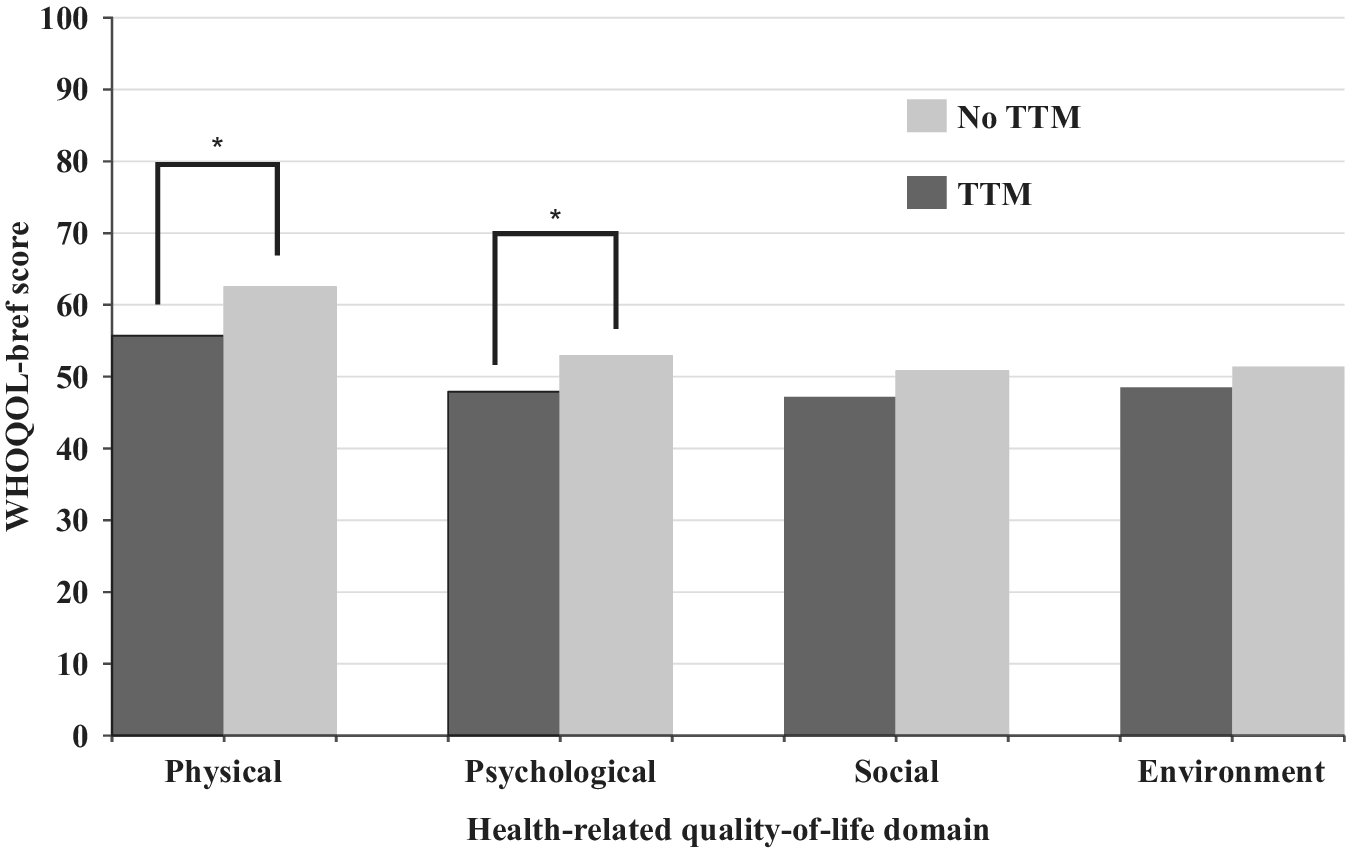
Probable TTM was independently associated with impaired physical and psychological QoL (Figure 1). However, the presence of probable TTM was not associated with social and environment QoL. All ANCOVA models were statistically significant (adjusted R 2 values ranged from 0.172 to 0.444). Effect sizes for the adjusted associations of probable TTM and physical (ηp 2 = 0.33) and psychological (ηp 2 = 0.44) QoL domains were large.
Associations of probable trichotillomania and physical, psychological, social, and environment quality of life (QoL) as assessed with the World Health Organization QoL abbreviated scale (WHOQOL-BREF). *P < .05 (separate ANCOVA models adjusted for sociodemographic and psychopathological variables; see the “Methods” section for further details). Scores of WHOQOL-BREF domains are presented as means and 95% confidence intervals.

Discussion
To the best of our knowledge, the current study is the largest cross-sectional survey investigating the prevalence and correlates of TTM. Previous studies often evaluated TTM only in children and young adults, with a reported lifetime prevalence ranging between 0.6% and 2.4%, and a range point prevalence between 0.5% and 1.2%.Reference Grzesiak, Reich, Szepietowski, Hadrys and Pacan 6 , Reference Christenson, Pyle and Mitchell 35 , Reference King, Zohar and Ratzoni 36 There is a recent online survey study in a nonclinical sample that presented a point prevalence of 2%.Reference Solley and Turner 37 Those data are in accordance with our findings which found a point prevalence of probable TTM of 1.4% (95% CI: 1.2-1.7). Previous studies have also reported a greater prevalence of TTM among women, with a female to male ratio ranging between 1.5:1 and 7:1.Reference Grzesiak, Reich, Szepietowski, Hadrys and Pacan 6 , Reference Christenson, Pyle and Mitchell 35 , Reference King, Zohar and Ratzoni 36 , Reference Christenson, MacKenzie and Mitchell 38 Our results are consistent with those findings, as 80.9% of the participants who had a positive screening for trichotillomania were females.
The results of the current study show that probable TTM was independently associated with a positive screen for MDD, nicotine and alcohol dependence. These findings are consistent with previous studies conducted in clinical samples. For instance, although the prevalence of MDD has varied across studies (from 12.5% to 48.0%),Reference Houghton, Maas and Twohig 8 , Reference Christenson, Mackenzie and Mitchell 39 , Reference Grant, Redden and Medeiros 40 evidence overall suggests that depression is more common amongst patients with TTM than in the general population. These findings have clinical relevance, and physicians assessing TTM should consider those co-occurring mental health condition to provide a comprehensive treatment plan to those patients.
The independent associations with probable TTM and nicotine and alcohol use disorders merit further discussion. Both nicotine and alcohol use disorders are characterized by the repetitive engagement in behaviors that are rewarding, loss of control (spiraling engagement over time), as well as persistence despite detrimental consequences to one’s life and overall functioning.Reference Chamberlain, Lochner and Stein 41 Interestingly, the emerging concept of behavioral addictions, indicates that several habit-related disorders may share features with addictions. For example, TTM and skin picking disorder may present phenomenological similarities with substance use disorders. For example, TTM is associated with impaired control, functional impairment, and persisting engagement in the dysfunctional behaviors despite negative consequences.Reference Chamberlain, Lochner and Stein 41 , Reference Grant, Atmaca and Fineberg 42 It was suggested that glutamatergic modulation of dopaminergic tone in the nucleus accumbens, and possibly the prefrontal cortex, could be a common mechanism underlying both behavioral addictions (eg, TTM) and substance use disorders.Reference Chamberlain, Lochner and Stein 41 , Reference Olive, Cleva, Kalivas and Malcolm 43 , Reference Asevedo, Mendes, Berk and Brietzke 44 To the best of our knowledge, no previous studies assessed the associations of TTM and alcohol or nicotine use disorders in large population samples. Thus, our epidemiological findings appear to be consistent with this hypothesis.
Suicidal ideation was also independently associated with probable TTM. To our knowledge, no previous studies assessed the association of suicidal ideation among people with TTM. Interestingly, this association survived adjustment to meaningful confounders such as the presence of co-occurring mental disorders which are known risk factors for suicide (eg, depression and alcohol use disorder).Reference Turecki and Brent 45 Clearly, this clinically relevant finding deserves independent replication.
In our survey, there was an independent association of exposure to sexual abuse in childhood and probable TTM. In the clinical study conducted by Ozten et al.,Reference Ozten, Sayar, Eryilmaz, Kagan, Isik and Karamustafalioglu 46 patients with TTM were more likely than healthy controls to endorse previous exposure to traumatic events in childhood, such as neglect, abuse, extreme violence as well as sexual harassment and intercourse. Our findings also support those of Gershuny et al.,Reference Gershuny, Keuthen and Gentes 47 who found that the prevalence of post-traumatic stress disorder among patients with TTM may be higher than in the general population. Several studies have suggested that trauma may play a role in the etiology of TTM and it has been hypothesized that TTM may develop in some traumatized individuals as a means to cope with those overwhelming experiences. 46–48
Probable TTM was also independently associated with impaired physical and psychological QoL. Previous studies presented discrepant findings, 7–9 which may at least in part reflect the enrollment of participants from different settings since our study enrolled participants with probable TTM from a nonclinical setting, whilst previous studies were conducted in clinical settings. Furthermore, previous studies enrolled relatively small samples.
Strengths and limitations
Our findings should be interpreted under the light of certain limitations. First, we enrolled an online sample with a predominance of young women that may not be representative of the Brazilian general population. Second, we did not use validated structured diagnostic interviews to confirm diagnoses although we did use validated self-reporting measures and all instruments applied in the current study exhibited adequate internal consistency reliabilities. Third, an online project such as ours may have attracted a higher proportion of participants with mental disorders, thereby overestimating the prevalence of TTM. Finally, the cross-sectional design of our study limits us from drawing any causal inferences from the results. Conversely, the large sample size and use of validated assessment tools and use of attention/validation questions are strengths of the current study. Furthermore, anonymous participation via the internet provides a setting with low desirability bias when responding to these assessment tools. This is especially relevant in TTM, since previous research shows that patients with such conditions experience a long delay from onset of symptoms to treatment initiation, partly due to the shame individuals may experience as a consequence of their symptoms.Reference Hollander, Doernberg and Shavitt 49
Conclusion
TTM appears to be a prevalent condition associated with psychiatric comorbidities. The presence of probable TTM was also independently associated with exposure to childhood sexual abuse and suicidal ideation. In addition, the presence of probable TTM had a strong independent and detrimental impact on physical and psychological QoL. Our findings highlight that the early recognition and management of TTM (and associated comorbidities), particularly in at-risk settings (eg, dermatological clinics), is warranted. The design of further large-scale epidemiological studies is a necessary next step to replicate/refute our findings.
Funding
This study was financially supported by the National Council for Scientific and Technological Development (Brazil; grant number: 447414/2014-3).
Disclosures
Andre Bezerra, Myrela Machado, Michael Maes, Donatella Marazziti, Paulo R. Nunes-Neto, Marco Solmi, Joseph Firth, M. Ishrat Husain, Andre R. Brunoni, Paul Kurdyak, Lee Smith, and Andre F. Carvalho have nothing to disclose. Vincent Piguet received grants and personal fees from AbbVie during the conduct of the study; educational grants in his role as Department Division Director, Dermatology, at the University of Toronto from AbbVie, Celgene, Janssen, Naos, Lilly, Sanofi, and Valeant; and nonfinancial support from La Roche-Posay. Vincent Piguet is also serving as an advisor for AbbVie. Afsaneh Alavi has been advisor and investigator for Abbvie, Janssen, InflaRx, Novartis and Incyte and received educational grants from Abbvie.