Introduction
The state of West Bengal is situated between 21°25′24″ and 27°13′15″ N latitudes and 85°48′20″ and 89°53′04″ E longitudes. The state shares its borders with Bangladesh, Bhutan and Nepal – and four other Indian states, such as Orissa, Jharkhand, Assam and Sikkim.
The climate of the state is predominantly hot and extremely humid except for the Northern hilly district of Darjeeling. The state has the highest population density in the country and it is estimated that a total of 72 percent of the human population of the state reside in the rural areas. The residents in the rural areas depend on agriculture and allied activities for their livelihood (NABCONS 2010). Most of the farmers have small land holdings and thus small-scale poultry plays a substantial role in ensuring food security for the family besides assisting in poverty reduction. The villages in the state have water bodies that serve multiple purposes (source of water for drinking, bathing and also washing clothes and utensils) for majority of the residents. According to Besbes (Reference Besbes2009), globally the ducks contribute 11 percent and geese 9 percent of the global poultry sector. However, in spite of the significantly high contribution of the indigenous ducks to the rural economy (especially in the coastal regions) of India, research and developmental studies on indigenous duck and geese breeds are by and large at its infancy. Tixier-Boichard, Ayalew and Jianlin (Reference Tixier-Boichard, Ayalew and Jianlin2008) suggested that characterization and inventory of poultry genetic resources are needed in countries where clearly defined poultry breeds are yet to be identified; hence properly designed scientific studies on indigenous duck and geese breeds of India need to be prioritized.
According to the reports of DAHDF (2006), the state of West Bengal has the highest duck population in India. The annual increase in duck population in West Bengal between 1997 and 2003 indicate that the annual growth rate for the native breeds/types was assessed to be 22.67 percent, while there was a reduction of 40.3 percent in the numbers of exotic duck breeds. The national trend regarding the growth of the ducks too indicated similar trend (1997–2003), while the numbers of native ducks increased by 21.35 percent, those of the exotic ones decreased by 65.87 percent during the same period DAHDF (2006). The state of West Bengal also possesses 75 percent of the total layer type duck breeds in the country; in spite of having such a large population, the average number of eggs per duck is slightly lower than those of the national average of 106 eggs per year, which may be attributed to the genotypes and management of the ducks and geese. Most of the rearers belong to economically challenged section of the society and are unable to provide much needed balanced nutrition, proper management and health services. Still the state contributed around 70 percent of the total number of duck eggs consumed in the country which may be attributed to the large duck population as mentioned earlier. The ducks are mostly seen foraging in such water bodies which may be privately owned or even communal in nature. The ducks are reared both for their meat and eggs, while geese are mostly reared for ornamental purpose although some people do consume geese meat.
However, there has since been a reduction in the number of native duck population in many districts of the West Bengal because of the outbreak of avian influenza in 2007 and again in 2008. The outbreak of this disease resulted in culling of all domesticated avian species. The restocking was later carried out by introduction of exotic duck breeds (mainly Khaki Campbell) under the guidance of the authorities of Animal Resources Development Department. The restocking has resulted in dilution of the duck genetic resources in the state in general and in the affected areas in particular.
The contribution of the ducks can be assessed by the fact that almost every rural household have a couple of them and duck eggs fetch higher price compared with those from the hens. The other reason why the native ducks are preferred over the exotic duck breeds is because their eggs fetch higher price. Traditional cuisines prepared of duck eggs and meat is considered as delicacies by the residents of the state. The eggs of the native duck breeds are preferred by the consumers for their taste, pigmentation and suitability for traditional cuisines. The eggs of the geese and that of the Muscovy ducks are seldom consumed by the rearers as the eggs are mostly used for restocking purpose.
The observation finds analogy with the observations of Halder, Ghoshal and Samanta (Reference Halder, Ghoshal and Samanta2007) from West Bengal and Gajendran and Karthickeyan (Reference Gajendran and Karthickeyan2009) from Tamil Nadu, India, FAO (2011). The preference of native ducks over the improved breeds and hybrids has also been reported by Jalil, Begum and Nahar (Reference Jalil, Begum and Nahar1993) and Rehman et al. (Reference Rehman, Khan, Choudhury and Akbar2009).
Materials and methods
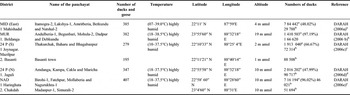
The study was conducted in five districts of West Bengal namely Midnapur (East) (MID), 24 Parganas (South) (24 P (S)), 24 Parganas (North) (24 P (N)), Nadia (NAD) and Murshidabad (MUR) (Table 1). The three gram panchayats (local administrative bodies) were selected randomly from each district. Thereafter, villages within a gram panchayat were selected purposively keeping in mind the fact that no ducklings of exotic types were distributed in the selected villages by the local authorities in the near past. The households selected for interviews within the villages too were selected purposively keeping in mind that the owner reared only the native ducks, the houses having exotic or even seem to be cross-bred ducks were not included in the survey and the adjacent houses from where the flocks can intermingle were also not taken into consideration. This led to few numbers of household per village. The families who had recently procured native ducks from nearby markets or received them as gifts from acquaintances too were not taken into account. The percentage of different duck and geese breeds in the study vis-à-vis the total duck population as a whole in the areas studied is presented in Table 2.
Location of the study zones and number of ducks surveyed under each study site.

Note: aNumber of native ducks in the district. The values in parentheses indicate the percentage of the native fowls vis-à-vis total duck population in the study area. bEstimated ducks in the panchayats studied. m amsl: meters above mean sea level; DARAH: Directorate of Animal Resources and Animal Health, Government of West Bengal.
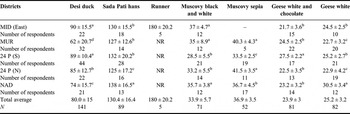
Number of respondents, their age, their experience in rearing ducks and average numbers of ducks per house hold selected.

Note: Values in parentheses indicate the range of values.
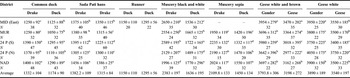
The result of the study comprises both qualitative and quantitative traits of 1395 ducks and 600 geese of various breeds which were/are reared in the studied villages. The description of qualitative traits considered in this study were assessed according to the guidelines suggested by Manuel (Reference Manuel2008). The qualitative traits studied were shank colour (white, blue and yellow), bill colour (pink white, orange, yellow, white and brown), colour of the feathers (specific colours or mixed), skin colour (white, yellow or grey), egg shell colour (white, cream or blue), the presence or absence of beans and colour of beans (white, black or dark brown), shape of bill (uniform or saddle), body carriage (horizontal, slight upright or upright) all of which were recorded through visual observation, while the quantitative traits were weight of the ducks and weight of the eggs. The age of the ducks was not considered as a parameter in the study and only adult ducks were considered for the quantitative traits. The results in Tables 3 and 4 have been presented separately for drakes and ducks and also ganders and geese because this would help the authorities to make separate selection strategies for males and females. This is also because the selection intensity for the two sexes differs; hence such information would be useful for further conservation and breeding programmes.
Percentages of different phenotypes of ducks in the study area.

a,b,c,dValues with different subscripts across columns differ significantly, P < 0.05.
Body weight (g ± sd) of different breeds of ducks and geese observed in the studied districts of West Bengal.

a,b,c,dValues with different subscripts across columns differ significantly, P < 0.05.
The rearers were interviewed using a pretested questionnaire which pertained to the prevalent duck husbandry practices in the different study areas; the questionnaire also included the questions pertaining to housing feeding, watering, disease management/treatment, marketing of the eggs and ducks, role of different family members in duck husbandry practices, breed preferences for eggs and meat purposes, average number of eggs laid by a duck, hatchability and mortality. The price of the ducks and eggs were also taken into consideration to assess the importance of the ducks among the rearers. The ducks, geese and the eggs were weighed on an electronic balance with an error margin of ±0.5 g. The dressing percentage was assessed by slaughtering the drakes and ganders followed by hot water scalding and evisceration of the gut contents including the skin. The dressing percentage was calculated according to the method suggested by Sahin and Yardimci (Reference Sahin and Yardimci2009). The results were analysed statistically using SPSS v-12 for Windows (2003), the means and standard deviations (SD)/standard errors (SE) were computed using descriptive statistics, the means for the quantitative traits were compared using Duncan's Multiple Range Test and the values were considered significant at p < 0.05.
Results and discussions
Duck husbandry practices in the study areas
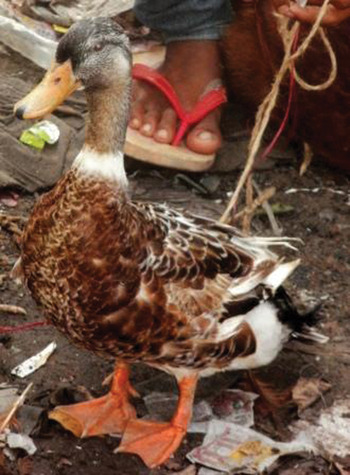
The common duck (locally known as desi/Pati hans), (Figure 1) has no definite feather colour pattern and the colour of the bill too varies from duck to duck. This may be because panmixia is practiced in the study areas. The feather colours may vary from dark brown to white with intermediate colours. The results from Table 2 indicate that the majority of the respondents were women. Fewer number of male respondents may be because male members leave early in the morning and return late to their home in the evenings as majority of them were associated with some form of agrarian activity, some were daily wage labours, while a few were petty businessmen and were not available at home. Although the women were involved with the husbandry practices and sales of eggs, the male members were mostly involved in the sales of adult ducks, building houses, taking the sick ducks to the veterinarians or local para veterinarians and also sale of the adult ducks. The results from Table 2 also indicate that the average age of the respondents were 35.4 years for the males and 36.3 years for the females. The study also indicated that on an average the respondents had been rearing ducks for the last 7.4 years, while that of geese were 4.8 years. This may be because the geese are primarily raised for ornamental purpose with hardly any economic importance to the rearers. It can therefore be inferred that the respondents had sufficient experience in matters related to the duck husbandry practices. The flock size vary largely on the economic status of the raisers, the study revealed that the flock size can vary from 2 to 9 ducks per household and the average flock size was assessed to be around 5.3 ducks per household. The results as obtained in this study find consonance with the observations of Halder, Ghoshal and Samanta (Reference Halder, Ghoshal and Samanta2007) from West Bengal, the values are well within the range reported by Hoque et al. (Reference Hoque, Skerratt, Rahman, Rabiul Alam Beg and Debnath2010) from ducks, reared in coastal areas of Bangladesh.
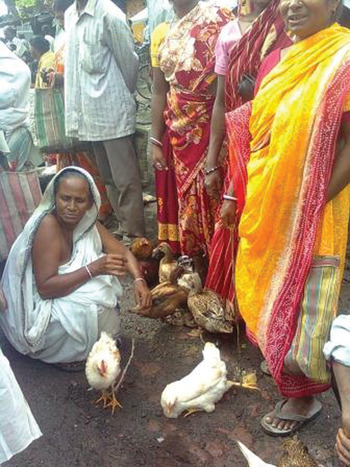
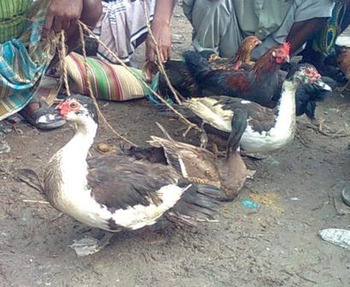
Selling ducks at village haat.

The drake to duck ratio is usually 1 drake for 7.5 ducks, while Halder, Ghoshal and Samanta (Reference Halder, Ghoshal and Samanta2007) reported higher drakes to ducks ratio. The difference in ratio as observed by Halder, Ghoshal and Samanta (Reference Halder, Ghoshal and Samanta2007) may be attributed to the sample size and in limited study area. The less numbers of drakes as observed in this study may be because they are raised for meat and are usually sold at an early age. The study also indicates that the average flock size varied between the studied locations with the lowest number of ducks per flock observed in MUR, while the largest flock size was observed in the studied locations at 24 P (N), while the reverse was true for the geese.
The flock size for the Muscovy ducks are usually smaller and vary from 2 to 15 ducks at most averaging around 4.5 ± 2.5 ducks, the drake : duck ratio in the Muscovy ducks are more or less similar to those assessed with the common ducks, the Muscovy ducks are not reared by all members of the society and are mostly popular among the people following Islam faith and also members of lower socio-economic strata. Although the geese are reared for ornamental purpose and also for guarding the homes and the flock size varies form 1 to 6 averaging around 2.7 heads per household.
The ducks are mostly reared separately in enclosures which are adjacent to the homes of the rearers. However, the ducklings are reared mostly under bamboo baskets or under the mosquito nets. The ducklings are reared separately till they are strong enough to accompany the older flock. The observations are similar to the reports of Halder, Ghoshal and Samanta (Reference Halder, Ghoshal and Samanta2007) and Hoque et al. (Reference Hoque, Skerratt, Rahman, Rabiul Alam Beg and Debnath2010). The ducklings are confined separately because they are unable to protect themselves from predators, while foraging with the older flocks. The common ducks are reared separately from the geese and the Muscovy ducks.
The night enclosures for the ducks are mostly (85 percent) made of locally available materials such as mud and wood/bamboo/corrugated sheet, while some of the respondents had the night shelter for their ducks prepared from mortar and bricks, the observations are in consonance with of the reports of Khanum, Chwalibog and Huque (Reference Khanum, Chwalibog and Huque2005) and Rehman et al. (Reference Rehman, Khan, Choudhury and Akbar2009) from Bangladesh. The doors of the enclosure are closed at night to prevent the attack from predators like wild cat and foxes. The drakes and geese are mostly allowed to forage for themselves. The ducks in lay, brooding or with ducklings are provided with additional supplements which are usually kitchen scrapes, i.e. rice leftover and rice bran which at times is mixed with the rice gruel. The ducks are also provided with molluscs and other aquatic snails occasionally, but this depends on the availability. Similar observations have also been reported by Hoque et al. (Reference Hoque, Sarker, Huque and Islam2001), Rehman et al. (Reference Rehman, Khan, Choudhury and Akbar2009) and Hoque et al. (Reference Hoque, Skerratt, Rahman, Rabiul Alam Beg and Debnath2010). However, the availability of the molluscs varies from location to location; in general, the quantity of molluscs is decreasing owing to the use of agrochemicals where its runoff diminishes aquatic fauna and flora and also leads to occasional poisoning of the ducks.
The feed supplements are usually provided in earthen vessels which are seldom cleaned and are the major source of infection in the flocks. Water is seldom provided to the ducks and geese and they obtain the same from ponds and water bodies, the observations are in consonance with the results of Haque, Ukil and Hossain (Reference Haque, Ukil and Hossain1993), Fouzdar, Khaleque and Alam (Reference Fouzdar, Khaleque and Alam1999), Haque et al. (Reference Haque, Aziz, Mia, Chanda and Rehman2003) and Halder, Ghoshal and Samanta (Reference Halder, Ghoshal and Samanta2007). The ducks are quite tolerant to many of the commonly prevalent diseases; however, deaths because of hepatitis, botulism, plague and cholera are quite common in the region, the duckling's being more susceptible when compared with the adults, the observations being in consonance with that of Hoque et al. (Reference Hoque, Skerratt, Rahman, Rabiul Alam Beg and Debnath2010). The study also indicates that the average survivability of the ducklings vary between 40 and 80 percent averaging around 65 percent, higher mortality has been observed in the monsoon season when the temperature is hot and the relative humidity is quite high leading to various disease incidences such as cholera and dysentery. The minimum mortality has been observed to be in the spring and summer. Accidental deaths because of chills have also been reported especially during the winter months.
The eggs are mostly sold by the women to the local traders locally known as “phoreys”. The women usually use the sale proceeds to procure items of daily household need, the eggs of the Muscovy ducks and that of the geese are seldom traded and are used for hatching purpose. It has also been observed that raising ducks is mostly carried out by women, the findings are in accordance with that of previous researchers (Maji, Reference Maji1995; Halder, Ghoshal and Samanta, Reference Halder, Ghoshal and Samanta2007; Hoque et al., Reference Hoque, Skerratt, Rahman, Rabiul Alam Beg and Debnath2010). The price of the duck eggs is higher than those of the chickens, which might be attributed to their larger size and culinary usages. The average price of an egg as received by the rearers vary between Rs. 2.75 and 3.50 averaging around Rs. 3.25 (US$1 = Rs 55.00 approx.), while the same is usually retailed at Rs. 6.00–7.00 per egg. The ducks are sold by the male members of the family and seldom do women participate in the sale of the ducks; however, recently, it has been observed that members of certain self-help groups (mostly women) do come to the market to sell the ducks and fowls they have raised (Figure 1).
The ducks lay their eggs early in the morning after which they are allowed to forage. The reason for poor hatchability can be because the night enclosures are mostly devoid of any proper nests and that the eggs are laid on the ground which is often wet and dirty, thereby soiling the eggs. According to the respondents, most of these soiled eggs have very poor hatchability and are hence used for table purposes or sold. The hatchability of the eggs of the common ducks varies from 50 to 75 percent, averaging around 63 percent, the higher range of the results are in consonance with the observations of Gajendran et al. (Reference Gajendran, Muthusamy, Omprakash, Karthickeyan and Haribaskar2005), the range value of hatchability values as obtained in the study is in consonance with the results of Ravindran, Venugopalan and Ramkrishnan (Reference Ravindran, Venugopalan and Ramkrishnan1984), Alam and Hossain (Reference Alam and Hossain1989), Saha, Chowdhury and Hamid (Reference Saha, Chowdhury and Hamid1992), Islam et al. (Reference Islam, Mahanta, Barua and Zaman2002) and Rahman et al. (Reference Rahman, Khan, Chowdhury and Akbar2009). The lower value is in accordance with the observations of Chowdhury et al. (Reference Chowdhury, Ashraf, Mondal, Mondol and Hasan2004) The hatchability percentage varies from season to season, (Sastry, Thomas and Singh Reference Sastry, Thomas and Singh1996; Das and Ali, Reference Das and Ali1999; Farooq et al., Reference Farooq, Javed, Durrani, Irfanullah and Chand2003), The respondents reported that the hatchability was least during the months of May–August, when the temperature and humidity is the highest, similar observations were also reported by Khalequzzaman, Shah Hussain Ahmad Mahdi and Mahbur Rahman (Reference Khalequzzaman and Mahbur Rahman2006).
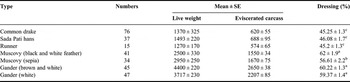
The mortality among the ducklings are usually quite high and varies from 30 to 70 percent, which also varies from season to season and also the housing and husbandry practices, the average values as reported by the respondents was around 55 percent, while the hatchability of the Muscovy ducks vary between 45 and 75 percent averaging around 55.5 percent, the results as assessed in the study finds consonance with the observations of Banga-Mboko et al. (Reference Banga-Mboko, Lelou, Maes and Leroy2007) from Congo, hatchability of the eggs of Muscovy ducks was reported to be the least in the summer months. The findings are in accordance with the observations of Nickolova (Reference Nickolova2005) and, Khalequzzaman, Shah Hussain Ahmad Mahdi and Mahbur Rahman (Reference Khalequzzaman and Mahbur Rahman2006) who reported that the poor hatchability is a fall out of the ducks to optimize the egg temperature during brooding. The yolk of Muscovy ducks have very high fat content releasing heat in the second half of the incubation period, hence, cooling of the eggs is mandatory during that phase, which if overlooked can lead to poor hatchability. Geese, however, have slightly better hatchability ranging between 65 and 80 percent, averaging around 72.5 percent. The results presented in Table 7 indicate that the average dressing percentage did not vary significantly between the Muscovy drakes (black and white feathered), and ganders of both breeds. However, the dressing percentage of the Muscovy drakes (sepia feather) colour was P < 0.05 lower than those of the two breeds of ganders and Muscovy drakes (white and black feather coloured). The dressing percentage of the common ducks, sada pati hans and runner breed did not vary significantly between them but varied P < 0.05 with the Muscovy drakes (of both the breeds) and the ganders.
Some common breeds of ducks
The common duck
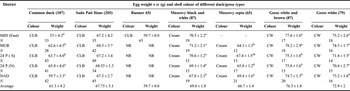
The common duck is locally known as desi/pati hans (Figure 2) has varied feather colours from almost white to black with intermediates, the colour of the shank and bill is usually slate grey and uniform. The carriage of the ducks is slightly upright, the bills are devoid of any beans. The ducklings are born with dark to yellow colour down feathers. The drakes are identified by the upward curving of feather near the back of the drake. The average body weight of the ducks and drakes as presented in Table 4 finds consonance with the observations of Rashid, Barua and Bulbul (Reference Rashid, Barua and Bulbul1995) and ILRI (2004). The results from Table 4 indicate that the highest body weight was observed in the drakes and ducks reared in 24 P (S) and NAD district, while the ones reared in MUR and MID weighed the least. This may be attributed to large numbers of ponds and water bodies in these districts. As indicated by the respondents, the average age at first laying is around 180.5 ± 15.5 days; the result being in consonance with that of Hoque et al. (Reference Hoque, Sarker, Huque and Islam2001), Islam et al. (Reference Islam, Huque, Uddin and Sarker2003), Das et al. (Reference Das, Chowdhury, Khatun, Nishibori, Isobe and Yoshimura2008), Gajendran and Karthickeyan (Reference Gajendran and Karthickeyan2009), Rehman et al. (Reference Rehman, Khan, Choudhury and Akbar2009). The average annual numbers of eggs (Table 5) as reported by the rearers were highest in 24 P (S), while the least numbers of eggs were reported from MUR and NAD. The average number of eggs as observed in the study finds consonance with the observations of Salam and Bulbul (Reference Salam and Bulbul1983), Haque and Ukil (Reference Haque and Ukil1994), Haque et al. (Reference Haque, Aziz, Mia, Chanda and Rehman2003) and Rehman et al. (Reference Rehman, Khan, Choudhury and Akbar2009). The number of eggs as obtained from the local desi duck varies with types and nutrition of the ducks, the average annual number of eggs from the desi ducks are similar to the observations of Haque et al. (Reference Haque, Aziz, Mia, Chanda and Rehman2003), Halder, Ghoshal and Samanta (Reference Halder, Ghoshal and Samanta2007) and Rahman et al. (Reference Rahman, Khan, Chowdhury and Akbar2009). The average weight of the eggs (Table 6) was highest in the desi ducks reared in 24 P (S), while those from NAD were the least. The average egg weight as observed is in agreement with the observations of Rithamber, Reddy and Rao (Reference Reddy and Rao1986), Das and Hoque (Reference Das and Hoque2000), Khanum, Chwalibog and Huque (Reference Khanum, Chwalibog and Huque2005), Kabir et al. (Reference Kabir, Sultana, Mustafa, Rashid, Khan and Asgar2007), Das et al. (Reference Das, Chowdhury, Khatun, Nishibori, Isobe and Yoshimura2008) and Rehman et al. (Reference Rehman, Khan, Choudhury and Akbar2009). The egg weight is, however, higher than those reported by Hoque et al. (Reference Hoque, Skerratt, Rahman, Rabiul Alam Beg and Debnath2010), the average clutch size as reported by the rearers is around 7–10 eggs. The skin colour of these ducks varies from white to yellow. The colour of the eyes is dark. The average dressing percentage (Table 7) as observed in the study is only slightly lower than those reported by Ansary et al. (Reference Ansary, Mahiuddin, Howlidar and Hai2008) for cross-bred ducks reared in Bangladesh.
Pati Hans or common ducks.

Average (mean ± SD) number of eggs obtained from breeds of ducks and geese on an annual basis.

a,b,c,dValues with different subscripts across columns differ significantly, P < 0.05.
Egg weight (g ± s e) of the different ducks and geese studied.

a,b,c,dValues with different subscripts across columns differ significantly, P < 0.05, CLB = Cream to bluish, CW = Cream to white.
N indicates numbers of eggs weighed.
Eviscerated weight and dressing percentage (mean ± SD) of drakes and ganders reared in the study zones.

a,b,c,Values with different subscripts across columns differ significantly, P < 0.05.
The common white duck
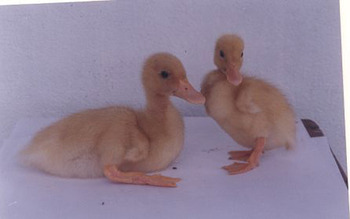
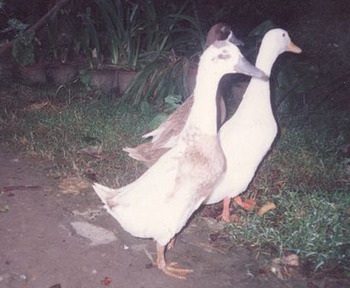
The common white duck is locally known as sada pati hans (desi white duck/common white duck), (Figure 3) is characterized by white colour of the feathers and the shank and the bill are orange in colour. The body carriage is horizontal type and the bills have white coloured beans which are even observed in the ducklings. The ducklings are born with yellow down feather (Figure 4) which is replaced by white feather as they mature. The drakes are identified by the upward curving of feather near the back of the drake. These ducks like to move in flock and because of their characteristic white feather are easily identified. The result from Table 3 indicates that the population of the drakes was highest in MUR, while that of the duck was highest in 24 P (S). The ducks also gain good body weight and hence fetch higher price in the markets in comparison with the other duck types.
Common white duck.

Ducklings of common white duck.

The results from Table 4 also indicates that the highest body weight among the drakes and ducks were observed in those reared in NAD, while the lowest were observed in 24 P (N) and MUR. The average body weight is higher than the values reported by Bhuiyan et al. (Reference Bhuiyan, Khan, Khan, Das, Lucky and Uddin2005) and lower than those reported by ILRI (2004). The differences as observed in the study may be because the former researchers assessed the body weight at 9 weeks of age when the ducks are yet to mature and the later reported the values from farm reared ducks which were provided with balanced ration and management. It has been observed that the average age at first laying is around 135.5 ± 18.5 days; the results are lower than the values reported by Hoque et al. (Reference Hoque, Sarker, Huque and Islam2001) and Islam et al. (Reference Islam, Huque, Uddin and Sarker2003) for desi ducks of Bangladesh, but in consonance with the reports of ILRI (2004) for desi white duck of Bangladesh. The sada pati hans lay an average of 130 eggs in a year and hence are preferred by the rearers as a layer breed. The average annual numbers of eggs obtained per duck (Table 5) is higher than those of the native ducks and find similarity with the observations of Hoque et al. (Reference Hoque, Skerratt, Rahman, Rabiul Alam Beg and Debnath2010), among the study areas the largest number of eggs were observed in NAD, while the least numbers of eggs were reported from the studied villages in 24 P (N). The average weight of the eggs (Table 6) find similarity with the values as reported by ILRI (2004), no differences among the studied locations were observed for the trait. The study also showed that the skin colour is yellow to white, the average dressing percentage as obtained in the study (Table 7) is lower than those reported by Ansary et al. (Reference Ansary, Mahiuddin, Howlidar and Hai2008).
Runner
The coloured runner ducks were quite common in the study area prior to 1960s when there was a severe outbreak of duck plague and most of the ducks perished. However, ducks resembling runners with very good egg-laying potential was still reared in some villages in MID (East) district (Figure 5). The revival programme of the runner duck was initiated by Mr Sadesh Ranjan Bhowmick of Mahishadal (LIFE, 2010), a connoisseur of livestock with poultry who was able to obtain a small flock of runner type ducks in 2002 from an obscure village in MID (East) district, he collected a few drakes and ducks one of which was said to be quite old and was still laying eggs. He then went for phenotypic selection of the ducklings obtained from the mating of the collected ducks. He was successful in developing a small flock of the runner ducks which he distributed among his friends and relatives; a small flock was also gifted to Mr Gyasuudin Mondol another connoisseur at Madanpur area of NAD district; however, the flock developed by Mr Mondol was culled owing to the outbreak of avian influenza in the region in the year 2008. The feather colours of these runner ducks vary from brown to white, shank colour is orange, while the colour of the bill is slate grey in colour and, however, some ducks and drakes too have yellow coloured bill. The colour of the eyes is dark. The bill is devoid of any beans and is uniform. The body carriage is upright and the eyes are dark. The respondents reported that the egg production of the ducks ranges between 150 and 220 eggs annually averaging around 180 eggs. The average number of eggs are higher than the desi/pati hans and also the sada pati hans. Results of a study conducted in Bangladesh (Das et al. Reference Das, Haque, Ali, Chanda and Das2003) indicated that the body weight gain up to egg laying in runner ducks was higher than other improved duck breeds viz. Khaki Campbell. The average egg weight of runner ducks (Table 6) is lower than the values reported by Das et al. (Reference Das, Haque, Ali, Chanda and Das2003), which might be attributed to the balanced nutrition provided to the ducks by the authors and also small sample size of the present study. The average clutch size as has been reported was 7–12 eggs. The average age at first egg lay was assessed to be 170.2 ± 15.5 days. The skin colour was observed to be white. The average dressing percentage of the drakes as assessed (Table 7) is lower than the values reported by Ansary et al. (Reference Ansary, Mahiuddin, Howlidar and Hai2008).
Runner ducks.

Muscovy ducks
In the study area, two types of Muscovy ducks have been observed, the most common was the one with black and white feather colour, while some with Sepia colour feather too have been observed, the population of the latter being much lower than the former. The Muscovy ducks are commonly known as Chine hans (Ali and Sarker, Reference Ali and Sarker1992; Banerjee and Banerjee, Reference Banerjee and Banerjee2003) and Marie hans in some parts of 24 P (S). The body weight of the Muscovy ducks of both the types have been presented in Table 4, the sexual dimorphism is quite pronounced in the Muscovy ducks, the drakes having significantly higher body weight in comparison with the ducks, the observations are in agreement with that of Olver et al. (Reference Olver, Du Preez, Kuyper and Mould1977) and Seemann (Reference Seemann1983). The Muscovy ducks are very poor layers and the numbers of eggs produced vary from 20 to 40 per year averaging around 28 eggs per year.
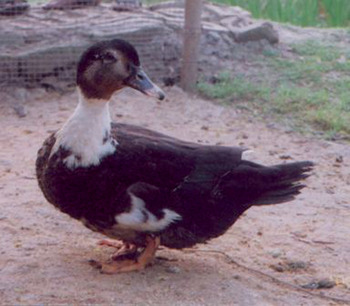
Muscovy duck (black and white feather)
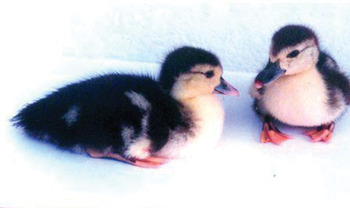
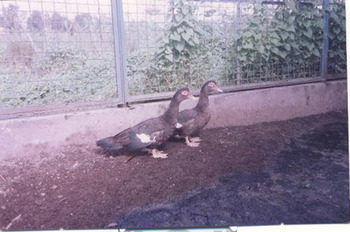
This type of Muscovy ducks are characterized by black and white feathers and slate coloured shanks with some yellow markings over it, ducks with complete slate coloured shanks and flippers too are quite common, the ducklings are born with cream down with black markings the beans are quite well developed even at this stage (Figure 6). The bills of the ducks are slate grey in colour and have white beans. The caruncles being well developed in the drakes in comparison with the ducks, the red coloured caruncles extend from the bill to the eyes (Figure 7). The eyes are yellow in colour and the colour of the skin is white. The ducks have a horizontal carriage and the bill is uniform in shape. The age at sexual maturity was assessed to be 348 ± 0.5 days for the duck which coincides with the first egg laid. The Muscovies grow slowly and hence mature late. The observations are in consonance with the observations of Bhuiyan et al. (Reference Bhuiyan, Khan, Khan, Das, Lucky and Uddin2005).The Muscovy ducks prefer to stay at the banks of the water bodies and seldom swim for long. They are reared for their flesh and drakes are preferred over the ducks especially because the ducks are poor layers and hence restocking can be a problem if they are slaughtered out. The result from Table 3 indicates that the highest numbers of the Muscovy ducks are reared in the studied areas of 24 P (S), while the least numbers were observed in the studied locations of MID district. The study results from Table 4 indicates that P < 0.05 higher body weight were observed in the drakes reared in MID, while the ducks reared in 24 P (S) and NAD had the highest body weight. Although P < 0.05 lower body weight were observed in the drakes and ducks reared in NAD and 24 P (N), respectively. The average body weight of both Muscovy drakes and ducks as obtained in the study (Table 4) finds consonance with the observations of Hahn et al. (Reference Hahn, Hai, Hung and Tinh1995) and Yakubu, Kaankuka and Ugbo (Reference Yakubu, Kaankuka and Ugbo2011), the bodyweight values as reported by Omojola (Reference Omojola2007) were, however, lower than the present findings, which might be attributed to the differences because of both genetic and non-genetic factors. The Muscovy ducks are tolerant to most of the common diseases of the ducks and hence are favoured as a source of avian meat, the findings are in consonance with the observations of Etuk et al. (Reference Etuk, Abasiekong, Ojewola and Akomas2006). The annual egg production of the Muscovy ducks (reared under traditional management) as obtained in the present study (Table 5) indicates that the ducks reared in MID, MUR and NAD were P < 0.05 than those reared in other locations. The results are in agreement with the observations of Banga-Mboko et al. (Reference Banga-Mboko, Lelou, Maes and Leroy2007). The average egg weight (Table 6) of the ducks indicate that the ducks reared in MID, MUR, 24 P (S) and 24 P (N) weighed (P < 0.05) higher than the other locations studied, The results related to the average egg weight finds similarity with those reported by Changkang, Ang and Guangying (Reference Changkang, Ang and Guangying1999), Nikolova, Gerzilov and Genchev (Reference Nikolova, Gerzilov and Genchev2000). However, Nikolova (Reference Nickolova2004) reported higher egg weights in white variety of Muscovy ducks. The average clutch size was reported to be 5–6 eggs with long interclutch interval. The results by Banga-Mboko et al. (Reference Banga-Mboko, Lelou, Maes and Leroy2007) on annual numbers of clutch in Muscovy ducks of Congo indicate that the numbers are fewer than those observed in this study.
Ducklings of black and white feathered Muscovy ducks.

Black and white feathered Muscovy ducks.

The average dressing percentage in the drakes as presented in Table 7 is lower than those reported by Etuk et al. (Reference Etuk, Abasiekong, Ojewola and Akomas2006) and Omojola (Reference Omojola2007) from Nigeria. This might be attributed both to genotype of the Muscovy ducks reared in both the countries and also to the husbandry methods including nutrition. Lower dressing percentage may also be a consequence of the slaughtering technique as the present dressing percentage was calculated by excluding the skin and the subcutaneous fat. The respondents have, however, reported that the meat of the Muscovy drakes, toughen with age.
The black and white feathered Muscovy ducks have been used as a parental line by the author for the development of the mule duck (Figure 8). Mule ducks are popular in many Asian countries, especially in Taiwan (Tai, Wang and Huang Reference Tai, Wang and Huang1999). The feather colour of the mule duck is of mixed type, the shank and the shank is yellow with brown markings. The bill is slate grey with a yellow tip, the colour of the beans is dark brown. The skin colour too is white, eyes are yellow with horizontal body carriage and devoid of caruncles. The average slaughter weight for the male mule duck (16 weeks) was assessed to be 2775 ± 270 g, under semi-intensive system of management. The weight as obtained was significantly less than those reported by Larzul, Guy and Marie-Dominique (Reference Larzul, Guy and Marie-Dominique2004), this might be attributed to the genetic makeup of the parental stocks and also because of semi-intensive management.
Mule duck.

Muscovy duck (Sepia colour feather)
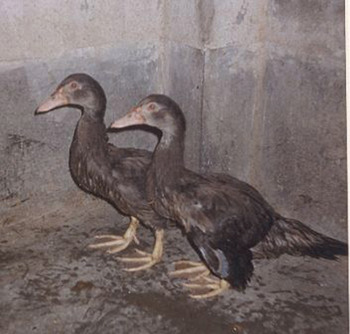
The Sepia feathered Muscovy ducks (Figure 9) are quite rare. They are slightly smaller than the black and white feather Muscovy ducks and are characterized by the sepia feather colour and yellow colour of shank and beak. The colour of the beans is white. The skin colour is white. The body carriage is horizontal and the caruncles are rudimentary. Ducklings are khaki coloured with pink beak and yellow feet (Figure 10), the observations are in consonance with the assessment of Taibel (Reference Taibel and Crawford1961). The results from Table 3 indicate that the largest numbers of the Sepia feathered Muscovy ducks were observed in the villages of NAD district, while none was observed in the MID district. The results pertaining to the average body weight of the Sepia feather coloured is presented in Table 4, the observations indicate that the highest body weight was observed among the drakes reared in villages of 24 P (S) and ducks raised in NAD district, while the least body weight of drakes was observed in locations of MUR and NAD district, although the lowest weight was estimated in ducks reared in 24 P (S). The average body weights of ducks of this variety are within the range of values reported by Omojola (Reference Omojola2007). However, the body weight of the mature sepia feathered variety of Muscovy duck was lower than those of the black and white feathered Muscovy ducks (Table 4). The study pertaining to the numbers of annual egg production is presented in Table 5, the results indicate that the ducks reared in MUR and 24 P (N) laid higher numbers of eggs, while the sepia feather coloured Muscovy ducks reared in 24 P (S) lay fewer number of eggs. The results from the study indicate that the average egg weight of the sepia feather coloured Muscovy ducks (Table 6) was higher in the ducks reared in NAD district. The average weight of the eggs as observed in this study finds consonance with the observations of Changkang, Ang and Guangying (Reference Changkang, Ang and Guangying1999) and Nikolova, Gerzilov and Genchev (Reference Nikolova, Gerzilov and Genchev2000). The dressing percentage of the drakes as assessed in this study (Table 7) is significantly lower than the values reported by Kazimierz et al. (Reference Kazimierz, Elżbieta, Katarzyna and Wiesław2004), Etuk et al. (Reference Etuk, Abasiekong, Ojewola and Akomas2006) and Omojola (Reference Omojola2007). The low values of the dressing percentage may be attributed to both genotype and husbandry practices. It can also be attributed to the method of slaughter, as indicated earlier. The Muscovy ducks consume a lot of grass leading to the increase in size/weight of the gastrointestinal tract, thereby lowering the dressing percentage. The observations are in agreement with the reports of Siregar, Cumming and Farrell (Reference Siregar, Cumming and Farrell1982), Dong and Ogle (Reference Dong and Ogle2003) and Dang, Nguyen and Preston (Reference Dang, Nguyen and Preston2012). Moreover, in the present method of slaughter, the weight of the skin was not taken thereby lowering the dressing percentage.
Muscovy ducks (sepia feathered).

Growers of Muscovy ducks (sepia feathered).

Geese
There are distinctly two types of geese in the study area. The geese are known as “Raj Hans” in Bengali, which translates as King Duck, which may be because they are larger in size when compared with the other breeds of duck. One of the geese breeds observed in the study area has white and brown feathers, while the other breed is white feathered without any markings. The respondents have reported mating between the two geese. The geese are mostly reared for ornamental purpose; however, some respondents reported that the meat is also consumed in the 24 P (S) and also in MUR. The geese breeds are devoid of knob (on the forehead) and dewlap. The geese lay very few eggs, the results of which are presented in Table 5. The less egg production in geese as observed in the present study may be attributed to the breed, nutrition and most of all the high temperature and humidity prevailing in the region. According to Petersen, Chima and Horst (Reference Petersen, Chima and Horst1976) and Kohne and Jones (Reference Kohne and Jones1975) high temperature and humidity lowers the egg weight and also egg production in geese.
White with brown feathers
These geese are characterized by white and the brown coloured feathers. The brown coloured feathers are seen originating from the back of the skull following the neck and to the back, where they intermingle with the white feathers (Figure 11). There is also intermediate white and brown feather, which extends till the thigh, which is followed by white feathers which extends up to the shank. The throat, breast and the abdomen feathers are white. The bill is brown and the shanks yellow. The bills are devoid of any beans and the eyes are dark coloured and the body carriage is slightly upright. The bill is uniform and the skin colour is white… There is a dearth of scientific research on geese breeds in India which may be because they have almost no commercial use when compared with other domestic fowls. The results from Table 3 indicates that the population of the ganders were highest in MUR and 24 P (S), while the population of the geese were (P < 0.05) higher in the villages of MUR, 24 P (N) and 24 P (S). The observations in Table 4 indicate that the average body weight of the gander was highest in MID and 24 P (S), while the geese reared in MID and MUR weighed the highest. In contrary, the lowest body weight of the geese was reported from the studied locations of 24 P (S) and 24 P (N). The average body weight of the geese with white and brown feathers as assessed in the study is within the range body weight values of local Turkish geese as reported by Ergul and Pingel (Reference Ergul and Heinz2003) and Sahin and Yardimci (Reference Sahin and Yardimci2009). The average number of eggs obtained from the white and brown feathered geese as presented in Table 5 was highest in MUR and 24 P (S). The results from Table 6 indicate that the highest egg weight was assessed in the geese reared in MID and MUR. The results from Table 7 indicate that the dressing percentage is lower than those reported by Betűl and Zehra (Reference Betül and Zehra2009). The lower values of dressing percentage may be attributed to both genotype and husbandry practices prevalent in the study areas. The lower dressing percentage as obtained in the study may also be attributed to the slaughtering technique, a larger portion of the live weight being the skin weight, weight of the feet, feather and fat, the observations being in agreement with those of Fortin et al. (Reference Fortin, Grunder, Chambers and Hamilton1983) and also Stevenson (Reference Stevenson1985).
Geese (white and brown feathered).

White feathered geese
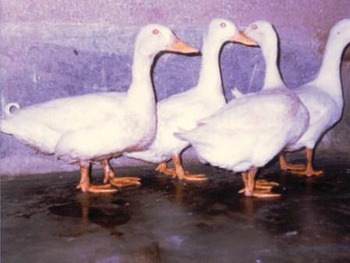
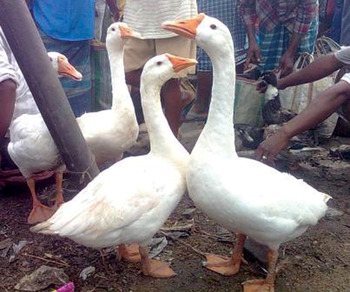
The white feathered geese are characterized by orange shank and bill, the bill is uniform with no beans. The neck is long, the males at times have a very small knob on their heads (Figure 12). The skin colour is white and the body has a slight upright carriage. The eyes are dark coloured. The results of the survey indicated that the age at first egg lay varied between 275 and 350 days of age averaging at 303 ± 45 days. These geese are reared for ornamental purpose but are very good in guarding the premises; however, they can be quite noisy at times. The result from Table 3 is indicative that the geese are reared in large numbers in NAD and 24 P (S), while they are rarely seen in MID district. The results from Table 4 indicate that the body weight at maturity was highest in the gander reared in MID and 24 P (N) ducks reared in 24 P (N) weighed the highest. The average body weight of the geese assessed in this study is in agreement with the values reported by Sahin and Yardimci (Reference Sahin and Yardimci2009). However, the values are lower than those reported by Larzul et al. (Reference Larzul, Roger, Daniel and Gėrard2000) from France, Wężyk et al. (Reference Wężyk, Rosiński, Bielińska, Badowski and Cywa-Benko2003) and Murawska and Bochno (Reference Murawska and Bochno2008) in white feathered geese from Poland. The average egg production as presented in Table 5 indicates that the egg production among the geese reared in NAD is the highest, while those reared in MUR laid the least number of eggs. The results pertaining to the average number of eggs is presented in Table 5, the results as obtained in this study is in consonance with the observations of Wang et al. (Reference Wang, Chen, Lee, Jea and Kao2009). The average egg weight as observed in the study is presented in Table 6 of the geese reared in MID and MUR had the highest egg weight. The average dressing percentage (Table 7) is significantly lower than the values reported by Larzul et al. (Reference Larzul, Roger, Daniel and Gėrard2000) and Murawska and Bochno (Reference Murawska and Bochno2008).
Geese (white feathered).

Conservation of genetic resources
There was an outbreak of avian influenza in West Bengal in the winter months of 2007 and again in the year 2008 (Patil Reference Patil2010). As per the standard protocol, all domestic avian species in the affected panchayats were culled in all the affected districts. The restocking of the ducks are being carried out by introduction of Khaki Campbell ducks, SA PPLPP (2009) and Anonymous (2011), while the geese and Muscovy population has dwindled significantly as there are no replacement stock for them. The restocking with Khaki Campbell ducks is leading to serious losses of indigenous domestic avian genetic resources in the region and hence immediate steps are needed to prevent any further loss of genetic resources and steps are needed to be carried out to conserve the indigenous duck genetic resources in the state. This can be carried out by incorporating the native duck and geese breeds in breeding and selection programmes in the days to come.
Acknowledgement
The author acknowledges the encouragement received from his parents (Lt. Col. (Retd.) M.K. Banerjee and Mrs Gopa Banerjee), Dr Soma Banerjee and my daughter Ms Shristi Banerjee. I am thankful to Mr Sadesh Ranjan Bhowmick, Mr Gyasuddin Mondol, the Directors and staff of Biodiverse Farming Pvt. Ltd, Kolkata for their assistance. I also appreciate the encouragement received from my colleagues of School of Animal and Range Sciences, Hawassa University.