Introduction
In contemporary work environments, organizations aim to create enriched settings where employees feel motivated, supported, and connected to the organization, as these factors boost productivity both individually and collectively. However, workplace dynamics sometimes give rise to adverse behaviors that can affect employees’ motivation and psychological states. One such harmful behavior is workplace gaslighting which is a psychological abuse that makes an individual doubtful about his/her sanity and competencies (Sweet, Reference Sweet2019). The concept of gaslighting originated from the theatrical production ‘Gaslight’ in 1938, which was subsequently adapted into a film (Kukreja & Pandey, Reference Kukreja and Pandey2023). The narrative portrayed the manipulation of a wife by her husband, who employed various tactics to convince her that she was losing her sanity (Johnson, Nadal, Sissoko, & King, Reference Johnson, Nadal, Sissoko and King2021). Deliberately causing the gas-powered lights in their home to flicker, he consistently denied any responsibility whenever his wife raised her apprehensions. This caused her to endure unimaginable emotional suffering. Eventually, she decided to end her abusive marriage and found solace in a man who supported her in rebuilding her self-esteem. He convinced her that her beliefs were valid and not merely figments of her imagination (Kukreja & Pandey, Reference Kukreja and Pandey2023).
The existing pool of knowledge has discussed gaslighting in romantic and political contexts (Fulcher & Ashkanasy, Reference Fulcher and Ashkanasy2023). Most of the work on gaslighting can be seen in the contexts of marriage, friendships and intimate relationships, and kids-parents relationships (Gass & Nichols, Reference Gass and Nichols1988; Miano, Bellomare, & Genova, Reference Miano, Bellomare and Genova2021; Riggs & Bartholomaeus, Reference Riggs and Bartholomaeus2018). While a search on Instagram about gaslighting posts revealed around 600,000 results, but scholarly search provides scarce knowledge on the topic (Kukreja & Pandey, Reference Kukreja and Pandey2023). Since gaslighting can be observed in the power inequalities scenario (Sweet, Reference Sweet2019), it can be proposed that gaslighting can exist in supervisor-subordinate relationships; for example, when an employee completes a vague task, he is blamed for not understanding it appropriately (Fulcher & Ashkanasy, Reference Fulcher and Ashkanasy2023). Due to the growing prevalence of the term within employment dynamics, it is crucial to acknowledge the insufficient emphasis placed on gaslighting in work environments, specifically when supervisors assume authoritative roles over their subordinates (Kukreja & Pandey, Reference Kukreja and Pandey2023).
The scarce literature on workplace gaslighting shows that it affects the employees’ behavioral outcomes adversely. For example, it was argued that gaslighting yields adverse effects on affective organizational commitment (Fulcher & Ashkanasy, Reference Fulcher and Ashkanasy2023) and job satisfaction (Kukreja & Pandey, Reference Kukreja and Pandey2023). In the workplace context, gaslighting is considered an insidious form of abusive supervision (Fulcher & Ashkanasy, Reference Fulcher and Ashkanasy2023) which has been evidenced to produce negative effects on employees. Prior research has emphasized the outcomes of oppressive managerial behavior, yet the current research investigates the less explored and emerging construct in the workplace context, that is, gaslighting and its consequences. Abusive supervision has been argued to formulate such an environment where employees are disinclined to remain in the organization, resulting in a decrease in their job embeddedness (Dirican & Erdil, Reference Dirican and Erdil2022). As an implicit abusive behavior, we propose that workplace gaslighting directly affects employees’ job embeddedness negatively so that they no longer remain attached to the organization.
Existing studies postulate that abusive supervision indirectly influences people’s intention to leave their jobs and level of job satisfaction through the mediating mechanism of employees’ motivation (Ronen & Donia, Reference Ronen and Donia2020). In this vein, to extend the direct association between gaslighting and job embeddedness, we propose that gaslighting can affect employees’ Job Embeddedness indirectly through the mediating mechanism of employees’ work motivation.
Gaslighting can be observed in abusive relationships, and in the work context, the mistreatment experienced through implicit abuse drains essential resources, causing abused individuals to conserve what little remains and engage in counterproductive work behaviors as a result (Aryee, Sun, Chen, & Debrah, Reference Aryee, Sun, Chen and Debrah2008). From a theoretical perspective, conservation of resources (COR) theory states that when individuals experience a loss or depletion of resources, whether it’s physical, psychological, or social, they are more vulnerable to subsequent losses and produce detrimental effects on motivation (Hobfoll, Halbesleben, Neveu, & Westman, Reference Hobfoll, Halbesleben, Neveu and Westman2018).
Gaslighting erodes individuals’ psychological resources and hinders their ability to engage fully and find motivation in their work. Moreover, COR explains that motivation elucidates a mechanism where individuals get embedded with their jobs (Kiazad, Holtom, Hom, & Newman, Reference Kiazad, Holtom, Hom and Newman2015). COR postulates that individuals who possess more resources are capable of acquiring more resources to protect themselves from further resource loss (Hobfoll, Reference Hobfoll2001). In this vein, workplace support can be seen as a resource for employees with emotional and work-related issues (Zhai, Wang, & Weadon, Reference Zhai, Wang and Weadon2020). Specifically, coworker support can help heal the gaslighting effects on an individual and motivate them. Considering the resources needed and the healing perspective of a victim of gaslighting, we propose that the relationship between gaslighting and work motivation may be moderated by coworker support.
We know through the limited literature on gaslighting that it affects employees’ affective commitment and job satisfaction, yet there is room to examine the unexplored consequences and moderating mechanisms. This study holds significance in narrowing the existing gap through examination of the direct impact of gaslighting on job embeddedness. It contributes by identifying and examining the relationship between gaslighting experiences and the degree of job embeddedness. Second, we aim to explore the mechanism through which gaslighting affects job embeddedness, such as work motivation which means that Gaslighting involves manipulative tactics that erode an individual’s motivation and eventually diminish job embeddedness, as the employee may feel less connected, engaged, and integrated within the work environment. Third, it explores the moderating impact of coworker support on gaslighting-work motivation’s rapport. A coworker can provide validation, constructive feedback, and a listening ear to help a colleague cope with the gaslighting’s effects. Fourth, from a COR perspective, this study explains how gaslighting depletes internal resources, hampers motivation, damages social connections, and resultantly reduces job embeddedness and how psychological resources through coworker support help the employees cope with the damage from gaslighting at work.
Theory and hypotheses
Gaslighting and job embeddedness
We pose that gaslighting at work has negative implications for job embeddedness. Job embeddedness is expressed as employees’ ability to thrive, comprising their sense of fit with the company (fit), the strength of their social connections (links), and the estimation of the expected loss in case of leaving (sacrifices) (Gustiawan, Aisjah, & Indrawati, Reference Gustiawan, Aisjah and Indrawati2023). Gaslighting has the potential to harm individuals’ professional identity by instilling doubts about their skills, knowledge, and abilities. This loss of self-assurance can significantly affect their career goals and their perception of how well they fit into their role and the organization. Consequently, employees may experience diminished work engagement and a deteriorated feeling of belongingness to their organization as time goes on. Previous literature suggests that negative workplace behaviors entailing abusive and manipulative treatment and letting the target feel a situation of ‘social death’, which can cause a decline in job embeddedness (Zhang et al., Reference Zhang, Fan, Deng, Lam, Hu and Wang2019). In the scenario of supervisor-employee, gas lighter (supervisor) targets to distort the other party (subordinate)’s sense of reality and discourage their beliefs (Kukreja & Pandey, Reference Kukreja and Pandey2023).
Job embeddedness comprises three features, that is, links (connections with the institution and its members), fit (work environment compatibility), and sacrifice (expected or actual loss after leaving the job) (Zhang et al., Reference Zhang, Fan, Deng, Lam, Hu and Wang2019). The quality of links or interpersonal relationships tends to be spoiled as the gaslighter’s actions do not match his words and try to portray the victim as mental or crazy (Christensen & Evans-Murray, Reference Christensen and Evans-Murray2021). These manipulative tactics create an imbalance between supervisors and subordinates which causes distrust and a diminishing link between both parties. Second, as the gaslighter spreads rumors about honesty and trustworthiness, the victim becomes depressed and doubts his compatibility in the organization (Christensen & Evans-Murray, Reference Christensen and Evans-Murray2021), which can create a misfit perception in his mind. Third, when the gaslighter treats the employees so unwell, it makes them emotionally drained and confused (Kukreja & Pandey, Reference Kukreja and Pandey2023), then it can be easier for them to sacrifice their benefits.
Workplace gaslighting can be viewed as a catalyst for job embeddedness, leading to a decrease in connections, alignment, and sacrifices which are the fundamental apparatuses of job embeddedness. From the COR point of view (Hobfoll et al., Reference Hobfoll, Halbesleben, Neveu and Westman2018), gaslighting causes emotional drain which can become the reason for resource loss and resource loss can cause a decline in job embeddedness (Zhang et al., Reference Zhang, Fan, Deng, Lam, Hu and Wang2019). The ongoing need to defend oneself against gaslighting consumes significant cognitive and emotional resources, leaving little energy for job-related tasks and resource drain may cause employees more likely to detach from their job. COR theory posits that resource loss not only has a bigger effect than resource gain in terms of magnitude, but it also affects individuals more quickly and tends to accelerate over time (Hobfoll et al., Reference Hobfoll, Halbesleben, Neveu and Westman2018). Moreover, existing literature suggests that incivility, abusive treatment and lack of mutual trust, cause a decline in job embeddedness (Ampofo & Karatepe, Reference Ampofo and Karatepe2022; Gustiawan et al., Reference Gustiawan, Aisjah and Indrawati2023) which can strengthen our proposition that gaslighting can cause a decline in job embeddedness.
Hypothesis 1: Gaslighting has a negative relationship with job embeddedness.
Gaslighting and work motivation
Individuals experiencing gaslighting, suffer from emotional distress that can lead to decreased work motivation. Employees who are constantly made to feel inferior or incapable by gaslighting tactics may become demotivated, as their sense of self-efficacy diminishes. It has been argued that motivating individuals is a leader’s characteristic, failing to which can reduce their motivation (Kark & Van Dijk, Reference Kark and Van Dijk2007). The existing literature signals the detrimental effects of gaslighting on employees’ work motivation. In Abramson’s (Reference Abramson2014) depiction, gaslighting is characterized as an exceptional instrument of secretive emotional abuse and psychological maneuvering. The persistent stress of being gaslit can lead to emotional exhaustion, a state of feeling emotionally drained. It may not only reduce employees’ ability to perform effectively but also diminish their enthusiasm. Employees as victims of gaslighting feel emotionally drained which exhausts their emotional energy (Kukreja & Pandey, Reference Kukreja and Pandey2023). According to Ronen and Donia (Reference Ronen and Donia2020), employees suffering from emotional exhaustion due to abusive work relationships often exhibit a decrease in their motivation levels.
Gaslighting victims are likely to feel less control over their work because it instills self-doubts. The loss of perceived autonomy (which is a key factor in intrinsic motivation) can result in decreased motivation (Galletta, Portoghese, & Battistelli, Reference Galletta, Portoghese and Battistelli2011). Gaslighting can make individuals anxious which can significantly impair an employee’s ability to stay motivated.
As a motivational framework, COR theory clarifies a substantial aspect of human behavior by drawing upon the progressive drive to attain and protect resources essential for survival (Hobfoll, Reference Hobfoll1989). On the other side, the resources’ loss cycle is the consequence of strains, such as emotional exhaustion (Hobfoll et al., Reference Hobfoll, Halbesleben, Neveu and Westman2018). Resource conservation entails individuals avoiding potential resource loss by proactively preventing anticipated threats or retreating from situations that might result in resource depletion (Halbesleben et al., Reference Halbesleben, Harvey and Bolino2009).
COR theory postulates that once resources are depleted, individuals are less capable of coping with additional stressors, leading to a cycle of further resource loss and diminished motivation. Gaslighting may exacerbate emotional exhaustion by creating an environment of constant psychological strain. Gaslighting is when a supervisor’s acts create a scenario where employees feel emotionally drained (Kukreja & Pandey, Reference Kukreja and Pandey2023), and this causes resource loss and a decline in motivation. Moreover, gaslighting has been observed to reduce employees’ motivation and becomes the reason for losing the quality of the labor force (Sukhova, Reference Sukhova2021).
Hypothesis 2: Gaslighting has a negative influence on work motivation.
Work motivation and job embeddedness
Motivation in individuals is considered a critical factor in yielding positive behavioral outcomes at individual and organizational levels. Motivation refers to the driving influence that guides individuals toward particular behavioral choices, providing suggestions and direction when they are confronted with various options for their actions (Chiang & Jang, Reference Chiang and Jang2008). As the driving force behind work-related behaviors, it is a vital concern for both organizations and employees. It has proven associations with enhanced employee productivity and the well-being of employees (Steers, Mowday, & Shapiro, Reference Steers, Mowday and Shapiro2004).
Job embeddedness underscores the individuals’ tendencies, feelings, and imprints for their attachment to the organization (Crossley, Bennett, Jex, & Burnfield, Reference Crossley, Bennett, Jex and Burnfield2007). It consists of three components, that is, connections to other individuals (links), compatibility with the work environment (fit), and (sacrifices) that anchor people who would otherwise lose material or psychological benefits upon leaving organizations or communities (Kiazad et al., Reference Kiazad, Holtom, Hom and Newman2015). Motivated employees engage more with colleagues, build relationships, and join team activities, strengthening their links within the organization (links). Motivated employees are likely to find alignment between their personal values, career goals, and the organization’s mission. This alignment enhances their sense of belonging and fit within the organization (fit). Highly motivated employees value their positions more and are less likely to leave due to the perceived sacrifice of losing their current job (sacrifice).
When workers are motivated, the probability is higher that they will be completely engrossed in their duties and obligations. Motivated individuals showcase high value to their work and propose new ideas for the betterment of the work system, which shows their emotional attachment and embeddedness with the organization. This aspect forms their intention to stay with the organization and seem less likely to leave (Meyer & Allen, Reference Meyer and Allen1997).
Motivated individuals possess plenty of resources needed to perform their jobs, which can enhance their tendency to be attached to their organization. COR theory states that individuals instinctively pursue resources to accomplish their objectives (Hobfoll, Reference Hobfoll1989), and employees are inclined to remain with an organization as long as it fulfills their resource needs. Therefore, staying and being attached to the organization shows that the employee does not only perceive the organization as favorable to work with but also sacrifices new opportunities because of the fulfillment of resources’ needs from the current organization (Zhang et al., Reference Zhang, Fan, Deng, Lam, Hu and Wang2019). A COR perspective can succinctly explain that people are embedded with their jobs to preserve resources with intrinsic value (sacrifices) or instrumental value (fit and links), as the loss of these resources is distressing (Kiazad et al., Reference Kiazad, Holtom, Hom and Newman2015). Considering the preceding discussion, it can be asserted that when employees are motivated at work, they tend to cultivate more robust affiliations and dedication to their roles, thereby diminishing the probability of them departing from the organization.
Hypothesis 3: Work motivation has a positive influence on job embeddedness.
Work motivation as a mediator
We contend that gaslighting tends to harm employees’ work motivation which can eventually result in reduced job embeddedness. Gaslighting constitutes a psychological form of abuse imposed on an individual, leading the victim to question their perceptions or abilities (Gass & Nichols, Reference Gass and Nichols1988). Existing literature suggests that the abusive behavior of supervisors creates detrimental effects on employees’ motivation (Ronen & Donia, Reference Ronen and Donia2020). Gaslighting is seen as a form of institutional betrayal when someone trusts another party for finances, shelter, and safety needs. Institutional betrayal manifests when the victim voices his concerns but is subjected to gaslighting by the other party (Dickson, Ireland, & Birch, Reference Dickson, Ireland and Birch2023). This form of gaslighting entails disavowing any wrongdoing in the face of evidence, asserting that the victim is overreacting, resorting to falsehoods, downplaying the matter, or challenging the victim’s credibility (Ahern, Reference Ahern2018).
Gaslighting makes the individuals emotionally exhausted and they lack the mental and emotional bandwidth to maintain their usual levels of productivity and enthusiasm for their work. Employees who are victims of gaslighting experience an emotional drain, depleting their emotional energy (Kukreja & Pandey, Reference Kukreja and Pandey2023), which leads to a decline in their motivation (Ronen & Donia, Reference Ronen and Donia2020). COR as a motivational theory articulates the flow of resources from an organization to its members which shapes their behavior (Hobfoll et al., Reference Hobfoll, Halbesleben, Neveu and Westman2018). In the case of gaslighting, the depletion of resources can occur because the victim is constantly expending energy to cope with the manipulation and confusion caused by gaslighting, leaving them with fewer resources to devote to other aspects of their life, including their work. Gaslighting has been characterized as psychological violence (Sukhova, Reference Sukhova2021), and as a psychologically and emotionally abusive stressor, it can cause depletion in resources which can turn out to be in a reduced motivational state (Hobfoll et al., Reference Hobfoll, Halbesleben, Neveu and Westman2018). The motivational force is thought to produce positive individuals and work outcomes. According to Ronen and Donia (Reference Ronen and Donia2020), the lack of motivation results in adverse behaviors such as counterproductive work behavior and turnover intentions.
Job embeddedness encompasses three components that play a role in individuals’ attachement to their positions: links, fit, and sacrifice. The provision of resources assures the competence and fit of individuals in the organization (Deci & Ryan, Reference Deci and Ryan1985). Highly motivated individuals develop links by establishing a specialized and tightly-knit advice network in the workplace, where they exchange valuable resources like information, directions and support pertinent to their job tasks (Sparrowe, Liden, Wayne, & Kraimer, Reference Sparrowe, Liden, Wayne and Kraimer2001), which makes them fit in the organization. Motivated individuals tend to achieve targets and get rewarded such that their sacrificing ability is enhanced to that level where they feel embedded in the organization (Peterson & Luthans, Reference Peterson and Luthans2006). In essence, work motivation acts as a mediating factor between gaslighting and job embeddedness. When employees experience gaslighting, their motivation is negatively impacted, which, in turn, affects their level of attachment and commitment to the organization. Therefore, maintaining a high level of work motivation is crucial in reducing the likelihood of employees leaving the organization, amid gaslighting and unfavorable workplace encounters (Zhang et al., Reference Zhang, Fan, Deng, Lam, Hu and Wang2019).
COR theory is a motivational framework that elucidates human behavior by emphasizing the evolutionary drive to obtain and preserve resources essential for survival (Hobfoll et al., Reference Hobfoll, Halbesleben, Neveu and Westman2018). Due to the adverse impact of gaslighting on individuals’ motivation, they might experience a resource loss cycle. From the COR perspective, resources possess value, and a decline in a spiral of resources leads to lower job embeddedness (Kiazad et al., Reference Kiazad, Holtom, Hom and Newman2015).
Hypothesis 4: Work motivation acts as a mediator in the connection between gaslighting and job embeddedness.
Coworker support as a moderator
The basic notion behind posing coworker support as a moderator is its resource provision feature to the victim in the face of gaslighting’s adverse effect on his work motivation. Coworkers delineate an important social influential factor at the workplace (Chiaburu & Harrison, Reference Chiaburu and Harrison2008). The previous research has discussed both aspects of coworker support, that is, emotional and instrumental support (Xu et al., Reference Xu, Martinez, Van Hoof, Tews, Torres and Farfan2018). This study focuses on discussing the implication of overall coworker support entailing the essence of emotional and instrumental support. Emotional support centers on individuals, offering personal care and concern, while instrumental support focuses on tasks to resolve work-related issues (Beehr, Jex, Stacy, & Murray, Reference Beehr, Jex, Stacy and Murray2000).
The instrumental and emotional components are typically interconnected. Thus, instrumental support can often be viewed as a form of emotional support as well (Cohen & Wills, Reference Cohen and Wills1985). In this study, no distinction is made between instrumental and emotional support following Zhai et al. (Reference Zhai, Wang and Weadon2020). Coworker support is thought to be a source of motivation for individuals (Choi, Yoon, & Kim, Reference Choi, Yoon and Kim2020). It has been argued to produce positive impacts on employees’ work attitudes (Choi et al., Reference Choi, Yoon and Kim2020; Karatepe, Reference Karatepe2012). Coworker support encompasses emotional care, practical assistance, guidance, or evaluation (Carlson & Perrewé, Reference Carlson and Perrewé1999). The existing literature has evidenced that coworker support serves as a shield against the detrimental impacts of an unsafe climate on individuals’ commitment (Van Emmerik, Euwema, & Bakker, Reference Van Emmerik, Euwema and Bakker2007). Brotheridge and Lee (Reference Brotheridge and Lee2002) proposed a logic that coworkers serve as a channel for social influence, facilitating the internalization of service-oriented roles, including adherence to display rules. Based on this logic, coworker support can be regarded as a coping strategy that mitigates the adverse effects of gaslighting on employees’ work motivation.
Gaslighting has been characterized as an emotional and psychological abusive factor (Gass & Nichols, Reference Gass and Nichols1988), and such psychological and emotional abuse contributes to the loss of employees’ resources as they suffer from psychological strain (Whitman, Halbesleben, & Holmes, Reference Whitman, Halbesleben and Holmes2014). Such employees tend to lose their existing pool of resources due to the unsupportive nature of supervisors (Whitman et al., Reference Whitman, Halbesleben and Holmes2014). In this situation, a coworker can come forward to help the victim in the face of gaslighting. Colleagues play a crucial role as valuable providers of task-related support, such as information and feedback, as well as social resources like care and encouragement. These contributions serve to enhance both goal achievement and overall well-being at the workplace (Chiaburu, Peng, Oh, Banks, & Lomeli, Reference Chiaburu, Peng, Oh, Banks and Lomeli2013; Judge & Zapata, Reference Judge and Zapata2015).
Chae, Park, and Choi (Reference Chae, Park and Choi2019) posed coworker support as a moderator and argued that coworkers’ support provides abundant resources to neutralize the detrimental effects of individual or organizational acts on employees’ behaviors. Moreover, COR posits that when employees have an abundant supply of job resources (supportive coworkers), they don’t have to worry about resource scarcity, they are inclined to be more engaged in their work (Hobfoll, Reference Hobfoll1989).
Hypothesis 5: The relationship between gaslighting and work motivation is moderated by coworker support.
Methodology
Sample and procedures
The data were collected from full-time front-line service personnel employed in hotel firms in China. To ensure a representative sample, we employed a random sampling method, targeting medium- to high-profile hotels categorized as 3-star and above. This specific choice was motivated by the recognition that front-line personnel shape the overall service eminence and function as a crucial source of information, as highlighted by prior research (Wu & Chen, Reference Wu and Chen2019). The job responsibilities of these front-line employees encompass a diverse range of tasks, which are not limited to but include Customer Service, Waiters, Concierge, Porter Services, Housekeeping, etc.
Our data collection process commenced with the initiation of contact with the HR personnel of hotels through email communication. In these initial correspondences, we sought their permission to collect data for our study. Subsequently, the authors took the additional step of visiting these hotel firms in person to further confirm their consent and to brief the objectives of our research. Following this stage, the agreed participants were approached to complete the questionnaires. Throughout this process, we emphasized to all respondents that their personal information would be treated with the utmost confidentiality.
The survey covered various aspects, including demographic information like age, gender, length of service, and education. Additionally, it included inquiries related to the supervisor’s gaslighting, work motivation, job embeddedness, and coworker support, allowing us to gather a comprehensive dataset for our research. We employed a two-step data collection approach to address potential common method bias (CMB)(Podsakoff, MacKenzie, Lee, & Podsakoff, Reference Podsakoff, MacKenzie, Lee and Podsakoff2003). The data-gathering process was conducted in mid-July, 2023 and it was completed in late August 2023. During the first data collection point (time 1), the employee provided responses concerning the supervisors’ gaslighting, coworker’s support, and work motivation. Subsequently, 1 month later at time 2, we obtained data from the same employees about their level of job embeddedness. To ensure data accuracy, unique codes were assigned to each group, facilitating the matching of responses between the responses of time and time 2.
The initial Time 1 survey enlisted the participation of 370 individuals. We received 347 useful responses as we encountered a voluntary withdrawal of 9 employees due to personal reasons and 14 surveys were not properly filled. Consequently, 347 responses were successfully received through the Time 1 questionnaire. During the second phase of data collection, all 347 participants from Time 1 were requested for the Time 2 survey. Upon inspection, it was found that the responses from 10 employees were not accurately attempted and hence discarded. As a result of the final 337 responses, the Time 2 survey boasted and summed up a participation rate of 91.1% (337 out of 370). To summarize, a total of 337 frontline employees consistently took part in all two survey rounds.
Out of 337 participants, in terms of gender distribution, the sample included 189 females (56.1%). 110 individuals (32.6%) were younger than 25 years of age, and 171 participants (50.74%) fell within the age range of 26–45. The remaining participants were older than 45 years. Regarding educational qualifications, 167 participants (67.5%) held junior or high school certificates, while 109 (20.9%) possessed intermediate or bachelor’s degrees. The remaining participants had 2-year master’s degrees or higher qualifications. A majority of the respondents, specifically 168 individuals (equivalent to 61.6%), possessed work experience spanning from 1 to 5 years. 84 individuals, accounting for 17%, worked for 6–10 years, while the remaining participants possessed work experience exceeding 10 years (see Table 1).
Demographic information (N = 337)

Measures (Table 2)
The present research has diligently taken measures to ensure the robustness of our survey design, data collection process, and subsequent analysis. We employed established measurement scales to guarantee the study’s quality and practicability. Respondents in the survey were asked to provide feedback using a 5-point Likert scale, ranging from 1 = strongly disagree to 5 = strongly agree. To facilitate cross-cultural understanding, we utilized the back translation technique by Brislin (Reference Brislin1970) to translate the survey from English into Chinese.
Statistics of confirmatory factor analysis

Abbreviations: GAW: gaslighting at work; WM: work motivation; CS: coworker support; JE: job embeddedness; α: Cronbach’s alpha; AVE: average variance extracted; CR: composite reliability; SFL: standard factor loading.
Gaslighting
The present study adapted the 12-item workplace gaslighting scale developed by Kukreja and Pandey (Reference Kukreja and Pandey2023) to gauge the effects of the gaslighting behaviors of supervisors toward their subordinates. We modified the wording to a small extent where we switched from ‘your supervisor’ to ‘my supervisor’ and the rest of the subjects accordingly. The sample items include ‘My supervisor undermined my complaints’ and ‘I felt emotionally drained at work because of my supervisor.’ The Cronbach’s α value was 0.939.
Work motivation
We measured work motivation through a 4-item scale adapted from Chiang and Jang (Reference Chiang and Jang2008). The sample items include ‘When I am motivated, I will increase productivity on the job.’ The Cronbach’s α was 0.807.
Coworker support
We assessed the coworker support through a 5-item scale adapted from Zhai et al. (Reference Zhai, Wang and Weadon2020). Instrumental support can often function as emotional support as well (Cohen & Wills, Reference Cohen and Wills1985). We followed the instrument by Zhai et al. (Reference Zhai, Wang and Weadon2020) which covers both aspects, that is, instrumental and emotional support by coworkers. The sample items entailed ‘My coworkers can be relied on when things get tough at work.’ The Cronbach’s α value was 0.780.
Job embeddedness
We measured the job embeddedness through a 7-item scale adapted from Crossley et al. (Reference Crossley, Bennett, Jex and Burnfield2007). The sample items include ‘I am tightly connected to this organization.’ The Cronbach’s α value was 0.913.
Control variables
We controlled for gender, age, education, and tenure as potential factors influencing employee behavior, in line with previous research (Ng & Feldman, Reference Ng and Feldman2012). For example, organizational demographic research states that individuals who spend more time in their organizations and learn more about it, gain rewards for performing better and eventually get attached to the organization (William & O’Reilly, Reference Williams and O’Reilly1998). Reitz, Anderson, and Hill (Reference Reitz, Anderson and Hill2010) investigated that older workers are more likely to be employed in the organizations as compared to young employees. As per controlling the gender is concerned, Ryan and Harden (Reference Ryan and Harden2014) suggested that there is a significant difference in the level of job embeddedness in the males versus females in terms of fit, sacrifice and links.
Data analysis
The confirmatory factor analysis was conducted to evaluate the measures, as outlined by Hair, Risher, Sarstedt, and Ringle (Reference Hair, Risher, Sarstedt and Ringle2019). Our evaluation of model fit relied on several indices, listed as χ2 = 402.536, df = 344, χ2/df = 1.170, SRMR = 0.048, CFI = 0.988, GFI = 0.912, RMSEA = 0.023, which indicates that the model bears good fitness.
We assessed the internal consistency of constructs using Cronbach’s α and composite reliability. The results indicate that Cronbach’s α values ranged from 0.780 to 0.939 and composite reliability values ranged from 0.831 to 0.940, surpassing the recommended threshold of 0.7. Next, the present study demonstrates that the average variance extracted (AVE) values for constructs ranged between 0.510 and 0.618, exceeding the established cutoff of 0.50 (Table 2). Discriminant validity was confirmed as correlation coefficients were <0.85 and also lower than √AVE (Table 3).
Descriptive statistics

Abbreviations: GAW: gaslighting at work; WM: work motivation; CS: coworker support; JE: job embeddedness.
The diagonal bold values signify discriminant validity (square root of average variance extraction – AVE).
** Correlation is significant at the 0.01 level (one-tailed).
Subsequently, we employed structural equation modeling for path analysis using AMOS. To assess direct and indirect effects, we employed a bootstrap sample of 5,000. Additionally, we applied a 95% bias-corrected confidence interval. The lower and upper bounds did not contain 0. We developed a series of models using structural equation modeling (AMOS) to investigate the potential moderating effects of coworker support. Initially, we added the concept of coworker support. Subsequently, we included the direct path between gaslighting and work motivation. Finally, we introduced an interaction term (coworker support × gaslighting) to examine its impact on work motivation. The moderation results of coworker support are presented in Fig. 1 and Table 4.
Theoretical framework.

Direct, indirect, and interaction paths

Abbreviations: GAW: gaslighting at work; WM: work motivation; CS: coworker support; JE: job embeddedness.
** Paths are significant at the 0.01 level. *** Paths are significant at the 0.001 level.
Results
Descriptive statistics
Table 1 enlists the mean, standard deviations, and correlations. GAW (r = −0.421, p < .01) and GAW (r = −0.315, p < .01) were negatively related to work motivation and job embeddedness. Work motivation was positively associated with job embeddedness (r = 0.391, p < .01). Coworker support was positively related to work motivation (r = 0.263, p < .01). These results provide support for the hypotheses in the present study. These are the mean values ranged (3.03–3.28) and standard deviation values (.75–.98) (Table 3).
Hypotheses testing
In this study, we employed the structural equation modeling technique as described by Bollen (Reference Bollen1989) to test our proposed hypotheses, all direct, indirect, and moderating paths. Structural equation modeling allowed us to explore relationships involving multiple equations with both endogenous and exogenous variables. Hypothesis 1 posits a negative relationship between gaslighting and job embeddedness. Our results supported this hypothesis, with significant coefficients found for (β GAW→JE = −0.182, p < .001). Hypothesis 2 proposed that gaslighting harms motivation and it got the support through result (β GAW→WM = −0.421, p < .001). Hypotheses 3 and 4 posited that work motivation positively influences job embeddedness and also mediates the gaslighting-job embeddedness rapport. The results show support for these said hypotheses (β WM→JE = 0.314, p < .001) and (β GAW→WM→JE = −0.132, p < .001) (Fig. 1, Table 4).
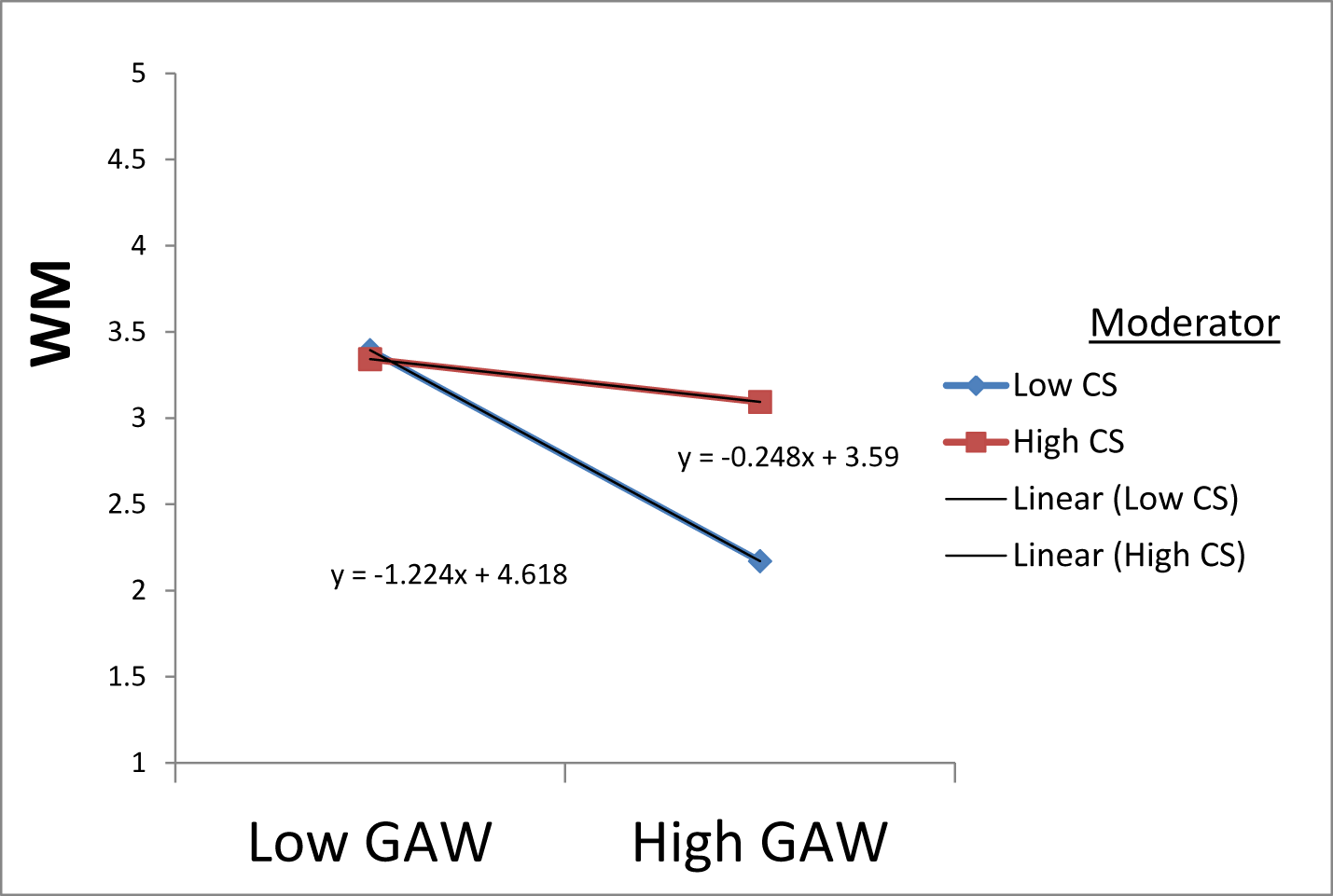
Moreover, we examined the moderating effects of coworkers’ support between the negative relationship of gaslighting and work motivation (Hypothesis 5). In assessing the moderating effect, we determine its presence by evaluating the regression coefficient and the significance of the interaction terms. As depicted in Fig. 1, Table 4, coworker support significantly moderated the relationships between gaslighting and work motivation (β GAW × CS→WM = 0.244, [0.166, 0.314], p < .01), thus supporting Hypothesis 5. Graphical representations of the moderation analysis revealed that coworker support moderates gaslighting’s negative effects on work motivation (Fig. 2).
CS’s moderating effect on WM through GAW.

Discussion
The present research significantly enhances the body of knowledge concerning detrimental leader behaviors entailing a conceptual framework for gaslighting behavior within the workplace. Despite the evident harm it inflicts on both individuals and organizations, gaslighting has thus far remained relatively underexplored. Gaslighting has been discussed previously within romantic and political, intimate relationships and parent-child contexts (Fulcher & Ashkanasy, Reference Fulcher and Ashkanasy2023; Gass & Nichols, Reference Gass and Nichols1988; Riggs & Bartholomaeus, Reference Riggs and Bartholomaeus2018). Thus, this study bridges the gap by examining gaslighting in the workplace context, that is, supervisor-subordinate.
This study adds further by examining the effects of gaslighting on employees’ work motivation and job embeddedness. The findings reflect a negative association between gaslighting and employees’ work motivation and job embeddedness. When employees experience gaslighting behavior in the workplace, it can erode their confidence and self-esteem. Gaslighting often involves manipulation and emotional abuse, which can lead to feelings of powerlessness and self-doubt. These negative emotional and psychological experiences can significantly impact employees’ motivation to perform well in their job and their sense of attachment to the organization. The previous literature has documented the deleterious effects of abusive supervision as a detrimental behavior for employees, that is, affective commitment (Ampofo & Karatepe, Reference Ampofo and Karatepe2022). In terms of gaslighting, some recent studies have explored the adversity of supervisory gaslighting on affective commitment and job satisfaction (Fulcher & Ashkanasy, Reference Fulcher and Ashkanasy2023; Kukreja & Pandey, Reference Kukreja and Pandey2023).
Employees working under supervisors who consistently exhibit gaslighting are at a higher risk of suffering from resource depletion, potentially leading to resource inadequacy. Consequently, such employees are not only more susceptible to losing resources but also face a shortage of resource accumulation, which could intensify their inclination to resign from the company (Ampofo & Karatepe, Reference Ampofo and Karatepe2022). It appears that individuals who perceive their valued resources as vulnerable and not able to be used to enhance resource acquisition are more likely to consider leaving their organization (Hobfoll, Reference Hobfoll2001). So, these findings are in line with the existing philosophies of detrimental supervisory behaviors and gaslighting’s effects in the workplace context.
In this study, we explored how work motivation serves as a mediator between gaslighting and employees’ job embeddedness. The findings demonstrate that gaslighting has a negative indirect impact on employees’ job embeddedness. In situations where gaslighting is prevalent, employees may feel demotivated and disconnected from their work and organization, ultimately leading to lower levels of job embeddedness. This suggests that addressing and mitigating gaslighting behaviors in the workplace is crucial not only for the well-being of employees but also for their long-term commitment and attachment to their jobs and organizations.
Moreover, we examined the moderating role of coworker support, in the relationship between gaslighting and employees’ work motivation. We proposed that in the presence of coworker support, the gaslighting’s effect on employees will be buffered. The results also showed support for this proposition which suggests that as a protective and supportive factor, it can help the employees through understanding, listening, assisting, and guiding in the face of gaslighting.
Prior research suggested that emotional support from coworkers can mitigate the detrimental impact of abusive supervision on perceived organizational support, whereas instrumental support from coworkers may not exert a similar influence (Xu et al., Reference Xu, Martinez, Van Hoof, Tews, Torres and Farfan2018). Moreover, research indicates that emotional support tends to have a more pronounced moderating effect than instrumental support in professions such as healthcare, teaching, and social work (Halbesleben & Buckley, Reference Halbesleben and Buckley2004). Given that roles in hospitality and tourism share characteristics with these human service professions, emotional support from coworkers may be particularly valued compared to instrumental support (Tews, Michel, & Stafford, Reference Tews, Michel and Stafford2013).
Sonnentag (Reference Sonnentag2003) demonstrated that positive interactions with coworkers can serve as a means of recovery. When employees face abusive supervision, expressions of concern, courtesy, and attempts to uplift the employee by coworkers can convey a sense of genuine care for the employee’s well-being. Coworkers’ emotional support may thus alleviate the adverse impact of abusive supervision on perceived organizational support. Prior studies have discussed the effects of coworker support from the componential aspect of coworker support, however, this study specifically gauges the moderating influence of overall coworker support based on the idea of Zhai et al. (Reference Zhai, Wang and Weadon2020). We propose that forthcoming research needs to delve into the componential investigation of coworker support on its outcome, where we can see whether emotional or instrumental support or both can interact with gaslighting to glean positive behavioral outcomes.
Theoretical contributions
The aforementioned findings make valuable contributions to the pertinent body of knowledge in the following manners. Specifically, in the present study, we consider gaslighting as a holistic approach and negative work-related shock for the employees. Individuals who are encountered with supervisory gaslighting tend to exhibit adverse work-related behaviors such as declined work motivation and job embeddedness. Gaslighting has been a comparatively new concept in the workplace context and a less explored construct. Recent literature has examined the detrimental effects of gaslighting by supervisors on subordinates, that is, the direct negative relationship between gaslighting and job satisfaction (Kukreja & Pandey, Reference Kukreja and Pandey2023).
This study contributes to the existing literature by examining the direct effects of gaslighting on employees’ work motivation and their job embeddedness. Second, the role of work motivation as a mediating mechanism between gaslighting and job embeddedness adds to the current pool of knowledge. These findings portray how gaslighting turns employees’ motivation into a deteriorating condition which leads to a decline in their attachment to the organization. A recent study underscored the indirect effects of gaslighting on employees’ affective commitment through Leader-member exchange (LMX)(Fulcher & Ashkanasy, Reference Fulcher and Ashkanasy2023). However, this study adds on by examining introducing work motivation as a mediator between gaslighting and job embeddedness.
Third, the recent literature has examined the direct and indirect effects of gaslighting on employees’ behavior, that is, LMX, affective commitment, and job satisfaction (Fulcher & Ashkanasy, Reference Fulcher and Ashkanasy2023; Kukreja & Pandey, Reference Kukreja and Pandey2023). The present study undertakes the boundary condition of coworker support between gaslighting and employees’ work motivation. The findings suggest that coworker support buffers the detrimental effects of supervisor’s gaslighting on employees’ work motivation. Furthermore, investigating the impact of gaslighting on employees’ work motivation and job embeddedness in the hospitality industry, while considering the mitigating influence of coworker support, which offers empathy, expertise, and work-related guidance, presented an opportunity to add to the hospitality research.
Managerial implications
The present study aids practically in recognizing and formulating strategies to decline gaslighting’s effects at the workplace through implementing tactics to decrease manipulation and intimidation by supervisors in the workplace that can contribute to boosting motivation and retaining valuable employees. The hospitality employees in China experience a great amount of physical and emotional stress (Wang, Xu, Zhang, & Li, Reference Wang, Xu, Zhang and Li2020). To mitigate the psychological abuse and holistic behaviors of supervisors, organizations should establish an effective disciplinary system that addresses overall conduct and is consistently enforced without bias or apprehension (Ampofo & Karatepe, Reference Ampofo and Karatepe2022).
In this context, organizations should encourage whistleblowers to report ongoing practices by their supervisors of such a nature. If organizations guide their employees that it’s not their job to report such behaviors, it signals a great imbalance in the organizational pillars. One such example is a defense contractor, aware of security violations, who was discouraged from pursuing a complaint and quit. The department never investigated, leaving their network vulnerable for years (Garrick & Buck, Reference Garrick and Buck2022).
Second, hotel managers should recognize that the fear of prolonged unemployment discourages abused employees from speaking out when considering leaving their current positions (Ampofo & Karatepe, Reference Ampofo and Karatepe2022). In such situations, the hotel organizations should establish a proper channel to report whistleblowers’ complaints and also ensure the job security of high-performing employees subjected to gaslighting.
Third, according to the results of this study, it is apparent that coworker support plays a vital role in mitigating the adverse impact of gaslighting on employees’ work motivation. Therefore, it is recommended that hotel organizations should conduct training sessions to raise awareness among their employees, encouraging them to be vigilant about their colleagues’ well-being and offer assistance to those facing supervisory gaslighting and a comprehensive authoritarian environment.
Finally, hotel organizations should ensure they appoint the most suitable individuals for supervisory roles. To accomplish this, it is recommended that rigorous selection procedures are implemented (Ampofo & Karatepe, Reference Ampofo and Karatepe2022). As an example, management can incorporate practical exercises focusing on unethical behavior toward subordinates during the selection process. This is particularly relevant because abusive supervision has been linked to an increased likelihood of unethical conduct in everyday work situations (Xu et al., Reference Xu, Martinez, Van Hoof, Tews, Torres and Farfan2018).
Limitations and future direction
Despite the encouraging results mentioned earlier, it’s essential to acknowledge the limitations of this study. To begin with, the study’s sample was restricted solely to frontline service workers in the restaurant industry. Nevertheless, it’s important to note that employees in various positions across the hospitality industry may also encounter abusive behavior from their supervisors. Future research should include employees who occupy other positions (i.e., back-of-the-house) in different types of restaurants.
Second, our study examined the impact of supervisory gaslighting on employees’ work motivation and job embeddedness. However, it’s important to recognize that mistreatment within the company is not limited to supervisors; coworkers can also become the part of supervisor’s tendency to gaslight the victim (Garrick & Buck, Reference Garrick and Buck2022), potentially causing the employee to relinquish valuable resources in the organization (Tews, Michel, & Stafford, Reference Tews, Michel and Stafford2019). Future research should investigate the influence of coworkers’ gaslighting on employees’ motivation and job embeddedness.
Third, previous studies have explored how emotional support from coworkers had a stronger impact than instrumental support (Halbesleben & Buckley, Reference Halbesleben and Buckley2004; Tews et al., Reference Tews, Michel and Stafford2013). However, our study examines overall coworker support, including both emotional and instrumental aspects. Future research can separately investigate the moderating effects of emotional and instrumental coworker support in relation to gaslighting to clarify their distinct roles.
Fourth, the use of time-lagged data in this study served to mitigate the potential issue of common method variance, as recommended by Podsakoff et al. (Reference Podsakoff, MacKenzie, Lee and Podsakoff2003). In future research, it would be beneficial to incorporate assessments of individuals’ work motivation and job embeddedness from both managers and coworkers. Fourth, this study was conducted within the Chinese hospitality industry, prompting questions about the applicability of the findings to other contexts. To address this concern, future research can expand the scope by examining this model in different cultural settings and across various industry sectors.
Fifth, this study investigated the moderating effect of coworker support, indicating that support from colleagues can act as a protective buffer, mitigating the adverse effects of supervisory gaslighting on employees’ work motivation. Subsequent research can explore this model with alternative moderators, such as resilience. This implies that employees’ resilience may enable them to acquire and retain resources to effectively combat the detrimental impacts of gaslighting.
Sixth, we have controlled the effects of demographics for their potential effects on employees’ behavior (Ng & Feldman, Reference Ng and Feldman2012). Such as gaslighting tends to show a gendered pattern, typically involving male perpetrators and female victims. However, it can also operate more broadly by feminizing victims, as illustrated in the mentor-mentee thought experiment (Sweet, Reference Sweet2019). Moreover, misogynist gaslighting, as a form of manipulation, leads women to suppress or question their judgments in the context of gender relations (Stark, Reference Stark2019). The existing research on age and job embeddedness reveals that older workers are more likely to be employed by the organization than younger employees (Reitz et al., Reference Reitz, Anderson and Hill2010). Future research can test the effects of gender and age in relation to gaslighting and intent to stay in the organization.
Conclusion
Up until now, research has primarily concentrated on explicit forms of abusive supervision, such as aggressive conduct and physical violence. The impact of more subtle forms of abusive supervisory behavior, like gaslighting, remains less explored. Gaslighting is a psychological manipulation tactic wherein the ‘gaslighter’ deliberately confuses, disorients, and instills doubt in the victim’s mind.
In this study, we posited the direct effects of supervisory gaslighting on employees’ work motivation and job embeddedness, as well as its indirect effects on job embeddedness. Additionally, we investigated the moderating role of coworker support in the relationship between gaslighting and work motivation. The data collected from frontline hotel employees in China revealed that gaslighting has a negative influence on both employees’ motivation and job embeddedness. Furthermore, work motivation played a mediating role in the relationship between gaslighting and job embeddedness. Moreover, coworker support was found to moderate the adverse connection between gaslighting and work motivation.
Conflict of interest
The authors declare no potential conflict of interest.
Funding
No funding was received for this study.