Extracorporeal membrane oxygenation is a life-sustaining technology used in paediatric and cardiac ICUs to support children with life-threatening organ failure. Reference Di Nardo, MacLaren and Marano1,Reference Laussen and Guerguerian2 The use of extracorporeal membrane oxygenation is steadily increasing in ICUs as is the complexity of patients supported with the device. A successful outcome among children supported on extracorporeal membrane oxygenation goes beyond discharge from the ICU. While extracorporeal membrane oxygenation is potentially life-saving, mortality rates are high and survivors and their families face long-term challenges including prolonged hospitalisation, readmissions, rehabilitation, and late mortality. Reference Coleman, Goldman and Moffett3–Reference Wray, Kakat, Brown and O'Callaghan6 The Joint Society of Critical Care Medicine Task Force and the Center to Advance Palliative Care recommend the involvement of palliative care in patients supported on extracorporeal membrane oxygenation as a standard of care. Reference DellaVolpe, Barbaro and Cannon7,Reference Friebert and Osenga8 Given these guidelines, all children supported on extracorporeal membrane oxygenation are eligible for palliative care consultation. The interdisciplinary paediatric palliative care service optimally integrated before or close to the time of extracorporeal membrane oxygenation deployment provides longitudinal support to children and families by providing symptom management, and assisting families with complex medical decision-making, care coordination, and advance care planning. Reference Kaye, Weaver and DeWitt9–Reference Vern-Gross, Lam and Graff13 In addition, the health care team also benefits from the consult as the palliative care team expertly facilitates difficult conversations with families related to goals of care, prognostic awareness, and end of life. Reference Richards, Starks and O’ Connor14,Reference Ciriello, Dizon and October15
The incorporation of paediatric palliative care into the care of children and their families experiencing admission to the ICU results in fewer deaths occurring during resuscitation attempts; increased hospice referrals; improved parental satisfaction with care; improved coping, and healthy bereavement outcomes among caregivers. Reference Keele, Keenan and Sheetz12,Reference Friedrichsdorf, Postier and Dreyfus16–Reference Delgado-Corcoran, Wawrzynski and Bennett19 However, palliative care consultation rates are variable ranging from 0 to 100% with a median of approximately 10% across children’s hospitals in the United States. Reference O'Keefe, Maddux and Bennett20–Reference Doorebos, Starks and Bourget23 While the frequency of consults is known, scant information exists regarding the timing and the clinical characteristics of those who receive a consult. To fill this gap, our study aims were to examine the rates of palliative care consultation in children supported on extracorporeal membrane oxygenation. Specifically, we sought to identify timing and clinical differences between children who received a palliative care consult and those who did not.
Materials and methods
Retrospective review of clinical characteristics and outcomes of children (aged 0–21 years) supported on extracorporeal membrane oxygenation between January, 2017 and December, 2019 compared by palliative care consultation. The Institutional Review Board at the University of Utah and Primary Children’s Hospital approved this study (protocol #00128008).
Sample and study setting
All children aged 0–21 years are supported on extracorporeal membrane oxygenation in the paediatric intensive care or cardiac unit. We studied children admitted to a 28-bed intensive care or 16-bed cardiac ICU at Primary Children’s Hospital, a freestanding 289-bed academic children’s hospital in Salt Lake City, Utah. The hospital serves one of the largest geographic areas of any children’s hospital in the United States and supports approximately 40 children on extracorporeal membrane oxygenation annually.
Paediatric palliative care at Primary Children’s Hospital is mainly an inpatient, hospital-based physician-consult service. The interdisciplinary palliative care team includes board-certified paediatric hospice and palliative medicine physicians, nurse practitioners, a social worker, a registered nurse, a chaplain, and a child life specialist. Any child with a chronic, potentially life-limiting, or life-threatening medical condition is eligible for a palliative care consult. Licensed medical providers in any hospital unit may place a referral for a consult. Patients or parents can refuse the consultation. Once consulted, the palliative care team remains available to support the family and healthcare team until the condition has resolved, the patient transitions to adult care, or family no longer wishes to utilise the service. Additionally, if a patient dies, paediatric palliative care provides bereavement support to the family. Consultation and services are provided during weekdays.
Measurements
We queried the institutional electronic data warehouse to determine receipt and date of the first paediatric palliative care consultation, patient demographics, hospital length of stay, extracorporeal membrane oxygenation outcomes, disease severity measures, date, and mode of death (when applicable). We divided the cohort into two groups depending on whether the child received a palliative care consult. For children who received a consultation, we examined the Primary Children’s Hospital palliative care database to determine the reason for the referral, referring physician, and palliative care practitioner who conducted the initial palliative care consultation.
Children were categorised based on the reason of their admission as surgical or medical. Extracorporeal membrane oxygenation indications for cannulation were classified as respiratory and cardiac failure following The Extracorporeal Life Support Organization categories. Reference Maratta, Potera and van Leeuwen24,Reference Brown, Moynihan and Deatrick25 Cardiac failure was further classified into cardiac surgery and catheterisation, cardio-circulatory failure due to cardiogenic, distributive, or obstructive shock, and in-hospital cardiac arrest not responsive to conventional therapies. Extracorporeal membrane oxygenation outcomes include survival to hospital discharge, and the need for inpatient rehabilitation or admission to a long-term acute care facility.
Complex chronic conditions, hospital length of stay, and use of life-sustaining therapies after extracorporeal membrane oxygenation decannulation were used as indicators of disease severity. Children were identified as having complex chronic conditions based on codes from the International Classification of Diseases, 10th Revision, Clinical Modification (ICD-10-CM) and as defined by Feudtner et al. Reference Feudtner, Feinstein and Zhong26 Complex chronic conditions were identified at two time points: 1) at hospital admission for extracorporeal membrane oxygenation and 2) at the end of hospitalisation or time of death. Use of life-sustaining therapies after extracorporeal membrane oxygenation decannulation includes gastrostomy tube, tracheostomy with or without ventilator dependency, renal replacement therapies, pacemaker, re-cannulation for extracorporeal membrane oxygenation, ventricular assist device, transplant, and cardiopulmonary resuscitation.
Total mortality included the deaths that occurred during extracorporeal membrane hospitalisation and mortality after discharge. Mortality during extracorporeal membrane defined as in-hospital death within the extracorporeal membrane oxygenation hospitalisation. Mortality after discharge was defined as late mortality after extracorporeal membrane hospital discharge that occurred during the study period. Extracorporeal cardiopulmonary resuscitation mortality rate is the proportion of children who died during extracorporeal membrane hospitalisation after undergoing extracorporeal cardiopulmonary resuscitation.
The mode of death was classified into five categories by the care provided at the time of death: 1) withdrawal of life-sustaining therapies defined as discontinuation of mechanical ventilation, vasoactive infusions, and extracorporeal membrane oxygenation within 24 hours of death, 2) no-escalation of therapy defined as withholding new therapies while continuing current ones, 3) comfort care defined as symptom management in the hospital, home, or hospice facility provided longer than 24 hours prior to death, 4) death during cardiopulmonary resuscitation defined as arrest and unsuccessful resuscitation within 24 hours of death, and 5) brain death by neurologic criteria using accepted standards. Reference Trowbridge, Walter and McConathey18,Reference Delgado-Corcoran, Wawrzynski and Bennett19
Statistical analysis
Descriptive statistics summarised demographic and clinical characteristics of children with and without paediatric palliative care consultation. Categorical variables were summarised as counts and percentages and compared using Chi-Square tests or Fisher’s Exact tests as appropriate. Continuous data were summarised using medians and interquartile ranges and compared using the Mann–Whitney U test. All data were analysed using SAS 9.4 for Windows (SAS Inst. Cary, NC).
Results
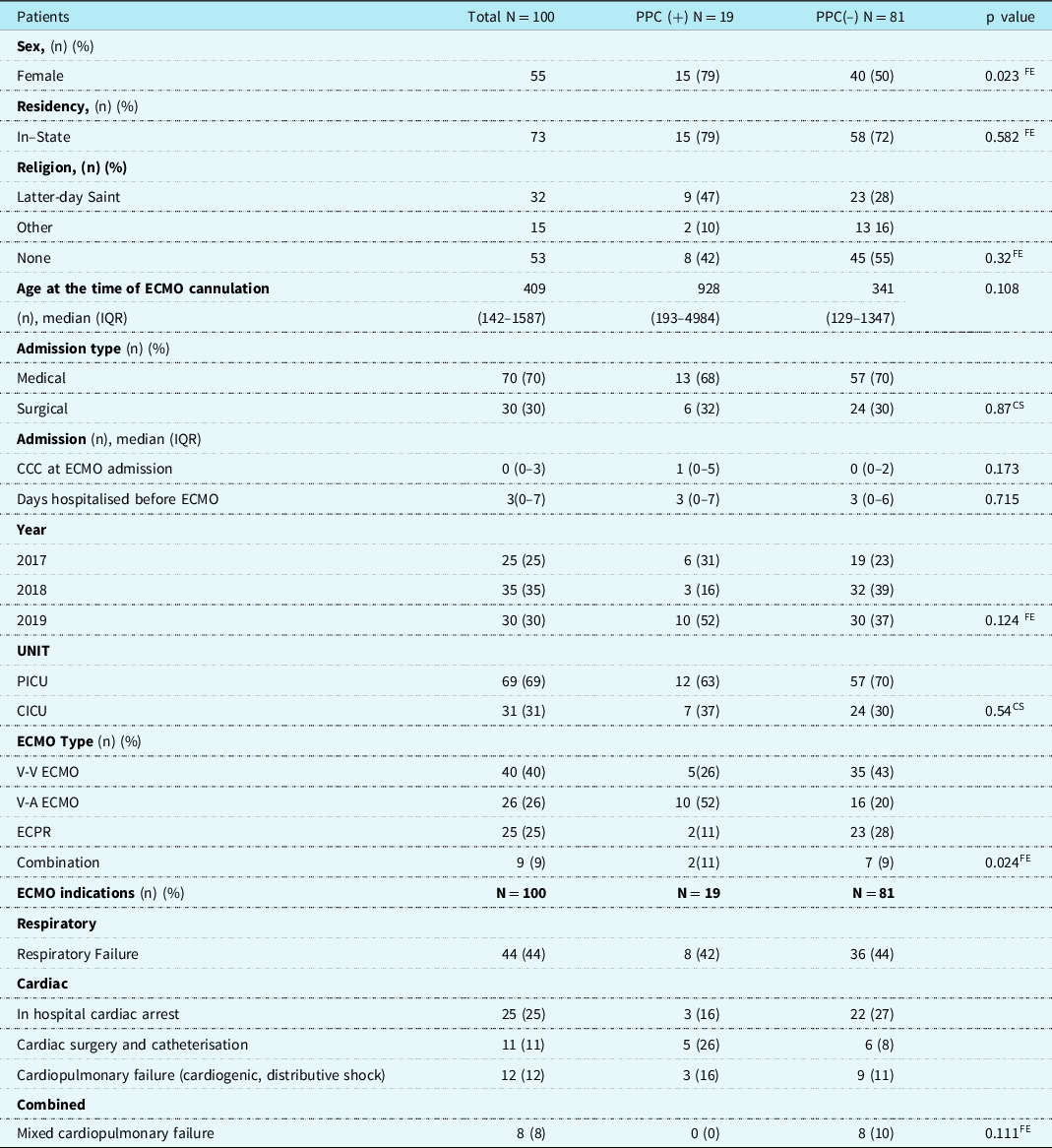
One hundred children (N = 100) received extracorporeal membrane oxygenation with 19% (n = 19) receiving a palliative care consult. Table 1 shows the demographics and clinical features at the time of extracorporeal membrane oxygenation cannulation comparing children who did and did not receive a palliative care consultation. Children with a consult were more likely to be female (79% versus 50%; p = 0.023) and to receive veno-arterial extracorporeal membrane oxygenation (52% versus 20%; p = 0.024) compared to children who did not receive a consult. At the time of extracorporeal cannulation, children with and without a consult were similar in age (928 days versus 341 days respectively; p = 0.108), number of complex chronic conditions (median of 1 versus 0; p = 0.173), and hospital days before cannulation (median of 3 days versus 3 days; p = 0.715).
Demographics and clinical features at the time of extracorporeal membrane oxygenation cannulation compared by receipt of palliative care
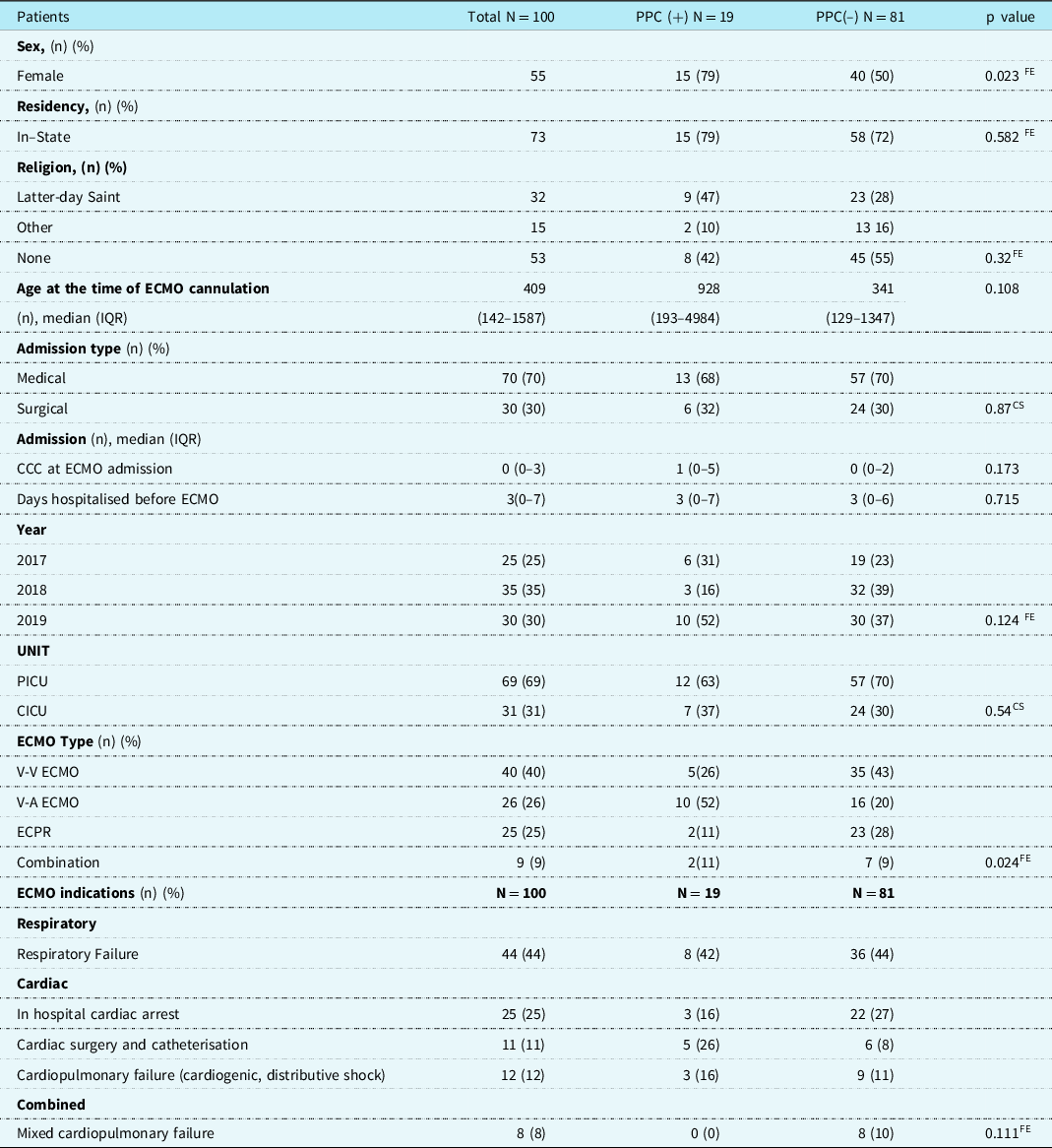
PPC (+) = Paediatric palliative care consulted.
PPC (–) = Paediatric palliative non-consulted.
ECMO = extracorporeal membrane oxygenation; PICU = Paediatric ICU; CICU = Cardiac ICU; CCC = complex chronic conditions; V-V ECMO = veno-venous extracorporeal membrane oxygenation; V-A ECMO = veno-arterial extracorporeal membrane oxygenation; ECPR = extracorporeal cardiopulmonary resuscitation; CS = Chi-Square tests; FE = Fisher’s Exact.
We found that the majority of consults (15/19, 63%) occurred after extracorporeal membrane oxygenation cannulation with a median time to consultation of 27 days (interquartile range 11–46 days). The most common reason was longitudinal psychosocial-spiritual support (n = 18/19, 95%) followed by goals of care discussions (n = 10/19, 53%) with the ICU requesting the consultation most frequently (n = 12/19, 63%), and palliative care nurse practitioners (n = 10, 53%) and physicians (n = 9/19, 47%) providing the consultations.
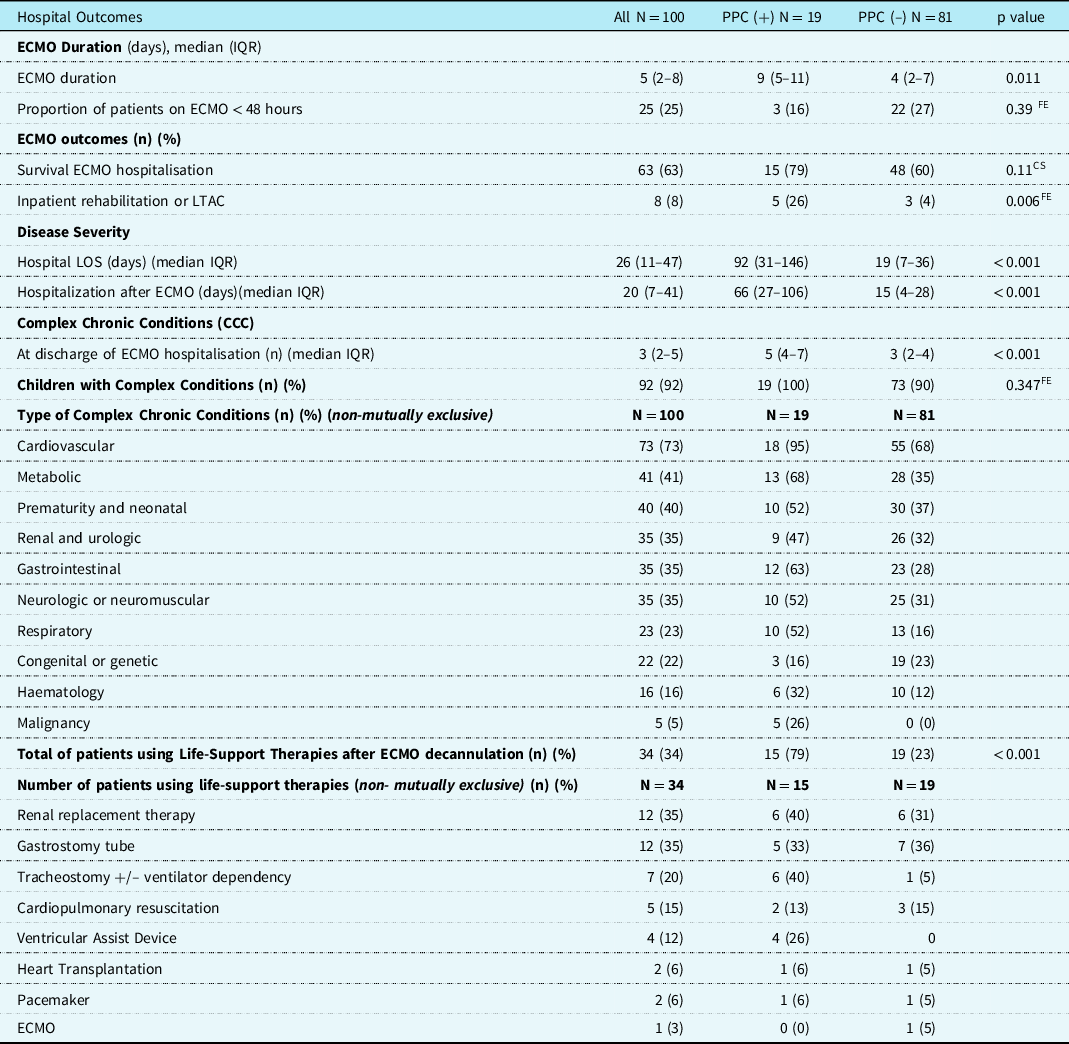
Table 2 displays the hospital outcomes and disease severity post-extracorporeal membrane oxygenation cannulation. While survival was similar between consulted and not consulted groups (79% versus 60%; p = 0.11), there were differences between children in the cohort. Compared to children who did not receive a consult, children who received a consult had longer extracorporeal days of support (median of 9 days versus 4 days; p = 0.011), higher rates of inpatient rehabilitation or discharge to a long-term acute-care facility (26% versus 4%; p = 0.006), higher number of complex chronic conditions at hospital discharge (median 5 versus 3; p < 0.001), longer hospital length of stay (median of 92 days versus 19 days; p < 0.001), and higher use of life sustaining therapies after extracorporeal membrane oxygenation decannulation (79% versus 23%; p < 0.001). The majority of children (n = 92/100, 92%) regardless of consultation status had at least one complex chronic condition, most commonly cardiovascular (n = 73/100, 73%) and a third of the children (n = 34) in the cohort received 45 life-sustaining therapies after decannulation.
Hospital outcomes and disease severity post-extracorporeal membrane oxygenation cannulation compared by receipt of palliative care
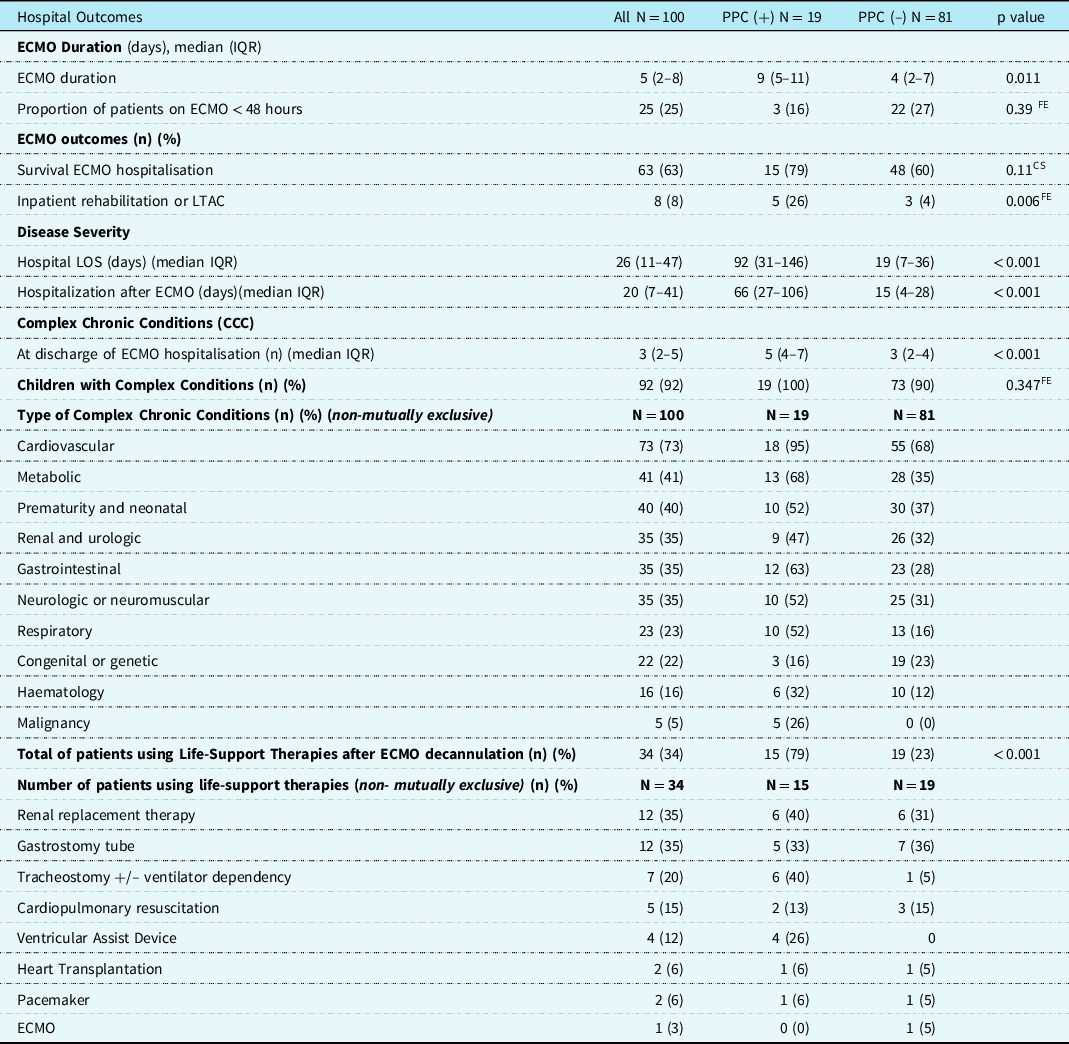
PPC (+) = Paediatric palliative care consulted.
PPC (–) = Paediatric palliative non-consulted.
ECMO = extracorporeal membrane oxygenation; IQR = interquartile range; LOS = length of stay; CCC = complex chronic conditions; LTAC = long-term acute care; CS = Chi-square tests; FE = Fisher’s exact.
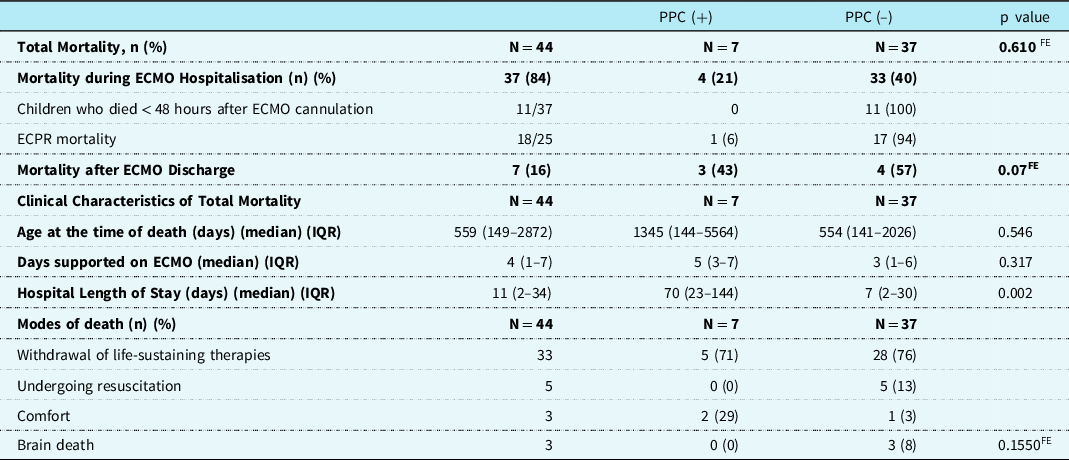
There were 44 deaths during the study period with 84% (n = 37/44) during extracorporeal membrane oxygenation hospitalisation and 16% (n = 7/44) after discharge (Table 3). Thirty percent (30%; n = 11/37) of in-hospital mortalities were children that died within 48 hours of cannulation. The consulted children had longer hospital length of stay compared to non-consulted children (median of 70 days versus 7 days; p = 0.002). There were no differences in the mode of death among groups with most children dying after withdrawal of life-sustaining therapies regardless of receipt of a palliative care consult (71% versus 76%; p = 0.1550).
Characteristics of children deaths compared by receipt of palliative care
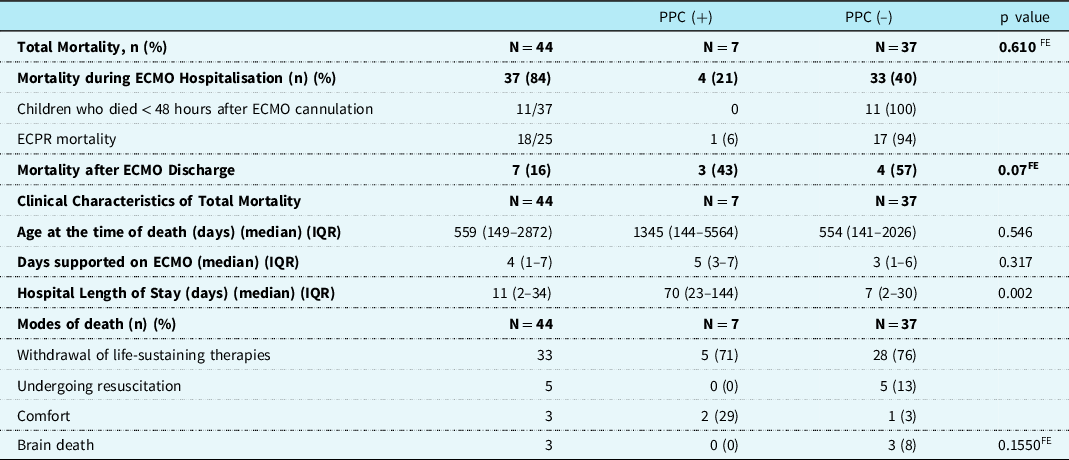
PPC (+) = Paediatric palliative care consulted.
PPC (–) = Paediatric palliative non-consulted.
ECMO = extracorporeal membrane oxygenation; IQR = Iinterquartile range; ECPR = extracorporeal cardiopulmonary resuscitation; HLOS = Hhospital length of stay; FE = Fisher’s exact.
Discussion
We described the rate and timing of palliative care consultation in children receiving extracorporeal membrane oxygenation support and compared demographic information, clinical characteristics, and outcomes of children who did and did not receive a consult. Our study has three main findings. First, palliative care consultation occurred infrequently. Second, the consultation often occurred after a prolonged length of stay in the setting of high disease severity. Third, mortality rates were high regardless of consultation status.
Less than one in five children receiving extracorporeal membrane oxygenation had a palliative care consult despite recent guidelines that all children supported on extracorporeal membrane oxygenation are eligible for palliative care consultation. Reference DellaVolpe, Barbaro and Cannon7,Reference Friebert and Osenga8 The low rates of consultation may be related to the heterogenicity of disease within the extracorporeal membrane oxygenation population. Despite the high risk of complications inherent to the highly technical therapy, prognostication of outcomes beyond survival is very difficult, even for experienced providers. Reference Costello, Mussatto and Cassedy27 In addition, critical care physicians have expressed concerns that palliative care creates conflicts among patient’s care teams, adds more providers to an already long list of specialists, and gives families the impression of giving up or losing hope. Reference Morell, Thompson and Rajagopal28–Reference Balkin, Kirkpatrick and Kaufman30 A recent survey regarding the benefits and barriers of an automatic palliative care consultation for children supported on extracorporeal membrane oxygenation showed similar concerns by ICU physicians. Reference Delgado-Corcoran, Wawrzynski and Mansfield31
Unfortunately, the majority of children who need extracorporeal membrane oxygenation support are placed emergently on the device, not allowing enough time for a clear and thoughtful conversation between the clinical team and the patient’s family to fully absorb the goals and clinical risks, and benefits of this emergent therapy. Reference Mulaikal, Nakagawa and Prager32,Reference Makdisi and Makdisi33 Not surprisingly, parents of extracorporeal membrane oxygenation survivors and non-survivors have indicated the need for improved communication with the critical care team, particularly regarding extracorporeal oxygenation weaning and decannulation. Reference Curley and Meyer34 Even though critical care physicians possess expertise in communication and primary palliative care principles, their proficiency in these areas varies. There are guidelines in place that are intended to assist critical care physicians in addressing serious news, prognostic awareness, and interventions with families of children supported on extracorporeal membrane oxygenation. Reference Moynihan, Purol and Alexander35 Nonetheless, the specialised palliative care team has the expertise and training to facilitate these difficult conversations with families to elucidate goals of care, facilitate decision-making, and advance care planning. Reference Richards, Starks and O’ Connor14,Reference Ciriello, Dizon and October15 This is especially important considering that there are multiple specialists involved in the care of these patients and critical care physicians may face time-limiting constraints with the care of other high-intensity critical care patients. Reference Richards, Starks and O’ Connor14,Reference Ciriello, Dizon and October15 The discussions facilitated by the palliative care team improve parental satisfaction with care, reduce families’ anxiety, decrease decision regret, and reduce the use of non-beneficial treatments. Reference Kaye, Weaver and DeWitt9–Reference Vern-Gross, Lam and Graff13,Reference Hancock, Pituch and Uzark36,Reference Marcus, Santos and Ciapponi37 The use of an automatic referral model has the potential to standardise the consultation process, speed the time to referral, and decrease the variability of referral practices in children supported on extracorporeal membrane oxygenation. Reference Zalenski, Jones and Courage17,Reference Lutmer, Humphrey and Kempton21–Reference Doorebos, Starks and Bourget23,Reference Nelson, Curtis and Mulkerin38,Reference Boss, Nelson and Weissman39
Our second finding demonstrated that children were in the hospital 3 days before cannulation or in the device for almost a week and yet, the consults occurred nearly 1 month after extracorporeal membrane oxygenation cannulation in the setting of high disease severity, missing an opportunity for palliative care involvement earlier in the disease trajectory.
These findings suggest that palliative care involvement was not viewed as an acute need and was only considered when the clinical course became protracted. Families of children supported on extracorporeal membrane oxygenation report acute stress related to concerns regarding the chances of survival, pain and suffering, and long-term quality of life of their child. Reference Curley and Meyer34,Reference Tramm, Ilic and Murphy40–Reference Garcia Guerra, Robertson and Alton43 Recent publications show that children supported on extracorporeal membrane oxygenation had significantly lower health-related quality of life scores when compared to healthy cohorts. Reference Feudtner, Nye and Boyden44–Reference Sealey, Breen and O'Connor46 Furthermore, children are likely to have several complex chronic conditions after decannulation that put their parents and their siblings at risk of poor mental and physical outcomes. Reference Feudtner, Nye and Boyden44 These findings support the involvement of the palliative care team in providing longitudinal psychosocial-spiritual support to children and their families to improve overall quality of life, increase family satisfaction with care, and reduce health care utilisation. Reference DellaVolpe, Barbaro and Cannon7,Reference Grunauer, Mikesell and Bustamante47
Lastly, involving palliative care early allows time for the palliative care team to build rapport, and assess the needs and goals of the family while providing psychosocial support to the family and health care team through the disease’s trajectory as well as at the end of life care especially considering that the mortality rates among children supported on extracorporeal membrane oxygenation are high. Reference Machado, Hollander, Murray and Philip48–Reference Goloff and Joy50 None of the children who died within 48 hours of extracorporeal membrane oxygenation cannulation received a palliative care consultation, yet these children were in the hospital for at least 3 days prior to cannulation, providing a window of opportunity for early consultation. Providers may not recognise this window as an appropriate time to consult palliative care; however, earlier consultation in children with life-threatening conditions allows time for the palliative care team to build relationships and facilitate important conversations with families about their values and goals of care. Reference Bogetz, Ullrich and Berry49,Reference Goloff and Joy50 In our study, mortality rates were similar to ones reported by the Extracorporeal Life Support Organization Reference Di Nardo, MacLaren and Marano1,Reference Laussen and Guerguerian2,Reference Maratta, Potera and van Leeuwen24,Reference Brown, Moynihan and Deatrick25 and did not differ by palliative care involvement. However, it is clear that there are missed opportunities for palliative care to support bereaved families. Serial assessments of the family after the child’s death provide the palliative care team the opportunity to screen and refer those families at risk for complicated grief and other poor bereavement outcomes. Reference Garcia Guerra, Robertson and Alton43 Additionally, children who have undergone extracorporeal membrane oxygenation treatment are at risk for late mortality and more complex chronic conditions. Reference Coleman, Goldman and Moffett3 Palliative care can assist these families navigating complex chronic conditions by providing symptom management, counselling, and facilitating decision making across changes in the child’s illness and in different settings.
Our study has limitations. As this study includes data from a single centre, the generalizability of our findings is limited. We collected data from an administrative database and are limited by the variables available in the data set. For example, we do not have data to determine when extracorporeal support was considered in relation to the device deployment. Likewise, we do not have patient-centered outcomes and the psychological impact of interdisciplinary palliative care on providing longitudinal psychosocial-spiritual support to families of extracorporeal membrane oxygenation survivors and non-survivors. In addition, there may be under or over-reporting of complex chronic conditions related to possible misclassifications in the International Classification of Disease version 10 Clinical Modification coding.
Conclusions
Children supported on extracorporeal membrane oxygenation and their families have long-term challenges that go beyond the acute hospitalisation. This study adds to previous literature on extracorporeal support in children and palliative care, highlighting that palliative care consultation occurred infrequently and late in the child’s extracorporeal membrane oxygenation course. Children who undergo extracorporeal membrane oxygenation are at high risk for psychosocial, medical sequelae, and mortality while the family often faces significant psychosocial issues. The interdisciplinary paediatric palliative care team provides support across all transitions of care starting early in the disease trajectory, through extracorporeal membrane support, rehabilitation, and beyond discharge to bereavement support when applicable.
Acknowledgements
None.
Financial support
Research reported in this publication was supported by the National Institute of Nursing Research of the National Institutes of Health under Award Number F31NR018987 (Wawrzynski, PI).
Conflicts of Interest
None.
Ethical standards
All procedures performed in study were in accordance with ethical standards of the institution and national research committee.