I
In February 1960, during a debate concerning outdoor advertising legislation, Labour MP, Francis Noel-Baker told the Commons:
I agree unreservedly with bodies such as the Council for the Preservation of Rural England which believe that, with the exception of indispensable public notices and signs on business premises, all outdoor advertising is a vulgar and impertinent intrusion upon the individual citizen and that it is inherently objectionable…Outdoor advertising by garish posters, whether illuminated or not, is always incongruous and, therefore, injurious to the surroundings in which the posters are placed.Footnote 1
Though few MPs were as vehement as Noel-Baker, he typified the prevailing view in both central and local government: that outdoor advertising was not simply injurious to Britain's beautiful or historic landscapes, but that its very presence was invariably deleterious to inhabitants’ experience of all urban environments. This position was not simply an objection to poor advertising practices, nor a mere matter of taste. Indeed, much had been done by advertisers to standardize billboard sites, eliminate fly-postering, and voluntarily regulate the industry since the mid-nineteenth century.Footnote 2 Instead, what Noel-Baker's words betokened was a shift in the way philosophies of governance imagined the relationship between the urban environment and citizens’ experience that had a profound and lasting impact on how towns and cities looked.
This attitude towards billboards, posters, and other commercial signage had, however, only recently found acceptance in government. In the preceding century, and despite increasing restrictions after 1907 on advertising in rural and historic locations, introducing legislative controls in most urban areas, particularly residential neighbourhoods, had been frustrated by objections from within parliament and the powerful lobbying of the advertising industry.Footnote 3 Yet, beginning with the 1947 Town and Country Planning Act (T&CPA), the post-war period witnessed the rapid introduction of substantially enhanced local government powers and signalled a change in attitude within central government. As a result, by the time the 1962 T&CPA cemented powers to reduce the size and number of signs outside business premises, local authorities had drastically reduced advertising and commercial signage on their streets, radically and permanently altering the visual environment of urban Britain.
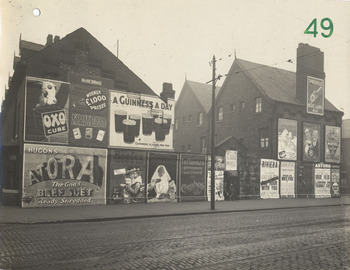
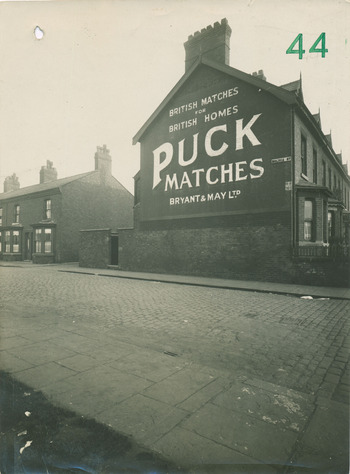
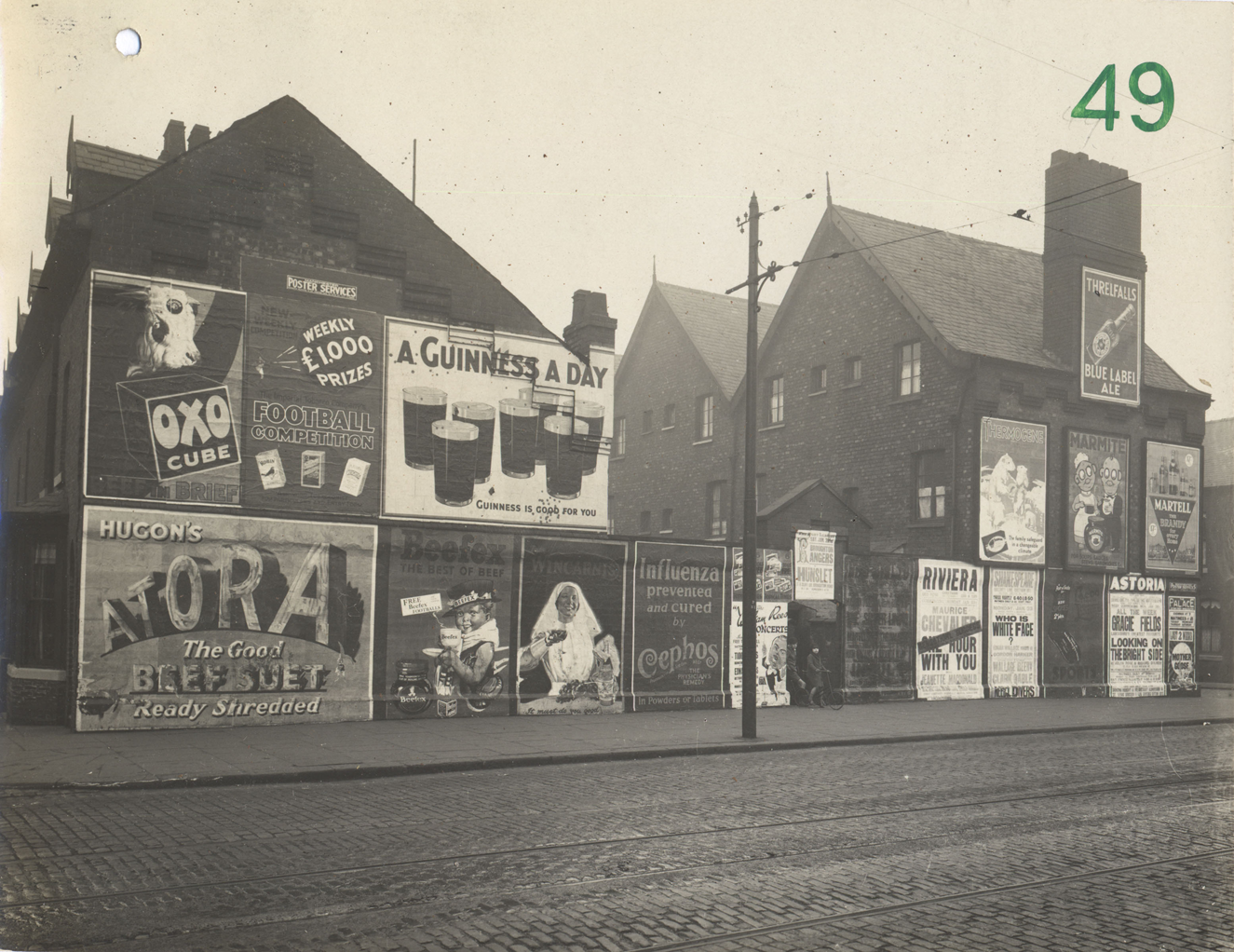
The mechanisms by which this change to towns and cities occurred though, have received relatively little attention. Advertising as a practice has interested historians because its development since the mid-nineteenth century symbolizes consumer capitalism's growing ability to insert itself into the fabric of people's lives.Footnote 4 Indeed, this commercialization of the everyday was highly visible in the collection of hoardings, postered dead walls, and gable-end signs (Figures 1 and 2) that characterized early twentieth-century streetscapes. Nevertheless, debates in the existing scholarship tend to revolve around the content and techniques of advertising, whilst questions about control deal with the regulation of manufacturers’ claims rather than the medium itself.Footnote 5 Studies that have examined outdoor advertising as a physical phenomenon have typically focused on emblematic nineteenth-century European cities, confined their scope to the United States, or considered the faded remnants of so-called ‘ghost signs’.Footnote 6 Where histories of Britain have touched upon outdoor advertising control, they say little about activism that did not come from the preservationist campaign groups that formed in the late nineteenth century, whilst histories from the advertisers’ perspectives have largely tended to narrate the story as one of self-regulation.Footnote 7
Advertising on Leicester Road, Higher Broughton, Lancashire, early 1930s, History of Advertising Trust (HAT) 21/560/10. Reproduced with the permission of the History of Advertising Trust.
Gable-end advertisement, Eccles New Road, Pendleton, Lancashire, early 1930s, HAT 21/560/4. Reproduced with the permission of the History of Advertising Trust.

Advertising control in urban spaces either side of the Second World War was, however, not simply a response to preservationist campaigns. As the opening section of this article argues, though dominating the initial discussions of outdoor advertising control, preservationists’ interest in urban environments typically extended only to the picturesque, architecturally outstanding, or the historically valuable.Footnote 8 Nor was opposition to outdoor advertising merely conservative anti-modernity. As James Taylor's study of opposition to ‘sky signs’ has also shown, control of outdoor advertising was about accommodating a vital economic function, whilst placing limits on the spaces and lives into which commercial interests might encroach.Footnote 9 Indeed, as Peter Gurney has demonstrated, the only concerted attack on advertising as a matter of principle, by the post-war Labour government, spluttered out after barely two years.Footnote 10
This article shows how this striking change in the visual environment of cities and towns was in large part driven by local authorities’ developing municipal concerns, framed within their broader strategies and philosophies of urban governance that developed over a century and a half. Issues such as rateable value, street clutter, the commercialization of residential space, and citizens’ rights emerge as key issues in attempts to regulate outdoor advertising. Yet, these were facets of the wider practices that might generally fall into that seemingly ‘oxymoronic formulation’ liberal governmentality.Footnote 11 In the earliest examples, examined in the third section, outdoor advertisements represented a physical impediment to attempts to create regimes of free movement and individual self-control, whilst by the mid-twentieth century they had developed into a threat to the efficacy of corporations’ schemes of planned redevelopment.Footnote 12 The study thus challenges depictions of local government decline by showing – as Tom Hulme has in the context of interwar civic pride – an energetic, sometimes over-adventurous local state, pushing the boundaries of their powers either side of the Second World War.Footnote 13 Indeed, in tracing the character of local government interventions, the article stresses the development of advertising control within ambitious regimes of urban governance that sought to civilize and shape citizens through the control of the sensory environment.Footnote 14 Moreover, by showing how strategies of regulation were subsequently recast within the language and ideology of mid-twentieth-century planning, the article plots advertising control as one highly visible signifier of the trajectory of urban modernism in mid-twentieth-century Britain.Footnote 15
Outdoor advertising was anathema to planners and architects because they believed its very presence disrupted the civilizing influence of planned architectural display and thus the socio-spatial objectives of redevelopment plans.Footnote 16 Yet, the evidence presented in the fourth and fifth sections of this article shows post-war corporations pushing for powers to control advertising in both newly built and extant locations. During a period when advertisers naturally attempted to make use of unoccupied patches of land or gable-ends, local corporations consistently opposed advertising hoardings in any residential area. This study thus understands the corporations’ attempts to be part of the quietly radical set of practices that historians like Simon Gunn have termed ‘urban modernism’.Footnote 17 Urban modernism, though often linked with architectural Modernism as a style, was characterized by the holistic regulation and redevelopment of towns and cities, and a belief that the management and production of urban space through a sort of ‘technocratic pragmatism’ might produce more functional cities and healthier, happier inhabitants.Footnote 18 Here, this tendency is represented by an impulse to control and reorder the visual environment and a belief in the efficacy of such order, not the sporadic grand architectural schemes associated with architectural Modernism. What this emphasis on controlling advertising in all locations reveals is that urban governance in the mid-twentieth century increasingly meant imagining how citizens’ experience of everyday environments could produce, as Lucy Faire and Denise McHugh have argued, a sense of place and belonging in the city.Footnote 19 This was not just, as Selina Todd has demonstrated, a facet of civic design, but expanded into the quotidian and, crucially, extant spaces of everyday life.Footnote 20 The article thus provides a self-contained explanation of how such a startling visual change occurred in urban spaces, but also functions as a case-study that examines the ways that urban governance in twentieth-century Britain came to place the experience of the citizen at the heart of philosophies of redevelopment and renewal.
II
Although, as advertising writer David Bernstein observed, ‘advertising began outdoors’, new printing techniques and the emerging mass market meant that throughout the nineteenth century large-size billboard advertising exploded in popularity, ultimately superseding bill postering as the dominant form of outdoor advertising shortly after the First World War.Footnote 21 Advertisers, though they had begun to practise forms of self-regulation since the mid-nineteenth century, were ‘scarcely restricted by legislation’, whilst simultaneously driven to expand by a competitive market place.Footnote 22 Consequently, throughout the early part of the twentieth century streets in towns and city centres, along with most railway sidings, typically sported a variety of hoardings and billboards (Figures 1 and 2). Adding to these displays, shop fronts, dead walls and gable-ends bore the brand names and logos of famous products that grew larger and more eye-catching with each passing year.Footnote 23 At the same time, the growing production of incandescent and neon lighting allowed advertisers to create nocturnal vistas of consumerism.Footnote 24
Advertisers in the first half of the twentieth century, nevertheless, argued that outdoor advertising could be beneficial. W. T Stead's assertion that ‘the picture gallery of the English poor is the hoardings of the street’, and Franck Pick's belief that modern art on London Underground advertising might open up the possibilities of the city to travellers, illustrate the common view that tastefully rendered billboards were something of a boon.Footnote 25 Indeed, having done much to standardize practice and curtail the more egregious activities of bill posters, advertisers received some high-profile support.Footnote 26 Oscar Wilde reputedly argued that posters ‘bring colour into the drab monotony of the English streets’.Footnote 27 Nevertheless, opposition to outdoor advertising had begun to crystallize towards the end of the nineteenth century as larger and more intrusive forms of advertising caused conflict with local authorities. Bovril's attempts to erect billboards near historic properties in Edinburgh led to local protests and the subsequent inclusion of powers to license outdoor advertising in the Edinburgh Corporation Act, 1899.Footnote 28 In 1900, in what was perhaps the nadir of the advertising arms race, Quaker Oats placed a huge advertisement on the cliffs at Dover provoking a considerable backlash from the local authority and newspapers. Such brash advertising excess in a location so tied up with English identity prompted a national campaign, which led directly to the creation of strict local powers to curtail advertising hoardings in the Dover Corporation Act, 1901.Footnote 29
Instrumental in these campaigns was the Society for Checking Abuses of Public Advertising (SCAPA), a preservationist organization who viewed advertisements as a ‘social malady’ that negated the cultural value of beautiful landscapes and picturesque towns.Footnote 30 Founded in 1893, SCAPA's principal objective was to oppose ‘disfigurement in town and country’ and ‘to purge the streets and country ways, the fields and riverbanks’ of advertisements.Footnote 31 Though they had a small membership of around 700 and were opposed to attracting mass membership, SCAPA represented a growing, remarkably influential elite backlash against outdoor advertising.Footnote 32 Despite any clear indication of mass support, in their first few decades SCAPA exerted enough influence within powerful circles to enjoy a string of successes, particularly in the prevention of advertising that ‘disfigure[d] the natural beauty of the landscape’.Footnote 33
Highly visible victories combined with increased media support for preservationist campaigns to protect the countryside meant that by 1905 only two large advertising firms still saw benefit in erecting rural billboards at all.Footnote 34 Indeed, by 1913, all major tyre manufacturers had agreed to remove roadside advertisements, and by 1927, Shell Oil – once one of the most significant investors in roadside advertisements – announced it would remove all signs except those at filling stations.Footnote 35 The perception of advertising companies and their customers that outdoor advertising in rural contexts was unpopular with consumers suggests that SCAPA's rural campaigns enjoyed at least some degree of public support. Indeed, in a 1938 Mass Observation survey most of the very few objections to outdoor advertising were on the grounds that it disfigured the countryside. In contrast, only one female respondent raised concerns about urban environments, stating that ‘I often wish to go away from London because of the advertising one sees everywhere. Words, words, everywhere. I wish there were as many flowers as words in London.’Footnote 36 Even where newspaper coverage of SCAPA's campaigns can be found, nothing suggests that they had a genuine groundswell of public backing, and supportive letters were often from registered members.Footnote 37
In the same period, SCAPA also promoted bills through parliament on an almost yearly basis. In 1907, after three previous attempts had been opposed by outdoor advertisers, the SCAPA-sponsored Advertisements Regulation Act (ARA) was passed, allowing the creation of local by-laws to designate particular areas of aesthetic value in which advertisements could be restricted to preserve ‘amenity’.Footnote 38 In the decades that followed, ‘amenity’ and its interpretation would become central to contests surrounding outdoor advertising, but the 1907 Act proved to be weak in its definitions and, consequently, of only sporadic popularity with local authorities. Throughout the first three decades of the century, SCAPA continued to lobby for further extensions of the act (new bills being defeated twice in 1913), pushed sluggish local authorities to make by-laws, and continued a correspondence with the exchequer over the potential introduction of taxation for posters and billboards.Footnote 39 SCAPA were ultimately instrumental in the passage of the 1925 ARA, which strengthened the definitions contained in section two of the 1907 Act to explicitly include scenic elements of roads, rail, or waterways, all villages as well as historic buildings and urban areas of outstanding beauty.Footnote 40
The collection of powers to control outdoor advertising, however, had little capacity for the protection of residential, commercial, or industrial areas of towns and cities. Indeed, this was never the aim of preservationists, who viewed ‘amenity’ as a quality exclusively derived from judgements about exceptional beauty, pleasantness, or historical worth. SCAPA's agenda thus remained focused upon landscapes and buildings that they believed encapsulated, in both aesthetic and historical terms, a valuable continuity of Englishness and national identity that more mundane urban spaces could not.Footnote 41 Objecting to advertising near Westminster Abbey in his foundational essay of 1890 The age of disfigurement, SCAPA's honorary secretary and driving force Richardson Evans wrote:
It is surely an affront to practical intelligence that a spot dominated by a church dear to all men of English blood, consecrated by history as well as religion, and in architectural glory of supreme excellence, should be exposed, as it now is, to the profanation of glaringly sordid surroundings.Footnote 42
SCAPA were, then, not crudely anti-urban, nor simplistically concerned with the preservation of a particular historical period or architectural style. Indeed, Evans put much time and effort into preserving areas of south London around his home in Wimbledon, commenting that, whilst nearly all recognized the need to preserve the countryside, too many were ready to condemn the city as inherently ugly.Footnote 43 SCAPA's manifesto too made it clear that the objectives of the society were ‘To protect [both] the picturesque simplicity of rural and river scenery [and] to promote a regard for dignity and propriety of aspect in towns – with especial reference to the abuses of spectacular advertising.’Footnote 44 Yet, guided by SCAPA, the 1925 ARA only protected the amenities of any area ‘frequented by the public on account of its beauty or historic interest’, which could include parks and exceptional residential areas.Footnote 45
The collection of legislation enacted in the early decades of the century, coupled with a lesser concern for quotidian aspects of the built environment, meant that by the early 1930s SCAPA had, in legislative terms at least, achieved much of what it set out to do. SCAPA's activism subsequently remained focused upon attempts to eliminate the small number of remaining signs on rural roads and on pressuring local authorities to use the 1925 ARA to object to advertisements that ‘interfere[d] with natural beauty’.Footnote 46 The Association did continue until 1953, but with the death of the previously indefatigable Evans in 1928 and with their aims catered for in law, they showed little desire to extend their activism to the wider urban landscape. Though they would maintain a vocal presence in debates, by the post-war, they were mostly a spent force whose objectives increasingly resembled those of their counterparts like the Campaign to Protect Rural England.Footnote 47 There is, though, little doubt that they had proved effective in promoting a subjective definition of how advertising should be controlled. Unlike the approaches covered in the following sections though, the laws that SCAPA had pushed to create left a system that had little power to control outdoor advertising in the great accumulation of everyday spaces, particularly residential areas, which made up so much of Britain's urban environment.
III
The drivers of change who picked up the baton from SCAPA were the local corporations and councils and, latterly, central government itself. Yet, by the 1930s, outdoor advertising had been a concern to local governments for over a century. In contrast to SCAPA's focus, local authorities had shown increasing concern about how advertising might be regulated in all areas of cities as early as the first half of the nineteenth century. These initial forays into advertising control were usually elements of much larger municipal codes, which positioned outdoor advertising as one of many material nuisances in bustling streetscapes. Provisions in London's 1817 Metropolitan Paving Act (extended in 1862) regulated obstructive advertising hoardings and the 1839 Metropolitan Police Act criminalized bill posting without consent.Footnote 48 In 1844, Manchester reproduced similar laws, adding in prohibitions on the carrying of signs, boards, and placards.Footnote 49 The Towns Improvement Clauses Act, 1847, also followed these trends, allowing local authorities to remove advertising hoardings and signs that obstructed thoroughfares.Footnote 50 Advertising control was thus symptomatic of wider emerging regimes of governmental regulation that anathematized anything that prevented free circulation in cities.Footnote 51
Advertising regulation was as much about establishing general principles of control and order as it was about any specific opposition to advertising per se. In 1871, Huddersfield Corporation obtained the power to fine anyone posting an advertisement or bill without the corporation's consent, a level of control that would seldom be attained by others before the middle of the following century.Footnote 52 Chester and Carlisle are just two of several examples of local authorities who followed suit in 1884 and 1887, obtaining powers to create by-laws that allowed them to prohibit signs and advertisements arbitrarily in any location.Footnote 53 Stemming from the London County Council's 1891 decision to ban ‘sky signs’, the Public Health Act, 1907, gave local government the power to do likewise, and three years later, 154 local authorities in England and Wales had done just that.Footnote 54 Salford, as part of their 1899 Corporation Act, introduced a system that effectively gave them the ability to license hoardings and posters, powers they would unsuccessfully seek to extend to cover all forms of outdoor advertising in 1933.Footnote 55 Instances of total control, however, remained the rare exception. Other similar bills were systematically and successfully opposed by advertisers and sympathetic MPs, despite their considerable volume. Indeed, when former British Poster Advertising Association (BPAA) president Cyril Sheldon complied an incomplete list of all the local government acts the BPAA had opposed in parliament between 1900 and 1932, there were in excess of 300 bills, nearly all of which had been substantially amended or defeated entirely.Footnote 56
The early days of outdoor advertising control thus reflected the tendency of local authorities to develop increasingly cohesive systems of regulation and municipal codes. As authorities gradually exerted control over the physically intrusive aspects of poster and billboard advertising, there is little evidence that they, as yet, construed the mere presence of advertising as a threat to citizens’ experience of the city. Corporations recognized that advertising stations, where positioned correctly, represented a profitable and necessary part of the spatio-economic function of their municipalities. It is unsurprising, then, that issues of taxation surrounding outdoor advertisements were a recurrent theme in the first half of the twentieth century. Preservationists like SCAPA saw direct taxation of advertisements by their size as both a method to increase revenue and deter their production, as was the case in France after 1911.Footnote 57 The 1901 Royal Commission on Local Taxation also concluded that ‘another form of taxation which can properly be regarded as entirely local and which ought…to be freely put in operation at the option of Local Authorities, is the taxation of posters and similar advertisements’.Footnote 58
The exchequer, however, proved deaf to calls for a tax on posters, whilst corporations and councils were instead more active in pushing for greater powers to tax advertisement stations (the common term for the boards or walls upon which they were mounted) through local rates. As historians of local government and taxation have shown, there has seldom been a period where local government was not animated by the desire to maximize rate revenues, but the first half of the twentieth century represented a particular moment of strain and reform in local taxation.Footnote 59 Until the 1889 Advertising Stations (Rating) Act, there were few ways that corporations could extract significant revenue from billboards, posters, or hoardings not displayed on their own land. Even when this act was passed, it was far from satisfactory to local government. Though it allowed a rateable value based on the amount an advertiser or advertising company paid to rent a hoarding or wall, it did not rate this separately from the parent hereditament. This meant that the occupier of, for example, a house with a billboard on the gable-end was liable for the total rate for both the house as a dwelling and the value of the billboard. Properties that shared a wall or grounds complicated the situation further and had the overall effect of making it difficult to know what portion the rates assessment was levied upon the advertising station.Footnote 60
Of course, this system confounded local government attempts to understand the unique value of the property as an advertising site, and sat uneasily with the impulse of local corporations to classify, rate, and license the spaces of their cities. In 1932, for example, the City of Plymouth wrote to urge the Ministry of Health to reconsider the legislation ‘so as to remedy the present injustices of rating tenant occupiers of premises in respect of advertisement hoardings attached or adjacent thereto over which that have no control’.Footnote 61 Similarly, in 1933, the Association of Municipal Corporations’ (AMC) Rating and Assessment Committee recommended that the 1889 legislation should be amended to treat any land or structure used for advertising as a separate, rateable hereditament.Footnote 62 As the London County Council (LCC) suggested in support of a private bill in 1931, the defects in the law were ‘so serious, that in practice the law is not followed and the advertising stations are, as a rule, separately assessed’.Footnote 63 In addition, where industrial premises had been derated or where advertisements were placed on agricultural land, it often proved difficult to levy rates at all. Indeed, the Inland Revenue noted that revenue officers did not, as a matter of course, rate advertising stations on farm land, whilst advertising on railway land typically proved an unpassable legal quagmire.Footnote 64 For local corporations, this was a practical issue of extracting value, but the records convey a more general unease at their inability to create delineated, categorized bodies of knowledge concerning this considerable presence in the urban landscape.
Local authorities and MPs pushed for change throughout the first half of the century, both by proposing by-laws or through the amendment of legislation like the 1925 Rating and Valuation Act, but made little progress.Footnote 65 The 1932 LCC General Powers clause to separate hereditaments for occupancy and advertising, for example, floundered on opposition from the BPAA, who recognized that the clause would increase rates based on their profits.Footnote 66 These proposed changes were, though, not a backdoor attempt to eliminate outdoor advertising. Indeed, the above evidence instead suggests local government saw billboards and posters as a potentially valuable, inevitable part of the spatio-economic fabric of cities. Indeed, as central government priorities shifted in the 1950s towards reducing outdoor advertising, it became common for ministers to criticize local authorities for not going far enough to curtail billboards when the financial incentives were sufficiently large.Footnote 67 Instead, attempts to rate and tax advertising stations, like earlier attempts to remove the physical disruption of billboards and posters, formed part of the collection of mundane attempts to regulate, codify, and render legible the increasingly complex and crowded cities of the nineteenth and twentieth centuries.Footnote 68 Unlike the priorities of the preservationists, these were quotidian, entwined issues of urban governance and local finance that recognized the interplay between the fundamentally economic nature of urban space and the desire to regulate that very space.
IV
Although the early part of the twentieth century had seen considerable activism by local corporations, central government remained unconvinced of the need for significant regulation in urban areas. Viscount Birkenhead, the lord chancellor, typified the opposition to greater control during the 1920s when he ‘overwhelmed with ridicule’ several proposed advertising bills, arguing that further powers were ‘futile and unnecessary’.Footnote 69 The 1907 and 1925 ARAs, and the 1932 T&CPA contained provisions to create by-laws to control advertisements in areas of high amenity, but attempts to pass clauses controlling advertisements in all areas were rejected. Instead, model clauses produced by Halifax, Farnworth, and Otley, that only prohibited billboards larger than twelve feet in height, became the norm. However, restrictions on size simply matched the limits of the industry standards and these early acts changed very little.Footnote 70 As the LCC and many others discovered when proposing by-laws under the 1907 Act, central government was opposed to the use of the legislation to establish anything resembling a blanket system of billboard licensing.Footnote 71 Indeed, even rural authorities found the legislations of limited use. In 1927, this time under the 1925 revisions, Cumberland County Council's proposed by-law prohibiting roadside advertising without permission across the county was rejected by the Home Office.Footnote 72 In 1936, Surrey Country Council's attempt to pass a similar by-law under the 1932 T&CPA was again stymied by opposition from both parliament and the BPAA, who both agreed that not all of the area was of sufficient amenity value.Footnote 73
Even though local government activism increased during the interwar period, there was little uniformity in their motivations before the mid-1930s. Rotherham's regional plan of 1925 saw adverts as an aesthetic problem in a rural setting, but also positioned advertising as a threat to efficient flows of traffic:
There can be little controversy as to the need for the control of the many varieties of advertising signs which in certain places are disfiguring the countryside…A matter likely to be of more importance however in the Rotherham Region is the growing tendency to utilize every important road junction for advertisement purposes, so that more legitimate direction boards and distance posts are apt to be missed.Footnote 74
This type of sentiment exemplified the development of governmental thinking about advertising, harking back to the nineteenth-century impulse to remove impediments to free circulation, but also hinted at the emergence of the ordering schemes that would come to characterize post-war planning. Nevertheless, thinking about advertising was, as yet, far from uniform and six years later in Sheffield's regional plan, though adverts were listed as ‘unmitigated nuisances’ to the countryside, the authors Patrick Abercormbie and T. H. Johnson still allowed that ‘advertisements may be attractive objects in the urban scene’.Footnote 75
By the 1930s, though, corporations and councils were beginning to change the way they conceived of advertising's impact. In 1930, in an exceptional case, Liverpool managed to gain complete licensing control over all advertisements through section 29 of their corporation bill. That this bill was passed into law despite the objections from the secretary of state and the BPAA was certainly unusual, but Liverpool Corporation's reasoning is of most note. In their opinion, the remedies available to them under the existing acts of 1907 and 1925, though adequate to protect the amenity of historic and architecturally valuable areas, were insufficient to control advertising in residential areas.Footnote 76 The insistence that residential areas had intrinsic amenity value to the inhabitants departed from the narrative of SCAPA, the advertising companies, and central government, and signalled a template for future local government objections to advertising. This tendency was again on display in 1933 when, in support of Salford Corporation's bill seeking similar powers to those of Liverpool, Conservative MP for Salford West, Fred Astbury argued:
The chief opposition to the Bill comes from the bill posters…they want to post their bills on every gable-end and on the front of every cottage in the poorer parts of Salford. I say that the poor people in those districts have as much right to protection and to have a pleasurable outlook on life as we have in the better districts…for years these poor people have complained to me that what little outlook they have has been spoiled by these hideous advertisements.Footnote 77
Like Liverpool's arguments, his defence of the bill exemplified the growing opinion amongst local authorities that, regardless of the subjective aesthetic appeal of an area, large amounts of any advertising in residential neighbourhoods negatively affected people's self-perception.
Another aspect of the change in how local government was thinking about billboards and posters was also in evidence towards the end of the Second World War, as attitudes to advertising coalesced into something more coherent within the language of town planning. When Sheffield again produced a plan for urban redevelopment in 1945, they stated:
Our attempt to achieve architectural amenity, however, involves more than the provision of well designed new buildings. The creation of beauty calls also for the destruction of ugliness, whether it be in existing buildings, advertisements, in flashing signs, in hoarding in park railing or evening our street lamp-posts.Footnote 78
The two emerging strands of the debate over outdoor advertising both traded in the general rights of citizens to order and dignity in the urban environment. Yet there is scant evidence that advertising control was ever of more than passing interest to the public. In 1944, Mass Observation found that only 14 per cent of people objected to advertising of any sort and an even smaller proportion of this group, mostly middle-class individuals, had specific objections to hoardings as a disfiguring presence in the city.Footnote 79 Instead, what was shaping the language of advertising control were the philosophies of comprehensive redevelopment that emerged during the period. Although arguably a process that began in the 1920s and 1930s, the three decades that followed the Second World War were the most adventurous and eventful period of town planning in Britain.Footnote 80 At the core of so much of the thinking about planning either side of the Second World War were the broad philosophies characterized by historians as ‘urban modernism’.Footnote 81 This was an approach to comprehensive redevelopment, which held that urban environments should be organized with as great a sense of order and uniformity as possible, either in the planning of new areas or the regulation of existing ones. Furthermore, planners contended this process of regulation, control, and ordering would have profoundly positive effects on the quality of citizens’ lives, their happiness, community spirit, and ultimately society as a whole.
Urban modernism is not important here because of the architecturally Modernist designs that were its hallmarks during its 1960s zenith, but because its ideas of organization and function were fundamental to over three decades of even the most seemingly insignificant municipal decision-making. The broad collection of approaches to governance called urban modernism conditioned everything from the layout of vast estates of social housing and gleaming new shopping centres, to the tediously mundane introduction of clean air laws, the regulation of building heights, residential planning permission, the colour of garage doors, and here the control of outdoor advertising.Footnote 82 What the following discussion suggests is that tying these disparate projects together was not a vague idea that uniformity led to functionality, nor merely the still-visible notions of liberal governmentality that saw regulated space as shaping citizens’ ‘direct moral self-control’.Footnote 83 Instead, urban modernism, at least in the period studied here, encapsulated the notion that engendering feelings of positive self-perception, local identity, dignity, and pride through an ordered and pleasant environment was itself a tool of governance central to creating a more functional city. Outdoor advertising was a direct challenge to these notions because it was an uncontrolled, unplanned, and decidedly commercial aspect in the residential environment, and a threat to the supposed experiential benefits they brought.Footnote 84
What created the possibility that these new approaches to urban space might succeed was the formulation of a group of acts that governed housing, planning, and, importantly here, outdoor advertising, during the interwar period. The 1923 Housing Act allowed that schemes could be made to preserve ‘areas’ with ‘special architectural, historic or artistic interest attaching to a locality’ with ‘a view to preserving the existing character’ which included the ‘area prescribing the space about buildings’.Footnote 85 Near identical provisions were also included in the 1925 Town Planning Act, and the 1932 T&CPA allowed the restriction of outdoor advertising in new and extant areas where local ‘amenity’ might be prejudiced by billboards and posters.Footnote 86 The 1931 Ancient Monument Act, in a similar spirit, allowed for the creation of special areas to ‘preserve the amenities’ of any ancient monument by restricting development in the locality.Footnote 87
In embryonic form, these pieces of legislation held the possibility of creating what would become ‘conservation areas’ and contained the seed of the idea that would, by long means, become ‘heritage setting’.Footnote 88 However, what they also did was encapsulate a growing belief that successful planning involved the control of the visual environment with a view to the entire experience of an area's character, or more properly its ‘amenity’. Nevertheless, during the interwar period, this emerging planning framework remained focused upon aesthetically pleasing areas, and little case could be made under the prevailing interpretation of amenity to limit advertising in existing residential areas. Even under the 1932 T&CPA, which did allow local authorities to object to advertising in certain areas, the framing of the law meant that courts had to adjudicate on disputes over amenity between advertisers and local government. In these instances, judgements almost always fell on the side of the advertisers because the judiciary tended to see little amenity value in ordinary urban areas.Footnote 89 Interpretation of amenity was thus the shoal upon which local authorities’ attempts to regulate advertising floundered. It remained a vague term and, though well intentioned, the suite of laws proved unsuitable to regulate extant and quotidian environments.
V
The interpretation and usage of the term ‘amenity’ was thus critical to how outdoor advertising might be controlled and to attempts to create order and uniformity in the visual environment. ‘Amenity’, or more likely ‘amenities’, are familiar words to most people, typically referring to public facilities such as shops, bus stations, parks, or playgrounds. However, in town planning, legislation amenity has a legally significant, but vague, meaning, interpreted as anything ‘from an essentially negative restriction against nuisances to a distinctly positive notion of visual delight’.Footnote 90 In the post-war period, because it was enshrined in almost every piece of law governing planning passed since 1907, amenity became one of the ‘most relied-upon concepts in British town planning’ referring to ‘a quality of pleasantness in the physical environment’ that was widely seen as the central objective of planning.Footnote 91 Furthermore, its dualistic nature – at once almost entirely devoid of meaning, whilst intrinsic to what might be legally allowable in a given space – made it a key conceptual battleground for planners and local corporations attempting to regulate urban space. As Katrina Navickas has shown, in arguments over rural landscape preservation during the 1950s, debates often hinged on interested parties’ attempts to map a range of competing meanings – including economic function, citizens’ experience, and broad judgements concerning aesthetics – onto amenity.Footnote 92 Whomever could control how amenity was interpreted in a formal sense could deploy arguments for its maintenance in the pursuit of their aims. The problem, at least for local government, had been that before the Second World War, the way amenity was interpreted by central government and the judiciary had firmly favoured the definitions of the advertisers.
The 1947 T&CPA contained powers that hinged on interpretations of amenity, because it allowed local authorities to create areas of special control (including all new developments), prohibit any advertisement that prejudiced amenity, and, in what would prove to be a crucial addition, made the minister the final point of appeal for disputes.Footnote 93 In effect, the only areas in which local authorities could not wield arbitrary control of outdoor advertisements after 1947 were extant locations where amenity value might be contested by advertisers. Yet, with no real prospect of genuinely holistic rebuilding of cities possible during the austerity and shortages of the decade following the war, local corporations’ desire to regulate their towns and cities fell specifically on these very types of location.Footnote 94 Advertisers’ organizations in England and Scotland, showing considerable prescience, objected during the initial passage of the new bill to the minister having final say over disputed cases, pushing to maintain the interpretive role of the courts that had proven useful to them under the 1932 legislation.Footnote 95 Lewis Silkin, the minister for town and country planning, however, rejected these concerns out of hand, assuring advertisers that no minister would deal unfairly with any future judgements.’Footnote 96
In furtherance of their desire to establish more holistic systems of control in residential areas, upon the T&CP bill becoming law, local authorities began to push at the boundaries of what types of areas had sufficient amenity value to preclude outdoor advertising.Footnote 97 In 1948, Manchester Corporation refused permission for a gable-end billboard in a slum-clearance area, stating that they had ‘always striven to avoid gable-end advertisements, which [we] considered to be definitely detrimental, especially to the amenities of a residential area’.Footnote 98 Outdoor advertising company Arthur Maiden disputed the amenity of the location, noting that the area was ‘one of the poorer neighbourhoods’, adding that ‘the erection of an advertising position…would improve the amenity of this area’.Footnote 99 In this instance, Silkin ruled in favour of the advertisers, he too judging that the area had little amenity to be protected. Indeed, despite pressure from local corporations, Silkin remained demonstrably on the side of the advertising companies, stating in 1949 that if ‘there is any doubt we give the applicant [the advertiser] the benefit of the doubt’.Footnote 100
Gable-end advertising was of particular concern to corporations as it tended to be sizeable, was hard to remove, and was, by its nature, prevalent in residential areas (see Figure 2). In 1950, the AMC asked the Ministry to review its own approach, which the AMC contended viewed gable-end advertising ‘of a reasonable size [as not] prejudicial to amenity’, even in areas with ‘residential elements’. The AMC added that gable-end advertising was ‘one of the most obnoxious forms of advertising’ and that it was a practice that was ‘not consistent with good and orderly planning’. The display of advertisements on gable-ends, they concluded, ‘inevitably accelerate[d] the deterioration’ in districts that had either already ‘begun to deteriorate’ or did not ‘possess high amenity value’ in the first place.Footnote 101 The AMC framed their objections in the increasingly common language of holistic planning, but they also implied how important the perception of an area was to prevent it ‘deteriorating’. The Ministry, though, remained unsympathetic, believing that ‘advertising must be treated as an accepted feature of ordinary economic life’, and there should be a ‘good reason for refusing… applications to display advertisements’. They added that authorities needed to focus on ‘visual amenity’ and not a broader definition of ‘psychological amenity’, adding that they must consider the actual amenity of an area, rather than enforcing a blanket ban on gable-end advertising.Footnote 102
Whilst it is clear that economic necessity was a motivating factor for central government, local authorities had never suggested that advertising had no place in their cities at all. Instead, the material of these disagreements was over how advertising affected the experience of residential areas and the perceptions of inhabitants. The Ministry's distinction between psychological and visual amenity, whilst vague, suggests that their notions of amenity were still firmly rooted in ideas of more discernible aesthetic value. In contrast, just like Liverpool and Salford in the 1930s, the corporations of the post-war framed the commercialization of residential space as an issue because it degraded the self-perception of their citizens through their everyday encounters with outdoor advertisements. Whilst, as Laura Baker has argued, outdoor advertising ‘destabilized architectural and landscape design's power to properly form cities and citizens’, post-war corporations and councils were also fighting over largely working-class areas with little accepted architectural or aesthetic merit.Footnote 103 Their position represented a redefinition of amenity that positioned the concept not as an exceptional element that enhanced ordinary experience, but as an ever-present aspect of all environments that should be maximized. Just as Katrina Navickas has shown that questions over the rights of working-class citizens to enjoy rural landscapes revolved around how sufficient levels of amenity value might be determined, the arguments between the government, advertisers, and local corporations here show a similar process of contestation framed by the language of class prejudice and citizen's rights.Footnote 104
In these initial clashes following the introduction of the 1947 T&CPA, it is tempting to see the apparent championing of citizens’ right to neighbourhoods free from commercial intrusion as evidence of a post-war social-democratic state at work. That, as Todd argues, in this period working-class people's ‘interests were the state's primary priority’ in urban development, however imperfectly executed.Footnote 105 Certainly, much of the evidence here is framed in this type of sentiment: as Sheffield's Councillor Wood pointed out, the Ministry often felt advertisements were suitable in ‘mixed areas [of industrial/commercial and residential use] so prevalent in northern towns’.Footnote 106 Yet, any such explanation needs to be tempered by the consideration of local authorities’ longer-term activism against uncontrolled advertising and the further hardening of the stance of the Ministry against advertising under the incoming Conservative government. Yet, it is clear from corporations’ rhetoric concerning class and inhabitants’ rights that a significant change was occurring. Just as the regulators of Victorian streets had seen the self-conscious freedom of the individual as part of the means to regulate their cities, here, I suggest, local corporations recognized a type of social-democratic subject – rhetorically conscious of their own rights to and the state's obligation to provide the greatest possible dignity and pleasantness in their everyday lives and environments – as the central object of their plans.
The presence of a general discourse concerning the rights of this ‘social-democratic’ subject thus helps explain how advertising control progressed regardless of the identity of ministers or the party in power. The beginning of the 1950s saw the replacement of Lewis Silkin with Hugh Dalton and the new minister saw advertising in residential areas differently to his predecessor. In 1949, 60 per cent of appeals to the Ministry were upheld, yet by the end of 1950 this fell to 23 per cent.Footnote 107 Indeed, Dalton made it clear that any future decisions would lean more towards local authorities from the outset, signalling as much his support for local government as any strong views on advertising.Footnote 108 Though Dalton might claim that there would be no ‘violent and sudden change in the trend of decisions’, civil servants estimated that the number of appeals allowed would fall to less than 8 per cent and faced censure when they objected.Footnote 109 By late summer, the Advertiser's Weekly argued that ‘control [was] becoming repression’ whilst local authorities’ application of advertising legislation ‘stretch[ed] beyond reason any interpretation of amenity’.Footnote 110 In spring 1952, whilst the advertising companies beseeched the Ministry that ‘amenity was never meant to cover some of the places’ where they had sided with local authorities, P. D. Coates representing the Ministry of Housing and Local Government signalled the considerable transformation in central government opinion. ‘The Department’, he stated ‘could in no circumstances accept that because people unfortunately enjoyed little amenity in their surroundings what amenity there was did not deserve protection.’Footnote 111
The interpretation of how amenity related to individuals’ experience of where they lived had thus become the defining issue in advertising appeals, and central government was gradually beginning to accept local authorities’ views. In 1953, for example, in clarifying their decision on a site of mixed residential and commercial property near a railway yard in Crown Street, Liverpool – a spot where advertising had been licensed in 1947 under the 1930 Liverpool Corporation Act – the new minister, Harold Macmillan, ruled that any advertising would be ‘out of keeping with the residential character…and prejudicial to amenity’, commenting particularly on the proximity of a group of ‘pleasing’ interwar flats. The advertising company complained that the flats had been there in 1947, and that with an ‘industrial background…a poster panel of the type proposed could not but produce a pleasing relief to the existing drab and unsightly outlook’.Footnote 112 This notion – that advertising might improve an area – was, however, now finding a less sympathetic audience than it had done in the earlier years of the century. In actuality, it became increasingly apparent that even the slightest possibility of an advertising station being visible from a dwelling was enough to reject it. In 1955 in Price Street, Birkenhead, despite there at the time being no residential properties, the Ministry rejected an appeal from advertising company David Allen & Sons, on the grounds that proposed future slum clearance might make any hoardings visible from local people's homes. Again, the advertiser's arguments that given the ‘present drabness of this site…far from constituting any offense to amenity, the advertisement panels [would] relieve the existing harsh outlook’ left the Ministry officials unmoved.Footnote 113
In Jarrow in 1955, the local authority, in successfully objecting to an appeal, articulated a position that showed just how significantly attitudes had changed since 1948. After alluding to the damage to the amenity of nearby houses, and despite the advertiser's offer to beautify the spot with a paved forecourt and seating, they added that ‘the time has arrived when a halt must be called to the display of advertisements in the Borough’.Footnote 114 The baldness of the desire to regulate all advertising contrasted sharply with the conflicts with the Ministry of the late 1940s and showed the confidence the council now had that its decisions would be viewed favourably by the Ministry. What it also demonstrated was the way that the more practical aims of local authorities had been achieved. Advertising control may well have simply been a new variation on the desire to regulate the built environment begun in the nineteenth century, albeit one enlarged in complexity and ambition. However, the way the ordinary citizens’ experience was positioned at the heart of the arguments here points to the manner in which the notions of social democracy were themselves being co-opted into the tool box of governmentality. The post-war citizen had a right to enjoy a built environment that was as orderly and enjoyable as possible, an environment in which amenity was maximized by the elimination of disruptive sensory intrusions. In fighting to redefine what amenity meant, local authorities demonstrated their commitment to the urban modernist visions of holistic uniformity in planning that dominated the period, but did so in a deeply pragmatic and municipal manner. This was an approach that was ideologically consistent with, but physically quite unlike, the grand redevelopment schemes that have attracted greater historical attention. In a certain sense, amenity itself, though crucial to the highlighted disputes, was never really redefined in a meaningful way. Instead, the disputes hinged largely over where amenity existed, not what it was. The importance of amenity lies in understanding it as a concept with legal weight that local authorities and planners could contest and apply to make concrete their own agendas. Yet, at the same time, the way that amenity was debated here reveals the ways that, in the middle of the twentieth century, local authorities were imagining the experience and self-perception of the ordinary citizen as central to their strategies of urban governance.
VI
In many ways, the change of attitude towards outdoor advertising during the 1950s was the culmination of a process that had begun over a century earlier, a process that tracks the development of strategies of governmentality and the importance of local authorities in driving somewhat overlooked but nevertheless important changes in the urban environment. Outdoor advertisers had attempted to keep pace with the changing attitudes to their practices, but even before the 1962 T&CPA codified restrictions on shop-front signage that became known as the ‘Anti-clutter Code’, both their attempts at self-regulation and perceptions of advertising's place in the urban environment were lagging behind the prevailing opinion in central and local government.Footnote 115 It is quite challenging for the contemporary mind to envisage just what the laxer restrictions on advertising allowed in urban centres and even rural roads before the Second World War, but the curtailing of outdoor advertisements in the 1950s represents a radical definition of the visual environment of towns and cities. It is testament to how effectively outdoor advertising was ultimately controlled in most areas that the significance of the processes discussed in this article have been largely overlooked by historians of urban planning and local government. The recent nostalgia for ‘ghost signs’, that has seen tour groups guided through an urban past that now seems quaintly alien to the twenty-first-century citizen, speaks to the success of advertising control,.
On one hand, the purpose of this article has been to examine the varying motivations that animated the crucial actors who contributed to this change in the urban environment. In illustrating this, it has acted as both a prelude and a coda to the very limited number of studies of outdoor advertising control, which have tended to begin and end their analysis with the achievements of SCAPA. On the other hand, advertising control is just one of a host of case-studies that have the potential to show how the developing priorities of local government fit into wider histories of spatial governance. Local government pushed outdoor advertising control as a facet of their own evolving approaches to the control and regulation of the spatio-economic fabric of their towns and cities. In this sense, outdoor advertising control tracks the changing ways that local government has approached urban space since the early nineteenth century. First, in encountering advertisements as a very physical and disruptive element of the sprawling, disordered cities, local authorities sought to establish statutory controls that tidied the material nuisance of hoardings, billboards, and posters as part of regimes and codes that promoted free circulation and an uncluttered city as a tool of urban governance. Secondly, before the interwar period, outdoor advertisements, particularly billboards, were generally an accepted part of the economic functions of urban environments. Rural councils and corporations with picturesque architecture or historical buildings did seek to curtail advertising excess in aesthetically important locations, but the principal concern for most local authorities lay in basic regulation, separating out rateable values, and in how to maximize their income from advertising stations. Finally, beginning in the 1930s, but reaching its zenith towards the end of the 1940s and early 1950s, the last stage of outdoor advertising control covered here demonstrates the redefinition of approaches to space characteristic of post-war planning and urban modernism.
Historians of town planning in the inter and post-war periods have, understandably, tended to focus their attention on newly created elements of the built environment. Yet, for most local corporations and councils, the greater part of their jurisdictions were occupied by extant spaces that had no immediate prospect of change before the late 1950s, if ever: spaces in which they nevertheless wished to apply the same logics of spatial governance that characterized the new housing estates, tower blocks, and shopping centres they created elsewhere. Central to these notions was the control of the visual environment as a way of regulating experience at street level and the importance of citizens’ perceptions of their environment. As a result, understanding the enthusiasm and dynamism of local authorities’ attempts to control outdoor advertising, centred around the notion of amenity, reveals both the totalizing visions of urban modernism and the centrality of regulating and shaping citizens’ experience to these ideas. In contesting how amenity might be applied, if rarely how the term itself might be understood, local planners and their corporations plotted citizens’ experiences, notions of selfhood and self-worth as a crucial factor in the benefits of regulated and planned environments. Indeed, this was despite scant evidence that there was much interest in advertising control amongst the public in any period. The rights of what I have here – admittedly with a slight sense of terminological unease – termed the ‘social democratic’ subject were nevertheless placed at the heart of the urban modernist project to create working cities. The attempts to control advertising were thus about much more than ugliness or the exploitation of rateable value – although these are important – they were a product of a belief that uniformity and visual control was an essential component in producing cities that were more orderly and functional. This was not the high, aesthetic modernism that would become so evident in the striking buildings of the 1960s, but a quiet radicalism concerned with the shaping of the deeply practical and everyday aspects of citizens’ lives and experience that was central to the practices of municipal government during the post-war period.