INTRODUCTION
Large-scale surveys of harbour seal (Phoca vitulina vitulina) populations occurring in rocky-shore habitats in the north-east Atlantic are generally conducted during the annual moult (e.g. Reijnders et al., Reference Reijnders, Ries, Tougaard, Norgaard, Heidemann, Schwarz, Vareschi and Traut1997; Duck et al., Reference Duck, Thompson and Cunningham2005; Cronin et al., Reference Cronin, Duck, Ó Cadhla, Nairn, Strong and O'Keeffe2007). Thompson & Harwood (Reference Thompson and Harwood1990) suggested that the physiological constraints placed on seals during the moult period may make haul-out frequency likely to remain constant between years, thereby allowing a degree of comparability between moult population estimates. Studies on harbour seal moult have been carried out in Scotland (Thompson & Rothery, Reference Thompson and Rothery1987) and in Alaska (Daniel et al., Reference Daniel, Jemison, Pendleton and Crowley2003); however there has been no dedicated research into the process in the Republic of Ireland. The timing of harbour seal population assessment surveys in Ireland to date has been based on best estimates of the peak moulting period in the nearby UK (Cronin et al., 2007). As the timing of moult is known to vary depending on the location of the population (Boulva & McLaren, 1979; Daniel et al., Reference Daniel, Jemison, Pendleton and Crowley2003); it is crucial that work is carried out to identify the phenology of moulting in Ireland and identify optimal timing of population assessment surveys. Previous studies on moult phenology in seals are based on direct observations of individuals in the field. This is possible at haul-out sites that afford good vantage points to observers and unobstructed views of a relatively large group or significant fraction of a population, e.g. Tugidak Island, Alaska (Daniel et al., Reference Daniel, Jemison, Pendleton and Crowley2003) and the Moray Firth, Scotland (Thompson & Rothery, Reference Thompson and Rothery1987). In the absence of such sites, it may be possible to use photogrammetric analysis to investigate the timing of the moult in harbour seals. This was explored in the present study with a view to identifying the phenology of the moult and the optimum date when surveys should be conducted in Ireland, to ensure the most accurate estimates of population size can be made.
The objectives of the study, therefore, are: (i) to establish the timing of the peak moult period of the harbour seal using a novel approach involving photogrammetric analysis; and (ii) to examine changes in abundance of harbour seals at haul-out sites in south-west Ireland in relation to moulting.
MATERIALS AND METHODS
Study area
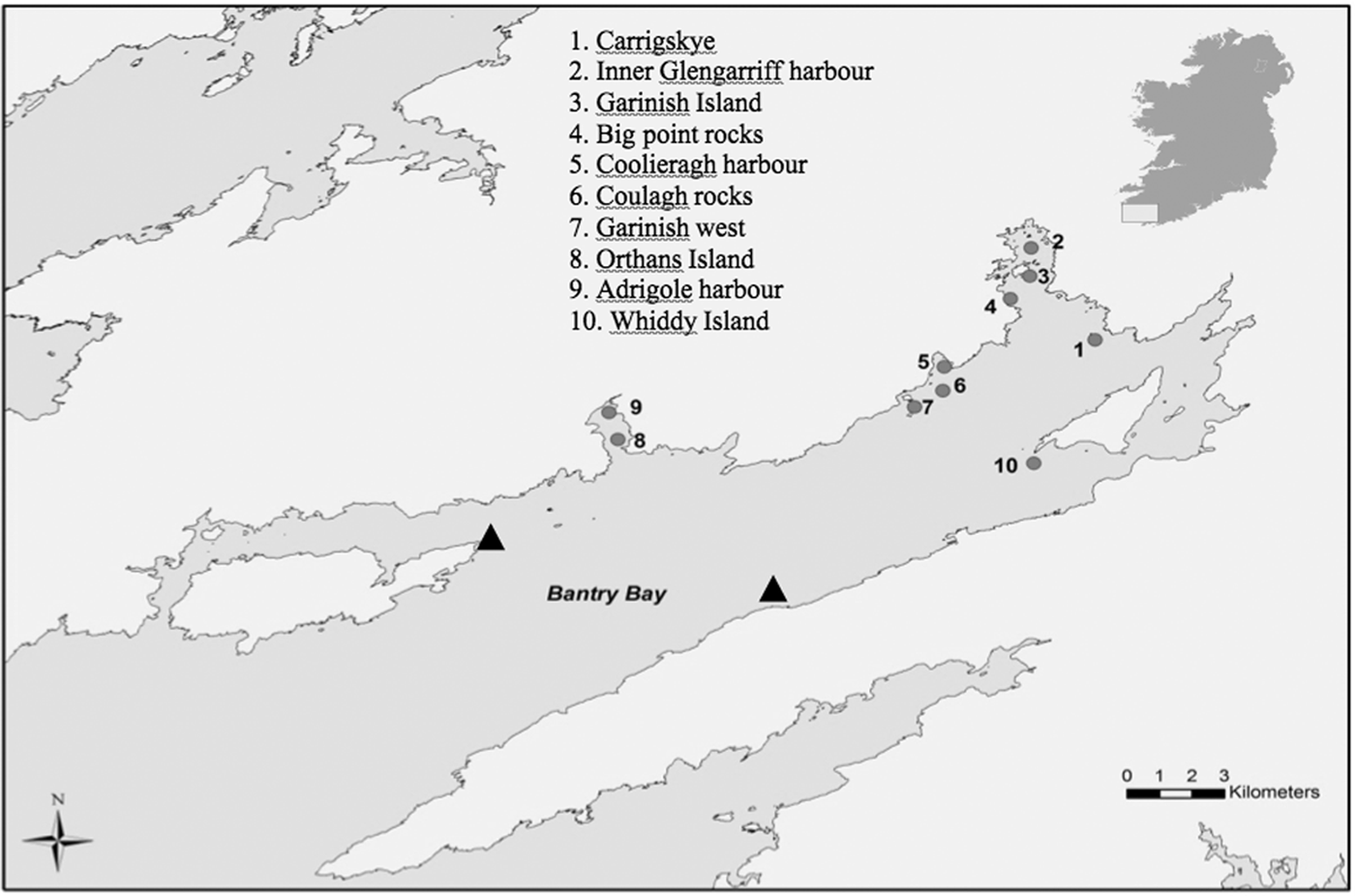
Harbour seal haul-out distribution along the Irish coastline is predominantly along the north-west, west and south-west coasts, in sheltered bays and estuaries (Cronin et al. Reference Cronin, Duck, Ó Cadhla, Nairn, Strong and O'Keeffe2007). The study area comprised a bay in south-west Ireland, Bantry Bay, County Cork (51o36′N 9o50′W) where up to 360 harbour seals haul-out during the moulting season, approximately 10% of the national minimum population estimate (Cronin et al., 2007). Haul-out substrate is exclusively rocky and haul-out sites are generally on skerries or islands located adjacent to the mainland shore and relatively accessible by boat for counting/photographing.
Surveys and image capture
Surveys of harbour seal haul-out sites in Bantry Bay were carried out between 2003 and 2008 in a Tornado 5.8 m rigid inflatable boat (RIB) on at least a weekly basis between June 2003 and October 2005 and on at least a monthly basis between June 2006 and October 2008 and more frequently when weather permitted. Surveys were scheduled to occur within two hours before and after low tide, during daylight hours and not above wind force 4 on the Beaufort scale. The numbers of seals at haul-out sites were counted using Leica 10 × 42 binoculars and recorded on a Sony Dictaphone. Counts of seals at each haul-out site were carried out independently and simultaneously by two observers and repeated if necessary until consensus was agreed. Counts were initially obtained from a distance of approximately 200 m from the haul-out site and at progressively closer ranges whilst preventing disturbance to the seals.
Where possible the RIB was manoeuvred close enough to allow the photographer to take photographs of individual seals without causing disturbance, this effort was mainly concentrated at Garnish Island in inner Bantry Bay (Figure 1). Images were obtained using a digital SLR camera (Canon EOS-IDS) with a 600 mm telephoto auto-focus image stabilizing lens (Canon 600 mm f/4L EF IS USM lens). The telephoto lens was mounted on a specialized tripod head with a gimbal-type design (WH-101 Wimberley Inc©) for easier manipulation of the large lens and to compensate for the movement of the boat. The aim was to take photographs of the head, flanks and ventrums of all individuals at a site, ideally completely un-obscured by rocks or other animals.
Harbour seal haul-out sites and environmental monitoring sites in Bantry Bay, County Cork, Ireland.

Moult phenology
IMAGE ANALYSIS
Over 8500 photographs of individuals were obtained during the survey period 2003–2008. Before any of the raw images could be analysed it was necessary to winnow down the photo catalogue into usable pictures. Each individual photograph was viewed and only those containing dry seals, where at least 80% of the body was visible at an angle giving a clear view of the head and flank, were selected. When photographing the seals multiple passes of haul-out sites were made to ensure clear images of the maximum number of animals were captured, therefore photographs taken on the same day had to be double checked to ensure there was no duplication of the same animal between pictures. This was done visually by comparing pelage patterns and the position of the seal on the shore in relation to distinguishable rock formations, areas of seaweed and other animals. No attempt was made to identify individual seals in photographs taken on different days as each sample was considered an independent random sample of the population available for photographing on that day. A total of 829 photographs of seals were deemed suitable and analysed for moult stage.
MOULT STAGING TECHNIQUE
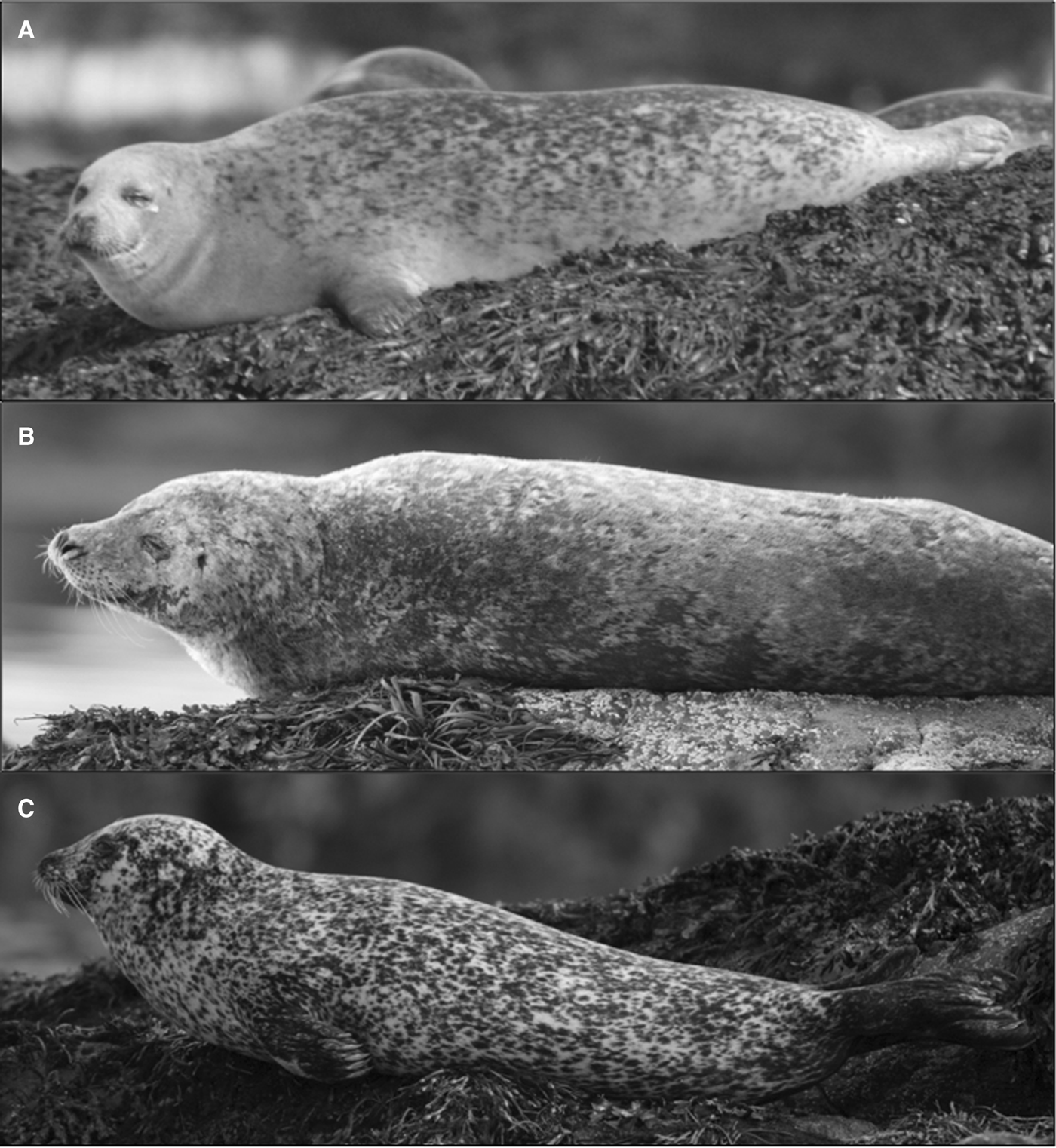
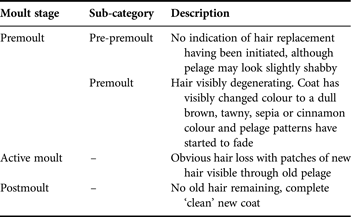
Three main stages of moult were identified—premoult, active moult, and postmoult (Table 1; Figure 2)—and the moult status of each individual recorded. For those in active moult the pattern of hair replacement across the body was noted by recording when hair was shedding in five distinct regions: (i) head and neck; (ii) the fore and hind flippers and tail; (iii) ventrum; (iv) dorsum; and (v) sides. The recognized pattern of hair replacement is that initial shedding of hair first occurs on the head and flippers followed by the ventrum, then the dorsum, with the sides being the last areas to moult (Stutz, Reference Stutz1967; Daniel et al., Reference Daniel, Jemison, Pendleton and Crowley2003). In cases where this pattern was not observed and the head and flippers were the last areas to shed, this was recorded as ‘reverse moult’.
Harbour seals in the three main defined moult stages: (A) premoult; (B) active moult; (C) postmoult.
Classification criteria used to determine moult status of harbour seals in south-west Ireland (adapted from Stutz, Reference Stutz1967; Allen et al., 1993)
AGE AND SEX DETERMINATION
Categorizing a seal by age and sex purely from an individual photograph proved difficult. Close up images of individuals removed a sense of scale to judge the size of an animal and as most seals were photographed lying on their ventrum very few displayed genitalia. During the pupping season it was possible to identify adult females as those seals that had pups in attendance. Adult males often exhibit wounds and scars around the neck resulting from fights during the breeding season (Thompson & Rothery, Reference Thompson and Rothery1987); when visible these were used to identify male seals. Individuals without these distinguishing features were classed as being of unknown sex. To distinguish age categories a simple division between adults and yearlings based on Thompson & Rothery (Reference Thompson and Rothery1987) was used, whereby yearlings were identified by their paler, unpatterned pelage which is retained until their first moult. Immature seals over one year were included in the adult category. It was not possible to differentiate between immature and mature adults.
DATA ANALYSIS
Images were combined into bi-weekly periods in order to give adequate sample sizes while still allowing relatively fine scale comparisons of timing. Inter-annual comparisons were not possible between all years due to uneven spread of effort across the entire study period; therefore the images from all years were combined into one large dataset, subdivided into the eleven bi-weekly periods. The proportion of seals in the three moult stages were calculated for each bi-weekly period. These results were plotted to illustrate the progression of moult and used to calculate the duration of the moult process and the time period when the peak of moulting occurred.
The start of moult was defined as the earliest date a seal was observed in active moult. The completion of moult was defined using the same criterion as Thompson & Rothery (Reference Thompson and Rothery1987), the time at which 50% of seals were fully moulted. A non-linear, 3-parameter sigmoid regression equation was used to fit a curve to the postmoult data and this was used to estimate the date of moult completion. The peak moult date was defined as the time when the highest proportion of seals were in active moult, the same definition used by Daniel et al. (Reference Daniel, Jemison, Pendleton and Crowley2003). By using the same criteria as the two other key harbour seal moult studies to define the peak moult and completion dates, direct comparisons could be made between the timing of these events at the different sites.
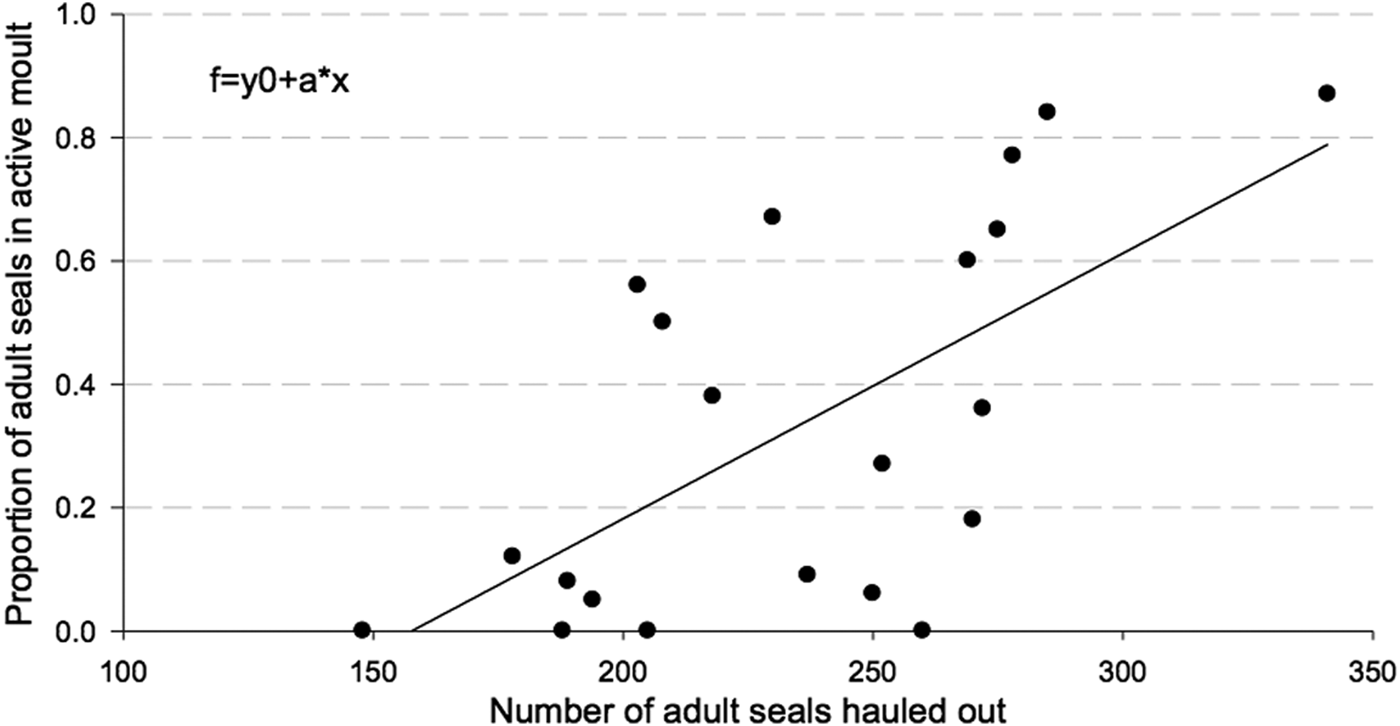
A comparison of the timing of the three moult stages between yearlings and adults was carried out using Wilcoxon's signed rank tests to assess if there were differences in the timing of premoult, active moult and postmoult between the age-classes. Sample sizes were insufficient to reliably compare the timing of moult between males and females. Counts of the numbers of seals hauled out for the entire Bantry Bay area were collected during surveys and, based on the theory that the proportion of seals in active moult in the photographed sample was representative of the wider population, a linear regression was carried out to investigate the relationship between the proportion of seals (Arcsin transformed) in active moult and the numbers of seals hauled out.
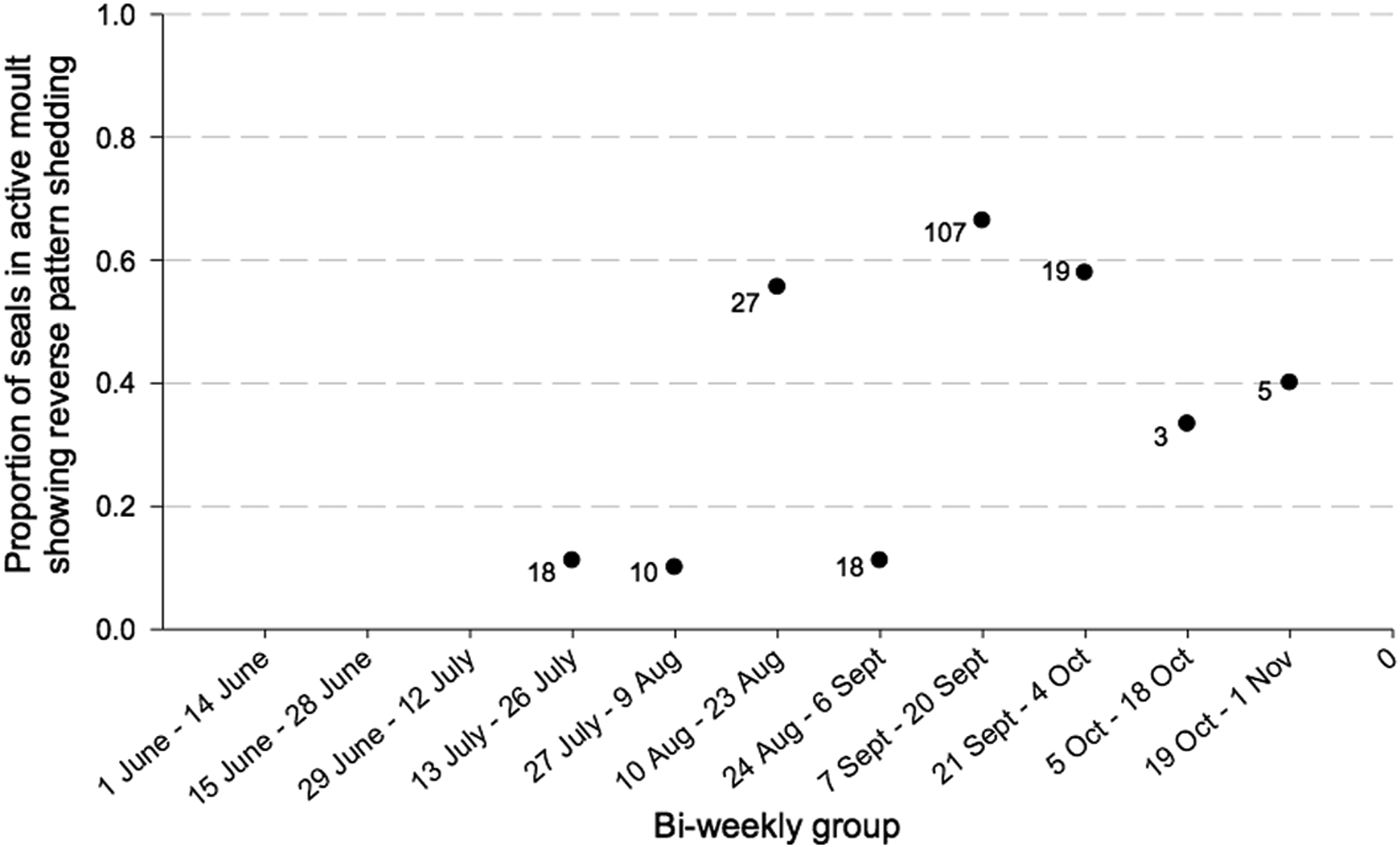
The proportion of seals in active moult that showed a reverse pattern of hair replacement was calculated using data on the shedding of hair from distinct body regions. These data were examined to determine if this pattern was constant for all bi-weekly periods or changed during the moult season.
ENVIRONMENTAL DATA
Water temperatures from two sites within Bantry Bay (Figure 1) were supplied by the Irish Marine Institute who maintain a network of temperature probes (Onset Stowaway TidBit sensors) around Ireland that provide water temperature readings every hour at multiple depths. Maximum and minimum daily air temperatures and rainfall statistics for Glengarriff (Figure 1) for the duration of the study period were supplied by Met Éireann (the Irish Meteorological Service). Astronomical measurements giving the length of day (the time of actual sunset minus the time of actual sunrise) were supplied by the online meteorological service Weather Underground. Readings were taken from Valentia Observatory (51o56′N 10o14′W), the closest monitoring site to the study area located approximately 70 km north-west of Bantry. Based on the outputs of a generalized additive model (GAM) that examined the influence of environmental factors on the progression of the moult, astronomical data on day lengths from the two other key harbour seal moult study sites, Tugidak, Alaska (Daniel et al., Reference Daniel, Jemison, Pendleton and Crowley2003), and Orkney, Scotland (Thompson & Rothery, Reference Thompson and Rothery1987), were obtained for comparative purposes.
Generalized additive models were used to examine the relationship between the proportion of seals in active moult, and environmental variables, air and water temperature, rainfall and photoperiod. Month and year were included as nominal variables. A GAM using the binomial distribution and logistic link function was used to examine the relationship between the response variable (proportion of seals in active moult) and the explanatory variables. Stepwise model selection was used to exclude/include variables, and the Akaike information criteria (AIC) statistic was used to select the best model.
RESULTS
Moult phenology
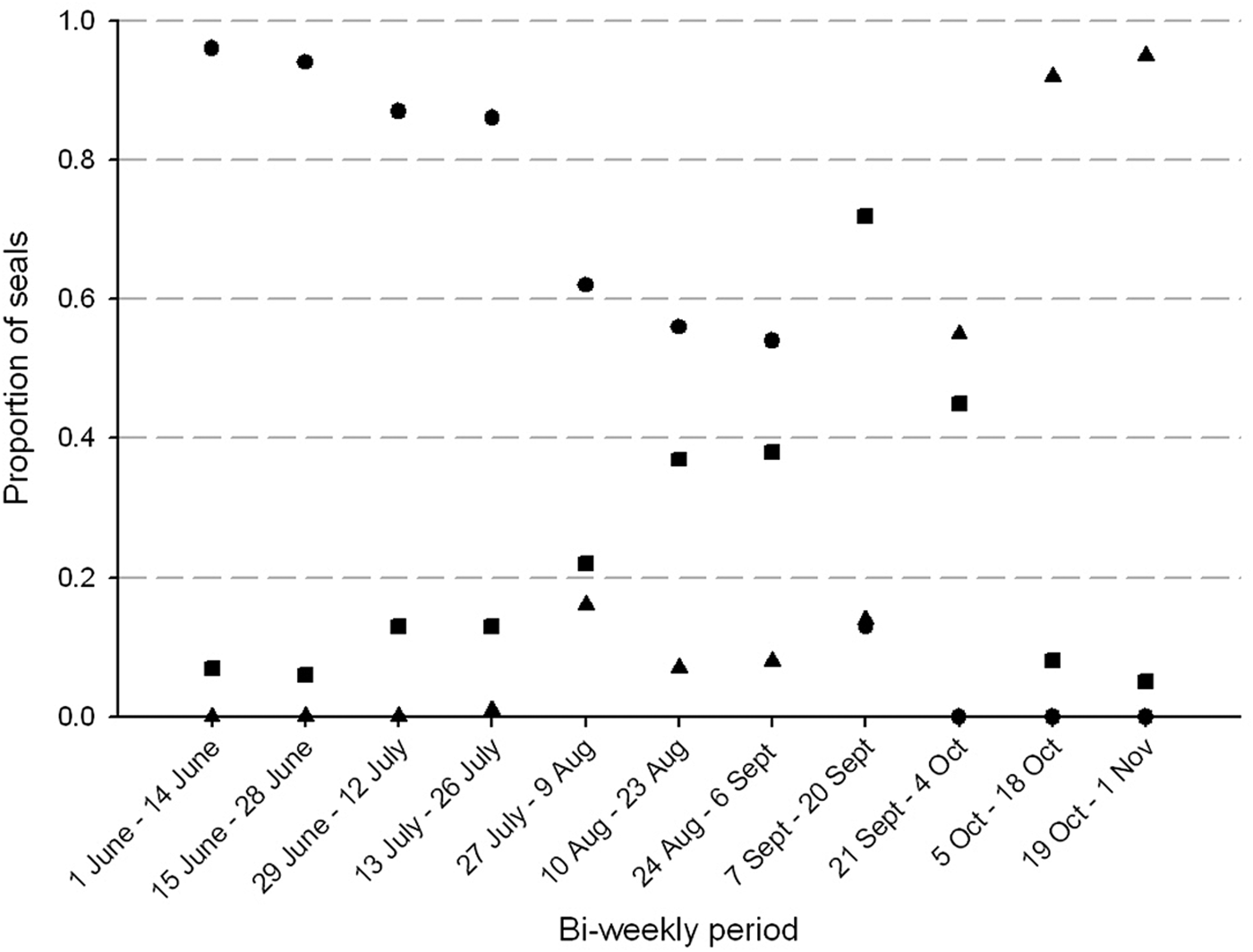
Seals in active moult were identified between 1 June and 1 November (Figure 3). The earliest instance was observed on 7 June and moult completion occurred in weeks 38/39 (mean date 27 September). The duration of the harbour seal moult period in south-west Ireland, therefore, was 16–17 weeks. The peak moult was determined as the time when the highest proportion of seals were in active moult status. This criterion identifies the peak moult time in weeks 36/37 (mean date 13 September).
Changes in the progression of moult status for all seals: premoult (circles), active moult (squares), and postmoult (triangles).
For the first six weeks of the study the only seals observed in active moult were yearlings. The first incidence of active moult in an adult was not observed until weeks 28/29 (mean date 16 July). 87% of yearlings (N = 38) were in postmoult status by weeks 34/35 (mean date 30 August); however occasional yearlings were still observed to be shedding hair as late as the end of October. There was a significant difference in the timing of premoult between adults and yearlings (P < 0.05), however there was no significant difference between the two age-classes for active moult or postmoult (P > 0.05). The first observed incidence of active moult in a female occurred during weeks 28/29 (mean date 19 July) whereas the first observed incidence of active moult in a male did not occur until weeks 32/33 (mean date 16 August).
RELATIONSHIP BETWEEN NUMBERS HAULED OUT AND PROGRESSION OF MOULT
Peak haul-out counts of seals of all ages in Bantry Bay is 1 September. A linear regression on the proportion of seals in active moult and numbers of seals at haul-out sites showed a significant positive relationship (P < 0.01, R 2 = 0.25) (Figure 4).
Linear regression showing positive relationship (P < 0.01 R 2 = 0.25) between the numbers of seals hauled out and the proportion of seals in active moult.
INCIDENCE OF REVERSE PATTERN MOULTING
Reverse pattern moulting, whereby the head and flippers were the last areas to moult as opposed to the first, was observed in 96 seals, over half the number of those observed in active moult. The frequency of reverse moulting does not appear to be consistent throughout the moult period, with peak occurrence in mid-September where almost 70% of seals in active moult showed a reverse moult pattern (Figure 5).
Proportion of seals in active moult showing a reverse pattern of hair replacement (datapoint label = sample size).
POTENTIAL INFLUENCES ON THE PHENOLOGY OF THE MOULT
The full GAM contained explanatory variables air and water temperature, rainfall and photoperiod. Stepwise removal of explanatory variables, comparing deviances of full and nested models using F tests suggested that the optimal GAM for the proportion of seals in active moult contains smoothing functions for daily maximum air temperature and photoperiod (or daylength). This resulted in a model with a lower AIC and more of the deviance explained (81.5%). Only photoperiod was significant (P < 0.001) in explaining the proportion of seals in active moult, active moult peaking with daylength of 12.5 hours (mid-September).
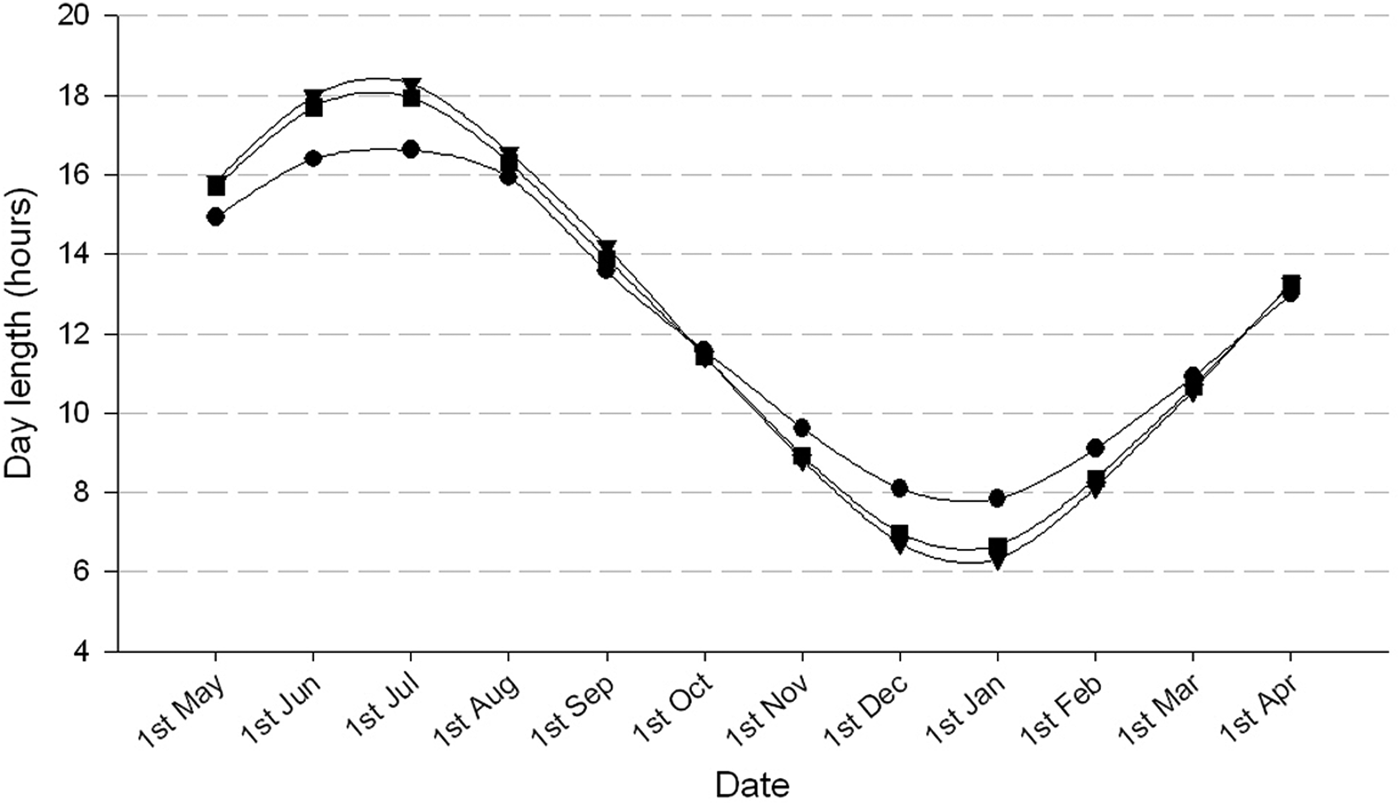
As the only significant explanatory variable was photoperiod, astronomical data were collated for the three moult study locations. The higher latitudes of the Scottish and Alaskan studies mean that both these sites experience longer periods of visible light during the summer months compared to Ireland, however by October all three sites have approximately the same photoperiod, and between November and April the length of day in Ireland is longer than the more northerly regions (Figure 6).
Comparison of day lengths at Valentia, south-west Ireland (circles), Kirkwall, Orkney, Scotland (triangles) and Kodiak, Alaska (squares).
DISCUSSION
The duration of the harbour seal moult period in south-west Ireland was 17 weeks from the first observed incidence in early June until the mean estimated completion date in late September. Comparisons with data collected in Orkney, Scotland, the closest population where moult timing has been studied, showed that the duration of the moult in Ireland was longer than the 13 weeks recorded in Scotland (Thompson & Rothery, Reference Thompson and Rothery1987). In both studies, the first observed incidence of moult occurred on 7 June, but in Scotland the mean estimated completion date was 23 August, more than four weeks prior to completion in Ireland.
Peak moult date was defined as the time at which the highest proportion of seals were in active moult, following the approach of Daniel et al. (Reference Daniel, Jemison, Pendleton and Crowley2003) and in south-west Ireland this occurred during weeks 36/37 (mean date 13 September). In Tugidak, Alaska, harbour seals peak moult occurred during late August/early September, earlier than in south-west Ireland. There is no estimate for peak moult date for seals in Scotland; however as completion of moult was observed in August (Thompson & Rothery, Reference Thompson and Rothery1987) it is likely peak moult occurs much sooner than observed in south-west Ireland.
In both the Scottish and Irish populations' yearlings were the first age-class to moult with the adult moult starting later. In Ireland, the adult moult commenced approximately 9 days later than in Scotland (16 July and 7 July, respectively) (Thompson & Rothery, Reference Thompson and Rothery1987). In Alaska, active moult of yearlings began about a month later than in Ireland or Scotland; however the dates of onset of moult in adult seals in Alaska were more similar to Ireland (Daniel et al., Reference Daniel, Jemison, Pendleton and Crowley2003).
The first observed incidence of active moult in a female in south-west Ireland occurred on 19 July whereas the first observed incidence of active moult in a male did not occur until almost a month later. This suggests that females are commencing the moult earlier than males and while the small sample sizes may affect the level of confidence in such an inference, it is supported by other studies of pinniped moult where females have been observed starting to shed hair earlier than males from the same population (Thompson & Rothery, Reference Thompson and Rothery1987; Daniel et al., Reference Daniel, Jemison, Pendleton and Crowley2003; Badosa et al., Reference Badosa, Pastor, Gazo and Aguilar2006). Age and sex related differences in the timing of the moult are reflected in heterogeneity in haul-out behaviour amongst different age- and sex-classes, which in populations with non-stable age structure, can lead to severe biases in population estimates (Harkonen et al., Reference Härkönen, Harding and Lunneryd1999), suggesting research on harbour seal population structure and haul-out behaviour at key haul-out sites in Ireland across the moult period would also be worthwhile.
Overall the moulting phenology of harbour seals in southwest Ireland appears to follow the pattern of differences between age- and sex-classes identified by previous studies, however the actual timing of the moult period is noticeably different. The extent of the moult period is longer (four weeks), the completion of moult is later (more than four weeks) than that recorded in Scotland and Alaska and the peak date is also later than recorded in Alaska.
The latitudinal gradient between the three sites may explain the differences in moult timing, as the only variable which had a significant effect on the proportion of seals in active moult was day length. In Scotland and Alaska the length of day in July is up to two hours longer than in Ireland. Photoperiodism is recognized as the most important synchronizer of seasonal functions in mammals (Hoffman, Reference Hoffman2004). Given the importance of epidermal temperature on hair replacement it is possible that at higher latitudes where the summer period has longer day lengths for a relatively short time the moult process would occur over a shorter time period than at lower latitudes where the duration of summer is longer.
The pelage cycle is closely related to the annual cycle with respect to environmental factors but also life processes—particularly reproduction (Ling, Reference Ling1970; Ashwell-Erickson et al., Reference Ashwell-Erikson, Fay and Elsner1986). In mammals which undergo a suspended embryonic development, there appears to be a close relationship between blastocyst implantation and moulting, e.g. weasels (Mustela erminea), mink (Mustela vison) and muledeer (Odocoileus hemionus) (Dolnick, Reference Dolnick1959; Wright, Reference Wright and Enders1963). In most seal species, females moult approximately one month after mating, whereas in males the delay is more variable (Ling Reference Ling1970), the exception being the subtropical Hawaiian monk seal (Monachus schauinslandi) in which breeding and moulting overlap (Ling, Reference Ling1972). The later timing of the peak and completion of the moult in harbour seals in Ireland compared to other parts of their range could be linked to potential geographical related differences in pupping phenology (e.g. Temte et al., Reference Temte, Bigg and Wiig1991). Indeed recent evidence suggests later pupping in harbour seals in Ireland (Cronin, unpublished) compared to other parts of their European range (e.g. Gjertz & Borset, Reference Gjertz and Borset1992; Thompson & Wheeler, Reference Thompson and Wheeler2008; Reijnders et al., Reference Reijnders, Brasseur and Meesters2010) and is being explored further.
By recording the progression of shedding hair pattern across the body, this study has discovered an interesting phenomenon whereby a large proportion of the seals in southwest Ireland showed a reverse pattern of hair replacement. The recognized pattern of hair replacement for most pinnipeds, including harbour seals, has been recorded as starting on the head and flippers, then on the ventrum followed by the dorsum, with the sides being the last areas to moult (Stutz Reference Stutz1967; Daniel et al., Reference Daniel, Jemison, Pendleton and Crowley2003), yet this study observed the head and flippers as being the last areas to moult in 48% of the seals in active moult. Daniel et al. (Reference Daniel, Jemison, Pendleton and Crowley2003) observed, although did not quantify, several cases of reverse moulting patterns for all cohorts of harbour seals in Tugidak, Alaska. Reverse moult has been recorded in starving grey (H. grypus) and harp (Pagophilus groenlanicus) seal pups in the Gulf of St Lawrence and has been associated with poor nutritional condition (Lydersen et al., Reference Lydersen, Kovacs and Hammill2000). The seals observed in reverse moult in south-west Ireland showed no evident physical signs of being nutritionally compromised, however, a dedicated study on body condition using ultrasound measurements of blubber thickness and/or labelled water dilution techniques (e.g. Reilly & Fedak, Reference Reilly and Fedak1990) would be worthwhile.
Photogrammetric techniques were shown to be effective in identifying stages of moult in individual harbour seals and with sufficient photographic effort across the moult period can enable the phenology of the moult to be established. Field measurements of the progression of the moult are labour intensive and often difficult to conduct, with in situ subjective classification of individuals (from a distance) into pre-defined categories invariably leading to sampling bias. Our approach of capturing images of individuals across the moult period with subsequent analysis in the laboratory is an approach that provides more opportunity for quality control over the subsequent categorization process. Photo catalogues of harbour seals exist across parts of the species range resulting from mark recapture studies (e.g. Hastings et al., Reference Hastings, Small and Hiby2001; Cunningham et al., Reference Cunningham, Baxter, Boyd, Duck, Lonergan, Moss and McConnell2009) and could retrospectively be utilized to examine potential changes in the timing of the moult in these regions. As temporal changes in the timing of the harbour seal moult have been observed (e.g. Daniel et al., 2003) ideally sample effort would be high enough to allow between year comparisons; changes in moult phenology may reflect changes in resource availability or demographic changes.
Accurate information on the timing of moult is of importance to the increasing numbers of researchers using remote sensing devices deployed on animals to track movement and behaviour (e.g. Cronin & McConnell, Reference Cronin and McConnell2008). Expensive radio and satellite tags are traditionally glued to the pelage of animals and lost when the fur is shed. A greater understanding of the timing of moult would allow researchers to determine the optimal time for instrument attachment, thus reducing potential time loss through capturing unsuitable animals, maximizing the data collection period and also reducing the potential loss of equipment.
Fundamentally this study has shown that the assumption that the annual moult for seals in Ireland occurs from late July to mid-August (Cronin et al., 2007), the same time as those in the UK (Bonner, Reference Bonner1972) is incorrect; the peak in moult occurs in early September, with actual completion being considerably later in mid-October. The significant relationship between haul-out counts and the proportion of seals in active moult suggests that the timing of moult influences haul-out behaviour, and therefore will influence the numbers of seals ashore for estimates of population size. A long-term harbour seal monitoring programme is currently under development in Ireland and it is critical that such information is integrated into this process to identify optimal survey timing based on phenology of the moult in Ireland as opposed to elsewhere across the species range, as was the case during the 2003 harbour seal census (Cronin et al., 2007). When the timing of once-off surveys to establish population estimates is based on such information, it can have significant consequences for the accuracy of population estimates.
ACKNOWLEDGEMENTS
We thank the following who assisted in the field, Mick Mackey, Simon Ingram and Daphne Roycroft. The research was funded by a Higher Education Authority grant under the PRTLI3 funding mechanism and a Beaufort Marine Research Award carried out under the Sea Change Strategy and the Strategy for Science Technology and Innovation (2006–2013), with the support of the Marine Institute, funded under the Marine Research Sub-Programme of the National Development Plan 2007–2013.