





Impact statement
This paper advances biodesign by introducing a conceptual framework for scalable AI-mediated ecological representation. By integrating plant sensing, environmental monitoring and machine learning through a non-human-centered design lens, the project expands biodesign beyond material biofabrication toward technological systems that enable relational ecological mediation and renewed engagement with living systems.
Introduction
Imagine a world in which you could speak with the tree in your backyard, your whole garden or even your local woodland. Not metaphorically, but through an interface that translates its biological state, environmental context and long-term patterns into forms humans can perceive, question and respond to. Imagine entire ecosystems that are able to represent themselves, imperfectly and probabilistically yes but meaningfully nonetheless, within human technological, social and even legal systems.
In the 19th century, a white oak tree in Athens, Georgia, was granted legal ownership of the land surrounding its trunk becoming one of the earliest examples of non-human legal recognition. Though the tree itself could not comprehend human property law, the gesture altered how the surrounding community treated it. The tree was cared for throughout its life and when it eventually fell, one of its acorns was planted in its place. This story suggests that even symbolic mechanisms of representation can reshape human behavior toward non-human entities. It also raises a broader question: what might it mean for living systems to participate more directly in human decision-making structures?
This speculative scenario forms the conceptual foundation of the Ambassador Trees project and its early physical instantiations, known as Treeborgs. Rather than proposing literal plant consciousness or human-like agency, this work explores how emerging technologies in plant sensing, environmental monitoring and artificial intelligence might be combined to create new modes of human-nature communication. Within this framework, trees function as localized ecological representatives, sensor-augmented organisms that mediate between biological processes and human interpretation.
Recent work in Human-Plant Interaction (HPI) has similarly explored plants as active participants within computational and relational systems rather than passive environmental background. Chang et al. (Reference Chang, Shen, Maheshwari, Danielescu and Yao2022) identify emerging design paradigms in which plants function as sensing entities, communicative interfaces and components of multispecies interaction systems, highlighting opportunities for more sustainable and non-anthropocentric approaches to technology design. This broader shift toward relational and interspecies design provides an important conceptual foundation for the Ambassador Trees framework.
Trees and other plants are uniquely positioned as mediators between ecosystem dynamics and human understanding. Rooted in place yet physiologically responsive, they continuously integrate signals from soil chemistry, atmospheric conditions, microbial activity and multispecies interaction over extended timescales. Changes in plant physiology therefore can serve as early indicators of broader ecological patterns. For a system concerned with ecological translation rather than optimization alone, trees provide a particularly rich and situated substrate for sensing-based interpretation. Beyond their ecological role, trees hold enduring symbolic significance across cultures, frequently representing continuity, interconnection and the natural world itself. Their recognizability and cultural resonance make them particularly effective as design anchors for systems intended to mediate between human and non-human domains.
At a technical level, the project draws on recent advances in flexible and wearable plant sensors, distributed environmental sensing networks and generative machine learning models capable of integrating heterogeneous, noisy and incomplete data. At a design level, it adopts a non-human-centered and speculative design approach, treating sensing and AI not primarily as tools for optimization or extraction, but as media for relational engagement. The goal is not to make ecosystems more useful to humans, but more legible, more present and more difficult to ignore.
This reframing responds to a well-documented human limitation. People can be quite poor at perceiving slow, distributed and incremental change. Plants and the ecosystems they form the foundation of, grow, suffer, adapt and decline on timescales that rarely align with human attention. One possible response to this perceptual mismatch is to create translation systems, technological intermediaries that render non-human signals into forms that invite empathy, reflection and care. Recent developments in AI, particularly generative and large language models, offer new opportunities for such translation, provided they are deployed with care and humility.
Networked plant and environmental monitoring systems already exist and continue to mature, particularly in agricultural, forestry and resource management contexts. These systems are typically designed to increase efficiency, yield or extractive control. The Ambassador Trees project diverges from this trajectory by asking a different question: how might the same sensing and modeling infrastructures be repurposed to support understanding rather than optimization, relationship rather than extraction? This shift is explored through speculative integration rather than technological invention, assembling existing research into a new configuration oriented toward ecological representation.
Emerging plant-technology hybrids already span a wide range of motivations and applications. At one end of this spectrum lies what might be described as robotany: engineering-driven systems focused on optimization, agricultural efficiency, environmental control and goal-oriented performance. Take for example work by Li et al. where a venus flytrap is grafted onto a robotic arm and used as a robotic gripper (Li et al. Reference Li, Matsuhisa, Liu, Wang, Luo, Cai, Chen, Zhang, Li, Liu, Lv, Zhang and Chen2021). At the other end lies what could be called robonsai: artistic and design-oriented explorations that foreground aesthetic, relational and experiential qualities of plant-machine interaction. For example, the machete-wielding phylodendron plant-robot hybrid designed by David Bowen, where electrical signals from the plant directly control the movements of a robotic arm with attached machete (Barnes and Bowen Reference Barnes and Bowen2022). The Ambassador Trees project positions itself deliberately between these poles. It draws on the technical rigor and sensing capabilities of robotany while embracing the reflective, speculative and relational ambitions of robonsai. By operating across this spectrum, the project seeks not to optimize plant systems nor to produce purely symbolic artifacts, but to explore how technical infrastructures might be reoriented toward ecological representation and care.
This paper contributes to biodesign research in three primary ways. First, it proposes the Ambassador Trees framework as a conceptual model and research agenda for developing AI-mediated ecological representation across scales (Figures 1 and 2). Second, it briefly reviews research in plant sensing, environmental monitoring and artificial intelligence through a non-human-centered design lens, highlighting both opportunities and constraints in each field. In response to the scope of this paper, the literature review is selective and integrative rather than exhaustive. Third, it presents a series of early physical prototypes, the Treeborgs, that operationalize this framework through interactive artifacts, demonstrating how speculative ecological translation can be embodied, exhibited and experienced.
High-level system diagram.

Figure 1. Long description
The diagram presents a layered framework for translating ecological signals into human-facing interactions. At the bottom, the Ecological Sensing Layer gathers data through plant sensors, environmental sensors, and remote sensing. This feeds into the Ecological Modeling Layer, where multimodal data fusion, generative and physics-informed models, and system boundary design interpret the data. The AI Mediation Layer then translates system status through AI agent design, metrics, and ethical constraints. At the top, the Human Interface Layer presents outputs through remote interactions, embodied agents, and feedback or updates. Arrows show information moving upward through the system, with feedback loops returning from human and AI layers to earlier modeling stages.
System scale overview diagram.
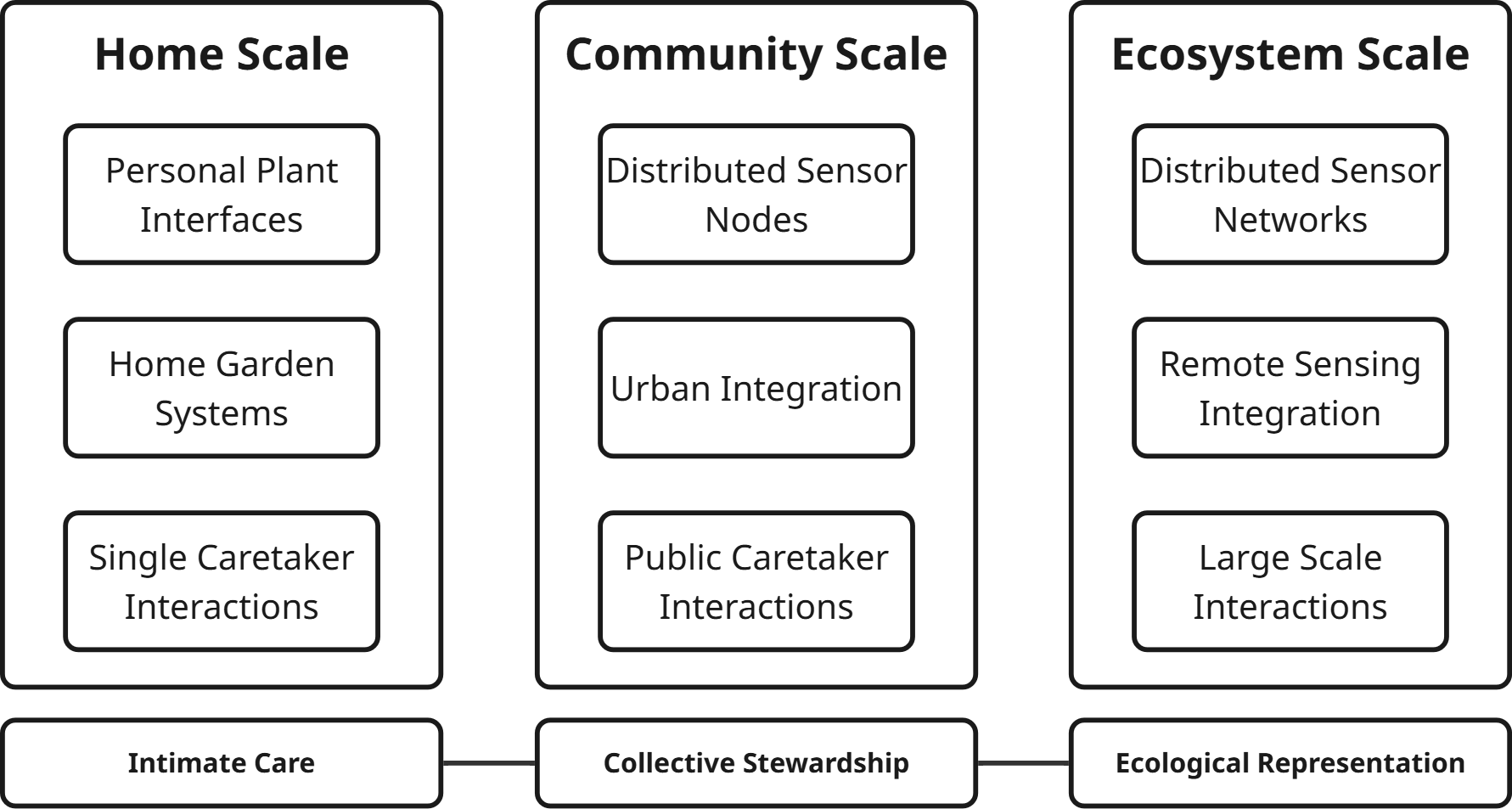
Figure 2. Long description
The diagram presents the Ambassador Trees framework across three scales: Home, Community, and Ecosystem. At the home scale, personal plant interfaces and garden systems support intimate, single-caretaker interactions. At the community scale, distributed sensor nodes and urban integration enable public caretaker interactions and collective stewardship. At the ecosystem scale, larger sensor networks and remote sensing support broad ecological representation. Overall, the diagram shows how the project scales from individual plant care to community stewardship and ecosystem-level interpretation.
Taken together, these contributions position the Ambassador Trees project not as a finished system, but as an invitation to imagine how sensing, AI and design might be used to renegotiate humanity’s relationship with the living world. If humans could, even imperfectly, “listen” to their non-human neighbors in a more literal way, it is possible that understanding, care, responsibility and restraint might follow. This paper explores how such listening might begin.
Methodological approach
This work adopts a research through design (RtD) methodology, situated within traditions of speculative design and non-human-centered design. Recent work in more-than-human and posthuman design has argued for expanding design practice beyond exclusively human users, recognizing non-human organisms, environments and infrastructures as active participants in designed systems (Forlano Reference Forlano2017). Rather than seeking to validate predefined hypotheses through controlled experimentation, the goal of this research is to explore how emerging sensing and AI technologies might be reconfigured to support new forms of human-nature communication. In RtD, knowledge is generated through the iterative development of concepts, prototypes and situated deployments that make abstract futures tangible and open to realization and critique (Gaver Reference Gaver2012; Zimmerman et al. Reference Zimmerman, Forlizzi and Evenson2007).
Speculative design plays a central role in this approach. By deliberately constructing scenarios that extend beyond current technical implementations, speculation functions as a tool for inquiry rather than prediction. As articulated by Dunne and Raby (Dunne 2013), speculative design enables designers and researchers to question dominant technological trajectories and surface alternative values, assumptions and futures. Thus, the Ambassador Trees framework is not presented as a finished or inevitable system, but as a provocation that integrates existing research in plant sensing, environmental monitoring and artificial intelligence into an alternative technological trajectory oriented toward ecological representation rather than extraction. This speculative framing allows the work to surface assumptions, values and design trade-offs that are often implicit in environmental monitoring systems.
The technical component of the methodology consists of a structured synthesis of existing literature across plant sensing, environmental sensing and machine learning. Rather than exhaustively reviewing these domains, the paper selectively focuses on technologies and approaches that enable ecological translation, interpretability and multiscale context. This synthesis informs the design of the Ambassador Trees framework and identifies both opportunities and constraints relevant to translation-oriented systems. This form of integrative synthesis aligns with prior design research approaches that treat technical knowledge as material for conceptual exploration rather than purely instrumental application (Koskinen Reference Koskinen2011).
Physical prototyping serves as a core method for grounding speculation in material reality. The Treeborg artifacts were developed as exploratory prototypes intended to embody key aspects of the Ambassador Trees concept, including interspecies interaction, distributed sensing and AI-mediated interpretation. These prototypes were not designed to optimize technical performance, but to explore interaction paradigms, representational strategies and aesthetic relationships between biological and technological components. Their deployment in a public exhibition context functioned as an ’in the wild’ exploration of how such systems might be perceived, interpreted and engaged with by non-expert audiences.
Evaluation within this study is therefore qualitative and exploratory. While no formal user study was conducted, observations of interaction, engagement and discourse during the exhibition informed reflective analysis of the prototypes’ communicative effectiveness. The absence of quantitative evaluation is an intentional limitation of the current work, which prioritizes conceptual development and design exploration. Future research will build on this foundation through more systematic studies and long-term deployments.
Plant sensing
Recent advances in plant sensing technologies have significantly expanded the range of biological signals that can be measured directly from living plants. While much of this work has emerged from agricultural and production-oriented research, these sensing modalities can be re-framed through a speculative and non-human-centered design lens. Rather than treating plants as passive measurement sites, plant-based sensors provide access to how organisms experience, regulate and express their relationship to environmental conditions. In this sense, plant sensing does not simply describe the environment, it reveals the plant’s situated response to it, suggesting new possibilities for mediating human-plant and human-ecosystem interactions.
Xu et al. (Reference Xu, Chen, Hu, Zhang, Huang, Li, Xiong, Huang and Zhu2024) provide a comprehensive overview of recent developments in flexible and wearable plant sensors, organizing the field into three primary categories: physical, chemical and biological sensing. Rather than treating these categories as exhaustive taxonomies, this paper interprets them as complementary layers of plant expression, each capturing a different aspect of how organisms embody, signal and regulate their interaction with environmental conditions.
Physical sensing: embodiment and constraint
Physical sensing captures how plants materially inhabit and respond to their environments. These sensors make visible processes that are often too slow, subtle or distributed for human perception, including growth, mechanical stress, transpiration, sap flow and photosynthetic activity.
Strain and deformation sensors, for example, can reveal growth rates, mechanical stress caused by wind or drought and longer-term structural adaptation. Wearable carbon nanotube/graphite strain sensors have been shown to detect plant growth dynamics across scales ranging from nanometers to centimeters, translating mechanical deformation into electrical signals for real-time monitoring of plant activity and response to external stimuli, including previously unobservable rhythmic growth patterns in fruits and stems (Tang et al. Reference Tang, Yan, Ping, Wu and Ying2017, Reference Tang, Yan, Wang, Yang, Wu, Wang, Yue and Li2019).
Other forms of physical sensing provide insight into how plants manage water, heat and energy. Temperature and humidity sensors placed on plant surfaces can reveal patterns of thermal regulation, transpiration and heat stress (Dong et al. Reference Dong, Wang, Zhang, Wang, Zhao, Chang, Lu and Zhao2023). Flexible humidity-based sensors attached to leaf surfaces can detect changes in stomatal behavior by measuring evaporation rates, effectively translating plant water stress responses, such as drought-induced stomatal closure, into measurable electrical signals (Im et al. Reference Im, Lee, Naqi, Lee and Kim2018). Beyond surface-level measurements, emerging plant-wearable systems are beginning to capture internal physical processes such as sap flow. Chai et al. demonstrated continuous monitoring of stem sap flow, providing direct insight into water transport, nutrient distribution and plant physiological activity without disrupting growth (Chai et al. Reference Chai, Chen, Luo, Zhan, Kim, Luo, Wang, Hu, Ying and Liu2021).
Optical sensors further extend physical sensing into plant energy acquisition and photosynthetic capacity. Lightweight, leaf-patchable reflectance meters can monitor chlorophyll content non-destructively over time, providing a proxy for photosynthetic capacity, nitrogen status and overall plant health through reflected light spectra (Zhang et al. Reference Zhang, Li, Li, Luo, Li, Wang and Chen2023).
Groups of such sensors can be combined to create a wearable device that paints a more holistic picture of plant health and status. Lu et al. developed an integrated flexible plant healthcare sensor system that combined humidity, optical and temperature sensors into a single lightweight wearable platform capable of monitoring transpiration, ambient humidity, light exposure and dehydration conditions in real time (Lu et al. Reference Lu, Xu, Zhang, Deguchi, Shishido, Arie, Pan, Hayashi, Shen, Akita and Takei2020). Such multimodal approaches are especially relevant to the Ambassador Trees framework because they show how individual sensor streams gain meaning through their relationships to broader patterns of plant behavior and environmental interaction.
Chemical sensing: stress and interaction
Chemical sensing provides access to less visible dimensions of plant behavior, including stress response, signaling and internal electrochemical regulation. While physical sensors often show how a plant is materially responding to its surroundings, chemical sensors begin to reveal how plants signal, mediate and regulate those responses. Gas sensors capable of detecting volatile organic compounds (VOCs), for instance, allow researchers to monitor plant responses to herbivory, disease and abiotic stress, as well as signaling pathways involved in plant-plant and plant-insect communication. Wearable chemiresistive sensor arrays now make it possible to profile plant VOCs in situ. Li et al. report a leaf-attachable rGO-based patch that classified thirteen individual plant volatiles with greater than 97% accuracy and detected late blight and mechanical damage non-invasively, showing that VOCs can function as early stress markers (Li et al. Reference Li, Sun, Pan, Shi, Lv, An, He, Chen, Han, Zhang, Lu, Liang and Liu2023). Complementing this, Zheng et al. (Reference Zheng, Zhou, Wang and Du2023) developed a room-temperature Au interdigital electrode chemiresistor using a polyethylene-co-vinyl acetate/multi-walled carbon nanotube film that selectively monitored the VOC
 $\alpha$
-pinene from Platycladus orientalis. The sensor responded to bark damage and drought stress and was integrated with an near field communication tag for wireless readout.
In addition to volatile signaling, chemical sensing technologies increasingly target ionic and electrochemical processes within plants, providing access to internal physiological dynamics such as ion transport, membrane potentials and stress-induced signaling. Recent advances in plant bioelectronic interfaces have enabled direct measurement of ion flux within living tissues. For example, stiffness-morphing conductive microneedle patches developed by Kong et al. can continuously monitor cation fluctuations and electrophysiological signals in situ. These systems combine ionic and electronic conductivity to detect real-time changes in ions such as K+ associated with environmental stress responses (Kong et al. Reference Kong, Wen, Luo, Chen, Sheng, Liu and Chen2023).
Complementing these minimally invasive approaches, non-invasive ionic electrodes have also been developed to interface with plant surfaces. Morphable thermogel-based electrodes can transition from liquid to gel in situ, conforming to complex plant topographies such as trichome-covered surfaces while maintaining stable ionic conductivity. These systems enable high-fidelity electrophysiological recording and ion-related signal detection without penetrating the tissue (Luo et al. Reference Luo, Li, Lin, Zhang, He, Yang, Loh and Chen2021).
Ruiz-Gonzalez et al. developed a low-cost, open-source implantable sensing platform for continuous in vivo monitoring of xylem sap pH in tomato plants (Ruiz-Gonzalez et al. Reference Ruiz-Gonzalez, Kempson and Haseloff2022). Using electrodeposited ruthenium oxide nanofilms combined with cellulose/polydimethylsiloxane protective coatings, the system enabled prolonged physiological monitoring of internal plant conditions through a compact wireless sensing architecture. Beyond its sensing capabilities, the open-source and accessible fabrication approach aligns closely with the broader aims of the Ambassador Trees framework, suggesting how ecological sensing systems might remain transparent, adaptable and publicly accessible rather than dependent on proprietary infrastructures. In contrast to gas sensing, which captures outward chemical emissions, ion-based sensing reveals the internal electrochemical processes that drive plant behavior, making it a critical component for translation-oriented systems that seek to interpret plant physiology rather than simply monitor environmental conditions.
Biological sensing: internal state and time
Beyond ionic signaling, plant sensing technologies are increasingly able to target biochemical regulators such as phytohormones, metabolites and pathogens which coordinate and/or effect growth, development and stress responses across the organism.
Sensors targeting phytohormones can indicate developmental transitions such as flowering, fruiting, senescence and stress response. Ethylene, for example, is a key gaseous phytohormone involved in fruit ripening, senescence and stress signaling. Recent work has demonstrated flexible, plant-wearable sensors capable of detecting ethylene emissions directly on plant surfaces. Li et al. developed MXene-printed wireless radio frequency resonator sensors that have been used to monitor ethylene in situ, achieving detection limits as low as 0.084 ppm and enabling continuous wireless tracking of hormone dynamics during plant development (Li et al. Reference Li, Sun, Pan, Shi, Lv, An, He, Chen, Han, Zhang, Lu, Liang and Liu2023).
While volatile hormones such as ethylene can be sensed externally, other phytohormones operate within plant tissues and require direct or minimally invasive sensing approaches. Abscisic acid (ABA), a central regulator of drought response, stomatal closure and growth inhibition, has been targeted using electrochemical microneedle sensors capable of in situ measurement within living plants. Microneedle array systems based on Au@SnO–graphene composites enable direct electrocatalytic detection of ABA across a wide concentration range, allowing real-time monitoring of hormone dynamics with high sensitivity (Wang et al. Reference Wang, Xue, Li, Li, Li and Li2021).
Beyond phytohormones, biological sensing can also target plant metabolites, offering a more direct readout of physiological state and metabolic adjustment. Glycine betaine is a particularly useful example because it accumulates under abiotic stress and functions as an osmoprotectant. Recent work has demonstrated an ultrasensitive electrochemical sensor that measured glycine betaine in vivo in plants, with a wide detection range and successful application to cucumber seedlings under salinity stress (Ai et al. Reference Ai, Zhou, Zhang, Wei, Luo, Xie, Wang, Xue and Li2024). In a related but distinct metabolic channel, glucose has been monitored in plant interstitial fluid using a silk-microneedle patch with embedded wire electrodes, enabling minimally invasive in situ sensing across plant-relevant concentrations and tracking glucose changes during tomato growth and ripening (Zheng et al. Reference Zheng, Zhu, Wang, Liu, Thng and Chen2022). Together, these examples show that metabolite sensing can capture both stress adaptation and developmental metabolism in living plants.
In addition to monitoring endogenous biological processes, plant sensing technologies are increasingly capable of detecting external biological agents such as pathogens, enabling early diagnosis of disease. For example, surface-enhanced Raman scattering (SERS)-based sensing hydrogels have been developed for direct, in situ detection of viral pathogens in plants. These systems integrate reagentless nucleic acid sensors within a hydrogel matrix that can extract interstitial fluid upon contact with a leaf, allowing molecular identification of pathogens such as tobacco mosaic virus (TMV) without extensive sample preparation (Kissell et al. Reference Kissell, Liu, Sheokand, Vang, Kachroo and Strobbia2024). Notably, this approach enables detection of viral ribonucleic acid directly from plant tissue, including in pre-symptomatic stages of infection, addressing a key limitation of conventional visual diagnostics and many field-deployable methods. By combining molecular specificity with simple, contact-based deployment, such platforms demonstrate the potential for rapid, field-compatible pathogen detection.
Because these biochemical processes are tightly coupled to environmental conditions and ecological interactions, they provide insight not only into momentary plant health but can also into longer-term trends of adaptation, resilience and decline (Xu et al. Reference Xu, Chen, Hu, Zhang, Huang, Li, Xiong, Huang and Zhu2024). As such, biological sensing offers an important temporal dimension for systems attempting to represent living processes rather than static states.
Current limitations and open challenges
Despite rapid progress in plant sensing technologies, several challenges remain that are particularly relevant for translation-oriented systems. Long-term energy supply continues to be a major constraint, especially for sensors deployed in remote or unmanaged environments. Signal transmission reliability, material durability and the environmental impact of sensor fabrication and disposal remain open areas for further development. While recent work on flexible, wearable and biodegradable sensors has shown promise, scaling these technologies beyond controlled settings presents ongoing difficulties (Xu et al. Reference Xu, Chen, Hu, Zhang, Huang, Li, Xiong, Huang and Zhu2024).
Equally critical, however, is the challenge of interpretation. Individual sensor streams provide limited insight in isolation, and meaningful ecological representation requires integrating multiple sensing modalities across time and environmental context. Without robust methods for data fusion and interpretation, plant sensing risks misrepresenting the reality of what the plant is experiencing. This interpretive gap between raw biological signals and meaningful ecological understanding motivates the integration of machine learning and generative AI as mediating layers within the Ambassador Trees framework. Only through such integration can plant sensing move beyond monitoring toward translation, enabling plants to function as ecological representatives rather than passive data sources.
Taken together, these sensing modalities describe how a plant experiences and responds to its environment. However, without complementary measurements of the surrounding conditions themselves, these signals remain incomplete and difficult to interpret in isolation.
Environmental sensing
While plant-based sensors capture the organism’s internal and embodied responses, environmental sensing provides the external context necessary to interpret those responses meaningfully. Within the Ambassador Trees framework, environmental sensing therefore functions not as a redundant layer to plant sensing but as a necessary contextual layer that situates plant signals within the broader systems in which they arise.
Over the past two decades, advances in environmental sensing have significantly expanded the spatial and temporal resolution at which ecosystems can be observed. Improvements in sensor reliability, miniaturization, energy efficiency and cost, coupled with the increasing availability of networked communication infrastructure, have enabled large-scale, decentralized environmental monitoring systems to become feasible in both research and applied contexts (Rundel et al. Reference Rundel, Graham, Allen, Fisher and Harmon2009). Major initiatives such as the National Ecological Observatory Network (NEON) and the Global Lake Ecological Observatory Network (GLEON) demonstrate the viability of persistent, open-access ecological sensing at massive scales, providing a growing foundation of environmental data relevant to systems such as that imagined by this project.
Similarly to plant sensing, environmental sensing technologies can be broadly categorized into physical, chemical and biological modalities (Rundel et al. Reference Rundel, Graham, Allen, Fisher and Harmon2009). However, it is important to again emphasize that these categories operate at a fundamentally different level than in plant sensing. Rather than describing organism-level expression, they characterize the external conditions and processes that shape plant behavior.
Physical environmental sensors
Physical environmental sensors measure variables such as air temperature, relative humidity, soil temperature, soil moisture, wind speed and wind direction. These measurements define the immediate physical conditions under which plants grow, transpire and exchange energy with their surroundings, independent of how those conditions are internally processed by the organism. When combined with plant-level measurements, physical environmental data helps distinguish between intrinsic biological responses and externally imposed stressors, grounding interpretation in situational awareness rather than isolated readings.
Chemical environmental sensors
Chemical environmental sensors capture changes in atmospheric and soil composition, including concentrations of carbon dioxide, nitrates and soil pH. In contrast to plant chemical sensing, these measurements describe the chemical environment acting upon the plant rather than the signals produced by it. These measurements provide insight into nutrient availability, carbon cycling and anthropogenic influence on ecosystems. For example recent work has demonstrated plant-wearable electrochemical sensors capable of in situ detection of organophosphorus pesticides directly on crop surfaces. Zhao et al demonstrate this technology worked into an IoT system where pesticide presence can be measured in real time and transmitted wirelessly to mobile devices (Zhao et al. Reference Zhao, He, Li, Bai, Ying and Ping2020). From a translation perspective, chemical environmental data helps contextualize plant chemical signaling, enabling interpretations that reflect shared ecological processes rather than attributing all change to internal plant dynamics.
Biological environmental sensors
Biological environmental sensors extend beyond abiotic measurement to include observation of other living components of ecosystems. Digital imaging systems, acoustic sensors and below-ground observation tools such as minirhizotron cameras allow researchers to monitor vegetation dynamics, animal activity and root-microbe interactions (Rundel et al. Reference Rundel, Graham, Allen, Fisher and Harmon2009). Although these sensors are not plant-based, they are essential for interpreting plant signals as part of a multispecies network rather than as isolated organisms. This layer of sensing is key for scaling up the project beyond artifacts representing individual organisms and towards representing entire ecosystems.
Remote environmental sensors
An important extension of in situ environmental sensing is remote sensing via satellite-based optical, multispectral and lidar instruments. Remote sensing has become a cornerstone of large-scale ecological monitoring, enabling the assessment of vegetation health, land use change, biomass distribution and hydrological dynamics across vast regions. Within the Ambassador Trees framework, such data can serve as a complementary layer at the largest scale of implementation, situating localized plant and environmental sensing within regional and global ecological patterns.
Networked and multiscale sensing
Rundel et al. (Reference Rundel, Graham, Allen, Fisher and Harmon2009) describe a range of deployed environmental sensing networks that illustrate the breadth and adaptability of these technologies, including terrestrial, soil-based and aquatic systems. Examples such as peer-to-peer data transmission systems mounted to animals, autonomous robotic platforms for aquatic monitoring and distributed root imaging systems highlight how sensing can occur across scales and through unconventional infrastructures. While a detailed discussion of these systems lies beyond the scope of this paper, they collectively demonstrate the maturity of environmental sensing as a field and its readiness for integration into more speculative, relational applications.
Current limitations and open challenges
Despite significant progress, environmental sensing systems continue to face challenges that are particularly salient for translation-oriented applications. Large-scale sensor networks generate vast quantities of data that must be transmitted, stored, verified and interpreted. Sensor aging, biofouling, environmental interference and intermittent connectivity can all compromise data quality, making automated validation and error detection essential at scale (Rundel et al. Reference Rundel, Graham, Allen, Fisher and Harmon2009). Open data standards and shared infrastructure offer promising approaches to addressing these issues, but adoption remains uneven.
Energy management presents another major constraint, especially for sensors with high power demands such as acoustic recorders and imaging systems. While advances in battery technology and renewable energy harvesting offer potential solutions, long-term autonomous deployment remains an active area of research (Rundel et al. Reference Rundel, Graham, Allen, Fisher and Harmon2009).
Wireless communication and system interoperability further complicate the deployment of heterogeneous sensing networks. Integrating sensors built on different hardware and software platforms increases complexity and cost, particularly in remote areas with limited communication infrastructure. Although emerging communication standards and expanding satellite networks are reducing these barriers, they remain nontrivial for distributed sensing systems.
Finally, the increasing commercialization of environmental sensing technologies raises concerns about data accessibility and governance. As sensing infrastructure shifts from academic research toward private monitoring of agricultural, forestry and other extractive landscapes, data availability may become constrained by proprietary interests (Rundel et al. Reference Rundel, Graham, Allen, Fisher and Harmon2009). For systems intended to support ecological understanding and stewardship, maintaining openness and transparency is not merely a technical challenge but an ethical one.
Toward integrated ecological translation
Despite these challenges, the rapid maturation of plant and environmental sensing technologies underscores their readiness for integration into new forms of ecological representation. Emerging networked sensing systems already suggest possible trajectories toward the type of ecological representation envisioned by Ambassador Trees. For example, Matasov et al. developed an IoT-based urban tree monitoring network capable of continuously measuring tree transpiration, stem growth, canopy light transmission, sap flow and microclimatic conditions across urban environments (Matasov et al. Reference Matasov, Belelli Marchesini, Yaroslavtsev, Sala, Fareeva, Seregin, Castaldi, Vasenev and Valentini2020). These measurements were used to estimate ecosystem service indicators in real time, including carbon sequestration, cooling effects, water regulation and particulate matter removal. Rather than treating trees as passive landscape elements, the system positioned them as active ecological infrastructure capable of generating interpretable environmental knowledge through distributed sensing networks. While primarily oriented toward urban ecosystem management, such work demonstrates how networked plant sensing may begin to support more relational and publicly legible forms of ecological representation.
Rundel et al. (Reference Rundel, Graham, Allen, Fisher and Harmon2009) describes even broader multiscale sensing strategies in which low-resolution, wide-area sensors identify regions of interest that then trigger higher-resolution, localized measurements. The Ambassador Trees project extends this logic by positioning living organisms themselves, specifically trees, as active participants within such sensing hierarchies. By embedding plant-level sensing within broader environmental and remote sensing contexts and by mediating this data through AI-based interpretive layers, the framework aims to move from monitoring ecosystems to enabling them to be meaningfully interpreted and engaged with.
In this sense, environmental sensing does not function merely as background infrastructure, but as a critical component of ecological translation. It provides the context through which plant signals can be understood, enabling Ambassador Trees to represent not only individual organisms but also the dynamic systems of which they are a part.
AI integration
The sensing systems described in the previous sections spanning plant physiology, environmental context and multiscale observation produce data that is temporally dependent, noisy and frequently incomplete. While these characteristics pose challenges for traditional analytical approaches, they also motivate the use of machine learning models capable of integrating heterogeneous inputs and inferring latent ecological states. Within the Ambassador Trees framework, artificial intelligence functions not as a source of ecological truth but as an interpretive layer that mediates between raw sensor signals and human understanding.
Work in adaptive environmental monitoring demonstrates how intelligent algorithms can guide sensing strategies by identifying areas of high variability or uncertainty. Examples include sparse sampling approaches that use initial measurements to direct further data collection (Rahimi et al. Reference Rahimi, Hansen, Kaiser, Sukhatme and Estrin2005), Gaussian process models that estimate spatial informativeness based on prior observations (Seeger Reference Seeger2004) and kernel-based estimators that exploit spatial correlation to predict environmental fields (Singh et al. Reference Singh, Krause, Guestrin, Kaiser and Batalin2007). Similarly, the Woods Hole Oceanographic Institution’s CUREE project explores “curious” autonomous robots that algorithmically seek out novel or informative regions in coral reef environments, mimicking aspects of human exploratory behavior (Girdhar et al. Reference Girdhar, McGuire, Cai, Jamieson, McCammon, Claus, Soucie, Todd and Mooney2023). Together, these systems illustrate how machine learning can transform sensing networks from passive data collectors into adaptive, context-aware systems.
Recent work has begun integrating machine learning directly into wearable plant sensing systems to assist in interpreting complex physiological signals. Barbosa et al. developed a wireless wearable sensing platform for monitoring leaf water loss in soy plants that combined flexible impedimetric electrodes, IoT infrastructure and machine learning-based signal interpretation (Barbosa et al. Reference Barbosa, Freitas, Vidotto, Schleder, De Oliveira, Da Rocha, Kubota, Vieira, Tolentino, Neckel, Gobbi, Santhiago and Lima2022). Rather than relying solely on single-frequency measurements, the system used supervised learning techniques to transform complex impedance spectra into simplified descriptors of plant physiological state, enabling accurate estimation of leaf water content under varying environmental conditions. Importantly, the authors frame this process as part of a broader “sense–act” paradigm in precision agriculture, where computational systems mediate between raw biological sensing and actionable interpretation. While such systems remain primarily oriented toward agricultural optimization and stress management, they nevertheless suggest broader possibilities for AI-mediated ecological interpretation.
Generative models for ecological representation
More recent work in machine learning has shifted from purely predictive modeling toward generative approaches that learn the underlying distributions of sensor data. In environmental and ecological contexts, generative models, including variational autoencoders, generative adversarial networks, diffusion models and autoregressive architectures, have been shown to effectively handle missing data, denoise measurements, detect anomalies and simulate plausible future or hypothetical system states. This paradigm is particularly well suited to plant and environmental sensing, where data sparsity, sensor failure and environmental variability are the norm rather than the exception (Kanthavel et al. Reference Kanthavel, Adline Freeda, Dhaya, Vasimalla and Kumar2025).
Research on machine learning-based soil moisture modeling, for example, demonstrates how heterogeneous data streams from in situ probes, remote sensing platforms and meteorological models can be integrated to infer ecological variables that are difficult or impossible to measure directly (Zhang et al. Reference Zhang, Song, Zhang, Xie, Chen and Xu2026). These studies show that data-driven and hybrid physics-informed models can capture nonlinear, multiscale relationships between environmental conditions and biological response, outperforming purely mechanistic models in complex or data-scarce environments. Such work provides a technical foundation for treating ecosystems not as collections of independent measurements but as probabilistic systems whose behavior can be inferred and contextualized over time.
From the perspective of the Ambassador Trees project, the significance of generative models lies not only in their predictive capacity, but in their ability to represent uncertainty, continuity and change. By learning what constitutes typical system behavior, generative models can identify stress, deviation or novelty as it emerges, qualities that are essential for ecological interpretation and care. This capability has already been explored in domains such as healthcare, industrial monitoring and smart cities and is increasingly applied to environmental sensing contexts as well (Kanthavel et al. Reference Kanthavel, Adline Freeda, Dhaya, Vasimalla and Kumar2025).
AI as an interface, not an authority
While generative and physics-informed models provide a foundation for representing ecological systems, meaningful human engagement requires interfaces that translate these representations into accessible forms. Strong et al. (Reference Strong, Boyda, Kruse, Ingold and Maron2025) argue that the transformative potential of AI in environmental contexts lies not solely in model sophistication but in the design of interactive applications that allow non-experts to explore, query and refine model outputs. Through examples such as Earth Index, they demonstrate how human-in-the-loop systems, using location-based or language-based interaction, enable users to collaboratively construct place specific-ecological knowledge.
This framing aligns closely with the goals of the Ambassador Trees project. Rather than presenting environmental data as static dashboards or optimization targets, AI-mediated interfaces can support dialogic interaction with ecosystems over time. In this context, large language models are best understood not as decision-makers or ecological experts but as narrative and interaction layers built atop carefully created sensor-based models of the ecological system state. When carefully constrained and informed by underlying models, such systems can translate complex ecological signals into narratives, behaviors or personas that invite curiosity, empathy and reflection, without requiring users to possess specialized knowledge in botany, ecology or machine learning.
Within the Ambassador Trees framework, this layered approach enables organisms and ecosystems to be represented not as fixed datasets but as dynamic, evolving entities capable of articulating uncertainty, responding to change and contextualizing their own signals. Importantly, this “voice” remains mediated and probabilistic, shaped by sensor coverage, model assumptions and human design decisions. It does not claim to grant ecosystems agency or intention equivalent to human speech, but rather to make ecological processes more legible within human perceptual and cultural frameworks.
Designing ecological metrics for translation
A central challenge in ecological translation lies not only in sensing and modeling but in determining how modeled states are represented to human audiences. Ecological systems do not operate according to simple binary conditions of “healthy” or “unhealthy,” nor do stress responses necessarily indicate dysfunction. Disturbance, fluctuation and variability are intrinsic features of many resilient ecosystems. As a result, any system that translates ecological signals into human-readable forms must make normative decisions about thresholds, baselines and evaluative framing.
Within the Ambassador Trees framework, metric design is treated as a deliberate and revisable design process rather than a fixed technical parameter. Instead of reducing ecological states to scalar scores or simplistic positive/negative indicators, future implementations will prioritize contextualized interpretation, uncertainty representation and narrative framing that reflects system dynamics rather than optimization targets. This approach acknowledges that translation is not neutral, it encodes assumptions about what counts as balance, stress or care. Making these assumptions explicit is essential for ensuring that ecological representation supports stewardship rather than control.
Limitations and ethical considerations
The literature also highlights challenges that are directly relevant to the Ambassador Trees project. Machine learning models trained on environmental data often suffer from limited interpretability, difficulty generalizing across ecosystems and sensitivity to biased or incomplete training data. In response, recent work increasingly emphasizes explainable and physics-informed approaches that embed domain knowledge and expose the factors driving model behavior. For systems intended to mediate ecological understanding rather than optimize extraction, such transparency is not optional but essential (Kanthavel et al. Reference Kanthavel, Adline Freeda, Dhaya, Vasimalla and Kumar2025).
More broadly, the use of AI in environmental contexts raises ethical questions about representation, power and responsibility. Any system that claims to “speak for” an ecosystem inevitably reflects the values and assumptions of its designers. Without careful attention, AI risks becoming another vector for environmental exploitation, surveillance or commodification. The Ambassador Trees project therefore positions AI not as an instrument of control but as a speculative tool for reimagining human-nature relationships. By prioritizing interpretability, openness and human-in-the-loop engagement, the project seeks to explore how AI might support care, stewardship and humility rather than efficiency alone.
In this sense, AI integration within the Ambassador Trees framework is less about technological novelty than about intentional deployment. As sensing and modeling technologies continue to evolve, they offer an opportunity to imagine alternative futures in which artificial intelligence contributes not to the expansion of extractive systems but to deeper understanding and responsibility toward the living world.
Prototypes: embodying ecological translation
To ground the speculative framework of Ambassador Trees in physical reality, the project developed a series of early design experiments collectively referred to as Treeborgs. These prototypes investigate how hybrid plant-machine systems might act as communicative mediators between human and non-human domains. They were not intended as finalized technological products, comprehensive ecological monitoring systems or scientifically authoritative representations of ecosystem state. Instead, consistent with the research-through-design methodology outlined earlier, they function as exploratory artifacts through which concepts of ecological translation, interspecies interaction and non-human representation could be made tangible, situated and publicly encounterable (Gaver Reference Gaver2012; Zimmerman et al. Reference Zimmerman, Forlizzi and Evenson2007).
Design rationale and system overview
The Treeborgs were developed as partial and intentionally constrained prototypes. Their scope was shaped by a limited exhibition timeline, available fabrication resources, number of contributors and the technical complexity of integrating biological sensing, physical computing and interactive installation systems. These constraints reinforced an emphasis on rapid iteration, experiential interaction and conceptual exploration rather than long-term robustness or comprehensive ecological modeling. This emphasis on partiality aligns with speculative design traditions in which prototypes operate less as predictive demonstrations of future technologies and more as tools for surfacing assumptions, tensions and alternative possibilities (Dunne 2013).
Alongside these practical constraints, three key design principles guided the installation: ecological legibility, relational interaction and productive ambiguity. Ecological legibility refers to the attempt to make slow, subtle or normally imperceptible plant processes available to human perception. Relational interaction refers to designing the system around attention, contact and interpretation rather than command, extraction or control. Productive ambiguity refers to positioning the prototypes between scientific instrument, speculative artifact and living interface so that the installation could invite reflection without forcing an interpretation upon the viewer.
The installation consisted of four interconnected prototypes: a Plantenna, a Mother Tree and two Node Trees (Figure 3). Together, they formed a small distributed sensing and communication network arranged within a 3 m × 3 m exhibition space. The space was filled with wood mulch and living plants so that the prototypes would be read not as isolated devices but as elements within a larger ecological setting. In their idle state, the prototypes displayed continuous biosignal traces resembling electrocardiographic signals. This visual language was chosen to make plant activity perceptible on a human timescale and to position plants as living, responsive entities rather than passive decorative objects.
Treeborg prototype system exhibit.

Visitor interaction began through touch. When a participant touched a leaf of the Plantenna, the system transitioned into an active communicative state. Upon this state change the prototypes simultaneously displayed animated blinking eyes on their organic light-emitting diode (OLED) screens to signal a network-wide shift from passive sensing to active attention. This visual cue was chosen as a deliberately minimal anthropomorphic gesture. One recognizable enough to communicate responsiveness and collective awareness but abstract enough to avoid presenting the plants as literal characters or fully human-like agents. While the eye animation risked inviting anthropomorphic interpretation, it also provided an immediately legible indication that the system had perceived the visitor’s touch and entered a communicative state. Concurrently, the Mother Tree evaluated environmental sensor data and generated a brief conversational response through a large language model prompted with plant species, growing conditions and sensor readings. The Node Trees supplemented this textual response with simple audio feedback. A favorable environmental state produced a positive melody, while an unfavorable state produced a sadder melody. Together, these behaviors were designed to suggest ecological responsiveness while still foregrounding the mediated and interpretive nature of the system.
Overall, each prototype operationalized a different aspect of the Ambassador Trees framework: plant-level sensing, distributed representation and human-facing ecological translation.
Plantenna: touch as interspecies trigger
The Plantenna prototype served as the primary interface between human participants and the Treeborg network (Figure 4). It consisted of a common pothos plant housed hydroponically, allowing both above- and below-ground structures to remain visible. This configuration was chosen to challenge common perceptions of plants as only consisting of their above-ground components, emphasizing their full biological presence.
Plantenna Treeborg prototype.

Silver probes inserted into the plant’s stem enabled detection of changes in electrical signals across the stem of the plant. This enabled the system to detect human touch on any of the plant’s leaves. This sensing modality functioned as a simple and legible trigger, signaling physical contact across species boundaries. The electronics for the Plantenna included an ESP32 microcontroller, an OLED display and a biosignal amplification circuit.
As a research artifact, the Plantenna explored touch as a low-threshold form of interspecies interaction, in which human attention and physical, contact specifically with the organic portion of the prototype, became the condition for initiating ecological dialogue. This reinforces the relational framing of the project. The touch sensor also stands in as the representative prototype of the plant-focused sensors discussed earlier, since more advanced plant sensors were outside of the time and budget constraints of these initial prototypes.
Mother tree: centralized interpretation
The Mother Tree acted as the coordinating and interpretive node within the network (Figure 5). It consisted of a 1.25 m ficus tree outfitted with environmental sensors measuring air temperature, humidity, soil moisture and soil temperature. An ESP32 microcontroller processed these inputs and coordinated the network-wide response, including communication with the large language model.
Mother Treeborg.

Conceptually, the Mother Tree functioned as the closest prototype stand-in for the Ambassador Tree itself. It translated environmental readings into a short, affective message framed as a response to human caretakers. The output was intentionally conversational rather than technical, prioritizing legibility and emotional resonance over quantitative detail. As a research artifact, the Mother Tree explores scale and representation in ecological interpretation. This prototype examines how a single coordinating entity can function as an interpretive mediator, translating multisensor data from itself and other nodes in the network into human-readable narratives communicated through a non-human entity.
Node trees: distributed presence and scale
The Node Trees consisted of two smaller potted plants, a money tree and a spruce, each integrated with minimal electronics including an ESP32 microcontroller, OLED display, sound amplifier and speaker (Figure 6). Their role was to communicate that ecological representation should not be localized to a single organism or device. Instead, they extended the installation into a small distributed network, reinforcing the broader ambition of Ambassador Trees as a scalable system for ecological representation.
Node Treeborgs.

The Node Trees also explored an alternative sensory mode of communication. Rather than producing text, they responded with simple audio feedback based on environmental conditions assessed by the Mother Tree. Their physical design further investigated the relationship between biological and technological components: unlike the Plantenna and Mother Tree, the plants partially wrapped around and enveloped the electronic housings. This suggested a possible future in which living organisms gradually incorporate technological elements into their growth over time, foregrounding questions of temporality, cohabitation and mutual adaptation.
Material and fabrication considerations
The prototype housings were designed in Autodesk Fusion and fabricated through 3D printing using Polylactic acid filament, while the circuits were designed in KiCAD and assembled by hand to support repairability and iterative modification. The spherical housings used across most prototypes were chosen to mediate between natural and engineered aesthetics, while the elongated Node Tree housings were developed to better support future experiments in which plants might grow around or incorporate technological structures. This direction draws inspiration from works such as the Baubotanik footbridge by Ludwig et al. (Reference Ludwig, Schwertfreger and Storz2012), in which trees are intentionally grown around and stabilize human-made structures. Matte white housings were selected to distinguish technological components from biological ones while allowing the plants’ organic colors, textures and forms to remain visually dominant. In this way, the material language reinforced the project’s aim of designing technology as a mediating layer rather than a dominating intervention.
Preliminary exhibition observations and reflections
The Treeborg installation was presented in a public design exhibition context as a situated exploratory deployment rather than a formal user study. No structured interviews, surveys or controlled observations were conducted and the observations discussed here should therefore be understood as preliminary and anecdotal. However, the exhibition context provided an opportunity to observe how non-expert audiences encountered the prototypes, what kinds of questions they raised and which aspects of the system appeared to prompt curiosity or discussion.
One recurring pattern was that the installation attracted attention through its combination of familiar organic forms and visibly technological components. Visitors often approached the prototypes initially as sculptural or visual objects before realizing it was possible to engage with them as an interactive system. The Plantenna prototype in particular prompted comments about the visibility of its root system, with some visitors expressing surprise at how extensive the roots were in relation to the visible above-ground plant. Comments such as “I always forget that plants have that whole root system” or “that one little plant has all those roots!?” suggested that making normally hidden plant structures visible helped shift attention toward the plant as a complete living organism rather than only a decorative surface. The presence of living plants, exposed electronics, small displays, visible roots and environmental staging appeared to create uncertainty about how the objects should be interpreted: as instruments, artworks, interfaces or living participants. This ambiguity was consistent with the design rationale of the project, as the prototypes were intended to occupy a space between scientific sensing, speculative artifact and ecological interface rather than resolve neatly into a single category.
The touch-based interaction also shaped visitor engagement. Because the system was activated by touching the Plantenna’s leaf, participants were required to approach the plant physically and initiate contact before receiving a response. This interaction appeared to slow the encounter and make the plant itself, rather than only the screen or electronics, the focus of attention. Some visitors were initially uncertain which prototype was touch-sensitive, likely due to insufficiently clear explanatory text mounted with the display. While this indicated a limitation in the communication design of the installation, it also led to several interesting cases of prolonged engagement, as visitors attempted to trigger responses from multiple prototypes and explored the system through trial, observation and repeated interaction. Some visitors also interacted with the Plantenna repeatedly, touching different leaves or varying the intensity of touch as if testing the sensitivity and boundaries of the system. These interactions suggested curiosity about the relationship between bodily contact, plant response and technological mediation. At the same time, the interaction also revealed a tension within the project: the plant becomes more perceptible to humans through a gesture that is still initiated and interpreted according to human expectations.
The blinking eye animation also appeared to play an important role in making the system’s responsiveness legible. Because all prototypes displayed the animation after the Plantenna was touched, the eye served as a simple cue that the network had shifted into an active state. Informally, this seemed to help some visitors recognize that the interaction was not limited to a single plant but involved the installation as a connected system. In a few cases, visitors appeared slightly startled by the unified response across the prototypes and one or two comments described the eye animation as somewhat unsettling. One visitor attributed this discomfort to the shift in perception that occurred when an object they had initially read as a sculptural or technological artifact suddenly appeared to become a living thing that was “looking at them.” While the system was not intended to produce discomfort, this reaction is significant because it suggests that the prototype was able, at least momentarily, to shift perception from plant-as-object toward plant-as-responsive-other. This perceptual shift aligns with one of the central aims of the Ambassador Trees project: making non-human organisms and plants in particular, more perceptible as active, responsive living beings rather than passive background objects. At the same time, the response reinforced the need for careful balance between legibility, affective intensity and over-personification in future iterations.
Visitors also raised questions about the status and authenticity of the system’s responses. Informal discussions frequently centered on whether the plant was “really” communicating, what sensor data was being used and how the AI-generated message related to the plant’s actual condition. These questions are significant because they indicate that the prototypes did not simply present ecological data as transparent information. Instead, they exposed the interpretive gap between biological signals, sensor readings, computational translation and human meaning-making. This gap is central to the Ambassador Trees framework: the system does not claim to provide direct access to plant intention but instead stages ecological communication as a mediated and probabilistic act of translation.
The installation also prompted several informal conversations about plant intelligence and plant behavior. Many visitors appeared unfamiliar with recent research and debate around plant signaling, memory, communication and responsiveness but expressed curiosity when these topics came up in discussion. These exchanges suggest that speculative plant-machine interfaces may provide an accessible entry point for public engagement with emerging research on plant life, even when the installation itself does not attempt to measure plant intelligence directly. Importantly, such conversations also underscored the need for careful framing. Without clear explanation, systems like Treeborgs risk being interpreted either as evidence of literal plant consciousness or as purely fictional representations, rather than as mediated translations of physiological and environmental signals.
The distributed structure of the installation prompted reflection on whether the system should be understood as an individual speaking plant or as a small network. Some visitors appeared to focus primarily on the Plantenna or Mother Tree as the main communicative entity, while others engaged with the installation as a connected group of artifacts. This variation suggests both the promise and difficulty of representing ecological systems through interactive objects. A single expressive prototype may be easier for audiences to understand but risks reinforcing overly anthropomorphic or individualistic interpretations. A distributed network better reflects ecological relationality but may require clearer cues to communicate how different nodes contribute to the overall system. The audio feedback from the Node Trees also revealed a practical limitation of the exhibition context: when the hall was busy, some of the sound cues were lost in the ambient noise. This suggests that future iterations should consider more robust or redundant feedback channels, tailored towards particular settings.
The exhibit also appeared to generate affective and social forms of engagement. Visitors were observed expressing excitement, joy and curiosity while interacting with the system, and a few participants returned with other visitors to show them the interaction. While such observations are anecdotal, they suggest that the combination of living plants, visible technological mediation and responsive feedback may have made the installation accessible to a range of audience groups and encouraged social sharing within the exhibition context. These responses are relevant not as evidence of measured impact, but as indications that the prototypes were able to motivate participation and discussion across different levels of prior technical or botanical knowledge, justifying further development of this project.
Another recurring informal response was a practical, care-oriented reading of the project. Several visitors responded with comments along the lines of wanting a similar system for their houseplants, gardens or other plants they cared for. While anecdotal, these responses suggest that the installation was not interpreted only as a speculative artwork or technical demonstration but also as a possible tool for supporting everyday plant care. This reaction is notable because it points to a productive tension in the Ambassador Trees framework. The project seeks to move beyond optimization and utility, yet visitors often connected the concept to familiar practices of care, maintenance and responsibility. Rather than contradicting the project’s speculative aims, these responses suggest that practical care may provide one pathway through which relational ecological interfaces become meaningful to non-expert audiences.
These anecdotal observations cannot demonstrate that the Treeborgs changed visitor attitudes or produced durable ecological understanding. They do, however, suggest that embodied ecological interfaces can create positive openings for curiosity, understanding and a renewed relationship with non-human organisms. The exhibition also highlighted several limitations that should guide future work, including the need for clearer communication of sensor inputs and interactive affordances, more nuanced representation of uncertainty and of course a more systematic study of how audiences interpret plant-machine systems over time. Future deployments should therefore incorporate structured qualitative methods such as interviews, observation protocols, diary studies or technology probe approaches to better understand the experiential and ethical implications of Ambassador Tree systems.
For this reason, the exhibition should be understood as a generative exploratory deployment rather than an evaluative study; its primary contribution is to identify interaction patterns, tensions and research questions for future systematic investigation.
Future work
The Ambassador Trees project remains an early-stage design research agenda rather than a finished technological system. The current prototypes demonstrate one possible approach to embodied ecological translation, but they also reveal several areas requiring further development. Future work is organized in relation to the layered system model introduced in the high-level system diagram (Figure 1) and the scaling trajectory outlined in the system scale overview diagram (Figure 2). Building from these diagrams, future work will proceed along three overall areas: strengthening the technical and material robustness of the system, refining the interaction and representational strategies through which ecological signals are made legible and developing more systematic methods for studying how people interpret and live with plant-machine interfaces over time.
Short-term directions
In the near term, future work will focus on developing a more cohesive and reliable individual prototype. This next prototype will be designed as the most accessible entry point into the project, using widely available low-cost electronics, open-source code and Computer Aided Design files and digital fabrication tools. The goal is to create a reproducible do-it-yourself platform that allows researchers, designers, educators and plant caretakers to experiment with ecological sensing and human-plant interaction in domestic, studio, classroom or garden contexts.
Technical development will also focus on expanding the reliability and diversity of sensing capabilities. Future prototypes should incorporate a broader range of plant and environmental sensors, improve power management for longer deployments and develop communication protocols better suited to distributed or outdoor contexts. Particular attention should be given to minimizing material impact, maintenance requirements and ecological disturbance. Current prototypes relied on relatively simple sensing methods and general-use large language models; future versions should explore more robust multimodal data fusion, uncertainty representation and eventually purpose-built AI agents trained or configured specifically for biological and environmental data interpretation.
Interaction design is another immediate priority. The exhibition observations suggested that visitors were curious and willing to interact with the system but also revealed several communication challenges. Future prototypes should more clearly indicate how to interact with the system, what types of sensor data are being used and how different nodes contribute to the overall network. The blinking eye animation successfully made system responsiveness legible but also introduced moments of discomfort and potential over-anthropomorphism. Future iterations should therefore continue exploring how to balance legibility, affective intensity and ambiguity without implying literal plant consciousness or direct plant speech. Similarly, because some audio feedback was lost in the ambient noise of the exhibition hall, future systems should investigate more robust or redundant feedback channels, such as light, movement, haptic signals, spatial sound or slow-changing ambient displays.
A key near-term priority is the design of a formal study around interaction with Ambassador Tree systems. The current exhibition deployment provided only preliminary, anecdotal observations and cannot establish durable effects on perception, care or ecological understanding. Future research will therefore investigate the project through methods such as longitudinal first-person research and technology probe deployments. A first-person study could examine how living with a Treeborg prototype over time shapes the researcher’s own practices of attention, interpretation and plant care. A technology probe study could place simplified prototypes in homes, gardens, studios or community settings to observe how participants appropriate, question, maintain and reinterpret the system in everyday contexts. Such studies would allow future work to examine not only immediate curiosity or engagement but also longer-term patterns of attachment, skepticism, maintenance, ethical concern and ecological reflection.
Long-term directions
Over the longer term, the Ambassador Trees concept raises broader questions about scale, governance and ecological representation that extend beyond any single prototype. One major direction involves scaling from individual plants or small installations toward networked systems that integrate plant-level sensing, environmental monitoring, remote sensing, historical data and local ecological knowledge. Achieving this will require new approaches to decentralization, data interoperability and cross-scale coordination between biological, technological and cultural agents.
A second long-term direction concerns agency, authorship and power. Ambassador Trees do not claim to grant plants or ecosystems direct voice or autonomy, but any system that represents non-human entities inevitably shapes how those entities are perceived and acted upon. Future research must therefore examine who designs these translations, whose values are embedded in the sensing and modeling systems and how responsibility is distributed when ecosystems are represented within human legal, political or economic contexts. Engagement with environmental ethics, Indigenous and local knowledge systems and work on the rights of nature will be essential to avoid reproducing extractive or colonial dynamics under the guise of care.
Finally, long-term work will explore how Ambassador Tree systems might interface with civic, legal and institutional frameworks. As environmental monitoring increasingly informs land management, conservation policy and climate adaptation strategies, AI-mediated ecological representations may begin to influence real-world decision-making. Future research should investigate how such systems could support participatory stewardship, public deliberation and environmental advocacy rather than centralized control or surveillance. In this context, Ambassador Trees are envisioned not as authoritative decision-makers but as contributors to shared ecological understanding.
Taken together, these future directions position Ambassador Trees as an evolving design research agenda. By treating sensing and AI as media for interpretation rather than instruments of extraction, future work will continue to explore how technology might help humans attend more carefully to the living systems they depend on and act with greater responsibility toward the more-than-human world.
Conclusion
This paper has presented the Ambassador Trees project as an exploration of how contemporary sensing technologies, artificial intelligence and design research might be reconfigured to support new forms of human-nature communication and interaction. Rather than treating plants and ecosystems as passive objects of measurement or optimization, the project reframes them as situated ecological mediators whose physiological and environmental signals can be translated into interpretable, dialogic forms more suitable for integration into human systems of understanding and representation. Through a synthesis of existing research in plant sensing, environmental monitoring and generative machine learning, combined with speculative framing and physical prototyping, the paper demonstrates both the feasibility and the complexity of such translation-oriented systems.
Central to this work is the claim that sensing and AI need not be deployed solely in service of efficiency, extraction or control. When treated as interpretive media rather than authoritative instruments, these technologies can instead support attentiveness, empathy and ecological responsibility. The Treeborg prototypes embody this position by grounding speculation in material artifacts that invite interaction and reflection, making abstract ecological processes tangible without claiming to speak for nature in any literal or unmediated sense. Importantly, the Ambassador Trees framework does not propose a finished solution, nor does it claim to resolve the ethical and political challenges inherent in representing non-human systems within human technological infrastructures. Questions of agency, authorship, bias and governance remain open and demand continued critical engagement. By explicitly acknowledging these tensions, the project positions itself as a design research agenda rather than a product vision, one that treats uncertainty, ambiguity and limitation as essential features and opportunities to learn from rather than flaws. By positioning the project as an evolving research agenda rather than a finished solution, the paper invites further research, interdisciplinary collaboration and critical engagement with how we may use technology to strengthen our bonds with non-human entities.
As ecological crises increasingly challenge existing modes of governance, perception and survival, new forms of mediation with the natural world will be required. This work suggests that developments in sensing and AI technology, when guided by more-than-human design perspectives, offer one pathway toward such mediation. If technology has contributed to distancing humans from the natural systems that sustain us, it may also be redesigned to support renewed attention, accountability and care. This project offers one speculative yet tangible path toward that possibility.
Data availability statement
More information on this project can be obtained at: https://sebastian-calvo.com/work/treeborg.
Acknowledgements
The author is grateful to colleagues and mentors for their feedback, support and encouragement throughout the development of this work.
ChatGPT 5.2 (Flagship Model) was used during the editing phase of this manuscript (February 2026) to assist with language refinement and word count reduction. The tool was employed to improve clarity and concision while preserving the author’s original ideas. All substantive intellectual contributions remain those of the author. Use occurred within an educational workspace that does not contribute training data to OpenAI.
Author contributions
All work on this project was conducted by the sole author.
Financial support
This research received no specific grant from any funding agency, commercial or not-for-profit sectors.
Competing interests
None.
Ethical standards
The research meets all ethical guidelines, including adherence to the legal requirements of the study country.
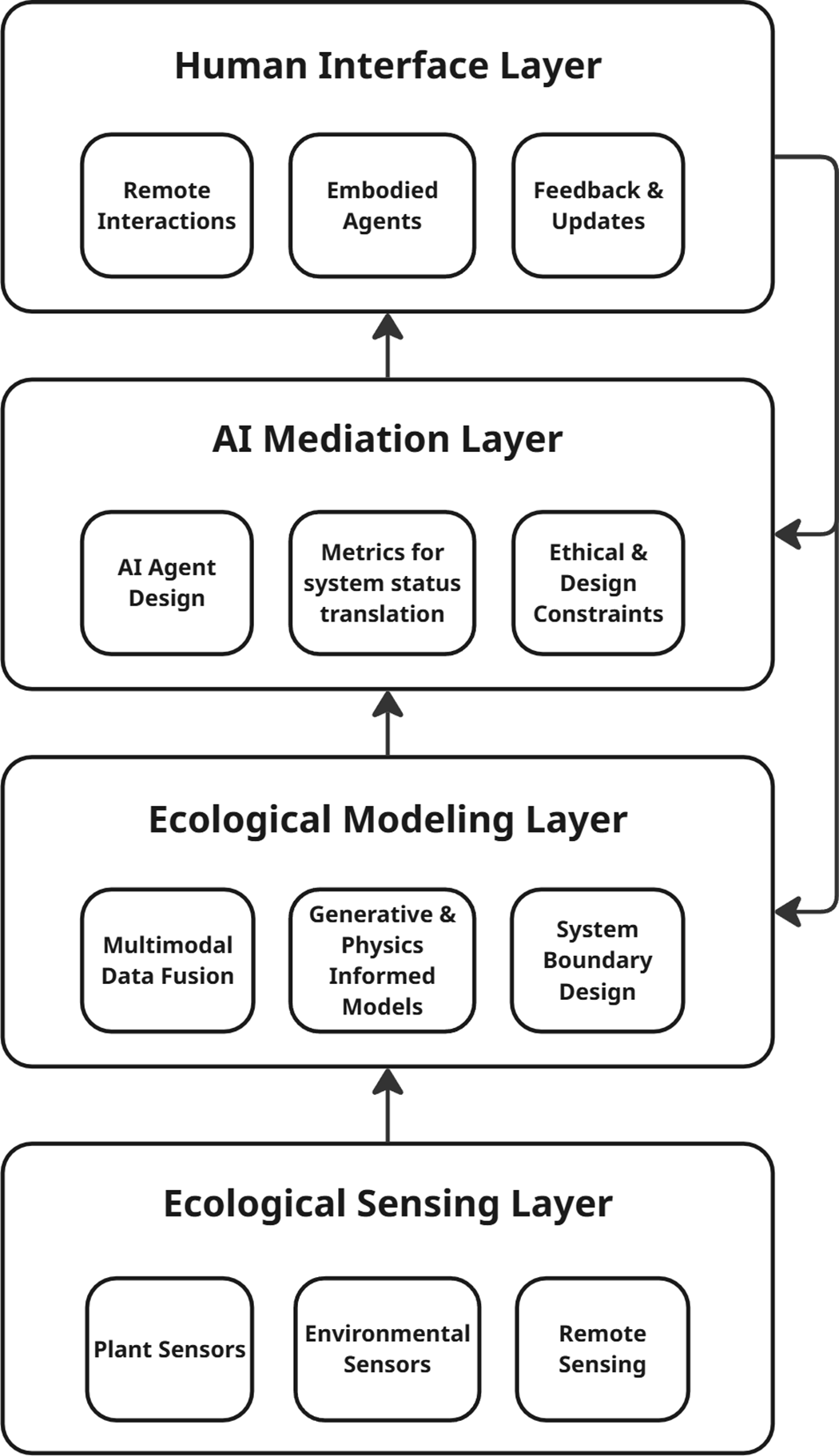
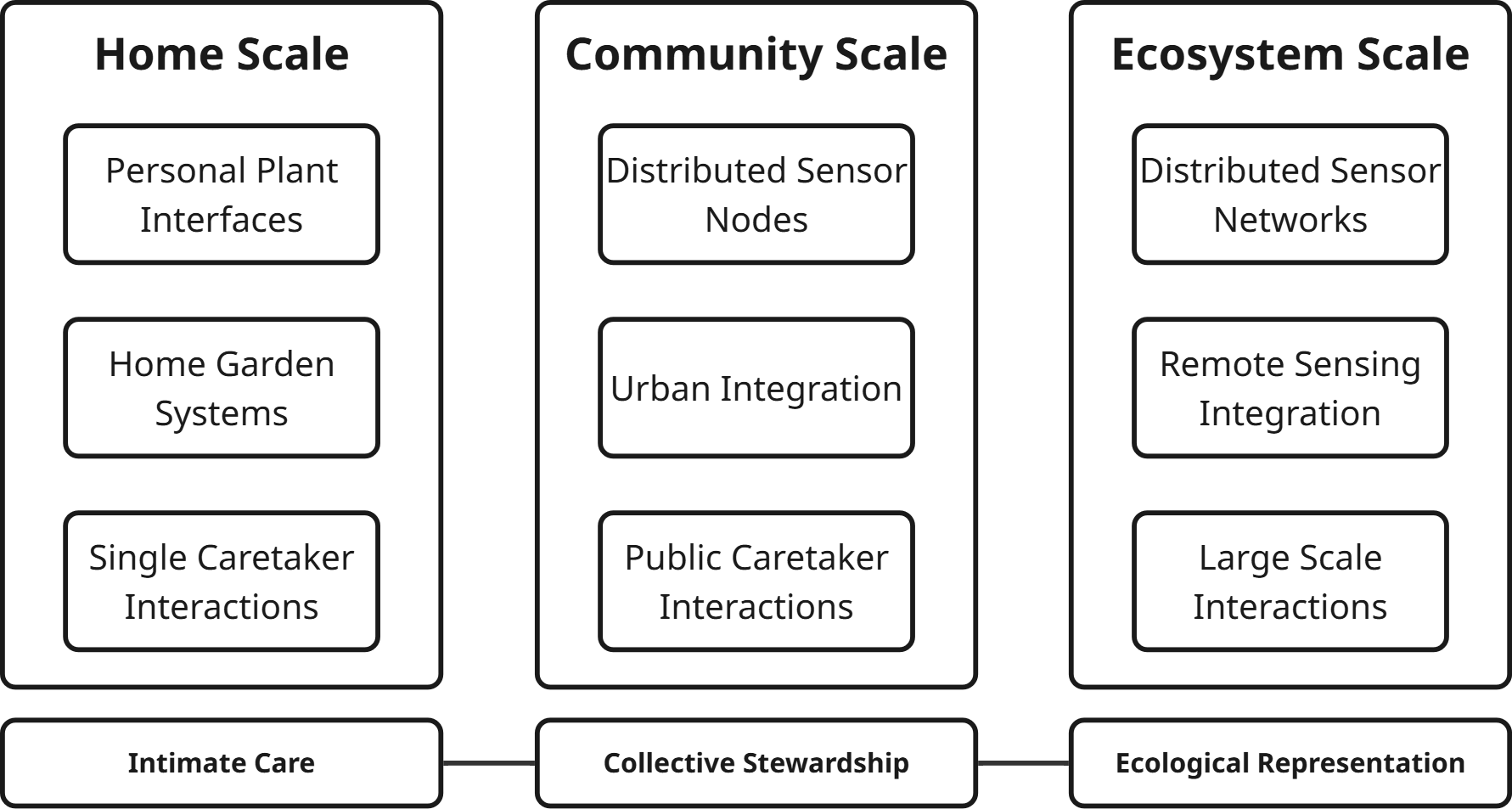
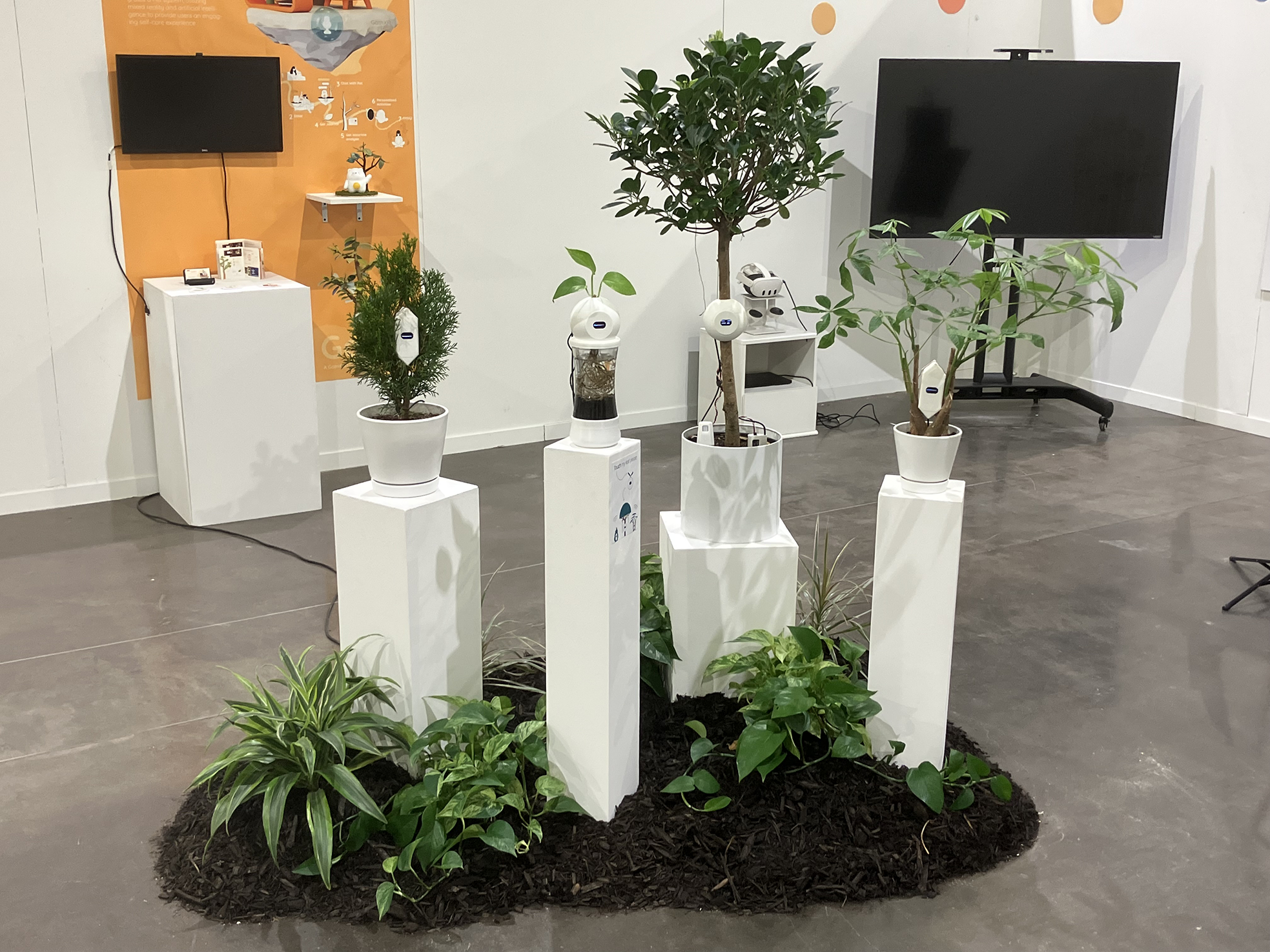
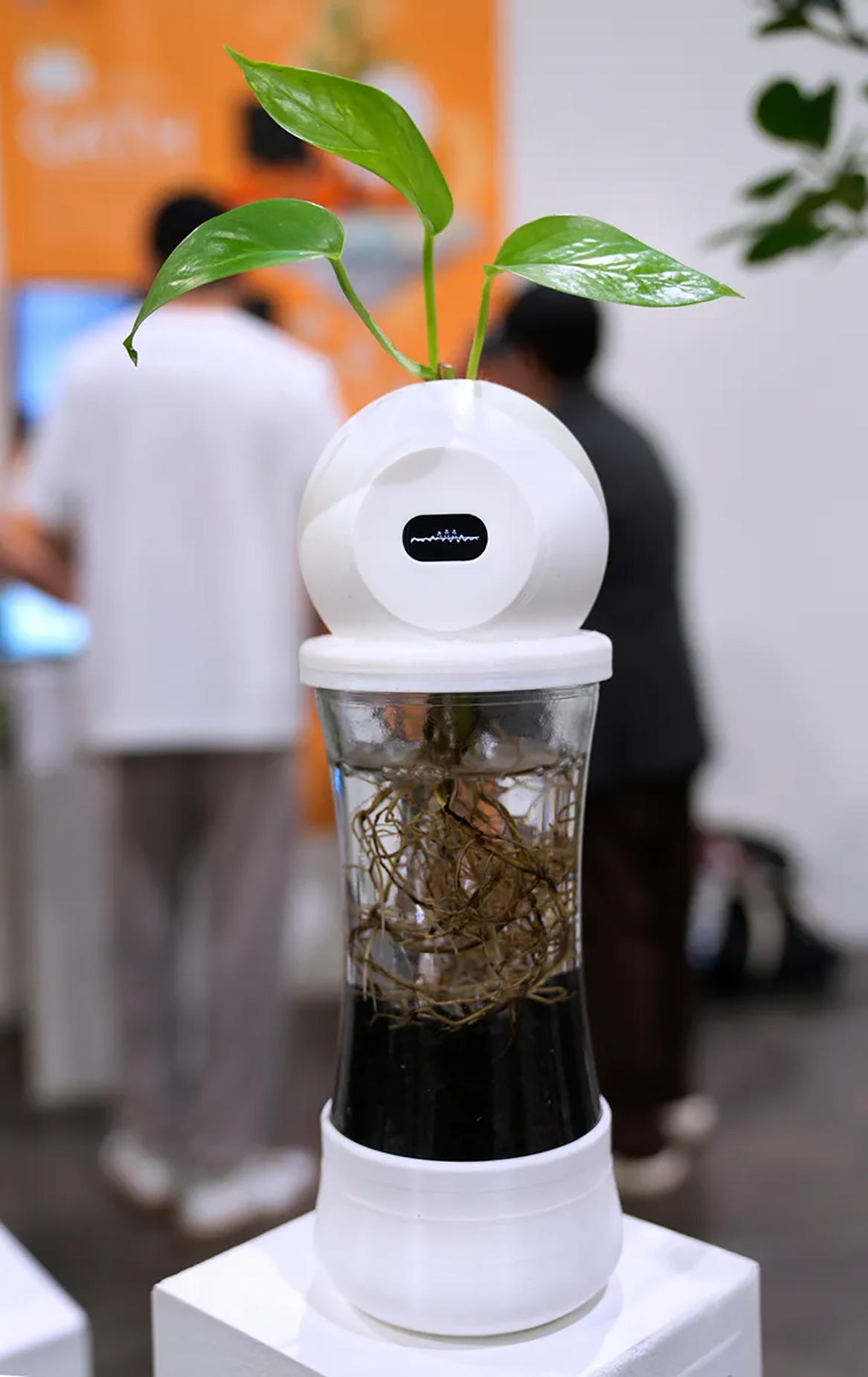
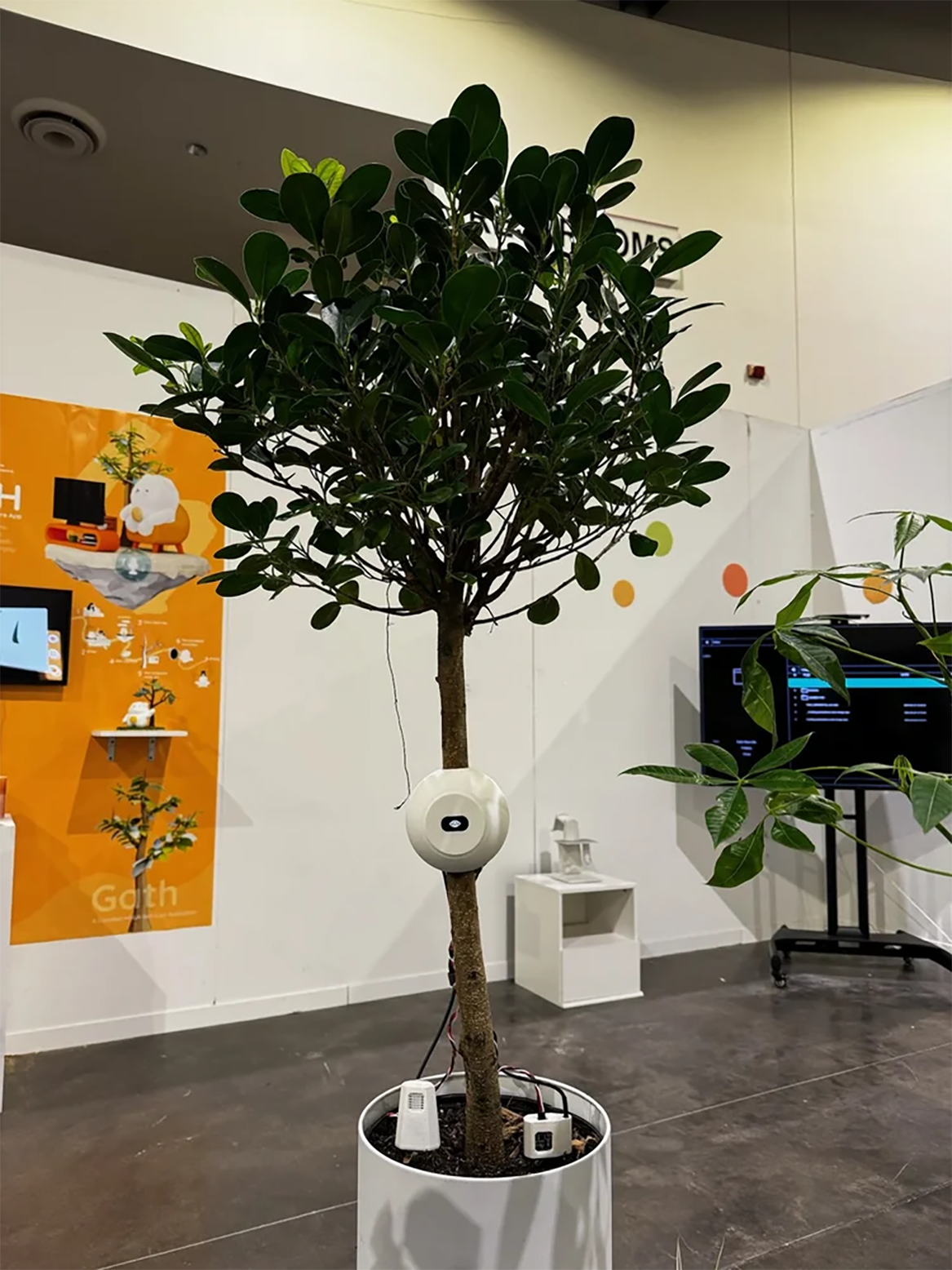
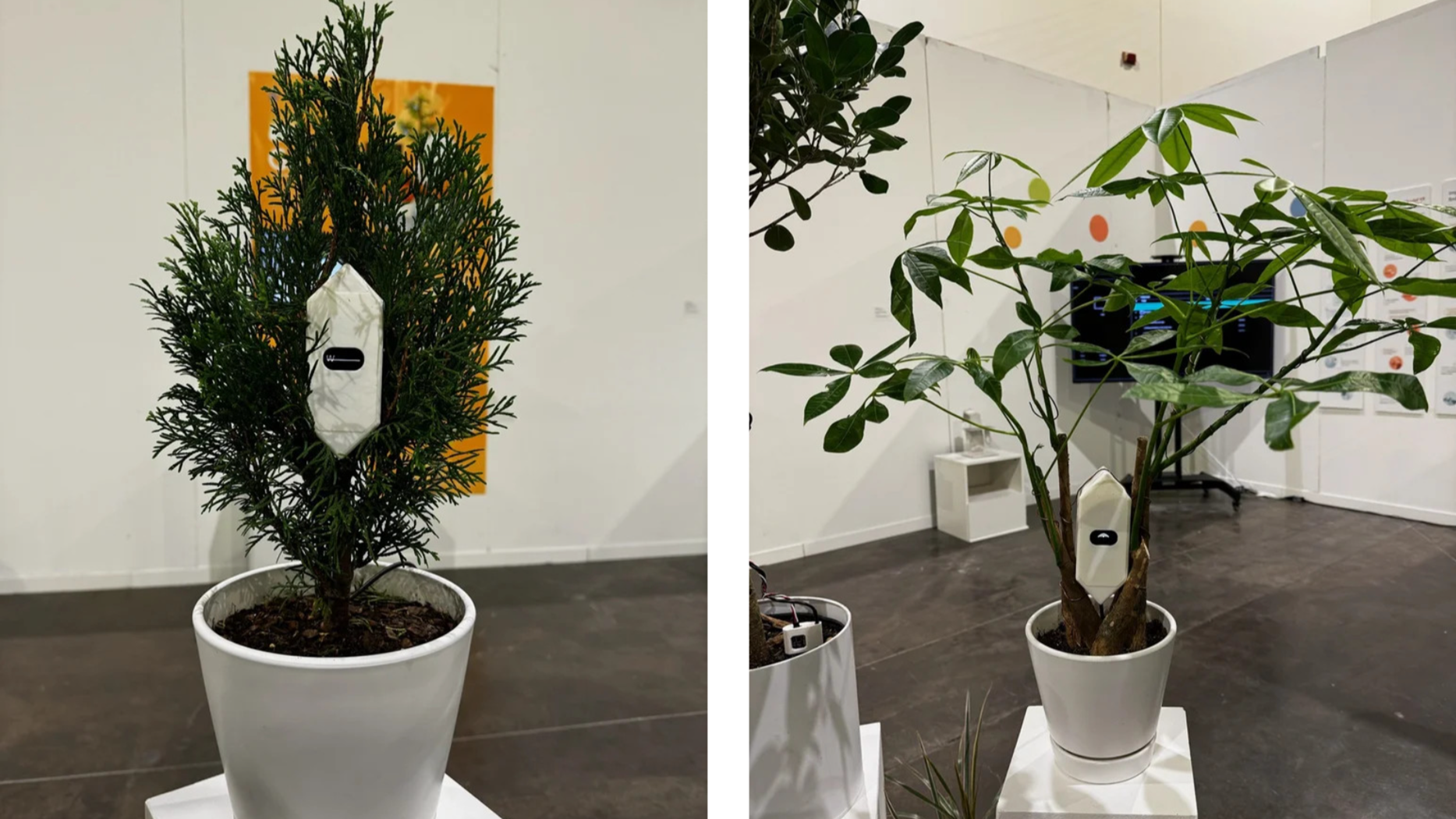

 Open access

