Introduction
Delirium is an acute neuropsychiatric syndrome characterized by impaired attention, awareness and cognition (American Psychiatric Association, 2013). The disturbance develops over a short period of time (hours to few days), represents a change from baseline attention and awareness, and tends to fluctuate in severity during the course of a day. While delirium occurs in people of all ages, the highest prevalence is found among older adults (Ely et al., Reference Ely2001; Lin et al., Reference Lin2004; Oldenbeuving et al., Reference Oldenbeuving2011). The prevalence of delirium is particularly high in hospitalized older adults. It is estimated that approximately 11–25% of hospitalized older individuals will have delirium upon admission (Levkoff et al., Reference Levkoff1992) and an additional 29–31% of hospitalized older adults admitted without delirium will develop delirium during the course of the hospital stay (Dasgupta and Brymer, Reference Dasgupta and Brymer2014; Vasilevskis et al., Reference Vasilevskis2012). The highest incidence rates for delirium amongst older adults were observed in the intensive care units (ICUs), and in postoperative and palliative care settings (Hshieh et al., Reference Hshieh, Inouye and Oh2020; Inouye et al., Reference Inouye, Westendorp and Saczynski2014).
The etiology for delirium is often multifactorial. The risk factors for delirium can be divided into predisposing and precipitating factors. Increased age, pre-existing cognitive deficits, impaired visual acuity, hardness of hearing, immobility, sleep disturbances, chronic pain, dehydration, malnutrition, severe illness of any kind (Apache II score over 16 points), and more than three new medications added to the treatment regimen, are a few of the factors that predispose an older adult to develop delirium. The common precipitating factors include infections, surgical operations and complications (e.g. pressure sores and infections, catheter related complication), medications (e.g. sedatives, anticholinergic drugs, opiates) and acute metabolic derangements (Lorenzl et al., Reference Lorenzl, Fusgen and Noachtar2012). However, the underlying pathophysiology and mechanism of how these unrelated conditions cause the common symptom complex of delirium is not well understood. There are multiple hypotheses pointing to biological changes that interact to cause disruption in neuronal network and “brain failure”. Most frequently postulated hypotheses include changes in neurotransmitters, most commonly acetylcholine and dopamine (Hshieh et al., Reference Hshieh2008), inflammation leading to increased cytokines and other biomarkers in the brain (Lorenzl et al., Reference Lorenzl, Fusgen and Noachtar2012) or stress-induced activation of the sympathetic nervous system and the hypothalamic–pituitary–adrenocortical axis leading to increases in noradrenaline and glucocorticoids (Maclullich et al., Reference Maclullich2008). These pathways are not yet well understood and further studies are needed to better understand the pathophysiology of delirium which could in turn help identify better targets for treatment.
Delirium is a clinical diagnosis guided by the standard criteria detailed in The Diagnostic and Statistical Manual-5 (American Psychiatric Association, 2013) or the International Classification of Diseases, tenth edition (ICD-10). Rapid onset and an acute mental status change with fluctuating course should alert a clinician to the possibility of delirium. However, delirium often goes unrecognized due to several different factors pertaining to the disease including fluctuating course, concurrent confounding illnesses like depression, or to those pertaining to health care workers and institutions like knowledge of cognitive assessments and time constraints (Barron and Holmes, Reference Barron and Holmes2013; Hey et al., Reference Hey2015). A few helpful screening tools are available which can aid in the timely diagnosis and treatment of delirium. The Confusion Assessment Method (CAM) is the most commonly used tool globally which can be administered quickly and easily by non-psychiatric clinicians and has a sensitivity of 94% and specificity of 89% (Wei et al., Reference Wei2008). In addition to a long and short version of CAM, there is also a CAM-ICU version available to help with diagnosing delirium in the mechanically ventilated nonverbal patients in the ICU. 4-AT, another test developed in Scotland, is gaining popularity in the UK as a simple and quick test that does not require any special training while still affording high sensitivity and specificity (Shenkin et al., Reference Shenkin2019). Both these tests are available free of charge from the respective developer’s websites. There are currently no laboratory tests or imaging modalities available to diagnose delirium, although they may help in identifying the underlying cause for delirium. Electroencephalogram (EEG), a noninvasive and inexpensive test, has been found to be very sensitive to delirium, but its specificity is questionable because of which it is not currently used as a diagnostic tool (Van Der Kooi et al., Reference Van Der Kooi2015). However, newer EEG paradigms are being tested with promising results and possibility of use in high-risk patients as a diagnostic aid (Numan et al., Reference Numan2019).
Delirium is associated with poorer clinical outcomes including a worsening of nutritional status, cognition and medical co-morbidities (Fong et al., Reference Fong, Tulebaev and Inouye2009). Additionally, delirium is associated with greater burden of care on the nursing staff, longer lengths of hospital stay and greater cost of hospitalization (Inouye and Charpentier, Reference Inouye and Charpentier1996; Siddiqi et al., Reference Siddiqi, House and Holmes2006). Furthermore, delirium increases the risk for developing cognitive impairment, institutionalization and death (Rockwood et al., Reference Rockwood1999; Witlox et al., Reference Witlox2010). The average medical care cost for individuals with delirium is more than two-and-a half times the cost for individuals without delirium (Leslie et al., Reference Leslie2008). Available evidence indicates that both non-pharmacological and pharmacological treatments have demonstrated benefit in the management of individuals with delirium (Mittal et al., Reference Mittal2011). Non-pharmacological treatments that benefit older individuals with delirium include frequent reorientation, making eye contact, frequent touching and using clear verbal instructions when talking to patients (Fong et al., Reference Fong, Tulebaev and Inouye2009). Additionally, minimizing of sensory impairments including vision and hearing loss by the use of assistive devices, reducing the use of physical restraints, providing treatment in a non-stimulating environment and minimizing staff and room changes are all known to benefit older individuals with delirium (Cerveira et al., Reference Cerveira2017).
Pharmacotherapy is often used in the management of delirium among older adults to treat the underlying causes for delirium (Saxena and Lawley, Reference Saxena and Lawley2009). Pharmacotherapy is also used in the management of behavioral symptoms seen among individuals with delirium, especially when these behaviors are not well managed by non-pharmacological strategies (Fong et al., Reference Fong, Tulebaev and Inouye2009). A recent Cochrane review studied randomized controlled trials (RCTs) for the treatment of delirium in the ICU (Burry et al., Reference Burry2019). The included trials studied six different classes of drugs namely typical antipsychotics (Haloperidol [Al-Qadheeb et al., Reference Al-Qadheeb2016; Atalan et al., Reference Atalan2013; Bakri et al., Reference Bakri, Ismail and Ibrahim2015; Girard et al., Reference Girard2010; Reference Girard2018; Page et al., Reference Page2013; Reade et al., Reference Reade2009; Skrobik et al., Reference Skrobik2004]), atypical antipsychotics (quetiapine [Devlin et al., Reference Devlin2010], ziprasidone [Girard et al., Reference Girard2010; Reference Girard2018], risperidone [Hakim et al., Reference Hakim, Othman and Naoum2012], olanzapine [Skrobik et al., Reference Skrobik2004], alpha2 agonist [dexmedetomidine (Bakri et al., Reference Bakri, Ismail and Ibrahim2015; Reade et al., Reference Reade2009; Reference Reade2016)]), cholinesterase (CHE) inhibitor (rivastigmine [Van Eijk et al., Reference Van Eijk2010]), opioids (morphine [Atalan et al., Reference Atalan2013]), serotonin antagonist (ondansetron [Bakri et al., Reference Bakri, Ismail and Ibrahim2015]) and statins (rosuvastatin [Needham et al., Reference Needham2016], simvastatin [Page et al., Reference Page2017]). The overall quality of evidence ranged from low to high. The meta-analysis showed that of all the agents tested, only dexmedetomidine showed significant reduction in the duration of delirium. Only dexmedetomidine was associated with a shorter duration of mechanical ventilation, while the cholinesterase inhibitor rivastigmine was associated with longer ICU stay. No other pharmacological agent was found to achieve statistical significance for primary or secondary outcome measures. Haloperidol, the most commonly used drug to treat delirium, failed to show any significant benefit.
It is clear from the data above that more effective medications are needed to treat delirium. A class of medication that has been used to treat delirium in clinical practice is anticonvulsants, although not much data is available on its use. There are a few case reports, case series (Bourgeois et al., Reference Bourgeois2005; Sher et al., Reference Sher2015) and retrospective cohort studies (Gagnon et al., Reference Gagnon2017) available on use of valproic acid in treatment of delirium, all of which show some benefit particularly in decreasing agitation. Some authors consider the modulatory effects of valproic acid on neurotransmitter systems, inflammation, oxidative stress and transcriptional changes could be of benefit in treating delirium (Monti et al., Reference Monti, Polazzi and Contestabile2009; Sher et al., Reference Sher2015). However, the above evidence is collected from the use of valproic acid across all age groups and was not specific to older individuals. On the contrary, there is some evidence that valproic acid may be ineffective in treating agitation in elderly patients with dementia and may have more adverse effects like somnolence, falls, thrombocytopenia and hyperammonemia, all of which could worsen delirium (Gallagher and Herrmann, Reference Gallagher and Herrmann2014). The same review also showed some evidence for the use of carbamazepine for the treatment of agitation in individuals with dementia, although, there is a dearth of long term safety data for the use of this drug among older adults. Given this mixed data from different sources and no clear recommendations, we examined the current evidence on use of anticonvulsants to prevent and/or treat delirium in older adults from RCTs in this review.
Our assessment indicates that this is the first systematic review of existing literature that has evaluated the evidence for using anticonvulsants in the prevention and/or treatment of delirium among older adults from published RCTs. Irrespective of the final findings, this systematic review will inform clinicians and/or scholars in the clinical care of their patients and assist with identifying additional therapies for preventing and/or treating delirium among older adults.
Search strategy
The authors followed the Preferred Reporting Items for Systematic Reviews and Meta-Analyses (PRISMA) standards of quality for reporting systematic reviews (Moher et al., Reference Moher2009). On March 13, 2020 a clinical librarian (MF) conducted a comprehensive search of multiple databases: MEDLINE ALL (Ovid), Embase (Ovid), PsycINFO (Ovid), Web of Science Core Collection, and Cochrane Central Register of Controlled. The search strategy was filtered for clinical trials in MEDLINE, Embase, and APA PsycINFO using a modified version of Cochrane’s highly sensitive search strategies for identifying trials (Lefebvre et al., Reference Lefebvre, Manheimer and Glanville2011). To formulate the search, we began with the Yale MeSH Analyzer (Grossetta Nardini and Wang, Reference Grossetta Nardini and Wang2019) using key articles to produce relevant controlled vocabulary and keyword terms for the concepts of interest (anticonvulsants and delirium). In each database we ran scoping searches and used an iterative process to translate and refine the searches. Additional articles were identified by examining other systematic reviews, reference lists, bibliographies, and pre-identified websites such as research grant databases (NIH reporter), patent searches (USPTO search), conference abstracts (Web of Science), and publicly available internet searches (Google Scholar).
Results
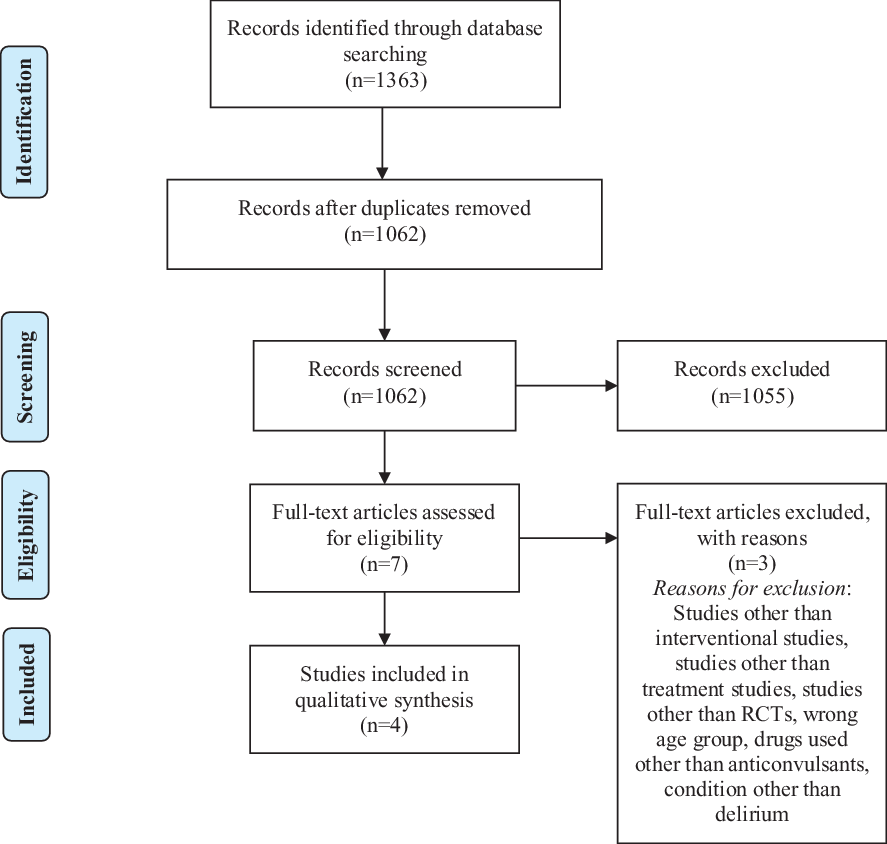
A total of 1363 citations were retrieved and pooled in EndNote and deduplicated to 1062. Two screeners (AG and PJ) independently evaluated the titles, abstracts, and full text of the eligible studies. A third reviewer (RT) helped mediate consensus to resolve conflicts. Of the 1062 titles and abstracts screened, 7 met criteria for full text review. Of these, 4 studies met inclusion criteria.
A PRISMA flowchart is presented in Figure 1.
Flow chart of the process of selection of articles to systematically review the literature evaluating the role of anticonvulsants for delirium among older adults.

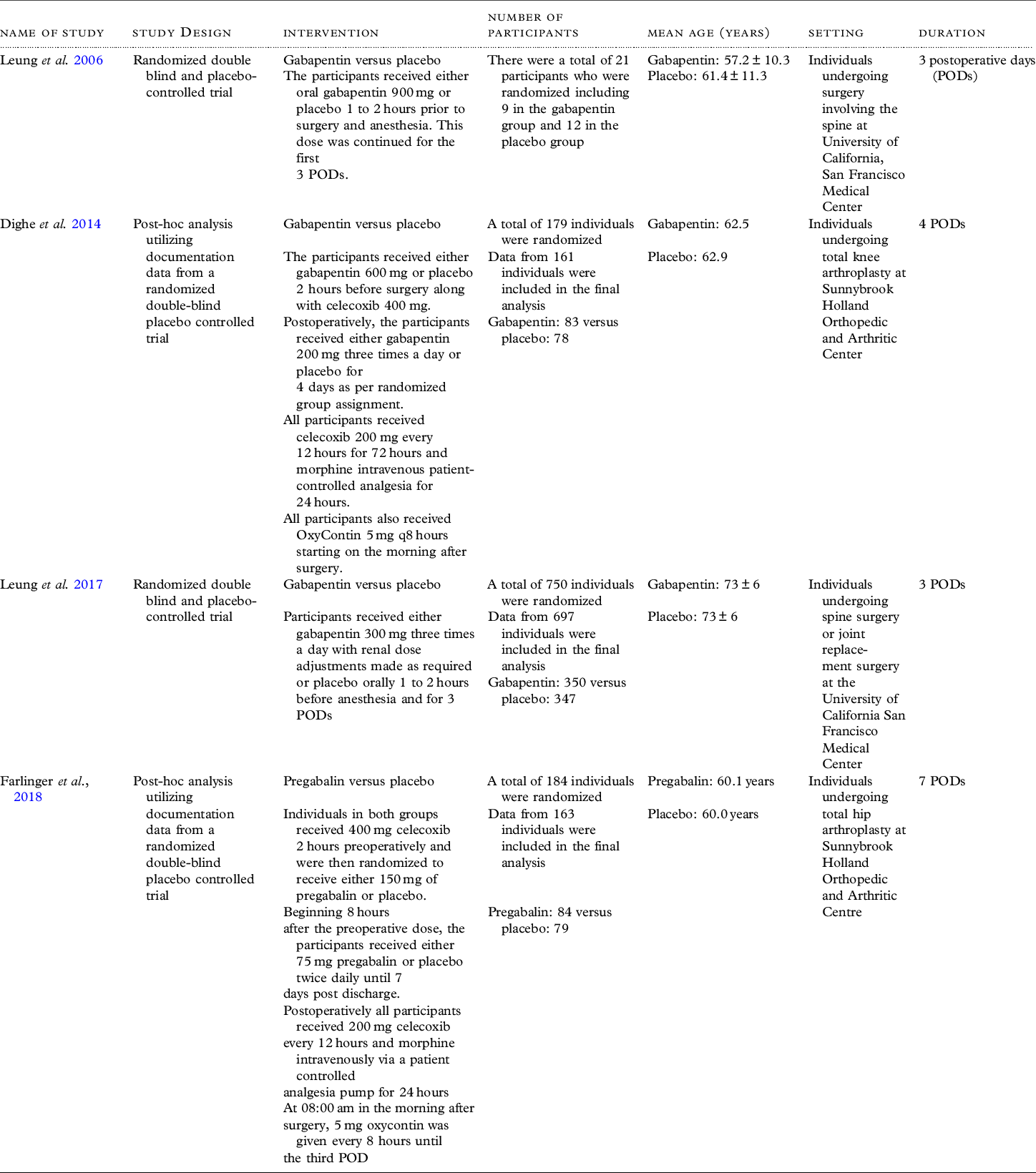
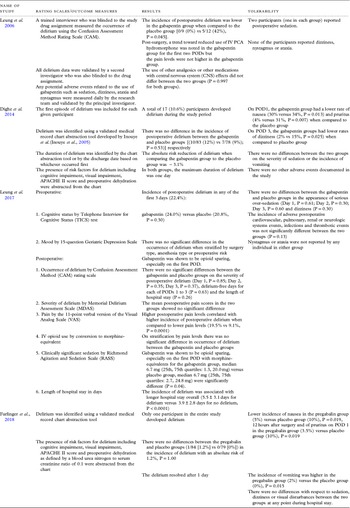
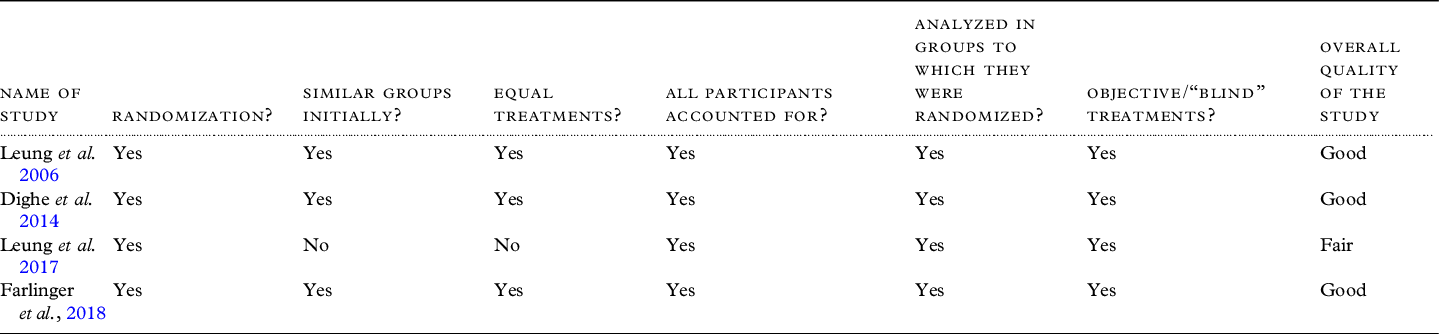
We have described each of the 4 studies in detail in the next section of the article. The studies have been placed in ascending order based on the date of publication. Tables 1, 2 and 3 provide a synopsis of the 4 studies that were included in this review.
Table of summary of included trials

Table of summary of the results of included trials

Table reviewing the quality of included trials

Pilot clinical trial of gabapentin to decrease postoperative delirium in older patients
Leung et al. (Reference Leung2006) conducted a double-blind, placebo-controlled, randomized trial at the University of California, San Francisco Medical Centre on individuals who were ≥45 years of age and undergoing surgery involving the spine and would require general anesthesia and were expected to remain in the hospital postoperatively for ≥72 hours (Table 1). The goal was to compare the incidence of postoperative delirium in individuals given gabapentin versus placebo and to determine if the rates of delirium vary with differences in pain severity and opioid consumption (Leung et al., Reference Leung2006).
The intraoperative anesthetic for all participants was standardized to IV anesthetics and a low-dose inhalational agent. All participants postoperatively received on-demand patient-controlled analgesia (PCA) with intravenous (IV) hydromorphone. The participants received either oral gabapentin 900 mg or placebo 1 to 2 hours prior to surgery and anesthesia according to the randomized allocation. This dose was continued for the first 3 postoperative days (PODs). A trained interviewer who was blinded to the study drug assignment measured the occurrence of delirium using the CAM Rating Scale. All delirium data were validated by a second investigator who was also blinded to the drug assignment. Any potential adverse events related to the use of gabapentin were measured daily by the research team and validated by the principal investigator.
There were a total of 21 participants enrolled in the study. Post-surgery, a trend toward reduced use of IV PCA hydromorphone was noted in the gabapentin group for the first two PODs, but the pain levels were not higher in the gabapentin group (Table 2). The use of other analgesics or other medications with central nervous system (CNS) effects did not differ between the two groups (P = 0.997 for both groups).
The investigators found that the incidence of postoperative delirium was lower in the gabapentin group when compared to the placebo group [0/9 (0%) versus 5/12 (42%), P = 0.045]. Two participants (one in each group) reported postoperative sedation. None of the participants reported dizziness, nystagmus or ataxia.
Perioperative gabapentin and delirium following total knee arthroplasty: a post-hoc analysis of a double-blind randomized placebo-controlled trial
Dighe et al. reported a post-hoc analysis (Dighe et al., Reference Dighe2014) of a double-blind randomized placebo-controlled trial that compared gabapentin to placebo with respect to postoperative pain and in-hospital rehabilitation after total knee arthroplasty (TKA) (Clarke et al., Reference Clarke2014). The post-hoc analysis evaluated the development of postoperative delirium in the two groups (Dighe et al., Reference Dighe2014).
From a total of 212 individuals who were enrolled in the study, 179 individuals were randomized to receive either gabapentin (n = 95) or placebo (n = 84). The participants received either gabapentin 600 mg or placebo 2 hours before surgery along with celecoxib 400 mg (Table 1). Then the individuals received femoral and sciatic nerve blocks along with spinal anesthesia. Postoperatively, the participants received either gabapentin 200 mg three times a day or placebo for four days as per randomized group assignment. All participants received celecoxib 200 mg, every 12 hours for 72 hours and morphine intravenous patient-controlled analgesia for 24 hours. All participants also received OxyContin 5 mg every 8 hours starting on the morning after surgery.
The investigators evaluated the data available for 83 individuals in the gabapentin group and 78 individuals in the placebo groups using the intention-to-treat analysis. According to the original study, the reasons for withdrawal/dropout in the gabapentin group at 24 hours were as follows: four individuals had their surgeries cancelled and three participants asked to be removed from the study on POD 1 because they were unhappy with their pain control. In the placebo group the reasons were as follows: three participants had their surgeries cancelled, two individuals were removed by the attending physicians after being given general anesthesia, and two participants were asked to be removed on POD 1 because they were unhappy with their pain control.
Delirium was identified using a validated medical record chart abstraction tool developed by Inouye et al. (Reference Inouye2005). In addition, the duration of delirium was identified by the chart abstraction tool or by the discharge date, whichever occurred first. Furthermore, the presence of risk factors for delirium including cognitive impairment, visual impairment, APACHE II score and preoperative dehydration were abstracted from the chart.
A total of 17 (10.6%) participants developed delirium during the study period. The investigators did not find any difference in the incidence of postoperative delirium between the gabapentin and placebo groups [(10/83 (12%) vs 7/78 (9%) respectively; P = 0.53)]. They found that the absolute risk reduction of delirium when comparing the gabapentin group to the placebo group was −3.1%. In both groups, the maximum duration of delirium was one day (Table 2).
The investigators found that on POD 1, the gabapentin group had a lower rate of nausea (30% vs 34%, P = 0.013) and pruritus (4% vs 31%, P = 0.007) when compared to the placebo group. On POD3, the gabapentin groups had lower rates of dizziness (2% vs 15%, P = 0.025) when compared to placebo group. There were no differences between the two groups on the severity of sedation or the incidence of vomiting. There were no other adverse events documented in the study.
In summary this post-hoc analysis of a randomized, double-blind and placebo-controlled trial showed that the perioperative use of gabapentin did not reduce the incidence or duration of postoperative delirium among older adults undergoing elective TKA.
Perioperative gabapentin does not reduce postoperative delirium in older surgical patients: a randomized clinical trial
Leung et al. (Reference Leung2017) studied a possible link between perioperative gabapentin administration and postoperative delirium through a single-center, randomized, placebo-controlled, parallel-arm, double-blinded trial at the University of California San Francisco Medical Center. A total of 697 patients aged ≥65 years undergoing spine surgery (316), hip arthroplasty (198) and knee arthroplasty (183) were included in the study. Exclusion criteria were gabapentin sensitivity, multistage surgery or emergency surgery, renal disease requiring dialysis and opioid tolerance. All spine surgery patients received general anesthesia with preoperative volatile inhalational agent + IV agent. Arthroplasty patients received preoperative nerve block followed by spinal or general anesthesia. Postoperatively, they received on-demand patient-controlled analgesia with IV hydromorphone. Patients were randomized to receive either gabapentin 900 mg (distributed as 300 mg three times daily with renal dose adjustments made as required) or placebo, orally 1 to 2 hours before anesthesia and for first 3 PODs. There were no significant demographic differences between the gabapentin group and placebo group, except that the gabapentin group had more women (55.1% vs 45.5%, P = 0.01), and more individuals who were dependent in one or more of their activities of daily life (ADL) (34.4% vs 25.7%, P = 0.03). The medication compliance between the two groups was similar (Leung et al., Reference Leung2017).
Overall incidence of postoperative delirium (primary outcome measure of the study) in any of the first 3 days was 22.4% (24.0% in the gabapentin vs 20.8% in the placebo groups, P = 0.30). There was no significant difference in the occurrence of delirium when stratified by surgery type, anesthesia type or preoperative risk. There were no significant differences between the gabapentin and placebo groups in the severity of postoperative delirium (Day 1, P = 0.85; Day 2, P = 0.35; Day 3, P = 0.37), delirium-free days for each of PODs 1 to 3 (P = 0.63), and the length of hospital stay (P = 0.26). The mean postoperative pain scores in the two groups showed no significant difference. Overall, higher postoperative pain levels correlated with higher incidence of postoperative delirium when compared to lower pain levels (19.5% vs 9.1%, P = 0.0001). On stratification by pain levels, there was no significant difference in occurrence of delirium between the gabapentin and placebo groups. Gabapentin was shown to be opioid-sparing, especially on the first POD. Morphine-equivalents for the gabapentin group, median 6.7 mg (25th, 75th quartiles: 1.3, 20.0 mg) versus placebo group, median 6.7 mg (25th, 75th quartiles: 2.7, 24.8 mg) were significantly different (P = 0.04). The incidence of delirium was associated with longer hospital stay overall (5.5 ± 3.1 days for delirium vs 3.9 ± 2.8 days for no delirium, P < 0.0001). There were no differences between the gabapentin and placebo groups in the appearance of serious over-sedation (Day 1, P = 0.61; Day 2, P = 0.30; Day 3, P = 0.60 and dizziness (P = 0.30). The incidence of adverse postoperative cardiovascular, pulmonary, renal or neurologic systems events, infections and thrombotic events was not significantly different between the two groups (P = 0.13). Adverse effects of nystagmus or ataxia were not reported by any individual in either group (Table 2).
In summary, this randomized, double-blind and placebo-controlled trial showed that the perioperative use of gabapentin did not reduce the rate, severity or duration of postoperative delirium among older adults who were undergoing major spine and arthroplasty surgery, despite gabapentin’s opioid-sparing effects.
Perioperative pregabalin and delirium following total hip arthroplasty: a post-hoc analysis of a double-blind randomized placebo-controlled trial
Farlinger, Clarke and Wong (Reference Farlinger, Clarke and Wong2018) conducted a post-hoc analysis of a randomized double-blind controlled trial that compared the effects of perioperative pregabalin added to celecoxib versus celecoxib with placebo on pain and functional outcomes after total hip arthroplasty. The original study showed that there was no difference between the groups in physical functioning or incidence and intensity of chronic pain 3 months after total hip arthroplasty (THA). However, the pregabalin group used less morphine than the placebo group in the first 24 hours after surgery (P < 0.01). The pain scores were significantly lower in the pregabalin group versus the placebo group on days 1–7 after hospital discharge and the pregabalin group required less adjunctive opioid medication (Percocet) 1 week after hospital discharge (P < 0.05) (Clarke et al., Reference Clarke2015). The post-hoc study aimed to evaluate any difference in the incidence of delirium between pregabalin and placebo groups postoperatively in this population. This hypothesis was based on the opioid-sparing effect of pregabalin (Farlinger et al., Reference Farlinger, Clarke and Wong2018).
The inclusion criteria for the trial were subjects between 18 and 80 years of age in need for a total hip arthroplasty. The exclusion criteria were medication allergies to planned study medications, history of alcohol and drug abuse, chronic pain medication utilization, morphine use above 30 mg per day of oral morphine equivalents, diabetes with renal function impairment (creatinine > 104 μmol/L), rheumatoid arthritis, a psychiatric disorder, BMI > 40, or inability or unwillingness to utilize patient-controlled analgesia. Participants received 400 mg celecoxib, 2 hours preoperatively and were then randomized to receive either 150 mg pregabalin or placebo. At 8 hours postoperatively, participants received either 75 mg pregabalin or the placebo twice daily until 7 days post-discharge. Additionally, subjects also received celecoxib 200 mg every 12 hours for 72 hours and oxycontin 5 mg was provided the morning following surgery through the third POD. Participants also had intravenous (IV) morphine available via patient-controlled analgesia pumps for the initial 24 hours postoperatively (Table 1).
The post-hoc study design included a documentation review of medical records from the original study participants. Delirium was identified using a validated medical record chart abstraction tool developed by Inouye et al. (Reference Inouye2005). The presence of risk factors for delirium including cognitive impairment, visual impairment, APACHE II score and preoperative dehydration as defined by a blood urea nitrogen to serum creatinine ratio of ≥ 0.1, were abstracted from the chart.
From a total of 184 individuals who were randomized, the data from 163 individuals were analyzed. The breakdown of 21 participants who were excluded from analysis is as follows: 1 withdrew, 10 did not receive the study drug for the entire duration of the study, 8 stopped the study early due to an adverse event and 2 had incomplete data. The investigators used an intent to treat method to account for the individuals who were excluded from the final analysis. A total of 84 individuals received pregabalin whereas 79 individuals received placebo. Both groups were similar at baseline on their demographic profile, risk factors and hospitalization variables. The investigators found that only one participant in the entire study developed delirium. There were no differences between the pregabalin and placebo groups (1/84 [1.2%] vs 0/79 [0%]) in the incidence of delirium with an absolute risk of 1.2%, P = 1.00. The delirium resolved after one day (Table 2).
The investigators found that there was a lower incidence of nausea in the pregabalin group (5%) versus the placebo group (10%), P = 0.019, 12 hours after surgery and that of pruritus on POD 1, pregabalin group (3.5%) versus placebo (10%), P = 0.019. The incidence of vomiting was higher in the pregabalin group (2%) versus the placebo group (0%), P = 0.015. There were no differences with respect to sedation, dizziness or visual disturbances between the two groups at any point during hospital stay.
In summary this randomized, double-blind and placebo-controlled trial showed that the perioperative use of pregabalin did not reduce the incidence of postoperative delirium among older adults undergoing elective THA.
Discussion
This systematic review indicates that there are only four published RCTs that evaluated the use of anticonvulsants among older adults with delirium. Two of the studies were post-hoc analyses of RCTs that evaluated the use of gabapentin and pregabalin among individuals undergoing TKA and THA (Dighe et al., Reference Dighe2014; Farlinger et al., Reference Farlinger, Clarke and Wong2018). Leung et al. conducted two RCTs: one that studied the effect of perioperative use of gabapentin and the development of postoperative delirium among individuals undergoing spinal surgery (Leung et al., Reference Leung2006) and one that studied the perioperative use of gabapentin and the development of postoperative delirium among individuals undergoing spinal surgery and hip and knee arthroplasty (Leung et al., Reference Leung2017). The first RCT by Leung et al. (Reference Leung2006) and the two post-hoc analyses (Dighe et al., Reference Dighe2014; Farlinger et al., Reference Farlinger, Clarke and Wong2018) were found to be of good quality based on the criteria developed by the Center for Evidence Based Medicine for the evaluation of RCT (Table 3). The second RCT by Leung et al. was rated as being of fair quality based on the same criteria (Leung et al., Reference Leung2017). We did not find any published RCTs that evaluated the use of other anticonvulsants among older adults with delirium.
The Dighe et al. study (Reference Dighe2014) found that the perioperative use of gabapentin did not reduce the incidence or duration of postoperative delirium among older adults undergoing elective TKA. The Leung et al. study (Leung et al., Reference Leung2017) found that the perioperative use of gabapentin did not reduce the rates, severity or duration of postoperative delirium among older adults who were undergoing major spine and arthroplasty surgery, despite gabapentin’s opioid-sparing effects. The Farlinger, Clark, and Wong study (Reference Farlinger, Clarke and Wong2018) found that the perioperative use of pregabalin did not reduce the incidence of postoperative delirium among older adults undergoing elective THA.
The strength of this systematic review was that it was conducted in accordance with the PRISMA standards and multiple large databases were searched by an experienced clinical librarian. A major limitation of this review was that we restricted our analysis to data only from published RCTs. All four studies included in this review were conducted among individuals undergoing spinal and/or orthopedic surgeries. Additionally, only gabapentin and pregabalin were the active drugs used in these trials when compared to placebo. Furthermore, only two studies were specifically designed to evaluate delirium as a primary outcome, whereas the other two studies were post-hoc analyses of RCTs.
Each of the four studies had their own specific limitations. The first Leung et al. study (Reference Leung2006) was a pilot study involving a small sample size of 21 participants and lasting just 3 days. For the Dighe et al. study (Reference Dighe2014), the limitations were its post-hoc design, having a small sample size, having few individuals with higher risk for delirium and the use of a validated chart abstraction tool for delirium which is limited by the accuracy of the tool. The limitations of the second Leung et al. study (Reference Leung2017) included an imbalance across treatment groups with regards to baseline participant characteristics, studying participants in three types of surgery, the use of different methods for intraoperative anesthetics and having different postoperative management between the groups, the use of multimodal oral analgesics including acetaminophen and nonsteroidal anti-inflammatory agents in the placebo group perioperatively, not specifically measuring opioid-related side effects including pruritus, nausea, vomiting and not specifically evaluating whether gabapentin by its opioid-sparing action produced beneficial effects on the development of delirium. The limitations of Farlinger, Clark, and Wong study (Reference Farlinger, Clarke and Wong2018) include its post-hoc design, a small sample size, the use of a celecoxib (cyclooxygenase-2 inhibitor) during the perioperative period which can reduce the incidence of delirium and the limitation of chart abstraction processes being only as good as the accuracy of the original study documentation.
This systematic review of literature indicates that there is limited evidence to recommend the use of anticonvulsants for either the prevention and/or treatment of delirium among older adults. Only one small pilot study showed that the perioperative use of gabapentin reduced the incidence of postoperative delirium among older adults undergoing spinal surgery when compared to placebo. In the three other trials, neither gabapentin nor pregabalin reduced the incidence of delirium among older adults undergoing orthopedic surgery. Additionally, the use of pregabalin did not reduce the severity or duration of postoperative delirium among older adults undergoing orthopedic surgery. Gabapentin and pregabalin were well tolerated in these trials.
Conclusions
Anticonvulsants like valproic acid may be beneficial in the treatment of delirium among younger adults. However, the data from published RCTs involving older adults indicate that there is a dearth of controlled studies evaluating the use of anticonvulsants among older adults with delirium. This systematic review of literature indicates that there are only four published RCTs that evaluated the use of anticonvulsants among older adults with delirium. All four trials included individuals undergoing spinal and/or orthopedic surgery. Three trials studied the effects of gabapentin and one trial studied the use of pregabalin. One pilot gabapentin trial indicated that the perioperative use of gabapentin reduced the incidence of postoperative delirium among older adults undergoing spinal surgery. All other trials showed that neither gabapentin nor pregabalin reduced the incidence of postoperative delirium among older adults. Gabapentin did not reduce the severity or duration of postoperative delirium among older adults in one trial. Gabapentin and pregabalin were well tolerated in these trials. Based on this review, there is limited evidence to recommend the routine use of anticonvulsants for either the prevention and/or treatment of delirium among older adults at this time.
Conflict of interest
None.
Description of authors’ roles
Rajesh Tampi conceptualized the paper, Rajesh Tampi, Aarti Gupta, Pallavi Joshi, Gargi Bhattacharya, Melissa Lehman and Deena Tampi wrote different sections of the paper, Melissa Funaro developed methodology and search strategy.