Suspected respiratory infections are the most common indication for antibiotics in hospitalized patients. They account for ~35% of inpatient antibiotic prescribing. However, up to one-third of antibiotics prescribed for pneumonia may be unnecessary, in many cases because the pneumonia is viral rather than bacterial.Reference Fridkin, Baggs and Fagan1-Reference Klompas, Ochoa and Ji3 Case series suggest that 20%–50% of pneumonia cases in hospitalized patients may be caused by viruses rather than bacteria.Reference Burk, El-Kersh, Saad, Wiemken, Ramirez and Cavallazzi4-Reference Legoff, Zucman and Lemiale9 A wide array of viruses are implicated including influenza, respiratory syncytial virus (RSV), rhinovirus, coronavirus, parainfluenza, human metapneumovirus and now SARS-CoV-2, with substantial variation in relative frequencies between centers and seasons.
These observations challenge the traditional perception that most serious pneumonia cases are due to bacteria and that all patients admitted to hospital with pneumonia require a full course of antibacterial treatment. In addition, they bring into question whether broad testing for respiratory viruses should be a standard component of the work-up of patients admitted with pneumonia to increase diagnostic certainty, inform targeted treatment for influenza, aid in antibiotic stewardship, and implement measures to prevent nosocomial spread of infection.Reference Murdoch10 Prior studies have documented high rates of antibacterial prescribing for outpatients with potentially viral respiratory tract infections, but fewer analogous data are available for the inpatient setting.Reference Silverman, Povitz and Sontrop11-Reference Lowe, Payne and Puddicombe13
We assessed temporal trends in the frequency of respiratory virus testing and positivity among patients admitted to 179 academic and community hospitals in the United States with suspected pneumonia. We also assessed associations between viral testing, antibacterial treatment, and outcomes.
Methods
We conducted a retrospective cohort analysis among patients aged ≥18 years admitted between July 1, 2010, and June 30, 2015, to 179 hospitals that report microbiology data in the Premier Healthcare Database, a hospital-discharge database that includes facilities across the United States.14 Participating hospitals provide test results to Premier using Safety Surveillor, an infection tracking tool.
We included all patients with a primary diagnosis of pneumonia (International Classification of Disease, Ninth Revision, Clinical Modification (ICD-9-CM) codes 480–488 and 507.0) and a present-on-admission flag, or a primary diagnosis of sepsis (ICD-9-CM 785.52, 790.7, 995.91, 995.92, and 038.x) or respiratory failure (ICD-9-CM 518.81, 518.82, 518.84, and 779.1) and a secondary diagnosis of pneumonia present on admission (Supplementary Table 1 online).Reference Lindenauer, Lagu, Shieh, Pekow and Rothberg15 We restricted the study population to patients with a charge for chest imaging (roentgenogram or computed tomography) and either antimicrobial treatment or respiratory virus testing on the day of admission or the day prior. Patients were excluded if they were transferred to or from another hospital, had a diagnosis of cystic fibrosis, had secondary diagnosis codes for ventilator dependence or tracheostomy and a procedure code for mechanical ventilation present on admission, had secondary diagnosis codes for nonpulmonary infections (endocarditis, intra-abdominal infections, cellulitis), had a single positive blood culture for coagulase-negative Staphylococci, or had positive urine cultures within the first 3 days of hospitalization (since these might have influenced antibiotic prescribing independent of pneumonia). If patients were admitted more than once, we randomly selected 1 hospitalization for inclusion.
We assessed total and annual percentages of patients tested for respiratory viruses within three calendar days of admission. We included antigen- and polymerase chain reaction (PCR)–based assays for influenza, RSV, parainfluenza, human metapneumovirus, adenovirus, coronavirus, bocavirus, and rhinovirus. We also assessed the frequency of concurrent bacterial testing including procurement of blood and respiratory cultures, urine antigen tests for Streptococcus and Legionella, and respiratory PCR for Legionella.
We compared the clinical and demographic characteristics of patients tested for respiratory viruses versus untested patients, and of patients with positive versus negative respiratory virus test results. We determined the percentages of patients with prescriptions for antibacterial agents, antiviral agents, or both on both the first and third days of hospitalization, then we stratified them by whether they were tested for respiratory viruses within the first 3 days and, among those tested, by whether virus tests were positive or negative, and by whether concurrent bacterial assays were positive or negative. We assessed the distributions of days of inpatient antibacterial prescribing within each stratum.
We compared in-hospital mortality, hospital length of stay, and costs between patients tested versus not tested for respiratory viruses and between patients with positive versus negative viral assays, using mixed logistic regression models for mortality and log-link γ generalized linear mixed models for length of stay and costs, incorporating clustering by hospital.Reference Stroup16,Reference Manning, Basu and Mullahy17 All analyses were adjusted for patients’ baseline demographics, insurance status, comorbidities (based on the Elixhauser method),Reference Elixhauser, Steiner, Harris and Coffey18-Reference Timsit, Chevret and Valcke20 severity of illness (including intensive care admission, mechanical ventilation, initiation of vasopressors, receipt of oral medications, and organ failure scores as described in Supplementary Table 2 online),Reference Rothberg, Pekow and Priya21 and hospital geographic region, bed size, teaching status, and urbanicity. Costs were inflation adjusted to 2015 annual costs using the medical care component of the consumer price index. All analyses were conducted using SAS version 9.4 software (SAS Institute, Cary, NC). The Cleveland Clinic Institutional Review Board approved the study with a waiver of informed consent.
Results
Respiratory virus testing and results
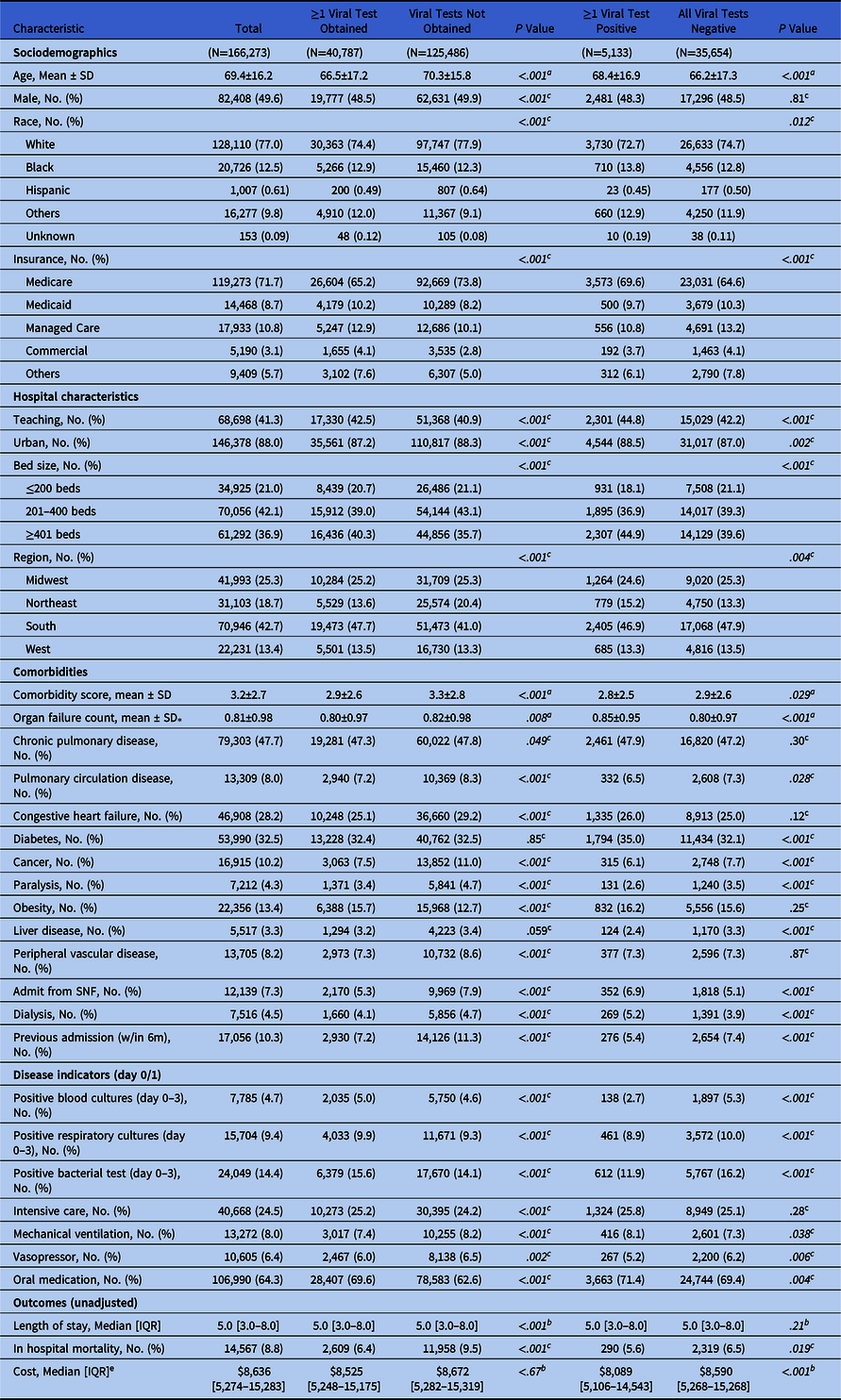
In total, 166,273 patients from 179 hospitals met all inclusion criteria (Supplementary Table 1 online). Tests for respiratory viruses were obtained in 40,787 of 166,273 (24.5%). The percentage of patients tested for respiratory viruses increased from 10.5% in 2010 to 40.2% in 2015. Patient characteristics are summarized in Table 1.
Patient Characteristics and Outcomes

Note. SD, standard deviation; IQR, interquartile range.
a t test.
b Kruskal-Wallis test.
c Pearson χReference Magill, Edwards and Beldavs2 test.
d Organ failures were derived from discharge diagnosis codes (see supplementary materials for details).
e Inflation-adjusted to 2015 annual costs by using the medical care component of the consumer price index.
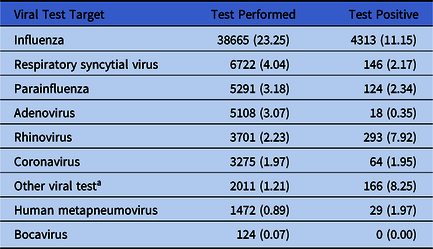
Almost all patients with viral assays were tested for influenza: 38,665 of 40,787 (94.8%). Only 20.7% of patients with viral assays were tested for other respiratory viruses. Respiratory virus assays were positive in 5,133 of 40,787 patients tested (12.6%) (Table 2), most commonly for influenza (4,313 of 38,665 tested patients, 11.2%) and rhinovirus (293 of 3,701 tested patients, 7.9%), with lower yields for RSV (2.2%), parainfluenza (2.3%), coronavirus (2.0%), human metapneumovirus (2.0%), and adenovirus (0.4%). Patients with positive viral respiratory tests were less likely to have positive blood cultures (2.7% vs 5.3%; P < .001) or positive respiratory cultures (8.9% vs 10.0%; P < .001) compared to patients with negative viral respiratory tests (Table 1).
Counts of Patients With Viral Tests (and % of total study population) and Count of Viral Tests With Positive Results (and % tests positive, ie test prevalence)

a This category includes test panels that were reported as positive vs negative but did not include details about which test components were positive. This category also includes tests for the Coxsackie/echo virus and enterovirus.
Patients tested for viruses tended to be younger, had fewer comorbidities, and they were less likely to be on Medicare, to have been admitted from a skilled nursing facility, or to have been hospitalized within the preceding 6 months compared to patients who were not tested. Patients with positive versus negative respiratory virus tests, however, tended to be older, to have more comorbidities, to have Medicare, and to have been admitted from a skilled nursing facility.
Antimicrobial utilization
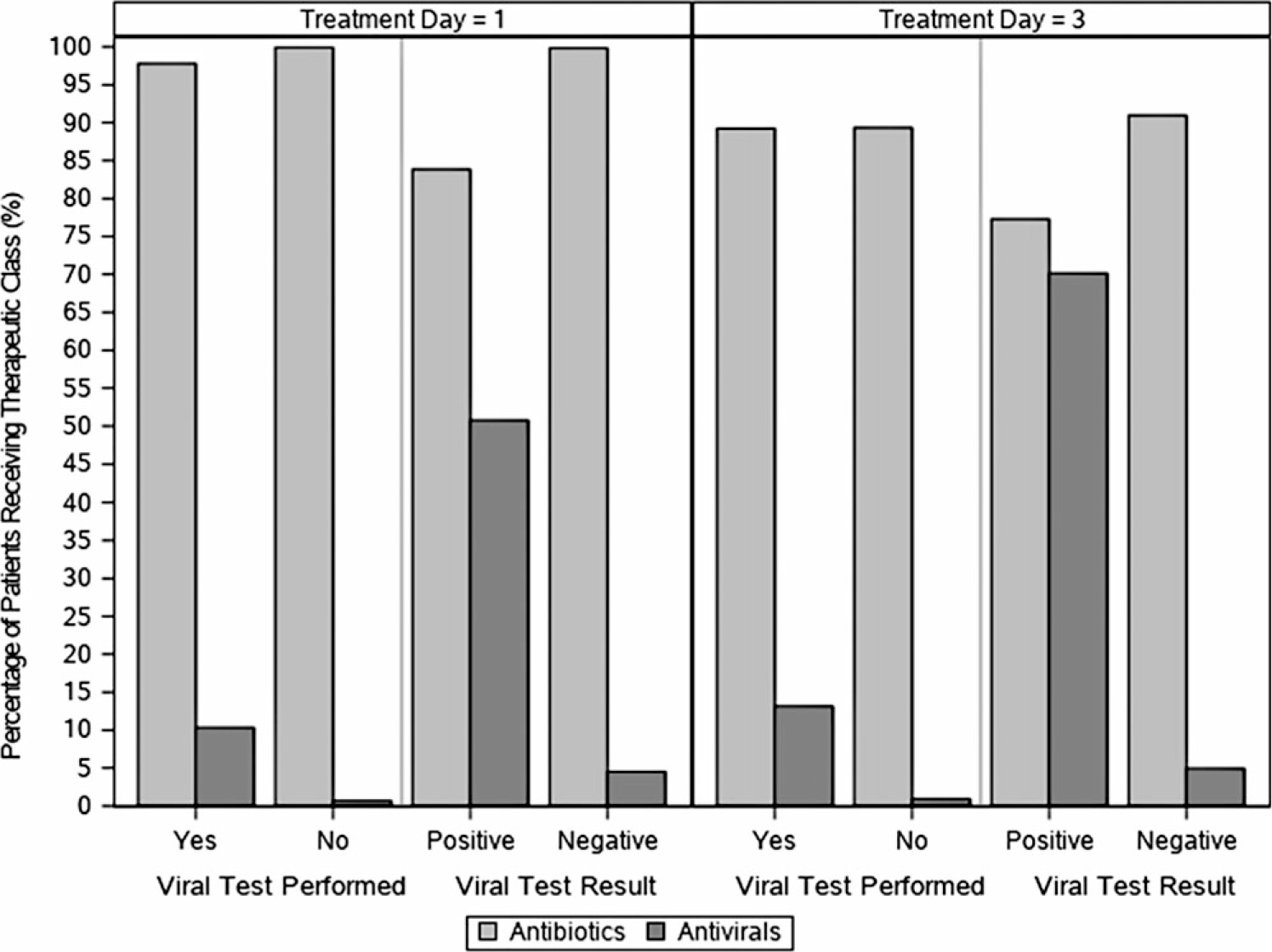
Antibiotic prescribing rates are presented in Figure 1. More than 99% of patients received antibacterial treatment on the day of admission. Antivirals were administered to 10.3% of patients tested for respiratory viruses versus 0.7% of patients not tested for respiratory viruses (P < .001). By hospital day 3, antivirals had been administered to 13.2% of patients tested for respiratory viruses versus 0.9% of patients not tested for respiratory viruses.
Proportions of patients receiving antibacterial and antiviral therapies on hospital days 1 and 3, by performance and result of antiviral testing. Comparisons of same-day antibiotic and antiviral utilization fractions between patients who did and did not receive antiviral testing, and between those with positive and negative antiviral tests, were statistically significant (P < .001) with the exception of day 3 antibiotic utilization by receipt of antiviral test (P = .58).

Patients with positive viral assays were more likely to receive antiviral treatment on hospital day 1 compared to patients with negative viral assays (50.8% vs 4.5%; P < .001). By hospital day 3, 3,602 of 5,133 patients with positive viral assays (70.2%) were receiving antivirals. Notably, however, 3,968 of 5,133 patients with positive viral assays (77.3%) remained on antibacterial treatment on hospital day 3. High rates of sustained antibacterial treatment were detected both among patients with positive assays for both viruses and bacteria [541 of 612 (88.4%) remained on antibacterial treatment on hospital day 3] and among patients with positive viral but negative bacterial assays [3,215 of 4,122 (78.0%) continued to receive antibacterial treatment on hospital day 3].
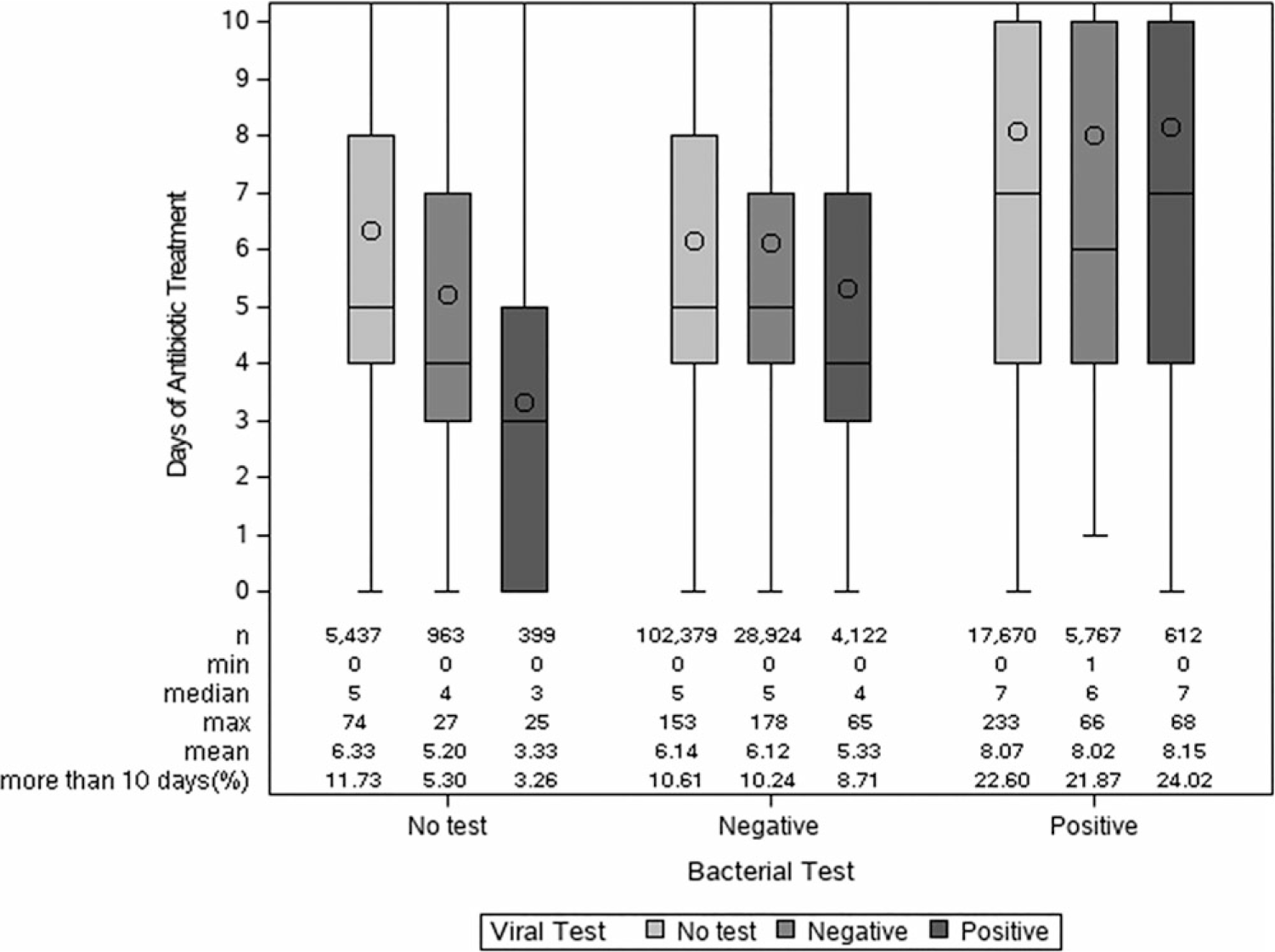
Antibiotic prescribing durations are presented in Figure 2. Patients tested for viruses received 0.1 fewer days of antibiotics than untested patients (6.3 vs 6.4 days; P < .001), but those with positive viral assays received 0.9 fewer days of antibiotics compared to those with negative viral assays (5.5 vs 6.4 days; P < .001). Antibacterial treatment durations varied considerably, however, depending upon the results of concurrent bacterial assays. The duration of antibacterial treatment was similar for patients with positive versus negative viral assays if concurrent bacterial tests were positive (8.1 vs 8.0 days; P = .60), but this duration was significantly shorter if concurrent bacterial tests were negative (5.3 vs. 6.1 days, P < .001) or were not performed (3.3 vs 5.2 days; P < .001 and P < .001 for interaction of viral and bacterial test results, respectively).
Average duration of antibacterial treatment among patients hospitalized with pneumonia as a function of all bacterial and viral test results. Box plots of duration of antibacterial treatment amongst patients hospitalized with pneumonia by use of viral testing and bacterial and viral test results. Each box encompasses the range between the lower (25%) and upper (75%) quartiles, with the median marked by horizonal line and the mean marked by a circle. The whiskers of each box extend from minimum to maximum treatment days, here truncated at 10 days due to the high right-skewing of the length of stay distributions, as indicated by the tabulated maxima. Note. Circles: means; whiskers: ranges; the bottom and top edges of the boxes: interquartile range; horizontal lines in the boxes: median.

Outcomes associated with respiratory virus testing and results
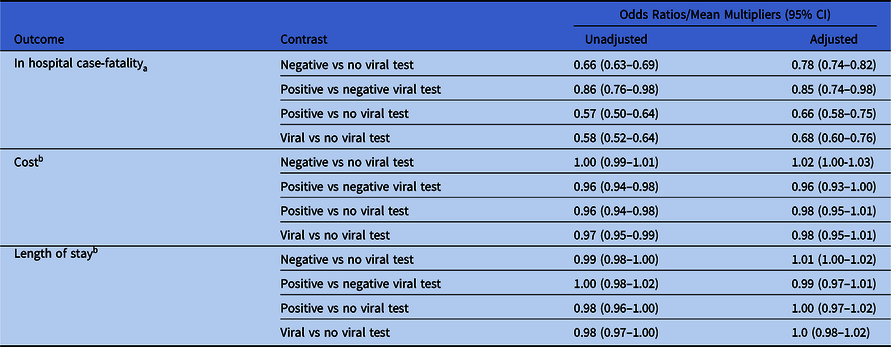
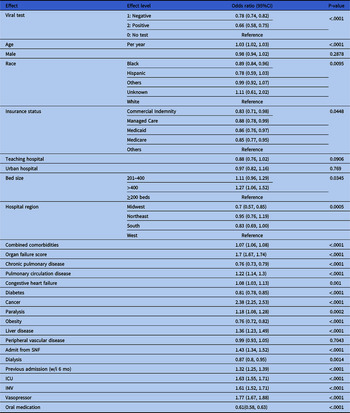
Outcomes for patients tested versus untested for respiratory viruses and those with positive versus negative viral assays are presented in Table 3, and the underlying models are presented in Table 4 (mortality) and online in Supplementary Tables 3 (for costs) and 4 (for length of stay). Patients tested for viruses were less likely to die in the hospital than were untested patients (6.4% vs 9.5%, adjusted odds ratio 0.68; 95% CI, 0.60–0.76). Patients with positive viral tests were less likely to die compared to patients with negative viral tests (5.6% vs 6.5%; adjusted odds ratio, 0.85; 95% CI, 0.74–0.98). There were no significant differences, however, in length of stay among patients who did versus did not receive viral testing or between patients with positive versus negative viral tests. Costs were slightly lower among those with positive viral test results, and those not tested for viruses, versus those with negative viral test results.
Crude and Adjusted Outcomes Comparisons

Note. CI, confidence interval.
a Odds ratio.
b Mean multiplier.
Logistic Regression Model Results for Relationship Between Mortality and the Use and Results of Respiratory Viral Testinga

Note. SNF, skilled nursing facility; ICU, intensive care unit; IMV, intermittent mandatory ventilation.
a Adjusted for basic demographics, insurance status, hospital location (urban vs rural), Census Bureau major geographic region, various comorbidities, and markers of severity on admission.
Discussion
Systematic surveillance studies suggest that patients hospitalized for pneumonia are more than twice as likely to harbor respiratory viruses than bacteria.Reference Burk, El-Kersh, Saad, Wiemken, Ramirez and Cavallazzi4-Reference Jain, Self and Wunderink6 In our survey of 179 hospitals, however, most patients hospitalized for pneumonia were not tested for respiratory viruses, and viral testing, when conducted, was almost exclusively for influenza alone despite influenza accounting for a minority of respiratory viruses that can cause pneumonia.Reference Burk, El-Kersh, Saad, Wiemken, Ramirez and Cavallazzi4-Reference Jain, Self and Wunderink6 In addition, almost all patients with community-onset pneumonia received antibacterial treatment for at least 3 days, and even patients with positive viral tests and concurrent negative bacterial tests still received a mean 5.4 days of inpatient antibacterial treatment. Nonetheless, viral testing may have influenced antibacterial utilization in selected situations: patients with positive viral assays were treated for 0.9 fewer days than patients with negative viral assays despite being generally older and sicker than patients with negative viral assays.
The patients that clinicians tested for respiratory viruses were younger, had fewer comorbidities, and had fewer markers of severe illness than untested patients. Among those tested, however, viruses were more likely to be identified in older patients and in those with more comorbidities. Patients admitted from skilled nursing facilities, for example, were one-third less likely to be tested for respiratory viruses but were one-third more likely to have a positive viral assay if tested. These observations suggest that some clinicians may harbor a cognitive bias that younger, healthier patients are more likely to have viral respiratory infections whereas older, sicker patients are more likely to have bacterial infections. This finding is inconsistent, however, with the emerging literature on the high prevalence of viruses in patients hospitalized for pneumonia, in patients requiring intensive care for pneumonia, and with current guidelines that specifically recommend influenza testing for all hospitalized patients with acute respiratory illness, particularly those at high risk for complications.Reference Burk, El-Kersh, Saad, Wiemken, Ramirez and Cavallazzi4-Reference van Someren Greve, Juffermans and Bos7,Reference Cilloniz, Dominedo, Magdaleno, Ferrer, Gabarrus and Torres22,Reference Uyeki, Bernstein and Bradley23
Patients tested for respiratory viruses were less likely to die in the hospital compared to untested patients. This finding likely reflects the indication bias toward viral testing of less severely ill patients with fewer comorbidities. Indeed, adjusting for demographics, comorbidities, ICU admission, use of vasopressors, and mechanical ventilation diminished the association between testing and mortality. These adjustments did not eliminate the association, however, suggesting the possibility of residual confounding, particularly since our markers for severity of illness were relatively crude and did not include precise vital signs, levels of supplemental oxygen, radiographic findings, blood gases, creatinine levels, or other granular markers of organ dysfunction.
In-hospital mortality was slightly lower, after adjustment, for patients with positive versus negative viral assays. Other studies, by contrast, have reported similar or worse outcomes for patients with viral versus bacterial pneumonia cases.Reference Legoff, Zucman and Lemiale9,Reference Shorr, Fisher, Micek and Kollef24 Potential explanations for our discrepant results include (1) residual confounding, (2) selection bias in studies restricted to critically ill patients, (3) the possibility that diagnostic clarity may facilitate better outcomes, (4) the fact that almost all patients with positive virus assays in our study had influenza, which is manageable with specific antiviral agents, whereas other studies included many patients diagnosed with nontreatable viral pathogens, and (5) the fact that some patients with negative viral assays may receive longer courses of antibacterial agents than patients with positive viral assays, which in turn may increase their risk of complications from antibacterial therapy.Reference Tamma, Avdic, Li, Dzintars and Cosgrove25
Viral testing was associated with shorter courses of antibacterial treatment in specific subpopulations. In particular, patients with positive viral assays and either negative concurrent tests for bacterial pathogens or a decision to forego bacterial testing received shorter courses of antibacterial agents. There was very little association between viral testing and antibacterial utilization at the overall population level; however, this may be due to the limited frequency of viral testing in the full population thus limiting the impact of viral testing on overall antibacterial utilization. These findings allow for the possibility that more widespread testing could lead to less antibacterial prescribing for patients hospitalized with pneumonia. This hypothesis deserves prospective evaluation.
There was no difference in duration of antibacterial agents prescribed to patients with positive versus negative viral assays if concurrent bacterial cultures were positive. This is presumably because clinicians were concerned about bacterial coinfection and felt compelled to treat with full antibacterial courses regardless of viral test results. Even patients with positive viral assays and negative bacterial tests, however, still received a mean 5.5 days of antibacterial treatment, suggesting that clinicians were concerned about unrecovered bacterial pathogens. Notably, however, deciding to forego bacterial testing altogether was associated with the shortest courses of antibacterial agents, suggesting that these patients had mild disease and/or closely fit physicians’ preconceptions of the clinical presentation of a viral versus bacterial pneumonia.
Physicians’ predilection to prescribe long courses of antibacterial agents, even in patients with negative bacterial cultures, suggests a pressing need to develop better tools to identify which infections are attributable to viruses and to help clinicians interpret the concurrent presence of bacteria and viruses (particularly given that both viruses and bacteria can be colonizers or pathogens). Early studies suggested that procalcitonin may be a useful tool in this setting, but a recent randomized trial evaluating the impact of procalcitonin testing versus usual care on antibiotic utilization for patients presenting to the emergency department with possible lower respiratory tract infections reported no difference in antibiotic utilization.Reference Schuetz, Christ-Crain and Thomann26-Reference Montassier, Javaudin and Moustafa28 Others have proposed that integrating procalcitonin testing with viral assays may be more helpful: the combination of a positive viral test and low procalcitonin may be more reassuring than either assay alone.Reference Branche, Walsh and Vargas29,Reference Rodriguez, Aviles-Jurado and Diaz30 C-reactive protein testing may also help identify patients that can be safely managed without antibacterial treatment.Reference Minnaard, de Groot and Hopstaken31-Reference Butler, Gillespie and White33 All of these potential approaches require further evaluation.
Our study has several important limitations. We identified cases using structured electronic data rather than standardized clinical assessments; therefore, we may have missed some pneumonia cases and misclassified others. We used retrospective data gathered for clinical care rather than a prospective survey with systematic testing of all patients. Thus, our data cannot be used to estimate the prevalences of different viruses in community-onset pneumonia. However, we did not aim to describe the epidemiology of viruses in pneumonia; rather, we aimed to describe patterns of viruses and associations between viral testing, prescribing, and outcomes. Our data on antibiotic utilization only included inpatient charges and not discharge prescriptions, so we may have underestimated antibiotic durations, particularly for patients with short inpatient stays.Reference Vaughn, Flanders and Snyder34 Our estimates of the adjusted odds of hospital death, length-of-stay, and cost could only incorporate the potential confounders available to us and thus are vulnerable to residual confounding. We made every effort to be comprehensive in identifying all pertinent viral tests, but laboratory coding is heterogeneous and central data repositories are sometimes incomplete. We did not have radiographic reports available to us; thus, we could not evaluate whether and how radiographic findings mediated antibiotic prescribing in virus-tested versus untested patients and in virus-positive versus -negative patients. Finally, we documented a substantial increase in the prevalence of viral testing between 2010 and 2015. If this trend continued, our results may not reflect current practice.
In summary, our analysis revealed substantial gaps between emerging data on the high prevalence and importance of viruses in community-onset pneumonia and the limited incorporation of viral testing into routine diagnosis and antibiotic prescribing practices in US hospitals. Potential opportunities include increasing viral testing in patients with pneumonia, testing for a broader array of viral pathogens than influenza alone, increasing antiviral prescribing for patients with influenza, and decreasing antibacterial prescribing for patients with viral pathogens. Reducing antibacterial prescribing will likely require new tools and strategies to help allay clinicians’ concerns about the possibility of occult bacterial coinfection.
Acknowledgments
Financial support
The study was supported by the Agency for Health Research and Quality (AHRQ grant no. 5 R01 HS024277-05). C.R. was supported by a K08 from the AHRQ (grant no. K08HS025008).
Conflicts of interest
M.K. has received grant funding from the Centers for Disease Control and Prevention (CDC) and royalties from UpToDate for chapters on hospital-acquired pneumonia. C.R. has received grant funding from the AHRQ and royalties from UpToDate for a chapter on procalcitonin. A.D. has received research support from the AHRQ, research support and honoraria from The Clorox Company; he serves as a consultant to Ferring Pharmaceuticals. M.Z. has received research support from Tetraphase Pharmaceuticals, Astellas, Lungpacer, Merck, Spero, The Medicines Company, and Melinta; she has also received consulting fees from Paratek, Arasanis, Shionogi, Pfizer, Nabriva, and Melinta.
Supplementary material
To view supplementary material for this article, please visit https://doi.org/10.1017/ice.2020.1312