Introduction
The general public is misinformed about the relationship of mental illness to crime and violence, and believes that individuals with mental illness are dangerous.Reference Pescosolido, Martin, Link, Kikuzawa, Burgos and Swindle 1 , Reference Pescosolido, Monahan, Link, Stueve and Kikuzawa 2 It is not uncommon to see individuals with mental illness portrayed as violent, and violent acts are often attributed to mental illness. This happens in popular media (eg, movies), as well as in news media following acts of violence such as the shootings in the Aurora, Colorado, movie theater and Sandy Hook Elementary School. In fact, following instances of violence, it seems almost inevitable that the mental health of a violent perpetrator is called into question by media outlets. This is in spite of the fact that media sources are notoriously unreliable with regard to reporting on the association of mental illness with violence.Reference Corrigan 3 , Reference Wahl 4 The inaccurate link drawn by media outlets may be largely responsible for the “increase in the proportion of persons who associate persons with mental illness with dangerousness, violence, and unpredictability” (p. 39).Reference Markowitz 5 Despite general misconceptions in the general public and media outlets regarding mental illness and violence, persons with mental illness (PMI) minimally contribute to overall rates of violence, 6 and violent behavior in PMI is most common when other risk factors for violence are present (eg, substance abuse, history of violence).Reference Elbogen and Johnson 7
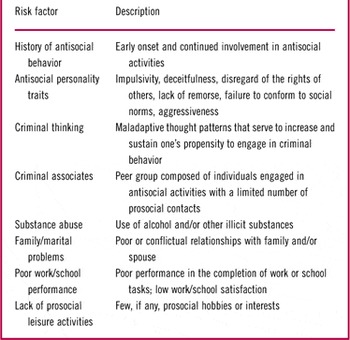
In this article, we review the evidence regarding the association between mental illness and violence specifically, and mental illness and crime generally. The biopsychosocial factors that assist in differentiating which PMI will become violent and involved in crime will be discussed. Particular emphasis will be placed on the neurobiological underpinnings of violence, the role of criminal thinking (see Table 1), and the relationship between such antisocial cognitions and mental illness. Additionally, housing considerations and treatment recommendations for criminal justice (CJ)-involved PMI are discussed.
Central 8 risk factors for criminal behavior

Persons with Mental Illness, Violence, and Criminal Behavior
The relationship of mental illness to violence and crime is influenced by a complex interaction of neurobiological, social, and psychological factors that increase one’s risk for violence and crime. At a neurobiological level, individuals who engage in violence and criminal behavior evidence structural and functional differences when compared to their nonviolent counterparts. Unfortunately, there is a dearth of research that has examined the neurobiological correlates of violence specifically in PMI populations; however, the available research utilizing non-PMI populations will be outlined to provide a general foundation for a discussion of biological factors associated with violence and crime.
Pardini et al Reference Pardini, Raine, Erickson and Loeber 8 conducted a study that utilized magnetic resonance imaging (MRI) to examine the volume of the amygdala (a structure of the limbic system involved in emotion) in a sample of 26-year-old males with varying histories of violence. The results indicated that males with lower amygdala volume evidenced more personality traits associated with psychopathy; reported more violent histories; and were more likely to evidence higher levels of aggression, violence, and psychopathy at a 3-year follow-up.Reference Pardini, Raine, Erickson and Loeber 8 Further, research utilizing functional MRI (fMRI) also indicated that individuals with higher levels of psychopathy evidenced reduced amygdala activity during moral reasoning tasks.Reference Glenn, Raine and Schug 9 In addition to the amygdala, reduced activity in the anterior cingulate cortex (a structure implicated in impulsivity and behavioral inhibition) has been associated with future reoffending in a sample of prisoners.Reference Aharoni, Vincent, Harenski, Calhoun, Sinnott-Amstrong and Gazzinga 10
Causal inferences regarding the role of neurological dysfunction and atrophy in violence are not possible from this body of correlational research; however, the findings still improve our understanding of violence. Collectively, the results suggest that one’s propensity to engage in violent behavior, and likely crime, is associated with neurobiological dysfunction. A thorough review of the literature on the neuroanatomy of violence suggested that “empirical research provides support for the hypothesis that life-course persistent antisocial behavior is a neurological disorder that emerges in the transactions between individual vulnerabilities and environmental adversity” (p. 924).Reference Fairchild, van Goozen, Calder and Goodyer 11 Consistent with the diathesis–stress model, research suggests that early childhood environmental stressors may impact brain development, and in turn may increase susceptibility to the onset of severe mental illness.Reference Teicher, Andersen, Polcari, Anderson, Navalta and Kim 12 Knowing that, could it also be true that the same early childhood environmental stressors that alter the neurophysiology related to mental illness be the same (or similar) mechanism that elicits the onset of violent behavior?
Neurobiological mechanisms appear to offer a partial explanation for PMI who engage in criminal and violent behavior, but nonphysiological factors must also be considered to improve predictive and explanatory accuracy, as well as to identify treatment targets. Therefore, considering psychological and sociological factors provides a more holistic conceptualization of the link between mental illness and violence. Andrews and BontaReference Andrews and Bonta 13 identified 8 risk factors, the “Central 8,” that are the most significant predictors of criminal behavior (see Table 1). These risk factors are additive such that greater the number of risk factors experienced by an individual, the greater their propensity to engage in crime. It appears that criminal risk factors may differentially impact certain populations,Reference Draine, Salzer, Culhane and Hadley 14 and PMI may be disproportionately exposed to and affected by a greater number of criminal risk factors. Draine et al Reference Draine, Salzer, Culhane and Hadley 14 identified various environmental factors (eg, homelessness, joblessness, antisocial peers), most of which are related to lower socioeconomic status, that are common to PMI and that predispose them to criminal risk. Notably, mental illness is not a central risk factor and has been found to be only minimally predictive of criminal behavior when not paired with at least one of the aforementioned criminal risk factors.Reference Bonta, Law and Hanson 15 Prevalence of criminal risk factors for PMI is a plausible explanation for their CJ involvement, and has become an increasing focus of explanatory research.
A primary criminal risk factor of recent interest for CJ-involved PMI is antisocial cognitions or criminal thinking. Unlike prosocial individuals, people who engage in criminal behavior evidence thought patterns supportive of criminal actions.Reference Yochelson and Samenow 16 Studies comparing inmates with and without mental illnesses in jailReference Wilson, Farkas, Ishler, Gearhart, Morgan and Ashe 17 and state penitentiariesReference Morgan, Fisher, Duan, Mandracchia and Murray 18 , Reference Wolff, Morgan, Shi, Fisher and Huening 19 found that inmates with mental illness evidenced criminal thinking that was consistent with that of their non–mentally ill counterparts. Furthermore, criminal thinking has been shown to partially mediate the relationship between mental illness and institutional violence for incarcerated PMI.Reference Walters 20 Notably, meta-analytic studies have found that, with regard to violent offending, criminal history variables (eg, previous violence or violent offending) are the best predictors of criminal behavior, with clinical variables (eg, mental health diagnosis) being the least predictive.Reference Bonta, Law and Hanson 15 , Reference Phillips, Gray and MacCulloch 21 Notably, Bonta et al Reference Bonta, Law and Hanson 15 found that offenders with severe mental illness were less likely to recidivate, generally or violently, as compared to their non–mentally ill counterparts, but this is in contrast to Douglas et al’sReference Douglas, Guy and Hart 22 meta-analytic review that yielded an association between psychosis and violence. This suggests that criminal risk factors need to be considered, as they likely mediate the relationship between mental illness and violence (and likely crime). This is consistent with Skeem et al’sReference Skeem, Manchak and Peterson 23 estimate that 9 in 10 PMI who become CJ-involved do so for reasons other than their mental illness. It appears that some CJ-involved PMI present with known features of criminal risk that increase their propensity to engage in crime and violence.
As previously noted, criminal thinking appears to be a general risk factor for crime committed by PMI,Reference Morgan, Fisher, Duan, Mandracchia and Murray 18 , Reference Wolff, Morgan, Shi, Fisher and Huening 19 , Reference Carr, Rosenfeld, Magyar and Rotter 24 but may also contribute to an explanation of violence. Specifically, inmates with severe mental illness (ie, schizophrenia or bipolar disorder), which are typically perceived to be more violent due to the presence of active symptoms,Reference Fazel, Gulati, Linsell, Geddes and Grann 25 displayed higher levels of criminal thinking than those without mental illness and those with less severe mental illness (ie, depression, posttraumatic stress disorder, and anxiety).Reference Wolff, Morgan, Shi, Fisher and Huening 19 Furthermore, criminal thinking is likely an important risk factor to be considered in noncorrectional settings.
Gross and MorganReference Gross and Morgan 26 examined criminal thinking in a short-term, inpatient psychiatric sample with and without CJ involvement. Results indicated that inpatient PMI with CJ involvement present similarly to incarcerated PMI with regard to psychiatric symptomatology and criminal thinking. Therefore, the risk for violence and criminal behavior is relevant in a mental health setting, and not limited to correctional settings, for PMI with a history of violence or CJ involvement. The risk for dangerousness does not appear to be equal across PMI merely based on psychiatric features, as PMI without a history of CJ involvement were distinguished from incarcerated PMI by evidencing lower levels of criminal thinking and lower levels of psychiatric symptomatology directly related to criminal risk (ie, antisocial personality disorder).
Furthermore, examining the presence of criminal thinking in community mental health samples has identified an association between criminal thinking and mental illness. Gross and MorganReference Gross and Morgan 27 measured criminal thinking and psychiatric symptomatology in a sample of PMI enrolled in evidence-based community mental health treatment programs. Regardless of history of CJ involvement, linear regression analyses indicated a significant positive relationship between general criminal thinking and mental health symptomatology, such that as the number of symptoms experienced or symptom severity increased, so did the level of criminal thinking. Additionally, Bolanos et al Reference Bolanos, Morgan, Mitchell and Gabrowski 28 recently examined other criminal risk factors (criminal associates; antisocial attitudes, behaviors, and personality traits; substance use; and childhood conduct disorder) in a sample of PMI with and without CJ involvements. Results indicated that, when compared to the non–CJ-involved PMI, CJ-involved PMI had a greater number of criminal associates, increased time spent with these associates, and higher scores on measures of criminal attitudes. Additionally, CJ-involved PMI evidenced greater substance use, a more extensive history of conduct problems, and a higher number of antisocial personality traits.Reference Bolanos, Morgan, Mitchell and Gabrowski 28 Collectively, these results appear conclusive regarding the clinical presentation of CJ-involved PMI in the mental health system and offenders with mental illness in corrections.Reference Skeem, Winter, Kennealy, Eno Louden and Tatar 29 Specifically, the conceptualization of PMI with a history of violence and CJ involvements warrants a comorbid and integrative approach that holistically views the neurological, sociological, criminogenic (eg, criminal thinking), and psychiatric problems experienced by the individual.
In summary, the empirical evidence outlined in this section suggests that PMI who engage in criminal behavior are, in fact, both criminals and mentally ill.Reference Morgan, Fisher, Duan, Mandracchia and Murray 18 , Reference Gross and Morgan 26 The presence of criminal risk factors, in addition to mental illness, better accounts for CJ involvement than mental illness alone.
Housing and Managing CJ-Involved PMI
Gross and MorganReference Gross and Morgan 27 found that as criminal thinking increases, the number of lifetime arrests increases, but psychiatric hospitalizations decrease. This suggests that criminal thinking is more likely to result in illegal behavior (eg, violence) than behavior that would indicate mental health decompensation (eg, suicidality, poor self-care) and warrant hospitalization. This finding may also be attributed to the more easily detected symptoms of externalizing disorders (eg, antisocial personality) versus internalized disorders (eg, depression, anxiety) that are more apparent to outside observers. However, research has begun to posit that externalizing disorders precipitate and exacerbate internalizing disorders.Reference Lilienfeld 30 Consequently, the externalized behavior results in CJ involvement and subsequent incarceration with minimal judicial consideration of an alternative systemic response (eg, placement in a mental health facility), especially if the PMI has engaged in violent behavior. Ideally, CJ and mental health systems would work collaboratively to ensure that PMI are housed in an environment that balances security, safety, and treatment; however, such coordinated teamwork is rarely a reality and varies greatly across states and jurisdictions. Creating an integrated CJ and mental health system is supported by findings that PMI are 3 times more likely to be incarcerated than admitted to a psychiatric facility,Reference Abramsky and Fellner 31 , Reference Torrey, Kennard, Eslinger, Lamb and Pavle 32 and correctional institutions have become the largest providers of mental health treatment in the United States.Reference Abramsky and Fellner 31
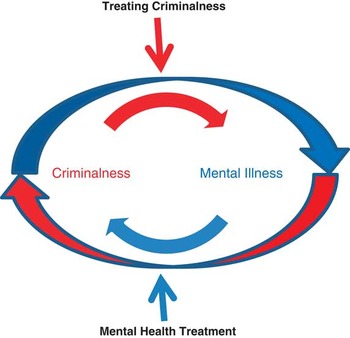
The need for specialized housing in corrections is further supported by the disproportionate representation of PMI in the correctional system and subsequent healthcare demands placed on correctional institutions. Symptoms of mental illness are endorsed by inmates at an alarming rates, as 60.5% of jail inmates, 49.2% of state prison inmates, and 39.8% of federal inmates endorsed such symptoms.Reference James and Glaze 33 Additionally, Steadman et al Reference Steadman, Osher, Robbins, Case and Samuels 34 found that 14.5% of male and 31% of female offenders in jails met diagnostic criteria for a serious mental illness, while prevalence rates of severe mental illness in the general population are estimated to be less than 6%.Reference Kessler, Chiu, Demler and Walters 35 Mere presence of criminal justice involvement does not minimize the necessity of mental health treatment; rather, as discussed below (see Figure 1), it may exacerbate symptoms of mental illness. In fact, PMI with the greatest criminal risk in terms of criminal thinking also appear to evidence the greatest degree of psychiatric disturbance (ie, symptom severity, number of symptoms experienced).Reference Gross and Morgan 27
Model of comorbid mental illness and criminalness, and associated treatment needs.

Individuals high in criminal risk also likely require the most intensive mental health services, and they may be best managed and treated in a setting with an equal emphasis on mental health treatment and behavioral management. Therefore, having diversion opportunities (eg, mental health court, inpatient treatment) or correctional staff and treatment programs that are equipped to provide treatment that address mental health and criminalness is imperative to improved outcomes for PMI and the community (eg, safety, cost effectiveness). Although it seems preferable to have community resources to address the treatment needs of all PMI, most community-based mental health treatment programs do not integrate treatments designed to target criminalness,Reference Calsyn, Yonker, Lemming, Morse and Klinkenberg 36 , Reference Morrissey, Meyer and Cuddeback 37 and the current reality is that correctional, forensic, and psychiatric facilities need to be prepared to treat these individuals.
PMI present many challenges to those responsible for managing the daily operations of correctional, forensic, and psychiatric institutions. The greatest concerns these facilities face include the security of the institution—emphasizing the safety of staff, inmates, and patients, and also members of the community.
Correctional facilities, specifically, are in the business of public safety, not psychiatric treatment. Although housing, managing, and treating PMI is not the mission of corrections, it is a necessity, but unfortunately, many correctional facilities are not equipped to handle the complex needs of this inmate population. Not only do they provide challenges regarding mental health treatment needs, but maintaining the safety of PMI within the correctional institution can be an added concern, as PMI inmates are at greater risk for victimization.Reference Crisanti and Frueh 38 , Reference Wolff, Shi, Blitz and Siegel 39 Furthermore, PMI may also be unable to conform their behavior to the rules and expectations of the institution. Thus, for their protection and management in the institution, PMI are often placed in disciplinary or administrative segregation.Reference Metzner and Fellner 40 Segregation includes placing inmates in a private cell (typically) with limited out of cell time (typically limited to 1 hour per day). This is problematic for PMI, in that such a placement impedes access to mental health services and hinders the ability of mental health treatment staff to provided needed care, and it has been argued that the housing itself is detrimental to the mental health of the inmate.Reference Metzner and Fellner 40 – Reference Haney 42
In spite of these concerns, systemic modifications in corrections may allow for a more effective balance between security and treatment without compromising safety. An example might be a correctional mental health program that designates a housing unit specifically for PMI and integrates a therapeutic milieu consistent with that in a psychiatric inpatient setting (eg, treatment groups, behavioral modification strategies, community meetings, mental health staff, specially trained correctional staff). Although costly, such programming may not be any more expensive in the long term than placing inmates in segregation units ($75,000 per year per segregated inmate as opposed to $25,000 to keep an inmate in general population)Reference Bhalla 43 or psychiatric prisons.
In the same way that correctional facilities are challenged to meet the mental health needs of their population, mental health facilities may be challenged to meet the management issues of their CJ-involved population who exhibit violence toward self and others (staff and peers). PMI that are currently or have been historically involved in the CJ system are also housed in psychiatric units (including general psychiatric and forensic mental health facilities). For example, 54.3% of the sample in the study by Gross and MorganReference Gross and Morgan 26 had been previously convicted of a criminal offense. The most common types of violence in inpatient mental health settings are impulse control–related and predatory violence,Reference Nolan, Czobor and Roy 44 , Reference Quanbeck, McDermott, Lam, Eisenstark, Sokolov and Scott 45 and rates of violence are highest for inpatients with criminal features (eg, psychopathy).Reference McDermott, Edens, Quanbeck, Busse and Scott 46 For the purposes of maintaining the safety of staff, patients, and community members, the setting (ie, housing) in inpatient psychiatric facilities should be evaluated to ensure they meet the dual needs of this population, while effectively delivering mental health services and maintaining staff and patient safety.
Borrowing from penology, it has been recommended that psychiatric facilities decrease unit sizes, increase staff-to-patient ratios, and improve staff and patient visibility (and presence) in units and hallways to improve safety within the facilityReference Warburton 47 ; however, despite the plethora of research available that has led to recommendations for safer environments and facilities that house PMI, there is a lack of standardization between federal, state, and county mental health and correctional systems. Further, there is a dearth of research regarding the varying efforts across systems to manage the unique demands presented by the CJ-involved PMI population.
Given prison overcrowding and public costs associated with incarceration,Reference Haney 48 , Reference Schmitt, Warner and Gupta 49 attempts to more effectively intervene and serve CJ-involved PMI in less restrictive settings have led to the development of community-based management strategies. Programs of particular promise include community-based diversion programs (ie, programs that utilize alternatives to incarceration).Reference Skeem, Manchak and Peterson 23 , Reference Heilbrun, DeMatteo and Yasuhara 50 Examples of such programs include mental health or drug courts, specialized probation teams and officers, and outpatient mental health and criminal treatment programs where the individual resides in the community. Although the empirical support for community-based programs for PMI is mixed, with some showing successReference Cosden, Ellens, Schnell and Yamini-Diouf 51 – Reference McNiel and Binder 54 and others failing to significantly impact CJ or mental health outcomes,Reference Skeem, Manchak, Vida and Hart 55 one issue of continued concern is housing. Even empirically supported mental health and CJ interventions are not likely to be successful when housing remains unstable. As reported to the second author by a treatment provider, “It is very difficult to work on dual issues of mental health and criminalness when the client is complaining of bed bugs and random gunfire” (Kim Rosenzweig, personal communication, June 2014).
Housing is an essential consideration for the success of PMI in the community.Reference Stromwall and Hurdle 56 In fact, housing may be the single best predictor of community success,Reference Corrigan, Mueser, Bond, Drake and Solomon 57 and therefore also a predictor of relapse. Specifically, without adequate and stable housing, successful community integration and PMI self-management will be thwarted.Reference Alverson, Alverson and Drake 58 Not surprisingly, homelessness is a primary predictor of relapse,Reference Appleby and Desai 59 – Reference Martell, Seitz, Harada, Kobayashi, Sasaki and Wong 61 as this aspect of social disadvantage that is prevalent among PMI contributes to exposure to criminal risk factors (eg, substance abuse, criminal associates).Reference Draine, Salzer, Culhane and Hadley 14 PMI who are allowed to choose their housing, and who live in private, safe, and clean environments report a better quality of life,Reference O’Connell, Rosenheck, Kasprow and Frisman 62 and such settings provide an environment conducive to service delivery and improved psychiatric outcomes.Reference Alverson, Alverson and Drake 58 Therefore, housing and management considerations are critical to the psychiatric and criminal recovery of CJ-involved PMI, whether they be housed in a correctional facility, mental health facility, or in the community.
Treatment Recommendations
In spite of recent advances in understanding the relationship of neurobiological mechanisms and criminal behavior, psychosocial interventions remain the current treatment of choice.Reference Morgan, Flora, Kroner, Mills, Varghese and Steffan 63 To be maximally beneficial, however, we submit that treatments should align with the etiological mechanisms of crime.Reference Morgan, Fisher, Duan, Mandracchia and Murray 18 , Reference Moran and Hodgins 64 That is, the evidence is overwhelmingly clear that PMI with a history of violence and/or CJ involvement present with a complex set of co-occurring etiological factors that include biological, psychological, psychiatric, and social variables. Effective treatments must target this network of contributing factors.
The plethora of research on criminal risk with CJ-involved PMI summarized in this article clearly suggests that clinicians must conceptualize these individuals as having both mental illness and criminal proclivities. Although we do not yet know the intricacies and nature of this co-occurring relationship (an area ripe for future research), it seems reasonable to suggest that mental illness and criminalness feed each other in a continuous loop (see Figure 1). Negative outcomes in one domain (eg, increased criminalness) negatively feed into and exacerbate outcomes in the other (eg, increased psychiatric symptomatology) and vice versa. Thus, there is a complex interplay that includes bidirectionality within the criminal and mental health domains independently (untreated criminal risk results in increased criminal recidivism; untreated mental illness results in increased psychiatric recidivism) and multidirectionality across the two domains, in that decompensation in one results in complications and decompensation in the other domain. For example, PMI who display a greater number of criminal risk factors may have limited CJ contact until such time that situations associated with their mental illness bring them to the attention of law enforcement (eg, criminal trespassing); however, upon law enforcement involvement, the individuals become defiant, resistant, and combative with officers resulting in a criminal offense. Thus, interventions need to break this cycle to reduce negative outcomes in both CJ and mental health domains. In other words, we submit that, from a therapeutic perspective, mental illness and criminalness should be conceptualized as a self-propelling system, and that to treat one at the exclusion of the other is to facilitate change in only one domain. To enhance and improve criminal outcomes (eg, reduced criminal recidivism, increased prosocial behavior) and psychiatric outcomes (eg, reduced psychiatric recidivism, increased quality of life), interventions must be dually targeted to both domains.
Historically, tailoring treatments to the dual needs of CJ-involved PMI as outlined in Figure 1 has not been the treatment of choice. For example, Bewley and MorganReference Bewley and Morgan 65 surveyed correctional mental health professions that treat incarcerated PMI. Given the correctional setting of the mental health professional’s work, it would seem likely that treatment efforts would be focused on reducing criminalness; however, results indicated that treatment providers considered mental illness recovery, personal growth, and improved institutional functioning to be more important treatment considerations than treating criminalness and preparing inmates for emotions management, criminogenic treatment needs, and community re-entry. Further, they reported spending significantly more therapeutic time on noncriminal mental health issues. In a meta-analytic review of current treatment efforts for CJ-involved PMI, it was discovered that only 8% of reviewed treatment studies targeted dual issues of mental illness and criminalness.Reference Morgan, Flora, Kroner, Mills, Varghese and Steffan 63 Thus, the model depicted in Figure 1 is not, from these authors’ perspectives, particularly innovative or novel, but it emphasizes that it is imperative that treatment efforts be tailored to these co-occurring needs of CJ-involved PMI, which recent research suggests is not being done. In fact, we submit that the evidence of co-occurrence is so strong that it may be appropriate to consider any treatment program for CJ-involved PMI that is not concurrently targeting issues of mental illness and criminalness as professionally irresponsible.
Historically we have treated the mental health needs of CJ-involved PMI, resulting in positive psychiatric outcomes with no appreciable reductions in CJ outcomes (eg, recidivism)Reference Calsyn, Yonker, Lemming, Morse and Klinkenberg 36 , Reference Morrissey, Meyer and Cuddeback 37 ; however, less is known about treating criminalness in this unique psychiatric population. The treatment foci and corresponding interventions are one component of effective treatment, but the model that guides the delivery of the treatment may be just as important for addressing the criminalness of CJ-involved PMI. In other words, what models or strategies may be used to successfully intervene with this population?
Risk-Need-Responsivity (RNR)Reference Andrews, Bonta and Hoge 66 is one model of service delivery, and is guided by 3 principles:
-
1. The level of services should be matched to level of criminal risk (Risk principle).
-
2. Services and treatment should target the dynamic (changeable) risks associated with criminal behavior (Need principle).
-
3. Interventions should be tailored to match offender characteristics, such as cognitive abilities, learning styles, culture (Responsivity principle).Reference Andrews, Bonta and Hoge 66
Empirical evidence overwhelmingly supports the adherence to principles of RNR when intervening with offenders (see Andrews and BontaReference Andrews and Bonta 13 for a thorough review of this literature). In fact, interventions that adhere to the principles of RNR typically produce 10–30% reductions in criminal recidivism.Reference Gendreau and Goggin 67 The empirical support for RNR is such that it is widely accepted that the most effective rehabilitative programs adhere to the principles of RNR.Reference Andrews and Bonta 68 Given the empirical support of RNR, and the findings summarized above examining criminal risk in CJ-involved PMI, it stands to reason that interventions for this population must incorporate principles of RNR; however, as noted above, this has not typically been the case in practice.Reference Morgan, Flora, Kroner, Mills, Varghese and Steffan 63 , Reference Bewley and Morgan 65 For example, it was historically believed that simply enhancing mental health services to PMI in the community would result in reduced criminal activity (see for example Lamb and Bachrach,Reference Lamb and Bachrach 69 Lamb and Weinberger,Reference Lamb and Weinberger 70 and TeplinReference Teplin 71 ), but we now know that treatment of mental health concerns fails to elicit change in criminal behavior.Reference Calsyn, Yonker, Lemming, Morse and Klinkenberg 36 , Reference Morrissey, Meyer and Cuddeback 37 Furthermore, when treating incarcerated PMI, treatment providers tend to place greater emphasis on basic mental health services (eg, symptom management and stabilization) and personal growth, than on rehabilitative efforts, including principles of RNR, such as reducing criminal risk and preparing inmates for release.Reference Bewley and Morgan 65 This emphasis on mental health at the exclusion (or reduced emphasis) on criminalness is likely also true in mental health settings, such as forensic psychiatric units and general mental health practice. Given the current findings of the role of neuroanatomical abnormalities and criminal risk in PMI that become CJ-involved, such approaches are no longer recommended. It is time to provide services to CJ-involved PMI that target the co-occurring needs of this population, that is, both mental illness and criminalness.Reference Morgan, Fisher, Duan, Mandracchia and Murray 18 , Reference Teplin 71
Results of 2 separate meta-analytic reviews support the benefit of targeting both mental illness and criminalness by demonstrating important improvements in both domains post-treatment. Specifically, mental health interventions for incarcerated offenders found significant treatment improvements for general mental health outcomes, to include reduced symptom distress, improved coping skills, and improved behavioral functioning.Reference Morgan, Flora, Kroner, Mills, Varghese and Steffan 63 , Reference Martin, Dorken, Wamboldt and Wooten 72 Notably, however, interventions also appear to have an appreciable effect on criminal and psychiatric recidivism, complimentary goals of interventions aimed at targeting offending, and mental illness needs. These meta-analyses also provide important insights into effective therapeutic strategies, including the use of homework and behavioral practice of new behaviors.Reference Morgan, Flora, Kroner, Mills, Varghese and Steffan 63 Also, continuity of services between institutions and community, some level of voluntariness in treatment participation, and not utilizing time-limited approachesReference Martin, Dorken, Wamboldt and Wooten 72 all produced more favorable outcomes.
Notably absent from these reviews were studies that targeted co-occurring issues of mental illness and crime. In fact, Morgan et al Reference Morgan, Flora, Kroner, Mills, Varghese and Steffan 63 found only one study that examined the effectiveness of an enhanced assertive community treatment (ACT) treatment delivery model for reducing both criminal and psychiatric recidivism, and produced positive treatment effects for both (d=1.17 for psychiatric recidivism and d=0.54 for criminal recidivism; see Lamberti et al Reference Lamberti, Weisman, Schwarzkopf, Price, Ashton and Trompeter 73 ). These are significant findings, given that CJ-involved PMI present unique challenges, requiring service providers to treat both psychiatric symptoms and criminalness.Reference Hodgins, Müller-Isberner and Freese 74 To enhance treatment options, Morgan et al developed Changing Lives and Changing Outcomes: A Treatment Program for Justice Involved Persons with Mental Illness, a comprehensive intervention designed to target the dual issues of mental illness and criminal propensity.Reference Morgan, Kroner, Mills, Bauer and Serna 75 Changing Lives and Changing Outcomes includes 9 treatment modules that are uniquely tied to both mental illness and criminal risk. Results of preliminary program evaluations are promising, with evidence that participants generally learn the content and concepts presented,Reference Van Horn and Morgan 76 as well as clinically significant improvements over time (pre–post) on measures of psychiatric symptoms and psychopathology, and important aspects of criminal thinking.Reference Morgan, Kroner, Mills, Bauer and Serna 75 Current efforts are examining effects on criminal recidivism and community re-entry.
The treatment summary discussed above reviews treatment gains with regard to PMI and general criminal behavior, but what about therapeutic interventions for PMI and violence? Special consideration for reducing one’s risk for violence is especially important, as substance abuse in conjunction with poor medication compliance has been shown to lead to an increase in the risk for violent acting out among PMI.Reference Swartz, Swanson, Hiday, Borum, Wagner and Burns 77 , Reference Robbins, Monahan and Silver 78
Current approaches to treating violent offenders are based on social learning and social information-processing theories,Reference Cortoni, Nunes and Latendresse 79 – Reference Wong, Gordon and Gu 82 with little to no discourse on the role of neurobiology in the treatment process. The basic premise of these psychosocial approaches is that past violent behaviors have been learned (modeled) and reinforced. Not unexpectedly then, treatment efforts have aimed to reduce violence by teaching nonviolent alternatives or methods of responding. Specifically, treatment efforts typically seek to help participants increase awareness of triggers and develop skills of behavioral control, while also challenging antisocial attitudes (consistent with the Needs principle of RNR). Typical programs for reducing violence generally appear to be intensive in nature (recommended minimum of about 6 months), structured, and skills-based with an emphasis on modeling alternatives to violence. Such programs have proven to be quite successful. For example, an examination of a multimodal systemic intervention rooted in psychosocial and behavioral interventions, supplemented with psychopharmacology when warranted, resulted in significant behavioral improvements such as reduced disciplinary infractions, and reduced inmate–inmate and inmate–staff assaults.Reference Wang, Owens, Long, Diamond and Smith 83 Although this intervention is systemically based (and therefore quite costly), pure psychosocial interventions have also proven to be effective. A recently developed program, The Violence Reduction Program: A Treatment Program for Violence Prone Forensic Clients (VRP),Reference Wong and Gordon 84 offers particular promise. The VRP includes 3 therapeutic phases: (1) learning about aggressive behaviors and readiness for change; (2) skill development to manage thoughts, feelings, and behaviors associated with violence; and (3) over-learning skills and relapse prevention. The intervention is not time-limited, so it allows participants to work at their own pace, and preliminary evaluations to date have resulted in reduced community violence, as well as institutional improvements including less restrictive housing placements and fewer institutional behavioral problems.Reference Wong, Gordon and Gu 82 , Reference Di Placido, Simon, Witte, Gu and Wong 85 , Reference Wong, Van der Veen and Leis 86
Recent gains in understanding neurobiological mechanisms that are associated with crime and violence offer promising areas of future research. Specifically, as research moves from correlational studies of this complex relationship to studies examining causal neurobiological mechanisms of crime and violence, the potential exists for a plethora of new treatment options. For example, if future studies advance beyond the findings summarized above to identify etiological markers, early detection of individuals at biological risk (beyond the Central 8 risk factors) becomes possible. As such developments occur, the breadth of treatment options significantly increases. At the very least, this will provide opportunities for early detection and intervention. Notably, intervening as early as 3 years of age can produce improved brain functioning and subsequent reductions in crime.Reference Raine, Mellingen, Liu, Venables and Mednick 87 In fact, the earlier an intervention is delivered, the greater likelihood for a successful outcome.Reference Miller 88 As summarized by Miller,Reference Miller 88 even simple physiological interventions, such as diet, can result in reduced criminalness and possibly violence. In other words, as Rainy noted, “Biology is not destiny. We can change the biological roots of crime and violence—there’s no question about it” (as cited in Miller,Reference Miller 88 p. 39). Thus, the potential for more integrated interventions that holistically target the complex etiological mechanisms of crime exists.
Discussion
Mental illness, crime, and violence involve a complex interaction of neurobiological, social, and psychological/sociological factors that are poorly understood by lay persons,Reference Pescosolido, Martin, Link, Kikuzawa, Burgos and Swindle 1 , Reference Pescosolido, Monahan, Link, Stueve and Kikuzawa 2 and, in our opinion, professionals alike (see for example research by Bewley and MorganReference Bewley and Morgan 65 ). Although historically, clinical practice emphasized the enhancement of mental health treatment to PMI to reduce CJ involvement, it is now clear that mental health treatment is insufficient for reducing crime and violence. Specifically, it is now clear that CJ-involved PMI present with criminal risk factors similar to offenders who are not mentally ill.Reference Bonta, Law and Hanson 15 , Reference Wilson, Farkas, Ishler, Gearhart, Morgan and Ashe 17 , Reference Wolff, Morgan, Shi, Fisher and Huening 19 , Reference Bolanos, Morgan, Mitchell and Gabrowski 28 , Reference Skeem, Winter, Kennealy, Eno Louden and Tatar 29 , Reference Bhalla 43 Given these findings, it is imperative that treatment efforts target co-occurring issues of mental illness and criminalness. Notably, psychosocial interventions offer significant potential for reducing criminal and psychiatric recidivism,Reference Bhalla 43 , Reference Andrews and Bonta 68 and new programs are being developed that target these goals.Reference Stromwall and Hurdle 56
Of particular interest with regard to new research developments in CJ, forensic psychiatry, and forensic psychology are the findings by neuroscientists such as Pardini et al.Reference Pardini, Raine, Erickson and Loeber 8 The use of MRIs to identify individuals at risk for future criminal activity, generally, and violence, specifically, presents numerous treatment possibilities. Specifically, findings that crime is associated with neurological dysfunction and atrophy opens new possibilities for interventions; however, more research, particularly research that allows for causal inferences, is needed to further advance our understanding and possible treatment options associated with neurobiological dysfunction. Until this is accomplished, increased efforts at improving the management of incarcerated PMI and housing situations for CJ-involved PMI in correctional institutions, psychiatric facilities, or the community are essential. Furthermore, current treatment efforts must not limit focus to treatment of mental illness, and must include efforts at reducing criminalness by implementing treatment strategies and models of intervention such as RNR.
In spite of the many significant gains that have produced enhanced understanding of the etiological and treatment needs of CJ-involved PMI, much work remains to be done. Future studies should continue with neuroimaging studies with PMI with and without criminal histories or comorbid antisocial traits. Specifically, future studies should aim to examine the etiology of neurobiological abnormalities and the role of environment in causing or exacerbating such abnormalities. Furthermore, although research has begun to demonstrate that psychosocial interventions can be effective for reducing both criminal and psychiatric recidivism, further research is warranted to identify effective treatment programs and the identification of best practices for reducing violence, crime, and psychiatric disturbance, while simultaneously improving quality of life when intervening with CJ involved PMI.
Disclosures
The authors do not have anything to disclose.