


Introduction
Divergent lines of thought have developed amongst scientists and engineers regarding methods for estimating the quantity of wind-blown snow transported, deposited, and eroded over the Earth’s surface. Some workers have emphasized saltation of snow as the dominant mass-transport process (Reference Dyunin and KotlyakovDyunin and Kotlyakov, 1980; Reference TakeuchiTakeuchi, 1980;Reference Schmidt Schmidt, 1986); others have shown that significant quantities of snow are carried in suspension by upper-level drifting (Reference Mellor and RadokMellor and Radok, 1960; Reference Budd, Dingle, Radok and RubinBudd and others, 1966). Reference TablerTabler (1975) calculated transport of snow using a seasonal mass balance, whilst Reference Pomeroy and MalePomeroy and Male (1986) applied an hourly massbalance to calculate erosion and transport over agricultural landscapes.
The process-based model described in this paper has been derived from two-phase flow principles and from measurements of drifting snow, so as to assist in reconciling the variant approaches and in order to provide an analytical framework which suggests necessary research and provides a practical tool for snow-management designs. The processes pertinent to the model are saltation, suspension, and sublimation. They are addressed separately, and their importance for mass transport and surface erosion of snow is noted.
Measurements
During January and February 1987, drifting-snow flux and related atmospheric parameters were measured on a completely snow-covered and treeless plain, located 4 km west of the limits of the City of Saskatoon, Canada. Snow cover between 100 and 180 mm deep and ranging from 5 to 760 KN m−2 in surface hardness provided an undisturbed up-wind fetch of 500 m. Wind speeds at 10 m height during measurement events varied from 5 to 15 m s−1, and air temperatures ranged from -17° to + 1°C. Wind speeds at the threshold of snow transport varied from 5 to 9m s−1.
Wind speeds and air temperatures were measured in a vertical transect above the surface to a height of 3 m. The mass flux of drifting snow was measured with opto-electronic particle detectors (Brown and Pomeroy, in press), one set in saltation, approximately 10 mm above the surface, and the others spaced logarithmically in a vertical transect to a height of 2 m. Each recorded observation is an average of measurements taken over a period of 7.5 min.
Model
This section briefly outlines mathematical descriptions for saltation, suspension, sublimation, and erosion, developed from both two-phase flow theory and measured data. For a more detailed discussion of the development, the reader is referred to Pomeroy (unpublished).
Saltation
Saltation refers to the horizontal transport of particles in curved trajectories, which are near to and periodically impact on, the surface. Saltation trajectories for snow are rarely more than a few millimetres in height. Reference BagnoldBagnold (1941) related saltating flow of sand to the kinetic energy available to support the flow, Reference DyuninDyunin (1954) applied Bagnold’s ideas to drifting snow, and these concepts are here used to develop an expression for the total mass flux of saltating snow.
The total mass flux of saltating snow, Qsalt is the mean saltating mass moving at some mean velocity, up, where

Wp is the mean weight of snow saltating over a surface, g is the gravitational acceleration constant. Proceeding from reasoning expounded by Reference OwenOwen (1964), and applied by Reference SchmidtSchmidt (1986) to drifting snow, the weight of saltating snow is assumed to be related to the magnitude of the flow-shear stress which is experienced by the particles. Subtracting the shear stress applied to non-erodable surface elements, τn, and the shear stress applied to the erodable surface, τt, from the total atmospheric shear stress, τ, yields the expression

The coefficient, e, is the efficiency of saltation and is inversely related to the friction resulting from particle impact and ejection at the snow surface, as the horizontal shear stress applied to the particles is transformed into a normal force which supports the weight of the particles. The saltation efficiency ranges from 0 to 1, where e = 0 for complete loss of particle momentum after surface impact, and e = 1 for no friction losses.
Measured and modelled (197 values each) saltating mass flux of snow per unit area perpendicular to flow, plotted with atmospheric friction velocities.

Field observations and empirical relationships provide a basis for evaluation of up, e, τ, τn and τt in Equations (1) and (2); the mean wind speed in the saltation layer is assumed to be proportional to the saltation velocity, up. Above the saltation layer, the vertical gradient of wind speed in drifting snow is described by a logarithmic slope, u*, the friction velocity, and zero wind-speed intercept, z0, the aerodynamic roughness height. Reference BagnoldBagnold (1941) reported that, for any upper-level wind speed, vertical gradients of wind speed converge at a constant wind-speed focus within the layer of saltating sand, the wind speed at and beneath this focus height being nearly constant at the value sustained for the transport threshold. Pomeroy (unpublished) showed that the height of the Bagnold focus is positively related to wind speed and also to aerodynamic roughness height during drifting, and to the wind speed and aerodynamic roughness height at the transport threshold.
The focus heights calculated using friction velocities, aerodynamic roughness heights, and transport thresholds measured in this experiment are all greater than 10 mm, except for near-threshold friction velocities. For example, given u* = 0.5 m s−1, threshold friction velocity 

Measured values of the mass flux of saltating snow through a differential area normal to the flow suggest a value for the saltation velocity proportionality constant and a function for the saltation efficiency, e. Assuming e attains its maximum value of 1.0 within the range of measurements taken, the ratio of saltation velocity to threshold friction velocity is 2.3:1. Measured mass fluxes suggest that the saltation efficiency is inversely proportional to the friction velocity; hence e = l/3.25u*.
An atmospheric shear stress is found from a friction velocity, u*, noting that  where ρ is the flow density. Hence, τn is determined using semi-empirical drag-partition techniques which have been outlined by Reference Lyles and AllisonLyles and Allison (1976) and Reference Tabler, Schmidt, Steppuhn and NicholaichukTabler and Schmidt (1986). In 1964, Owen proposed that surface-shear stress,τn, equals total shear stress at the threshold of transport, which is also the kinetic energy level at which particle movement ceases.
Combining the results of measurements and theory leads to the following expression for total mass flux of saltating snow

The dimensionless coefficient, 0.71, combines saltation velocity and efficiency coefficients. For given conditions of non-erodable roughness and threshold, Qsalt is approximately proportional to friction velocity. Measured and modelled values of saltating mass flux (Fig. 1) show a similar increase with friction velocity. A regression between 197 measured and modelled values of saltating mass flux indicates a coefficient of determination, R2 = 0.79, a standard error of estimate of 73.5 g m−2 s−1, and a mean ratio of predicted-to-measured values of 0.98: 1.
Suspension
Suspended drift refers to snow prevented by turbulent eddies in the atmosphere from contacting the surface. Drift density, the atmospheric concentration of suspended snow, decreases dramatically with height but can extend in height for several hundred metres even without snowfall. Theoretical considerations suggest that saltating snow, rather than surface snow, is the source of suspended particles (Anderson, 1987; Pomeroy, unpublished).
The total mass flux of suspended drifting snow, Qsusp, is found using the variation of drift density with height, where the drift density is referenced to a constant value at the saltation layer interface. Hence

where nz is the drift density of snow at height z; zh is the height at top of saltation layer; zb, = height at top of the boundary layer. In order to solve Equation (4), the distribution of nz with height must be known. Because the mean movement of particles in a turbulent atmosphere can be modelled in an analogy to laminar diffusion, the diffusion equation has been applied by Reference Mellor and RadokMellor and Radok (1960), Reference Budd, Dingle, Radok and RubinBudd and others (1966), and Reference SchmidtSchmidt (1982) to describe the vertical distribution of suspended drifting snow. A one-dimensional diffusion equation, based upon mass continuity for sublimating particles undergoing gravitational settling in a turbulent atmosphere can be obtained from

where w is the mean vertical snow-particle velocity; ks is the turbulent diffusivity of drifting snow at height z; Vs, is a rate coefficient accounting for sublimation of snow particles; and t is time. Equation (5) is integrated, given steady-state conditions  , to provide

An iterative calculation determines the drift-density profile as follows: from a known reference ni = nr at zi = zr, a drift density n1 at height zI is calculated using Equation (6). Calculated values corresponding to position I are substituted into parameters specified for position i, and nI, is recalculated for a new zI. The interval between zI and zi must be small, and specification of w*, nr, and zr is necessary to perform the iteration.
The diffusion equation requires a lower boundary flux, E, the surface erosion rate, to define w* such that

where  is the mass of drifting snow between heights r and z; and
 is the mean terminal fall velocity of drifting snow particles. Drift densities from 324 observations under a wide variety of precipitation conditions and with air temperatures ranging from −17° to +1°C provide the empirical approximation
Height above surface of reference drift density (0.8 kg m−3) for suspension of drifting snow (225 values), plotted with atmospheric friction velocities.


The coefficient of determination, R2 = 0.82 for Equation (8), suggests that the right-hand side of Equation (7) is not sensitive to variation in sublimation rate, snowfall, and surface condition.
Measured values of drift density are extrapolated using Equation (6) to a reference value nr = 0.8 kg m−3 (a value commonly measured at the top of the saltation layer) to determine the height of this reference drift density. Figure 2 shows the reference heights and corresponding friction velocities for a variety of environmental conditions. Assuming a linear relationship, the 225 profiles of drift density indicate

with a coefficient of determination R2 = 0.76, and a standard error of estimate = 3.6 mm.
To model suspended drift densities using wind-speed measurements the height, zr of the reference drift density of 0.8 kg m−3 is calculated using Equation (9), and drift densities calculated by iteration of Equations (6) and (8) from zh to zb Figure 3 shows modelled drift densities plotted against measured values for both snowfall and non-snowfall conditions, and a variety of wind speeds, snow cover, and air temperatures. The coefficient of determin¬ation is R2 = 0.84, and the standard error of estimate is 1.6 gm−3 for the total of 761 points. The suspension equations indicate that the total suspended mass flux increases approximately with the fourth power of friction velocity.
Sublimation
The drifting snow sublimation calculation used in this model is based upon the energy-balance equation of Reference SchmidtSchmidt (1972), with modifications for turbulence by Lee (unpublished), and for atmospheric gradients of water vapour and sublimation from saltating particles by Pomeroy (unpublished). The controlling factors for sublimation are particle size, wind speed, air temperature, and relative humidity.
Erosion
Considering the mass balance from a control volume of drifting snow over a unit area of surface yields an estimate of the erosion rate at the surface expressed as

where E is the rate of snow-pack erosion; Qout and Qin are the total horizontal mass fluxes of snow leaving and entering the control volume; dnz/dt is the sublimation rate of drifting snow; and S is the snowfall rate at height zb, the top of the boundary layer. The measurements of Reference TakeuchiTakeuchi (1980) and boundary-layer development theory (Reference Hunt and WeberHunt and Weber, 1979) suggest fully developed transport, achieved when Qout = Qin, exists to a height of at least 5 m for horizontal fetches greater than 400–500 m. In such cases, common to many wind-swept areas, the surface-erosion rate is controlled by sublimation and snowfall.
Modelled drift densities of suspended drifting snow plotted with 761 corresponding measured values.

Results
The model detailed above has been compiled in a computer algorithm termed the Prairie Blowing Snow Model (PBSM). Pomeroy (unpublished) provided a full description and listing of the PBSM. Inputs required are wind speed measured at a height of 10 m, 10 m wind speed at the transport threshold, air temperature and relative humidity at a height of 2 m, landscape vegetation geometry, and horizontal fetch. The atmospheric measurements follow the World Meteorological Organization format. For drifting conditions, in which the threshold is not known, 5 m s−1 may be assumed. The model accounts for variable fetches in calculating the height of the boundary layer.
Assuming a 500 m snow-covered fetch, Figure 4 compares the PBSM total mass flux of drifting snow, including saltation and suspension up to a height of 5 m, with the total mass flux of saltating snow only. Saltation comprises less than 10% of total mass flux for wind speeds greater than 15ms , for high wind speeds, the total flux is not sensitive to threshold wind speed. Values of total mass flux calculated using other models are plotted in the same figure. The PBSM fluxes agree well with those predicted by Reference SchmidtSchmidt (1986). PBSM sublimation rates, for example, are calculated for columns of drifting snow found for fetches of 500 m over snow-covered uniform terrain. The sublimation rate, plotted as a function of wind speed (Fig. 5), changes over more than an order of magnitude as atmospheric conditions vary over their normal continental cold-season range. For fully developed flow conditions, erosion rates matching sublimation rates of 25 mm snow water equivalent per hour can occur in a severe winter storm at temperatures near the melting point of the snow.
Conclusions
Prairie Blowing Snow Model horizontal mass flux and saltating mass flux for threshold wind speed of 5 ms−1, plotted with 10 m wind speeds. The data of Reference Budd, Dingle, Radok and RubinBudd and others (1966), Reference TakeuchiTakeuchi (1980) for old hardened snow, and Reference SchmidtSchmidt (1986) for 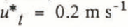 are plotted for comparison.

Prairie Blowing Snow Model sublimation rates within a fully developed column of drifting snow shown for various temperatures and humidities (plotted with 10 m wind speeds).

The model provides a tool which can be used to estimate quantities of drifting snow on an operational basis. For instance, the quantities of snow transported across an airport runway may be calculated on an hourly basis using meteorological station measurements. The model also calls attention to the processes which are important for the behaviour of drifting snow. The total flux of saltating snow is sensitive to threshold conditions, and increases in proportion to wind speed. Because of very rough flow conditions and concomitant low flow velocities, saltation is a notable constituent of total drifting snow flux only for wind speeds below 15 ms−1. The total suspended flux of drifting snow is insensitive to threshold conditions, temperature, and snowfall, but requires saltation to become established. It then increases with the cube of wind speed and becomes the dominant mode of transport.
Rates of sublimation from drifting snow vary considerably with wind speed, temperature, and humidity. For non-precipitation conditions in locations with large fetches, surface snow-erosion rate balances drifting snow sublimation rate and is sufficient to ablate completely the shallow snow-packs of the northern prairies of North America.
Because the model calculations are sensitive to mean flow velocities near the surface, to the transition of particles from saltating to suspended motion, and to the height of the two-phase boundary layer, research on these subjects is recommended. Broadly based research on the non-steady-state operation of drifting-snow processes is desirable to permit extension of the model to complex terrain.
Acknowledgements
This research was carried out at the Division of Hydrology, University of Saskatchewan, Saskatoon, Canada. Assistance from Drs D.M. Gray and D.H. Male, T. Brown, and other members of the Division, and support from the Natural Sciences and Engineering Research Council of Canada and the Saskatchewan Research Council are noted. Helpful comments regarding the manuscript were provided by Dr R.A. Schmidt, Rocky Mountain Forest and Range Experiment Station, Fort Collins, Colorado, U.S.A.



