Introduction
Although psychological and pharmacological treatments for depression are capable of reducing relapse rates, incomplete remission after treatment is common (Thase et al. Reference Thase, Simons, McGeary, Cahalane, Hughes, Harden and Friedman1992; Paykel et al. Reference Paykel, Ramana, Cooper, Hayhurst, Kerr and Barocka1995; Fava et al. Reference Fava, Rafanelli, Grandi, Conti and Belluardo1998, Reference Fava, Ruine, Rafanelli, Finos, Conti and Grandi2004). This is problematic because residual depressive symptomatology constitutes a serious risk for relapse and even a subsequent chronic course (Ormel et al. Reference Ormel, Oldehinkel, Brilman and van den Brink1993; Paykel et al. Reference Paykel, Ramana, Cooper, Hayhurst, Kerr and Barocka1995; Judd et al. Reference Judd, Paulus, Schettler, Akiskal, Endicott, Leon, Maser, Mueller, Solomon and Keller2000). For example, residual subsyndromal depression has been associated with an odds ratio of 3.5 for patients with subsequent relapse compared with those who experienced full recovery (Judd et al. Reference Judd, Akiskal, Maser, Zeller, Endicott, Coryell, Paulus, Kunovac, Leon, Mueller, Rice and Keller1998). Therefore, treatment until full remission has been achieved is implicated (cf. Thase et al. Reference Thase, Simons, McGeary, Cahalane, Hughes, Harden and Friedman1992; APA, 2000). Such enhanced treatment may prevent residual symptoms from developing into prodromes of relapse, as has been demonstrated by Fava et al. (Reference Fava, Rafanelli, Grandi, Conti and Belluardo1998, Reference Fava, Ruine, Rafanelli, Finos, Conti and Grandi2004) and Paykel et al. (Reference Paykel, Scott, Teasdale, Johnson, Garland, Moore, Jenaway, Cornwall, Hayhurst, Abbott and Pope1999, Reference Paykel, Scott, Cornwell, Abbott, Crane, Pope and Johnson2005). However, to be able to improve treatment, information is needed concerning: (1) the prevalence of residual symptoms in general, and consequently the necessity for treatment of residual symptomatology, and (2) which of the individual depressive symptoms usually remain as residual symptoms.
A systematic literature search (see Method) revealed several studies that examined the presence of individual depressive symptoms during major depressive episodes (MDEs) (Chen et al. Reference Chen, Eaton, Gallo, Nestadt and Crum2000; Kornstein et al. Reference Kornstein, Schatzberg, Thase, Yonkers, McCullough, Keitner, Gelenberg, Ryan, Hess, Harrison, Davis and Keller2000; Minor et al. Reference Minor, Champion and Gotlib2005; Pettit et al. Reference Pettit, Lewinsohn and Joiner2006; Gaynes et al. Reference Gaynes, Rush, Trivedi, Wisniewski, Balasubramani, Spencer, Peterson, Klinkman, Warden, Nicholas and Fava2007; Nierenberg et al. Reference Nierenberg, Trivedi, Fava, Biggs, Shores-Wilson, Wisniewski, Balasubramani and Rush2007; Gaudiano et al. Reference Gaudiano, Young, Chelminski and Zimmerman2008; Smith et al. Reference Smith, Kyle, Forty, Cooper, Walters, Russel, Caesar, Farmer, McGuffin, Jones, Jones and Craddock2008). However, with regard to periods of remission, or non-depressive episodes (non-MDEs), similar studies are rare (Minor et al. Reference Minor, Champion and Gotlib2005). In addition, the limitations of most of the studies that did examine individual depressive symptoms are fourfold. First, all studies are based on cross-sectional data, that is the absence or presence of individual depressive symptoms was established at only one point in time. This means that, depending on the specific moment during the episode that patients are assessed, the presence of symptoms may be over- or underestimated (Patten, Reference Patten2009). To prevent systematic bias, a proper assessment of the actual variability of the long-term course can best be performed by prospective longitudinal measurements on a regular basis. Second, although most studies assessed the presence of symptoms during a current MDE (Kornstein et al. Reference Kornstein, Schatzberg, Thase, Yonkers, McCullough, Keitner, Gelenberg, Ryan, Hess, Harrison, Davis and Keller2000; Minor et al. Reference Minor, Champion and Gotlib2005; Pettit et al. Reference Pettit, Lewinsohn and Joiner2006; Gaynes et al. Reference Gaynes, Rush, Trivedi, Wisniewski, Balasubramani, Spencer, Peterson, Klinkman, Warden, Nicholas and Fava2007; Nierenberg et al. Reference Nierenberg, Trivedi, Fava, Biggs, Shores-Wilson, Wisniewski, Balasubramani and Rush2007; Gaudiano et al. Reference Gaudiano, Young, Chelminski and Zimmerman2008), some determined symptom profiles retrospectively during a worst-ever episode (Chen et al. Reference Chen, Eaton, Gallo, Nestadt and Crum2000; Smith et al. Reference Smith, Kyle, Forty, Cooper, Walters, Russel, Caesar, Farmer, McGuffin, Jones, Jones and Craddock2008), which may have resulted in biased reports. Third, very few of those studies examined the absence and presence of individual symptoms during both MDEs and non-MDEs within the same patients. This is important because only in this way can the relative contribution of individual symptoms across MDEs and non-MDEs be determined. The only exception is the study by Minor et al. (Reference Minor, Champion and Gotlib2005), but this concerns a relatively small out-patient sample (n=35) with assessments at only two points in time. Fourth, only the study by Gaynes et al. (Reference Gaynes, Rush, Trivedi, Wisniewski, Balasubramani, Spencer, Peterson, Klinkman, Warden, Nicholas and Fava2007) was aimed at primary care patients; this is important because the vast majority of depressive patients are treated in this setting. Unfortunately, they only reported symptom prevalence during MDEs and not during non-MDEs.
In the current study we addressed these four problems. First, the presence of each individual DSM-IV depressive symptom was assessed at 13 points in time to obtain a week-by-week record of the presence of the individual depressive symptoms. Second, the study was conducted prospectively during a 3-year follow-up. Third, assessment was undertaken during both MDEs and non-MDEs within the same patients. Fourth, a substantial sample of primary care patients was examined. We compared our results with those of other studies that we obtained by a systematic literature search.
Method
Setting, patients and inclusion criteria
Patients participated in the Interventie Studie Eerste Lijn (INSTEL), a randomized clinical trial in primary care evaluating the effects of four treatments (for details see Conradi et al. Reference Conradi, de Jonge and Ormel2007). We included patients referred by GPs who were treating them for depression, were aged between 18 and 70 years, and were not suffering from a life-threatening medical condition, psychotic disorder, bipolar disorder, dementia or primary alcohol or drug dependency. Additional exclusion criteria were pregnancy and already receiving psychotherapy.
The trial consisted of four interventions: usual care by the GP (UC; n=72), a psycho-educational prevention program (PEP; n=112), and PEP plus either psychiatric consultation (PC+PEP; n=39) or brief cognitive behavioral therapy (CBT+PEP; n=44). UC consisted of brief supportive counseling, possible antidepressant prescription and/or referral according to clinical guidelines. PEP was a low-intensity program consisting of three face-to-face sessions and short 3-monthly telephone contacts thereafter. In the PC+PEP condition, one session with a psychiatrist preceded PEP, whereas in CBT+PEP, on average 10 sessions of CBT were provided prior to PEP. After a complete description of the study to the subjects, written informed consent was obtained.
Instrument
At baseline, the Composite International Diagnostic Interview (CIDI) version 2.1 (WHO, 1997; Ter Smitten et al. Reference Ter Smitten, Smeets and van den Brink1998) was administered face to face. The CIDI is a structured psychiatric interview that has shown good reliability and validity (Wittchen, Reference Wittchen1994; Kessler et al. Reference Kessler, Berglund, Chiu, Demler, Heeringa, Hiripi, Jin, Pennell, Walters, Zaslavsky and Zheng2004). After baseline, patients were interviewed at 3-monthly intervals by telephone, the interview including an adapted CIDI depression section. By this means we established the presence or absence of each of the individual DSM-IV criteria, or symptom clusters, of depression per week in the past 3 months. Item parcels were created by counting the symptom group as present if any one of the symptoms forming the DSM-IV criterion were present. These symptom clusters include the two core symptoms, namely depressed mood (feeling sad or empty) and/or diminished interest and pleasure in activities (anhedonia), and the seven other symptom clusters: eating problems (weight gain or loss and/or increases or decreases of appetite), sleeping problems (insomnia or hypersomnia), psychomotor problems (psychomotor agitation or retardation), fatigue or loss of energy, worthlessness and/or guilt (not merely self-reproach or guilt about being depressed), cognitive problems (diminished ability to think or concentrate and/or indecisiveness) and death ideations (recurrent thoughts of death and suicide). Based on these data on the week-by-week presence of these individual symptoms, we were able to establish whether patients were meeting the criteria for MDE for each week during the entire follow-up period.
Outcome measures and analyses
We defined MDEs in accordance with DSM-IV duration and severity criteria, that is ⩾2 consecutive weeks in which the patient suffered the majority of the day from at least five of the DSM-IV-defined depressive symptoms, including at least one of the core symptoms. Consequently, the periods when patients did not suffer from DSM-IV-defined MDEs were labeled as non-MDEs. In these periods patients may have suffered from residual symptoms.
We computed for each distinct period of MDE and non-MDE the proportion of time patients reported the presence of each of the individual DSM-IV symptom clusters. These proportions of time that patients met criteria for each of the individual symptoms were added for each distinct MDE and non-MDE, to compute a measure for the overall (residual) severity during these periods.
Finally, we performed sensitivity analyses to rule out possible treatment effects explaining our findings. In the original study (Conradi et al. Reference Conradi, de Jonge, Kluiter, Smit, van der Meer, Jenner, van Os, Emmelkamp and Ormel2007), no differences were found between treatments during the 3-year follow-up on any of the CIDI-based outcomes, which was the measure of interest in this study. However, a relatively small difference emerged on the Beck Depression Inventory (BDI) between UC and PEP compared with PC+PEP and CBT+PEP. Therefore, we made comparisons by means of Wilcoxon non-parametric tests between these two subgroups of patients on the proportions of time the individual CIDI-based symptoms were present. The significance level for the analyses was set at p<0.05 (two-tailed).
Comparison with other studies
To compare our findings with other studies, we performed a systematic search of the research literature. The following search terms were entered in Medline: ‘(residual) symptom* (profile*) depression’. Stars represent wild cards, and the terms in parentheses were systematically entered and left out in all possible combinations with the other terms. In this way we were able to cover research concerning the presence of symptoms during MDEs and non-MDEs. This search resulted in the studies mentioned in the Introduction.
To examine comparability, we computed Spearman's non-parametric correlation coefficient (ρ) between the rankings of the prevalences of the depressive symptoms during MDEs and non-MDEs in our study and each of the other studies.
Results
Patient characteristics and non-response at assessments
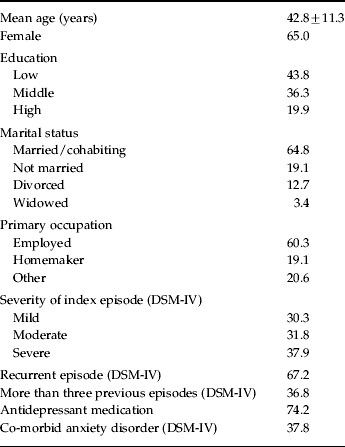
Sociodemographic and clinical characteristics of the sample are displayed in Table 1. There were no differences between treatment groups on these baseline characteristics, apart from the finding that significantly more UC patients were married compared to CBT+PEP patients (F=8.08, p=0.044), and somewhat more UC patients reported severe depressions at baseline compared to PEP patients (F=7.76, p=0.021). Non-response for the 12 3-monthly telephone interviews ranged from approximately 8% to on average 20%. To test whether low responders (i.e. patients who were followed up for <27 weeks) differed from the other patients, we compared them on several important characteristics assessed on baseline. These included: gender, age, age of first-onset MDE, use of antidepressants, number of prior MDEs, MDE severity on the CIDI, severity of depression on the BDI and the Symptom Checklist (SCL)-90, and average score on Neuroticism on the NEO Five-Factor Inventory (NEO-FFI). As no statistically significant differences were found, we included all patients in our analyses.
Sociodemographic and clinical characteristics at baseline (n=267)

Values given as percentage or mean±standard deviation.
Three-year course of depressive symptoms
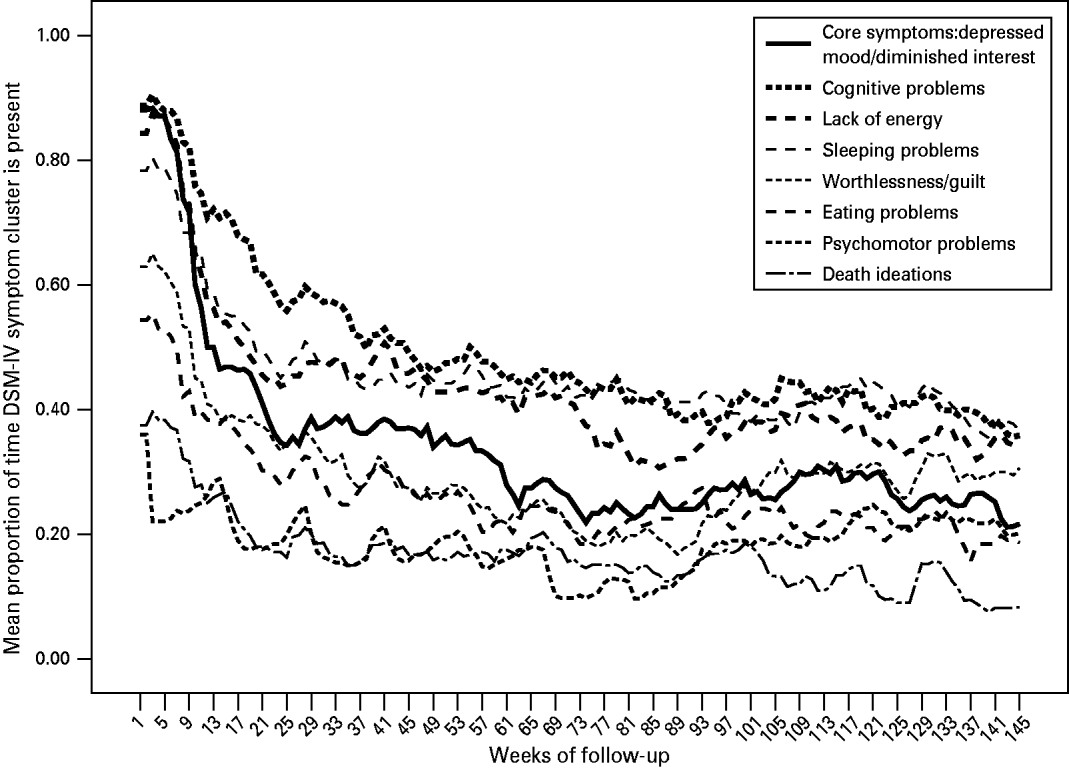
Figure 1 displays the detailed course of the individual depressive symptoms during the 3-year follow-up, during MDEs and non-MDEs. Nearly all patients were suffering from a MDE at entry of the study, as is reflected by the high prevalence of most of the symptoms at baseline.
The presence of DSM-IV depressive symptom clusters during the 3-year follow-up.

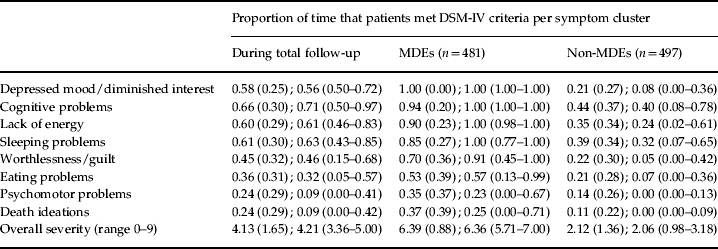
Table 2 (first column) displays the proportions of time the individual symptoms were present during total follow-up. Three groups of symptoms are discernable. Cognitive problems, lack of energy, sleeping problems and depressed mood/diminished interest were present 58–66% of the time during the total follow-up in this initially depressed primary care sample. Eating problems and feelings of worthlessness/guilt were present 36% and 45% of the time respectively, and the least prevalent symptoms were recurrent thoughts of death and psychomotor problems, with 24% for both. Overall severity was 4.1, meaning that on average about four symptoms were present all of the time during follow-up. There were no statistically significant differences between UC and PEP patients on the one hand and PC+PEP and CBT+PEP patients on the other.
Duration of presence of DSM-IV (residual) symptoms during major depressive episodes (MDEs) and non-major depressive periods (non-MDEs)

Values are given as mean (standard deviation); median (interquartile range).
The presence of individual symptoms during MDEs and non-MDEs
Table 2 also shows the proportions of time that individual symptoms were present for the periods during total follow-up when patients met DSM-IV criteria of MDE, and for the periods when patients did not meet criteria for the diagnosis (non-MDE). The core symptoms, by definition present 100% of the time during MDEs, were present 21% of the time during non-MDEs. Apart from the core symptoms, the three groups of symptoms described above were present during both MDEs and non-MDEs. Again, cognitive problems, lack of energy and sleeping problems were the most prevalent, ranging from 85% to 94% of the time present during the combined MDEs and from 35% to 44% of the time during non-MDEs. Feelings of worthlessness/guilt and eating problems were present 70% and 53% of the time respectively during combined MDEs, and 22% and 21% of the time during non-MDEs. Finally, recurrent thoughts of death and psychomotor problems were again the least prevalent symptoms, with 37% and 35% respectively during MDEs, and 11% and 14% during the depression-free time. During the combined MDEs, overall severity was 6.4, meaning that about six symptoms were present all of the MDE follow-up time, whereas during the combined non-MDEs the overall residual severity was 2.1. Again, no statistically significant differences were observed between UC and PEP patients on the one hand and PC+PEP and CBT+PEP patients on the other.
Comparisons with other studies
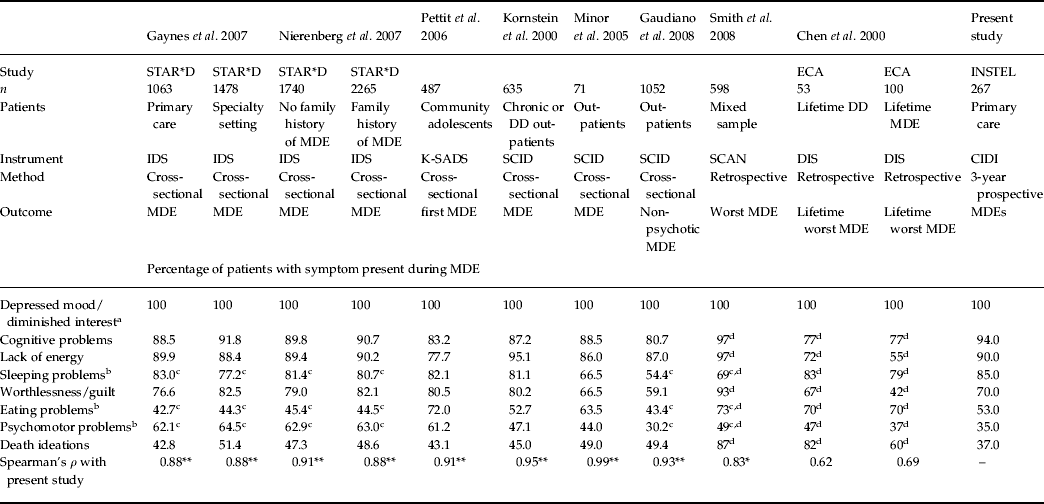
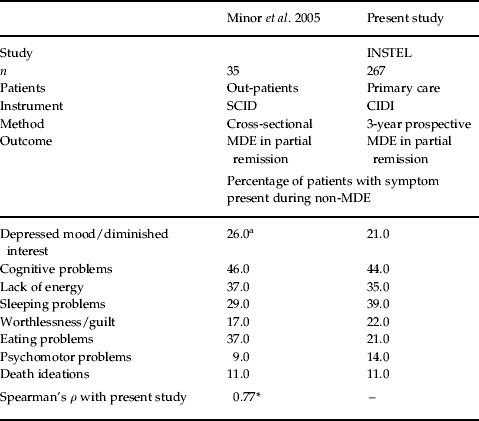
Tables 3 and 4 display the proportions of time the individual depressive symptoms were present during MDEs and non-MDEs respectively, as reported by the studies found by our systematic literature search. Of particular interest are Spearman's correlation coefficients, which were computed between the ranking orders of the symptoms of our study and each of the other studies. With regard to studies reporting symptom prevalences during MDEs, the correlations with our study were statistically significant (p<0.01, two-tailed) for the non-retrospective studies and range between 0.88 and 0.99. Correlations with the two retrospective studies were lower (0.83, p=0.011, two-tailed; Smith et al. Reference Smith, Kyle, Forty, Cooper, Walters, Russel, Caesar, Farmer, McGuffin, Jones, Jones and Craddock2008) or not statistically significant (Chen et al. Reference Chen, Eaton, Gallo, Nestadt and Crum2000). The correlation between our study and the only other study we found on residual symptoms during a non-MDE (Smith et al. Reference Smith, Kyle, Forty, Cooper, Walters, Russel, Caesar, Farmer, McGuffin, Jones, Jones and Craddock2008) was 0.77 (p=0.027, two-tailed).
The presence of DSM-IV symptoms (%) during major depressive episodes (MDEs) in reviewed studies

STAR*D, Sequenced Treatment Alternatives to Relieve Depression Study; ECA, Epidemiologic Catchment Area Program; INSTEL, Interventie Studie Eerste Lijn (Intervention Study Primary Care); DD, double depression (i.e. MDE superimposed on dysthymia); IDS, Inventory of Depressive Symptomatology; K-SADS, Schedule for Affective Disorders and Schizophrenia for School-Age Children; SCID, Structured Clinical Interview for DSM; SCAN, Schedules for Clinical Assessment in Neuropsychiatry; DIS, Diagnostic Interview Schedule; CIDI, Composite International Diagnostic Interview.
a By definition 100%.
b In some studies no data are available regarding the DSM-IV criterion score but only regarding the constituting facets (i.e. sleeping problems: onset, nocturnal and early morning insomnia, and hypersomnia; eating problems: appetite decrease and increase and weight decrease and increase; and psychomotor problems: retardation and agitation). We report the highest facet score as the minimal parcel score (c) on the corresponding DSM-IV criterion.
d Approximate score derived from graphical data.
* p<0.05 (two-tailed), ** p<0.01 (two-tailed).
The presence of DSM-IV residual symptoms (%) during non-major depressive episodes (non-MDEs)

INSTEL, Interventie Studie Eerste Lijn (Intervention Study Primary Care); SCID, Structured Clinical Interview for DSM; CIDI, Composite International Diagnostic Interview; non-MDE, non-depressive episode.
a In the Minor et al. study no data are available regarding the DSM-IV overall core symptoms score, but only regarding the distinct symptoms (i.e. depressed mood and diminished interest), therefore we reported the highest symptom score as the minimal score on the overall core symptom score.
* p<0.05 (two-tailed).
Discussion
In this study (residual) depressive symptomatology was examined in a 3-year prospectively followed sample of primary care patients. Patients in this setting are understudied, but from a clinical point of view they are very important because the vast majority of depressed patients are treated in primary care. Two conclusions may be drawn. First, in general, residual symptomatology is substantial, with more than two DSM-IV symptom clusters present during total non-MDE follow-up time. Second, at the level of the individual residual symptoms, cognitive problems, lack of energy and sleeping problems dominated the course of depression. They were present 85–94% of the time during MDEs and 39–44% of the time during non-MDEs.
Strengths and limitations
One limitation of this study is that we did not differentiate between depressed mood and diminished interest. It may be of interest to examine whether one of the core symptoms is more responsible than the other for the difference in prevalence of the combined core symptoms during MDEs and non-MDEs. However, as both depressed mood and diminished interest refer to restricted motivation, we do not consider this to be crucial from a clinical point of view. Another limitation may be that we did not assess severity of the individual symptoms present; instead we assessed duration of presence. Finally, although patients participated in a randomized controlled trial, we ruled out possible treatment effects by testing whether treatment condition was associated with the proportion of time individual symptoms were present. This seemed not to be the case. This lack of difference between treatments concerning residual symptoms is not surprising because, in the main study, there were no differences between treatments on CIDI total symptom severity (Conradi et al. Reference Conradi, de Jonge, Kluiter, Smit, van der Meer, Jenner, van Os, Emmelkamp and Ormel2007).
An important strength of our study is the unprecedented detailed insight into the prospective 3-year course of individual depressive symptoms, which we obtained by means of the week-by-week establishment of the presence of individual symptoms with 12 3-monthly interviews. The studies mentioned in the Introduction assessed the presence of individual symptoms at a single moment in time. This resulted in percentages of patients who were reporting the presence of individual symptoms, whereas we were able to establish the mean percentages of time that individual symptoms were present in patients during (non-)MDEs. Another strength of our study is that we analyzed individual symptoms in a sample of patients in primary care, the setting in which the majority of depressed patients are treated. This has not been done before during both MDEs and non-MDEs.
Generalizability issues
The comparisons between our studies and others (Tables 3 and 4) lead us to make several remarks. First, Spearman's correlation coefficients between the ranking order of individual depressive symptoms of our study and those of the other non-retrospective studies during MDEs are all high and statistically significant. Although there are some variations in the overall pattern, this means that the ranking order of prevalences of our study is rather comparable with those of larger samples, suggesting that the prevalences of symptoms we found during non-MDEs may be generalizable to larger samples too. This is corroborated by the statistically significant correlation with the only available, but much smaller, study on symptom prevalences during non-MDEs in formerly depressed patients (Smith et al. Reference Smith, Kyle, Forty, Cooper, Walters, Russel, Caesar, Farmer, McGuffin, Jones, Jones and Craddock2008).
Second, the statistically non-significant correlations we have found are telling as well. This concerns one of the studies retrospectively reporting symptom prevalences during the worst MDEs. This may mean that the worst MDEs are less comparable with the average MDEs, or retrospectively reported symptom prevalences are biased.
Third, when comparing the cross-sectionally obtained symptom prevalences in Table 3 with the prospective percentages of the INSTEL study, several differences stand out. When looking at only differences in prevalence of approximately 20%, the INSTEL primary care patients reported less psychomotor problems than their counterparts in the STAR*D studies (>62% v. 35%), but on the other symptoms seem rather comparable. In addition, the adolescents in the Pettit et al. study (Reference Pettit, Lewinsohn and Joiner2006) reported more psychomotor problems too compared to INSTEL (61% v. 35%), and more eating problems (72% v. 53%). The patients in Minor et al.'s study (Reference Minor, Champion and Gotlib2005) reported less sleeping problems (66.5%) compared to the INSTEL patients (85%). Finally, the percentages reported in the small sample studies by Chen et al. (Reference Chen, Eaton, Gallo, Nestadt and Crum2000) and in the study by Smith et al. (Reference Smith, Kyle, Forty, Cooper, Walters, Russel, Caesar, Farmer, McGuffin, Jones, Jones and Craddock2008) are the most deviant from all studies. This is possibly because of the retrospective nature of these studies, in which the lifetime worst MDEs were subject to examination.
Finally, we found that not only were the ranking orders of prevalences of symptoms during MDEs comparable between our and other studies (Table 3), as was the case regarding non-MDEs (Table 4), but also within studies the ranking order of symptoms during MDEs and non-MDEs proved to be fairly similar. Apart from the core symptoms (which have a different status because of the definition of MDE in DSM-IV), Spearman's correlation coefficient of the symptom rankings between MDEs and non-MDEs was 0.93 (p=0.003, two-tailed) in the INSTEL study and 0.84 (p=0.019, two-tailed) in the Minor et al. study (Reference Minor, Champion and Gotlib2005). Thus, a markedly stable ranking of symptom prevalences was revealed across the different phases (i.e. MDEs and non-MDEs) of the depressive course. There is no pattern of randomly waxing and waning of symptoms, but there seems to be a steady presence of specific symptoms over time in which (residual) symptoms, such as cognitive problems of poor concentration and indecisiveness and the more physical symptoms of lack of energy and sleeping problems, dominate.
Clinical implications
With this prospective study we were able to answer the two questions posed in the Introduction: (1) how prevalent are residual depressive symptoms in general, and (2) which of the individual depressive symptoms usually remain as residual symptoms?
First, we have found fairly high rates of overall residual symptomatology, especially when taking into account that these are average rates over longer periods. During non-MDEs, on average the criteria for two DSM-IV depressive symptom clusters were met at any point of time. This means that the notion of depression as a chronic disease becomes inevitable. Partial remission is very common and constitutes a great challenge in clinical practice. Therefore, treatment should be further augmented to reduce residual symptoms and risk of relapse.
Second, looking at which specific individual symptoms are responsible for these high residual symptom rates, cognitive problems (poor concentration and indecisiveness), lack of energy, and sleeping problems with prevalences ranging from 35% to 44%, stand out. These symptoms are in need of continuous preventive attention to prevent the return of MDEs. From that perspective it is noteworthy that cognitive therapy is able to reduce cognitive symptomatology by at maximum two-thirds compared to usual care by the GP (Conradi et al. Reference Conradi, de Jonge and Ormel2008). With regard to lack of energy and sleeping problems, regular physical exercise may be an effective way to enhance physical fitness in depressed patients (Blumenthal et al. Reference Blumenthal, Babyak, Moore, Craighead, Herman, Khatri, Waugh, Napolitano, Forman, Appelbaum, Doraiswamy and Krishnan1999; Babyak et al. Reference Babyak, Blumenthal, Herman, Khatri, Doraiswamy, Moore, Craighead, Baldewicz and Krishnan2000) and reduce tiredness and promote more healthy sleep. Reduction of cognitive problems may also have a positive effect on sleeping by decreasing possible ruminative processes. Although the core depressive symptoms are less prevalent during remissions, negative affect and anhedonia may have a deleterious impact on the patients' motivation to stay active (i.e. exercising and undertaking formerly pleasurable activities), which is crucial in preventing relapse. Behavioral activation tackles such motivational problems by training patients not to wait until they ‘feel like’ undertaking activities, but conversely to get active in order to regain pleasure in those activities, lift anhedonia and improve mood. Behavioral activation is a promising treatment (Dimidjian et al. Reference Dimidjian, Hollon, Dobson, Schmaling, Kohlenberg, Addis, Gallop, McGlinchey, Markley, Golland, Atkins, Dunner and Jacobson2006) with enduring effects (Dobson et al. Reference Dobson, Hollon, Dimidjian, Schmaling, Kohlenberg, Gallop, Rizvi, Gollan, Dunner and Jacobson2008). However, physicians need to be alert regarding the less prevalent residual symptoms, such as eating problems, feelings of worthlessness/guilt, psychomotor problems and recurrent thoughts of death. Although less prevalent, these symptoms may constitute a higher risk of relapse. This should be examined in future studies.
Acknowledgements
This study received financial support from the Dutch Organization for Scientific Research (NWO), the Medical Sciences Program and Chronic Diseases Program, Research Foundations of the Health Insurance Company ‘Het Groene Land’, the Regional Health Insurance Company (RZG), National Fund Mental Health (NFGV), and the University Hospital Groningen (to J. Ormel).
Declaration of Interest
None.