Introduction
Looking beyond Earth, recent efforts to explore the chemical evolution and origin of life have focused primarily on Mars, Europa and Enceladus, which may have biochemistry similar to that of life on Earth (Davila & McKay Reference Davila and McKay2014). While Mars today is a cold and dry planet, conditions in the past are thought to have been more benign (McKay & Davis Reference McKay and Davis1991), and included habitable environments compatible with terrestrial life (Grotzinger et al. Reference Grotzinger, Sumner, Kah, Stack, Gupta, Edgar, Rubin, Lewis, Schieber, Mangold, Milliken, Conrad, DesMarais, Farmer, Siebach, Calef, Hurowitz, McLennan, Ming, Vaniman, Crisp, Vasavada, Edgett, Malin, Blake, Gellert, Mahaffy, Wiens, Maurice, Grant, Wilson, Anderson, Beegle, Arvidson, Hallet, Sletten, Rice, Bell, Griffes, Ehlmann, Anderson, Bristow, Dietrich, Dromart, Eigenbrode, Fraeman, Hardgrove, Herkenhoff, Jandura, Kocurek, Lee, Leshin, Leveille, Limonadi, Maki, McCloskey, Meyer, Minitti, Newsom, Oehler, Okon, Palucis, Parker, Rowland, Schmidt, Squyres, Steele, Stolper, Summons, Treiman, Williams and Yingst2014).
The search for biogenic elements and organic compounds will be an important task for the various missions to Mars and icy moons that are anticipated over the next few decades by major space agencies such as NASA and the European Space Agency. In recent years, exploration strategies have been developed to pursue astrobiological objectives for these targets such as determining the abundance and distribution of the biogenic elements and organic compounds, detecting evidence of ancient biota and determining whether indigenous organisms currently exist anywhere on the planet. State-of-the art analytical detection techniques with very high sensitivity will play a major role in these endeavours. Finding evidence of extinct life on one of these targeted bodies would be, to put it mildly, sensational. The presence of extant life could be even more so and would add a fresh perspective to our understanding of the chemistry of life.
On Mars, the first in situ analysis (intending to look for microbial biosignatures) was carried out in the late 1970s by Viking landers using pyrolysis and gas chromatography-mass spectrometry (pyr-GC/MS). There were two puzzling results from the Viking pyr-GC/MS experiments: (1) detection of chlorinated methane compounds and (2) the absence of any other organics at the parts per billion level (ppb). The detection of chlorinated methane compound such as chloromethane and dichloromethane could not be definitively attributed to Martian source. Biemann et al. (Reference Biemann, Oro, Toulmin, Orgel, Nier, Anderson, Simmonds, Flory, Diaz, Rushneck and Biller1976) argued that this may be due to terrestrial contamination. Navarro-Gonzalez et al. (Reference Navarro-Gonzalez, Navarro, de la Rosa, Iniguez, Molina, Miranda, Morales, Cienfuegos, Coll and Raulin2006) also argued that traces of chloromethane (along with perfluoroethers) were detected in the background in preflight and cruise tests as a result of organic solvents used in the cleaning of the pyr-GC-MS instrument before they were incorporated into the landers. At the time, it was also decided that absence of any other detectable organics, along with the other experiments conducted by the Viking landers must be due to some very strong oxidant in the Martian soil (Benner et al. Reference Benner, Devine, Matveeva and Powell2000). These oxidants may have either fully oxidized any organics to carbon dioxide (Iniguez et al. Reference Iniguez, Navarro-Gonzalez, de la Rosa, Urena-Nunez, Coll, Raulin and McKay2009), or at least rendered them unable to be extracted by pyrolysis (Benner et al. Reference Benner, Devine, Matveeva and Powell2000). In 2008, the Phoenix lander discovered that the main form of chlorine at the landing site was not chloride as has been assumed earlier but perchlorate (Hecht et al. Reference Hecht, Kounaves, Quinn, West, Young, Ming, Catling, Clark, Boynton, DeFlores, Gospodinova, Kapit and Smith2009). Subsequently, the discovery of perchlorate in Rocknest soil in Gale crater by the Sample Analysis at Mars (SAM) analytical instrument suite on the Mars Science Laboratory (MSL) lander (Archer et al. Reference Archer, Sutter, Ming, McKay, Navarro-González, Franz, McAdam and Mahaffy2013) along with the γ-ray spectrometer data on Mars Odyssey (Keller et al. Reference Keller, Boynton, Karunatillake, Baker, Dohm, Evans, Finch, Hahn, Hamara, Janes, Kerry, Newsom, Reedy, Sprague, Squyres, Starr, Taylor and Williams2006), showing the presence of Cl at 0.1–1 wt% from the equator to mid-latitudes in both hemispheres on the surface of Mars suggest that perchlorates or other oxychlorine compounds could be globally distributed (Glavin et al. Reference Glavin, Freissinet, Miller, Eigenbrode, Brunner, Buch, Sutter, Archer, Atreya, Brinckerhoff, Cabane, Coll, Conrad, Coscia, Dworkin, Franz, Grotzinger, Leshin, Martin, McKay, Ming, Navarro-Gonzalez, Pavlov, Steele, Summons, Szopa, Teinturier and Mahaffy2013; Leshin, et al. Reference Leshin, Mahaffy, Webster, Cabane, Coll, Conrad, Archer, Atreya, Brunner, Buch, Eigenbrode, Flesch, Franz, Freissinet, Glavin, McAdam, Miller, Ming, Morris, Navarro-Gonzalez, Niles, Owen, Pepin, Squyres, Steele, Stern, Summons, Sumner, Sutter, Szopa, Teinturier, Trainer, Wray and Grotzinger2013).
The strong evidence of global distribution of perchlorates on the Martian surface along with the re-analysis of the Viking results using laboratory analogues by Navarro-González et al. (Reference Navarro-González, Vargas, de la Rosa, Raga and McKay2010) have demonstrated that the chlorinated methane detected by Viking may have been due to the combined presence of perchlorate and native organics in the Martian sample during the pyrolysis (Navarro-González et al. Reference Navarro-González, Vargas, de la Rosa, Raga and McKay2010).
Due to the confirmed existence of perchlorate oxidants on Martian surface (Archer et al. Reference Archer, Sutter, Ming, McKay, Navarro-González, Franz, McAdam and Mahaffy2013), we started examining alternative techniques that may enable definitive detection of unaltered Martian organics without complications due to oxidation or pyrolysis degradation. Among these techniques, supercritical carbon dioxide (SCCO2) extraction is of particular interest (Snyder et al. Reference Snyder, Grob, McNally and Oostdyk1992; Erkoy et al. Reference Erkoy, Madras, Orejuela and Akderman1993) because carbon dioxide is a major component (95%) of the Martian atmosphere and can be harvested, as will be demonstrated by the Mars Oxygen In Situ Resource Utilization Experiment (MOXIE) (Jeffrey et al. Reference Jeffrey, Donald and Michael2015). Typically, good extraction efficiencies with SCCO2 are achieved because of high diffusivities, low viscosity and absence of surface tension of SCCO2, while selectivity can be controlled by varying the SCCO2 pressure (Herrero et al. Reference Herrero, Mendiola, Cifuentes and Ibanez2010; Souza Machado et al. Reference Souza Machado, Pereira, Nunes, Padilha and Umsza-Guez2013). In addition, SCCO2 does not extract inorganic salts, as reported by our group in a recent publication (McCaig et al. Reference McCaig, Stockton, Crilly, Chung, Kanik, Lin and Zhong2016), which significantly simplifies and reduces errors of in situ chemical analysis. Moreover, since 95% of Martian atmosphere is carbon dioxide, SCCO2 can be generated in situ on Mars eliminating the need to carry toxic organic solvent to Mars. These characteristics of pure SCCO2 make it especially useful for the extraction of non-polar organic molecules of astrobiological interest such normal alkanes, isoprenoid alkanes, tetrahydronaphthalenes, polycyclic aromatic hydrocarbons and others (Sephton et al. Reference Sephton, Pillinger and Gilmour2001; McCaig et al. Reference McCaig, Stockton, Crilly, Chung, Kanik, Lin and Zhong2016).
In this investigation, we examined the extraction efficiencies and subsequent detection of several representatives of 20 amino acids (AAs), which commonly occur in nature using the SCCO2 technique. Because AAs are polar molecules, they represent a challenge for SCCO2 extraction in terms of extraction efficiency. To increase extraction efficiency, a small amount of pure water (~5%) was added as a co-solvent. We chose AAs since a common chemistry at the origin of life also implies that some emergent properties of some biomolecules such as AAs in Earth life could be common on other planets. As argued by Davila & McKay (Reference Davila and McKay2014), life on Mars must have incorporated at least some of the canonical prebiotic AAs and nucleobases into its biochemistry. Arguably, the presence of these compounds in a sample cannot, by itself, be used as a biomarker. However, some individual and collective properties of these compounds could be used as a diagnostic for life (Dorn et al. Reference Dorn, McDonald, Storrie-Lombardi and Nealson2003; Dorn et al. Reference Dorn, Nealson and Adami2011).
Both glass beads and Johnson Space Center (JSC) Mars-1A Martian regolith simulant samples were used as purchased without additional baking or pretreatment. While extraction of undoped glass beads or JSC Mars-1A samples did not produce noticeable AA signals in capillary electrophoresis with laser-induced fluorescence (CE/LIF) analyses, these blank electropherograms were still used for background or blank correction in all extraction studies of doped samples.
These samples were used to model substrates to examine the effect of experimental parameters on the extraction efficiency of AAs. Optimized extraction conditions were then used to extract native organics from JCS Mars-1. CE/LIF was used for the majority of experiments, and detection limits were later confirmed with liquid chromatography/mass spectrometry (LC/MS) down to the ppb level. Despite the preliminary nature of this work, this investigation would pave new routes for more comprehensive extraction studies of polar organic biomarkers using SCCO2 with small amounts of pure water (~5%) as co-solvent.
Materials and methods
Materials
Glass beads (420–500 µm diameter) and JSC Mars-1A (Allen et al. Reference Allen, Morris, Lindstrom, Lindstrom and Lockwood1997, Reference Allen, Jager, Morris, Lindstrom, Lindstrom and Lockwood1998) used as extraction matrices were purchased from Polysciences, Inc (Warrington, PA, USA) and Orbitec (Madison, WI, USA), respectively. Glycine, alanine, serine, lysine, dimethyl sulfoxide (DMSO), acetone, sodium tetraborate decahydrate, Nα-(2,4-dinitro-5-fluorophenyl)-L-alaninamide (FDAA), triethyl amine and formic acid were purchased from Sigma-Aldrich (St. Louis, MO, USA) with the purity of 98% or better. Alexa Fluor® 488 carboxylic acid, succinimidyl ester (AF488) dye was acquired from Thermo Fisher Scientific (Waltham, MA, USA). All water used was ultrapure, deionized water (18.2 MΩ cm−1) from Milli-Q Synthesis A10 system (Merck Millipore, Billerica, MA, USA). Carbon dioxide (99.999% purity) was purchased from Matheson (Basking Ridge, NJ, USA). All materials were used as received.
Sample preparation
AA stock solutions (racemic mixture) were prepared at concentration of 1, 10 or 50 mM. These solutions were used both for spiking glass beads and JSC Mars-1A and to prepare calibration solutions. AA-spiked samples for extraction were prepared by measuring 2 g of glass beads or 1 g of JSC Mars-1A Martian regolith simulant and doping them with stock solutions (~1% of matrix mass) of AAs. Samples then were vortexed for 1 min and sample vials were left uncapped overnight. On the next day, samples were vortexed for 1 min again before extraction.
Supercritical CO2 extraction system and extraction protocol
Supercritical CO2 extraction system
Extractions were conducted with a commercial supercritical fluid extractor system, SFT-100 (Supercritical Fluid Technologies, Inc, Newark, DE, USA) comprised of an oven and a manual restrictor valve that controlled the flow of SCCO2 out of the extraction cell. Flows of SCCO2 and co-solvent into the extraction cell were controlled by two Teledyne ISCO Model 500 HP syringe pumps, with the syringe volumes held at a constant temperature of 20°C by a water chiller. These two flows were mixed at a tee union at the same pressure but different constant flow rates before the extraction cell. Both the oven and the restrictor were held 75°C except for experiments when temperature effect on extraction was studied (50°C). Custom extraction cells were made using 1/4″ OD and 0.194″ ID stainless steel tubing with an internal volume of 1.32 ml. Stainless steel frits (2 µm) were installed on both ends of the cell to prevent the escape of matrix material.
Downstream of the restrictor valve, the system vent line was comprised of an 11.5 cm length of stainless steel tubing of 1/16″ OD and 0.046″ ID, which was inserted into the test tube with 1–2 ml of water for extract collection.
Sample handling and extraction protocol
For a single extraction, 2 g of doped glass beads or 1 g of JSC Mars-1A were used. One half of the doped matrix was placed into an extraction cell, while the other half was used for solvent extraction (positive control experiment). The negative control experiment was conducted using unspiked matrix. For each experiment, the following extracts were collected: (1) an extract collected during the SCCO2/co-solvent extraction (fraction from bubbling SCCO2/co-solvent through the sample) and from rinsing the line between the restrictor valve and collection test tube, (2) a water extract of residual AAs from the matrix following extraction, and (3) a positive control extract. Experimental conditions (temperature, time of extraction) for positive and negative control experiments matched those for SCCO2/co-solvent extraction experiments. Each SCCO2/co-solvent extraction consisted of a static extraction of 5 min, followed by a 20 min dynamic extraction at the flow rates of 0.95 ml/min for CO2 and 0.05 ml/min for liquid water out of the syringe pumps at 20°C. Both static and dynamic extractions were conducted at 2800 psi and 75 or 50°C. After the dynamic extraction, the system was depressurized and the portion of extracted AA, which deposited onto the wall of the tubing between restrictor valve and test tube, was collected by rinsing the tubing with 2 ml of water. This amount was found to dissolve more than 95% of the deposited AAs. The extracts of the regolith simulants were stored frozen in sealed vials and were stable for several weeks. All extractions were conducted in triplicate, and the resulting extraction efficiency data are presented as the averages along with the standard deviations for each experiment. Extraction efficiency was calculated as the percent of AA extracted by SCCO2/co-solvent, relative to the spiked amount of AA.
Analysis of extracted samples
Capillary electrophoresis with laser-induced fluorescence
Most of the extracts were analysed using Beckman Coulter P/ACE MDQ CE system equipped with 488 nm LIF detector. Invisible for LIF in the native state, AAs in extracts were reacted with Alexa Fluor® 488 dye (tagging) which resulted in the formation of fluorescing product. For this, 0.5 µl of 10 mM solution of dye in DMSO were mixed with 90 µl of extract and 10 µl of 100 mM borate buffer (pH~10). This mixture was thoroughly vortexed and incubated in the dark overnight (~16 h). Before the analysis of each sample of the tagged AAs, the capillary was rinsed using pressure with the separation buffer for 2 min, and then the sample was injected (0.5 psi) for 5 s. Separations were conducted at 30 kV for 12 min using 10 mM borate buffer. After each separation, the capillary was rinsed again using pressure with pure water for 2 min. Capillary conditioning using 1 M NaOH was conducted with a 5–20 min rinse as needed.
Liquid chromatography with mass spectrometry detection
AA solution and extracts were derivatized for LC/MS analysis following the method of Hess et al. (Reference Hess, van Beek and Panell2002). For this, 10 µl of 6% freshly prepared aqueous solution of triethylamine were added to 10 µl of sample followed by the addition of 10 µl of a 1% FDAA solution in acetone and reacted for 1 h at 50°C. The products were then diluted with 10 µl of 0.2% aqueous solution of formic acid and 20 µl aliquots were analysed by LC/MS. Derivatized samples were analysed on an HP1100 LC-MSD (Agilent, Palo Alto, CA, USA) with an electrospray voltage of 4000 V. The gas temperature for nebulization was set at 350°C. Mass spectra were scanned from 300 to 450 m/z in positive-ion mode. The diode array detector was monitored at 340 nm. A ZorbaxSB C18 150 × 2.1 mm column was set 50°C to separate the analytes. Mobile phase A was a solution of 5% aqueous acetic acid and B was LC/MS grade acetonitrile. The flow rate was set at 250 µl/min. The gradient was as follows: 20 min at 25%B, 25 min at 100%B and 38 min at 100%B. The effluent was directed through the DAD detector into the mass spectrometer, after a 4 min delay to avoid salt contamination.
Results
Extraction efficiency of alanine from doped glass beads
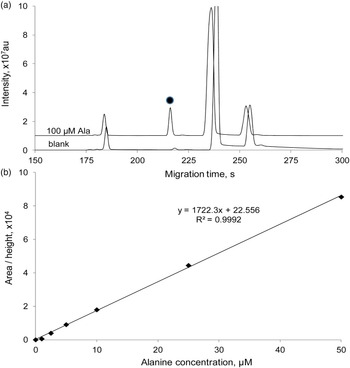
In Fig. 1(a), electropherograms of 100 µM solution of alanine chemically labelled by Alexa Fluor® 488 reagent and blank control are shown (these represent the behaviour of other AAs with this reagent).
Representative electropherogram of AF488-labelled amino acid (alanine in this example) and the calibration curve used to calculate the concentrations and extraction efficiencies.

As can be seen from the figure, in the presence of alanine, in addition to peaks arising from Alexa Fluor® 488 reagent (blank), a new peak can be observed at ~217 s migration time. Areas of alanine peaks at different concentrations normalized for migration time were used to construct calibration curves (Fig. 1(b)) for each new set of extraction experiments to account for possible day-to-day instrument variability. Calibration curves were then used to calculate extraction efficiencies.
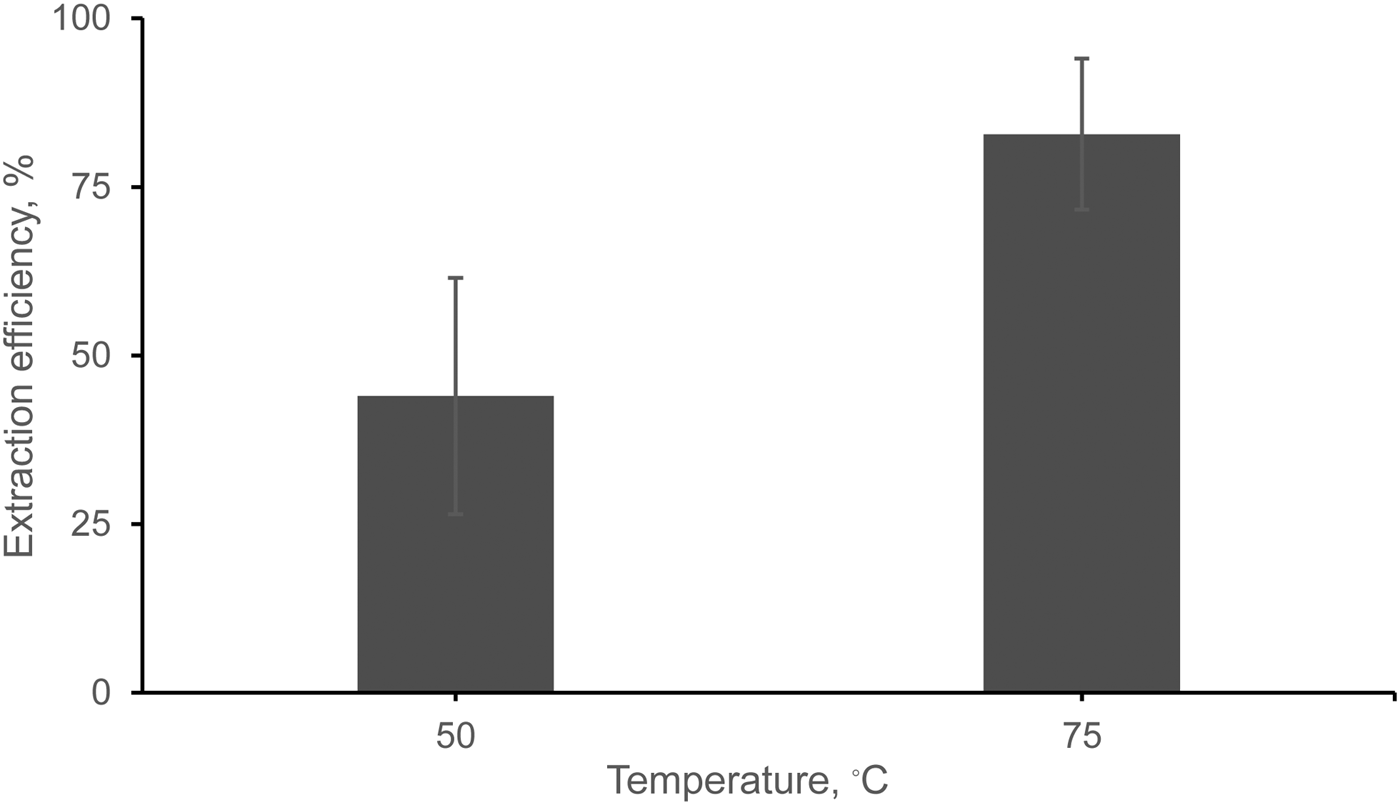
To optimize the extraction efficiency with SCCCO2/co-solvent, effects of the several experimental variables on the extraction of alanine were examined (Figs. 2–4). Figure 2 shows the influence of temperature on the extraction efficiency. As the data show, increasing the temperature from 50 to 75°C nearly doubles (from 44 to 82%) the extraction efficiency of the alanine from glass beads.
Effect of the temperature on the extraction efficiency of 50 ppm of alanine from glass beads (P = 2800 psi, H2O concentration = 5%).

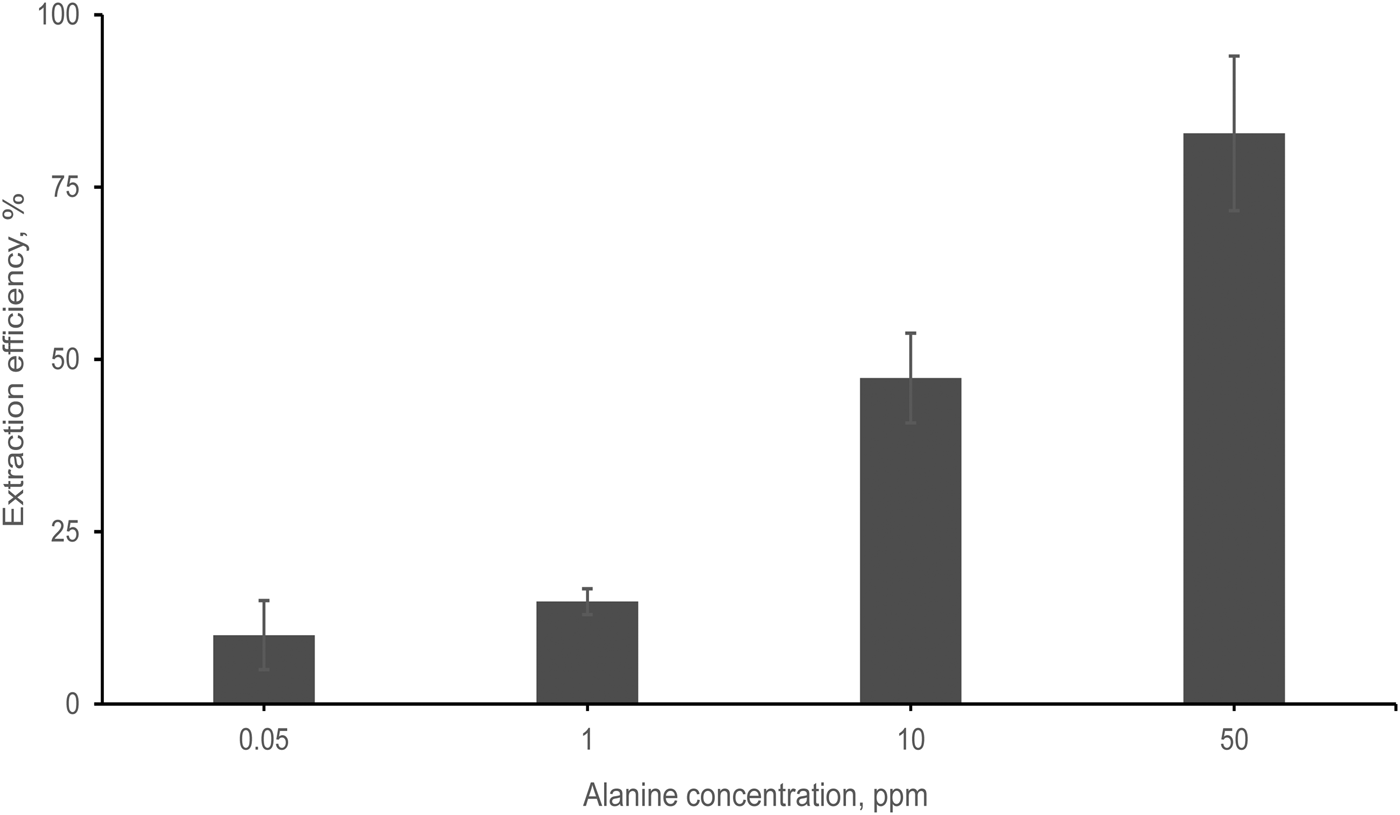
Effect of the concentration of alanine on its extraction efficiency from glass beads (P = 2800 psi, T = 75°C, H2O concentration = 5%).

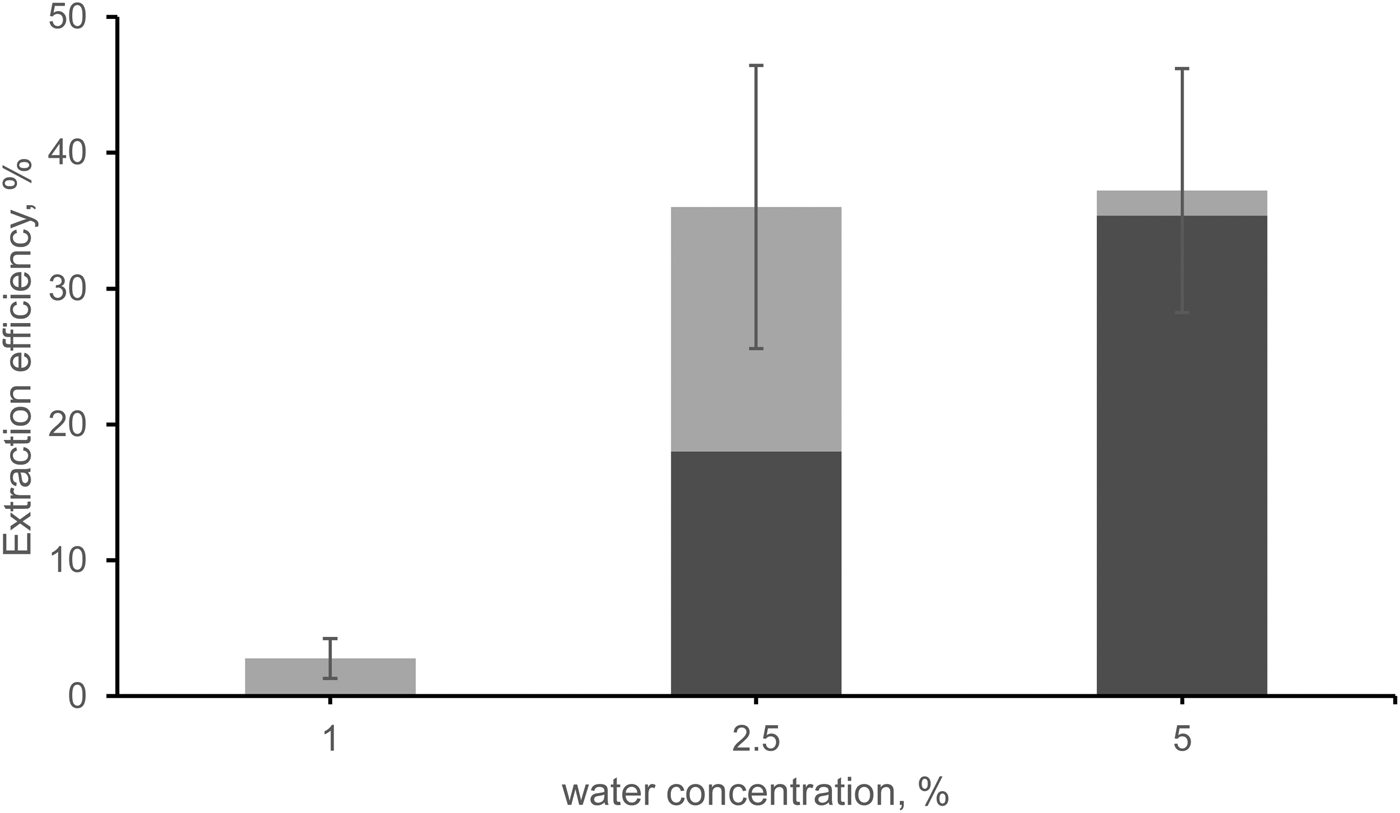
Effect of the water concentration on the extraction efficiency of 50 ppm of alanine from JSC Mars-1A Martian regolith simulant (P = 2800 psi, T = 75°C). The darker part of the bar indicates the portion of extracted alanine which was collected during the dynamic extraction step in the collection test tube, while light part corresponds to extracted alanine which deposited out on the walls of the transfer line and was later washed out the line for analysis.

In the next set of experiments (Fig. 3), the extraction efficiencies with different doping concentrations of alanine were studied. Figure 3 shows that decreasing the alanine concentration from 50 ppm to 50 ppb results in an eightfold drop in the extraction efficiency. It should be noted that the extraction efficiency with 50 ppb concentration of alanine was obtained using LC/MS and not CE/LIF due to the insufficient sensitivity of the latter.
Finally, the concentration of water (co-solvent) used with SCCO2 was varied to determine its influence on the extraction of alanine (Fig. 4). Darker shading in the bar graphs in Fig. 4 correspond to the amount of alanine accumulated in the collection tube during the extraction process, while the light shading represents the amount of alanine deposited on the walls of the line between extraction cell and collection test tube.
As can be seen from the figure, decreasing the concentration of water decreases the amount of alanine collected in the test tube during the extraction process. Notably, the total amount of alanine extracted with 2.5% water did not change from that with 5% of water. However, nearly half of the alanine extracted with 2.5% water was found on the walls of the transfer line.
Comparison of the extraction of AAs with different side chains
In addition to alanine, extractions of other AAs with varying side chain characteristics were performed. For this purpose, serine, lysine and glycine were chosen to represent AAs with polar, basic and no (the simplest AA) side chains. Comparisons between the extraction efficiencies of different AAs were made using both glass beads and JSC Mars-1A Martian regolith simulant as matrices for doping. Doping concentrations of 50 ppm (by mass) were used to ensure reliable concentration measurements with CE/LIF.
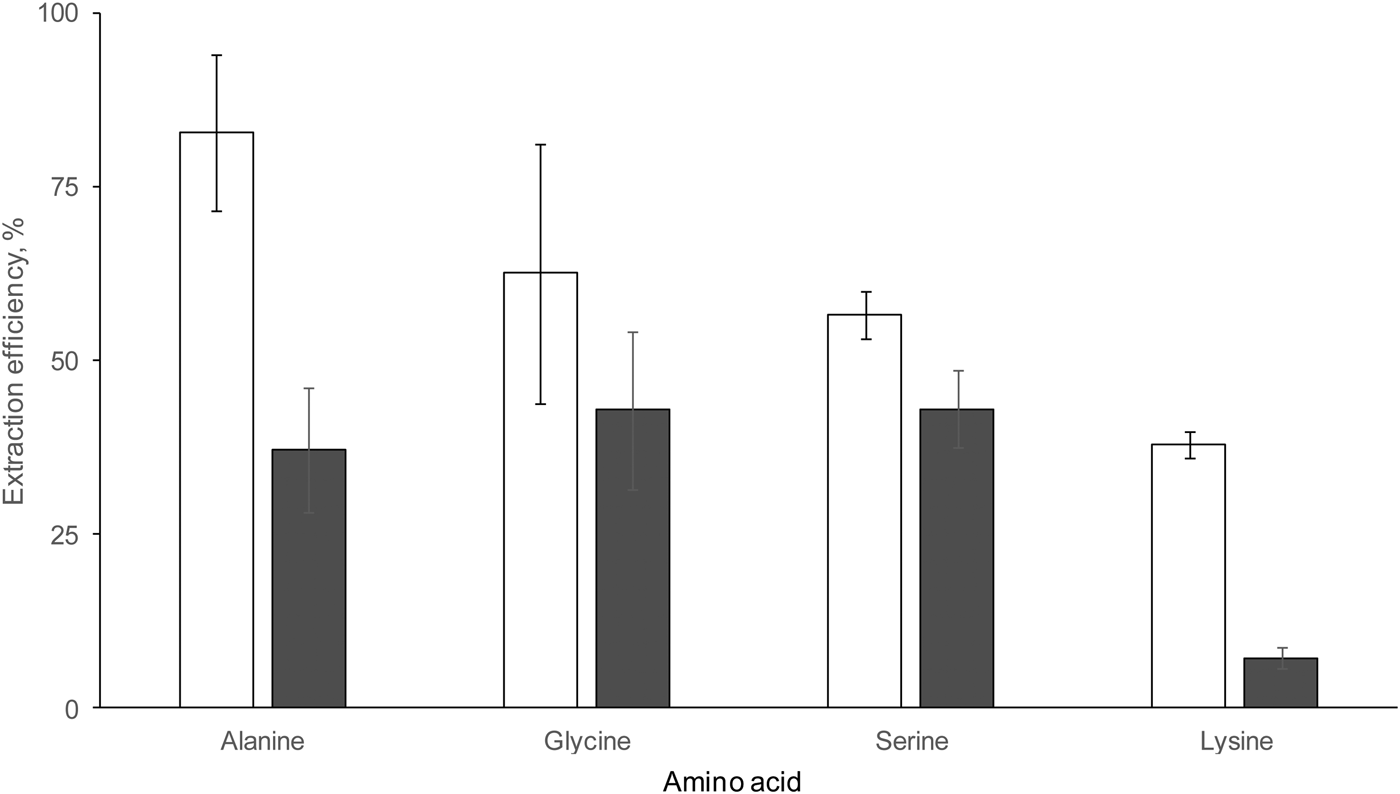
Results of these experiments are presented in Fig. 5.
Extraction efficiencies of some of the representative amino acids (smallest, with non-polar, polar and basic side chains) on their extraction efficiencies from glass beads (white bars) and JSC Mars-1A Martian regolith simulant (dark bars; P = 2800 psi, T = 75°C, H2O concentration = 5% and concentration of each amino acid is 50 ppm).

Several observations can be made from these results:
a. Extraction efficiency of an AA from glass beads is dependent upon the nature of its side chain;
b. Extraction efficiencies of AAs from JSC Mars-1A Martian regolith simulant are more uniform than from glass beads except for lysine which is 4–5 times lower;
c. Extraction efficiencies of different AAs from JSC Mars-1A are typically lower than from glass, but the extent of the observed difference varies depending on an AA's side chain.
Extraction of native organic compounds from JSC Mars-1A Martian regolith simulant
Optimized experimental conditions (T = 75°C, 5% H2O) were used to extract native organics from JSC Mars-1A Martian regolith simulant samples. Three sets of extractions were carried out: with pure SCCO2, with SCCO2/water and with pure water. Electropherograms from CE/LIF analyses (not shown here) did not reveal noticeable changes between three extracts with the change in extraction solvent, while LC/MS results showed significant differences.
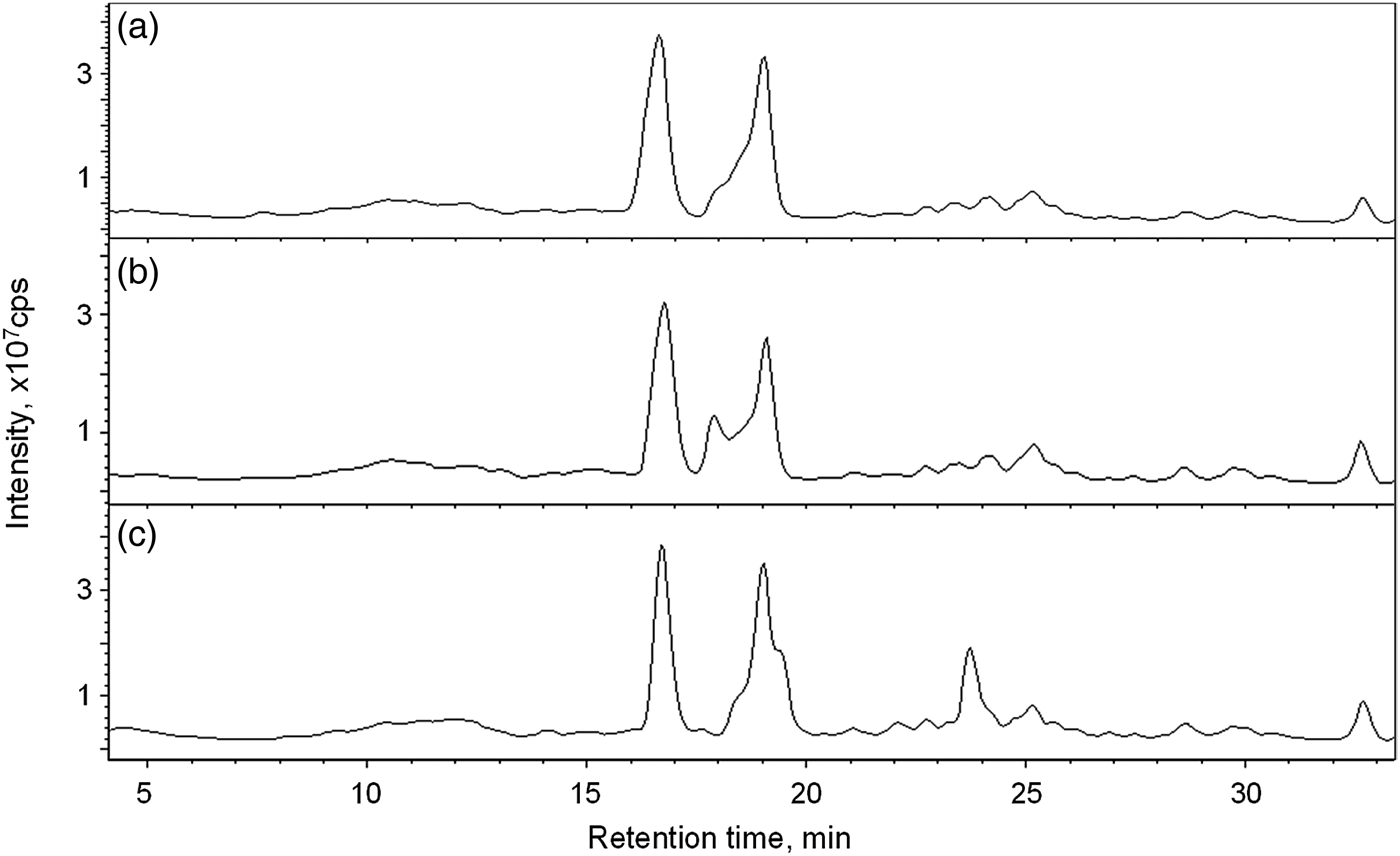
Results from LC/MS analyses are shown in Figs. 6–8. In Fig. 6, total ion chromatograms (TICs) of three extracts are presented. These were generated by plotting the sum of all ions’ signals in the range of m/z 300–450 as a function of retention time.
Total ion chromatograms (TICs) from LC/MS analysis of three extracts of JSC Mars-1A Martian regolith simulant: (a) pure SCCO2 extract, (b) SCCO2/5% H2O extract and (c) pure H2O extract (P = 2800 psi, T = 75°C, H2O concentration 0, 5 or 100%, respectively).

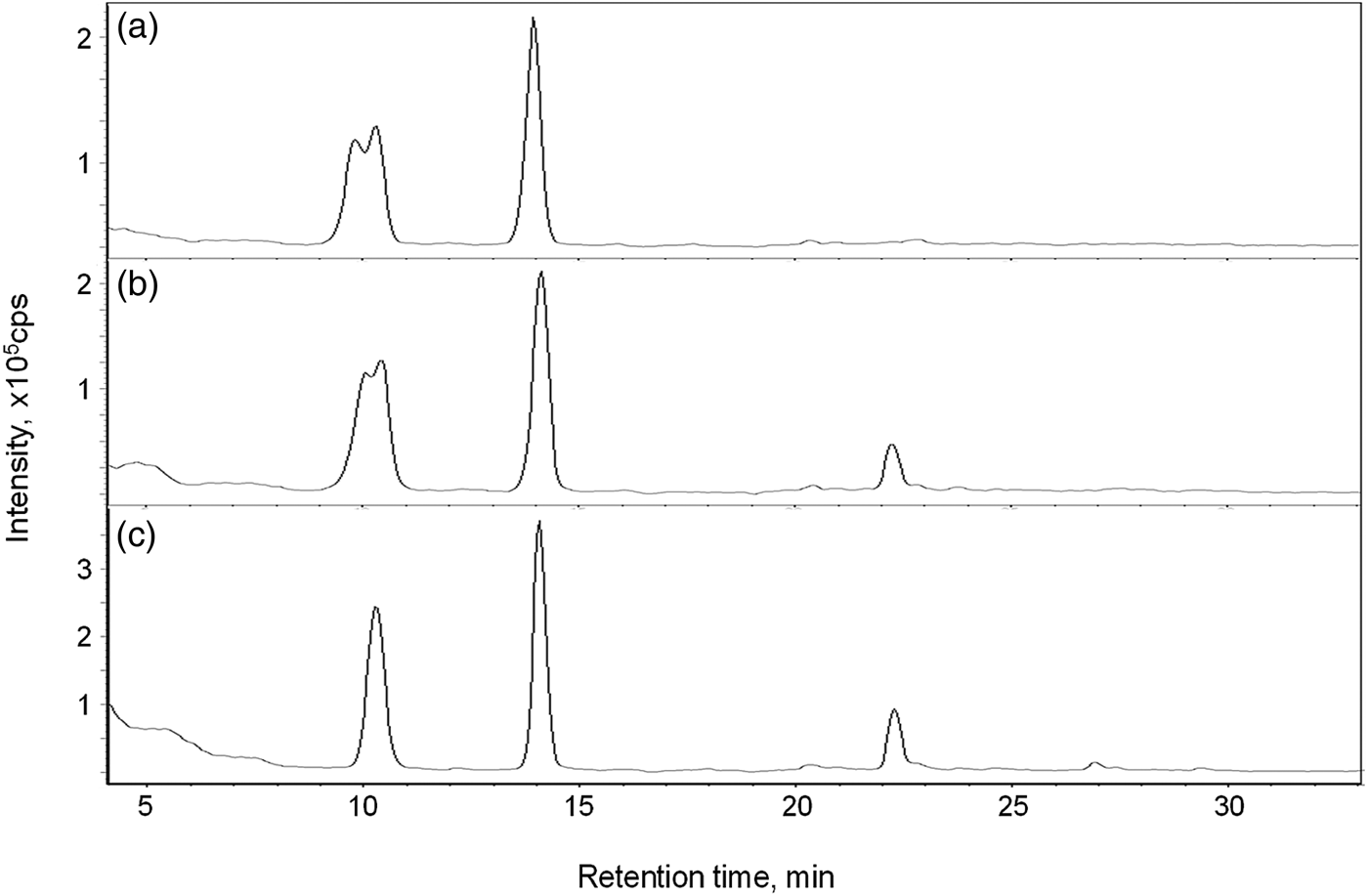
Extracted ion chromatograms (XICs) at m/z 400 from LC/MS analysis of three extracts of JSC Mars-1A Martian regolith simulant: (a) pure SCCO2 extract, (b) SCCO2/5% H2O extract and (c) pure H2O extract (P = 2800 psi, T = 75°C, H2O concentration 0, 5 or 100%, respectively).

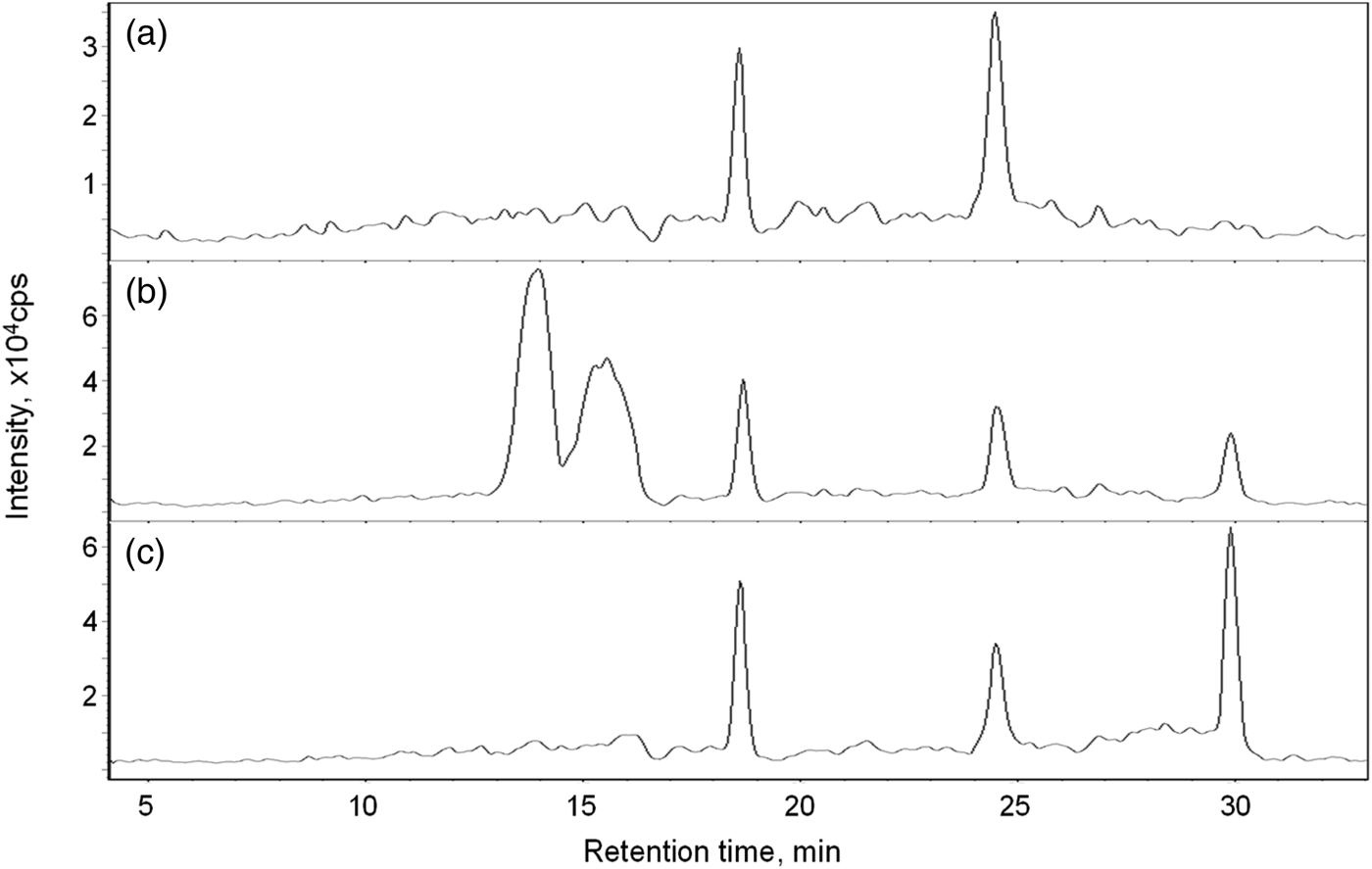
Extracted ion chromatograms (XICs) at m/z 370 from LC/MS analysis of three extracts of JSC Mars-1A Martian regolith simulant: (a) pure SCCO2 extract, (b) SCCO2/5% H2O extract and (c) pure H2O extract (P = 2800 psi, T = 75°C, H2O concentration 0, 5 or 100%, respectively).

This m/z range covers both ions from substances untagged with FDAA and ions of organic molecules with amino groups which can be derivatized with FDAA (such as all 20 AAs). As can be seen from Fig. 6, extracting JSC Mars-1A with different solvents leads to differences in the chromatograms. These differences become more apparent when several extracted ion chromatograms (XICs) are generated from respective TICs. Two sets of XICs are shown in Figs. 7 and 8 for ions with m/z values of 400 and 370.
Comparison of extractions with pure SCCO2, SCCO2/water and pure water (Figs. 6–8) suggests that SCCO2 in the mixture with water as a co-solvent is capable of extracting some compounds extractable with pure SCCO2 and some of those extractable with pure water. Moreover, using SCCO2/co-solvent allows for the extraction of some new species not extracted either with pure SCCO2 or pure water (Fig. 8).
Discussion
In this work, we expand on our earlier study (McCaig et al. Reference McCaig, Stockton, Crilly, Chung, Kanik, Lin and Zhong2016) reporting extraction of organic molecules using SCCO2 for Martian regolith analysis. It was previously found that pure SCCO2 can successfully extract non-polar organics (Sephton et al. Reference Sephton, Pillinger and Gilmour2001; McCaig et al. Reference McCaig, Stockton, Crilly, Chung, Kanik, Lin and Zhong2016) without extraction of perchlorate salts (McCaig et al. Reference McCaig, Stockton, Crilly, Chung, Kanik, Lin and Zhong2016). However, extraction of major classes of polar organic biomarkers such as AAs, carboxylic acids and nucleobases was not possible with the pure SCCO2 method. The challenge with SCCO2 extraction of these molecules is not just their polarity per se, but the fact that well-developed approaches used for their extraction from terrestrial samples are not feasible to fully implement for in situ measurements on Mars. For example, extraction of AAs from terrestrial samples using SCCO2 is done with the addition of up to 35% of methanol or other organic modifier to SCCO2 (Arnáiz et al. Reference Arnáiz, Bernal, Martín, Nozal, Bernal and Toribio2012). Alternatively, a solution of hydrochloric acid (often at high temperatures) is used to facilitate the extraction of AAs (Garry JRC et al. Reference Garry, Ten Kate, Martins, Nornberg and Ehrenfreund2006; Lojkova et al. Reference Lojkova, Klejdus, Nek and Ny2006). Unfortunately, possibility of metal corrosion or inadvertent leaking raises planetary protection and instrument failure concerns; and the potential mission risks preclude the use of such approaches on Mars. Using water to improve the extraction efficiency mitigates many of these risks, as it is non-toxic, it is easy to transport, and does not pose contamination risk since the D/H isotopic ratio is a primary constraint on the source of H2O of terrestrial-like planets. Comparison of the Martian D/H ratios with those of Earth gives a reliable determination of the source of H2O. (As reported by Leshin (Reference Leshin2000), the Martian atmospheric D/H value is ~5.2 times higher than any found that of Earth and similarly Martian meteoritic D/H ratio is about two times higher than that of Earth.) Therefore, we chose to examine small amounts of water as co-solvent with SCCO2 at temperatures below 100°C.
Optimization of extraction conditions for alanine
Before surveying the extraction efficiencies of a range of AAs, several key experimental parameters were optimized for single AA, alanine. Extraction pressure (2800 psi) and the durations of static and dynamic steps of the extraction (5 and 20 min) were same as previously used (McCaig et al. Reference McCaig, Stockton, Crilly, Chung, Kanik, Lin and Zhong2016). Effects of temperature, alanine concentration and co-solvent amount on the extraction efficiency are shown in Figs. 2–4.
Results from Fig. 2 indicate that increasing the temperature of the extraction from 50 to 75°C increases the extraction efficiency of alanine from 44 to 82%. This arises from the effect of several factors. Firstly, miscibility of water and SCCO2 increases with the increase in temperature. Thus, higher temperatures increase the amount of water dissolved in supercritical phase, which due to high diffusivities, low viscosity and absence of surface tension of SCCO2 leads to more efficient extractions. However, although more water is dissolved in SCCO2 at 75°C (1%) than at 50°C (0.6%) at 2800 psi (Spycher et al. Reference Spycher, Pruess and Ennis-King2003), the remaining 4% of water stays in liquid phase. Therefore, other factors accounting for increased extraction efficiency of alanine at 75°C include the increase in diffusion coefficients in the liquid phase (water), better mass transfer and better solubility of alanine molecules in water at higher temperatures. Regardless of the extent of the influence of each factor, an increase in the temperature leads to better extraction efficiencies. Further increasing temperature is possible in principle; however, the gains in the extraction efficiency may be offset by losses due to thermal degradation of the analyte and by possible reactions with other native species such as perchlorates or other oxidizing agents at higher temperatures.
Among intrinsic factors affecting the extraction efficiency is the concentration of analyte in the sample. Although this is out of our experimental control when dealing with real field samples, this factor is still an important one to understand for examining the limits of a new extraction approach. Data from Fig. 3 show the influence of alanine concentration on its extraction efficiency from glass beads. As can be seen from the figure, decreasing the analyte concentration from 50 ppm to 50 ppb leads to an eightfold drop in the extraction efficiency. Efficiency losses can typically be explained by matrix effects, which may encompass several phenomena: chemical reaction(s) between matrix constituents and analyte (including chemisorption), van der Waals interactions between the analyte and surface of particles in matrix, preferential extraction of matrix components over the analyte molecules and others (Dippold et al. Reference Dippold, Biryukov and Kuzyakov2014). Since in this experiment glass beads were used, many of these factors were eliminated. The likely explanation for the trend observed in Fig. 3 is the interaction of alanine ions with Si-O-Si and Si-OH groups on the surface of glass beads, as has previously been reported in the literature (Stievano et al. Reference Stievano, Piao, Lopes, Meng, Costa and Lambert2007; Gao et al. Reference Gao, Xu, Xu, Wu, Sun, Deng and Shen2008). Analyte loss on the walls of the extraction cell and transfer line is also a possibility with low ppm and ppb levels of organic molecules.
Perhaps the most important factor in the extraction of polar organics with SCCO2 is the amount of polar modifier (also called co-solvent) that is added to SCCO2. As mentioned earlier, water is an ideal co-solvent for in situ measurements for space applications. Although it might be intuitive to use high concentrations of water to achieve high extraction efficiencies of polar organics, other factors should first be taken into account. First, increasing the amount of water in the mixture with SCCO2 may decrease the extractability of non-polar molecules and diminish the overall chances of successful detection of organics in unknown sample. Secondly, a high concentration of water might lead to the formation of sludge, obstructing the frits in the sample cell, complicating mass transport in the sample and decreasing the extraction efficiency. Additionally, increasing the amount of water would likely lead to the extraction of high amounts of perchlorate and other salts from Martian regolith.
Thus, water concentrations were varied only from 1 to 5% in our experiments. Since sludge formation is absent with glass beads, experiments examining the effect of co-solvent concentration were carried out using JSC Mars-1A instead for a more comprehensive picture. In Fig. 4, results of these experiments are presented. As can be seen from the figure, decreasing the concentration of water down to 1% decreases the amount of alanine collected during the extraction process. However, the total amount of alanine extracted with 2.5 and 5% water was the same. The results differed only in terms of where the analyte was found following the extraction: a concentration of 5% water allowed more complete analyte collection in the vial itself, whereas nearly half of the extracted alanine with a concentration of 2.5% water is deposited on the walls of the transfer line and must be flushed out. This aspect of SCCO2/co-solvent extraction is important for instrument design when integration of SCCO2 extractor with a detector such as a mass spectrometer is sought. More efficient online transfer of analyte from extractor to mass spectrometer will result in better overall sensitivity of the complete method.
In summary, the effects of temperature, the concentration of alanine and the amount of co-solvent (water) in the mixture with SCCO2 on the extraction efficiency were examined. In the experimental ranges covered, it was found that increasing temperature, water concentration and AA concentration favourably affect the extraction efficiency of alanine. Although it might feel fairly straightforward and intuitive to use higher values of examined parameters for optimized extraction efficiency, other factors such as preservation of native organics, formation of sludge, losses of analyte in transfer line and others must be taken into account and balanced to design practical and efficient SCCO2 extraction system. It must be mentioned that factors such as extraction times, pressure, presence of other analytes and interferences at various concentrations, and others were not fully optimized.
Influence of AA's side chain on its extraction from glass beads and JSC Mars-1A simulant
Experimental conditions optimized for alanine were used to extract several other AAs of differing side chains. The simplest AA, glycine; a polar AA with a hydroxyl group, serine; and a basic AA, lysine were extracted from glass beads and JSC Mars-1A (both doped at the concentration of 50 ppm). Results of these experiments are presented in Fig. 5. As can be seen from the figure, an increase in the polarity (Radzicka and Wolfenden Reference Radzicka and Wolfenden1988) of AA (alanine<glycine<serine<lysine) results in a decrease in its extraction efficiency from glass beads (white bars). Under our extraction conditions, the supercritical extraction fluid (SCCO2/water mixture) has a sufficiently low pH (~3) to protonate all hydroxyl groups, so that AAs primarily interact with Si-O-Si and Si-OH groups on the surfaces of the glass beads through dipole–dipole interaction. The species with a higher polarity tend to bind more tightly to the glass surface, leading to a decrease in extraction efficiency with increase in polarity.
This trend changed for JSC Mars-1A, which has higher number of possible analyte–matrix interaction types. As can be seen from Fig. 5 (dark bars), extraction efficiencies from JSC Mars-1A Martian regolith simulant are the same (within experimental error) for alanine, glycine and serine (30–40%), while lysine is extracted with four- to fivefold lower efficiency (~8%). To explain the observed results, interactions that might occur between AAs and the constituents of JSC Mars-1A should be considered. As was reported previously (Allen et al. Reference Allen, Morris, Lindstrom, Lindstrom and Lockwood1997), JSC Mars-1A contains SiO2, Al2O3, TiO2, FeO, Fe2O3, MnO, CaO, MgO, P2O5 and other species. Interaction between them and organic molecules can be through van der Waals forces, electrostatic ion–ion interactions, and via chemical reactions in the bulk or on the surface of the material, depending on pH, oxidation state of the elements and other factors.
The observed extraction behaviour of alanine, glycine and serine from JSC Mars-1A suggest that differences in their side chains (polarity) do not play a major role in their extractability by SCCO2/H2O from JSC Mars-1A. However, all these AAs are different from lysine in the number of amino groups present in their molecule (two in lysine and one in all other AAs). This in turn suggests that difference in extraction efficiency of lysine from other AAs may be explained by the type and the magnitude of possible interaction of amino groups with the components of JSC Mars-1A matrix.
One such explanation is that electrostatic interactions primarily determine extraction efficiencies of AAs from JSC Mars-1A as opposed to predominantly dipole–dipole interaction mechanisms observed with glass beads. While glass surface is neutral (under our extraction conditions), JSC Mars-1A simulant has been observed to undergo significant negative charging, particularly when in contact with glass surfaces (Sternovsky & Robertson Reference Sternovsky and Robertson2002).
Because we vigorously vortexed the sample in a glass vial, the particles may have become negatively charged. In this event, an additional NH3+ group of lysine could have become electrostatically bound to the soil surface, and lowered the extractability of lysine compared with other AAs. Such electrostatic binding and/or cation exchange in soils and clays was observed with alkyl amines previously (Cowan & White Reference Cowan and White1958; Subba-Rao & Alexander Reference Subba-Rao and Alexander1982; Chernyshova et al. Reference Chernyshova, Hanumantha, Vidyadhar and Shchukarev2001). Lysine is also known to exhibit a particularly strong affinity for soil (Bartlett & Doner Reference Bartlett and Doner1988) and Gonod et al. have found that – once adsorbed – the majority of the lysine remains on the solid matrix and cannot be easily desorbed (Vieublé Gonod et al. Reference Vieublé, Jones and Chenu2006).
Other explanations may include simultaneous (through two amino and one carboxylic group) interactions of lysine with matrix components, oxidation or complex formation by transition element species at acidic pH.
Extracting native organics from JSC Mars-1A Martian regolith simulant
Analytical techniques for in situ measurements of organic molecules in space are usually evaluated by analysing terrestrial soil samples from regions with harsh environmental conditions (Liu et al. Reference Liu, Beegle and Kanik2008) or meteorites (Botta and Bada Reference Botta and Bada2002; Glavin et al. Reference Glavin, Dworkin, Aubrey, Botta, Doty, Martins and Bada2006). In this work, we limited our study to the examination of extractability of organic molecules from JSC Mars-1A Martian regolith simulant (glassy volcanic ash) using SCCO2/co-solvent (water) extraction optimized for AAs and to the comparison of this extraction to pure SCCO2 and pure water extractions.
Results of these experiments are presented in Figs. 6–8. Each figure contains three LC/MS chromatograms from these extracts. TICs from Fig. 6 provide general overview of the differences between three extracts, while XICs from Figs. 7 and 8 allow for detailed look into the extraction of some of the compounds from JSC Mars-1A with specific m/z values.
As can be seen from Fig. 6, when pure SCCO2 is used to extract JSC Mars-1A, two major peaks at retention times of ~16.5 and 19 min are present. Among minor peaks in Fig. 6(a) are those with retention times of ~22.7, 23.3, 24.0, 25.2 and 32.5 min. Also noteworthy in Fig. 6(a) is the peak of intermediate intensity at retention time between 18 and 19 min appearing as shoulder of the second major peak. When pure water is used for extraction, as shown in Fig. 6(c), two peaks at retention times of ~16.5 and 19 min are still present in the chromatogram. However, several differences from Fig. 6(a) can be noticed. First, there are two new peaks of intermediate intensity in Fig. 6(c) at retention times of 19.4 and 23.7 min. Second, the major peak at ~16.5 min is narrower, which suggests differences in extracts’ compositions. Extraction with the SCCO2 with added co-solvent (Fig. 6(b)) results in a chromatogram with characteristics from both previous cases (pure SCCO2 and pure water extraction) but also with some unique features. On one hand, the shapes of major peaks and the location of majority of small peaks make SCCO2/water extract similar to pure SCCO2 extract. On the other hand, the intensity of the peak at retention time of 32.5 min in SCCO2/water extract is closer to the intensity of this peak from pure water extract. What makes the SCCO2/water extract unique, however, is the peak at ~18 min retention time that is arguably absent both in Figs. 6(a) and (c).
Figures 7 and 8 show XICs that were generated for m/z values of 400 and 370, respectively. These m/z values were chosen because they demonstrate noticeable changes in XICs with solvent change and because these ions (m/z 400 and 370) have same nominal m/z as those of FDAA-derivatized valine and glutamic acid generated by electrospray ionization (Hess et al. Reference Hess, van Beek and Panell2002). These features, although not definitely, could be attributed to FDAA-tagged glutamic acid and valine since both of them have previously been identified (~80% in the L form) in the JSC Mars-1A simulant (Garry JRC et al. Reference Garry, Ten Kate, Martins, Nornberg and Ehrenfreund2006). Unfortunately unambiguous identification of AAs from the JSC Mars-1A extract was complicated by the appearance of multiple peaks for the same m/z value of 400 and 370 in our experiments as seen in Figs. 7 and 8 where a low-resolution LC/MS system without tandem MS capability (i.e. MS/MS) was employed to carry out our experiments. In cases such as this, a single m/z value could correspond to a large number of isomeric or isobaric species, especially with a complex matrix such as JSC Mars-1A.
It should be noted that definitive identification of AAs from the JSC Mars-1A extract is not within the scope of this investigation. Our primary purpose is to explore if there exists any differences in extracting organics when pure water, SCCO2/water mixture and pure SCCO2 are used. In the future, for a more comprehensive analysis (Glavin et al. Reference Glavin, Dworkin, Aubrey, Botta, Doty, Martins and Bada2006) and definitive identification of organics such as AAs in extracts of Martian regolith simulants and other real-world samples collected from Mars analogue sites, high-resolution chromatography with high-resolution mass spectrometry or a tandem mass spectrometry (MS/MS) is recommended.
As can be seen from Fig. 7(b), the SCCO2/water extract exhibits features of both pure SCCO2 and pure water extracts. First, species extracted by pure SCCO2 and SCCO2/water (retention times ~9.8 and 10.3 min) are not extracted (or only one of them extracted) by pure water. Secondly, a new species is extracted using SCCO2/water and pure water (retention time 22.2 min), but not with pure SCCO2. Similarly, in Fig. 8, species extracted with pure SCCO2 (18.6 and 24.5 min) and pure water (18.6, 24.5 and 30.0 min) are also extractable with SCCO2/water. However, unlike the results from Fig. 7, neither pure SCCO2 nor pure water could extract species at retention times of 14 and 15.5 min, only extractable using SCCO2 with 5% water as a co-solvent.
In summary, the comparison of extractions with pure SCCO2, SCCO2/water and pure water (Figs. 6–8) suggests that SCCO2 in the mixture with 5% water as a co-solvent is capable of extracting both some compounds extractable with pure SCCO2 and some compounds extractable with pure water. Moreover, extraction with SCCO2 and 5% water can extract new species not extractable using either pure SCCO2 or pure water.
Conclusions and future work
In this work, SCCO2 with the addition of small amount (5%) of water as co-solvent was used to examine the extraction efficiencies of representative essential AAs both from glass beads and JSC Mars-1A Martian regolith simulant. With optimized experimental conditions, extraction efficiencies from JSC Mars-1A were found to be ~40% for glycine, alanine and serine and ~10% for lysine. Extraction of native organics from JSC Mars-1A suggests that this solvent system can extract both organics extractable with pure SCCO2 and those extractable with pure water. Additionally, organics not extracted by either pure SCCO2 or pure water were extracted using SCCO2 with 5% water. Further research into the applicability of this technique will eventually require automation and miniaturization (Beegle et al. Reference Beegle, Kirby, Fisher, Hodyss, Saltzman, Soto, Lasnik and Roark2011) of instrumentation, as well as a systematic study of extractability of a wider variety of biomarkers and further optimization of extraction times, pressures and co-solvent composition. Despite the preliminary nature of this work, however, it paves the path for more comprehensive extraction studies of polar organic biomarkers using SCCO2 for in situ measurements in space.
Acknowledgements
This work was carried out at the Jet Propulsion Laboratory, California Institute of Technology, under a contract with the National Aeronautics and Space Administration (NASA) and was supported by the NASA Astrobiology Science and Technology Instrument Development (ASTID) and NASA Astrobiology Institute (NAI) – Icy Worlds programmes. The authors’ copyright for this paper is held by the California Institute of Technology. Government sponsorship is acknowledged. Marlen Menlyadiev would like to acknowledge the support through Caltech Postdoctoral Fellowship programme. The authors also acknowledge the Proteome Exploration Laboratory (PEL) at Caltech for making their LC-MS instrument available to us under a user service contract IA-1538230. We thank Drs. Heather McCaig and Amanda Stockton for their helpful discussions.
Author disclosure statement
No competing financial interests exist.