INTRODUCTION
Although cognitive therapy (CT) is widely used in general psychiatric and psychotherapy outpatient settings, psychosomatic medicine (P-M) has yet to adopt it widely in acute medical settings where most P-M clinicians work.
Conducting psychotherapy in acute medical settings is challenging. The multifaceted, biopsychosocial complexity of P-M suggests that one-size-fits-all interventions are unlikely to be useful. Integrated approaches (Huyse et al., Reference Huyse, Stiefel and de Jonge2006; Stiefel et al., Reference Stiefel, Huyse and Sllner2006) are more likely to succeed, but they must deal with short lengths of stay (on average 4.8 days [DeFrances et al., Reference DeFrances, Lucas and Buie2008]), limiting the window for psychotherapeutic intervention, and case complexity, which requires working with multiple recipients including family and multidisciplinary teams. Motivation for and goals of therapy are not always clear. For example, a surgeon may feel that a patient requires help, but the patient may differ and be unwilling to engage.
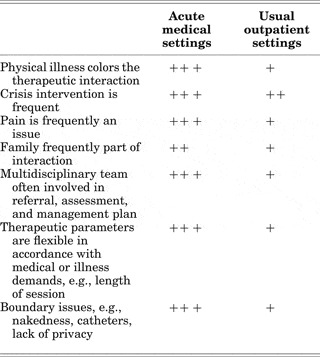
CT could be assumed to be an effective modality in acute medical settings because it has demonstrable efficacy for treating problems that are commonly referred to P-M services: depression, anxiety, coping with illness, substance use, and somatization (Paddison et al., Reference Paddison, Strain and Strain1989; Strain et al., Reference Strain, Smith and Hammer1998; Bourgeois et al., Reference Bourgeois, Wegelin and Servis2005). Meta-analytic data show that CT is efficacious for depression, generalized anxiety, social phobia, panic, post-traumatic stress, somatic disorders, and bereavement (Butler et al., Reference Butler and Chapman2006; Hunot et al., Reference Hunot, Churchill and Silva de Lima2007; Vittengl et al., Reference Vittengl, Clark and Dunn2007). CT has been shown to be beneficial in individual and group settings involving medical outpatients (Osborn et al., Reference Osborn, Demoncada and Feuerstein2006; Tatrow & Montgomery, Reference Tatrow and Montgomery2006) and specific medical scenarios such as rheumatoid arthritis (Astin et al., Reference Astin, Beckner and Soeken2002), cancer-related pain (Devine, Reference Devine2003), cancer survival (Osborn et al., Reference Osborn, Demoncada and Feuerstein2006), cancer adjustment and anxiety (Moorey et al., Reference Moorey, Greer and Bliss1998), anxiety in palliative care (Moorey et al., Reference Moorey, Cort and Kapari2009) prophylaxis of anxiety and depression in high-risk cancer patients (Pitceathly et al., Reference Pitceathly, Maguire and Fletcher2009), hypochondriasis (Thomson & Page, Reference Thomson and Page2007) and HIV (Himelhoch et al., Reference Himelhoch, Medoff and Oyeniyi2007). Problem-solving therapy, a subset of CT, seems particularly effective for dealing with medical-psychiatric comorbidity (Nezu et al., Reference Nezu, Nezu and Felgoise2003). Behavioral treatment such as relaxation may be useful in patients with chronic medical illnesses and anxiety (White, Reference White2001). CT has been widely applied to crisis intervention (Dattilio & Freeman, Reference Dattilio and Freeman2007). Finally, it is efficacious when combined with psychopharmacology, and has an additive effect in maintenance and relapse prevention (Hollon et al., Reference Hollon, Jarrett and Nierenberg2005) with an enduring effect beyond withdrawal of the medication (Hollon et al., Reference Hollon, Jarrett and Nierenberg2005). In outpatient psychiatric settings, CT's effect size is equivalent to that of medications (Thase et al., Reference Thase, Greenhouse and Frank1997). Table 1 compares CT in acute medical settings with its usual outpatient utilization. There are strong empirical grounds for a P-M clinician to utilize cognitive therapy in the context of acute medical-psychiatric comorbidity; to date, however, there has been no published integrative framework.
A comparison of CT in acute medical settings versus usual outpatient care

+ Occasionally present.
++ Often present.
+ ++ Frequently present.
To build such a conceptual framework, value would arise from combining the insights derived from CT with the wisdom accumulated within the P-M discipline. Additionally, if a P-M clinician intends, a priori, to use CT as the primary psychotherapeutic tool, then it is important to orient the P-M assessment toward this end point. Data gathering should focus on pertinent CT elements, such as cognitive schemata or belief patterns that will support a specific cognitive formulation and treatment. These elements are not routinely collected in standard P-M evaluations in the authors' experience. Early orientation of the interview toward a CT approach will maximize the likelihood of engaging patients in the model.
METHOD
This narrative review describes how CT can be applied in acute medical settings such as busy inpatient units, surgical or oncology treatment centers, emergency rooms, or medical clinics. We anticipate that the primary readership of this review will be P-M psychiatry fellows and educators, although other P-M clinicians such as nurses, psychologists, social workers, and chaplains are also likely to find it beneficial. This first article focuses on the initial P-M assessment, which is the first contact between the P-M clinician and the patient.
We review how CT relates to P-M and how, in turn, P-M influences CT in a way that makes it quite different from regular, outpatient CT. Nevertheless, our approach conforms to the interview functions described in the Academy of Psychosomatic Medicine Practice Guidelines (Bronheim et al., Reference Bronheim, Fulop and Kunkel1998) and J.S. Beck's 10 core CT principles: 1) a strong therapeutic alliance; 2) an ever-evolving formulation; 3) collaboration and active participation; 4) goal oriented and problem focused; 5) initially emphasizes the present; 6) educative; 7) time-limited; 8) structured sessions; 9) identifies, evaluates, and responds to dysfunctional thoughts and beliefs; and 10) uses a variety of techniques to change thinking, mood, and behavior (Beck, Reference Beck1995). In other words, the elements here will be familiar to both cognitive therapists and P-M clinicians.
A companion article describes common clinical scenarios in which CT may be beneficial, specific interventional strategies, and their limitations and implications for P-M education (Levin et al., Reference Levin, White and Bialer2011).
In the current article, the authors concentrate on CT-informed data gathering and formulation, the foundations for conducting CT in acute medical settings. Data gathering is conceptualized as a semistructured interaction (Levin et al., Reference Levin, Agid and Abramowitz2003), with common structural elements (history of presenting illness, past psychiatric history) and functional processes (understanding the person, developing rapport/responding to emotions, educating and motivating regarding the treatment plan [Cohen-Cole, Reference Cohen-Cole1991]), both of which must be adapted when using a CT approach.
To appreciate the altered psychotherapeutic parameters necessary to conduct CT in acute medical settings and assist learning, clinician–patient dialogues are modeled (Beck, Reference Beck1995; Levin et al., Reference Levin, Agid and Abramowitz2003) using a composite patient and clinician.
RESULTS
The Model of CT in Acute Medical Settings
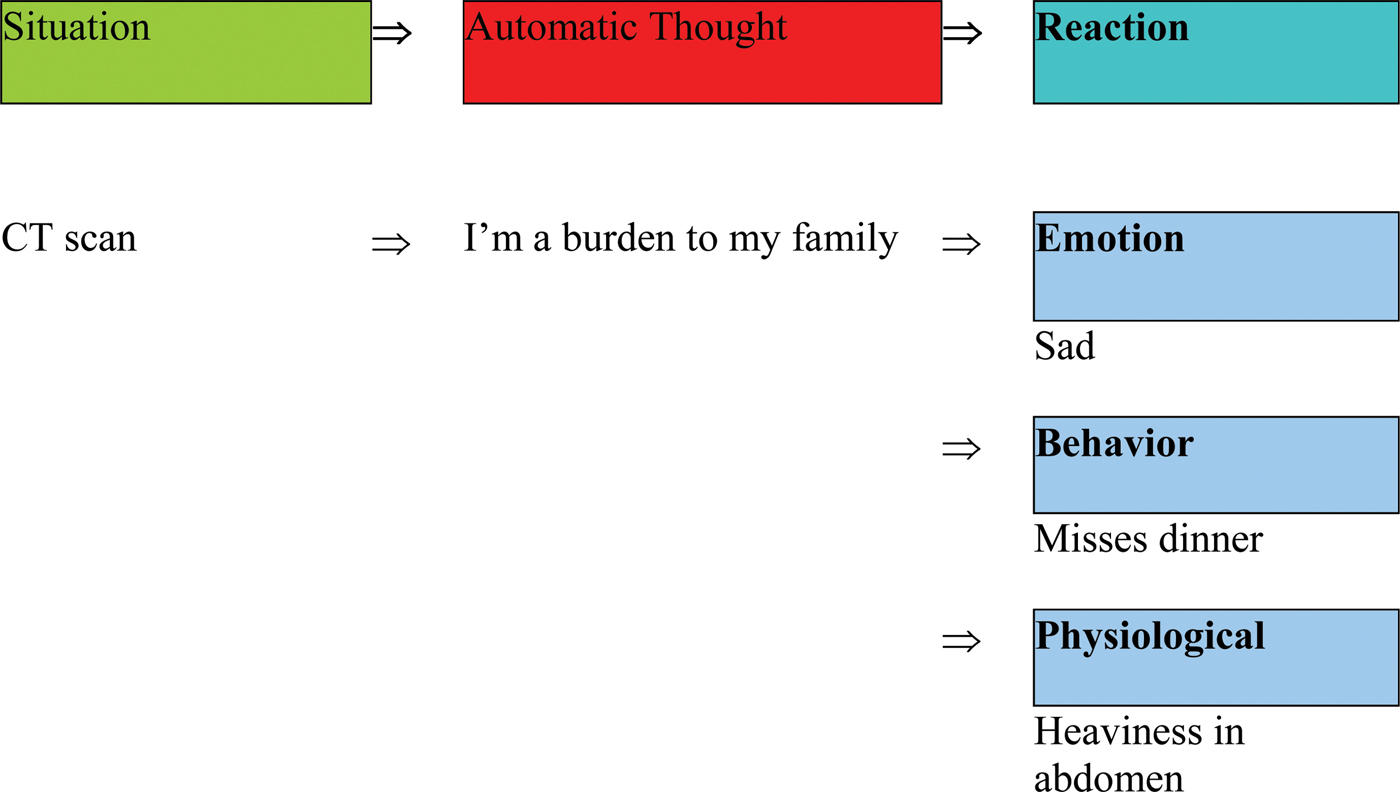
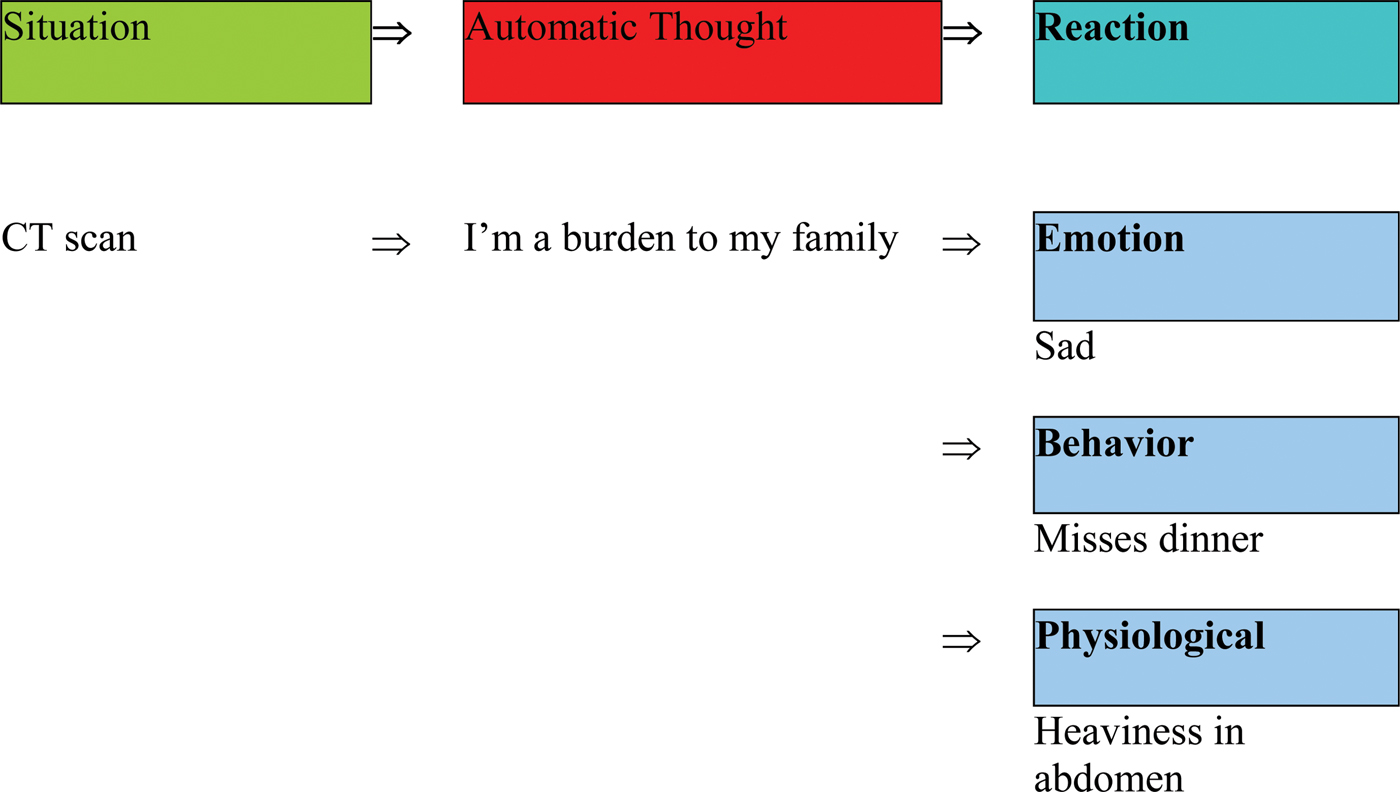
The central premise of CT is of paramount importance: a situation triggers automatic cognitions (thoughts and/or images), associated with an emotional and behavioral response (Fig. 1). In other words, one's perception of a situation, rather than the situation itself, triggers emotions. For example, consider two people about to undergo an identical scan. One thinks, “I know it is cancer,” and feels depressed, whereas the other thinks, “At last they will find a reason for this pain and treat it,” and feels reassured.
The relationship among acute medical situations; automatic thoughts; and subsequent emotional, behavioral, or physiological reactions.
Considerable empiric data support the cognitive hypothesis in medical settings. Prospective studies of advanced cancer patients show that rates of mental disorders or existential distress do not increase as death approaches (Lichtenthal et al., Reference Lichtenthal, Nilsson and Zhang2008). Similarly, depression does not increase over time in late-stage amytrophic lateral sclerosis as patients move towards respiratory failure and eventual death (Rabkin et al., Reference Rabkin, Albert and Del Bene2005). Depression is not predicted by whether patients undergo the more arduous allogeneic stem cell transplants rather than autologous transplants; high medical comorbidity/risk also does not increase the rate of depression when compared with low comorbidity/risk (Syrjala et al., Reference Syrjala, Langer and Abrams2004). Additionally, breast cancer stage and other medical variables are not associated with worse depression and anxiety (Kissane et al., Reference Kissane, Grabsch and Love2004; Bardwell et al., Reference Bardwell, Natarajan and Dimsdale2006). Perceptions, or misperceptions, are often based on prior experience or learning, and CT is effective because maladaptive cognitions/behaviors can be identified and replaced with more adaptive ones.
With the cognitive model in mind, we consider the first meeting between the clinician and patient in the acute medical setting, arranged sequentially from data gathering to formulation and management.
The CT-Informed P-M Interview is Structured
A structured interview facilitates rapid data collection. This is helpful because P-M clinicians are often rushed amidst the urgency-saturated culture associated with treating the sick. The structured approach is more efficient than the more passive stances of some dynamic and supportive psychotherapies. With practice, structuring should appear seamless and should not impede compassionate and caring responses at a time of great vulnerability.
The Setting and Nonverbal Elements of the Interview
Nonverbal and environmental parameters are also structured to strengthen the therapeutic relationship. The clinician should be seated appropriately, rather than standing over the patient, as the latter conveys a sense of interrogation and distancing. Clinicians who pay more attention to nonverbal behaviors are perceived to deliver more satisfactory care, independent of the technical quality of the care. For example, those who lean forward are perceived to indicate a greater degree of willingness to listen (DiMatteo et al., Reference DiMatteo, Taranta and Friedman1980).
Difficulties with privacy in acute medical settings alter the traditional parameters of CT. A person's ailing, sometimes exposed body can intrude into the interview. Catheters drain urine, tubes deliver fluids, bags ooze feces, machines deliver oxygen. In this context, cognitions about self-efficacy, appearance, desirability, shame, or disgust may emerge. Cues hinting at these are often nonverbal. For example, how the clinician reacts to the involuntary filling of an ostomy bag or a gown that falls open is critical.
If family or visitors are present, it is usually wise that they be asked to step out. If the patient asks that their family stay, the interview may be more family focused. This can inhibit discussion of intimately guarded or shameful subjects, but it can be helpful when discussing the transition to palliative care, when there is family conflict, as an aid to problem solving, or where corroborating data are needed. A compromise, with the patient's consent, is to invite the family to join a summary at the end of the interview. This can help to engage the family and promote a collaborative CT treatment plan.
The important ethical principles such as respect for the person, promoting autonomy, beneficence, and non-malfeasance, are integrated into the approach. This is especially true where there are boundary distortions and therapeutic parameters that deviate from those that are classically proscribed, such as limitations on privacy, impaired capacity, caregivers who request confidential medical data, and other ethical challenges that manifest during the interview (Lederberg & Levin, Reference Lederberg, Levin, Bloch and Green2009).
Nonverbal undercurrents of vulnerability can be addressed behaviorally by showing respect for personal space: if a chair is moved, it should be returned to its place, and at the end of the interview, patients should be asked whether the curtain should be left open or closed. Similarly, pouring a glass of water or adjusting the pillow are helpful behavioral trust-building gestures. The ways that patients and clinicians touch will also influence the resultant alliance. A firm, traditional handshake suggests cognitions relating to warmth, respect, and politeness. Reluctance to shake hands can reflect worry about hospital-acquired infections or religious prohibitions against touch (Levin et al., Reference Levin, Agid and Abramowitz2003). Touching the shoulder or hand of a distressed or dying patient may be a reassuring behavioral gesture. In summary, nonverbal and environmental elements contribute to the initial framework for building trust, reflecting the common situational, cognitive, and behavioral dimensions of CT practice.
Introduction and Setting the Agenda
Mutual introductions and setting the agenda establish a problem-focused collaborative approach, but establishing consultation goals and reasonable expectations actually starts before the patient interview, when the referring physician can be asked, “How would you like this consultation to help you with this patient?” Additionally, if the referring physician explains the rationale for the consultation to the patient and there is agreement that this might be helpful, the newly established collaborative triad of patient, referring physician and P-M clinician avoids the misperception of “sending” patients to psychiatry without their consent. Although transparent referral pathways promote the ethical principle of respect, obtaining patient consent for a P-M evaluation is not absolute. Suicidal, delirious, manic, disruptive, or threatening patients may require urgent psychiatric evaluation, regardless of their preference.
This initial discussion with the referring physician also helps to identify any undeclared cognitive-emotional agenda (countertransference), which is often the trigger for the consultation request. To illustrate, a family's request that “everything be done” for a patient with terminal cancer may engender helplessness and guilt in the clinician which, in turn, prompts the physician to request a P-M evaluation for “depression,” The real agenda, however, is the oncologist's struggle transitioning to hospice care. Appreciating the referring physician's undeclared cognitive-emotional agenda is a vital element of the case formulation.
After introductions, the P-M clinician establishes the agenda either by asking the patient directly to declare their agenda, by stating the clinician's agenda or establishing an agenda indirectly through listening to the illness narrative. The advantage of inviting the patient to present his or her view of the consultation's purpose is that misperceptions can quickly be corrected, and shared goals negotiated upfront.
The Patients' Agenda
Dr. Green: “What is your understanding of the purpose of this meeting/interview?” [Ascertain patient perceptions of goals]. “…Correct, I will assess you psychologically for the transplant and a copy of my report will be sent to your oncologist. Another important reason for this consultation is to check how you are coping with the leukemia? How does that sound?”
Here, Dr. Green has addressed the ethical problem of dual loyalties; the P-M clinician is obliged to report back to the referring physician, but is also bound to preserve the confidentiality of patients and to assist them (Lederberg & Levin, Reference Lederberg, Levin, Bloch and Green2009). Dr. Green seeks the patient's consent to proceed with this dual agenda.
Patients frequently have multiple agenda items and the therapist should actively elicit them:
Dr. Green: “I can certainly try to help your depression. What else shall we work on?” [Elicit further agenda items].
Clinicians can then add their agenda items, for example, smoking cessation, to the negotiated list.
The Clinician's Agenda
The second agenda-setting approach is clinician generated. It does not start with patient perceptions; however, it still preserves a collaborative approach:
Dr. Green: Dr. Smith asked me to see you. He thought that you are having some difficulties coping with the cancer. He wondered if we might be able to discuss what is going on and perhaps help. How does that sound?” [Stating physician agenda directly, yet preserving a collaborative spirit].
An approach such as asking, “How can I help?” assumes that patients can articulate the reasons that they require psychiatric assistance, and that the clinician can indeed help. Not all patients are able to explain the reasons for their distress, and at the same time see a solution. This approach may not useful with a paranoid or belligerent patient, and may prematurely truncate the interview if the patient does not perceive any need for help. It is, however, useful for a person who has a clearer understanding of the therapist's role and their own emotional difficulties.
An Indirect Way to Set the Agenda
The third approach is suited to patients with difficulties delineating goals for the interview and is typified by the question, [Dr. Green:] “Perhaps we can start at the beginning? Tell me what has been going on.” [Understanding the illness narrative].
Starting with the illness narrative therefore allows the agenda to evolve gradually from a clearer understanding of medical and psychological issues. Questions can then follow about the coping or emotional response to the illness. This usually permits agreement to be reached about shared goals, which then form the basis for the remainder of the interview.
Collaboration, a central therapeutic attitude of CT, (Beck et al., Reference Beck, Rush and Shaw1979; Beck & Emery, Reference Beck and Emery1985; Beck, Reference Beck1995) establishes a relationship based on shared physician–patient goals, and sets the communication tone. It is never a 50:50 relationship, as the clinician brings specialist knowledge and experience, but the aim is to establish a collaborative, shared journey with an end point that may still be unclear:
Ms. Brown: “Doctor, can you help me with this problem?”
Dr. Green: “I am not sure but I am willing to give it my best shot. How about we try to work on the problem together?”
One technique to increase the collaborative spirit is to turn statements into questions:
Dr. Green: “Would it be OK if we spent the next half an hour talking so that I can better understand your concerns?” [Patient is asked for permission to collaborate on understanding any issues that trouble her].
History of the Presenting Illness
The history of the presenting illness is two pronged: first, data are simultaneously gathered on the psychiatric issues as they intertwine with the medical illness, and second, cognitions are evaluated through the illness story, for example, helplessness in the setting of radiation therapy for cancer. Initially, open-ended questions are used. As the data become more specific, the clinician's questions become more focused (Cohen-Cole, Reference Cohen-Cole1991). This narrowing is also informed by integration of CT principles and practice components:
Dr. Green: How you have been coping with the cancer?
The first open-ended question can be followed with a “tell me more” question:
Dr. Green: “Tell me more about your sadness.” Or, “What other thoughts or feelings accompanied your grief?”
Thus, the cognitions associated with a particular emotion are elicited. As George Engel noted, closed, targeted questions may sound more like interrogation, generating defensiveness, whereas narration encourages intimacy (Engel, Reference Engel1997). A CT approach, however, goes beyond open-ended questions, integrating curious interest with an enquiry style known as Socratic questioning.
In Socratic questioning, the therapist refrains from offering premature answers to problems, an approach believed to be less effective than helping patients to gather empirical evidence supporting or refuting beliefs (Beck et al., Reference Beck, Rush and Shaw1979; Beck & Emery, Reference Beck and Emery1985; Overholser, Reference Overholser1995). This inquiry style gently stimulates thoughtfulness and reflection to ultimately change the valence of deeply held convictions and generate alternative cognitions. To illustrate, consider a patient who believes that “my cancer is a death sentence:”
Dr. Green: “What evidence do you have that this cancer is a death sentence? Have other patients survived your type of cancer? What are the treatment alternatives? Are there any advantages (or disadvantages) to asking your oncologist about the prognosis with these treatments? What about connecting with other patients with your type of cancer to see how they manage this issue?”
Data gathering is universally accompanied by an articulated or unarticulated emotional reaction. Strong emotions may constitute, in A.T. Beck's words, “blocks to learning” (Beck & Emery, Reference Beck and Emery1985), because they interfere with constructive thinking, when, for example, a person is overwhelmed by distress or sadness. Here, the body becomes physiologically primed for fight/flight or withdrawal/passivity. The importance of responding to patients' emotions is broadly recognized in clinician–patient communication (Cohen-Cole, Reference Cohen-Cole1991) and is not unique to CT. Strategies for responding to and reducing the intensity of emotion include empathic silence, normalizing or validating, apologizing, naming or acknowledging the emotion, encouraging expression, restating, and praise. A palpable decrease in emotional intensity signals that it is now possible to proceed with further data gathering or CT management. This decrease in affect can also be measured empirically by patient ratings of anxiety levels before and after a CT intervention (see companion article for detailed discussion). Ignoring intense affect can lead to premature reassurance, for example, “Everything will work out,” (it may not) and this can halt Socratic questioning.
Increased affect is also a prompt to explore the presence of significant automatic thoughts relating to critical events in the illness trajectory, such as missed/delayed diagnosis, losses (e.g., family deaths, illness-forced retirement) or inter-current stresses (e.g., loss of health insurance, marital discord) (White, Reference White2001). Such cognitions can trigger anxious and depressive symptoms or overwhelm coping thresholds.
Explore Attributions Associated With Illness
Eliciting illness attributions is pivotal, as patients attempt to make sense of the seeming random nature of illness (White, Reference White2001; Ratcliffe et al., Reference Ratcliffe, MacLeod and Sensky2006). Dietary attributions may lead to radical changes in intake or colonic cleansing regimens. Chemicals, cleaning fluids, or occupational exposure may be blamed. Prior treatments may be blamed for the current illness (e.g., the previous physician did not treat the cancer completely). Personal experience, family adversity, culture, science, religion, and the popular press can all influence illness attributions. Asking, “What do you think may have caused the cancer/illness?” is a high yield exercise that often elicits surprising cognitions that prove to be central to the psychotherapy.
Images and intrusive autobiographical memories can be just as important as distorted cognitions from the CT perspective because patients often link dysphoric affect to particular images or memories (Beck & Emery, Reference Beck and Emery1985). For example,
Dr. Green: “When you feel upset about your cancer, what image or memory do you see in your mind?”
Ms. Brown: “It reminds me of my mother's death. She had ovarian cancer and I can still see her face just before she died.”
Eliciting these images or memories allows the clinician to gently explore their validity and generate reasonable alternatives, similar to the process of reframing automatic thoughts, such as asking if Ms. Brown's illness is directly comparable to her mother's ovarian cancer that was diagnosed two decades prior.
Medical Co-morbidity, Past Medical History, Medications, Laboratories and Psychiatric Problems Secondary to Medical Illnesses
In order to diagnose psychiatric disorders secondary to medical causes and to avoid misformulations, the P-M clinician must appreciate the inter-relationships of medical comorbidity, past medical history, medications, and investigations. Examples include the effects of steroids, hypoxia, arrhythmias, serotonin syndrome, and delirium, all of which may manifest primarily with psychological symptoms. Therefore, to avoid confounding symptoms attributable to medical pathology with a psychological problem, a thorough understanding of the biology is essential.
Early illness experience is especially important for CT, because illness cognitions may be adopted here. For example, one patient delayed curative cancer surgery because, as a child, he was traumatized by an appendectomy performed under ether at a time when his mother was unavailable. He was sure that he would receive ether again. The fear of choking was intolerable, as were lingering abandonment cognitions. Similarly, many “intermediate beliefs” such as, “you must eat,” “you must rest,” and “you must listen to the doctor,” originate from experience with childhood illnesses and influence the response to illness. Global family coping beliefs, mottos, and attitudes are also passed on from one generation to the next (Kissane & Bloch, Reference Kissane and Bloch2002). These may include attitudes regarding autonomy, which impact on adherence, for example, “I don't like taking tablets.”
Past Psychiatric History, Drugs and Alcohol
The importance of the past psychiatric history, including addiction to medical and social drugs, is obvious; however, additional points warrant emphasis from the CT perspective. What are the patient's attitudes to treatment based on prior experiences? Patients with positive past psychotherapy experiences may be motivated to engage in a therapy framework because they have an intrinsic appreciation of its value. Patients with previous experience of dynamic psychotherapy may have been socialized to freely associate, leading to unfocused, circumstantial reflection. If not addressed early, this may disrupt a more structured, cognitive approach. Because CT views psychiatric medications as augmentation tools, the importance of taking these medications can be reinforced and the value of reassessing dosage at timely intervals considered.
Family History
Understanding genetic vulnerability is a standard component of medical assessments, but CT is also interested in cognitions relating to genetic susceptibility. A person whose father died from a myocardial infarction at 54 years of age may perceive his fate to be identical, ignoring potentially modifiable risk factors such as hyperlipidemia and smoking. A cancer patient whose grandfather died at 94 may feel short-changed because he has not achieved the perceived expectation of longevity. As the detection of cancer vulnerability improves, physicians and families are further challenged. A patient diagnosed with BRCA 1 positive breast cancer will worry about the risk for her teenage daughters. Exploring the impact of family illness on pivotal beliefs is fruitful. Therefore,
Dr. Green: What do you think you learned by growing up with a mother who had multiple sclerosis? … Tell me more about why you had to bottle up your feelings.
This approach can be a powerful way of illustrating the links between family environment, learning, and the influence of these beliefs on subsequent behavior, coping, and emotion. In this way, patients begin to consider the multiple legacies that shared family variables (genetic and environmental) can have on current biopsychosocial functioning.
Social History
Early experiences of attachment influence lifelong patterns of relationship. Childhood sexual, physical, and/or psychological abuse and abandonment must be watched for. These frequently result in the presence of cognitions about parental figures such as physicians – often focused on themes of trust, control and personal safety that can be reactivated in the hospital. Core beliefs such as, “I am unlovable,” “No one wants me now,” and “I can't do anything right,” can fuel depressive symptoms. Such patients have particular difficulty with breast or genitourinary cancers, which can be experienced as re-traumatizing.
Family functioning can be assessed by examining cohesion, teamwork, openness of communication, and conflict resolution. This is important to CT because family interactions may buffer or precipitate crises (Dattilio, Reference Dattilio, Dattilio and Freeman2007) and family members are often psychotherapy partners in acute medical settings. Deficient social support is a well-established risk factor for negative health outcomes (including mortality) and vulnerability to psychological distress (Levin & Kissane, Reference Levin and Kissane2006). Cognitions relating to work, finances, and medical insurance should also be appreciated.
Mental Status Examination (MSE)
The CT-informed MSE in acute medical settings should be parsimonious and focus on cognitive patterns. Mood is traditionally presented as a stand-alone category in the MSE, but it makes more sense to link mood to thought contents (Levin, Reference Levin2003) so as to better reflect the cognitive principle of perceptions influencing emotions (Beck, Reference Beck1964). Verbatim quotes are often more illustrative of thought content and less susceptible to misunderstanding. Although a full description of the MSE is beyond the scope of this article, from the CT perspective, three additional points bear highlighting.
Description
This should link nonverbal cues with the thought content or diagnosis: “Elderly woman receiving a transfusion, with the bed-sheet fearfully pulled up to her chin.”
Affect
This should reflect the observed emotions and be congruous with cognitions that support the eventual differential diagnosis. In order to avoid dichotomous classifications, it is helpful to qualify affect with descriptions of its severity. For example, a constricted but reactive affect may be indicative of less severe depression than a non-reactive affect. Being specific by relating affect to cognitions, for example, “teary when reflecting on being too sick to help her daughter,” is more helpful than describing the patient as being globally “tearful.” Ratings of mood severity could be incorporated, for example, “Overtly anxious, particularly when talking of the future. Rated self as 80% anxious during consult.”
Thought Content
The clinician should elicit the themes reflecting underlying beliefs or thinking errors. Typical themes in medically ill patients are those of helplessness, loss of control, and abandonment such as “My daughter does not want me back home” [abandonment], or “I cannot make it to the bathroom on time” [helplessness, humiliation]. Another common pattern of beliefs include “I must think positively.” This schema has been labeled as the tyranny of positive thinking because it tries to sustain an impossibly optimistic worldview, unrealistic in any normal person, and even more so in one who is seriously ill. Themes of worry about disease recurrence might be expressed by “what if…” type thinking, catastrophizing or a looming threat processing style, where the velocity of potential threats is overestimated (Levin et al., Reference Levin, Riskind and Li2007).
Ms. Brown: I am so worried that this pain means the cancer is spreading quickly, even through I know my last scan was better.” [Looming cognitive style, over-estimating risk and misinterpreting a physical symptom]
Finally, it is essential to assess suicidal ideation (Leentjens et al., Reference Leentjens, Rundell and Diefenbacher2011), which in medical patients is a broad and variable construct, often with unclear triggers (Ballard et al., Reference Ballard, Pao and Henderson2008). It may relate to loss of purpose or meaning, hopelessness, demoralization (Clarke & Kissane, Reference Clarke and Kissane2002), illness burden (Druss & Pincus, Reference Druss and Pincus2000), a desire for hastened death (Hotopf et al., Reference Hotopf, Lee and Price2011), impulsivity (Bostwick & Rackley, Reference Bostwick and Rackley2007), delirium, vengeful cognitions, personality disorders, depression, panic, or schizophrenia. It can also be confused with a readiness to accept an inevitable death (Bostwick & Levenson, Reference Bostwick, Levenson and Levenson2005).
Documentation
Efficiency dictates that documentation of the MSE in the medical chart be brief. Because patients, hospital staff, lawyers, disability boards, case managers, insurance groups, and family members often access the medical record, a sensitivity to privacy is important (Mermelstein & Wallack, Reference Mermelstein and Wallack2008). Terms that can be misconstrued should be avoided, for example, “seductive,” “histrionic,” “attractive,” but the patient should “come alive” through a rich coverage of who this person is. The description in the P-M clinician's mind is not necessarily the one that should be charted; this also applies to potentially embarrassing information, such as infidelity or sexual abuse, if it has no immediate bearing on the case. Relevant positives, negatives, and key cognitions should be documented.
The CT Formulation
The formulation provides a framework for conceptualizing and integrating medical, psychiatric, and social problems, within the greater context of the patient's life and MSE findings (White, Reference White2001). Recognition of the patient's predominant schemata is a critical element of the formulation and diagnosis. Common cognitive patterns that are associated with a presenting disorder are as follows:
• Depression: a negative view of self, others and future;
• Generalized anxiety: overestimating the perceived threat and underestimating coping resources;
• Social anxiety: fear of standing out in a crowd or being the center of attention;
• Panic: catastrophic misinterpretation of physical and mental symptoms;
• Anger: focus on thoughts that a personally important “rule” has been broken.
Another way for the clinician to analyze cognitive patterns is to consider them in terms of how well they serve the overall goal of coping and adaptation to a stressor. This is described in Folkman and Lazarus's Cognitive Coping Model (Folkman et al., Reference Folkman, Lazarus and Dunkel-Schetter1986; Lazarus, Reference Lazarus2000). Coping is a useful conceptual approach because most medical illnesses are defined by chronicity rather than cure. Crossing the threshold between coping and “not coping” is often the trigger for a P-M referral, regardless of the formal psychiatric diagnosis.
The Cognitive Coping Model defines coping as a “process” of what people think (cognitive) and do (behavioral) to manage specific external and/or internal demands that are appraised as taxing or exceeding a person's resources. Coping is viewed as a mediator of the emotional response. Ways that people cope include positive reappraisal, planful problem solving, seeking social support, accepting responsibility, escape avoidance, distancing, self-control, sense-making, and confrontational reaction. Emotion-based coping is used when strong feelings result and the individual seeks to share them. Problem-based coping is selected when choices are apparent and invite decisions as to what is advantageous. Meaning-based coping draws on assumptive world beliefs and sees value and purpose in the situation, no matter how threatening. Therefore, the clinician's task is to work out which cognitions and behaviors promote coping and adaptation and which work against this overall goal. This is a practical, patient-centered, non-pejorative approach to the formulation.
Role of Self-Report Measures
CT emphasizes the utility of data-driven formulations and to this end, self-report or physician-rated batteries are used to quantify symptom severity, for example, the Patient Health Questionnaire-9 (PHQ-9) which is based on Diagnostic and Statistical Manual of MentalDisorders (DSM) criteria for depression (Spitzer et al., Reference Spitzer, Kroenke and Williams1999), the Generalized Anxiety Questionnaire (GAD-7) (Spitzer et al., Reference Spitzer, Kroenke and Williams2006), and Likert scales that measure target symptom intensity such as distress or pain. Using self-report measures in the initial evaluation allows the P-M clinician to explain the relevance of symptom monitoring. Once patients appreciate that serial measurement of target symptom severity assists in the achievement of therapy goals, they are willing to complete baseline and subsequent assessments.
The formulation is aided by conceptualizing target symptoms as continuous variables rather than dichotomous ones, which is achieved by rating symptoms on a 0–10 scale rather than as present or absent. Pain, depression, anxiety, happiness, and other symptoms fluctuate from moment to moment. It is often helpful to measure this variation and the related threshold for tolerance or adequate coping. For example, a pain rating of 6/10 may be tolerable and managed by the patient with the usual medications, but 8/10 may trigger an emergency room visit – the tolerance threshold here is 7/10. Reducing the pain just one notch (e.g., by distraction), can assist coping. Importantly, multiple symptoms cluster together, for example, half of all anxious cancer patients have depressive symptoms and two thirds of depressed patients are also anxious (BrintzenhofeSzoc et al., Reference BrintzenhofeSzoc, Levin and Li2009); fatigue correlates with depression, anxiety, and being ill in general (Brown & Kroenke, Reference Brown and Kroenke2009) . The danger of a classifying a person in a single diagnostic category and minimizing the overlap is a restricted therapeutic focus.
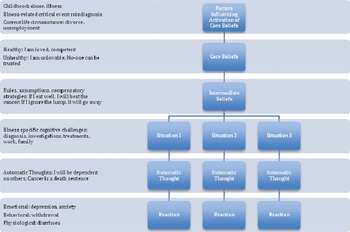
Once various thinking patterns have been identified, one parsimonious way for the clinician to orchestrate the formulation is the Cognitive Conceptualization Diagram (Beck, Reference Beck1995), which uses a flow chart as a guide for tackling therapeutic change. Core beliefs, intermediate beliefs, and examples of automatic thoughts triggered in different situations are displayed (Fig. 2). In addition to the cognitive formulation, a multifaceted treatment plan is also based on the DSM-IV multi-axial diagnosis ( American Psychiatric Association, 2000), which is standard practice in P-M.
(Color online) The cognitive conceptualization diagram for acute medical settings. Adapted from J. Beck (Beck, Reference Beck1995).

The CT Treatment Plan
The first step of the treatment plan, in the spirit of collaboration, is to share the diagnosis and conceptualization with the patient. A process of psychoeducation about the diagnosis follows this:
Dr. Green: “Ms. Brown, based on my assessment I think that you are depressed. Your depression score is moderately severe. Could I explain more about depression and its relation to your medical situation?” [Share diagnosis, psychoeducation].
The cognitive conceptualization is shared as a tentative hypothesis:
Dr. Green: “… your depression was triggered by your feelings of helplessness trying to cope with the chemotherapy all alone because your marriage is in tatters. It is understandable why you are so demoralized - you are overwhelmed trying to cope with two huge problems at once.”
With a diagnosis and formulation in place, the next step is to collaboratively decide on treatment. This involves weighing the advantages and disadvantages of the available treatment options with the patient. Psychotherapy efficacy data might be helpful to inform choices. At least 35% of consultations include psychopharmacological recommendations (Fulop & Strain, Reference Fulop and Strain1986) and strong mounting evidence supports combining pharmacotherapy with CT (Thase et al., Reference Thase, Greenhouse and Frank1997; Hollon et al., Reference Hollon, Jarrett and Nierenberg2005). Additionally, given time urgency and competing treatment demands, wisdom suggests use of all available tools to ameliorate a problem. Amidst medical crisis, it can be unpredictable to determine how long it will take and to what degree CT will ameliorate the problem. Therefore, hedging bets by combining CT and psychopharmacological treatments is a sensible approach. Medications can be stopped if the CT is quickly successful.
Patients interested in embarking on a full course of CT will need to learn more about it. The clinician should describe how the CT model applies to symptoms, what it entails, the frequency and likely number of sessions, and its maintenance phase. Such preparation offers hope and invites commitment to a management plan. It may occur at the end of the first or second meeting or be part of a homework assignment in which the patient is asked to “research” CT in greater detail. More modest aims, within the constraints of short admissions and extenuating medical circumstances, might be as simple as improving coping during the inpatient admission while setting up an outpatient treatment framework.
The Integration of P-M Assessment with Early CT Interventions
The traditional way that CT and other psychotherapies are taught is for an assessment or intake phase to be followed by the psychotherapy in subsequent sessions. This approach is problematic in acute medical settings because of time urgency and the crisis-laden environment that demands immediate solutions. For these reasons, the model presented here integrates the data-gathering phase with the CT intervention as soon as the clinician has enough data for a tentative formulation. The P-M clinician should not wait until the end of the “intake” phase if an earlier invention will be beneficial. Examples include behavioral interventions for acute panic, re-framing a “hot” cognition, or responding empathically to emotional distress. The clinician can intervene even in the earliest moments of the assessment interview:
Ms. Brown: “…. My doctor has given me a 20–40% chance of a sustained remission with the transplant. I don't want to go through the transplant if I am going to die anyway.”
Dr. Green: “These figures indicate that if there were 100 people with primary refractory Hodgkin's disease, after five years, 20 to 40 would be alive and 60 to 80 would be dead. Is that correct?” [Reframes]
Ms. Brown: Yes, that is what my doctor said.
Dr. Green: So even in the worse situation, there would be a one in five chance of remission. Imagine another young woman with similar Hodgkin's disease, considering a transplant. Would you tell her that it is unreasonable to try to be amongst those 20–40 survivors? Consider an Olympic runner competing with 12 others for a medal. What advice would you give him? “You only have an 8.3% chance of winning, so don't bother?” Or would say that it is reasonable to try? [Externalizes, reframes]
Thus, the clinician intervenes as soon as reasonable, even if the assessment is incomplete. The simplest intervention is to respond empathically and conceptually, which can be seen as parallel problem-level and case-level formulation (White, Reference White2001).
DISCUSSION
A CT-driven assessment for acute medical settings generates intervention models that are more cohesive, teachable, and testable than existing approaches. The paucity of integrative psychotherapy models for the acutely medically ill has been a notable gap in the field. Even if the management plan does not include psychotherapy, a CT formulation will improve specific parameters such as adherence. The clinician can integrate stand-alone elements of CT as part of the overall management or implement one or two inpatient sessions as an introduction to a longer outpatient course.
The parameters for CT in acute medical settings differ markedly from those of traditional therapy models in which considerations such as privacy, competing medical demands, physical symptoms, length of sessions, and family involvement are carefully controlled. Bringing examples of negative automatic thoughts and underlying core beliefs adds depth to the formulation and gives the patient insight into how therapy will work, with the offer of considerable hope. This strengthens the development of the therapeutic alliance and increases the commitment to accepting help. Moreover, adherence to adjuvant psychopharmacology can be increased when its role in achieving symptom relief is fully appreciated. Targets such as improved self-efficacy, self-esteem, and coping increase the patient's recognition of the benefits of treatment.
Documentation of this depth of assessment and management plan help staff from other disciplines within the treatment team to appreciate the worth of the psychosomatic medical consultation, allowing them to further affirm their perception of its value to the patient. This, in turn, helps patient compliance while building hope.
Future challenges will be demonstrating whether CT can improve patient and institutional outcomes such as depression, anxiety, coping, satisfaction, adherence, length of stay, and medical expenditure. Specific interventional strategies are discussed in a companion article, together with how to teach and disseminate this model.