Introduction
In recent years, consensus has grown in support of openly sharing diagnoses of diseases such as cancer, and now dementia, with patients and family members (Alzheimer's Association, 2007; Draskovic et al., Reference Draskovic, Vernooij-Dassen, Verhey, Scheltens and Rikkert2008; Laakkonen et al., Reference Draskovic, Vernooij-Dassen, Verhey, Scheltens and Rikkert2008; Lecouturier et al., Reference Lecouturier2008). The evolving discourse surrounding this matter emphasizes potential implications for improving care (Robinson et al., Reference Robinson, Emden, Elder, Lea, Vickers and Turner2008), for example, the opportunity to discuss treatment options and prepare for the future (Alzheimer's Association, 2007; Lecouturier et al., Reference Lecouturier2008). Diagnostic disclosure is considered a crucial starting point from which patients and their family members begin the process of making important decisions regarding medical treatment and general management (Fisk et al., Reference Fisk, Beattie, Donnelly, Byszewski and Molnar2007). However, this process, particularly within the context of a diagnosis of dementia, is a complex and difficult one for patients, family members, and healthcare professionals alike. For physicians, diagnosis disclosure involves a myriad of clinical and ethical concerns (Maguire, Reference Maguire2002; Cornett and Hall, Reference Cornett and Hall2008) and controversies (Bamford et al., Reference Bamford, Lamont, Eccles, Robinson, May and Bond2004). Physicians are required to evaluate clinical information carefully, address personal and family needs and differences (Carpenter and Dave, Reference Carpenter and Dave2004; Monaghan and Begley, Reference Monaghan and Begley2004; Zaleta and Carpenter, Reference Zaleta and Carpenter2010), and deal with various dilemmas unique to this process, including what, and how much, information to share, as well as how, to whom, and when to present the diagnosis (Pinner and Bouman, Reference Pinner and Bouman2002; Wald et al., Reference Wald, Fahy, Walker and Livingston2003; Karnieli-Miller et al., Reference Karnieli-Miller, Werner, Aharon-Peretz and Eidelman2007).
When a diagnosis is shared, patients and their family members often have mixed responses: some may exhibit anxiety or distress as they become progressively aware of the situation (Bamford et al., Reference Bamford, Lamont, Eccles, Robinson, May and Bond2004). Others may feel relief at hearing the confirmation of the diagnosis, perhaps gaining a more profound understanding of the nature of the illness, or hopefully at the prospect of receiving practical recommendations for how to cope with the present and prepare for the future (Laakkonen et al., Reference Laakkonen2008; Connell et al., Reference Connell, Roberts, McLaughlin and Carpenter2009). Communication of information should be adapted to fit individual needs and preferences (Williams, Reference Williams2004), allowing for enhanced comprehension (Vernooij-Dassen et al., Reference Vernooij-Dassen, Van Hout, Hund, Hoefnagels and Grol2003).
Communication scholars have emphasized the importance of implementing a patient-and-family-centered approach to the disclosure of grave medical conditions (Baile et al., Reference Baile, Buckman, Lenzi, Glober, Beale and Kudelka2000; Arber and Gallagher, Reference Arber and Gallagher2003), as well as the need to identify and comprehend pre-diagnosis expectations (Williams, Reference Williams2004) and determine their influence on post-diagnosis reactions (Carpenter and Dave, Reference Carpenter and Dave2004). Available studies in this area focus mostly on questions of whether patients wish to know the diagnosis, or whether family members wish the patient to be informed (see Elson, Reference Elson2006). However, they do not provide a broader sense of understanding as to both participants’ wishes and expectations. Furthermore, these issues have been explored mostly within primary care settings, where the participants are previously acquainted with the physician (Zebiene et al., Reference Zebiene2004; Reference Zebiene, Svab, Kairys, Dotsenko, Radic and Miholic2008; Ruiz-Moral et al., Reference Ruiz-Moral, Perula de Torres and Jaramillo-Martin2007; Kenten et al., Reference Kenten, Bowling, Lambert, Howe and Rowe2010; Main et al., Reference Main, Buchbinder, Porcheret and Foster2010). To date, we are unaware of any studies that assess patient and caregiver experiences with dementia diagnosis disclosure from within the unique setting of a memory clinic.
Objectives
The objectives of this paper were to identify patients’ and companions’ expectations, perceptions, and experiences regarding first time encounters that deal with assessment and disclosure of the dementia diagnosis in the previously unexplored territory of a specialized consultation unit. The intention was to help clarify what is expected, what is done (experienced), the gaps between them, and the opportunities to bridge these gaps.
Methods
This paper provides a grounded theory analysis of in-depth interviews (retrospective perceptions) with patients and family companions. The interviews were conducted approximately two weeks after the disclosure encounters and were recorded and transcribed verbatim.
Participants and sampling
Participants were recruited through a convenience sampling of 17 first time encounters from two large memory clinics in northern Israel. Post-encounter interviews were conducted with all 17 companions and ten patients (in seven cases, either the patient refused to be interviewed or the companion feared that the interview would be too difficult for the patient). Data collection and analysis were terminated after the analysis of these interviews, as saturation was achieved and types of expectations and experiences were identified.
Memory clinic consultations included three main phases, all of which were conducted during a single visit: (1) An introductory meeting with the patient and companion, which included a brief introduction, obtaining a medical history, and an initial assessment of memory loss; (2) A formal evaluation of the patient's cognitive function (a standardized process usually without the companion's presence). In most cases, during that time, a separate conversation is conducted between the companion and a nurse and/or social worker to obtain the companion's perceptions of cognitive and behavioral changes and provide some advice; (3) A summative meeting (with patient and companion), where the results of the examination are disclosed together with recommendations for continuation of care. A formal letter is provided either at the end of the visit, or sent by mail within a few days. This process is similar to the Memory and Aging Project (MAP) visits presented by Carpenter et al. (Reference Carpenter2008).
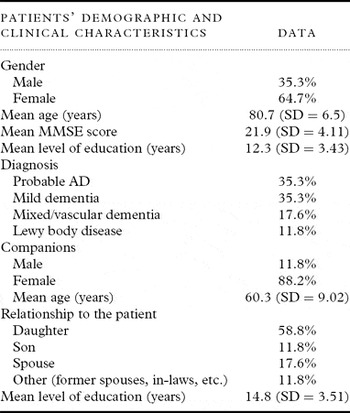
One of the clinics was staffed by four neurologists specializing in cognitive neurology, and the other by a geriatrician; four out of the five participating physicians have longstanding experience in the diagnosis and management of dementia. Demographic and clinical characteristics of the participants are presented in Table 1. To preserve anonymity, all quotes refer to the physicians as women.
Characteristics of the study participants (n = 17)

Note: MMSE = Mini-Mental State Examination; AD = Alzheimer's disease; SD = standard deviation.
Inclusion criteria for patients required that subjects be over 60 years of age, and accompanied by a companion. Both patient and companion gave their written informed consent, as required by the hospitals’ Institutional Review Boards (IRBs) and the Ministry of Health.
Process
Semi-structured post-encounter interviews were conducted with each participant, separately, two to three weeks after diagnosis was provided within the clinic visit. The interview included general questions documenting their pre-visit expectations, perceptions and experiences from the actual encounter, and retrospective impressions regarding fulfillment of expectations. These interviews were designed to evoke detailed descriptions of the perceptions of patients and their companions.
Data analysis
Each interview was analyzed separately with a focus on the entire process (holistic reading) and familiarity with the content (Agar, Reference Agar1980). This included a within-case analysis of implied expectations (i.e. what they sought, what they received, and how they felt about it), in addition to the explicit mention of expectations. Special attention was given to messages expressing or hinting at disappointment and/or satisfaction (as indicators of fulfilled or unfulfilled expectations). We also concentrated on responses of patients and/or companions to questions regarding what they thought they might gain from the visit, and the match or mismatch with their perceptions of the actual experiences. All citations related to expectations were analyzed and categorized separately (Westra et al., Reference Westra, Aviram, Barnes and Angus2010) using constant comparison methods to expose the differences, similarities, and correlations among them and between other issues noted (Glaser and Strauss, Reference Glaser and Strauss1967).
To enhance the reliability/credibility of the data, the analyses were initially performed by three members of the research team, allowing for cross-checking of various coding strategies and interpretations (Barry et al., Reference Barry, Britten, Barber, Bradley and Stevenson1999), and included meetings to discuss coding and reach a consensus (Karnieli-Miller et al., Reference Karnieli-Miller, Taylor, Cottingham, Inui, Vu and Frankel2010). The credibility of the findings was subsequently enhanced by obtaining detailed and precise descriptions of the patients’ and the family companions’ personal perceptions and experiences, providing context and clearly distinguishing between quotations and interpretations (Lincoln and Guba, Reference Lincoln and Guba1985).
Ethical considerations
The research protocol was approved by the IRBs of the participating hospitals and the governmental ethics committee of the Ministry of Health.
Results
The analysis revealed major differences between patients’ and companions’ expectations from their encounters at the memory clinic. Patients were generally passive attendees: they did not initiate the visit and were usually unable to define its exact purpose, nor pinpoint any particular expectations. In many cases, it was the companion who initiated the consultation and generally harbored clear-cut expectations. The themes pertaining to patients’ and companions’ expectations are illustrated below. Within each category, we have presented the expectations followed by the perceptions of fulfillment or non-fulfillment. This study does not aspire to address convergence or divergence of expectations in the patient–companion dyad, but rather explores patients and companions as discrete components within the triad.
Patient expectations
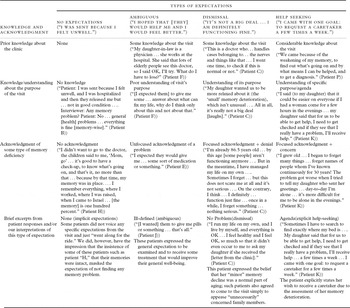
None of the visits to the memory clinics was initiated by patients: all claimed that they were encouraged to visit the clinic by their relatives (children or spouses) and/or family physicians. We identified four types of patient expectations (see Table 2). These were related to level of prior knowledge and understanding of the purpose of the visit and/or the nature of the clinic, and explicit acknowledgment or denial of the existence of a memory problem (Note: In using the term acknowledgment, we are not referring to awareness in its full connotation, but rather to Clare's (Reference Clare2004) conceptualization of awareness limited to its psychological meaning: as an explicit, verbatim expression of awareness of the memory deterioration. We do not attempt to analyze awareness in the biological sense, nor can we verify the social level of issues that patients decided not to share with us).
Typology of expectations based on prior knowledge and acknowledgment of the memory deterioration

As depicted in Table 2, patients who displayed poor knowledge/understanding of the visit's purpose (“no expectations” and “ambiguous” types) had no clear expectations relating to memory issues – possibly an implicit hope that no memory loss exists. The “ambiguous” expectation type harbored expectations regarding reassurance and advice about medical treatment and ways to improve general well-being (possibly confusing the present experience with previous clinical encounters). The third, “dismissal” type, did acknowledge some memory deterioration, and affirmed the purpose of the visit, but expressed an explicit expectation that family members would be reassured that any memory mishaps merely represented a part of “normal” aging processes. The fourth expectation type was represented by patients who knew the purpose of the visit, acknowledged their own difficulties, and expected to be offered help with the increasingly difficult management of daily activities resulting from memory decline.
Patient perspectives on consequences of non-fulfillment and fulfillment: disappointment, discontent, and satisfaction
Many patients expressed disappointment and discontent following their consultations, either due to the absence of tangible solutions (outcome) or due to the physician's style of interaction and communication with the patient and the companion during the encounter (process); both types of such reactions are presented below.
Disappointment regarding outcome
Some patients felt that the visit to the clinic had not provided them with any special assistance, despite investment of time and energy:
I did not want to go to the doctor. The children said to me, “Mom, go,” but for what? . . . The visit was just a waste of time, a waste of my nerves . . . now I feel that only after the visit I was confused. (Patient H)
The physician asked me all kinds of questions about what I remember and . . . I don't remember now exactly what . . . I left without receiving any special help, but slowly, I see that with time, I'm getting better. (Patient B)
This encounter was perceived as an annoying, useless experience, especially because no explicit outcome/gain was achieved.
The frustration of other patients was a reaction to non-activation of solutions that they remembered having been discussed during the encounter (e.g. approving the request for a paid caregiver). One patient said: “Nothing has changed, that's what bothers me. They promised me a caregiver for a few hours a week. I haven't actually received any help from any place” (Patient K). Patients were frequently unaware of the need for formal requests by the patient's family, and for subsequent approval by official agencies such as the National Insurance Institute, to implement management recommendations. Many were unaware of the content of the letter provided by the clinic that was intended to facilitate assistance to receive such help.
Patients’ disappointment relating to communication content and style
Some patients expressed feelings of disempowerment in reaction to the physicians’ communication styles. They expressed disappointment when the physician spoke directly to their companion, and not to them. They believed that this communication style represented the physicians’ assumptions that they (the patients) lacked the competence required for participation in these discussions:
I don't know why she spoke [only] with my daughter. I would have understood everything; she could have said everything that she said to my daughter. I told her I'm not stupid. I have knowledge, thank goodness. I didn't go there uneducated. She could have spoken to me directly; why with someone else? I asked her, “Is there a pill I have to take? Do I have any problem?” She said to me, “I'll talk with your daughter . . . . Elderly persons forget.” I told her, “I'm not stupid.” (Patient H)
These patients were offended by the professionals’ tendency to communicate directly with the family companion regarding treatment decisions, thus causing the patient to feel offended and patronized. (For example, this was a patient with “no expectations,” who did not acknowledge her memory deterioration, and therefore did not understand the decision not to communicate directly with her.)
Such feelings of disappointment and exclusion are sometimes the result of a discrepancy between their expectations to receive adequate direct information during the visit, and the fact that the clinic provides written information that is not given directly to the patient:
I expected them to give me some . . . answer [as to] how I can get my life in order . . . but they didn't say a thing. They wrote and wrote and wrote and then said, “OK ma'am, we'll be in touch.” But we're not in touch. Not anything. (Patient F)
Satisfaction from respectful and courteous treatment
Patients who expressed some level of acknowledgment of their memory deterioration felt that they were treated well by the physician and other clinic staff members and accepted the fact that the physician did not transmit all of the information to them:
Well . . . the doctor was very nice. She asked me all kinds of questions . . . it was easy to get there and we barely waited. . . . The doctor promised me a caretaker . . . she treated me all right. She received us nicely. She spoke more with my daughter . . . because I forget a lot. (Patient K)
[Everything was] as it should be. They checked what . . . it seems that they know that [it] shows something . . . and they asked questions based on which they can assign [a diagnosis]. And of course, there was nothing intimate or that made me uncomfortable. (Patient C)
These patients focused on various expressions of politeness, of a creation of a pleasant environment, and the sense that the doctor knew what she was doing (being a professional, she “knew what to ask”). The second quotation emphasizes the importance of preserving her dignity by not asking intimate questions that would make her feel uncomfortable. These types of answers were given by patients who acknowledged some memory deterioration and, therefore, may have been more tolerant of the professional communication with their companions.
A possible source of general feelings of satisfaction may be that none of the patients were aware that a diagnosis had been disclosed, nor did they have any knowledge of its nature: “I don't have any diagnosis other than old age.” (Patient K)
Feelings of disappointment related to awareness of a serious clinical condition
Two patients, who came with some acknowledgment of their memory deficiency, expressed distress due to heightened awareness of their decline in memory function, as a result of the diagnostic assessment, and the physicians’ reactions:
I was disappointed that my situation is not that great . . . . It was proven that I was justifiably worried . . . the doctor just interrogated me, but was unable to encourage or support me in this . . . I needed the diagnosis; now I need the support. I am not sure she is the one who should provide it . . . but I need it. (Patient P)
These patients came to the clinic with an explicit fear of a diagnosis of Alzheimer's disease (derived from personal experience with it). Thus, when the memory problems were “on the table” during the assessment process, their fear increased leading them to feel the need for encouragement.
Companion expectations
Analysis of the data showed that companions’ expectations were more focused than those of the patients’. All of the companions interviewed expressed concerns that the patient had some kind of memory problem. Some wished to confirm the legitimacy and pertinence of their concerns, whereas others hoped to disprove them. All companions hoped to obtain objective information, support, and practical advice from the physicians and clinic staff members.
Validation of their relative's memory deterioration
More than half of the companions hoped to receive a “stamp of approval,” reassuring them that their suspicions regarding their relative's cognitive impairment were accurate:
I said to myself, Oh my, what if, God forbid, they tell me I'm crazy [laughs] and that I imagined all of this. . . . I just wanted to prove [to the whole family] that I was right and they would help me. . . . I just needed them to tell me, “You were right.” (Companion M)
I didn't have any expectations for any . . . creative solutions but it was very important for me to receive an official diagnosis. (Companion B)
These companions expected to receive an official diagnosis. They tended to be more deeply involved in the patients’ daily care and often believed that receiving the official diagnosis would provide them with the necessary credentials to apply for subsidized assistance from official agencies and from their family members. Six companions, however, hoped that their suspicions would be proven wrong.
Hope that it would not be Alzheimer's
These companions had noted the memory deterioration and were cognizant of its serious nature and of the possible diagnosis of Alzheimer's. They did, however, hope to hear that the patient's condition was not as bad as they feared, or that the diagnosis would be other than Alzheimer's disease:
I thought [the physician] would be able to check and negate this thing . . . hoped that [the physician] would deny that there is any problem . . . because to forget something once is something marginal but it doesn't necessarily mean that it's that threatening disease . . . . It's very sad to see this, but it doesn't mean that it's . . . . It could also be brain cancer . . . . So I really hoped that they would not give the diagnosis that they gave. (Companion A)
This companion, who acknowledges the problem, expresses the hope that a physician would dismiss the seriousness of the memory lapses. The expectations fluctuate between contemplating a variety of serious explanations for this situation and hoping for an exclusion of Alzheimer's diagnosis, with stated preference of finding brain cancer. This was also concordant with the decision to avoid naming the disease:
Who expects it to be the disease? I expected them to say “it's old age” and such . . . a person who reaches that age, more or less . . . young people also forget. A woman as old as she is . . . so she forgets. (Companion I)
Expectations for solutions and assistance (help seeking)
Companions who expected that a diagnosis would be disclosed also expected to receive recommendations offering tangible solutions such as medications, advice regarding applications for long-term care allowances, and assistance in the provision of home care:
My goal was to get help for more hours and eventually for an aid to accompany [the patient] 24 hours [a day], a foreign worker. (Companion M)
There were two goals [for coming to the visit]: one to check whether it's possible to delay the process . . . [and] I also wanted a referral to the National Insurance Institute for a Long Term Care Allowance. (Companion B)
Such expectations were usually based on more specific knowledge as to the type of help they needed or on preconceived notions about the type of assistance the clinic could provide.
General advice to help their relative
Other companions expressed general expectations to receive tips and tools that would help them care for their relatives, using statements such as, “I understand that this is a chronic disease and there's no cure, but at least they can calm her down” (Companion K), or “Something that could slow down the process” (Companion F).
Companions came in specifically seeking information, guidance, and a source of support and advice, both for their relatives and for themselves:
I expected to find solutions or something . . . tangible . . . I would have wanted . . . to hear more about the disease and afterward about practical [ways of] coping . . . to speak with someone who would understand what I need in dealing with this on a daily basis . . . what do I need to look at, what do I need to see and what not to see, what to do and what not to do . . . you need to talk to the family and provide support for the family as well. (Companion H)
I expected them to diagnose and see and help, and especially to give me advice. (Companion D)
Family members hoped to receive the diagnosis, gain a better understanding of the disease, and receive guidance for their role in caring for the patient and coping with the unknown. They wanted an explicit explanation of what they can and should do: How should they act? To whom should they turn? Where could they receive specific support, as family members? They seemed to assume the role of caregiver, with its accompanying burden, and asked for continued professional counseling, guidance, and support for themselves.
Some expressed the wish for a follow-up conversation or consultation, to deepen their understanding of the diagnosis and of the best way to perform their role as companion/caregiver:
I would have expected afterward . . . a good conversation . . . with the doctor or the clinic . . . even for them to say . . . come back in a week or on another day . . . and we'll sit down and explain the meaning of everything we wrote. (Companion F)
I hoped that they would guide us more for the future, toward a better situation, more consistent guidance. (Companion J)
The companions expressed the need for an additional discussion and continuing assistance focused on helping them understand and deal with the diagnosis on a daily basis.
Companion perspectives on fulfillment of expectations after the diagnosis encounter: sources of disappointment or satisfaction
Half of the companions expressed feelings of frustration with the outcome of the consultation, which they perceived as ineffective in meeting their needs.
Disappointment from lack of tangible solutions
Companions expressed the feeling that nothing had changed following the encounter, because no real solutions had been offered:
I felt that I left the same as how I came in . . . I felt that, on one hand, I had with whom to share my journey, my doubts, and my frustrations that I have with my mother and father . . . but I felt that just as I came in, that's how I went out . . . . If I expected to find solutions or something tangible, it was only the social worker's advice that she [the patient] should volunteer. (Companion H)
This companion expressed frustration from the lack of solutions and guidance that might have reduced the burden and stress associated with caring for her relative with dementia. Other companions mentioned their need for answers that would change their day-to-day experiences:
When I left, I thought that I came out with some good things . . . but . . . when I tried to apply those things, it didn't work out for me . . . I'm not sure yet that it won't work out . . . not much time has gone by, but . . . meanwhile, nothing good has come of this . . . I've begun to search elsewhere because I need answers . . . . Out of all of the encounters [the one with the social worker] I very much enjoyed . . . she creates this environment of closeness, but afterward she . . . didn't return my phone calls, nothing. (Companion F)
I went out exactly the same as I came in. What can I say? I came, I left, I had nothing, we don't have any help . . . we just went from place to place for hours, paid money, left, and that was it. No follow-up afterward . . . . There's no supervision, no guidance, no help, no direction toward anything. (Companion J)
The first companion, although initially satisfied, later expressed frustration because of her inability to utilize and implement the advice she was given in the memory clinic in her day-to-day-struggle. The second companion also expressed frustration, resulting from the gap between the efforts invested in coming to the clinic and enduring the diagnostic process, and the lack of subsequent follow-up.
Disappointment from the insufficient information provided
Another source of companions’ frustration was the feeling that they were not given a sufficiently thorough explanation during the actual encounter, or in the subsequent letter, about the disease and its implications. This lack of details left them with a sense of insecurity about how to proceed:
Interviewer: You chose not to read the [physician's] letter to [the patient]. Companion: Yes, I'm not going to tell her what she has . . . because I'm also not sure. According to the letter, I'm not sure what she has. (Companion F)
When companions felt insufficiently informed, they were hesitant to mediate and discuss the diagnosis with their relatives (the patients). Others felt unable to provide the necessary support for their relatives due to inadequate understanding:
[The doctor] was nice, but I don't know. The diagnosis they gave . . . it wasn't clear enough to me . . . to give me the tools . . . to help my husband . . . I was a bit disappointed by that. (Companion D)
More than half of the companions expressed discontent either with the meeting itself (e.g. no clear, detailed explanation of the meaning of the disease), or with the written report, or with the lack of a follow-up process that they had expected (e.g. receiving help in applying the advice given, or tailoring it to fit their needs).
Dissatisfaction with the content and communication style
Companions expressed frustration and dissatisfaction with the manner of treatment by clinic staff:
I was annoyed that the doctor thought that she [the patient] didn't know anything . . . she does know . . . [I was annoyed] at myself, at my mother, and at the doctor. What did the doctor think? My mother wasn't doing it on purpose. (Companion M)
[The doctor] was not especially nice, let's just say, you can see that what interests her is . . . the business . . . and not people. . . . She interrupted me so rudely. Am I a child? How could she speak that way. (Companion A)
These companions felt that the professionals (mainly the physicians) expressed impatience, even contempt, toward them or their family members. They complained of rude interruptions and condescension and the sense that the professionals appeared to lack the time to share information with them and allow them to ask questions.
Companions’ sources of satisfaction
Satisfaction was expressed mainly in reaction to companions’ fulfillment of the goals of the visit (e.g. solidifying a diagnosis and confirming the accuracy of their suspicions) or the feeling that they were able to share their own difficulties and frustrations, and were understood and supported.
Receiving the “stamp of approval”
Some companions thought that the process of diagnosing and naming the disease helped them upgrade their level of competency in treating and dealing with the patient's situation:
I wasn't very surprised because I thought that's what she has. She hadn't been diagnosed, but the first thing I thought was, “I was right.” She really is ill and we need to care for her. We can't leave her alone; we have to find her another arrangement. (Companion K)
In terms of what I should do, I already knew ahead of time, but I did get a stamp [of approval] . . . a sort of verification of what I need to do. (Companion B)
I was a bit sad, but on the other hand, pleased. I am sad that she has the disease, but on the other hand, happy that I am going to get the help I deserve. (Companion M)
The verification of the patient's state and requirements for care seemed to signal a green light to the companions to act upon these needs. These companions felt recruited to their mission of caring for their family member.
Sympathetic listening
Others felt that they finally had an arena where they could openly vent their feelings about the hardships of caring for their afflicted loved one, and felt that having their difficulties validated and their voices heard was comforting and important:
For me, personally, the fact that they actually gave me an opportunity to speak . . . listened to me, that they understood and gave me the reassurance that the way I'm dealing with all of this, and with all my difficulty, is OK, and the way they understood how it is with aging parents, all of that was very good for me. It renewed my strength and gave me a greater [sense of] understanding . . . I was rather pleased with my conversation with the social worker . . . there was a sympathetic ear, there was understanding of things. (Companion H)
I received positive reinforcement that what I'm doing is OK, as well as what the next step is and how I should take action. (Companion K)
When struggles and efforts were recognized and acknowledged, companions felt reassured and empowered.
Discussion
A critical emerging issue in current healthcare delivery research is the assessment of quality from consumer perspectives (O'Connor et al., Reference O'Connor, Trinh and Shewchuk2000). The present study focused on collecting and mapping these perspectives from the two groups of consumers within the triad of participants – patients and companions – in a specialist memory clinic encounter. Information regarding patient and companion expectations, and subsequent satisfaction and/or discontent is critical for creating tailored, person-centered communication, and hopefully, enhancing the quality of care.
Van Hout et al. (Reference Van Hout, Vernooij-Dassen, Hoefnagels and Grol2001) identified five key issues that can grade the quality of care in memory clinic encounters: communication of the results, provision of diagnostic information, attitudes of the clinicians, usefulness of the medical assessment, and information and advice to involved family members. Newer quality improvement indicators have elaborated on these issues and paid explicit attention to communicating specific information to patients and companions (Fisk et al., Reference Fisk, Beattie, Donnelly, Byszewski and Molnar2007; Draskovic et al., Reference Draskovic, Vernooij-Dassen, Verhey, Scheltens and Rikkert2008). All of these “quality markers” emphasize the importance of appropriate communication and the need for adapting methods of dispensing information to meet the individual needs and preferences of patients and their companions (Vernooij-Dassen et al., Reference Vernooij-Dassen, Van Hout, Hund, Hoefnagels and Grol2003). Our findings identify two main challenges that complicate this task: the first derives from the multi-participant nature of the encounter, and the second from the nature and severity of the disease itself.
Our results indicate a sharp contrast between the expectations of patients and those of their companions. Whereas most patients reported having no expectations (nor even prior knowledge) about the upcoming diagnostic disclosure encounter, companions reported very specific and concrete expectations (such as receiving a diagnosis, or real-life advice and/or material assistance for the patients and themselves). This discrepancy between the two components of the triad correlates well with the second “marker,” which is the nature and severity of the memory problem that, frequently, may not be recognized or acknowledged by the patient. Patients indicated that they were referred to the clinic by either family companions or their primary care physician, without being able to express a clear understanding as to the reason for referral. Most patients interviewed actually denied the need for this particular visit and some stated their desire to prove that their senders were mistaken. This contrasted sharply with the perceptions and “agenda” of the companions, who expressed clear awareness of their relatives’ difficulties, including the possibility of some sort of memory deterioration and the need for their own vindication and support. The discordance between the expectations of the two parties created an obstacle to the bridging of the gap between the participants and to satisfying their diverse needs within a single encounter. Such situations may leave one or more participants hurt and disappointed.
Furthermore, our results show a discrepancy in the expectations from the encounter between both groups of participants. A possible explanation for this lies in the unique character of these encounters. As described previously, our study was conducted within the framework of highly specialized (tertiary) memory clinics. As such, the observed encounters served as the first opportunity that patients and their relatives had for interaction and acquaintance with the specialist physicians and the unique nature of the process within the memory clinic, which differs radically from the system to which they may be accustomed in their day-to-day healthcare interactions. Studies in other areas have shown higher levels of discontent in patients who had no previous contact with a doctor, or whose previous medical contact occurred more than 12 months beforehand (Zebiene et al., Reference Zebiene, Svab, Kairys, Dotsenko, Radic and Miholic2008). Discrepancies due to lack of previous contact may therefore require special investments of time and effort, to better tailor communication to meet these expectations and discuss them.
Studies assessing medical encounters in other clinical settings have indicated that awareness of and ability to cope with the kind of discrepancies described above is of utmost importance, and that the fulfillment of expectations is associated with higher levels of satisfaction following medical encounters (Kenten et al., Reference Kenten, Bowling, Lambert, Howe and Rowe2010), and also with superior adherence and outcomes (Bowling, Reference Bowling, Bowling and Ebrahim2005; George and Robinson, Reference George and Robinson2010; Hayes and Naegeli, Reference Hayes and Naegeli2010). Our study suggests that these considerations are applicable to patients with dementia.
The results from the companion group demonstrate that failure to meet expectations of healthcare consumers leads to negative reactions and subsequent expressions of disappointment, frustration, and insinuations of futility of the process and its outcomes. From the companions’ perspectives, the sense of failure expressed is related to a lack of content received. Recent studies have identified new quality improvement indicators that include explicit content needed, including naming of the diagnosis, the degree of its certainty, and advice on coping (Draskovic et al., Reference Draskovic, Vernooij-Dassen, Verhey, Scheltens and Rikkert2008), indicating the need to provide this information. In addition to issues of content, some patients and companions were disappointed by the manner of communication within the encounter. Although the subject of respectful communication and involvement in care were not mentioned as specific expectations, their absence was felt and expressed. Such experiences of disappointment are unfortunate, as they could potentially discourage persons with suspected dementia and their companions from seeking the continuing help of specialists for diagnosis and treatment. As a timely referral to a specialist memory clinic correlates well with a satisfactory confirmation process by professionals, as well as increased willingness of patients and their companions to seek help (Werner, Reference Werner2004), early initiation of the specialized diagnostic process is warranted to enhance satisfaction among patients with suspected cognitive impairment.
Several strategies may be suggested for upgrading this process. For example, the physician (or other healthcare professional in the clinic) could briefly (prior to commencing the formal testing process) explore patients’ and companions’ pre-diagnosis expectations, as well as their acknowledgment of the objectives of the consultation, and acknowledgment/denial of memory deterioration (Samuels, Reference Samuels2004). Alternatively, an effort should be made to encourage realistic expectations, to reduce uncertainty and stress at the outset, and to proceed with special attention to appropriate timing of the elements within the process. This process is related to the need to set a prospective collaborative agenda for specialist consultations that involve cognitive evaluation, diagnostic disclosure, and management planning. Consistent with suggestions made by Silverman and Draper (Reference Silverman and Draper1995), such an agenda should clarify what can and cannot be achieved during the visit, and what requires follow-up meetings and involvement of other professionals (such as their primary care professionals). The continuing role of the primary care physician is important.
Some patients expressed concern when they felt that the physician, in directing communication toward the companion, had ignored them. These perceptions, although subjective, are supported by objective data. Verbal interactions within triads of patients with dementia, along with their companions and physicians, are usually dominated by the physicians (Karnieli-Miller et al., Reference Karnieli-Miller, Werner and Eidelman2011; Sakai and Carpenter, Reference Sakai and Carpenter2011), who tend to address and involve companions more than patients (Werner et al., Reference Werner, Gafni and Kitai2004; Reference Werner, Karnieli-Miller, Adler and Eidelman2010). This is prominent in the phases of diagnostic disclosure, treatment decisions, and recommendations (Karnieli-Miller et al., Reference Karnieli-Miller, Werner and Eidelman2011).
In contrast to the patients’ frustration, companions’ feelings of disappointment appeared to relate to the failure of the process to provide practical solutions or a general sense of empathy and support. These findings contrast with those of a recent survey assessing the process and organizational characteristics of memory clinics in Israel (Werner et al., Reference Werner, Goldstein and Heinik2009), indicating that in the eyes of participants, providing support to family members was the second most important outcome of the cognitive assessment process (after providing pharmacological therapy). We may thus assume that it is not the lack of awareness on the part of professionals regarding the importance of the issues that provoke the disappointment in companions, but rather the failure to transmit this support and understanding through clear messages and direct communication. Clear communication, presenting alternative solutions, and displaying empathy have been shown to be key components of any framework for effectively breaking bad news to cancer patients (Kaplan, Reference Kaplan2010); it seems reasonable to apply these elements in diagnostic disclosures to patients with dementia and their families.
An additional source of frustration reported by the companions might be related to changes in healthcare research and practice during the past few decades. Refinement and enhanced accuracy of diagnostic methods has resulted in rapid determination of diagnosis in dementia (Feldman et al., Reference Feldman2008). Parallel to this, economic and administrative realities have mandated time constraints on the processes within memory clinics (Werner et al., Reference Werner, Goldstein and Heinik2009). The net result has been the need to devote more time to document the findings and drafting summary letters, thus leaving less time for face-to-face triadic interaction (this may explain why some of the companions left with feelings that questions went unanswered and empathy was lacking).
Perhaps another way to better understand the feelings of dissatisfaction and disappointment (as expressed by many patients and companions in this study) is by gaining insight into the perspective of the third participant in the memory clinic encounter, the physician. Learning about the physicians’ perceptions and about their role and realm of capabilities within these encounters, as well as identifying what they expect to receive from and provide to the other participants (the patient and the companion), may shed light on the potential discrepancies between expectation and capability; for example, physicians may not always be able to provide an explicit diagnosis in the first encounter, or guide the patient and companion through the bureaucratic complexities involved in obtaining assistance from governmental and other agencies to whose support they are legally entitled. We have previously studied the attitudes and perceptions of physicians (Karnieli-Miller et al., Reference Karnieli-Miller, Werner, Aharon-Peretz and Eidelman2007), and further in-depth studies in this area should provide the additional insight needed to improve care for patients with dementia.
Last, but not least, findings from this study underscore the important role of primary care physicians in the process of dementia diagnosis. Most of the patients who were referred were unaware of the meaning of their visit to the memory clinic and what to expect. Earlier studies have shown that in case of referrals by others, patients and companions do not necessarily know or are told about the reason for referral and for what they will be tested (Willner, Reference Willner2003; Williams, Reference Williams2004). This finding emphasizes the primary care physicians’ essential role in preparing for the visit. Primary care physicians can help by laying the groundwork and preparing patients and companions for their visit, including advising who should come, what is to be expected, what may be found, and explaining that this is merely an initial step toward finding the best care for them that will subsequently continue with primary care physician and memory clinic collaboration (where possible). This process may help them prepare for difficult disclosures and minimize disappointment together with an understanding that some of the information will be given at a later time, when it can be better comprehended (Lecouturier et al., Reference Lecouturier2008). Primary care physicians can play a pivotal role in the initial detection of the onset of dementia, and subsequently in its diagnostic management, treatment, and follow-up (Villars et al., Reference Villars2010). Therefore, upgrading their role in these processes, including preparation for the memory clinic visit and subsequent follow-up, may indeed become the anchor for enhanced communication between the healthcare system and the ever-expanding population of patients with dementia in the community, thereby facilitating continuity of care, support, and guidance.
Limitations of the study
Several potential limitations should be noted. First, although the number of patients and companions allowed us to reach theoretical saturation, the inclusion of a larger number of physicians and additional memory clinics would have reduced potential bias related to limited consultation styles. Future studies of patients managed by a larger number of physicians and memory clinics and a greater diversity of medical disciplines would facilitate understanding of a greater variety of protocols, practices, and management styles (Van Hout et al., Reference Van Hout, Vernooij-Dassen, Hoefnagels and Grol2001).
Furthermore, the interval of two weeks between the observations of the disclosure encounters and the in-depth interviews may have skewed their memories of their prior expectations and their perceptions regarding subsequent fulfillment or non-fulfillment. Although an earlier review indicates that this type of measurement process is sufficient for assessing unfulfilled expectations (Kravitz, Reference Kravitz2001), we still recommend caution regarding the possibility that the perceptions of prior expectations might have been affected by what was actually experienced during the encounter. Future studies might consider evaluating pre-assessment (pre-diagnosis) expectations immediately prior to the actual diagnosis encounter (Moniz-Cook et al., Reference Moniz-Cook, Manthorpe, Carr, Gibson and Vernooij-Dassen2006). Future studies that focus on deepening our insights and skills in agenda-setting that include an evaluation of expectations are warranted.
Despite these limitations, this research is, to the best of our knowledge, the first to employ an in-depth, qualitative approach to study patient and companion expectations regarding the process of providing a diagnosis of dementia, and the wide range of perceptions experienced during and after the encounter.
In sum, what emerged from our in-depth interviews with persons with dementia and their companions is a wide spectrum of expectations regarding the entire process, and especially the summative disclosure encounter. The views of the companions and the patients differed, as did their expectations regarding various aspects of the encounter. These findings underscore the complexity of communicating a diagnosis of dementia clearly and effectively to all parties involved in the triadic process.
Homogenous approaches to communication in this area might be inappropriate and might result in discontent and frustration. Therefore, physicians and other healthcare professionals in memory clinics ought to be attentive to the diversity of needs and preferences of patients and companions. Inquiring about patient and companion expectations prior to diagnosis, followed by a post-encounter evaluation soon thereafter, to assess whether or not expectations were met, should be an integral part of every diagnosis disclosure process. In addition, a follow-up phone call by memory clinic professionals to the companion, as well as ongoing contact with the primary care physician, may be instrumental for ensuring mutual understanding and implementation of recommended actions. Subtle shifts in communicational approaches could go a long way toward enhancing the efficacy of the memory clinic consultation.
Conflict of interest
None.
Description of authors’ roles
O. Karnieli-Miller and P. Werner contributed equally to formulating the research questions, designing the study, carrying it out, analyzing the data, and writing this paper; J. Aharon-Peretz and G. Sinoff were involved in the data collection supervision, and reviewing and commenting on the paper; and S. Eidelman was involved in formulating the research questions, designing the study, and writing the paper.
Acknowledgments
This work was supported by a research grant from the Israel Science Foundation (ISF 371/08). The authors thank Sarah Weinberg for her contributions in analyzing the data and editing this paper. She received financial compensation for her contributions.