











1. Introduction
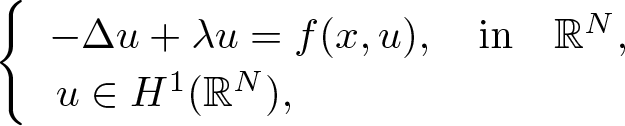
In this article, we consider the following class of non-linear elliptic equations
 \begin{equation}
\left\{
\begin{array}{l}
-\Delta u+\lambda u=f(x,u), \quad \text{in} \quad \mathbb{R}^N\\
\, u\in H^{1}(\mathbb{R}^N),\\
\end{array}
\right.
\end{equation}
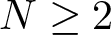
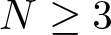
where  $N\geq 2$, λ > 0 are constants. The non-linearity f is a function involving variable exponents and f has an exponential subcritical growth when N = 2, and f has subcritical and critical growth when
 $N\geq3$. More precisely, we will consider the following cases:
Type 1: The subcritical case
 \begin{equation*}f(x,t)=|t|^{p(\varepsilon x)-2}t, \quad \forall (x,t) \in \mathbb{R}^N \times \mathbb{R}, \quad N\geq3, \end{equation*}
Type 2: The critical case
 \begin{equation*}f(x,t)=\mu|t|^{p(\varepsilon x)-2}t+|t|^{2^*-2}t, \quad \forall (x,t) \in \mathbb{R}^N \times \mathbb{R},\quad N\geq3, \end{equation*}
Type 3: The exponential subcritical growth case
 \begin{equation*} f(x,t)=\mu|t|^{p(\varepsilon x)-2}te^{\alpha|t|^\beta}\, \quad \forall (x,t) \in \mathbb{R}^2 \times \mathbb{R}, \end{equation*}
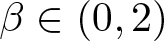
where parameter ɛ > 0, α > 0,  $\beta \in (0,2)$ and
 $2^*=\frac{2N}{N-2}$ if
 $N \geq 3$ and
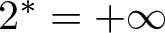
 $2^*=+\infty$ if N = 2. Related to the function
 $p:\mathbb{R}^{N}\rightarrow \mathbb{R}$, we assume that it is a continuous function with
 $p_{\max}, p_{\min} \in (2,2^*)$, where
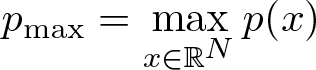
 $p_{\max}=\displaystyle \max_{x \in \mathbb{R}^N}p(x)$ and
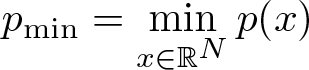
 $p_{\min}=\displaystyle \min_{x \in \mathbb{R}^N}p(x)$.
Partial differential equations involving the variable exponent Lebesgue space  $L^{p(x)}(\mathbb{R}^N)$ arise, for instance, as a mathematical model for problems involving electrorheological fluids and image restorations [Reference Chambolle and Lions19, Reference Chen, Levine and Rao20, Reference Diening, Harjulehto, Hästö and Růžička23, Reference Růžička41] and their references. This explains the intense research on this subject in the last decades. Regarding to the application of variational methods in order to solve p(x)-Laplacian problems, many researches were already done, see for example [Reference Alves and Ferreira5, Reference Alves and Rădulescu7, Reference Bonder, Saintier and Silva12, Reference Fan and Zhao27, Reference Ji, Wang and Wu33, Reference Mihăilescu and Rădulescu38] and references therein.
In a recent and interesting work [Reference Ji, Wang and Wu33], Ji, Wang and Wu studied the existence and concentration of a least energy solution (positive or sign changing) for the problem  $(P_\varepsilon)$ when the non-linearity f is of the Type 1. In such case, the
 $(P_\varepsilon)$ can be written of the form
 \begin{equation}
\left\{
\begin{array}{l}
-\Delta u+\lambda u=|u|^{p(\varepsilon x)-2}u, \quad \text{in} \quad \mathbb{R}^N,\\
u\in H^{1}(\mathbb{R}^N),\\
\end{array}
\right.
\end{equation}
where the function p(x) satisfies the following set of assumptions:
 $(\mathbf{H}_\mathbf{1}):$
 $2 \lt p_{\min}:=\min\limits_{x\in\mathbb{R}^{N}}p(x)\leq p(x)\leq p_{\max}=:\max\limits_{x\in\mathbb{R}^{N}}p(x) \lt 2^{*}$;
 $(\mathbf{H}_\mathbf{2}):$
 $\lim\limits_{\vert x \vert \rightarrow \infty}p(x)=p_{\infty} \in(p_{\min},p_{\max})$.
They found that both the existence and the concentration of a least energy solution (positive or sign changing) depend on a correlated interplay between λ and the global behaviour of p(x). Roughly speaking, for small λ > 0, the concentration of least energy solutions (positive or sign changing) is at the global minimum point of p(x), and for large λ > 0, the concentration of least energy solutions (positive or sign changing) is at the global maximum point of p(x). This very wonderful result is obtained by the quite delicately monotonicity of the ground state energy with respect to  $p\in(2,2^{*})$ for the following classical non-linear scalar field equation
 \begin{equation}
\left\{
\begin{array}{l}
-\Delta u + \lambda u = \vert u \vert^{p - 2}u \,\,\, \text{in}, \,\,\, \mathbb{R}^{N},\\
u \in H^{1}(\mathbb{R}^{N}).
\end{array}
\right.
\end{equation}
We recall that, for  $p\in(2,2^{*})$ with
 $2^{*}=\frac{2N}{N-2}$, problem (P) has a ground state solution
 $U_{p,\lambda}$ in
 $H^{1}(\mathbb{R}^{N})$, see Berestycki and Lions [Reference Berestycki and Lions9] and the references therein. By the famous Gidas–Ni–Nirenberg’s work in [Reference Gidas, Ni and Nirenberg29] and the well-known Kwong’s uniqueness theorem in [Reference Kwong35], up to translations,
 $U_{p,\lambda}$ is unique and radially symmetric with respect to some x 0 and strictly decreasing in
 $r=|x-x_0|$. Therefore, without loss of generality, we assume
 $U_{p,\lambda}(0)=\max\limits_{x\in \mathbb{R}^{N}}U_{p,\lambda}(x)$. A key lemma in the approach explored in [Reference Ji, Wang and Wu33] is the following:
Lemma 1.1. see [Reference Ji, Wang and Wu33]
For each  $p\in(2,2^{*})$ and λ > 0, denote by
 $m(p,\lambda)$ ground state energy to equation (P) and consider the real numbers below
 \begin{equation}
\lambda_{0}(p):=(U_{p,1}(0))^{2-p}~~\text{and}~~\lambda_{1}(p):=\frac{2N-(N-2)p}{2p}e^{\frac{p-2}{p}}.
\end{equation}
Then, the following statements hold:
(i) If
 $0 \lt \lambda \lt \lambda_{0}(p)$, then
$m(q,\lambda)$ is increasing for
$q\in(2,p)$.
(ii) If
$\lambda \gt \lambda_{1}(p)$, then
$m(q,\lambda)$ is decreasing for
$q\in(p,2^{*})$. In particular, if
$\lambda \geq 1$, then
$m(q,\lambda)$ is decreasing for
$q\in(2,2^{*})$.


The lemma above was used to prove the following theorems:
Theorem 1.2. see [Reference Ji, Wang and Wu33]
Assume that the conditions  $(\mathbf{H}_\mathbf{1})$ and
 $(\mathbf{H}_\mathbf{2})$ hold. If either
 $\lambda\in(0,\lambda_{0}(p_{\max}))$ or
 $\lambda\in(\lambda_{1}(p_{\min}),+\infty)$, then for ɛ > 0 sufficiently small, (1.1) has a positive least energy solution uɛ, satisfying
 $u_\varepsilon\leq Ce^{-\frac{(1-\delta)\sqrt{\lambda}
|x-y_{\varepsilon}|}{\varepsilon}}$ for all
 $x\in \mathbb{R}^{N}$ with some C > 0 and
 $\delta\in (0, 1)$, such that
 $u_\varepsilon(\varepsilon x+y_{\varepsilon})\rightarrow u_{0}(x)$ strongly in
 $H^{1}(\mathbb{R}^{N})$ and
 $y_{\varepsilon}\rightarrow x_{0}$ as
 $\varepsilon\rightarrow 0$ up to a subsequence, where yɛ is the maximum point of uɛ. Moreover,
(1) If
$\lambda\in(0,\lambda_{0}(p_{\max}))$, then
$p(x_0)=p_{\min}$ and u 0 is a ground state of (P) with
$p=p_{\min}$;(2) If
$\lambda\in(\lambda_{1}(p_{\min}), +\infty)$, then
$p(x_0)=p_{\max}$ and u 0 is a ground state of (P) with
$p=p_{\max}$;


where  $p_{\max}$ and
 $p=p_{\min}$ are introduced above.
Theorem 1.3. see [Reference Ji, Wang and Wu33]
Assume that the conditions  $(\mathbf{H}_\mathbf{1})$ and
 $(\mathbf{H}_\mathbf{2})$ hold. If either
 $\lambda\in(0,\lambda_{0}(p_{\max}))$ or
 $\lambda\in(\lambda_{1}(p_{\min}),+\infty)$, then for ɛ > 0 sufficiently small, (1.1) has a least energy sign-changing least energy solution uɛ, satisfying
 $v^{\pm}_\varepsilon\leq Ce^{-\frac{(1-\delta)\sqrt{\lambda}
|x-y^{\pm}_{\varepsilon}|}{\varepsilon}}$ for all
 $x\in \mathbb{R}^{N}$ with some C > 0 and
 $\delta\in (0, 1)$, such that
 $\frac{|y^{+}_{\varepsilon}-y^{-}_{\varepsilon}|}{\varepsilon}\rightarrow +\infty$,
 $v^{\pm}_\varepsilon(\varepsilon x+y^{\pm}_{\varepsilon})\rightarrow v^{\pm}_{0}(x)$ strongly in
 $H^{1}(\mathbb{R}^{N})$ and
 $y^{\pm}_{\varepsilon}\rightarrow x^{\pm}_{0}$ as
 $\varepsilon\rightarrow 0$ up to a subsequence, where
 $y^{\pm}_{\varepsilon}$ is, respectively, the maximum point of
 $v^{\pm}_\varepsilon$ with
 $v^{\pm}_\varepsilon=\max \{\pm v_{\varepsilon},0\}$. Moreover,
(1) If
$\lambda\in(0,\lambda_{0}(p_{\max}))$, then
$p(x^{\pm}_0)=p_{\min}$ and
$v^{\pm}_{0}$ is a ground state of (P) with
$p=p_{\min}$;(2) If
$\lambda\in(\lambda_{1}(p_{\min}), +\infty)$, then
$p(x^{\pm}_0)=p_{\max}$ and
$v^{\pm}_{0}$ is a ground state of (P) with
$p=p_{\max}$.


Motivated by the theorems above, the following questions seem natural to us:
Question 1. Is there some relation between the numbers of maximum or minimum of function p(x) with the numbers of solutions for problem  $(P_\varepsilon)$?
Question 2. Can we consider such type of question for more special cases, such as the critical problem for  $N\geq 3$ and an exponential growth for N = 2?
These type of questions have been treated in some interesting works involving elliptic equations with constant power. In order to illustrate these problems, we would like to cite a seminal article by Cao and Noussair [Reference Cao and Noussair17], where the authors studied existence and multiplicity of positive and nodal solutions for the following problem
 \begin{equation}
\left\{
\begin{aligned}
&-\Delta u + u = h(\varepsilon x) \vert u \vert^{r - 2}u \,\,\, \text{in} \,\,\, \mathbb{R}^{N},\\
&~~u \in H^{1}(\mathbb{R}^{N}),
\end{aligned}
\right.
\end{equation}
where ɛ is a positive real parameter,  $r \in (2,2^{*})$ and h verifies the following conditions:
(h1)
$ h : \mathbb{R}^{N} \to \mathbb{R} $ is a positive continuous function with
\begin{equation*}
\lim_{\vert x \vert\rightarrow\infty} h(x) = h_{\infty},
\end{equation*}and
$0 \lt h_{\infty} \lt h(x) $ for any
$x \in\mathbb{R}^{N} $.(h2) There exist
$\ell$ points
$a_{1}, a_{2}, \ldots,a_{\ell} $ in
$\mathbb{R}^{N} $ with
$ a _{1} = 0 $, such that
\begin{equation*}
1 = h(a_{i}) = \max_{\mathbb{R}^{N}}h(x), \,\text{for }1 \leq i \leq\ell .
\end{equation*}


By using variational methods, Cao and Noussair were able to show the existence of at least  $\ell$ positive solutions and
 $\ell$ nodal solutions if ɛ is small enough. Based on this work, in [Reference Cao and Chabrowski16], Cao and Chabrowski studied the multiple solutions for a non-homogeneous elliptic equation with critical non-linearity in smooth bounded domains. After, Wu in [Reference Wu45] proved the existence of at least
 $\ell$ positive solutions for the perturbed problem
 \begin{equation*}
\left\{
\begin{aligned}
&-\Delta u + u = h(\varepsilon x) \vert u \vert^{r - 2}u + \lambda g(\varepsilon x)|u|^{q-2}u \,\,\, \text{in} \,\,\, \mathbb{R}^{N},\\
&~~u \in H^{1}(\mathbb{R}^{N}),
\end{aligned}
\right.
\end{equation*}
where λ is a positive small parameter,  $q \in [1,2)$,
 $r \in (2,2^*)$ and
 $g:\mathbb{R}^N \to \mathbb{R}$ is a non-negative continuous function satisfying
 \begin{equation*}
g(x) \to 0 \quad \text{and} \quad |x| \to +\infty.
\end{equation*}
For more discussions on this type of problem, we refer the readers to the articles [Reference Cao and Chabrowski16, Reference Cao and Zhou18] for semilinear elliptic equations and [Reference Ait-Mahiout and Alves1, Reference Hsu, Lin and Hu31, Reference Hu and Tang32, Reference Lin36] for quasilinear equations. These works include both subcritical problems and critical problems.
In our opinion, the questions 1 and 2 are mathematically interesting and one of the main purposes in the present article is to explore them. To the best of the authors’ knowledge, no results are known about multiple solutions for problem (1.1) when the non-linearity has a variable exponent.
Based on the above considerations, to begin with, we study the existence and multiplicity of solutions for the subcritical problem (1.1). For this purpose, p(x) is going to be considered satisfying  $(\mathbf{H}_\mathbf{1})$,
 $(\mathbf{H}_\mathbf{2})$, and the following conditions:
 $(\mathbf{H}_\mathbf{3}):$
(i) if
$\lambda\in(0,\lambda_{0}(p_{\max}))$, there exist k points
$a_1, a_2,\ldots, a_k$ in
$\mathbb{R}^{N}$ with
$a_1=0$, such that
\begin{equation*} p(a_i)=\min\limits_{x\in\mathbb{R}^{N}}p(x)=p_{\min}, ~\text{for}~ 1\leq i\leq k. \end{equation*}(ii) if
$\lambda\in(\lambda_{1}(p_{\min}),+\infty)$, there are
$\ell$ points
$b_1, b_2,\ldots, b_{\ell}$ in
$\mathbb{R}^{N}$ with
$b_1=0$, such that
\begin{equation*} p(b_i)=\max\limits_{x\in\mathbb{R}^{N}}p(x)=p_{\max}, ~\text{for}~ 1\leq i\leq \ell.\end{equation*}


 $(\mathbf{H}_\mathbf{4}):$
 $ 0\leq p_{\max}-p_{\min}\leq \gamma(\varepsilon)$, where
 $\gamma(\varepsilon)$ is a continuous function with
 $\gamma(\varepsilon)\rightarrow 0$ as
 $\varepsilon\rightarrow 0^{+}$.
An example of a function p that satisfies the hypotheses above is the following: Given  $k,l \in \mathbb{N}$, let us consider
 $a_1,a_2,\ldots,a_k,b_1,b_2,\ldots, b_\ell \in \mathbb{R}^N$ such that
 $|a_i-a_j|=|b_i-b_j|=3$ if
 $i \not= j$ and
 $|a_i-b_j|=3$ for all
 $i \in \{1,\ldots,k\}$ and
 $j \in \{1,\ldots,\ell\}$. Now, we define
 $p:\mathbb{R}^N \to \mathbb{R}$ by
 \begin{equation*}
\tilde{p}(x)=
\left\{
\begin{array}{l}
2+3\varepsilon, \quad \text{if} \quad x \not\in \left(\displaystyle \cup_{i=1}^{k}B_1(a_i)\right) \bigcup \left(\displaystyle \cup_{j=1}^{\ell}B_1(b_j)\right), \\
\varepsilon(1-|x-b_j|)+2+3\varepsilon, \quad \text{if} \quad x \in \overline{B}_{1}(b_j), \quad \text{for some} \quad j \in \{1,\ldots,\ell\},\\
\varepsilon(|x-a_s|-1)+2+3\varepsilon, \quad \text{if} \quad x \in \overline{B}_{1}(a_s), \quad \text{for some} \quad s \in \{1,\ldots,k\}.
\end{array}
\right.
\end{equation*}
Here,  $p_{\max}=2+4\varepsilon$ and
 $p_{\min}=2+2\varepsilon$, from where it follows that
 $0 \leq p_{\max}-p_{\min}=2\varepsilon$, and
 $(\mathbf{H}_\mathbf{4})$ occurs with
 $\gamma(\varepsilon)=2\varepsilon$. Moreover, for ɛ small enough, we also have that
 $p_{\max},p_{\min} \in (2,2^*)$ and
 $\displaystyle \lim_{|x| \to \infty}p(x)=p_\infty=2+3\varepsilon \in (p_{\min},p_{\max})$ showing that
 $(\mathbf{H}_\mathbf{1})$–
 $(\mathbf{H}_\mathbf{3})$ also hold in this example.
Hereafter, we use variational methods to prove the existence and multiplicity of solutions for (1.1), where the main idea is looking for critical points of the energy functional  $I_\varepsilon: H^{1}(\mathbb{R}^N)\rightarrow \mathbb{R}$ given by
 \begin{equation}
I_\varepsilon(u)=\frac{1}{2}\int_{\mathbb{R}^N} (|\nabla u|^{2}+\lambda u^{2})\,dx-
\int_{\mathbb{R}^N}\frac{1}{p(\varepsilon x)}|u|^{p(\varepsilon x)}\,dx.
\end{equation}
Define the variable exponent Lebesgue space  $L^{p(\varepsilon x)}(\mathbb{R}^N)$ to be
 \begin{equation*}
L^{p(\varepsilon x)}(\mathbb{R}^N)=\left\{u:\mathbb{R}^N\mapsto \mathbb{R}~\text{is measurable}~\Big{|}~
\int_{\mathbb{R}^N}|u|^{p(\varepsilon x)}\,dx \lt +\infty \right\}
\end{equation*}
with the Luxembourg norm given by
 \begin{equation*}
\|u\|_{p(\varepsilon x)}=\inf\left\{\varrho~~ \Big{|}~ \int_{\mathbb{R}^N}\left|
\frac{u}{\varrho}\right|^{p(\varepsilon x)}\,dx \leq 1 \right\}.
\end{equation*}
Then, it follows from [Reference Fan26, proposition 2.1] that  $L^{p(\varepsilon x)}(\mathbb{R}^N)$ is a separable and reflexive Banach space under the assumption
 $(\mathbf{H}_\mathbf{1})$. Moreover, by
 $(\mathbf{H}_\mathbf{1})$,
 \begin{equation}
\int_{\mathbb{R}^N}|u|^{p(\varepsilon x)}\,dx \leq \int_{\mathbb{R}^N}(|u|^{p_{\min}}+|u|^{p_{\max}})\,dx.
\end{equation}
Therefore, the standard Sobolev space  $H^{1}(\mathbb{R}^N)$ is continuously embedded into
 $L^{p(\varepsilon x)}(\mathbb{R}^N)$. This, combined with [Reference Fan26, proposition 2.4], does imply that
 $I_\varepsilon \in C^{1}(H^{1}(\mathbb{R}^N), \mathbb{R})$ with
 \begin{equation*}
\langle I_\varepsilon'(u),v \rangle=\int_{\mathbb{R}^N} \nabla u \nabla v\, dx+\int_{\mathbb{R}^N} \lambda uv\,dx-
\int_{\mathbb{R}^N} |u|^{p(\varepsilon x)-2}uv\,dx, \quad \forall u,v \in H^{1}(\mathbb{R}^N).
\end{equation*}
Hence, critical points of Iɛ are precisely the weak solutions of (1.1).
Our first part of the main results can be stated as follows.
Theorem 1.4. Assume that  $\lambda\in(0,\lambda_{0}(p_{\max}))$ and the conditions
 $(\mathbf{H}_\mathbf{1})$,
 $(\mathbf{H}_\mathbf{2})$,
 ${\bf (H_3)}$-
 ${(i)}$, and
 $(\mathbf{H}_\mathbf{4})$ hold. Then, there is
 $\varepsilon^{*} \gt 0$ such that problem (1.1) admits at least k solutions for
 $ 0 \lt \varepsilon \lt \varepsilon^{*}$.
Theorem 1.5. Assume that  $\lambda\in(\lambda_{1}(p_{\min}), +\infty)$ and the conditions
 $(\mathbf{H}_\mathbf{1})$,
 $(\mathbf{H}_\mathbf{2})$,
 ${\bf (H_3)}$-
 ${(ii)}$, and
 $(\mathbf{H}_\mathbf{4})$ hold. Then, there is
 ${\varepsilon}^{*} \gt 0$ such that problem (1.1) admits at least
 $\ell$ solutions for
 $ 0 \lt \varepsilon \lt {\varepsilon}^{*} $.
Remark 1. It is worth pointing out that theorems 1.4 and 1.5 are quite different from that of the well-studied equation  $(1.3)$ whose non-linearity has a constant exponent, in the sense that the number of solutions always depends on the number of the global maximum point of h. However, in the present article, the number of solutions of (1.1) depends on the number of the global minimum point of p for
 $\lambda\in(0,\lambda_{0}(p_{\max}))$ and the number of the global maximum point of p for
 $\lambda\in(\lambda_{1}(p_{\min}), +\infty)$, which is a novelty for this class of problem.
Motivated by results found in theorems 1.4 and 1.5 involving the subcritical case, in the rest ot the article, we will consider a non-linearity with critical growth when  $N\geq3$ (Type 2) and the exponential subcritical growth when N = 2 (Type 3) with λ = 1. To the best of our knowledge, we have not found any reference involving multiple solutions for problem
 $(P_{\varepsilon})$ when the non-linearity is Type 2 or Type 3, which is also a novelty for this type of problem, for more details see §3 and §4.
We recall that elliptic problems involving critical Sobolev exponent were studied by many researchers after appeared of the pioneering article by Brezis and Nirenberg [Reference Brézis and Nirenberg14], which have had many progresses in several directions. For the autonomous case associated with  $\textbf{Type 2}$, we would like to mention the excellent book [Reference Willem44] and the works in [Reference Alves and Souto8], [Reference Garcia Azorero and Peral Alonso28], and [Reference Miyagaki39] for a review on this subject.
Our main result involving the Type 2 non-linearity has the following statement:
Theorem 1.6. Assume  $(\mathbf{H}_\mathbf{1})$,
 $(\mathbf{H}_\mathbf{2})$,
 $(\mathbf{H}_\mathbf{3})$-
 $({i})$, and
 $(\mathbf{H}_\mathbf{4})$ and that f is Type 2. Then, there exist
 $\mu_0 \gt 0$,
 $q_* \in (2,2^*)$, and
 ${\varepsilon}^{*}={\varepsilon}^{*}(\mu,q_*) \gt 0$ such that for
 $\mu \geq \mu_0$ and
 $p_{max} \lt q_*$, problem (3.1) has at least k solutions for any
 $ 0 \lt \varepsilon \lt {\varepsilon}^{*}$.
Before stating our main result involving the Type 3 non-linearity, we would like to point out that a function f has an exponential subcritical growth at both  $+\infty$ and
 $-\infty$ if
 \begin{equation}
\lim\limits_{t\rightarrow \infty }\frac{f(t)}{e^{\upsilon |t|^2}}= \lim\limits_{t\rightarrow \infty }\frac{f(t)}{e^{\upsilon |t|^2}}=0,~\forall \upsilon \gt 0.
\end{equation}
On the other hand, a function f is said to have an exponential critical growth at both  $+\infty$ and
 $-\infty$ when it behaves like
 $e^{\alpha_0 |t|^2}$, as
 $|t|\rightarrow \infty$, for some
 $\alpha_0 \gt 0$. More precisely,
 \begin{equation}
\lim\limits_{t\rightarrow \infty }\frac{f(t)}{e^{\alpha |t|^2}}=0,~\forall\alpha \gt \alpha_0, ~\text{and}~
\lim\limits_{t\rightarrow \infty }\frac{f(t)}{e^{\alpha |t|^2}}=+\infty,~\forall\alpha \lt \alpha_0.
\end{equation}
The problems involving exponential growth have received a special attention at last years, see for example [Reference Cao15, Reference de Figueiredo, Miyagaki and Ruf21, Reference de Figueiredo, Miyagaki and Ruf22] for semilinear elliptic equations and [Reference Alves and Figueiredo6, Reference Bezerra do Ó10, Reference Bezerra do Ó11, Reference do Ó, de Souza, de Medeiros and Severo24] for quasilinear equations and their references. The reader is invited to see that non-linearities of the Type 3 has a subcritical exponential growth.
The main result involving the Type 3 non-linearity is stated as follows.
Theorem 1.7. Assume  $(\mathbf{H}_\mathbf{1})$,
 $(\mathbf{H}_\mathbf{2})$,
 $(\mathbf{H}_\mathbf{3})$-
 $(\textrm{i})$,
 $(\mathbf{H}_\mathbf{4})$ and that f is Type 3. Then, there is
 ${\mu}_{0} \gt 0$ and
 ${\varepsilon}_{*}={\varepsilon}_{*}(\mu) \gt 0$ such that for
 $\mu \geq {\mu}_0$, problem (4.1) admits at least k solutions for any
 $0 \lt \varepsilon \lt {\varepsilon}_{*}$.
We would also like to mention that the main difficulty in dealing with the problems involving Type 2 and Type 3 non-linearities is that we do not know the uniqueness of the ground state solution for the autonomous problem associated with  $(P_{\varepsilon})$, as well as the fact that the non-linearities are non-homogeneous. This makes it impossible for us to obtain the monotonicity results similar as lemma 1.1 for autonomous problem associated with problems Type 2 and Type 3 by directly using the same approach explored in [Reference Ji, Wang and Wu33]. To overcome the above difficulties, we first estimate the ground state energy of autonomous problem, and then use Moser’s iteration method to make a fine estimate of the ground state solution. Consequently, we obtain the monotonicity of ground state energy of autonomous problem with respect to p when the parameter µ > 0 is large enough. Finally, we establish the existence of multiple solutions for critical problem. Right now, we are trying to prove a version of theorem 1.7 for the exponential critical case, that is, β = 2. However, we are not able to state this theorem at moment, because some estimate that works well for exponential subcritical growth does not work well for exponential critical growth, see for the proof of lemma 4.14. The main difference between in the approach to consider the subcritical and critical exponential is related to the estimate involving the Sobolev norm of the (PS) sequences.
1.1. Organization of the article
In §2, we give some preliminary results and then we prove our first part of the main results. Sections 3 and 4 contain the case of the critical growth for  $N\geq3$ and exponential growth for N = 2, respectively.
1.2. Notations
Throughout this article, we use the following notations:
• For
$q \in [1, +\infty)$, qʹ denotes the conjugate exponent of q, that is,
$q' = \frac{q}{q-1}.$• The usual norm of the Lebesgue spaces
$L^t(Q)$ for
$t \in [1,\infty]$ will be denoted by
$\|\,.\,\|_{t}$.• The usual norm of
$H^{1}(\mathbb{R}^N)$ will be denoted by
$\|\,.\,\|$.• C,
$\tilde{C}$, and Ci denote (possibly different) any positive constants, whose values are not relevant.• If
$A \subset \mathbb{R}^N$ is a measurable set, we denote by
$|A|$ its Lebesgue measure.•
$o_{n}(1)$ denotes a real sequence with
$o_{n}(1)\to 0$ as
$n\to \infty$.


2. Existence of multiple solution for the subcritical case: Type 1 problem
In this section, we are going to establish the existence of multiple solutions for problem (1.1). Have this in mind, we start by proving some basic results.
2.1. Preliminary results
In this subsection, we shall show some technical lemmas related to the energy functional Iɛ given in (1.4). The first lemma is related to the fact that Iɛ verifies the mountain pass geometry.
Lemma 2.1. The functional Iɛ satisfies the following properties.
(i) There exist
$r \gt 0, \varrho \gt 0
$ such that
\begin{equation*} I_{\varepsilon}(u)\geq \varrho
~~\text{with}~~\|u\|=r. \end{equation*}(ii) There exists
$e\in H^{1}(\mathbb{R}^N)$ such that
$\|e\| \gt r$ and
$I_{\varepsilon}(e) \lt 0$.


Proof. Note that, from (1.5),
 \begin{equation*}
I_\varepsilon(u)\geq\frac{1}{2}\int_{\mathbb{R}^N} (|\nabla u|^{2}+\lambda u^{2})\,dx-\frac{1}{p_{\min}}
\int_{\mathbb{R}^N}(|u|^{p_{\min}}+|u|^{p_{\max}})\,dx.
\end{equation*}
From Sobolev embedding, there exist  $C_{1}, C_{2} \gt 0$ such that
 \begin{equation*}
I_\varepsilon(u)\geq\frac{1}{2}\min\{1,\lambda\}\| u\|^{2}-\frac{C_1}{p_{\min}}\| u\|^{p_{\min}}-\frac{C_2}{p_{\min}}\| u\|^{p_{\max}}.
\end{equation*}
Therefore, there exist  $r, \varrho \gt 0
$ such that
 \begin{equation*} I_{\varepsilon}(u)\geq \varrho
~~\text{with}~~\|u\|=r, \end{equation*}
showing (i).
In order to prove (ii), for each  $u\in H^{1}(\mathbb{R}^N) \setminus \{0\}$ and t > 1, one gets
 \begin{equation*}
I_\varepsilon(tu)\leq \frac{t^{2}}{2}\max\{1,\lambda\}\|u\|^{2}-\frac{t^{p_{\min}}}{p_{\max}}\int_{\mathbb{R}^N}|u|^{p_{\epsilon}(x)}\,dx.
\end{equation*}
Since  $p_{\min}, p_{\max}\in (2, 2^{*})$, it follows that
 $I_\varepsilon(tu) \to -\infty$ as
 $t \to +\infty$, which proves (ii).
By means of lemma  $2.1$, it is well defined the minimax level of Mountain Pass given by
 \begin{equation*}
c_{\varepsilon}=\inf_{\eta\in \Gamma}\max_{t\in[0,1]}I_{\varepsilon}(\eta(t)),
\end{equation*}
where  $\Gamma=\left\{\eta\in C([0,1], X): \eta(0)=0~\text{and}~I_{\varepsilon}(\eta(1)) \lt 0\right\}$.
We also have the Nehari manifold associated with the functional Iɛ, which is defined by
 \begin{equation*}
\mathcal{N}_{\varepsilon} = \left\{u \in H^{1}(\mathbb{R}^{N})\setminus\{0\}: \langle I_\varepsilon'(u),u \rangle = 0 \right\}.
\end{equation*}
The Nehari manifold applies an important rule in our argument, because it is a natural constraint in  $H^{1}(\mathbb{R}^{N})$; more precisely, we have the following result.
Lemma 2.2. Suppose that  $(\mathbf{H}_\mathbf{1})$ holds. Then, for each
 $u \in H^{1}(\mathbb{R}^{N})\setminus\{0\}$, there exists a unique
 $t_u \gt 0$ such that
 $t_u u\in \mathcal{N}_{\varepsilon}$ and
 $I_{\varepsilon}(t_u u)=\max\limits_{t\geq 0}I_{\varepsilon}(tu)$. Moreover,
 $\mathcal{N}_{\varepsilon}$ is a natural constraint for Iɛ in
 $H^{1}(\mathbb{R}^{N})$.
Proof. The proof of first part of the lemma is similar to [Reference Fan26, lemma 3.6] and also can be found in [Reference Ji, Wang and Wu33, lemma 3.1]. It remains to prove that  $\mathcal{N}_{\varepsilon}$ is a natural constraint for Iɛ in
 $H^{1}(\mathbb{R}^{N})$. If
 $u\in \mathcal{N}_{\varepsilon}$, then (1.5) combined with Sobolev embedding leads to
 \begin{align*}
0&=\int_{\mathbb{R}^N} |\nabla u|^{2}\, dx+\int_{\mathbb{R}^N} \lambda u^{2}\,dx-
\int_{\mathbb{R}^N} |u|^{p(\varepsilon x)}\,dx\\
&\geq \min\{1,\lambda\} \|u\|^{2}-C_{3}\|u\|^{p_{\min}}-C_{4}\|u\|^{p_{\max}},
\end{align*}
which yields
 \begin{equation}
\|u\|\geq \tilde{C} \gt 0,~\text{for}~\forall u\in \mathcal{N}_{\varepsilon}.
\end{equation}
Using standard arguments, it is easy to check that Iɛ is of class  $C^{2}(H^{1}(\mathbb{R}^N), \mathbb{R})$ with
 \begin{equation*}
\langle I_\varepsilon''(u)v, w \rangle=\int_{\mathbb{R}^N} \nabla v \nabla w\, dx+\int_{\mathbb{R}^N} \lambda vw\,dx-
\int_{\mathbb{R}^N} \left(p(\varepsilon x)-1\right) |u|^{p(\varepsilon x)-2}vw\,dx,
\end{equation*}
for all  $u,v,w \in H^{1}(\mathbb{R}^N)$. Therefore,
 $\mathcal{G}_{\varepsilon}(u):=\langle I_\varepsilon'(u),u \rangle$ is a C 1 functional and, using (2.1), we deduce
 \begin{equation}
\begin{aligned}
\langle\mathcal{G}'_{\varepsilon}(u), u\rangle
&=\langle I_\varepsilon''(u)u, u \rangle=\int_{\mathbb{R}^N} |\nabla u|^{2} \, dx+\int_{\mathbb{R}^N} \lambda u^{2}\,dx-
\int_{\mathbb{R}^N} \left(p(\varepsilon x)-1\right) |u|^{p(\varepsilon x)}\,dx\\
&\leq \left(2-p_{\min}\right)\int_{\mathbb{R}^N} \left(|\nabla u|^{2}+ \lambda u^{2}\right)\,dx \leq \left(2-p_{\min}\right) \min\{1,\lambda\} \|u\|^{2} \lt 0.
\end{aligned}
\end{equation}
Now, suppose that u is a critical point of Iɛ constrained on  $\mathcal{N}_{\varepsilon}$. Then u ≠ 0 and there exists
 $\kappa\in \mathbb{R}$ such that
 $I'_{\varepsilon}(u)=\kappa \mathcal{G}'_{\varepsilon}(u)$. Hence
 \begin{equation*}
0=\mathcal{G}_{\varepsilon}(u)=\langle I_\varepsilon'(u),u \rangle=\kappa \langle\mathcal{G}'_{\varepsilon}(u),u\rangle.
\end{equation*}
Thereby, by (2.2), we must have κ = 0, then  $I_\varepsilon'(u) = 0$.
Lemma 2.3. The following equalities hold
 \begin{equation*}c_{\varepsilon}=\hat{c}_{\varepsilon}=\overline{c}_{\varepsilon},\end{equation*}
where
 \begin{equation*}\hat{c}_{\varepsilon}:=\inf\limits_{u\in\mathcal{N}_{\varepsilon}}I_{\varepsilon}(u)
~\text{and}~ \overline{c}_{\varepsilon}:=\inf\limits_{u\in H^{1}(\mathbb{R}^{N})\setminus\{0\}}\max\limits_{t\geq 0} I_{\varepsilon}(tu).\end{equation*}
Proof. The proof follows as in [Reference Willem44, lemma 4.2] and will be omitted here.
In the sequel, for each  $p \in (2,2^*)$, let us consider the functional
 $J_{p}: H^{1}(\mathbb{R}^{N})\mapsto \mathbb{R}$ given by
 \begin{equation}
J_{p}(u)=\frac{1}{2}\int_{\mathbb{R}^N} (|\nabla u|^{2}+\lambda |u|^{2})\,dx-\frac{1}{p}\int_{\mathbb{R}^N}|u|^{p}\,dx.
\end{equation}
The above functional is the energy functional associated with the autonomous problems (P) of (1.1). We denote by  $\mathcal{M}_{p}$ the Nehari manifold associated with Jp, that is,
 \begin{equation}
\mathcal{M}_{p} = \left\{u \in H^{1}(\mathbb{R}^{N})\setminus\{0\}: J'_{p}(u) u = 0 \right\}.
\end{equation}
From now on, using the above notation, let us denote by  $c_{p_{\min}}$,
 $c_{p_{\max}}$, and
 $c_{p_{\infty}}$ the mountain pass levels of
 $J_{p_{\min}}$,
 $J_{p_{\max}}$, and
 $J_{p_{\infty}}$ respectively, which can be characterized as
 \begin{equation*}c_{p_{\min}}=\inf\limits_{u\in\mathcal{M}_{p_{\min}}}J_{p_{\min}}(u), c_{p_{\max}}=
\inf\limits_{u\in\mathcal{M}_{p_{\max}}}J_{p_{\max}}(u)~~\text{and}~~
c_{p_{\infty}}=\inf\limits_{u\in\mathcal{M}_{p_{\infty}}}J_{p_{\infty}}(u).\end{equation*}
Since  $(\mathbf{H}_\mathbf{1})$ holds, it follows from [Reference Berestycki and Lions9] and [Reference Kwong35] that there are unique, positive, and symmetric functions
 $U_{\lambda, p_{\min}}$,
 $U_{\lambda, p_{\max}}$, and
 $U_{\lambda, p_{\infty}}$ such that
 \begin{equation}
J'_{p_{\min}}(U_{\lambda, p_{\min}})=J'_{p_{\max}}(U_{\lambda, p_{\max}})=J'_{p_{\infty}}(U_{\lambda, p_{\infty}})=0
\end{equation}
with
 \begin{align}
J_{p_{\min}}(U_{\lambda, p_{\min}})=c_{p_{\min}}, \quad J_{p_{\max}}(U_{\lambda, p_{\max}})=c_{p_{\max}} \quad \text{and} \quad J_{p_{\infty}}(U_{\lambda, p_{\infty}})=c_{p_{\infty}}.\nonumber\\
\end{align}
The next proposition is a compactness result on Nehari manifolds for functionals  $J_{p_{\min}}$ and
 $J_{p_{\max}}$, which are very important in our argument whose the proof can be found in [Reference Alves2, theorem 3.1].
Proposition 2.4. Let  $(u_n)\subset H^{1}(\mathbb{R}^{N})$ be a sequence satisfying
 \begin{equation*}J_{p_{\min}}(u_n)\rightarrow c_{p_{\min}}~~\text {and}~~(u_n)\in \mathcal{M}_{p_{\min}}.\end{equation*}
Then, for some subsequence, we have either
(i)
$(u_n)$ is strongly convergent in
$H^{1}(\mathbb{R}^{N})$, or(ii) There is
$(y_n)\subset \mathbb{R}^{N}$ with
$|y_n|\rightarrow \infty$ such that
\begin{equation*}\tilde{u}_n:=u_n(\cdot+y_n)\rightarrow \tilde{u}~~\text{in}~~H^{1}(\mathbb{R}^{N}),\end{equation*}and
$J_{p_{\min}}(\tilde{u})= c_{p_{\min}}$ and
$\tilde{u}\in \mathcal{M}_{p_{\min}}$.


Remark 2. Observe that the above conclusion is also valid for  $J_{p_{\max}}$, that is, if
 $J_{p_{\max}}(u_n)\rightarrow c_{p_{\max}}$ and
 $(u_n) \subset \mathcal{M}_{p_{\max}}$, we can obtain the same compactness result stated as proposition 2.4.
In the next lemma, we establish an important relation among minimax levels  $c_{p_{\min}}$,
 $c_{p_{\max}}$, and
 $c_{p_{\infty}}$.
Lemma 2.5. If  $\lambda\in(0,\lambda_{0}(p_{\max}))$, then
 $c_{p_{\min}} \lt c_{p_{\infty}}$. Moreover, if
 $\lambda\in(\lambda_{1}(p_{\min}),+\infty)$, then
 $c_{p_{\max}} \lt c_{p_{\infty}}$ holds.
Proof. If  $\lambda\in(0,\lambda_{0}(p_{\max}))$, the lemma 1.1 guarantees that
 $q \mapsto c_{q}$ is strictly increasing for
 $q\in(2,p_{\max})$. Since by assumption
 $2 \lt p_{\min} \lt p_{\infty} \lt p_{\max}$, we conclude that
 $c_{p_{\min}} \lt c_{p_{\infty}}.$ Similarly, if
 $\lambda\in(\lambda_{1}(p_{\min}),+\infty)$, it follows from lemma 1.1 that
 $q \mapsto c_{q}$ is strictly decreasing for
 $q\in(p_{\min},2^{*})$. Thus, we must have
 $c_{p_{\max}} \lt c_{p_{\infty}}$ from
 $p_{\min} \lt p_{\infty} \lt p_{\max} \lt 2^{*}$.
In what follows, let us define  $\rho:=\frac12(c_{p_{\infty}}-c_{p_{\min}})$ and
 $\tilde{\rho}:=\frac12(c_{p_{\infty}}-c_{p_{\max}})$. Obviously, the lemma 2.5 ensures that ρ > 0 and
 $\tilde{\rho} \gt 0$. Moreover, it is a key point to prove that Iɛ verifies the
 $(PS)_d$ condition for some values of d, which is given in the next lemma.
Lemma 2.6. If  $\lambda\in(0,\lambda_{0}(p_{\max}))$, then Iɛ satisfies the
 $(PS)_d$ condition for
 $d\leq c_{p_{\min}}+\rho$. In addition, if
 $\lambda\in(\lambda_{1}(p_{\min}),+\infty)$, then Iɛ verifies the
 $(PS)_d$ condition for
 $d\leq c_{p_{\max}}+\tilde{\rho}$.
Proof. In what follows, we only give the proof for the case  $\lambda\in(0,\lambda_{0}(p_{\max}))$, because the case
 $\lambda\in(\lambda_{1}(p_{\min}),+\infty)$ can be done by the same way. Let
 $(u_n)\subset H^{1}(\mathbb{R}^N)$ be a
 $(PS)_d$ sequence for functional Iɛ with
 $d\leq c_{p_{\min}}+\rho$, that is,
 \begin{equation*}
I_{\varepsilon}(u_n)\rightarrow d ~~\text{and}~~I'_{\varepsilon}(u_n) \rightarrow 0.
\end{equation*}
It is standard to show that  $(u_n)$ is bounded. Thus, up to a subsequence, there is
 $u\in H^{1}(\mathbb{R}^N)$ such that
 \begin{equation*}u_n\rightharpoonup u ~\text{in}~ H^{1}(\mathbb{R}^N),\end{equation*}
 \begin{equation*}u_n\rightarrow u ~\text{in}~L^{q}_{loc}(\mathbb{R}^N)~ \text{for}~2 \leq q \lt 2^{*},\end{equation*}
and
 \begin{equation*}u_n(x)\rightarrow u(x) ~\text{a.e.~in}~\mathbb{R}^N.\end{equation*}
Setting  $v_n=u_n-u$, it is possible to show that
 $(v_n)$ is a
 $(PS)_{d^{*}}$ sequence for Iɛ with
 $d^{*}=d-I_\varepsilon(u)$. Indeed, using a version of the result due to Brezis and Lieb in [Reference Brézis and Lieb13] for variable exponent Lebesgue space found in Alves and Ferreira [Reference Alves and Ferreira5, propositions 2.5, 2.7 and lemma 3.4], we deduce
 \begin{equation}
I_{\varepsilon}(v_n)=I_{\varepsilon}(u_n)-I_{\varepsilon}(u)+o_{n}(1)
\end{equation}
and
 \begin{equation}
\left\|I'_{\varepsilon}(v_n)-I'_{\varepsilon}(u_n)-I'_{\varepsilon}(u)\right\|=o_{n}(1).
\end{equation}
As  $I'_{\varepsilon}(u)=0$ and
 $I_{\varepsilon}(u)\geq0$, (2.7)–(2.8) ensure that
 \begin{equation*}\|I'_{\varepsilon}(v_n)\|=o_{n}(1)~~\text{and}~~I_{\varepsilon}(v_n)\rightarrow d^{*}.\end{equation*}
This means that  $(v_n)$ is a
 $(PS)_{d^{*}}$ sequence for Iɛ with
 $d^{*}\leq d\leq c_{p_{\min}}+\rho$. To complete the proof, it suffices to prove that the following claim holds.
Claim 2.7.
There is R > 0 such that
 \begin{equation*}\lim_{n\rightarrow +\infty}\sup_{y\in\mathbb{R}^N}\int_{B_{R}(y)}|v_n|^{2}\,dx=0.\end{equation*}
Indeed, if claim 2.7 is true, then it follows from Lions’ lemma [Reference Lions37] that
 \begin{equation*}v_n\rightarrow 0 ~~\text{in}~~L^{q}(\mathbb{R}^N),~~\forall q\in (2,2^{*}).\end{equation*}
This combined with (1.5) gives
 \begin{equation*}\int_{\mathbb{R}^N}|v_n|^{p(\varepsilon x)}\,dx\rightarrow 0~~\text{as}~~n\rightarrow +\infty.\end{equation*}
Since  $I'_{\varepsilon}(v_n)v_n = o_{n}(1)$, we derive that
 $v_n\rightarrow 0$ in
 $H^{1}(\mathbb{R}^N)$, or equivalently,
 $u_n\rightarrow u$ in
 $H^{1}(\mathbb{R}^N)$ as asserted. Now, it remains to prove that claim 2.7 holds.
Proof of claim 2.7
Suppose that the claim is not true. Then for each R > 0 given, there are a subsequence of  $(v_n)$, still denoted by itself, ξ > 0 and
 $(y_n) \subset \mathbb{R}^N$ such that
 \begin{equation*}
\int_{B_{R}(y_n)}|v_n|^{2}\,dx\geq \xi \gt 0.
\end{equation*}
Since  $v_n\rightharpoonup 0$ in
 $H^{1}(\mathbb{R}^N)$, the above inequality guarantees that
 $(y_n)$ is an unbounded sequence. Thus, without loss of generality, we can assume that
 \begin{equation*}|y_n|\rightarrow +\infty~~ \text{as}~~ n\rightarrow +\infty. \end{equation*}
Setting  $\tilde{v}_n=v_n(\cdot+y_n)$, we must have that
 $(\tilde{v}_n)$ is bounded in
 $H^{1}(\mathbb{R}^N)$. Thus, there exists
 $\tilde{v}\in H^{1}(\mathbb{R}^N) \setminus \{0\}$ and a subsequence of
 $(\tilde{v}_n)$, still denoted by itself, such that
 \begin{equation*}
\tilde{v}_n\rightharpoonup \tilde{v}~\text{weakly in}~ H^{1}(\mathbb{R}^N).
\end{equation*}
Since  $I'_{\varepsilon}({v}_n)\psi(\cdot-y_n)=o_n(1)$ for each
 $\psi \in H^{1}(\mathbb{R}^N),$ one gets
 \begin{equation*}
\int_{\mathbb{R}^N} \!\nabla \tilde{v}_n \nabla \psi\, dx+\lambda\!\int_{\mathbb{R}^N} \tilde{v}_n\psi\,dx=\!\!
\int_{\mathbb{R}^N} |\tilde{v}_n|^{p(\varepsilon x+\varepsilon y_n)-2}\tilde{v}_n \psi\,dx+ o_{n}(1), \quad \!\!\forall \psi \in H^{1}(\mathbb{R}^N).
\end{equation*}
Letting  $n\rightarrow +\infty$, we arrive at
 \begin{equation*}
\int_{\mathbb{R}^N} \nabla \tilde{v} \nabla \psi\, dx+\lambda\int_{\mathbb{R}^N} \tilde{v}\psi\,dx=
\int_{\mathbb{R}^N} |\tilde{v}|^{p_{\infty}-2}\tilde{v} \psi\,dx, \quad \forall \psi \in H^{1}(\mathbb{R}^N).
\end{equation*}
From this,  $\tilde{v}$ is a non-trivial critical point of
 $J_{p_{\infty}}$, and so,
 \begin{equation*}c_{p_{\infty}}\leq J_{p_{\infty}}(\tilde{v})=J_{p_{\infty}}(\tilde{v})-\frac{1}{2} \langle J'_{p_{\infty}}(\tilde{v}),\tilde{v}\rangle=
\int_{\mathbb{R}^N}\left(\frac{1}{2}-\frac{1}{p_{\infty}}\right)|\tilde{v}|^{p_{\infty}}\,dx.\end{equation*}
By Fatou’s lemma,
 \begin{align*}
c_{p_{\infty}}&\leq \int_{\mathbb{R}^N}\left(\frac{1}{2}-\frac{1}{p_{\infty}}\right)|\tilde{v}|^{p_{\infty}}\,dx
\leq \liminf_{n\rightarrow\infty}\int_{\mathbb{R}^N}\left(\frac{1}{2}-\frac{1}{p(\varepsilon x+
\varepsilon y_n)}\right)|\tilde{v}_n|^{p(\varepsilon x+\varepsilon y_n)}\,dx\\
&=\liminf_{n\rightarrow\infty}\int_{\mathbb{R}^N}\left(\frac{1}{2}-\frac{1}{p(\varepsilon x)}\right)|v_n|^{p(\varepsilon x)}\,dx
= \liminf_{n\rightarrow\infty}\left[I_{\varepsilon}({v_n})-\frac{1}{2} \langle I'_{\varepsilon}({v_n}),{v_n}\rangle\right] \\
&=d^* \leq c_{p_{\min}}+\rho,
\end{align*}
which contradicts the fact that  $\rho \lt c_{p_{\infty}}-c_{p_{\min}},$ and the claim 2.7 is proved.
2.2. Technical results
In this subsection, we will establish the multiplicity of solutions for problem (1.1). For this purpose, we first give some notations. In what follows, if  $\lambda\in(0,\lambda_{0}(p_{\max}))$, let us fix
 $\rho_0,r_0 \gt 0$ satisfying
•
$\overline{B_{\rho_0}(a_i)}\cap \overline{B_{\rho_0}(a_j)}=\emptyset$ for i ≠ j and
$i,j\in\{1,\ldots,k\}.$•
$\displaystyle\bigcup_{i=1}^k B_{\rho_0}(a_i)\subset B_{r_0}(0).$•
$\mathcal{K}_{\frac{\rho_0}{2}}=\displaystyle\bigcup_{i=1}^{k} \displaystyle\overline{B_{\frac{\rho_0}{2}}(a_i)}.$


For the case  $\lambda\in(\lambda_{1}(p_{\min}),+\infty)$, we only replace ai by
 $b_m,~m=1,2,\ldots,\ell$ in the notations above.
From now on, let us also define the function  $\mathcal{Q}_{\varepsilon}: H^{1}(\mathbb{R}^N) \setminus \{0\} \mapsto \mathbb{R}$ by
 \begin{equation*}
\mathcal{Q}_{\varepsilon}(u)=\frac{\int_{\mathbb{R}^N}\chi(\varepsilon x) |u|^{2}dx}{\int_{\mathbb{R}^N}|u|^{2}dx},
\end{equation*}
where  $\chi:\mathbb{R}^N\rightarrow\mathbb{R}^N$ is given by
 \begin{equation*}
\chi(x)=\begin{cases}x,~~~~~~~ \text{if}~~ |x|\leq r_0,\\ r_0\frac{x}{|x|},~~\text{if}~~~ |x| \gt r_0.\end{cases}
\end{equation*}
The next two lemmas will be useful to get important (PS) sequences associated with the energy functional  $I_{\varepsilon}.$
Lemma 2.8. If  $\lambda\in(0,\lambda_{0}(p_{\max}))$, then there are
 $\tilde{\varepsilon}^{*} \gt 0$ and
 $\delta_0 \gt 0$ such that if
 $u\in \mathcal{N}_{\varepsilon}$ and
 $I_{\varepsilon}(u)\leq c_{p_{\min}}+\delta_0$, one has
 \begin{equation*}
\mathcal{Q}_{\varepsilon}(u)\in \mathcal{K}_{\frac{\rho_0}{2}} \quad \forall \varepsilon \in (0,\tilde{\varepsilon}^{*}).
\end{equation*}
In addition, if  $\lambda\in(\lambda_{1}(p_{\min}),+\infty)$, then there exist
 $\tilde{\varepsilon}_{1}^{*} \gt 0$ and
 $\hat{\delta}_0 \gt 0$ such that if
 $u\in \mathcal{N}_{\varepsilon}$ and
 $I_{\varepsilon}(u)\leq c_{p_{\max}}+\hat{\delta}_0$, one gets
 \begin{equation*}
\mathcal{Q}_{\varepsilon}(u)\in \mathcal{K}_{\frac{\rho_0}{2}} \quad \forall \varepsilon \in (0,\tilde{\varepsilon}_{1}^{*}).
\end{equation*}
Proof. In what follows we only give the proof for the case  $\lambda\in(0,\lambda_{0}(p_{\max}))$, since that the case
 $\lambda\in(\lambda_{1}(p_{\min}),+\infty)$ is similar. Suppose, by contradiction, that there are
 $\delta_n\rightarrow0, \varepsilon_n\rightarrow0$ and
 $ u_n\in \mathcal{N}_{\varepsilon_n}$ such that
 \begin{equation*}I_{\varepsilon_n}(u_n)\leq c_{p_{\min}}+\delta_n\end{equation*}
and
 \begin{equation*}\mathcal{Q}_{\varepsilon_n}(u_n)\notin \mathcal{K}_{\frac{\rho_0}{2}}.\end{equation*}
Fixing  $t_n \gt 0$ such that
 $t_n u_n\in \mathcal{M}_{p_{\min}}$, one has
 \begin{equation}
\begin{aligned}
c_{p_{\min}}
&\leq J_{p_{\min}}(t_n u_n)=I_{\varepsilon_n}(t_n u_n)+J_{p_{\min}}(t_n u_n)-I_{\varepsilon_n}(t_n u_n)\\
&\leq I_{\varepsilon_n}(u_n)- \frac{t_{n}^{p_{\min}}}{p_{\min}}\int_{\mathbb{R}^N}|u_n|^{p_{\min}}\,dx +
\int_{\mathbb{R}^N}\frac{t_{n}^{p(\varepsilon_n x)}}{p(\varepsilon_n x)}|u_n|^{p(\varepsilon_n x)}\,dx\\
&\leq c_{p_{\min}}+\delta_n- \frac{t_{n}^{p_{\min}}}{p_{\min}}\int_{\mathbb{R}^N}|u_n|^{p_{\min}}\,dx +
\int_{\mathbb{R}^N}\frac{t_{n}^{p(\varepsilon_n x)}}{p(\varepsilon_n x)}|u_n|^{p(\varepsilon_n x)}\,dx.
\end{aligned}
\end{equation}
Let
 \begin{equation}
\begin{aligned}
\mathcal{R}_n:=- \frac{t_{n}^{p_{\min}}}{p_{\min}}\int_{\mathbb{R}^N}|u_n|^{p_{\min}}\,dx +
\int_{\mathbb{R}^N}\frac{t_{n}^{p(\varepsilon_n x)}}{p(\varepsilon_n x)}|u_n|^{p(\varepsilon_n x)}\,dx.
\end{aligned}
\end{equation}
It follows from lemma A.1 in the Appendix that  $\mathcal{R}_n\rightarrow 0~\text{as}~n\rightarrow \infty$, then by (2.9),
 \begin{equation*}
c_{p_{\min}}\leq J_{p_{\min}}(t_n u_n)\leq c_{p_{\min}}+\delta_n+ o_{n}(1),
\end{equation*}
and so,
 \begin{equation*}
J_{p_{\min}}(t_n u_n)\rightarrow c_{p_{\min}} ~~\text{and}~~t_n u_n\in \mathcal{M}_{p_{\min}}.
\end{equation*}
By using the Ekeland’s variational principle, without loss of generality, we can assume that  $t_n u_n\in \mathcal{M}_{p_{\min}}$ is a
 $(PS)_{c_{p_{\min}}}$ sequence for
 $J_{p_{\min}}$, that is,
 \begin{equation*} J_{p_{\min}}(t_n u_n)\rightarrow c_{p_{\min}}~~\text {and}~~J'_{p_{\min}}(t_n u_n)\rightarrow 0.\end{equation*}
According to proposition 2.4, we have either
(i)
$\hat{u}_n:= t_n u_n \rightarrow \hat{u}$ strongly in
$H^{1}(\mathbb{R}^{N})$, or(ii) There is
$(y_n) \subset \mathbb{R}^{N}$ with
$|y_n|\rightarrow \infty$ such that
\begin{equation*}\tilde{u}_n:=t_n u_n(\cdot+y_n)\rightarrow \tilde{u}~~\text{in}~~H^{1}(\mathbb{R}^{N}),\end{equation*}and
$J_{p_{\min}}(\tilde{u})= c_{p_{\min}}$ and
$\tilde{u}\in \mathcal{M}_{p_{\min}}$.


It is easy to prove that  $(t_n)$ is bounded, then we can suppose that
 $t_n\rightarrow t_0$ for some
 $t_0 \gt 0$. Therefore, without loss of generality, we can assume that
 \begin{equation}
u_n\rightarrow \hat{u} \quad \text{or} \quad \tilde{u}_n=u_n(\cdot+y_n)\rightarrow \tilde{u}~\text{in}~ H^{1}(\mathbb{R}^N).
\end{equation}
If (i) holds: By Lebesgue’s dominated convergence theorem
 \begin{equation*}
\mathcal{Q}_{\varepsilon_n}(u_n)=\frac{\int_{\mathbb{R}^N}\chi(\varepsilon_n x)|u_n|^{2}dx}
{\int_{\mathbb{R}^N}|u_n|^{2}dx}\rightarrow \frac{\int_{\mathbb{R}^N}\chi(0)|\hat{u}|^{2} dx}
{\int_{\mathbb{R}^N}|\hat{u}|^{2} dx}=0\in \mathcal{K}_{\frac{\rho_0}{2}}.
\end{equation*}
From this,  $\mathcal{Q}_{\varepsilon_n}(u_n)\in \mathcal{K}_{\frac{\rho_0}{2}}$ for n large, which is a contradiction.
If (ii) holds: From the equality  $I'_{\varepsilon_n}(u_n)u_n=0$, we know that
 \begin{equation}
\int_{\mathbb{R}^N}\left( |\nabla \tilde{u}_n|^{2} +\lambda|\tilde{u}_n|^{2}\right)~dx =
\int_{\mathbb{R}^N}|\tilde{u}_n|^{p(\varepsilon_n(x+y_n))} dx.
\end{equation}
Now we will consider the following cases:
(I)
$|\varepsilon_n y_n|\rightarrow+\infty$, and(II)
$\varepsilon_ny_n\rightarrow y,$ for some
$y\in \mathbb{R}^N$.


If (I) holds, the limit (2.11) combines with (2.12) to give
 \begin{equation*}
\int_{\mathbb{R}^N}\left( |\nabla \tilde{u}|^{2} +\lambda|\tilde{u}|^{2}\right)~dx = \int_{\mathbb{R}^N}|\tilde{u}|^{p_{\infty}} dx,
\end{equation*}
and so,  $\tilde{u} \in \mathcal{M}_{p_{\infty}}$. Thereby,
 \begin{equation*}
\begin{aligned}
c_{p_{\infty}}\leq J_{p_{\infty}}(\tilde{u})&= J_{p_{\infty}}(\tilde{u})-\frac{1}{2}\langle J'_{p_{\infty}}(\tilde{u}),(\tilde{u}) \rangle\leq
\liminf_{n\rightarrow\infty}\left\{\tilde{I}_{\varepsilon_n}(\tilde{u}_n)-\frac{1}{2} \langle \tilde{I}'_{\varepsilon_n}(\tilde{u}_n),\tilde{u}_n \rangle\right\}\\
&=\liminf_{n\rightarrow\infty}\left\{I_{\varepsilon_n}(u_n)-\frac{1}{2} \langle I'_{\varepsilon_n}(u_n),u_n\rangle\right\}\leq c_{p_{\min}},
\end{aligned}
\end{equation*}
which contradicts lemma 2.5, where  $\tilde{I}_{\varepsilon_n}$ denotes the functional below
 \begin{equation}
\tilde{I}_{\varepsilon_n}(u)=\frac{1}{2}\int_{\mathbb{R}^N} (|\nabla u|^{2}+\lambda u^{2})\,dx-
\int_{\mathbb{R}^N}\frac{1}{p(\varepsilon_n x+\varepsilon_n y_n)}|u|^{p(\varepsilon_n x+\varepsilon_n y_n)}\,dx.
\end{equation}
Now if (II) holds, repeating the previous argument, one finds
 \begin{equation}
c_{p(y)}\leq c_{p_{\min}},
\end{equation}
where  $c_{p(y)}$ denotes the mountain pass level of the functional
 $J_{p(y)}: H^{1}(\mathbb{R}^N)\rightarrow \mathbb{R}$ given by
 \begin{equation*}
J_{p(y)}(u)=\frac{1}{2}\int_{\mathbb{R}^N}\left( |\nabla u|^{2} +\lambda|u|^{2}\right)~dx - \int_{\mathbb{R}^N}|u|^{p(y)} dx,
\end{equation*}
which satisfies the equality below
 \begin{equation*}
c_{p(y)}=\inf_{u\in \mathcal{M}_{p(y)}}J_{p(y)}(u),
\end{equation*}
where
 \begin{equation*}
\mathcal{M}_{p(y)}=\left\{u\in H^{1}(\mathbb{R}^N)\setminus\{0\}: J'_{p(y)}(u)u=0\right\}.
\end{equation*}
If  $p(y) \gt p_{\min}$, a similar argument explored in the proof of lemma 2.5 implies that
 $c_{p(y)} \gt c_{p_{\min}}$, which contradicts the inequality (2.14). Thus,
 $p(y)=p_{\min}$ and
 $y=a_i$,
 $i=1,2,\ldots,k$. Hence,
 \begin{align*}
\mathcal{Q}_{\varepsilon_n}(u_n)& =\frac{\int_{\mathbb{R}^N}\chi(\varepsilon_n x)|u_n|^{2}dx}
{\int_{\mathbb{R}^N}|u_n|^{2}dx}=\frac{\int_{\mathbb{R}^N}\chi(\varepsilon_n x+\varepsilon_n y_n)
|\tilde{u}_n|^{2}dx}{\int_{\mathbb{R}^N}|\tilde{u}_n|^{2}dx}\rightarrow\frac{\int_{\mathbb{R}^N}\chi(y) |\tilde{u}|^{2}dx}
{\int_{\mathbb{R}^N}|\tilde{u}|^{2}dx}\\ & =a_i\in \mathcal{K}_{\frac{\rho_0}{2}}
\end{align*}
from where it follows that  $\mathcal{Q}_{\varepsilon_n}(u_n)\in \mathcal{K}_{\frac{\rho_0}{2}}$ for n large, which is absurd, because we are assuming that
 $\mathcal{Q}_{\varepsilon_n}(u_n)\notin \mathcal{K}_{\frac{\rho_0}{2}}.$
To prove the multiplicity of solutions, we need to fix more some notations. For any  $\lambda\in(0,\lambda_{0}(p_{\max}))$ and
 $i \in \{1,\ldots,k\}$, let us define
 \begin{equation*}\displaystyle \sigma^i_{\varepsilon}:=\inf_{u\in \theta^i_{\varepsilon}}I_{\varepsilon}(u)~~\text{and}~~\displaystyle \tilde{\sigma}^i_{\varepsilon}:=\inf_{u\in \partial\theta^i_{\varepsilon}} I_{\varepsilon}(u),\end{equation*}
where
 \begin{equation*}\theta^{i}_{\varepsilon}=\left\{u\in \mathcal{N}_{\varepsilon}: |\mathcal{Q}_{\varepsilon}(u)-a_i| \lt \rho_0\right\}\end{equation*}
and
 \begin{equation*}\displaystyle \partial\theta^i_{\varepsilon}=\{u\in \mathcal{N}_{\varepsilon}: |\mathcal{Q}_{\varepsilon}(u)-a_i|=\rho_0\}.\end{equation*}
For the case  $\lambda\in(\lambda_{1}(p_{\min}),+\infty)$, we only replace ai by
 $b_m,~m=1,2,\ldots,\ell$ in the notations above.
Lemma 2.9. Suppose that  $\lambda\in(0,\lambda_{0}(p_{\max}))$, then there is
 $\varepsilon^{*} \gt 0 $ such that
 \begin{equation*}
\sigma^i_{\varepsilon} \lt c_{p_{\min}}+\rho \quad \text{and} \quad \sigma^i_{\varepsilon} \lt \tilde{\sigma}^i_{\varepsilon},
\end{equation*}
for all  $\varepsilon \in (0, \varepsilon^{*})$. If
 $\lambda\in(\lambda_{1}(p_{\min}),+\infty)$, then there exists
 $\varepsilon_{1}^{*} \gt 0 $ such that
 \begin{equation*}
\sigma^i_{\varepsilon} \lt c_{p_{\max}}+\tilde{\rho} \quad \text{and} \quad \sigma^i_{\varepsilon} \lt \tilde{\sigma}^i_{\varepsilon},
\end{equation*}
for all  $\varepsilon \in (0, \varepsilon_{1}^{*})$.
Proof. As in the previous results, we only give the proof for the case  $\lambda\in(0,\lambda_{0}(p_{\max}))$, since that the case
 $\lambda\in(\lambda_{1}(p_{\min}),+\infty)$ is quite analogous. Recall that
 $U_{\lambda, p_{\min}}\in H^{1}(\mathbb{R}^N)$ is the ground state solution associated with problem (2.3) with
 $p=p_{\min}$, i.e.,
 \begin{equation*}
J_{p_{\min}}(U_{\lambda, p_{\min}})=c_{p_{\min}}~~\text{and}~~ J'_{p_{\min}}(U_{\lambda, p_{\min}})=0 \,\, (\text{see (2.5)--(2.6)}).
\end{equation*}
For each  $i\in\{1,2,\ldots,k\}$ and
 $\varepsilon \gt 0,$ let us define the function
 $U^i_{\varepsilon}:\mathbb{R}^N\rightarrow \mathbb{R}$ by
 \begin{equation*}
U^i_{\varepsilon}(x):=U_{\lambda, p_{\min}}(x-a_i / \varepsilon).
\end{equation*}
Considering  $t_\varepsilon \gt 0$ such that
 $t_\varepsilon U^i_{\varepsilon} \in \mathcal{N}_{\varepsilon}$, it is easy to check that
 $(t_\varepsilon)$ is bounded. Hence, without loss of generality, we can assume that
 $t_\varepsilon \rightarrow t_0 \geq 0$ as
 $\varepsilon \rightarrow 0$. Thus,
 \begin{equation}
\begin{aligned}
&\limsup_{\varepsilon \rightarrow 0} I_{\varepsilon}(t_\varepsilon U^i_{\varepsilon}(x))\\
&=\limsup_{\varepsilon \rightarrow 0} \Bigg\{\frac{t^{2}_\varepsilon}{2}\int_{\mathbb{R}^N}\left( |\nabla U_{\lambda, p_{\min}}|^{2}
+\lambda| U_{\lambda, p_{\min}}|^{2}\right)~dx\\&\quad -
\int_{\mathbb{R}^N}\frac{t^{p(\varepsilon x+a_i)}_\varepsilon}{p(\varepsilon x+a_i)}|U_{\lambda, p_{\min}}|^{p(\varepsilon x+a_i)} dx\Bigg\}\\
&= \frac{t^{2}_0}{2}\int_{\mathbb{R}^N}\left( |\nabla U_{\lambda, p_{\min}}|^{2} +\lambda| U_{\lambda, p_{\min}}|^{2}\right)~dx -
\int_{\mathbb{R}^N}\frac{t^{p(a_i)}_0}{p(a_i)}|U_{\lambda, p_{\min}}|^{p(a_i)} dx\\
&= J_{p_{\min}}(t_0 U_{\lambda, p_{\min}})\leq J_{p_{\min}}( U_{\lambda, p_{\min}})=c_{p_{\min}}.
\end{aligned}
\end{equation}
Note that  $\mathcal{Q}_{\varepsilon}(t_\varepsilon U^i_{\varepsilon})\rightarrow a_i$ as
 $\varepsilon\rightarrow0$, from where it follows that
 $t_\varepsilon U^i_{\varepsilon}(x)\in \theta^i_{\varepsilon}$ for all ɛ small enough. Consequently, from (2.15),
 \begin{equation*}
\limsup_{\varepsilon \rightarrow 0}\sigma^i_{\varepsilon}\leq \limsup_{\varepsilon \rightarrow 0}
I_{\varepsilon}(t_\varepsilon U^i_{\varepsilon}(x))\leq c_{p_{\min}},
\end{equation*}
and so, for  $\delta_0 \gt 0$ given in lemma 2.8, there exists
 $\bar{\varepsilon}^{*} \gt 0 $ such that
 \begin{equation}
\sigma^i_{\varepsilon} \lt c_{p_{\min}}+\frac{\delta_0}{2}, \quad \forall \varepsilon \in (0, \bar{\varepsilon}^{*} ),
\end{equation}
Then, decreasing δ 0 if necessary, we obtain
 \begin{equation}
\sigma^i_{\varepsilon} \lt c_{p_{\min}}+\rho, \quad \forall \varepsilon \in (0, \bar{\varepsilon}^{*} ).
\end{equation}
Now, recall that if  $u\in \partial\theta^i_{\varepsilon}$, then we have
 \begin{equation*}
u\in \mathcal{N}_{\varepsilon} \quad \text{and} \quad |\mathcal{Q}_{\varepsilon}(u)-a_i|=\rho_0 \gt \frac{\rho_0}{2},
\end{equation*}
showing that  $\mathcal{Q}_{\varepsilon}(u)\notin \mathcal{K}_{\frac{\rho_0}{2}}$. Therefore, from lemma 2.8,
 \begin{equation*}
I_{\varepsilon}(u) \gt c_{p_{\min}}+\frac{\delta_0}{2},~\text{for all}~ u\in \partial\theta^i_{\varepsilon} ~ \text{and} ~
\varepsilon \in (0, \tilde{\varepsilon}^{*}),
\end{equation*}
and so,
 \begin{equation}
\tilde{\sigma}^i_{\varepsilon}=\inf_{u\in \partial\theta^i_{\varepsilon}} I_{\varepsilon}(u)\geq c_{p_{\min}}+\frac{\delta_0}{2},
\forall \varepsilon \in (0,\tilde{\varepsilon}^{*}),
\end{equation}
where  $\tilde{\varepsilon}^{*}$ is given in lemma 2.8. From (2.16) and (2.18),
 \begin{equation*}
\sigma^i_{\varepsilon} \lt \tilde{\sigma}^i_{\varepsilon},~\text{for all }~ \varepsilon \in (0, \varepsilon^{*}),
\end{equation*}
where  $\varepsilon^{*}=\min\{\bar{\varepsilon}^{*}, \tilde{\varepsilon}^{*}\}$. The proof is completed.
2.3. Proof of theorems 1.4 and 1.5
In this subsection, we shall prove our main results. To this end, we first introduce some very useful lemmas, which ensure that we can find a  $(PS)_{\beta^i_{\varepsilon}}$ sequence on each
 $\theta ^i_{\varepsilon}$ for Iɛ.
Lemma 2.10. Given  $u\in \theta^{i}_{\varepsilon}$, there exist η > 0 and a differentiable functional
 $\zeta:=\zeta(v) \gt 0$,
 $v\in H^{1}(\mathbb{R}^N)$ such that
 \begin{equation*}\zeta(0)=1, \zeta(v)(u-v)\in \theta^{i}_{\varepsilon}~\text{for any}~\Vert v\Vert \lt \eta,\end{equation*}
and
 \begin{equation}
\langle \zeta'(0),v\rangle=\frac{2\displaystyle \int_{\mathbb{R}^N}\left(\nabla u \nabla v+\lambda uv\right)\,dx-\int_{\mathbb{R}^N}\left(p(\varepsilon x)|u|^{p(\varepsilon x)-2}uv\right)\,dx}{\displaystyle \int_{\mathbb{R}^N}\left(|\nabla u|^{2}+\lambda u^{2}\right)\,dx-\int_{\mathbb{R}^N}\left((p(\varepsilon x)-1)|u|^{p(\varepsilon x)}\right)\,dx}.
\end{equation}
Proof. Arguing as in lemma 2.2, it is easy to check that
 \begin{equation}
\int_{\mathbb{R}^N}\left(|\nabla u|^{2}+\lambda u^{2}\right)\,dx-\int_{\mathbb{R}^N}\left((p(\varepsilon x)-1)|u|^{p(\varepsilon x)}\right)\,dx\neq 0,
\end{equation}
for every  $u\in \theta^{i}_{\varepsilon}$. Now, as in [Reference Cao and Zhou18] and [Reference Tarantello43], we define
 $F:\mathbb{R} \times H^{1}(\mathbb{R}^N)$ by
 \begin{equation*}F(\zeta,v):=\zeta\int_{\mathbb{R}^N}\left(|\nabla (u-v)|^{2}+\lambda (u-v)^{2}\right)\,dx-\int_{\mathbb{R}^N}\left(\zeta^{(p(\varepsilon x)-1)}|u-v|^{p(\varepsilon x)}\right)\,dx. \end{equation*}
From  $u\in \theta^{i}_{\varepsilon}$ and (2.20), we have
 \begin{equation*}F(1,0)=0 ~\text{and}~F_{t}(1,0)\neq 0.\end{equation*}
Then the proof follows using the implicit function theorem for F at the point  $(1, 0)$.
Lemma 2.11. If  $\lambda\in(0,\lambda_{0}(p_{\max}))$, then for each
 $1\leq i\leq k$, there exists a
 $(PS)_{\sigma^i_{\varepsilon}}$ sequence
 $(u_n^i)\subset \theta^i_{\varepsilon}$ for the functional Iɛ. Similarly, if
 $\lambda\in(\lambda_{1}(p_{\min}),+\infty)$, then for each
 $1\leq i\leq \ell$, there exists a
 $(PS)_{\beta^i_{\varepsilon}}$ sequence
 $(u_n^i)\subset \theta^i_{\varepsilon}$ for the functional Iɛ.
Proof. If  $\lambda\in(0,\lambda_{0}(p_{\max}))$, according to lemma 2.9, there is
 $\varepsilon^{*} \gt 0$ such that
 \begin{equation}
\sigma^i_{\varepsilon} \lt \tilde{\sigma}^i_{\varepsilon},~\text{for all }~ \varepsilon \in (0, \varepsilon^{*}).
\end{equation}
Therefore,
 \begin{equation*}\displaystyle \sigma^i_{\varepsilon}=\inf_{u\in \theta^i_{\varepsilon}\cup \partial \theta^i_{\varepsilon}}I_{\varepsilon}(u),~\text{for all }~ \varepsilon \in (0, \varepsilon^{*}).\end{equation*}
By applying Ekeland’s variational principle (see [Reference Ekeland25], for example), there exists a minimizing sequence  $u^{i}_{n}\subset \theta^i_{\varepsilon}\cup \partial \theta^i_{\varepsilon}$ of
 $\sigma^i_{\varepsilon}$ such that
 \begin{equation}
I_{\varepsilon}(u^{i}_{n})\leq\sigma^i_{\varepsilon}+\frac{1}{n}~\text{and}~ I_{\varepsilon}(w)\geq I_{\varepsilon}(u^{i}_{n})-\frac{1}{n}\Vert w-u^{i}_{n} \Vert,
\end{equation}
for all  $w\in \theta^i_{\varepsilon}\cup \partial \theta^i_{\varepsilon}$. From (2.21), we may assume that
 $(u^{i}_{n}) \subset \theta^i_{\varepsilon}$ for sufficiently large n. Thus, by lemma 2.10, we can find
 $\eta^{i}_{n} \gt 0$ and a differentiable functional
 $\zeta_{n}^{i}=\zeta_{n}^{i}(v) \gt 0$,
 $v\in H^{1}(\mathbb{R}^N)$ such that
 \begin{equation*}\zeta_{n}^{i}(0)=1, \zeta_{n}^{i}(v)(u^{i}_{n}-v)\in \theta^{i}_{\varepsilon}~\text{for any}~\Vert v\Vert \lt \eta^{i}_{n}.\end{equation*}
By the continuity of  $\zeta_{n}^{i}(v)$ and
 $\zeta_n(0) = 1$, without loss of generality, we can assume
 $\zeta_{n}^{i}(v)$ satisfies that
 $0\leq \zeta_{n}^{i}(v)\leq 2$ for
 $\Vert v\Vert \lt \eta^{i}_{n}$. Then, according to (2.22), we get
 \begin{equation*}
I_{\varepsilon}(\zeta_{n}^{i}(v)(u^{i}_{n}-v))\geq I_{\varepsilon}(u^{i}_{n})-\frac{1}{n}\Vert \zeta_{n}^{i}(v)(u^{i}_{n}-v)-u^{i}_{n} \Vert,
\end{equation*}
from where it follows that
 \begin{equation*}
\langle I'_{\varepsilon}(u^{i}_{n}),\zeta_{n}^{i}(v)(u^{i}_{n}-v)-u^{i}_{n} \rangle + o(\Vert \zeta_{n}^{i}(v)(u^{i}_{n}-v)-u^{i}_{n}\Vert) \geq -\frac{1}{n}\Vert \zeta_{n}^{i}(v)(u^{i}_{n}-v)-u^{i}_{n} \Vert,
\end{equation*}
or equivalently,
 \begin{align*}
\zeta_{n}^{i}(v) \langle I'_{\varepsilon}(u^{i}_{n}),v \rangle + (1-\zeta_{n}^{i}(v)) \langle I'_{\varepsilon}(u^{i}_{n}),u^{i}_{n} \rangle &\leq \frac{1}{n}\Vert \zeta_{n}^{i}(v)(u^{i}_{n}-v)-u^{i}_{n} \Vert + o\\ &\quad \times(\Vert \zeta_{n}^{i}(v)(u^{i}_{n}-v)-u^{i}_{n}\Vert).
\end{align*}
Hence,
 \begin{equation}
\langle I'_{\varepsilon}(u^{i}_{n}),v \rangle \leq \frac{C}{n} \vert \langle \zeta_{n}^{i}(0),v \rangle \vert + o(\Vert v \Vert) +\frac{1}{n}\Vert v \Vert + o(\vert \langle \zeta_{n}^{i}(0),v \rangle \vert \Vert u^{i}_{n}\Vert +\Vert v\Vert).
\end{equation}
Using (2.19), we can deduce that
 \begin{equation*}\langle \zeta_{n}^{i}(0),v \rangle \leq \Vert v\Vert,~\text{for all}~n~\text{and}~i.\end{equation*}
From the last inequality together with (2.23) and the choice of  $\eta^{i}_{n}$, we have that
 $\Vert I'_{\varepsilon}(u^{i}_{n})\Vert \rightarrow 0~\text{as}~n\rightarrow \infty,$ and so, we have proved that there is a
 $(PS)_{\sigma^i_{\varepsilon}}$ sequence
 $(u_n^i)\subset \theta^i_{\varepsilon}$ for the functional Iɛ. The case
 $\lambda\in(\lambda_{1}(p_{\min}),+\infty)$ can be done in a similar way.
2.4. Proof of theorems 1.4 and 1.5
Here we only give the proof for theorem 1.4 since that of theorem 1.5 is similar. For each  $1\leq i\leq k$, let
 $(u_n^i)\subset \theta ^i_{\varepsilon}$ be a
 $(PS)_{\sigma^i_{\varepsilon}}$ sequence for the functional Iɛ given by lemma 2.11. Since
 $ \sigma^{i}_{\varepsilon} \lt c_{p_{\min}} + \rho$, the lemma 2.6 ensures that there is
 $ u^{i}\in H^{1}(\mathbb{R}^{N})$ such that
 $ u^{i}_{n} \to u^{i} $ in
 $ H^{1}(\mathbb{R}^{N}) $. Then,
 \begin{equation*}
u^{i} \in \theta^{i}_{\varepsilon}, \,\,\, I_{\varepsilon}(u^i) = \sigma^{i}_{\varepsilon} \,\,\, \text{and} \,\,\, I'_{\varepsilon}(u^i) = 0.
\end{equation*}
Since
 \begin{equation*}
\mathcal{Q}_{\varepsilon}(u^i) \in \overline{B_{\rho_{0}}(a_{i})} \,\,\, \text{and} \,\,\,\, \mathcal{Q}_{\varepsilon}(u^j) \in \overline{B_{\rho_{0}}(a_{j})}
\end{equation*}
and
 \begin{equation*}
\overline{B_{\rho_{0}}(a_{i})} \cap \overline{B_{\rho_{0}}(a_{j})} = \emptyset \,\,\, \text{for} \,\,\, i \not= j,
\end{equation*}
we conclude that  $ u^{i} \neq u^{j} $ for i ≠ j while
 $ 1 \leq i,j \leq k $. Therefore, Iɛ has at least k non-trivial critical points for all
 $\varepsilon \in (0, \varepsilon^{*})$, showing the desired result.
3. Existence of multiple solution for critical growth: Type 2 problem
In this section, we consider the problem  $(P_\varepsilon)$ with λ = 1 and the non-linearity f is of the Type 2, that is
 \begin{equation}
\left\{
\begin{array}{l}
-\Delta u+ u=\mu|u|^{p(\varepsilon x)-2}u+|u|^{2^*-2}u, \quad \text{in} \quad \mathbb{R}^N,\\
u\in H^{1}(\mathbb{R}^N),\\
\end{array}
\right.
\end{equation}
where  $N\geq 3$, ɛ > 0, and µ > 0 are constants and
 $p:\mathbb{R}^{N}\rightarrow \mathbb{R}$ is a continuous function satisfying
 ${\bf(H_1)}$,
 ${\bf(H_2)}$,
 ${\bf(H_3)}$-(i), and
 ${\bf(H_4)}$. More precisely, as mentioned in §1, we will focus on the existence of multiple solutions associated with the number of minimum of the function p(x), see theorem 1.6.
In what follows, we will denote by  $I_{\varepsilon,\mu}:H^{1}(\mathbb{R}^N) \to \mathbb{R}$ the following functional associated with (3.1)
 \begin{equation}
I_{\varepsilon,\mu}(u) =\frac{1}{2}\int_{\mathbb{R}^N}(|\nabla u|^2+|u|^2)\,dx-\mu \int_{\mathbb{R}^N}\frac{1}{p(\varepsilon x)}|u|^{p(\varepsilon x)}\,dx-\frac{1}{2^*}\int_{\mathbb{R}^N}|u|^{2^*}\,dx,
\end{equation}
which is of class C 1 by (1.5) and [Reference Fan26, proposition 2.4] with
 \begin{align*}
\langle I_{\varepsilon,\mu}'(u),v \rangle=\int_{\mathbb{R}^N}( \nabla u \nabla v+ uv)\,dx -
\mu\int_{\mathbb{R}^N} |u|^{p(\varepsilon x)-2}uv\,dx & -
\int_{\mathbb{R}^N} |u|^{2^*-2}uv\,dx, \\ &\qquad \forall u,v \in H^{1}(\mathbb{R}^N).
\end{align*}
Hence, critical points of  $I_{\varepsilon,\mu}$ are weak solutions of (3.1).
Just as mentioned in §2, the proof of theorem 1.6 depends on the following autonomous problem
 \begin{equation}
\left\{
\begin{array}{l}
-\Delta u+ u=\mu|u|^{q-2}u+|u|^{2^*-2}u, \quad \text{in} \quad \mathbb{R}^N\\
~u\in H^{1}(\mathbb{R}^N),\\
\end{array}
\right.
\end{equation}
where  $ 2 \lt q \lt 2^*$. The energy functional
 $J_{q,\mu}:H^{1}(\mathbb{R}^N) \to \mathbb{R}$ is given by
 \begin{equation}
J_{q,\mu}(u) =\frac{1}{2}\int_{\mathbb{R}^N}(|\nabla u|^2+|u|^2)\,dx-\frac{\mu}{q}\int_{\mathbb{R}^N}|u|^q\,dx-\frac{1}{2^*}\int_{\mathbb{R}^N}|u|^{2^*}\,dx
\end{equation}
and let us denoted by  $\mathcal{M}_{q,\mu}$ the Nehari manifold associated with
 $J_{q,\mu}$, that is,
 \begin{equation}
\mathcal{M}_{q,\mu} = \left\{u \in H^{1}(\mathbb{R}^{N})\setminus\{0\}: \langle J'_{q,\mu}(u), u \rangle= 0 \right\}.
\end{equation}
The mountain pass level can be characterized as
 \begin{equation*}m(q,\mu)=\inf\limits_{u\in\mathcal{M}_{q,\mu}}I_{q,\mu}(u).\end{equation*}
In the following, we define the best constant of the Sobolev embedding  $D^{1,2}(\mathbb{R}^N)\hookrightarrow L^{2^*}(\mathbb{R}^N)$ as
 \begin{equation*}S:=\inf\left\{\int_{\mathbb{R}^N}|\nabla u|^2\,dx: u\in D^{1,2}(\mathbb{R}^N), \int_{\mathbb{R}^N}|u|^{2^*}\,dx=1 \right\}. \end{equation*}
Arguing as in [Reference Miyagaki39, Section 3], if  $q \in [p_{\min},p_{\max}]$, then there is
 $\mu_1 \gt 0$ independent of q such that
 \begin{equation}
m(q,\mu) \lt \frac{1}{N}S^{\frac{N}{2}}, ~\text{for each }~\mu\geq \mu_1 \quad \text{and} \quad \forall q \in [p_{\min},p_{\max}].
\end{equation}
It follows from [Reference Alves and Souto8, theorem 3] that, for any  $\mu\geq \mu_1 $, the problem
 $(P_{q,\mu})$ has a positive ground state solution, which is in
 $L^{\infty}(\mathbb{R}^N)$ and it is spherically symmetric about some point in
 $\mathbb{R}^N$.
We know that the monotonicity of  $m(q,\mu)$ with respect to q is vital to the proof of our main result theorem 1.6. However, as mentioned previously, we do not know the uniqueness of the ground state solution of the problem
 $(P_{q,\mu})$ (unlike problem (P)), because the non-linearity has a critical growth, and so, we cannot repeat directly the same approach used in [Reference Ji, Wang and Wu33]. These difficulties make the problem more complicated and interesting from the mathematical point of view.
To overcome the above difficulties, we first estimate the ground state energy  $m(q,\mu)$, and then use Moser’s iteration method to make a fine estimate of the ground state solution. Finally, we obtain the monotonicity of
 $m(q,\mu)$ when the parameter µ > 0 is large enough, for more details see §3.1.
3.1. Monotone property of the ground state energy to autonomous problem
Here, we will establish the monotonicity of  $m(q,\mu)$ with respect to q. We start proving a crucial lemma, which gives an upper bound of the ground state energy
 $m(q,\mu)$ involving large µ for each
 $q \in [p_{min},p_{max}] $.
Lemma 3.1. There is  $\mu_0 \gt \mu_1$ such that
 \begin{equation*}
m(q,\mu) \leq C\mu^{-\frac{2}{q-2}}, \quad \forall q \in [p_{min},p_{max}] \quad \text{and} \quad \mu \geq \mu_0,
\end{equation*}
for some C > 0 that does not depend on  $q \in [p_{min},p_{max}]$ and
 $\mu \geq \mu_0$.
Proof. Let  $\phi \in C_{0}^{\infty}(\mathbb{R}^N) \setminus \{0\}$ and
 $s=t_{q,\mu}$ such that
 \begin{equation*}
m(q,\mu) \leq \max_{t \geq 0}\left\{\frac{t^2}{2}\|\phi\|^2-\frac{t^q\mu}{q}\int_{\mathbb{R}^N}|\phi|^q\,dx\right\}=\frac{s^2}{2}\|\phi\|^2-\frac{s^q\mu}{q}\int_{\mathbb{R}^N}|\phi|^q\,dx.
\end{equation*}
Here s must satisfy
 \begin{equation*}
\|\phi\|^2=s^{q-2}\mu\int_{\mathbb{R}^N}|\phi|^q\,dx,
\end{equation*}
and so,
 \begin{equation*}
s \leq \left(\frac{\|\phi\|^2}{\mu|\phi|_{q}^{q}}\right)^{\frac{1}{q-2}},
\end{equation*}
from where it follows that s → 0 as  $\mu \to +\infty$. Thereby, there is
 $\mu_0 \gt \mu_1$ such that
 \begin{equation*}
m(q,\mu) \leq C\mu^{-\frac{2}{q-2}}, \quad \forall q \in [p_{min},p_{max}] \quad \text{and} \quad \mu \geq \mu_0,
\end{equation*}
for some C > 0 that does not depend on  $q \in [p_{min},p_{max}]$ and
 $\mu \geq \mu_0$.
In the following, we denote by  $u_{q,\mu}$ the ground state solution associated with
 $(P_{q,\mu})$, that is,
 \begin{equation*}
J_{q,\mu}(u_{q,\mu})=m(q,\mu) \quad \text{and} \quad J'_{q,\mu}(u_{q,\mu})=0.
\end{equation*}
Since
 \begin{equation*}
m(q,\mu)=J_{q,\mu}(u_{q,\mu})-\frac{1}{q}\langle J'_{q,\mu}(u_{q,\mu}), u_{q,\mu} \rangle\geq \left(\frac{1}{2}-\frac{1}{q} \right)\|u_{q,\mu}\|^2,
\end{equation*}
we get
 \begin{equation}
\|u_{q,\mu}\| \leq C_1 \mu^{-\frac{1}{q-2}} ~\text{and}~ |u_{q,\mu}|_{2^*} \leq C_2 \mu^{-\frac{1}{q-2}},
\end{equation}
where we have used the continuous embedding  $H^{1}(\mathbb{R}^N) \hookrightarrow L^{2^*}(\mathbb{R}^N)$.
With the estimate (3.6), we are ready to show the following lemma.
Lemma 3.2. There is  $q_* \in (2,2^*)$ independent of µ, such that increasing µ 0 if necessary and supposing that
 $p_{max} \lt q_*$, one has
 \begin{equation*}
|u_{q,\mu}|_\infty \lt 1, \quad \forall q \in [p_{min},p_{max}] \quad \text{and} \quad \mu \geq \mu_0.
\end{equation*}
Proof. Hereafter, we will adapt some arguments found in Struwe’s book [Reference Struwe42], which are related to the Moser iteration method. Since  $u_{q,\mu}\in H^{1}(\mathbb{R}^N)$, then
 $u_{q,\mu}\in L^{2^*}(\mathbb{R}^N)$. For L > 0 and s > 0 to be determined later, we set
 \begin{equation*}
\varphi_{L,s}=u_{q,\mu}\min\{|u_{q,\mu}|^{2s},L^2\}
\end{equation*}
and
 \begin{equation*}
a_{q,\mu}(x)=|u_{q,\mu}|^{2^*-2}(x)=|u_{q,\mu}|^{\frac{4}{N-2}}(x), \quad \forall x \in \mathbb{R}^N.
\end{equation*}
Taking  $\varphi_{L,\beta}$ as test function, we obtain
 \begin{equation*}
\int_{\mathbb{R}^N}(\nabla u_{q,\mu}\nabla \varphi_{L,s}+u_{q,\mu}\varphi_{L,s})\,dx=\mu\int_{\mathbb{R}^N}|u_{q,\mu}|^{q}\varphi_{L,s}\,dx+\int_{\mathbb{R}^N}|u_{q,\mu}|^{2^*}\varphi_{L,s}\,dx,
\end{equation*}
from where it follows that
 \begin{equation*}
\begin{array}{ll}
\displaystyle \int_{\mathbb{R}^N}|\nabla (u_{q,\mu}\min\{|u_{q,\mu}|^s,L\})|^2\,dx &\leq 2\mu (s+1)^{2} \int_{\mathbb{R}^N}|u_{q,\mu}|^2\min\{|u_{q,\mu}|^{2s},L^2\}\,dx \\
& + \mu(s+1)^2\int_{\{|u_{q,\mu}| \gt 1\}}a_{q,\mu}(x)|u_{q,\mu}|^2\\ &\times\min\{|u_{q,\mu}|^{2s},L^2\}\,dx \\
& + \displaystyle (s+1)^2\int_{\mathbb{R}^N}a_{q,\mu}(x)|u_{q,\mu}|^2\min\{|u_{q,\mu}|^{2s},L^2\}\\ &\times dx,
\end{array}
\end{equation*}
and so,
 \begin{equation*}
\begin{array}{ll}
\displaystyle \int_{\mathbb{R}^N}|\nabla (u_{q,\mu}\min\{|u_{q,\mu}|^s,L\})|^2\,dx &\leq 2\mu (s+1)^2 \int_{\mathbb{R}^N}|u_{q,\mu}|^2\min\{|u_{q,\mu}|^{2s},L^2\}\,dx\\
& \displaystyle +2 \mu(s+1)^2\int_{\mathbb{R}^N}a_{q,\mu}(x)|u_{q,\mu}|^2\\ &\times \min\{|u_{q,\mu}|^{2s},L^2\}\,dx.
\end{array}
\end{equation*}
The Hölder inequality implies that
 \begin{equation*}
\begin{array}{ll}
\displaystyle \int_{\mathbb{R}^N}|\nabla (u_{q,\mu}\min\{|u_{q,\mu}|^{s},L\})|^2\,dx &\leq 2\mu(s+1)^2 \int_{\mathbb{R}^N}|u_{q,\mu}|^2\min\{|u_{q,\mu}|^{2s},L^2\}\,dx+ \\
& 2 \displaystyle \mu (s+1)^2 \left(\int_{\mathbb{R}^N}|a_{q,\mu}(x)|^{\frac{N}{2}}\,dx\right)^{\frac{2}{N}}\\ &\times\left(\int_{\mathbb{R}^N}(|u_{q,\mu}|\min\{|u_{q,\mu}|^{s},L\})^{2^*}\,dx\right)^{\frac{N-2}{N}}.
\end{array}
\end{equation*}
Now, note that
 \begin{align*}
\mu \left(\displaystyle \int_{\mathbb{R}^N}|a_{q,\mu}(x)|^{\frac{N}{2}}\,dx\right)^{\frac{2}{N}}&= \left(\mu^{\frac{N}{2}}\displaystyle\int_{\mathbb{R}^N}|a_{q,\mu}(x)|^{\frac{N}{2}}\,dx\right)^{\frac{2}{N}}\\ &=\left(\mu^{\frac{N}{2}}\displaystyle \int_{\mathbb{R}^N}|u_{q,\mu}(x)|^{2^*}\,dx\right)^{\frac{2}{N}}
\end{align*}
leading to
 \begin{equation*}
\mu \left(\displaystyle \int_{\mathbb{R}^N}|a_{q,\mu}(x)|^{\frac{N}{2}}\,dx\right)^{\frac{2}{N}} \leq \left(C\mu^{\frac{N}{2}-\frac{2^*}{q-2}}\right)^{\frac{2}{N}} \to 0 \quad \text{as} \quad \mu \to +\infty,
\end{equation*}
because  $q \in (2,2^*)$. Thus, for each s > 0, there is
 $\mu_0=\mu_0(s)$ such that
 \begin{align*}
\int_{\mathbb{R}^N}|\nabla (u_{q,\mu}\min\{|u_{q,\mu}|^{s},L\})|^2\,dx \leq 4\mu(s+1)^2 \int_{\mathbb{R}^N}|u_{q,\mu}|^2\min&\{|u_{q,\mu}|^{2s},L^2\}\,dx,\\ &\quad \forall \mu\geq \mu_{0}.
\end{align*}
Supposing that  $u \in L^{2s+2}(\mathbb{R}^N)$ and taking the limit of
 $L \to +\infty$, one has
 \begin{equation*}
|u_{q,\mu}|_{2^*(s+1)} \leq (2\mu^{\frac{1}{2}})^{\frac{1}{s+1}}(s+1)^{\frac{1}{(s+1)}}|u_{q,\mu}|_{2(s+1)}.
\end{equation*}
Fixing  $\chi=\frac{2^*}{2} \gt 1$,
 $C=2\mu^{\frac{1}{2}}$ and using an iterative method, we will obtain
 \begin{equation*}
|u_{q,\mu}|_{\chi^{m}2^*} \leq C^{\sum_{j=1}^{m}\frac{1}{\chi^{j}}} \chi^{\sum_{j=1}^{m}j\chi^{-j}}|u_{q,\mu}|_{2^*}, \quad \forall m \in \mathbb{N}.
\end{equation*}
As
 \begin{equation*}
\sum_{j=1}^{m}\frac{1}{\chi^{j}} \leq \sum_{j=1}^{+\infty}\!\left(\frac{1}{\chi}\right)^{j}\!=\frac{1}{1-\chi^{-1}}=\frac{2^*}{2^*-2}\quad \text{and} \quad \sum_{j=1}^{m}j\chi^{-j}\leq \sum_{j=1}^{\infty}j\chi^{-j}= \mathcal{A} \lt +\infty,
\end{equation*}
we derive that for each  $m \in \mathbb{N}$,
 \begin{equation*}
|u_{q,\mu}|_{\chi^{m}2^*} \leq \mathcal{A}C^{\frac{2^*}{2^*-2}}|u_{q,\mu}|_{2^*}, \quad \forall q \in [p_{min},p_{max}] \quad \text{and} \quad \mu \geq \mu_0(m).
\end{equation*}
Hence,
 \begin{equation*}
|u_{q,\mu}|_{\chi^{m}2^*} \leq \hat{C}\mu^{\frac{2^*}{2(2^*-2)}-\frac{1}{q-2}}, \quad \forall q \in [p_{min},p_{max}] \quad \text{and} \quad \mu \geq \mu_0(m),
\end{equation*}
where  $\hat{C}$ does not depend on m. Now, setting r > N of such way that
 \begin{equation*}
f(u_{q,\mu})=\mu|u_{q,\mu}|^{q-1}+|u_{q,\mu}|^{2^*-1} \in L^{r}(\mathbb{R}^N)
\end{equation*}
and  $m_1,m_2 \in \mathbb{N}$ such that
 $(q-1)r \in [\chi^{m_1}2^*,\chi^{m_1+1}2^*] $ and
 $(2^*-1)r \in [\chi^{m_2}2^*,\chi^{m_2+1}2^*] $. By [Reference Kavian34, theorem 11.1] in Kavian’s book,
 $u_{q,\mu} \in W^{2,r}(\mathbb{R}^N)$ with
 \begin{equation*}
\|u_{q,\mu}\|_{W^{2,r}} \leq C_r|f(u_{q,\mu})|_r \leq C_r\mu\left(|u_{q,\mu}|^{q-1}_{(q-1)r}+|u_{q,\mu}|_{(2^*-1)r}^{2^*-1}\right),
\end{equation*}
which yields
 \begin{equation*}
|u_{q,\mu}|_\infty \leq \tilde{C} \left(\mu^{\left(\frac{2^*}{2(2^*-2)}-\frac{1}{q-2}\right)(q-1)+1}+\mu^{\left(\frac{2^*}{2(2^*-2)}-\frac{1}{q-2}\right)(2^*-1)+1}\right),
\end{equation*}
for some  $\tilde{C} \gt 0$ and for all
 $\mu \geq \mu_0=\max\{\mu_0(m_1), \mu_0(m_2)\}$. Now, we fix
 \begin{equation*}
h(q)=\left(\frac{2^*}{2(2^*-2)}-\frac{1}{q-2}\right)(q-1)+1, \quad g(q)=\left(\frac{2^*}{2(2^*-2)}-\frac{1}{q-2}\right)(2^*-1)+1
\end{equation*}
and
 \begin{equation*}
q_*=\sup\{q \gt 2\,:\, \max\{h(q),g(q)\} \lt 0\}.
\end{equation*}
Since  $m_1,m_2$ are fixed, setting
 $p_{max} \lt q_*$, we can increasing µ 0 if necessary to get the inequality below
 \begin{equation*}
|u_{q,\mu}|_{\infty} \lt 1, \quad \forall q \in [p_{min},p_{max}] \quad \text{and} \quad \mu \geq \mu_0,
\end{equation*}
and the proof of the lemma is finished.
Now, using the conclusion of the lemma 3.2, we can naturally obtain the following monotonicity result.
Lemma 3.3. If  $p_{max} \lt q_*$ and
 $\mu \geq \mu_0$,
 $m(q,\mu)$ is strictly increasing for
 $q \in [p_{min},p_{max}]$.
Proof. Let  $ r,s \in [p_{min},p_{max}]$ with r < s and denote by
 $u_{r,\mu}$ and
 $u_{s,\mu}$ ground state solutions for
 $J_{r,\mu}$ and
 $J_{s,\mu}$ respectively. Since r < s and
 $|u_{s,\mu}|_\infty \lt 1$, the lemma 3.1 yields
 \begin{equation*}
|u_{s,\mu}(x)|^s \lt |u_{s,\mu}(x)|^r, \quad \forall x \in \mathbb{R}^N
\end{equation*}
and so,
 \begin{equation*}
\int_{\mathbb{R}^N}|u_{s,\mu}(x)|^s\,dx \lt \int_{\mathbb{R}^N}|u_{s,\mu}(x)|^r\,dx.
\end{equation*}
Have this in mind, there is  $t_{s,\mu} \in (0,1)$ such that
 $t_{s,\mu}u_{s,\mu} \in \mathcal{N}_{r,\mu}$. Therefore,
 \begin{equation*}
m(r,\mu)=\inf_{u \in \mathcal{N}_{r,\mu} }J_{r,\mu}(u) \leq J_{r,\mu}(t_{s,\mu}u_{s,\mu}) \lt J_{s,\mu}(t_{s,\mu}u_{s,\mu}) \leq J_{s,\mu}(u_{s,\mu})=m(s,\mu),
\end{equation*}
that is,  $ m(r,\mu) \lt m(s,\mu)$ for r < s, and the lemma is proved.
3.2. Multiplicity of solutions for (3.1)
Now, let us come back to our study on (3.1). We start recalling that the functional  $I_{\varepsilon,\mu}$ given in (3.2) satisfies the mountain pass geometry and its proof follows by the well-known arguments as mentioned in lemma 2.1.
Lemma 3.4. The functional  $I_{\varepsilon,\mu}$ verifies mountain pass geometry, that is,
(i) There are
$r_0 \gt 0, \varrho_0 \gt 0
$ such that
\begin{equation*} I_{\varepsilon,\mu}(u)\geq \varrho_0
~~\text{with}~~\|u\|=r_0. \end{equation*}(ii) There is
$\bar{e}\in H^{1}(\mathbb{R}^N)$ such that
$\|\bar{e}\| \gt r$ and
$I_{\varepsilon,\mu}(\bar{e}) \lt 0$.


Thus, from lemma 3.4, the minimax level of Mountain Pass is well defined and given by
 \begin{equation*}
m(\varepsilon,\mu)=\inf_{\eta\in \Gamma}\max_{t\in[0,1]}I_{\varepsilon,\mu}(\eta(t)),
\end{equation*}
where  $\Gamma=\left\{\eta\in C([0,1], H^{1}(\mathbb{R}^{N})): \eta(0)=0~\text{and}~I_{\varepsilon,\mu}(\eta(1)) \lt 0\right\}$.
The Nehari manifold associated with the functional  $I_{\varepsilon,\mu}$ is defined by
 \begin{equation*}
\mathcal{N}_{\varepsilon,\mu} = \left\{u \in H^{1}(\mathbb{R}^{N})\setminus\{0\}: \langle I'_{\varepsilon,\mu}(u),u \rangle = 0 \right\}.
\end{equation*}
One can repeat directly the same approach used in lemma 2.2 to obtain that the Nehari manifold  $\mathcal{N}_{\varepsilon,\mu}$ is a natural constraint in
 $H^{1}(\mathbb{R}^{N})$, see lemma 3.5 for more details.
Lemma 3.5. If the condition  ${\bf(H_1)}$ holds. Then, for each
 $u \in H^{1}(\mathbb{R}^{N})\setminus\{0\}$, there exists a unique
 $t_{\varepsilon,\mu} \gt 0$ such that
 $t_{\varepsilon,\mu} u\in \mathcal{N}_{\varepsilon,\mu}$ and
 $I_{\varepsilon,\mu}(t_{\varepsilon,\mu} u)=\max\limits_{t\geq 0}I_{\varepsilon,\mu}(tu)$. Moreover,
 $\mathcal{N}_{\varepsilon,\mu}$ is a natural constraint for
 $I_{\varepsilon,\mu}$ in
 $H^{1}(\mathbb{R}^{N})$.
Let us define
 \begin{equation*}\hat{m}(\varepsilon,\mu):=\inf\limits_{u\in\mathcal{N}_{\varepsilon,\mu}}I_{\varepsilon,\mu}(u)
~~\text{and}~~ \overline{m}(\varepsilon,\mu):=\inf\limits_{u\in H^{1}(\mathbb{R}^{N})\setminus\{0\}}\max\limits_{t\geq 0} I_{\varepsilon,\mu}(tu),\end{equation*}
then it is easy to see that  $m(\varepsilon,\mu)=\hat{m}(\varepsilon,\mu)=\overline{m}(\varepsilon,\mu).$
Most of the following conclusions can be directly obtained by repeating the same method explored in §2, and so, we will omit the proof of some results and only list the conclusions.
In the sequel, we replace q by  $p_{\min}$ and
 $p_{\infty}$ in (3.3) and (3.4) respectively, and let us denote by
 $m(p_{\min},\mu)$ and
 $m(p_{\infty},\mu)$ the mountain pass levels of
 $J_{p_{\min},\mu}$ and
 $J_{p_{\infty},\mu}$ respectively, which can be characterized as
 \begin{equation*}m(p_{\min},\mu)=\inf\limits_{u\in\mathcal{M}_{p_{\min},\mu}}J_{p_{\min},\mu}(u)~~\text{and}~~
m(p_{\infty},\mu)=\inf\limits_{u\in\mathcal{M}_{p_{\infty},\mu}}J_{p_{\infty},\mu}(u).\end{equation*}
Since  $(\mathbf{H}_\mathbf{1})$ holds, then once again, according to [Reference Alves and Souto8, theorem 3], we obtain that there are
 $U_{p_{\min},\mu}$ and
 $U_{p_{\infty},\mu}$ such that
 \begin{equation}
J'_{p_{\min},\mu}(U_{p_{\min},\mu})=J'_{p_{\infty},\mu}(U_{p_{\infty},\mu})=0,
\end{equation}
 \begin{equation}
J_{p_{\min},\mu}(U_{p_{\min},\mu})=m(p_{\min},\mu) \quad \text{and} \quad J_{p_{\infty},\mu}(U_{p_{\infty},\mu})=m(p_{\infty},\mu).
\end{equation}
By (3.5),
 \begin{equation}
m(p_{\min},\mu) \lt \frac{1}{N}S^{\frac{N}{2}}~\text{and}~ m(p_{\infty},\mu) \lt \frac{1}{N}S^{\frac{N}{2}}, \quad \forall \mu \geq \mu_1.
\end{equation}
Our next lemma is a compactness result on Nehari manifolds  $\mathcal{M}_{p_{\min},\mu}$ involving minimizing sequence for functional
 $J_{p_{\min},\mu}$, whose a part of its proof follows [Reference Alves and Souto8].
Lemma 3.6. Let  $(u_n)\subset H^{1}(\mathbb{R}^{N})$ be a sequence satisfying
 \begin{equation*}J_{p_{\min},\mu}(u_n)\rightarrow m(p_{\min},\mu)~\text{and}~~(u_n)\in \mathcal{M}_{p_{\min},\mu},~\text{for each}~\mu \gt \mu_1.\end{equation*}
Then, for some subsequence, we have either
(i)
$(u_n)$ is strongly convergent in
$H^{1}(\mathbb{R}^{N})$, or(ii) There is
$(y_n)\subset \mathbb{R}^{N}$ with
$|y_n|\rightarrow \infty$ such that
\begin{equation*}\tilde{u}_n:=u_n(\cdot+y_n)\rightarrow \tilde{u}~~\text{in}~~H^{1}(\mathbb{R}^{N}),\end{equation*}and
$J_{p_{\min},\mu}(\tilde{u})= m(p_{\min},\mu)$ and
$\tilde{u}\in \mathcal{M}_{p_{\min},\mu}$.


Proof. Using well-known arguments, we have that the sequence  $(u_n)$ is bounded in
 $H^{1}(\mathbb{R}^{N})$. Therefore, for some subsequence, still denoted by
 $(u_n)$, there exists
 $u\in H^{1}(\mathbb{R}^{N})$ such that
 \begin{equation}
u_n\rightharpoonup u~~\text{in}~~H^{1}(\mathbb{R}^{N}),~~
u_n\to u~~\text{in}~~L_{loc}^{s}(\mathbb{R}^{N}),s\in[2,2^*)~ and~~u_n(x)\to u(x)~a.e.~\text{in}~\mathbb{R}^{N}.
\end{equation}
Since  $(u_n)$ is bounded in
 $L^{2^*}(\mathbb{R}^{N})$, it follows that
 \begin{equation}
|u_n|^{2^*-2}u_n\rightharpoonup |u|^{2^*-2}u~~\text{in}~~(L^{2^*}(\mathbb{R}^{N}))^{*}.
\end{equation}
Now, by the Ekeland’s variational principle [Reference Ekeland25], we can assume that  $(u_n)$ satisfies
 \begin{equation*}J'_{p_{\min},\mu}(u_n)-\gamma_{n}G'_{p_{\min},\mu}(u_n)=o_n(1),\end{equation*}
where γn is a real number and  $G_{p_{\min},\mu}(u):=J'_{p_{\min},\mu}(u){u},~\forall u\in H^{1}(\mathbb{R}^{N})$. Since
 $(u_n)\in \mathcal{M}_{p_{\min},\mu}$, we claim that there exists
 $C_1 \gt 0$ such that
 \begin{equation*}
\big{|}G'_{p_{\min},\mu}(u_n)u_n\big{|}\geq C_1,~~\forall n \in \mathbb{N}.
\end{equation*}
Indeed, from the definition of  $G'_{p_{\min},\mu}$,
 \begin{equation}
|G'_{p_{\min},\mu}(u_n)u_n|=\mu(p_{\min}-2)\int_{\mathbb{R}^{N}}|u_n|^{p_{\min}}\,dx+(2^*-2)\int_{\mathbb{R}^{N}}|u_n|^{2^*}\,dx.
\end{equation}
It follows from  $(u_n)\in \mathcal{N}_{p_{\min},\mu}$ and the Sobolev embedding that
 \begin{equation}
\|u_n\|^{2} =\mu\int_{\mathbb{R}^{N}}|u_n|^{p_{\min}}\,dx+\int_{\mathbb{R}^{N}}|u_n|^{2^*}\,dx\leq C_{2}\|u_n\|^{p_{\min}}+C_{3}\|u_n\|^{2^*},
\end{equation}
where  $C_{2}, C_{3} \gt 0$. Thus,
 \begin{equation}
\|u_n\|^{2}\geq C_{4}, ~\text{for some }~ C_{4} \gt 0.
\end{equation}
Gathering (3.12), (3.13), and (3.14), we derive that  $\big{|}G'_{p_{\min},\mu}(u_n)u_n\big{|}\geq C_{1}$ for all
 $n \in \mathbb{N}$ and some constant
 $ C_{1} \gt 0$. Since
 $J'_{p_{\min},\mu}(u_n)u_n=0$, we have
 $\gamma_{n}G'_{p_{\min},\mu}(u_n){u_n}=o_n(1)$, which yields
 $\gamma_{n}=o_n(1)$, and so,
 \begin{equation}
J_{p_{\min},\mu}(u_n)\rightarrow m(p_{\min},\mu)~~\text {and}~~J'_{p_{\min},\mu}(u_n)\rightarrow 0.
\end{equation}
To complete the proof, we will consider the following two situations: u ≠ 0 and u = 0.
Case 1 u ≠ 0: From (3.10), (3.11), and the limit  $J'_{p_{\min},\mu}(u_n)u\rightarrow 0$, it is possible to prove that
 \begin{equation*}J'_{p_{\min},\mu}(u)u= 0.\end{equation*}
This means that  $u\in\mathcal{M}_{p_{\min},\mu}$, and thus,
 \begin{equation}
m(p_{\min},\mu) \leq J_{p_{\min},\mu}(u)=J_{p_{\min},\mu}(u)-\frac{1}{p_{\min}}J'_{p_{\min},\mu}(u)u.
\end{equation}
The inequality above together with Fatou’s Lemma gives
 \begin{align*}
m(p_{\min},\mu)
&\leq \left(\frac{1}{2}-\frac{1}{p_{\min}}\right) \|u\|^2 + \left(\frac{1}{p_{\min}}-\frac{1}{2^*}\right)\int_{\mathbb{R}^{N}}|u|^{2^*}\,dx\\
&\leq \liminf_{n\rightarrow \infty} \left\{
\left(\frac{1}{2}-\frac{1}{p_{\min}}\right) \|u_n\|^2 + \left(\frac{1}{p_{\min}}-\frac{1}{2^*}\right)\int_{\mathbb{R}^{N}}|u_n|^{2^*}\,dx\right\}\\
&\leq \limsup_{n\rightarrow \infty} \left\{
\left(\frac{1}{2}-\frac{1}{p_{\min}}\right) \|u_n\|^2 + \left(\frac{1}{p_{\min}}-\frac{1}{2^*}\right)\int_{\mathbb{R}^{N}}|u_n|^{2^*}\,dx\right\}\\
& = \lim_{n\rightarrow \infty} \left\{J_{p_{\min},\mu}(u_n)-\frac{1}{p_{\min}}J'_{p_{\min},\mu}(u_n)u_n\right\}=
\lim_{n\rightarrow \infty} J_{p_{\min},\mu}(u_n)\\ &= m(p_{\min},\mu),
\end{align*}
which leads to
 \begin{equation}
\lim_{n\rightarrow \infty} \int_{\mathbb{R}^{N}}(|\nabla u_n|^{2}+ {u_n}^{2})\,dx=
\int_{\mathbb{R}^{N}}(|\nabla u|^{2}+ {u}^{2})\,dx.
\end{equation}
Combining (3.10) with (3.17), one has
 \begin{equation*}u_n\rightarrow u~~\text{in}~~H^{1}(\mathbb{R}^{N}).\end{equation*}
Case 2 u = 0: If this happens, we infer that there exist  $R, \eta \gt 0$ and
 $(y_n) \subset \mathbb{R}^{N}$, such that
 \begin{equation}
\limsup_{n\rightarrow +\infty}\int_{B_{R}(y_n)}|u_n|^{2}\,dx\geq \eta \gt 0.
\end{equation}
Indeed, if (3.18) is not true, we must have
 \begin{equation*}\lim_{n\rightarrow +\infty}\sup_{y\in\mathbb{R}^{N}}\int_{B_{R}(y)}|u_n|^{2}\,dx=0.\end{equation*}
Then, by Lions’ lemma [Reference Lions37],
 \begin{equation*}u_n\rightarrow 0 ~~\text{in}~~L^{q}(\mathbb{R}^N),~~\forall q\in[2,2^{*}).\end{equation*}
Hence, from  $J'_{p_{\min},\mu}(u_n){u_n}\to 0$,
 \begin{equation*}
\|u_n\|=\int_{\mathbb{R}^{N}}|u_n|^{2^*}\,dx+o_{n}(1).
\end{equation*}
Taking a subsequence, we obtain  $L\geq 0$ such that
 $\|u_n\|\to L$ and
 $\int_{\mathbb{R}^{N}}|u_n|^{2^*}\,dx\to L$. Since
 $J_{p_{\min},\mu}(u_n)= m(p_{\min},\mu)+o_{n}(1)$, the above equality implies that
 $L=Nm(p_{\min},\mu)$ and so L > 0. Now, using the definition of the constant S, we arrive at
 \begin{equation*}
\|u_n\|\geq \int_{\mathbb{R}^N}|\nabla u_n|^{2}\,dx\geq S \Big(\int_{\mathbb{R}^{N}}|u_n|^{2^*}\,dx\Big)^{\frac{2}{2^*}}.
\end{equation*}
Taking the limit in the above inequality as  $n\to \infty$, we get
 $L\geq SL^{\frac{2}{2^*}}$, or equivalently,
 $m(p_{\min},\mu)\geq \frac{1}{N}S^{\frac{N}{2}}$, which is a contradiction with (3.9). Thereby, (3.18) holds.
From (3.18) and Sobolev imbedding, we obtain that  $|y_n|\rightarrow \infty$. Setting
 $\tilde{u}_n:=u_n(\cdot+y_n)$, we derive that
 \begin{equation*} J_{p_{\min},\mu}(\tilde{u}_n)\rightarrow m(p_{\min},\mu)~~\text {and}~~J'_{p_{\min},\mu}(\tilde{u}_n)\rightarrow 0.\end{equation*}
It is clear that  $(\tilde{u}_n)$ is bounded in
 $H^{1}(\mathbb{R}^{N})$ and there exists
 $\tilde{u}\in H^{1}(\mathbb{R}^{N})$ with
 $\tilde{u}\neq 0$ such that
 \begin{equation*}\tilde{u}_n\rightharpoonup \tilde{u}~~\text{weakly~~in}~~H^{1}(\mathbb{R}^{N}).\end{equation*}
Now, using again the same arguments of Case 1, we conclude that  $\tilde{u}_n\rightarrow \tilde{u}$. The proof is finished.
The next lemma establishes an important relation between  $m(p_{\min},\mu)$ and
 $m(p_{\infty},\mu)$.
Lemma 3.7. For each  $\mu\geq \mu_0$, the inequality
 $m(p_{\min},\mu) \lt m(p_{\infty},\mu)$ holds.
Proof. It follows from the lemma 3.3 that  $m(q,\mu)$ is increasing for
 $q\in[p_{\min},p_{\max}]$ and
 $\mu\geq \mu_0$. Since
 $(\mathbf{H}_\mathbf{1})$ and
 $(\mathbf{H}_\mathbf{2})$ show that
 $ p_{\min} \lt p_{\infty} \lt p_{\max}$, we obtain that
 $m(p_{\min},\mu) \lt m(p_{\infty},\mu)$ for all
 $\mu\geq \mu_0$.
Let  $\hat{\rho}_{\mu}=\frac{1}{2}(m(p_{\infty},\mu)-m(p_{\min},\mu))$. Obviously,
 $\hat{\rho}_{\mu} \gt 0$ from lemma 3.7. The next lemma shows that
 $I_{\varepsilon,\mu}$ verifies the
 $(PS)_{d_{\mu}}$ condition for some values of dµ.
Lemma 3.8.  $I_{\varepsilon,\mu}$ satisfies the
 $(PS)_{d_{\mu}}$ condition for
 $d_{\mu}\leq m(p_{\min},\mu)+\hat{\rho}_{\mu}$ and
 $\mu\geq\mu_0$.
Proof. Let  $(u_n)\subset H^{1}(\mathbb{R}^N)$ be a
 $(PS)_{d_{\mu}}$ sequence for functional
 $I_{\varepsilon,\mu}$ with
 $d_{\mu}\leq m(p_{\min},\mu)+\hat{\rho}_{\mu}$ and
 $\mu\geq\mu_0$. It is standard to prove that
 $(u_n)$ is bounded. Thus, up to a subsequence, there is
 $u\in H^{1}(\mathbb{R}^N)$ such that
 $u_n\rightharpoonup u ~\text{in}~ H^{1}(\mathbb{R}^N)$. By the same arguments explored in the proof of lemmas 2.6 and 3.6, we obtain
 $\hat{v}_n:=u_n-u$ is a
 $(PS)_{d^{*}_{\mu}}$ sequence with
 $d^{*}_{\mu}:=d_{\mu}-I_{\varepsilon,\mu}(u)\leq d_{\mu}$ for
 $I_{\varepsilon,\mu}$, and there exists R > 0 such that
 \begin{equation*}\lim_{n\rightarrow +\infty}\sup_{y\in\mathbb{R}^N}\int_{B_{R}(y)}|\hat{v}_n|^{2}\,dx=0.\end{equation*}
Thus, from Lions’ lemma [Reference Lions37]  $\hat{v}_n\rightarrow 0 ~~\text{in}~~L^{s}(\mathbb{R}^N),~\forall s\in (2,2^{*})$, and so,
 $\int_{\mathbb{R}^N}|\hat{v}_n|^{p(\varepsilon x)}\,dx\rightarrow 0$. Since
 $I'_{\varepsilon,\mu}(\hat{v}_n){\hat{v}_n}\to 0$, we conclude that
 $
\|\hat{v}_n\|=\int_{\mathbb{R}^{N}}|\hat{v}_n|^{2^*}+o_{n}(1).$ Taking a subsequence, we obtain
 $\mathcal{L}\geq 0$ such that
 $\|\hat{v}_n\|\to \mathcal{L}$ and
 $\int_{\mathbb{R}^{N}}|\hat{v}_n|^{2^*}\to \mathcal{L}$. By
 $I_{\varepsilon,\mu}(\hat{v}_n)= d^{*}_{\mu}+o_{n}(1)$, we have
 $\mathcal{L}=Nd^{*}_{\mu}$. We claim
 $\mathcal{L}=0$. Indeed, if
 $\mathcal{L} \gt 0$, we must have
 $d^{*}_{\mu}\geq\frac{1}{N}S^{\frac{N}{2}}$, which is absurd. Therefore,
 $\|\hat{v}_n\|\to 0$ in
 $H^{1}(\mathbb{R}^N)$, that is,
 $u_n\to u ~\text{in}~ H^{1}(\mathbb{R}^N)$.
Now, similar to §2, let us fix  $\hat{\rho}_0,\hat{r}_0 \gt 0$ satisfying
 $\bullet$
 $\overline{B_{\hat{\rho}_0}({a}_i)}\cap \overline{B_{\hat{\rho}_0}({a}_j)}=\emptyset$ for i ≠ j and
 $i,j\in\{1,\ldots,m\}.$
 $\bullet$
 $\displaystyle\bigcup_{i=1}^m B_{\hat{\rho}_0}(\tilde{a}_i)\subset B_{\hat{r}_0}(0).$
 $\bullet$
 $\hat{\mathcal{K}}_{\frac{\hat{\rho}_0}{2}}=\displaystyle\bigcup_{i=1}^{m}\displaystyle\overline{B_{\frac{\hat{\rho}_0}{2}}(a_i)}.$
Moreover, we also define the function  $\hat{\mathcal{Q}}_{\varepsilon}: H^{1}(\mathbb{R}^N) \setminus \{0\} \mapsto \mathbb{R}$ by
 \begin{equation*}
\hat{\mathcal{Q}}_{\varepsilon}(u)=\frac{\int_{\mathbb{R}^N}\hat{\chi}(\varepsilon x) |u|^{2}dx}{\int_{\mathbb{R}^N}|u|^{2}dx},
\end{equation*}
where  $\hat{\chi}:\mathbb{R}^N\rightarrow\mathbb{R}^N$ is defined by
 \begin{equation*}
\hat{\chi}(x):=\begin{cases}x,~~~~~~~ \text{if}~~ |x|\leq \tilde{r}_0,\\ r_0\frac{x}{|x|},~~\text{if}~~~ |x| \gt \tilde{r}_0.\end{cases}
\end{equation*}
The following lemmas will be useful to get important (PS) sequences associated with the energy functional  $I_{\varepsilon,\mu}$. They can be proved by exactly of the same way as previous section.
Lemma 3.9. For each  $\mu\geq \mu_0$, there exist
 ${\varepsilon}^{*} :={\varepsilon}^{*}(\mu) \gt 0$ and
 ${\delta}_0 \gt 0$ such that, if
 $u\in \mathcal{N}_{\varepsilon,\mu }$ and
 $I_{\varepsilon,\mu }(u)\leq m(p_{\min},\mu)+{\delta}_0,$ then
 \begin{equation*}
\hat{\mathcal{Q}}_{\varepsilon}(u)\in \hat{\mathcal{K}}_{\frac{\hat{\rho}_0}{2}}, \quad \forall \varepsilon \in (0,{\varepsilon}^{*}).
\end{equation*}
Now, we will use the following notations:
 \begin{equation*}\displaystyle \hat{\sigma}^i_{\varepsilon,\mu}=\inf_{u\in \hat{\theta}^i_{\varepsilon,\mu}}I_{\varepsilon,\mu}(u)~~\text{and}~~\displaystyle \hat{\sigma'}^i_{\varepsilon,\mu}=\inf_{u\in \partial\hat{\theta}^i_{\varepsilon,\mu}} I_{\varepsilon,\mu}(u).\end{equation*}
where
 \begin{equation*}\hat{\theta}^{i}_{\varepsilon,\mu }=\left\{u\in \mathcal{N}_{\varepsilon,\mu}: |\hat{\mathcal{Q}}_{\varepsilon}(u)-{a}_i| \lt \hat{\rho}_0\right\},\end{equation*}
and
 \begin{equation*}\displaystyle \partial\hat{\theta}^i_{\varepsilon,\mu }=\{u\in \mathcal{N}_{\varepsilon,\mu}: |\hat{\mathcal{Q}}_{\varepsilon}(u)-{a}_i|=\hat{\rho}_0\}~\text{and}~1\leq i\leq k.\end{equation*}
Lemma 3.10. For each  $\mu\geq \mu_0$, there is
 ${\varepsilon}^{*}:={\varepsilon}^{*}(\mu) \gt 0 $ such that
 \begin{equation*}
\hat{\sigma}^i_{\varepsilon,\mu} \lt m(p_{\min},\mu)+\tilde{\rho}_{\mu} \quad \text{and} \quad \hat{\sigma}^i_{\varepsilon,\mu } \lt \hat{\sigma'}^i_{\varepsilon,\mu}, \quad \forall \varepsilon \in (0, {\varepsilon}^{*}).
\end{equation*}
Lemma 3.11. For each  $1\leq i\leq k$, there exists a
 $(PS)_{\hat{\sigma}^i_{\varepsilon,\mu}}$ sequence
 $(u_n^i)\subset \hat{\theta}^i_{\varepsilon,\mu}$ for the functional
 $I_{\varepsilon,\mu}$ and
 $\mu\geq \mu_0$.
Based on the above preparations, the proof of our main results is now easily completed, see below for details.
3.3. Proof of theorem 1.6
Let  $(u_n^i)\subset \hat{\theta} ^i_{\varepsilon,\mu}$,
 $1\leq i\leq k$, be a
 $(PS)_{\hat{\beta}^i_{\varepsilon,\mu}}$ sequence for
 $I_{\varepsilon,\mu}$ given by lemma 3.11. Since
 $\hat{\sigma}^{i}_{\varepsilon,\mu} \lt m(p_{\min},\mu) + \tilde{\rho}_{\mu}$, then it follows from lemma 3.8 that there exists
 $ u^{i}\in H^{1}(\mathbb{R}^{N})$ such that
 $ u^{i}_{n} \to u^{i} $ in
 $ H^{1}(\mathbb{R}^{N}) $. Then,
 \begin{equation*}
u^{i} \in \hat{\theta}^{i}_{\varepsilon,\mu}, \,\,\, I_{\varepsilon,\mu}(u^i) = \hat{\sigma}^{i}_{\varepsilon,\mu} \,\,\, \text{and} \,\,\, I'_{\varepsilon,\mu}(u^i) = 0.
\end{equation*}
Since
 \begin{equation*}
\mathcal{Q}_{\varepsilon}(u^i) \in \overline{B_{\hat{\rho}_{0}}(\tilde{a}_i)} \,\,\, \text{and} \,\,\,\, \mathcal{Q}_{\varepsilon}(u^j) \in \overline{B_{\hat{\rho}_{0}}(\tilde{a}_j)}
\end{equation*}
and
 \begin{equation*}
\overline{B_{\hat{\rho}_{0}}(\tilde{a}_i)} \cap \overline{B_{\hat{\rho}_{0}}(\tilde{a}_j)} = \emptyset \,\,\, \text{for} \,\,\, i \not= j,
\end{equation*}
we obtain that  $ u^{i} \neq u^{j} $ for i ≠ j while
 $ 1 \leq i,j \leq k$. Therefore,
 $ I_{\varepsilon,\mu} $ has at least k non-trivial critical points for all
 $\varepsilon \in (0, \varepsilon^{*})$. This completes the proof of theorem 1.6.
4. Existence of multiple solution for the exponential growth: Type 3 problem
In the last section of the article, we intend to work with the problem  $(P_\varepsilon)$ with λ = 1 and the non-linearity f is of the Type 3, namely
 \begin{equation}
\left\{
\begin{array}{l}
-\Delta u+u=\mu |u|^{p(\epsilon x)-2}ue^{\alpha |u|^\beta}, \quad \text{in} \quad \mathbb{R}^2,\\
~u\in H^{1}(\mathbb{R}^N),\\
\end{array}
\right.
\end{equation}
where constants  $\mu \gt 0, \alpha \gt 0$,
 $\beta \in (0,2)$ and
 $p :\mathbb{R}^2 \to \mathbb{R}$ is a continuous function satisfying
 $(\mathbf{H}_\mathbf{1})$,
 $(\mathbf{H}_\mathbf{2})$,
 ${\bf(H_3)}$-(i), and
 ${\bf(H_4)}$. Here, we shall also study the existence of multiple solutions by using the minimum points of the function p, see theorem 1.7.
The functional associated with problem (4.1) is given by
 \begin{equation*}
\mathcal{I}_{\varepsilon,\mu}(u) =\frac{1}{2}\int_{\mathbb{R}^2}(|\nabla u|^2+|u|^2)\,dx-\int_{\mathbb{R}^2}F_{\varepsilon}(x,u)\,dx,
\end{equation*}
where  $F_{\varepsilon}(x,s)=\int_{0}^{s}f_{\varepsilon}(x,t)\,dt$ and
 $f_{\varepsilon}(x,t)=\mu|t|^{p(\varepsilon x )-2}te^{\alpha |t|^\beta}$. A simple computation shows that there exists
 $\tilde{\theta} \gt 2$ such that
 \begin{equation}
0 \lt \tilde{\theta} F_{\varepsilon}(x,s)\leq f_{\varepsilon}(x,s)s~\text{for all}~ s \gt 0 ~\text{and uniformly in}~x\in \mathbb{R}^2.
\end{equation}
4.1. The autonomous problem
In the following, we shall make a detailed study of the following autonomous problem associated with (4.1)
 \begin{equation}
\left\{
\begin{array}{ll}
-\Delta u+u=\mu |u|^{p-2}ue^{\alpha |u|^\beta}, \quad \mathbb{R}^2 \\
u \gt 0 ,~~ u \in H^{1}(\mathbb{R}^2)
\end{array}
\right.
\end{equation}
where  $2 \lt p_{min}\leq p\leq p_{max} \lt +\infty$.
Since we will work with exponential growth, one of the most important tools is the Trudinger–Moser inequality, which says that if  $\Omega \subset \mathbb{R}^2$ is a bounded domain, then for all α > 0 and
 $u\in H^{1}_{0}(\Omega)$,
 $e^{\alpha |u|^2}\in L^{1}(\Omega)$. Moreover, there exists a constant C > 0 such that
 \begin{equation*}
\sup_{u\in H^{1}_{0}(\Omega):\|\nabla u\|\leq 1}\int_{\Omega}e^{\alpha |u|^2}\,dx\leq C|\Omega|, ~\text{if} ~\alpha\leq 4\pi.
\end{equation*}
Here we shall use the following extension of this result for the whole space  $\mathbb{R}^2$ obtained by Cao [Reference Cao15] (see also [Reference Bezerra do Ó11, Reference Ruf40] for a more complete result).
Lemma 4.1. If  $u\in H^{1}(\mathbb{R}^2)$, then
 \begin{equation*}
\int_{\mathbb{R}^2}(e^{\gamma |u|^2}-1)\,dx \lt \infty, ~\text{for~all}~\gamma \gt 0.
\end{equation*}
Moreover, if  $\|\nabla u\|^2_{2}\leq 1$,
 $\| u\|_{2}\leq M \lt \infty$, and
 $\gamma \lt 4\pi$, then there is a constant
 $C=C(M,\gamma)$, which depends only on M and γ, such that
 \begin{equation}
\int_{\mathbb{R}^2}(e^{\gamma |u|^2}-1)\,dx\leq C(M,\gamma).
\end{equation}
Let  $f_{p}(s)=\mu |s|^{p-2}ue^{\alpha |s|^\beta}$ and
 $F_{p}(s)=\int_{0}^{s}f_{p}(t)\,dt$. It is easy to check that, there exists θ > 2 such that
 \begin{equation}
0 \lt \theta F_{p}(s)\leq f_{p}(s)s~\text{for all}~ s \gt 0.
\end{equation}
Note that
 \begin{equation*}
\lim_{s\to0}\frac{|s|^{p-2}se^{\alpha |s|^\beta}}{s}=0
\end{equation*}
and that for any  $\upsilon \gt 0$ and
 $q \gt p \gt 2$, one has
 \begin{equation*}
\lim_{s\to\infty}\frac{|s|^{p-2}se^{\alpha |s|^\beta}}{|s|^{q-2}s(e^{\upsilon |s|^2}-1)}=0.
\end{equation*}
This implies that, for any given ϵ > 0, there exist positive constants  $C_{1,\epsilon}, C_{2,\epsilon} \gt 0$ such that
 \begin{equation}
|f_{p}(s)|\leq \epsilon\mu |s|+C_{1,\epsilon}\mu|s|^{q-1}(e^{\upsilon|s|^2}-1),~\text{for all}~s\in \mathbb{R},
\end{equation}
and
 \begin{equation}
|F_{p}(s)|\leq \frac{\epsilon}{2}\mu |s|^2+C_{2,\epsilon}\mu|s|^{q}(e^{\upsilon |s|^2}-1),~\text{for all}~s\in \mathbb{R}.
\end{equation}
By lemma 4.1,  $F_{p}(u)\in L^{1}(\mathbb{R}^2)$ for all
 $u\in H^{1}(\mathbb{R}^2)$, from where it follows that functional related to
 $ (EP_{p,\mu})$
 \begin{equation*}
\mathcal{E}_{p,\mu}(u) =\frac{1}{2}\int_{\mathbb{R}^2}(|\nabla u|^2+|u|^2)\,dx-\int_{\mathbb{R}^2}F_{p}(u)\,dx
\end{equation*}
is well defined on  $H^{1}(\mathbb{R}^2)$. Furthermore, by using standard arguments, it follows that
 $\mathcal{E}_{p,\mu}$ is of class C 1 in
 $H^{1}(\mathbb{R}^2)$ with
 \begin{equation*}
\langle \mathcal{E}_{p,\mu}'(u),v \rangle=\int_{\mathbb{R}^2}( \nabla u \nabla v+ uv)\,dx-
\int_{\mathbb{R}^2} f_{p}(u)v\,dx, \quad \forall u,v \in H^{1}(\mathbb{R}^2).
\end{equation*}
Consequently, critical points of  $\mathcal{E}_{p,\mu}$ are precisely the weak solutions of problem
 $ (EP_{p,\mu})$. Hereafter,
 $\mathcal{U}_{p,\mu}$ denotes the Nehari manifold related to
 $\mathcal{E}_{p,\mu}$, given by
 \begin{equation*}
\mathcal{U}_{p,\mu}:=\Big\{u\in H^{1}(\mathbb{R}^2)\setminus\{0\}: \langle \mathcal{E}_{p,\mu}'(u),v \rangle=0\Big\}.
\end{equation*}
Now, we start with our general preliminaries. The next result concerns with the Mountain Pass Geometry of  $\mathcal{E}_{p,\mu}$.
Lemma 4.2. The functional  $\mathcal{E}_{p,\mu}$ satisfies the following properties:
(i) There are
$\tilde{r} \gt 0, \tilde{\varrho} \gt 0
$ such that
\begin{equation*}\mathcal{E}_{p,\mu}(u)\geq\tilde{\varrho}
~~\text{with}~~\|u\|=\tilde{r}. \end{equation*}(ii) There is
$\tilde{e}\in H^{1}(\mathbb{R}^2)$ such that
$\|\tilde{e}\| \gt \tilde{r}$ and
$\mathcal{E}_{p,\mu}(\tilde{e}) \lt 0$.


Proof. Gathering (4.6) with the classical Trudinger–Moser inequality in lemma 4.1 and the continuous embedding  $H^{1}(\mathbb{R}^2)\hookrightarrow L^{s}(\mathbb{R}^2)$ for any
 $s\geq2$, one gets
 \begin{equation*}
\begin{aligned}
\mathcal{E}_{p,\mu}(u)&\geq\frac{1}{2}\|u\|^2-\frac{\epsilon}{2}\mu\int_{\mathbb{R}^2} |s|^2\,dx-C_{2,\epsilon}\mu\int_{\mathbb{R}^2}|s|^{q}(e^{\upsilon |s|^2}-1)\,dx\\
&\geq \frac{1}{2}\|u\|^2-\frac{\epsilon}{2}\mu C_1\|u\|^2-C_2\mu\|u\|^q,
\end{aligned}
\end{equation*}
whenever  $\|u\| \lt (4\pi/\upsilon)^{1/2}$. Choosing
 $\epsilon=1/(2C_1\mu)$, we find
 \begin{equation*}
\mathcal{E}_{p,\mu}(u)\geq \frac{1}{4}\|u\|^2-C_3\|u\|^q.
\end{equation*}
Since q > 2, then there exists  $\tilde{r} \lt (4\pi/\upsilon)^{1/2}$ such that
 \begin{equation*}\tilde{\varrho}:=\inf_{\|u\|=\tilde{r}} \mathcal{E}_{p,\mu}(u) \gt 0=\mathcal{E}_{p,\mu}(0).\end{equation*}
This finishes the proof of (i). The item (ii) directly follows from the condition (4.4).
Now, in view of the lemma 4.2, we can apply a version of Mountain Pass Theorem without the Palais–Smale condition found in [Reference Willem44] to obtain a sequence  $(u_n)\subset H^{1}(\mathbb{R}^2)$ verifying
 \begin{equation*}
\mathcal{E}_{p,\mu}(u_n)\to\mathcal{C}(p,\mu)~\text{and}~\mathcal{E}'_{p,\mu}(u_n)\to0~~as~n\to\infty,
\end{equation*}
where  $\mathcal{C}(p,\mu)$ is the Mountain Pass level characterized by
 \begin{equation*}
\mathcal{C}(p,\mu)=\inf_{\eta\in \Gamma}\max_{t\in[0,1]}\mathcal{E}_{p,\mu}(\eta(t)),
\end{equation*}
and  $\Gamma=\left\{\eta\in C([0,1], H^{1}(\mathbb{R}^{2})): \eta(0)=0~\text{and}~\mathcal{E}_{p,\mu}(\eta(1)) \lt 0\right\}$.
The next lemma is a technical lemma which is crucial in our approach.
Lemma 4.3. There is C > 0 such that for each µ > 0, there holds  $\mathcal{C}(p,\mu)\leq\frac{C}{\mu^{\frac{2}{p-2}}}$.
Proof. Let  $w\in H^{1}(\mathbb{R}^2)\setminus\{0\}$ be a positive function verifying the equality
 \begin{equation*}\mathcal{S}=\inf_{w\in H^{1}(\mathbb{R}^2)\setminus\{0\}}\frac{\int_{\mathbb{R}^2}[|\nabla w|^2+w^2]\,dx}{(\int_{\mathbb{R}^2}|w|^p\,dx)^{\frac{2}{p}}}.\end{equation*}
Then,
 \begin{equation}
\mathcal{C}(p,\mu)\leq \max_{t \geq 0}\mathcal{E}_{p,\mu}(tw)\!=\! \max_{t \geq 0}\left\{\frac{1}{2}t^2\|w\|^2-\mu\frac{t^p}{p}\!\int_{\mathbb{R}^2}|w|^p\,dx\right\}\!=\! {\frac{p-2}{2p}}\frac{\mathcal{S}^{\frac{p}{p-2}}}{\mu^{\frac{2}{p-2}}}\!=\!\frac{C}{\mu^{\frac{2}{p-2}}},
\end{equation}
where  $C=:{\frac{p-2}{2p}}\mathcal{S}^{\frac{p}{p-2}}$, showing the desired result.
Lemma 4.4. Let  $(u_n)\subset H^{1}(\mathbb{R}^{2}) $ be a sequence such that
 $\mathcal{E}_{p,\mu}(u_n)\to\mathcal{C}(p,\mu)$ and
 $\mathcal{E}'_{p,\mu}(u_n)\to 0$. Then, up to a subsequence
 $u_n\rightharpoonup u$ weakly in
 $H^{1}(\mathbb{R}^{2})$ and
 $\mathcal{E}'_{p,\mu}(u)=0$.
Proof. By a standard argument, it is not difficult to check that  $(u_n)$ is a bounded sequence. Thus, for a subsequence still denoted by
 $(u_n)$, there is
 $u\in H^{1}(\mathbb{R}^{2})$ such that
 $u_n\rightharpoonup u$ weakly in
 $H^{1}(\mathbb{R}^{2})$,
 $u_n\to u$ in
 $L^{s}_{loc}(\mathbb{R}^{2})$ and
 $u_n(x)\to u(x)$ a.e. in
 $\mathbb{R}^{2}$. Now, from (4.4),
 \begin{equation*}
\mathcal{C}(p,\mu)=\lim\limits_{n\to \infty}\mathcal{E}_{p,\mu}(u_n)=\lim\limits_{n\to \infty}\bigg[\mathcal{E}_{p,\mu}(u_n)-\frac{1}{\theta}\langle \mathcal{E}'_{p,\mu}(u_n),u_n\rangle\bigg]
\geq \frac{\theta-2}{2\theta}\limsup_{n \rightarrow \infty}\|u_n\|^2.
\end{equation*}
From this,
 \begin{equation*}
\limsup_{n \rightarrow \infty}\|u_n\|^2\leq \mathcal{C}(p,\mu) \frac{2\theta}{\theta-2},
\end{equation*}
from where it follows that there is K > 0 such that
 \begin{equation}
\|u_n\|^2\leq K, \quad \forall n \in \mathbb{N}.
\end{equation}
Since  $\upsilon \gt 0$ is arbitrary, in what follows we fix it satisfying
 $\upsilon K \lt 4\pi$. Having this in mind, the last inequality combined with lemma 4.1 do imply that there exist C > 0, and
 $\hat{r} \gt 1$ close to 1, such that
 \begin{equation*}0\leq h_{n}:=e^{\upsilon|u_n|^2}-1\,\in L^{\hat{r}}(\mathbb{R}^2),\end{equation*}
and  $|h_{n}|_{\hat{r}}\leq C$,
 $\forall n\in \mathbb{N}$. Consequently, for some subsequence, we can assume that
 $h_n \rightharpoonup h$ weakly for some
 $h \in L^{\hat{r}}(\mathbb{R}^2)$. Thus,
 \begin{equation*}
|u_n|^{q-1}(e^{\upsilon |u_n|^2}-1) \to |u|^{q-1}(e^{\upsilon |u|^2}-1) \quad \text{in} \quad L^{1}_{loc}(\mathbb{R}^2).
\end{equation*}
The last limit combines with (4.5) to give
 \begin{equation*}
\int_{\mathbb{R}^2}f_{p}(u_n){\phi}\,dx\to \int_{\mathbb{R}^2}f_{p}(u){\phi}\,dx~~\text{for all}~~{\phi}\in C_0^{\infty}(\mathbb{R}^2),
\end{equation*}
showing that  $\mathcal{E}'_{p,\mu}(u)\phi=0$ for all
 ${\phi}\in C_0^{\infty}(\mathbb{R}^2)$. Now, the desired result follows by using a density argument.
Lemma 4.5. Let  $(u_n)\in H^{1}(\mathbb{R}^{2})$ be
 $(PS)_{\mathcal{C}(p,\mu)}$ sequence for
 $\mathcal{E}_{p,\mu}$ and
 $u_n\rightharpoonup 0$. Then, either
(i)
$u_n\to 0$ strongly in
$H^{1}(\mathbb{R}^{2})$, or(ii) There is
$(y_n)\subset \mathbb{R}^{2}$ and constants
$\tilde{R}, \tilde{\beta} \gt 0$ such that
\begin{equation*}
\liminf_{n\rightarrow\infty}\int_{B_{\tilde{R}}(y_n)}|u_n|^2\,dx\geq \tilde{\beta} \gt 0.
\end{equation*}


Proof. Suppose that (ii) does not occur. Then
 \begin{equation*}
\liminf_{n\rightarrow\infty}\sup_{y\in\mathbb{R}^{2} }\int_{B_{\tilde{R}}(y)}|u_n|^2\,dx=0.
\end{equation*}
Using Lions’ lemma [Reference Lions37] again, we get  $u_n \to 0$ in
 $L^{s}(\mathbb{R}^{2})$ for
 $s\geq 2$. Now, we repeat the same arguments used in the proof of lemma 4.4 to obtain that
 \begin{equation*}
\|u_n\|^2\leq K, \quad \forall n \in \mathbb{N}.
\end{equation*}
Then, we can argue as in [Reference Alves, do Ó and Miyagaki4] to deduce that  $\int_{\mathbb{R}^{2}}f(u_n)u_n\to 0$, and so,
 $u_n\to u$ strongly in
 $H^{1}(\mathbb{R}^{2})$.
Lemma 4.6. For any µ > 0, problem  $ (EP_{p,\mu})$ has a positive ground state solution.
Proof. The existence can be directly obtained by lemmas 4.4 and 4.5. We omit the details.
Clearly, if v is a ground state solution of  $ (EP_{p,\mu})$, then −v is also a ground state solution of
 $ (EP_{p,\mu})$. Thus, without loss of generality, we can assume
 $|v|\geq0$ is a non-negative ground state solution of
 $ (EP_{p,\mu})$. Finally, by elliptic regularity theory and maximum principle (see [Reference Gilbarg and Trudinger30]), we can deduce that
 $|v| \gt 0$ is a positive ground state solution of
 $ (EP_{p,\mu})$ and the proof is finished.
Now, let  $u_{p,\mu}$ be the ground state solution associated with
 $ (EP_{p,\mu})$, and arguing as in (4.7), one has
 \begin{equation*}
\mathcal{C}(p,\mu) \leq C\mu^{-\frac{2}{p-2}}, \quad \forall p\in[p_{min},p_{max}] \quad \text{and} \quad \mu \gt 0,
\end{equation*}
and then,
 \begin{equation}
\|u_{p,\mu}\| \leq C_* \mu^{-\frac{1}{p -2}}~\text{and}~|u_{p,\mu}|_{r} \leq C_r \mu^{-\frac{1}{p -2}}, \forall r \in (2,+\infty),
\end{equation}
where  $C_*$ and Cr do not depend on µ and
 $p \in [p_{min},p_{max}]$. To obtain the monotonicity of
 $\mathcal{C}(p,\mu)$ with respect to p, we first adapt the Moser’s iteration techniques to give an upper bound estimate of the ground state solution
 $u_{p,\mu}$ of problem
 $ (EP_{p,\mu})$ for each large µ.
Lemma 4.7. There is  $\tilde{\mu}_0 \gt 0$ such that
 \begin{equation*}
|u_{p,\mu}|_\infty \lt 1, \quad \forall p\in[p_{min},p_{max}] \quad \text{and} \quad \mu \geq \tilde{\mu}_0.
\end{equation*}
Proof. The basic idea is as follows: for each µ > 0, L > 0 and s > 1 to be determined later, let
 \begin{equation*}
u_{p,\mu}^{L}:=
\begin{cases}u_{p,\mu},~~ \text{if}~~ u_{p,\mu}\leq L,\\ L,~~~~~\text{if}~~ u_{p,\mu} \gt L,
\end{cases}
\end{equation*}
 \begin{equation*}
z_{L,\mu}:=(u_{p,\mu}^{L})^{2(s-1)}u_{p,\mu}~~\text{and}~~w_{L,\mu}:=(u_{p,\mu}^{L})^{s-1}u_{p,\mu}.
\end{equation*}
Using the fact that  $u_{p,\mu}$ is a positive ground state solution to
 $ (EP_{p,\mu})$ and taking
 $z_{L,\mu}$ as a test function, we obtain
 \begin{align}
\int_{\mathbb{R}^2}|\nabla u_{p,\mu}|^{2}(u_{p,\mu}^{L})^{2(s-1)}&\leq\mu C_0 \int_{\mathbb{R}^2}|u_{p,\mu}|^{p}(u_{p,\mu}^{L})^{2(s-1)}e^{\upsilon |u_{p,\mu}|^2 }\nonumber\\ &\quad - \int_{\mathbb{R}^2}|u_{p,\mu}|^{2}(u_{p,\mu}^{L})^{2(s-1)},
\end{align}
for some  $C_0 \gt 0$ that does not depend on µ.
From now on, we fix  $\Upsilon \gt p_{\max}$. It follows from Sobolev embedding, Hölder inequality, and the last inequality (4.10) that
 \begin{equation}
\begin{aligned}
|w_{L}|_{\Upsilon}^{2}
\leq& C\int_{\mathbb{R}^2}(|\nabla w_{L}|^{2}+|w_{L}|^{2})\,dx\\
\leq& Cs^{2}\int_{\mathbb{R}^2}|\nabla u_{p,\mu}|^{2}(u_{p,\mu}^{L})^{2(s-1)}\,dx+C\int_{\mathbb{R}^2}|u_{p,\mu}|^{2}(u_{p,\mu}^{L})^{2(s-1)}\,dx\\
\leq& C C_0s^{2}\mu\int_{\mathbb{R}^2}|u_{p,\mu}|^{p}(u_{p,\mu}^{L})^{2(s-1)}e^{\upsilon|u_{p,\mu}|^2 }\,dx-C(s^{2}-1)\\ &\times\int_{\mathbb{R}^2}|u_{p,\mu}|^{2}(u_{p,\mu}^{L})^{2(s-1)}\,dx\\
\leq& \hat{C}s^{2}\mu\int_{\mathbb{R}^2}|u_{p,\mu}|^{p}(u_{p,\mu}^{L})^{2(s-1)}e^{\upsilon |u_{p,\mu}|^2}\,dx\\
=& \hat{C}s^{2}\mu\int_{\mathbb{R}^2}|u_{p,\mu}|^{p}(u_{p,\mu}^{L})^{2(s-1)}( e^{\upsilon |u_{p,\mu}|^2}-1)\,dx+\hat{C}s^{2}\mu\\& \times\int_{\mathbb{R}^2}|u_{p,\mu}|^{p}(u_{p,\mu}^{L})^{2(s-1)}\,dx\\
=& \hat{C}s^{2}\mu\int_{\mathbb{R}^2}|u_{p,\mu}|^{p-2}( e^{\upsilon |u_{p,\mu}|^2}-1)|w_{L}|^2\,dx+\hat{C}s^{2}\mu\int_{\mathbb{R}^2}|u_{p,\mu}|^{p-2}|w_{L}|^2\,dx\\
\leq& \hat{C}s^{2}\mu\Big[\int_{\mathbb{R}^2}\Big(|u_{p,\mu}|^{p-2}( e^{\upsilon |u_{p,\mu}|^2}-1)\,dx\Big)^{\frac{\Upsilon}{p-2}}\Big]^{\frac{p-2}{\Upsilon}}
\\ &\times\Big[\int_{\mathbb{R}^2}|w_{L}|^{\frac{2\Upsilon}{\Upsilon-(p-2)}}\,dx\Big]^{\frac{\Upsilon-(p-2)}{\Upsilon}}\\
&+ \hat{C}s^{2}\mu\Big[\int_{\mathbb{R}^2}|u_{p,\mu}|^{\Upsilon}\,dx\Big]^{\frac{p-2}{\Upsilon}} \Big[\int_{\mathbb{R}^2}|w_{L}|^{\frac{2\Upsilon}{\Upsilon-(p-2)}}\,dx\Big]^{\frac{\Upsilon-(p-2)}{\Upsilon}}.
\end{aligned}
\end{equation}
Again, using Hölder inequality with a fixed exponent τ > 1 and its conjugate  $\frac{\tau }{\tau-1}$, we get
 \begin{equation}
\begin{aligned}
& \int_{\mathbb{R}^2}\Big(|u_{p,\mu}|^{p-2}( e^{\upsilon |u_{p,\mu}|^2}-1)\Big)^{\frac{\Upsilon}{p-2}}\,dx\\
&\quad\leq \int_{\mathbb{R}^2}|u_{p,\mu}|^{\Upsilon}\Big(e^{\upsilon |u_{p,\mu}|^{2}{\frac{\Upsilon}{p-2}}}-1\Big)\,dx\\
&\quad\leq \Big(\int_{\mathbb{R}^2}|u_{p,\mu}|^{\Upsilon \tau}\,dx\Big)^\frac{1}{\tau }\Big(\int_{\mathbb{R}^2}(e^{\upsilon |u_{p,\mu}|^{2}{\frac{\Upsilon}{p-2}}}-1)^\frac{\tau}{\tau-1}\,dx\Big)^{1-\frac{1}{\tau}}\\
&\quad\leq \Big(\int_{\mathbb{R}^2}|u_{p,\mu}|^{\Upsilon \tau}\,dx\Big)^\frac{1}{\tau}\Big(\int_{\mathbb{R}^2}(e^{\upsilon |u_{p,\mu}|^{2}{\frac{\Upsilon \tau}{(p-2)(\tau-1)}}}-1)\,dx\Big)^{1-\frac{1}{\tau}}.
\end{aligned}
\end{equation}
Now, fixing  $\tilde{\mu}_0 \gt 1$, the estimate (4.9) leads
 \begin{equation*}
\upsilon |u_{p,\mu}|^{2}{\frac{\Upsilon \tau}{(p-2)(\tau-1)}}\leq \Big(\frac{|u_{p,\mu}|}{\|u_{p,\mu}\|}\Big)^{2}{\frac{\upsilon C_*^2\Upsilon \tau}{(p-2)(\tau-1)}}, \quad \forall \mu \geq \tilde{\mu}_0.
\end{equation*}
Now, fixing  $\frac{\upsilon C_*^2\Upsilon \tau}{(p-2)(\tau-1)} \lt 4\pi$, we can employ the Trundiger–Moser inequality in lemma 4.1 to conclude that
 \begin{equation}
\begin{aligned}
\int_{\mathbb{R}^2}\Big(|u_{p,\mu}|^{p-2}( e^{\upsilon |u_{p,\mu}|^2}-1)\,dx\Big)^{\frac{\Upsilon}{p-2}}
&\leq C \Big(\int_{\mathbb{R}^2}|u_{p,\mu}|^{\Upsilon \tau}\,dx\Big)^\frac{1}{\tau}.
\end{aligned}
\end{equation}
From (4.11), (4.13), and (4.9), we conclude that
 \begin{equation}
\begin{aligned}
|w_{L}|_{\Upsilon}^{2}
\leq& C\hat{C}s^{2}\mu\Big[\int_{\mathbb{R}^2}|u_{p,\mu}|^{\Upsilon\tau }\,dx\Big]^{\frac{p-2}{\Upsilon\tau}} \Big[\int_{\mathbb{R}^2}|w_{L}|^{\frac{2\Upsilon}{\Upsilon-(p-2)}}\,dx\Big]^{\frac{\Upsilon-(p-2)}{\Upsilon}}\\
&+ C\hat{C}s^{2}\mu\Big[\int_{\mathbb{R}^2}|u_{p,\mu}|^{\Upsilon}\,dx\Big]^{\frac{p-2}{\Upsilon}} \Big[\int_{\mathbb{R}^2}|w_{L}|^{\frac{2\Upsilon}{\Upsilon-(p-2)}}\,dx\Big]^{\frac{\Upsilon-(p-2)}{\Upsilon}}\\
\leq& C_{1}s^{2} \Big[\int_{\mathbb{R}^2}|w_{L}|^{\alpha^{*}}\,dx\Big]^{\frac{2}{\alpha^{*}}}+ C_{2}s^{2} \Big[\int_{\mathbb{R}^2}|w_{L}|^{\alpha^{*}}\,dx\Big]^{\frac{2}{\alpha^{*}}}\\
\leq& \tilde{C}s^{2} \Big[\int_{\mathbb{R}^2}|w_{L}|^{\alpha^{*}}\,dx\Big]^{\frac{2}{\alpha^{*}}}=\tilde{C}s^{2} |w_{L}|_{\alpha^{*}}^{2},
\end{aligned}
\end{equation}
for some positive constants  $C,\hat{C}$, C 0, C 1, C 2 that do not depend on µ,
 $\tilde{C}=\max\{C_{1},C_{2}\}$ and where
 $\alpha^{*}:=\frac{2\Upsilon}{\Upsilon-(p-2)}$. Since
 $w_{L}=(u_{q,\mu}^{L})^{\beta-1}u_{q,\mu}\leq (u_{q,\mu})^{s}$, we conclude that
 $w_{L} \in L^{\alpha^{*}}(\mathbb{R}^N)$, whenever
 $(u_{q,\mu})^{s}\in L^{\alpha^{*}}(\mathbb{R}^N)$. If this is the case, it follows from the above inequality that
 \begin{equation}
\Big(\int_{\mathbb{R}^2}|(u_{p,\mu}^{L})^{s-1}u_{p,\mu}|^{\Upsilon}\,dx\Big)^{\frac{2}{\Upsilon}}\leq \tilde{C}s^{2}\Big(\int_{\mathbb{R}^2}|u_{p,\mu}|^{s \alpha^{*}}\,dx\Big)^{\frac{2}{\alpha^{*}}} \lt \infty.
\end{equation}
Applying Fatou’s lemma in the variable L, we derive
 \begin{equation}
|u_{p,\mu}|_{s \Upsilon} \leq \tilde{C}^{\frac{1}{2s}}s^{\frac{1}{s}}|u_{p,\mu}|_{s \alpha^*}.
\end{equation}
Now, iterating by the inequality above, we have
 \begin{equation*}
|u_{p,\mu}|_{\infty} \leq C|u_{p,\mu}|_{\Upsilon} \leq C_2 \mu^{-\frac{1}{p -2}}
\end{equation*}
leading to
 \begin{equation*}
|u_{p,\mu}|_{\infty} \to 0 \quad \text{as} \quad \mu \to +\infty.
\end{equation*}
Now, increasing  $\tilde{\mu}_0 \gt 0$ if necessary, we get the desired result.
As by product of the last lemma is the following corollary.
Corollary 4.8. The function  $p \in [p_{min},p_{max}] \mapsto \mathcal{C}(p,\mu)$ is increasing for any
 $\mu\geq \tilde{\mu}_0$.
Proof. The proof follows as in lemma 3.3 and will be omitted.
4.2. Multiplicity of solutions for (4.1)
At the end of this article, let us establish the multiple solution of (4.1). The first lemma shows that functional  $\mathcal{I}_{\varepsilon,\mu}$ satisfies the mountain pass geometry and the proof is quite similar as lemma 4.2.
Lemma 4.9. The functional  $\mathcal{I}_{\varepsilon,\mu}$ verifies the mountain pass geometry, that is,
(i) There are
$\hat{r} \gt 0, \hat{\varrho} \gt 0
$ such that
\begin{equation*} \mathcal{I}_{\varepsilon,\mu}(u)\geq \varrho
~~\text{with}~~\|u\|=\hat{r}. \end{equation*}(ii) There is
$\hat{e}\in H^{1}(\mathbb{R}^2)$ such that
$\|\hat{e}\| \gt \hat{r}$ and
$\mathcal{I}_{\varepsilon,\mu}(\hat{e}) \lt 0$.


Thus, from lemma  $4.9$, the minimax level of Mountain Pass is well defined and given by
 \begin{equation*}
\mathcal{C}(\varepsilon,\mu)=\inf_{\eta\in \Gamma}\max_{t\in[0,1]}\mathcal{I}_{\varepsilon,\mu}(\eta(t)),
\end{equation*}
where  $\Gamma=\left\{\eta\in C([0,1], H^{1}(\mathbb{R}^{2})): \eta(0)=0~\text{and}~\mathcal{I}_{\varepsilon,\mu}(\eta(1)) \lt 0\right\}$.
The Nehari manifold associated with the functional  $\mathcal{I}_{\varepsilon,\mu}$ is defined by
 \begin{equation*}
\mathcal{N}_{\varepsilon,\mu} = \left\{u \in H^{1}(\mathbb{R}^{2})\setminus\{0\}: \langle \mathcal{I}'_{\varepsilon,\mu}(u),u \rangle = 0 \right\}.
\end{equation*}
About the Nehari manifold  $\mathcal{N}_{\varepsilon,\mu}$, we have the following result.
Lemma 4.10. Assume that  $(\mathbf{H}_\mathbf{1})$ holds. Then, for each
 $u \in H^{1}(\mathbb{R}^{2})\setminus\{0\}$, there exists a unique
 $\tilde{t}_{\varepsilon,\mu} \gt 0$ such that
 $\tilde{t}_{\varepsilon,\mu} u\in \mathcal{N}_{\varepsilon,\mu}$ and
 $\mathcal{I}_{\varepsilon,\mu}(\tilde{t}_{\varepsilon,\mu} u)=\max\limits_{t\geq 0}\mathcal{I}_{\varepsilon,\mu}(tu)$. Moreover,
 $\mathcal{N}_{\varepsilon,\mu}$ is a natural constraint for
 $\mathcal{I}_{\varepsilon,\mu}$ in
 $H^{1}(\mathbb{R}^{2})$.
By a standard argument, we can show that
 \begin{equation*}\mathcal{C}(\varepsilon,\mu)=\hat{\mathcal{C}}(\varepsilon,\mu)=\overline{\mathcal{C}}(\varepsilon,\mu),\end{equation*}
where
 \begin{equation*}\hat{\mathcal{C}}(\varepsilon,\mu):=\inf\limits_{u\in\mathcal{N}_{\varepsilon,\mu}}\mathcal{I}_{\varepsilon,\mu}(u)
~~\text{and}~~ \overline{\mathcal{C}}(\varepsilon,\mu):=\inf\limits_{u\in H^{1}(\mathbb{R}^{2})\setminus\{0\}}\max\limits_{t\geq 0} \mathcal{I}_{\varepsilon,\mu}(tu).\end{equation*}
We would like to mention that the most of the following conclusions can be directly obtained by repeating the same method employed in §3, and thus, we may omit the proof of some results and only list the conclusions.
Since  $(H_1)$ holds, then it follows from lemma 4.6 that there are
 $u_{p_{\min},\mu}$ and
 $u_{p_{\infty},\mu}$ such that
 \begin{equation}
\mathcal{E}'_{p_{\min},\mu}(u_{p_{\min},\mu})=\mathcal{E}'_{p_{\infty},\mu}(u_{p_{\infty},\mu})=0
\end{equation}
and
 \begin{equation}
\mathcal{E}_{p_{\min},\mu}(u_{p_{\min},\mu})=\mathcal{C}(p_{\min},\mu) \quad \text{and} \quad \mathcal{E}_{p_{\infty},\mu}(u_{p_{\infty},\mu})=\mathcal{C}(p_{\infty},\mu).
\end{equation}
Moreover, from lemma 4.3, we have
 \begin{equation}
\mathcal{C}(p_{\min},\mu)\leq\frac{C}{\mu^{\frac{2}{p_{min}-2}}}~\text{and}~ \mathcal{C}(p_{\infty},\mu)\leq \frac{C}{\mu^{\frac{2}{p_{\infty}-2}}}, \, \text{for all}~\mu \gt 0.
\end{equation}
Our next lemma is a compactness result on Nehari manifold  $\mathcal{U}_{p_{\min},\mu}$ involving minimizing sequence for functional
 $\mathcal{E}_{p_{\min},\mu}$. The proof is similar to that presented in [Reference Alves and de Freitas3, proposition 3.1] and it will be omitted.
Lemma 4.11. Let  $(u_n)\subset H^{1}(\mathbb{R}^{2})$ be a sequence satisfying
 \begin{equation*}\mathcal{E}_{p_{\min},\mu}(u_n)\rightarrow \mathcal{C}(p_{\min},\mu)~\text {and}~~(u_n)\in \mathcal{U}_{p_{\min},\mu}.\end{equation*}
Then, for some subsequence, we have either
(i)
$(u_n)$ is strongly convergent in
$H^{1}(\mathbb{R}^{2})$, or(ii) There is
$(y_n)\subset \mathbb{R}^{2}$ with
$|y_n|\rightarrow \infty$ such that
\begin{equation*}\hat{u}_n:=u_n(\cdot+y_n)\rightarrow \hat{u}~~\text{in}~~H^{1}(\mathbb{R}^{2}),\end{equation*}and
$\mathcal{E}_{p_{\min},\mu}(\hat{u})= \mathcal{C}(p_{\min},\mu)$ and
$\hat{u}\in \mathcal{U}_{p_{\min},\mu}$.


The next lemma can be directly derived from corollary 4.8.
Lemma 4.12. For each  $\mu\geq \tilde{\mu}_0$, there holds
 $\mathcal{C}(p_{\min},\mu) \lt \mathcal{C}(p_{\infty},\mu)$.
Now, setting  $\bar{\rho}_{\mu}=\frac{1}{2}(\mathcal{C}(p_{\infty},\mu)-\mathcal{C}(p_{\min},\mu))$. From lemma 4.12, we have
 $\bar{\rho}_{\mu} \gt 0$. Moreover, it is important in our arguments to prove that
 $E_{\varepsilon,\mu}$ verifies the
 $(PS)_{\bar{d}_{\mu}}$ condition for some values of
 $\bar{d}_{\mu}$, which is stated as follows.
Lemma 4.13.  $\mathcal{I}_{\varepsilon,\mu}$ satisfies the
 $(PS)_{\bar{d}_{\mu}}$ condition for
 $\bar{d}_{\mu}\leq\mathcal{C}(p_{\min},\mu)+\bar{\rho}_{\mu}$ and
 $\mu\geq\tilde{\mu}_0$.
Proof. Let  $(u_n)\subset H^{1}(\mathbb{R}^2)$ be a
 $(PS)_{\bar{d}_{\mu}}$ sequence for functional
 $\mathcal{I}_{\varepsilon,\mu}$ with
 $\bar{d}_{\mu}\leq \mathcal{C}(p_{\min},\mu)+\bar{\rho}_{\mu}$ and
 $\mu\geq\tilde{\mu}_0$. Repeating the same argument as used for lemma 4.2, we see that
 $(u_n)$ is bounded. Thus, up to a subsequence, there is
 $u\in H^{1}(\mathbb{R}^2)$ such that
 $u_n\rightharpoonup u ~\text{weakly in}~ H^{1}(\mathbb{R}^2)$. Arguing as in lemma 2.6 (see also [Reference Alves and Figueiredo6]), we get
 $\bar{v}_n:=u_n-u$ is a
 $(PS)_{\bar{d}^{*}_{\mu}}$ sequence with
 $\bar{d}^{*}_{\mu}:=\bar{d}_{\mu}-\mathcal{I}_{\varepsilon,\mu}(u)\leq \bar{d}_{\mu}$ for
 $\mathcal{I}_{\varepsilon,\mu}$, and there exists R > 0 such that
 \begin{equation*}\lim_{n\rightarrow +\infty}\sup_{y\in\mathbb{R}^N}\int_{B_{R}(y)}|\bar{v}_n|^{2}\,dx=0.\end{equation*}
Therefore, by Lions’ lemma [Reference Lions37]  $\bar{v}_n\rightarrow 0 ~~\text{in}~~L^{s}(\mathbb{R}^2),~\forall s\in[2,+\infty)$. From (4.19) and lemma 4.12, we have
 $\bar{d}^{*}_{\mu}\leq \bar{d}_{\mu} \lt \frac{C}{\mu^{\frac{2}{p_{\infty}-2}}}$. Thus, repeating the same arguments explored in lemma 4.5, we can deduce that
 $\int_{\mathbb{R}^{2}}f(x,\bar{v}_n)\bar{v}_n\to 0$, and thus,
 $u_n\to u$ strongly in
 $H^{1}(\mathbb{R}^{2})$.
Now, the following notations are necessary for our arguments. Let us fix  $\bar{\rho}_0,\bar{r}_0 \gt 0$ satisfying
•
$\overline{B_{\bar{\rho}_0}({a}_i)}\cap \overline{B_{\bar{\rho}_0}({a}_j)}=\emptyset$ for i ≠ j and
$i,j\in\{1,\ldots,k\}.$•
$\displaystyle\bigcup_{i=1}^{m} B_{\bar{\rho}_0}({a}_i)\subset B_{\bar{r}_0}(0).$•
$\bar{\mathcal{K}}_{\frac{\bar{\rho}_0}{2}}=\displaystyle\bigcup_{i=1}^{m}\displaystyle\overline{B_{\frac{\bar{\rho}_0}{2}}({a}_i)}.$


And also, we define the function  $\bar{\mathcal{Q}}_{\varepsilon}: H^{1}(\mathbb{R}^2) \setminus \{0\}\mapsto \mathbb{R}$ by
 \begin{equation*}
\bar{\mathcal{Q}}_{\varepsilon}(u)=\frac{\int_{\mathbb{R}^2}\bar{\chi}(\varepsilon x) |u|^{2}dx}{\int_{\mathbb{R}^2}|u|^{2}dx},
\end{equation*}
where  $\bar{\chi}:\mathbb{R}^2\rightarrow\mathbb{R}^2$ is defined by
 \begin{equation*}
\bar{\chi}(x):=\begin{cases}x,~~~~~~~ \text{if}~~ |x|\leq \bar{r}_0,\\ r_0\frac{x}{|x|},~~~\text{if}~~ |x| \gt \bar{r}_0.\end{cases}
\end{equation*}
The next lemmas will be useful to get important (PS) sequences associated with the energy functional  $\mathcal{I}_{\varepsilon,\mu }$.
Lemma 4.14. For each  $\mu\geq\tilde{\mu}_0$, there exist
 ${\varepsilon}^{*} :={\varepsilon}^{*}(\mu) \gt 0$ and
 ${\delta}_0 \gt 0$ such that, if
 $u\in \mathcal{N}_{\varepsilon,\mu }$ and
 $\mathcal{I}_{\varepsilon,\mu }(u)\leq \mathcal{C}(p_{\min},\mu)+{\delta}_0,$ then
 \begin{equation*}
\bar{\mathcal{Q}}_{\varepsilon}(u)\in \bar{\mathcal{K}}_{\frac{\bar{\rho}_0}{2}} \quad \forall \varepsilon \in (0,{\varepsilon}^{*}).
\end{equation*}
Proof. We proceed by contradiction. Suppose that there are  ${\delta}_n\rightarrow0, {{\varepsilon}}_n\rightarrow0$ and
 $ u_n\in \mathcal{N}_{\varepsilon_n,\mu}$ such that
 \begin{equation*}
\mathcal{I}_{{\varepsilon}_n,\mu}(u_n)\leq \mathcal{C}(p_{\min},\mu)+{\delta}_n~\text{and}~\bar{\mathcal{Q}}_{\varepsilon_n}(u_n)\notin \bar{\mathcal{K}}_{\frac{{\rho}_0}{2}}.
\end{equation*}
A direct computation guarantees that  $(u_n)$ is a bounded sequence in
 $H^{1}(\mathbb{R}^2)$. From now on, we set
 $t_n \gt 0$ such that
 $t_n u_n\in \mathcal{U}_{p_{\min},\mu}$, we have
 \begin{equation}
\begin{aligned}
\mathcal{C}(p_{\min},\mu)
&\leq \mathcal{E}_{p_{\min},\mu}(t_n u_n)=\mathcal{I}_{{\varepsilon}_n,\mu}(t_n u_n)+\mathcal{E}_{p_{\min},\mu}(t_n u_n)-\mathcal{I}_{\varepsilon_n,\mu}(t_n u_n)\\
&\leq \mathcal{I}_{\varepsilon_n,\mu}(u_n)- \int_{\mathbb{R}^2}F_{p_{\min}}(t_n u_n)\,dx +\int_{\mathbb{R}^2}F_{{\varepsilon}_n}(x,t_n u_n)\,dx\\
&\leq \mathcal{C}(p_{\min},\mu)+{\delta}_n + \widetilde{\mathcal{R}}_n,
\end{aligned}
\end{equation}
where
 \begin{equation}
\begin{aligned}
\widetilde{\mathcal{R}}_n:=\int_{\mathbb{R}^2}F_{\varepsilon_n}(x,t_n u_n)\,dx- \int_{\mathbb{R}^2}F_{p_{\min}}(t_n u_n)\,dx.
\end{aligned}
\end{equation}
It is not difficult to check that
 \begin{equation}
|\widetilde{\mathcal{R}}_n|\leq\mu\int_{\mathbb{R}^2}e^{\alpha |t_n u_n|^\beta}\Bigg| \frac{t_{n}^{p(\varepsilon_n x)}}
{p(\varepsilon_n x)}|u_n|^{p(\varepsilon_n x)}- \frac{t_{n}^{p_{\min}}}{p_{\min}}|u_n|^{p_{\min}}\Bigg|\,dx.
\end{equation}
Then, it follows from lemma A.2 that  $\widetilde{\mathcal{R}}_n\rightarrow 0$ as
 $n\to \infty$, and by (4.21),
 \begin{equation*}
\mathcal{C}(p_{\min},\mu)\leq \mathcal{E}_{p_{\min},\mu}(t_n u_n)\leq \mathcal{C}(p_{\min},\mu)+\delta_n+ o_{n}(1),
\end{equation*}
and so,  $\mathcal{E}_{p_{\min},\mu}(t_n u_n)\rightarrow \mathcal{C}(p_{\min},\mu) ~~\text{and}~~(t_n u_n)\subset \mathcal{U}_{p_{\min},\mu}.$ Now, the proof follows using similar arguments as used in lemma 2.8.
Next, we will list some useful notations in follows:
 \begin{equation*}\displaystyle \bar{\sigma}^i_{\varepsilon,\mu}=\inf_{u\in \bar{\theta}^i_{\varepsilon,\mu}}\mathcal{I}_{\varepsilon,\mu}(u)~~\text{and}~~\displaystyle \bar{\sigma'}^i_{\varepsilon,\mu}=\inf_{u\in \partial\bar{\theta}^i_{\varepsilon,\mu}} \mathcal{I}_{\varepsilon,\mu}(u),\end{equation*}
where
 \begin{equation*}\bar{\theta}^{i}_{\varepsilon,\mu }=\left\{u\in \mathcal{M}_{\varepsilon,\mu}: |\bar{\mathcal{Q}}_{\varepsilon}(u)-{a}_i| \lt \bar{\rho}_0\right\},\end{equation*}
and
 \begin{equation*}\displaystyle \partial\bar{\theta}^i_{\varepsilon,\mu }=\{u\in \mathcal{M}_{\varepsilon,\mu}: |\mathcal{Q}_{\varepsilon}(u)-{a}_i|=\bar
{\rho}_0\}~\text{and}~1\leq i\leq k.\end{equation*}
The following lemmas can be proved directly using the similar arguments in §2, which will be omitted.
Lemma 4.15. For each  $\mu\geq \tilde{\mu}_0$, there is
 ${\varepsilon}^{*}:={\varepsilon}^{*}(\mu) \gt 0 $ such that
 \begin{equation*}
\bar{\sigma}^i_{\varepsilon,\mu} \lt \mathcal{C}(p_{\min},\mu)+\bar{\rho}_{\mu} \quad \text{and} \quad \bar{\sigma}^i_{\varepsilon,\mu } \lt \bar{\sigma'}^i_{\varepsilon,\mu},
\end{equation*}
for all  $\varepsilon \in (0, {\varepsilon}^{*})$.
Lemma 4.16. For each  $1\leq i\leq k$, there exists a
 $(PS)_{\bar{\sigma}^i_{\varepsilon,\mu}}$ sequence
 $(u_n^i)\subset \bar{\theta}^i_{\varepsilon,\mu}$ for the functional
 $\mathcal{I}_{\varepsilon,\mu}$ and
 $\mu\geq \tilde{\mu}_0$.
Based on the above preparations, the proof of our main results is now easily completed, which can be shown in the following.
4.3. Proof of theorem 1.7
Let  $(u_n^i)\subset \bar{\theta} ^i_{\varepsilon,\mu}$,
 $1\leq i\leq k$, be a
 $(PS)_{\bar{\sigma}^i_{\varepsilon,\mu}}$ sequence for
 $\mathcal{I}_{\varepsilon,\mu}$ given by lemma 4.16. Since
 $\sigma^{i}_{\varepsilon,\mu} \lt \mathcal{C}(p_{\min},\mu) + \bar{\rho}_{\mu}$, then it follows from lemma 4.13 that there exists
 $ u^{i}\in H^{1}(\mathbb{R}^{2})$ such that
 $ u^{i}_{n} \to u^{i} $ in
 $ H^{1}(\mathbb{R}^{2}) $. Then,
 \begin{equation*}
u^{i} \in \bar{\theta}^{i}_{\varepsilon,\mu}, \,\,\, \mathcal{I}_{\varepsilon,\mu}(u^i) = \bar{\sigma}^{i}_{\varepsilon,\mu} \,\,\, \text{and} \,\,\, \mathcal{I}'_{\varepsilon,\mu}(u^i) = 0.
\end{equation*}
Since
 \begin{equation*}
\bar{\mathcal{Q}}_{\varepsilon}(u^i) \in \overline{B_{\bar{\rho}_0}({a}_i)} \,\,\, \text{and} \,\,\,\, \bar{\mathcal{Q}}_{\varepsilon}(u^j) \in \overline{B_{\bar{\rho}_0}({a}_j)}
\end{equation*}
and
 \begin{equation*}
\overline{B_{\bar{\rho}_0}({a}_i)} \cap \overline{B_{\bar{\rho}_0}({a}_j)} = \emptyset \,\,\, \text{for} \,\,\, i \not= j,
\end{equation*}
we obtain that  $ u^{i} \neq u^{j} $ for i ≠ j while
 $ 1 \leq i,j \leq k$. Therefore,
 $\mathcal{I}_{\varepsilon,\mu} $ has at least k non-trivial critical points for all
 $\varepsilon \in (0, {\varepsilon}^{*})$. This completes the proof of theorem 1.7.
5. A note on the p-Laplacian
Our arguments also allow to prove theorems 1.4 and 1.5 for the equation
 \begin{equation}
\left\{
\begin{array}{l}
-\Delta_{p} u+\lambda |u|^{p-2}u=|u|^{q(\varepsilon x)-2}u, \quad \text{in} \quad \mathbb{R}^N,\\
u\in W^{1,p}(\mathbb{R}^N),\\
\end{array}
\right.
\end{equation}
where  $\Delta_{p}=div(|\nabla\cdot|^{p-2}\nabla\cdot)$ is the p-Laplacian operator, λ > 0, ɛ is a positive parameter,
 $1 \lt p \lt N$ and the function q(x) satisfies the conditions
 $(\mathbf{H}_\mathbf{2})$,
 $(\mathbf{H}_\mathbf{3})$,
 $(\mathbf{H}_\mathbf{4})$ and
 ${\bf (H^{\prime}_1):}$
 $p \lt q_{\min}:=\min\limits_{x\in\mathbb{R}^{N}}q(x)\leq q(x)\leq q_{\max}=:\max\limits_{x\in\mathbb{R}^{N}}q(x) \lt p^{\ast}:=\frac{Np}{N-p}$.
Here one needs to make use of the following improved work of lemma 1.1 for p-Laplace equation due to Wu and Wang [Reference Wu and Wang46], which gives a complete characterization of the global monotonicity of the ground state energy.
Lemma 5.1. (see [Reference Wu and Wang46])
Let  $M(\lambda, q)$ be the ground state energy of the following equation
 \begin{equation}
-\Delta_{p} u+\lambda |u|^{p-2}u=|u|^{q-2}u, \quad
u\in W^{1,p}(\mathbb{R}^N),\\
\end{equation}
where  $p \lt q \lt p^{\ast}$, and
 $U_{\lambda,q}$ be the unique ground state solution of (5.2), and
 $\tilde{\lambda}_{0}(q)$ be given by
 \begin{equation*}
\ln \tilde{\lambda}_{0}(q)=\frac{q-p}{q}-\frac{(q-p)\int_{\mathbb{R}^{N}}U^{q}_{1,q}\ln U_{1,q}\,dx}{\int_{\mathbb{R}^{N}}U^{q}_{1,q}\,dx}.
\end{equation*}
Then
(i) If
$\lambda\in (0,\tilde{\lambda}_{0}(q))$, then
$M(\lambda, r)$ is increasing for
$r\in(p,q)$.(ii) If
$\lambda\in(\tilde{\lambda}_{0}(q),1)$, then
$M(\lambda, r)$ is decreasing for
$r\in(q,p^{*})$.(iii) If
$\lambda\in [1,\infty)$, then
$M(\lambda, r)$ is decreasing for
$r\in(p,p^{*})$.


In order to show the main results, one needs to modify the proof of §2 in a suitable way. We omit the easy but somewhat tedious details.
Remark 3. We are also trying to prove a version of theorem 1.6 for p-Laplace equation. Unfortunately, we cannot state the theorem now, because there is no such result [Reference Kavian34, theorem 11.1] for p-Laplace equation, it is difficult to obtain a nice prior estimate of its ground state solution, see for the proof of lemma 3.2. And, because of the parameter µ, the other methods we tried also failed.
It is for this reason, and for the sake of a unified statement of the article, that we only work with Laplace equation throughout this article.
Funding statement
C. O. Alves was supported by CNPq/Brazil 307045/2021-8 and Projeto Universal FAPESQ-PB 3031/2021.
Appendix
The main goal of this appendix is to prove the lemma below that was used in the poof of lemmas 2.8 and 4.14.
Lemma A.1. If  $\lambda\in(0,\lambda_{0}(p_{\max}))$ and the conditions
 $(\mathbf{H}_\mathbf{1})$ and
 $(\mathbf{H}_\mathbf{4})$ hold, then
 $\mathcal{R}_n=o_{n}(1),$ where
 $\mathcal{R}_n$ is given in (2.10), and
 $o_{n}(1)\rightarrow 0$ as
 $n\rightarrow +\infty$.
Proof of lemma A.1
From the definition of  $\mathcal{R}_n$, we have
 \begin{equation}
\begin{aligned}
\mathcal{R}_n
&=- \frac{t_{n}^{p_{\min}}}{p_{\min}}\int_{\mathbb{R}^N}|u_n|^{p_{\min}}\,dx + \int_{\mathbb{R}^N}\frac{t_{n}^{p(\varepsilon_n x)}}
{p(\varepsilon_n x)}|u_n|^{p(\varepsilon_n x)}\,dx\\
&=\int_{\mathbb{R}^N}\left(\frac{t_{n}^{p(\varepsilon_n x)}}{p(\varepsilon_n x)}-\frac{t_{n}^{p_{\min}}}{p_{\min}} \right)|u_n|^{p_{\min}}\,dx +
\int_{\mathbb{R}^N}\frac{t_{n}^{p(\varepsilon_n x)}}{p(\varepsilon_n x)}\left(|u_n|^{p(\varepsilon_n x)}-|u_n|^{p_{\min}}\right)\,dx\\
&=:\mathcal{R}^{1}_n+\mathcal{R}^{2}_n.
\end{aligned}
\end{equation}
We first estimate  $\mathcal{R}^{1}_n$. For this purpose, we define
 \begin{equation*}g_{n}(s)=\frac{t^{s}_{n}}{s}~~\text{for}~~s\in(2,2^{*}),\end{equation*}
and so
 \begin{equation*}g'_{n}(s)=\frac{t^{s}_n\ln t_n}{s}-\frac{t^{s}_n}{s^2}.\end{equation*}
Since  $t_n u_n\in \mathcal{N}_{p_{\min}}$, one can easy to check that
 $(t_n)$ is bounded. Therefore, by the mean value theorem and
 ${\bf (H_{4})}$, there exist
 $s_{\theta} \in (p_{\min}, p(\varepsilon_n x))$ and M > 0 such that
 \begin{equation*} \Big{|}\frac{t_{n}^{p(\varepsilon_n x)}}{p(\varepsilon_n x)}-\frac{t_{n}^{p_{\min}}}{p_{\min}}\Big{|}=
|g_{n}(p(\varepsilon_n x))-g_{n}(p_{\min})| \leq |g'_{n}(s_{\theta})||p(\varepsilon_n x)-p_{\min}|\leq M \gamma(\varepsilon_n).\end{equation*}
Consequently, for some C > 0, we have
 \begin{equation}
\begin{aligned}
|\mathcal{R}^{1}_n|
&\leq \int_{\mathbb{R}^N}\Big{|}\frac{t_{n}^{p(\varepsilon_n x)}}{p(\varepsilon_n x)}-\frac{t_{n}^{p_{\min}}}{p_{\min}}\Big{|}
|u_n|^{p_{\min}}\,dx\leq M \gamma(\varepsilon_n)\int_{\mathbb{R}^N}|u_n|^{p_{\min}}\,dx \\
&\leq M C \gamma(\varepsilon_n) \rightarrow 0, ~~\text{as}~~ n\rightarrow +\infty.
\end{aligned}
\end{equation}
Now, we estimate  $\mathcal{R}^{2}_n$. Since
 $t_n \gt 0$ is bounded and
 $p(\varepsilon_n x)\in(2,2^{*})$ for all
 $x\in \mathbb{R}^N$, then there is
 $\widetilde{M} \gt 0$ such that
 \begin{equation}
\begin{aligned}
|\mathcal{R}^{2}_n|&=\Big{|}\int_{\mathbb{R}^N}\frac{t_{n}^{p(\varepsilon_n x)}}{p(\varepsilon_n x)}
\left(|u_n|^{p(\varepsilon_n x)}-|u_n|^{p_{\min}}\right)\,dx\Big{|}\\
&\leq \widetilde{M}\int_{\left\{|u_n| \gt 0\right\}}
\Big{|}|u_n|^{p(\varepsilon_n x)}-|u_n|^{p_{\min}}\Big{|}\,dx.
\end{aligned}
\end{equation}
Let us consider
 \begin{equation*}
\hat{g}_{n}(s)=|u_n|^{s}~~\text{for}~~s\in(2,2^{*}),
\end{equation*}
 \begin{equation*}
\hat{g}'_{n}(s)=|u_n|^{s}\ln |u_n|.
\end{equation*}
Note that for any given τ > 0 small enough, there is  $C_{\tau} \gt 0$, such that
 $|\ln t|\leq C_{\tau}(\frac{1}{t^{\tau}}+t^{\tau})$ for any t > 0. Thus, it follows from the mean value theorem and
 $(\mathbf{H}_\mathbf{4})$ that there exists
 $\hat{s}_{\theta} \in (p_{\min}, p(\varepsilon_n x))$ such that
 \begin{equation}
\begin{aligned}
|\mathcal{R}^{2}_n|
&\leq \widetilde{M}\int_{{\left\{|u_n| \gt 0\right\}}}
\Big{|}\hat{g}(p(\varepsilon_n x))-\hat{g}(p_{\min})\Big{|}\,dx\\
&\leq \widetilde{M}\int_{\left\{|u_n| \gt 0\right\}}|\hat{g}'(\hat{s}_{\theta})||p(\varepsilon_n x)-p_{\min}|\,dx\\
&\leq \gamma(\varepsilon_n) \widetilde{M}\int_{\left\{|u_n| \gt 0\right\}}\big{|}\ln |u_n|\big{|}\big{|}u_n\big{|}^{\hat{s}_{\theta}}\,dx\\
&\leq \gamma(\varepsilon_n) \widetilde{M}\int_{\left\{|u_n| \gt 0\right\}}\big{|}\ln |u_n|\big{|}
\left(\big{|}u_n\big{|}^{p(\varepsilon_n x)}+\big{|}u_n\big{|}^{p_{\min}}\right)\,dx\\
&\leq C_{\tau}\gamma(\varepsilon_n) \widetilde{M}\int_{\left\{|u_n| \gt 0\right\}}{\left| \frac{1}{|u_n|^{\tau}}+|u_n|^{\tau} \right|}
\left(\big{|}u_n\big{|}^{p_{\max}}+2\big{|}u_n\big{|}^{p_{\min}}\right)\,dx\\
&\leq \hat{C} C_{\tau} \widetilde{M} \gamma(\varepsilon_n) \rightarrow 0~~\text{as}~~n\rightarrow +\infty,
\end{aligned}
\end{equation}
for some constant  $\hat{C} \gt 0$ and here τ is fixed such way that
 \begin{equation*}
p_{\max}+\tau, p_{\max}-\tau, p_{\min}+\tau,p_{\min}-\tau \in (2,2^*).
\end{equation*}
Finally, combining  $(a.1)$,
 $(a.2)$,
 $(a.3)$ with
 $(a.4)$, we conclude that
 $\mathcal{R}_n=o_{n}(1)$, and the proof is finished.
Lemma A.2. Suppose that  $(H_1)$ and
 $(H_4)$ hold, then
 $\widetilde{\mathcal{R}}_n=o_{n}(1),$ where
 $\widetilde{\mathcal{R}}_n$ is given in (4.21) of the proof of lemma 4.14.
Proof of lemma A.2
First of all, we claim by using standard argument, it is possible to prove that  $(t_n)$ is also a bounded sequence, hence there exists
 $\tilde{K} \gt 0$ such that
 \begin{equation*}
\|t_nu_n\|^{2}\leq \tilde{K}, \quad \forall n \in \mathbb{N}.
\end{equation*}
Hereafter, we fix  $\upsilon \gt 0$ of such way that
 $\upsilon \tilde{K} \lt 2 \pi$. From (4.22) and Hölder inequality, we get
 \begin{align}
\begin{aligned}
|\widetilde{\mathcal{R}}_n|\leq&\mu\int_{\mathbb{R}^2}e^{\alpha |t_n u_n|^\beta}\Bigg| \frac{t_{n}^{p(\varepsilon_n x)}}
{p(\varepsilon_n x)}|u_n|^{p(\varepsilon_n x)}- \frac{t_{n}^{p_{\min}}}{p_{\min}}|u_n|^{p_{\min}}\Bigg|\,dx\\
\leq&\mu \tilde{C}_0\int_{\mathbb{R}^2}e^{\upsilon |t_n u_n|^2}\Bigg| \frac{t_{n}^{p(\varepsilon_n x)}}
{p(\varepsilon_n x)}|u_n|^{p(\varepsilon_n x)}- \frac{t_{n}^{p_{\min}}}{p_{\min}}|u_n|^{p_{\min}}\Bigg|\,dx\\
=&\mu\tilde{C}_0\int_{\mathbb{R}^2}\Big(e^{\alpha |t_n u_n|^{\beta}}-1\Big)\Bigg| \frac{t_{n}^{p(\varepsilon_n x)}}
{p(\varepsilon_n x)}|u_n|^{p(\varepsilon_n x)}- \frac{t_{n}^{p_{\min}}}{p_{\min}}|u_n|^{p_{\min}}\Bigg|\,dx \\
&+\mu \tilde{C}_0\int_{\mathbb{R}^2}\Bigg| \frac{t_{n}^{p(\varepsilon_n x)}}
{p(\varepsilon_n x)}|u_n|^{p(\varepsilon_n x)}- \frac{t_{n}^{p_{\min}}}{p_{\min}}|u_n|^{p_{\min}}\Bigg|\,dx \\
\leq& \mu \tilde{C}_0 \int_{\mathbb{R}^2}\Big(e^{\upsilon |t_n u_n|^2}-1\Big)\Bigg| \frac{t_{n}^{p(\varepsilon_n x)}}
{p(\varepsilon_n x)}|u_n|^{p(\varepsilon_n x)}- \frac{t_{n}^{p_{\min}}}{p_{\min}}|u_n|^{p_{\min}}\Bigg|\,dx+\mu\tilde{C}_0|\mathcal{R}_n|\\
\leq& \mu \tilde{C}_0\Bigg( \int_{\mathbb{R}^2}\Big(e^{2 \upsilon |t_n u_n|^2}-1\Big)\,dx\Bigg)^{\frac{1}{2}} \Bigg(\int_{\mathbb{R}^2}\Big| \frac{t_{n}^{p(\varepsilon_n x)}}
{p(\varepsilon_n x)}|u_n|^{p(\varepsilon_n x)}\\ &- \frac{t_{n}^{p_{\min}}}{p_{\min}}|u_n|^{p_{\min}}\Big|^{2}\,dx\Bigg)^{\frac{1}{2}}+\mu\tilde{C}_0|\mathcal{R}_n|\\
:=&\mu \tilde{C}_0 {\widehat{\mathcal{R}}_{n,1}}^{\frac{1}{2}} {\widehat{\mathcal{R}}_{n,2}}^{\frac{1}{2}}+\mu \tilde{C}_0|\mathcal{R}_n|,\\
\end{aligned}
\end{align}
where  $\mathcal{R}_n=o_{n}(1)$ is defined in lemma A.1,
 $\tilde{C}_0$ is a constant. Now, note that
 \begin{align*}\widehat{\mathcal{R}}_{n,1}&:= \int_{\mathbb{R}^2}\Big(e^{2\nu |t_n u_n|^2}-1\Big)\,dx~\text{and}~ \widehat{\mathcal{R}}_{n,2}\\ &:= \int_{\mathbb{R}^2}\Big| \frac{t_{n}^{p(\varepsilon_n x)}}
{p(\varepsilon_n x)}|u_n|^{p(\varepsilon_n x)}- \frac{t_{n}^{p_{\min}}}{p_{\min}}|u_n|^{p_{\min}}\Big|^{{2}}\,dx.\end{align*}
Since  $\upsilon \tilde{K} \lt 2 \pi$, there is C > 0 such that
 \begin{equation}\widehat{\mathcal{R}}_{n,1}= \int_{\mathbb{R}^2}\Big(e^{2\upsilon |t_n u_n|^2}-1\Big)\,dx\leq C, \quad \forall n \in \mathbb{N}.\end{equation}
Now, let us estimate  $\widehat{\mathcal{R}}_{n,2}$. Clearly, from the definition of
 $\widehat{\mathcal{R}}_{n,2}$,
 \begin{align}
\begin{aligned}
\widehat{\mathcal{R}}_n&= \int_{\mathbb{R}^2}\Big| \frac{t_{n}^{p(\varepsilon_n x)}}
{p(\varepsilon_n x)}|u_n|^{p(\varepsilon_n x)}- \frac{t_{n}^{p_{\min}}}{p_{\min}}|u_n|^{p_{\min}}\Big|^{2}\,dx\\
&=\int_{\mathbb{R}^N}\Bigg|\left(\frac{t_{n}^{p(\varepsilon_n x)}}{p(\varepsilon_n x)}-\frac{t_{n}^{p_{\min}}}{p_{\min}} \right)|u_n|^{p_{\min}} +\frac{t_{n}^{p(\varepsilon_n x)}}{p(\varepsilon_n x)}\left(|u_n|^{p(\varepsilon_n x)}-|u_n|^{p_{\min}}\right)\Bigg|^{2}\,dx\\
&\leq C\int_{\mathbb{R}^N}\Bigg|\left(\frac{t_{n}^{p(\varepsilon_n x)}}{p(\varepsilon_n x)}-\frac{t_{n}^{p_{\min}}}{p_{\min}} \right)|u_n|^{p_{\min}} \Bigg|^{\frac{\nu}{\nu-1}}+C\\ &\quad\times\int_{\mathbb{R}^N}\Bigg|\frac{t_{n}^{p(\varepsilon_n x)}}{p(\varepsilon_n x)}\left(|u_n|^{p(\varepsilon_n x)}-|u_n|^{p_{\min}}\right)\Bigg|^{2}
\end{aligned},
\end{align}
for some C > 0. Now, by a similar argument as used in lemma A.1 and the continuous embedding  $H^{1}(\mathbb{R}^2)\hookrightarrow L^{q}(\mathbb{R}^2)$ for any
 $q\geq 2$, we deduce that
 $\widehat{\mathcal{R}}_{n,2}\to 0$ as
 $n\to \infty$. Therefore, we conclude that
 $\widetilde{\mathcal{R}}_n=o_{n}(1)$ for each
 $\mu\geq \tilde{\mu}_0$, which completes the proof.



