Implications
Cattle do not calve until around 2 years of age, so the costs of their early development need to be repaid from later sales of milk and meat. Economic calculations show that calving at 23 to 25 months is optimal. To achieve these heifers must conceive by 15 months. Inadequate growth rates due to poor nutrition and calf disease can compromise development and reduce future production potential.
Introduction
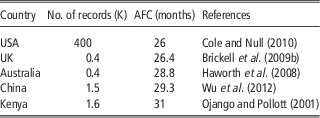
Both dairy and beef units should strive to produce replacement heifers that join the herd with the ability to achieve their full lifetime potential in terms of milk or weaned calf production. Good fertility and longevity are both essential for this to occur. A common intent among both dairy and beef producers is to breed their replacement heifers by 15 months of age so that they calve for the first time at 24 months. This is widely perceived as the minimum age at which animals are sufficiently grown to calve without difficulty and to achieve a good first lactation milk yield. An age at first calving (AFC) close to 2 years is also necessary in seasonally calving herds to maintain the correct calving pattern. In practice few farms achieve an average AFC of 24 months for a variety of reasons discussed below, with mean values globally ranging from 26 to 31 months for dairy heifers (Table 1). A recent Irish study found that only 16% of beef heifers had calved by 26 months of age, rising to 50% in the top 15% of herds (Irish Cattle Breeding Federation (ICBF), 2013).
AFC for dairy cows in different countries

AFC=age at first calving.
Keeping the AFC to 2 years reduces the cost of rearing replacements but requires a good standard of management to ensure that the potential milk yield of the animal is not compromised. This requires the heifer to have an adequate growth rate to ensure an appropriate BW at calving. AFC, growth rate and BW at first calving are all correlated, making their effects on future performance hard to separate (Le Cozler et al., Reference Le Cozler, Lollivier, Lacasse and Disenhaus2008). Heifer fertility is a critical component of AFC. Farmers generally decide when to start serving animals based on either age or size (weight and/or height) but if the animals do not then conceive readily, a late AFC becomes inevitable.
Genetic gain over past decades has led to dairy cows with greater milk production capacities (Tsuruta et al., Reference Tsuruta, Misztal and Lawlor2005) and beef animals with higher and more efficient growth rates (Randel and Welsh, Reference Randel and Welsh2013). This has, however, been accompanied by a negative trend in fertility: poor fertility remains the major reason for culling, thus reducing longevity. Longevity is a desirable trait as it is related to total profit and profit per day of life (Ducrocq et al., Reference Ducrocq, Quaas, Pollak and Casella1988; Jagannatha et al., Reference Jagannatha, Keown and Van Vleck1998). In order to optimise economic returns both the positive and negative effects of early growth rates and AFC therefore need to be considered in relation to estimated lifetime production, number of parities and longevity.
This review will examine the management, disease and genetic factors that are known to impact on heifer fertility and the consequences of differing calving ages and sizes on the future productivity and survival of the animals.
Timing of puberty
The reproductive tract and ovaries develop gradually postnatally, followed by a period of more rapid changes in the last few months before puberty Gasser (Reference Gasser2013). The diameter, duration and oestradiol secretion of the dominant follicle all increase over this final pre-pubertal period, driven by higher secretion of FSH, an increase in LH pulsatility in the last 50 days and a decline in the negative feedback effects of oestrogen on the hypothalamic–pituitary axis (Rawlings et al., Reference Rawlings, Evans, Honaramooz and Bartlewski2003; Gasser, Reference Gasser2013). This finally triggers the switch to a positive feedback of oestradiol driving an LH surge (Day et al., Reference Day, Imakawa, Wolfe, Kittok and Kinder1987). A heifer reaches puberty when she ovulates a potentially fertile oocyte and some definitions also stipulate that this should be accompanied by visual signs of oestrus (Perry, Reference Perry2012). In practice the two events of first oestrus and first ovulation are often separated. Up to 25% of animals can show oestrus without ovulating (Nelsen et al., Reference Nelsen, Short, Phelps and Staigmiller1985; Byerley et al., Reference Byerley, Berardinelli, Staigmiller and Short1987). More commonly the first ovulation is not accompanied by heat and is followed by a short luteal phase, with the subsequent fall in progesterone helping to promote the first behavioural changes (Gasser, Reference Gasser2013). As the reproductive tract will continue to develop post-pubertally under the influence of alternating peaks of oestradiol and progesterone it is likely that fertility will improve over the first few oestrous cycles. There is some evidence to support this with Byerley et al. (Reference Byerley, Berardinelli, Staigmiller and Short1987) reporting pregnancy rates of 57% and 78% when beef heifers were served at the first compared with the third observed oestrus. In this study the weight at breeding did not differ between the two groups but age was a confounding factor with breeding at mean ages of 322 and 375 days, respectively.
Age at puberty in heifers is an important production trait to obtain good lifetime productivity in both dairy and beef cattle production systems (Patterson et al., Reference Patterson, Perry, Kiracofe, Bellows, Staigmiller and Corah1992; Serjsen and Purup, Reference Serjsen and Purup1997). In dairy herds it should occur by 12 months of age and in seasonal herds puberty should ideally occur at least 4 to 6 weeks before the start of the breeding period to allow a few cycles before starting to breed. Using progesterone measurements to confirm ovulation, Taylor (Reference Taylor2001) found a range in ages of 7.5 to 13.5 months in Holstein–Friesian heifers with an average of 9.5 months. The major influences on the timing of puberty are BW and age (Mourits et al., Reference Mourits, Dijkhuizen, Huirne and Galligan1997). The size at a particular age is clearly influenced by the previous growth rate. Different beef breeds will reach puberty at a different proportion of mature BW with figures of 60% in typical European-derived beef breeds, 55% in dual purpose beef/dairy breeds and 65% in Bos indicus cattle (Larson, Reference Larson2007). Both age and BW at puberty have moderately high heritabilities of 0.41 and 0.40, respectively (Laster et al., Reference Laster, Smith, Cundiff and Gregory1979).
A number of studies have investigated the effects of diet on age at puberty. For example, a high energy and protein intake resulted in an increased growth rate and earlier attainment of puberty (Lammers et al., Reference Lammers, Heinrichs and Kensinger1999). The review by Gasser (Reference Gasser2013) concluded that the growth rate pre-weaning was more important than that post-weaning. Freetly et al. (2001) found that animals reached puberty at a reasonably consistent percentage of their mature BW. On the other hand, weaning beef heifers early at 2 to 4 months followed by a high energy diet and a high growth rate advanced puberty to <10 months, with animals reaching puberty at a somewhat lower BW than normal. This response appeared to be achieved through an earlier decline in the negative feedback effect of oestradiol on LH secretion (Gasser, Reference Gasser2013).
Normally the amount of body fat rises as puberty approaches, associated with increased leptin concentrations (Zieba et al., 2005). This could be part of the metabolic signalling necessary for the attainment of puberty (Cunningham et al., Reference Cunningham, Clifton and Steiner1999). Chronic leptin administration to beef heifers failed, however, to induce puberty at an earlier age (Zieba et al., 2005). The importance of body fat in determining the timing of puberty remains unclear, with Larson (Reference Larson2007) concluding that it was not a key component in beef heifers in contrast with Randel and Welsh (Reference Randel and Welsh2013) who thought that it was.
Another metabolic hormone which appears to play an important role is IGF-1. As reviewed by Velasquez et al. (Reference Velazquez, Spicer and Wathes2008), changes in IGF-1 concentrations before puberty are strongly influenced by nutritional regime and are reduced by dietary restrictions, which also delayed puberty. The circulating concentration of IGF-1 is highly correlated to BW and growth rate during the period of pre-pubertal growth (Lammers et al., Reference Lammers, Heinrichs and Kensinger1999; Brickell et al., Reference Brickell, McGowan and Wathes2009a). In contrast, Garcia et al. (Reference Garcia, Amstalden, Morrison, Keisler and Williams2003) found that IGF-1 levels in beef heifers declined in the 10 weeks preceding puberty. These differences may relate to differences in ages at which puberty is reached and/or nutritional management in different studies. A reduction in IGF-1 concentrations in beef heifers by immunisation against growth hormone releasing factor (GRF) reduced follicular growth and delayed puberty whereas treatment with bovine somatotrophin (bST) from 7 months of age increased IGF-1 levels and was associated with earlier puberty (Cooke et al., Reference Cooke, Cheng, Bourne and Wathes2013). Interestingly the bST treatment did not alter growth rate but both backfat thickness and leptin concentrations were reduced in the treated animals. Together these studies indicate that IGF-1 is an important metabolic mediator involved in the onset of puberty in heifers, with evidence for actions at both the brain and ovary (Velasquez et al., Reference Velazquez, Spicer and Wathes2008). It is, however, probably not the only important signal as beef heifers selected for high or low IGF-1 concentrations had similar ages at puberty (Yilmaz et al., Reference Yilmaz, Davis and Simmen2006).
Heifer fertility
The decision on when to start breeding is a management one which is based primarily on the age of the heifer, but is also influenced by growth during the rearing period. As gestation length is fixed, the AFC depends on the age at first breeding combined with the reproductive efficiency of the animal in terms of conception rate. In order to achieve an AFC of 23 to 24 months, breeding needs to commence at around 13.5 months. Kuhn et al. (Reference Kuhn, Hutchison and Wiggans2006) analysed dairy heifer fertility records in the United States for animals bred between 2003 and 2005. This study encompassed records from 362 512 heifers from 2668 herds. The overall conception rate was 57%, peaking in animals aged between 15 and 16 months and falling to 42% at 26 to 27 months. The majority of herds (88%) had heifer conception rates in the range 40% to 70%. Unlike lactating cows, there was little adverse effect of high summer temperatures. Heifer fertility was higher than cow fertility but the two were strongly related as the genetic correlation with conception rate to first service in the first lactation was 0.39. These values accord with those found in our prospective study of 428 Holstein–Friesian heifers from 19 UK herds in which the overall first service conception rate was 67%, with younger heifers at first breeding having the best fertility (Brickell et al. Reference Brickell, Bourne, McGowan and Wathes2009b). The importance of early growth was highlighted by the finding that higher BW and girth measurements at only 1 month of age were associated with a significantly lower age at first breeding and at calving (Brickell et al. Reference Brickell, Bourne, McGowan and Wathes2009b).
Variability in growth rates within groups of animals on the same farm can lead to a large spread in the age at which dairy heifers are actually bred for the first time (Ettema and Santos, Reference Ettema and Santos2004; Brickell et al., Reference Brickell, Bourne, McGowan and Wathes2009b). Increasing the average daily weight gain (ADG) from birth to conception from 0.68 to 0.82 kg/day reduced the age at conception by 32 days (Bar-Peled et al., Reference Bar-Peled, Robinzon, Maltz, Tagari, Folman, Bruckental, Voet, Gacitua and Lehrer1997). Similarly, we found that younger calving heifers (<26 months) had the highest ADG up to 6 months of between 0.82 and 0.85 kg/day (Brickell et al., Reference Brickell, Bourne, McGowan and Wathes2009b). Age at first breeding is often delayed when heifers are clearly too small at 15 months. While the delay may just be a few months in dairy herds with all-year round calving, seasonal herds will have to push them back a whole year. In a survey of Dutch dairy farms, the minimum age at which farmers said they were willing to start serving their heifers was 14.9 months, ranging from 13 to 18 months. The actual mean value was a month later at 15.9 months, with 60% of farms saying that they used age not weight to determine this (Mohd Nor et al., Reference Mohd Nor, Steeneveld, van Werven, Mourits and Hogeveen2013). In this study the AFC was lower in herds which fed more milk to their pre-weaned calves and which did not feed waste milk. A survey of New Zealand beef farmers found that higher numbers of farmers (60% to 70%) were breeding their replacement heifers to calve at 2 rather than 3 years of age, which used to be the industry norm (Hickson et al., Reference Hickson, Anderson, Kenyon, Lopez-Villalobos and Morris2012). The main reason in favour was increased profitability, while concerns of feto-maternal disproportion leading to a difficult calving was the main reason against.
There is considerable variability between farms in the way that heifer fertility is managed. In dairy units a typical scenario may be to start with the use of artificial insemination (AI), perhaps for a fixed number of occasions, then to run remaining non-pregnant animals with a sweeper bull. This strategy helps to ensure that animals conceive in a timely fashion but it will also reduce the genetic merit of the next generation of youngstock. Another consideration is that a bull may be instrumental in introducing venereal disease such as Campylobacter fetus into the herd (Engelken, Reference Engelken2008). Apart from nutritional aspects (considered in the next section) various other ways have been considered to improve conception rates and reduce the number of heifers failing to conceive. Selection of the sire can be important. Many producers will take calving ease into consideration (Eaglen et al., Reference Eaglen, Coffey, Woolliams and Wall2013). However, bull fertility is also variable, with a study of Angus beef heifers reporting variations in pregnancy rates between sires of 65% to 100% within a breeding season (Bormann et al., Reference Bormann, Totir, Kachman, Fernando and Wilson2006). In beef heifers reproductive tract scoring (RTS) before the start of the breeding season can be used to assess the development stage of the ovaries and uterus as a guide to how many animals have reached, or are at least close to, puberty (Holm et al., Reference Holm, Thompson and Irons2009). The RTS score was positively associated with both age and BW and the pregnancy rate in both that and the subsequent breeding season. Furthermore, 77% of heifers with a high RTS score (4 or 5) remained in the herd to the second season compared with only 54% of animals scoring 1 to 3 (Holm et al., Reference Holm, Thompson and Irons2009).
When AI is being used both ease of handling and success of oestrus observations become important. Cooke et al. (Reference Cooke, Bohnert, Cappellozza, Mueller and Delcurto2012) found that more excitable or aggressive beef heifers had lower pregnancy rates and that extra handling before breeding paid dividends by lowering cortisol levels and the time to puberty. Stevenson et al. (Reference Stevenson, Smith, Jaeger, Corah and LeFever1996) compared heat detection in beef heifers using visual monitoring compared with radiotelemetric recording. The visual observations failed to detect 37% of animals in heat, particularly those with a short duration of oestrus.
An alternative approach is to use oestrus synchronisation regimes, with many variants being trialled in both dairy and beef herds. The majority have used some form of progestogen as this can help to induce ovulation in those animals which may not have yet reached puberty (Day, Reference Day2004). For example studies using Ovsynch in dairy heifers (2 GnRH injections 9 days apart, PGF2α 7 days after the first GnRH and fixed time AI) only achieved conception rates of around 40% (Pursley et al., Reference Pursley, Wiltbank, Stevenson, Ottobre, Garverick and Anderson1997; Stevenson et al., Reference Stevenson, Smith and Hawkins2000). By using a modified regime that included insertion of a controlled internal drug (progesterone) release device (CIDR), Ambrose et al. (2005) found that pregnancy rates of around 60% were achievable. In beef heifers Wood-Follis et al. (Reference Wood-Follis, Kojima, Lucy, Smith and Patterson2004) used a basic regime of melenengestrol acetate (MGA) for 14 days with PGF2α19 days after MGA withdrawal and insemination at observed oestrus. The initial pregnancy rate was higher in animals that were judged post-pubertal at the start of treatment based on plasma progesterone measurements (74% compared with 64% in pre-pubertal animals) but was similar at the end of the breeding period (97% and 93%, respectively). The addition of a GnRH injection 12 days after MGA withdrawal improved the synchrony of oestrus but not the conception rate. More recently, Eborn and Grieger (Reference Eborn and Grieger2013) compared the use of MGA or a CIDR with PGF2α at progesterone withdrawal followed by a CO-Synch protocol (GnRH-PGF2α-GnRH) with or without the first GnRH injection and timed AI. Pregnancy rates varied from 38% to 55% with different treatments. There was no difference according to type of progestogen but the second GnRH injection was beneficial.
At present there is increasing use of sexed semen in dairy herds, driven by welfare and economic concerns over the production of unwanted bull calves. McCullock et al. (Reference McCullock, Hoag, Parsons, Lacy, Seidel and Wailes2013) assessed the economic benefits of three scenarios using sexed semen on heifers alone (which have intrinsically better fertility than cows) or also including some higher genetic merit cows. They took the likely success of AI at 70% of that achievable using unsexed semen. They concluded that the on-farm management and the relative value of heifer, bull and beef calves were important considerations, with the higher semen costs having little influence on profitability. If conception rates were below 50% then the AFC would increase and more animals would be culled inappropriately for poor fertility.
Nutrition and growth rate
This section discusses the effects of nutrition and growth rate on heifer fertility, whereas the longer term outcomes of age and BW at calving on subsequent performance are covered later. The ADG is determined by voluntary feed intake above maintenance which varies with age and plateaus once mature BW is achieved. A detailed consideration of all possible feeding strategies and their outcomes is outside the scope of this paper as there are very many factors to consider. Previous reviews include Van Amburgh and Drackley (Reference Van Amburgh and Drackley2005) and Larson (Reference Larson2007). In brief, dietary effects vary according to age range. This can broadly be divided into pre-weaning, weaning to puberty, post-puberty to breeding and during the first pregnancy. Within each of these periods the quantities and contents of the diet in terms of protein and energy can be altered. The management and housing conditions are also influential and can differ considerably. Pre-weaned dairy calves may be kept in individual pens or hutches or in groups and fed by buckets or automatic feeders, affecting their feed intake patterns. Beef calves will initially be with their dams, whose own milk production and mothering abilities will vary. In both cases age at weaning may be early or late. Older calves will be grouped but may be kept indoors, in feedlots or at pasture. The nutritive value of the latter can vary enormously according to geographical region and climate. Climate may also impose extremes of hot or cold and differences in humidity which will change both maintenance requirements and appetite. The season of birth can also affect the experiences of any individual heifer calf in terms of which of the above conditions she may be exposed to at a particular age. Furthermore the health of the calf can have a significant impact on her growth. There are also genetic effects both within and between breeds that can alter growth rates and feed efficiency. All of these factors may differentially alter various components of body composition. With respect to fertility the influence of nutrition on development of the reproductive system is clearly of fundamental importance.
In general, two experimental approaches have been used to investigate the importance of growth rates. The first is to impose different growth rates at different ages by dietary manipulation. This is well controlled but trials are often limited to small numbers of animals. Small group sizes can to some extent be overcome by use of meta-analyses, but the availability of data on longer-term follow-up effects is then often limited. The alternative approach is to use field studies. Animals on the same farms are generally subjected to the same management strategies but nevertheless often calve at a wide range of ages and weights. We have previously reported differences in ADG between 1 and 6 months of 0.5 to 1.0 kg/day between farms and of 0.45 to 1.15 kg/day between different heifers on the same farm (Brickell et al., Reference Brickell, McGowan and Wathes2009a). Similarly Soberon et al. (Reference Soberon, Raffrenato, Everett and Van Amburgh2012) reported a range from 0.10 to 1.58 kg/day in dairy heifers over the pre-weaning period. Unfortunately few trials contain good growth rate data as relatively few farmers weigh their animals.
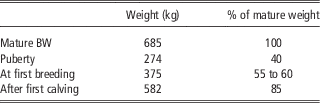
There is reasonably widespread agreement that animals should have achieved about 55% to 60% of their mature BW at first service and that this should have increased to 85% to 90% by first calving (Margerison and Downey, Reference Margerison and Downey2005). Even within breeds mature BW can, however, vary considerably according to selection policy so the actual target weights at each stage should be based on those of the mature cows in the herd (Bach and Ahedo, Reference Bach and Ahedo2008). In order to calve at 24 months, a typical Holstein-type heifer must maintain an average growth rate of about 750 g/day (Table 2). This rate does not have to be consistent throughout development as discussed below. The growth rate is maximal and most efficient in pre-pubertal animals, particularly their first 2 months (Owens et al., Reference Owens, Dubeski and Hanson1993). The endpoint in all cases is to aim for an animal that calves successfully at an appropriate age and weight, so AFC is a useful end point that is reliably recorded. It will be influenced by age at puberty, age at first breeding and heifer fertility as outlined above.
Target weights at different stages for Holstein heifers

In pre-weaned dairy calves growth rates vary according to the energy and protein contents of the milk and the volume and frequency with which it is supplied. A further key consideration is the external temperature as maintenance requirements increase significantly below the lower critical temperature of around 15°C in newborn calves (Nutrient Requirements of Dairy Cattle (NRC), 2001). Most milk replacers are lower in fat content than whole milk so a calf will require more milk replacer dry matter just for maintenance. Traditional calf rearing systems offer restricted volumes of milk during the pre-weaning period, typically feeding liquid milk at 10% of BW and supplying 400 to 500 g milk solids/day to achieve growth rates of around 400 to 600 g/day under thermoneutral conditions. Calves provided with higher volumes of milk early in life can double their nutrient intake up to 14 l per day, so gaining more weight (up to around 1 kg/day; Bleach et al., Reference Bleach, Gould, Blackie and Beever2005). Feeding whole milk or milk replacer to support rapid pre-weaning growth rates enables heifers to achieve breeding size earlier. For example, calves with an ADG of 0.8 kg/day pre-weaning calved 27.5 days earlier than calves fed for gains of 0.55 kg/day (Raeth-Knight et al., 2009) while heifers fed for a pre-weaning ADG of 0.64 kg/day conceived and calved at a younger age when bred at the same BW as calves with growth rates of 0.44 kg/day (Davis Rincker et al., Reference Davis Rincker, VandeHaar, Wolf, Liesman, Chapin and Weber Nielson2011). Shamay et al. (Reference Shamay, Werner, Moallem, Barash and Bruckental2005) fed more milk pre-weaning and compared whole milk with milk replacer. The milk-fed calves remained heavier subsequently, reached puberty 23 days earlier and produced more milk in their first lactation. Brickell et al. (Reference Brickell, Bourne, McGowan and Wathes2009b) found that younger calving heifers exhibited higher ADG from 1 to 6 months with means of 0.85, 0.82, 0.66 and 0.74 kg/day, for animals which calved at <23, 23 to 25, 26 to 30 and >30 months, respectively. In contrast to these studies, Morrison et al. (Reference Morrison, Wicks, Carson, Fallon, Twigge, Kilpatrick and Watson2012) found no effect of increasing ADG by increasing the pre-weaning feeding level on subsequent calving age.
The actual weaning strategy is another key consideration. Weaning should be based on concentrate intake to ensure adequate rumen development rather than age or weight. Unless the animal is ready to transition to a solid diet there will be a growth check at this stage which may negate any early beneficial effects of good pre-weaning growth (Khan et al., Reference Khan, Weary and von Keyserlingk2011). With respect to post-weaned heifers, it is not surprising that better nutrition speeds up reproductive development. For example, Buskirk et al. (Reference Buskirk, Faulkner and Ireland1995) fed high or low corn supplements to beef heifers on grazing for 5 months post weaning and found that 10% more had reached puberty by the start of the breeding season (71% v. 61%). There was no overall difference in pregnancy rate but in their first lactation the calves produced by the better fed animals grew better and the first service conception rate was higher. Moriel et al. (Reference Moriel, Cooke, Bohnert, Vendramini and Arthington2012) found that in drylot beef heifers receiving low-quality forage the timing of both puberty and pregnancy were advanced by increased use of low-starch energy supplements.
Some workers have advocated a stair-step approach alternating periods of growth restriction of around 20% to 40% below recommended amounts followed by re-alimentation using 20% to 30% above recommended. This may reduce feed costs by making use of compensatory growth mechanisms during the well-fed periods. For example, Ford and Park (Reference Ford and Park2001) trialled a three-step regime between 6 months and first calving in dairy heifers. This was said to benefit mammary development and milk production in the first and second lactations, but with only four animals per group. Similarly Lynch et al. (Reference Lynch, Lamb, Miller, Brandt, Cochran and Minton1997) compared an even weight gain of 0.5 to 0.6 kg/day from post-weaning until the start of breeding in comparison with a low early intake resulting in weight gains of 0.25 and 0.05 kg/day in successive seasons followed by a high rate of 1.14 and 1.32 kg/day, respectively. This had no effect on the BW at puberty but in the 2nd year, where the extremes were greater, the age at puberty was increased from 386 days to 407 days and the first service conception rate declined from 71% to 56%. There was, however, no reduction in overall pregnancy rate in either year. Dawson and Carson (Reference Dawson and Carson2004) also tested a step feeding model on dairy heifers with restricted growth either pre-pubertally or in early pregnancy but found no benefit through subsequent compensatory growth.
In an extensive review of nutritional regimes in beef heifers Larson (Reference Larson2007) concluded that a major deficiency in energy or protein supply at any time in the first 2.5 years of life had adverse effects on subsequent calf viability, milk production and fertility. During the pre-weaning period the milk yield of the dam is the main determinant of weaning weight and this may be reduced if the mother is underfed. In grass based/range systems this can be very dependent on season and weather. Larson (Reference Larson2007) commented that provision of good quality forage was important if this was needed to supplement the dam’s milk. High-starch diets and the use of ionophores to improve feed efficiency decreased the age of puberty whereas fat supplements and more undegradeable protein above NRC recommendations showed no consistent benefit. It is important to remember that heifers are still growing in their first lactation so this needs to be allowed for in ration formulation.
Randel and Welsh (Reference Randel and Welsh2013) reviewed the literature on the relationships between feeding efficiency and reproductive performance in beef heifers. Many beef breeding programmes are selecting for feed efficiency using traits such as residual feed intake (RFI), residual average daily gain (RADG) or feed conversion ratio and it is therefore important to understand how this may impact on the fertility of the replacement heifers. A number of studies found that animals with a low RFI had less body fat and that leaner animals took longer to reach puberty. Similarly Crowley et al. (Reference Crowley, Evans, Mc Hugh, Kenny, McGee, Crews and Berry2011) found a genetic correlation of 0.36 between RADG and age at puberty. In European beef breeds selected for a low RFI the AFC also increased by about 5 to 6 days but there was no difference in later maturing Brahman cattle (Randel and Welsh, Reference Randel and Welsh2013).
While the main emphasis should be to ensure that replacement heifers are not underfed, there is also evidence from early studies for reduced pregnancy rates in overfed animals (Ferrell, Reference Ferrell1982). More recently we investigated 19 of 450 dairy heifers monitored which were culled due to failure to conceive after receiving a mean of three services (Brickell et al., Reference Brickell, Bourne, McGowan and Wathes2009b). There was a tendency for these animals to be heavier than their peers at 6 months, which had reached significance by 15 months (395 v. 366 kg). With every 1 kg/day increase in ADG between 1 and 6 months the risk of failing to conceive increased 15-fold. Their insulin concentrations were significantly higher at 1 month of age and their glucose levels at 15 months, possibly suggesting increased insulin resistance. In support of this, Hayhurst et al. (Reference Hayhurst, Sørensen, Royal and Løvendahl2007) found that bull calves with higher glucose and free fatty acid levels as juveniles produced female offspring with reduced fertility, suggesting a genetic component. One possible mechanism for this may be through a reduction in oocyte quality. Adamiak et al. (Reference Adamiak, Mackie, Watt, Webb and Sinclair2005) fed once or twice maintenance diets to crossbred beef×dairy heifers with low or moderate body condition score (BCS) at the start of treatment and then aspirated oocytes for in vitro fertilisation. The high level of feeding improved oocyte quality from animals of low body condition but was detrimental for animals in moderately high body condition. A significant proportion of the moderately fat and overfed animals were hyperinsulinaemic. Rooke et al. (Reference Rooke, Ainslie, Watt, Alink, McEvoy, Sinclair, Garnsworthy and Webb2009) subsequently used a factorial design to alter insulin levels in dairy heifers. They found that a high-starch diet had adverse effects on oocyte quality which were associated with a high plasma insulin : glucagon ratio but that these were avoided when leucine intake was also increased.
Disease
Heifers which are sick or malnourished as young calves are not surprisingly at greater risk of mortality and so never become productive (Correa et al., Reference Correa, Curtis, Erb and White1988; Johnson et al., Reference Johnson, Burn and Wathes2011). For those animals which do survive juvenile disease, there is evidence of longer term consequences on performance which are in part attributable to reduced growth rates. The actual disease incidence within a group commonly reflects environmental conditions and calf health challenges such as diarrhoea, bovine respiratory disease (BRD) and septicaemia (Donovan et al., Reference Donovan, Dohoo, Montgomery and Bennett1998; Soberon et al., Reference Soberon, Raffrenato, Everett and Van Amburgh2012).
A long-term prospective study investigated Holstein calves born on 18 commercial farms in Pennsylvania to determine how events experienced in their first 4 months of life impacted on later performance. Heinricks et al. (Reference Heinrichs, Heinrichs, Harel, Rogers and Place2005) found that factors related to a higher AFC were a difficult delivery, more days of antibiotic treatment of sick calves, provision of poor quality forage once weaned and higher humidity, mean daily temperature and ammonia levels in the calf housing. The same animals were followed up later to assess their lifetime performance (Heinrichs and Heinrichs, Reference Heinrichs and Heinrichs2011). The amount of illness as a calf affected first lactation milk production but not lifetime production or age at culling. Both of these factors were, however, positively associated with the age at which grain intake increased above 0.91 kg/day. The reason behind this observation is uncertain but may suggest that better rumen development and solid feed intake pre-weaning led to a better transition to a solid diet as outlined by Khan et al. (Reference Khan, Weary and von Keyserlingk2011). Several other studies have supported the negative impact of calfhood disease. For example, Correa et al. (Reference Correa, Curtis, Erb and White1988) showed that heifers experiencing BRD in their first 3 months of life had their AFC delayed by a median of 6 months while Bach (Reference Bach2011) found that four or more cases of BRD in young heifers increased their odds of not completing their first lactation by 1.87. In Sweden, severe BRD in calves during their first 3 months increased calving intervals by 12% in the mature cows, while animals contracting diarrhoea over this period produced significantly less milk in their first 305 days lactation (Svensson and Hultgren, Reference Svensson and Hultgren2008; Hultgren and Svensson, Reference Hultgren and Svensson2010).
Once heifers have survived to breeding age, diseases which impact directly on fertility become important through reduced conception rates, fetal mortality and abortion. The outcome is generally dependent on the stage of development or pregnancy when the initial infection occurs. Poor fertility will increase AFC while late abortion can reduce AFC if animals are sufficiently far advanced to lactate. Bach (Reference Bach2011) found that 4.8% of 7768 Holstein heifers aborted and were rebred with an AFC ranging from 662 to 1048 days. These animals were 2.73 times more likely to leave the herd without completing a first lactation and one-third of these were culled or died within 50 days from calving. Similarly in our prospective study of dairy heifers initially bred and conceiving, 3.8% (16/425) suffered gestational loss. In 10 animals this occurred relatively early in pregnancy so they returned to service and were rebred with an eventual AFC of 32.0±1.5 months. Six heifers aborted at 188 to 257 days pregnant and started their first lactation early at 698±20 days (Brickell et al. Reference Brickell, Bourne, McGowan and Wathes2009b).
There are many bacterial, viral, protozoan and fungal pathogens which can reduce cattle fertility and so potentially affect breeding heifers (Givens and Marley, Reference Givens and Marley2008), although specific studies on heifers are limited. As an example of one which has been investigated, Davison et al. (Reference Davison, French and Trees1999) reported an incidence of 20.2% seropositivity for Neospora caninum in 7- to 12-month old heifers on 14 dairy herds in England with a history of abortions. We similarly investigated associations of Neospora seropositivity tested at 6 months with the reproductive performance of dairy heifers before and after first calving on 18 UK farms. Out of 460 animals monitored, 7.2% were seropositive (Brickell et al. Reference Brickell, McGowan and Wathes2010). This did not alter their ability to conceive initially but seropositive animals were at increased odds of gestational losses (late embryonic/early foetal loss or abortion) in both their first and second pregnancies (odds ratios of 5.8 and 7.0, respectively). Perinatal mortality was also increased about four-fold in seropositive heifers at both their first and second calving.
Another organism which has been studied in beef heifers is Ureoplasma diversum. This is part of the normal flora of the vulva and vestibule but can be a contributory cause of reduced fertility when penetrating higher up the tract and causing vaginal lesions. There is some evidence that treatment of animals with chlortetracycline before breeding can improve pregnancy rates (Rae et al., Reference Rae, Ramsay and Morrison2002).
Freemartins
Heifers born as a co-twin to a bull calf are generally excluded from breeding programmes, but some nevertheless slip through, possibly when the bull calf does not itself develop to term. Such animals may remain with the breeding group for some considerable time unless detected at a pre-breeding rectal examination. This was the most likely explanation leading to the somewhat surprising detection of single-nucleotide polymorphisms (SNP) mapped to the Y chromosome when genotyping infertile female heifers (McDaneld et al., Reference McDaneld, Kuehn, Thomas, Snelling, Sonstegard, Matukumalli, Smith, Pollak and Keele2012). About a quarter of heifers failing to conceive tested positive to a Y-specific primer developed for embryo sexing. Other possible explanations could be X/Y recombination during gametogenesis or mutations (Snelling et al., Reference Snelling, Cushman, Fortes, Reverter, Bennett, Keele, Kuehn, McDaneld, Thallman and Thomas2012).
Genetic selection
The pregnancy rate of beef heifers in their first breeding season is generally considered a moderately heritable trait, although the heritability range in seven different studies reported by Bormann et al. (Reference Bormann, Totir, Kachman, Fernando and Wilson2006) was from almost zero to over 0.2. In Brangus heifers there was a positive genetic correlation between first service conception rate with weight, height and backfat thickness but a negative relationship with overall heifer pregnancy rate (Snelling et al., Reference Snelling, Cushman, Fortes, Reverter, Bennett, Keele, Kuehn, McDaneld, Thallman and Thomas2012). There is also a high genetic correlation between yearling pregnancy rate and lifetime pregnancy rate (Morris and Cullen, Reference Morris and Cullen1994). Heritabilities for longevity were 0.181, 0.198 and 0.184 in Swiss Braunvieh, Simmental and Holstein cattle, respectively (Vukasinovic et al., Reference Vukasinovic, Moll and Casanova2001). In composite beef cattle born between 1982 and 1999 heritability for longevity was 0.14 and in this study traits measured before 1 year of age were not predictive (Rogers et al., Reference Rogers, Gaskins, Johnson and MacNeil2004).
Age at puberty, which in turn is associated with growth rate and mature size, has a moderate estimated heritability of 0.25 to 0.4 (Martin et al., Reference Martin, Brinks, Bourdon and Cundiff1992; Snelling et al., Reference Snelling, Cushman, Fortes, Reverter, Bennett, Keele, Kuehn, McDaneld, Thallman and Thomas2012). In dairy cows, milk production is positively correlated with size (Lin et al., Reference Lin, Lee, McAllister, Batra, Roy, Vesely, Wauthy and Winter1987) which has contributed to selection for larger animals even though these are not necessarily the most efficient. Several studies have investigated associations between SNP in the leptin system with growth, milk production and fertility traits. DeVuyst et al. (Reference DeVuyst, Bauer, Cheng, Mitchell and Larson2008) reported an association between a leptin SNP and weaning weight in crossbred calves, while polymorphisms in the leptin receptor were associated with growth traits in Nanyang cattle, where they had significant effects on height, length, heart girth, weight and ADG at 6 and 12 months of age (Guo et al., Reference Gasser2008). Mixed model analyses revealed that leptin SNP in Holstein–Friesian heifers were similarly associated with early skeletal growth and also with fertility and subsequent milk production (Clempson et al., Reference Clempson, Pollott, Brickell, Bourne, Munce and Wathes2011). The association of leptin SNP with fertility traits in heifers suggested that the actions on fertility were direct and not mediated via altered tissue mobilisation as might occur during lactation.
More recently SNP association studies are being introduced to aid in selection programmes. Fortes et al. (Reference Fortes, Snelling, Reverter, Nagaraj, Lehnert, Hawken, DeAtley, Peters, Silver, Rincon, Medrano, Islas-Trejo and Thomas2012) measured 10 growth, carcass and fertility traits in 890 Brangus heifers and looked for associations using the 50K bovine SNP chip, with a particular focus on genes expressed in the hypothalamus which might be associated with puberty and first service conception rate. This identified a number of genes on BTA 1, 5, 9 and 11, leading the authors to conclude that heifer fertility was a polygenic trait. Several transcription factors showed significant associations with the traits of interest. Among these transcription factors was STAT6, which could potentially influence heifer growth and fertility through known involvement as a regulator of the GH-IGF axis.
Influence of heifer rearing system on subsequent performance
Although the youngstock represent the future of any enterprise, they often receive less attention than the mature animals. Indeed, youngstock rearing was perceived as the least important element of veterinary herd health management on Dutch farms (Derks et al., Reference Derks, van de Ven, van Werven, Kremer and Hogeveen2012). Farmers therefore need to be convinced of the longer term economic benefits of spending more time and money on this stage, and this requires provision of data to show how early experiences reflect later performance. The key consideration here is that the heifer has reached an adequate BW (as a proportion of mature body size) and frame size by the time she calves. This is more important than the actual age. Perinatal calf mortality rates are also considerably higher for primiparous dams, for example 11% compared with 4.6% in multiparous dams (Johanson and Berger, Reference Johanson and Berger2003).
Ease of calving
Bone growth is maximal in the 1st year of life and ceases once the growth plates in the long bones and pelvic region have fused, so it is not possible to compensate for poor early skeletal development at a later date. The incidence of dystocia is much higher at first calving; for example 51% of primiparous dams needed calving assistance compared with only 29% in multiparous dams in three large US dairies (Lombard et al., Reference Lombard, Garry, Tomlinson and Garber2007). Similarly, Hickson et al. (Reference Hickson, Anderson, Kenyon, Lopez-Villalobos and Morris2008) found that 7% of beef heifers calving at 2 years old in New Zealand needed assistance compared with 1.7% in which first calving was delayed to 3 years. The major cause of dystocia is disproportion between the fetus and dam. This can be influenced by choice of sire (Eaglen et al., Reference Eaglen, Coffey, Woolliams and Wall2013) but the dam’s relative maturity and pelvic width are also critical. Inadequate skeletal maturity can be a problem if the AFC is <24 months (Hansen, 2004). On the other hand, Simerl et al. (Reference Simerl, Wilcox, Thatcher and Martin1991) and Bach (Reference Bach2011) both reported that the AFC could be reduced to 22 months without an increased frequency of problems at parturition. At the other extreme, over-conditioned animals are also at greater risk of calving problems and this is more likely to occur in animals with delayed first breeding or poor initial fertility which therefore have an increased AFC (Cooke et al., Reference Cooke, Cheng, Bourne and Wathes2013).
Milk production
The majority of mammary gland development occurs before first calving. Some studies have suggested that accelerated ADG in dairy calves, particularly before puberty, reduced mammary development although there was no clear evidence for a subsequent reduction in yield (Capuco et al., Reference Capuco, Smith, Waldo and Rexroad1995; Serjsen, Reference Serjsen2005). An investigation into the effects of different feeding regimes pre- and post-puberty on dairy heifers in New Zealand found no effects of a higher pre-pubertal feed intake on milk production in the first two lactations but those that survived made less milk in lactation 3. Macdonald et al. (Reference Macdonald, Penno, Bryant and Roche2005) suggested that the well-fed animals may have had decreased mammary development but compensated initially by an overall greater body size. Others have found that increasing ADG through increasing the plane of nutrition has a minimal impact on histological mammary development (Daniels et al., Reference Daniels, McGilliard, Meyer, Van Amburgh, Capuco and Akers2009). On the other hand Brown et al. (Reference Brown, Vandehaar, Daniels, Liesman, Chapin, Forrest, Akers, Pearson and Nielsen2005) reported that calves receiving more nutrition in their first 7 weeks had increased mammary gland development while Meyer et al. (2006) found that increasing the ADG from 650 to 950 g/days from 10 to 60 days increased the proliferation of mammary gland epithelium by 40%.
A younger calving age can also potentially reduce milk yield, although it is hard to separate the effects of growth rate, age and weight at calving. In practice, conclusions from different studies are quite variable. For example Van Amburgh et al. (Reference Van Amburgh, Galton, Bauman, Everett, Fox, Chase and Erb1998) fed pre-pubertal heifers for three rates of ADG of 0.68, 0.83 and 0.94 kg/day. Their respective AFC values were 24.5, 22.0 and 21.3 months. The animals with the fastest growth rate produced lower 305-day milk yields in their first lactation compared with the slowest growth (9387 v. 9873 kg). Another trial by Davis Rincker et al. (Reference Davis Rincker, VandeHaar, Wolf, Liesman, Chapin and Weber Nielson2011) found that pre-weaned heifers provided with a higher energy and protein diet did not alter their energy-corrected, age-uncorrected 305-day milk yield in comparison with those fed a conventional diet (averaging 10 069 and 9778 kg, respectively) although this difference became significant when the genetic values of the heifers were taken into account. Similarly, Soberon et al. (Reference Soberon, Raffrenato, Everett and Van Amburgh2012) reported that for every 1 kg increase in ADG during the pre-weaning period, first lactation milk yield increased by 850 and 1113 kg in two different herds studied, showing a consistent positive effect of good early growth on subsequent milk production. This was supported by other studies showing that calves fed more milk (Shamay et al., Reference Shamay, Werner, Moallem, Barash and Bruckental2005) or with a higher ADG from solid feed in their first 2 months (Bach and Ahedo, Reference Bach and Ahedo2008) produced more first lactation milk. Similarly, Svensson and Hultgren (Reference Svensson and Hultgren2008) found that both a higher AFC and higher daily weight gains from weaning to first service were associated with higher milk production in Swedish cattle while Carson et al. (Reference Carson, Wylie, McEvoy, McCoy and Dawson2000) found that high growth rates of up to 0.95 kg/day from 3 to 10 months had no detrimental effect on yields. The benefits of better early feeding could, however, be undone by inadequate protein intakes post-weaning (Moallem et al., Reference Moallem, Werner, Lehrer, Zachut, Livshitz, Yakoby and Shamay2010).
Some researchers have found that a higher BW at calving has a positive effect on first lactation milk production (Keown and Everett, Reference Keown and Everett1986; Hoffman, Reference Hoffman1997; Ettema and Santos, Reference Ettema and Santos2004). Several groups have reported that a younger AFC in dairy heifers does not reduce, or may even increase, the first lactation yields, providing the animals are sufficiently well grown and the AFC is not less than 23 months (Ettema and Santos, Reference Ettema and Santos2004; Macdonald et al., Reference Macdonald, Penno, Bryant and Roche2005; Sakaguchi et al., Reference Sakaguchi, Suzuki, Sasamoto, Takahashi, Nishiura and Aoki2005; Cooke et al., Reference Cooke, Cheng, Bourne and Wathes2013). An AFC below 23 months is however generally detrimental with a large study by Eastham (Reference Eastham2012) of UK dairy cows showing that heifers with an AFC<23 months underperformed by producing less milk in each of lactations 1 to 4. Hoffman et al. (Reference Hoffman, Brehm, Price and Prill-Adams1996) found that delaying first calving from 21.7 to 24.6 months did not affect lactation while others reported that reducing AFC by 1 month reduced first lactation milk production (Pirlo et al., Reference Pirlo, Miglior and Speroni2000; Mohd Nor et al., Reference Mohd Nor, Steeneveld, van Werven, Mourits and Hogeveen2013).
A recent review by Van Amburgh et al. (Reference Van Amburgh, Soberon, Karzses and Everett2011) concluded that dairy calves are often underfed, compromising early development and reducing future productivity. They found that 22% of the variation in first lactation milk yield was explained by pre-weaning growth and that this effect was three to five times greater than that of genetic merit. In support of this, a meta-analysis by Bach (Reference Bach2011) found that for every 100 g/day ADG in the first 2 months of life, dairy heifers produced 225 kg more milk in their first lactation. The current consensus therefore supports the view that providing heifers a good start in life through better nutrition will benefit their later milk production potential.
Fertility
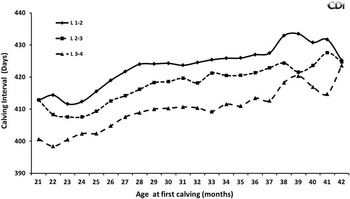
The AFC can also affect the fertility of cows during their first lactation. Younger calving cows must continue to grow to a greater extent after calving and this nutrient demand for growth may be at the expense of fertility. On the other hand, late calving animals are inclined to become too fat and subsequently mobilise more body tissue in early lactation, which also has deleterious consequences (Wathes et al., Reference Wathes, Brickell, Bourne, Swali and Cheng2008). In accord with this, heifers calving for the first time at 25 to 26 months tended to have lower subsequent calving intervals compared with both younger and older AFC groups (Evans et al., Reference Evans, Wallace, Garrick, Dillon, Berry and Olori2006). Similarly, both early (<700 days) and late (>751 days) calving heifers had lower conception rates in the first lactation in comparison with those calving between 700 and 750 days (Ettema and Santos, Reference Ettema and Santos2004). In contrast, another study found no effect of calving age on any measure of reproductive performance during the first lactation (Simerl et al., Reference Simerl, Wilcox and Thatcher1992). Eastham (Reference Eastham2012) studied follow-up fertility data on a large proportion of the UK dairy herd calving for the first time between 2006 and 2008 and with an AFC in the range 21 to 42 months. They found that those calving at 23 to 25 months had the lowest calving intervals after each lactation in comparison with animals calving at >36 months and concluded that the role of fertility was pivotal in maximising lifetime yields (Figure 1).
Relationship between age at first calving (AFC) and subsequent calving intervals after the first, second and third lactations (L). Data are from 322 805 Holstein and British Friesian heifers joining the UK milking herd between 2006 and 2008 with an AFC in the range 21 to 42 months. Heifers calving at around 2 years of age showed the best subsequent fertility. Redrawn from Eastham (Reference Eastham2012), with permission.

We investigated the relationship between AFC and subsequent fertility of 445 Holstein–Friesian heifer calves recruited on 17 UK dairy farms at 1 month of age and monitored until either 5 years of age and/or third calving or removal from the herd (Cooke et al. Reference Cooke, Cheng, Bourne and Wathes2013). Animals were grouped retrospectively based on their actual AFC: <23, 23 to 25, 26 to 30 and >30 months. The mean AFC overall was 796±6 days (26.2 months).Younger calving heifers (<26 months) had the highest growth rate up to 6 months (0.8 to 0.85 kg/day). Heifers in the youngest AFC group were on average 7 months younger at first breeding compared with heifers calving at >30 months. Early calving animals (<23 months) had the best fertility as nulliparous heifers, with 84% conceiving to first service. In contrast, the 26 to 30 month AFC group exhibited the worst fertility, requiring on average 1.7±0.1 services per conception. There was no significant effect of AFC group between 23 and 30 months on days to first service, first service conception rate or services per conception in either of the first two lactations but animals calving at >30 months tended to have worse fertility parameters in both lactations. Using a 1 to 5 scale, these heifers had the highest BCS of 3.8 at first calving in comparison with values of 3.1 to 3.4 in the other AFC groups. Similarly, Carson et al. (Reference Carson, Dawson, McCoy, Kilpatrick and Gordon2002) found that lighter animals with a lower BCS at first calving (2.8 compared with about 3.5 in other groups) produced slightly less milk in the first lactation but had better fertility. Calf disease was also found to affect later fertility, with Hultgren and Svensson (Reference Hultgren and Svensson2010) reporting that severe respiratory disease before 3 months of age in Swedish Red cows was associated with a 12% increase in subsequent calving intervals.
In beef herds there appear to be fewer follow-up studies into the longer term effects of rearing on fertility. In a recent review Endecott et al. (Reference Endecott, Funston, Mulliniks and Roberts2013) concluded that a somewhat lighter-than-usual target weight at breeding (50% to 57% compared with 60% to 65%) reduced rearing costs without impairing future fertility. They thought that for range cattle some winter growth restriction was acceptable provided summer catch-up assured adequate growth to avoid calving difficulties. This was supported by Funston and Deutscher (Reference Funston and Deutscher2004) who compared fertility in beef heifers calving at 53% or 58% mature BW. Their fertility and calf production in the first lactation were similar, although surprisingly the calves born to the 58% group performed less well in the second lactation.
Longevity and lifetime performance
While earlier studies often focussed on performance in the first lactation, the recent trend is to place more emphasis on lifetime performance (total production per day of life from birth) as this has a greater economic and environmental benefit, by reducing the number of replacements which need to be reared. Delaying first calving by a few months or aiming for a greater weight at the same AFC may result in better-grown animals at calving which produce more milk in their first lactation but animals with a lower AFC should start their second lactation earlier. The non-productive period before first calving must be financed from the outputs (milk or meat) of the mature animals. The return on the investment of rearing replacement heifers from birth to first lactation is not fully recovered until at least the end of the first lactation (Bach, Reference Bach2011). Garnsworthy (Reference Garnsworthy2004) calculated that the herd replacements produce a significant proportion of the total greenhouse gas emissions from dairy units. These reasons favour calving animals at a relatively younger age and for them then to maintain a regular calving pattern without excessively long calving intervals.
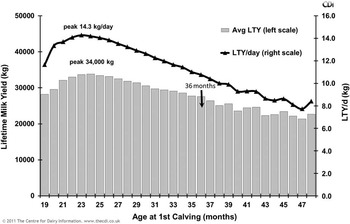
Several studies on Holstein-type herds have concluded that the optimum age to calve in terms of maximising future performance and economic returns is 23 to 24 months (Pirlo et al., Reference Pirlo, Miglior and Speroni2000; Ettema and Santos, Reference Ettema and Santos2004). We found few differences in milk production over two lactations according to AFC group, but the >30 months AFC group had the worst fertility in both lactations. Animals calving at 23 to 25 months therefore achieved more days in milk over 5 years, with 45% of their lives in milk production compared with only 34% in the oldest AFC group. Hence total 5-year milk yield was greatest for younger calving animals (Cooke et al., Reference Cooke, Cheng, Bourne and Wathes2013). Similarly, Carson et al. (Reference Carson, Dawson, McCoy, Kilpatrick and Gordon2002) found that lighter animals with a lower BCS at calving (2.8 compared with about 3.5 in other groups) produced slightly less milk in the first lactation but had better fertility. They therefore calved for a second time sooner and produced a similar milk output over 2 lactations. In a survey of nearly 170 000 heifers representing the top 250 UK sires (Richardson, Reference Richardson2011) 92% calved between 23 and 36 months but the range was from 19 to 24 months. Although herd life increased as AFC increased, the lifetime yield peaked at 34 000 kg for an AFC of 23 to 25 months. With every month of calving >26 months the lifetime yield assessed both as total yield and yield per day fell away (Figure 2). Another study concluded that the optimal AFC in tropical Australia was 2 to 2.5 years (Haworth et al., Reference Haworth, Tranter, Chuck, Cheng and Wathes2008). These cows had the highest lifetime production, as a result of consistent and increasing mean daily yields in their first three lactations, and the highest longevity index (calculated as milk production per day of life). In this study both AFC and first lactation milk yield showed highly significant negative correlations to the longevity index, indicating that both older ages at calving and higher first lactation yields contributed to a reduced lifetime efficiency.
Relationship between age at first calving and overall lifetime yield (LTY). This is expressed as total LTY (left hand axis, histogram) and LTY/day (right hand axis, line). Data are from 169443 Holstein heifers joining the UK milking herd between 1996 and 1998 with an AFC in the range 19 to 48 months. Heifers calving at around 2 years of age achieved peak LTY values of 34000 kg (total) and 14.3 kg/day whereas for those calving at 3 years (arrow) these values had reduced to 27600 kg and 10.8 kg/day, respectively. The later calving animals therefore produced on average 6400 kg less milk in their lifetimes. Redrawn from Richardson (Reference Richardson2011), with permission.

Bach (Reference Bach2011) determined which factors experienced pre-calving affected post-calving survival in a large data set of 7768 Holstein heifers whose AFC ranged from 662 to 1048 days. Those completing their first lactation had higher pre-weaning growth rates (0.8 v.7 kg/day) and a younger AFC (724 v. 737 days). The number of inseminations received as a heifer was negatively related to their survival and those completing their first lactation had a first service conception rate of 60.3% v. 50.7% in those which did not finish. Animals which needed >3 inseminations as a heifer were more likely to leave the herd within 50 days in milk. An AFC of >22 months was not associated with decreased survival but as AFC increased above this then survival decreased. Another large retrospective study found that both milk yield and productive life increased with reducing AFC as long as this was not below 21 months (Nilforooshan et al., Reference Nilforooshan and Edriss2004). In accord with this, we found that as AFC increased beyond 25 months, proportionately fewer animals achieved a third calving; the figures were 70% of heifers calving for the first time at 23 to 25 months compared with only 50% of the >30-month AFC group (Cooke et al., Reference Cooke, Cheng, Bourne and Wathes2013). Simerl et al. (Reference Simerl, Wilcox and Thatcher1992) and Evans et al. (Reference Evans, Wallace, Garrick, Dillon, Berry and Olori2006) also found that cows calving at relatively young ages have better survival. Together these findings provide strong evidence that it is more economical to rear heifers to calve at younger ages, and that these heifers will have better survival rates to second and third calving.
Conclusions
The breeding performance of heifers is fundamental for farm profitability. Adequate numbers of replacement animals must be reared which are healthy, calve in a timely fashion and go on to produce calves and milk on a regular basis. This requires good fertility to promote longevity. In order for animals to calve at around 2 years of age they must have been fed sufficiently at all stages not to compromise their growth and they need to remain healthy. Concerns have been raised that high growth rates and calving at 2 years may predispose to calving difficulties and compromise long-term milk production. The majority of evidence, however, supports the view that an AFC of 23 to 25 months is optimal economically and does not have any adverse consequences as long as the heifers are of an adequate BW and stature. On the other hand, excessively high growth rates may be detrimental to fertility and are both unnecessary and uneconomic. Late calving cows are also more likely to be overweight and this also causes problems in the first lactation. Current evidence suggests that under nutrition of young dairy heifers is a widespread problem which should be addressed. Improved monitoring of growth at regular intervals on both beef and dairy units would aid farmers to optimise their heifer management. Economic studies are needed which model the effects of different levels of input to replacement dairy and beef heifers on their subsequent lifetime productivity. These should help to convince farmers that costs associated with putting sufficient resources into rearing well grown and healthy youngstock will be recouped by producing better cows.
Acknowledgements
The authors thank the following organisations for supporting our own work on heifer rearing: DairyCo, Defra, BBSRC and Volac. They are also very grateful to many colleagues, students, farmers and veterinary practices who have assisted with this work. RVC publication number PPH_00650.