




No CrossRef data available.
Article contents
Chickens and pigs as transport hosts for Ascaris, Trichuris and Oesophagostomum eggs
Published online by Cambridge University Press: 28 November 2001
Abstract
Ten chickens and 2 pigs were fed non-embryonated eggs of Ascaris suum, Trichuris suis and Oesophagostomum dentatum. Each chicken was fed approximately 15000 eggs of each parasite species while approximately 300000 eggs were given to each of the pigs. After passage in chickens 8.3% of O. dentatum eggs were recovered in faeces compared to 61.1% and 41.6% of A. suum and T. suis eggs, respectively. After passage in pigs the percentages were 38.4%, 49.1% and 30.3%, respectively. After embryonation in the laboratory, 1000 eggs of each parasite species having passed through chickens or pigs or having been kept in the laboratory as controls were fed to groups of 6 pigs to check the infectivity. The number of A. suum recovered from pigs was similar in the 3 groups with 34.0, 52.8 and 41.8%, respectively. The recovery of T. suis in the pig passage group was 54.0% which was significantly lower than the recovery in the chicken passage group (81.8%) and the laboratory group (88.0%). The number of O. dentatum recovered was not significantly different among the 3 experimental groups, the percentage recovery being 30.5, 9.2 and 28.5%, respectively. One explanation for the lower infectivity of T. suis in the pig passage group may be that the eggs have been sublethally damaged through their passage. The results demonstrate that chickens and pigs can act as transport hosts for A. suum, T. suis and O. dentatum, and it is highly probable that these domestic animals are able to act also as transport hosts for the human parasite equivalents. This will have important consequences for the environmental and behavioural strategies in human helminth control programmes.
Information
- Type
- Research Article
- Information
- Copyright
- © 2002 Cambridge University Press
INTRODUCTION
Infections with Ascaris lumbricoides and Trichuris trichiura are the most prevalent human intestinal helminth infections in the world, with high prevalences and intensities among children below the age of 10–12 years (Crompton, 1989; Bundy & Cooper, 1989). Transmission occurs by ingestion of infective eggs in soil, food, water or other objects contaminated with excreta. Especially for pre-school children most infections are believed to take place in, or close to, the house compound in which children live and play.
Hookworms are believed to infect approximately 1 billion people worldwide (Stoltzfus & Dreyfuss, 1998). Most hookworm infections are acquired by L3 larvae penetrating the host skin on contact with faeces contaminated soil or vegetation. All Necator americanus infections occur in this way while infections with Ancylostoma duodenale may also be acquired by ingestion of the infective larvae in soil, water or on raw vegetables. Although Oesophagostomum spp. normally infects ruminants, pigs and monkeys, Oesophagostomum bifurcum is a frequent human parasite in some parts of West Africa (Polderman & Blotkamp, 1995). Eggs of O. bifurcum are indistinguishable from those of hookworms, the L1 larvae develop into an infective L3 larvae in the soil and the adult parasite lives in the intestinal lumen of the host. Although not fully elucidated in humans, the infection is believed to occur by ingestion. Thus, Oesophagostomum spp. have a very similar life-cycle to that of A. duodenale.
In theory, infections with A. lumbricoides, T. trichiura and hookworm can be controlled if a hygienic latrine is constructed and the necessary health education is provided for all members of the family to ensure that the latrine is used. However, control efforts will be jeopardized if parasite eggs are spread to the surroundings by domestic animals such as chickens and pigs.
Chickens are prevalent in Tanzania where most families have 10 chickens or more (Minga et al. 1989). They move freely around in almost every compound constantly searching for food in the yard, refuse dump and among human faeces. Thus, it is unavoidable that chickens accidentally take up parasite eggs, which have been deposited in human faeces. Embryonated eggs of A. suum are known to hatch inside chickens, migrate in the form of larvae migrans and accumulate in livers and lungs (Permin et al. 2000). Non-embryonated Ascaris and Trichuris eggs (probably of human origin) have been found in chicken droppings and experimentally it has been demonstrated that although a majority of A. lumbricoides eggs were destroyed in the chicken gut those which passed through were able to develop to the embryonated stage (Otto, Cort & Keller, 1931). Non-embryonated hookworm eggs (possibly N. americanus) passed through young and adult chicken guts and were able to hatch and develop to the L3 stage (Ackert, 1922).
Moreover, pigs scavenge around in the compound and non-embryonated eggs of A. suum and T. suis are regularly found to pass through the intestine of pigs (Boes, Nansen & Stephenson, 1997; Boes et al. 1998). Likewise, non-embryonated hookworm eggs were able to pass through young pigs and subsequently to hatch and reach the infective stage (Ackert & Payne, 1922; Chandler, 1924).
Although eggs of Ascaris, Trichuris and hookworm seem to develop normally after passage, we do not know whether they retain their infectivity. If chickens and/or pigs are able to act as transport hosts for A. suum, T. suis and O. dentatum it is also very likely that they are able to act as transport hosts for A. lumbricoides, T. trichiura, O. bifurcum and the human hookworms. This will have important consequences for the environmental and behavioural control strategies of these parasites in humans.
The objective of this study was to investigate, whether non-embryonated eggs of A. suum, T. suis and O. dentatum are capable of passing through the intestine of chickens and pigs, respectively, and if so, whether they then develop normally and retain infectivity for pigs.
MATERIALS AND METHODS
Infection material
Pigs were infected orally with embryonated A. suum (CEP-strain, Roepstorff & Murrell, 1997), T. suis (CEP-strain, Roepstorff & Murrell, 1997) or O. dentatum (EH-strain, Roepstorff, Bjørn & Nansen, 1987) eggs and at patency faeces were collected and the non-embryonated eggs recovered by washing the faeces through a series of sieves, collecting the eggs on a 20 μm sieve (Roepstorff & Nansen, 1998). The eggs from the faeces were then divided into 3 parts. One part was kept in the laboratory (laboratory control), one was fed to chickens (chicken passage) and one to pigs (pig passage).
Passage of eggs in chickens and pigs
Ten 20-week-old chickens were fed approximately 15000 non-embryonated eggs of A. suum, T. suis and O. dentatum by means of a pipette placed behind the tongue. The chickens were kept in individual cages and faeces were collected every 12 h for 48 h. Faeces from each 12-h period were mixed and weighed and parasite eggs present were estimated using the McMaster concentration technique described by Permin & Hansen (1998). Similarly, two 7-week-old pigs were fed approximately 300000 non-embryonated eggs of A. suum, T. suis and O. dentatum by stomach tube. Faeces were collected every 12 h during the first 48 h and treated as above. The egg doses for the passage were selected in order to be sure that enough eggs could be recovered for the infectivity study. Because of the bigger size and the higher stool volume of the pigs, these were fed more eggs than the chickens.
Embryonation
The A. suum and T. suis eggs which had passed through the chickens and pigs were collected, concentrated by sieving (see above) and embryonated in vermiculite (Bie and Berntsen A/S, Denmark) at 25 °C for 12–16 weeks. Vermiculite was added to optimize conditions for embryonation of the eggs (Burden & Hammet, 1976). The O. dentatum eggs were cultured in a mixture of vermiculite and helminth-free pig faeces for 3 weeks (Roepstorff & Nansen, 1998). The pig faeces were added in order to avoid starvation of the O. dentatum larvae. The larvae were recovered using Baermann's method, transferred to water and kept at 10 °C until the infectivity test in pigs.
Infectivity test in pigs
Sixty-three parasite-naïve pigs (7 weeks old) were infected as shown in Fig. 1. For each parasite, 6 pigs were inoculated with 1000 eggs/larvae which have passed through chickens, 6 pigs with 1000 eggs/larvae which have passed through pigs and 6 pigs with 1000 eggs/larvae from the laboratory control. For each parasite, 3 pigs were kept together with the experimental pigs to control for possible pen contamination. Before installation of the pigs, the pens were thoroughly cleaned and the surface heated with a burner to obtain parasite-free pens. The pigs infected with A. suum were slaughtered on day 12 post-inoculation (p.i.) when the large majority of larvae have finished migration and accumulated in the small intestine and before the initiation of expulsion (Roepstorff et al. 1997). The A. suum larvae were isolated from the small intestinal contents using the agar technique (Slotved et al. 1997). Pigs inoculated with O. dentatum were slaughtered on day 28 p.i. and the worms were isolated from 10% of the large intestinal contents by the agar technique (Slotved et al. 1996). T. suis-inoculated pigs were killed on day 42 p.i. and T. suis were recovered by microscopical examination of 20% subsamples of the large intestinal contents after washing on a 250 μm sieve (Roepstorff & Nansen, 1998).

Fig. 1. Experimental design.
Statistics
Statistical analysis was carried out using SPSSTM software. Differences in eggs recovered and in worm burdens among experimental groups were assessed using the non-parametric Kruskal-Wallis test as none of these variables were normally distributed.
RESULTS
Recovery of eggs after passage in chickens and pigs
The percentage recovery of non-embryonated eggs of O. dentatum after passage through chickens was significantly lower (8.3%) than the percentage recovery of A. suum and T. suis eggs (61.1% and 41.6%, respectively) (Table 1). All chickens excreted A. suum eggs during the first 12 h while only 2 continued to do so during the following 12 h (Table 2). Nine out of 10 chickens passed T. suis eggs during the first 12 h (1 did not pass T. suis eggs at all) while only 1 chicken discharged eggs during the 12–24 h period. Only 3 out of 10 chickens excreted O. dentatum eggs and they only did so during the first 12 h. The percentage recovery after passage in 2 pigs was rather similar for the 3 species of eggs, namely 49.1, 30.3 and 38.4%, respectively (Table 1). All 3 types of eggs passed through both pigs, however, while A. suum and T. suis eggs were excreted both after 36 and 48 h, the excretion of O. dentatum eggs stopped completely after 36 h (Table 2).
Table 1. Percentage recovery of Ascaris suum, Trichuris suis and Oesophagostomum dentatum eggs after passage through the intestine of chickens and pigs, respectively (Chickens were given approximately 15000 eggs of each parasite species and approximately 300000 eggs were fed to pigs.)


Infectivity of eggs after passage in chickens and pigs
Table 3 summarizes the number of A. suum, T. suis and O. dentatum recovered from the recipient pigs. The number of A. suum recovered on day 12 p.i. was similar in the 3 experimental groups (chicken passage, pig passage and laboratory control groups, P = 0.16), the percentage recovery being 34.0, 52.8 and 41.8%, respectively. The percentage recovery of T. suis in the pig passage group was 54.0%, which was significantly lower (P = 0.03) compared to the recovery in the chicken passage group and laboratory group, respectively (81.8 and 88.0%). The number of O. dentatum recovered on day 28 p.i. was lowest in the pig passage group, the percentage recovery being 30.5, 9.2 and 28.5%, respectively. However, this difference was not statistically significant (P = 0.42). The pen control pigs had no infection of either T. suis or O. dentatum, while the 3 pen control pigs had a few A. suum worms each (1, 1, 11).

DISCUSSION
The present study showed that non-embryonated eggs of A. suum, T. suis and O. dentatum are able to embryonate, to develop normally and to become infective to pigs after they have passed through the digestive tract of chickens as well as of pigs. This means that chickens and pigs can act as transport hosts for the pig intestinal helminths and, therefore, probably also for the human equivalents.
Approximately half of the A. suum and T. suis eggs were lost in the chicken gut while more than 90% of the O. dentatum eggs were lost. Otto and co-workers (1931) found recovery rates of 16.5, 33.5 and 40.5% of A. lumbricoides eggs in 3 experimental chickens and the high loss was explained by the grinding action of the gizzard. Similarly, less than 10% of the hookworm eggs ingested by chickens produced infective larvae in a study in Trinidad (Ackert, 1922). The author explains this failure by mechanical damage of eggs in the gizzard, injury from the high level of ammonium in chicken faeces and malnutrition of the larvae in the faeces. Our results correspondingly showed that the thin-shelled O. dentatum eggs are more vulnerable to the passage through the chicken and/or to the stay in the chicken faeces. Starvation of the O. dentatum larvae was avoided by adding pig faeces from helminth-negative donors to the vermiculite during embryonation.
Slightly fewer than 50% of eggs of all 3 helminths were recovered after passage through the digestive tract of pigs in the present study. This is in contrast to earlier studies which found that all Ascaris and Trichuris eggs (Ramsey, 1924 cited by Otto et al. 1931), >99% of N. americanus eggs (Jones, 1976) and 95% of the O. bifurcum and N. americanus eggs were destroyed through passage in pigs (Steenhard et al. 2000). At the other extreme, a very high proportion of hookworm eggs swallowed by pigs were recovered in pig faeces (Ackert & Payne, 1922; Ramsey, 1924 cited by Otto et al. 1931). Also, more recent studies have shown that significant numbers of A. suum (Jones, 1976) and A. suum and T. suis eggs (Boes et al. 1997; Boes et al. 1998) might pass through the intestine without being destroyed.
Although passage through chickens reduced the number of parasite eggs, the eggs which have passed successfully, developed to normal infectivity. Thus, those eggs, which have not been destroyed in the gizzard or during their stay in the faeces, are unharmed by the rather short passage through the digestive tract. In contrast, the passage through the pig had a deleterious effect on T. suis infectivity, but not on A. suum and O. dentatum infectivity. One explanation could be that some of the T. suis eggs were sublethally damaged during passage through pigs, e.g. by the low pH in the stomach or by digestive enzymes perhaps in combination with the prolonged stay (1–2 days) at body temperature. Passage through chicken and pigs in our experiment took place during early embryonation, and in a laboratory study Burden & Hammet (1976) showed that even though T. suis eggs were able to embryonate under different physical/chemical conditions, these conditions severely influenced the later infectivity to pigs. However, it is difficult to explain why the same phenomenon does not exist for eggs of A. suum and O. dentatum. Even if the hypothesis of sublethal damage is true, it is not known whether passage through pigs will influence the infectivity of T. trichiura to the human host.
We conclude that chickens and pigs can act as transport hosts for A. suum, T. suis and O. dentatum and it is highly probable that these domestic animals are able to act also as transport hosts for the human parasite equivalents. Although the number of eggs is reduced through the passage, it is possible that domestic animals may transport eggs from places away from human contact to places where children and adults, unaware of the possible risks, have contact with contaminated soil. This is particularly true with respect to chickens because these domestic animals are allowed to move around inside the houses. The results of the present study have therefore important consequences for the environmental and behavioural strategies in human helminth control programmes.
Claus Dahl, Marlene Høg and Pernille Ginsbo are thanked for their technical assistance. Jørgen Olesen and Niels Midtgaard are thanked for taking well care of all the animals. The Danish National Research Foundation (Danish Centre for Experimental Parasitology) and the Danish Bilharziasis Laboratory are both acknowledged for their financial support of the project.
References
ACKERT, J. E. (1922). Investigations on the control of hookworm disease. IV. The relation of the domestic chicken to the spread of hookworm disease. American Journal of Hygiene 2, 26–38.Google Scholar
ACKERT, J. E. & PAYNE, F. K. (1922). Investigations on the control of hookworm disease. V. The domestic pig and hookworm dissemination. American Journal of Hygiene 2, 39–50.Google Scholar
BOES, J., NANSEN, P. & STEPHENSON, L. (1997). False-positive Ascaris suum egg counts in pigs. International Journal for Parasitology 27, 833–838.CrossRefGoogle Scholar
BOES, J., JOHANSEN, M. V., ERIKSEN, L., BøGH, H. O., NANSEN, P. & STEPHENSON, L. S. (1998). False-positive Trichuris suis egg counts in pigs in relation to coprophagia. Parasite 5, 91–93.CrossRefGoogle Scholar
BUNDY, D. A. P. & COOPER, E. S. (1989). Trichuris and trichuriasis in humans. Advances in Parasitology 28, 107–173.CrossRefGoogle Scholar
BURDEN, D. J. & HAMMET, N. C. (1976). A comparison of the infectivity of Trichuris suis ova embryonated by four different methods. Veterinary Parasitology 2, 307–311.CrossRefGoogle Scholar
CHANDLER, A. C. (1924). Animals as disseminators of hookworm eggs and larvae. The Indian Medical Gazette 59, 533–537.Google Scholar
CROMPTON, D. W. T. (1989). Biology of Ascaris lumbricoides. In Ascariasis and its Prevention and Control (ed. CROMPTON, D. W. T. NESHEIM, M. C. &PAWLOWSKI, Z. S.), pp. 9–44. Taylor & Francis, London.
JONES, H. I. (1976). The role of pigs in the dissemination of Ascaris and hookworm infections in Papua New Guinea. Papua New Guinea Medical Journal 19, 153–155.Google Scholar
MINGA, U. M., KATULE, A. M., MAEDA, T. & MUSASA, J. (1989). Potential and problems of the traditional chicken industry in Tanzania. In Proceedings of the Seventh Tanzania Veterinary Association Scientific Conference, Arusha, Tanzania, December 1989.Google Scholar
OTTO, G. F., CORT, W. W. & KELLER, A. E. (1931). Environmental studies of families in Tennessee infested with Ascaris, Trichuris and hookworm. American Journal of Hygiene 14, 156–193.CrossRefGoogle Scholar
PERMIN, A. & HANSEN, J. W. (1998). Epidemiology, diagnosis and control of poultry parasites. A FAO Animal Health Manual, Food and Agriculture Organization of the United Nations, Rome, Italy.Google Scholar
PERMIN, A., HENNINGSEN, E., MURRELL, K. D., ROEPSTORFF, A. & NANSEN, P. (2000). Establishment of Ascaris suum larvae in pigs fed A. suum-infected chicken liver and lungs. International Journal for Parasitology 30, 867–868.Google Scholar
POLDERMAN, A. M & BLOTKAMP, J. (1995). Oesophagostomum infections in humans. Parasitology Today 11, 451–456.CrossRefGoogle Scholar
ROEPSTORFF, A., BJøRN, H. & NANSEN, P. (1987). Resistance of Oesophagostomum spp. in pigs to pyrantel citrate. Veterinary Parasitology 24, 229–239.CrossRefGoogle Scholar
ROEPSTORFF, K. & MURRELL, K. D. (1997). Transmission dynamics of helminth parasites of pigs on continuous pasture: Ascaris suum and Trichuris suis. International Journal for Parasitology 27, 563–572.CrossRefGoogle Scholar
ROEPSTORFF, A., ERIKSEN, L., SLOTVED, H.-C. & NANSEN, P. (1997). Experimental Ascaris suum infection in the pig: worm population kinetics following single inoculations with three doses of infective eggs. Parasitology 12, 443–452.CrossRefGoogle Scholar
ROEPSTORFF, A. & NANSEN, P. (1998). Epidemiology, diagnosis and control of helminth parasites in swine. A FAO Animal Health Manual, Food and Agriculture Organization of the United Nations, Rome, Italy.Google Scholar
SLOTVED, H. C., BARNES, E. H., BJORN, H., CHRISTENSEN, C. M., ERIKSEN, L., ROEPSTORFF, A. & NANSEN, P. (1996). Recovery of Oesophagostomum dentatum from pigs by isolation of parasites migrating from large intestinal contents embedded in agar-gel. Veterinary Parasitology 63, 237–245.CrossRefGoogle Scholar
SLOTVED, H. C., BARNES, E. H., ERIKSEN, L., ROEPSTORFF, A., NANSEN, P. & BJORN, H. (1997). Use of agar-gel technique for large scale application to recover Ascaris suum larvae from intestinal contents of pigs. Acta Veterinaria Scandinavica 38, 207–212.Google Scholar
STEENHARD, N. R., STOREY, P. A., YELIFARI, L., PIT, D. S. S., NANSEN, P. & POLDERMAN, A. M. (2000). The role of pigs as transport hosts of the human helminths Oesophagostomum bifurcum and Necator americanus. Acta Tropica 76, 125–30.CrossRefGoogle Scholar
STOLTZFUS, R. J. & DREYFUSS, M. L. (1998). Guidelines for the Use of Iron Supplements to Prevent and Treat Iron Deficiency Anemia. INACG/WHO/UNICEF, Washington, DC.
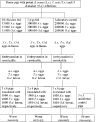
Fig. 1. Experimental design.
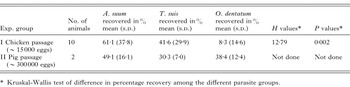
Table 1. Percentage recovery of Ascaris suum, Trichuris suis and Oesophagostomum dentatum eggs after passage through the intestine of chickens and pigs, respectively
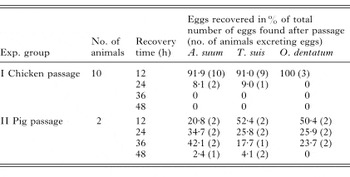
Table 2. Relative percentage recovery at 12, 24, 36 and 48 h of Ascaris suum, Trichuris suis and Oesophagostomum dentatum eggs after passage through the intestine of chickens and pigs, respectively
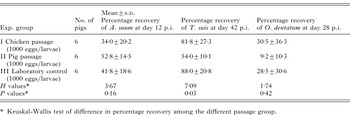
Table 3. Percentage recovery of Ascaris suum, Trichuris suis and Oesophagostomum dentatum in recipient pigs inoculated with 1000 infective eggs/larvae of each parasite species which have passed through chickens, pigs or been kept in the laboratory before embryonation
 You have
Access
- 15
- Cited by