Introduction
Self-harm in young people is often a conspicuous marker of emotional problems (Borschmann et al., Reference Borschmann, Becker, Coffey, Spry, Moreno-Betancur, Moran and Patton2017), reflecting the dysregulation of anxiety, anger and distress (Skegg, Reference Skegg2005; Klonsky, Reference Klonsky2006). The prevalence of self-harm in young people appears to be rising (Morgan et al., Reference Morgan, Webb, Carr, Kontopantelis, Green, Chew-Graham, Kapur and Ashcroft2017), particularly in young women (McManus et al., Reference Mcmanus, Bebbington, Jenkins and Brugha2016). In the UK Adult Psychiatric Morbidity Survey, for example, the proportion of 16-to-24-year-old women reporting a history of self-harm increased from 6.5% in 2000 (Singleton et al., Reference Singleton, Bumpstead, O'BRIEN, Lee and Meltzer2003) to 11.7% in 2007 (McManus et al., Reference Mcmanus, Meltzer, Brugha, Bebbington and Jenkins2009) to 25.7% in 2014 (McManus et al., Reference Mcmanus, Hassiotis, Jenkins, Dennis, Aznar, Appleby, McManus, Bebbington, Jenkins and Brugha2014). A similar pattern has been observed in Australia, with nationally representative studies of non-treatment-seeking adolescents reporting lifetime self-harm prevalence rates of 8.3% in 2012 (Moran et al., Reference Moran, Coffey, Romaniuk, Olsson, Borschmann, Carlin and Patton2012) and 18.8% in 2016 (Zubrick et al., Reference Zubrick, Hafekost, Johnson, Lawrence, Saw, Sawyer, Ainley and Buckingham2016). Due in part to the rapid emotional development and changes in social and affective processing during adolescence (Oldershaw et al., Reference Oldershaw, Grima, Jollant, Richards, Simic, Taylor and Schmidt2009; Crone and Dahl, Reference Crone and Dahl2012), the great majority of adolescents who self-harm have ceased doing so by their adult years (Moran et al., Reference Moran, Coffey, Romaniuk, Olsson, Borschmann, Carlin and Patton2012). However, this group typically experiences persisting difficulties including higher rates of adult substance use (Mars et al., Reference Mars, Heron, Crane, Hawton, Lewis, Macleod, Tilling and Gunnell2014), common mental disorder (Mars et al., Reference Mars, Heron, Crane, Hawton, Lewis, Macleod, Tilling and Gunnell2014) and wide-ranging social disadvantage (Borschmann et al., Reference Borschmann, Becker, Coffey, Spry, Moreno-Betancur, Moran and Patton2017). Given these difficulties, a history of self-harm may be a potentially useful marker of social and emotional vulnerability on becoming a parent. To our knowledge, however, no research has examined whether pre-conception self-harm is a marker of such vulnerability in the perinatal period. Using unique, prospective data spanning two generations and 25 years from the Victorian Adolescent Health Cohort Study (VAHCS) (Patton et al., Reference Patton, Coffey, Lynskey, Reid, Hemphill, Carlin and Hall2007) and the Victorian Intergenerational Health Cohort Study (VIHCS) (Patton et al., Reference Patton, Romaniuk, Spry, Coffey, Olsson, Doyle, Oats, Hearps, Carlin and Brown2015), we sought to prospectively describe the associations between pre-conception self-harm and two perinatal outcomes: maternal depressive symptoms and mother–infant bonding problems. These relationships were also examined separately for self-harming occurring during adolescence and self-harm occurring during young adulthood.
Method
Sample
The VAHCS is a 10-wave longitudinal cohort study of the health of 1943 young people living in the state of Victoria, Australia, commencing in 1992. At baseline, a representative sample of mid-secondary school adolescents was selected using a two-stage cluster sampling procedure. At stage one, 45 schools were chosen at random from a stratified frame of government, Catholic and independent schools, with a probability proportional to the number of year 9 (age 14–15) students in the schools in each stratum. At stage two, two intact classes were selected at random from each participating school. One class entered the study in the latter part of the ninth school year (wave 1) and the second class 6 months later (wave 2). One school did not continue beyond wave 1 with a loss of 13 participants, leaving 44 schools. Participants were subsequently interviewed at four 6-month intervals during the teenage years (waves 3–6; ages 15–17 years) and at four follow-up waves in adulthood at ages 20–21 years (wave 7), 24–25 years (wave 8), 28–29 years (wave 9) and 34–35 years (wave 10; data not included in this study). The participant flow diagram is provided in the online Supplementary Materials. At each wave participants completed a range of assessments relating to health and wellbeing. Written consent for participation was initially provided by parents after receiving a complete description of the study. At each survey point informed verbal consent was explicitly sought from each participant.
During the ninth wave of VAHCS (conducted in 2006 and 2007), when participants were aged 28–29 years, we commenced identification, recruitment and assessment of women and their offspring for the VIHCS. Between 2006 and 2013 (i.e. when all women were between the ages of approximately 29 and 36 years) we contacted active VAHCS participants every 6 months to identify new pregnancies. Women who were pregnant or who had an infant under 1-year of age were invited to participate in up to three waves of computer-assisted telephone interviews: one in the third trimester of pregnancy (VIHCS wave 1), one 2 months post-birth (VIHCS wave 2) and one 12 months post-birth (VIHCS wave 3). Women were invited to participate for every eligible pregnancy and every eligible child (including twins) during the study period, thus some women completed assessments relating to more than one of their offspring. Assessments included a range of measures of maternal and child health, wellbeing and development.
Analysis measures
From the range of assessments available, the present study utilised the following VAHCS pre-conception and VIHCS perinatal measures:
Pre-conception measures (VAHCS)
Self-harm (VAHCS waves 3–9)
This was assessed at each wave from waves 3–9 (i.e. ages 15–29 years), using the following question: ‘In the last 6 months have you ever deliberately hurt yourself or done anything that you knew might have harmed you or even killed you?’ Participants who responded in the affirmative to this question were then asked to describe the nature and timing of each self-harm event. These detailed responses were then coded into five sub-types of self-harm by GP and confirmed by PM: cutting or burning; self-poisoning; deliberate non-recreational risk-taking; self-battery and other (including attempted self-drowning, hanging, intentional electrocution and suffocating). Participants could report more than one category of self-harm within a wave or in different waves. They were classified with ‘any self-harm’ by wave if they were identified to have reported any of these individual categories. Self-harm occurring in any of waves 3–6 (ages 15–17) was coded as ‘adolescent self-harm’ and self-harm in waves 7–9 (ages 20–29) was coded as ‘young adult self-harm’.
Mental health problems (VAHCS waves 1–9)
Symptoms of depression and anxiety were assessed using the revised Clinical Interview Schedule (CIS-R) (Lewis et al., Reference Lewis, Pelosi, Glover, Wilkinson, Stansfeld, Williams and Shepherd1988) during waves 1–7 of VAHCS (ages 14–21 years). These scores were dichotomised with a cut-off of 12 or more indicating current mental health problems for which clinical intervention would be appropriate (Lewis and Williams, Reference Lewis and Williams1989). In VAHCS waves 8 and 9 (ages 24–25 and 28–29 years), current symptoms of depression and anxiety were assessed with the General Health Questionnaire (GHQ-12), with a cut-off of three or more used to identify high common mental disorder symptoms (Goldberg et al., Reference Goldberg, Gater, Sartorius, Ustun, Piccinelli, Gureje and Rutter1997; Donath, Reference Donath2001). In wave 9, the Composite Diagnostic Interview (CIDI) (WHO, 1997; Kessler et al., Reference Kessler, Andrews, Mroczek, Ustun and Wittchen1998) was additionally used to assess major depressive disorder and anxiety disorders (generalised anxiety disorder, social anxiety, panic disorder and agoraphobia), defined according to the International Classification of Diseases, 10th revision (ICD-10) (WHO, 2004). The presence of adolescent mental health problems was defined based on scoring above the CIS-R cut-off at any time during the first 6 waves of VAHCS (aged 14–17 years). Young adult mental health problems were defined as the presence of any mental disorder or high levels of common mental disorder symptoms based on the CIS-R at wave 7 (20–21 years), the GHQ-12 at wave 8 (24–25 years) or the GHQ-12 and CIDI at wave 9 (28–29 years).
Perinatal self-rated measures (VIHCS waves 1–3)
Depressive symptoms
The Edinburgh Postnatal Depression Scale (EPDS) (Cox et al., Reference Cox, Holden and Sagovsky1987) was used to assess depressive symptoms during the third trimester and at 2 months and 12 months after birth. This 10-item screening measure was designed and validated for use in the postnatal period (Cox et al., Reference Cox, Holden and Sagovsky1987) and has also been validated for use in pregnancy (Murray and Cox, Reference Murray and Cox1990). Responses on a four-point scale (0–3) were summed to give a score out of a maximum of 30, with higher values indicating more severe symptoms. This was used as a continuous variable.
Mother–infant bonding problems
The Postpartum Bonding Questionnaire (PBQ) (Brockington et al., Reference Brockington, Fraser and Wilson2006), a 25-item scale with five-point response options, was used to assess mother–infant bonding problems at 2 months and 12 months after birth. Participants’ total PBQ scores (calculated by adding all scores from the four subscales; ‘Impaired bonding’, ‘Rejection and anger’, ‘Anxiety and care’ and ‘Risk of abuse’) were used in all analyses. The maximum possible score is 125, with higher values indicating greater subjective mother–infant bonding problems. This was also used as a continuous variable.
Potential confounders
The following variables were included in the adjusted models: the participant's parents’ highest level of education and history of divorce or separation, and the participant's concurrent mental health problems at the time of exposure. Therefore, when examining any pre-conception or adolescent self-harm, we adjusted for adolescent mental health problems and, when examining young adult self-harm, we adjusted for young adult mental health problems. The assessment of pre-conception mental health problems is described above (see section ‘Mental health problems (VAHCS waves 1–9)’). We did not adjust for any other characteristics measured during pregnancy or the postnatal period, which could potentially lie on the causal pathway between pre-conception self-harm and perinatal outcomes.
Data analysis
We restricted analyses to women who participated in at least one adolescent and one young adult wave of VAHCS and at least one perinatal wave of VIHCS. In total, 86.6% of the women with eligible pregnancies participated in at least one perinatal wave of VIHCS. Compared to women who did not participate, the participating women were less likely to have been born outside Australia, reported less cannabis use in young adulthood, and had a lower prevalence of depressive and anxiety symptoms in young adulthood (Patton et al., Reference Patton, Romaniuk, Spry, Coffey, Olsson, Doyle, Oats, Hearps, Carlin and Brown2015). Among women who participated in VIHCS, non-response to each wave of pre-conception data collection varied from 2.9 (wave 9) to 10.9% (wave 6). The proportion of participants missing all adolescent or all young adulthood waves for either self-harm or mental health problems was low (<5%). There was more substantial missing data for depressive symptoms during the third trimester of pregnancy (31.2% missing) and for depressive symptoms and mother–infant bonding problems in the postnatal period (5.2–11.9% missing). These missing data were largely a consequence of the design of the VIHCS study, with some pregnancies identified too late for women to participate in the antenatal or early postnatal phase.
We used multiple imputation by chained equations (Van Buuren and Oudshoorn, Reference Van Buuren and Oudshoorn1999) to handle missing data. Full details of missing data and the imputation model are provided in the online Supplementary Material. Pre-conception demographic and mental health characteristics were summarised for all participants, using the imputed data. Associations between pre-conception self-harm and each of the two outcomes (perinatal depressive symptoms and mother–infant bonding problems) were examined separately, based on imputed data, with multilevel linear models used to account for the hierarchical data structure. A three-level variance structure was used, with time-point (level 1) nested within pregnancies (for perinatal depressive symptoms) or infants (for mother–infant bonding problems; level 2), which were, in turn, nested within women (level 3).
Three sets of multilevel models were produced for each outcome, considering three characterisations of pre-conception self-harm. The first set of models examined any pre-conception self-harm, the second set examined any adolescent self-harm, and the third set examined any young adult self-harm. In each case, models were initially adjusted for perinatal time-point only, indicating how EPDS and PBQ scores varied over time. Two subsequent models were produced, the first adjusted for the participant's parents’ level of education and divorce/separation, and the second additionally adjusted for participant's concurrent mental health problems at the time of exposure (i.e. adolescent mental health problems for the models examining any pre-conception or adolescent self-harm, and young adult mental health problems for the models examining young adult self-harm).
Furthermore, we estimated marginal means from the adjusted models averaging over the distribution of the covariates, and represented these graphically for depressive symptoms and mother–infant bonding problems at each perinatal time point (third trimester, 2 months and 12 months postpartum) by pre-conception exposure (none, adolescent and young adult self-harm). Adolescent and young adult self-harm were not mutually exclusive phenomena, and participants who reported self-harm during both periods were included in both the adolescent and young adult self-harm groups accordingly.
Additional analyses were conducted to explore the impact of the analytic strategy on the findings. Full details are provided in the online Supplementary Materials. We present full p values throughout and do not interpret findings in a dichotomous manner, in line with recent recommendations by the American Statistical Association (Wasserstein and Lazar, Reference Wasserstein and Lazar2016). All analyses were conducted in Stata version 14.0 (Stata, 2017).
Ethics approval
Ethics approval was obtained from The Royal Children's Hospital's Human Research Ethics Committee for both VAHCS (#21009/33168) and VIHCS (#26032).
Results
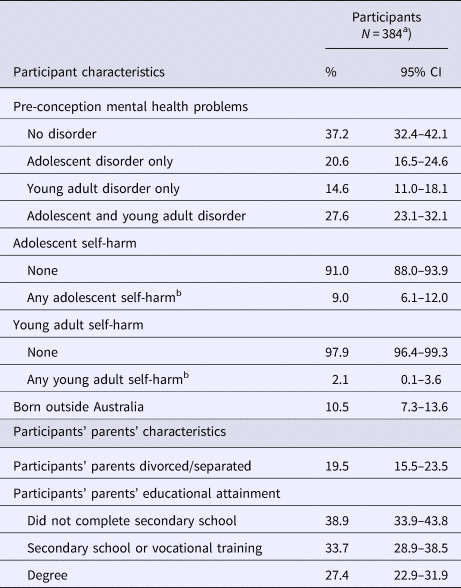
The sample included 384 women reporting data on 564 pregnancies and 573 mother–infant pairs. Of the 384 women included in the study, 218 participated with one pregnancy, 152 with two pregnancies, 12 with three pregnancies and one woman with four pregnancies. The vast majority (98.4%; 555/564) were singleton pregnancies and there were nine twin-pairs accounting for 18 babies. Just over half of the pregnancies (54.6%) included in the sample were to women who were nulliparous, i.e. having their first child. Table 1 contains the pre-conception demographic and mental health characteristics of participants based on imputed data.
Pre-conception demographic and mental health characteristics of the sample

a Multiple imputation used to impute missing data.
b Three women reported both adolescent and young adult self-harm.
Most participants (62.8%) reported mental health problems during adolescence, young adulthood or both. One in 10 women (9.7%) disclosed a pre-conception history of self-harm, with adolescent self-harm reported by a higher proportion of the sample (9.0%) than young adult self-harm (2.1%). Three women reported both adolescent and young adult self-harm.
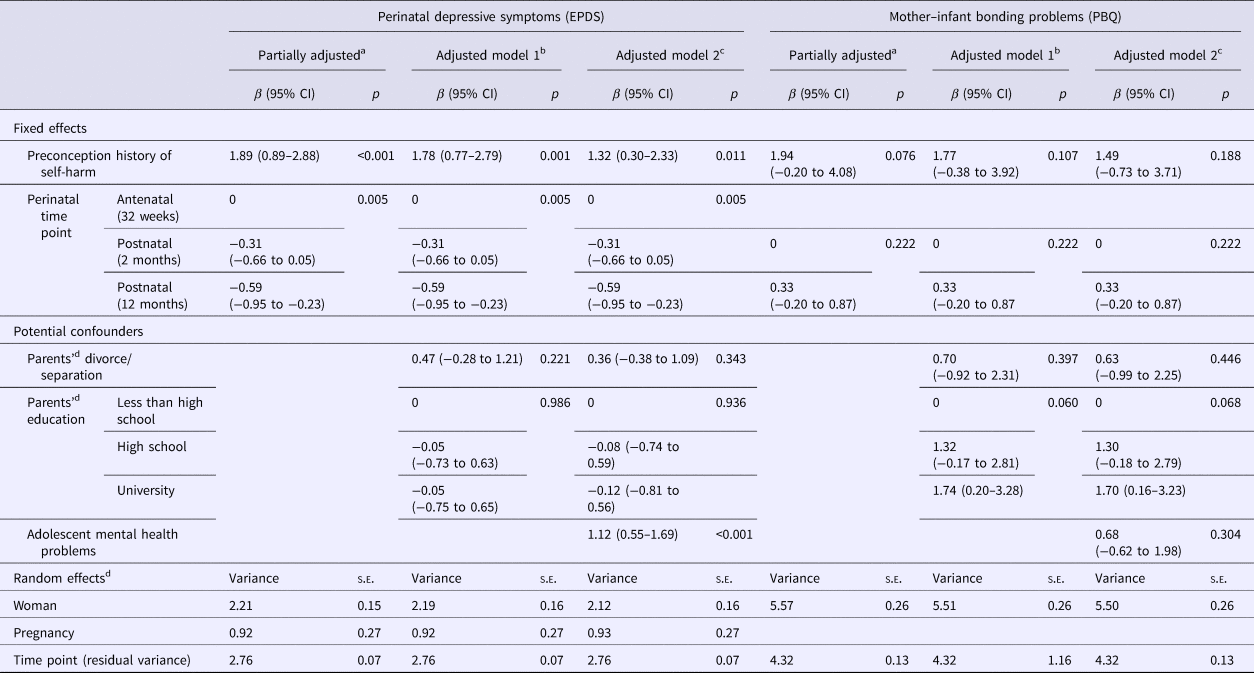
Table 2 displays the adjusted associations between pre-conception self-harm (i.e. any self-harm reported during adolescence or young adulthood), perinatal depressive symptoms and mother–infant bonding problems.
Associations of pre-conception self-harm with perinatal depressive symptoms and mother–infant bonding problems

Women were coded as having a pre-conception history of self-harm if they reported self-harm at any of the adolescent or young adult waves of data collection. Models for perinatal depressive symptoms based on imputed data from 564 pregnancies in 384 women, models for mother–infant bonding problems based on imputed data from 573 mother–infant pairs from 384 women.
For perinatal depressive symptoms, a three-level structure was assumed with repeated assessment measures nesting within pregnancies, and pregnancies within women. For mother–infant bonding problems a two-level variance structure was used with repeated assessment measures nested within women because the variance estimated between mother–infant pairs approached zero and was removed from model.
a Adjusted for perinatal assessment time point only.
b Adjusted for parents’ divorce/separation and parents’ education.
c Adjusted for parents’ divorce/separation, parents’ education and adolescent mental health problems.
d Parental variables refer to the parents of the mother.
Any pre-conception history of self-harm was associated with higher perinatal depressive symptoms both before and after adjusting for confounders [fully adjusted β 1.32, 95% confidence interval (CI) 0.30–2.33]. Perinatal depressive symptom scores were highest during pregnancy and lower at the two postnatal time points. In the fully adjusted model, adolescent mental health problems were also associated with perinatal depressive symptoms, but the independent effect of pre-conception self-harm remained. CIs were wide for the association between pre-conception self-harm and mother–infant bonding problems and, after adjusting for potential confounders, pre-conception self-harm did not predict mother–infant bonding (fully adjusted β 1.49, −0.73 to 3. 71). There was no evidence of a difference in levels of mother–infant bonding problems reported between the two postnatal time points.
Variance component estimates are shown at the bottom of Table 2. The sum of the variance components in a model is the variability in the outcome that remains after controlling for variables included in the models. These estimates suggest that less than half (2.12/5.81, 36% in Table 2) of the remaining variability in depressive symptoms was due to differences between women, with the rest due to variability within women (i.e. different responses given by the same woman at different pregnancies and times). For models of mother–infant bonding problems, the variance related to mother–infant pairs approached zero (i.e. there was no ‘child effect’ for women who had more than one child included in the study). A two-level variance structure was therefore used, and estimates suggest that just over half (5.50/9.82, 56% in Table 2) of the remaining variance in PBQ scores is due to differences between women which were not accounted for by variables included in the model (i.e. between-participant variability) and just under half due to differences between each woman's responses at different times (within-participant variability, potentially due to evolving life circumstances).
The associations between adolescent self-harm, perinatal depressive symptoms and mother–infant bonding problems were then examined (see online Supplementary Table S5). There was evidence for an association between history of adolescent self-harm and perinatal depressive symptoms, but this was attenuated after adjusting for confounders, including adolescent mental health (fully adjusted β 1.02, 95% CI −0.04 to 2.07). CIs were again wide for the analyses of mother–infant bonding, with no evidence of an association between adolescent self-harm and mother–infant bonding problems in the adjusted model (fully adjusted β 1.46, 95% CI −0.82 to 3.74). Additional analyses were conducted to examine the relationships for women who reported self-harm in adolescence only and not in young adulthood. In these models, there was no evidence for an association between adolescent self-harm and either perinatal depressive symptoms (fully adjusted β 0.29, 95% CI −0.78 to 1.35) or mother–infant bonding problems (fully adjusted β −0.02, 95% CI −2.41 to 2.36).
Finally, the relationships between young adult self-harm, perinatal depressive symptoms and mother–infant bonding problems were examined (see online Supplementary Table S6). Despite young adult self-harm being rare, there was evidence from the adjusted models that young adult self-harm was associated with considerably higher scores for both perinatal depressive symptoms (fully adjusted β 5.40, 95% CI 3.42–7.39) and mother–infant bonding problems (fully adjusted β 7.51, 95% CI 3.09–11.9).
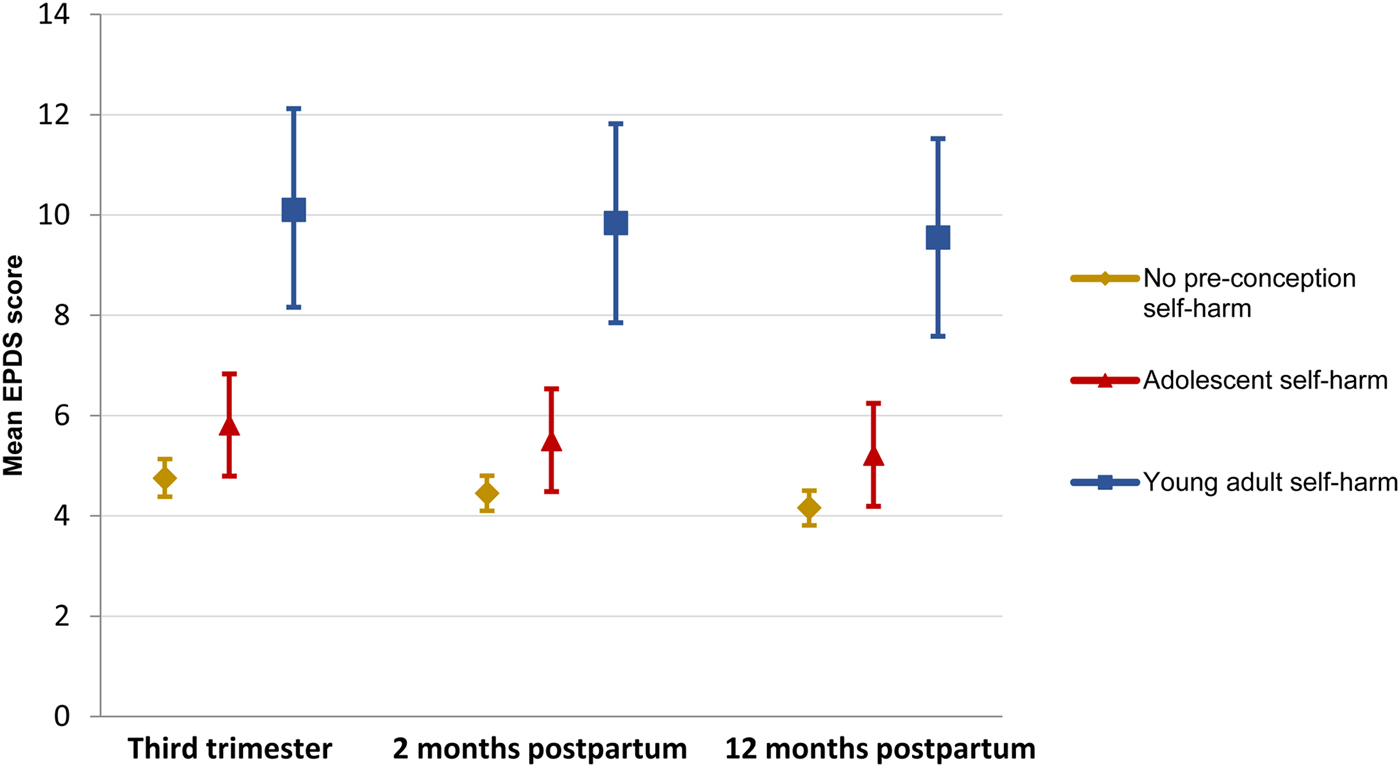
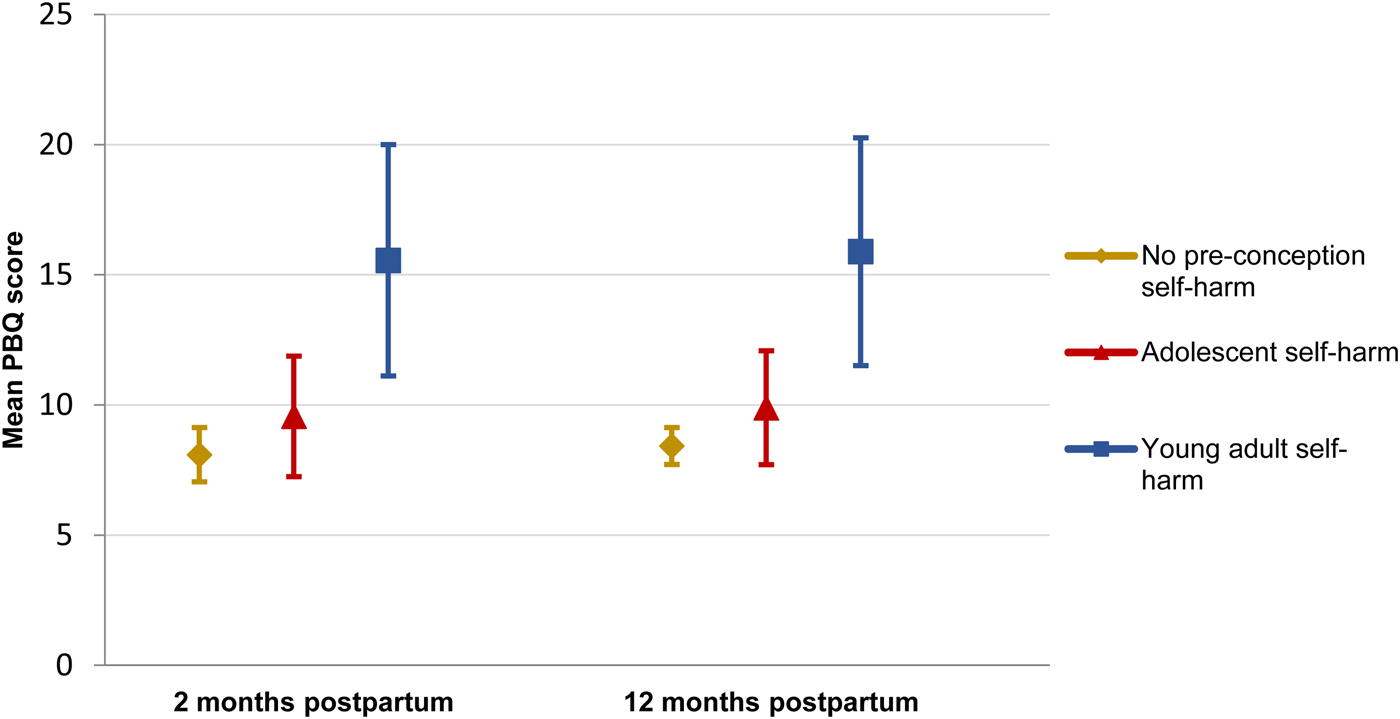
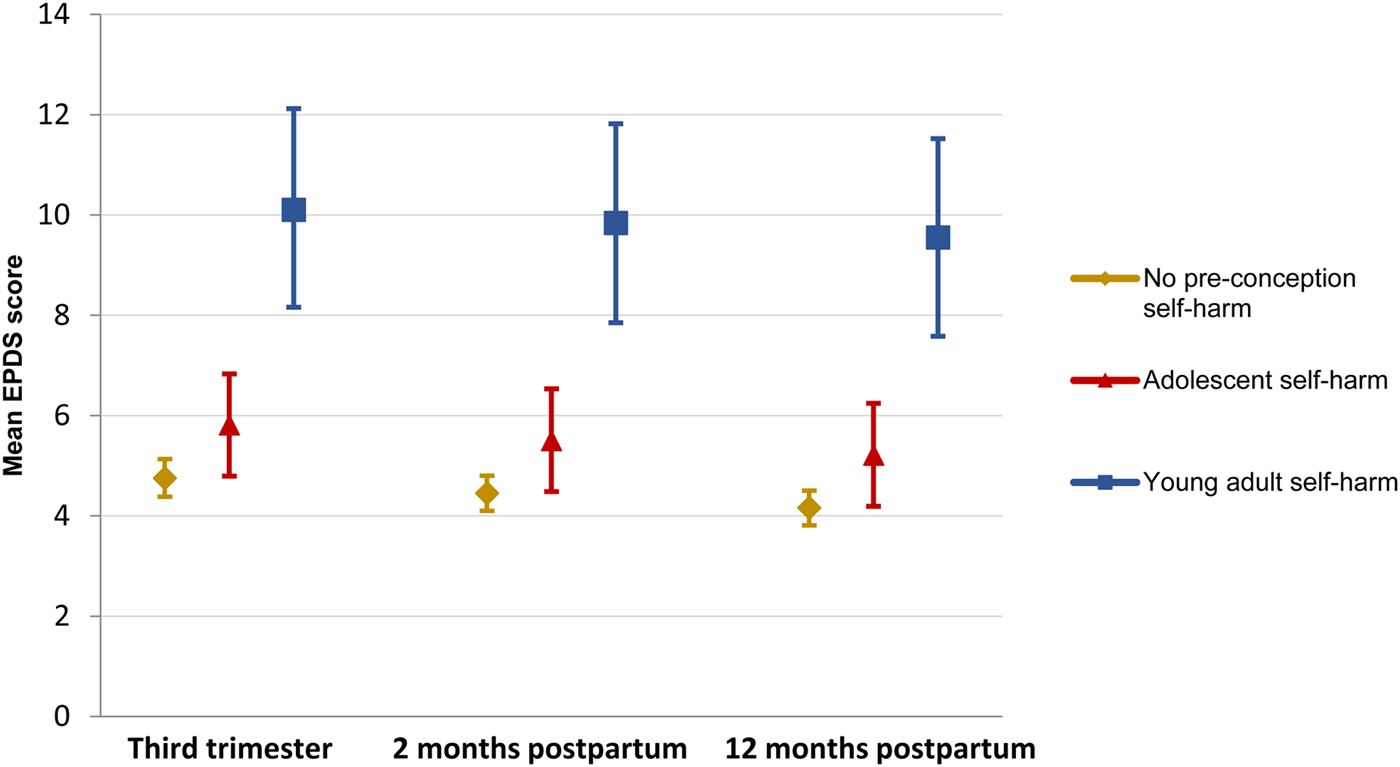
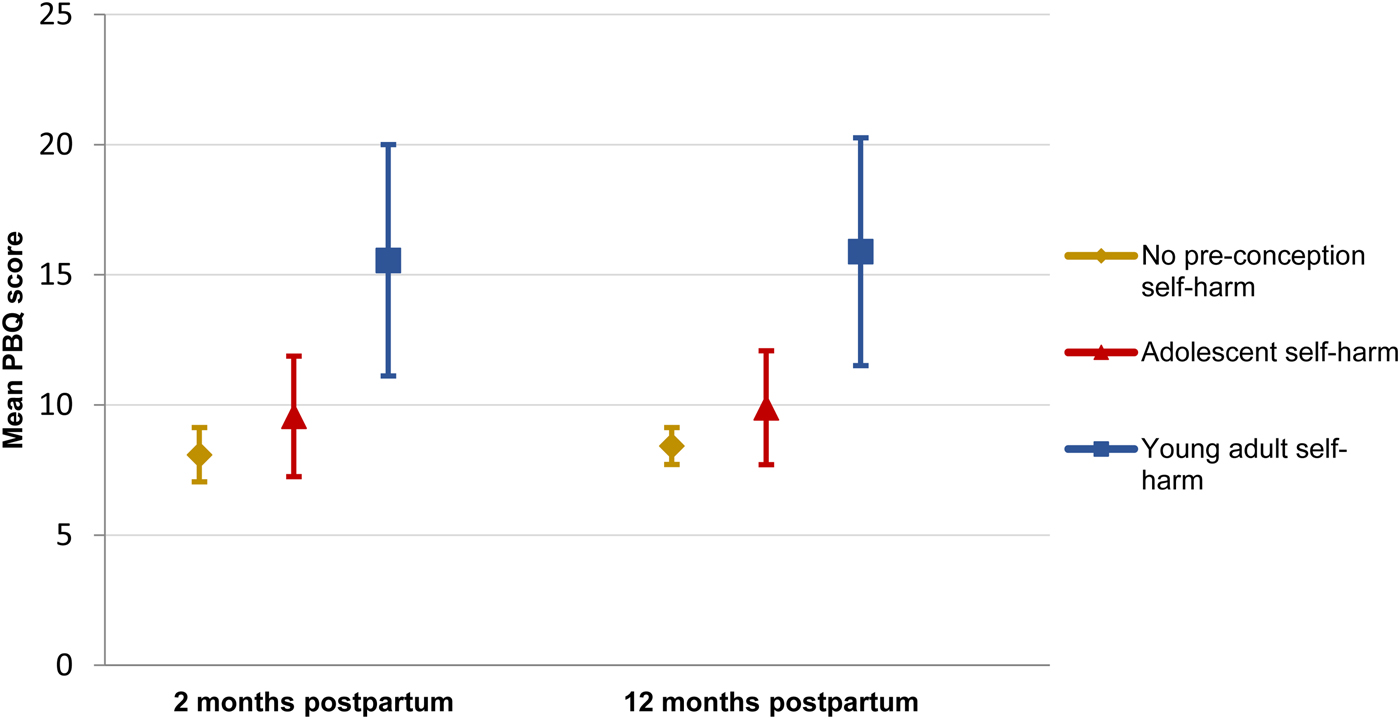
Figure 1 shows the relationship between pre-conception self-harm status (no self-harm, adolescent self-harm, young adult self-harm) and perinatal depressive symptoms, based on the estimated marginal mean EPDS scores derived from the adjusted multilevel models. Figure 2 shows mother–infant bonding problems by pre-conception self-harm status, using estimated marginal mean PBQ scores from the adjusted multilevel models. Both figures illustrate elevated scores among women with a history of young adult self-harm, a pattern which was not evident for adolescent self-harm.
Perinatal depressive symptoms by pre-conception self-harm status. Estimated mean EPDS scores with 95% CIs; higher EPDS scores indicate higher levels of depressive symptoms. Five hundred sixty-four pregnancies from 384 women, multiple imputation used to impute missing data. Adolescent and young adult self-harm were not mutually exclusive categories, and participants who reported self-harm during both periods were included within both the adolescent and young adult self-harm groups. Estimated means were based on adjusted multilevel models controlling for participant's parents’ education and divorce/separation. Models for no pre-conception self-harm and adolescent self-harm were additionally adjusted for adolescent mental health problems; the model for young adult self-harm was adjusted for young adult mental health problems.
Mother–infant bonding problems by pre-conception self-harm status. Estimate mean PBQ scores (overall score) with 95% CIs; higher PBQ scores indicate greater self-reported mother infant bonding problems. Five hundred seventy-three mother–infant pairs from 384 women, multiple imputation to impute missing data. Adolescent and young adult self-harm were not mutually exclusive categories, and participants who reported self-harm during both periods were included within both the adolescent and young adult self-harm groups. Estimated means were based on adjusted multilevel models controlling for participant's parents’ education and divorce/separation. Models for no pre-conception self-harm and adolescent self-harm were additionally adjusted for adolescent mental health problems; the model for young adult self-harm was adjusted for young adult mental health problems.
Further analyses showed similar patterns of findings when alternative methods were used to code missing data in the summary variables for adolescent and young adult self-harm and mental health problems. In addition, the pattern of findings was comparable when each time point of the outcome variables was modelled separately, with each woman contributing data for one pregnancy and infant only, so that multilevel modelling was not required. A similar pattern of findings was also observed when these analyses were repeated with the EPDS and PBQ were modelled as dichotomous outcomes. Comparable findings were also obtained in available case analyses. Observed mean scores on the EPDS and the PBQ were very similar to those obtained using multiple imputation. The observed associations between pre-conception self-harm and perinatal depressive symptoms and mother–infant bonding problems were also consistent with the estimates under multiple imputation. Full details of these additional analyses are provided in the online Supplementary Materials.
Discussion
In this study, pre-conception self-harm in young adulthood was associated with higher antenatal and postnatal depressive symptoms and greater mother–infant bonding problems. The relationships between young adult self-harm and these perinatal outcomes appeared to be largely independent of pre-conception confounders, including young adult mental health problems. To our knowledge, these prospective associations have not been reported previously. In contrast, self-harm during adolescence (which was much more prevalent in this sample) did not appear to be associated with depressive symptoms during pregnancy and the postnatal period or mother–infant bonding problems. Our findings in this Australian sample therefore suggest that women who self-harm in young adulthood may be a particularly vulnerable group during pregnancy and the postnatal period.
Conceivably, both young adult self-harm and perinatal depressive symptoms may reflect the occurrence of a common underlying psychological difficulty and/or exposure to earlier trauma. Young adult mental health problems (depression and anxiety) were independently associated with both perinatal depressive symptoms and mother–infant bonding problems in this study. However, adjusting for these experiences of mental health problems in young adulthood did not substantially reduce the association between young adult self-harm and either perinatal depressive symptoms or mother–infant bonding problems. Women aged between 16 and 35 are at highest risk of domestic or sexual violence victimisation, which are both associated with mental health problems (Howard et al., Reference Howard, Oram, Galley, Trevillion and Feder2013). This may, in turn, be related to the onset or persistence of self-harm, although we did not assess these domains. A greater understanding of the nature and antecedents of self-harm in women in the third decade of life could help us to understand why this group is more vulnerable to perinatal depressive symptoms and mother–infant bonding problems, and inform the development of targeted, preventive interventions in this population.
Strengths and limitations
To our knowledge, our study is the first to examine whether pre-conception self-harm is a marker of vulnerability in the perinatal period. Other strengths of our study included the longitudinal design and multiple assessment points across adolescence and young adulthood, with the prospective identification of self-harm and mental health problems. Our findings are based on prospective pre-conception data, which is exceedingly rare in studies of pregnancy. We used multilevel modelling for the main analyses to account for the hierarchical structure of our data. We also conducted additional analyses for each perinatal time-point separately and including only the first pregnancy for each woman, so that multilevel modelling was not required. These analyses showed the same pattern of findings to the main results.
Our study also contained some potential limitations. First, some eligible pregnancies were only identified in the postnatal period, meaning that data on antenatal depressive symptoms were missing for approximately one-third of the sample. However, due to the substantial available data on women's pre-conception and perinatal characteristics, multiple imputation was used, which limits the potential non-response bias and loss of power from missing data. Despite this, selective attrition may have had some effect on the estimates of the associations, as women who did not participate in the perinatal phase of the study were more likely to have a history of previous common mental disorder (Patton et al., Reference Patton, Romaniuk, Spry, Coffey, Olsson, Doyle, Oats, Hearps, Carlin and Brown2015).
The VIHCS data collection period restricted the inclusion of pregnancies to those occurring when participants were aged 29–36 years, missing pregnancies that occurred at other times. Our findings need to be considered in the context of a high-income country with relatively low fertility and a late transition to parenthood. Although we captured the ages of peak fertility for Australian women, women who become pregnant during this phase of life have been shown to have a better mental health profile than those who become pregnant at a younger or older age (Woolhouse et al., Reference Woolhouse, Gartland, Hegarty, Donath and Brown2012). It is possible, for example, that adolescent self-harm may be associated with poor maternal-infant bonding or mental health for pregnancies occurring at a younger age. In addition, by focusing on depressive symptoms we may have missed associations between pre-conception self-harm and other perinatal mental health problems such as anxiety, post-traumatic stress disorder or other disorders.
In our cohort, young adult participants were asked about experiences of self-harm in the previous 6 months, but the data-collection waves were spaced more than 6 months apart from each other. It is therefore possible that self-harm events in young adulthood occurring between waves (but outside of the 6-month reference window) will not have been detected. For the same reason, some pre-conception mental health problems occurring between waves of data collection may have been missed. Self-harm during young adulthood is much less common than self-harm during adolescence (Moran et al., Reference Moran, Coffey, Romaniuk, Olsson, Borschmann, Carlin and Patton2012) and this was reflected in the low prevalence of young adult self-harm reported in this sample, which limited our ability to investigate some associations. Related to this, we were also unable to estimate the risk of perinatal mental health and bonding problems associated with persistent self-harm spanning adolescence and young adulthood. Women with persisting self-harm are likely to be an even more vulnerable group, a possibility that warrants further investigation.
Finally, all data relating to self-harm, depressive symptoms and mother–infant bonding were collected via self-report, and may have been influenced by social desirability bias or inaccurate recall. Collecting data prospectively, however, should have minimised the potential impact of recall bias by reducing the window for which recall was required. Mother–infant bonding problems as reported in this study relate to the mother's impression of bonding with her infant, rather than an external assessment of bonding and interaction difficulties, and should be interpreted as such.
Clinical implications
Perinatal mental health problems are among the most common complications of childbearing and are more prevalent in marginalised and vulnerable populations (Howard et al., Reference Howard, Molyneaux, Dennis, Rochat, Stein and Milgrom2014). In addition to the morbidity experienced by the mother, perinatal mental health difficulties can be associated with adverse child cognitive and emotional developmental outcomes. International guidelines therefore highlight the importance of early identification and intervention for perinatal mental health problems. Whilst our findings are based on small numbers and have not established a link between pre-conception self-harm and subsequent perinatal mental health outcomes, it is possible that pre-conception mental health interventions for young women who self-harm may provide a dual benefit of improving pre-conception wellbeing, as well as reducing the risk of perinatal depression or mother–infant bonding problems.
The possible mechanisms linking prior self-harm with subsequent depressive symptomatology and mother–infant bonding problems warrant further consideration. One possibility is that mother–infant bonding problems result partly from maternal emotional dysregulation, which is itself linked to self-harm (Klonsky, Reference Klonsky2006). Existing difficulties in emotion regulation may be particularly problematic in the context of the transition to parenthood, given the emotional demands involved in early maternal care. Another possibility is that the association between pre-conception mental health problems and subsequent postpartum mental health problems is mediated, at least in part, by self-harm. This warrants further consideration, including the timing of this possible mediation. Self-harm in young people may be associated with persisting social and emotional difficulties (Moran et al., Reference Moran, Coffey, Romaniuk, Degenhardt, Borschmann and Patton2015; Herbert et al., Reference Herbert, Gilbert, Cottrell and Li2017), and it is possible that these difficulties might also contribute to poorer mother–infant bonding. However, self-harm in young women may also reflect recent interpersonal traumas such as sexual assault or partner violence victimisation (Oram et al., Reference Oram, Khalifeh and Howard2017), both of which are known to be associated with perinatal depressive symptoms (Howard et al., Reference Howard, Oram, Galley, Trevillion and Feder2013) and bonding difficulties (Kita et al., Reference Kita, Haruna, Matsuzaki and Kamibeppu2016). Future research may investigate these and other potential determinants of maternal depression and mother–infant bonding (e.g. childhood sexual assault) and examine whether self-harm, amongst other factors, is a mediator of those associations. Similarly, future research may also examine the precipitants of self-harm, many of which are likely to co-occur.
Our findings indicate that self-harm occurring in young adulthood is associated with poorer perinatal mental health and mother–infant bonding problems, in addition to the other adverse life outcomes previously linked to self-harm (Moran et al., Reference Moran, Coffey, Romaniuk, Degenhardt, Borschmann and Patton2015; Herbert et al., Reference Herbert, Gilbert, Cottrell and Li2017). This finding underscores the importance of investing in the development and testing of new interventions for women with mental health problems prior to pregnancy, as well as during the perinatal period, to reduce ongoing maternal mental health problems and potentially interrupt the intergenerational transmission of difficulties.
Supplementary material
The supplementary material for this article can be found at https://doi.org/10.1017/S0033291718003689.
Author ORCID
Rohan Borschmann 0000-0002-0365-7775
Acknowledgements
The Victorian Adolescent Health Cohort Study (VAHCS) and the Victorian Intergenerational Health Cohort Study (VIHCS) have both been supported by a series of project grants from Australia's National Health and Medical Research Council (NHMRC; APP1008273, APP1063091, APP437015 and APP1019887 to GP) and an NHMRC Early Career Fellowship (APP1104644 to RB); the Victorian Health Promotion Foundation (VicHealth); Australian Rotary Health; Colonial Foundation; Perpetual Trustees; Financial Markets Foundation for Children (Australia); Royal Children's Hospital Foundation; Murdoch Children's Research Institute; Australian Postgraduate Association to ES and Australian Research Council Award (DP130101459 to CO). The Murdoch Children's Research Institute is supported by the Victorian Government's Operational Infrastructure Program. PM is supported by NIHR Biomedical Research Centre at the University Hospitals Bristol NHS Foundation Trust and the University of Bristol. LMH and EM are funded through a National Institute for Health Research (NIHR) Professorship in maternal mental health to LMH (NIHR-RP-R3-12-S011). LMH is also affiliated with the NIHR Mental Health Biomedical Research Centre at South London and Maudsley NHS Foundation Trust and King's College London. SB is supported by a NHMRC Senior Research Fellowship (APP1103976). We thank the families who participated in VAHCS and VIHCS, the study research team involved in data collection and management, and Prof. Anthony Mann and Prof. Sir Michael Rutter for providing valuable advice on study design. This study represents independent research part funded by the National Institute for Health Research (NIHR) Biomedical Research Centre at South London and Maudsley NHS Foundation Trust and King's College London, UK. The views expressed in this publication are those of the authors and not necessarily those of the NHS, the National Institute for Health Research or the Department of Health.
Funding
There was no role of this funding source in writing of this paper or the decision to submit for publication.
Author contribution
GCP and CAO had the idea for the overall study and obtained funding. GCP and ES had the idea for this report. EM undertook the data analysis with assistance from ES and MMB. RB and EM prepared the first draft of the manuscript, and all authors were involved in reviewing the analyses and revising the manuscript for submission.
Conflict of interest
We declare no competing interests.