Introduction
What is the architecture of the Arctic? One answer is that even the remote communities of the north require the services of trained designers, both when it comes to constructing or modernising housing stock and introducing built social infrastructure in existing settlements and also when it comes to fulfilling the requirements of new industries, settlements and inhabitants. Another answer is that architects are attracted to the north because it represents something they feel is important: an abstraction of the complexities of contemporary urban life. One such attraction may be to be able to ‘conduct’ architecture in a context where the sophistication and formal constraints of mainstream architectural practice and contemporary architectural theory is felt to have little or no relevance and therefore holds few constraints for the rethinking of architectural practice.
Architects have worked actively in Arctic and sub-Arctic territories for over a hundred years, and particularly the utopian modernism of the early and mid-twentieth century had dramatic impact on the largely un-urbanised region, with its mix of indigenous populations and resource extraction outposts. Today, most Arctic communities are more or less fully integrated into national welfare states, and the region is urbanising rapidly (Rasmussen and others Reference Rasmussen2011). However, even as the fall of modernism promised a more culturally sensitive approach to the design and planning of the towns and communities of the north, the Arctic is still largely externally construed as a space of industry and resource extraction as well as a scene for international politics, and its ecosystems and communities are seen as passive victims of climate change (Arbo and others Reference Arbo, Iversen, Knol and Ringholm2013).
Thus far, little emphasis has been placed on developing architectures and planning strategies beyond the utopian modernist models, but we are currently witnessing a new wave of architectural interest in the north, exemplified by the Danish contribution on Greenland to the 2012 Venice Biennale of Architecture (Lima and others Reference Lima, Hjemdal, Melsom and Jensen2012) and the 2014 Canadian exhibition in the same place, celebrating the 15-year anniversary of Nunavut. The question is, ‘What architectural conceptions of the Arctic form the base for new approaches to the design of buildings and communities of the north?’
The Arctic architect
Ralph Erskine (1914–2005) is to this day the most celebrated individual ‘Arctic architect’ (Egelius Reference Egelius1977: 783), and he is particularly known for his architectural designs and urban plans in northern Sweden and Canada as well as England. His approach aligns with modernist architectural thinking in which ‘forms result directly from climate and function, and that the doing may be accomplished with some artistry’ (Erskine Reference Erskine and Newman1961: 59). In this mode of thinking, local environmental and climatic conditions can be analysed and rationally understood through scientific methods, and in line with the modernist rationale, even social structures are accessible to analysis. According to Erskine, the remoteness of Arctic settlements requires the development of a particular urbanity and should be ‘planned to offer easy human contacts, but also personal freedom and privacy’ (Erskine Reference Erskine1960: 196).
The most important part of his practice coincided with the late high modernism and early post-modernism in architecture in the 1960s and 70s. This period saw a changing mood towards the optimism and utopian ethos of modernist architecture and planning as well as a corresponding shift in politics towards indigenous populations in certain Arctic regions. This included a call for a more culturally sensitive architecture, which prompted innovation in the architecture of the region towards increased local participation, social integration and welfare (Liscombe Reference Liscombe2006; Marcus Reference Marcus and Liscombe2011). Erskine's standing in the international architectural community, and his experience from the construction of the Swedish post-war welfare society, were key factors in his involvement in the architectural and urban design of Arctic communities. His practice was considered to have a particular cultural as well as social profile, and in his 1968 article in Polar Record, Erskine himself warns against the ‘science-fiction aspects’ of the super-buildings propagated by the architectural elite of the time. He argues that technologically advanced superstructures under domes and other enclosed urban structures were unlikely to be psychologically satisfactory to northern inhabitants and that designs of a ‘less sophisticated organization’ (Erskine Reference Erskine1968: 169) would be more appropriate.
He was also not happy with what he found in the northern communities and launched a critique of the imitations of southern architectural styles by the locals, arguing that they ‘serve no more useful purpose in this special situation than do city hats or silk stockings at the polar circle’ (Erskine Reference Erskine1968: 166). In the article, Erskine claims that ‘the culture of Lapps or Eskimos, which are excellently adapted for the life of a northern huntsman, degenerate and finally collapse as these native people also feel the drag and fascination of the new ways of the southern cities’ (Erskine Reference Erskine1968: 166), a view shared by many at the time (Marcus Reference Marcus and Liscombe2011). While he was fascinated by indigenous structures such as igloos and Sami huts, he felt that they had little relevance to modern technical and functional requirements and that little would be gained from basing a new urbanity and architecture on indigenous ways. Instead, a ‘northern community culture of the industrial age must be newly invented, and social scientists, artists and architects must help’ (Erskine Reference Erskine1968: 166). This should not happen by importing a main-stream modern architecture to the north, which according to him would be anti-climatic, so he set out to create a new ‘regionalism’ (Egelius Reference Egelius1977: 748; see also Frampton Reference Frampton1983, Reference Frampton1985), a particular architecture conditioned by northern culture and climate. He argues that this new architecture should consist of ‘houses and towns [that] open like flowers to the sun of spring and summer but, also like flowers, turn their backs on the shadows and the cold northern winds’, and that ‘only by such methods can arise a personal and indigenous Alaskan, Canadian, Scandinavian or North Russian tradition’ (Erskine Reference Erskine1968: 167).
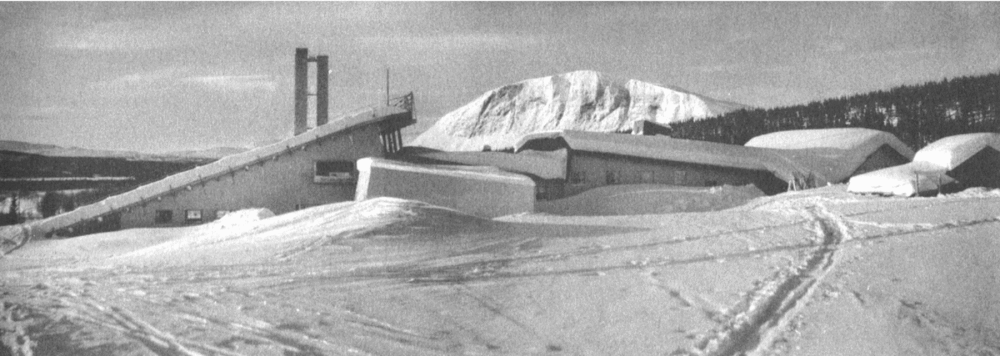
The international Team X (Team Ten) group of architects, with which he was associated, sought in the 1950s and 1960s to ‘soften’ the formal language of modernist architecture (Frampton Reference Frampton1985) and focused on analysing and designing social spaces and on the possibility for individuals to identify with their dwellings and neighbourhoods. This influence is evident in the design of local ‘places’ as neighbourhood clusters of buildings in his plans for the town of Resolute Bay in the Northwest Territories (now Nunavut), Canada. Other authors have analysed the failure of the latter project, in which there was a well-intentioned effort by Erskine to improve not only the physical but also the social and cultural condition of this combined Inuit and non-Inuit settlement through processes of local involvement (Marcus Reference Marcus and Liscombe2011; Liscombe Reference Liscombe2006). These analyses showed that the official policies behind the plans were flawed and also that Erskine's utopian design ideals were unsuccessful in meeting the actual expectations and requirements of the diverse groups of inhabitants. Ultimately, the project was abandoned, and the first buildings were left uninhabited. Despite this failure, Erskine's visualisations of an ‘ideal’ arctic settlement, where an inhabited climate wall provides wind protection, remains the most iconic image of an architecture and urban design of the Arctic, and versions of it has been realised in Fermont (northern Quebec) and Hammerfest (northern Norway) as well as in Svappavara (Northern Sweden) and Newcastle on Tyne(UK) by Erskine himself (Fig. 1).
Ormen Långe windbreak building (Svappavaara, Sweden, 1965). Design: Ralph Erskine (photo in public domain).

Despite the enduring legacy of Erskine, he has been criticised in various ways. His contemporary, the leading Team X member Peter Smithson, criticised him for over-exaggerating the formal aspects of the architectural principles he developed relating to climate adaptation, such as the enclosed rounded compact shapes and heat-absorbing dark colours of buildings. These features were visually emphasised in Erskine's designs to communicate their function, something Smithson labelled ‘Mickey Mouse styling’ (Egelius Reference Egelius1977: 792). Later authors, including the ones mentioned above, have criticised him for retaining a positivist, modernist and colonialist attitude to the Arctic and its population, in which the Arctic landscape is regarded as fundamentally empty or ‘placeless’ (Birk Reference Birk2012; McGowan Reference McGowan2008; Liscombe Reference Liscombe2006).
Nevertheless, Erskine has become paradigmatic as the ‘Arctic architect’, and has influenced architectural thinking for well over a generation. An example of his lasting influence on architectural thinking is the repetition of his critique of imported architectural styles 44 years later by the architectural critic Kjeld Vindum (the editor of the leading Danish architectural journal, Arkitektur), who laments recent ‘poor international mainstream architecture’ in Greenland, which he sees as inferior to the works of Danish architects in Greenland in the 1950s and 1960s, which displayed ‘a sincere effort to address the unique climatic and topographical conditions and the Greenlandic lifestyle and culture’ (Vindum Reference Vindum2012: 3). Erskine's influence also extends beyond traditional architectural circles, as he is even looked to by space engineers at ESA and NASA as inspiration for the design of lunar and Martian settlements (Arenales-Vergara Reference Arenales-Vergara2005; Fig. 2).
Hotel Borgafjäll (Sweden, 1948–50). The roof doubles as a ski slope. Design: Ralph Erskine (photo in public domain).
An Arctic architecture
In order to reposition Erskine's legacy, this article maps out a number of different perspectives on Arctic architecture that are envisaged and reproduced by architects and other professionals involved in the construction or analysis of buildings and the built environment of the north. It looks at what issues are emphasised and what inherent values and ideologies are reproduced and adapted to the shifting social conditions of the north and to the architectural discourse at large. The different perspectives accentuate disparate sources of knowledge and construct the social and natural environment in distinct ways. They differ greatly, for instance, when it comes to the inclusion and role of indigenous populations and tacit knowledge of extreme climate design and construction as well as on the role of technology in the design of northern settlements.
The purpose of this mapping is to draw to attention the concept that any notion of an ‘Arctic architecture’ is contestable. In the context of the current renewed interest in Arctic cities and landscapes, it would be questionable uncritically to reduce architecture to, for instance, a standardised and technologically driven design exercise, with little room for improvisation or deviation from strict environmental performance. The mapping of perspectives probes the professional ‘baggage’ of architects operating in the Arctic, and it does so by uncovering the ‘ideologies and hierarchies’ and ‘social subjectivities’ (Traganou Reference Traganou2009) that inform an architect's thinking and practice. The legitimising values and ways of constructing knowledge in architectural practice often seem self-evident to the practitioner, even though architects evoke potentially diverging ‘espoused theory’ and ‘theory-in-use’ through design (Cuff Reference Cuff1991), often without any particular critical reflection on their difference and relationship. A heightened degree of reflection is prerequisite to developing architectural thinking and new practice with relevance for the climatically, economically and politically changing Arctic. Critical self-reflection among architects can be enhanced by adopting the position that ‘the production of places is a social process’ (Cuff Reference Cuff1991: 248); architecture is a social construct, highly contingent on social processes and history. The research presented in this article adopts the position that there are many architectures of the Arctic and that they are potentially just as varied as architectures in any other context. The Arctic is not an ‘empty’ or ‘other’ place; it is home to communities of cultural and social complexities no smaller than those of other inhabited territories. A reading of its architecture from a narrow position or perspective fails to reflect this complexity.
The adopted approach to the selection and interpretation of the identified literature leans on other examples of analysis of the social constructions of space and architecture (for example, Guy Reference Guy, White and Wilbert2009; Steinberg Reference Steinberg2001). While the construction of architecture from a socio-cultural perspective is central to the argument of this article, there is no denying the agency of the climatic, material and cultural conditions that underlie and inform the design of physical buildings and structures in the Arctic. These include permafrost, snow and windy conditions and also powerful historical meta-formulations such as colonialism and post-colonialism as well as more recent geopolitical strategic thinking on dominant views concerning resource extraction and territorial sovereignty.
Architectural literature
Different readings of Arctic architecture were identified through a survey of English and Scandinavian language architectural literature. Searches were carried out on BIBSYS (the database for Norwegian college and university libraries), resulting in 16 books (search terms in English and Norwegian/Scandinavian included: ‘Arctic’, ‘north’, ‘Northern’, ‘Polar’, ‘sub-Arctic’ and ‘Antarctic’, with ‘architecture’ as an added search term). The results included relevant annotated bibliographies on Arctic architecture (White, A.G. Reference White1987) and indigenous architecture (Wodehouse Reference Wodehouse1980).
Article searches on the Avery Index to Architectural Periodicals and Art and Architecture Complete (the most comprehensive databases of English language architectural publications) resulted in 165 relevant items out of 967 hits on ‘Arctic’. Additional searches were carried out on JSTOR and Google/Google Scholar, and a list of relevant Russian literature was compiled from the Scott Polar Research Institute's Russian north library database.
The variety of books and articles identified represents a range of different topics and epistemological regimes, including architectural monographs and items on architectural theory, engineering, archaeology and anthropology. This survey revealed that little attention has been directed at mapping comprehensively the architecture in the Arctic in the traditional architectural literature and journals. Polar and Arctic journals with a social and human science focus, such as The Polar Journal, Polar Geography and Polar Record, touch on issues of land use in different ways, but the built environment, planning and architecture feature only occasionally in these publications.
This survey does not capture all reports of architecture in the Arctic but was helpful in identifying both dominant and less obvious but distinct categories, ‘perspectives’ or ‘logics’, that differ when it comes to how architecture, the landscape and the natural environment are perceived. They also differ when it comes to what issues are addressed in the analysis and design of spaces and structures, on the role of society and on what forms of knowledge are considered relevant for an architecture of the north.
The varying geographies of the Arctic
The literature mapping undertaken is by no means comprehensive, and emerging and transforming perspectives can be added continuously. One of the problems of such a mapping is the fact that the geographical delimitation of the Arctic varies according to individual perspectives and that architectural approaches established outside this particular geography are also encountered in the Arctic.
The nationality of authors and the places of publication as well as the geographical regions covered by the identified literature include Alaska, Canada, Norway, Sweden, Greenland and Iceland but also non-Arctic realms such as Antarctica, New Zealand and Switzerland. It is noticeable that the largest northern or sub-Arctic nation, Russia, is largely absent from the readily available literature (Some Russian literature on northern architecture and architectural engineering is translated into English by the Canadian Research Council but was not available at the time of writing). The definition of the Arctic (or any associated delimitation that makes the literature relevant in the context of this paper) varies widely. It may be politically, climatographically, botanically or socially based. While there are significant differences between sub-Arctic, Polar and northern territories, in the context of this study, ‘Arctic’ is used as an overall collective description of the geographies involved. In some of the literature, certain identified Arctic attributes are shared with other places such as mountains in relation to climate and deserts or even oceans as comparably empty or remote (Cosgrove and della Dora Reference Cosgrove and Della Dora2008). Notably, the literature on Antarctic architecture often overlaps with discourses on Arctic architecture.
Perspectives on Arctic architecture
Nine different perspectives on Arctic architecture have been identified. Several others could potentially have been included. The subject of Arctic architecture, for instance, was recently addressed from an unexpected angle in the monthly design and lifestyle magazine Monocle (2013), and readings of Arctic architecture from a cultural history or archeological perspective (Avango Reference Avango2013; Barr Reference Barr2000; Waldron Reference Waldron2008) could potentially also have been included as a distinct category.
The descriptions of the perspectives include their view on technology, the environment, local inhabitants, the role of cities, architecture, society and history. Most perspectives also implicitly or explicitly refer to some definition of the Arctic. While histories of indigenous migration and habitation, or post-revolution industrialisation in northern Russia could have been the starting point, this account starts with the period immediately after World War II, in which the Arctic received new attention from the outside, beyond traditional colonial and early capitalist exploitation of natural resources.
Arctic as space
During World War II, the Arctic emerged as a strategic territory; it was a secondary northern flank of hostilities primarily played out elsewhere. During the war years, military installations such as airfields, harbours and meteorological stations were built in many parts of the Arctic. After 1945, the Arctic was reinforced as a geo-political space and as the detection zone for intercontinental missiles between the Soviet Union and America during the Cold War.
This military appropriation of land was technological in nature, and the Arctic was perceived as an ultimate frontier in which total life support had to be supplied through technology. This was an approach it shared with the then nascent space/moon program, in which the logic was to develop technology in order to inhabit unliveable environments for strategic purposes.
The landscape of this appropriation of the north is essentially seen as culturally void. Scientific knowledge is the raison d'etre (many military programmes were conducted under the guise of scientific research). Architectural structures are entirely imported; they are modular and pre-fabricated and have to be self-sustaining in every way. A prominent example of this perspective is the United States’ nuclear-powered Camp Century that was buried within the kilometre-deep ice sheet in northern Greenland in 1958.
The similarities between the Arctic and the extreme environments of space exploitation still lead to science-based appropriation of northern landscapes, such as the continued experiments with ground inhabitation technology for Mars carried out by NASA on the Canadian Devon Island (Fox Reference Fox2006). New architectural structures are also being proposed within this perspective, such as in Umka, a strategic Russian settlement on the New Siberian Islands, designed by Valery Rzhevskiy ‘to work on any surface, even on the Moon if needed’ (Stewart Reference Stewart2011). Examples of literature are Department of Defense 1963; Hamilton Reference Hamilton1963; White M. Reference White2012).
Polar extremes
This perspective follows the overall logic of the ‘Arctic as space’ perspective but has a distinct architectural approach that links it to mainstream architectural thinking. Extreme environmental conditions, such as those found in the Arctic and sub-Arctic, render traditional architecture untenable, and the fundamental question becomes, ‘How do you make a building liveable in a brutal climate?’ (Slavid Reference Slavid2009: 7). This condition creates a kind of laboratory for design solutions in which the architecture, due to material and environmental constraints, evolves a technologically radical integration of performance and architectural language. This radical expression of form and function transforms into a visually charged architecture, which is seen to have relevance outside the Arctic area.
The Arctic is defined by the climatic condition, and the challenge posed by temperatures is parallel to those found on high mountains or in Antarctica as well as other extreme climatic regions, such as deserts or even under the sea. All these zones are largely seen as void of cultural connotations and indigenous habitation, which would potentially conflict with the technological and hard science-based mindset that the perspective entails. Technological modern and hi-tech solutions are sought, and smart technologies, computerised design tools, and advanced composite construction materials deliver radical architectural expressions. The main task of architecture and cities in the Arctic is to make harsh and psychologically challenging conditions liveable for people. Climate change features prominently in this perspective, and it endeavours to demonstrate the habitability of extreme environments to accommodate a migrating population in an age of environmental crisis (Galindo Reference Galindo2009). A paradigmatic project in this logic is the British Halley Research Station in the Antarctic by Hugh Broughton Architects (completed in 2013). Examples of literature are Galindo Reference Galindo2009; Noal Reference Noal2003; Slavid Reference Slavid2009.
Psychological Arctic
Also here, the Arctic landscape is perceived to be hostile to human habitation, but rather than placing emphasis on the exterior appearance or the physiological parameters of architecture, it focuses on its interior. The perspective refers to the literature stemming from environmental psychology, in which the physical isolation of individuals or small groups and their exposure to extended periods of either darkness or daylight poses particular psychological challenges that design and architecture can address.
The Arctic belongs to a category of environments in which climatic restrictions and remoteness result in isolation that challenges the psychological wellbeing of inhabitants. Architecture can provide visual stimuli and comfort that mediates this potentially traumatic experience, and can, through spatial means, provide for a differentiation of privacy and communal (indoor) spaces.
The literature in this perspective has studied the effects of the architecture of polar stations on humans and is in certain cases related to studies of outer space habitation. Examples of literature are Leon Reference Leon2002; Smith Reference Smith, Smiley and Zumberge1974; Yan and England Reference Yan and England2001; Zrudlo Reference Zrudlo1972.
Arctic engineering
For over a century, architects and engineers have been developing pragmatic approaches to dealing with northern environmental conditions such as wind, snow and permafrost. This draws on the experiences of the military, colonial and extraction based activities of the nineteenth and twentieth centuries and relies on technical observation, practical experience and pragmatic problem solving. Architecture is seen as an infrastructure and a technical system that can be optimised. This approach is linked to the emergence of a specialised expertise within structural engineering: cold climate design.
The remoteness of many northern settlements means that there is a lack of skilled builders and personnel for the technical maintenance of buildings, which conditions the choice of building materials and construction techniques. Typically, this leads to the use of pre-fabricated constructions but also in some cases to building techniques that can be adapted with simple tools, such as in the university centre in Svalbard, which is constructed in wood to allow for on-site adjustments during construction in a context where replacement building elements are not easily accessible. Aboriginal practices and climate-adapted habitats are seen as an inspirational source of practical experience, as seen in many references to igloo building, but the actual transfer of this knowledge is in fact limited.
In this perspective, the Arctic is physiographically defined by climatic and soil conditions. The environment is physical in nature and comprehensible to science, and the cities of the north are primarily seen as ‘unplugged’, independent infrastructural systems due to their remoteness and uncertain supply situation. The role of architecture is to adapt local conditions to human habitation and to provide a functional harmony between the inhabitants’ needs and the resources of the environment.
A contemporary example of this approach to northern construction is the work undertaken by the Cold Climate Housing Research Center in Fairbanks, Alaska, which works with the ‘development of healthy, durable, and sustainable shelter for Alaskans and other circumpolar people’ (Cold Climate Housing Research Center 2013). Examples of literature are Fisher Reference Fisher1982; Rice Reference Rice2008; Strub Reference Strub1996.
Arctic ethnographic
Here, indigenous architectural practices are the primary source of knowledge and area of study. Technology is not a primary approach to Arctic architecture, which is rather seen as having evolved over time through trial and error. Built structures are optimised for basic climatic functionality, often using a minimal amount of resources, and reflect and respond to societal structure and cultural and religious beliefs. Place making, landscape inhabitation and architectural undertakings are seen to represent more or less stable states of equilibrium between material concerns (access to food supply and construction material), climatic considerations and cultural and religious beliefs.
The Arctic is defined by the territory occupied by northern indigenous and often minority populations. This space is culturally constructed and encompasses the inhabited landscapes of the Arctic as well as individual settlements and dwellings. The landscape is seen as a source of sustenance but also as a mythical structure, and the architecture of the north ‘evolves in response to aesthetic, spiritual, and social requirements as much as to physical needs’ (Lee and others Reference Lee, Reinhardt and Tooyak2003: 2). The historical and traditional architectural structures analysed from this perspective reflect an economy of subsistence and are based on local materials and a reliance on pre-industrial manufacturing techniques. The primary knowledge regimes of this perspective are those of anthropology and archaeology. Buildings are seen as ‘types’, with a specific set of technologies, societal and cultural implications and as structures that cope with local conditions.
In recent years, efforts have been made in various indigenous communities not only to document traditional forms of habitation but also actively to re-enact their construction as critical manifestations of the preservation of unique identities that are seen to be under threat from modernisation and globalisation. These acts are components of cultural empowerment strategies that include the re-enactment of traditional crafts. In Nunavut, igloo construction is part of school curriculum (Kielburger and Kielburger 2012). Examples of literature include Dawson Reference Dawson2001; Lee and others Reference Lee, Reinhardt and Tooyak2003.
Arctic regionalism
The arctic is a place that triggers adaptations of architectural modernism in which contextual negotiation and the concept of place is highlighted. This perspective is related to the concept of critical regionalism in architecture (Frampton Reference Frampton1983; Tzonis and Lefaivre Reference Tzonis and Lefaivre1990), which, inspired by Heidegger's phenomenology and notions of ‘dwelling’ (Heidegger Reference Heidegger and Husserl1927, Reference Heidegger and Heidegger1954), emphasises the specificity of place and is critical to the reduction of difference in mainstream industrial, capitalist productions of architecture around the world. Architectural theorist Christian Norberg-Schulz (Reference Norberg-Schulz1993) specifically mentions Erskine's work as an example of critical regionalism. While traditional architecture is often emphasised as sources of authenticity in critical regionalism, according to Erskine, the north is a ‘new country’ to be settled, and modern urban settlers in the Arctic regions must strive to create an attractive architecture that offers the possibility to ‘dwell’ in a context by mediating the local environmental conditions in ways that are specific and unique, and not based on imported ideas of space and design. Specifically, an architecture has to be developed that reflects that ‘Nature is dominant and the “human” the exception’ (Erskine Reference Erskine and Newman1961: 59).
The north is defined as a climatic (and to a limited extent cultural) region, triggering particular architectural responses. The perspective is still active in current discussions of Arctic architecture, and Erskine has continuously been, and still is, referred to as the primary example of an Arctic architectural practice with contemporary relevance, and his ambitions of an architecture that balanced technical requirements and human desires within a strong design language is still perceived by many architects to be paradigmatic (Birk Reference Birk2012; Bøkestad Reference Bøkestad1998; Decker Reference Decker2010b; McGowan Reference McGowan2008; Oshima Reference Oshima2005). Examples of literature are Bøkestad Reference Bøkestad1998; Erskine Reference Erskine and Newman1961, Reference Erskine1968.
A new indigenous architecture
The ‘Arctic regionalism’ perspective has a more contemporary descendent in this perspective. However, rather than calling for the development of a new architectural language, it observes and celebrates the fact that a new indigenous architecture is already emerging. The north is no longer seen as a cultural void. Rather, this perspective operates from the position that ‘The North is evolving and growing up’ (Decker Reference Decker2010a: 10). This does not imply a revived or revised traditional architecture of pre-colonial inhabitants but rather departs from the position that the Arctic is to be considered populated by individuals originating from elsewhere but now considering the Arctic their home.
The Arctic is defined as a cultural-geographic region demarcated by regional identities (such as a ‘North-Atlantic sea culture’ (Saunders and others Reference Saunders, Stathaki, Bell, Synnevåg and Grima2012), and, like the previous perspective, a trans-Arctic character is evident, in which the landscape and climate are both the primary sources of identity and primary contexts of architecture. The landscape is seen to be both physically and psychologically hostile to man, but architecture can remediate and ‘provide [. . .] visual stimulation in places that is sometimes offer little more than an endless expanse of white’ (Decker Reference Decker2010a: 10).
Arctic cities are no longer a future vision but a fact, and by ‘bringing practical tradition to contemporary architecture’ (Saunders and others Reference Saunders, Stathaki, Bell, Synnevåg and Grima2012: 12), ‘an opportunity has arisen for a new definition of a northern building, one that is extraordinarily responsive to place and, at the same time, visually provocative’ (Decker Reference Decker2010a: 10). Architecture is not only a technical exercise in meeting harsh conditions but is a materialisation of local and regional experience and expertise in cold climate construction through local design practices that are developing a variety of new and emerging expressions of form with a strong focus on landscape and place creation. An example of this perspective is the architectural practice Biotope, which has designed a series of visually and functionally innovative shelters, photo hides and other forms of bird-watching infrastructure on the Varanger Peninsula in the Norwegian Arctic (Fig. 3). Examples of literature are Decker Reference Decker2010a; Saunders and others Reference Saunders, Stathaki, Bell, Synnevåg and Grima2012.
The Steilnes bird hide (Vardø, Norway, 2012) is carefully located in relation to view, microclimate and bird behaviour. Design: Biotope (photo: T. Amundsen).
Geopolitical Arctic
The most recent wave of architectural interest in the north sees the Arctic as an economic and political region in a globalised world. This perspective is strongly connected to the climate change discourse, in which the Arctic is becoming central in a new colonialist resource grab (exemplified by the current quarrel about the ownership of the North Pole and the surrounding ocean).
The ‘Geopolitical Arctic’ perspective sees the region as ‘empty’ in the sense that it forms a stage largely devoid of population and with an unsettled regulatory framework, in which the ‘architecture’ of geopolitical space is currently being negotiated and produced. The architecture in this perspective is a matter of reading space and imagining new patterns of settlement, infrastructure, industry and resource extraction. It adopts a world-systems reading of the Arctic as a peripheral location that, in the current mode of capitalist dynamics, is becoming central in certain ways (Smith Reference Smith2011).
As architecture, the appropriation of Arctic territories is inspired by the architect Rem Koolhaas's investigations of alternate states of modernisation in non-US/European contexts (for example, see Chung and others Reference Chung, Inaba and Koolhaas2001; Koolhaas Reference Koolhaas2000) with the aim of uncovering, in a raw form, the structuring forces of globalisation, which are seen as the predominant drivers of change. Studies of the Arctic reveal the dynamics of capitalism in the form of resource extraction, communication technology and transport infrastructure. This perspective plays out the old tabula rasa notion of the north, as a space marked by ‘human resource deficiency’ (Strøksnes Reference Strøksnes, Røyseland and Rø2009: 58) where a new mobile, temporary and flexible workforce can be introduced.
In this perspective, cities are characterised by radical intensification and urbanisation due to the new geopolitical and economic role of northern settlements as trans-shipment facilities and strategic military and petrochemical installations. At the same time, a paradoxical logic is at play in which the area affected by human activity is increasing rapidly, while the intensity of human use and habitation is decreasing, a condition Rem Koolhaas has called ‘thinning’ (2010).
Knowledge in this perspective is constructed through statistics, policy documents and remote sensing. The architectural language employed is of a generic international style, but at the same time the urbanism suggested bears resemblance to nothing else, being marked by vast distances, mobile populations and the globalisation of culture; thus, it is in need of entirely new ideas of planning. Examples of literature are Gugger Reference Gugger2012; Røyseland and Rø (editors) Reference Røyseland and Rø2009; White and Sheppard Reference White and Sheppard2009.
Cultural north
This perspective shares the underlying premise of climate change and globalisation with the previous logic but attempts to counter or supplement the predominant geopolitical discourse on the Arctic by approaching it as a cultural and inhabited territory. It celebrates indigenous (minority) cultures and the Arctic communities that are seen to be outside the mainstream societal development and vulnerable to the negative aspects of modernisation and globalisation. While these communities were seen in the modernist period to be suffering from, or needing protection against, urbanisation (Dybbroe Reference Dybbroe2008; Marcus Reference Marcus and Liscombe2011), some suffered forced relocation to new remote settlements by governments in, for example, Canada and Denmark and the Soviet Union, as part of wider national policies of sovereignty and industrialisation. All these policies contributed to maintaining many communities outside mainstream urban and societal development.
In this perspective, the Arctic is seen as a fragile ecology that may be disrupted by future exploitation. Through artistic and architectural interventions, communities are empowered to meet the environmental impact of exploitation and other negative social consequences, and indigenous inhabitation and territorial claims are legitimised through claims of ecosystem stewardship.
The architecture of this perspective can be pragmatic and low key and bases itself on local and indigenous knowledge. Sustainable empowerment is sought through open source and community-based knowledge generation as well as through the communicating, sensing, aggregating, transmitting and sharing of information. Communication technologies, digital tools, distributed sensor systems, new media and citizen science projects are employed as tools to generate and redistribute information through social processes and thereby reinforce empowerment and community building. Examples of literature are Infranet Lab Reference Lab2011; Müller Reference Müller2010; Rosenfield Reference Rosenfield2013.
A genealogy of perspectives
The perspectives on Arctic architecture described above continuously transform, merge and disappear. At any given time, a range of perspectives is discernible in the analytical and practical literature on architecture in the region, and, in practice, the perspectives often run in parallel and overlap in the practices of architects and other professions dealing with construction in the north. They evolve along a rough genealogy, and while some are intrinsically linked to specific periods, others appear to have a long-lasting influence. ‘Arctic engineering’ builds on the practical experiences of ‘Arctic as space’. ‘A new indigenous architecture’ descends from ‘Arctic regionalism’, while ‘Cultural north’ must be seen as an opposing position to the one found in ‘Geopolitical Arctic’.
Another continuity runs from ‘Arctic as space’, in which military installations were buried in Greenland's inland ice, to the more contemporary ‘Polar extremes’, in which modern science stations are located in the locations in the Arctic (and Antarctic) that most closely approximate outer space conditions on the planet. The differences are that the strategic and military aspects are de-emphasised, and climate change forms a much more important agenda as the background for current research bases.
The ‘Arctic ethnographic’ and the ‘A new indigenous architecture’ perspectives are also linked through the reinterpretation of traditional construction methods in projects such as The Snow Show (Fung Reference Fung2005), in which avant-garde architects and artists explore the expressional limits of ice constructions.
The majority of the perspectives see the Arctic as a culturally empty space and as a technological and architectural challenge, potentially leading to innovations in technology and architectural language with relevance outside the Arctic. Contrasting these readings are the perspectives that focus on indigenous communities and their architecture in various forms.
A key question is how the mapped perspectives on Arctic architecture distinguish themselves from those of architecture outside the northern region. Mainstream architecture is also found in the Arctic, but one of the most reoccurring notions identified in the mapping carried out in this article is that there is (or should be) a particular ‘Arctic architecture’, distinct from the mainstream elsewhere. In particular, one architect, Ralph Erskine, embodies this idea of a unique architectural language of the north.
Architecture in the Arctic today
Erskine's role in architecture is unique, as he ‘has been unanimously credited in architectural history for inventing an “Indigenous Architecture” of the North’ (McGowan Reference McGowan2008: 248), and he is seen as having had a unique capability to ‘analyse local environments and cultures and extract their essential qualities’ (McGowan Reference McGowan2008: 247). One of the reasons that Erskine's architectural approach has retained its status over decades may be that ‘Critical Regionalism tends to flourish in those cultural interstices which in one way or another are able to escape the optimising thrust of universal civilisation’ (Frampton Reference Frampton1985: 327). Today, however, cities are once again being constructed in the north at a fast pace, and a new perception of the strategic importance of the Arctic has emerged that no longer relegates it to a peripheral and interstitial role (Arbo and others Reference Arbo, Iversen, Knol and Ringholm2013; Smith Reference Smith2011). New development in the Arctic will include rapid urbanisation, and this condition of accelerated modernisation, different from the more stagnant situations dominating Europe and North America, attracts new attention from architects.
The key principles of Erskine's approach, the climatic conditioning of the architectural language and the mediation between extreme landscapes and their inhabitants through architecture, are evident in several of the mapped perspectives; but as the mapping shows, it is possible to identify many alternatives to his position. The perspectives each suggest different architectures in terms of materiality and form, and they collectively render a wide range of different perceptions of the environment, the landscape and society as well as a more extended range of knowledge regimes than a mainstream architectural approach would allow. They are also not discreet Arctic phenomena; they reflect mainstream architectural history and theory in different ways and in turn inform a wider architectural discourse.
The Arctic is home to a variety of populations in constant flux: indigenous peoples, more recent inhabitants of primarily European decent, transient populations such as migrant workers in the exploitative industries, researchers at polar and sub-polar research installations and tourists as well as military and regulatory personnel from a range of nations. It is an arena in which conflicting interpretations of climate (change), landscape and society are played out and is, like the ocean, not just a place, but a space ‘where social contradictions are worked through, social change transpires, and future social relations are imagined’ (Steinberg Reference Steinberg2001: 209).
In the current situation of uncertainty, in which climate change may have disruptive consequences for Arctic communities, it is imperative to be able simultaneously to imagine a range of possible future relationships between technology, the landscape and society. The recognition of a multitude of perspectives on architecture in the Arctic, including ones that move away from particular fixtures such as the harshness of landscape and climate, points to ways in which these futures may be conceptualised. The architectural discourse that emerges in this space of contestation may also shape perceptions and productions of landscapes and territories outside the Arctic, which then ceases to be an imaginary space of projection by society (McGhee Reference McGhee2007) to become instead a critical ‘component of the space of society’ (Steinberg Reference Steinberg2001: 20), in which cultural and social complexities are recognised. Emerging from the architectural literature, the Arctic has been seen as a space visited and largely observed from the outside, but it may now be a place where a multitude of entirely new architectures are born.
Acknowledgements
This article is written as part of the Future North project at the Oslo School of Architecture and Design, which looks into continuing and future landscape changes in the Barents Region (www.futurenorth.no). This work was supported by the Research Council Norway (grant number 220656/F10).