Introduction
Injuries, which are most prevalent in low and middle-income countries, are responsible for premature deaths and disabilities. Reference Laytin and Debebe1 The ‘golden hour’ is the period immediately after a traumatic injury during which prompt medical and surgical treatment will have the highest likelihood to prevent death. Accordingly, early resuscitation and definitive care are recommended within 60 minutes. Reference Nasr, Tomasich, CollaçO, Abreu, Namias and Marttos2 However, this is not widely practiced in many low and middle-income countries (LMICs) due to lack of resources and poor infrastructure. Reference Zimmerman, Fox and Griffin3 People with emergency conditions are more likely to die. Reference Zain, Molly and Tarsicio4 Potentially preventable deaths are responsible for nearly 80% of trauma-related death and every death is associated with disability for 20 - 50 people. Reference Gholipour, Rad, Vahdati, Ghaffarzad and Masoud5,Reference Reynolds, Stewart and Drewett6 Annually, about 2 million people die in LMICs from potentially treatable causes due to deficiencies in medical supplies and poor professional readiness. Reference Nielsen, Mock, Joshipura, Rubiano, Zakariah and Rivara7 The WHO has identified 14 essential trauma care services that health care facilities should provide as a minimum standard for trauma victims, 8 although many of the hospitals in low-resource countries have challenges in achieving this. Reference Marsala, Faye, BeLue and Schoeck9,Reference Uthkarsh, Gururaj, Reddy and Rajanna10
Despite the high trauma prevalence in low and middle-income countries, the emergency departments of these countries have unfavorable conditions to manage trauma victims. Though emergency service is available 24/7, trauma care is provided by general practitioners, not by professionals specifically trained in trauma care. The hospitals also lack special emergency care units such as intensive care units (ICU) and trauma-specific training for people working at emergency outpatient departments (OPD). Reference Uthkarsh, Gururaj, Reddy and Rajanna10,Reference Wessona, Bachania, Wekesac, Mburud, Hydera and Stevens11 Previous studies have shown that hospitals in some low-income countries do not have the resources to provide emergency care that includes: ICU, anesthesia service, respiratory failure therapy, endotracheal intubation, and emergency surgical interventions for airway obstructions. Reference Nasir12 Lack of oxygen supply has been noted in many instances while face masks and other self-protective materials and blood bank services were only partially available. Reference Wong, Gupta and Deckelbaum13 In some low resource countries, even very cheap lifesaving equipment was deficient. Reference Shah, Joshipura and Singleton14
In Ethiopia, trauma is responsible for 63% of emergency admissions. Reference Hailemichael, Suleiman and Pauolos15 Road traffic injuries are the major cause of injuries, making up 29% of all traumas. Reference Denu, Osman, Bisetegn, Biks and Gelaye16 Ethiopia has been training emergency professionals since 2010, Reference Germa, Bayleyegn, Kebede, Ducharme and Bartolomeos17 but there is no ambulatory emergency care system to provide pre-hospital emergency service in the community, except for infrequent ambulance transport. Reference Sultan, Abebe, Tsadik, Ababa, Yesus and Mould-Millman18
Previous studies reported the absence of pre-hospital emergency services, Reference Assefa and Berhane19 poor road infrastructure, and limited transportation access as the causes for delays in definitive care for trauma victims. Reference Wondu, Dibaba and Hussien20,Reference Laytinc, Seyoum, Seyoum, Juillard and Dicker21 Due to a limited number of tertiary hospitals in the country, there is inter-hospital transfer for severely injured people. This delays definitive care. Reference Girmaye, Mensur, Nigussie, Mulat, Lett and Abebe22
In Ethiopia, a study indicated that delays in surgical interventions increased mortality by 67%. Reference Smith, Ayele and McDonald23 Another study also indicated that limited staffing, lack of diagnostic aids, lack of adequate training, and absence of appropriate interventions at health care facilities were major causes for delay in definitive care. 24 For the last 2 decades, there has been a massive expansion of health care facilities by the government of Ethiopia. 25 This is true for the Amhara Regional State as well. In Amhara Regional State, there were only 9 hospitals 2 decades ago. Currently, there are 80, of which 73 (91%) are primary-level hospitals. 26 However, the capability of these hospitals in providing essential trauma care and their challenges have not been studied so far. Hence, this study aimed to identify the readiness of the primary hospitals and providers to deliver trauma care, explore the challenges they have faced to do so, and the way forward.
Methods
Study design
A mixed-method was employed. We conducted a cross-sectional descriptive design to audit facility readiness and provider preparedness in providing essential trauma care against the WHO guideline. We used a narrative analysis method.
Description of study area
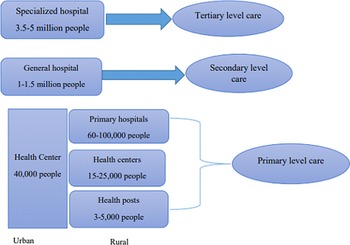
The then North Gondar (currently, north, central and west Gondar) is a Zone in the Ethiopian Amhara Region. This Zone is named for the city of Gondar, the capital of Ethiopia until the mid-19th century. Reference Modisakeng, Matlala, Godman and Meyer27 There are 16 hospitals in the study area, of which 15 are primary levels, and 1 is a referral hospital. According to the Ethiopian health care structure, primary hospitals provide primary level care for 60000 - 100000 people in the rural context (Figure 1). University of Gondar Comprehensive specialized hospital is the only referral hospital in the catchment area. Annually, more than 600000 people are treated in the hospital for different medical and surgical causes. With bed capacity numbering more than 500, it provides basic and advanced services at its different units, including a 24-hour emergency department receiving all emergency cases.
Ethiopian health system structure, source Ethiopian Health sector transformation plan, 2015.

Data source
Quantitative data was collected from 10 primary hospitals using the WHO essential trauma care checklist. A semi-structured interview guide was developed and used to collect qualitative data.
Data collection tool (for quantitative data)
The WHO Trauma Care Checklist tool was used to assess the readiness and preparedness of hospitals. 8 The checklist contains items that audit the presence of equipment to provide care for emergency conditions such as airway, breathing, and circulatory problems. It also comprises items assessing the availability of the facility to manage different body site injuries such as head, neck, chest, abdomen, extremity, and spinal injuries. The rest of the items assess the availability of facilities regarding the management of burns and wounds, rehabilitation centers, pain control medicines, diagnosis, monitoring, and availability of safety for health care personnel. The checklist was filled by interviewing professionals working at selected sites’ trauma care centers. We also observed the availability and functionality of equipment and supplies at the respected units. Each of the items were assessed and rated as below: NA = not applicable; 0 = absent (and should be present); 1 = inadequate; 2 = partially adequate (present, but use not assured; present, but not all the time; present, but not readily available); and 3 = adequate (present and used appropriately).
Qualitative data collection
We conducted a face-to-face interview in the Amharic language using an interview guide. Additional points were collected by probing respondents based on their responses. Participants provided informed verbal consent to audio record the interview before beginning each interview. Interviews were recorded using a high-quality sound recorder and transcribed verbatim. Additional notes were taken via observation of equipment and services. The level of saturation determined the sample size. The principal investigator (ZAD) conducted the interview, and the research team did the transcription and translation. Zewditu Abdissa is a PhD student at the University of Gondar with a clinical background and an assistant professor of anesthesiology. Kassahun Alemu, Gashaw Andargie, and Telake Azale have PhDs, and Mensur Osman has an MD+. All authors are researchers at the University of Gondar with more than 20 years of experience in research work and teaching. All authors took research methodology including qualitative research methods. Kassahun Alemu and Gashaw Andargie are professors, while Telake Azale and Mensur Osman are associate professors at the University of Gondar. The interviewer had no relation with the participants before the commencement of this study. We established a rapport with the interviewee before each interview. The participants did not have prior knowledge of the interviewer before this study. Participants were selected purposely based on their proximity to the problem and their responsibilities. Participant selection was done by the medical directors of the respected hospitals. Data collection took place at the respective office of participants. Saturation was reached after interviewing 37 health care professionals, 9 hospital managers, and 12 decision-makers.
Data analysis
We employed descriptive data analysis for the quantitative data and thematic analysis for the qualitative part. Data collection and analysis took place simultaneously to guide the next interview. We used an inductive approach for data analysis. All interviews were read several times to have a deep understanding of the responses. The transcribed and translated data was imported to open code software for coding by the first author (ZAD) and co-author KAG. A coding framework was developed from the translation. During this phase, primary codes were extracted. Codes were assigned to the summarized meaning units, and discrepancies in the coding were discussed. After this open coding, we merged codes with similar codes to create sub-categories. Then we combined sub-categories to establish categories based on the contiguity of concepts. Finally, a general description of the finding was formulated through generated categories. The credibility of the transcription was checked by giving the transcription to the first 5 participants.
Results
Audit findings
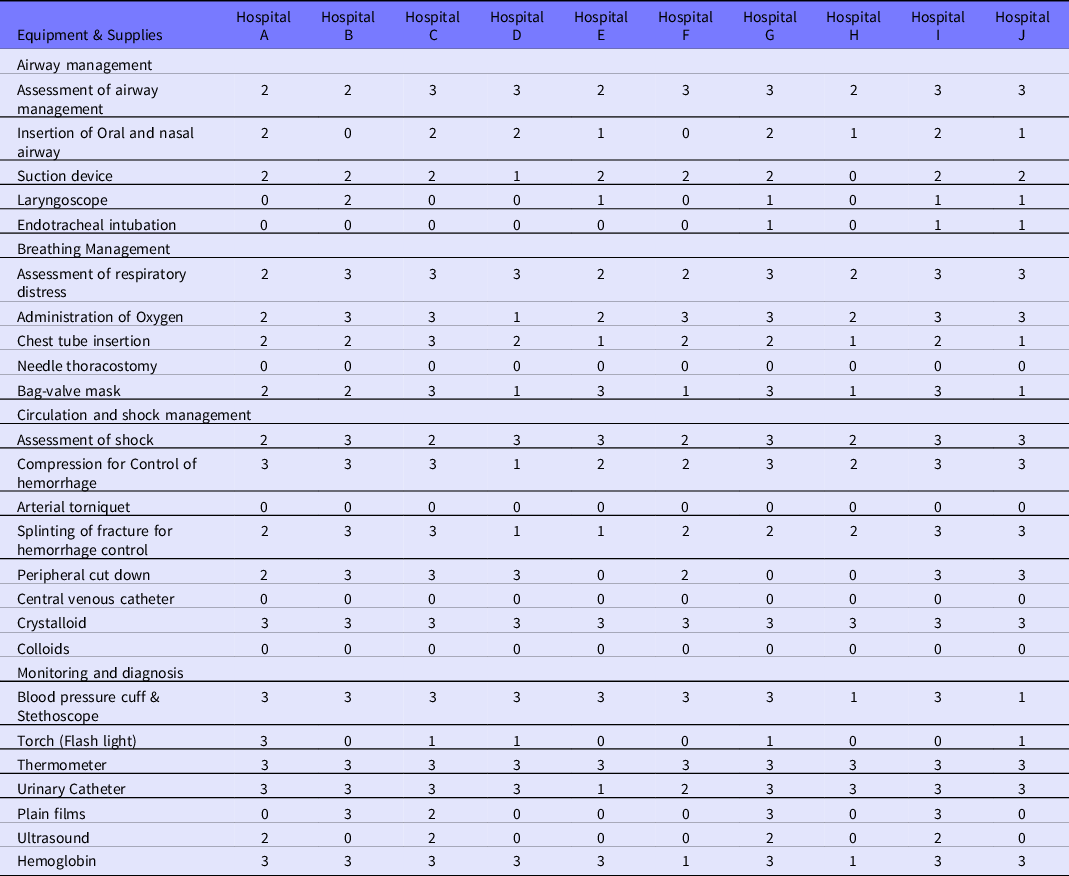
We surveyed 10 primary hospitals. The physical structures of the hospitals are more or less, standard. All hospitals have an emergency department, an operation theatre with 1 operating table, wards for surgical patients, a pharmacy unit serving 24 hours, a laboratory unit, and a radiology unit. In all the surveyed hospitals, equipment and supplies to provide emergency care have scores ranging from 0 to 3. Airway management was partially available in all the settings. Though airway equipment was available in most surveyed hospitals, we found none at the emergency departments. They were available only in the operation room.
According to our respondents, there are no trained personnel on airway management assigned at the emergency department. Anesthetists are called from the operation theatre whenever cases in need of intubation and other airway support come to the hospitals. Breathing management was partially available with scores ranging from 0 - 3 in most of the hospitals. Ambu bag and pediatric size endotracheal tubes were unavailable in 60% of the assessed hospitals. Chest tube insertion is performed in all hospitals but none have appropriate chest tubes and drainage bottles. The professionals use infusion bags and intravenous lines for chest drainage in some of the hospitals (Table 1).
Availability of acute resuscitation at emergency OPD for trauma victims at the primary hospitals in North-West Ethiopia

Key = > 0 = absent (and should be present); 1 = previously available, Stockout, malfunctioned; 2 = partially adequate (present, but use not assured; present, but not all the time; present, but not readily available); and 3 = adequate (present and used appropriately).
Most items under circulation and shock management domain were available with a score ranging from 1-3 in the majority of the hospitals (70%). However, some items such as arterial tourniquet for hemorrhage control, central venous access for fluid administration, and peripheral cut down set were not available in all hospitals. Though there is blood transfusion service in all the hospitals, all reported shortage of supply which was reported to be due to unavailability of blood banks at the hospitals, and blood being distributed on request from the main blood bank in Gondar. Crystalloid fluids for resuscitation are available in all the hospitals, while colloid solutions (Dextran) were available only in 1 hospital. Blood pressure cuff and stethoscope were available in the majority of the hospitals in limited quantity. Some of the hospitals have no laboratory facilities even to determine hematocrit levels.
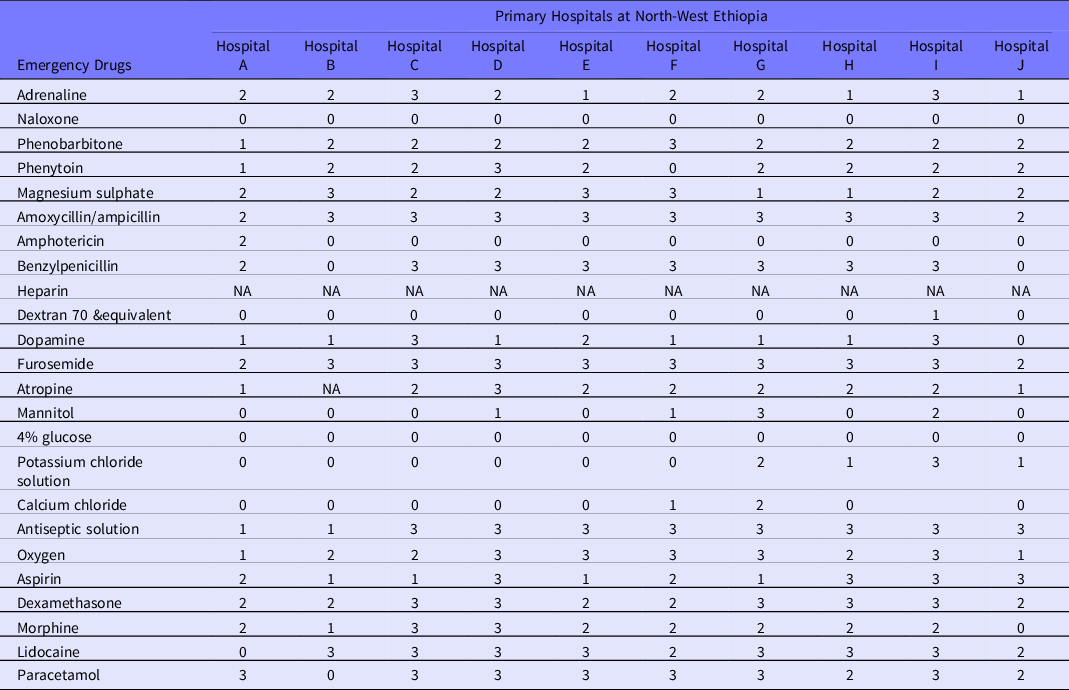
In the majority of the hospitals (80%), emergency drugs such as adrenaline, dopamine, and naloxone were unavailable during our survey. In some hospitals, these drugs were available previously but were stock out during our survey (Table 2).
Availability of emergency drugs at primary hospitals in North-West Ethiopia from March 2021 to September/August 2021

Key=> 0 = absent (and should be present); 1 = stock out; 2 = partially adequate (present, but use not assured; present, but not all the time; present, but not readily available); and 3 = adequate (present and used appropriately), NA= not applicable for the hospital level.
Head injury diagnosis is based only on clinical evaluation limited to early recognition of altered consciousness and lateralizing signs. All head injury cases are thus referred to the University of Gondar hospital. There is no appropriate material for fracture management in the hospitals surveyed. The hospitals use locally available materials for the immobilization of extremity fractures. Radiology service was found in only 4 of the hospitals (40%). Though the radiology unit was available in the rest of the hospitals, they were not functioning because of damage to the machines. According to the respondents, the main reasons for referral of injury cases were the absence of radiology service and lack of specialized staff to manage major trauma.
Non-steroidal anti-inflammatory drugs and most antibiotics were available in all the surveyed hospitals, but opioids were almost unavailable. Emergency drugs such as Adrenaline and 40% dextrose were unavailable in all the hospitals during our survey (Stock out).
Self-protecting materials were partially available in all the hospitals with ratings of 0 - 3. The persistently unavailable equipment was eye goggles. There was a critical shortage of gloves during our survey in all the hospitals. Training on universal precaution was inadequate in all the hospitals with a rating ranging from 1 to 3.
None of the hospitals had trauma packs but sterile gauzes, kidney dishes, and dressing forceps were prepared in a separate drum to be used whenever people who need dressings and other procedures arrive at the hospitals’ OPD (Out-Patient Department). There were no sterile drapes and gowns at the emergency department.
Qualitative findings
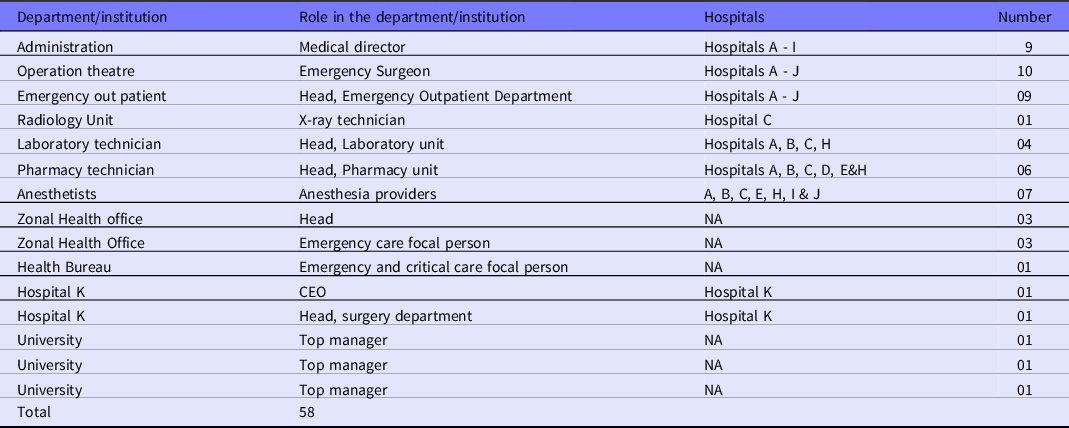
A total of 60 participants were approached but 2 refused to participate in the interview with a (response rate of 96.7%). The 2 participants declined to participate due to their busy schedules. A total of 46 (80%) of the participants were health care professionals working as clinical staff at trauma care and administrative staff at the primary hospitals and 12 (20%) were decision-makers at the district, zonal health office, health bureau, and University of Gondar (Table 3).
Key Informant interview profile by department/institution (n = 58)

Key = > NA (Not applicable).
Trauma care at the primary hospitals
According to the respondents, trauma flow is high in the hospitals. Road traffic injuries were the main causes followed by bullets and stab injuries. The common care given at the hospitals’ emergency OPD were initial resuscitation in line with ABC of life, chest tube insertion, suturing of wounds, and immobilizing of fractures. Victims who need further surgical intervention and exploration are referred to the University of Gondar’s specialized comprehensive hospital. In all the surveyed hospitals, minor surgical interventions were performed by IESO (Integrated Emergency Surgical Officers, except in 1 hospital with 1 general surgeon). Clinical nurses are assigned on a 24/7 basis at the emergency OPD. They call the IESO when cases in need of further evaluation or surgical intervention arrive at the hospitals. In the case of mass casualty, the general practitioners assist the IESOs. Open fractures, all head injury cases, and victims with internal organ injuries are referred to Gondar University Hospital.
Barriers of trauma care delivery at the hospitals from health care professionals’ perspective
Shortage of drugs, medical supplies, and other supportive treatment
The majority of the respondents claimed that shortage of drugs and medical supplies was the main barrier to providing trauma care at the hospitals. In some hospitals, there was a critical shortage of consumables such as gloves. According to our respondents, the main reason for scarcity was the procurement process. Based on the information we got, all government health care institutions should procure drugs and supplies only from the public sector PFSA (Pharmaceuticals Fund and Supplies Agency). They are allowed to procure from other sources only after obtaining a “stock-out status” from PFSA for the reason of accountability. According to respondents, this lengthy process resulted in a shortage of drugs and supplies at the health care facilities. A nurse working at Emergency OPD stated as follows:
‘These days, most of the drugs prescribed are not available in our pharmacy, and we are almost working barehanded due to a lack of gloves.’
On the other side, poor stock management was mentioned as a contributing factor by the zonal health office. According to the zonal health office, the hospitals should request drug procurement, while 25% is in their stock. But this is not the case in many instances. Most of the health care facilities request procurement after finishing all the drugs and supplies.
Shortages of oxygen and blood were mentioned as common causes for referral in most of the hospitals. Though oxygen concentrators were the most common source of oxygen in these hospitals, they were non-functional in the majority of the cases.
Lack of laboratory tests and imaging services
Although there was 24 hours laboratory service, pre-operative tests such as hematocrit were not determined in some hospitals due to lack of centrifuges. Another barrier to providing trauma care at these hospitals was the absence of X-ray service. Only 4 of the 10 hospitals had X-ray services at the time of the survey. All the hospitals had x-ray machines, but 60% of them were damaged. The common reason for the damage was power fluctuation and inconvenient room temperature, according to respondents.
Poor surgical setup and inconvenient environment
IESOs were trained by the Federal Ministry of Health and allocated to all federal primary hospitals to provide emergency surgical, obstetric, and trauma surgical interventions. However, these professionals are not practically practicing as planned. A major obstacle is poor surgical setup and inconvenient working environment at the primary hospitals. Although some surgical procedures such as emergency laparotomy and wound care can be performed within their scope of practice, professionals at the primary hospitals could not do this due to a lack of necessary equipment.
According to 1 of our respondents, the extreme temperature in the operating room environment makes wearing surgical gowns and gloves uncomfortable as there are no ventilators. A surgical officer in 1 of the surveyed hospitals stated that:
‘The operating room is not suitable for surgery. In the absence of an air conditioner, it is not possible to wear a gown at 40 degrees Celsius. It is very difficult to wear gloves because our hands are so sweaty. There is an air conditioner in the hospital, but it is not installed due to lack of a technician. The main problem is lack of attention.’
Lack of emergency specialist
Lack of specialist surgeons in the hospitals for consultation was also mentioned as a barrier to provision of trauma care by some surgical officers. According to some surgical officers, lack of confidence to perform minor operations was reported due to fear of complications. A surgical officer working in 1 of the primary hospitals stated as follows:
“I am alone here. We were 2, but my colleague left the area due to an inconvenient working environment. As I am alone here, I am afraid to operate even the procedures within my capacity and refer them to Gondar University hospital. Had there been a senior consultant, we could have saved many lives.’
Gaps in on-job training
Concerning staff capacity to provide trauma care, all respondents stated that though the training is given at different times, none of the professionals took on job training specific to trauma care. The majority of training given in the surveyed hospitals was related to infection prevention and maternal health care.
Challenges from hospital administrators’ perspective
High staff turnover, shortage of staff (especially surgical officers), shortage or unavailability of some equipment on the market, and inability to recruit general surgeons were the shared challenges raised by hospital administrators on their inability to provide trauma care. Insecurity in some areas due to social unrest, and harsh weather condition were also mentioned by respondents. Omission of hardship allowances from salary despite practicing under harsh weather was raised as the main reason for high staff turnover in some hospitals. Although some hospitals post vacancies for specialist surgeons to improve the quality of emergency care, they have been unable to find applicants. Reasons cited for this include an inconvenient environment, poor infrastructure, and lack of reasonable payment that can attract these professionals. In some of the hospitals, there was only 1 surgical officer for both trauma and obstetric conditions. The lack of professionals and other related factors were reported to contribute to a high number of referrals of cases to Gondar Hospital. Lack of drugs and medical supplies, as well as lack of equipment to fix some injuries, are further contributing factors for the high referral of trauma victims to the University of Gondar Specialized Hospital.
Discussion
This study is the first of its kind in the Amhara regional state that assessed the availability of trauma care and barriers to delivering trauma care at primary hospitals. Unavailability of drugs and supplies, lack of laboratory facility and imaging services, inability to recruit specialist professionals, lack of training, and inconvenient working and living environment were stated as the main barriers to providing trauma care.
Shortage of drugs and supplies was stated as a barrier to providing essential trauma care by respondents. The lengthy procurement process and lengthy stock-out status by PFSA were also mentioned as main barriers to the availability of drugs and supplies at the hospitals. The shortage of drugs and supplies within the public health system puts a heavy strain on people with low income, who cannot afford the exaggerated treatment costs of privately owned health institutions. Those who can’t afford the high cost of the private providers may go home without getting appropriate treatment, resulting in disability or death from potentially treatable causes. Our finding is consistent with previous studies that showed that lengthy buy-out time, Reference Kefale and Shebo28 poor procurement, and lengthy stock-out status of PFSA, Reference Tangy, Diarra and Yahaya29 resulted in a shortage of drugs and supplies.
Insufficient blood supply was mentioned as 1 of the reasons for referring trauma victims by the majority of respondents. Blood is collected from the community voluntarily and stored at Gondar main blood bank. According to respondents, all the primary hospitals have mini blood banks but, they don’t directly collect blood from the community, rather they get a supply from the main blood bank in Gondar to be stored in their mini blood bank. Hence, they often encounter a shortage of blood in their institution. A previous study in Sub-Saharan countries revealed that insufficient blood supply is 1 barrier to blood transfusion. Reference Bloch, Vermeulen and Murphy30,Reference Weeber, Huntera, van Hoving, Lategan and Bruijns31
Power deficiency and frequent interruption is the main infrastructural problem in many of the hospitals. The power interruptions often cause damage to equipment such as X-ray machines, oxygen concentrators, and suction machines, which in turn results in inadequate trauma care. In the study area, most trauma cases, particularly those with fractures, are referred to the University of Gondar Hospital mainly due to the lack of x-ray services in the primary hospitals. The overall effect delays trauma care. This finding is also supported by a study in Nepal, Reference Shah, Bhattarai, Lamichhane, Joshi, LaBarre, Joshipura and Mock32 and Ghana, Reference Japiong, Asiamah, Owusu-Dabo, Donkor and Stewart33 where there is a deficiency of electricity resulting in poor trauma care.
Lack of training specific to trauma care was the major gap shared by all the hospitals in the study area. Preparing materials needed for certain case management requires specific training of professionals in the areas. In all the surveyed hospitals, preparedness in making all materials needed for immediate trauma response available was generally poor. From our audit, none of the hospitals had trauma packs despite all items needed for it was available in the hospital. Some of the professionals working at these units even had no idea about trauma packs. Though some of the emergency drugs such as adrenaline were in stock, they were not made available at the emergency department implying the need for training. Similar findings were reported by previous studies in low and middle-income countries indicating the absence or minimal training specific to trauma care. Reference Latifi, Gunn and Stroster34–Reference Wesson, Bachani, Wekesa, Mburu, Hyder and Stevens36 A study in Uganda also identified lack of training as the main barrier for trauma care. Reference Opiro, Wallis and Ogwang37
Trauma victims often need treatments requiring surgical interventions which in turn requires advanced setup and trained professionals. In the context of the study area, the professionals assigned at the primary hospital level to provide trauma care are surgical officers with a limited scope of practice. According to the regional health bureau, there is a high unmet need for surgical interventions. In order to fill the gap, 2 approaches were designed by the regional health bureau in collaboration with concerned stakeholders. The first strategy was to work with the SaLTs initiative (Saving Lives Through Safe Surgery) to train surgical officers. The SaLTs initiative was designed in 2015 as part of the 5 years health transformation plan in Ethiopia. The primary aim of the project was to improve the equity and quality of surgery and anesthesia service. Reference Burssa, Teshome and Iverson38 According to the regional health bureau, the SALTs initiative was working with the regional health bureau to strengthen the surgical service by capacitating the emergency surgical officers. It did not work out as expected, however.
The second strategy designed by the regional health bureau to solve the unmet need for surgical intervention was to work in affiliation with university hospitals. According to this program, post-graduate trainees in different specialty fields get assigned at the primary hospitals immediately after completing residency to practice for 6 months in the primary hospitals. The program was initiated with the aim of providing mutual benefit of community service in the areas and creating opportunities for professional skill development. While being implemented in some hospitals in the region, this program was discontinued or not yet started in the 10 hospitals we included in our survey. This is believed to have created a huge gap in trauma care. The unmet surgical need is similarly reported by a previous study in 3 African countries (Uganda, Tanzania, and Mozambique) indicating surgical procedures to treat traumatic injury were relatively low in the study hospitals. Reference Galukande, von Schreeb and Wladis39
Poor surgical setup, lack of appropriate surgical instruments, and poor commitment for duty remuneration by the regional health bureau was raised as the main reasons by key informants from the University of Gondar for the interruption of service. On the other side, the poor commitment of the professionals to serve in areas with difficult topography and difference in pay scale between universities and the ministry of health was pointed out by the regional health bureau for interruption of the service.
Limitation and strengths of the study
Although this study identified the gaps in trauma care at the primary hospitals in the study area, we didn’t include the consequent outcome of trauma patients due to a lack of data. For services related to trauma care, ratings were based on subjective opinions of informant interviews that can be affected by the experience and knowledge of respondents. We observed the availability of equipment and materials and made the ratings based on the objective way. Quantitative data was triangulated with qualitative data to increase the credibility of the data
Conclusion and recommendations
This study identified that the distribution of primary hospitals covers the geographic area studied. However, trauma is generally under-served in the study area. Lack of drugs and supplies, laboratory facility and imaging services, trained staff, and inconvenient working and living environment were the main barriers to providing trauma care. The gaps in trauma care can be improved by further commitment of the hospital administrators, zonal, regional health bureaus, and district administrators. Despite the fact that the University of Gondar has been working with affiliated primary hospitals, most of the primary hospitals in the catchment area have not benefited from the program. The drug procurement process needs to be revised in discussion with all the concerned bodies. Arranging trauma-specific training, for professionals working in emergency departments and pharmacy departments, is crucial. The affiliation program needs to be revitalized by considering hospitals in the catchment area. Further research should be considered to assess trauma victims’ outcomes at the primary hospitals.
Supplementary material
To view supplementary material for this article, please visit https://doi.org/10.1017/dmp.2022.44