Increasing evidence links early life exposures to the development of the immune system and long-term risk of immunologic and inflammatory conditions. Birthweight, a marker of maternal nutrition during pregnancy, has been associated with numerous aspects of immune function, including antibody response to vaccines,Reference McDade, Beck, Kuzawa and Adair 1 immunoglobulin levels,Reference McDade, Beck, Kuzawa and Adair 2 , Reference McDade, Kuzawa, Adair and Beck 3 elevated C-reactive protein (CRP)Reference McDade, Rutherford, Adair and Kuzawa 4 and leukocyte (white blood cell) countsReference Chen, Srinivasan and Berenson 5 , Reference McDade, Jones and Miller 6 from childhood through adulthood. Research into the hygiene hypothesis has highlighted the importance of infant and childhood microbial exposures in entraining the immune system to recognize pathogenic v. benign substances.Reference Rautava, Ruuskanen, Ouwehand, Salminen and Isolauri 7 – Reference Strachan 9 Disruptions in exposure to ‘old friends,’ the commensal bacteria and other common pathogens frequently encountered during our evolutionary and historical past, during early life due to increases in hygiene, declining family size, reduced exposure to livestock and increased antibiotic use have been implicated in the rising prevalence of allergy, atopy and other inflammatory conditions.Reference Blaser and Falkow 10 Among these early exposures, birth interventions may also play an important role in the development of the immune system and immune-related diseases in infancy and childhood.Reference Gollwitzer and Marsland 11 – Reference Romero and Korzeniewski 13
Meta-analyses and analyses of large datasets drawn from national health registries have documented that caesarean delivery is a risk factor for neonatal respiratory conditions, asthma, atopy, type 1 diabetes, celiac disease and gastroenteritis.Reference Bager, Simonsen, Nielsen and Frisch 14 – Reference Thavagnanam, Fleming, Bromley, Shields and Cardwell 18 The associations between delivery and later health outcomes are strengthened when emergency and planned caesareans are measured separately. Caesarean deliveries occurring before the rupture of the membranes carry a greater risk of asthma and inflammatory disorders,Reference Thysen, Larsen and Rasmussen 19 indicating that the process of labour is important for long-term health. Two inter-related pathways have been proposed to underlie the associations between mode of delivery and later health outcomes.Reference Romero and Korzeniewski 13 , Reference Cho and Norman 20 , Reference Dahlen, Downe, Wright, Kennedy and Taylor 21 First, the experience of labour serves as stressor in the neonate, upregulating the stress response and activating components of the immune system.Reference Dahlen, Downe, Wright, Kennedy and Taylor 21 – Reference Duijts, Bakker-Jonges and Labout 23 At the same time, passage through the birth canal exposes neonates to their mother’s vaginal and fecal microbiota, seeding the infant’s gut microbiome and beginning the process of entraining the immune system to recognize harmful v. benign exposures.Reference Dominguez-Bello, Costello and Contreras 24 , Reference Neu and Rushing 25 While the relative importance of these pathways and the mechanisms contributing to the persistence of delivery exposures on later immune function continue to be explored, immunological studies in neonates document that the prevalence of leukocytes, including neutrophils, monocytes, lymphocytes and natural killer (NK) cells, are altered by the process of labour.Reference Thysen, Larsen and Rasmussen 19 , Reference Almanzar, Schonlaub and Hammerer-Lercher 26 , Reference Weinberger, Vetrano and Syed 27 Levels of inflammatory cytokines produced by these immune cells and of CRP also tend to be lower in neonates born by planned caesarean.Reference Kaapa and Koistinen 28 , Reference Logan, Thiel and Bornemann 29 Together these functional differences in the immune system may affect morbidity from respiratory and other common infections in the short term and shape immune function and the development of inflammatory conditions in the longer term.Reference Gollwitzer and Marsland 11 However, few studies have examined the intervening period of infancy and young childhood to test whether differences in immune cell count and immune function persist beyond the perinatal period.
Another important gap in the research on the perinatal origins of immune disorders is that evidence for the association between caesarean delivery and later health comes almost entirely from high-income countries.Reference Carrillo-Larco, Miranda and Bernabé-Ortiz 30 , Reference Veile and Kramer 31 Yet, rates of caesarean deliveryReference Betran, Ye and Moller 32 and allergic conditionsReference Pearce, Ait-Khaled and Beasley 33 are both increasing dramatically in low- and middle-income countries (LMIC). The few studies that have examined the association between caesarean delivery and asthma in LMIC settings have found contradictory results. One comparative study of 8-year-old children in India and Vietnam found a stronger association between caesarean delivery and asthma than that seen in high-income countries,Reference Lavin, Franklin and Preen 34 while two others have found no significant association between delivery mode and asthma in 3–15-year-old children in MalaysiaReference Nathan, de Bruyne, Khalid and Arumugam 35 and Iraq.Reference Al-Kubaisy, Ali and Al-Thamiri 36 Such contrasting results may reflect differences in salient environmental risk factors between more and less affluent settingsReference Garcia-Marcos, Mallol, Sole, Brand and Group 37 and/or differences in immune system development and activation in response to differences in energy availability or pathogenic exposures. Further investigation into the potential impacts of birth practices on immune development in LMICs, where infants and children are exposed to both higher rates of breastfeeding and more pathogenic environments,Reference Lavin, Franklin and Preen 34 , Reference Prior, Santhakumaran and Gale 38 is needed to establish whether the impacts of early birth exposures persist across a broader range of postnatal contexts.
This study examines the association between delivery type and measures of immune function and morbidity in Ecuadorian infants and young children participating in the nationally representative Encuesta Nacional de Salud y Nutricion (ENSANUT-ECU 2012).Reference Freire, Belmont and Rivas-Marino 39 It tests whether the proportion of five leukocyte types (lymphocytes, monocytes, neutrophils, basophils and eosinophils), CRP and morbidity from respiratory and diarrheal illness differ between infants and young children, aged 6 months to 2 years, delivered vaginally v. those delivered by caesarean. These measures permit an examination of the association between delivery mode and several aspects of immune function. Leukocytes serve as the primary mediator of both innate (the rapid, non-specific response to infection) and adaptive (the time-delayed specific cellular and humoral response) immune responses to infection and promote inflammation. The five measured cell types serve different roles in this process. Lymphocytes, which include B-cells, T-cells and NK cells, serve as a measure of specific immunity and respond to intra- and extracellular pathogens and viral infections. The other four cells types, monocytes, neutrophils, eosinophils and basophils, participate in the innate immune response. Neutrophils are an indicator of general infection while monocytes are an indicator of chronic infection. Eosinophils and basophils both play a role in inflammation and allergic responses. Eosinophils respond to parasitic infection and serve as a marker of inflammatory and allergic responses while basophils indicate asthma and allergic disease. Thus, along with CRP, an inflammatory marker that plays a role in the acute phase response to infection, these measures provide information on immunity and response to infection in a LMIC context with prevalent caesarean section, over 40% of births in 2012,Reference Freire, Belmont and Rivas-Marino 39 and potentially different postnatal feeding and environmental exposures. Based on previous findings in neonates, it was hypothesized that, compared to vaginally delivered infants and children, those delivered by caesarean will show a dampened immune response with lower specific immune cell proportions, lower inflammation and poorer immune function indicated by higher morbidity. Conversely, owing to the association between caesarean delivery and allergy and asthma, it was hypothesized that the leukocytes associated with these conditions, eosinophils and basophils, will be higher in infants and children born by caesarean.
Methods
Sample
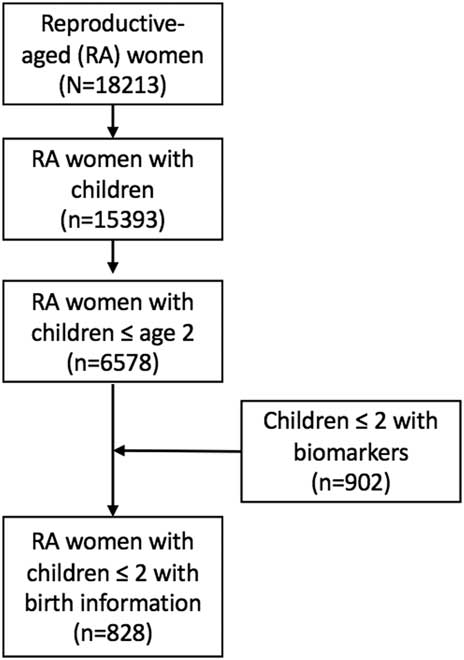
Data obtained from the Encuesta Nacional de Salud y Nutrición (ENSANUT-ECU) conducted in 2012Reference Freire, Belmont and Rivas-Marino 39 are publicly available at http://www.ecuadorencifras.gob.ec/category/ensanut/. ENSANUT-ECU collected data from a nationally representative sample of over 87,000 Ecuadorians (0.6% of the total population), aged 0–59 years and analysed biomarkers in a subsample of 21,249 participants, aged 6 months to 59 years. Participants were selected using a multistage, stratified sampling design based on rural/urban residence, region and province. Twelve households were identified per census tract and, within each household, one individual in each age group of interest (<5, 10–19 and 20–59 years) and one woman of reproductive age were selected to participate. The full sample includes 18,213 women of reproductive age, 15,393 of whom had a child and 6578 with children aged 2 years of younger. A total of 902 children aged two or younger had biomarkers collected, and of these 828 could be matched to mothers with complete birth information. Only one child under the age of 5 was measured per household, so the current analytic sample includes 828 mothers and their infants aged 6–24 months, with biomarker measures and birth histories (Fig. 1). Secondary analyses were approved by the University of North Carolina at Chapel Hill Institutional Review Board.
Analytic sample of mothers and infants participating in ENSANUT.

Birth histories
Delivery type, vaginal v. caesarean, was reported by mothers. No distinction was made between emergency and planned caesarean, but mothers were asked whether they had contractions before delivery. This variable is used in sensitivity testing (described in the statistical methods) to indicate whether the caesarean delivery was planned.
Immune measures
Venous blood samples were collected in the participants’ homes by trained phlebotomists. 5.5 ml of blood was collected from infants aged 6 months or older and young children and divided between ethylenediaminetetraacetic acid-coated tubes (for haematological analysis) and tubes with lithium heparin (for CRP and other biochemical markers). Samples were analysed at a central, internationally accredited laboratory, Netlab S.A., in Quito, Ecuador (International Organization for Standardization: 15189). Immune cell counts were measured using automated fluorescent flow cytometry (Sysmex XE-2100). The proportion of five leukocyte types (neutrophils, lymphocytes, eosinophils, monocytes and basophils) was assessed to measure various aspects of immune function. Standard paediatric cut-points were used to dichotomize counts into normal v. elevated. 40 High levels were defined as: neutrophils >45%, lymphocytes >76%, monocytes >6%, eosinophils >3% and basophils >1%. Serum was analysed for CRP after being spun at 3500 rpm for 15 min using automated nephelometry (Roche/Hitachi Modular EvoP-800 system). For this analysis, CRP over 2 mg/l was considered elevated for infants and young children following previous studies.Reference Thompson, Houck and Adair 41 , Reference Wander, Brindle and O’Connor 42
Morbidity
Infant morbidity was assessed through maternal report. Infants were considered ill if they had exhibited symptoms of diarrhoea or respiratory infection (cough, runny nose, difficulty breathing, sore throat or flu) in the past 2 weeks.
Covariates
In addition to the birth and health measures, ENSANUT collected numerous household, maternal and infant characteristics during the household surveys.Reference Freire, Belmont and Rivas-Marino 39 Birthweight was recorded from the participating infants’ child health card. Mothers were asked whether they had ever breastfed their infant and the age at which they stopped breastfeeding. For this analysis, children are classified as still breastfed if they received any breastmilk at the time of the interview. Mothers were asked the number of children they had given birth to including the index child. Economic status was measured at the household level from an index summarizing household characteristics and assets. The score was normally distributed and divided into quintiles for analysis.
Statistical methods
Descriptive statistics (t-tests and χ2 tests) were used to test for differences in infant, maternal and household characteristics by delivery type, vaginal v. caesarean. Because of concerns with the validity of odds ratios for assessing risk in cross-sectional studies with outcomes of varying prevalence,Reference Greenland 43 , Reference Spiegelman and Hertzmark 44 multilevel Poisson regression with robust variance was used to assess prevalence risk ratios in immune measures (CRP, morbidity and elevated immune cell types) by delivery mode. All models controlled for infant age, current breastfeeding, infant sex, economic quintile and region (urban v. rural) and clustering by province. Education and ethnicity were highly correlated with income and region and were not included in the final model. The immune biomarker models (elevated CRP and immune cell types) adjust for illness in the past 2 weeks to control for elevations due to recent illness. To provide a proxy for planned caesarean delivery, which may carry greater risk for altered immune development, two sensitivity analyses were conducted. First, the final adjusted models were tested in the subsample of women who did not experience contractions before giving birth by caesarean. Next, the final model was tested in the subsample of multiparous women. Vaginal birth after caesarean (VBAC) is not a common practice in Ecuador, so caesarean delivery in multiparous women may be more likely to represent a planned caesarean delivery.Reference Magne, Puchi Silva, Carvajal and Gotteland 45 All analyses were conducted by using Stata 14 (StataCorp, College Station, TX, USA). Statistical significance was set at P<0.05.
Results
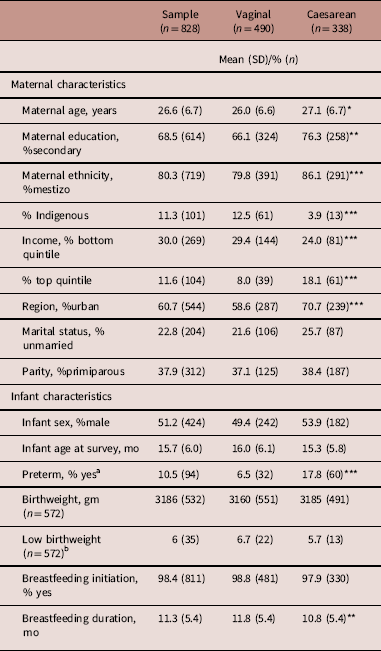
Nearly 41% of the sample infants were born by caesarean section. Mothers delivering vaginally or by caesarean differed in a number of sociodemographic characteristics (Table 1). Those delivering by caesarean were slightly older, more highly educated, non-indigenous, more urban and of a higher income quintile. Fewer differences were seen in infant characteristics by delivery type. No differences were seen in birthweight, the prevalence of low birthweight or breastfeeding initiation. However, infants born by caesarean were more likely to be preterm (defined as birth before 9 months) and have a shorter duration of breastfeeding.
Sample characteristics by delivery type

* P<0.05, **P<0.01, ***P<0.001 for difference between vaginally and caesarean deliveries from χ2 for categorical variables or t-tests for continuous variables.
a Maternal report of birth before 9 months.
b Birthweight <2500 g.
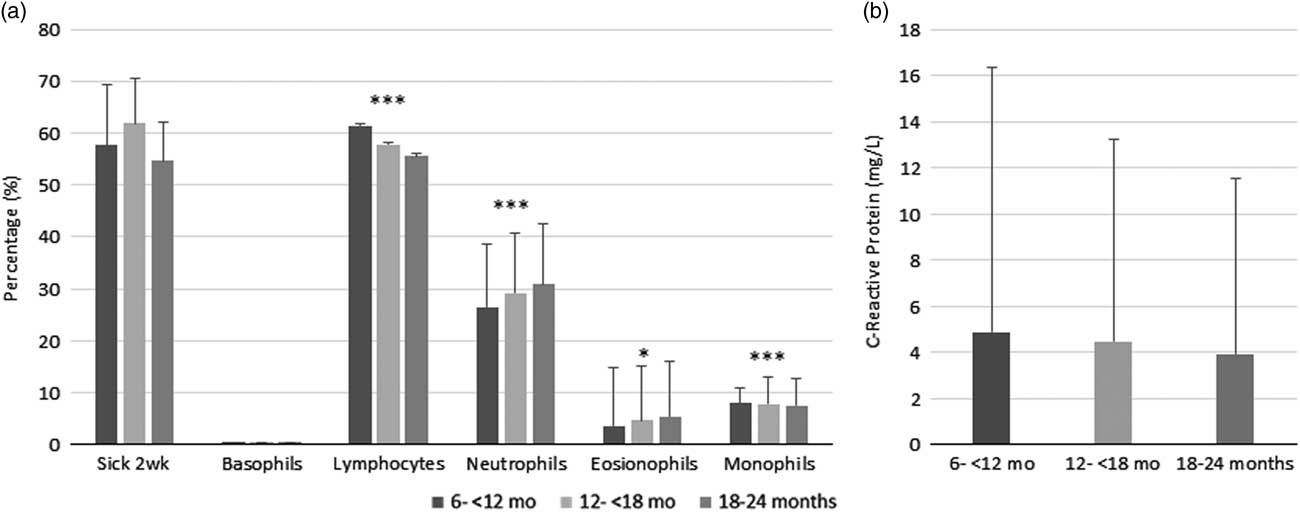
Across all age groups, the majority of infants and young children experienced infectious symptoms in the 2 weeks before the survey (Fig. 2a). Leukocyte prevalence did vary significantly with age for four of the immune cell types: the percentage of lymphocytes decreased across age groups, the percentage of neutrophils and eosinophils increased across age groups and the percentage of monocytes was highest in the middle age group (toddlers aged 12–18 months) compared to younger or older infants. Neither the mean level of CRP (Fig. 2b) nor the prevalence of elevated CRP differed across the age groups. Similar age patterns were seen for vaginally and caesarean delivered infants (data not shown).
Mean morbidity prevalence, CRP and leukocyte proportion by age in infants and young children. Bars represent mean prevalence of morbidity and leukocyte proportions with standard deviation (A). Bars represent mean CRP level (mg/l) with standard deviation (B); *P<0.05, **P<0.01, ***P<0.001 for trend by age group.

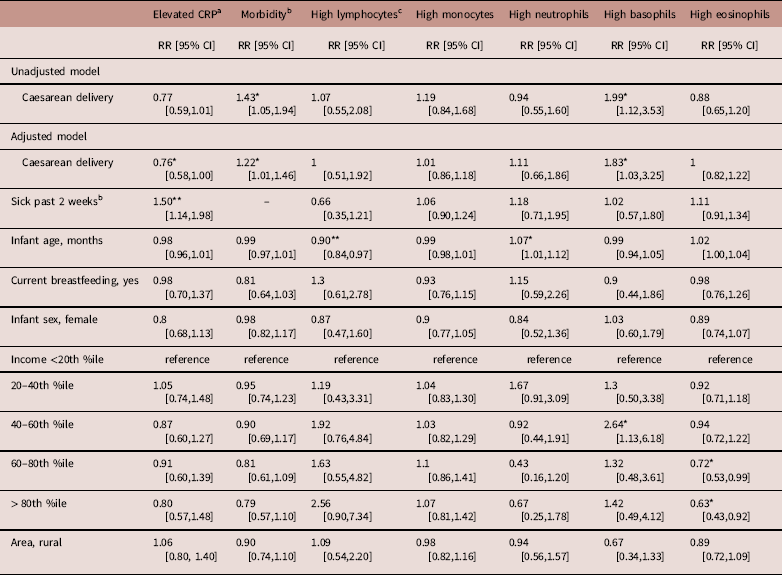
Several immune measures differed by delivery type in both crude and adjusted models (Table 2). Infants born by caesarean were less likely to have elevated CRP but more likely to have experienced illness symptoms in the previous 2 weeks. Of the leukocyte types, the risk of having elevated basophils differed significantly by delivery mode with caesarean delivered infants more likely to have elevated basophils. Among the covariates, few showed a consistent independent association with immune markers. Older infant and child age was associated with a greater risk of having high neutrophils but a lower risk of having high lymphocytes. Higher income was associated with a greater risk of having elevated basophils, which was significantly higher for infants and children in the middle quintile compared to the lowest quintile. Conversely, higher income, in the fourth and fifth quintile, was associated with a decreased risk for elevated eosinophils. As expected, experiencing illness symptoms in the past 2 weeks was an independent risk factor for having elevated CRP.
Unadjusted and adjusted associations between delivery mode and immune biomarkers and morbidity

* P<0.05, **P<0.01, ***P<0.001 from multilevel, adjusted (prevalence) risk ratio regression models with Poisson specification and clustering by province.
a Defined as CRP >2 mg/l.
b Symptoms of diarrhoea or respiratory infection (cough, runny nose, difficulty breathing, sore throat or flu) in the past 2 weeks.
c Defined based on standard paediatric cut-pointsReference Leung, Li, Leung and Schooling 16 as: basophils >1%, lymphocytes >76%, neutrophils >45%, eosinophils>3% and monocytes >6%.
The results of the sensitivity analyses revealed no differences in the magnitude or direction of the association between delivery type and the immune or morbidity measures. Not all results remained significant, however, likely due to the smaller size of the subsamples (n=511 for multiparous mothers and n=405 for infants of mothers giving birth by caesarean without experiencing contractions compared to vaginally delivered infants).
Discussion
The results of the present study show that measures of morbidity and immune function differ by delivery type and that these differences are measurable across the first 2 years of life in Ecuadorian infants and young children. Such findings are important since over 40% of Ecuadorian infants are born by caesarean,Reference Freire, Belmont and Rivas-Marino 39 a figure comparable to other Latin American countriesReference Betran, Ye and Moller 32 and four to eight times higher than the WHO recommendation that 5–15% of infants be delivered by caesarean section. 46 In the current study, infants born by caesarean were less likely to have elevated CRP and were more likely to have been sick in the previous 2 weeks and to have elevated basophils. These differences were little attenuated by the inclusion of maternal and infant covariates or indicators of ‘emergency’ v. scheduled caesarean. The findings support the importance of birth exposures in shaping the development and function of the immune system even in a context with prevalent breastfeeding and differing postnatal pathogenic exposures. Further, the finding that caesarean delivery increases the risk of elevated basophils in infants and young children provides a potential mechanism linking delivery mode to the risk of allergy and asthma in infants and children born by caesarean, further supporting a developmental origin for these inflammatory conditions.
Contrary to the hypotheses and previous studies focussing on cord blood or immune measures in neonates, few significant differences in leukocyte proportions were seen between vaginally v. caesarean delivered infants at 6–24 months of age. Previous research has documented that neonates born by caesarean have lower proportions of neutrophils, monocytes, NK cells, T-cells, B-cells and granulocytes compared to vaginally delivered neonates.Reference Thysen, Larsen and Rasmussen 19 , Reference Almanzar, Schonlaub and Hammerer-Lercher 26 These differences in cell types are enhanced or even exclusively seen in infants born by pre-labour caesarean, suggesting that labour is an important process for immune activation. Research into the mechanisms linking delivery to immune development have suggested that contractions of the uterus and hypoxia during passage through the birth canal stimulate a stress response in the fetus that leads to catecholamine and cortisol production.Reference Dahlen, Downe, Wright, Kennedy and Taylor 21 , Reference Eisler, Hjertberg and Lagercrantz 22 In turn, these stress hormones redistribute and activate immune cells,Reference Duijts, Bakker-Jonges and Labout 23 , Reference Almanzar, Schonlaub and Hammerer-Lercher 26 serving as an adaptation to protect neonates against immediate infection in the external environment.Reference Romero and Korzeniewski 13 , Reference Cho and Norman 20 This experience of labour and immune activation has been proposed to be ‘stored’ in the immune system through memory T-cells and/or epigenetic modifications.Reference Romero and Korzeniewski 13 , Reference Dahlen, Downe, Wright, Kennedy and Taylor 21 However, few studies have examined whether these early differences in immune cell proportions persist after the first days of life. The current results suggest that, for the most part, these differences do not persist into infancy and early childhood among this sample of Ecuadorian children. However, other research has found persistent differences in the number of immunoglobulin-A (IgA) and IgG-secreting cells in 1-year old infants by delivery typeReference Huurre, Kalliomaki and Rautava 47 and of birthweight on immune cell counts in childhood through young adulthood,Reference Chen, Srinivasan and Berenson 5 , Reference McDade, Jones and Miller 6 suggesting that further investigation of the impact of delivery practices on immune cell function across infancy and early childhood is warranted.
As hypothesized, caesarean delivery was associated with an increased risk of having elevated basophils, a leukocyte that plays a role in acute and chronic allergic diseases, including asthma and atopic dermatitis, and plays a role in the inflammatory response.Reference Mukai and Galli 48 Infants delivered by caesarean were almost twice as likely to have elevated basophils even after adjustment for maternal and infant characteristics. Previous research into early life risk factors for asthma and allergic disease has documented that infants and young children with a higher number of eosinophil/basophil progenitor cells in their cord blood have a greater Th2 response (an elevation in the T-helper cells that produce interleukins that, in turn, promote IgE and eosinophil response to atopy) and increased risk of respiratory symptoms, wheezing and bronchitis, in the first 2 years of life.Reference Junge, Hornig and Herberth 49 While the study did not look at delivery directly, its results support the importance of perinatal exposures on the development of inflammatory conditions. This current study’s finding that basophils are elevated in caesarean delivered infants across early life provides a potential mechanism for the documented association between caesarean delivery and the later development of allergic diseases.Reference Almqvist and Oberg 50
Rates of caesarean delivery and allergy and asthma are increasing concurrently in LMICs, leading some researchers to propose that changing delivery practices in part underlie the increasing prevalence of atopic disease.Reference Cho and Norman 20 , Reference Lavin, Franklin and Preen 34 , Reference Huurre, Kalliomaki and Rautava 47 Linked to the ‘hygiene hypothesis’, the lack of exposure to maternal vaginal and fecal microbiota that accompany caesarean delivery has been proposed to lead to a more pro-inflammatory composition of the gut and a dysregulation in immune cell development.Reference Neu and Rushing 25 , Reference Collado, Cernada, Bauerl, Vento and Perez-Martinez 51 However, much of the work linking caesarean delivery and later health comes from high-income countries where postnatal exposures differ considerably and from those of LMIC where infants and children may experience significant microbial exposures beyond those transmitted by their mothers during birth.Reference Nathan, de Bruyne, Khalid and Arumugam 35 In contrast to higher income countries where caesarean delivery is associated with lower rates of breastfeeding,Reference Prior, Santhakumaran and Gale 38 caesarean delivery in this study was not associated with lower initiation of breastfeeding. Even though caesarean delivered infants were breastfed for a significantly shorter duration, breastfeeding duration was over 10 months for both vaginally and caesarean delivered infants in the current sample. This exposure to breastmilk in both vaginally and caesarean delivered infants may have attenuated some of the expected differences in specific and innate immune cell proportions. Given the long duration of breastfeeding in this sample, the 1-month average difference in breastfeeding duration between vaginally and caesarean delivered infants is unlikely to have a significant biological effect. Previous studies suggest that early exposure to breastmilk in the first month to 6 months of life may be the most important in shaping leukocyte development.Reference Andersson, Hammarstrom and Lonnerdal 52 , Reference Belderbos, Houben and van Bleek 53 Exclusive breastfeeding in early infancy is known to modify immune cell proportions, with lower monocytes, neutrophils and cytokine production seen in exclusively breastfed infants.Reference Belderbos, Houben and van Bleek 53 These differences, which may stem from the passive immune protection infants receive from their mothers during breastfeeding and/or the reduced pathogen exposure from contaminated non-breastmilk substances during breastfeeding, may mitigate some of the impacts of caesarean delivery on immune development.
Along with these differences in breastfeeding after caesarean delivery, postnatal pathogenic exposures also differ in LMIC.Reference Nathan, de Bruyne, Khalid and Arumugam 35 , Reference Bueso, Figueroa and Cousin 54 In the present study, rates of morbidity were high; over half of infants experienced at least one respiratory or gastrointestinal symptoms in the 2 weeks before measurement. Caesarean-born infants were significantly more likely to have illness symptoms even after adjustment for maternal and infant characteristics associated with greater exposure or vulnerability to illness. Interestingly, while caesarean delivery was associated with higher morbidity, infants born by caesarean had significantly lower risk of inflammation measured by CRP. This contrasting result suggests that the immune response of caesarean delivered infants may be dampened. Previous research has shown that inflammatory cytokines, including interleukin-1 (IL-1), tumour necrosis factor-α (TNF-α), IL-6 and IL-12,Reference Gollwitzer and Marsland 11 , Reference Thysen, Larsen and Rasmussen 19 , Reference Weinberger, Vetrano and Syed 27 and CRP are lower in neonates born by planned caesareans compared to those born by emergency caesarean delivery or vaginal delivery,Reference Logan, Thiel and Bornemann 29 though other studies have found no difference when all caesarean deliveries are compared to vaginal deliveries.Reference Kaapa and Koistinen 28 Such altered cytokine production could negatively impact the inflammatory response to infectious diseases.Reference Gollwitzer and Marsland 11 While the persistence of these effects beyond the first days of life is not well-described, the results of this analysis provide preliminary evidence that caesarean delivery may influence the inflammatory response to illness across the first 2 years of life. Importantly, these findings suggest that caesarean delivery may dampen the immune response to infection even in an environment with persistent pathogenic exposures.
This study is among the first to examine the association between delivery mode and immune development and function across infancy and early childhood in a large, population-based study in a LMIC. Several cell types assessed through flow cytometry, a biomarker of inflammation, and maternal reports of morbidity were examined, while controlling for a number of maternal and infant characteristics that could confound the relationship between delivery type and later immune function. Given the high prevalence of caesarean delivery and very low prevalence of VBAC in Latin American countries like Ecuador,Reference Magne, Puchi Silva, Carvajal and Gotteland 45 this sample likely has less selectivity in caesareans (i.e., due to maternal obesity, pre-existing maternal health conditions, etc.) than samples from countries with lower rates of planned caesarean delivery. The sensitivity analysis found few differences in the association between immune markers and delivery in primiparous v. multiparous mothers, lending support to a lack of selectivity in caesarean delivery.
Despite these strengths, this study has several important limitations. Delivery type was collected by maternal recall and does not distinguish planned v. emergency caesareans. Sensitivity analysis limiting the sample to women delivering by caesarean who did not report feeling contractions showed few differences from the full model, but this sample size is quite small (n=405). Further, since the data were collected retrospectively 6 months to 2 years after birth, the current analysis is not able to fully control the factors that may contribute to selection into vaginal v. caesarean delivery or other factors that may confound the association between birth characteristics and immune measurement at ages 6–24 months. While our results may be influenced by residual confounding, the associations between delivery mode and immune markers showed little attenuation when the available maternal or infant characteristics were included in the model. Indeed, caesareans were more likely in women who were wealthier, more urban, or non-indigenous. Since these mothers may have infants with fewer pathogenic exposures, the results may underestimate the contribution of caesarean delivery to altered immune function. Nonetheless, adjustment for these factors had little effect on the magnitude of the associations in the analyses. Additionally, concerns have been raised with the analyser used in this study for measuring basophilia in paediatric populations.Reference Jacomo, Lozano, da Cunha Neto and Costa 55 The ‘flag’ function for elevated levels overestimates the percentage of infants with high basophils. However, validation studies find good agreement between the measured cell counts and those done manually in children older than 3 months.Reference Becker, Fenneteau and Da Costa 56 This analysis used only the measured cell counts, not the ‘flags’ and created variables based on standard paediatric cut-points for elevation. Importantly, these cut-points have been derived from high-income, healthy paediatric populations, and further work is needed to establish their appropriateness for use in other ecological or epidemiological contexts. While study results should be considered preliminary, the wide range of ‘normal’ values for leukocyte counts, the use of proportions v. absolute counts in the current study, which show fewer differences across populations,Reference Lee, Yap and Chew 57 , Reference Lugada, Mermin and Kaharuza 58 and the similar patterns of leukocyte change with age seen in the current study compared to previous research,Reference Georgountzou and Papadopoulos 59 lend support to the current findings.
Conclusion
The findings of the current study suggest that differences in the very early exposures that accompany caesarean and vaginal delivery may be associated with altered immune function, particularly in the inflammatory response to infection and in the proportion of cells involved in the allergic response. Further, these differences persist across the first 6 to 24 months of life in infants and young children growing up in an environment with different postnatal exposures than those that generally characterize research into the association between delivery and later health outcomes. The higher morbidity, lower inflammation and elevated basophils seen in Ecuadorian infants and young children born by caesarean highlight the need to understand the pathways linking early life exposures to immune development and the potential long-term health effects of birth interventions. Future research should focus on identifying the environmental factors that may interact with delivery mode to shape immune development and activation across the life cycle. With rates of caesarean deliveries and inflammatory conditions increasing in LMIC, additional work is needed to fully elucidate these pathways and to understand the exposures that influence immune development in a broader range of contexts. These findings contribute a potential mechanism, differences in leukocyte counts and inflammatory response across infancy and early childhood, to the growing body of literature documenting the importance of both perinatal factors and postnatal environmental exposures for shaping immune development and risk of immune-related disease. Thus, further investigation into the causes and consequences of variation in leukocyte populations and inflammatory markers may be an important avenue of research for understanding the developmental origins of health and disease.
Acknowledgements
None.
Financial support
This research received no specific grant from any funding agency, commercial or not-for-profit sectors.
Conflicts of interest
None.
Ethical standards
The author asserts that all procedures contributing to this work comply with the ethical standards of the Belmont Report and with the Helsinki Declaration of 1975, as revised in 2008, and has been approved by the institutional review committee of the University of North Carolina at Chapel Hill.