





Introduction
Exercise testing, which includes both cardiopulmonary exercise testing as well as standard (non-metabolic) exercise testing was first described in the congenital and paediatric acquired heart disease population in 1963. Reference Hugenholtz and Nadas1 Since then, exercise testing has become a well-established assessment and surveillance instrument in paediatric cardiology and used to understand cardiovascular and cardiorespiratory function in children, adolescents, and adults with heart disease. A strong foundation of evidence illustrates that exercise testing is influential in altering management of cardiac conditions, diagnosis of new derangements, and predicting clinically important outcomes in patients with heart disease. Reference Müller, Hager and Diller2–Reference Buys, Van De Bruaene and Müller5 Several international governing bodies such as the American Heart Association and the European Society of Cardiology have highlighted the significance of exercise testing in medical decision-making and prognostication of the patient with heart disease through the publication of scientific statements and instructional reports. Reference Washington, Bricker and Alpert6–Reference Budts, Pieles and Roos-Hesselink10 Thus, most paediatric hospitals in the United States have integrated exercise testing into their clinical care and have invested in an exercise laboratory capable of performing both non-metabolic and cardiopulmonary exercise testing. Reference Teson, Watson and Mays11
Despite the recognised importance of exercise testing in patients with heart disease, there is significant fragmentation in how exercise testing is performed, interpreted, and reported in the United States. There is marked variation in proper calibration techniques for metabolic carts, selection and implementation of testing protocols, and criteria for determining if a test is performed to exhaustion. Reference Teson, Watson and Mays11 The heterogeneity in exercise testing data makes it difficult to compare results appropriately and determine if cross-centre data are valid, precise, and reproducible. Additionally, the lack of standardisation in exercise testing practices introduce operational and statistical complexity to multicentre studies aiming to evaluate clinical outcomes in patients with heart disease. These issues have been apparent in the exercise community for years. These factors and the lack of multicentre groups seeking to improve upon these limitations have resulted in suboptimal growth in the field, but centres desire for this to be corrected. Reference Petit, Qureshi and Glatz12
Paediatric cardiology has successfully established registries across the continuum of care. Reference Burstein, Parison and White13–Reference Gaies, Cooper and Tabbutt17 These registries have standardised clinical practice and improved the day-to-day care of patients with heart disease. By pooling standardised data across centres, they have enabled large-scale, high-powered quality improvement and research that would be difficult or impossible at a single centre, Reference Petit, Romano and Zampi18–Reference Perry, Rosenthal and Lorts19 and the networks built around them have connected clinicians across hospitals to drive quality improvement and real-time changes in care. Many are now incorporated under Cardiac Networks United, which facilitates network-to-network collaboration and further extends their research and clinical reach. Reference Gaies, Anderson and Kipps15
The Pediatric Exercise Data Analytics and Learning Network is the first multicentre registry in the United States dedicated to exercise testing in patients with congenital and paediatric acquired heart disease. This registry is designed to reduce the large centre-to-centre variation in exercise testing practice, to provide a home for real-time, data-driven quality improvement, and to enable the powerful multicentre research that single centres cannot support on their own. These capabilities are currently lacking across many United States paediatric exercise programmes. Integrated with the other Cardiac Networks United networks, the Pediatric Exercise Data Analytics and Learning Network contributes a functional dimension. Its objective measures of exercise capacity and physiology complement the deep anatomic, clinical, and outcome data already curated across Cardiac Networks United, opening large-scale, high-impact clinical research and quality improvement opportunities.
This report aims to i) describe the formation, goals, and structure of the Pediatric Exercise Data Analytics and Learning Network; ii) detail its integration with Cardiac Networks United and the broader family of networks; iii) outline the quality improvement and research initiatives the Pediatric Exercise Data Analytics and Learning Network is undertaking to address persistent gaps in how exercise testing is performed and interpreted in patients with congenital and paediatric acquired heart disease; and iv) discuss the broader impact the Pediatric Exercise Data Analytics and Learning Network seeks to have on the exercise community through education and collaboration.
Early development of the registry
Since the advent of Cardiac Networks United and its family of registries, leaders in paediatric exercise medicine have held informal discussions about the need for an exercise registry. Earlier efforts to organise one struggled to gain traction, in part because of the heterogeneity of exercise testing laboratories and the resultant difficulty in formalising a unified approach. The Pediatric Exercise Data Analytics and Learning Network was formed in 2023 by a committed group of collaborators who set out to overcome these barriers through a focused, incremental approach to building the registry.
The Pediatric Exercise Data Analytics and Learning Network’s initial members come from six institutions: Boston Children’s, Cincinnati Children’s, Children’s Mercy Kansas City, the University of Michigan, Washington University in St Louis, and the University of Vermont (Figure 1). These centres were chosen deliberately to span programmatic and structural differences, including surgical volume, exercise laboratory size, and prior involvement in Cardiac Networks United, ensuring that a range of perspectives on caring for patients with heart disease was represented from the outset. More than any particular expertise, what has united the group is a shared set of values: an “open-source” approach to academic productivity, in which data, tools, and credit are shared openly, a non-territorial culture that favours collective progress over individual recognition, as well as passion and expertise in exercise physiology and testing.
Locations in the United States for the Executive Leadership and Senior Advisory Board for the Pediatric Exercise Data Analytics and Learning Network. Pediatric hospitals that have expressed interest in joining this registry are shown through geographic region.
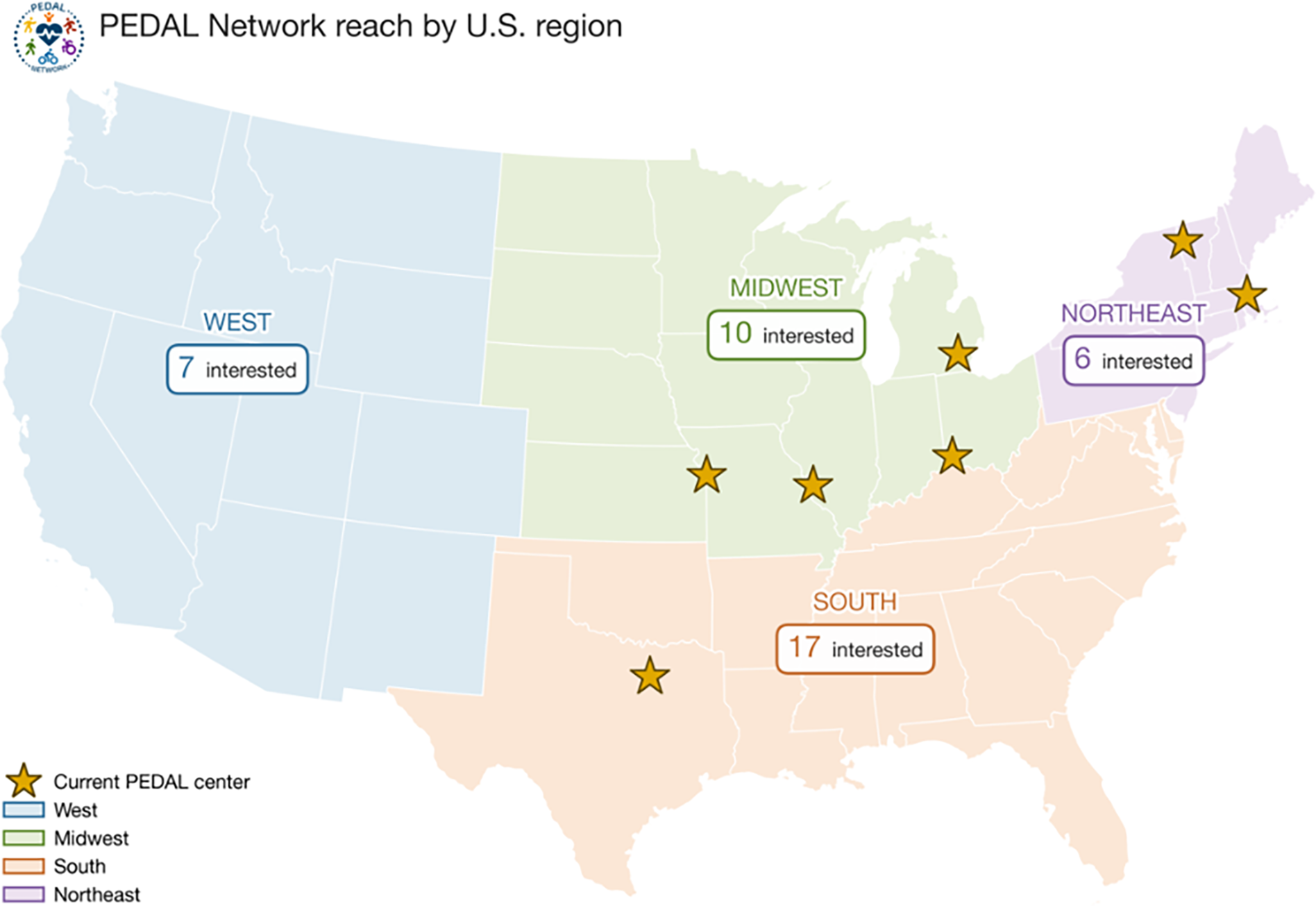
In addition to these cultural primitives, flexibility was deliberately built into the Pediatric Exercise Data Analytics and Learning Network’s version 1 data definitions and included data elements, recognising that many of these decisions currently rest on expert opinion rather than data and will need to evolve as evidence accumulates. This collaborative ethos has been central to this registry’s development. Over the next five years, this registry plans for substantial growth, guided by these shared values. Expansion has already begun, with the first centre beyond the founding six now onboarded and multiple other programmes expressing interest in joining (Figure 1).
Organisational goals and structure
The successful formation of the Pediatric Exercise Data Analytics and Learning Network required a unified vision and mission to ensure that all members were aligned. After discussion, the following statements and objectives were created:
Vision statement: to pioneer a transformative multicentre exercise testing learning network that optimises long-term clinical outcomes for children and adolescents with congenital and paediatric acquired heart disease through standardised practices, collaborative research, and patient-centred care.
Mission statement: to establish the pre-eminent multicentre congenital and paediatric acquired heart disease exercise testing learning network dedicated to improving the quality and consistency of paediatric exercise laboratory practices across institutions. By building a robust multicentre registry and promoting standardised exercise testing data collection and reporting, the Pediatric Exercise Data Analytics and Learning Network aims to empower collaborative research efforts and enhance long-term outcome prediction in paediatric exercise physiology.
To fulfil the vision and mission statements, the Pediatric Exercise Data Analytics and Learning Network created the following key objectives:
-
1. Create a learning network that allows for knowledge sharing and standardisation of exercise testing practices to improve data comparability and reliability
-
2. Build a multicentre registry with uniform data definitions and quality standards
-
3. Provide validated functional outcome measures for use across Cardiac Networks United registries
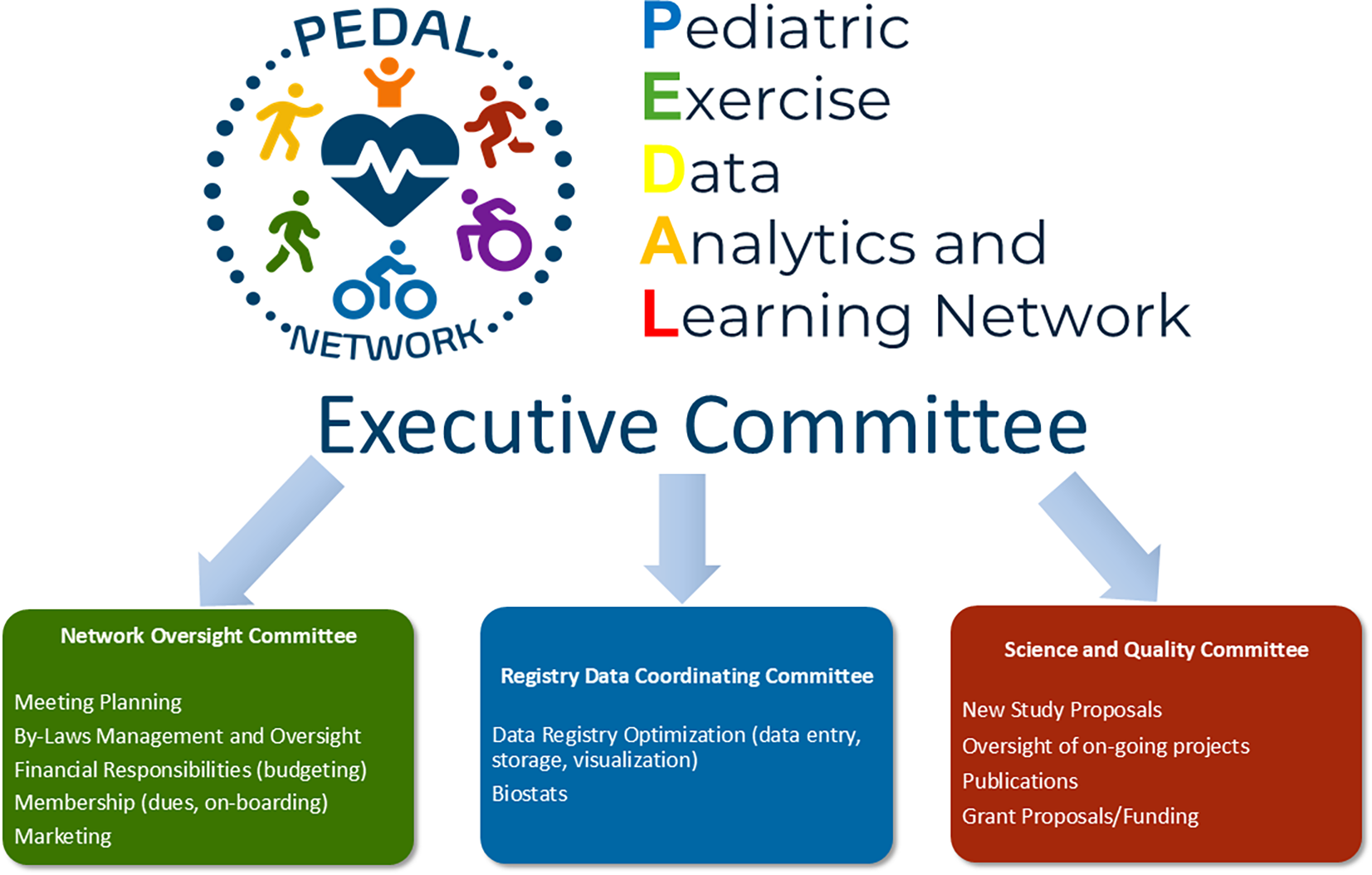
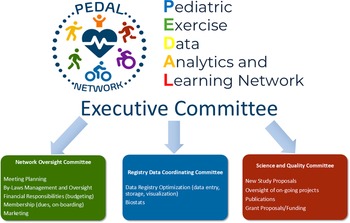
To achieve these goals, the Pediatric Exercise Data Analytics and Learning Network has three sub-committees: Network Oversight, Registry and Data, and Science and Quality (Figure 2). The Network Oversight Leadership (William Orr and S. Moli Yin) is responsible for meeting planning, bylaws management and oversight, budget management, membership onboarding, dues collection, and marketing. The Registry and Data Leadership (Danielle Burstein and Jesse Hansen) is responsible for data registry optimisation (data entry, storage, and visualisation), biostatistics, and the benchmarking dashboards that support quality improvement. The Science and Quality Leadership (Adam Powell and David White) is responsible for new study proposals, oversight of ongoing research and quality improvement projects, best-practice development, publications, and grant proposals/funding.
Flowchart diagram demonstrating the roles and responsibilities for the subcommittees for the Pediatric Exercise Data Analytics and Learning Network.
Exercise testing database creation
Creating a structured data repository is a cornerstone of any high-impact learning network. Combining exercise testing data across institutions may seem straightforward, but the heterogeneity of exercise testing performance and reporting created several challenges in building the database. The Pediatric Exercise Data Analytics and Learning Network minimised these through a deliberate approach to two decision domains: the data dictionary content and the storage platform structure.
Because best practices in paediatric and congenital cardiac exercise testing are often expert consensus and not universally accepted, each laboratory’s baseline practices were recorded without limiting the data collected or burdening sites with extraneous entry. Many aspects of exercise testing administration vary between centres but remain stable within a centre over time: a laboratory’s exercise protocols, its preferred modality (cycle ergometer or treadmill), and its metabolic cart manufacturer rarely change from test to test. To capture these centre-level characteristics efficiently, this registry created a baseline tab in the reporting document for data that does not vary between tests, including predominant exercise modality, exercise testing protocols, metabolic cart calibration practices, and biocontrol practices. Rather than recording these for every patient, sites update them annually. Before a centre joins the registry, leadership from this registry also conducts an in-person site visit to review each laboratory’s exercise testing practices firsthand and confirm that testing meets registry standards, supporting the validity of the data each centre contributes.
Despite the emphasis in part on CHD, this registry chose not to include an exhaustive list of diagnoses in the registry to start. Anatomic classification of CHD varies across centres and individuals and would significantly add to the data entry burden as well as require additional expertise for data entry. To limit this but allow for initial investigation of practices and variability for a subset of congenital and acquired paediatric heart disease, a subset of diagnoses was chosen to include in the diagnosis variable. In the future, the flexibility of the data dictionary will allow for future inclusion of other heart disease and non-cardiac chronic disease populations as needed.
Next was determining which exercise testing variables were essential for the registry. This step faced several barriers unique to paediatric and congenital exercise testing. There is no unified reporting structure across laboratories, substantial centre-to-centre variability in which variables are considered essential, and, in some cases, the same variable carries different meanings at different sites. The slope of minute ventilation to expired carbon dioxide, for example, is measured from the start to the end of exercise in some laboratories, from the start of exercise to the ventilatory anaerobic threshold in others, and not at all in still others. To address this, there were an initial set of essential, directly measured variables finalised and chosen so that clinically useful derived measures can be calculated consistently and reproducibly across centres. By capturing raw values rather than centre-specific calculations, the Pediatric Exercise Data Analytics and Learning Network is positioned to develop data-informed recommendations for future exercise testing interpretation and reporting.
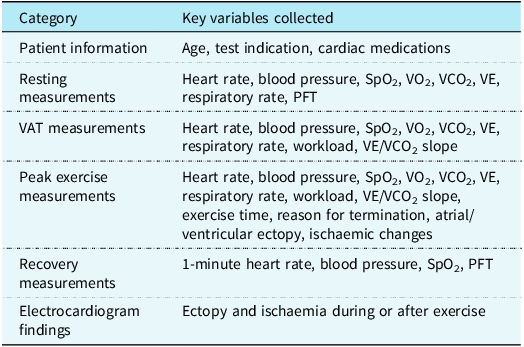
We then classified each variable as major and minor for an exercise test to be entered in the registry (Table 1). Variables were designated major when judged essential to near-term quality improvement and research, such as peak oxygen consumption, or when needed to prevent patient duplication and generate the registry’s specific patient identifier. Consistent with this emphasis on directly measured data, some derived values, such as percent-predicted peak oxygen consumption, were not collected separately because they can be computed from the raw variables. Outside of data needed for registry specific patient identification, no exercise testing variables are required, which keeps the barrier to participation low and supports rapid growth of the registry. While these optional fields may initially be sparsely populated, even partial data will reveal variability across centres and each laboratory’s baseline ability to capture these secondary values, providing natural targets for future quality improvement and research work.
A list of the major variables reported in the Pediatric Exercise Data Analytics and Learning Network registry
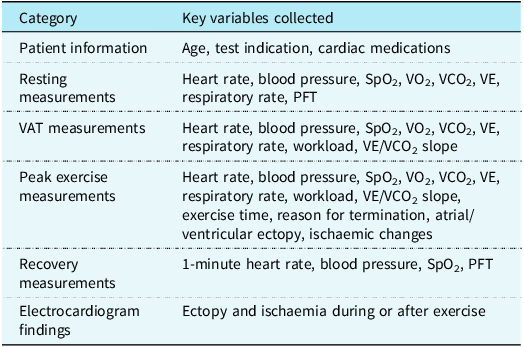
Table 1. Long description
A table categorizing key variables collected in a pediatric exercise registry. The table has two columns: Category and Key variables collected. The categories include Patient information, Resting measurements, VAT measurements, Peak exercise measurements, Recovery measurements, and EKG findings. Each category lists specific variables collected. Patient information includes Age, test indication, and cardiac medications. Resting measurements include Heart rate, blood pressure, SpO2, VO2, VCO2, VE, respiratory rate, and PFT. VAT measurements include Heart rate, blood pressure, SpO2, VO2, VCO2, VE, respiratory rate, workload, and VE/VCO2 slope. Peak exercise measurements include Heart rate, blood pressure, SpO2, VO2, VCO2, VE, respiratory rate, workload, VE/VCO2 slope, exercise time, reason for termination, atrial/ventricular ectopy, and ischaemic changes. Recovery measurements include 1-minute heart rate, blood pressure, SpO2, and PFT. EKG findings include Ectopy and ischaemia during or after exercise.
VAT = ventilatory anaerobic threshold; SpO2 = oxygen saturation; VO2 = oxygen consumption; VCO2 = carbon dioxide produced; VE = minute ventilation; PFT = pulmonary function testing.
The final decision was selecting the platform to house the data. After extensive discussion with several Cardiac Networks United registries and the Fitness Registry and the Importance of Exercise National Database registry (a large-scale exercise testing database of adults without heart disease), Reference Kaminsky, Imboden, Arena and Myers20 the Pediatric Exercise Data Analytics and Learning Network chose to build a simple, custom database using REDCap (Research Electronic Data Capture; Vanderbilt University, Nashville, TN, USA). REDCap builds early momentum by making it easy to integrate data and begin generating quality improvement and research products, and its user-friendly interface allows rapid data transfer from individual centres. Cost is always a consideration for a registry, and REDCap supports frequent, no-cost updates, which is essential for an early registry still refining its variables. It is also flexible, with established pathways for large data transfers should future network needs support platform transition.
Relationship with Cardiac Networks United
The Pediatric Exercise Data Analytics and Learning Network’s leadership viewed inclusion in Cardiac Networks United as essential to reaching its full potential. Cardiac Networks United is the predominant consortium of paediatric cardiology registries, spanning research, quality improvement, and learning networks, Reference Gaies, Anderson and Kipps15 with an established track record of high-impact cross-registry studies. Reference Petit, Romano and Zampi18,Reference Perry, Rosenthal and Lorts19,Reference Bates, Donohue and Zhang21 Its founding networks together represent more than two-thirds of centres in the United States caring for children with heart disease and span multiple phases of care across the lifespan. It was recognised from the outset that linking the Pediatric Exercise Data Analytics and Learning Network’s data with these registries would be bidirectional in value: the deep, longitudinal clinical-care and neurodevelopmental data within Cardiac Networks United provide the early-life surgical and medical history that makes the Pediatric Exercise Data Analytics and Learning Network’s exercise testing data more insightful, while the Pediatric Exercise Data Analytics and Learning Network contributes a standardised, long-term functional outcome that can serve as a gold-standard endpoint for the surgical, intensive care, acute care, and neurodevelopmental work these registries already support.
The Pediatric Exercise Data Analytics and Learning Network’s major formation decisions, including data platform selection, governance structure, and data dictionary development, were developed in consultation with Cardiac Networks United and reviewed through its governance process; acceptance into Cardiac Networks United reflected formal endorsement of the Pediatric Exercise Data Analytics and Learning Network’s approach. In parallel, the Pediatric Exercise Data Analytics and Learning Network convened an external Advisory Board of respected leaders in CHD, exercise cardiology, and registry science, including a developer of the Fitness Registry and the Importance of Exercise National Database registry, to provide outside perspective, identify blind spots, and strengthen site participation as the network grows.
Future research and quality improvement directions
The Pediatric Exercise Data Analytics and Learning Network is positioned to answer several long-standing questions in exercise testing. First, no universally accepted method exists for reporting several exercise testing parameters, including resting and peak oxygen consumption, the slope of minute ventilation to carbon dioxide production, and ventilatory anaerobic threshold. Centres also vary in the timing of post-exercise vital signs and in whether post-exercise QT intervals are measured in all patients. No large-scale study has compared metabolic data across centres using different exercise protocols, and the reproducibility and validity of such data in multicentre research remain unclear. Normative exercise testing data for patients with heart disease are also incomplete. A large-scale multicentre registry is required to address these questions, which the Pediatric Exercise Data Analytics and Learning Network was created to provide.
Beyond research, the Pediatric Exercise Data Analytics and Learning Network provides a platform for quality improvement among centres performing exercise testing in patients with heart disease. By pooling standardised exercise testing data across institutions, the Pediatric Exercise Data Analytics and Learning Network enables benchmarking of testing performance, identification of best practices, and detection of variability in exercise testing procedures and interpretation. Its initial dashboard benchmarks include annualised exercise testing volume, the percentage of exercise testing performed on a cycle ergometer, confirmed performance of metabolic cart quality assurance, lab staffing levels, and the timeliness and completeness of required data elements for each test. As the network matures, the Pediatric Exercise Data Analytics and Learning Network will add new benchmarks and retire others in response to the community’s evolving needs. This collaborative approach lets centres compare their performance against peers, identify areas for improvement, and implement data-driven changes to enhance test quality, accuracy, and patient safety in real time. Ultimately, the Pediatric Exercise Data Analytics and Learning Network’s quality improvement initiatives will promote consistency, elevate the standard of paediatric and congenital exercise testing, and accelerate advances in clinical care and research.
Community and knowledge sharing
The absence of a unified approach to performing and interpreting exercise testing reflects a larger gap: the lack of structured education for both fellows-in-training and established clinicians seeking to strengthen their exercise testing skills. The Pediatric Exercise Data Analytics and Learning Network seeks to fill this void as the first multicentre learning network for centres regularly performing exercise testing in patients with congenital and paediatric acquired heart disease. Many testing practices will evolve as the Pediatric Exercise Data Analytics and Learning Network’s quality improvement and research efforts build the evidence base for data-driven recommendations and requirements. Meanwhile, many laboratories seek guidance on more fundamental aspects of exercise testing. Because few advanced training fellowships in paediatric and congenital exercise testing exist, most exercise physiologists and cardiologists are trained informally, producing structural gaps in knowledge and confidence that reflect the training system rather than the individual.
The Pediatric Exercise Data Analytics and Learning Network is pursuing several learning initiatives to address this gap. It has made available to members an extensive standard operating procedure document with updated guidance on exercise laboratory safety, staffing models, reporting procedures, and test interpretation for congenital and paediatric acquired heart disease patients with and without heart disease. An expected-value calculator brings together the most widely used paediatric reference equations for peak oxygen consumption; based on a patient’s age, sex, and body size, it displays predicted values from multiple normative datasets in one place, allowing clinicians to compare them directly. The Pediatric Exercise Data Analytics and Learning Network also maintains a repository of key national and international guidelines for performing and interpreting exercise testing in patients with heart disease. Together, these resources support laboratories seeking guidance and give larger, established programmes an evidence-based, collaborative model for refining their own procedures.
Conclusion
The Pediatric Exercise Data Analytics and Learning Network is the first registry in the United States dedicated to exercise testing in patients with congenital and paediatric acquired heart disease. By standardising how exercise testing is performed and reported, building a shared multicentre registry, and investing in a learning network, the Pediatric Exercise Data Analytics and Learning Network is positioned to become an instrument of change for the field. As the registry matures, it will reduce centre-to-centre variation, enable multicentre quality improvement and research that individual programmes cannot pursue alone, and contribute a long-term functional outcome that strengthens collaboration across congenital heart centres and paediatric exercise laboratories. Ultimately, these efforts aim to improve the consistency and value of paediatric and congenital exercise testing and, in turn, the long-term care of children and adults with congenital or paediatric acquired heart disease.
Acknowledgements
The authors would like to acknowledge the senior leadership of Cardiac Networks United for their guidance and support during registry development and onboarding. The authors would also like to acknowledge the Senior Advisory Board for their assistance manoeuvring difficult early registry questions that have arisen and for their unwavering support during this process. Lastly, the authors would also like to acknowledge the generous support from the University of Michigan, which has been instrumental for the successful start of this new network.
Financial support
PEDAL received startup funding from the Michigan Congenital Heart Incubator. PEDAL’s regulatory infrastructure was supported by the Children’s Heart Foundation through Cardiac Networks United.
Competing interests
There are no relevant financial conflicts of interest to disclose.
Ethical standard
The authors assert that all procedures contributing to this work comply with the ethical standards of the relevant national guidelines on human experimentation and with the Helsinki Declaration of 1975, as revised in 2008, and have been approved by the institutional committees from the represented hospitals.

 Open access

