Significant outcomes: 1) male patients with bipolar disorder have shorter TL than control male subjects; 2) negative correlation between TL and age in male bipolar patients; 3) the TL was independent of lithium treatment in bipolar patients.
Limitations: 1) the low number of investigated subjects; 2) the material and methods in our study was the peripheral blood leucocytes and qPCR, different than in other studies
Introduction
Bipolar disorder (BD) is a severe mental disorder with a recurrent or chronic course. The neurobiological underpinnings of BD are intensively studied, with proposed many biological markers, including immuno-inflammatory processes (Leboyer et al., Reference Leboyer, Oliveira and Tamouza2016), which may induce telomere attrition (Squassina et al., Reference Squassina, Pisanu and Vanni2019). BD is suspected of accelerated aging and cellular senescence (Fries et al., Reference Fries, Bauer, Scaini, Wu, Kazimi, Valvassori, Zunta-Soares, Walss-Bass, Soares and Quevedo2017), where clinical findings show decreased life expectancy (Kessing et al., Reference Kessing, Vradi, McIntyre and Andersen2015) and increased risk of cognitive impairment and dementia (Velosa et al., Reference Velosa, Delgado, Finger, Berk, Kapczinski and de Azevedo Cardoso2020). Furthermore, Fries et al. (Reference Fries, Zamzow, Andrews, Pink, Scaini and Quevedo2020a) defined BD as an accelerated aging disease. The telomere length (TL) can be a biological marker of cellular aging (Verhoeven et al., Reference Verhoeven, Révész, Epel, Lin, Wolkowitz and Penninx2014; Vaiserman & Krasnienkov, Reference Vaiserman and Krasnienkov2020). Since 2006, there is increasing number of papers on TL in BD, as a biological marker of cellular senescence (Simon et. al., Reference Simon, Smoller, McNamara, Maser, Zalta, Pollack, Nierenberg, Fava and Wong2006). The studies have found an association of shorter mean leucocyte telomere length (LTL) with mood disorders (Simon et al., Reference Simon, Smoller, McNamara, Maser, Zalta, Pollack, Nierenberg, Fava and Wong2006) and shorter mean LTL in BD patients compared to controls (Elvsashagen et al., Reference Elvsåshagen, Vera, Bøen, Bratlie, Andreassen, Josefsen, Malt, Blasco and Boye2011; Rizzo et al., Reference Rizzo, Do Prado, Grassi-Oliveira, Wieck, Correa, Teixeira and Bauer2013; Lima et al., Reference Lima, Barros, Rosa, Albuquerque, Malloy-Diniz, Neves, Romano-Silva and de Miranda2015; Fries et al., Reference Fries, Zamzow, Andrews, Pink, Scaini and Quevedo2020a). Yu-Chi et al. (2018) in a meta-analysis including 10 studies and more than 1000 participants observed shorter TL in BD patients compared to controls, more pronounced in later stages of the disease and confirmed in studies using different methods. However, the effect on LTL differs depending on pharmacotherapy, indicating longer LTL in patients treated with lithium (Martinsson et al., Reference Martinsson, Wei, Xu, Melas, Mathé, Schalling, Lavebratt and Backlund2013; Powell et al., Reference Powell, Dima, Frangou and Breen2018; Coutts et al., Reference Coutts, Palmos, Duarte, de Jong, Lewis, Dima and Powell2019; Pisanu et al., Reference Pisanu, Congiu, Manchia, Caria, Cocco, Dettori, Frau, Manca, Meloni, Nieddu, Noli, Pinna, Robledo, Sogos, Ferri, Carpiniello, Vanni, Bocchetta, Severino, Ardau, Chillotti, Zompo and Squassina2020; Fries et al., Reference Fries, Zamzow, Colpo, Monroy-Jaramillo, Quevedo, Arnold, Bowden and Walss-Bass2020b). Lithium remains the main treatment option for BD. Many of the favorable effects of long-term lithium treatment on clinical and neurobiological markers in the course of BD have been described (Rybakowski & Suwalska Reference Rybakowski and Suwalska2010; Remlinger-Molenda et al., 2012). For instance, Squassina et al. (Reference Squassina, Pisanu, Corbett and Alda2017, Reference Squassina, Manchia, Pisanu, Ardau, Arzedi, Bocchetta, Caria, Cocco, Congiu, Cossu, Dettori, Frau, Garzilli, Manca, Meloni, Montis, Mura, Nieddu, Noli, Paribello, Pinna, Robledo, Severino, Sogos, Del Zompo, Ferri, Chillotti, Vanni and Carpiniello2020) described the beneficial effect of lithium treatment on TL, suggesting that lithium may exert a protective effect against telomere shortening. Also, Squashina et al. (Reference Squassina, Pisanu and Vanni2019) and Lundberg et al. (2020), in a review paper, described an association between low-grade inflammation in BD, mitochondrial dysfunction, reactive oxygen species (ROS) signaling and, telomere shortening, with the beneficial effect of lithium on mitochondrial bioenergetics and telomere maintenance.
This study aims to compare the TL between patients with BD with the long-term duration of illness, and age and sex-matched control subjects. The second aim was to assess the effect of long-term lithium treatment in this respect.
Material and methods
Subjects studied
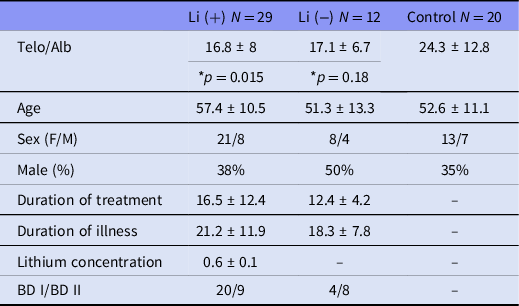
The study group comprised 41 patients with BD treated at the outpatient clinic of the Department of Adult Psychiatry, Poznan University of Medical Sciences. The mean age was 55 ± 6 years, the mean duration of illness 20.4 ± 10.8 years, and the mean duration of treatment 15.7 ± 10.7 years. Among the patients, the first subgroup, Li(+), involved 29 patients (21 females, 8 males), with mean age 57.4 ± 10.5 years, treated continuously with lithium for 3–48 (mean 16.5 ± 12.4) years, with the mean duration of illness 21.2 ± 11.9 years. The serum concentration of lithium was maintained in the range 0.5–0.8 mmol/l (mean 0.6 ± 0.1). Within this subgroup, seven patients were treated with other mood stabilisers, including valproate (4 persons), carbamazepine (2 persons), and lamotrigine (1 person). The second subgroup, Li(−), comprised of 12 subjects (8 female, 4 male) treated with mood stabilisers other than lithium for 6–18 (mean 12.4 ± 4.2) years, including valproate (4 patients), carbamazepine (3 patients), or lamotrigine (4 patients) and 1 patient with clozapine, with no exposure to lithium during the lifetime. The mean age in this group was 51.3 ± 13.3 years, with the mean duration of illness 18.3 ± 7.8 years.
The control group consisted of 20 psychiatrically healthy people (13 female, 7 male), age, and sex-matched with the study group. The mean age in this group was 52.6 ± 11.1 years.
The characteristic of the study group was presented in Table 1.
Clinical characteristics and telomere length [Telo/Alb] of patients with bipolar disorder treated with lithium [Li (+)], patients not treated with lithium [Li (−)] and control subjects

Telo/Alb – relative telomere length.
*vs control group.
Statistical significance p < 0.05.
The values of Telo/Alb, age, duration of treatment, duration of illness, and lithium concentration are given as mean ± standard deviation.
Bipolar subjects were diagnosed with BD type I (24 subjects) or BD type II (17 subjects). The severity of clinical symptoms and the course of the illness were similar in the Li(+) and Li(−) groups, however, no scale comparing the course of the illness in those two groups was used. Within Li(+) group, 15 subjects were identified as excellent lithium responders and 14 subjects as partial lithium responders.
The exclusion criteria for participants were psychiatric comorbidity, drug/alcohol dependence, organic brain injuries, cancer, an acute phase of immune disease, current infection, glucose intolerance/diabetes, or any other serious physical condition.
The study was approved by the Bioethics Committee of the Poznan University of Medical Sciences, and all the participants gave their informed consent after the nature of the procedures had been fully explained to them.
Laboratory assessment
Genomic DNA was extracted from peripheral blood leucocytes as described previously (Rubiś et al., Reference Rubiś, Hołysz, Barczak, Gryczka, Łaciński, Jagielski, Czernikiewicz, Półrolniczak, Wojewoda, Perz, Białek, Morze, Kanduła, Lisiak, Mrozikiewicz, Grodecka-Gazdecka and Rybczyńska2012), using a Blood Mini DNA Isolation kit (A&A Biotechnology, Gdynia, Poland). A high concentration sample of genomic DNA was selected, and decimal concentrations of the sample were prepared to run as standard curve points.
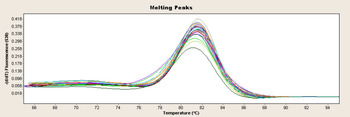
TL was assessed by the quantitative polymerase chain reaction (qPCR) as described previously (Barczak et al., Reference Barczak, Rozwadowska, Romaniuk, Lipińska, Lisiak, Grodecka-Gazdecka, Książek and Rubiś2016). Briefly, two pairs of primers that is telomere-specific and single copy gene-specific (albumin) (according to Cawthon, Reference Cawthon2009; O’Callaghan & Fenech, Reference O’Callaghan and Fenech2011) were used. TL was presented relative to a single copy gene albumin as described previously (Barczak et al., Reference Barczak, Rozwadowska, Romaniuk, Lipińska, Lisiak, Grodecka-Gazdecka, Książek and Rubiś2016). The qPCR conditions for both primer pairs were as follows: (2.5 mM MgCl2; 0.5 µM primers, efficiency 100+/−5%). Albumin primers were designed using Universal ProbeLibrary (Roche Diagnostics, Indianapolis, IN, USA). The temperature profile for telomere assessment was optimised and established: 95°C for 10 min, followed by two cycles of 94°C for 15 sec and 49°C for 15 sec and further 40 cycles (94°C for 10 sec, 66°C for 10 sec and 72°C for 10 sec) with a signal acquisition. The reaction specificity was verified using melting analysis (range, 65–95°C; resolution, 0.2°C); the melting temperature (Tm) was 81.7°C. Similarly, the reaction conditions for albumin were as follows: denaturation at 95°C for 10 min (hot start); followed by 45 cycles at 94°C for 10 sec, 61°C for 10 sec and 72°C for 10 sec. The Tm of the products was 80.7°C. qPCR was performed using the LightCycler® 2.0 Instrument and the LightCycler® FastStart DNA Master SYBR Green I kit (Roche Diagnostics).

The melting point curve analysis was presented in Fig. 1.
Qualitative verification of telomere amplicons using melting temperature assessment. Amplification of telomeric ends was performed using specific primers and the qPCR analysis based on SybrGreen incorporation, and was followed by a qualitative analysis (melting temperature, Tm). Specificity of the products was also confirmed due to efficacy assessment and the standard curve course that was linear in the whole range of the concentrations applied.

Statistics
Calculations were performed using the statistical package Statistica 10.0 (StatSoft). The normality of the distribution was assessed by the Shapiro–Wilk test. Comparison of data showing normal distribution was analyzed using unpaired Student t-test, and those not normally distributed by the non-parametric Mann–Whitney test. To check the relationship between variables, either parametric Pearson’s or Spearman’s rank correlation coefficient was calculated. The significance of the correlation coefficient was tested by the Student t-test. All results were considered significant at p < 0.05.
Results
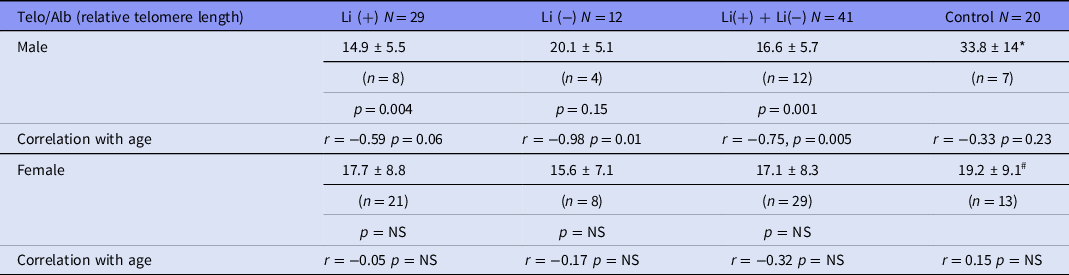
No differences in age (p = 0.13), duration of illness (p > 0.1), and duration of treatment (p = 0.27) were found between Li(+) and Li(−) groups. In the healthy control group, the TL was significantly higher in male than in female patients (33.8 ± 14.0 vs 19.2 ± 9.1; p = 0.01). Therefore, the comparisons with bipolar patients were made separately for males and females and presented in Table 2.
Telomere length and correlation with age in male and female bipolar patients and healthy control subjects

*Significantly lower telomere length in Li(+) males, p = 0.004 and Li(+) + Li(−) males, p = 0.001, than in control males.
# Significantly higher telomere length in control males than in control females, p = 0.01.
Statistical significance p < 0.05.
NS = non-significant.
The values of Telo/Alb are given as mean ± standard deviation.
Lithium-treated patients Li(+) had significantly lower TL compared to controls, however, when divided into males and females, the significance was maintained only for males. Male bipolar patients had significantly lower TL compared with the control male group. This pertained to the whole bipolar group (p = 0.001) and lithium-treated patients (p = 0.004). Also, there was no difference in TL between Li(+) males and Li(−) males (p > 0.1).
In bipolar patients, there was no correlation between TL and duration of treatment, specifically between duration of lithium treatment in the Li(+) group (r = 0.11; p = non-significant) and duration of treatment with other mood stabilisers in the Li(−) group (r = −0.04; p = non-significant).
The TL was negatively correlated with age in male bipolar patients (r = −0.75; p = 0.005) as well as in Li(−) males (r = −0.98, p = 0.01).
All the participants had the number of white blood cell (WBC) count within the normal range (median 4.86–9.14 × 10³/mm3). There were no differences in the mean WBC count between males and females. There was no difference in TL between bipolar females (n = 29) and control females (n = 13), p > 0.1).
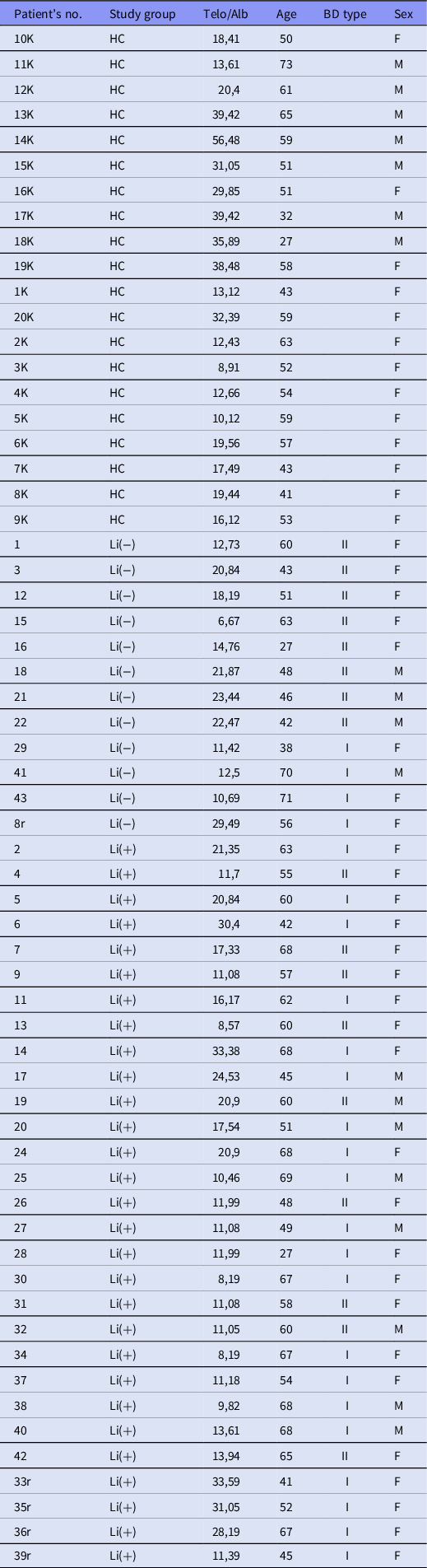
All the results for TL were presented in Table 3.
Telomere length [Telo/Alb] in all subjects studied

Li(+) – lithium-treated patients.
Li(−) – patients treated with mood stabilisers other than lithium.
HC – healthy controls.
F – females; M – males.
Telo/Alb – telomere length.
BD – bipolar disorder.
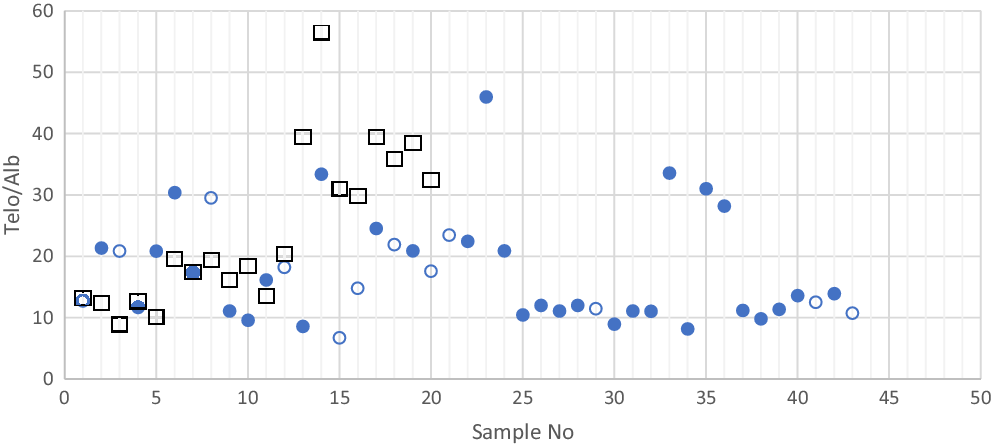
Scatter dot plot for the TL comparison between the Li(+) subgroup, Li(−) subgroup, and control individuals was presented in Fig. 2.
Scatter dot plots for the relative telomere length (RTL) comparison between the studied group and control individuals. RTL was assessed as demonstrated in the Material and Methods section, that is relative o single copy gene, albumin. Li(+) – open circles; Li(−) – color circles; control subjects – squares.

Discussion
Summary of main findings
Our first finding is a longer TL in males than females in the control group. Our second finding is that male patients with BD have shorter TL than control male subjects. The third finding is that in bipolar patients, the TL was independent of lithium treatment. Lithium and non-lithium-treated patients had similar TL, while male patients had significantly shorter TL than control males. The last observation in our study is a negative correlation between TL and age in male bipolar patients, as well as in Li(−) males.
Relevance to the existing literature
The first finding corresponds with the results of Adams et al. (Reference Adams, Martin-Ruiz, Pearce, White, Parker and von Zglinicki2007) who found longer mean TL in men than women in a group of 318 healthy participants. On the other hand, Gardner et al. (Reference Gardner, Bann, Wiley, Cooper, Hardy, Nitsch, Martin-Ruiz, Shiels, Sayer, Barbieri, Bekaert, Bischoff, Brooks-Wilson, Chen, Cooper, Christensen, De Meyer, Deary, Der, Diez Roux, Fitzpatrick, Hajat, Halaschek-Wiener, Harris, Hunt, Jagger, Jeon, Kaplan, Kimura, Lansdorp, Li, Maeda, Mangino, Nawrot, Nilsson, Nordfjall, Paolisso, Ren, Riabowol, Robertson, Roos, Staessen, Spector, Tang, Unryn, van der Harst, Woo, Xing, Yadegarfar, Park, Young, Kuh, von Zglinicki and Ben-Shlomo2014), in a meta-analysis including 36 cohorts on sex differences in TL in humans, found longer TL in females than males. However, the authors stated that the size of the difference varies by measurement methods, where only Southern blot, but neither RT-PCR nor flow-FISH shows a significant difference. Similar results, indicating longer TL in females were described by Benetos et al. (Reference Benetos, Okuda, Lajemi, Kimura, Thomas, Skurnick, Labat, Bean and Aviv2001). Regardless of replicated observations, that male telomeres shorten faster (Aviv et al. Reference Aviv, Shay, Karre and Wright2005), there are many confounding indicators, including cardiovascular or neurodegenerative factors, which are often more prevalent in males, that influence the relationship between sex, telomere shortening, and lifespan (Aviv et al., Reference Aviv, Shay, Karre and Wright2005; Barrett & Richardson, Reference Barrett and Richardson2011).
Our second original observation includes gender-specific effect on TL. The results of the studies conducted so far indicate telomere shortening in the whole group of patients with BD, compared to the control group. In some of these studies, no significant effect of gender was noticed. For example, Lima et al. (Reference Lima, Barros, Rosa, Albuquerque, Malloy-Diniz, Neves, Romano-Silva and de Miranda2015) reported shorter TL in 85 BD patients compared to controls. Elvsashagen et al. (Reference Elvsåshagen, Vera, Bøen, Bratlie, Andreassen, Josefsen, Malt, Blasco and Boye2011) reported shorter telomeres in BD and its association with the number of depressive episodes in BD type II. Huang et al. (Reference Huang, Wang, Tseng, Hung and Lin2018) in the meta-analysis including a total of 579 patients and 551 controls found significantly shorter LTL in BD patients, which was more significant in late stages of BD. In contrast to our study, Rizzo et al. (Reference Rizzo, Do Prado, Grassi-Oliveira, Wieck, Correa, Teixeira and Bauer2013) found shorter TL in 22 euthymic female BD-I patients compared to controls. Our observation corresponds with findings on gender-specific telomere dynamics (Barrett & Richardson, Reference Barrett and Richardson2011), where males are more vulnerable to telomere shortening due to pathogenetic factors. At birth, there are no sex differences in TL, but during the lifespan, men tend to have shorter telomeres than women, indicating that men telomeres shorten faster. One of the potential explanations relates to oxidative stress (Liu et al., Reference Liu, Trimarchi, Smith and Keefe2002) and different sex hormones antioxidant potential, where testosterone, contrary to estrogen, has no such effect (Alonso-Alvarez et al., Reference Alonso-Alvarez, Bertrand, Faivre, Chastel and Sorci2007). However, in our study, control males had longer TL than control females.
BD is considered as a low-grade inflammatory state, characterised by increased, among others, levels of pro-inflammatory cytokines and acute-phase proteins, together with disturbances in immune-inflammatory, oxidative, and nitrosative stress and metabolic pathways (de Melo et al., Reference de Melo, Nunes, Anderson, Vargas, Barbosa, Galecki, Carvalho and Maes2017). Also, Maes et Carvalho (Reference Maes and Carvalho2018) proposed a novel concept of the pathophysiology of BD, called compensatory immune-regulatory reflex system, where signs of its activation are also present in remission of the disease. Squassina et al. (Reference Squassina, Pisanu and Vanni2019) described a bidirectional association between pro-inflammatory state and telomere dysfunction in mood disorders. Furthermore, Palmos et al. (Reference Palmos, Duarte, Smeeth, Hedges, Nixon, Thuret and Powell2020) found an effect of cell aging on gene networks related to neurogenesis, telomere maintenance, cell senescence, and cytokine production, and also overlap between downregulated transcripts and genes regulating cognitive function and risk for BD. On the other hand, Colpo et al. (Reference Colpo, Leffa, Köhler, Kapczinski, Quevedo and Carvalho2015) in a meta-analysis of TL studies found no difference in TL between BD patients and healthy controls, however in meta-regression analyses, age and gender matching of BD and healthy participants, as well as the type of the assay, were factors that might contribute to the heterogeneity. Taking into account the above data, it can be hypothesised that men with BD are more prone to telomere attrition, which may be related to immune-inflammatory underpinnings of BD and less effective compensatory mechanisms.
Regarding the third observation, it is contrary to results obtained by several other research groups, indicating increased TL during lithium treatment. For example, Martinsson et al. (Reference Martinsson, Wei, Xu, Melas, Mathé, Schalling, Lavebratt and Backlund2013) found that in the group of 256 bipolar patients, in those treated with lithium, TL was 35% longer compared with controls. BD patients responding well to lithium treatment had longer telomeres than non-responders. Powell et al. (Reference Powell, Dima, Frangou and Breen2018), in the study of bipolar patients and first-degree relatives, found that TL was shorter in relatives and patients with BD not treated with lithium, compared with lithium-treated patients. Pisanu et al. (Reference Pisanu, Congiu, Manchia, Caria, Cocco, Dettori, Frau, Manca, Meloni, Nieddu, Noli, Pinna, Robledo, Sogos, Ferri, Carpiniello, Vanni, Bocchetta, Severino, Ardau, Chillotti, Zompo and Squassina2020) found longer LTL in lithium-treated patients, compared with patients never treated with lithium. Squassina et al. (Reference Squassina, Manchia, Pisanu, Ardau, Arzedi, Bocchetta, Caria, Cocco, Congiu, Cossu, Dettori, Frau, Garzilli, Manca, Meloni, Montis, Mura, Nieddu, Noli, Paribello, Pinna, Robledo, Severino, Sogos, Del Zompo, Ferri, Chillotti, Vanni and Carpiniello2020) reported longer TL in BD patients and an association between duration of treatment with mood stabilisers with longer TL. However, some researchers described the beneficial effect of other mood stabilisers on epigenetic aging. For example, Okazaki et al. (Reference Okazaki, Numata, Otsuka, Horai, Kinoshita, Sora, Ohmori and Hishimoto2020) found decelerated epigenetic aging in patients with BD treated with lithium carbonate, sodium valproate, and carbamazepine. Also, a genetic variation aspect might be important, where Wei et al. (2016) found that some telomerase reverse transcriptase (hTERT) allele was associated with the number of depressive episodes in BD-I patients responding well to lithium.
The last observation in our study may correspond to Huang et al. (Reference Huang, Wang, Tseng, Hung and Lin2018) who described more pronounced TL shortening in the late stages of BD. Also, Köse Çinar (Reference Köse Çinar2018) described shorter TL in later stages of BD, compared to early stages and controls (Köse Çinar, Reference Köse Çinar2018). However, Barbe-Tuana et al. (Reference Barbé-Tuana, Parisi, Panizzutti, Fries, Grun, Guma, Kapczinski, Berk, Gama and Rosa2016) found significantly shorter TL in both early and late stages of BD. On the other hand, in bipolar patients, we found no correlation between TL and the duration of the illness and the treatment. This is in line with the results of Hartmann et al. (Reference Hartmann, Boehner, Groenen and Kalb2010) who found that TL was shortened but independent from therapy in patients with mood disorders. Also, other researchers described no association between TL and clinical characteristics, including duration of illness (Elvsåshagen et al., Reference Elvsåshagen, Vera, Bøen, Bratlie, Andreassen, Josefsen, Malt, Blasco and Boye2011; Aas et al., 2019). In contrast to this, Martinson et al. (Reference Martinsson, Wei, Xu, Melas, Mathé, Schalling, Lavebratt and Backlund2013) found that TL correlated positively with the duration of lithium treatment of >30 months, and Squasina et al. (Reference Squassina, Pisanu, Congiu, Caria, Frau, Niola, Melis, Baggiani, Lopez, Cruceanu, Turecki, Severino, Bocchetta, Vanni, Chillotti and Del Zompo2016) found a positive correlation between TL and lithium treatment lasting more than 2 years. Also, Squassina et al. (Reference Squassina, Manchia, Pisanu, Ardau, Arzedi, Bocchetta, Caria, Cocco, Congiu, Cossu, Dettori, Frau, Garzilli, Manca, Meloni, Montis, Mura, Nieddu, Noli, Paribello, Pinna, Robledo, Severino, Sogos, Del Zompo, Ferri, Chillotti, Vanni and Carpiniello2020) reported that the duration of treatment with mood stabilisers other than lithium was associated with longer TL.
Our study adds evidence to the hypothesis that BD might be associated with accelerated aging, however, such effect was gender-specific, being observed in male patients. In other studies, the duration of lithium treatment was shorter than in our research (mean 16.5 ± 12.4 years). In the study of Fries et al. (Reference Fries, Zamzow, Colpo, Monroy-Jaramillo, Quevedo, Arnold, Bowden and Walss-Bass2020b), the lymphoblastoid cell lines were exposed to lithium for 7 days (however it is considered to mimic a chronic treatment with lithium in patients), and the positive effects of lithium were described for the treatment exceeding 30 months (Martinson et al., Reference Martinsson, Wei, Xu, Melas, Mathé, Schalling, Lavebratt and Backlund2013) and 2 years (Squassina et al., Reference Squassina, Pisanu, Corbett and Alda2017). It is known that the lithium effect slightly decreases over years, therefore, additional studies would be needed with lithium treatment beyond 10 years.
The implications for future research
Further research is needed in the field of telomere dynamics in BD, where in-depth and extended analyses, including immune-inflammatory system, genetic and epigenetic factor, sex differences, and others like childhood trauma (Aas et al., 2019) are indicated. Also, more detailed studies concerning TL and pharmacotherapy are required, including, among others, the magnitude of prophylactic lithium response, the course, and severity of the illness, and the duration of the treatment. Also, studies in siblings of BD patients are warranted, where features of accelerated aging may be considered as endophenotypic traits (Vasconcelos-Moreno et al., Reference Vasconcelos-Moreno, Fries, Gubert, Dos Santos, Fijtman, Sartori, Ferrari, Grun, Parisi, Guma, Barbé-Tuana, Kapczinski, Rosa, Yatham and Kauer-Sant’Anna2017). Further studies on TL length as a novel aspect of BD pathophysiology would bring promising results, with developing new interventions and treatment targets addressing the telomere–telomerase system (Muneer, Reference Muneer2019; Muneer & Minhas, Reference Muneer and Minhas2019).
The strengths and the limitations of this study
The main limitation of the study is the low number of investigated subjects. However, the strength of the study relates to a well-defined population of bipolar patients receiving long-term prophylactic lithium treatment (mean 16.5 years). Furthermore, the material in our study was the peripheral blood leucocytes, and the method was qPCR. In some other studies, peripheral blood mononuclear cells, lymphoblastoid cell lines, or Southern blot, (qFISH) were used, which might influence the interpretation of the results. Methodological issues require additional clarification, due to various strengths and limitations related to each technique. Noteworthy, historically, the first method to assess TL was Southern blot (terminal restriction fragment), which is still recognised as the gold standard to show an average TL and includes restriction analysis of the terminal chromosome ends but requires a considerable amount of DNA (Kimura et al., Reference Kimura, Stone, Hunt, Skurnick, Lu, Cao, Harley and Aviv2010). Alternatively, some more sophisticated methods were also elaborated and could be divided into two groups that is enabling mean TL assessment or evaluation of the length of individual chromosome telomeric ends (Kahl et al., Reference Kahl, Allen, Nelson, Sobinoff, Lee, Kilo, Vasireddy and Pickett2020). Both types of methods bring some important information on the mechanisms that underlie metabolic changes not only in TL but also in other areas including stress response, aging, or genomic stability. The telomere length combing assay (TCA) is based on the assessment of the quality and integrity of stretched DNA fibers that require a microscope. An alternative assay, semi-automated image analysis for TCA, enables semi-automatic detection and size annotation of telomere fiber signals using peptide nucleic acid probes (Kahl et al., Reference Kahl, Allen, Nelson, Sobinoff, Lee, Kilo, Vasireddy and Pickett2020). It is one of the newest methods and still requires significant development but it is believed to provide the measurement of chromosome-specific telomeres, and the combined use of variant telomere repeat probes as an indicator of telomere directionality and integrity. In turn, Q-FISH shows mean TL as well as enables detection of individual TLs with the use of fluorescently labeled probes (Lai et al., Reference Lai, Wright and Shay2018). Alternatively, telomere shortest length assay allows sensitive, efficient, and specific TL detection when directly compared to other methods for TL measurement. It engages image-processing software that automatically measures TL after Southern blot analysis that enables assessment of telomere dynamics in aging, cancer progression, and telomere-related disorders (Lai et al., Reference Lai, Zhang, Noh, Mender, Tedone, Huang, Wright, Danuser and Shay2017). Another innovative method is the single telomere length analysis (STELA), with its modified version, Universal STELA (U-STELA), that was designed to distinguish the shortest telomeres on individual chromosomes. However, U-STELA is not efficient in detecting TL over 8 kb affecting the detection and accuracy of TL distribution. Finally, one of the most common methods is quantitative PCR (qPCR) that has been broadly adopted for clinical and epidemiological studies, and benefits from its technical simplicity and the requirement for small amounts of DNA, but produces variable results (Cawthon, 2002; Lai et al., Reference Lai, Wright and Shay2018). Additionally, it only provides relative TL quantitation. Overall, even if all the methods have some limitations, in general they are all perceived as methods that give comparable results.
Acknowledgements
We would like to thank all the patients participating in the study.
Authors contributions
Ewa Ferensztajn-Rochowiak – study design, the first and final version of the manuscript, data collection, interpretation of the results.
Ewa Kurczewska – data collection and recruitment of the study group.
Błażej Rubiś – laboratory assessment.
Michalina Lulkiewicz – laboratory assessment.
Hanna Hołysz – laboratory assessment.
Filip Rybakowski – study design, the final version of the manuscript, and supervision of the research.
Janusz K. Rybakowski – study design, the final version of the manuscript, supervision of the research, statistical analysis, and interpretation of the results.
Financial support
The study was supported by the grant from the National Science Centre, Poland 2016/21/B/NZ7/01079.
Conflict of interest
All authors declare no conflict of interest.
Ethical standards
The authors assert that all procedures contributing to this work comply with the ethical standards of the relevant national and institutional committees on human experimentation and with the Helsinki Declaration of 1975, as revised in 2008.