Introducing a challenge
Over the last two decades urban archaeology in Scandinavia has significantly changed direction and perspective: the urbanization of Europe's northernmost region has been seen within a wider regional and international time–space perspective, and everyday life, the individual, identity and gender are occupying an increasingly large share of urban archaeology's overall repertoire of thematic research. In this context, the term ‘urbanity’ is used broadly synonymously with ‘urban lifestyle’ and appears to supersede the otherwise frequently used notion ‘urbanization’, perceived as growth of urban (i.e. non-agrarian) buildings, functions and activities. This can be perceived as an intention to push back processual archaeology's steadfast reconstruction of the medieval town as a structure lacking individuals and held together by political, economic and productive structures. This challenge has been the subject of discussion in Scandinavian and international urban archaeological research since the start of the new millennium (e.g. Andersson Reference Andersson, Andersson, Carelli and Ersgård1997; Andrén Reference Andrén and Ersgård1995; Carelli Reference Carelli2001; Christophersen Reference Christophersen1997; Reference Christophersen2000a; Reference Christophersen and Supphellen2000b; Griffith Reference Griffith, Hadley and Harkel2013; Hadley and ten Harkel Reference Hadley, Harkel, Hadley and Harkel2013; Hansen Reference Hansen2000; Reference Hansen2004; Larsson Reference Larsson and Larsson2006; Thomasson Reference Thomasson, Andersson and Wienberg2011). Mathias Bäck (Reference Bäck, Brendalsmo, Eliassen and Gansum2009) has summarized the trends and tendencies in Swedish urban archaeology from the 1970s to date, and he presents a far more nuanced and complicated discursive structure than the one I have presented above. Nevertheless, he concludes, ‘Many questions about people living in towns are still not fully answered. Were people conscious of living in an ongoing urbanization process? What did they know about towns as an organizational framework for living their lives?’ (Bäck Reference Bäck, Brendalsmo, Eliassen and Gansum2009, 63, my translation); these questions are my focal point in this article.
Thus the fundamental challenge still seems to remain, namely the marginalization of the formation, existence and disintegration of everyday practices that take place in all contexts in which individuals and groups interact with each other and with their material surroundings. Thus if interactions between individuals and their material surroundings are ascribed a crucial historical driving force, a central challenge appears to be how to draw attention to the significance of processes of social practice.
This article contributes to the development of the urban archaeology of practice as an alternative to the processual research tradition which dominated urban archaeology in Scandinavia from the early 1970s to the middle of 1990 as a branch of history that perceived the past as a dynamic system of complex, interrelated cultural factors (Krieger Reference Krieger2012). The particular focus was on identification, documentation and analysis of material remains in urban culture layers and written sources, in order to understand its archaeological contexts and to assess the long-term consequences of the formation of social practices in urban communities. The current challenge for the urban archaeology of practice is to establish a theoretically consistent and sustainable methodological basis for conducting empirical studies of urban material remains. In the following, I aim to (1) identify and describe the theoretical tools that social-practice theory can offer to the urban archaeology of practice, and (2) examine their relevance and methodological implications with reference to some concrete archaeological examples from the early medieval town of Trondheim, Norway.
Do we need an urban archaeology of social practice?
If one could go back in time to a medieval, Scandinavian urban landscape and spend a winter's day passing through the wooden-paved, snow-covered, unlit, narrow streets on the way to a cold, fetid, noisy local workshop, wearing leather shoes of type B2, aware of the icy surface underfoot (having forgotten to wear crampons), with the damp seeping into one's shoes and the cold creeping up one's legs, would it have been then that what has since been referred to as asymmetrical power relations and reciprocal exchange mechanisms preoccupied the mind in the darkness? Was it then that future visions of quick monetization governed the choices and shaped future hopes? The everyday challenges of the poor light levels, the icy streets and the severe cold weather, or the conversations with people one met on one's way, the food one ate, the game one lost, the curiosity about the new boat moored at the neighbour's jetty, and so forth, were situations that seem insignificant and of little interest for the understanding of how history progresses. However, collectively they are significant for all the individual and collective choices that are taken (or not taken), the solutions agreed upon or rejected, and expectations that are created or that fade into nothingness. In reality, archaeologists explore the material remains of such routinized social practices from the past.
All formations of practice include past experiences, insights, and competence, as well as meanings, intentions, goals, and expectations about the future. Research into past social practices aims to provide insights into processes involving the past and future in the present. The focus of such analyses is ‘the acting person’ or a person as an ‘actor’, and the result of his or her actions is visible in routinized social practice in which the experiences and knowledge of the past are directed towards future goals, whereas his or her desires form the dynamic and easily influenced focal point of all choices and decisions made at all levels. This thinking challenges the notion of ‘linear’ development in history. As Tim Ingold has recently claimed, ‘What is life, indeed, if not a proliferation of loose ends! It can only be carried out in a world that is. . .not fully articulated’ (Ingold Reference Ingold2013, 132). Moreover, it opens up a discussion of history's infinite possibilities for development and its loose threads, dead ends and half-run courses that never became history, but that nonetheless are part of the historical tapestry that binds together time and space, the individual, and materiality. In the wake of the ‘development’ described above there remains a tangled mass with an infinite number of lost patterns of practice or ‘loose ends’ that were never continued, but that have played as much of a role in the past as steps on the way towards an unknown, open future.
During excavations, archaeologists have searched for information contained within the material remains that would provide new insights for the main lines of development already established through generations of research into the past. The loose ends are not a visible part of the ‘empirical hierarchy’ that is captured and integrated in the descriptions and analyses of the development of practices in the past. Hence an archaeology that focuses attention on what happens at the intersection of materiality, human experiences and intentions is necessary in order to capture the diversity and variation in the development of patterns of urban practice, which I refer to as urbanity. How are practices formed? How are they developed, connected and included in other practices? And how do they eventually fall apart? How do the created durability and flexibility start to decline and ultimately cease to exist? To develop my discussion of these issues, I introduce a distinction between ‘being a town’ (to understand the town as a structure) and ‘performing a town’ (to understand the town as a field of dynamic practice). ‘Town’ and ‘urban’/‘urbanism’ are terms subjected to a comprehensive discussion of definition (a general overview is given by, e.g., Smith Reference Smith, Krausse, Fernandéz-Götz and Befilharz2013, 1–3), which I will not go into at the moment, but limit myself to stating that by ‘town’ I understand a population centre that is larger than a village and smaller than a city. In the following three sections, this distinction respectively forms the basis of (1) a reformulation of the town as research object in historical archaeology, (2) a description of the medieval town as social practice, and (3) an analysis of the town as a place and space.
Reframing definitions of towns in historical archaeology
It is customary to discuss towns as things that are – as places that have a recognizable demographic structure, physical form and functions – since many people live in close proximity in a dense urban landscape, the residents practise trades, distribute goods and safeguard some central functions for the surrounding rural areas. In sum, the town's material environment and its social and productive life represent practical solutions to the challenges encountered by the residents in everyday life at home, at their workplace and so forth. In this regard, the town can be understood as a historical phenomenon that is performed: the town is created and re-created through the exercise of social practice in a material environment as a particular social space, where countless practices are intertwined in patterns, bundles and complexes that combine to form a particular recognizable urban lifestyle. This way of applying the term is taken from Damsholt and Simonsen (Reference Damsholt and Simonsen2009, 26–34), using the term ‘performativity’, synonymous with ‘doing’, or materiality deposited in practice and thus equally participatory in individual, bodily and somatic experiences. This way of using the term differs, however, from the term ‘performance’ and the way it is widely discussed by Takeshi Inomata and Lawrence S. Coben (Reference Inomata, Coben, Inomata and Coben2006, 11–46), namely in the sense of spectacles and performances as integral elements of political processes and ‘theatrical performances’ in a wide range of social and cultural settings.
To live in an urban community is very much about understanding, and conforming and adapting to, the routines of the social space and making them one's own. In turn, this process of adaptation and readjustment affects mental and social norms and conceptions. Georg Simmel (Reference Simmel and Rammstedt1995) introduced the idea that the town had such an impact on the individual in terms of their personality development, behaviour, values and relations, as emphasized particularly by Takooshian (Reference Takooshian2005). Louis Wirth developed this thinking further and proposed the concept of ‘urbanism as a way of life’ in his renowned article (Wirth Reference Wirth1938). Wirth's main point is that as long as the town is identified as ‘a physical entity’ it cannot be understood as a particular form of social interaction. He discusses population size, density and perpetual social heterogeneous building development as the main criteria for sociological identification, delimitation, description and documentation of urban communities. Wirth's work fundamentally concerns facilitating a modern empirical–inductive sociological study of urban development during industrialization with a functionalist approach.
One of the methodological challenges Wirth discusses is how one can delimit the town without simultaneously excluding urban character traits such as social heterogeneity and variation. In this regard, he draws attention to the fact that places located outside urban communities that have no resemblance to towns ‘in the physical and demographical sense’ can nevertheless sustain a full or partial urban way of living (Wirth Reference Wirth1938, 7). However, Wirth does not see any problems with elements of an urban lifestyle taking root in rural communities, since to varying degrees these communities have contact with urban communities and will therefore be affected in various ways by life in towns. This approach has received archaeological attention: through a general critique of processual urban archaeology's rigid requirements for clear and consistently applied criteria, clear distinctions have emerged between, for example, town and country and between urban communities of varying sizes, settlement types and functions. Paradoxically, this attempt at defining what constitutes a town, which in its origins has much in common with Wirth's attempts, has not contributed to any clarification but has instead initiated a discussion of where the boundary between town and country existed in the Middle Ages and how this might have affected urban–rural relationships (e.g. Anglert Reference Anglert and Larsson2006; Reference Anglert, Mogren, Roslund, Sundnér and Wienberg2009; Anglert and Larsson Reference Anglert, Larsson, Andersson, Hansen and Øye2008; Brendalsmo Reference Brendalsmo, Brendalsmo, Eliassen and Gansum2009; Eliassen Reference Eliassen, Brendalsmo, Eliassen and Gansum2009; Gansum Reference Gansum, Brendalsmo, Eliassen and Gansum2009; Grundberg Reference Grundberg2006; Helle Reference Helle, Brendalsmo, Eliassen and Gansum2009; Thomasson Reference Thomasson, Andersson and Wienberg2011).
In sum, the critical light on the question of definition and delimitation has made it all the more clear that the historical town comprised a multitude of physical, social and cultural forms that clearly defy classification and typologizing; that over time the boundary between town and country was the subject of negotiation and change; and that the relationships between urban and rural cannot be ascribed any general shared characteristics. Mads Anglert (Reference Anglert and Larsson2006; Reference Anglert, Mogren, Roslund, Sundnér and Wienberg2009; Anglert and Larsson Reference Anglert, Larsson, Andersson, Hansen and Øye2008) has examined how the town as a way of living and an ideology spread in the post-Reformation southern Swedish landscape. In an attempt to explain this phenomenon he distinguishes between urbanization as the process whereby towns are established and/or expand both in area and demographically, and urbanism as indicative of the way of life developed in dense urban communities. In this respect he follows Wirth's use of the latter concept.
In addition, Anglert (Reference Anglert and Larsson2006) has introduced the term ‘urbanity’ as a dynamic force that is able to restructure the landscape and expose it to local urban influences. It is unclear what Anglert understands by urbanity, but he seems to perceive it as a type of urban ideology rooted in urban lifestyle, but without being place-bound to towns. This urban ideology is helped on its way in the landscape through the increasingly strong network that gradually developed between urban centres and the ‘production landscape’ during the Reformation (Anglert Reference Anglert, Mogren, Roslund, Sundnér and Wienberg2009, 42). This representation does not, however, differ significantly from Wirth's explanation as to why an urban lifestyle (which he described as ‘urbanism’) could be found in places that do not have the defining criteria in place to be called towns, yet that nevertheless have elements of ‘urban living’. Anglert's representation of urbanity is difficult to grasp and is thus poorly suited as an analytical concept. Instead, in the following discussion, I use the concept of urbanity to refer to the urban communities’ shared horizon of understanding as a basis for the development of practice. This understanding is created and developed through the town dwellers’ shared experiences, competences, intentions, and conceptions about many people living together in a dense and diverse community in interaction with the urban landscape. Thus “urbanity” is attached to the town and its urbanscape, and stands in contrast to the externally recognizable forms of urban lifestyle that can spread naturally and be imitated independently of any particular urban mental presence in the area in question. The external spread of an urban lifestyle is thus associated with other processes and relations than those in focus in this article.
Thus far, I have attempted to shed light on the power of definition over the phenomenon of ‘town’: a defining approach that a priori delimits what a town is contributes to the difficulty in capturing the historical breadth and diversity of the ‘town’ as a phenomenon. The alternative approach suggested here is to approach the town as a social space for practices that developed through the performing (performativity) that bound practices together through countless actions and events. A performance perspective has the potential to redefine the starting points for urban archaeology and will help to initiate a broader repertoire of theoretical and methodological approaches. Thus new questions can be generated, new sources activated and the collected data used in new contexts. These possibilities are discussed further in the next section.
Medieval towns as performative social practice
I have indicated how an analysis of the medieval town's urbanity can be based on the formation of social practices, and that performativity in the sense of ‘practise’ or ‘perform’ is central to such processes. For a long time, social practice in premodern urban communities and its impact on urban materiality and spatial organization have been discussed from various geographical regions, theoretical angles and empery: while Roderic J. McIntosh (Reference McIntosh2005) discusses the variety of urban communities and its social organization seen from a non-nucleated, state-focused urban development in the Middle Niger, Jesse Casana and Jason T. Herrmann (Reference Casana and Herrmann2010, 55–80) discuss hierarchical planning in the city of Zincirli Höyük in southern Turkey and its social implication of being organized around patrimonial households. Of significant interest to the question of the formation of urban social practice is Stephanie Wynne-Jones's discussion of mechanisms of creating identity by use of material resources in a multicultural context: she argues that past identity has a complex nature that ‘requires a more analytical approach to material culture, focusing on the social role of artefacts, rather than viewing distributions as archaeological facts’ (Wynne-Jones Reference Wynne-Jones2007, 326). She introduces the useful concept of ‘nested identities’, which characterizes the phenomenon of shifting between identities depending on a context associated with social and cultural stress (ibid., 340–41). How social use of architecture is deeply entangled in our visual and auditory senses is convincingly demonstrated in Augusta McMahon's (Reference McMahon2013, 163–79) analysis of ancient monumental architecture in Khorsabad (717–706 B.C.). Daily routines involving light, shadows, temperature, sounds and movement are decisive for how we experience the built environment, she argues, thus pointing out the fact that the tangible and intangible environments, our bodies and the materiality surrounding them, are inextricably bound together forming the preconditions for our comprehension of ‘being in the world’. In the following, I elaborate on a set of theoretical tools that can be used to identify, describe and analyse the formation of social practices from the point of view that body, mind and materiality are entangled and encapsulated in our daily routines.
Shove, Pantzar and Watson's book The dynamics of social practice. Everyday life and how it changes (Reference Shove, Pantzar and Watson2012) is an important reference in this respect. Although Wittgenstein and Heidegger took fundamental elements of the episteme of theoretical practice from philosophical works, there is still no coherent practice theory but rather a group of philosophers and sociologists who are interested in the social construction of everyday life and have adopted a loosely defined ‘practice approach’ (Ward Reference Ward2008). Their approach to everyday social practices is inspired by the works of Charles Taylor and Pierre Bourdieu, as well as by Giddens's classic structuration theory (Giddens Reference Giddens1984), but particularly they lean on the works of American sociologist and philosopher Ted Schatzki and German cultural theoretician Andreas Reckwitz. Schatzki, Knorr Cetina and von Savigny (Reference Schatzki, Knorr Cetina and Savigny2001) describe this practice approach as ‘the practice turn in contemporary theory’, stating that the point of departure for all theories of practice is the question of what human action is, how action occurs, the impact of actions on social organization, and how actions contribute to individuality and social order. This is also my point of departure in the theoretical approach presented below.
Reckwitz (Reference Reckwitz2002, 249) describes practice as ‘a routinized type of behavior’, and in common with Schatzki he emphasizes the material as a symmetrical component in the development of all social practice. Shove, Pantzar and Watson (Reference Shove, Pantzar and Watson2012) build further on this theoretical point of departure and present a set of analytical tools that (1) describe a model of how practice is formed, develops and disintegrates; (2) describe and explain the relationships between the basic elements of social-practice formation and the processes that bind them together; and (3) explain how social practice shifts from individual experiences to being shared by a community.
In 2002 Andreas Reckwitz promoted the idea that the fundamental characteristic of all practices is routinized action – simple, unique actions that are repeated in the same form and sequence over time and thereby form what he calls a pattern or block of practices. Reckwitz assumes that a pattern contains interdependent elements such as bodily and mental activity, as well as motivation (motivational knowledge), know-how, and states of emotion (Shove, Pantzar and Watson Reference Shove, Pantzar and Watson2012).
Shove, Pantzar and Watson (ibid.) have systematized Reckwitz's suggestions in a number of elements of practice: (1) material elements, which include physical categories such as things, infrastructure, specialized tools, and the body; (2) meaning elements, which denote various active and mental states such as intention and mood; and (3) knowledge elements, which involve conscious or intuitive insights into abstract or concrete, systematic or chance, acquisitions of knowledge. Patterns of practice emerge when the elements become linked together in a mutually bound community and are performed as a stabilized or reproducible practice. Before that happens, the patterns will occur as intentional opportunities – a ‘proto-practice’ (ibid., 25). When, for various reasons, the links between elements of practice are no longer renewed, the pattern of practice becomes destabilized, disintegrates and enters a stage of ‘ex-practice’.
Social-practice theory is engaged in explaining how new patterns of practice become established and shared by a community. Shove, Pantzar and Watson (ibid.) have therefore introduced the concept of practice as performance: it is through a specific action or ‘event’ that practice is performed, and it is through the performance that practice is either stabilized or disintegrates. The performance of practices as routine patterns is referred to as practice as entity; the patterns are immediately recognizable from the way the practices are carried out and through the elements involved. This distinction is important in terms of explaining social change through the development of practices. In practice as performance the role of the individual actor can be described as ‘hosting’ the pattern rather than being the source and dynamic force of the practice (ibid., 7). Riding a horse involves established relationships between the horse and riding gear, knowledge of how to ride, and the intention to ride (i.e. practice as entity). When the horse is ridden, all these elements are combined through the actual event that is ‘to ride’ (i.e. practice as performance). These relationships become stabilized through riders’ repeated performances. It is the material resources (horse and equipment), competence (equestrian skills), and meaning (intention to ride the horse) that determine how the practice is ‘performed’. In other words, man's role in the formation of practice is about realizing the actions behind intention and meaning interacting with the material resources involved. By extension, change will be determined by how the elements of practices gradually break down the mutual connections and how this happens through the changed performance.
A typical situation in which a pattern of practice starts the process of disintegration is when a new material resource, a new idea, new expertise, or another mode of action is introduced into an established practice. This will affect the performativity of the pattern of practice, which in turn will affect the strength and stability of the links between the elements of practices. In the processual urban archaeology research tradition the diachronic or vertical analyses of the course of events and the historical and socially given (meta)structures will be important. By contrast, in a practice approach the event and the synchronous or horizontal interaction between individuals, intent, material resources, space and time will be in focus.
How can this dynamic interaction be described and understood? In the discussion that follows, I take as my starting point American sociologist and philosopher Ted Schatzki's concept of ‘activity timespace’, which offers a way to understand social practice in cases where the contrasts between time and space, history, and materiality are broken down (Schatzki Reference Schatzki1996; Reference Schatzki, Shove, Trentmann and Wiik2009). According to Schatzki, where, how and why actions are carried out, and with what result, are contingent upon a number of coinciding circumstances: (1) the course of action is initiated by a goal-oriented intention or purpose formed on the basis of experience and expertise acquired in the past; (2) the physical implementation of the action itself transforms intentions, competence and experience into an event in the present; and (3) the goal of the action is what the implementation is directed towards and lies somewhere in the future. In this way, the past, present and future are understood as different temporal dimensions that merge in the course of action itself – as expressed by Schatzki (Reference Schatzki, Shove, Trentmann and Wiik2009, 38), ‘the future dimension of activity is acting for an end, whereas its past's dimension is acting because of something’.
Since all events take place in an objective space and in an objective ‘timespace’, the physical space, the objective time and the place's material resources become integrated through the performance. Time, space and materiality thus enter into connections that are bound together in an action's event moment or ‘event horizon’. Ian Hodder (Reference Hodder2012) refers to this type of reciprocal dependence between people and things as ‘entanglement’, and examines how this happens. In contrast to Schatzki, Hodder argues that it is not the physical experience, the bodily emotions or intentions behind the events per se that bind people and things into a community; rather the essential question is how the connections are stuck together and how strong they are. He maintains that relations between people and things should not be understood as materialistic, eco-deterministic or biologically reductionist, but as ‘bundles’ of material and immaterial interactions and dependency (Hodder Reference Hodder2012).
Thus, to some extent, Ian Hodder furthers Schatzki's idea of the importance of ‘teleoaffective’ elements (i.e. intentions, aims, religion/philosophy of life, emotions, mood) to the physical action (Shove, Pantzar and Watson Reference Shove, Pantzar and Watson2012). He claims that ‘the change of transformation of entanglements depends not on the materials (or intentions) themselves, but on the form of tautness of the entanglement’ (Hodder Reference Hodder2012, 97). The ‘form of tautness’ can be understood in light of what he referred to earlier as the ‘symbolic, meaningful, spiritual, religious and conceptual’ degree of interdependence between the material-, meaning- and competence-related elements of patterns of practice (ibid., 97). Relationships per se are not decisive for the formation and stabilization of practices, but rather the nature and quality of those relationships are. This distinction is very important with regard to how individual patterns of practice merge into large complex structures, called bundles and complexes, and how these occur with different degrees of dependence and stability. Identifying and describing such complexes is of particular analytical importance within the urban archaeology of practice, since urbanity is fundamentally nothing other than a large complex of practices. I return to this discussion in the section ‘Place and space, bundles and complexes’ below.
The concept of ‘activity timespace’ offers archaeology the possibility to link time, space and objects to all courses of events in everyday life. With such a non-anthropocentric approach to urban community, a partially new approach is formulated for understanding interactions and relationships between objects, structures, places, plots, nature and individuals in urban spaces, one that provides content in the concept ‘event’ and sheds light on what it means to be an ‘acting person’. An important methodological consequence of the urban archaeology of practice is that the synchronous analysis of the relationship between the individual and the place's material repertoire needs to be in greater focus in relation to diachronic analyses that focus on understanding processes of change along an objective timescale.
When Larsson (Reference Larsson and Larsson2006) argues that the central challenge in urban archaeology today is to formulate the human actor he may be referring to understanding the person as a producer of social practice within the framework of Schatzki's understanding of activity timespace. A similar challenge is to clarify the methodological implications that such an understanding will have for archaeological research practice, both in the field and in the office. In an archaeological context, the development of practice can initially be described and interpreted through observations of connections between spaces, objects and structures that make up the performative phase of patterns of practice (i.e. Schatzki's events in the present). Hence observations of synchronous connections are important in the urban archaeology of practice, and there are further requirements for observations and descriptions of stratigraphic sequences, not merely as an aid to establishing a relative chronology between structures and cultural layers, but as ‘materialized events’ (i.e. as a representation of the performative phase of courses of events). This may have further implications for how to document and analyse stratigraphical sequences (Larsson Reference Larsson2000; Reference Larsson and Larsson2006).
In what way can ‘event’ in a practice perspective be further accessible in archaeological research practice? To answer this question explicitly, I start by examining how the material resources in spaces and places become part of the formation of practices through performance. Under differing circumstances, such performances will lead to different physical influences on, changes in, or disintegration of the material resources entangled in the event in the course of the action. In the following discussion I suggest how patterns of practice in different phases can be traced in empirical archaeological data, based on the following premises: (1) the stabilization process of patterns of practice involves physical resources that through their nature, scope, and composition enable the identification of the intent and purpose; (2) the process of routinization leaves traces in the form of identifiable wear patterns and/or the rearrangement of spaces and/or areas; and (3) the stabilized patterns of practice are linked to spaces or areas that are constructed and adapted according to their intentional meaning. The patterns of practice in different phases are:
Proto-practices: characterized by non-stabilized links between elements of practice that have not yet triggered routinized, repetitive actions. ‘Meaning’ can be identified by the presence of objects and structures with fuzzy functional connections and spaces and/or areas that are still physically poorly adapted or unadapted to practices. Observable traces of wear caused by repetitive actions cannot be detected in objects or other material resources. Objects and spatial arrangements appear as newly introduced elements in the physical surroundings.
Stabilized practices: characterized by stabilized links between the elements of practices. ‘Meaning’ can be identified through the presence of objects and structures with clear functional relationships with each other and adapted practices. ‘Competence’ can be identified, for example, through material resources, including the complex composition and specialized functions of spaces and areas. The degree of routinization of the actions can be identified and analysed from traces of wear on the objects and structures in question.
Ex-practices: characterized by destabilized links between the elements of practice. New physical objects are introduced into spaces and/or areas or collections of objects that belong to an already stabilized pattern of practice. Spaces and areas linked to previously identified patterns of practice are partially or wholly dominated by new objects and physical structures. New performance routines cause incipient physical traces of wear on new collections of objects, spaces and areas.
Thus the development of practice will always be linked to a place and will activate that place's material resources through performance and/or turn it into a meeting place where people share experiences, insights and meanings that are subsequently incorporated in the formation and stabilization of new patterns of practice. The ‘place’ is thus a vital empirical resource for observations of patterns of practice mapped from the material representations of events. The significance of urban practice formation is discussed in more detail in the following section.
Place and space, bundles and complexes
Processual urban archaeology has traditionally been mainly concerned with the instrumental functions of urban landscapes (Thomasson Reference Thomasson, Andersson and Wienberg2011) and postprocessual archaeology has focused on actions and ambiguity, identity, and symbolic functions as a basis for interpretation (cf. Andrén Reference Andrén and Ersgård1995; Reference Andrén, Riksmuseet, Museet and Museum1998; Carelli Reference Carelli2001; Thomasson Reference Thomasson, Andersson and Wienberg2011). In a social-practice-oriented analysis, both space and area are of minor functional interest and do not have any significant symbolic functions. As material resources interacting in the development of social-practice patterns, space and area are actively involved in the formation of social practice as actants in the shaping of medieval urbanity, discussed in depth by Shove, Pantzar and Watson (Reference Shove, Pantzar and Watson2012). While in a processual discourse the port is interesting as a topographic place in terms of its capacity to facilitate a town's function as centre of commerce and trade, an analytical approach to social practice will alternatively focus on the port as a place where trade relations, traded goods and maritime transport technology bring together people with different backgrounds and experience, and where experience and expertise are shared in, for example, working partnerships. To examine such encounters can lead to new understanding of the establishment and development of collective cooperation and the professionalization of loading and unloading procedures. The port is a place where material resources in the form of physical arrangements and objects related to maritime transport form a unique physical and social environment that is little-known and little-explored in archaeological contexts (e.g. Deggim Reference Deggim, Bill and Clausen1999).
Similarly, Scandinavian town houses and plots of land on which they were built attracted considerable interest in processual urban archaeology's attempts to understand demographic, topographic and property-ownership relations (e.g. Christophersen Reference Christophersen1990; Reference Christophersen, Brandt and Karlsson2001). In an analytical approach to social practice, town houses are primarily treated as a central space of practice and experience with regard to living on small plots of land and in close proximity with someone other than extended family members, animals and the natural surroundings. With its specialized buildings, the ground it stands upon and the physical markings of its associated boundaries, the town house has long been the subject of research and has provided detailed and important knowledge about landownership arrangements and residential environments in medieval towns in Scandinavia. Against this background, the town house is prominent as the main type of dwelling unit in the lives of town dwellers. Its many rooms and the area it occupies function as both formal and informal meeting places and render indistinct the boundaries of public and private spaces between houses, streets and plots of land (Christophersen Reference Christophersen1999a; Thomasson Reference Thomasson, Andersson, Carelli and Ersgård1997). As a place resource for the formation of urban practice, the town house would thus have been central in the formation of private and public patterns of practice, in which social, mental and somatic experiences of living in a town bound the physical townscape and its residents together in inextricable relationships. In other words, the townscape was not a physical objective space, but a socially defined place that was constantly performed by the everyday lives of the town dwellers, who gradually seemed to appreciate their crowded living environment (Rossiaud Reference Rossiaud and Goff1990). The archaeologist might gain insight into this performative town space as ‘materialized urban practices’ through material remains.
Thus far, the elements of patterns of practice have been described as simple, characteristically routine activities held together by a given combination of materials, competence, and intent or meaning. However, on closer inspection, can these seemingly banal everyday patterns of practice really be described as simple? For example, to light a fire in either an open hearth or a corner hearth involves a variety of actions and elements, such as the hearth itself, a suitable place in which to locate it, knowledge about lighting and maintaining a fire, and intent (heating, lighting or food preparation). It also involves several other areas of practice, such as providing the appropriate amount and quality of heat, daily meal routines, and work and leisure activities. In this way, different patterns of practice, places, people and land became connected and formed complex, interdependent relationships between differing elements in terms of materials, competence and meaning. How did such connections occur in practice? I will address this question with reference to Shove, Pantzar and Watson's analytical terminology, as well as examples drawn from empirical archaeological data.
Shove, Pantzar and Watson (Reference Shove, Pantzar and Watson2012) point to the cooperation, competition, selection and integration relating to different performative mechanisms included in such connection processes. Behind these concepts lie a number of opportunities for physical and mental action and interaction that open up to link physical structures, competence and meaning in different ways. In the following, and in line with Shove, Pantzar and Watson (ibid.), I explain some of the most important mechanisms of interaction of particular relevance for the urban archaeology of practice.
Bundle and complex are different types of complex patterns of practice that may prove to have significant analytical potential in urban archaeological research relating to practice. Shove, Pantzar and Watson (ibid.) use the terms bundle and complex to describe how, for different reasons, mutually independent patterns of practice come to share common resources such as place, time and competence, and they show how such a division could have consequences for the further formation of practice. A practice bundle occurs when different patterns of practice come into contact with each other more or less by chance and share a common place as an important material resource. Through the performance, the patterns of practice intertwine and initiate interaction between other elements in the patterns of practice. In this way, old patterns of practice may enter a phase of decline and new patterns of practice might arise.
In a medieval townscape characterized by small spaces and fragmentary plots of land, people and their activities would have existed in many small concentrated units, typically with widely different practical tasks, but located in close physical proximity. In a physical setting where the place constitutes a necessary material resource for several independently functioning patterns of practice, a division of the place as a resource will cause the patterns of practice to become entangled and form a bundle. The ‘tautness’ of this entanglement will be conditional upon how and with what consequences other elements (e.g. competence and material resources) are involved in the performance of the practices. A few examples of such bundle formations are presented in next section.
Crafts quarters as practice bundles
One example of bundle formation is found in medieval towns where initially the same type of craftsmaker, but gradually also different types of craftsmaker, moved into specific areas to form craftsmakers’ quarters. There, the place was shared as a necessary condition for the productive activities of the entire group of collocated craftsmakers. In other words, the place was made meaningful through a development of practices that started somewhere else entirely. The presence of such productive enclaves in the medieval townscape is explained either as the result of a desire or need to localize activities close to markets so that potential buyers would pass the craftsmaker's stalls and workshops (Jacobsen Reference Jacobsen1982), or due to formal regulatory measures. One example of such measures is found in Magnus Lagabøte's Bylov (“Town Law”) of 1276, under which craftsmakers in Bergen were designated particular places along Øvrestretet according to the type of craft they practised (Helle Reference Helle, Helle, Eliassen, Myhre and Stugu2006).
The collocation of many types of craft within a small area facilitated the entanglement of patterns of practice developed in various traditions, in which the potential sharing of competence, space, technology and notions of specialist ideals and organization by, for example, local craftsmakers with a foreign background and/or experience may have served to develop a sense of belonging and identity linked to particular crafts and their practitioners. Interestingly, Helle (Reference Helle, Helle, Eliassen, Myhre and Stugu2006) suggests that collocation of crafts was already under way before the 1276 Magnus Lagabøte's Bylov came into force. If that was the case, there is reason to question the intentions and purposes behind such non-legally initiated collocation, as well as the implications for the development of professional craftmakers’ social life in particular and urban lifestyle in general, which the craftmakers influenced to a considerable extent.
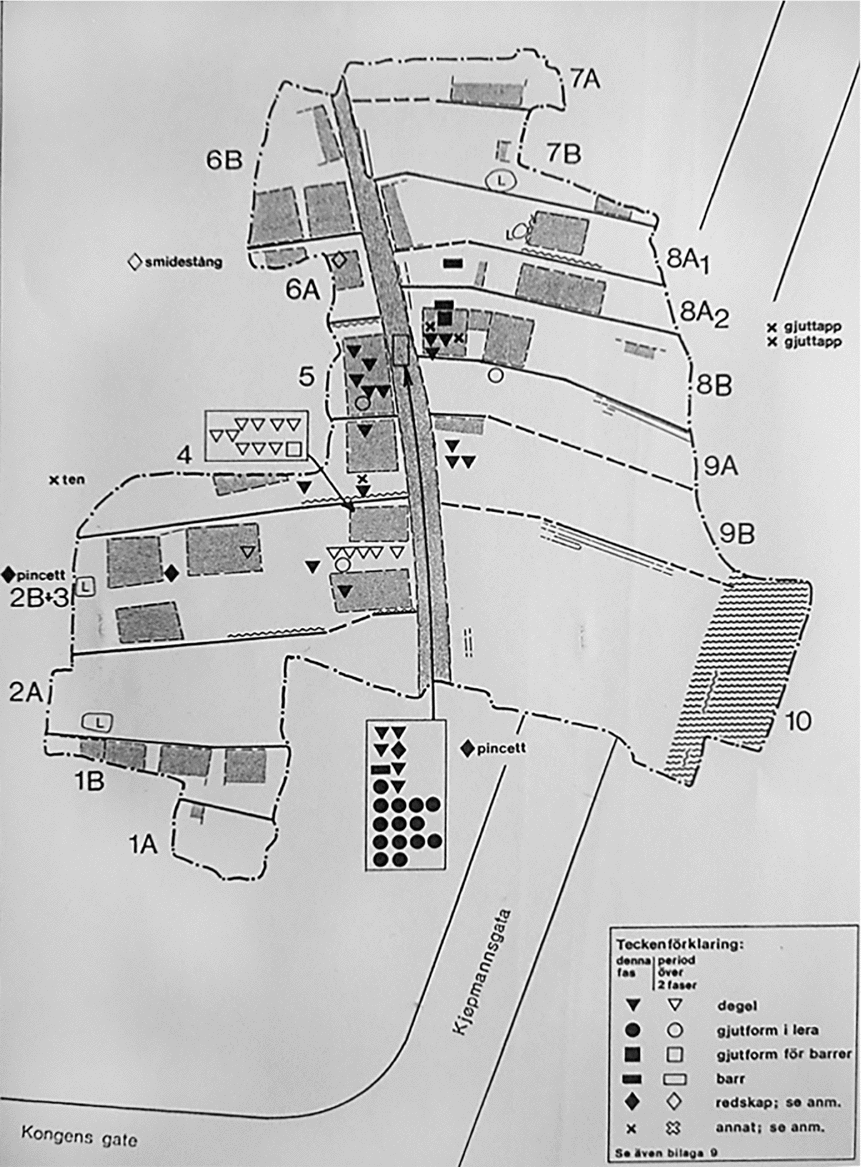
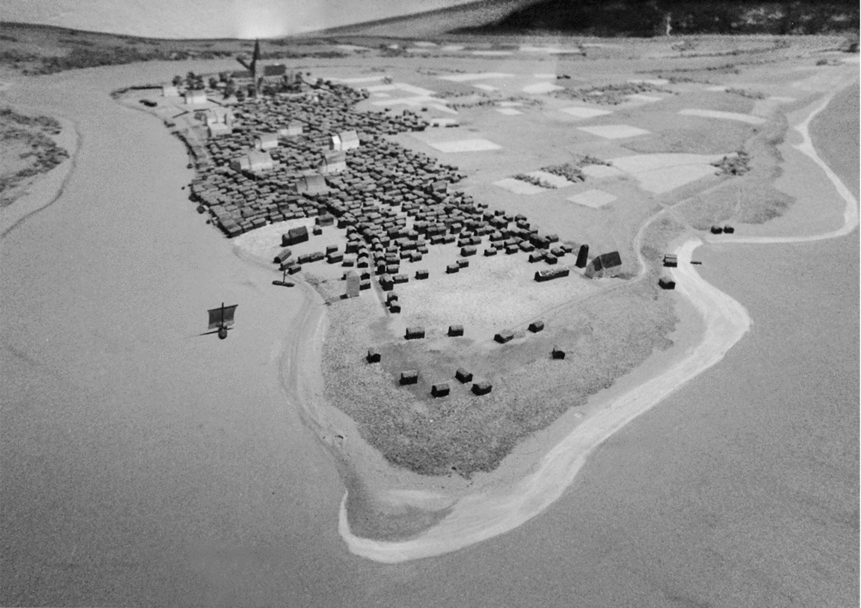
The archaeologist's opportunities to develop a closer understanding of the dynamics and development of practice bundles can be illustrated with an example from the medieval town of Trondheim, Norway's first capital. After the formation of the town in the second half of the 10th century, the production of metal objects from moulds took place in open spaces on each plot of land (figure 1). Extensive archaeological investigations have revealed that around the mid-12th century a radical change occurred whereby most of these activities were moved from the centre of the town along Kaupmannastretet to an open uninhabited place outside the town close to the mouth of the river (figure 2). This resulted in an entirely new physical, social and material work situation for the smiths’ performance of their craft, where the division of a common place simultaneously opened up possible closer cooperation between several craftsmakers and the same potential for development opportunities as mentioned for Bergen's craftsmakers roughly 150 years earlier.
Tools, moulds, bars, slag etc. from metalworking on the plots along the main street in Trondheim, A.D. 1050–1100 (phase 4). After Bergquist (Reference Bergquist1989, figure 26g).

The metal workshops are located on a sandbank, Ørene, close to the seashore, Trondheim c. A.D. 1300. Photo: Axel Christophersen, NTNU University museum.
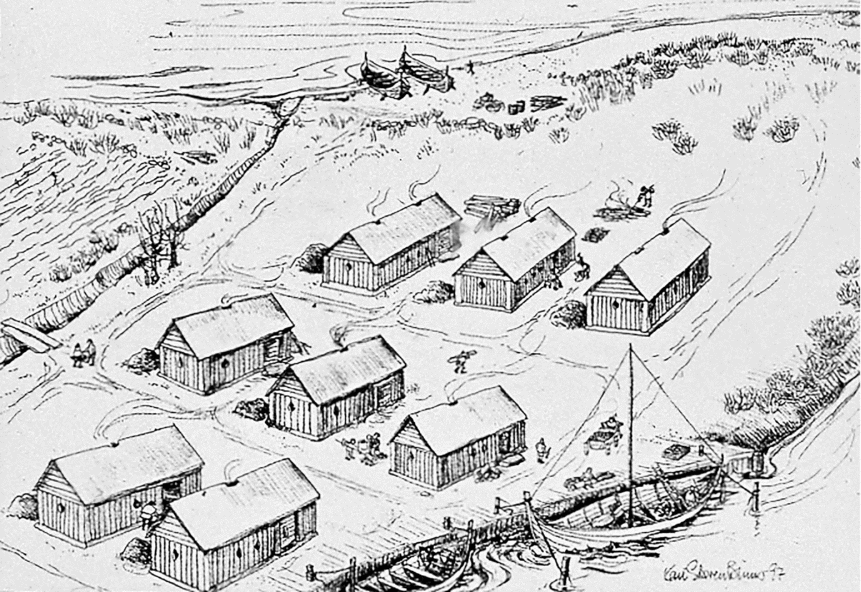
In addition, Trondheim's established townscape acquired a completely new and dominant physical element, which residents and visitors alike could not avoid noticing due to the activities located on a small sandbank between the fjord and the river. There, a number of workshops, smithies, and other physical structures related to various types of metalworking had become established and were rendered prominent not only visually but also through the sounds and smells resulting from the intense activity. To date, the archaeological explanations have mainly related to local economic, organizational and political circumstances (Bergquist Reference Bergquist1989; Blom Reference Blom1997; McLees Reference McLees, Espelund, McLees, Pagoldh and Sandvik1989; Nordeide Reference Nordeide, Christophersen and Nordeide1994). However, interestingly, McLees (Reference McLees, Espelund, McLees, Pagoldh and Sandvik1989) suggests the possibility that the creation of a separate crafts quarter for metalworkers outside the town reflects ‘some impulse of self-organization among the metalworkers themselves’, but he subsequently abandons the idea since there is no documentary evidence for corporate organization of crafts before the end of the 13th century, when this occurred in Bergen (McLees Reference McLees, Espelund, McLees, Pagoldh and Sandvik1989, 245) (figure 3).
The Ørene workshop area, A.D. 1250–1300. Reconstruction based on McLees (Reference McLees, Espelund, McLees, Pagoldh and Sandvik1989, figure 45, general site plan). Drawing: Kari Støren Binns, NIKU.
Another line of debate has focused on whether the establishment of a specialized crafts quarter outside Trondheim c.1150 can be explained as a performative expression of a local practice development that already involved the craftsmakers in one or another form of social and/or professional interaction, or whether, in common with the situation in Bergen some generations later, the establishment facilitated the formation of practices with corresponding consequences for the development of social patterns of practice that went far beyond the specialized activities, as well as the social practices and rhythm, of urban life.
An archaeological analysis of practice might contribute new empirical data through an examination of, for example, the overall allocation and organization of the physical elements of the spaces, the variation in the physical traces of workshop buildings, the physical proximity between production units, possible traces of routinized connections between them (e.g. paths or tacks), the variations in manufacturing processes and use of raw materials, and traces of sharing material and expertise resources. Key questions would then be whether the possible sharing of places and expertise led to, for example, the use of common production resources, collaboration in the supply and distribution of raw materials, and hence the formation and development of new patterns of practice as an early step towards the formation of corporations known from more recent times. On the basis of written sources revealing the royal court fines in Bergen during 1293–94, Helle (Reference Helle, Helle, Eliassen, Myhre and Stugu2006) estimates that the first signs of guild organization in Bergen occurred at the end of the 13th century as a result of foreign influence. However, the development of social practice among craftsmakers may have occurred on a number of different levels and informal organizational forms may have occurred over a long period, which written sources, however, have not necessarily captured.
The port as practice complex
Just as patterns of practice sometimes share a place they also share time. What Shove, Pantzar and Watson call complexes of practices occur when the performance of a number of practices is developed in ‘sequence, synchronization, proximity or necessary co-existence’ (Shove, Pantzar and Watson Reference Shove, Pantzar and Watson2012, 87). In medieval urban communities, such complexes would have been found in many places, but primarily and most significantly in advanced communities of workers and production that shared production sites and that had to synchronize their common presence because they also shared other material elements, such as technical installations, tools or expertise. The work carried out at ports may serve as an example of such a practice complex in medieval townscapes. A port can range from an entirely natural place where the natural conditions are favourable for landing, to sites with complex physical adaptations. The choice of location and investment in improvements will in turn depend on intent and purposes in combination with natural conditions.
In the following discussion, I focus on ports intended to facilitate seaborne transport and storage of a wide range of goods and commodities. Topographical conditions, ships, wharf construction, mechanical lifting devices, transport organization, warehouses and storage facilities, weights, ropes and hawsers – all would have been involved in determining the patterns of practice, together with the workforce, quantity of goods, packaging, weather conditions and further distribution from the dockside to the town dwellers. The synchronization of place and time would have been critical in order to load and unload cargoes of varying weights, shape and value, and the medieval ships’ time of arrival, the rise and fall of the tides, the availability of labour, light levels, and so forth all would have depended upon coordinated interaction between nature, technology, manpower and expertise that also affected the local formation of practice. Hence the close relations between sea, ships, cargo, land and labour would have depended upon a carefully practised sequential synchronization of time, materials and energy to move the seaborne goods onto dry land, store them and/or distribute them further to the town's merchants, craftsmen and households.
The necessary competence in the performative practice of loading and unloading would primarily have been the bodily strength and experiences related to lifting, carrying, throwing, receiving, moving and storing goods of varying shape, weight, packaging, textures, smell and value. Bodily qualities and experience would thus have been important elements of the physical competence needed to load and unload cargo and to handle goods of all types in a safe and energy-efficient manner, which in turn would have constituted an important element of meaning in the development of local practices of handling cargo.
Hence there are a number of assumptions and implementations of the performative ‘dance’ related to the combined materials, competence and meaning in coordinated load–unload sequences. Any access to mechanical lifting mechanisms such as hoists, winches and cranes would not have made this ‘dance’ easier, although they would have saved time and energy in terms of work capacity. However, new material elements would have depended upon learning by experience and the routinization of new movements and rhythms adapted to a situation in which increasingly heavy and large volumes of goods could be loaded and unloaded faster. Coordination and establishment of new sequential routinization work operations, along with changing requirements for skills and access to labour, would have given rise to new patterns of practice.
The harbour facilities in Scandinavian medieval towns (e.g. Oslo, Bergen, Trondheim, Tønsberg, Stockholm) have been the subject of extensive analyses related to technological, functional and logistical matters (e.g. Bill Reference Bill and Bill1999; Hobberstad Reference Hobberstad2012; Molaug Reference Molaug, Bill and Clausen1998; Reference Molaug2002; Nymoen Reference Nymoen, Brendalsmo, Eliassen and Gansum2009; Paasche and Rytter Reference Paasche and Rytter1998; Varenius Reference Varenius1992; Westerdahl Reference Westerdahl, Olsen, Madsen and Rieck1995), but far fewer questions have been raised about the need for collaboration, synchronization and bodily experience, or about the ports as spaces and places for the establishment of complexes of social practices. One example can be taken from Trondheim, where the earliest port was localized in a small shallow inlet on the western side of Nidelven, which flows through the settlement. During the second half of the 11th century the port was relocated to the river because larger boats with deeper keels could no longer sail into the inlet, which eventually silted up (Christophersen and Nordeide Reference Christophersen and Nordeide1994; Gundersen Reference Gundersen and Sæther2001). Following the move, a wooden wharf was constructed adjacent to plots of land located along the river and subsequently became the medieval town's dockside.
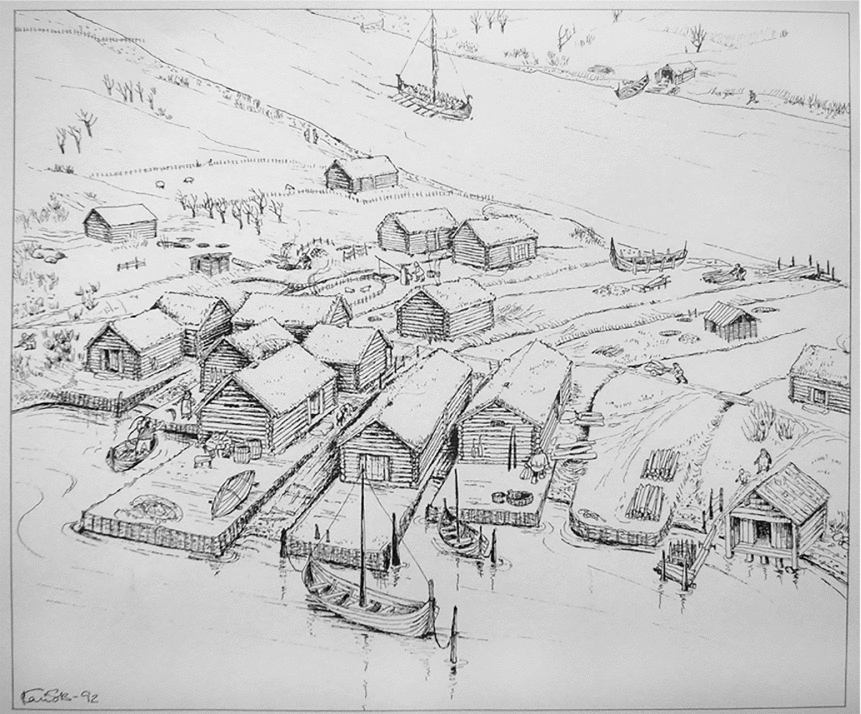
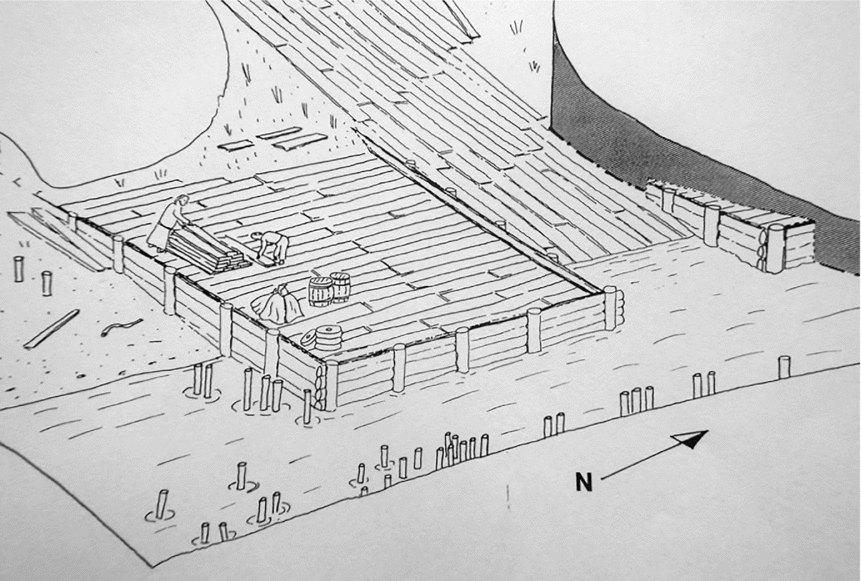
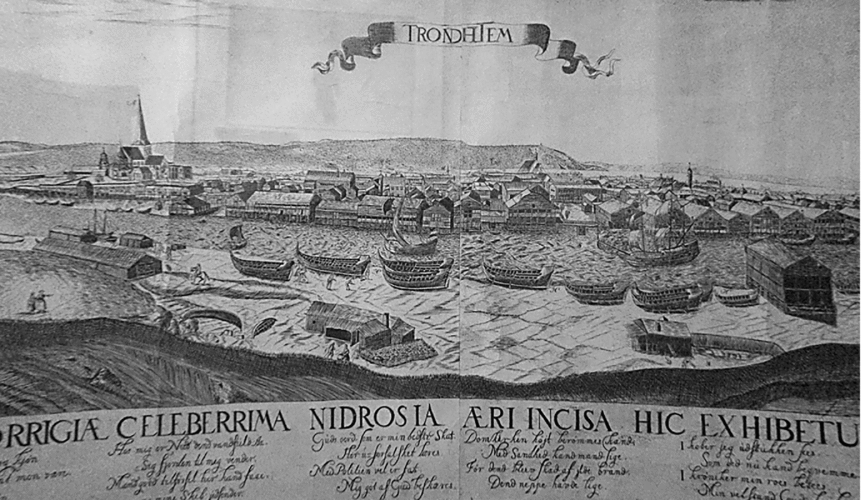
In Trondheim's earliest port, loading and unloading would have been carried out from man-made terraces that extended from the end of narrow plots to navigable water levels (figure 4). The physical organization of the new, relocated port was in principle the same, as all loading and unloading activities took place from wharves at the end of owned plots of land facing the river (figure 5). However, the wharves were now constructed as solid structures and covered a larger area, which may indicate that larger boats called at the town and more goods were shipped in. As vessels’ tonnage and carrying capacity gradually increased, also a need for more manpower, better routines for safe and efficient loading and unloading, and increased competence and experience in loading and unloading work would have become apparent. How might this have affected the established patterns of practice when there was a pressing need for access to labour, professionalization and organization of loading and unloading workers? We do not know the answer to this question, since neither written sources nor archaeological sources are available for the period c.1300–1670. However, we can presume that a decisive development in Trondheim's loading–unloading practices must have occurred in this period, since an engraving from c.1670 shows an established coordinated wharf extending continuously for hundreds of metres along the river front (figure 6). In addition, footbridges and porticos would have helped to facilitate communication between the individual wharves, which had been developed with large warehouses equipped with winch systems for carrying heavy goods over the shortest distance from the vessels’ holds to the onshore storage spaces. The row of wharves dating from late 17th century along Nidelven represents a complex material resource in a complex of practices that over time had become intertwined with a number of other patterns of practice related to property ownership, shared use, investment, shipping, distribution of goods and trade relations.
Reconstruction drawing of Trondheim's first port, A.D. 1000–25 (phase 2), located in a little inlet of the river Nid. After Christophersen and Nordeide (Reference Nordeide, Christophersen and Nordeide1994, figure 222). Drawing: Kari Støren Binns, NIKU.
Reconstruction drawing of the waterfront structures along the west bank of the river Nid, A.D. 1150–75 (phase 6). After Christophersen and Nordeide (Reference Nordeide, Christophersen and Nordeide1994, figure 62). Drawing: Snorre Bjeck.
The Maschius engraving of Trondheim displays the wharves along the river Nid, A.D. 1674. Photo: Axel Christophersen, NTNU University Museum.
The need for professional handling of large and varied amounts of goods that represented substantial investments must have increased significantly during the 17th century, yet despite extensive source material little is known about this need, as pointed out by Christina Deggim in her article about work in north European harbours in the Middle Ages. She states that there has been ‘a surprising lack of appetite’ (Deggim Reference Deggim, Bill and Clausen1999, 34, my translation) with regard to the real historical questions that arise when studying the port area as a space of urban practice. Who were the workers who loaded and unloaded vessels in medieval Trondheim? Did they belong to the wharf owners’ households or were they linked to the consigners or those who owned the consignments? Alternatively, were they casual labourers? Who was responsible for development and maintenance of port facilities? How did the development of practices affect the organization of the workers who loaded and unloaded goods? As archaeologists we can ask these questions, inspired and supported by the physical remains, even though we cannot fully answer them. Still, they need to be asked and thus challenge the traditional use and interpretation of dockside-related archaeological material, as well as remains of other types, such as texts, prints, paintings or photos from past times.
Interface, leakage and creativity
In the preceding section, I attempted to concretize the concepts of bundles of practices and complexes of practices, and explored their analytical potential by drawing on examples from Scandinavia in the Middle Ages. Specifically, I examined how place is a vital material resource and how it can be used as the starting point for an analysis of practice. Concrete examples were drawn from crafts quarters, street space and harbour area in Trondheim to show how connections in complexes of practices are evident in the medieval townscape's most intensive areas of activity. This does not necessarily mean that bundles and complexes of practices act solely in such areas; on the contrary, different functions and activities would have been so dense and fragmentary in the condensed medieval townscape that in many cases clear spatial boundaries did not exist. For example, in Trondheim craft activities were located both in the town houses and in separate crafts quarters, and activities related to trade and commodity exchange were localized to both private and public spaces (Christophersen and Nordeide Reference Christophersen and Nordeide1994). But how open or closed was the medieval urbanscape really? And how can we comprehend the importance of non-built-up areas?
Medieval townscapes are condensed areas of dwellings and activities. Urban archaeologists have traditionally focused on the built areas and the activity zones, but the fact is that a substantial part of an urban area consists of open space between the structures. Monica Smith (Reference Smith2008, 217) has pointed out that rather than considering the space between the buildings as ‘accidental artefacts’ depending on the placement of buildings, we should think about how they were deliberately created. Consequently, it is essential to consider (1) how the open space, conscious and unconscious, affects urban life, and (2) how open space might have functioned as a resource for the creation and development of specific urban practice patterns. ‘Empty space is flexible and offers the potential for innovation and creativity on a variety of timescales. Open spaces may be used frequently or rarely, and the activities undertaken may be spontaneous, routine or planned’, Monica Smith (Reference Smith2008, 228) points out, and thus ascribes open spaces the role of mediator of unforeseen and unplanned events, incidents, calls, meetings and interactions – all these events carriers of creative power and potential, a fundamental assertion in the following.
The medieval townscape's overall spatial structure enabled independent patterns, bundles and complexes of practices to establish informal interfaces through which information, knowledge, ideas and opinions could have leaked. Little is known about what actually may have occurred in such leakage zones, but it is reasonable to assume that they may have functioned as an unauthorized and non-obligatory transfer mechanism between isolated, practice-related arsenals of significance (meanings, ideas), competence, and material resources. In this way, they may have played an important role in the informal dissemination of knowledge and information between different areas of competence.
Leaking zones of contact would also have functioned as an important mechanism for establishing new patterns of practice. The formation and development of practice would thus have been able to permeate and bind together the urban space through its own creative dynamics, which initiated the social, cultural and material development of medieval urban communities. A study by Amin and Thrift (Reference Amin and Thrift2007) highlights this dynamic, as they show that spatial proximity and variation between different and independent patterns of practice forced creative and dynamic, but entirely unpredictable, encounters between meanings, competence and material resources that otherwise would not have occurred. Such meetings proved to be the decisive driving force behind a unique form of urban development in terms of innovation, spontaneity and creativity (ibid.).
Although Amin and Thrift's findings relate to modern cities, there are good reasons to assume that the same dynamic conditions that they describe for today's cities are also relevant for preindustrial urban communities characterized by dense, heterogeneous physical and social environments (e.g. Salmaan Reference Salmaan1968; Singman Reference Singman2013). Amin and Thrift's (Reference Amin and Thrift2007) findings thus make it likely that preindustrial urban communities with correspondingly close social and material relations developed creative and innovative environments that generated significant driving force in contemporary intellectual and technological developments. An illuminating, though geographically distant, example from a thousand-year-old Middle Sican multicraft workshop at Huaca Sialupe on the north coast of Peru provides a detailed and convincing insight into how mutually independent production processes (metalworking and pottery) have initiated collaboration of mutual benefit that eventually not only affected the production processes and exchange of technological knowledge and experiences, but also had a significant impact on product design, which furthermore reflected the high social status of the metal objects (Shimada and Wagner Reference Shimada, Wagner, Skibo, Graves and Stark2007, 174–83).
A central research task for the urban archaeology of social practice is to localize such possible ‘leaking contact zones’ in medieval urban landscapes, where – through the entanglement of different patterns of practice – the transfer of knowledge, competence, meaning and materials provided a fertile ground for the formation of meaning and development of new ideas. In this regard, too, the above-mentioned example of metalworkers sharing a production area in a place outside the centre of Trondheim serves to highlight how the formation of new patterns of practice may have contributed to the development of corporate mergers among the town's craftsmen earlier than has been assumed hitherto. The local craftsmen would not have been familiar with the idea of meeting through formalized social gatherings across ancestry and kinship affiliations; for example, Miklagildet (‘the Grand Guild’) in medieval Trondheim was founded upon one such association of local nobles at the end of the 11th century (Haugland Reference Haugland2012).
In Sweden, guilds are mentioned on two rune stones from Sigtuna and on two from Östergötland, the latter in a context that suggests a sense of community between Scandinavian nobles (Roslund Reference Roslund, Mogren, Roslund, Sundnér and Wienberg2009). There was also a long tradition of merchants’ guilds as a widespread institution in north-west Europe at the time (Roslund Reference Roslund, Mogren, Roslund, Sundnér and Wienberg2009; Verhulst Reference Verhulst1999), and there is no reason to assume that Scandinavian merchants and craftsmen were not well acquainted with these institutions. However, there is no documentary evidence for the existent of guilds in Norway before the late 13th century (Haugland Reference Haugland2012), and Helle (Reference Helle, Helle, Eliassen, Myhre and Stugu2006) explains their presence in Norwegian medieval towns as having been imported from abroad with the arrival of German craftsmen.
Further, informal arrangements based on the idea of social gatherings for the protection and safety of the community might have existed long before then but without having left traces in written sources. However, during the High Middle Ages the external framework for the craftsmen's practices changed and then such informal gatherings became increasingly important for craftsmen wanting to safeguard their operations (Roslund Reference Roslund, Mogren, Roslund, Sundnér and Wienberg2009). The outcome may have been formal organizations and hence greater visibility to the public. The guilds made the craftsmen's position in urban communities both visible and influential through organizational, legal and material performativity in the townscape, and they were central to the development of an urban way of living in medieval towns under their economic, social and cultural influence.
In addition to taverns and public rooms, saunas, guest houses and other informal social ‘hot spots’ in the medieval town, some less prominent activity-intense contact zones, such as streets, squares, port areas and courtyard dwellings, contributed to the early development of urban life. People of different age, gender, social rank, and cultural and linguistic background could have met informally in such places. However, the meetings would have called for the existence and mobilization of social, mental and cultural resources in contrast to when people met in a professional role. In cases where people met informally and in socially non-committal relationships, a network of irregular interconnecting knots and loose ends would have arisen that could have extended beyond the rational and controllable intentions of the meeting, but which for that very reason could have unleashed new creative processes and thus delivered important but unanticipated contributions to the formation of urban life in the Middle Ages.
Concluding remarks
Mathias Bäck (Reference Bäck, Brendalsmo, Eliassen and Gansum2009) has asked whether people were conscious of living in an ongoing urbanization process and whether they knew about towns as organizational frameworks for living their lives. My emphatic answer is: of course they would have known! They would have known because that was exactly what everyday life experience was about. Everyday life did not come from outside; it was created by the urban inhabitants themselves, made up of countless entangled practice patterns, and thus little by little it created what Wirth refers to as an ‘urban way of life’ or ‘urbanity’. However, how this happened in medieval urban communities is still rather obscure and not comprehended. Hence addressing this question will be a great challenge for urban archaeologists in the future.
Acknowledgements
The research and early drafts for this article were done while I was a research fellow at the McDonald Institute for Archaeological Research, University of Cambridge, in spring 2014. I am most appreciative of all the help and support given by the institute. Special thanks are due to deputy director Dr J.H. Barrett for organizing my stay. I am grateful for all the feedback and thought-provoking comments on subsequent drafts from Swedish colleagues Anders Andrén, University of Stockholm; Peter Carelli, head of UV East Linköping; and Stefan Larsson, UV South, Lund; as well as to my Norwegian colleagues Gitte Hansen, Bryggens Museum/University of Bergen, and Chris McLees, Norwegian Institute for Cultural Heritage Research, Trondheim. A special thanks to fellow archaeologist Terje Brattli for all fruitful discussions – and lukewarm coffee! I thank Catriona Turner for heroic work with the translation. Financial support from my place of employment, the NTNU University Museum, Section for Archaeology and Cultural History, and from the Royal Norwegian Society for Sciences and Letters, made this work possible, for which I am most grateful.