Introduction
Convolvulaceae comprises 58 genera and 1840 species, with an almost cosmopolitan distribution, but with many genera endemic to tropical regions (Staples & Brummitt, Reference Staples, Brummitt, Heywood, Brummitt, Culham and Seberg2007). Although some species are notable as weeds and pests, more than 1000 species are not particularly common – indeed, the family has numerous rare species (Austin, Reference Austin1992). Jacquemontia Choisy is one of the largest genera in the family, with c.120 species, distributed mostly in the New World tropics and subtropics, with several endemics in the Caribbean and in North, Central and South America, being frequent in savannah vegetation. A few species occur in tropical Asia, Africa and Australia (Robertson, Reference Robertson1971). Recent studies have demonstrated that the origins of Jacquemontia were probably in Asia. Subsequently they dispersed to Mesoamerica and finally diversified as they expanded over the entire continent (Namoff et al., Reference Namoff, Thornton, Lewis, Oviedo and Francisco-Ortega2007, Reference Namoff, Luke, Jiménez, Veloz, Sosa, Maunder and Francisco-Ortega2010). The phylogenetic relationships among the species from the Caribbean and Central America are better understood than those of the South American ones (Namoff et al., Reference Namoff, Thornton, Lewis, Oviedo and Francisco-Ortega2007, Reference Namoff, Luke, Jiménez, Veloz, Sosa, Maunder and Francisco-Ortega2010). Namoff et al. (Reference Namoff, Luke, Jiménez, Veloz, Sosa, Maunder and Francisco-Ortega2010), based on a molecular phylogeny, found an exceptional case of disjunction between tropical Africa, the Caribbean and the Hawaiian islands. They suggested that Jacquemontia ovalifolia (Choisy) Hallier, previously treated as three distinct species based on their distribution, is actually a single species that linked this rarely exemplified disjunction. Brazil has 50 species of Jacquemontia (Buril, Reference Buril2013), which is more than 40% of the taxonomic diversity of the genus. They occur mostly in areas of Caatinga and Cerrado (Bianchini & Ferreira, Reference Bianchini and Ferreira2012; Buril, Reference Buril2013). The country has always been cited as having a high level of diversity of the genus, and probably represents one of its centres of diversity (Robertson, Reference Robertson1971). Over the last few years many new endemic species have been described, mostly from the Brazilian semi-arid region (Bianchini, Reference Bianchini1999; Bianchini & Pirani, Reference Bianchini and Pirani2005; Krapovickas, Reference Krapovickas2009; Buril & Alves, Reference Buril and Alves2011, Reference Buril and Alves2012a, Reference Buril and Alves2012b; Buril et al., Reference Buril, Simão-Bianchini and Alves2012). Understanding the distributions of the Brazilian species is important for clarifying relationships found in phylogenetic studies.
This study aims to shed light on two main questions: (i) how are the Brazilian species of Jacquemontia distributed; and (ii) where is the Brazilian centre of endemism of the genus?
Materials and Methods
Database
Samples were obtained through field trips and a review of herbarium collections, and included in a database of c.2000 records. The herbaria analysed were ALCB, ASE, B, BHCB, BM, BR, CEN, CEPEC, DIAM, EAC, EAN, F, FHO, FLOR, FR, G, HB, HRB, HRCB, HST, HUEFS, HUESB, HUFRN, HURCA, HVASF, INPA, IPA, JPB, K, M, MAC, MG, MO, NY, P, PEUFR, R, RB, SING, SP, SPF, SPSF, TEPB, UB, US and UFP (codes according to Thiers, Reference Thiers2012). The species included in the analysis follow Buril (Reference Buril2013). Species known exclusively from the type specimen (Jacquemontia cephalantha (Dammer) Hallier f., J. subsessilis Moricand, and J. villosissima Ooststroom) or of doubtful locality were excluded from the analysis.
Analysis
Herbarium samples not geo-referenced were adjusted based on the coordinates of toponyms available through online gazetteers (http://earth-info.nga.mil/gns/html/, http://www.geonames.org/), or from the Google Earth database. When toponym information was lacking, the location used was the immediate county or similar. Samples with inaccurate localities were discarded from the database.
The database was analysed with the software DIVA-GIS (Hijmans et al., Reference Hijmans, Cruz, Rojas and Guarino2001). The default maps were obtained from both the ESRI collection (Environmental Systems Research Institute) and the DIVA-GIS databank (available at http://www.diva-gis.org/Data.htm). This program was also used to carry out distribution modelling of all analysed species. The algorithm adopted by DIVA-GIS is that of BIOCLIM that considers only known presence records to generate models (Hijmans et al., Reference Hijmans, Cruz, Rojas and Guarino2001; Elith et al., Reference Elith, Graham, Anderson, Dudik, Ferrier and Guisan2006). The database of each species was split into two: 75% of samples to test the algorithm, and 25% to run the analysis. The data were partitioned following the parameters of two repetitions, and one absence point to each presence point in the test database. The absence points were taken randomly from the mask grid that delimited the study area by parameters MinX –122.6040, MaxX –29.4796, MinY –38.4050 and MaxY 36.9703 for all species.
Nineteen climatic variables were used in addition to one relief variable from the WorldClim database with five minutes or about 10 km of linear spatial resolution. The WorldClim database and the characteristics of climatic data it includes are described in Hijmans et al. (Reference Hijmans, Cameron, Parra, Jones and Jarvis2005).
Distribution patterns were detected by dots plotted on the maps added to the potential distribution. The distribution patterns followed Maciel et al. (Reference Maciel, Oliveira and Alves2009). The restricted pattern was categorised as endemic, considering the species known from an exclusive vegetation physiognomy, in more than five locations, or microendemic, in fewer than five geographically close locations. Subsequently, following the process described by Hijmans & Spooner (Reference Hijmans and Spooner2001), the data plotted were regionally cropped to analyse the species richness distribution, in one degree squares. All species identified as endemic were analysed separately, to verify the distribution of endemic richness and the endemism centre following the same process for the complete Brazilian dataset.
Finally, a Parsimony Analysis of Endemicity (PAE) was conducted to infer the centres of endemism. For this the squares identified with three or more endemic species were numbered on a presence/absence matrix where the squares were classified as OTUs and the species as characters. The analysis was performed with the program PAST using a heuristic algorithm with Wagner optimisation with five rearrangements.
Results
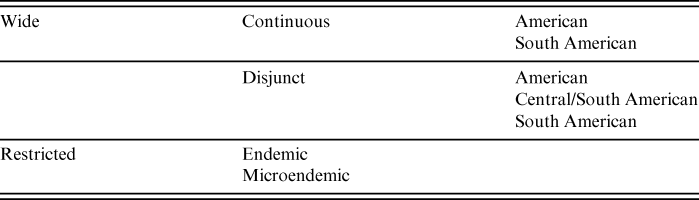
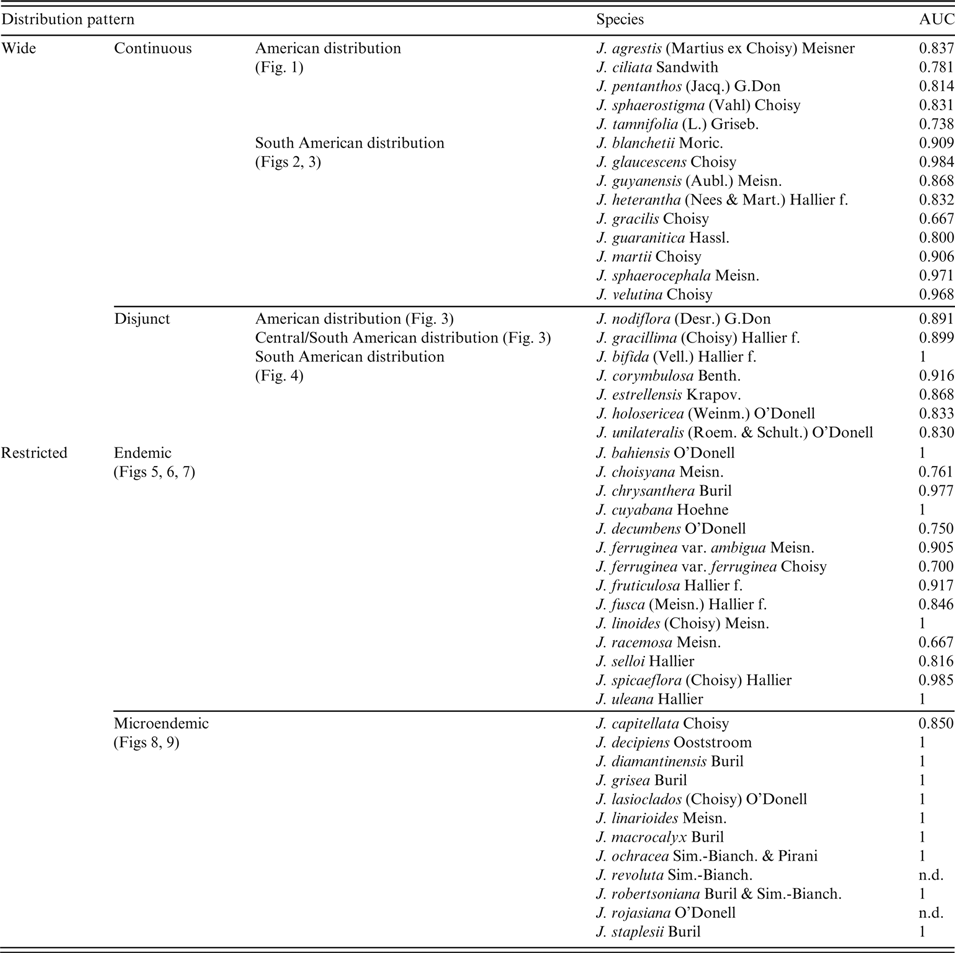
The 47 species analysed in this study were classified into two categories of distribution patterns: wide or restricted (Tables 1 and 2). The widely distributed species were also divided into the categories continuous or disjunct. The species with a wide and continuous pattern appear with an American or South American distribution, and the wide and disjunct species have an American, Central/South American or only South American distribution. The restricted species were also divided into endemics, including species with distributions exclusive to single physiognomies (in more than five locations), and microendemics which are defined as occurring in fewer than five locations also within the same vegetation physiognomy. The concept of microendemicity includes species with very restricted and geographically close occurrence (Townsend et al., Reference Townsend, Leavitt and Reeder2011) which was also adopted by McCauley et al. (Reference McCauley, Cortés-Palomec and Oyama2010) for Guaiacum unijugum Brandegee (Zygophyllaceae) that occurs in Baja California in an area of less than 5% of Mexican territory.
Distribution patterns of Brazilian Jacquemontia species

Distribution patterns of Brazilian species of Jacquemontia and Area Under the ROC Curve (AUC) results of geographical modelling distributions
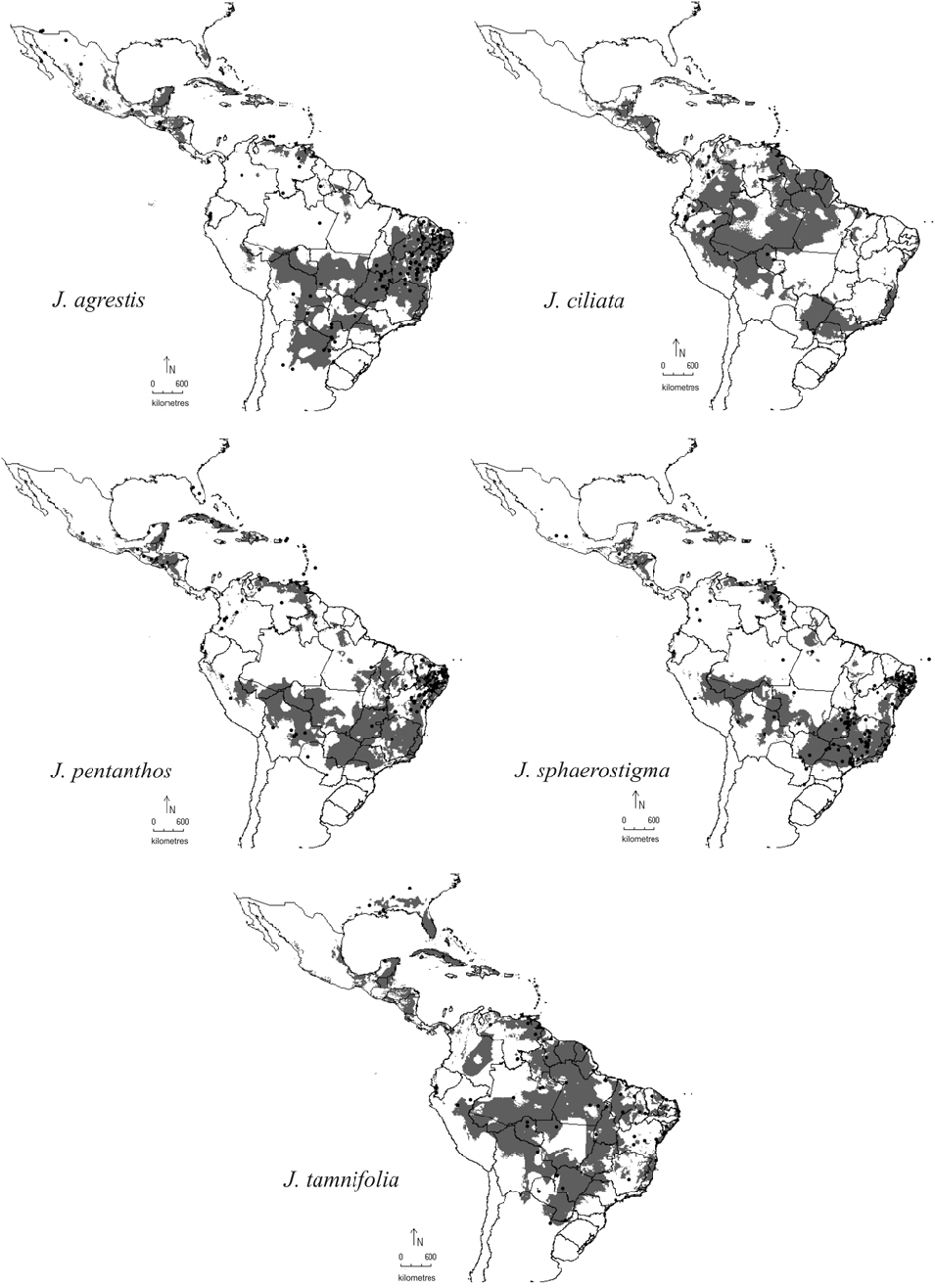
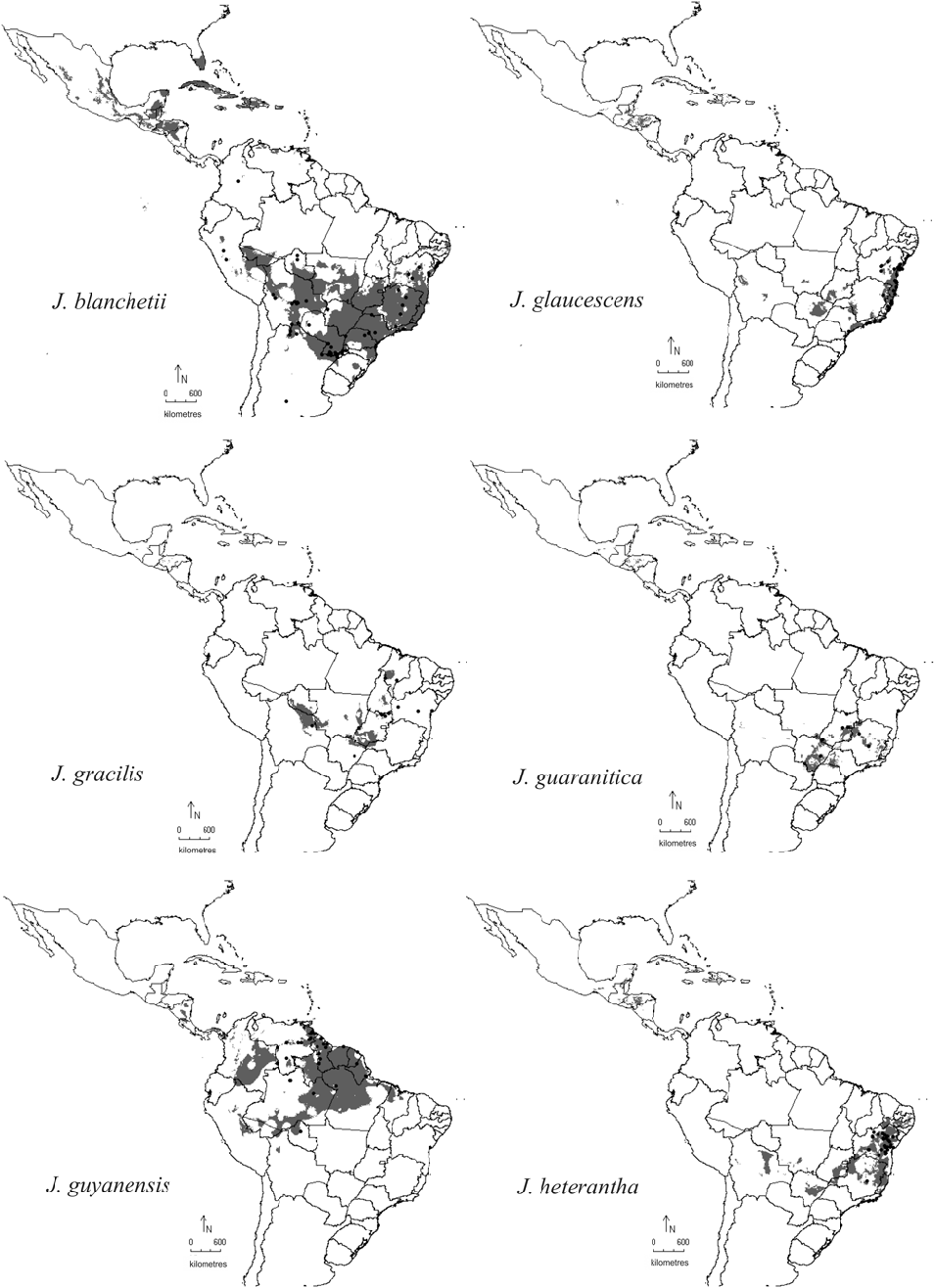
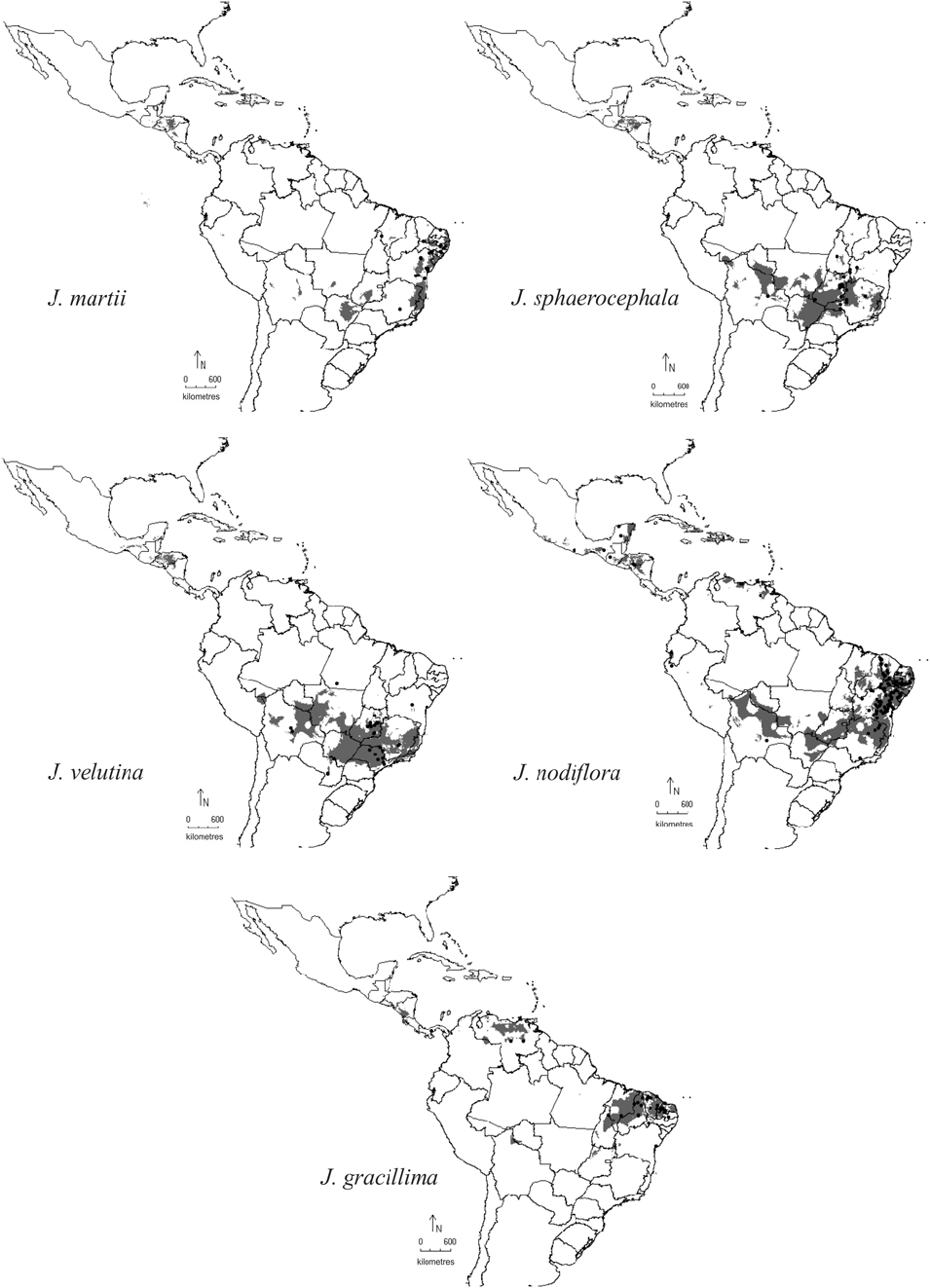
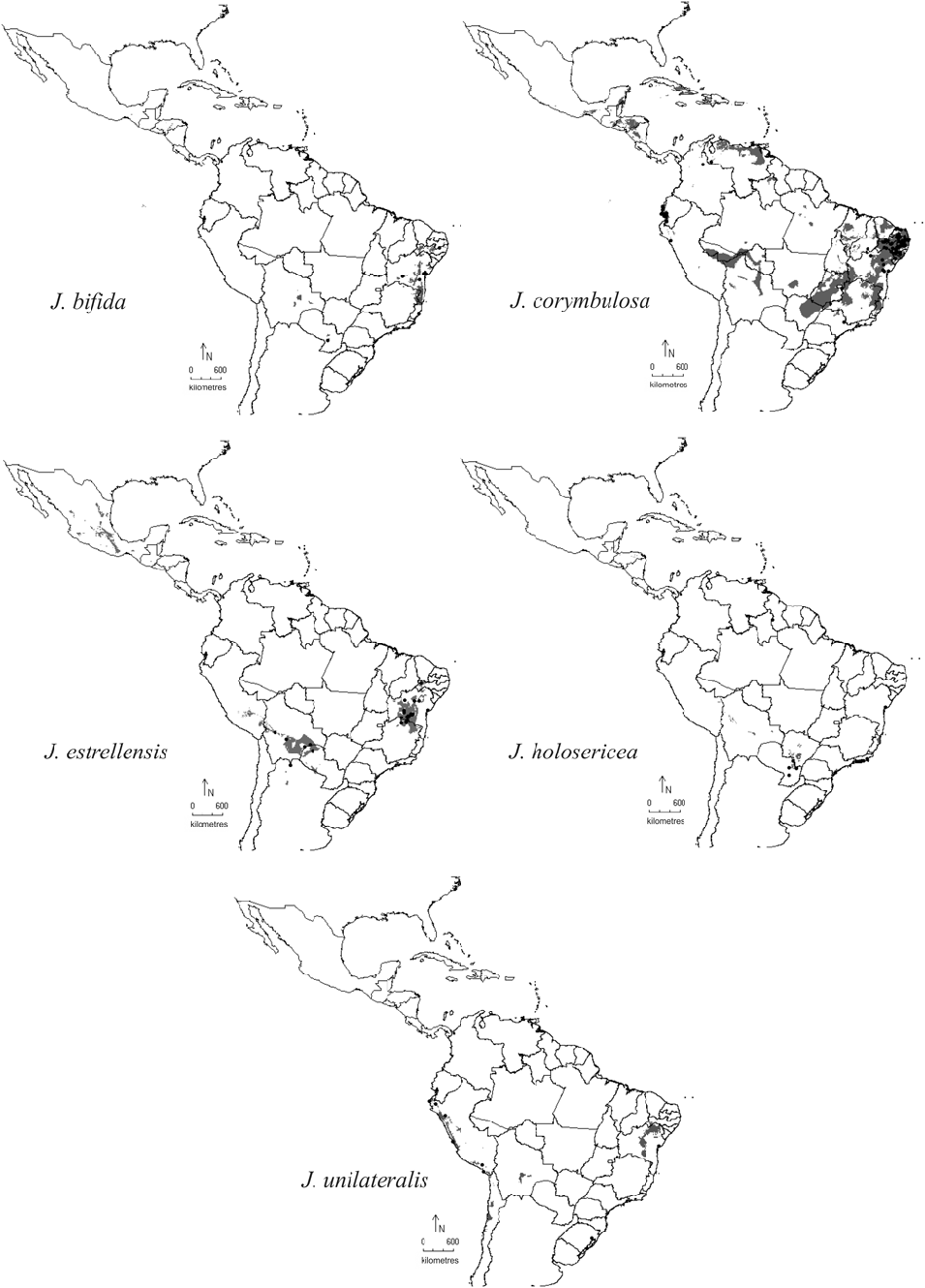
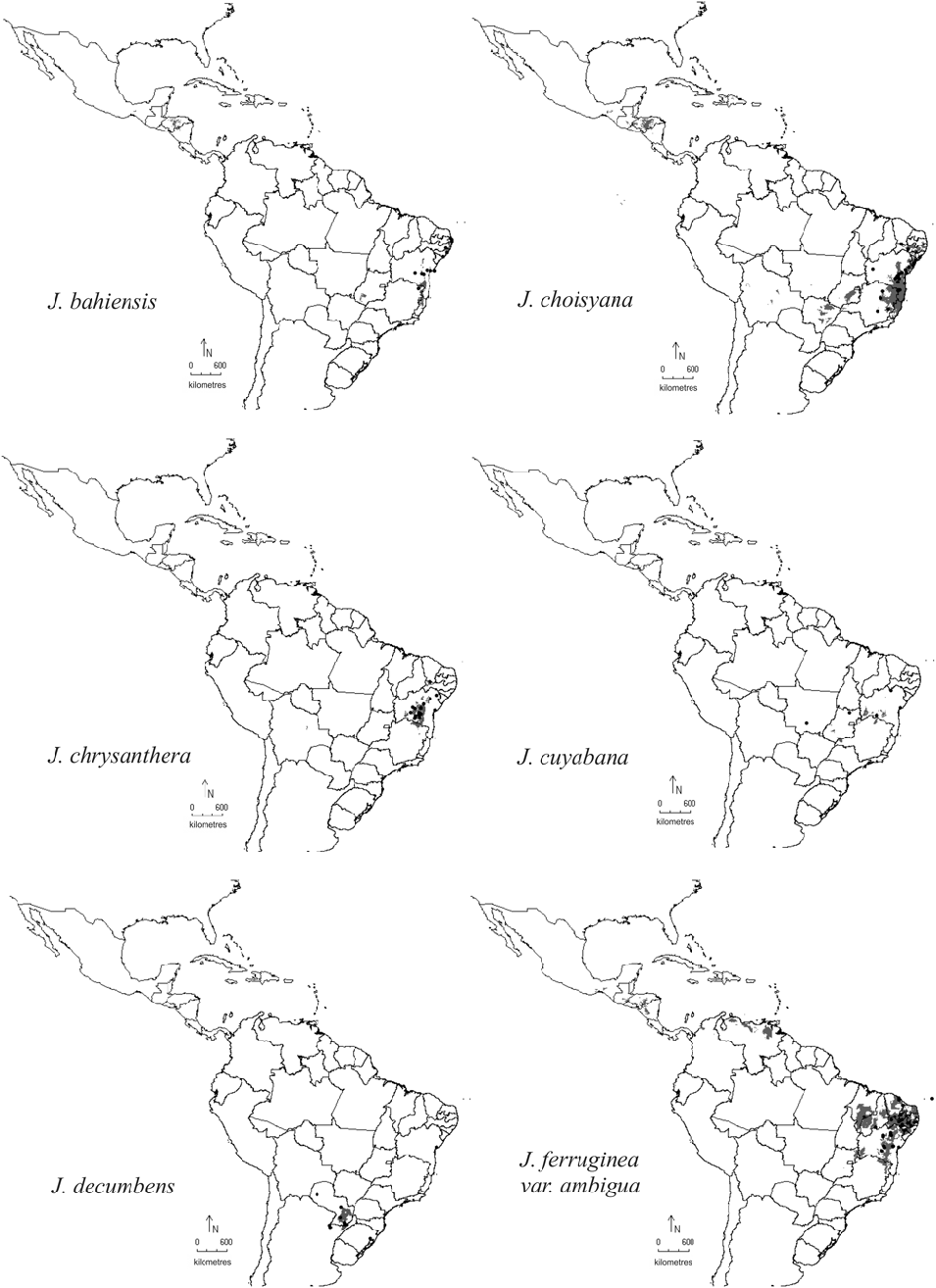
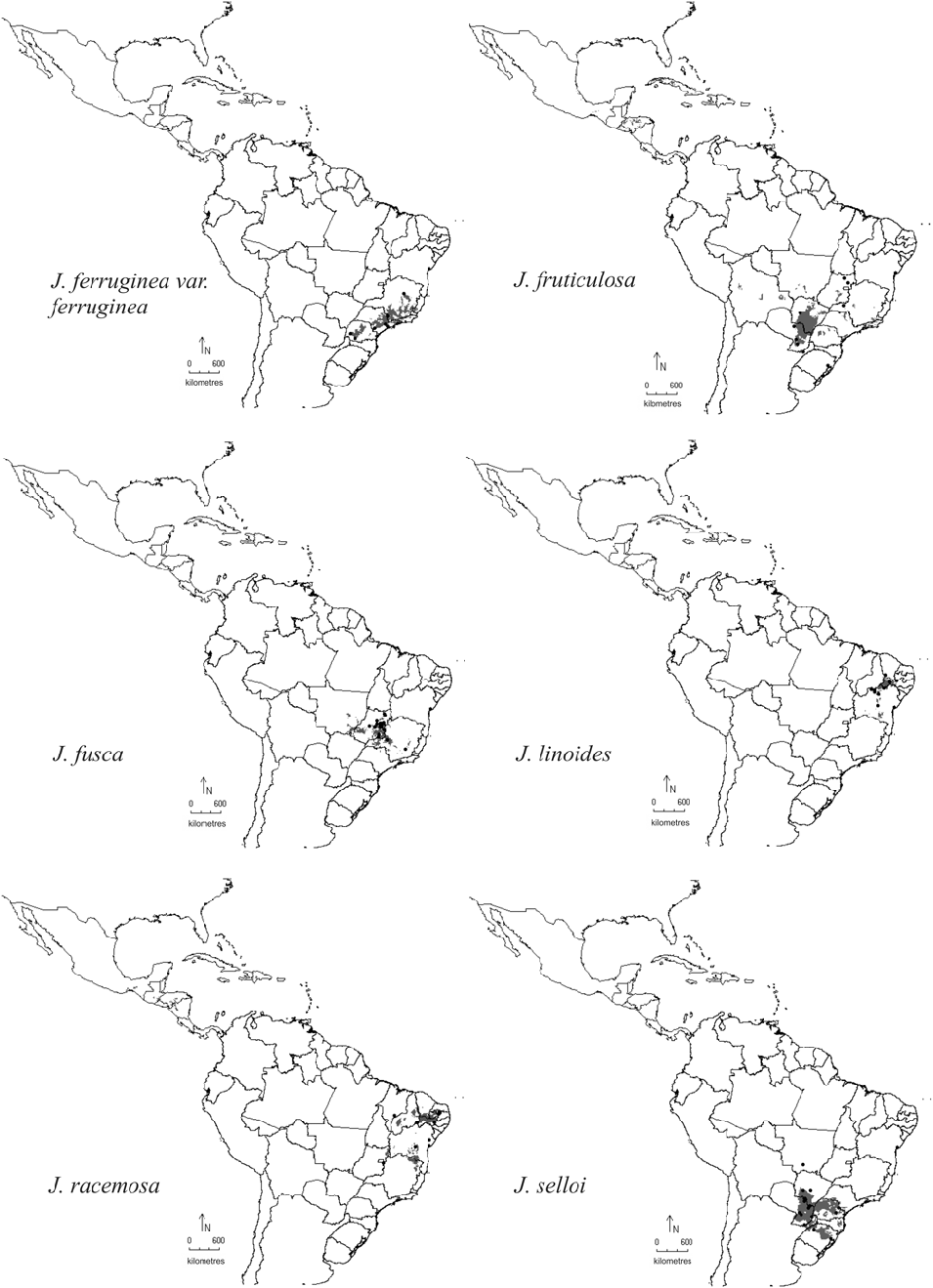
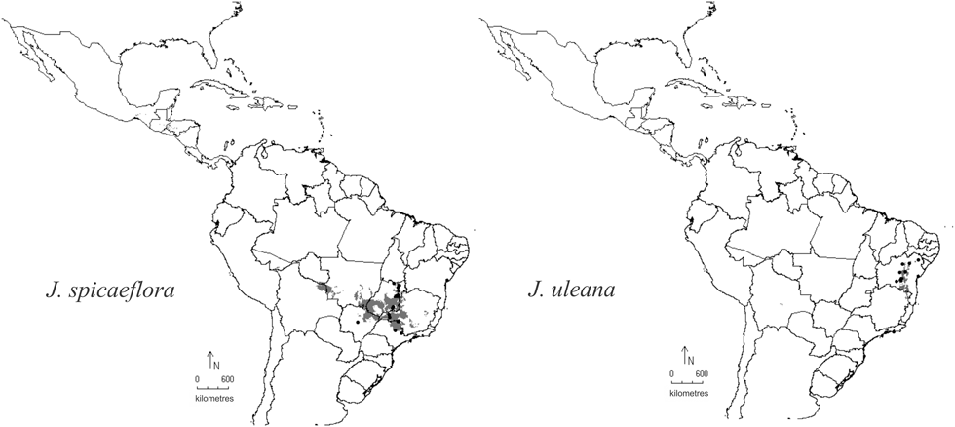
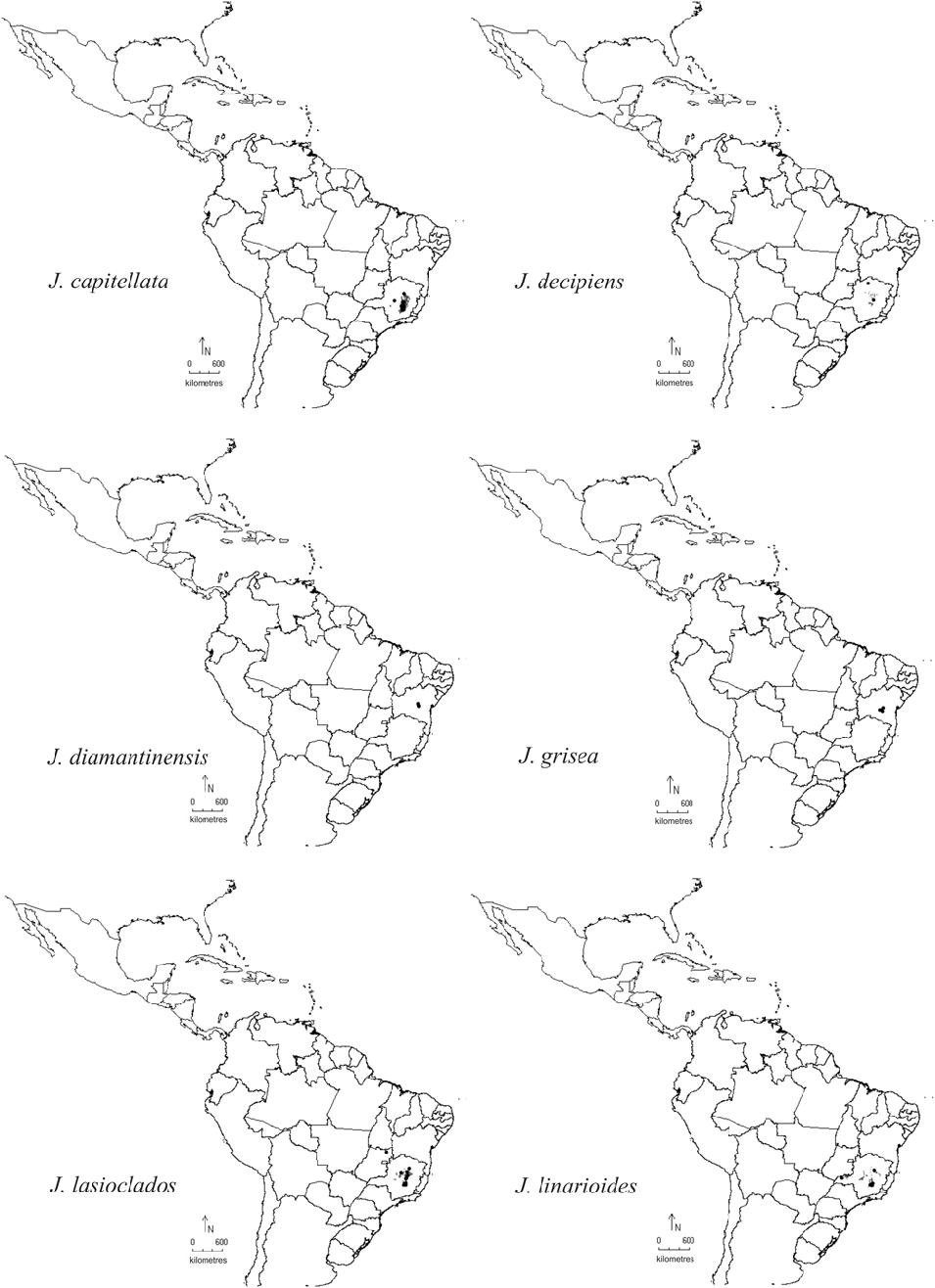
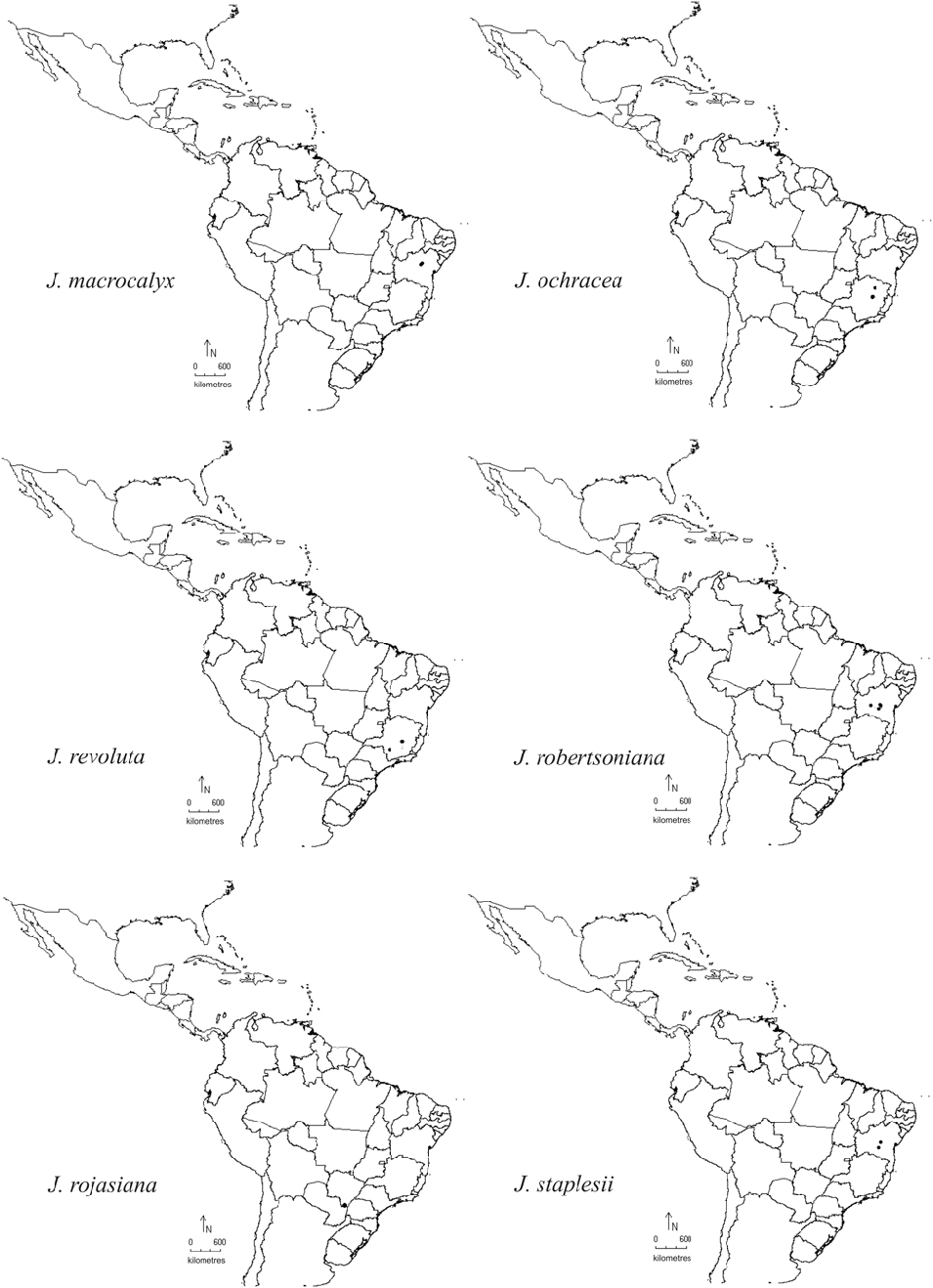
Twenty-one species were classified as widely distributed, of which 14 have continuous distributions and seven have disjunct distributions. The remaining 26 were classified as restricted and among these, 14 were considered endemic and 12 microendemic (Figs 1–9, Table 2).
Species observed distribution (dots) and geographical modelling distributions (in grey). Pattern: wide, continuous and American.
Species observed distribution (dots) and geographical modelling distributions (in grey). Pattern: wide, continuous and South American.
Species observed distribution (dots) and geographical modelling distributions (in grey). Pattern: wide, continuous and South American; Jacquemontia nodiflora: pattern wide, disjunct, American; J. gracillima: pattern wide, disjunct, Central/South American.
Species observed distribution (dots) and geographical modelling distributions (in grey). Pattern: wide, disjunct and South American.
Species observed distribution (dots) and geographical modelling distributions (in grey). Pattern: restricted, endemic.
Species observed distribution (dots) and geographical modelling distributions (in grey). Pattern: restricted, endemic.
Species observed distribution (dots) and geographical modelling distributions (in grey). Pattern: restricted, endemic.
Species observed distribution (dots) and geographical modelling distributions (in grey). Pattern: restricted, microendemic.
Species observed distribution (dots) and geographical modelling distributions (in grey). Pattern: restricted, microendemic.
The Area Under the ROC Curve (AUC) values ranged from 0.667 to 1 (Table 2). For Jacquemontia revoluta and J. rojasiana, modelling and AUC value calculation were not possible owing to insufficient data. The distribution patterns found and based on the known distribution of the species were confirmed by the models obtained. For Jacquemontia ciliata (AUC 0.781), J. choisyana (AUC 0.761), J. ferruginea var. ferruginea (AUC 0.700), J. glaucescens (AUC 0.984), J. guyanensis (AUC 0.868), J. heterantha (AUC 0.832) and J. selloi (AUC 0.816), the models predict a distribution area substantially larger than that of the actual known distribution (Table 2).
The results of the distribution analysis indicate three main centres of richness of Jacquemontia in Brazil: the extreme north between the states of Pernambuco and Paraíba, the central portion of Bahia State, and the central portion of Minas Gerais State. This pattern partially coincides with the distribution of richness of endemic species, where Bahia and Minas Gerais play a major role (Fig. 10).
A: Distribution of Jacquemontia endemic species richness in Brazil. B: PAE analysis consensus tree.
The PAE recorded 10 equally parsimonious trees, with 37 steps, CI = 0.5946, RI n.a. The majority rule consensus tree confirms the patterns observed in the simple analysis of richness performed with DIVA-GIS. Thus, effectively two centres of richness can be observed in this study. Both are located in the Espinhaço Range, one of them in Bahia State and the other in Minas Gerais State (Fig. 10).
Discussion
About 40% of Brazilian Jacquemontia species were considered widely distributed. According to Ritter & Waechter (Reference Ritter and Waechter2004), widely distributed species in Mikania Willd. (Asteraceae) were those with a high adaptive capacity. Only four species of Jacquemontia were identified as having both wide and continuous distributions (J. agrestis, J. pentanthos, J. sphaerostigma and J. tamnifolia); these are usually considered weeds, easily adapting to different vegetation types, including disturbed environments.
According to Prado (Reference Prado2000), the Pleistocene Arc, and all the historical climatic changes that formed the current seasonal forests in South America, could explain the distribution of many taxa. Thus, the three centres of diversity represent a phytogeographic unit where several species are gathered, such as Jacquemontia fruticulosa, J. guaranitica and J. sphaerocephala. Most of the examples that also have similar centres of diversity are woody taxa (Prado & Gibbs, Reference Prado and Gibbs1993), but a few have also been reported in Poaceae (Maciel et al., Reference Maciel, Oliveira and Alves2009). Examples of lizard distributions also indicate a similar centre of diversity (Werneck & Colli, Reference Werneck and Colli2006). Even though the Chaco–Caatinga connections have been cited as a long-standing fallacy (Prado, Reference Prado1991), many distribution patterns in South America have supported speculations on the influence of past wet–dry climatic fluctuations on the current disjunctions of seasonal forests in America (Prado, Reference Prado, Leal, Tabarelli and Silva2003; Pennington et al., Reference Pennington, Lavin, Prado, Pendry, Pell and Butterworth2004). The distribution of Jacquemontia estrellensis Krapov., for instance, corroborates these speculations. Prado (Reference Prado, Leal, Tabarelli and Silva2003) also provides a list of species with a similar distribution: Schinopsis brasiliensis Engl. (Anacardiaceae), Anadenanthera colubrina var. cebil (Griseb.) Reis, Amburana cearensis (Allemão) A.C.Sm., Pterogyne nitens Tul (Fabaceae) and Phytolacca dioica L. (Phytolaccaceae). Caetano et al. (Reference Caetano, Prado, Pennington, Beck, Oliveira-Filho, Spichiger and Naciri2008), based on a molecular analysis of a species with a disjunct distribution – Astronium urundeuva (Allemão) Engl. (Anacardiaceae), also a tree – reinforced the arguments for a previously more continuous distribution of Seasonally Dry Tropical Forests in eastern South America. This is the first record that supports such a hypothesis in Convolvulaceae. Thus, the central portion of South America appears to be a diversification centre for several taxa, and these results have important implications for conservation polices of species-rich lineages unique to the ‘dry diagonal’ region.
The disjunction between the north of Venezuela/Colombia and the Caatinga region in Brazil was discussed by Gentry (Reference Gentry1982). In his view, the similarity of the Antilles and Caatinga floras could be justified by their similar climates. This hypothesis was also suggested by Andrade-Lima (Reference Andrade-Lima1981) and Greller (Reference Greller and Lentz2000), and here it is exemplified by the distribution pattern found for Jacquemontia gracillima. Another interesting point is the occurrence of the variety J. ferruginea var. ambigua in the Fernando de Noronha archipelago, and mostly in Caatinga areas on the continent. A floristic relationship between these two areas was highlighted by Andrade-Lima (Reference Andrade-Lima1981), due to the dry season of about six months in the island that selects the adapted vegetation.
The dry areas of South America are outstanding for their high levels of endemism. Gentry (Reference Gentry1982) estimated that regional endemism in these areas is as high as the Atlantic Forest and is exceeded only by the Amazon Basin among the major Neotropical phytogeographic regions. About 60% of Brazilian Jacquemontia species are exclusive to this environment, which represents a restricted distribution pattern in our analysis. Similar to Euploca and Heliotropium (Boraginaceae) (Melo et al., Reference Melo, Alves and Semir2009), and Pfaffia (Amaranthaceae) (Marchioretto et al., Reference Marchioretto, Miotto and Siqueira2009), the Brazilian species of Jacquemontia are found predominantly in open vegetation and semi-arid climatic zones, such as the Cerrado and Caatinga (Bianchini & Ferreira, Reference Bianchini and Ferreira2012). Additionally, similar results, with the majority considered as restricted, have been found for Baptistonia (Orchidaceae) (Chiron, Reference Chiron2009), and Solanum L. sect. Petota Dumort. (Solanaceae) (Hijmans & Spooner, Reference Hijmans and Spooner2001). Even though most species are restricted to the Caatinga or Cerrado, some, such as Jacquemontia bahiensis, are restricted to the far eastern northeast, as are a few species of Araceae, such as Philodendron blanchetianum (Pontes & Alves, Reference Pontes and Alves2011).
Jacquemontia is poorly represented in the Atlantic Forest, and most of the species that are found there are widely distributed elsewhere, such as J. glaucescens. Therefore, the genus is not appropriate to corroborate or refute the hypothesis of a possible centre of endemism in the furthest northern part of the Atlantic Forest (sensu Prance, Reference Prance and Prance1982).
As observed in the endemism richness map (Fig. 10A) and in the tree obtained from PAE (Fig. 10B), the Espinhaço Range emerges as an important area of endemism of Jacquemontia which agrees with the distribution of many other genera, such as Schefflera (Araliaceae), Leiothrix (Eriocaulaceae), Pseudotrimezia (Iridaceae), Senna (Fabaceae), Mimosa (Mimosaceae), Eriope (Lamiaceae) and Barbacenia (Velloziaceae) (Giulietti & Pirani, Reference Giulietti, Pirani, Vanzolini and Heyer1988; Harley, Reference Harley, Vanzolini and Heyer1988; Giulietti et al., Reference Giulietti, Pirani, Harley, Davis, Heywood, Herrera-MacBryde, Villa-Lobos and Hamilton1997; Simon & Proença, Reference Simon and Proença2000; Fiaschi & Pirani, Reference Fiaschi and Pirani2008). Cactaceae also has a centre of endemicity in the Espinhaço Range, with the campos rupestres even more important than the Caatinga in the number of species (Zappi & Taylor, Reference Zappi and Taylor2008). In addition to the Espinhaço Range being considered the diversity centre of many groups of plants (Giulietti et al., Reference Giulietti, Pirani, Harley, Davis, Heywood, Herrera-MacBryde, Villa-Lobos and Hamilton1997), the region supports many recently discovered new species and occurrences (Rapini et al., Reference Rapini, Mello-Silva and Kawasaki2002, Reference Rapini, Ribeiro, Lambert and Pirani2008), including Jacquemontia (Bianchini, Reference Bianchini1999; Bianchini & Pirani, Reference Bianchini and Pirani2005; Krapovickas, Reference Krapovickas2009; Buril & Alves, Reference Buril and Alves2011, Reference Buril and Alves2012a, Reference Buril and Alves2012b; Buril et al., Reference Buril, Simão-Bianchini and Alves2012).
Giulietti & Pirani (Reference Giulietti, Pirani, Vanzolini and Heyer1988) presented some examples of plants with discontinuous distributions along the Espinhaço Range. The authors pointed out how common such distributions are, despite being mostly found outside this environment (Kamino et al., Reference Kamino, Oliveira-Filho and Stehmann2009), or limited to a few areas within the whole range. Both cases can be seen within Jacquemontia, such as J. staplesii, which is known from one locality, and J. diamantinensis, which occurs in many distinct localities along the Espinhaço Range.
The Espinhaço Range runs from Bahia State to Minas Gerais (north–south direction) and, in general, does not share species of Jacquemontia with restricted distribution pattern (endemics) across the state boundary. Jacquemontia grisea, J. staplesii and J. robertsoniana, for instance, are exclusive to the portion in Bahia, while J. decipiens and J. revoluta are exclusive to Minas Gerais. This local pattern is common to several families, considering the geomorphologic distinctions between the southern and northern parts of the range (Kamino et al., Reference Kamino, Oliveira-Filho and Stehmann2009). The Jacquemontia species restricted to the Espinhaço Range are morphologically related, and very distinct from the rest of the genus. However, it is too early to suggest cases of neo- or paleoendemism based on a modern distribution being relictual or the result of a more widespread previous distribution.
An interesting taxonomic complex is that of Jacquemontia ferruginea var. ferruginea, J. ferruginea var. ambigua and J. guyanensis. All three emerged as related taxa in a recent phylogenetic analysis (Buril, Reference Buril2013), and are probably neo-endemic, resulting from recent speciation. The latter was previously described as an additional variety of J. ferruginea (Meisner, Reference Meisner, Martius and Eichler1869), but is now recognised as a distinct species, restricted to the Guiana Shield. Jacquemontia ferruginea var. ambigua is isolated from the typical variety by either a geographical barrier, such as the Rio Doce as suggested by Behling & Lichte (Reference Behling and Lichte1997), or more probably by climatic isolation wherein the difference could be explained by a differential effect of drier periods in the two regions (Grazziotin et al., Reference Grazziotin, Monzel, Echeverrigaray and Bonatto2006). Pennington et al. (Reference Pennington, Daza, Reynel and Lavin2011) suggested that Seasonally Dry Tropical vegetation imposes more restrictions to species dispersal than other Neotropical vegetation types. This could be a reasonable explanation for the fact that many tree species present a genetic structure strongly related to the geographical distribution of Seasonally Dry Tropical Forests. These phenomena may have affected the distribution of the Jacquemontia ferruginea complex and other Jacquemontia species analysed here.
The distribution of Brazilian species of Jacquemontia presented here increases the number of examples that corroborate the expansion of Seasonally Dry Tropical Forests of South America during the dry periods of the Pleistocene. Thus, this study supports the model proposed by Pennington et al. (Reference Pennington, Prado and Pendry2000) and suggests that the genus can be an interesting model to test their hypothesis, as can additional studies of cladistic biogeography. Moreover, the Espinhaço Range is confirmed as a centre of diversity of Jacquemontia, with many microendemic species represented by small populations that may be more susceptible to stochastic episodes. This area has historically been affected by mining (gold, precious and semi-precious stones, crystals and other minerals), un-managed tourism, ‘extreme sports’ practice, road building, grazing and poorly managed use of water resources: all threats to the biodiversity of this region (Zappi & Taylor, Reference Zappi and Taylor2008). Therefore, the conservation of this large area with distinct human pressures and physiognomies requires special attention, as has been pointed out by Burman (Reference Burman1991). Finally, the inclusion of only one species of Jacquemontia in the current Red List of Brazilian Flora that was described as being data deficient (MMA, 2008) was a poor representation of conservation status in the genus and this should be reassessed according to the data presented here and by Buril (Reference Buril2013).