Introduction
Photovoice is gaining popularity as a participatory research methodology (Catalani and Minkler Reference Catalani and Minkler2010) and has been used with diverse populations, ranging from homeless people (Killion and Wang Reference Killion and Wang2000; Wang, Cash and Powers Reference Wang, Cash and Powers2000), immigrant women (Schwartz et al. Reference Schwartz, Sable, Dannerbeck and Campbell2007) and indigenous groups (Castleden, Garvin and Huu-ay-aht First Nation Reference Castleden and Garvin2008; Poudrier and Mac-Lean Reference Poudrier and Mac-Lean2009; Wilkin and Liamputtong Reference Wilkin and Liamputtong2010). Few studies, however, have described the use of photovoice with older adults (Baker and Wang Reference Baker and Wang2006; Blair and Minkler Reference Blair and Minkler2009; Lockett, Willis and Edwards Reference Lockett, Willis and Edwards2005). Given the growing interest in the methodology and its potential for research in the field of ageing, the purpose of this paper is to illustrate its strengths, as well as highlight some issues that researchers may need to consider as they use the methodology with older adults. We illustrate advantages and issues by drawing on a study examining age-friendly community characteristics in four communities in Manitoba, Canada.
The term photovoice refers to a photographic technique that is based on the participatory research of Wang and Burris (Reference Wang and Burris1997). In essence, the photovoice technique permits participants to record and reflect on their community, including strengths and weaknesses (Wang and Redwood-Jones Reference Wang and Redwood-Jones2001). The employment of the method normally includes: (a) having a group of participants take photographs to depict their experience with the phenomenon under study, (b) contextualising the photos by eliciting information from participants about what they have represented in the photographs, (c) the use of a group process to allow collective reflection and dialogue related to the issue under study, and (d) sharing the findings with an audience beyond the group (Wang and Redwood-Jones Reference Wang and Redwood-Jones2001).
Typical of participatory approaches in research (Blair and Minkler Reference Blair and Minkler2009; Newman Reference Newman2010), the photovoice technique is based on the notion that local people are experts on their communities and know the actions needed to improve quality of life (Hergenrather et al. Reference Hergenrather, Rhodes, Cowan and Bardhoshi2009; Wang and Burris Reference Wang and Burris1997; Wang et al. Reference Wang, Morrel-Samuels, Hutchison, Bell and Pestronk2004). By collaborating with community members and focusing on local issues, the outcomes from a photovoice project should be appropriate to the community setting as well as relevant to the problems people are facing (Hergenrather et al. Reference Hergenrather, Rhodes, Cowan and Bardhoshi2009; Israel et al. Reference Israel, Schulz, Parker and Becker2001; Minkler et al. Reference Minkler, Blackwell, Thompson and Tamir2003). This type of community-based process is thought to increase the likelihood of community leadership addressing exposed community shortcomings and needed change (Catalani and Minkler Reference Catalani and Minkler2010; Hergenrather et al. Reference Hergenrather, Rhodes, Cowan and Bardhoshi2009; Kramer et al. Reference Kramer, Schwartz, Cheadle, Borton, Wright, Chase and Lindley2010; Wang et al. Reference Wang, Morrel-Samuels, Hutchison, Bell and Pestronk2004).
The photovoice technique can also empower research participants (Castleden et al. Reference Castleden and Garvin2008); it gives voice both individually to participants (through taking photographs and reflective activities such as journalling), and collectively (through discussion groups related to photographs). In support of this assertion, Dempsey and Tucker (Reference Dempsey and Tucker1994) note that the use of visual methods in research can be used to stimulate and verify perceptions, and to solicit differences and similarities in perceptions within a group. They further suggest that participants tend to ‘examine images and react to cues present in those images more carefully than would have been expected using written or spoken cues alone’ (Dempsey and Tucker Reference Dempsey and Tucker1994: 169). Researchers using photovoice have concluded that this qualitative technique permits a rich description of social issues, provides increased understandings of contextual influences (Lockett, Willis and Edwards Reference Lockett, Willis and Edwards2005), contributes insights into social problems that may otherwise be overlooked or ignored (Baker and Wang Reference Baker and Wang2006), and can be an effective communication method for those who typically have less voice in decision-making (Jurkowski and Paul-Ward Reference Jurkowski and Paul-Ward2007).
The use of photovoice has been documented in multiple contexts related to community health assessment and promotion (Downey, Ireson and Scutchfield Reference Downey, Ireson and Scutchfield2009; Racher Reference Racher2007; Wang and Burris Reference Wang and Burris1997; Wang and Pies Reference Wang and Pies2004; Wang et al. Reference Wang, Yi, Tao and Carovano1998). In participatory health research, it has been employed to explore the experiences of immigrant youth (Streng et al. Reference Streng, Rhodes, Ayala, Eng, Arceo and Phipps2004), and vulnerable populations in rural China and elsewhere (Booth and Booth Reference Booth and Booth2003; Jurkowski and Paul-Ward Reference Jurkowski and Paul-Ward2007; Wang, Cash and Powers Reference Wang, Cash and Powers2000).
The technique has been used with older persons in related research contexts. Photovoice has been used to examine physical activity among older adults (Lockett, Willis and Edwards Reference Lockett, Willis and Edwards2005; Sims-Gould et al. Reference Sims-Gould, Clarke, Ashe, Naslund and Liu-Ambrose2010). Lockett, Willis and Edwards (Reference Lockett, Willis and Edwards2005) had seniors take photographs to illustrate environmental factors influencing walking choices. Sims-Gould et al. (Reference Sims-Gould, Clarke, Ashe, Naslund and Liu-Ambrose2010) studied older women's perceptions of the benefits of exercise through their photographs. Photovoice has also been used to examine health-related experiences in older adults. Baker and Wang (Reference Baker and Wang2006) investigated the use of photovoice to measure chronic pain in older adults. Fitzpatrick et al. (Reference Fitzpatrick, Steinman, Tu, Ly, Ton, Yip and Sin2009) examined perceptions of cardiovascular health among Asian Americans with limited proficiency in English. Killion and Wang (Reference Killion and Wang2000) used photovoice with a small sample of young homeless African American women and elderly African American women living alone to conduct a pilot study on intergenerational housing.
While photovoice methodology is gaining popularity within gerontology, none of these studies describe their methods in detail or suggest ways to adapt the methodology to accommodate older adults. This paper will fill this gap in the literature by providing an in-depth examination of the application of photovoice in a study with older adults. Some strengths and challenges of using photovoice with older adults are described and solutions are offered to overcome potential issues. This paper presents a first foray into this research area intended to encourage photovoice research within gerontology and generate methodological discussion.
Context of the study
The notion of age-friendly cities and communities was launched by the World Health Organization (WHO) through the global Age-Friendly Cities project (WHO 2007). The concept developed out of the WHO's active ageing framework (2002) in which active ageing is seen as a ‘process of optimizing opportunities for health, participation and security in order to enhance quality of life as people age’ (WHO 2007: 5). By extension, age-friendly cities and communities promote policies, services, settings, and structures that support active ageing (WHO 2007).
The WHO project used focus groups and a common research protocol in 33 cities throughout the world to explore what makes cities age-friendly. The focus groups specifically examined features and barriers within eight dimensions that, according to the WHO (2007), make a city age-friendly: outdoor spaces and buildings, housing, transportation, respect and inclusion, social participation, communication and information, civic participation and employment, and health and social services (WHO 2007). The research provided a rich description of a wide range of features and barriers to making communities age-friendly, with findings subsequently compiled into a Guide to help cities become more age-friendly (WHO 2007). The purpose of the present study was to examine more broadly older adults’ perceptions of what makes their community age-friendly (or not). By not focusing on pre-determined categories of what constitutes an age-friendly community, the intent was to determine if additional characteristics or barriers might emerge that are important to consider in making communities more age-friendly.
Study design
Community selection
Four communities were selected for the project including one city and three rural communities. Given the diversity within rural Manitoba, rural communities were selected according to several geographically defined regions of the province. The three rural communities included one in the Pembina Valley (traditionally agricultural) region of the province, and one in the Parkland region, and one in the remote north of the province. The research team sought communities with a local senior centre or senior group to facilitate the research. An employee from each senior centre was recruited to act as a local facilitator to help with recruitment and data collection.
Participant recruitment
Once interested communities were identified, local facilitators sought out participants over 50 years of age through word of mouth and poster advertisements. Six to ten participants were recruited in each community for a total of 30 participants (23 women and seven men). Individuals who expressed interest in the study were phoned by the research team to review the goals and study process. Potential participants were told that the aims of the study were to identify the characteristics that older adults believe make their communities age-friendly or not age-friendly and to raise awareness about these characteristics. They were informed that the study involved taking photographs within their community and discussing how age-friendly their community is or is not during interviews and focus groups. Interested seniors were screened using a participant information form which solicited basic demographics such as length of residence in the community, and asked about impairments related to vision, hearing, motor skills, etc. Participants needed to be able to attend and participate in group meetings, and manipulate a digital camera.
Information session
Once participants were recruited, an information session was held with the group to explain the project and distribute the digital cameras. Participants were asked to take photographs of age-friendly or not age-friendly features within their community. The research team neither attempted to influence nor to define the themes that might emerge and followed the lead of Wang and Redwood-Jones (Reference Wang and Redwood-Jones2001) by using open-ended questions to prompt ideas of what might be captured through photos. The level of guidance to give participants is a recognised challenge in photovoice research (Wang and Redwood-Jones Reference Wang and Redwood-Jones2001). In this project the participants themselves selected the subjects of their photos within the broad parameters of what makes a community age-friendly or not.
The idea of capturing age-friendly characteristics through photography prompted several questions. A common question had to do with whether we wanted them to capture the tangible things in their communities such as sidewalks or snow banks. While those were suitable subjects for photographs, we explained the relevance of less tangible aspects of their daily lives (such as social aspects) that they believed to be age-friendly or not. There was also some concern among participants that they might not take correct photos. Participants were reassured that the team was striving to understand seniors’ representations within the photos (i.e. what they were capturing and why) rather than assessing photo quality.
Research assistants worked with participants to ensure everyone was comfortable using their camera. Each person received a binder with a copy of the consent form, a brief statement of what each person was to consider in taking a photograph, a sample of a photo and commentary from a previous photovoice project (on a topic unrelated to age-friendly communities) for illustration purposes, journal sheets to record comments about each picture, instructions for using the cameras, and a set of consents for signature by people who appear within photos taken by participants.
Data collection
Photovoice can produce a significant amount of data. In order to limit the amount of data, participants were asked to take a maximum of 16 pictures. Cameras were also pre-set to take this number. Typical of the photovoice technique (Lockett, Willis and Edwards Reference Lockett, Willis and Edwards2005; Wang et al. Reference Wang, Morrel-Samuels, Hutchison, Bell and Pestronk2004; Wang and Burris Reference Wang and Burris1997), each participant was also asked to single out a limited number of photos (in this case three) that they believed to be the most important, or photos that they wanted to ensure were discussed within the group. The journal consisted of sheets that asked participants to answer three questions about each photo. The questions were listed for each of 16 photos so they were easy to fill in and included: what was in the photo, what the photo meant (to the photo-taker), and why it was taken (related to age-friendliness in their community). This was an abbreviated adaptation of the writing exercises used by Wang, Cash and Powers (Reference Wang, Cash and Powers2000). The journalling process in this study was straightforward and brief for ease of use. We also indicated that a research team member would fill in journals during interviews if a participant was unable to do so.
Once the cameras and journals were collected from participants, one-hour interviews were conducted with each participant. Interviews were conducted in person or over the phone depending on the location of the community. Participants were mailed prints of their photographs prior to the interviews so that they could review their photographs along with the interviewer. The interview centred on the photographs and journal entries and participants were asked to elaborate on the meaning of their pictures. Interviews also provided the opportunity to ask questions of clarification and fill in journal entries that were lacking in detail or were incomplete. Participants were asked to identify three priority photographs which were used to compile a list of key issues in each community.
Once interviews were completed, participants attended a focus group in each community to generate dialogue, determine priorities for change and identify actions required to improve the community for older persons. A PowerPoint presentation was used as a guide for the discussion. The presentation included a mix of photos and commentary from each member of the group as well as the priority issues identified by participants. The comments were intended to give a range of perspectives for each theme such as housing, transportation, traffic management, congregate meals, exercise, life-long learning, health-care access, etc. Participants then moved into a discussion of barriers faced in improving age-friendliness in their communities and the steps required to improve the community for older persons. At the end of this discussion, participants were asked to identify a list of priority issues within their community. The focus group discussion was tape-recorded and subsequently transcribed.
Photographs, journals and focus group transcripts were analysed with the aid of NVivo 8 qualitative data software. This version of the software program is capable of analysing photographs and video in addition to text. Priority issues identified in the focus groups were used to develop a preliminary coding scheme to guide data analysis and inform recommendations. A more detailed coding scheme was developed and applied using NVivo software. Transcripts were cross-coded to ensure consistent and reliable data coding.
Dissemination of reports
After the formal discussion groups were concluded within each community, participants were sent a summary report of the age-friendly issues and priorities for their community as determined through the photovoice process. These summaries are now being distributed more widely within the community. Typical of a community participatory process, participating seniors were asked how they wanted the findings to be used. The report was sent to political leaders, service providers and community organisations selected by the group.
Photovoice strengths
Capturing physical and social environments
The intent behind the use of photovoice in this study was to capture a range of views held by local seniors. The photovoice technique is particularly suited to examine community characteristics because the photos offer a means to collect and analyse information based on seniors’ experiences and the ways in which they make sense of the world. While the data analysis details and age-friendly community results will be presented in another journal paper, it is possible to illustrate some ways in which the photovoice technique allowed for several methodological advantages in conveying important aspects of local seniors’ physical and social environments.
Photography is particularly suited to capturing the physical environment, and the research results reflected this. Most participants documented tangible features of their environment, both those that support their independence and environmental features that posed challenges. This may also reflect the salience of environmental context as we age (Matthews and Vanden Heuvel Reference Matthews and Vanden Heuvel1986). Photographs of the physical environment drew attention to a range of issues within seniors’ homes, their neighbourhood streets and buildings, and the natural environment.
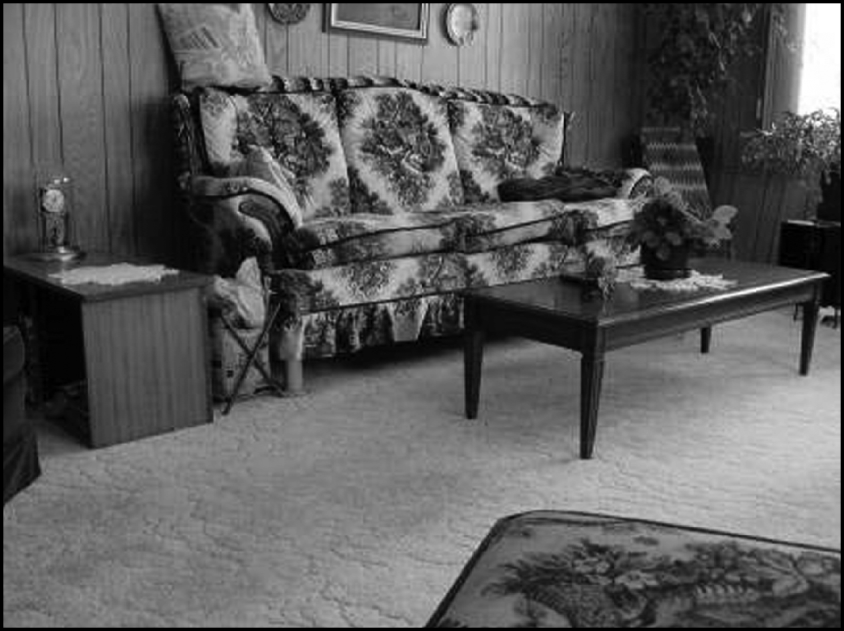
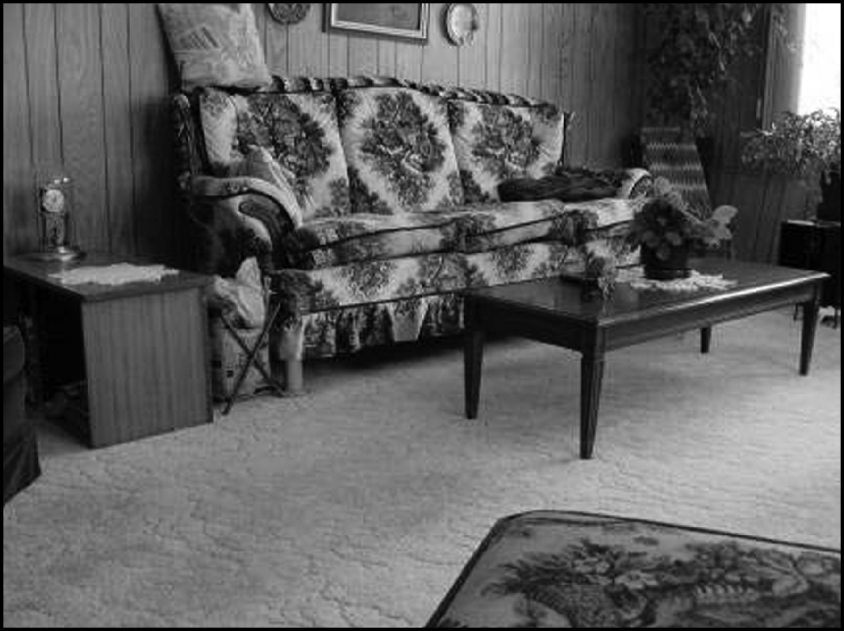
While there were many examples of environmental barriers, there were also photos to illustrate environmental adaptations that support seniors. One participant, for example, took several photographs to depict changes he made to his home so he and his wife could be comfortable after both had knee replacements. They made their own adaptations to furniture and to bathroom features by, for example, raising the couch, bed, toilet, etc. (see Figure 1). These photographs, and the related group discussion, effectively illustrated how the improvised improvements increased quality of life and enabled them to remain in their own home.
‘The couch is raised seven inches. [My wife] and I have both had knees totally replaced. Where there is a will, there is a way.’
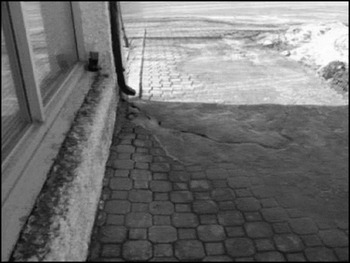
Photovoice was also a powerful mechanism for depicting a range of risks to which seniors are exposed within their community environment. In one rural community for example, three participants took photos of semi-tractor trailer trucks travelling through a main intersection in town to highlight that seniors accessing local services (such as the post office) are at risk when crossing this intersection of a main truck route and highway. Another participant took a photo of a mailman to emphasise the importance of mail service for seniors and how some mail couriers perform acts of kindness, such mailing letters for seniors when the weather is poor, which is not a universal practice in Manitoba. In all communities there were photos of sidewalk hazards, ranging from piles of snow near bus stops, icy and cracked sidewalk surfaces, to curbs that could not be negotiated by someone in a walker or wheelchair (see Figure 2).
‘While walking on dry area you feel safe, then suddenly your feet are on glare ice. Not safe for anyone.’

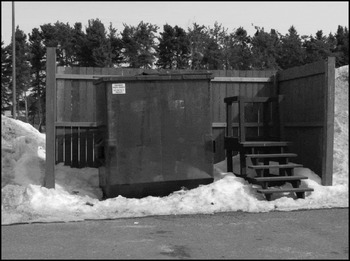
While the results indicate that it is easier to depict the physical environment, many participants found creative ways to capture less tangible aspects of life, illustrating themes such as the social environment, independence, community history, respect and participation. Participants brought their cameras indoors, shedding light on otherwise hidden aspects of their lives. These intimate portraits of seniors’ lives provided emotionally powerful material documenting a range of experiences including social isolation, family relationships and the day-to-day challenges of living alone. One participant took photographs of her house and described her attachment to the place where her children grew up, writing, ‘It's important to be able to stay in your community [and] live in your own home as long as you can manage. Your own comfort zone is here. Grandchildren visit – family grew up in the old home’. Another participant photographed the garbage bin outside of her friend's apartment, illustrating how difficult household chores can become as we age (see Figure 3).
‘Many of the garbage cans are inaccessible to seniors. My friend is 71 and cannot climb the steps, hang on for support, lift the lid and heave in her garbage. Usually has to wait for younger visitors to take her garbage out. There must be a better way!’

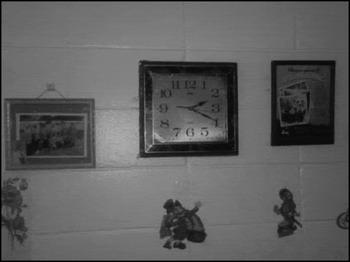
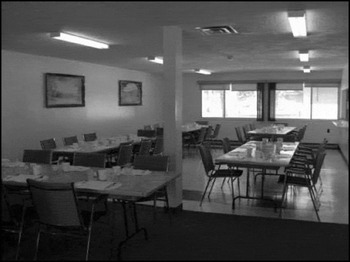
In addition to capturing personal experiences, many of the photographs referred to social issues that impact the lives of seniors. For example, one participant took photos of volunteer awards she had received. The photographs of her accomplishments were important symbols of the role of volunteerism in her life and how it had helped her to combat loneliness and stay socially engaged (see Figure 4). Another participant photographed a play structure in her neighbourhood and described the importance of intergenerational relationships. Other photographs showed seniors engaged in various social activities illustrating a range of opportunities for active living and life-long learning. Similarly, photos of congregate meals prompted a group discussion about the roles of both nutrition and social opportunities in relation to the wellbeing of older persons (see Figure 5).
‘Volunteering got me out [of the house] – looking forward to going out … I got myself into a shell.’

Although photovoice technique might emphasise the physical environment, the use of visual imagery highlighted the relationship between social participation and the physical environment. Photographs of stairways, ice-covered sidewalks and heavy doors provided visual evidence of social exclusion while pictures of ramps, automatic doorways and elevators advocated for the elimination of barriers. Because photovoice enables participants to document their points of view in a variety of settings, the results reflected the diversity of seniors’ social and material worlds.
‘Congregate Meal Program. Seniors can have a home-cooked meal at noon. Monday to Friday in the company of others. Reasonably priced as well. It is often difficult for seniors to cook healthy, nutritious meals for themselves. Both the food and the fellowship are important for good health.’

Participatory process
Photographs and commentary provided a starting point for a focused and nuanced discussion of age-friendly community features. Participants moved through their communities and highlighted issues that may not be evident to non-community members or more youthful members of the community. In some cases, the photos and commentary from the group revealed divergent opinions related to community resources. For example, in one rural community, some participants felt there was a shortage of physicians, while others contested that the local hospital and health-care facilities attracted more physicians compared to neighbouring communities. In other cases the discussion allowed for information to be clarified during the exchanges within the group. Typical of the photovoice technique, individual participants were able to become conscious of, and even critical of, their personal perceptions (Wang and Redwood-Jones Reference Wang and Redwood-Jones2001) and, by extension, critical of their community. For example, during a discussion of social activities for older adults, a member of the group pointed out that they could not afford the cost of a group outing organised by a senior centre. This led the group to conclude that social activities should be affordable for everyone.
The presentation of photographs and commentary ensured that each participant's perspective was included in the focus group. By showcasing their photography, those who were less vocal were still able to contribute to the group dialogue. For those seniors who were unfamiliar with the use of digital camera technology, there was clearly a sense of mastery by the end of the project as reflected in the requests from members wanting to purchase the same camera for personal use.
Each discussion group culminated in a negotiation within the group as to what issues needed to be addressed to improve the local community and make it more age-friendly. Given the amount of data accumulated through photographs, journals, interviews and focus groups, it was necessary to develop a list of key themes to guide data analysis. In one community, for example, key issues identified included: senior's housing, transportation, access to medical services and community-based care, traffic safety and sidewalk accessibility. The research team produced a report for each community based on their list of priorities and distributed it to community leaders and organisations chosen by participants. The collaboration between participants and researchers ensured that the research findings were relevant to local seniors and appropriate to the community setting. The reports summarised the priority areas identified by participants (using photographs to illustrate priorities), with the intention to raise awareness about the issues facing seniors and advocate in favour of improving the age-friendliness of each community. Indeed the ultimate goal of photovoice is to empower participants to express their needs and be more actively involved in decision-making (Jurkowski and Paul-Ward Reference Jurkowski and Paul-Ward2007).
Issues: photovoice in the field
Journals and interviews
Journal entries provided a description and interpretation of each photograph, and facilitated participant recall during the interview process. Reviewing incomplete journals with participants is critical given that it is extremely difficult, if not impossible, to infer what participants mean without their written or oral commentary. Without written commentary, for example, we would not know the meaning behind the photograph of the volunteer award (see Figure 4). If it is not possible to obtain journal entries, interviews should be conducted shortly after the photographs are collected to maximise participant recall. In-person interviewers were advantageous because the interviewer and participant examined the photographs and journals together, facilitating discussion and ensuring the correct ordering of photographs. If this is not feasible due to distance, as was the case for two communities in our study, then the telephone is a good alternative. Either way, the interview provides critical information, especially for participants with limited literacy.
Use of cameras
Two concerns arose in terms of the choosing cameras: (a) possible problems with finger dexterity; and (b) potential lack of familiarity with the use of cameras. The research team selected two cameras to facilitate use. Instructions were developed and written in large 14-point size Arial bold font and diagrams drawn to illustrate aspects of camera use. The written directions and the ease of camera use were tested with an 80-year-old volunteer. The camera model with the larger viewing screen was preferable for those with poorer vision. One camera model had a screen and viewfinder (hole to peer through when setting up the photo) that could be used more effectively for those with tremors in their hands. In addition to the detailed instructions for camera use, all settings were identical on each camera (e.g. pixel setting, autofocus, red-eye removal, etc.) and explained briefly to participants so they would be less likely to accidentally alter them and affect the quality of photos taken. In the end all cameras from all 30 participants gave high-quality photographs.
Many seniors were concerned about using cameras and were unfamiliar with the technology. Older women were more likely to express doubt about the use of digital cameras. Considerable time was devoted to ensuring that each person was comfortable using the camera. Oftentimes, initial reluctance to use a digital camera turned into enthusiasm to learn a new skill. There was one research team member to three or four participants so each could have individual attention when learning to use the camera.
Some older adults asked if they could be accompanied by someone to take the photographs. This was a necessary option, especially given the challenges posed by the winter weather. Research team members were available to accompany participants with the proviso that the participant was in charge of the ideas captured in the photographs. Ensuring that someone from the research team is available to aid participants allows seniors with limited mobility to participate and contribute to the study.
Ethics
The consent form required by our institutional Research Ethics Board was five pages long. There was significant detail related to taking of photographs of identifiable people, cautions about taking risks to get a photo (e.g. climbing over snow banks), and a requirement that each participant sign an oath of confidentiality regarding information shared by other participants within the group. The consent process, in addition to the usual information related to costs, benefits, confidentiality and anonymity of data may have fostered some anxiety. Because the forms were sent out in advance to allow participants time to read the document, it is possible the legalistic style and length resulted in some withdrawals. In a few instances, potential participants declined once they received the consent form in the mail. While there is no obvious solution to this challenge, it does highlight the importance of clearly communicating the reasoning behind ethical protocols, and preparing potential participants for them at the time of screening for participation. Researchers may consider discussing these issues with their Research Ethics Board and request permission to use simplified consent forms.
Participants were particularly concerned about obtaining consent from identifiable people in photographs or the parents of any minors depicted. These ethical procedures are at the core of photovoice training (Wang and Redwood-Jones Reference Wang and Redwood-Jones2001). Reluctance on the part of some older persons to ask permission, and to have others sign forms, was discernible. At the conclusion of the project, only 8 per cent of photos had identifiable people in them; only 19 consents were obtained, out of a total of 393 photos. The groups were later asked about the lack of photos with identifiable people and the lack of completed consent forms. Participants expressed concern that others may be uncomfortable with the formality of it. In other cases, the participants felt that the people within the photos were friends and verbal consent ought to be adequate.
To address the issues of outstanding consent forms, we requested participants to retrieve consents retroactively, and provided them with stamped and addressed envelopes. This worked in a few cases. If the photograph captured something other than the people in it, we cut out the images of identifiable people and used the cropped picture. For the remaining photographs, we recorded descriptions of the photos and included the ideas behind the photographs in the group presentations and project results.
Participant safety
In two communities the issue of taking photos of community businesses was raised, particularly in the context of taking photos depicting accessibility problems. In one locality, the group decided that participants had the right to take photos of the exterior of public buildings. In one of the rural communities, participants expressed anxiety about being seen taking photos of businesses or services and being challenged by the owner, particularly if the photo was to illustrate something not age-friendly. This prompted discussion with some diversity of opinion emerging among the seniors. Some felt such depictions highlight issues to address within the community; others were concerned about the personal ramifications of offending a fellow community member. The research team response was that participants were not to take any type of personal risk (including offending a local community member) that might induce anxiety or fear of social consequences. The earlier work of Wang and Redwood-Jones (Reference Wang and Redwood-Jones2001) asserts that researchers must take an ethical stance maintaining that that the safety of participants always takes precedence over capturing an image; this was applied here in the context of social safety. In one group, members went on to discuss how a notion such as inaccessibility might be captured in multiple ways without, for instance, showing the name of a business that does not have a ramp. Some participants chose to showcase examples of accessible buildings, photographing ramps, and wide, automatic doors, while others focused on an inaccessible feature of a building, excluding identifiable information.
Issues of time and distance
There were several practical issues that presented challenges throughout the research process. The most significant challenge related to conducting the study during the winter in the Canadian prairies. Temperatures in the −20 to −30°C range and the flu season required extending the timeline for taking photos. In one community, the last cameras were collected 11 weeks after distribution. The general challenge of recovering all distributed cameras in photovoice research is documented elsewhere (Jurkowski and Paul-Ward Reference Jurkowski and Paul-Ward2007). Concerns that participants may have difficulty recalling the meaning of their photos were unfounded, however, perhaps because the journals acted as prompts to memory.
In remote communities, the community-based liaison played a critical role. In addition to facilitating recruitment, they addressed problems with camera usage and batteries, collected cameras and journals, and sent them to the research team, checked in with hard-to-reach participants, and generally acted as a liaison between the university and the community.
Participants
Individual selection
The nature of the photovoice process is likely to introduce a selection bias. This bias may be particularly strong in a study with older adults, as participants need to be able to attend and participate in group meetings, and also be physically able to manipulate a small digital camera. This can introduce bias towards healthier, younger individuals. Assuring participants that assistance is available for taking photographs may encourage seniors with limited mobility to join the study. However, this can be costly and time-consuming. It is also possible that the researcher will bias the data collection process. The participant should determine what images to capture and describe the significance of each photo in their journal. To reduce the possibility of bias, research assistants showed participants each photograph and asked them to approve it before moving on to the next one.
One observation made by the team over the period of recruitment was that several potential female participants were self-deprecating, stating that other people would be better able to contribute to the study. Photovoice research, however, has often been conducted with women and with those in vulnerable positions (Booth and Booth Reference Booth and Booth2003; Jurkowski and Paul-Ward Reference Jurkowski and Paul-Ward2007; Wang and Burris Reference Wang and Burris1997; Wang, Cash and Powers Reference Wang, Cash and Powers2000). The response of the study team was to emphasise the value of each person's everyday experiences in the community and offer considerable encouragement.
Husband and wife teams
At the onset, local facilitators were asked to recruit individual seniors, and not couples, as we wanted to capture individual perceptions and experiences. During the screening and the information sessions the importance of individual perspectives were emphasised as well as our intention to capture gender differences. Ultimately, however, three couples were recruited and while they were given separate cameras they essentially worked together as a team. One couple went out as a team to take the photographs. The female spouse led the discussion of photos during the interview with the couple while her husband acted in a ‘complementary manner’ (Racher, Kaufert and Havens Reference Racher, Kaufert and Havens2000), offering support and additional commentary to explain their shared perspective. The perspectives of each spouse could not be separated as the photos were jointly taken. In another case, a husband and wife split the photos on a single camera – each took six – and took them independently. How to deal with couples is an issue that researchers need to consider; and while it can create some challenges, the recruitment of a spouse into the study seemed important to some of our participants in order for them to feel comfortable participating. Important insights might have been missed by excluding a spouse from participating.
In considering the broader notion of elderly couples research, interesting insights emerged when one participating couple illustrated how they might age together within their community through photos of the local personal care home. They were still living in their own home at the time. In another case, one of the participants took photos in consultation with his wife who was not a participant but had mobility issues; his photography illustrated the challenges they face as a couple remaining in their home. These results indicate the potential value in pursuing research using conjoint photo-interviewing techniques with elderly couples to expand our understanding of ageing and relationships.
Conclusions
Employing a participatory methodology, the study was based on the assumption that community-based older persons have the ability to assess their community's strengths and shortcomings, as well as to brainstorm problem-solving strategies at a local level. This was accomplished over the three to four months that local seniors were engaged in the project. At the conclusion of the research, the participating seniors had not only critically evaluated their community's age-friendliness, but had collectively identified priorities for action. All four communities are now in a position to move this agenda forward through processes identified by participating seniors.
Seniors appeared to appreciate the opportunity to take photos and talk about their lives, especially once key concerns about the research were clarified. The most common concerns were pragmatic ones that could be processed within the group itself, such as: concerns about how to get help with using cameras; concerns about how to avoid or respond to challenges from other community members; what types of photos were suitable; and getting help to take photos in inclement weather. What posed a greater challenge for the research was the issue of participants obtaining consents from people in photos. It is possible that participants themselves did not anticipate how uncomfortable they would feel getting the consents. This issue should be probed in more detail when project goals are discussed and cameras distributed.
The use of photography achieved the study goal of identifying age-friendly characteristics or barriers; many photos offered evidence of challenges faced by seniors every day. The physical environmental factors during the winter season were particularly powerful and self-evident. The act of journalling as part of the photovoice research was critical in clarifying the meaning of photos and their relationship to the overall notion of age-friendliness under study.
Group discussions explored some of the less tangible aspects of an age-friendly community, such as the social environment. These discussions elicited a variety of opinions, and in many instances the group arrived at a consensus view of the importance of a specific issue for seniors, or the barriers to addressing issues at a local level. Through a collective process, participants identified priority issues within their communities. These issues were developed into recommendations that were distributed within each community. Priority issues were also incorporated into a coding scheme that was used to analyse the data. This collaborative process allowed participants to determine the focus of research findings and policy recommendations.
This photovoice study recorded older persons’ perceptions of the age-friendliness of their communities in a way that can be communicated to decision makers. The summaries that are now being circulated within the participating communities contain not only age-friendly commentary and priorities for action but also illustrative photos taken by participants. The use of visual imagery to feature a problem can be particularly empowering and effective in communication – and is potentially perceived as a more objective representation than written testimonials. While tracking the actual effects of photovoice on policy and programme decisions is challenging (Catalani and Minkler Reference Catalani and Minkler2010; Wang et al. Reference Wang, Morrel-Samuels, Hutchison, Bell and Pestronk2004), the study gave voice to the collective concerns of older citizens and encouraged seniors to become active stakeholders in their community's development.
Acknowledgements
The Age-Friendly Community–University Research Alliance (CURA) is funded by the Social Sciences and Humanities Research Council of Canada (SSHRC). Verena Menec holds a Canada Research Chair in Healthy Aging.