Introduction
Cognitive impairment is a central feature of psychotic illness, which adversely affects socio-occupational functioning and life quality generally (Nuechterlein et al. Reference Nuechterlein2011). Deficits typically appear in attention, declarative memory, and higher order problem solving (Bora and Murray, Reference Bora and Murray2014). Speed of processing, working, and long-term memory may also be adversely affected; capacities that are essential for education and working life (Nuechterlein et al. Reference Nuechterlein2011). These deficits often appear prior to illness onset and typically persist over time to cause much of the disability associated with the disorder, while also impairing functional recovery. Of importance, the cognitive symptoms of psychosis do not respond well to antipsychotic medications (Green et al. Reference Green2000), and other pharmacological approaches aimed at resolving these deficits have been largely ineffective (Keefe et al. Reference Keefe2013). Indeed, antipsychotic medication has been implicated in gray matter volume losses (Fusar-Poli et al. Reference Fusar-Poli2013), while other psychological approaches (e.g. cognitive remediation therapy) have only small–moderate benefits (Wykes et al. Reference Wykes2011), and do not target somatic health.
Physical inactivity is another common feature of psychosis, with most falling well below the minimum activity levels recommended for general health (Vancampfort et al. Reference Vancampfort2017). This is problematic as regular exercise – a structured subset of physical activity, engaged in to improve physical fitness (Caspersen et al. Reference Caspersen, Powell and Christenson1985) – has neurobiological effects shown to benefit both general and clinical populations (Portugal et al. Reference Portugal2013; Schuch et al. Reference Schuch2016; Vakhrusheva et al. Reference Vakhrusheva2016). Neurodegeneration in first-episode psychosis (FEP) is tied to low brain-derived neurotrophic factor (BDNF) (Mondelli et al. Reference Mondelli2011) and high inflammation (Cotman et al. Reference Cotman, Berchtold and Christie2007), both of which can be targeted through physical exercise. In addition to improving physical fitness, exercise may also assist in the prevention and management of overweight and obesity (CDC, 2018). Moreover, exercise affects the hypothalamic–pituitary–adrenal axis in humans, which in turn modulates stress reactivity (Hamer et al. Reference Hamer, Boutcher and Boutcher2007). A recent meta-analysis of randomized controlled trials (RCTs) by Firth et al. (Reference Firth2018) showed that the positive effects of exercise on hippocampal volume in humans are not attributable to exercise increasing brain volume per se, but rather due to exercise preventing neurodegeneration which occurs over time in the human hippocampus (Firth et al. Reference Firth2018). This may have particular relevance to FEP, as much of the reduced brain volume associated with long-term schizophrenia is apparent from the first few years after illness onset (Ellison-Wright et al. Reference Ellison-Wright2008). Thus, the cognitive benefits of exercise may be most pronounced and sustained in FEP, when using exercise to prevent/attenuate the neuroprogression, which occurs at this early stage of illness (Kolenic et al. Reference Kolenic2018). Indeed, the neurobiological mechanisms that cause hippocampal volume to deteriorate during FEP, such as heightened inflammation and reduced BDNF (Mondelli et al. Reference Mondelli2011), can both be feasibly targeted through exercise (Cotman et al. Reference Cotman, Berchtold and Christie2007; Kimhy et al. Reference Kimhy2015).
Despite being an optimal intervention period, few studies have explored the feasibility and effects of exercise in young adults with FEP. Moreover, despite suggestions that there may be some improvement in FEP recovery, many patients remain impaired by cognitive deficits; thus, effective new interventions are needed (Lally et al. Reference Lally2017). A meta-analysis of aerobic exercise for schizophrenia identified only 10 controlled trials – all published during the past 7 years – reporting cognitive outcomes following exercise interventions (Firth et al. Reference Firth2016a). The review found that the exercise significantly improved global cognition (g = 0.33, 95% CI 0.13–0.53), and the effect size in the seven randomized studies was moderate (g = 0.43, p < 0.001). Greater amounts of exercise were associated with larger improvements in global cognition and the domains of working memory, social cognition, and attention/vigilance. However, effects on processing speed, verbal memory, visual memory and reasoning, and problem solving were not significant, although some analyses were limited to only three studies (Firth et al. Reference Firth2016a).
While a small number of trials have demonstrated cognitive benefits of aerobic exercise in FEP (Nuechterlein et al. Reference Nuechterlein2016; Firth et al. Reference Firth2016b), another limitation is that few trials have examined the effects of resistance training on cognitive function, even though this exercise modality appears to have strong effects on negative symptoms (Cooney et al. Reference Cooney2013). Indeed, a recent review based on two trials found that strength training involving several large muscle groups significantly improved muscle strength and psychopathology (Keller-Varady et al. Reference Keller-Varady2017). Combined aerobic and strength training is recommended for general health (Garber et al. Reference Garber2011), and a recent RCT of resistance training for schizophrenia found significant increases in BDNF (Silva et al. Reference Silva2015), a protein active in the hippocampus, cortex, and basal forebrain – areas vital to learning, memory, and higher cognitive function.
The aim of ‘FitForLife’ was to assess the feasibility of a supported 12-week circuit-training program in young adults with FEP, and to explore the effects on cognitive functioning. A priori, we proposed to examine possible gender differences in exercise participation levels and exercise effects on cognition.
Method
Setting and participants
Participants were recruited from three specialist outpatient units for young adults (aged 18–45 years) with FEP as defined by the International Classification of Diseases, 10th Edition (ICD-10). Located in Stockholm, the clinics deliver need-based care provided by a multi-disciplinary team, with the aim of maximizing patient autonomy and life quality. The majority of patients have schizophrenia. Various interventions are offered, including counseling support, medication, and psycho-education. Clinical staff specialized in psychiatry, psychology, social work, nursing, and occupational therapy. To optimize recruitment and external validity, all new and existing outpatients at each of the clinics were invited to participate. This included all registered patients with a diagnosed psychotic disorder who provided informed consent. Exclusion criteria: Patients with contraindications to physical exercise (e.g. high blood pressure, current or recent treatment for heart disease, uncontrolled diabetes), or musculoskeletal injuries that made exercise difficult or unsafe, and pregnant women were excluded from the study. A psychiatric nurse screened participants individually using a health questionnaire developed by the Swedish School for Sport and Health Sciences. All diagnoses were taken from the patient's file and were made by the treating clinician.
Study design
To evaluate the feasibility of circuit training in FEP, and to explore how adherence relates to cognitive benefits, we adopted a single-arm pre- to post-intervention study design. Thus, in the present study, all participants received usual care for psychosis (medication and psychosocial support), plus a 12-week supported exercise intervention, described below. Anti-psychotic medication use remained stable throughout the trial. A qualified psychiatric nurse and psychologist conducted all patient assessments before and shortly after the exercise intervention. The study has received ethical approval by the Regional Ethics Review Board, Stockholm, number 2015/808-31/2. The trial is registered prospectively with German Clinical Trials Register: DRKS00008991. Informed consent was obtained from all participants prior to inclusion.
Procedure
Participants were made aware of the study through posters displayed in each of the outpatient clinics, and through discussions with the staff. A designated nurse acted as project coordinator to answer any questions. Interested patients were initially referred to the coordinator, who performed a brief screening interview to determine eligibility. Suitable patients were invited to participate in the trial, informed consent was obtained, and a comprehensive baseline assessment completed. All participants were provided clear and comprehensive information about the trial. A study website (FitForLife2016.se – now closed) was developed for use by the participants, displaying information about the training facilities, and the weekly training schedule (times, dates, and location). Participants were encouraged to attend at least three supervised training sessions per week. If this was not feasible, less frequent attendance was also encouraged. Participants could schedule their weekly training by logging into the website, or by calling the project coordinator. During the final week of the trial, participants were contacted to schedule a follow-up assessment and fitness test. To ensure that the fitness test did not interfere with the cognitive assessment, the two tests were always scheduled on separate days, but usually within the same week. A forthcoming paper will present data on the fitness test results.
Measures and assessments
The following domains were assessed at baseline and follow-up (post-intervention): participant demographics (baseline only; taken from patient files where available); diagnosis and psychiatric service utilization history, including years since first contact with psychiatric services, number of psychosis-related hospital admissions, number of legally enforced admissions, alcohol use (Alcohol Use Disorders Identification Test – AUDIT), and substance use (from blood and urine tests).
Cognitive functioning (primary study outcome)
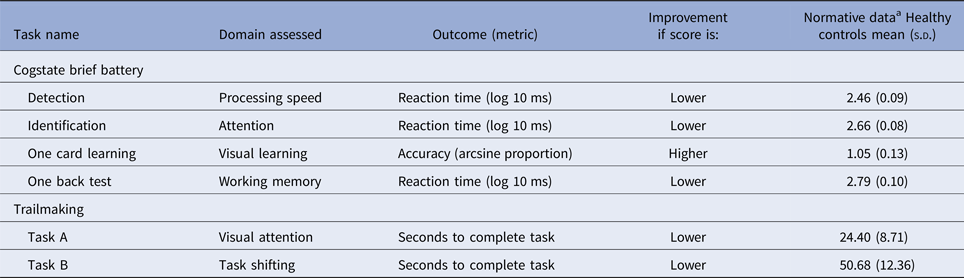
Assessed using the Cogstate Brief Battery (CBB) (Maruff et al. Reference Maruff2009), which includes four domains: (1) processing speed using the ‘Detection Task’ to measure speed of performance, where lower scores indicate better performance; (2) attention using the ‘Identification Task’ to measure speed of performance, where lower scores indicate better performance; (3) visual learning using the ‘One Card Learning Task’ to measure accuracy of performance, where higher scores indicate better performance; and (4) working memory using the ‘One Back Task’ to measure accuracy of performance, where higher scores indicate better performance. The CBB takes approximately 12 min to complete. The Trailmaking A (visual attention) and B (task shifting) tests were also included (Bowie and Harvey, Reference Bowie and Harvey2006). Two outcomes are recorded; time to completion in seconds and the number of correct responses (accuracy). A summary of the cognitive assessments is shown in Table 1, which includes normative data for the CBB and Trailmaking tasks. The test–retest reliability of all tests in the CBB has been demonstrated in a range of studies across both young and older adult samples, ranging between 0.74 and 0.93 (Lim et al. Reference Lim2013; Cromer et al. Reference Cromer2015). A full description of the CBB is available as online Supplementary material. Details of the scoring procedures can be found elsewhere (Cogstate, 2017).
Summary of cognitive tasks used in the study and normative data

a Normative data provided by Cogstate on request (info@cogstate.com) based on adults aged 18–34 years. Trailmaking data retrieved from (Tombaugh, Reference Tombaugh2004), based on adults aged 25–34 years.
Exercise intervention
Training sessions were designed and supervised by exercise science graduates from the Swedish School for Sport and Health Sciences (GIH) under the supervision of an exercise physiologist. The School has extensive experience developing training protocols for groups with diverse health conditions. Sessions were conducted at either the GIH in a gymnasium (approximately 150 sq/m) containing resistance-training equipment, and areas designated for aerobic training and stretching, or at an outpatient health clinic (‘Serafen’) with a designated exercise room and similar equipment. The supervised classes were available 5 days per week (Monday to Friday) in the late afternoon and early evening during the 12-week intervention. Consistent with the WHO/ACSM recommendations for general health, participants were encouraged to attend at least three sessions each week. In practice, however, trainers were also aware that some participants would not manage to achieve this frequency of exercise due to the psychosocial and cognitive deficits associated with the disorder, which often manifest as impaired organizational skills.
Exercise sessions consisted of circuit training for about 1 h. Participants moved sequentially between 8 and 10 ‘stations’, training at each station continuously for 45 s with a short recovery between exercises. In total, three circuits were completed. Exercises included shoulder presses, dumbbell-curls, machine bench-press, leg-press, core-stability, and balancing movements using sports balls, and at least one aerobic activity. All sessions commenced with a 5–10 min warm-up, 45 min of circuit training with an emphasis on high-volume resistance exercises, and finished with a 5–10 min cool-down/stretch. For variation, participants could also choose to power walk for 45–60 min through a partly forested area around the School. In practice, however, only five participants chose this training modality and their attendance was minimal (1–2 sessions each). Thus, we regard circuit training as the primary intervention.
Exercise intensity was self-selected, however, as most participants were sedentary with little exercise experience, they were encouraged to build up to a subjectively ‘moderate’ intensity of exercise that could improve strength and/or fitness. Three participants (two males, one female) were invited to be trained as informal mentors. They received additional coaching (2–3 h) in the exercises used and techniques to increase participant motivation. Participants who did not attend scheduled sessions were contacted by trainers the same day and encouraged to continue. All participants were instructed to report any injuries sustained during the trial to one of the trainers.
Statistical analysis
Baseline differences in participant characteristics were examined using χ2 tests for categorical outcomes and analysis of variance for continuous outcomes. To assess the effect of exercise frequency on cognitive outcomes, data were stratified by exercise level (no exercise, 1–11, and ⩾12 sessions) and gender. A cut-point of 12 or more exercise sessions was chosen as this level of participation indicates some regularity (approximately once per week). The same cut-off was also used in a recent Swedish study of exercise for depression (Hallgren et al. Reference Hallgren2016b). Pre- to post-intervention (within-group) analyses were performed using paired-sample t tests, with effect sizes (Hedges’ g) calculated for statistically significant values. To examine the effect of exercise frequency on cognitive outcomes, between-group analysis of covariance (ANCOVA) was performed by comparing differences in post-test cognition scores as follows: (a) no exercise v. ⩾1 session and (b) 1–11 v. ⩾12 sessions. The baseline cognition score was included as a covariate in each model. In addition, a series of bivariate correlations were performed (Pearson r) to assess the association between the change (post-test minus pre-test) in each cognitive outcome and the number of exercise sessions completed. Participants who did not complete any sessions were removed from the analyses. Parametric test assumptions were checked before running all analyses. Specifically, normality was assessed using the Shapiro–Wilks test and normal probability plot, and homogeneity of variance using Levene's test. For analyses involving unequal sample sizes, Welch's test was also considered. All analyses were performed using SPSS 22.0 and were two-tailed. For this feasibility study, p values of <0.05 were considered statistically significant.
Results
Participant characteristics
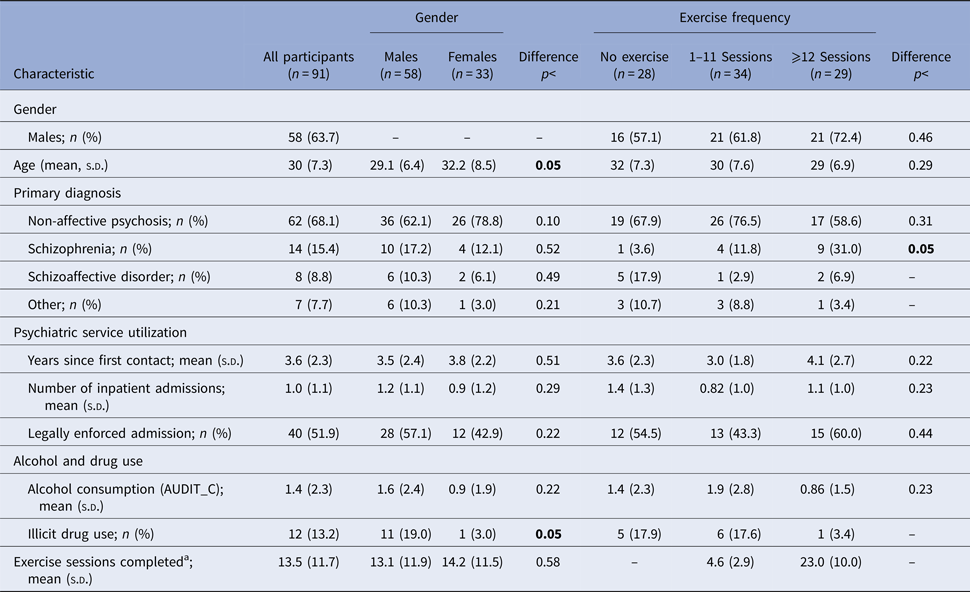
In total, 94 registered outpatients expressed interest in the trial and agreed to participate. There were no exclusions based on contraindications for exercise. Three did not attend the baseline assessment and dropped out of the trial due to practical reasons when they were informed about the location of the training facility. Thus, the baseline sample consisted of 91 participants with useable data, of which 58 (68%) completed a follow-up assessment (all had completed one or more exercise session). Participant characteristics are shown in Table 2, stratified by the frequency of exercise attendance (none, 1–11, ⩾12 sessions). Sixty-five percent of the participants were male with a mean age of 30 years (s.d. = 7.3); thus, the sample was marginally older than many FEP populations, where symptom onset frequently commences in the late teens to early 20s. This difference is likely attributable to two factors; first, the pathway to care may have been delayed for some patients due to perceived stigma or reluctance to seek specialist treatment. Second, many patients initially contact outpatient psychiatric services during the prodrome phase of illness before the onset of frank psychosis. The most common primary diagnosis based on ICD-10 criteria was non-affective psychosis (69%), followed by schizophrenia (14%), and schizoaffective disorder (8%). Seven percent had another primary diagnosis co-existing with psychosis (e.g. substance dependence, obsessive–compulsive disorder). Twelve percent indicated current or recent illicit drug use (e.g. cannabis) assessed through patient reports and/or screening (blood, urine). Alcohol consumption measured by AUDIT C was lower than the Swedish adult population (Ahlin et al. Reference Ahlin2015). Baseline characteristics were evenly distributed across the three exercise frequency groups, with the partial exception of diagnosis, where a higher proportion of patients with schizophrenia were found in the two exercise categories (1–11 and ⩾12 sessions). Female participants were slightly older than males at baseline (32 v. 29 years), and males had a significantly higher frequency of illicit drug use (19% v. 3%).
Participant characteristics
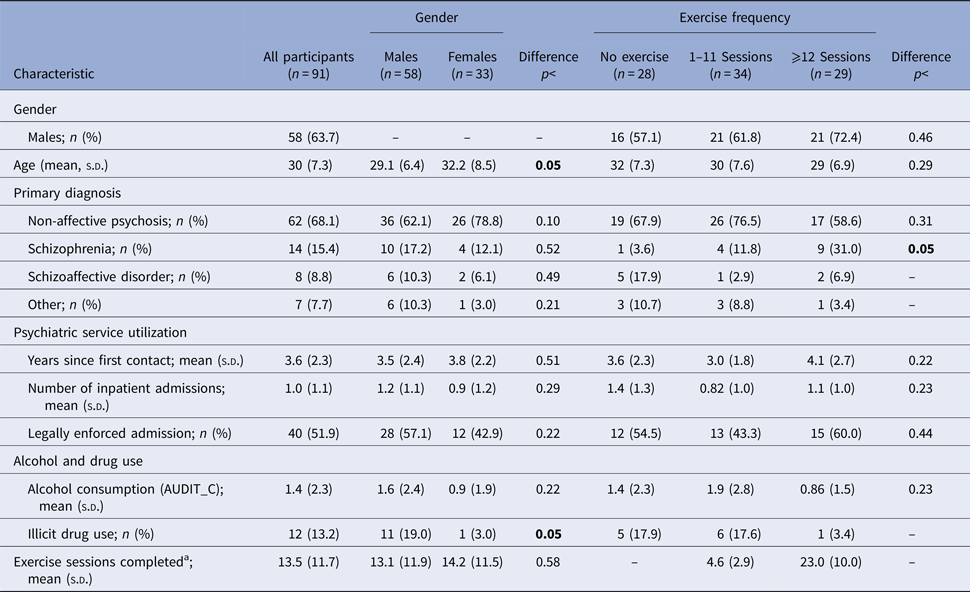
Bold values indicate statistical significance.
a Number of exercise sessions completed based on n = 71 (one session or more).
Exercise adherence
Twenty participants (22%) did not attend any exercise sessions during the trial. The mean number of exercise sessions completed in the total sample of 71 participants who commenced the intervention was 13.5 sessions (s.d. = 11.7) over the 12-week period. Thirty-four participants (48%) completed 12 or more sessions. The total number of sessions completed by males (mean = 13.1, s.d. = 11.9) and females (mean = 14.2, s.d. = 11.5) was not significantly different.
Effects of exercise frequency on cognitive functioning
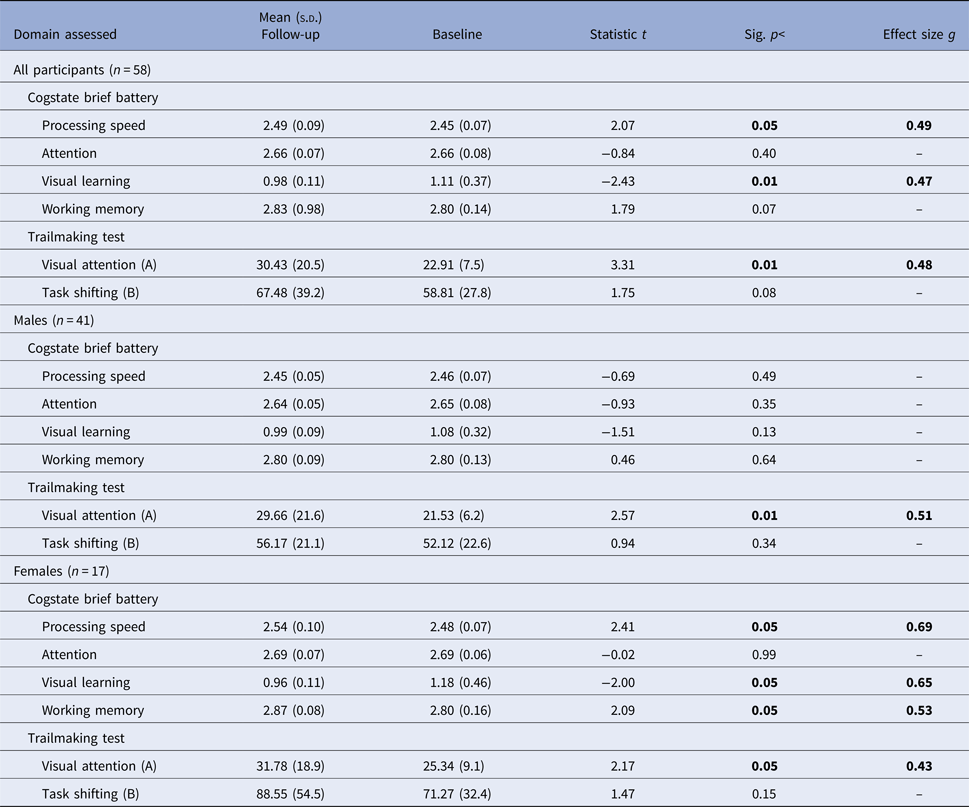
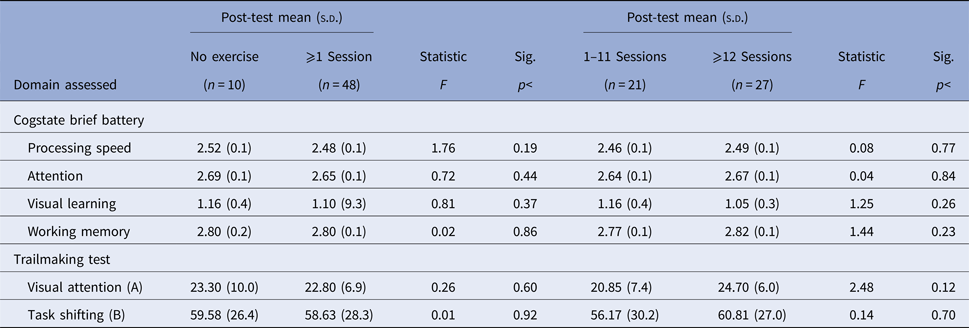
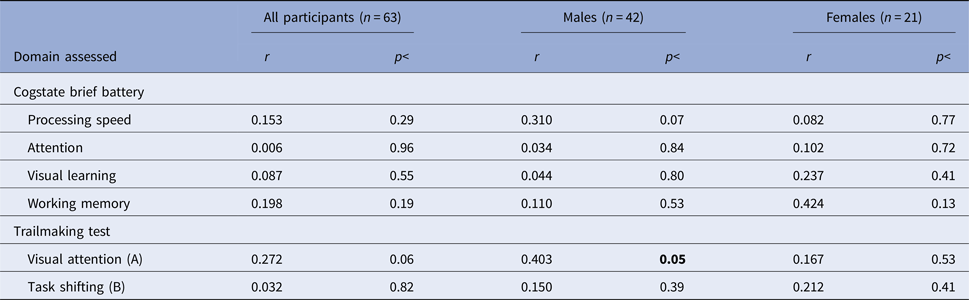
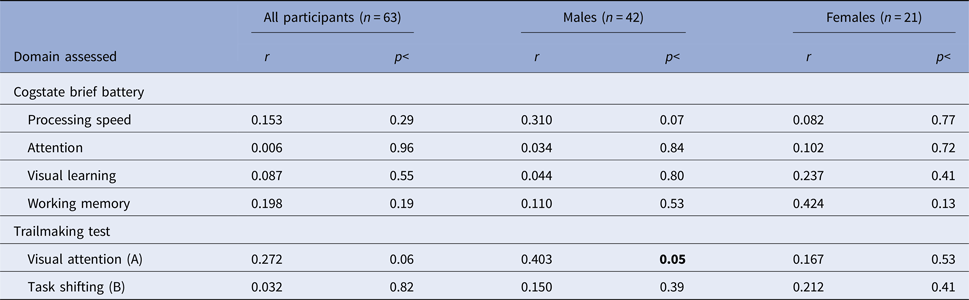
In the total study sample, within-group comparisons indicated significant improvements for processing speed, visual learning, and visual attention with small-to-moderate effect sizes (Hedges’ g = 0.47–0.49) (Table 3). A positive non-significant trend was also observed for working memory (p < 0.07). Stratified within-group analyses indicated a moderating effect of gender. Positive changes were seen among females only for processing speed, visual learning, working memory, and visual attention with moderate effect sizes (g = 0.43–0.69) (Table 3). Between-group analyses (ANCOVA) comparing (a) no exercise participation with ⩾1 session and (b) 1–11 sessions with ⩾12 sessions revealed no statistically significant effects of exercise frequency on any cognitive outcomes (Table 4). A significant bivariate correlation was found between exercise frequency and improvement in visual attention for males only (r = 0.40, p < 0.05) (Table 5). In the pooled analyses (males and females combined), a positive trend was seen on this outcome (p < 0.06).
Within-group changes in cognitive functioning
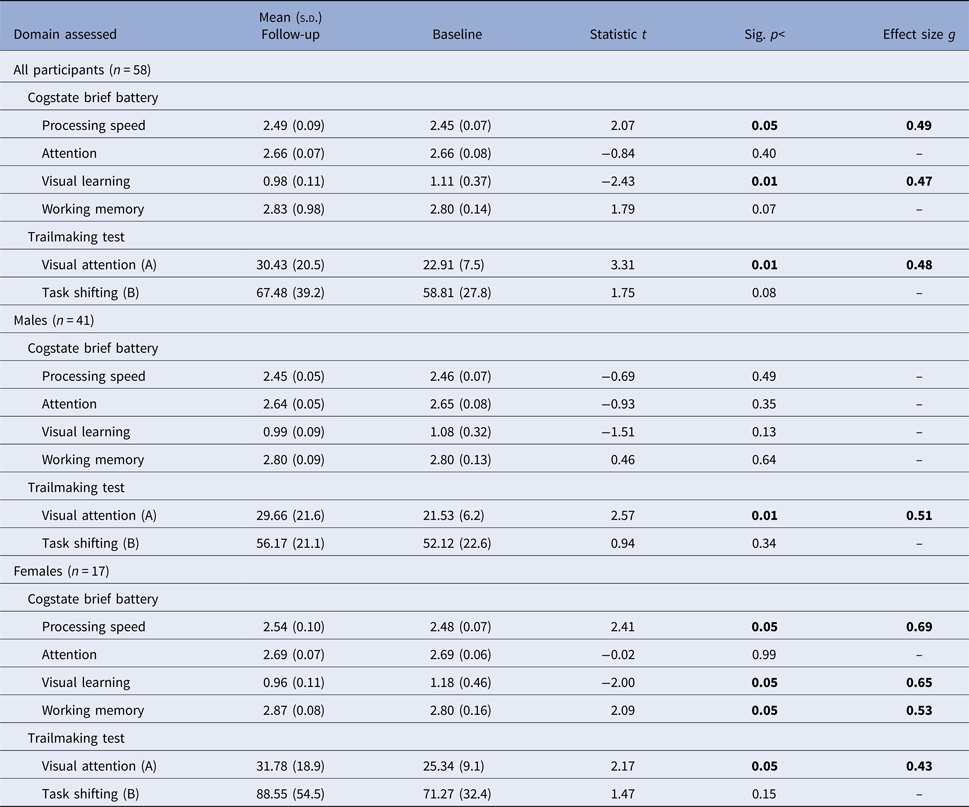
Bold values indicate statistical significance.
Effects of exercise frequency on cognitive functioning
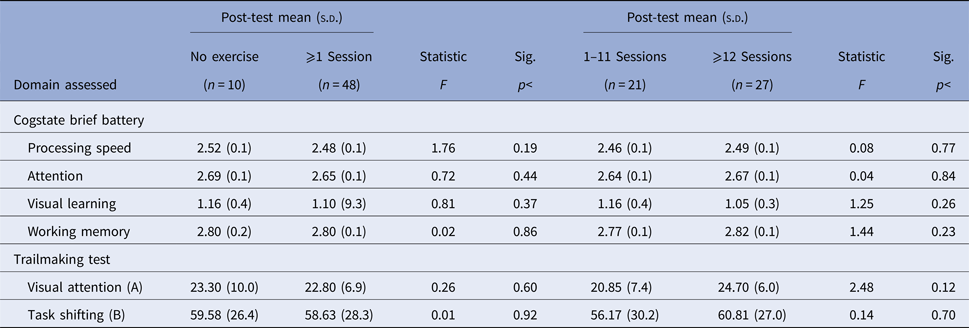
Table shows results from between-group ANCOVA models. Effect sizes not shown as no comparisons were statistically significant.
Bivariate correlations of the change in cognitive functioning and exercise frequency
Bold values indicate statistical significance.
Analyses exclude those who did not complete any exercise sessions.
Discussion
The treatment potential for exercise in psychosis is large because most patients are sedentary and have pronounced cognitive deficits. Structured exercise is an attractive treatment option as anti-psychotic medication may contribute to cognitive decline and poor cardiometabolic health (Vancampfort et al. Reference Vancampfort2015; Correll et al. Reference Correll2017), while psychological interventions do not directly address the substantial somatic health issues associated with FEP. Our findings indicate that a supported exercise intervention involving circuit training is a feasible and safe adjunct treatment for young adults with FEP. Seventy-eight percent of participants completed one or more exercise sessions, with almost half of these attending 12 or more sessions, indicating that it is possible to motivate young adults with FEP to exercise regularly. No adverse events were reported during the trial. Exercise adherence was sub-optimal (participants were encouraged to attend three sessions per week, 36 in total), but comparable to the level of participation achieved in a recent RCT (n = 945) of exercise for depression in Swedish adults (Hallgren et al. Reference Hallgren2016b). Reasons for sub-optimal adherence include that some participants found the two training locations inconvenient, struggled with ongoing motivation, or had difficulties organizing their daily routines. Three patients withdrew due to symptoms requiring inpatient admission. Given that most participants were previously sedentary, and considering the inherent planning difficulties these patients experience, our findings remain promising. The drop-out rate from the study was 22%, which is slightly lower than the pooled drop-out rate reported in a recent meta-analysis of exercise trials in schizophrenia (26.7%) (Vancampfort et al. Reference Vancampfort2016). Moreover, although regular exercise is recommended (3–4 times weekly) (Garber et al. Reference Garber2011), less frequent exercise has also been associated with clinically relevant improvements in mental health (Hallgren et al. Reference Hallgren, Vancampfort and Stubbs2016a, Reference Hallgrenb).
Previous studies of FEP have demonstrated pervasive cognitive deficits across a range of domains, including reduced short-term memory, slow processing speed, poor attention, and impaired comprehension of social situations (Rodriguez-Sanchez et al. Reference Rodriguez-Sanchez2013; Bora and Murray, Reference Bora and Murray2014). These impairments are critical determinants of life quality and functionality in young adults (Malla et al. Reference Malla2002). The results confirm several of these deficits. Scores on three of the four Cogstate tasks (processing speed, visual learning, working memory) and both Trailmaking tasks (visual attention, task shifting) were all greater than one standard deviation (s.d.) below the age-matched normative scores, indicating an objectively assessed level of cognitive impairment in this cohort.
Overall, participation in the trial was associated with significant improvements in the cognitive domains of processing speed, visual attention, and visual learning, but no changes were found in attention or task shifting. Interpretation of these results must take into account the usual progression of cognitive deficits in early psychosis. Currently, it is unclear whether there is a measurable decline in cognitive performance during or soon after the onset of psychosis. Bora and Murray (Reference Bora and Murray2014) reviewed all studies (n = 25 905 participants) reporting longitudinal cognitive data in FEP and compared changes over time to 405 healthy controls (Bora and Murray, Reference Bora and Murray2014). The cognitive performance of FEP patients and controls all significantly improved over time. However, the average follow-up period in this meta-analysis was 1–2 years (range = 0.5–7.2 years), whereas the current study assessed changes within 3 months. Importantly, the magnitude of the improvements obtained on both the CBB (⩾2 s.d.) and Trailmaking tasks (⩾1 s.d.) are clinically relevant (Benoit et al. Reference Benoit2015) and unlikely to be explained by ‘natural improvement’ within this timeframe (Tombaugh, Reference Tombaugh2004; Maruff et al. Reference Maruff2009). Also relevant is that several individual studies involving FEP patients have reported temporal stability or a decline on specific cognitive tasks. Stirling et al. (Reference Stirling2003) found a specific deterioration in visuospatial functions (Stirling et al. Reference Stirling2003). Others have reported unfavorable changes in tasks associated with episodic memory (Rodriguez-Sanchez et al. Reference Rodriguez-Sanchez2013), and a previous review reported a deteriorating course in verbal memory (Bozikas and Andreou, Reference Bozikas and Andreou2011). Taken together, these findings suggest that the post-intervention changes reported here are attributable to participation in the exercise trial.
In stratified analyses, gender appeared to modify the effects of exercise on cognition. Among females, scores improved significantly on the measures of processing speed, visual learning, working memory, and visual attention. For males, all six cognitive domains remained stable, with the partial exception of visual attention (Trailmaking A), which improved significantly. These findings are inconsistent with the previous studies, which have generally not reported moderating effects of gender on cognition. A recent meta-analysis of aerobic exercise effects on cognition in schizophrenia (n = 10 studies, 385 participants) found positive effects on global cognition, with specific benefits for working memory (g = 0.39) and attention/vigilance (g = 0.66); however, none of these associations were moderated by gender. To date, only one study has used an RCT design to assess the effects of exercise on cognition in FEP (Lin et al. Reference Lin2015). In this study, 140 females with FEP (mean age = 24.6 years) were randomized to either 12 weeks of yoga, aerobic training, or waitlist control. Both exercise conditions demonstrated significant improvements in working memory with moderate-to-large effect sizes compared with the control group (Lin et al. Reference Lin2015). The yoga group showed additional benefits in verbal acquisition and attention, and both types of exercise improved overall and depressive symptoms. As this study only included females, it remains unclear whether the effects were related to the participant's gender.
One possible explanation for the gender differences found in the present study concerns the clinical profile of the male participants. Compared with females, a significantly higher proportion of males indicated using illicit drugs. Although data on the type of illicit drugs used were not collected, cannabis use is common in FEP, and has been shown to adversely affect motivation and cognitive performance (Volkow et al. Reference Volkow2016). Moreover, a higher proportion of males (57.1%) than females (42.9%) were previously admitted involuntarily to a psychiatric inpatient facility, suggesting a more impaired social function. Finally, a slightly higher proportion of males (17%) than females (12%) were diagnosed with schizophrenia, possibly indicating more entrenched symptoms and a worse overall symptom profile.
Another study finding is that the frequency of exercise participation was not significantly related to the changes in cognitive functioning in the multivariate models. Bivariate analyses showed that the correlation between exercise frequency and the change in cognition was positively related, but the associations were not statistically significant (apart from visual attention among males; p < 0.05). Exercise dosage appears to be an important factor for achieving cognitive enhancement, as some studies have shown that the amount of exercise achieved by the participants during an intervention is a significant predictor of cognitive improvements (Kimhy et al. Reference Kimhy2016; Firth et al. Reference Firth2016a). A recent review found that the total duration of weekly exercise (in minutes) closely approached significance as a moderator variable of exercise effects on cognition in schizophrenia (p = 0.06) (Firth et al. Reference Firth2016a). However, other dose-related variables (e.g. duration of the exercise intervention and number of sessions per week) did not have any relationship with intervention effectiveness. One study examined the relative influence of exercise duration, frequency, and intensity on cognitive improvements following a 12-week exercise program in schizophrenia and found that the intensity was the optimal predictor variable (Kimhy et al. Reference Kimhy2016). Future research should aim to establish the optimal length, frequency, and intensity of exercise training required to improve cognition in FEP patients.
As most studies of exercise for psychosis had used aerobic interventions, we adopted circuit training with an emphasis on high-volume resistance exercise as the primary intervention. This proved to be safe when supervised by qualified exercise trainers, feasible and popular with the participants. We also observed that maintaining an exercise schedule was important to patients. Thus, the effectiveness of exercise may partly be dependent on the patient's own preferences and ability to maintain a regular exercise schedule. Maximal cognitive benefits may also arise from training programs that combine aerobic and anaerobic modalities, as both of these types of exercise may stimulate neurogenesis through independent but complimentary mechanisms (Cassilhas et al. Reference Cassilhas2012). Resistance exercise has been shown to beneficially effect circulatory IL-8 and IL-6 in young adults (Forti et al. Reference Forti2017), and IL-6 is purportedly related to the clinical manifestation of schizophrenia (Girgis et al. Reference Girgis2017). The extent to which circuit training can promote these effects on inflammation is unknown and requires further research.
Several limitations are acknowledged. This was a single-arm intervention study without a comparison group; thus, we cannot attribute the positive changes in cognition to the exercise intervention alone. As noted, however, the magnitude of the observed changes was unlikely to be achieved through spontaneous improvement alone. The gender distribution was unbalanced, with more males than females participating, resulting in a small final analytic sample and reduced statistical power. Lastly, no comparison data were collected from patients who dropped out of the study. Despite these shortcomings, the trial has some notable strengths. The participant sample is substantially larger than many previous investigations of exercise in psychosis (Firth et al. Reference Firth2015). Although sub-optimal, exercise adherence was comparable to the previous trials, and sufficiently regular to elicit improvements in mental health outcome (Hallgren et al. Reference Hallgren, Vancampfort and Stubbs2016a). As recently recommended, all exercise sessions were designed and supervised by suitably qualified trainers (Vancampfort et al. Reference Vancampfort2016). The cognitive testing procedure was undertaken systematically using a validated and reliable computerized program, which minimizes the risk of administrator error (Maruff et al. Reference Maruff2009). Finally, as previously recommended (Vancampfort et al. Reference Vancampfort2016), the exercise intervention was closely supervised and designed/implemented by exercise science graduates with experience developing physical activity interventions for diverse patient groups.
In conclusion, our findings indicate that a 12-week circuit-training intervention for young adults with FEP is safe and feasible to implement in a psychiatric outpatient setting, and may benefit some domains of cognitive functioning, especially among females. Future trials should include randomized group allocation, and determine the optimal type and dose of exercise needed to increase adherence. In addition, objective assessments of both physical activity and sedentary behavior are needed, so that the relationships between these variables may be explored.
Supplementary material
The supplementary material for this article can be found at https://doi.org/10.1017/S0033291718001022
Acknowledgements
The authors wish to thank all the participants of FitForLife. The study was supported by a research grant from the Swedish Research Council for Health, Working Life and Welfare (FORTE). Mats Hallgren was supported by a post-doctoral grant from the Brain Foundation, Sweden (Hjärnfonden).
Declaration of interest
Dr Adrian Schembri is a full-time employee of Cogstate, the company that provided the cognitive tests used in this study. Dr Schembri did not perform any of the data analyses in the study.