Introduction
The catastrophic impact of disasters often leads to a massive convergence of self-motivated local volunteers, professional relief workers, international humanitarian workers, and Foreign Medical Teams (FMTs) at the devastated precinct.Reference Eriksson, Cardozo and Foy1 This gathering vividly demonstrates global human solidarity through the alliance of domestic and international relief workers engaged to respond to and reintegrate disrupted life through rescue, relief, and reconstruction activities.Reference Klappa, Audette and Do2 While the impact of disasters is strongly felt by those directly affected, they also have significant impact on bystanders and relief workers.Reference Costa, Oberholzer-Riss and Hatz3 Response processes after a disaster make up a crucial phase of disaster management where risk reduction strategies are essential to protect workers from apparent physical and mental health hazards.Reference Sim4 Numerous studies have explored and identified the possible injuries and mental health impacts encountered by these groups and have offered some mitigation approaches.Reference Garbern, Ebbeling and Bartels5 – Reference Lee, Lee and Park9 This research calls for further exploration of the factors contributing to these adverse health encounters and increased vulnerabilities, and how these may differ according to the types of disaster and context in which they occur. For as Eiser, et al rightly stated, the understanding of risk interpreted by disaster responders is vital for minimalizing and preventing fatalities.Reference Eiser, Bostorm and Burton10 This study seeks to explore the applicability of a conceptual framework that illustrates the hazard and risk factors affecting disaster response workers and the related hazard mitigation approaches. This framework was previously developed using a systematic review of the literature on physical and mental health risks and injuries encountered by disaster relief workers and volunteers. Semi-structured interviews with experts in Nepal in the field of disaster management were used to explore its usability and input for further development, the outcomes of which would be advantageous for international volunteers and humanitarian organizations who participate and recruit for disaster response activities.
Disaster Profile of Nepal
The scope of the study focused on the contexts of the 2015 mega-earthquake in Nepal. In 2011, the World Bank (Washington, DC USA) ranked Nepal as the fourth most disaster-prone nation in the world in the climate change index.11 Situated on the Himalayan Mountain range, the country’s geophysical, infrastructural, and socio-economic conditions make it particularly vulnerable to natural disasters. Floods, fire, landslides, lightening, heat and cold waves, windstorms, and epidemics are some common annual recurring incidents, and it holds a history of devastating earthquakes owing to its location in a seismically active zone. A 7.8 mega-earthquake hit Nepal on April 25, 2015, one of the most devastating disasters after the 1934 Bihar-Nepal earthquake. It took approximately 8,891 lives, injured 22,303 people, and rendered thousands of them homeless. Many standing structures and cultural landmarks disappeared in the cloud of dust with an estimated loss of US$7 billion.12
The socio-cultural practice of assuming disasters are unavoidable natural phenomena and accepting them as the way of life are major hindrances for disaster preparedness and risk reduction initiatives. Disaster management in Nepal has been traditionally practiced with reactive strategies with little attention being payed to the pre-emptive process. Taking into account the infrastructural damage and humanitarian loss brought about by the mega- earthquake of 2015, it vividly exemplifies the rising trends of devastating catastrophes and the need of proactive legislations and risk reduction strategies.12
Conceptual Framework
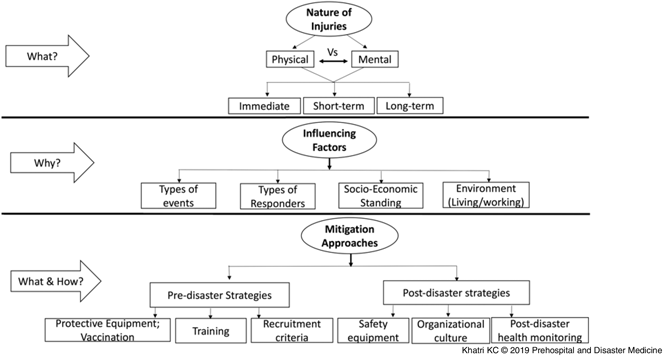
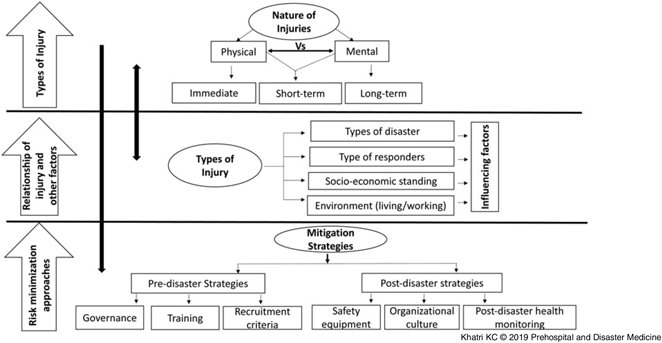
Prior to this study, a literature review was conducted to ascertain the hazards and risk factors affecting the rescue/relief workers during the response phase of disaster management and the mitigation approaches used in different disaster settings. For the purpose of the review and this study, the term “worker” is used to encapsulate those involved in rescue and relief activities during the response phase of a disaster, both paid and volunteer. The themes identified in the review were used to construct a conceptual framework (seen in Figure 1) for better understanding the risks, the contextual stressors, and the relationship among the variables. As seen in the figure, injuries identified in the literature are categorized as physical and mental and are broken down into immediate, short-term, and chronic conditions. The factors that were identified as influencing these injuries were categorized according to their theme. Themes include disaster type, types of responders, living and working environments, and socio-economic standing. The final key element of the framework are the mitigation approaches as they relate to these injuries and contributing factors, which are broken down into strategies to be used in pre- and post-disaster settings. This study sought to explore the applicability and further development of this conceptual framework through interviewing experts in the field of disaster management. Figure 1 illustrates the thematic framework derived from comprehensive review of literature.
Various Stages of Physical and Mental Health Problems among Disaster Responders Governed by Several Factors. Note: Such injuries can either be lessened or eliminated with pre-and post-disaster approaches.

Method
Study Design
The study is qualitative in its design and centers on the analysis of semi-structured interviews conducted with key experts from Nepal in the field of disaster management. The interview questions were designed to obtain in-depth information on the nature, scope, and rate of injuries and other mental health effects experienced by rescue/relief workers along with mitigation strategies.
A semi-structured method of interviewing was used as it enabled the breadth of the concepts encapsulated in the framework to be explored and allowed for the discovery and elaboration of useful information and ideas held by the experts that may not be otherwise observed previously or in this research.Reference Jamshed13 The style also enabled the researcher to probe into participants’ experiences to acquire in-depth information through communicative interaction.Reference Agarawal and Buzzanell14 The interviews were recorded as per the consent of the participants to ensure accuracy and less interruption to the flow of conversation between the researcher and interviewee. The identity of participants was assured confidential during the recruitment, interview, and analysis process. Permission to record the interview conversation was requested in the consent form, as well as at the time of interview. Ethical approval was obtained as per the rules and procedures under Queensland University of Technology (QUT; Brisbane, Queensland, Australia).
Participants
The interviewees were selected for their direct association and contribution to the field of disaster management in Nepal either through participation, management, policy drafting, or making recruitments. A snowballing technique was used to source participants using known experts and their suggestions of others who may provide valuable additional perspectives. They held positions in various disciplines and included academics, higher government staffs, emergency medical personnel, military personnel, police personnel, system developers, and humanitarian recruiters. Engaging participants from diverse backgrounds was a key aim of the study so as to gather a variety of perspectives. Known potential contacts were approached directly through telephone and/or email to seek their participation in the study. A typed or spoken script was used to inform the contact of the researcher, purpose of the study, and the reasons why they were approached. Additional information relating to the topic and study procedures was provided upon request. A participant information sheet, consent form, and the conceptual framework were then sent to all interested participants prior to the interview.
Data Collection Procedures
The interviews were conducted by the principle researcher in the month of October 2017 using an interview guide. Each interview began with general introductory questions based on the study objectives. The questions following the introduction centered on the possible injuries and mental health impacts experienced by relief/recovery workers during the response phase of disaster management, what they perceived to be the factors that influence these, including their frequency, and the appropriate mitigating approaches needed to tackle the issues identified. Questions were also asked that focused on the issues with international volunteerism, the relationships between the variables contributing to injuries and mental health issues, and the challenges to overcome. A funneling technique was used to probe specific issues raised from the answers of participants in a gentle and respectful way to acquire more in-depth information.
As the participants were located in Nepal, the interviews were conducted remotely using the online communication application Skype (Skype Technologies; Palo Alto, California USA), and they were in the Nepalese language to encourage interactive and expressive communication with the interviewer. Each interview was recorded as per the consent of the participant. Demographic data of the interviewee were also requested including name, professional background, numbers of years in service, and specialization to identify participants during the data analysis. Demographic data and interview guide are available online as supplementary materials.
Data Analysis Strategy
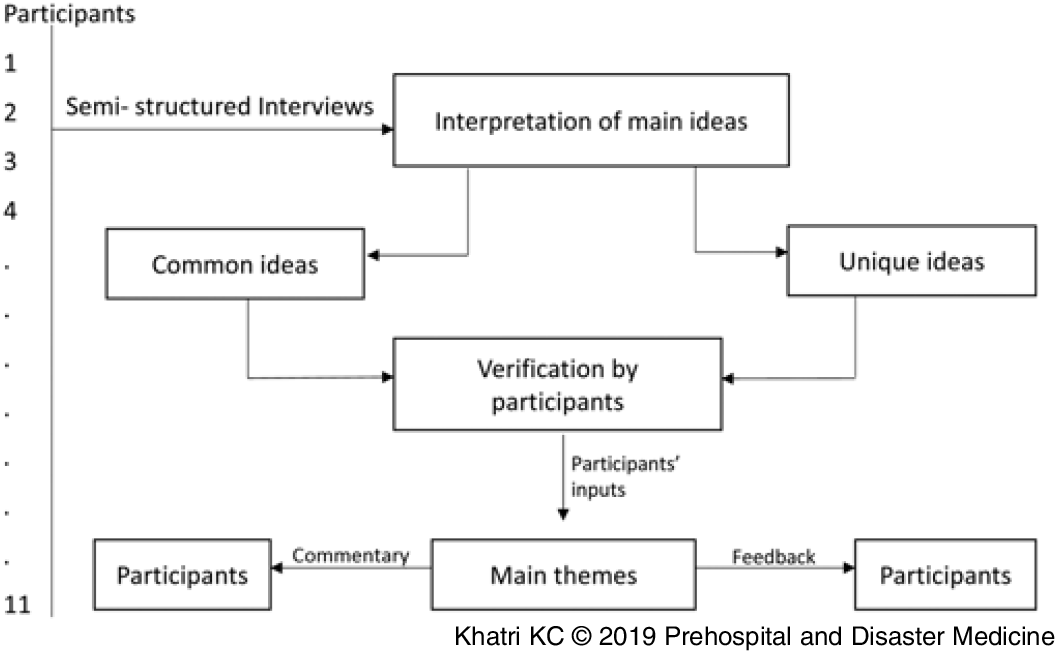
The data analysis strategy entailed noting and summarizing ideas and key points communicated during the interviews using an interview guide under four different topics, namely: types of injuries, factors affecting the injury rate, mitigation approaches, and conceptual framework. The main ideas drafted were sent to the corresponding participant for verification, a process that allowed them to exclude information should it be considered sensitive. The data allowed for inclusion were compared between the participants and used to develop a thematic framework. This was again shared with the experts for their commentary and feedback. Figure 2 provides a depiction of the analysis strategy.
Data Analysis Strategy from In-Depth Interviews.

Results
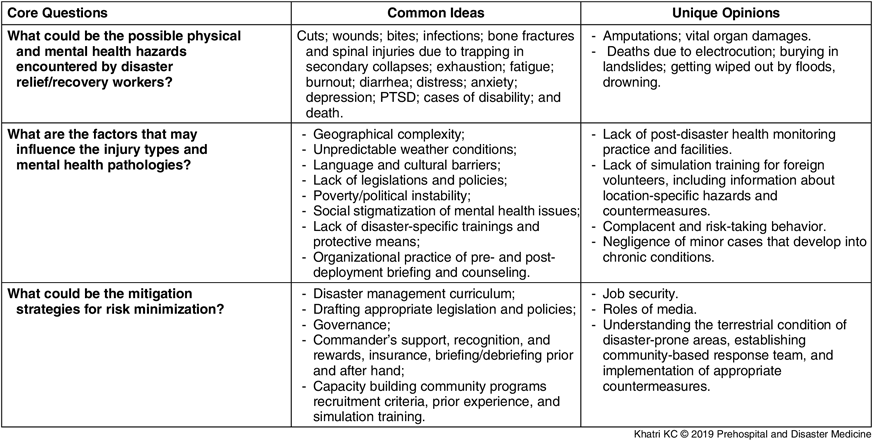
Eleven (n = 11) participants were interviewed for the study. Out of 18 participants approached, 11 participants could manage time from their busy schedule and were ready for interview. The length of interviews ranged from 25-45 minutes with an average of 35 minutes per participant. Table 1 summarizes the immediate injuries and mental adverse health effects experienced by relief/rescue workers noted by the participants. Conditions such as cuts, wounds, falls, fatigue, exhaustion, and headache were observed to be the most common issues in any type of rescue and relief work. Similarly, fear, anger, and stress were the initial stage of mental health problems generated while living and working in a chaotic environment that gradually developed into chronic health conditions like depression and posttraumatic stress disorder (PTSD).
Summary of Ideas Generated from Interviews

Abbreviation: PTSD, posttraumatic stress disorder.
Some injuries like lacerations, abrasions, sprains, dizziness, altitude sickness, and infections were observed to be associated with geophysical disasters. Unfavorable working and living environments were discussed as posing additional risks that can be life-threatening for workers due to complex geographical terrain and unpredictable climatic conditions. Some participants identified high blood pressure and sugar level in some retired as well as active responders affiliated with their institution, which may be the outcome of high levels of stress and improper diet in austere environments.
The discussions from the interviews and elaborations on the aforementioned were analyzed using the categories used in theming the questions: (a) injury types and mental health effects; (b) factors that influence these; and (c) mitigation approaches. Table 1 summarizes the opinions of the interviewees in regard to these.
Injuries and Mental Health Impacts
Participant stated they observed that the nature and scope of injuries depended largely on the type of disaster. For example, physical injuries such as cuts, wounds, strains, fractures, and injuries relating to bones were associated with geophysical disasters; while floods were associated with injuries like infections (including tetanus), cuts, bites, and trench foot; and flood-associated landslides with the burying of individuals. Floods and landslides that occurred after an earthquake caused additional loss of lives and properties in Nepal.
The interview results also suggested a close association between the nature of injury and different phases of disaster management. For example, rescue/relief workers are more likely to experience injuries during rescue and early recovery activities. While the rescue phase is short, the participants highlighted it is extremely dangerous in terms of physical trauma and mental distress. One expert said:
There is a very high-risk of trapping and burying in the secondary collapse of vulnerable structures during the rescue phase, while also the continuous long working hours during demolition and reconstruction results in fatigue, exhaustion, and stress. The improper diet and eating schedule may make the condition worse.
Indicated also was that minor to high levels of mental stress associated with the relief and recovery processes when neglected may develop into chronic condition like depression and PTSD.
Contributing Factors
Several factors were identified as significant contributors to either inducing or sustaining an injury. Most commonly discussed were the technical skill of responders; social stigma and associated behavior; living and working environment; governance; and economic condition of the affected community and country.
Technical Skill of Responders—A very clear relationship between the nature of injury and the particular type of responder (whether professional, affiliated, or a bystander) was identified. A lack of training and access to protection equipment led to local volunteers being prone to injury, while lack of familiarity with the local context meant foreign volunteers and medical teams were more susceptible to physical and mental trauma. Examples relating to this are stated below:
Professional-affiliated disaster responders are well-trained, use safety equipment, and have institutional facility to post-deployment health monitoring and treatment facilities that safeguards their physical and mental well-being.
Foreign volunteers lack training on a real-based scenario and do not have scrupulous knowledge about geographical terrain. Landslides and road damage are some unpredictable outcomes of weather change. Therefore, all these factors may lead to unanticipated physical risks that may even cause death. Coping to a new environment and gaining social support is another challenge for foreign team as they struggle to make social and emotional connections with local people due to language and cultural barriers.
Social Stigma and Associated Behavior—Some participants stated an observation that social stigma and related behavior are prominent factors contributing to the physical and mental health deterioration of local responders. Some identified the complacent behavior of the local community creates hurdles for their own improvement. Disasters may be seen by many remote communities as a way of life. One participant shared:
The perceived notion of people about natural disasters as natural phenomena has made the implementation of disaster preparedness strategies feeble. They think that disasters are a part of our life and are unavoidable.
Many cases of injuries arise when people neglect the risk and push themselves in the tasks they are not skilled and trained for:
The risk-taking behavior of untrained and unskilled bystanders pushes themselves to various injury conditions, while this behavior also affects the response process. As local responders are socially and emotionally attached with the affected population, and hence, it makes sense that they want to help in every possible way.
Some participants discussed that in Nepalese society, mental health issues are not openly discussed, and treatment is not sought at the initial stage due to social stigmatization and discrimination:
Mental health illness is not socially acceptable in our society, and many responders do not reveal when they have a problem. For paid employees, fear of losing a job on disclosure of mental health issues is also one of the reasons that arrest the openness about mental health problems.
Economic Condition of Community and Nation—According to many of the experts interviewed, the economic strength of both the community and the nation determines the level of vulnerability of disaster site workers. Sometimes, there may be insufficient logistic support that restricts responders’ capacity to deal with the incidents. The resourcefulness of the community depends on the nation’s economy:
Relief/rescue and recovery process is not always about performing skillful tasks with sound mind. It is also about the best use of modern equipment and scientific technology such as belly bridge, rescue helicopters, concrete drillers and cutters, rubber boat, etc. They not only make the job easy, but also make it less scary and risky. Similarly, remote sensing technology for early warning system for earthquake and weather forecast may add extra advantage to safety.
Governance—Poor overall governance was one of the most frequently raised issues. It contributes to the poor economic circumstances and also to a lack of coordination, which can result in minor and major health hazards for both local and foreign disaster responders, to some extent:
We do not have appropriate legislations and policies, lack coordination among authorities, international team, donors, and humanitarian organizations, which makes the relief and recovery processes complex and unsafe.
Living and Working Environment—Identified by some participants was the relationship between physical and mental health and the living and working conditions for disaster site workers. Sometimes, skills and safety measures fall short when the working environment is unfavorable. Recalling the incident of the Langtang Valley avalanche (Nepal, 2015), one participant said:
Highly skilled, high-altitude experts were sent for search and rescue operation in Langtang Valley avalanche. Hundreds of locals and foreigners were evacuated, dead bodies in similar number were recovered, but unfortunately, many of our skillful responders are also missing.
Living and working environments can have negative effects on the health of both international volunteers, who had to adjust to new surroundings with limited basic facilities, and for local responders, who had to handle the deceased and experience grief amongst their close friends and family. One participant added:
Distancing and coping to a new environment are difficult for international volunteers. There may be problems with food and drinking water. Hygiene and sanitation have to be compromised in a setting with limited resources. Long working hours and inability to help all the needy ones due to materialistic and time constraints may cause frustrations in workers.
Another participant recalled the earthquake relief process and put forward the issue of insecurity of relief workers as:
During the relief activities in Sindhupalchok District, the relief materials and medical supplies had to be carried manually to incident site due to road damage, which unfortunately were not enough for the affected families. The dissatisfied victims acted aggressively and violently upon our team.
Mitigation Strategies
Elaborating on the various physical and mental health encounters and contributing factors, participants suggested appropriate and contextual mitigation strategies to address these. They centered around education and training for locals, community preparedness, improved governance, organizational support, and the positive roles of media.
Disaster Training and Access to Safety Equipment—As injuries were seen to be associated with particular disaster types and phases, so specific training and safety equipment was suggested as necessary for eliminating or minimizing such risks. One participant who was a first line responder said:
High-top boots should be used to protect foot and ankle injury. Water shoes may offer ease and efficacy while working in wet surface or water, and also prevent lacerations and ankle sprain.
Post-Disaster Health Monitoring and Facilities—Post-deployment health monitoring helps to identify the physical and mental health issues after engagement in relief activities in case of any changes observed in the functioning of mind and body:
We do have post-deployment health monitoring and health service facilities to our staffs, but many other institutions still lack the provision and system of health check-up pre- and post-deployment. In this regard, unaffiliated and self- volunteers are at high-risk of physical and mental health issues.
Community Preparedness—Several participants emphasized community preparedness and resourcefulness through youth engagement could make the relief work effective, timely, and safe. In this context, a higher local government official of one of the most affected districts during Nepal earthquake said:
A community-based disaster management team in every community is must for a disaster-prone country like ours where infrastructure issues create hassle for timely action. Local volunteers and bystanders are the first ones to arrive at the scene for help. If we can make the modern devices and equipment such as Ham Radio and megaphones, bicycles, stretchers, masks, water boots, boats, etc, available to the community clubs, it makes the relief and rescue activities easy and safe to a greater extent. At the same time, we can also attract the local youth engagement.
Improved Governance—Governance can play both a constructive and destructive role in disaster management. Bad governance creates hurdles in coordination, policy making, and implementation. Procurement and distribution of modern scientific equipment, training facilities including awareness, and education campaigns can only reach corners of a nation through proper internal coordination among authorities, governing bodies, and international donor agencies. As one participant elaborated:
We lack appropriate legislations for disaster risk reduction and management and also the policies relating to occupational and worksites’ safety for local and foreign workers. The serious problem during Nepal earthquake was the lack of coordination among the service providers and government authorities that led to duplication and missed actions. The coordination of foreign teams with local teams is vital in identifying the location-specific risks and protection strategies. The coordination and team work also helps to reduce mental stress in foreign teams, besides generating better relief outcomes.
Institutional Support—Mental stress is related to an individual’s satisfaction with their work along with trust for, and support from, their organization. Proper management, coordination, teamwork, communication, and recognition for workers offer motivation and can have a positive impact on the mental health of workers. One of the commanders of national defense force said:
I feel that being a helper in itself is a dignified job, it needs no rewards. But disaster relief works in our context are riskier, so to promote the voluntary engagement, recognition and rewards can be motivational drivers. … The chronic conditions like depression and PTSD arise mostly due to ignorance, negligence, as well as hesitation when the assistance for minor cases of stress and anxiety are not sought. For such cases, supervisors, recruiters, and commanders should ensure job-security or any sort of assistance as per need to encourage the team members and staffs to share their problems.
Role of the Media—The media can create fear among people if coverage of the incident is skewed and exaggerated. Electronic media can offer grown awareness among the general public about safety measures and also can inspire and promote youth in humanitarian works:
In our country, most incidents occur in the remote and inaccessible places where people learn about the incident from media like radio and television. Media is also the best means for raising awareness and taking the right information to people.
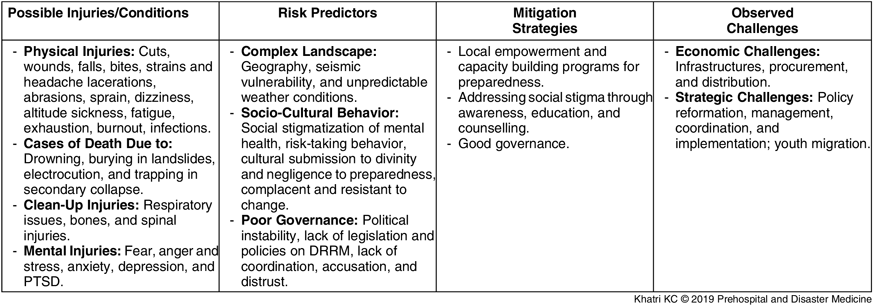
Table 2 summarizes the interpretation and evaluation of findings after analysis.
Interpretation of Findings in Different Categories After Analysis
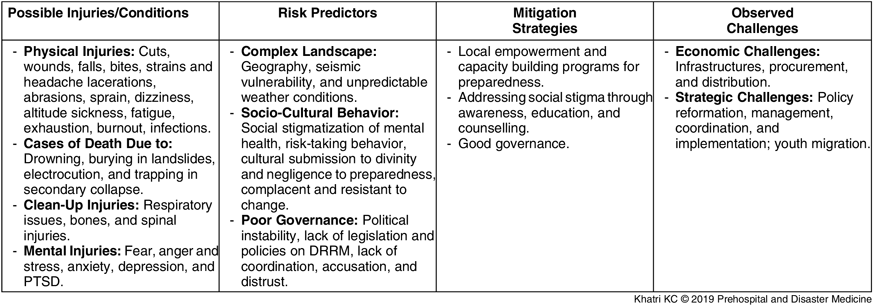
Abbreviation: DRRM, disaster risk reduction and management; PTSD, posttraumatic stress disorder.
Discussion
Every disaster induces some level of minor or major health impacts on disaster site workers. The major findings from the in-depth interviews contribute to an understanding of the possible risks faced by these workers in the response phase of disaster management, their relationship with contributing factors, and effective mitigation approaches.
The response phase is most frantic in disaster management and can lead to rescue/relief workers experiencing common to life-threatening physical injuries.Reference Newman15 The physical injuries and associated conditions stated in the interviews by the industry experts were consistent with that found in the literature,Reference Zhang, Liu and Sun16 – Reference Azuma, Seki and Tanabe18 most of which related to immediate risk.Reference Bayer19 , Reference Nagamine, Harada and Shigemura20 The mental health issues encountered, mostly relating to fear, anger, and stress, are also echoed in the literature.Reference Eriksson, Cardozo and Foy1 As discussed in the findings published by Klappa, Audette, and Do,Reference Klappa, Audette and Do2 adverse working and living environments were noted as posing additional risks such as trapping in the crevasse, fractures, stings, bites, burnout, altitude sickness, and burying in earthquake-induced landslides that can become life-threatening for workers due to complex geographical terrain and unpredictable climatic conditions.
The study results show a relationship between mental health issues/injury types, the particular phase of the disaster, and the skills of those who respond to it. The findings support the literature in emphasizing that a combination of high technical skills and interpersonal skills is essential for coping and building resilience in rescue/relief workers and decreasing their vulnerability to injury.Reference Sartori and Fave21 – Reference Lu, Yang and Ye23 The observation that local bystanders without appropriate training and safety measures in the disaster sites who are involved in the response phase are at increased risk of physical and mental injury was also observed by Brooks, et al.Reference Brooks, Dunn and Sage24 In their study of Hurricane Katrina (2005), injuries for local volunteers who responded to relief activities were significantly higher than police. As stated by some participants, when it comes to international humanitarian workers, having personal traits indicative of physical and psychological resilience should be a key criterion for their recruitments.Reference Costa, Oberholzer-Riss and Hatz3 , Reference Remington and Ganapati25 , Reference Haraldsdottir, Gudmundsdottir and Romano26 For this group, socio-cultural differences can lead to difficulty in gaining emotional and social support from the general public and from local responders. Yan, et al suggest this may be lessened through pre-working experience, learning more about the nation they are going to volunteer, and responders’ own personal skills.Reference Yan, Turale and Stone22
The mitigation strategies mentioned by the interviewees centered on capacity building programs and safety equipment for local volunteers, addressing social stigma, and creating good governance. These fall into the area of disaster preparedness, a key phase in working on risk reduction. Capacity building community-level programs implemented during this stage help to educate locals about the locally recurring hazards and how to follow appropriate preparedness strategies.Reference Kang, Lv and Hao8 , Reference Agarawal and Buzzanell14 , Reference Ager, Pasha and Yu27 However, in the context of Nepal, youth engagement in such endeavors for some remote villages may be challenging due to migration of young generations to cities and abroad. Addressing social stigma and associated behavior can prevent chronic conditions developing from minor treatable cases. A similar situation was observed amongst Haitian responders to 2011 earthquake.Reference Klappa, Audette and Do2 , Reference Jobe28 Here, cultural taboo was due to lack of awareness and education, and hence, education and awareness were central to mitigating stigmatizing superstitious beliefs and practices.
Good governance is essential for addressing strategic problems in disaster management. A systematic and realistic approach to preparedness, response, and reconstruction may reduce the morbidity and mortality, and also build resilience.Reference Klappa, Audette and Do2
Standard database for post-deployment health monitoring and follow-up was another deficiency highlighted by experts which has created hindrance to identification of post-deployment physical and mental health issues. In this regard, Stein, et al reported a standard health database and follow-up system may prevent further deterioration of health conditions by identifying the exposure, its effects, and may also offer best possible solutions.Reference Stein, Wallenstein and Shapiro29
In a developing country like Nepal, there are additional challenges due to prevailing poverty. The capacity of the national treasury is below that required to fund modern protective equipment and efficient logistics adequately. Similarly, the nation’s overall poor governance and predominated illiteracy have further debilitated the already poor conditions. Accepting disasters as a way of life and resisting to adopt preparedness by some remote, illiterate communities are the major contributors to sever and life-threatening conditions for both the affected and the helpers. Illiteracy is also the cause of social stigma and superstitious cultural practices.12 , Reference Jobe28
While discussing the factors that contribute to injuries and the mitigation approaches, many respondents highlighted the number of challenges in the context of Nepal. Some of the aforementioned challenges could be overcome through coordination with governmental bodies and nongovernmental organizations and strategic actions. But the hazards associated with nation’s complex geography and climatic conditions may not be eliminated, only better accounted for through skills development and better/wider distribution of protection equipment.
Revised Framework
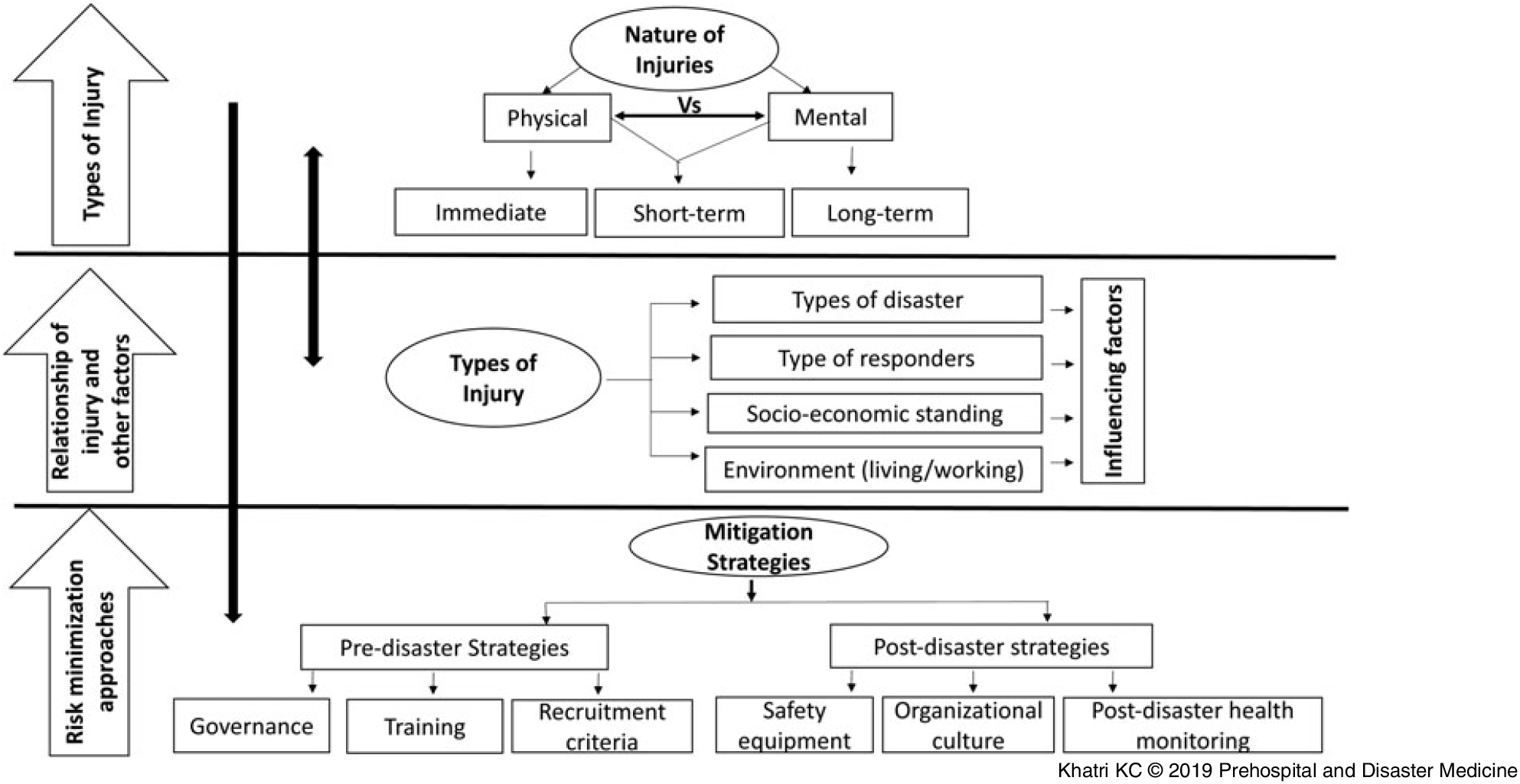
The findings of the study are consistent with the conceptual framework previously developed from the review of the literature. The observed relationship between injury type and disaster phases could be included under the theme “Types of Disaster,” and issues discussed such as poverty, illiteracy, behaviors, and social stigma fit into the broader theme of “Socio-Economic Standing.” Most of the mitigation strategies discussed are also cited in the literature. However, political instability and lack of coordination among key stakeholders and government bodies are some of the outcomes of poor governance in context to Nepal as identified from the interviews. It was considered a critical issue indirectly affecting disaster management processes and activities. For this reason, the conceptual framework has been expanded to include good governance in the pre-disaster strategies. Figure 3 depicts the revised conceptual framework after analysis of experts’ opinion.
Revised Conceptual Framework After Interviews with Experts.
Limitations
A limitation of the study was the small sample of interviewed participants. Issues relating to scheduling and barriers encountered with online and telephone communication affected the sample size. As the conceptual framework derived from the literature was provided to the participants prior to the interview, it could possibly have resulted in some bias in generating new expert opinions. The research is specific to the context of Nepal; nevertheless, it is useful in an international context given the increasing trend of international volunteerism and its scope.
Conclusions
The physical and mental health impact of disasters on both victims and rescue/relief workers can be reduced, as well as averted to larger extent, when the influencing factors are well- understood. Pre- and post-disaster strategies are apparently the most appropriate measures to address the stressors that contributes to injuries in responders. The findings of the study’s interviews provide some illumination to these and have reinforced the applicability of the aforementioned conceptual framework for disaster management planning, preparedness, response, and recovery, the input from the interviewees being used for its further refining.
Supplementary Material
To view supplementary material for this article, please visit https://doi.org/10.1017/S1049023X19004370.
Conflicts of interest
none