
Introduction
The archaeological records of many regions of the world provide evidence for the use of quartz. In some locations, records indicate that toolmakers relied almost solely upon quartz, rather than on other raw materials (e.g. in Scandinavia, Central Africa and north-east USA). Our paper explores the materiality of quartz from interpretive and technological perspectives. We survey the ethnohistoric and contemporary archaeological literature on its properties, qualities, use and analysis. We then consider southern Africa's Terminal Pleistocene lithic record to examine previously undocumented trends in the use of quartz crystal at two rockshelter sites in Lesotho: Ntloana Tšoana and Sehonghong. Despite the abundance of highly knappable, fine-grained non-quartz raw materials, Lesotho's toolmakers preferentially selected, cached and reduced quartz crystals during the Terminal Pleistocene. Our results show that such use of quartz cannot be explained through exclusively symbolic or, conversely, functional arguments (cf. Binford & Stone Reference Binford and Stone1985). Instead, our study helps to break down this rigid divide and stresses the need for more nuanced approaches.
Background
Quartz is a polymorph of the silicon dioxide system. It forms within several rocks (Luedtke Reference Luedtke1992), and can be subdivided into textural classes according to the size of crystals observable in thin-section microscopy: macrocrystalline and cryptocrystalline. Macrocrystalline quartz refers to a hydrothermal joint (a fissure formed through the action of heated water and pressure) in-fill that began as quartz single crystals growing from the joint walls towards the interior cavity (Bons Reference Bons2001). When these crystals fill the cavity entirely, the result is a polycrystalline agglomerate of quartz crystals of various size with internal ‘flaws’ between individual crystals (Luedtke 1992). Macrocrystalline quartz can be divided into two main types: automorphic quartz (quartz crystal, rock crystal or hyaline quartz), which consists of rhombohedral crystals; and xenomorphic quartz (vein quartz or milky quartz), which is an aggregate of small crystals that lack the typical rhombohedral shape (Mourre Reference Mourre1996).
In terms of knapping quality, the regular internal flaws of xenomorphic quartz make it difficult and unpredictable to break, and, because of its high reflective qualities, it can be a challenge to interpret. Several studies have developed analytical criteria to classify and describe xenomorphic quartz in archaeological assemblages (e.g. Flenniken Reference Flenniken1981; Knutsson Reference Knutsson1988; Ballin Reference Ballin2008; Driscoll Reference Driscoll2010). Callahan's (Reference Callahan1987) seminal work on xenomorphic quartz technology in prehistoric Sweden suggests that toolmakers used bipolar (hammer and anvil), freehand (core in hand) and platform on anvil (core resting on the anvil) strategies to overcome the complexities of xenomorphic quartz reduction. More recent knapping experiments (e.g. Tardy et al. Reference Tardy, Vosges and Varoutsikos2016) add punch and pressure flaking to this list. The same general strategies apply to automorphic quartz crystals (or quartz single crystals), albeit in slightly different configurations.
Knapping quartz single crystals, however, requires a specialised approach, due to their unique morphology and flaking properties. Most quartz single crystals are narrow and elongated with prismatic lines on the outside surface, providing toolmakers with small platforms from which to strike flakes. Quartz single crystals are relatively brittle and can demonstrate conchoidal fracture properties. They are relatively hard (7 on the Mohs hardness scale), and their natural prismatic structure allows breakage along regular external cleavage planes. Reher and Frison (Reference Reher, Frison, Montet-White and Holen1991: 393) refer to quartz crystal knapping as “a study in contradiction, since one flake can come off as though from the finest obsidian while the next suddenly turns into so much crystal dust in a knapper's hand”. In overcoming these difficulties, knappers are rewarded with an exceptionally sharp and precise cutting edge. Prehistoric toolmakers evaluated these costs and benefits before seeking quartz crystals for lithic production. As discussed below, there was, however, probably more at stake than concerns about raw material economy.
Archaeological examples of quartz crystal reduction extend from the Pleistocene to the last use of chipped stone in the protohistoric period (e.g. Stow Reference Stow1905; Flenniken Reference Flenniken1981; Wadley Reference Wadley1987; Bagley Reference Bagley2013; Márquez et al. Reference Márquez, Mosquera, Pérez-González, Arsuaga, Baquedano, Panera, Espinosa and Gómez2013; Tardy et al. Reference Tardy, Vosges and Varoutsikos2016). The Howiesons Poort (65–62 ka) and Still Bay (~71 ka) industries at Sibudu Cave and Umhlatuzana rockshelter in South Africa's KwaZulu-Natal province contain important examples (Delagnes et al. Reference Delagnes, Wadley, Villa and Lombard2006; De la Peña & Wadley Reference De la Peña and Wadley2014). The small (average less than 20mm long) Howiesons Poort crystal-quartz-backed tools preserve a range of plant and animal residues and use-wear traces on their backed edges, suggesting that some were used as the tips of hunting weapons (cf. Lombard Reference Lombard2011). Lewis-Williams and Pearce (Reference Lewis-Williams and Pearce2004) claim that the translucent and light-reflective properties of Howiesons Poort quartz crystal segments separate them as early symbolic markers. This interpretation, however, is controversial (cf. Parkington Reference Parkington2005; Lombard Reference Lombard2009). Rots et al. (Reference Rots, Lentfer, Schmid, Porraz and Conard2017) argue that the Sibudu Cave quartz crystal Still Bay bifaces were pressure-flaked and used as arrow tips (cf. Lombard et al. Reference Lombard, Wadley, Jacobs, Mohapi and Roberts2010). Both the Howiesons Poort and Still Bay examples suggest time-restricted processes of humans preferentially selecting quartz crystal in areas where other rocks were abundant. Why would humans purposefully select quartz crystal in such contexts? One possibility is that quartz-backed tools were hafted in such a way as to dislodge and break within prey (cf. Mossop Reference Mossop1935; Wadley & Mohapi Reference Wadley and Mohapi2008).
In the New World, archaeologists have recorded the presence of quartz crystal in archaeological assemblages from the high Arctic to South America (Reher & Frison Reference Reher, Frison, Montet-White and Holen1991). In Mexico, the El Fin de Mundo site (c. 13.3 ka BP) has yielded several quartz crystal points and debitage (Sanchez et al. Reference Sanchez, Holliday, Gaines, Arroyo-Cabrales, Martínez-Tagüeña, Kowler, Lange, Hodgins, Mentzer and Sanchez-Morales2014), while the Hoko River site (c. 2.5 ka BP) in Washington State preserved hafted quartz crystal bladelets (Flenniken Reference Flenniken1981). Residue analyses suggest the use of similar implements (from other sites) as composite fish-processing tools (Croes Reference Croes1995). Kannegaard (Reference Kannegaard2015) conducted microwear and residue analyses on quartz crystal microblades from six sites in north-western Washington State, finding evidence for their use in a range of tasks involving deer, salmon and rabbit. These examples highlight the diversity of prehistoric quartz crystal use. Ethnohistory provides further insight into this diversity.
Ethnohistory
Ethnographic and ethnohistoric records reveal that quartz was and is considered an important animistic agent, in the sense that it did and does things; in many hunter-gatherer worldviews, quartz is a potent agent (Pearson Reference Pearson2002; Hampson Reference Hampson2013). Indeed, a study of quartz from a dual and intertwined functionalist and symbolic perspective—that is, by examining concepts of materiality in addition to raw materials (Tilley Reference Tilley2004; Ingold Reference Ingold2007)—helps break down rigid but rarely scrutinised Western divisions such as animate:inanimate and nature:culture. Many hunter-gatherer groups and their ritual specialists consider quartz—and especially quartz crystal—to be ‘emergent’ or ‘alive’ (Reichel-Dolmatoff Reference Reichel-Dolmatoff1997; Reynolds Reference Reynolds2009).
Working in Mexico with the Huichol, for example, Lumholtz (Reference Lumholtz1900: 63) encountered quartz crystals (te'valir) “produced by the shamans” and thought to be “dead or even living people”. These te'valir were often produced at the sacred peyote cactus (hi'kuli) feast, where ritual specialists ingested peyote in order to access the spirit world. The Cubeo of the north-west Amazon provide a further example, where a key process in becoming a ritual specialist is the insertion of quartz crystals into the neophyte's abdomen. Later, these crystals were extracted and used as shamanic weapons (Goldman Reference Goldman1963). Similarly, in the Western Desert of Australia, Veth et al. (Reference Veth, Stern, McDonald, Balme, Davidson, Whallon, Lovis and Hitchcock2011) have demonstrated that some engraved figures—particularly anthropomorphs—are created with the intentional positioning of quartz vein and crystal inclusions in the location of the stomach. These figures are said by Martu custodians and traditional owners to be mabarn—embodied with magical and medicinal powers. Indeed, both the quartz crystals and the ‘medicine men’ are termed ‘mabarn’ in this region (Tonkinson Reference Tonkinson1997). In the Pilbara of Western Australia, ritual specialists used quartz crystals and the ‘throwing’ of magic to kill malevolent spirits and threatening serpents (von Brandenstein Reference von Brandenstein1970).
Taking care to avoid naïve use of methodological approaches and ethnographic analogies, we find it helpful to echo Vitebsky's (Reference Vitebsky1995: 82) statement that “crystals are used by shamans from America to Borneo”. Similarly, Harner (Reference Harner1982: 139) states that “the quartz crystal is considered the strongest power object of all among such widely separated people as the Jívaro in South America and the tribes of Australia”. While strong ‘power objects’ such as quartz crystals were not necessarily used in exactly the same way from region to region, there are clear overarching similarities, as well as nuanced differences, that cannot be ignored. It seems that, in certain circumstances, the refraction of light produced by crystals and ‘shiny’ stones induces a neurological event that can lead to altered states of consciousness and preternatural vision (Lewis-Williams & Pearce Reference Lewis-Williams and Pearce2004).
Ethnographic accounts also show that quartz crystals are closely associated with ‘otherworldly’ vision and communication (e.g. Ripinsky-Naxon Reference Ripinsky-Naxon1993). Desana ritual specialists in Amazonia, for example, refer to quartz crystals as vehicles that enable communication with both humans and non-humans, and with both living and non-living things (Reichel-Dolmatoff Reference Reichel-Dolmatoff1997). In altered states of consciousness, Desana ritual specialists imagine themselves standing inside a large crystal, which enables them to see through forests, mountains and walls. Intriguingly, at Oakhurst Cave on the southern Cape coast of South Africa, a large, broken quartz crystal was discovered in the left eye socket of an infant burial probably dating to less than 10 ka (see Goodwin Reference Goodwin1938).
When quartz breaks and is rubbed, bright light (triboluminescence) is released. This is frequently interpreted as ‘spiritual power’ (Whitley et al. Reference Whitley, Dorn, Simon, Rechtman and Whitley1999: 236). At Sally's Rockshelter in California, quartz was deliberately chosen as a material for hammerstones to make engravings. This location also contained quartz crystals wedged in cracks—perhaps placed to penetrate the membrane between this world and the next (Whitley et al. Reference Whitley, Dorn, Simon, Rechtman and Whitley1999: 234; Hampson Reference Hampson2016). In Arnhem Land, Australia, there is a similarly broad link between certain stone tools and ‘Ancestral Power’: occasionally, ritual specialists state that quartz and quartz tools “shimmer with bright reflected light or are almost iridescent” (Taçon Reference Taçon1991: 198). This symbolic use of stone again challenges the purely functionalist explanation for raw material choices (e.g. Tilley Reference Tilley2004).
Lemaitre (Reference Lemaitre, Fauconnier and Lemaitre2012) notes that, in Canada, there is a widespread association between rock art sites, quartz, manitou (spirits) and ‘Thunderbirds’—the guardian spirits and animal helpers of many ritual specialists. The Kennedy Island site in Ontario, for example, features a Thunderbird formed by the addition of painted wings to quartz seams in the rock face (Lemaitre Reference Lemaitre, Fauconnier and Lemaitre2012: fig. 2). According to the Cree, Thunderbirds emit lightning bolts from their eyes in order to kill mythical horned snakes; if the bolts miss the target, they form quartz seams that run through cliffs (Conway Reference Conway1993). Lemaitre (Reference Lemaitre, Fauconnier and Lemaitre2012: 24) concludes that “it is therefore possible that this crystalline particularity possesses an intrinsic value”. In addition, Hampson (Reference Hampson2013) has shown that quartz veins form important components at South African rock art sites; one example in Mpumalanga province includes red pigment carefully and directly applied to a quartz seam.
Ethnographic work with /Xam San informants in nineteenth-century South Africa suggest that different rocks, including various quartz types, were used to assert ‘emblemic’ style between groups (Wiessner Reference Wiessner1983). /Hano≠kass'o’ remarked that while his people—the Flat Bushmen—made arrows with metal tips, the Grass Bushmen to the west used white stone (quartz). Despite the availability of alternative materials for arrowhead production, nineteenth-century Bushman groups still used tips made of glass or quartz crystal slivers (Dale Reference Dale1870; Stow Reference Stow1905; Deacon Reference Deacon1992). Another bushman informant in the Maloti Mountains, Lesotho, referred to “the rain with white quartz which has hail” (Stow & Bleek Reference Stow and Bleek1930: pl. 17). Here, the word ‘has’ implies that the informant was referring to the notion of /ki—to have or to possess. San shamans were said to /ki certain animals—they controlled their movements and derived potency from them—and it is possible that quartz had similar powers over hail and thunderstorms (Lewis-Williams & Pearce Reference Lewis-Williams and Pearce2004: 143).
Quartz crystal and lithic technology: a southern African case study
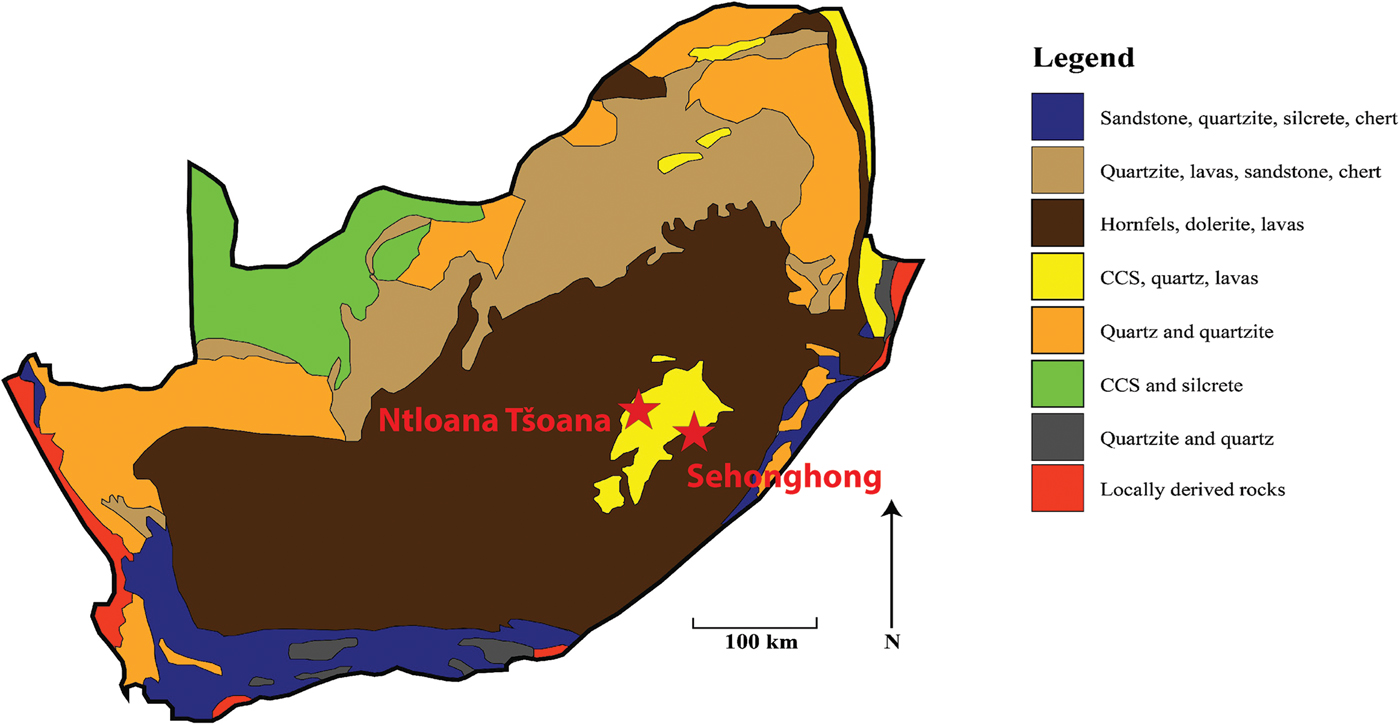
Quartz is common in the bedrock geology of southern Africa (Figure 1), but its use by prehistoric toolmakers was variable across time and space. Mitchell (Reference Mitchell1988) argued that the distinction between southern African lithic assemblages made from quartz, as opposed to silicate-based rocks, marked a major axis of variation in the region's Marine Isotope Stage 2 (29–12 ka cal BP) lithic record. He observed that sites in south-eastern southern Africa demonstrate a greater reliance on cryptocrystalline silicate rocks (CCS; chert, agate, chalcedony), while those in the southern Cape and Highveld regions reveal greater reliance on macrocrystalline quartz (few reports differentiate between vein and quartz crystal) reduction (Figure 1). Drawing on the mid Holocene record in northern South Africa, Barham (Reference Barham1992) and Wadley (Reference Wadley1992) have debated whether unmodified quartz crystals served as symbolic devices or functional components in prehistoric hunter-gatherer toolkits. Barham (Reference Barham1992) argued that symbolic interpretations for worked quartz crystals should follow careful analysis to assess other possibilities. The division between the symbolic and functional roles of quartz crystal may be more apparent than real. It is this complexity that we explore with the following case study, which investigates the use of quartz crystal in Mitchell's (Reference Mitchell1993) silicate-rich raw material region. It focuses on data derived from two 1 × 1m excavation squares at the Ntloana Tšoana and Sehonghong rockshelters, in Lesotho (Figure 2). Despite being more than 100km apart, these sites both show similarly dated spikes in the use of quartz crystal for lithic production (see Figure 3).
Southern Africa's major tool stone regions (modified after Clark Reference Clark1959); CCS: cryptocrystalline silicates (agate, chalcedony, chert and the like).

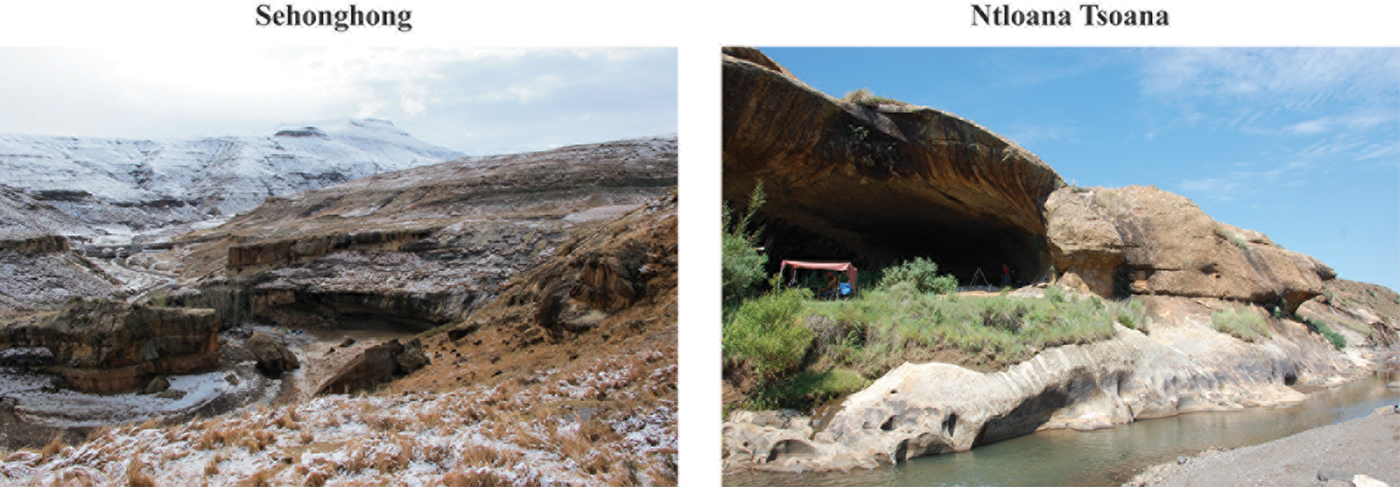
Exterior views of the two study sites (images courtesy of Charles Arthur and Brian Stewart).

Terrain profile between Sehonghong and Ntloana Tšoana (image extracted from Google Earth).

Ntloana Tšoana
Ntloana Tšoana is located in the summer rainfall grassland biome at the intersection of the mixed to sour grasslands to the west and the Afromontane environments of the Maloti Mountains to the east (Arthur & Mitchell Reference Arthur and Mitchell2012) (Figure 3). Mitchell and Steinberg (Reference Mitchell and Steinberg1992) conducted initial test excavations at Ntloana Tšoana in 1989, followed by more recent excavations between 2009 and 2012 (Arthur & Mitchell Reference Arthur and Mitchell2012) (Figure 2). In addition to a more extensive Middle Stone Age and Early Holocene Late Stone Age series, the site contains a series of rich (in terms of density and preservation) Terminal Pleistocene human occupations referred to collectively as phase 5b, and bracketed by four radiocarbon dates to 14–12 ka cal BP (Arthur & Mitchell Reference Arthur and Mitchell2012).
Sehonghong
Sehonghong is a rugged landscape of river valleys and grasslands situated in the summer rainfall grassland biome of south-eastern southern Africa (Carter et al. Reference Carter, Mitchell and Vinnicombe1988). The site is a rockshelter facing west-north-west and situated at approximately 1870m asl (Figure 2). A journey between Sehonghong and Ntloana Tšoana involves traversing rugged terrain, although numerous river courses provide possible pathways into and through the Lesotho highlands (Figure 3).
Following Carter's pioneering work at Sehonghong in 1971 (Carter Reference Carter1978), Mitchell excavated a total of 161 stratigraphic units grouped together into 10 larger layers, across a 12m2 area (Mitchell Reference Mitchell1996). Forty-seven conventional radiocarbon dates place the Late Pleistocene Late Stone Age occupation at Sehonghong to between 30 and 12 ka cal BP (Pargeter et al. Reference Pargeter, Loftus and Mitchell2017). The uppermost Late Pleistocene Late Stone Age units at Sehonghong overlap chronologically with the phase 5b deposits at Ntloana Tšoana.
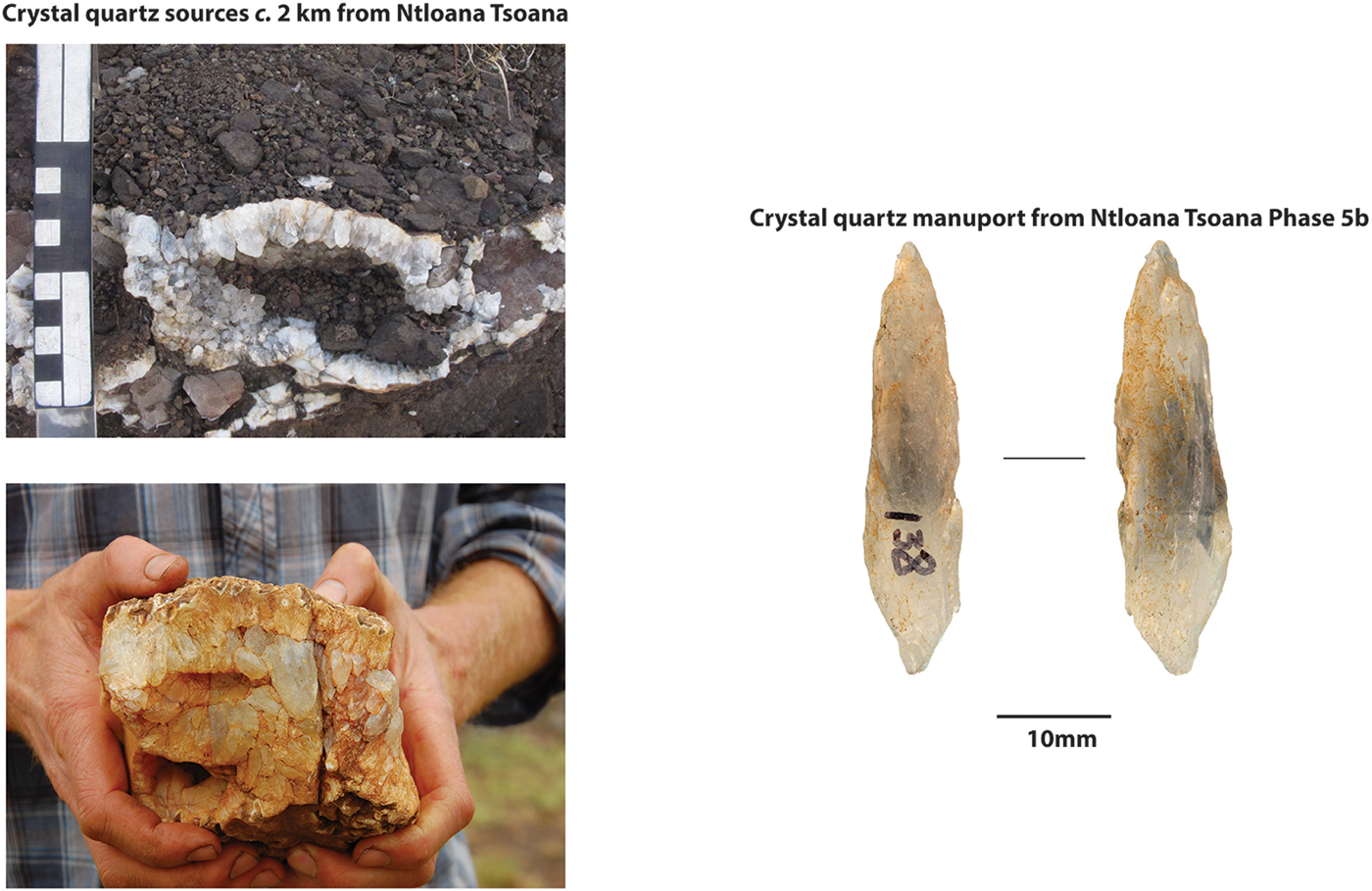
Mitchell and Steinberg (Reference Mitchell and Steinberg1992) acknowledge similarities in the raw material distribution between the two sites. We therefore have a unique opportunity for synchronic comparison between the raw materials at lowland and highland Lesotho sites, focused primarily on the as yet understudied quartz component (Mitchell Reference Mitchell1993, Reference Mitchell1996). Preliminary geological survey data indicate that both Ntloana Tšoana and Sehonghong are in environments rich in CCS (Carter et al. Reference Carter, Mitchell and Vinnicombe1988; Arthur & Mitchell Reference Arthur and Mitchell2012). The quartz crystal at both sites derives from pipe amygdales within the lavas of the Lesotho Formation, and as river-borne nodules (Figure 4) (Carter et al. Reference Carter, Mitchell and Vinnicombe1988). The nearest source for quartz crystal from Ntloana Tšoana—for which we have more detailed survey data—is approximately 2km from the site; this is well within the average hunter-gatherer foraging radius (Kelly Reference Kelly2013).
Local quartz crystal source and manuport from Ntloana Tšoana (images courtesy of Charles Arthur).

Results from the lithic analysis
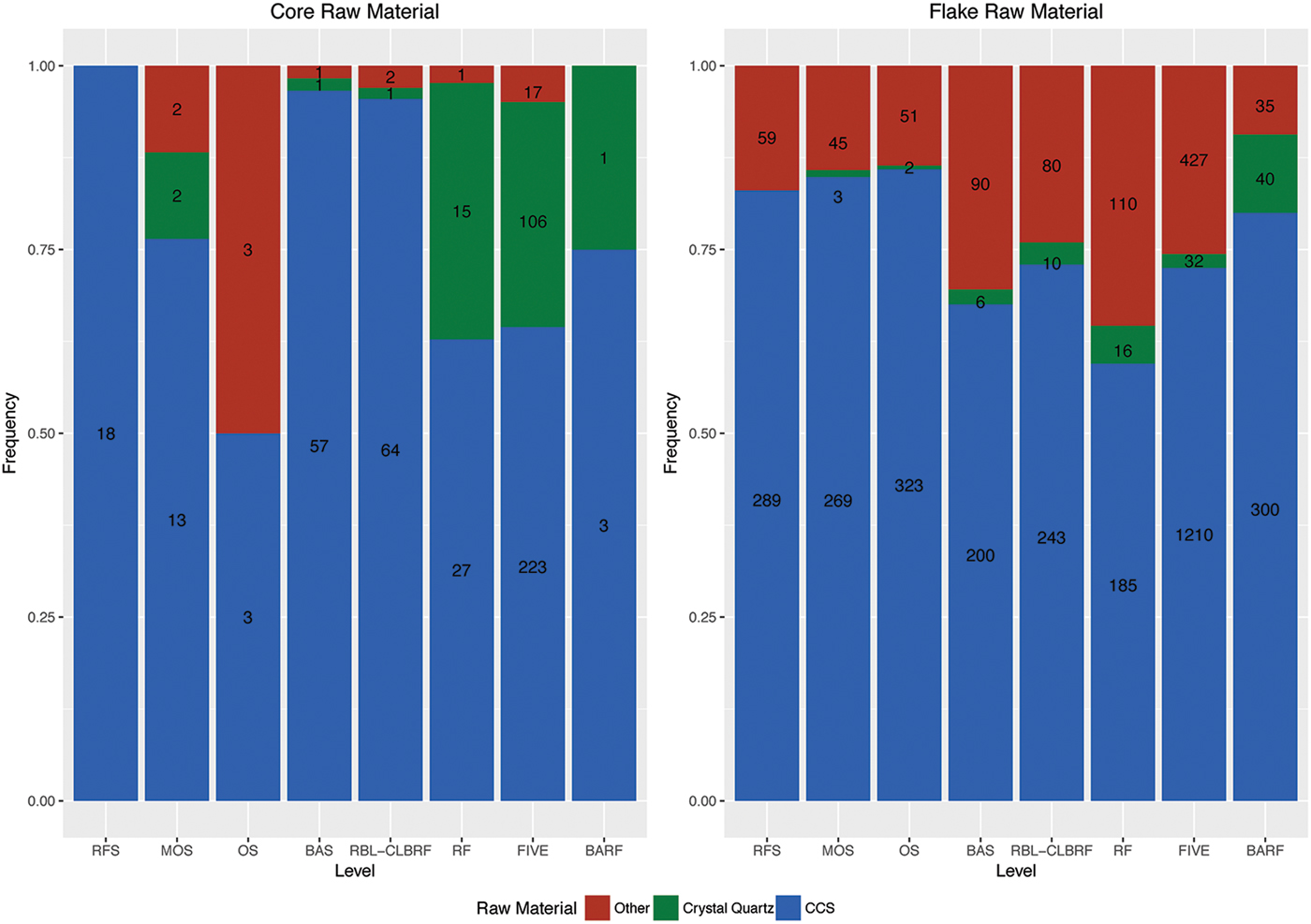
The lithic assemblages from both Sehonghong and Ntloana Tšoana show that toolmakers preferred CCS for lithic production (Figure 5). Overall, CCS comprises more than 50 per cent of both lithic assemblages and, within several layers, its frequencies extend to more than 75 per cent (particularly in the layers dated to more than 18 ka cal BP at Sehonghong). Quartz crystal displays a brief, but conspicuous, increase after c. 14 ka cal BP at Sehonghong (in layers RF and BARF), and contemporaneously in Ntloana Tšoana's phase 5b deposits (Table 1).
Core/flake raw material frequencies; numbers within bars refer to raw material counts.

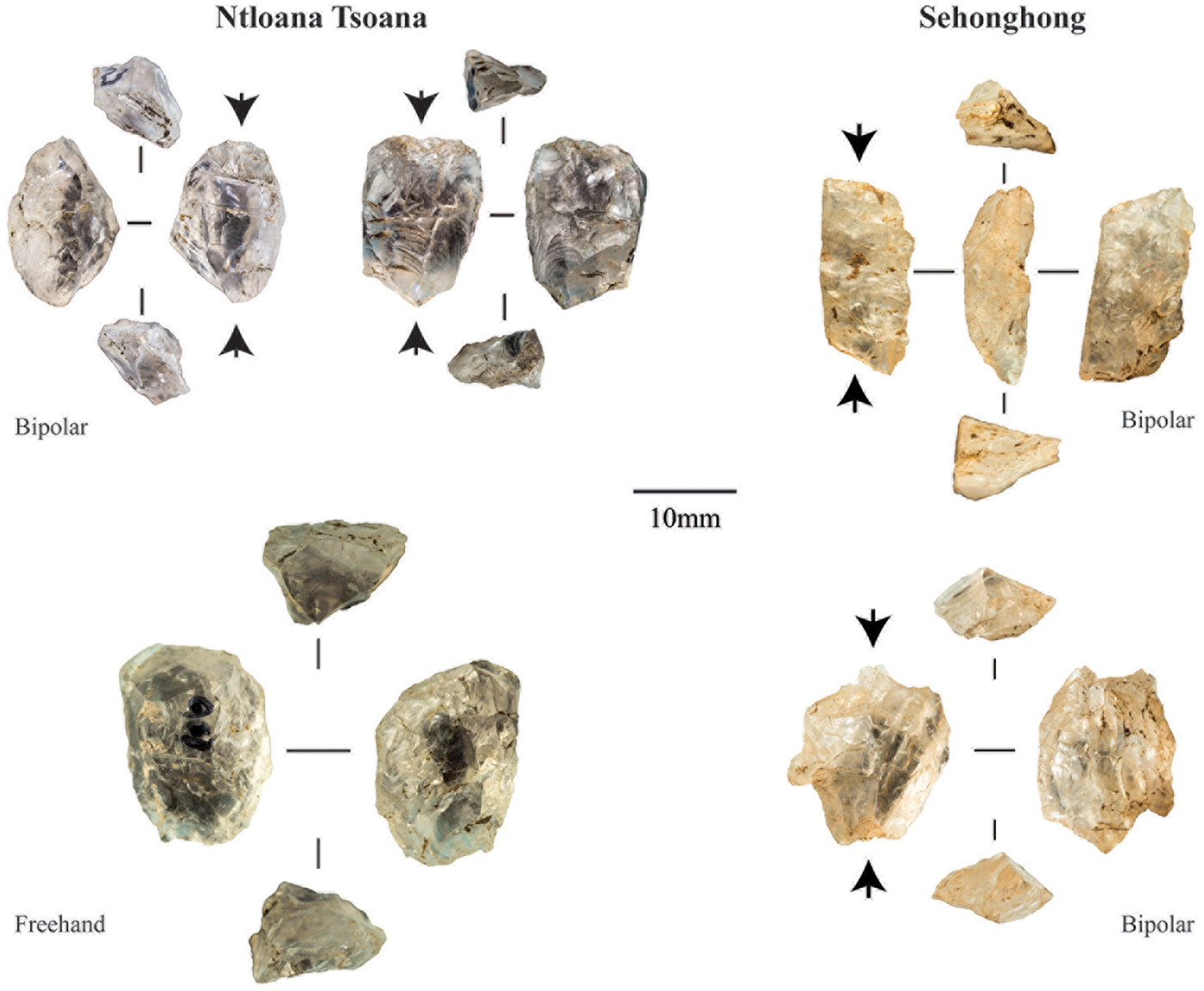
Quartz crystal core and flake frequencies from Sehonghong and Ntloana Tšoana.

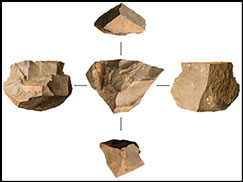
The small quartz crystal cores occur in two primary shapes: flat/thin and narrow/pointed (Figure 6). Toolmakers produced all of the quartz crystal cores at Sehonghong, and 60 per cent of those at Ntloana Tšoana with a bipolar (hammer and anvil) technique (Table 1). Their frequently crushed platforms and distal ends, as well as the bidirectional flake scars on the quartz crystal core surfaces, support this interpretation. Approximately 40 per cent of the Ntloana Tšoana quartz crystal cores show evidence of having been reduced using a freehand reduction strategy. It is remarkable, given the small size of these cores (most less than 10mm long), that toolmakers were able to reduce some of them in-hand. In contrast, the average freehand CCS core is between 20 and 40mm long.
Quartz crystal core types.

Why would toolmakers select quartz crystal?
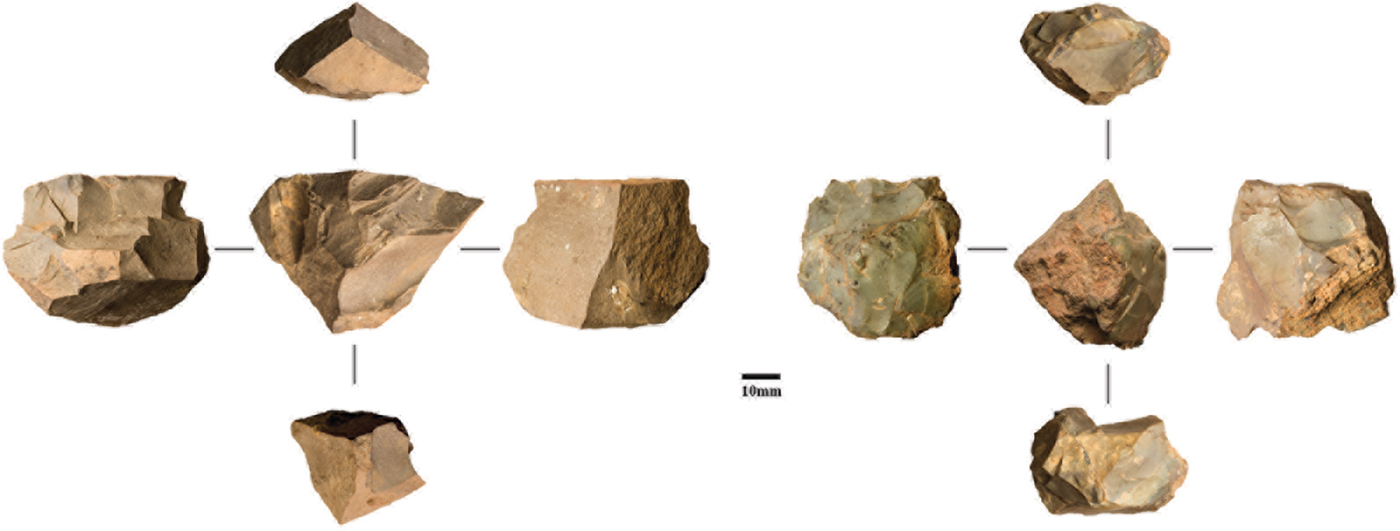
Possible explanations for the selection of quartz crystal at this time include raw material scarcity, functional specificity, technological requirements or some other as yet unexplained variable. The presence of large stone chunks and manuports (both weighing approximately 100g) in the Sehonghong and Ntloana Tšoana lithic assemblages demonstrates that toolmakers had options when choosing which size of rocks to knap and when to abandon them (Figure 7). Clearly, toolmakers chose to reduce quartz crystals to very small sizes for reasons unrelated to anxieties over raw material availability. Moreover, the stratigraphic layers under consideration here contain large freehand cores that were abandoned without further bipolar reduction. Quartz crystal reduction was a strategic choice, and not necessarily a fixed, constant reflex reaction to raw material scarcity.
Minimally worked CCS nodules from Sehonghong.

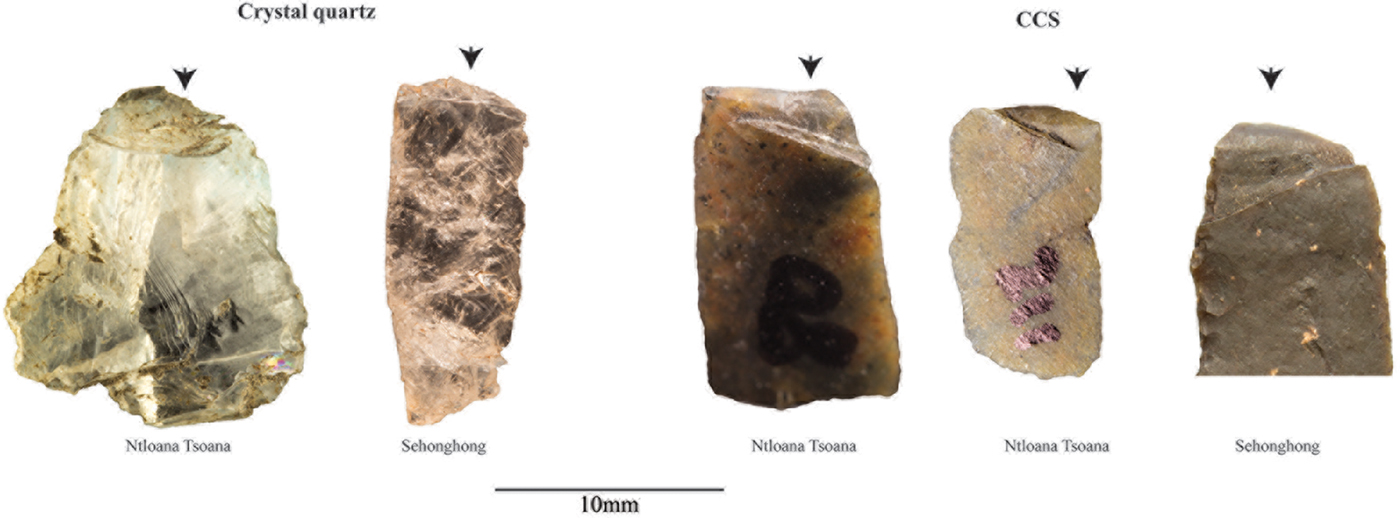
A further possibility is that toolmakers targeted quartz crystal for its ability to produce sharp cutting edges. Quartz crystal is unique amongst southern African rocks in having glass-like qualities that produce extremely sharp edges. This raw material, therefore, was an obvious choice for producing small cutting implements. Statistical comparisons of flake cutting edge to mass ratios on crystal quartz, CCS and ‘other’ (dolerite and quartzite) raw materials show significant differences [F(2, 1085) = 4.6, p = 0.01]. This result, however, has a low effect size (Cohen's f = 0.09—a measure of the magnitude of a statistical result), suggesting that the two samples are actually very similar. While several of the quartz crystal flakes have evidence of impact fractures, suggesting their possible use as components in hunting implements (Figure 8), detailed use-wear data to confirm this are currently lacking. These fracture types, however, were also found on non-quartz crystal flakes, indicating that this pattern of use is not unique to quartz crystal. We cannot rule out the possibility, as suggested elsewhere (e.g. Wadley & Mohapi Reference Wadley and Mohapi2008), that, due to their brittle and friable qualities, some quartz crystal tools were hafted and used in specific ways. The available data, however, suggest their use in similar ways to other available raw materials.
Possible impact fractures.

Perhaps the Sehonghong and Ntloana Tšoana toolmakers targeted quartz crystals because the unique elongated, faceted, external morphology provided an efficient means of producing thin and elongated flakes. We conducted a series of one-way ANOVAs to compare the effect of raw material on flake elongation (calculated as flake length/width) and flatness (width/thickness) (Figure 9). Our results show the impact of raw material on flake elongation [F(2, 1573) = 21.38, p < 0.01] and flatness [F(2, 1134) = 16.24, p < 0.01], but with low effect sizes (Cohen's f = 0.13 and 0.16, respectively) between the quartz crystal, CCS, and ‘other’ raw material groups. Combined, these results suggest that toolmakers did capitalise on the geometric properties of quartz crystals in order to produce flatter and more elongated flakes, but that they did so equally as well using other locally available rocks.
Flake elongation, flatness and raw material comparisons.

Discussion
Our data reveal similarly dated spikes in quartz crystal reduction at Sehonghong and Ntloana Tšoana. Toolmakers chose to procure quartz crystals and then to reduce them systematically to exceedingly small sizes, predominantly using a bipolar strategy. This decision-making process is striking, given the abundance of fine-grained silicate rocks within 1km of both sites. Raw material scarcity, therefore, does not fully explain the use of quartz crystal, the use of which at Sehonghong and Ntloana Tšoana represents a time-restricted change in practice from these otherwise CCS-dominated assemblages. Similar punctuated patterns of quartz crystal reduction occurred in the Still Bay and Howiesons Poort assemblages at Sibudu Cave and Umhlatuzana rockshelter, where their use is equally associated with restricted selection practices and hunting activities. Some of these uses specifically harnessed the brittle nature of quartz crystal in such a way that it dislodged and broke within prey. Toolmakers were clearly aware of where quartz crystals could be sourced, and of their unique physical properties. The data suggest a complex relationship between the symbolic and functional interpretations of quartz crystal in southern Africa.
Our results show a significant relationship between flake elongation, flatness and quartz crystal, but at low practical effect sizes. Elongated flake or bladelet production were key technological innovations in Late Pleistocene southern Africa that toolmakers appear to have been equally comfortable executing across a wide range of raw materials. After c. 26 ka cal BP, many of the region's lithic assemblages indicate some form of bladelet production, either through freehand or bipolar reduction (Mitchell Reference Mitchell1988). This technological pattern suggests a widespread engagement with laminar technologies and the prismatic core structures that contribute to the success of blade and bladelet production—especially those from narrow, cylindrical cores. These prismatic cores can be difficult to prepare, and the techniques can take considerable skill and time to master. Quartz crystals would have provided toolmakers with a naturally occurring prismatic structure, without the need to prepare one. Knapping quartz crystals would have required a specialised form of material engagement unique to a crystal's narrow cylindrical form, faceted exterior margins and brittle flaking properties. The choice to engage with quartz crystals—irrespective of wider raw material availability—demonstrates agency and variability in the choices of technology.
How widespread were these patterns across southern Africa and in other parts of the world? Our brief literature review suggests that several regions share unique and conspicuous episodes of quartz crystal use. The ethnohistoric literature clearly highlights widespread similarities in the selection and reverence of quartz crystal. Our brief exploration into the use of crystal quartz in Terminal Pleistocene Lesotho challenges several functional interpretations. We find little evidence to suggest that hunter-gatherers selected crystal quartz out of necessity or to make exclusively shaped or efficient artefacts. Yet our investigation demonstrates that toolmakers were acutely aware of the sources and the unique physical properties of these minerals—and indeed that they chose to select them at specific moments in time. Further insights into the complex relationships between humans and artefacts could be gained by examining spatial patterning to discern whether quartz was clustered around hearths, alongside ochre, or around particular faunal elements. It remains a challenge to define the precise significance and limits of these patterns (if, indeed, they exist), as few archaeological reports distinguish between crystal and non-quartz crystal varieties. There is clearly much to be gained by parsing out these differences (see Barham Reference Barham1992; Wadley Reference Wadley1992), and we encourage future research on the spatial and temporal differences within and between different quartz tools. A careful consideration of materiality not only helps bring together symbolic, environmental and economic factors, but also provides possibilities to study broader patterns of human materiality.
Acknowledgements
The authors wish to thank Peter Mitchell, Charles Arthur and Peter Veth for access to archaeological collections and comments on an earlier draft. They also thank the Leakey Foundation and the Marie Skłodowska-Curie Fellowship for financial support. We dedicate this paper to Clara.