Introduction
Children of parents with psychiatric disorders are at risk of poor development in a range of areas, including social, cognitive, emotional and behavioural (Rutter & Quinton, Reference Rutter and Quinton1984; Larsson et al. Reference Larsson, Knutsson-Medin, Sundelin and Von Werder2000; Whitaker et al. Reference Whitaker, Orzol and Kahn2006; Davé et al. Reference Davé, Sherr, Senior and Nazareth2008; Fihrer et al. Reference Fihrer, McMahon and Taylor2009; Avan et al. Reference Avan, Richter, Ramchandani, Norris and Stein2010; Baker & Iruka, Reference Baker and Iruka2013; Kingston & Tough, Reference Kingston and Tough2014). Consequently, it has long been recommended that clinicians consider the impact of the parent's psychiatric symptoms on the developing child in both treatment and discharge planning (Nicholson et al. Reference Nicholson, Geller, Fisher and Dion1993; Cook & Steigman, Reference Cook and Steigman2000; Reupert & Maybery, Reference Reupert and Maybery2007; Maybery & Reupert, Reference Maybery and Reupert2009; Jones, Reference Jones2016). Despite advances in the implementation of family-focused care for parental psychiatric disorders in many countries, family mental health remains a major public health issue (Falkov et al. Reference Falkov, Goodyear, Hosman, Biebel, Skogøy, Kowalenko, Wolf and Re2016). Currently, the evidence base to support the rationale for family-focused interventions for parental psychiatric disorders primarily relates to the risk of offspring developing psychopathology and/or behavioural difficulties. The current study aims to add to this evidence base by investigating the association between parental psychiatric disorders and child school readiness.
Children exposed to parental psychiatric disorder in the early childhood period are at risk of finishing secondary school with lower academic abilities than their peers (Pearson et al. Reference Pearson, Bornstein, Cordero, Scerif, Mahedy, Evans, Abioye and Stein2016; Shen et al. Reference Shen, Magnusson, Rai, Lundberg, Lê-Scherban, Dalman and Lee2016). It is less clear, however, whether this impact is evident at the commencement of school. Examining the school readiness scores of children of parents with psychiatric disorders can help reveal these relationships. School readiness is a concept that incorporates the cognitive, emotional, psychosocial, physical and communicative abilities that rapidly develop during early childhood (Forget-Dubois et al. Reference Forget-Dubois, Lemelin, Boivin, Dionne, Séguin, Vitaro and Tremblay2007; Garon et al. Reference Garon, Bryson and Smith2008). Children who are behind their peers on these developmental outcomes at school commencement tend to have a lower academic trajectory than their ‘school ready’ peers (Duncan et al. Reference Duncan, Dowsett, Claessens, Magnuson, Huston, Klebanov, Pagani, Feinstein, Engel, Brooks-Gunn, Sexton, Duckworth and Japel2007; Forget-Dubois et al. Reference Forget-Dubois, Lemelin, Boivin, Dionne, Séguin, Vitaro and Tremblay2007). If parental psychiatric disorder is associated with poor school readiness in children, this would indicate a significant area of intervention to support these children during an important stage of development.
There is some existing evidence that suggests parental psychiatric disorder may be associated with poor school readiness in children. Across various studies, parental psychiatric disorder has been associated with children not adjusting well to the school experience, having lower attainment in pre-academic skills, and experiencing poorer social, behavioural and emotional development in early childhood (Sinclair & Murray, Reference Sinclair and Murray1998; Brennan et al. Reference Brennan, Hammen, Adersen, Bor, Najman and Williams2000; Davé et al. Reference Davé, Sherr, Senior and Nazareth2008; Mensah & Kiernan, Reference Mensah and Kiernan2010; Loomans et al. Reference Loomans, van der Stelt, van Eijsden, Gemke, Vrijkotte and Van den Bergh2011; Kersten-Alvarez et al. Reference Kersten-Alvarez, Hosman, Riksen-Walraven, Van Doesum, Smeekens and Hoefnagels2012; Baker & Iruka, Reference Baker and Iruka2013). However, studies have yet to examine outcomes of children on a comprehensive measure of school readiness that incorporates the multiple developmental domains that underlie academic success. The overall aim of the current study is to investigate whether school entry abilities are an important focus of evaluation for children of parents with psychiatric disorders at a severity level requiring hospitalisation. Importantly, these investigations will include both mothers and fathers with psychiatric disorders: since 1984, only around 25% of studies published in prominent clinical and developmental psychology journals have examined the effects of psychiatric disorders in fathers separately to mothers (Parent et al. Reference Parent, Forehand, Pomerantz, Peisch and Seehus2017). There is therefore a need to broaden the evidence regarding outcomes of children of fathers with psychiatric disorders.
This study uses a population-based sample of children at school entry, with school readiness scores linked to administrative data on parental psychiatric hospitalisations. We hypothesise that children whose mother or father had a psychiatric hospitalisation during the early childhood period will be at increased risk of lower school readiness, compared with children of parents who did not. We also examine whether children's school readiness varies by different characteristics of their parent's psychiatric history: chronicity and severity of symptoms (as indexed by frequency and duration of psychiatric hospitalisations), and primary psychiatric diagnosis.
Method
This linked-data study used anonymised administrative data merged across multiple government agencies. Ethical approval was granted by the Western Australian (WA) Department of Health Human Research Ethics Committee, the University of Western Australia Human Research Ethics Committee, and the WA Aboriginal Health Ethics Committee.
Study population
The study included children born in WA during 2003–2004 with a 2009 Australian Early Development Census (AEDC) record (N = 19 071; mean age 5.5 years, s.d. = 0.29). Details of sample exclusion criteria can be found in the supplementary materials. Maternal health and demographic information was available for all children, and paternal health and demographic information for 18 876 children (99%).
Outcome measure
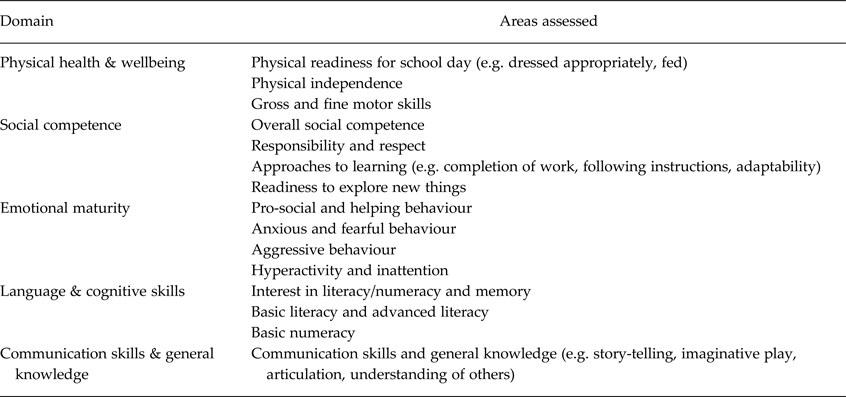
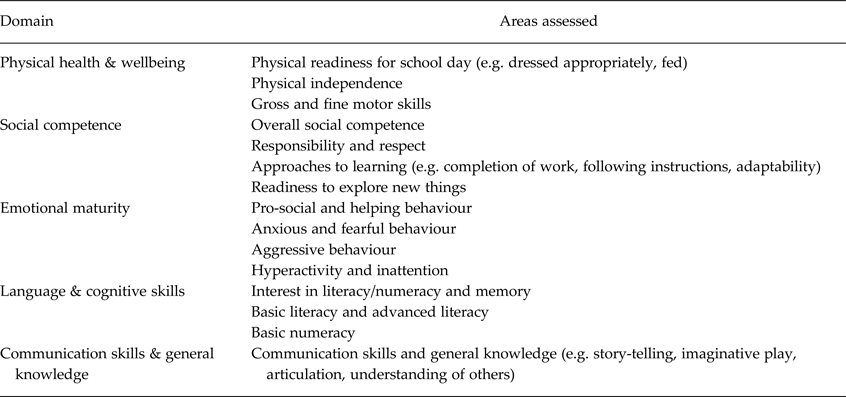
Children's school readiness was assessed by the AEDC, which uses the Australian version of the Early Development Instrument (AvEDI; Janus et al. Reference Janus, Brinkman, Duku, Hertzman, Santos, Sayers, Schroeder and Walsh2007). The AEDC is completed nationally every 3 years on children in their first year of formal schooling (in WA this is the year prior to grade one). The EDI is a reliable and valid measure (Brinkman et al. Reference Brinkman, Silburn, Lawrence, Goldfeld, Sayers and Oberklaid2007; Forget-Dubois et al. Reference Forget-Dubois, Lemelin, Boivin, Dionne, Séguin, Vitaro and Tremblay2007; Janus et al. Reference Janus, Brinkman and Duku2011), which predicts children's academic achievement and socio-emotional development throughout elementary school (Forget-Dubois et al. Reference Forget-Dubois, Lemelin, Boivin, Dionne, Séguin, Vitaro and Tremblay2007; Brinkman et al. Reference Brinkman, Gregory, Harris, Hart, Blackmore and Janus2013; Davies et al. Reference Davies, Janus, Duku and Gaskin2016; Guhn et al. Reference Guhn, Gadermann, Almas, Schonert-Reichl and Hertzman2016). In the second quarter of the academic year (May–July), teachers complete the 104 item AvEDI for each child in their class, from which a score (from 0 to 10) is calculated for each of five developmental domains (see Table 1 for a description). Domain scores are analysed at the national level and classified into percentiles. Children who score in the bottom 10% on a domain are considered ‘developmentally vulnerable’ on that domain; those in the bottom 10–25% as ‘at risk’; and those in the top 25–75% as ‘on track’. For this study, these three categories were collapsed into two (‘vulnerable/at risk’ and ‘on track’) to capture established and emerging developmental vulnerability.
Description of domains assessed for the Australian Early Development Census
Parental psychiatric disorders
Parents with psychiatric disorders were identified from the Hospital Morbidity data collection provided by the WA Department of Health. This dataset contains information on episodes of care for all public and private hospital separations. In this dataset, diagnoses are recorded using the International Classification of Diseases, Tenth Revision, Australian Modification (ICD-10-AM; National Centre for Classification in Health, 2004) coding (see the Supplementary materials for a list of ICD-10-AM codes used in this study). Parents were identified as having a psychiatric hospitalisation if they had at least one record of a hospitalisation where the primary diagnosis was a psychiatric disorder, or if they were admitted for a self-inflicted injury or poisoning and were subsequently transferred to psychiatric care. The study period started 12 months prior to the cohort member's birth and up to the end of 2009. This period was chosen to capture the impact of psychiatric disorders on parenting, which includes the prenatal period.
Frequency and duration of parental psychiatric hospitalisations were identified to obtain a real-world proxy for chronicity and severity of parental psychiatric disorder. More frequent and/or longer duration hospitalisations were considered as a marker of more severe and chronic disorders (Montgomery & Kirkpatrick, Reference Montgomery and Kirkpatrick2002). All parental records meeting the above criteria were summed to determine the total number (frequency) of psychiatric hospitalisations a parent had during the study period. Length of stay (measured in days) was calculated for each hospitalisation. Children were grouped into one of four categories according to their parent's total psychiatric hospitalisations and length of hospital stay: ‘no admissions’, ‘1 admission, 1 day,’ ‘1 admission, 2 or more days,’ and ‘multiple admissions.’ This information was entered into the regression models as a four-level categorical variable, with ‘no admissions’ as the reference group.
Primary psychiatric diagnosis for each hospitalisation was also identified, grouped under major diagnostic categories (e.g. mood disorder, anxiety disorder). Only one primary diagnosis is recorded for each hospitalisation; however, parents with multiple hospitalisations may have multiple primary psychiatric diagnoses recorded. Children whose parents had only one primary psychiatric diagnosis recorded in the study period were grouped into the corresponding major diagnostic category; children whose parents had multiple primary diagnoses were grouped into a separate category, ‘comorbid’ parental psychiatric disorder.
Covariates
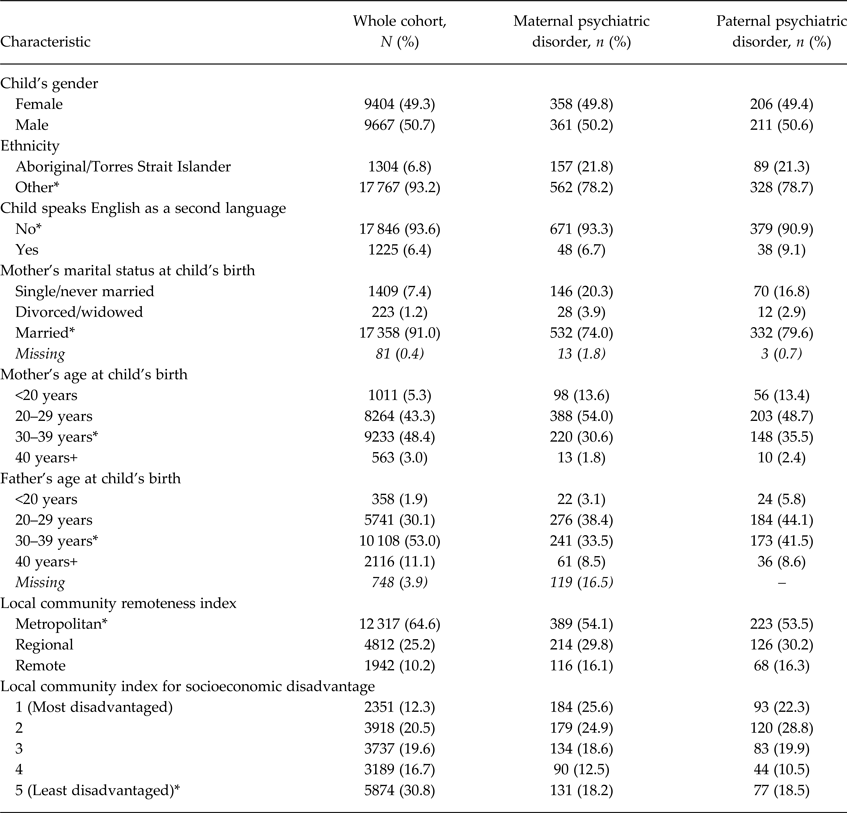
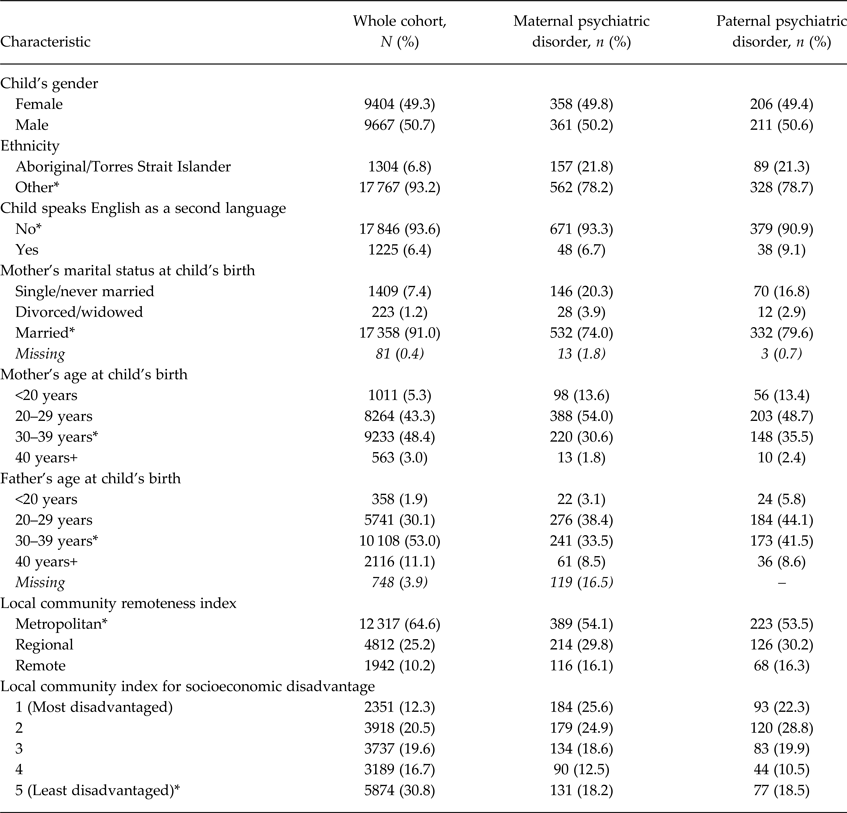
Child, parent and community sociodemographic characteristics were included as covariates in the regression models, transformed into binary or continuous categorical variables with the category representing lower risk coded as the reference group. Covariates are listed in Table 2, and further details on data sources are included in the supplementary materials. Variables were selected based on findings of previous studies documenting an association with developmental outcomes of children (e.g. Cooksey, Reference Cooksey1997; Boyle et al. Reference Boyle, Georgiades, Racine and Mustard2007; Chen et al. Reference Chen, Wen, Fleming, Demissie, Rhoads and Walker2007; Morinis et al. Reference Morinis, Carson and Quigley2013). Aboriginality was included as a proxy variable for a range of contextual factors that Aboriginal children and their families may experience, which may impact on health and developmental outcomes, such as institutional and interpersonal racial discrimination, reduced access to resources and opportunities, racial disparities in socioeconomic status, an increased incidence of psychosocial stressors and intergenerational impacts of trauma (De Maio et al. Reference De Maio, Zubrick, Silburn, Lawrence, Mitrou, Dalby, Blair, Griffin, Milroy and Cox2005; Priest et al. Reference Priest, Baxter and Hayes2012; Priest et al. Reference Priest, Perry, Ferdinand, Paradies and Kelaher2014; Williams et al. Reference Williams, Priest and Anderson2016).
Sociodemographic characteristics of the sample
* Reference group for logistic regressions.
Statistical analysis
Logistic regression models were fitted with maximum-likelihood estimation using SAS version 9.3 for Windows (SAS Institute Inc, 2010). Unadjusted and adjusted odds ratios (OR) and 95% confidence intervals (CI) were estimated for each domain. Holm's p-value correction was applied to account for multiple hypothesis testing (Holm, Reference Holm1979; Gaetano, Reference Gaetano2013).
Results
Descriptive statistics
Compared to children whose parents had no psychiatric hospitalisations, the sample of children whose parents had been hospitalised for psychiatric care included a higher proportion of children who were Aboriginal, born to young or unmarried parents, and living in disadvantaged areas (Table 2).
A total of 1082 (5.7% of the total cohort) children had a parent with a psychiatric hospitalisation, 54 (5.0%; 0.3% of the total cohort) of whom had two parents who had been hospitalised. There were 719 children (3.8% of the total cohort) with a mother who had a psychiatric hospitalisation during the study period; of these mothers, 283 (39.4%) had multiple hospitalisations (range 1–51 hospitalisations), and the average length of stay was 17 days (s.d. = 38 days). A total of 417 children (2.2% of the total cohort) had a father who had a psychiatric hospitalisation; of these, 182 fathers had multiple hospitalisations (43.7%; range 1–43 hospitalisations). The average length of stay in hospital for fathers was 19 days (s.d. = 52 days).
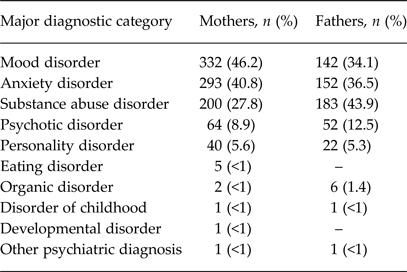
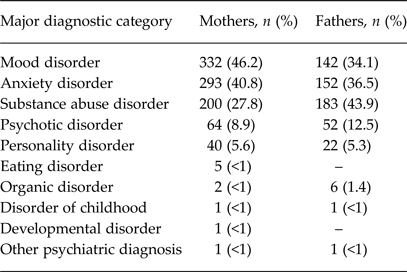
Table 3 displays the frequencies of different parental psychiatric diagnoses. For both mothers and fathers, mood, anxiety and substance abuse disorders were the most prevalent diagnoses.
Frequency of different psychiatric diagnoses
Regression analyses
Parent gender
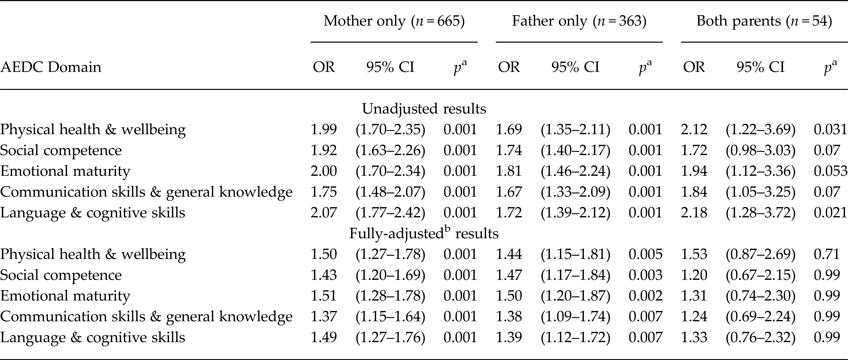
Table 4 displays the unadjusted and fully-adjusted ORs for children of parents with psychiatric disorders being classified as vulnerable/at-risk on the AEDC domains, compared with children whose parents had no psychiatric hospitalisations. Parent gender was entered into the model as a categorical predictor variable: neither parent (reference group), mother only, father only, both parents. In the unadjusted models, children with a mother, father or two parents who had been hospitalised for psychiatric care had increased odds of being vulnerable/at-risk on all AEDC domains. Adjusting for sociodemographic characteristics attenuated the results (Table 4). In the adjusted models, maternal psychiatric disorder was associated with a 37–50% increase in odds of developmental vulnerability in children, across all measured domains. Similarly, children of fathers with psychiatric disorders had increased odds of being vulnerable/at-risk on all AEDC domains (38–50% increase). After adjustment, all ORs for children with two parents with psychiatric disorders were non-significant, but consistent with an increase in odds of developmental vulnerability on all domains. To determine if there were gender-specific effects, ORs were compared for mother v. father, and both parents v. either parent, but none of these results were significant (all ps > 0.05). Overlapping CIs indicated that the association between parental psychiatric disorder and developmental vulnerability was similar for all AEDC domains.
Unadjusted and fully-adjusted odds of being classified as developmentally vulnerable/at-risk on the Australian Early Development Census as an outcome of maternal or paternal psychiatric disorder
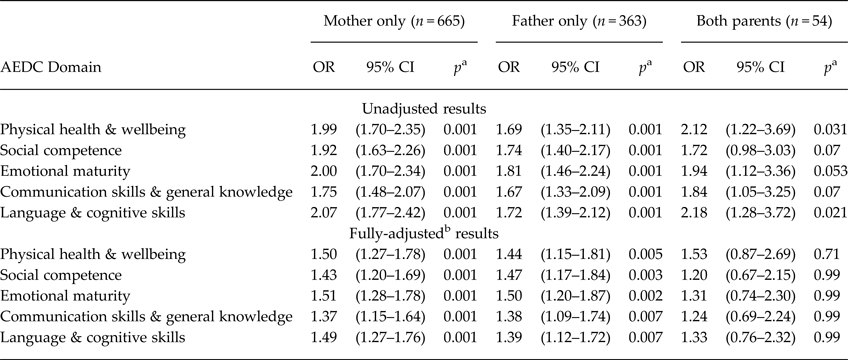
AEDC, Australian Early Development Census; OR, Odds ratio; CI, confidence interval.
a Adjusted p-values after Holm's correction applied.
b Adjusted for child Aboriginality; parent age; mother's marital status; child's ESL status; and local community socioeconomic disadvantage and remoteness indices.
We then examined the outcomes of children according to the characteristics of their parents’ psychiatric hospitalisations. As there was no significant difference between the ORs for maternal and paternal psychiatric hospitalisations in the previous models, data for mothers and fathers were combined for these analyses.
Frequency and duration of psychiatric hospitalisations
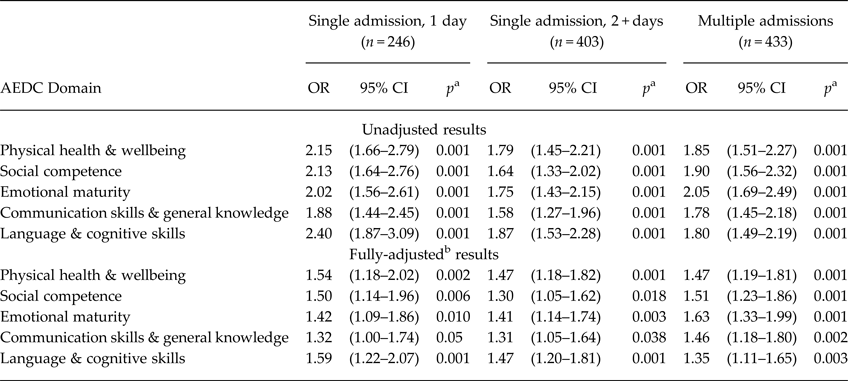
First, we investigated whether children's odds of poor school readiness varied as an outcome of the frequency and duration of their parent's psychiatric hospitalisation. For these analyses, the 54 children who had both a mother and a father with a psychiatric disorder were categorised according to the longest overall hospital stay of both parents (e.g. if a child had a mother with a single admission, single day, and a father with multiple admissions, they were categorised in the ‘multiple admissions’ group).
Table 5 shows the results of the unadjusted and fully-adjusted logistic regression models predicting the odds of children being vulnerable/at-risk on the AEDC, as an outcome of parental hospitalisation type. In the unadjusted models, there was a large and significant increase in the odds of children being vulnerable/at-risk across all AEDC domains, for all parental psychiatric hospitalisation types. Adjusting for sociodemographic characteristics attenuated the results. In the fully-adjusted models, increased odds of being vulnerable/at-risk on all AEDC domains were evident for children whose parent had only one psychiatric admission which lasted 1 day (32–59% increase); children whose parent had only one psychiatric admission which lasted multiple days (30–47% increase); and children whose parents had a history of two or more psychiatric hospitalisations (35–63% increase). Overlapping confidence intervals for all ORs indicate a similarity of effect on school readiness regardless of hospitalisation type.
Unadjusted and fully-adjusted odds of being classified as developmentally vulnerable/at-risk on the Australian Early Development Census as an outcome of parental psychiatric hospitalisation type
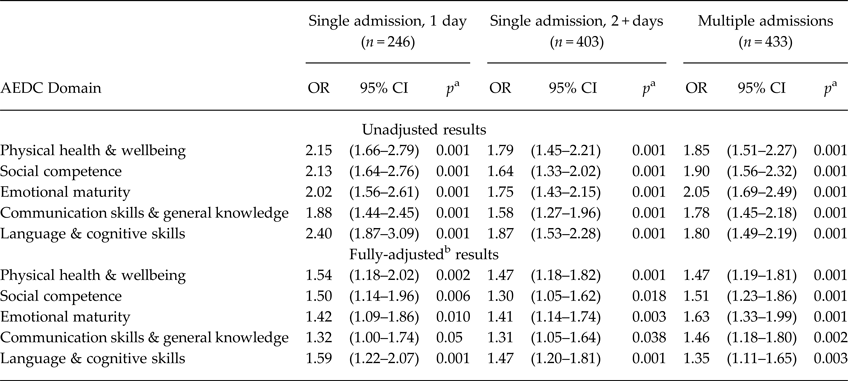
OR, Odds ratio; CI, confidence interval; AEDC, Australian Early Development Census.
a Adjusted p-values after Holm's correction applied.
b Adjusted for child Aboriginality; parent age; mother's marital status; child's ESL status; and local community socioeconomic disadvantage and remoteness indices.
Parental psychiatric diagnosis
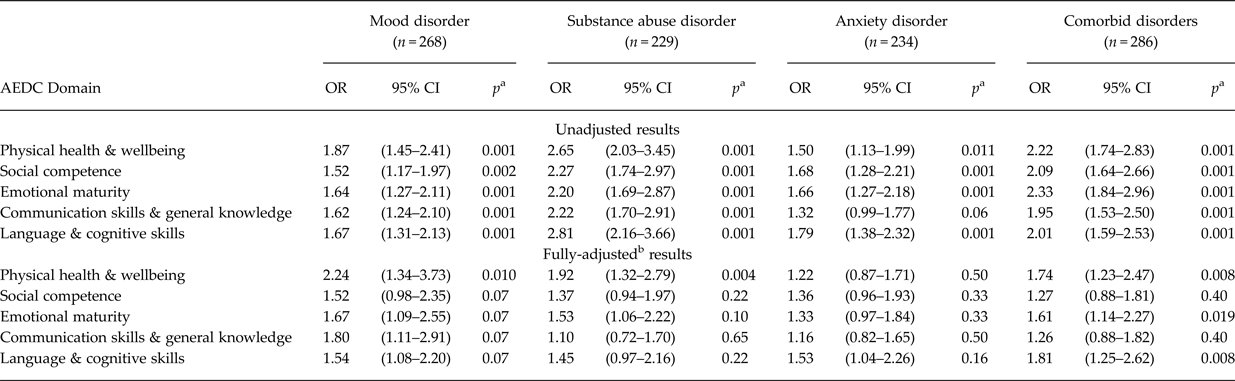
Lastly, we examined possible diagnosis-specific effects of parental psychiatric disorders on children's school readiness scores. Children were grouped for analyses according to their parent's primary diagnosis, with groupings collapsed across parent gender. Due to small numbers in other diagnostic categories, only the three most prevalent diagnoses (mood, anxiety and substance abuse disorders) were investigated separately, in addition to children whose parents had comorbid diagnoses. Children with two parents with the same primary diagnosis (n = 13) were grouped in the corresponding diagnostic category. Children with two parents who both had more than one primary diagnosis (n = 16), or two parents, each with different single primary diagnoses (n = 15) were grouped in the ‘comorbid’ category. Because a primary psychiatric diagnosis was recorded for each hospital separation, children whose parents had more than one psychiatric hospitalisation had a greater probability of being included in the ‘comorbid’ group. Consequently, logistic regression models included an additional covariate for total number of parental admissions. Models compared the odds of poor school readiness for children in each of the four diagnostic groups to children whose parents had no psychiatric hospitalisations.
The results of the unadjusted and fully-adjusted models are shown in Table 6. All ORs in the unadjusted models indicated a large and significant increase in odds of developmental vulnerability on all AEDC domains, particularly for parental substance abuse disorders (120–181% increase) and comorbid disorders (95–133% increase). ORs were attenuated after adjustment. In the fully-adjusted models, children whose parent had a primary diagnosis of mood disorder had a 114% increase in odds of being vulnerable/at-risk on the physical health and wellbeing domain. The ORs for social, emotional, communicative and cognitive domains were also consistent with an increased risk of developmental vulnerability (52–80% increase), but results were not statistically significant. Similarly, children of parents with a primary diagnosis of substance abuse disorder had a 92% increase in odds of being vulnerable/at-risk on the physical domain, with a non-significant increase in ORs for all other domains (10–53% increase). There was also a non-significant increase in odds on all AEDC domains for children whose parents had a primary diagnosis of an anxiety disorder (16–53% increase). Lastly, children of parents with comorbid psychiatric diagnoses had significantly increased odds of physical, emotional and cognitive (61–81% increase) vulnerability. The ORs for the social (27% increase) and communication (26% increase) domains were non-significant, but nevertheless consistent with an increased risk of children being developmentally vulnerable in these skills.
Unadjusted and fully-adjusted odds of being classified as developmentally vulnerable/at-risk on the Australian Early Development Census as an outcome of parental primary psychiatric diagnosis
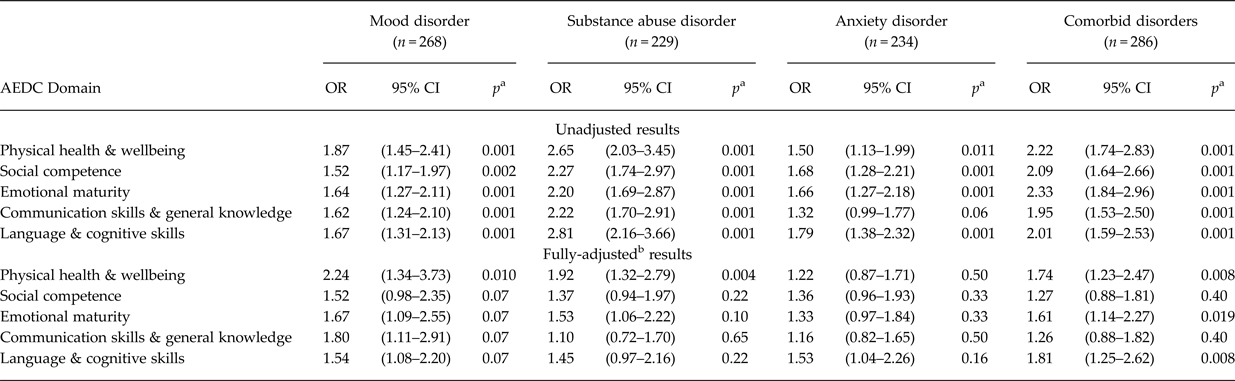
OR, Odds ratio; CI, confidence interval; AEDC, Australian Early Development Census.
a Adjusted p-values after Holm's correction applied.
b Adjusted for child Aboriginality; parent age; mother's marital status; child's ESL status; and local community socioeconomic disadvantage and remoteness indices.
Discussion
Children entering formal schooling whose parents had a psychiatric disorder severe enough to require hospitalisation were more likely to experience developmental vulnerability in all areas of school readiness (physical, social, emotional, communication and cognitive domains), compared to children whose parents had not been hospitalised for psychiatric care. This indicates that children with parents who have been hospitalised with a psychiatric disorder are at risk of starting school not ‘ready.’ Taken together with the findings that school readiness predicts later school achievement (Duncan et al. Reference Duncan, Dowsett, Claessens, Magnuson, Huston, Klebanov, Pagani, Feinstein, Engel, Brooks-Gunn, Sexton, Duckworth and Japel2007; Forget-Dubois et al. Reference Forget-Dubois, Lemelin, Boivin, Dionne, Séguin, Vitaro and Tremblay2007), and that early exposure to parental psychiatric disorders is associated with poor long-term academic outcomes (Pearson et al. Reference Pearson, Bornstein, Cordero, Scerif, Mahedy, Evans, Abioye and Stein2016; Shen et al. Reference Shen, Magnusson, Rai, Lundberg, Lê-Scherban, Dalman and Lee2016), our findings suggest that support during the transition to formal schooling is much needed for these children. There is potential for these developmental vulnerabilities to lead to children experiencing academic difficulties in later childhood, which would compound the impact of parental psychiatric illness on offspring throughout the life course.
Parent gender
Poor school readiness in children was associated with both maternal and paternal psychiatric hospitalisations, with the increase in odds of vulnerability similar regardless of parent gender. Our findings regarding maternal psychiatric disorders concurs with the existing research (e.g. Hay et al. Reference Hay, Pawlby, Sharp, Asten, Mills and Kumar2001; Anhalt et al. Reference Anhalt, Telzrow and Brown2007; Luthar & Sexton, Reference Luthar and Sexton2007; Fihrer et al. Reference Fihrer, McMahon and Taylor2009; Baker & Iruka, Reference Baker and Iruka2013). The findings relating to fathers adds to the comparatively limited literature demonstrating poor outcomes for children of fathers with psychiatric disorders (e.g. Davé et al. Reference Davé, Sherr, Senior and Nazareth2008; Ramchandani & Psychogiou, Reference Ramchandani and Psychogiou2009; Fletcher et al. Reference Fletcher, Feeman, Garfield and Vimpani2011; Gutierrez-Galve et al. Reference Gutierrez-Galve, Stein, Hanington, Heron and Ramchandani2015), and supports previous assertions that paternal and maternal mental health are equally important for children's school outcomes (Ramchandani & Psychogiou, Reference Ramchandani and Psychogiou2009).
Frequency and duration of psychiatric hospitalisations
We also examined the association between children's school readiness and the frequency and duration of parents’ psychiatric hospitalisations, as a proxy for severity and chronicity of parental psychiatric disorder. Results showed an increase in the odds of poor school readiness for children, regardless of the frequency or duration of parents’ hospitalisations. This suggests that if a parent's psychiatric illness is severe enough to require hospitalisation, even if only for a single day, there is an increased risk of adverse outcomes for the child. Psychiatric hospitalisation of a parent is reported to be one of the most stressful events these children experience, due to the upheaval this event can cause within the family (Handley et al. Reference Handley, Farrell, Josephs, Hanke and Hazelton2001; Fudge & Mason, Reference Fudge and Mason2004; Maybery et al. Reference Maybery, Ling, Szakacs and Reupert2005). Due to the nature of administrative data, we can only speculate on possible causal factors for our findings. For example, the findings may reflect the stress that children experience during the period preceding the hospitalisation (Blanch et al. Reference Blanch, Nicholson and Purcell1994; Fudge & Mason, Reference Fudge and Mason2004; Maybery et al. Reference Maybery, Ling, Szakacs and Reupert2005; Mordoch & Hall, Reference Mordoch and Hall2008; Foster et al. Reference Foster, Hills and Foster2017), or alternatively, the parent's long-term underlying psychiatric issues, which may interact with other psychosocial risk factors to impact on his/her capacity to support the child's development (Foster et al. Reference Foster, Hills and Foster2017).
Parental psychiatric diagnosis
We also investigated the possibility of diagnosis-specific effects for children's developmental vulnerability. Findings indicated that, overall, each of the psychiatric diagnoses examined were associated with an increased risk of poor school readiness for children. Of note, mood disorders, substance abuse disorders and comorbid disorders were associated with a large and significant increase in the odds of children experiencing poor physical development. The physical health and wellbeing domain of the AEDC measures aspects such as readiness for the school day, basic motor skills and physical independence in the classroom and playground. This finding may therefore reflect a particular difficulty parents with psychiatric disorders face in supporting their children's early physical development and in preparing them for attending school.
Our findings for parental mood disorders are consistent with other studies, which have demonstrated poorer cognitive, social and behavioural development for children of parents with depression, compared with children whose parents are not depressed (e.g. Hay et al. Reference Hay, Pawlby, Sharp, Asten, Mills and Kumar2001; Kersten-Alvarez et al. Reference Kersten-Alvarez, Hosman, Riksen-Walraven, Van Doesum, Smeekens and Hoefnagels2012). In relation to parental anxiety disorders, there was a non-significant increase in risk for poor school readiness, particularly for cognitive skills. This is consistent with existing research, as prenatal maternal anxiety is associated with poor cognitive development in children (e.g. Mennes et al. Reference Mennes, Stiers, Lagae and Van den Bergh2006; Bergman et al. Reference Bergman, Sarkar, O'Connor, Modi and Glover2007). Notably, in the unadjusted models, children of parents with substance abuse disorders had the highest odds of poor school readiness on all domains. After adjusting for sociodemographic characteristics, however, results were largely attenuated. This suggests that the developmental context may have a greater influence on poor school readiness for these children, rather than the parent's diagnosis. This supposition concurs with research demonstrating that children of parents with substance abuse disorders can be exposed to adverse home environments (e.g. Conners-Burrow et al. Reference Conners-Burrow, Johnson and Whiteside-Mansell2009). Finally, our finding that children of parents with comorbid disorders had increased odds of poor development on all domains is also consistent with other research (e.g. Carter et al. Reference Carter, Garrity-Rokous, Chazan-Cohen, Little and Briggs-Gowan2001; Luthar & Sexton, Reference Luthar and Sexton2007). However, it should be noted that we underestimated the number of parents with comorbid diagnoses in the study, as we only examined primary diagnosis.
Mechanisms of risk transmission
The mechanisms of risk transmission between parental psychiatric disorder and poor school readiness of children are likely to be complex and multifactorial. Our data do not permit analysis of these mechanisms, but speculations can be made based on previous research. There is evidence of disorder-specific risk factors, such as genetic vulnerabilities to maladjustment (Pemberton et al. Reference Pemberton, Neiderhiser, Leve, Natsuaki, Shaw, Reiss and Ge2010; Rasic et al. Reference Rasic, Hajek, Alda and Uher2014), and/or parental modelling of maladaptive behaviours (e.g. externalising behaviours; Pemberton et al. Reference Pemberton, Neiderhiser, Leve, Natsuaki, Shaw, Reiss and Ge2010). Children may also be exposed to risk factors that are common across different psychiatric disorders, including negative parenting behaviours (Downey & Coyne, Reference Downey and Coyne1990; Luthar & Sexton, Reference Luthar and Sexton2007; Avan et al. Reference Avan, Richter, Ramchandani, Norris and Stein2010; Baker & Iruka, Reference Baker and Iruka2013), family discord and/or marital stress (Avan et al. Reference Avan, Richter, Ramchandani, Norris and Stein2010; Barron et al. Reference Barron, Sharma, Le Couteur, Rushton, Close, Kelly, Grunze, Ferrier and Le Couteur2014; Gutierrez-Galve et al. Reference Gutierrez-Galve, Stein, Hanington, Heron and Ramchandani2015), increased rates of socioeconomic disadvantage (Barron et al. Reference Barron, Sharma, Le Couteur, Rushton, Close, Kelly, Grunze, Ferrier and Le Couteur2014), exposure to violence and crime (Conners-Burrow et al. Reference Conners-Burrow, Johnson and Whiteside-Mansell2009; Barron et al. Reference Barron, Sharma, Le Couteur, Rushton, Close, Kelly, Grunze, Ferrier and Le Couteur2014), lack of social support and/or social stigma (Anhalt et al. Reference Anhalt, Telzrow and Brown2007; Barron et al. Reference Barron, Sharma, Le Couteur, Rushton, Close, Kelly, Grunze, Ferrier and Le Couteur2014) and increased rates of out-of-home placements and/or maltreatment (Ranning et al. Reference Ranning, Laursen, Thorup, Hjorthøj and Nordentoft2015; Matheson et al. Reference Matheson, Kariuki, Green, Dean, Harris, Tzoumakis, Tarren-Sweeney, Brinkman, Chilvers, Sprague, Carr and Laurens2016). Whatever the mechanisms are that lead to poor school readiness in children of parents with psychiatric disorders, the conceptualisation of parental psychiatric disorders as a family mental health issue is clearly important.
Implications
Our findings support earlier recommendations to incorporate evaluations of child wellbeing into psychiatric assessments for patients who are parents (Nicholson et al. Reference Nicholson, Geller, Fisher and Dion1993; Cook & Steigman, Reference Cook and Steigman2000; Reupert & Maybery, Reference Reupert and Maybery2007; Maybery & Reupert, Reference Maybery and Reupert2009; Jones, Reference Jones2016), and suggest that consideration of the child's functioning at school is also important. School provides vulnerable children with opportunities for building resilience and self-esteem (Gilligan, Reference Gilligan2000). Children of parents with psychiatric disorders would therefore likely benefit from having a solid foundation of physical, social, emotional and cognitive competence that enables them to take advantage of these opportunities. Currently, children of parents with psychiatric disorders may only be identified as requiring support once they present with an established emotional, behavioural or academic difficulty, or if they are under the protection of the child welfare system (Nicholson et al. Reference Nicholson, Biebel, Hinden, Henry and Stier2001; Pfeiffenberger et al. Reference Pfeiffenberger, D'Souza, Huthwaite and Romans2016). A preventative approach would involve implementing strategies prior to (or regardless of) these difficulties in the child, commencing when the parent presents for inpatient treatment. When psychiatric patients are parents of young children, it may be necessary to shift focus away from individualised treatment towards a family-based model of care that incorporates collaborative relationships with multiple services (e.g. medical, mental health, education and early childhood; Blanch et al. Reference Blanch, Nicholson and Purcell1994; Falkov et al. Reference Falkov, Goodyear, Hosman, Biebel, Skogøy, Kowalenko, Wolf and Re2016; Afzelius et al. Reference Afzelius, Östman, Råstam and Priebe2017). Adult psychiatric interventions that consider the family context have been shown to reduce the burden of parental psychiatric disorders on children and young people (Falloon, Reference Falloon2003; Gatsou et al. Reference Gatsou, Yates, Goodrich and Pearson2017; Thanhäuser et al. Reference Thanhäuser, Lemmer, de Girolamo and Christiansen2017), demonstrating the importance of holistic interventions. Such efforts also need to be sensitive to issues of stigma and perceptions of blame, and acknowledge that some parents will be resistant to sharing information about their children for fear of child welfare involvement (Hinshaw, Reference Hinshaw2005).
Limitations
A limitation of this study is that we used a dichotomous indicator for parental psychiatric disorder that does not consider the heterogeneous nature of psychiatric illness (Newson et al. Reference Newson, Karlsson and Tiemeier2011). Furthermore, we did not have a direct measure of severity and chronicity of parental psychiatric disorder; this would be beneficial to include in future research. We also did not account for timing of exposure, which may alter the association between parental psychiatric disorder and child development (Downey & Coyne, Reference Downey and Coyne1990; Hammen & Brennan, Reference Hammen and Brennan2003). In addition, in our sample, children with parents with psychiatric disorders were more likely than their peers to experience other sociodemographic risk factors, and these factors may have mediated the association between parental psychiatric disorder and children's school readiness. There are a number of other potential mediating or moderating characteristics (e.g. genetic vulnerability, parent-child relationships, presence/absence of support networks, social stigma; Gupta & Ford-Jones, Reference Gupta and Ford-Jones2014; Power et al. Reference Power, Goodyear, Maybery, Reupert, O'Hanlon, Cuff and Perlesz2016; Taback et al. Reference Taback, Zabłocka-Żytka, Ryan, Zanone Poma, Joronen, Viganὸ, Simpson, Paavilainen, Scherbaum, Smith and Dawson2016) that can influence these associations, which we did not investigate. It would also be of interest to examine the school readiness of children with parents with less prevalent diagnoses (e.g. personality disorders, psychotic disorders), which we were not able to do in this study due to limited samples. Finally, it is prudent to note that our comparison group would have included children whose parents had a psychiatric disorder, but who had received outpatient care only. As such, our conclusions are limited to children of parents who have a history of psychiatric hospitalisations and not children of parents with psychiatric disorders more generally.
Conclusion
These findings lend support to the recommendation that children of parents with psychiatric disorders need to be considered in the treatment and discharge planning for the adult. These children are at risk of developmental vulnerability on a range of competencies critical for academic success, which will likely compound over the child's academic trajectory if intervention does not take place. This impact is irrespective of the gender of the parent, the frequency/duration of hospitalisation, or the parents’ diagnosis, indicating that family-focused interventions should be considered for all psychiatric patients who are parents. Intervention for families should ideally begin early to minimise the impact of parental psychiatric disorder on a child's developmental capacities.
Supplementary material
The supplementary material for this article can be found at https://doi.org/10.1017/S2045796018000148
Acknowledgements
This article does not necessarily reflect the views of the government departments involved in this research. Thank you to the people of Western Australia for the use of their administrative data, and to the WA Data Linkage Branch and Data Custodians for providing the data and supporting the project. We acknowledge the excellent partnership between the custodians of the WA Department of Health and the Commonwealth Department of Education.
Financial support
This work was supported by an Australian Research Council Linkage Grant (grant number LP100200507).
Conflict of interest
None.
Ethical standards
The authors assert that all procedures contributing to this work comply with the ethical standards of the relevant national and institutional committees on human experimentation and with the Helsinki Declaration of 1975, as revised in 2008.
Availability of data and materials
Data are not available for sharing as they are subject to strict security measures in order to protect the privacy of the individuals whose data are made available for linkage. Access to data is only permitted for authorised researchers for this study and cannot be shared; other researchers may apply to access the data through the normal ethical and project approval procedures of the WA Department of Health.