Introduction
Mental health disorders account for 8.6 million years of life lost to premature mortality, and are the leading cause of years lived with disability worldwide (Whiteford et al. Reference Whiteford, Degenhardt, Rehm, Baxter, Ferrari and Erskine2013), ranking second only to cardiovascular disease in their impact on disability in high-income countries (Murray & Lopez, Reference Murray and Lopez1996). There is some heterogeneity in the incidence and prevalence of mental disorders across racial/ethnic populations, and long-standing controversies in the etiological origins of these differences. Whereas a body of research has focused on the intrinsic biologic variations among human subpopulations (Kaufman & Cooper, Reference Kaufman and Cooper2001), a parallel line of research has examined the social determinants of mental health and has indicated that social factors rooted in the experience of belonging to a racial/ethnic minority, marginalized group, has a significant effect on adverse mental health outcomes (Pickett & Wilkinson, Reference Pickett and Wilkinson2008).
A burgeoning body of research suggests that for racial/ethnic minority populations, there might be benefits to living in neighborhoods with a greater concentration of other racial/ethnic minority residents, a so-called ethnic density effect (Shaw et al. Reference Shaw, Atkin, Bécares, Albor, Stafford and Kiernan2012; Bécares et al. Reference Bécares, Shaw, Nazroo, Stafford, Albor and Atkin2012b). Studies suggest that ethnic density – the residential concentration of racial/ethnic minorities in a neighborhood – protects racial/ethnic minorities from the stress of racial discrimination, low status stigma, and socioeconomic disadvantage, while encouraging stronger social support and community cohesion. Understanding the contribution of ethnic density effects for mental health is important because it highlights the role of the environment, including racialization and exclusion, in maintaining and perpetuating the increased risk of mental health disorders among racial/ethnic minority populations.
However, this body of work is contentious, as protective effects are offset by the detrimental effects of concentrated poverty and disinvestment in areas with larger concentrations of racial/ethnic minority people. Previous research has been unable to disentangle the competing effects for mental health of ethnic density and area deprivation, and there are challenges in attempting to draw conclusions from diverse, international settings with distinct historical patterns of settlement and diversity. A previous narrative review was not able to quantify the magnitude of differences for mental health by ethnic density (Shaw & Pickett, Reference Shaw and Pickett2011), and sources of potential heterogeneity have hitherto remain unexplored, although understanding these may lead to important clues around underlying mechanisms for mental disorder. These issues are particularly salient given the current scale of global migration (United Nations, 2016) and policies around the forced dispersal of migrant populations to areas without previous histories of migrant settlement.
To address these controversies, we conducted a systematic review with meta-analysis and meta-regression of observational studies of mental disorders where ethnic density effects have been examined. The aim of the review and meta-analysis was to establish: (1) if ethnic density associations are evident, whether they are consistent across mental health outcomes including depression, anxiety and the common mental disorders (CMD), suicide, suicidality, psychotic experiences, and psychosis; (2) the nature and magnitude of ethnic density effects on mental disorders across and within countries, racial/ethnic groups, generational status, and by area-level deprivation.
Methods
Search strategy
Search strategies were based on and updated from a narrative review of ethnic density and mental health (Shaw & Pickett, Reference Shaw and Pickett2011) that searched the following databases: Medline, PsychINFO, Sociological Abstracts, and the Social Science Citation and Science citations from the Web of Science. We performed searches to March 2016. All reference lists for retrieved papers with potential studies for inclusion were hand-searched and first and/or last authors of all papers were contacted for further additional and unpublished data.
Eligibility
We excluded ecological studies, and studies that did not focus on adult (aged 16+) populations. We included all cross-sectional survey, case–control, or cohort-design studies that used representative population data, in order to minimize biases from differences in help-seeking from using patient-/service-level data. In order to further minimize ascertainment bias due to differences in health-seeking behavior, we restricted to studies which used community samples. As schizophreniform/psychotic disorders are rare and not usually detected in community samples for these disorders, we also included first contact studies which utilized leakage studies to identify all cases of schizophreniform disorders/psychosis, or alternatively studies which employed databases of whole populations with linkage. We also included studies of suicide which employed death certificate information, since there is no other way to ascertain this outcome from community survey-level data.
Main outcomes and measures
Ethnic density was measured as 10% increase in the residential concentration of own racial/ethnic group, for the purposes of meta-analysis. Studies had to have a measure of ethnic density and had to specify the geographical area of measurement, which had to be at the level of neighborhoods. Studies could be in a journal or book, but we also included doctoral dissertations and unpublished estimates obtained from contacting authors. Outcomes were depression, anxiety, suicidality and suicide, psychotic experiences, and schizophreniform/psychotic disorders. For some studies, it was not possible to examine depression and anxiety separately, in these instances we opted to analyze the outcome of CMD (anxiety or depression).
Search and extraction
Searches were conducted by two of the authors (JD-M and LB). Retrieved studies were compared with inclusion/exclusion criteria. Uncertainties around whether to include studies were settled by discussions between the authors. For each of the studies which met criteria for inclusion, relevant fields including medical outcomes, were extracted and cross-checked between two of the investigators (JD-M and LB). Where possible, we extracted estimates for the association of own ethnic density and mental health outcome, adjusted for age, sex, individual-level and area-level deprivation. For studies where data on ethnic density measured as a 10 percentage-point increase in the residential concentration of own ethnic group were not available, study authors were contacted for additional estimates, and in some cases, for unpublished estimates. We considered multiple publications using the same dataset as one set of analyses. There were no restrictions on language of manuscript. We were aware of two other studies for which we were co-investigators, but we could not include the data due to the publications being embargoed at the time of analysis.
Assessment of methodological quality
A small pilot study was conducted to assess the reliability of a scale devised to assess the quality of retrieved studies [based on quality assessment scales of observational studies (Khan et al. Reference Khan, Riet, Popay, Nixon, Kleijnen, Khan, Riet, Glanville, Sowden and Kleijnen2001)]. LB and JD-M independently assessed the quality of a random sample of 20 papers using this scale, blind to each other's quality ratings (see online Supplementary Table S1 for criteria in quality assessment tool). The κ for inter-rater reliability of the scale was 67%. Efforts to avoid publication biases were taken by contacting all first authors and experts in the field for unpublished data. Funnel plots were derived to formally assess this (see online Supplementary Fig. S1). We registered the review protocol with PROSPERO (registration number: CRD42014012992).
Statistical analysis
We conducted meta-analysis followed by meta-regression to examine the association between own ethnic density and the following mental health outcomes: depression, anxiety and the CMD, suicide, suicidality, psychotic experiences, and psychosis. We obtained raw data from some of the studies (Bécares et al. Reference Bécares, Nazroo and Stafford2009; Das-Munshi et al. Reference Das-Munshi, Bécares, Dewey, Stansfeld and Prince2010; Das-Munshi et al. Reference Das-Munshi, Bécares, Boydell, Dewey, Morgan and Stansfeld2012; Bécares et al. Reference Bécares, Nazroo, Jackson and Heuvelman2012a; Bécares & Das-Munshi, Reference Bécares and Das-Munshi2013; Bécares, Reference Bécares2014; Bécares et al. Reference Bécares, Nazroo and Jackson2014) which permitted us to obtain estimates adjusted for a priori confounders, including age and gender, and area-level deprivation, or if area-level deprivation was not available, adjusted only for age and gender. These were combined with estimates extracted from publications or provided by authors of publications, also adjusted for the same confounders. We then used meta-regression to assess the effect of moderators, which included: race/ethnicity, country of study, generational status. We assessed the moderating effect of area-level deprivation using datasets which had estimates adjusted for age and sex. Meta-regression models were run with fixed effects for moderators, and random effects for study. Studies which used symptom scales for depression were converted into mean differences and their standard errors using the method outlined by Chinn (Chinn, Reference Chinn2000). In each of our models, we derived an I 2-like statistic for each level of random variability. To assess for bias introduced through small study effects, we used funnel plots. Meta-analysis and meta-regression were conducted in R (Team, Reference Team2015), version 3.2.2, using the package metafor, version 1.9-8 (Viechtbauer, Reference Viechtbauer2010). To supplement findings from the meta-analysis and meta-regression, we also conducted narrative review synthesis to all papers, which relied on vote counting of studies (Popay et al. Reference Popay, Roberts, Sowden, Petticrew, Arai and Rodgers2006), based on statistical significance of results.
Results
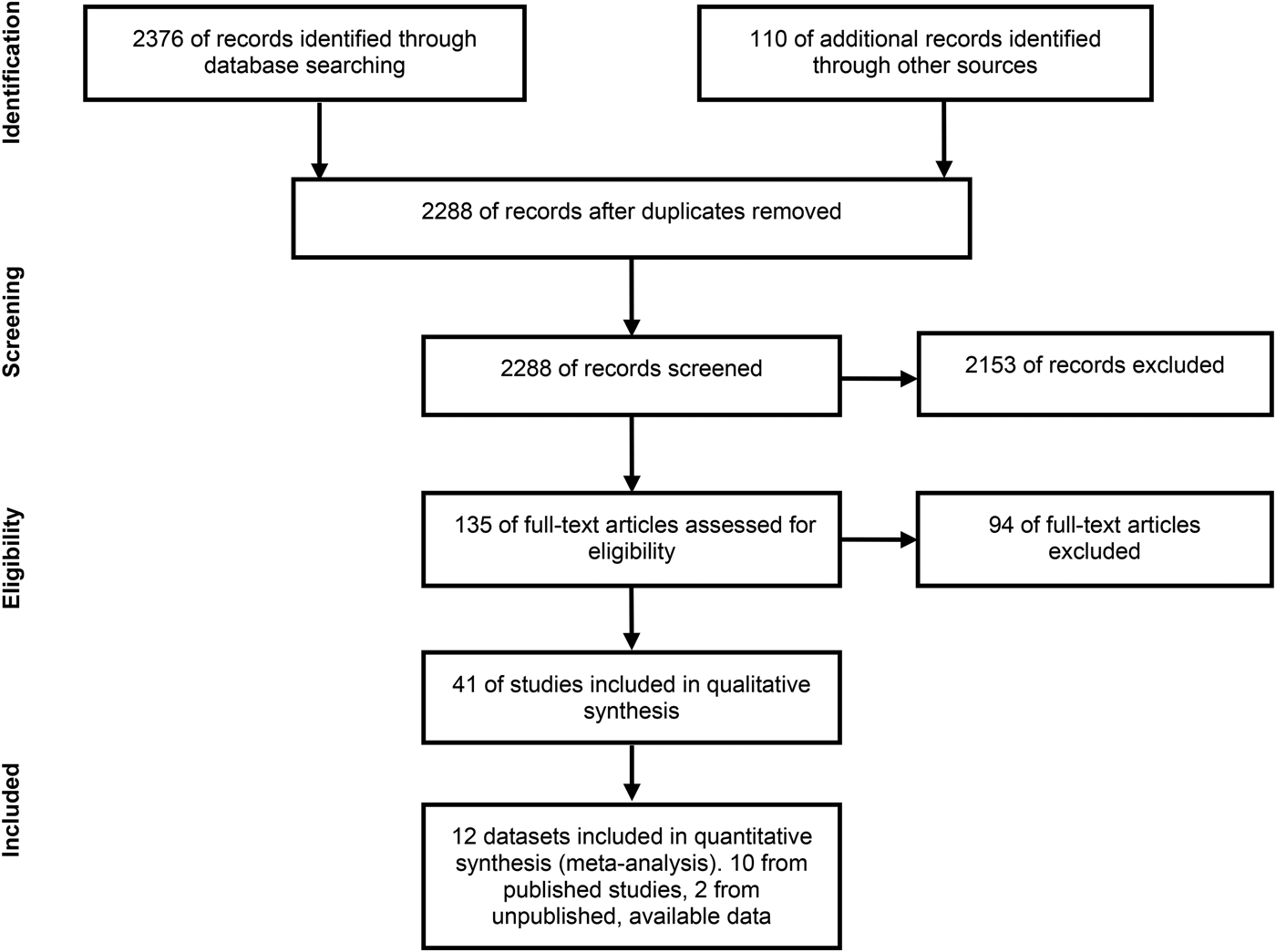
Our search retrieved 2288 articles, 135 were assessed for eligibility, and 41 studies were included in the synthesis. Of these, we were only able to include 12 studies in meta-analysis because, despite our efforts, most authors either did not respond to our requests, were unable to provide data in suitable format for meta-analysis, or no longer had access to the data (Fig. 1). In total, there were 29 studies assessing CMD, depression, and anxiety (Table 1); 12 studies assessing ethnic density associations for psychotic experiences and psychosis; and four studies assessing suicidality and completed suicide. Table 1 is ordered according to outcome and quality of studies; asterisked studies in the table provided estimates for meta-analysis. All of the studies that were included in the meta-analysis were of a moderate- to high-quality rating. No studies were excluded based on quality. We also obtained two other datasets from the UK, publicly available under end-user license agreements, which had not been published as part of any study but which we included in meta-analysis and meta-regression. For the meta-analysis and meta-regressions, we focus on datasets and not on studies, reflecting the fact that several studies may have used the same data sources, to avoid duplication. Visual assessment of funnel plots did not indicate publication biases (see online Supplementary Fig. S1).
PRISMA flow chart of studies.

Studies investigating ethnic density effects with mental health outcomes. Studies ranked according to quality assessment by outcome

Bold italic references refer to estimates included in meta-analyses; italic text indicates protective ethnic density effects; bold text indicates detrimental ethnic density effects.
*Studies contributed data to the meta-analyses.
In general, qualitative assessment of included studies (Table 1) provides support for a protective association between increased own ethnic density and reduced risk of depression, anxiety and the CMD, suicide, suicidality, psychotic experiences, and psychosis; for all outcomes over half of studies supported protective associations. This was particularly evident for psychotic experiences (3/4 studies) and suicide (2/2 studies). Negative associations were identified only in US studies. Out of 30 international studies that assessed the association between ethnic density and CMD, depression, and anxiety, six reported a detrimental effect in African American and Latino populations; all of these studies were from the USA. One of these studies examined the non-linearity of ethnic density and depression in African American people and found that the detrimental association of own ethnic density and depression was only observed at the highest level of ethnic density (85% or greater); at levels below this the association was protective (Bécares et al. Reference Bécares, Nazroo and Jackson2014).
One UK-based study (out of four) reported detrimental associations between Pakistani ethnic density and psychotic experiences. There were no studies of psychosis and suicidality in the narrative review that reported detrimental associations with ethnic density (Table 1).
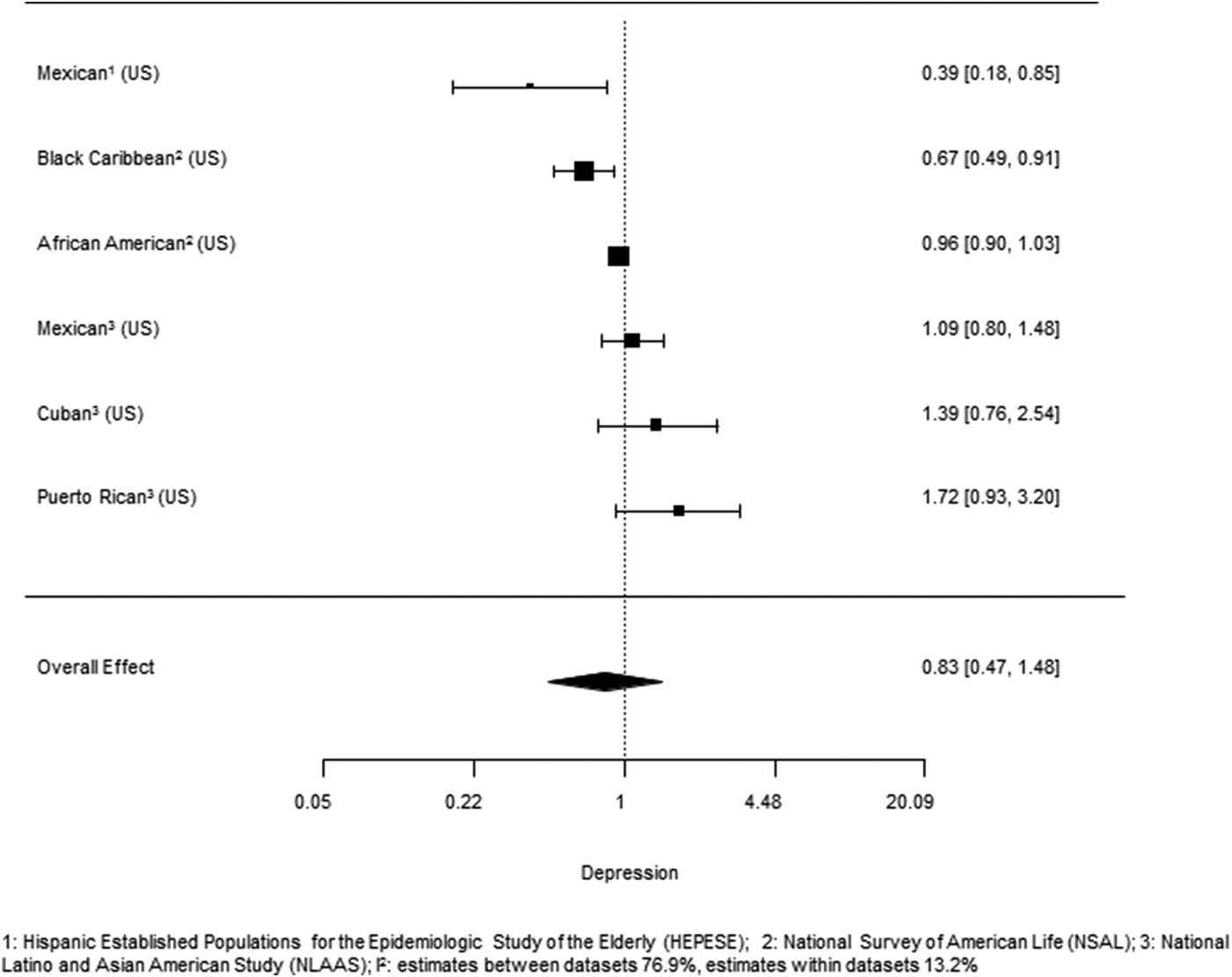
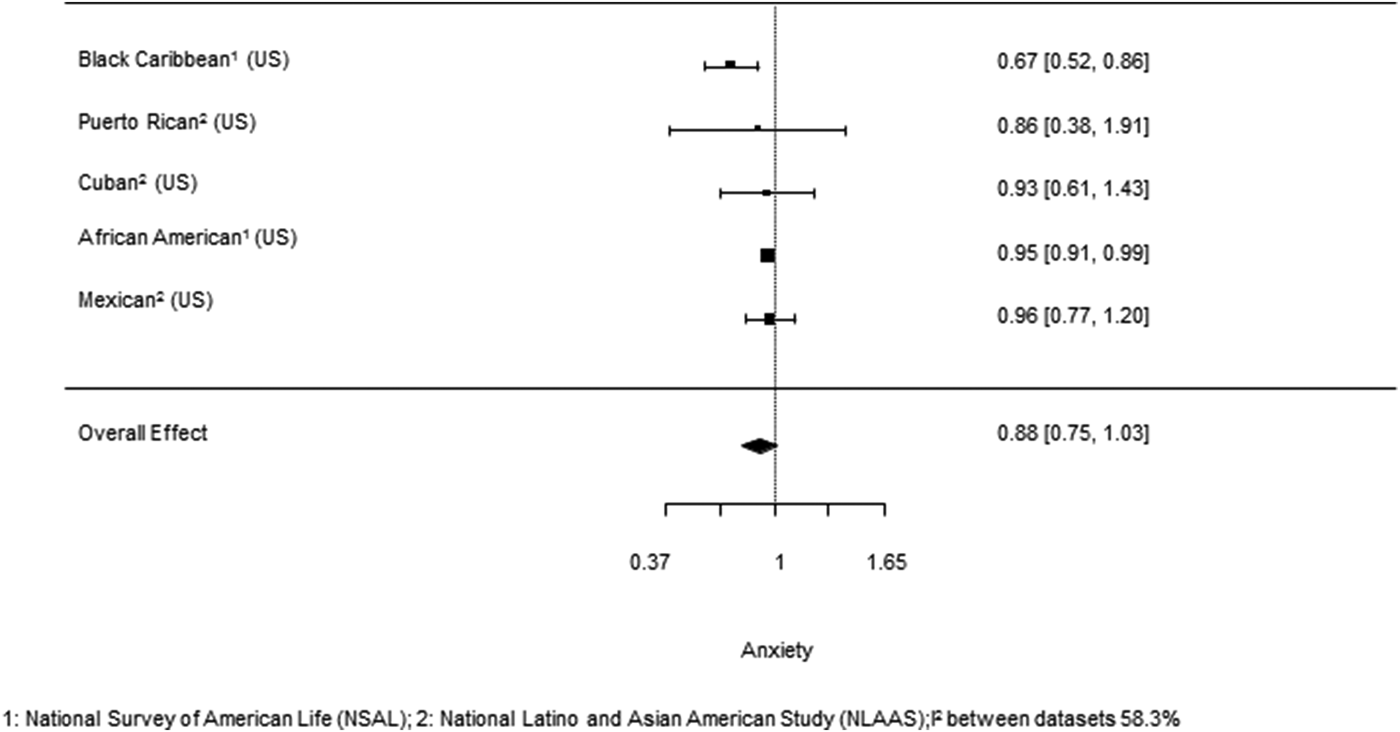
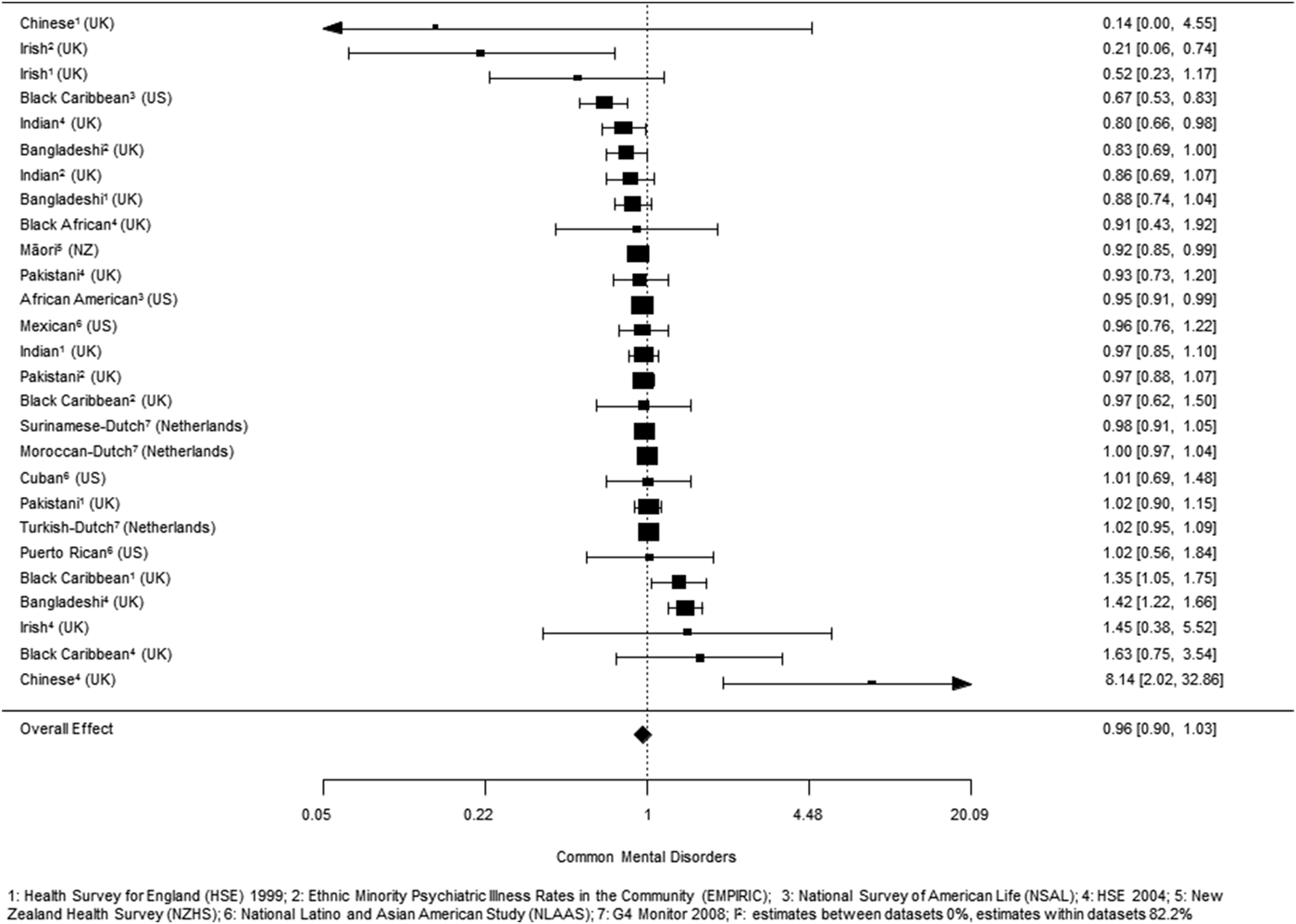
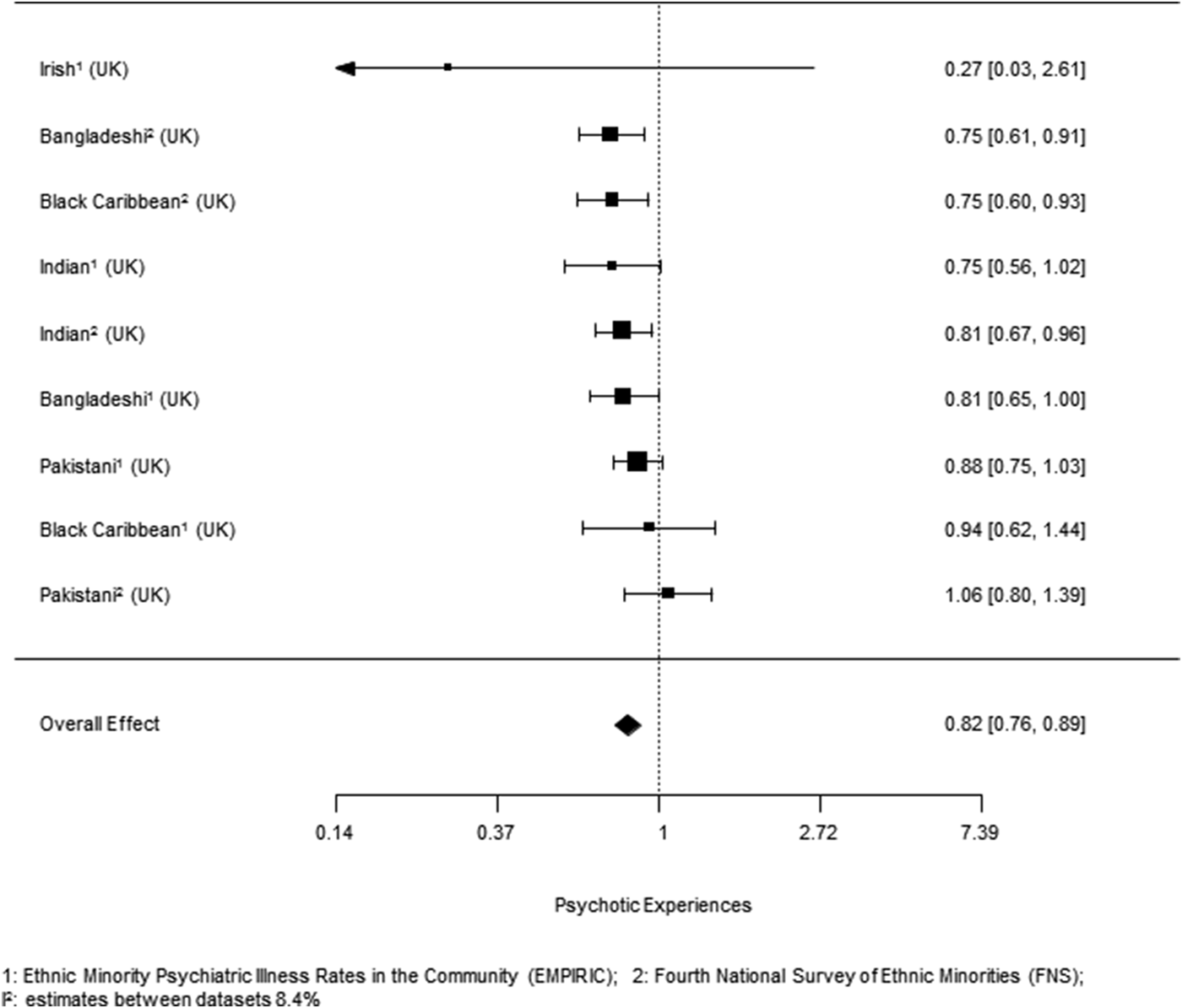
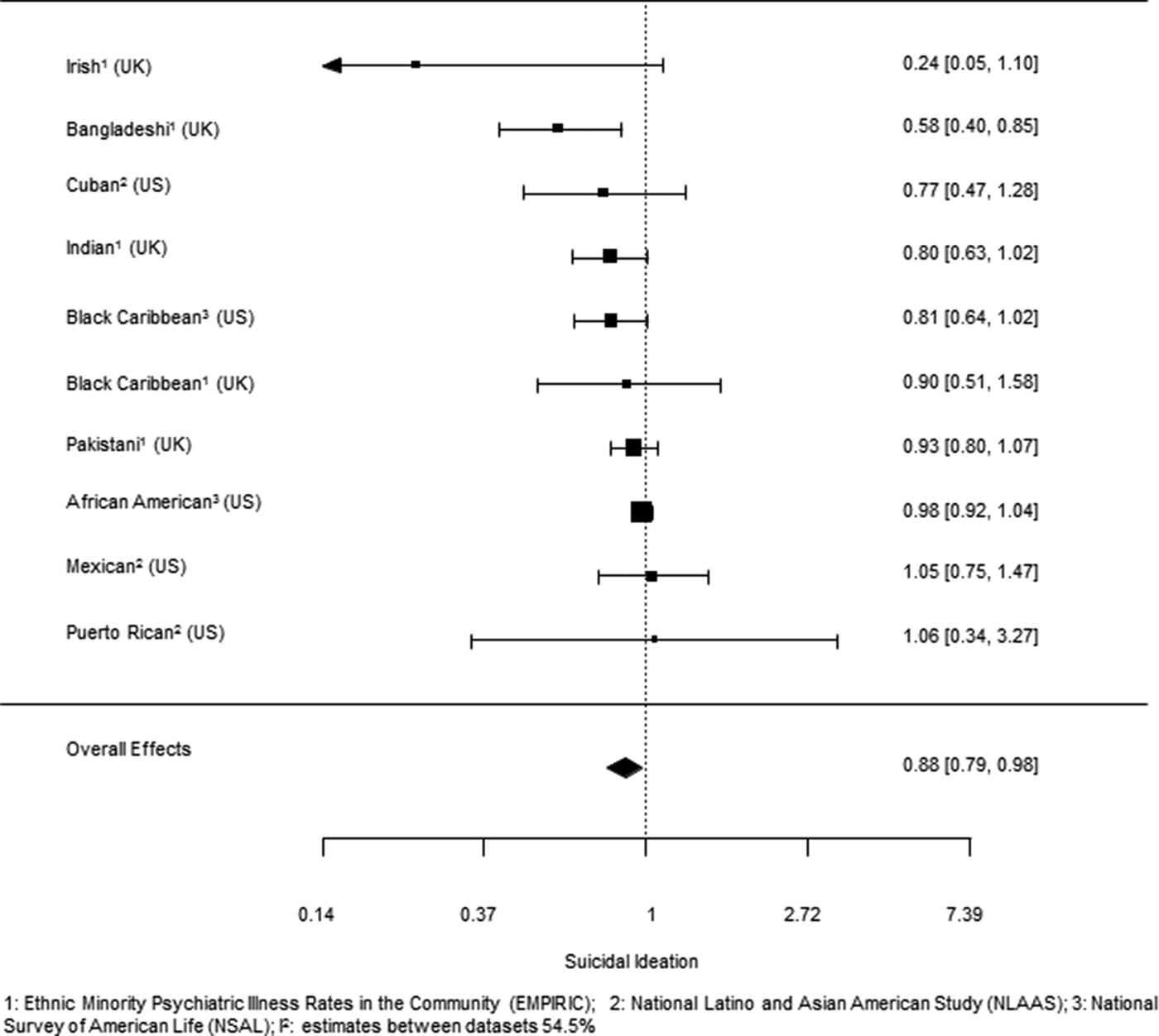
In the meta-analysis, we found that for CMD, depression, and anxiety, associations were indicative of protective effects of own ethnic density; however, 95% confidence intervals (CIs) just spanned the null (Figs 2–4). We also observed a large reduction in relative odds of psychotic experiences [odds ratio (OR) 0.82 (95% CI 0.76–0.89)] and suicidal ideation [OR 0.88 (95% CI 0.79–0.98)] for each 10 percentage-point increase in own ethnic density (Figs 5–6).
Forest plot of the association between 10% increase in own ethnic density and depression.

Forest plot of the association between 10% increase in own ethnic density and anxiety.

Forest plot of the association between 10% increase in own ethnic density and common mental disorders.

Forest plot of the association between 10% increase in own ethnic density and psychotic experiences.

Forest plot of the association between 10% increase in own ethnic density and suicidal ideation.

We assessed the role of race/ethnicity, country, generational status, and area-level deprivation as moderators in the association between own ethnic density and each of the mental health outcomes. Assessment for a priori moderators indicated that these did not account for any observed heterogeneity across estimates.
From the studies reviewed, several mechanisms emerged as providing possible explanations behind ethnic density effects. Racism and social support were the most commonly examined mechanisms. Studies across different national settings suggested that reports of experienced racial discrimination were lower in areas of higher own ethnic density, and reports of social support were higher (Bécares et al. Reference Bécares, Nazroo and Stafford2009; Das-Munshi et al. Reference Das-Munshi, Bécares, Dewey, Stansfeld and Prince2010; Das-Munshi et al. Reference Das-Munshi, Bécares, Boydell, Dewey, Morgan and Stansfeld2012; Bécares et al. Reference Bécares, Nazroo, Jackson and Heuvelman2012a; Bécares & Das-Munshi, Reference Bécares and Das-Munshi2013; Bécares et al. Reference Bécares, Cormack and Harris2013; Shell et al. Reference Shell, Peek and Eschbach2013; Bécares, Reference Bécares2014; Arévalo et al. Reference Arévalo, Tucker and Falcón2015). Studies provided support for the role of perceived racism and social support in either moderating (Bécares et al. Reference Bécares, Nazroo and Stafford2009; Syed & Juan, Reference Syed and Juan2012; Shell et al. Reference Shell, Peek and Eschbach2013), or mediating (Bécares et al. Reference Bécares, Nazroo and Stafford2009; Das-Munshi et al. Reference Das-Munshi, Bécares, Boydell, Dewey, Morgan and Stansfeld2012; Shell et al. Reference Shell, Peek and Eschbach2013; Bécares, Reference Bécares2014; English et al. Reference English, Lambert, Evans and Zonderman2014) the association between own ethnic density and mental health outcome. Other less explored mechanisms included social cohesion (Syed & Juan, Reference Syed and Juan2012; Bécares, Reference Bécares2014), acculturation (Arévalo et al. Reference Arévalo, Tucker and Falcón2015), and stress (Das-Munshi et al. Reference Das-Munshi, Bécares, Boydell, Dewey, Morgan and Stansfeld2012; Shell et al. Reference Shell, Peek and Eschbach2013).
In many of the studies, area-level deprivation was adjusted for as a confounder. Only a few studies permitted the comparison of models adjusted for/not adjusted for area-level deprivation (Bécares et al. Reference Bécares, Cormack and Harris2013; Bécares et al. Reference Bécares, Nazroo and Jackson2014; Schrier et al. Reference Schrier, Peen, de Wit, van Ameijden, Erdem and Verhoeff2014; Mezuk et al. Reference Mezuk, Li, Cederin, Concha, Kendler and Sundquist2015). Where it was possible to assess adjustment for area-level deprivation, protective ethnic density associations became stronger or more apparent, and detrimental ethnic density associations reversed direction into a positive association (Bécares et al. Reference Bécares, Cormack and Harris2013; Bécares et al. Reference Bécares, Nazroo and Jackson2014; Schrier et al. Reference Schrier, Peen, de Wit, van Ameijden, Erdem and Verhoeff2014; Mezuk et al. Reference Mezuk, Li, Cederin, Concha, Kendler and Sundquist2015). Formal assessment of area-level deprivation as a moderator in the meta-analysis did not provide any conclusive results.
Discussion
Our meta-analysis and review finds evidence indicating protective ethnic density effects across suicidal ideation and psychotic experiences. For CMD, depression, and anxiety, associations were indicative of protective effects but were of a smaller magnitude. For psychosis, although we were unable to perform meta-analysis on any of the studies, the narrative review indicated protective density effects across three studies (Kirkbride et al. Reference Kirkbride, Boydell, Ploubidis, Morgan, Dazzan and McKenzie2008; Veling et al. Reference Veling, Susser, van Os, Mackenbach, Selten and Hoek2008; Kirkbride et al. Reference Kirkbride, Jones, Ullrich and Coid2014), with no evidence of detrimental associations across the other studies. The results of the meta-analysis for depression and anxiety were all from the USA, and so should be considered in light of this limitation. Nonetheless, findings relating to all the mental health outcomes were broadly consistent with the narrative review, which tended to suggest positive associations, except for some negative findings reported in US studies.
Because the ethnic density variable was scaled as per 10% increase, these estimates appear to be small effects, however given the range of actual own ethnic density (e.g. Bangladeshi people in the UK ranging up to 73% own ethnic density, Māori people in New Zealand up to 86%, and black Caribbean people in the USA up to 53%) (Bécares et al. Reference Bécares, Nazroo and Stafford2009; Bécares et al. Reference Bécares, Nazroo, Jackson and Heuvelman2012a; Bécares et al. Reference Bécares, Cormack and Harris2013) in absolute terms; this means that for people from minority groups living in higher ranges of own ethnic density, this could translate into larger protective effects for mental health. Conversely for people from minority groups living in areas of the lowest own ethnic density, these associations potentially represent larger detrimental effects. Results from the meta-analysis did not find any evidence of detrimental effects of ethnic density on any mental health outcomes.
The mechanisms underlying ethnic density effects are not yet fully understood although the evidence suggests that in areas of higher own ethnic density experiences of racial discrimination are fewer, and the association between racism and adverse mental health outcomes is weaker. Studies show that in these areas, levels of social support are higher. Our assessment of moderation by race/ethnicity, country, generational status, and area-level deprivation did not find any support in moderation by these variables. This may suggest that ethnic density associations are not particular to one racial/ethnic group or national context but rather may be a consequence of being a marginalized racial/ethnic minority. We were only able to empirically assess heterogeneity across 12 studies which may limit conclusions. Other factors such as social cohesion, stigma in reporting mental health problems in areas of high ethnic density, stress, and acculturation may play a role; however, further research is needed.
Strengths and limitations
This is the first systematic review with meta-analysis and detailed meta-regression to explore ethnic density effects on several mental health outcomes. Our inclusion criteria enables us to be certain that the findings are not a function of help-seeking differences. This is important as it is known that there are potential differences by race/ethnicity in health-seeking behaviors and more complex pathways into care for mental disorders (Bhui et al. Reference Bhui, Stansfeld, Hull, Priebe, Mole and Feder2003). Our inclusion of ‘leakage’ studies for rare conditions such as psychosis in this review meant that we also included people with serious mental illness who would be missed in general population surveys. The use of meta-analysis with meta-regression allowed us to explore potential sources of heterogeneity which have previously been unexplored. The breadth of the systematic reviews meant that we were able to include estimates across national settings and diverse populations, which took into account characteristics such as generational status, area-level deprivation, and individual-level covariates such as age, gender, and socioeconomic position. The review also includes previously unpublished data, which will have reduced publication biases and increased the validity of findings. This was confirmed by formal statistical assessment of publication biases. One of the limitations is that due to data availability, we were only able to meta-analyze 12 studies and most of these data came from observational, cross-sectional studies, which did not allow us to ascertain the direction of causality or temporality of associations and also limited conclusions with respect to sources of heterogeneity. We aimed to address this through the narrative review which demonstrates difference across and within countries. Our review encompasses a number of countries, and although we did not restrict studies by location, generalizability of our findings is restricted to those countries included. In addition, we restricted inclusion criteria to studies of ethnic density that focused on adults, but for some of these mental health conditions, the risk for disorders may emerge earlier in the life course. Future research should consider the development of mental health disorders and the exposure to socio-environmental stressors earlier in the life course.
We were not able to assess the existence of threshold effects in the meta-analysis, but two studies in the literature document a non-linear association between ethnic density and mental health. Both studies noted this in African American populations in the USA, for whom levels of own ethnic density are higher (Mair et al. Reference Mair, Roux, Osypuk, Rapp, Seeman and Watson2010; Bécares et al. Reference Bécares, Nazroo and Jackson2014). In one of the two studies, the investigators noted that detrimental associations of own ethnic density with depression were only observed at a higher threshold of 85% or greater own ethnic density; at levels below this the association was protective (Bécares et al. Reference Bécares, Nazroo and Jackson2014). These findings highlight that in the USA, extreme levels of own ethnic density as found among African American populations are not always beneficial for mental health, as these areas are characterized by long-standing disinvestment and concentrated poverty (Williams & Collins, Reference Williams and Collins2001). It is this concentration of poverty, and not of ethnic minority people, which drives the harmful associations for mental health. Although we were unable to assess this further due to lack of data, this could be relevant to other international contexts.
There are long-standing concerns that pre-existing mental health problems may cause people to ‘drift’ into less affluent neighborhoods (Halpern & Nazroo, Reference Halpern and Nazroo2000). High levels of ethnic density correlate with high levels of deprivation (Bécares et al. Reference Bécares, Nazroo and Stafford2009; Bécares et al. Reference Bécares, Nazroo, Jackson and Heuvelman2012a; Reference Bécares, Shaw, Nazroo, Stafford, Albor and Atkinb; Bécares et al. Reference Bécares, Cormack and Harris2013; Bécares et al. Reference Bécares, Nazroo and Jackson2014), and these two phenomena operate in opposite directions – whereas area deprivation is associated with worse health (Pickett & Pearl, Reference Pickett and Pearl2001), our meta-analysis and narrative review show that ethnic density has protective associations for the mental health of racial/ethnic minority people. If the drift hypothesis was true, one would anticipate that racial/ethnic minority people living in areas of high deprivation, and high ethnic density, would have higher rates of mental disorders, but in fact the opposite is true. Once area deprivation is adjusted for, living in areas of high ethnic density is protective for mental health. It is also possible that people with mental disorders move away from family and friends. However, in the context of ethnic density, it is unlikely that this move would happen towards an area of reduced ethnic density, as these areas tend to be more affluent. This would mean that individuals with mental disorders would have the social and economic resources to be able to move into a less dense, and more affluent area, which is unlikely as the evidence suggests that individuals with mental disorders tend to have lower socioeconomic resources (Lorant et al. Reference Lorant, Deliège, Eaton, Robert, Philippot and Ansseau2003).
Implications
A previous narrative review found consistent associations for ethnic density and psychosis, and was only to make tentative conclusions about the association between ethnic density and other mental disorders (Shaw et al. Reference Shaw, Atkin, Bécares, Albor, Stafford and Kiernan2012). Despite the methodological challenges of the present study, which included limited availability and heterogeneity of data, differential adjustment for confounders, and the differing contexts of racial/ethnic groups across different national settings, the findings of the current study are able to indicate, for the first time, protective ethnic density associations across countries and racial/ethnic minority populations, as well as across mental health outcomes. This is indicative of the importance of the social environment in patterning detrimental mental health outcomes in marginalized and excluded population groups, in particular the role of social exclusion (Selten & Cantor-Graae, Reference Selten and Cantor-Graae2005), racism and racial discrimination (Bécares et al. Reference Bécares, Nazroo and Stafford2009), and minority stigma (Pickett & Wilkinson, Reference Pickett and Wilkinson2008) for health.
Attempts to engineer patterns of racial/ethnic minority and migrant settlement have led to public policy initiatives to address the tendency for new migrants to concentrate in diverse cities by actively seeking to disperse people more widely, across a range of international settings, including the USA, Canada, Australia, Europe, and the UK, among others. These dispersal programs place immigrants in areas with limited previous history of accommodating new migrants and lower ethnic density (Robinson & Reeve, Reference Robinson and Reeve2006; Stewart & Shaffer, Reference Stewart and Shaffer2015). Although our study was not designed to examine this, results of our review and meta-analysis alert us to the possible unintended mental health consequences of these policies for new migrants, and provide evidence for positive outcomes emerging from the residential concentration of racial/ethnic minority populations, as long as the deprivation and concentrated poverty in these areas are adequately addressed.
Supplementary material
The supplementary material for this article can be found at https://doi.org/10.1017/S0033291717003580
Acknowledgements
The authors are grateful to all authors who responded to their inquiries. In particular, the authors are grateful to the following authors for providing additional data: James Kirkbride, Sandra Arévalo, Devon English, Jamie Booth, Inma Jarrin, Thomas Jucik, Fabian Temorshuizen, Ozcan Erdem, and Kristine Molina. The authors are also grateful to Craig Morgan for advice on leakage studies for psychosis. They are grateful to Richard Shaw for sharing search strategies from an earlier review. They are also grateful to the British Library for use of their reading rooms and other facilities. LB was funded by the ESRC (grant number ES/K001582/1) and a Hallsworth Research Fellowship. JD-M is funded by the Health Foundation/Academy of Medical Sciences.
Declaration of interest
None.