Introduction
A primary goal of biology is to understand the evolutionary relationships of traits among organisms, and this requires information about variation of the trait within a closely related group of taxa, such as, for example, those in an order or family. Seed dormancy is a key life history trait in gymnosperms and angiosperms, and five classes of dormancy have been identified. Morphophysiological dormancy (MPD) is one class of dormancy, and nine levels (subcategories) of MPD have been designated (Baskin and Baskin, Reference Baskin and Baskin2004; Baskin et al., Reference Baskin, Chien, Chen and Baskin2008). Seeds with MPD have water-permeable seed coats, small (underdeveloped) embryos that must grow prior to radicle emergence (morphological dormancy, MD) and low growth potential of the embryo (physiological dormancy, PD).
The order Liliales consists of 11 families including Colchicaceae (Soltis et al., Reference Soltis, Soltis, Endress and Chase2005), 63 genera and about 1500 species (Mabberley, Reference Mabberley2008). Several levels of MPD, as well as the class PD, have been documented in this order. Seeds with PD have water-permeable seed coats, fully developed embryos and low growth potential of the embryo. However, for two of the 11 families (Campynemataceae and Petermanniaceae), we have been unable to find any information on seed dormancy, and for four of the other families (Colchicaceae, Luzuriagaceae, Philesiaceae and Ripogonaceae) information on seed dormancy is limited. To understand the phylogenetic relationships of seed dormancy in the Liliales, detailed information on class and level of seed dormancy is required for each of the 11 families. As a contribution to filling a gap in our understanding of seed dormancy in this order, we undertook a detailed study of seed dormancy in Merendera montana, an Iberian endemic of the Colchicaceae. Although traditionally this taxon has been included in Liliaceae s.l. (Tutin et al., 1980; Moreno and Sainz, Reference Moreno and Sainz1992), recent phylogenetic studies (Vinnersten and Reeves, Reference Vinnersten and Reeves2003) confirm that it belongs to Colchicaceae.
Very little is known about seed dormancy in the Colchicaceae, and no detailed studies, heretofore, have been done on any species in the family. Based on preliminary evidence, including seeds with an underdeveloped embryo, germination phenology and/or effect of controlled temperatures on dormancy-break, seeds of Disporum lanuginosum have deep simple epicotyl MPD (Baskin and Baskin, Reference Baskin and Baskin1998) and those of Uvularia grandiflora (Baskin and Baskin, Reference Baskin and Baskin1998) and U. perfoliata (Whigham, Reference Whigham1974) deep simple double MPD. For several other species, including Burchardia umbellata (Bain and Lockwood, Reference Bain and Lockwood1996; Morgan, Reference Morgan1998), Colchicum macrophyllum (Antonidaki-Giatromanolaki et al., 2008), Disporum smithii (Emery, Reference Emery1988), Gloriosa superba (Narain, Reference Narain1977; Le Roux and Robbertse, Reference Le Roux and Robbertse1997), Wurmbea calcicola (Cochrane et al., Reference Cochrane, Kelly, Brown and Cunneen2002) and W. dioica (Morgan, Reference Morgan1998), enough information is available to infer the presence, but not the level, of MPD in the seeds. Nikolaeva et al. (Reference Nikolaeva, Rasumova, Gladkova and Danilova1985) reported that seeds of Colchicum autumnale and C. liparochiadys have deep complex MPD. However, to our knowledge the embryo dormancy component of MPD has not been studied in any of these species, and we know little about the specific temperature requirements for dormancy break and germination in Colchicaceae.
The genus Merendera includes about ten species occurring in Europe, Africa and Asia (Gómez et al., Reference Gómez, Azorín, Bastida, Viladomat and Codina2003). Merendera montana (L.) Lange, the subject of this study, occurs in grasslands from sea-level to the subalpine belt (2300 m) in all kinds of soils, but especially in those derived from limestone. Despite its apparent ecological breadth, M. montana is endemic to the Iberian Peninsula (Spain and Portugal) and just reaches a few sites on the French side of the Pyrenees. However, a small distribution area does not mean a reduced population; in fact, it is the most abundant endemic monocot in Spain (Moreno and Sainz, Reference Moreno and Sainz1992). Numerous studies have been conducted on M. montana in relation to different aspects of its biology, such as the toxic alkaloid content (Gómez et al., Reference Gómez, Azorín, Bastida, Viladomat and Codina2003) and relationship between its density and the presence of livestock (Gómez-García et al., Reference Gómez-García, Azorín, Giannoni and Borghi2004), but nothing is known about seed germination.
Dafni et al. (Reference Dafni, Shmida and Avishai1981) studied the ecological behaviour of geophytes in the Mediterranean region and included M. montana in the group of geophytes with hysteranthous foliage. That is, plants flower at a time when leaves are not present, which is a good adaptation to a Mediterranean climate with high temperatures and drought in summer. Recently, Gómez-García et al. (Reference Gómez-García, Azorín and Aguirre2009) studied the phenology of flowering and fruiting and leaf lifespan of this species in relation to the short duration of the vegetative period in high mountains. However, no phenological studies have focused on embryo growth, radicle emergence or shoot emergence. M. montana can reproduce by seeds or asexually by a bud that develops from the apex of the old corm, which easily separates from the mother plant, giving rise to a new individual (Gómez-García et al., Reference Gómez-García, Azorín, Giannoni and Borghi2004). However, according to some authors (McIntyre et al., Reference McIntyre, Lavorel and Trémont1995; Gómez-García et al., Reference Gómez-García, Azorín and Aguirre2009) sexual reproduction is predominant in disturbed environments, emphasizing the importance of an in-depth analysis of reproduction by seed in this taxon.
Preliminary observations on M. montana showed that the embryo is small and that seeds did not germinate during 1 month of incubation, suggesting that seeds have MPD. Assuming this is the case, the main goal of the present study was to elucidate which one of the nine levels of MPD (Baskin et al., Reference Baskin, Chien, Chen and Baskin2008) occurs in M. montana seeds. The specific aims of this study were: (1) to describe the phenology of embryo growth and germination; (2) to characterize germination responses of seeds buried in the soil; (3) to determine the temperature requirements for dormancy break and embryo growth; (4) to test the effect of GA3 and seed age (after-ripening) on embryo growth and radicle emergence; and (5) to test the effect of low temperature on shoot emergence from seeds with an emerged radicle. This is the first study on a species belonging to Colchicaceae in which embryo length in relation to seed length has been analysed. Information from these observations and experiments will allow us to describe whole-seed dormancy in a member of the Colchicaceae in much greater detail than has been done previously, to gain considerable insight into the germination ecology of an endemic species and to determine how its dormancy class and level fit into what currently is known about the phylogenetic relationships of seed dormancy in Liliales.
Materials and methods
Plant material
The fruit of M. montana is a septicidal capsule with three apiculate valves (Tutin et al., 1980), which remains below ground in autumn and winter since this species has flowers with a subterranean ovary (Dafni et al., Reference Dafni, Shmida and Avishai1981). The fruit reaches maturity in June and then emerges on an elongated scape; seeds are dispersed at the same time the leaves become senescent (Gómez-García et al., Reference Gómez-García, Azorín and Aguirre2009). Ripe seeds were collected in the Alcaraz Mountain System, Peñascosa (Albacete, south-eastern Spain) 30SWH5978, 1280 m above sea-level on 18 June 2007, when capsules had begun to open and seeds to disperse. Seeds were allowed to dry at laboratory temperature (22–23°C) until the beginning of experiments on 1 July, when seed age was considered to be 0 months old.
Embryos from seeds for which the radicle had emerged during burial were recorded as having a critical embryo length. The critical embryo length for radicle emergence was calculated as the average embryo length in 40 seeds with split seed coat, but before the radicle emerged. These seeds had received warm plus cold stratification treatments; the critical embryo length for germination was 1.76 mm (SE = 0.04, n = 40, range = 1.30–2.30 mm). The critical embryo length:seed length (E:S) ratio, which is the mean of the E:S ratios of these 40 seeds, was 0.77 (SE = 0.01, n = 40, range = 0.64–0.91), where 0.64 is the minimum E:S ratio recorded, ‘threshold E:S ratio’ hereafter.
Phenology of embryo growth and of radicle and shoot emergence
The purpose of these studies was to determine the timing of the main events in the seed/seedling stage of the life cycle of M. montana, i.e. embryo growth, radicle emergence and shoot emergence, in relation to the seasonal temperature cycle. Hence, observations were made on seeds placed in a non-heated metal frame shade-house, which was shaded continuously throughout the study by a polyethylene cloth (12 threads/cm and 50% sunlight interception). Temperatures were recorded throughout the study. Pots and trays containing the seeds were filled with a mixture of peat and sand (2:1 v/v) and watered to field capacity once a week throughout the year, with two exceptions. They were watered only twice a month in July and August, to simulate summer moisture stress that is common in the Mediterranean area. Also, frequent watering combined with high summer temperatures greatly increases the possibility of seed decay. The second exception is that water was withheld when the substratum was frozen in winter. Thus, temperature and soil moisture conditions were similar to those in the natural habitat of M. montana. Temperatures in the frame-house were recorded continuously with a TinytagPlus TGP-0020 data-logger (Gemini Data Loggers, Chichester, West Sussex, UK), and mean daily maximum and minimum temperatures were calculated.
On 1 July 2007, seven groups of 50 M. montana seeds each were mixed with fine-grained sterilized sand. Each group was placed in a fine-mesh polyester cloth bag and buried 5 cm deep in a pot. Each bag was labelled and the labels were not buried, which made it easy to recover each bag individually. One bag was removed monthly from August 2007 to February 2008, and the seeds were separated from the sand using a 1 mm sieve. The seeds with emerged radicles were used to record the percentage of radicle emergence throughout the phenology study. Embryos were excised from 25 healthy-looking seeds and their lengths measured. These values were used in two ways: (1) monthly mean embryo length was calculated to analyse embryo growth throughout the experiment; and (2) each month these 25 values were grouped into size-classes to monitor temporal changes in the distribution of embryo-size structure from July to February.
Also on 1 July 2007, three trays with drainage holes were filled with a 2:1 v/v mixture of peat and vermiculite, and 200 M. montana seeds were sown equidistant from each other in each tray to avoid contact between them; seeds were buried at a depth of 5 mm. Three replicates were placed in the frame-house and watered as described above. From July 2007 to April 2010, seed trays were examined once a week, and emergent shoots were counted and removed.
Dormancy break of radicles in buried seeds
On 1 July 2007, seven groups of 100 M. montana seeds each were mixed with fine sterilized sand, placed in a fine-mesh polyester cloth bag and buried 5 cm deep in a pot containing a mixture of peat and sand (2:1 v/v). One bag was exhumed on the first day of each month for 7 months. Healthy, ungerminated seeds were incubated in darkness at 15/4°C (one of the most favourable thermoperiods for radicle emergence) for 30 d. Recovered seeds were classified into four categories: (1) seeds germinated (radicle emerged) within the bag during the burial period; (2) viable non-dormant seeds whose radicles emerged at 15/4°C; (3) viable dormant seeds that did not germinate at 15/4°C and had healthy embryos; and (4) non-viable seeds that were dead (they were soft and did not contain a firm, white embryo).
Laboratory experiments
Experiments were conducted in temperature- and light-controlled conditions. Germination chambers (Ibercex model F-4, Madrid, Spain) were equipped with a digital temperature and light control system [ ± 0.1°C, cool white fluorescent light, 25 μmol m− 2 s− 1 (1350 lux)]. Seeds were tested for radicle emergence in a 12-h daily photoperiod (hereafter light) and in continuous darkness (hereafter darkness), which was achieved by wrapping Petri dishes in a double layer of aluminium foil, at constant temperatures of 5°C and 10°C and at 12/12 h daily alternating temperature regimes of 9/5, 15/4, 20/7, 25/10, 28/14 and 32/18°C. Manipulations/observations of seeds kept in darkness were conducted under a dim green light (Vandelook et al., Reference Vandelook, Bolle and Van Assche2007) to minimize the interruption of the continuous darkness, although some studies (Baskin and Baskin, Reference Baskin and Baskin1979; Walck et al., Reference Walck, Baskin and Baskin2000) have shown that small amounts of green light will promote radicle emergence in some light-sensitive seeds. In the 12/12 h alternating temperature treatments, the high temperature coincided with the light phase and the low temperature with darkness, to simulate day/night conditions.
The daily alternating temperatures used in the germination tests simulate mean maximum and mean minimum monthly temperatures that characterize the annual climate cycle in the seed-source region: 15/4°C, November and March; 20/7°C, October and April; 25/10°C, September and May; 28/14°C, August and June; and 32/18°C, July. The 5°C treatment simulates the mean temperature recorded during winter months: December, January and February. The other low temperatures (9/5°C, 10°C) were chosen because they are within the effective temperature range for cold stratification, which is from about 0 to 10°C, with about 5°C being optimal for many species (Stokes, Reference Stokes and Ruhland1965; Nikolaeva, Reference Nikolaeva1969).
At 30-day intervals for 120 or 150 d, embryo lengths were determined for seeds incubated at the different light–temperature conditions. The embryo was removed from 25 seeds at each temperature–light condition, and its length, as well as that of the endosperm, was measured using a dissecting microscope equipped with an eyepiece micrometer; mean length, standard error and E:S ratio were calculated for each sample. Knowing this ratio was important, since an embryo had to grow until it reached the critical E:S ratio for germination. Hence, the threshold E:S ratio was a good indicator that dormancy was being overcome. Percentages of radicle emergence were computed based on number of viable seeds, i.e. those whose embryos were white and firm. More than 95% of the seeds were viable.
Effect of warm stratification on dormancy break
The purpose of this experiment was to determine if only warm stratification broke PD and promoted embryo growth, consequently confirming or ruling out non-deep simple MPD. Two hundred seeds were placed in each of three 16-cm Petri dishes on two sheets of filter paper moistened with distilled water and sealed with Parafilm. Seeds were placed in darkness at 28/14°C for 60 d followed by 30 d at 20/7°C, for a total of 90 d of warm stratification. After 30, 60 and 90 d, embryos were measured after being excised from 25 healthy, randomly selected seeds. Mean length and standard error were calculated for each sample of 25 embryos. Following the 90-d warm stratification period, 100 randomly selected seeds (4 replicates × 25 seeds) were transferred to each of three incubation thermoperiods (5, 15/4 and 20/7°C) in darkness for 30 d. Then, the embryo was excised from 25 seeds at each of the three incubation temperatures and their lengths measured; mean length and standard error were calculated for each sample.
Effect of cold stratification on dormancy break
The main purpose of this experiment was to determine if only cold stratification broke PD and promoted embryo growth (e.g. Stokes, Reference Stokes1953), consequently confirming (or not) intermediate or deep complex MPD. Beginning on 1 July 2007, fresh seeds were cold stratified at 5, 9/5 and 10°C in light and in darkness for 120 d. Three hundred seeds were placed in each of six 16-cm Petri dishes (two illumination conditions × three thermoperiods) on two sheets of filter paper moistened with distilled water and sealed with Parafilm. At 1-month intervals, the embryo of each of 25 randomly chosen seeds at each condition was excised and measured. After 120 d, 100 randomly selected seeds (4 replicates × 25 seeds) from each temperature–light condition were transferred to two incubation thermoperiods (15/4 and 20/7°C) for 30 d. Seeds stratified in light were incubated in light, and those stratified in darkness were incubated in darkness. After 30 d, the embryo in each of 25 seeds at each condition was excised and measured.
Effect of warm plus cold stratification on dormancy break
Warm followed by cold stratification breaks dormancy in intermediate simple, deep simple, deep simple epicotyl and non-deep complex MPD, but the embryo grows at warm temperatures in the first three levels and at cold temperatures in the other level of MPD. The goal of this experiment was to determine if warm plus cold breaks dormancy, and if so, at what temperature the embryo grew.
Total stratification time was 120 d (warm stratification for 60 d plus cold stratification for 60 d), and then seeds were incubated for 30 d. The warm stratification was given as three combinations of high temperatures: treatment A (28/14°C for 30 d+25/10°C for 30 d), treatment B (25/10°C for 30 d+20/7°C for 30 d) and treatment C (28/14°C for 60 d). At the end of the 60-d warm stratification treatments, seeds were cold stratified. Seeds from warm-stratification treatments A and B were cold stratified at 5°C, and those from treatment C were cold stratified at 5, 9/5 and 10°C. After 60 d of cold stratification, 100 seeds (4 replicates × 25 seeds) from each of the five combinations of warm and cold stratification were incubated in darkness at 5, 15/4 and 20/7°C for 30 d. For each combination of treatments, incubation conditions and times of measurement of embryos, 25 seeds were placed in 16-cm Petri dishes on two sheets of filter paper moistened with distilled water, sealed with Parafilm and wrapped with aluminium foil to maintain continuous darkness. At intervals of 30 d, embryos were excised from 25 seeds at each condition and measured. Embryos from seeds with an emerged radicle (regardless of length) were recorded as fully elongated, i.e. critical length for germination.
Effect of cold stratification on shoot emergence
The purpose of this experiment was to determine if cold stratification is required for shoot emergence in radicle-emerged seeds, i.e. does the seed have epicotyl dormancy? Three groups of 50 seeds (two replicates of 25 seeds) with emerged radicles 2–3 mm in length were placed in 9-cm Petri dishes on two sheets of filter paper moistened with distilled water and incubated in light. One group was placed at 20/7°C and another at 15/4°C. The third group was at 5°C for 8 weeks, and then it was transferred to 15/4°C. Shoot emergence was monitored at intervals of 4 d for 70 d.
Effect of GA3 on embryo growth
The purpose of this study was to determine if GA3 promotes embryo growth and radicle emergence. Thus, seeds were placed in 16-cm Petri dishes on filter paper moistened with c. 5 ml of a GA3 solution (1000 ppm) or with distilled water (0 ppm). Then the dishes were sealed with Parafilm and placed at 5, 20/7 or 25/10°C in light and in darkness for 90 d. At the end of the experiment, embryos were excised from 25 seeds to determinate mean embryo length and E:S ratio. Hence, there were six groups (three temperatures × two light conditions) of 25 seeds for each GA3 concentration (1000 ppm and 0 ppm).
Influence of seed age on dormancy break
In this part of the study, we analysed the effect of seed age on embryo growth and radicle emergence, using fresh and 12-month-old seeds. To study embryo growth, six lots of 30 seeds each were stratified at 20/7°C (30 d) and 15/4°C (30 d), and then the seeds were transferred to 5°C (30 d): three lots in light and three in darkness. Embryo length was measured monthly throughout the experiment (one lot in light and another in darkness were used each month). This experiment was first done using 0-month-old seeds, and it was repeated when seeds in the same seed lot were 12 months old. During the 12 months, seeds were stored dry in paper bags under laboratory conditions: 22–23°C and 50–60% air humidity.
The effect of seed age on radicle emergence was studied in seeds that were dry stored for 0 (freshly matured seeds), 6, 9, 12 or 18 months. After each storage time, two lots of seeds were stratified in light and in darkness at 20/7°C (30 d) +15/4°C (30 d) +5°C (30 d), and then the ungerminated seeds were incubated for 30 d in light and in darkness, respectively (i.e. light → light and also dark → dark) at six temperature regimes representative of those in the field throughout a normal year: 5, 15/4, 20/7, 25/10, 28/14 and 32/18°C. Four replicates of 25 seeds were incubated at each temperature–light condition. Seeds were examined for radicle emergence at intervals of 4 d.
Data analysis
Means and standard errors were calculated for percentages of radicle and shoot emergence and for embryo lengths. In each part of this study, the effects of several factors on embryo length were analysed by multifactor analysis of variance (ANOVAs). The factors analysed were stratification temperature, incubation temperature, light condition during stratification–incubation, time of stratification, concentration of GA3 (0 and 1000 ppm) and seed age.
Seed germinability was evaluated by the final cumulative germination percentage of the number of viable seeds, which was compared among treatments by multifactor ANOVA. The effects of three factors were analysed: light condition (two levels), seed age (five levels) and incubation temperature (six levels). When the effect of a factor was significant, differences were compared by a multiple comparison Tukey test. Prior to analyses, normality (Cochran test) and homoscedasticity (David test) of the data were checked. Values of the final cumulative germination percentages were square-root arcsine transformed. In the latter, conditions with < 10% germinated seeds were excluded from the analysis.
Results
Phenology of embryo growth and of radicle and shoot emergence
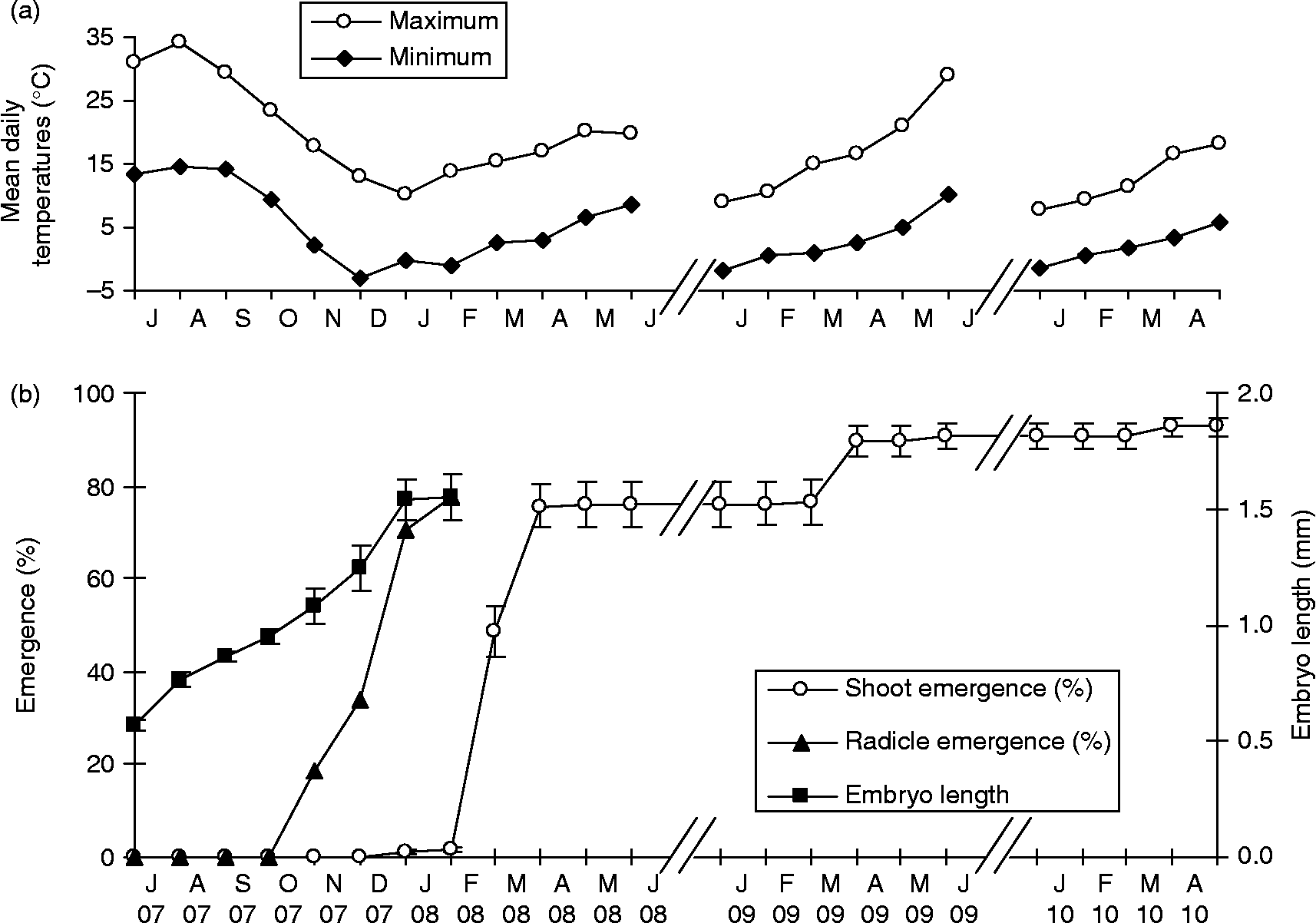
At the beginning of the burial experiment on 1 July 2007, mean embryo length in 0-month-old seeds was 0.57 ± 0.02 mm. From 1 July to 1 October, mean maximum and minimum daily temperatures were 30.8 and 13.6°C, respectively, and mean length of embryos was 0.95 ± 0.03 mm (critical embryo length = 1.76 ± 0.04 mm) on 1 October (Fig. 1). Embryos continued to grow slowly during October, when mean maximum and minimum temperatures were 19.4 and 6.9°C, respectively. Thus, on 1 November embryo length was 1.08 ± 0.08 mm, and 18% of the buried seeds had germinated (radicle emergence). From 1 November to 1 February, the mean temperature was 5.1°C. At the end of this period, embryo length was 1.55 ± 0.10, and radicle emergence was 77%. Less than 2% of the shoots had emerged by early February, but during this month 49% of the buried seeds produced a shoot; mean daily maximum and minimum temperatures were 12.8 and 1.6°C, respectively. In the following months, shoots appeared rapidly, reaching 76% in early May. Shoot emergence increased to 91% and 93% in 2009 and 2010, respectively.
Mean daily minimum and maximum air temperatures (a) and phenology of embryo growth and of root and shoot emergence (mean ± SE) from seeds sown on soil in a non-heated shade-house in July 2007 (b).

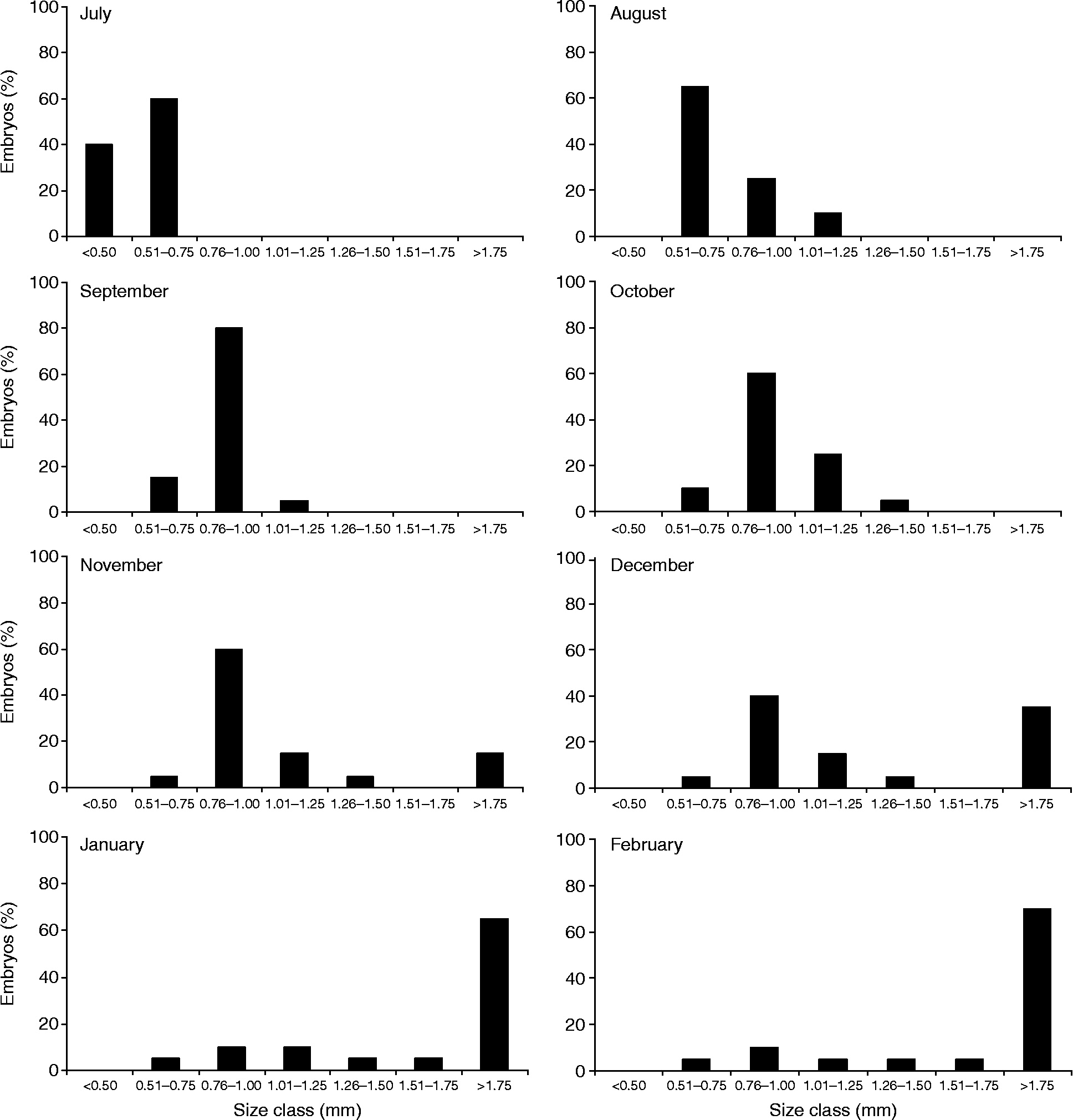
All embryos from seeds buried on 1 July 2007 were in the two smallest size classes (Fig. 2). However, in August, September and October a broad range of size classes was represented. By November, 15% of the embryos were in the largest (> 1.75 mm) size class. The percentage of embryos in the largest size class increased to 35, 65 and 70 in December, January and February, respectively.
Changes in size-class distribution of embryos in seeds sown in July 2007 and recovered/measured monthly from August 2007 to February 2008.

Dormancy break of radicles in buried seeds
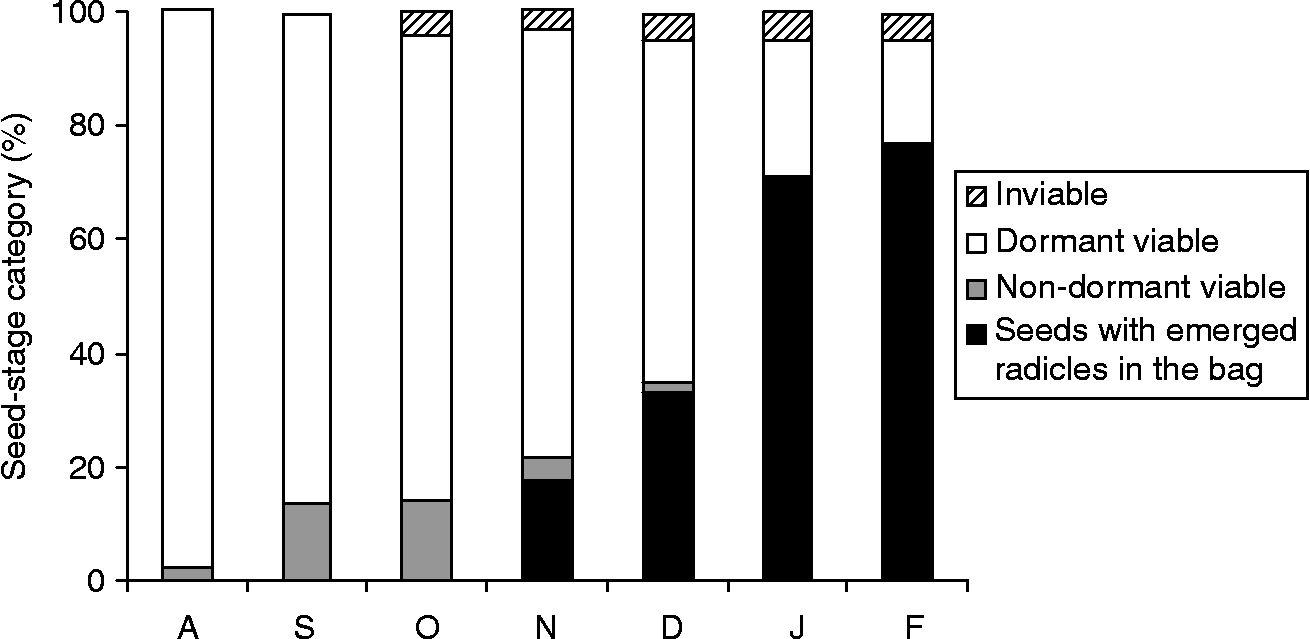
After only 1 month of burial (during July, when mean daily maximum and minimum temperatures were 33.6 and 13.9°C, respectively), almost all the seeds were dormant (Fig. 3). However, the percentage of dormant seeds decreased during burial in summer, autumn and winter. In October, radicles began to emerge (germination), and when the bags were exhumed in November, December, January and February, 18, 33, 71 and 77% of the seeds, respectively, had an emerged radicle.
Rate of dormancy break of radicles in seeds of Merendera montana buried on 1 July 2007 and exhumed monthly from August 2007 to February 2008.

Laboratory experiments
Effect of warm stratification on dormancy break
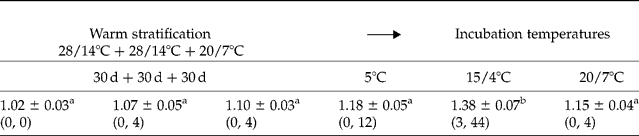
Embryos from seeds warm stratified for 9 d (60 d at 28/14°C+30 d at 20/7°C) and then incubated at 15/4°C for 30 d were significantly longer (P < 0.05) than those in seeds incubated at 5 or at 20/7°C (Table 1). Although embryos in 44% of the seeds incubated at 15/4°C exceeded the threshold E:S ratio, only 3% of the seeds germinated; no seeds germinated at 5 or 20/7°C.
Effect of warm stratification for 90 d (60 d at 28/14°C+30 d at 20/7°C) in darkness followed by (arrow) incubation for 30 d at 5, 15/4 and 20/7°C on embryo growth (mean±SE, mm, n=25) in 0-month-old Merendera montana seeds. Time of incubation was 30 d. Values followed by different lowercase letters are significantly different at the P<0.05 level (Tukey multiple comparisons test). The first number in parentheses is the percentage of radicle emergence, and the second is the percentage of seeds with an E:S ratio greater than the threshold E:S ratio

Effect of cold stratification on dormancy break
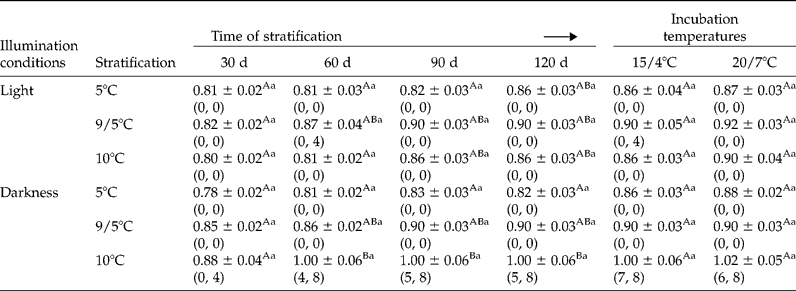
Regardless of temperature, embryos in the seeds grew little during 120 d of cold stratification, reaching lengths of only 0.86–1.00 mm by the end of the stratification period (Table 2). No significant differences were detected throughout the duration of each cold treatment (P>0.05). Therefore, no radicles emerged when seeds were transferred to incubation temperatures of 15/4 and 20/7°C, except those stratified at 10°C, in which case radicles emerged from a maximum of only 7% of them.
Effect of (1) cold stratification in light and in darkness for 30, 60, 90 and 120 d at 5, 9/5 or 10°C, and (2) cold stratification at 5, 9/5 or 10°C for 120 d followed (arrow) by 30 d incubation at 15/4 or 20/7°C in light and in darkness on embryo growth (mean±SE, mm, n=25) in 0-month-old Merendera montana seeds. Values followed by different uppercase letters within a column or different lowercase letters within a row are significantly different at the P<0.05 level (Tukey multiple comparisons test). The first number in parentheses is the percentage of radicle emergence, and the second is the percentage of seeds with an E:S ratio greater than the threshold E:S ratio

Effect of warm plus cold stratification on dormancy break
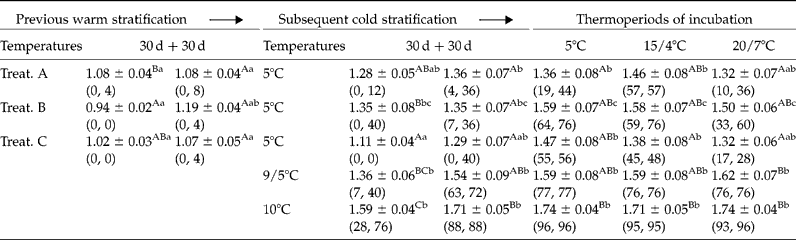
There were no significant differences between the three warm stratification treatments (P>0.05). Embryo growth was slow during 60 d of warm stratification, and embryos in only 8, 4 and 4% (treatments A, B and C, respectively) of the seeds reached the threshold E:S ratio for germination (Table 3). However, significant embryo growth occurred when seeds were transferred from high to low temperatures after 60 d. Thus, in treatment C, 40, 72 and 88% of the seeds exceeded the threshold E:S ratio after 60 d at 5, 9/5 and 10°C, respectively. Embryo length and germination after incubation were higher in seeds previously stratified at a cool temperature (10°C) than in those stratified at cold temperatures (5 and 9/5°C). Percentages of radicle emergence in seeds transferred from 5°C to 5, 15/4 and 20/7°C were 55, 45 and 17, respectively. In seeds transferred from 9/5°C, these percentages were>76, and in those stratified at 10°C they were>93.
Influence of warm stratification in darkness for 60 d followed (arrow) by cold stratification in darkness for 60 d followed by (arrow) incubation for 30 d at 5, 15/4 and 20/7°C on embryo growth (mean±SE, mm, n=25) in 0-month-old Merendera montana seeds. Values followed by different uppercase letters within a column or different lowercase letters within a row are significantly different at the P<0.05 level (Tukey multiple comparisons test). The first number in parentheses is the percentage of radicle emergence, and the second is the percentage of seeds with an E:S ratio greater than the threshold E:S ratio. Previous warm stratifications for 60 d: Treatment A [28/14°C (30 d)+25/10°C (30 d)]; Treatment B [25/10°C (30 d)+20/7°C (30 d)] and Treatment C [28/14°C (30 d)+28/14°C (30 d)]. Subsequent cold stratifications for 60 d: 5°C, 9/5°C and 10°C

Effect of cold stratification on shoot emergence
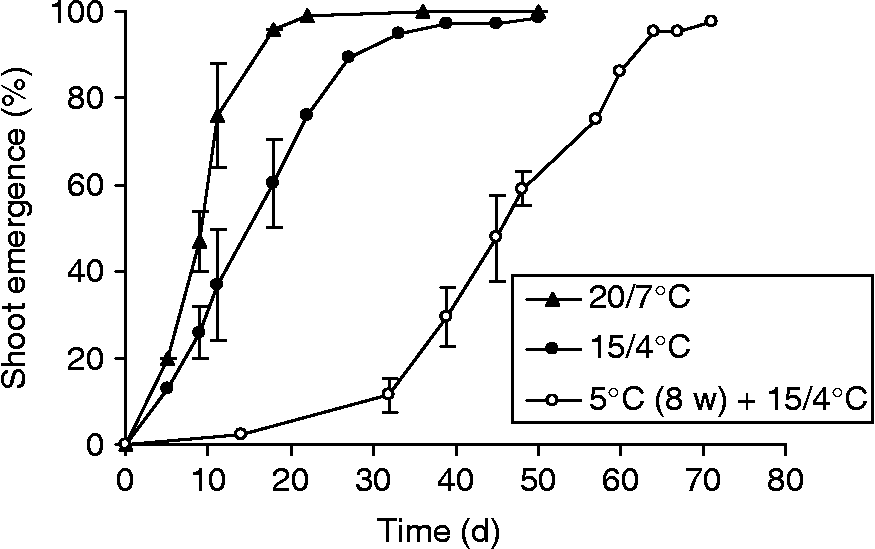
Seeds with emerged radicles incubated at 15/4 and 20/7°C without a previous cold pretreatment reached 80% shoot emergence in 24 and 13 d, respectively (Fig. 4). There was only a short delay between radicle and shoot emergence; 13 and 20% of shoots emerged during the first 5 d at 15/4 and 20/7°C, respectively. On the other hand, shoot emergence from seeds exposed to 5°C for 8 weeks and then transferred to 15/4°C was slower, especially during the first month, than that for seeds exposed directly to 15/4°C (Fig. 4). Thus, 80% of the shoots emerged at 15/4°C after 58 and 24 d for seeds with and without a cold stratification treatment, respectively.
Shoot emergence (mean ± SE, n = 2) in radicle-emerged seeds of Merendera montana incubated at 20/7°C, at 15/4°C or 5°C for 8 weeks and then transferred to 15/4°C.

Effect of GA3 on embryo growth
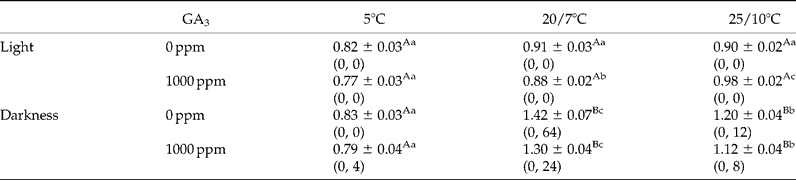
Gibberellic acid did not promote embryo growth in M. montana seeds incubated for 90 d at 5, 20/7 or 25/10°C, independently of illumination conditions (Table 4). There were no significant differences (P>0.05) between seeds tested with GA3 and distilled water (control) at the same temperature–light conditions. At 20/7°C in darkness, the mean embryo length was 1.30 ± 0.04 and 1.42 ± 0.07 mm in seeds incubated with or without GA3, respectively. No seeds germinated. Embryos grew very little at the other temperatures.
Effect of GA3 on embryo growth (mean±SE, mm, n=25) in 0-month-old seeds of Merendera montana incubated in light and in darkness for 90 days. Values followed by different uppercase letters within a column or different lowercase letters within a row are significantly different at the P<0.05 level (Tukey multiple comparisons test). The first number in parentheses is the percentage of radicle emergence, and the second is the percentage of seeds with an E:S ratio greater than the threshold E:S ratio

Influence of seed age on dormancy break
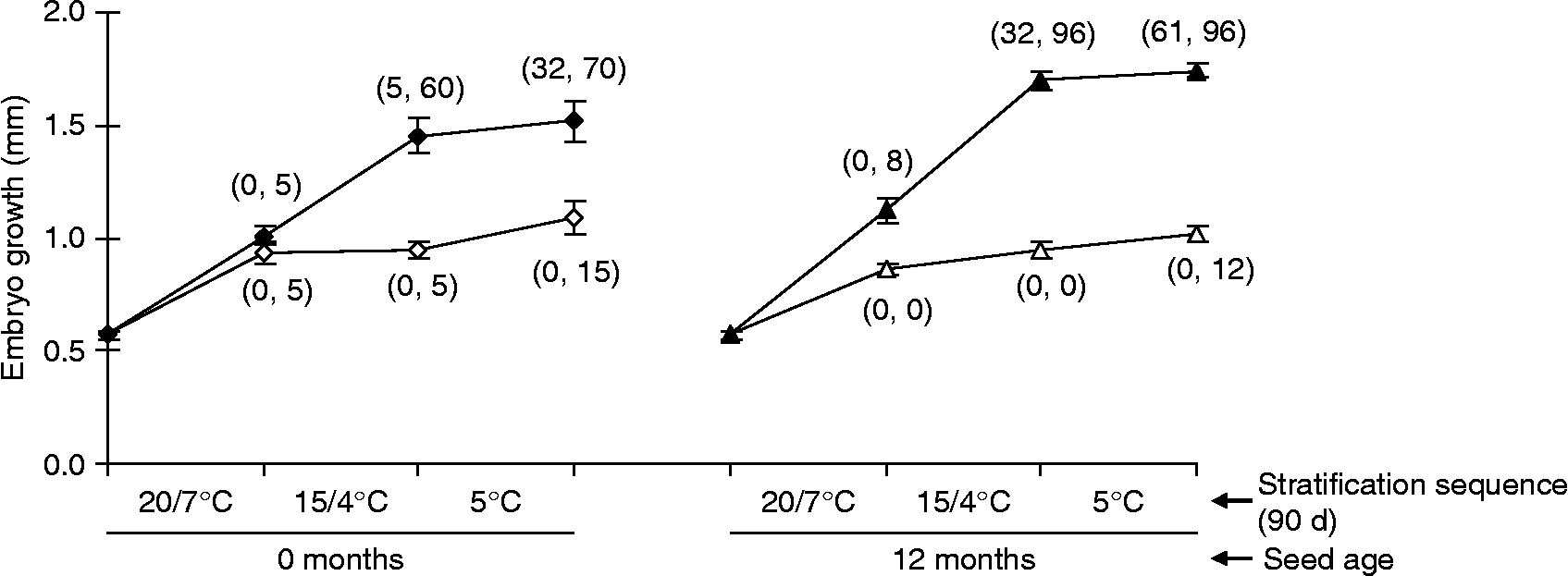
Embryo growth was significantly higher in darkness than in light throughout the 90 d of stratification (20/7+15/4+5°C) (P < 0.01) and in 12-month-old than in 0-month-old seeds (P < 0.05), and the interaction between both factors had a significant effect on radicle emergence (P < 0.05, two-way ANOVA). While mean embryo length in fresh seeds was 1.52 ± 0.09 mm at the end of the stratification period in darkness, that of old seeds was 1.74 ± 0.03 mm (Fig. 5).
Influence of seed age (0 and 12 months) and stratification at 20/7°C (30 d) +15/4°C (30 d) +5°C (30 d) in light (open symbols) and in darkness (closed symbols) on embryo growth (mean ± SE, n = 25) in Merendera montana seeds. The first number in brackets is the percentage of radicle emergence, and the second is the percentage of embryos whose E:S ratio>threshold E:S ratio.

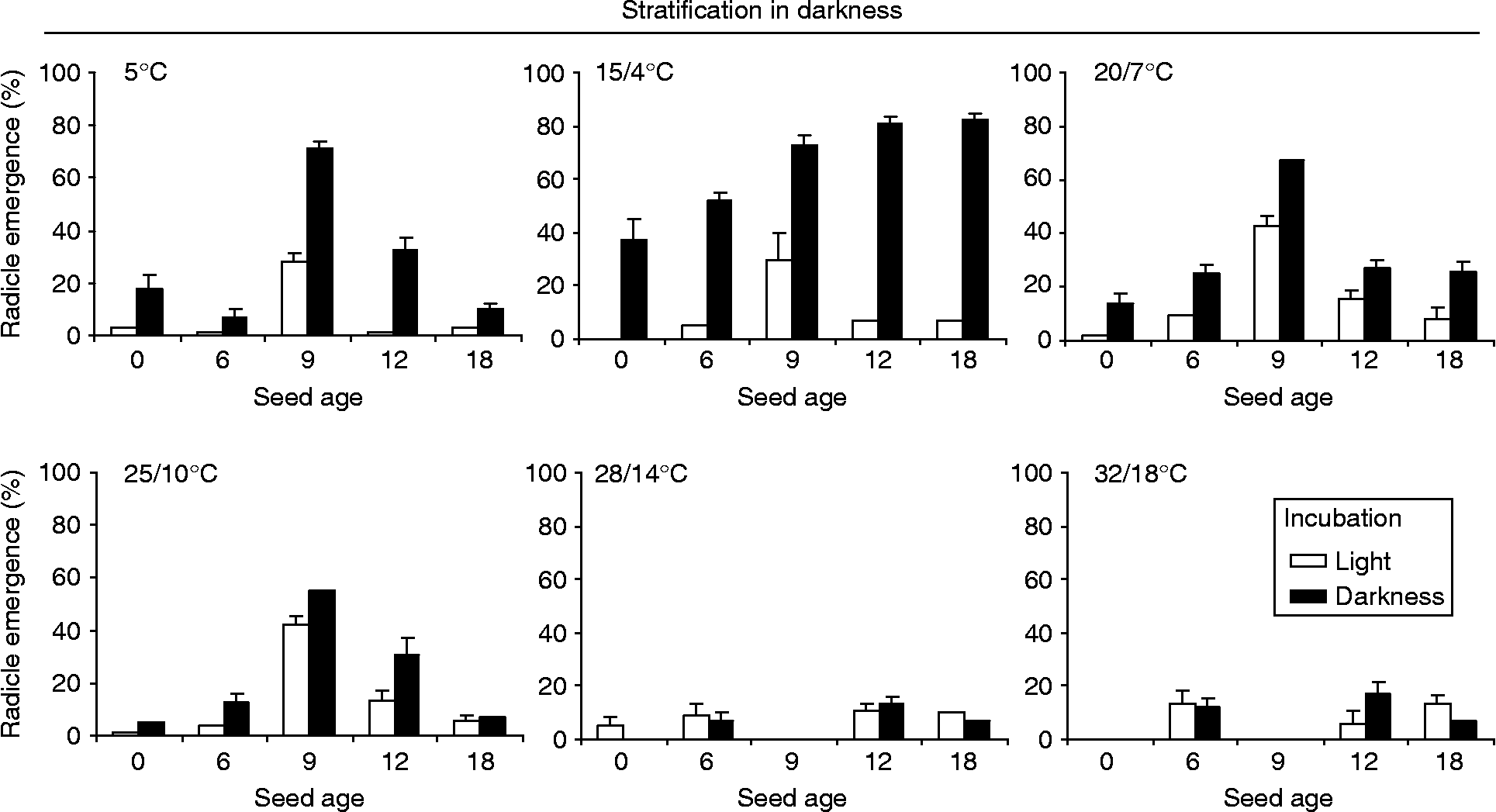
After stratification in light and incubation at 5, 20/7, 25/10, 28/14 and 32/18°C in light and darkness, seeds of different ages did not have an emerged radicle ( < 1%). Only those seeds incubated at 15/4°C in darkness germinated, but in a low proportion ( < 10%). Therefore, statistical analysis and graphical representation could not be done in the experiments with previous stratification in light. However, radicle emergence was higher in the incubation experiments following stratification in darkness (Fig. 6). Thus, the highest percentage of radicle emergence occurred at 15/4°C in darkness and was around 70% in seeds kept in a dry place for more than 9 months. The three-way ANOVA highlighted that light, seed age and temperature and their interactions had a significant effect on radicle emergence (P < 0.01), apart from the interaction between light and seed age (P>0.05). In general, radicle emergence increased significantly as seed age increased from 0 to 9 months old, but emergence decreased in seeds older than 9 months (12 and 18 months) at the P < 0.01 level (Tukey multiple comparisons test).
Percentage of radicle emergence (mean+SE, SE>2%, n = 4) in 0, 6, 9, 12 and 18-month-old seeds of Merendera montana. Seeds were warm and cold stratified (20/7°C+15/4°C+5°C; 30 d each) in darkness and then incubated at the six temperatures (5, 15/4, 20/7, 25/10, 28/14 and 32/18°C) for 30 d in light and in darkness. Radicle emergence following stratification in light is not shown ( < 10%).

Discussion
Fresh seeds of M. montana had underdeveloped embryos at the time of dispersal in late spring. Thus, the embryos had to grow from 0.57 mm until reaching at least 1.30 mm (critical embryo length = 1.76 ± 0.04 mm, n = 40, range = 1.30–2.30 mm) while still inside the mature seed before radicles could emerge, that is, seeds have morphological dormancy. Nevertheless, embryo growth and radicle emergence were not completed at temperature, light/dark and moisture conditions considered suitable for radicle emergence in about 30 d [an arbitrary time limit for distinguishing between non-dormancy ( ≤ 30 d) and dormancy (>30 d)], a consequence of the seeds also having physiological dormancy and requiring a dormancy-breaking treatment (Baskin and Baskin, Reference Baskin, Baskin, McDonald and Kwong2005). Thus, seeds had a combination of morphological and physiological dormancy, i.e. morphophysiological dormancy (MPD) (Nikolaeva, Reference Nikolaeva and Khan1977).
In relation to embryo growth, seeds whose embryos grow at warm temperatures have some level of simple MPD, while those with embryo growth at low temperatures have a level belonging to complex MPD (Nikolaeva, Reference Nikolaeva and Khan1977; Baskin and Baskin, Reference Baskin and Baskin2004). Therefore, M. montana is in the second group because the main period of embryo growth occurred during cold stratification in lab experiments (Table 3). Similarly, outdoor experiments showed that rapid embryo development and subsequent radicle emergence occurred at low temperatures in winter (November to January) following the warm season (Fig. 1). Thus, embryos required low temperatures to grow completely, but these low temperatures were ineffective unless seeds first received a warm stratification pretreatment.
The physiologically dormant part of MPD is subdivided into non-deep, intermediate and deep (Nikolaeva, Reference Nikolaeva and Khan1977; Baskin and Baskin, Reference Baskin and Baskin2004). Except for the Hawaiian montane shrub Leptecophylla tameiameiae, whose seeds have deep PD that is broken by a long period of warm stratification (Baskin et al., Reference Baskin, Baskin, Yoshinoga and Thompson2005), non-deep PD is the only type of PD known to be broken by warm stratification (Baskin and Baskin, Reference Baskin and Baskin1998). On the other hand, gibberellic acid may substitute for warm but not for cold stratification in seeds with non-deep complex MPD (Baskin and Baskin, Reference Baskin and Baskin1998). Nevertheless, that is not the case of M. montana, whose seeds did not come out of dormancy when they were incubated with GA3 (1000 ppm), neither at 5 nor at 20/7 nor 25/10°C in light or in darkness for 90 d (Table 4). In a similar way, GA3 was not effective in breaking dormancy in seeds of Symphoricarpos orbiculatus (Hidayati et al., Reference Hidayati, Baskin and Baskin2001) that have non-deep complex MPD. Therefore, lack of a response to GA is not enough evidence to reject this level of MPD, since it promotes germination in some (but not all) species with non-deep PD.
Another characteristic used to confirm non-deep PD is the ability of seeds to come out of dormancy during dry storage at room temperatures (Baskin and Baskin, Reference Baskin and Baskin1998). Thus, dry laboratory storage had a significant positive influence on radicle emergence percentage in M. montana: 9-month-old seeds germinated to a higher percentage than fresh seeds in darkness (Fig. 6). It is well known that percentage of radicle emergence frequently increases with seed age (afterripening) in species with non-deep PD (Baskin and Baskin, Reference Baskin and Baskin1998; Copete et al., Reference Copete, Herranz and Ferrandis2005). Although some temperate species with a kind of dormancy and germination pattern similar to that of M. montana are not able to survive a prolonged dry storage, e.g. Anemone nemorosa (Ali et al., Reference Ali, Probert, Hay, Davies and Stuppy2007), this afterripening effect has been reported in several species with MPD, including Aconitum napellus subsp. castellanum (Herranz et al., Reference Herranz, Copete, Ferrandis and Copete2010a), Delphinium fissum subsp. sordidum (Herranz et al., Reference Herranz, Ferrandis and Martínez-Duro2010b) and Narcissus hispanicus (Copete et al., Reference Copete, Herranz, Ferrandis, Baskin and Baskin2011). In the latter species, it could be due to an increase of embryo growth rate with seed age, as occurs in seeds of M. montana stratified in darkness (Fig. 5).
These results support the presence of non-deep complex MPD in M. montana seeds. Nevertheless, in species with this level of MPD embryo growth commonly begins following the summer period, e.g. in seeds of Osmorhiza claytonii (Baskin and Baskin, Reference Baskin and Baskin1991) in late September–early October, and then embryos grow rapidly during October and November. However, outdoor experiments showed that some embryo growth in seeds of M. montana occurs in summer (Fig. 2), although no embryo reached the threshold length (1.30 mm) for radicle emergence during the warm season. The same behaviour was reported for seeds of Eranthis hiemalis, whose embryos grew a little at warm temperature (20/25°C) (Frost-Christensen, Reference Frost-Christensen1974) despite the fact that its seeds had non-deep complex MPD and consequently needed warm plus cold to complete embryo growth. Although 5°C is the optimum cold stratification temperature for seeds of many species (Stokes, Reference Stokes and Ruhland1965; Baskin and Baskin, Reference Baskin and Baskin1998), it was 10°C for seeds of M. montana; thus, 10°C was more effective in breaking dormancy in this species than 5°C or 9/5°C (Table 3).
The kind of dormancy in M. montana fits very well the formula of Nikolaeva (Reference Nikolaeva2001) for non-deep complex MPD, C1b1aB-C1a (see Baskin and Baskin, Reference Baskin and Baskin2008). Thus, seeds need a period of warm (C1b) followed by a period of cool (C1a) temperatures to break PD and for growth of the underdeveloped embryo (B). After MPD (C1b1aB) is broken, the seeds, now with a fully developed embryo, germinate at cool temperatures (C1a). As would be expected, the temperature requirements for embryo growth in M. montana seeds are similar to those of species with the same level of MPD, such as Eranthis hiemalis (Frost-Christensen, Reference Frost-Christensen1974), Osmorhiza claytonii (Baskin and Baskin, Reference Baskin and Baskin1991), O. longistylis (Baskin and Baskin, Reference Baskin and Baskin1984) and Erythronium albidum (Baskin and Baskin, Reference Baskin and Baskin1985).
In the field, a warm followed by a cold period after the seeds are dispersed does not always ensure that all the viable seeds will germinate the following spring (Baskin and Baskin, Reference Baskin and Baskin1991). Seventy-seven per cent of the M. montana seeds sown on 1 July 2007 (Fig. 1) had an emerged radicle in early February 2008, and 76% of them developed shoots in spring 2008. The percentage of shoots that emerged increased to 90.7 in spring 2009, and even a few shoots (around 2%) emerged in spring 2010. This observation suggests that M. montana can form a short-lived persistent soil seed-bank (Grime, Reference Grime1981). In fact, various species with MPD germinate over a period of several years (e.g. Hawkins et al., Reference Hawkins, Baskin and Baskin2007), indicating that some seeds remain dormant for more than 1 year or that the seeds come out of dormancy but do not germinate in that (those) years and then re-enter dormancy under unfavourable temperature, drought, light/darkness conditions, i.e. dormancy cycling. Seeds of Frasera caroliniensis have deep complex MPD (Threadgill et al., Reference Threadgill, Baskin and Baskin1981) and those of Delphinium fissum subsp. sordidum have intermediate complex MPD (Herranz et al., Reference Herranz, Ferrandis and Martínez-Duro2010b); in both species, warm stratification induced seeds into secondary dormancy.
Embryo growth in seeds of M. montana, was significantly lower in light than in darkness (P < 0.05). Thus, only 15% of seeds stratified in light at autumn–winter temperatures (20/7+15/4+5°C) reached the threshold E:S ratio (Fig. 5), and consequently radicle emergence was low ( < 10%), although they were incubated over a wide range of conditions. In fact, radicles emerged from a high percentage of seeds incubated in darkness (Figs 5 and 6). Thus, a light requirement for radicle emergence is not the reason why some seeds can remain ungerminated and viable in the soil for several years.
In outdoor experiments, there was a 3-month delay between radicle emergence and shoot emergence (Fig. 1). However, studies under controlled conditions indicated that a cold pretreatment was not necessary for shoot emergence in seeds with an emerged radicle (Fig. 4). In fact, the rate of shoot emergence was slower in radical-emerged (germinated) seeds exposed to a previous cold temperature for 8 weeks than in those that were not exposed (Fig. 4). Thus, 80% shoot emergence was reached 34 d later in cold stratified seeds than in those directly incubated at 15/4°C, which is evidence that the shoot was not dormant. Why did the root and shoot not emerge at the same time in the simulated field situation? Root emergence required a lower temperature than shoot emergence. Thus, although low temperatures in the field in winter permitted radicle emergence it was too cold for rapid shoot development, resulting in delayed shoot emergence, despite not being dormant.
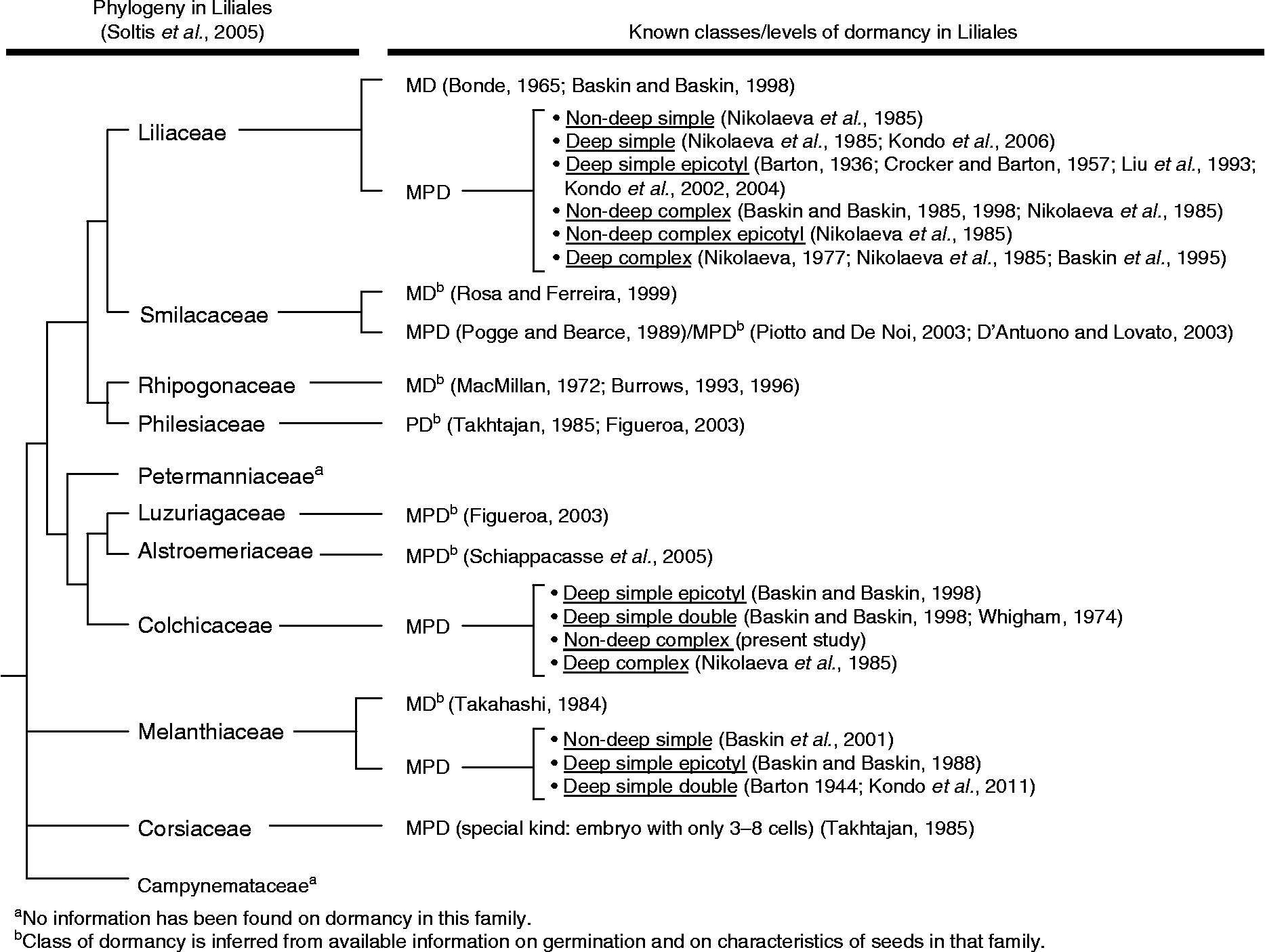
How do the class and level of dormancy (sensu Baskin and Baskin, Reference Baskin and Baskin2004) in seeds of M. montana compare with those in seeds of other taxa in the Liliales? The classes of dormancy most common in the order are MD and MPD (Barton, Reference Barton1936, Reference Barton1944; Crocker and Barton, Reference Hawkins, Baskin and Baskin1957; Bonde, Reference Bonde1965; MacMillian, Reference MacMillan1972; Whigham, Reference Whigham1974; Takahashi, Reference Takahashi1984; Baskin and Baskin, Reference Baskin and Baskin1985, Reference Baskin and Baskin1988, Reference Baskin and Baskin1998; Takhtajan, Reference Takhtajan1985; Pogge and Bearce, Reference Pogge and Bearce1989; Burrows, Reference Burrows1993, Reference Burrows1996; Liu et al., Reference Liu, Li and Liu1993; Baskin et al., Reference Baskin, Meyer and Baskin1995, Reference Baskin, Baskin and Chester2001; Rosa and Ferreira, Reference Rosa and Ferreira1999; Kondo et al., Reference Kondo, Okubo, Miura, Honda and Ishikawa2002, Reference Kondo, Miura, Okubo, Shimada, Baskin and Baskin2004, Reference Kondo, Sato, Baskin and Baskin2006, Reference Kondo, Mikubo, Yamada, Walck and Hidayati2011; D'Antuono and Lovato, Reference D'Antuono and Lovato2003; Figueroa, Reference Figueroa2003; Piotto and De Noi, Reference Piotto and De Noi2003; Schiappacasse et al., Reference Schiappacasse, Peñailillo, Yañez and Bridgen2005; Fig. 7). Apparently, only species in Philesiaceae have fully developed embryos and PD (Takhtajan, Reference Takhtajan1985; Figueroa, Reference Figueroa2003), but very little is known about germination in this family. According to the information shown in the figure, relatively more is known about levels of seed dormancy in Liliaceae, Colchicaceae and Melanthiaceae. Liliaceae and Colchicaceae have simple and complex levels of MPD, while Melanthiaceae has only simple MPD. However, much of what is shown for Colchicaceae is inferred from knowledge about embryos and timing of germination. Our study appears to be the first report of non-deep complex MPD in Colchicaceae, but not in Liliales, where this level of MPD has also been reported for seeds of Liliaceae s.s.
Phylogenetic organization of what is known about seed dormancy in the Liliales.

Acknowledgements
This work was supported by the regional Government of Castilla-La Mancha through PAI07-0088-0300 (‘Creation of a plant germplasm bank of endangered species in the Botanical Garden of Castilla-La Mancha’) and PEII10-0170-1830 (‘Germination ecology of 12 singular and/or threatened species with morphophysiological dormancy’). During the study, Elena Copete Carreño held a grant from the regional Government (Consejería de Educación y Ciencia, Junta de Comunidades de Castilla-La Mancha) and the European Social Found. We thank Carlos Guillén for laboratory assistance.