Spain has been hit hard by the COVID–19 pandemic, with a high number of infections and a high mortality rate (World Health Organization [WHO] Regional Office for Europe, 2020). The crisis was officially declared a pandemic by the WHO on March 11, 2020, and the Spanish Government decreed a state of alarm on March 14, 2020, enforcing the confinement of Spaniards with very restrictive rules regarding mobility. When this study was launched, April 8th 2020, over 1,391,890 people across the world had already been infected with SARS–COV19 with approximately 81,478 deaths (Johns Hopkins Coronavirus Resource Center, 2020Footnote 1). Fears of a rapidly spreading and deadly disease have increased dramatically, but there is also a great uncertainty about what the economic and employment future will hold.
In an epidemic like this, we intended to take a snapshot of the state of mental health in Spanish citizens which is an often a neglected perspective in public health national plans of pandemic crisis (Brewin et al., Reference Brewin, DePierro, Pirard, Vazquez and Williams2020). The study of the psychological adjustment of the population in relation to the pandemic is essential because, besides emotional suffering, it can affect our behaviour (Betancourt et al., Reference Betancourt, Brennan, Vinck, VanderWeele, Spencer-Walters, Jeong, Akinsulure-Smith and Pham2016) and, therefore, influence the course of the spreading of the virus. In addition, the burden associated with mental health issues (Whiteford et al., Reference Whiteford, Degenhardt, Rehm, Baxter, Ferrari, Erskine, Charlson, Norman, Flaxman, Johns, Burstein, Murray and Vos2013) may have an impact on health care resources, which are already heavily demanded during the pandemic, as well as on subsequent national recovery once the virus has gone. It is evident that this pandemic and the associated prevention measures will affect the mental health of the population, although their impact could vary depending on some socio-demographic variables.
Research on the psychological impact of infectious diseases similar to COVID–19 on the population has been relatively scarce. There have been some studies, primarily focused on anxiety, yielding different findings. For instance, Zhu et al., (2008) found that 96.4% of the Chinese public surveyed showed marked emotional changes after the SARS outbreak in 2003. Unfortunately, these authors did not use a validated measure with cut-off points but developed their own questionnaire, so the impact of this survey is difficult to gauge. Yet, Cowling et al., (2010) described that respondents reported low anxiety levels, with a mean score of less than 2 points in a validated Scale of the State-Trait Anxiety Inventory (2 = low anxiety), throughout the 2009 influenza A epidemic in Hong Kong. Nonetheless, it is very likely that the psychological impact on the population of a pandemic is mediated not only by the characteristics of the infection, but also by cultural, economic and social characteristics of the affected countries and the instruments and thresholds use to define and measure such impact.
Specifically, on the COVID–19 epidemic, Qian et al., (2020), in a study during the early phase of the outbreak in China, used the Generalised Anxiety Disorder Scale (GAD–7), and found that 20.4% of surveyed individuals in Shanghai (a large city with no restrictions of movement) had significant levels of anxiety, whereas in Wuhan, the epicentre of the crisis and in quarantine during the authors’ study, 32.7% showed anxiety. Other recent studies outside of Asia, using validated scales such as the GAD–7 and the Patient Health Questionnaire–9 (PHQ–9), have also found high rates of anxiety and depression (Lee et al., Reference Lee, Jobe and Mathis2020; Shevlin et al., Reference Shevlin, McBride, Murphy, Miller, Hartman, Levita, Mason, Martinez, McKay, Stocks, Bennett, Hyland, Karatzias and Bentall2020) associated to the COVID–19 pandemic. Likewise, a recent cross-sectional study during the lockdown in Spain has also shown that rates of anxiety of depression, using the Depression and Anxiety Stress Scale (DASS–21), affect to almost one third of the general population (Odriozola-González et al., Reference Odriozola-González, Planchuelo-Gómez, Irurtia-Muñiz and de Luis-García2020).
Recent publications on the Chinese population reactions to COVID–19 have underlined the need to pay attention to selected groups (e.g., female, young adults, the elderly, and migrant workers) that seem to be more affected/vulnerable to common symptoms like depression and anxiety (Qiu et al., Reference Qiu, Shen, Zhao, Wang, Xie and Xu2020). Also, other studies (Qian et al., Reference Qian, Wu, Wu, Hou, Liang, Cowling and Yu2020) have identified, as predictors of distress, cognitive factors (e.g., perceived susceptibility and perceived severity of the disease, and confusion about the information received about the COVID–19). So, it seems clear that several factors may mediate the association between exposure to this biological threat and the associated psychological consequences.
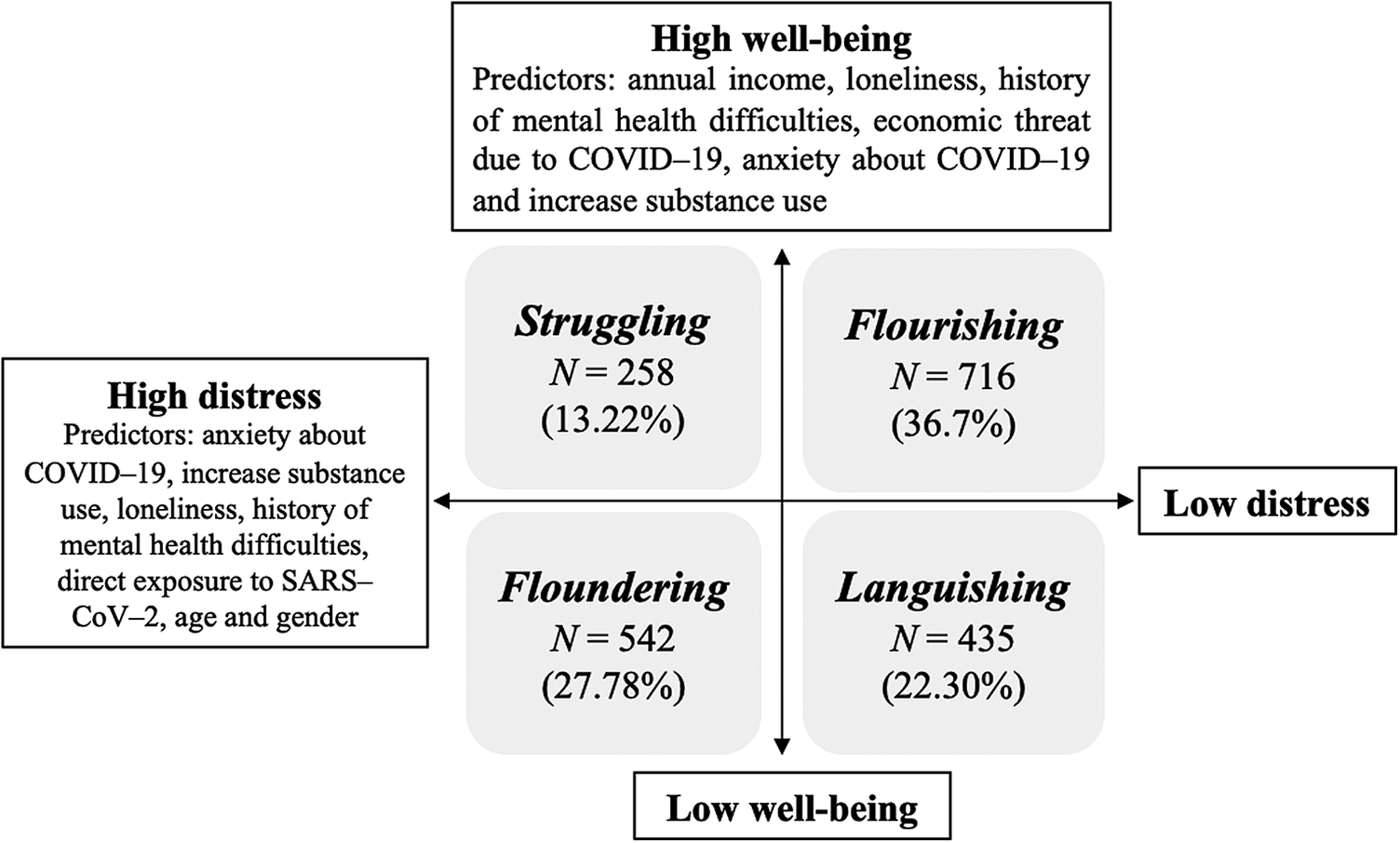
The dominant view of mental health has traditionally been pathogenic with a narrow focus on symptoms (Seligman & Csikszentmihalyi, Reference Seligman, Csikszentmihalyi and Csikszentmihalyi2014). However, psychological adjustment should not be limited to the assessment of negative aspects of functioning (e.g., symptoms, difficulties, and impairment). In fact, although most studies on trauma have focused on negative mental health outcomes (see Neria et al., Reference Neria, Nandi and Galea2008), only a small percentage of people exposed develop clinically significant disorders (e.g., Galea et al., Reference Galea, Vlahov, Resnick, Ahern, Susser, Gold, Bucuvalas and Kilpatrick2003) and the resilience of individuals has been systematically underestimated (Bonanno, Reference Bonanno2004; Keyes, Reference Keyes2007). Furthermore, positive emotions can also emerge under traumatic circumstances (Bajo et al., Reference Bajo, Blanco, Stavraki, Gandarillas, Cancela, Requero and Díaz2018; Valiente et al., Reference Valiente, Vázquez, Contreras, Peinado and Trucharte2021). Taking into account this complexity, Keyes (Reference Keyes2007) has proposed a ‘model of the complete state of mental health’, where mental health and mental symptoms are not merely opposite ends of a continuum but two separate dimensions that should be considered and evaluated separately (Vázquez & Hervás, Reference Vázquez and Hervás2008). More specifically, the model suggests a bidimensional space, to understand mental health, that would include four distinct categories (i.e., ‘languishing’ with or without mental disorders, and ‘flourishing’ with or without mental disorders) where languishing and flourishing indicate the absence or presence, respectively, of psychological well-being (see Figure 1). The validity of the model has been supported by large-scale population studies showing that, for instance, languishing is associated to premature all-cause mortality (Fuller-Thomson et al., Reference Fuller-Thomson, Lung, West, Keyes and Baiden2020) whereas flourishing is a predictor of recovery from mental health problems (Iasiello et al., Reference Iasiello, van Agteren, Keyes and Cochrane2019) and, in particular, from anxiety and mood disorders (Schotanus-Dijkstra et al., Reference Schotanus-Dijkstra, ten Have, Lamers, de Graaf and Bohlmeijer2017). Therefore, it seems that positive aspects of functioning and well-being should be seriously considered when analysing the effects of life-threatening events, like a pandemic, if we want to get a more precise picture of the individuals’ overall psychological adjustment. There is almost no research on the positive mental health outcomes during a public health crisis or large-scale traumatic events, with the exception of studies on post-traumatic growth (García et al., Reference García, Cova, Rincón and Vázquez2015; Vázquez et al., Reference Vázquez, Valiente, García, Contreras, Peinado, Trucharte and Bentall2021). Also, the experience of positive emotions during traumatic events may be relevant, as it helps to bounce back (Tugade & Fredrickson, Reference Tugade and Fredrickson2004) and to predict positive mental health outcomes (Díaz et al., Reference Díaz, Stavraki, Blanco and Bajo2018; Vázquez & Hervás, Reference Vázquez and Hervás2010) .
Complete State of Mental Health, adapted from the Model of Keyes (Reference Keyes2005).

The present study aimed to evaluate the levels of anxiety and depression, in addition to well-being, in a sample of Spanish people in the midst of the confinement associated to the COVID–19 pandemic. The second aim was to identify socio-demographic and health-related variables that might be associated to different probabilities of experiencing those psychological states. We specifically included as predictors: (1) gender; (2) age; (3) household income; (4) living in an urban area; (5) loneliness; (6) living with children; (7) health related risk factors (self or someone close has diabetes, lung or heart disease); (8) pregnancy (self or someone close is pregnant); (9) direct exposure to SARS–CoV–2 (self or someone close has been infected); (10) history of mental health difficulties; (11) perceived economic threat due to COVID–19; (12) global anxiety about the COVID–19 pandemic and, (13) increased use of substances during confinement. This study also intends to test whether, as Keyes (Reference Keyes2007) states, mental health and mental symptoms are two separate dimensions and, therefore, it is possible to experience symptoms of distress with or without well-being, as well as having no symptoms with or without well-being.
Method
A cross-sectional design was used to assess the psychological impact of the SARS–CoV–2 virus in the adult Spanish population. The study was an internet-based survey launched on April 8th, 26 days after the national confinement, and lasted until the 13th April 2020. For further details of the protocol see McBride et al. (Reference McBride, Murphy, Shevlin, Gibson Miller, Hartman, Hyland, Levita, Mason, Martinez, McKay, Stocks, Bennett, Vallières, Karatzias, Valiente, Vázquez and Bentall2020) and project registration: https://osf.io/xn3hw/.
Participants
The recruitment of the sample was carried out by Sondea, a company that provides online samples for market research. The methodology that was used in our study is a quota stratified sampling. Individuals between 18 and 75 years old from their panel were invited to participate (selected by sex, age and Autonomous Community quotas according to National Institute of Statistics census of 1 January 2019), obtaining a final response of 2,122 individuals with a maximum sampling error of +/– 2.2% at 95% confidence. Once each quota was completed, new participants were not admitted in the study to ensure that the prefixed quotas were met and not exceeded. Participants completed the online survey via Qualtrics in SpanishFootnote 2 The average time for completion of the survey was 42.5 min (SD = 15.2) and participants received a symbolic compensation for their time (1 euro). Subjects who completed the survey several times (N = 26) and those who took less than 20 minutes to complete it (N = 145) were discarded to ensure the validity of the responses. The final sample used in the analyses was N = 1,951. Ethical approval for the study was obtained from the Faculty Deontological Commission and was conducted in compliance with the Declaration of Helsinki.
Measures
Predictive Variables
Socio-demographic characteristics and living conditions . In addition to data relating to gender, age and civil status, respondents provided information about their highest level of educational attainment, urbanicity of residential location, household composition (number of adults and children under 18 years), current economic activity and gross annual household income.
Anxiety and Economic Threat related to COVID–19. These two items were designed specifically for this study to assess anxiety about the COVID–19 and the perception of economic threat associated by using a visual slider scale (ranging 0–100 and 0–10, respectively).
Health characteristics. Participants were asked whether they or members of their immediate family: (a) Had been infected by SARS–CoV–2; (b) had chronic health conditions considered as a risk factors for COVID–19 complications (i.e., lung disease, diabetes or heart disease); and (c) were pregnant at the time of the survey. Moreover, history of mental health difficulties was tackled by asking whether participants had received or were receiving at the time treatment for mental health problems.
Increased substances-use scale. This 5-item scale was designed for the present study to measure the increase of substances use (i.e., food, alcohol, cigarettes, psychotropic medication and drugs) in a 4-point Likert ranging 0 (not at all) to 3 (nearly every day). The Cronbach´s alpha of this scale was acceptable (α = .70).
Loneliness. This variable was assessed by the Three-item Loneliness Scale (TILS; Hughes et al., Reference Hughes, Waite, Hawkley and Cacioppo2004), which was specifically designed for use in large-scaled population surveys. There is no Spanish validation of the TILS, but its full version has been validated showing good psychometric properties in the Spanish population (Sancho et al., Reference Sancho, Pinazo-Hernandis, Donio-Bellegarde and Tomás2020). Respondents were asked how often they felt: (1) That they lacked companionship; (2) left out; and (3) isolated from others. All items are measured using a 3-point Likert-type coded as 1 (hardly ever), 2 (some of the time), or 3 (often). Each person’s responses to the questions are summed up, with higher scores indicating greater loneliness, ranging from 3 to 9 (Hughes et al., Reference Hughes, Waite, Hawkley and Cacioppo2004). In this study the Cronbach´s alpha was good (α = .82).
Negative Mental Health Outcomes
The protocol included two self-report instruments with good psychometric properties that measure symptoms of anxiety and depression.
Depression. It was assessed via the Patient Health Questionnaire–9 (PHQ–9; Kroenke & Spitzer, Reference Kroenke and Spitzer2002), an instrument of 9 items each one corresponding to the symptoms for major depressive episode as described in the fourth edition of the diagnostic and statistical manual of mental disorders (DSM–IV; APA, 1994). Participants were asked how often, over the last two weeks, they had been bothered by each of the depressive symptoms. Response options are on a 4-point Likert scale: 0 (not at all), 1 (several days), 2 (more than half the days), and 3 (nearly every day). A total score is obtained by adding all items and the suggested threshold is 10 (Kroenke & Spitzer, Reference Kroenke and Spitzer2002). It is validated in Spanish with good psychometric properties (Diez-Quevedo et al., Reference Diez-Quevedo, Rangil, Sanchez-Planell, Kroenke and Spitzer2001). In this study the Cronbach´s alpha was good (α = .89).
Anxiety. It was assessed via the Generalised Anxiety Disorder Scale (GAD–7; Spitzer et al., Reference Spitzer, Kroenke, Williams and Löwe2006). Respondents are asked to report to its seven items, by using a 4-point Likert scale ranging from 1 (not at all) to 4 (nearly every day), which describe how often in the past 7 days they were bothered by symptoms like “I’ve felt nervous, anxious or very upset” and “I couldn’t stop worrying”. A total score is obtained by adding all items. The GAD–7 was originally validated in a primary care sample and the suggested cut-off score is 10 (Spitzer et al., Reference Spitzer, Kroenke, Williams and Löwe2006). It is validated in Spanish with good psychometric properties (García-Campayo et al., Reference García-Campayo, Zamorano, Ruiz, Pardo, Pérez-Páramo, López- Gómez, Freire and Rejas2010). In this study the Cronbach´s alpha was excellent (α =.93).
Distress index (DI). A composite distress variable was created by summing normalized scores of the PHQ–9 and GAD–7 and then dividing them by two. As anxiety and depression symptoms are frequently not separable, highly comorbid and considered to belong to a broader category of internalising disorders (Kalin, Reference Kalin2020). In fact, in our study, the correlation between PHQ–9 and GAD–7 was .78 (p = .001) (see Table S1 in supplementary material). The DI ranged from –1.13 to 3.25 with higher scores indicating higher distress.
Well-being Outcomes
Psychological well-being. The Pemberton Happiness Index (PHI; Hervás & Vázquez, Reference Hervás and Vázquez2013) was used as an integrative measure of positive mental health. The PHI includes 11 items framed with no specific time window (e.g., “I feel very satisfied with my life”, which can be considered as an assessment of ‘remembered well-being’. These items cover different aspects of hedonic, eudaimonic and social well-being, each of them rated on a scale from 0 (totally disagree) to 10 (absolutely agree), and the overall score can be considered as an appropriate proxy of the positive mental health construct as define in Keyes’ model of complete health (Keyes, Reference Keyes2005). The PHI also has 10 additional items related to ‘experienced well-being’ (i.e., 5 positive and 5 negative emotional events that may have occurred in the past 24 hours) with items such as “I felt satisfied by something I did” rated on a Yes/No format. The analyses of these additional items related to emotional experiences are presented in the Supplementary materials file. In this study, given that there is not an established cut-off, we used the median (7.27) of the 11-item version of the PHI as a cut-off score to classify individuals as having high or low positive mental health. The Cronbach’s alpha of the PHI was excellent for the remembered well-being (α = .93) and acceptable for the positive emotions experienced (α = .60) and negative emotions experienced (α = .63).
Data Analysis
All data were analysed using the SPSS v.22 (IBM Corp, 2013). Socio-demographic and clinical variables were analysed by central tendency measurements. Logistic regression was used to assess how well our selected independent variables predicted our categorical mental health dependent variables (distress and well-being) and to get the relative importance of each predictor variable. We used the GPower software to calculate the statistical power, with an error probability of 0.05 and a statistical power of 0.95. It was estimated that a suitable sample would be around 1,900 participants.
Results
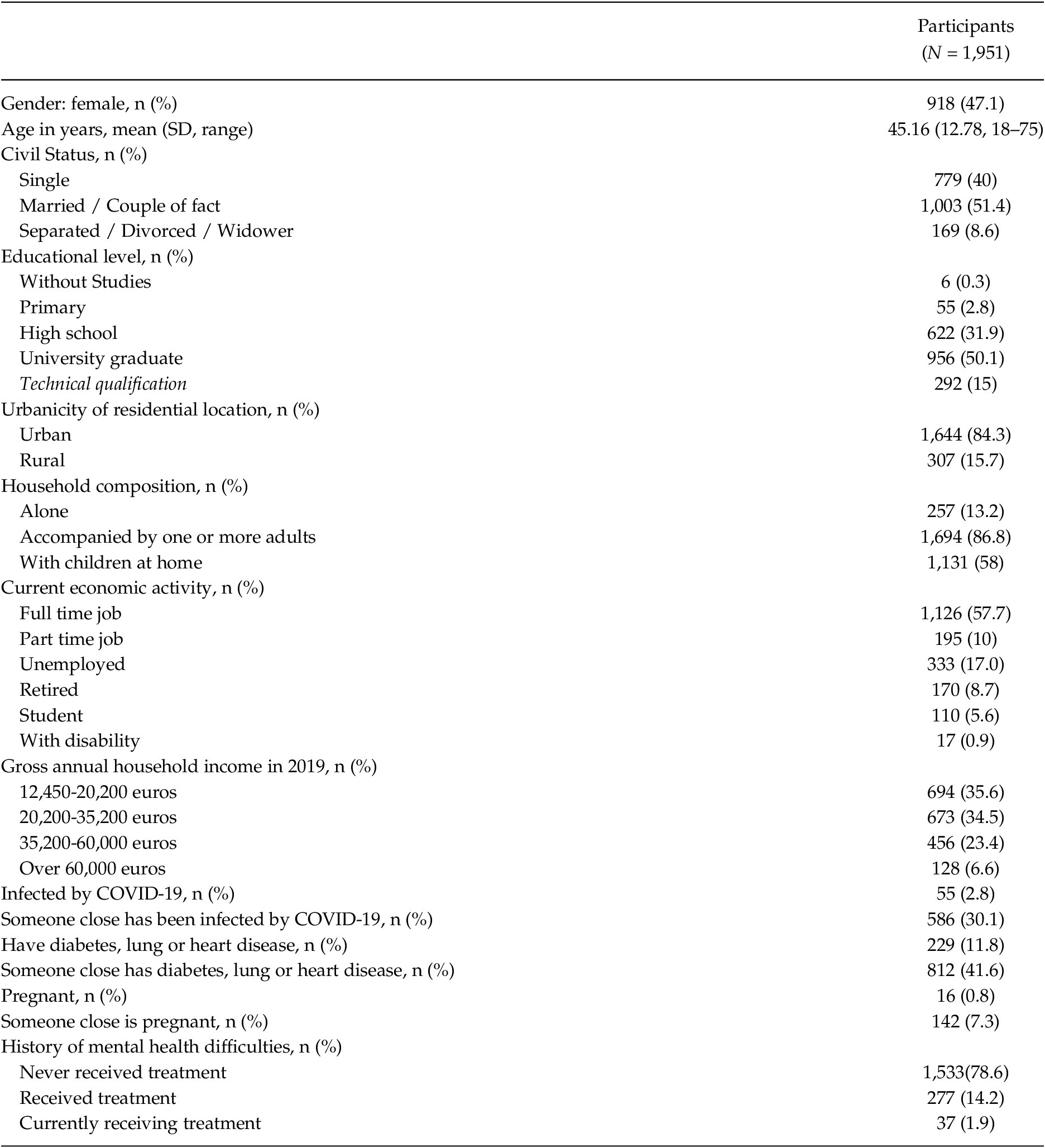
Socio-demographic and clinical characteristics of participants are shown in Table 1. Correlations of main variables included in this study are shown in Table S1 in supplementary material.
Socio-demographic and Clinical Characteristics of the Sample

Negative Mental Health: Depression and Anxiety and Distress Index
Based on the cut-off score for the PHQ–9 (≥ 10), the rate of probable depression was 22.1%, 95% CI [20.1, 24.0%]. Using the cut-off score for the GAD–7 (≥ 10), the probable rate of clinical anxiety was 19.6%, 95% CI [17.8, 21.6%]. Student’s t-tests indicated that females had significantly higher scores than males in the PHQ–9 and GAD–7 (see Table S2 in supplementary material). A one-way ANOVA analysis yielded a significant effect for age showing that older respondents had significantly lower scores than younger ones in the PHQ–9 and GAD–7 (see Table S2 in supplementary material).
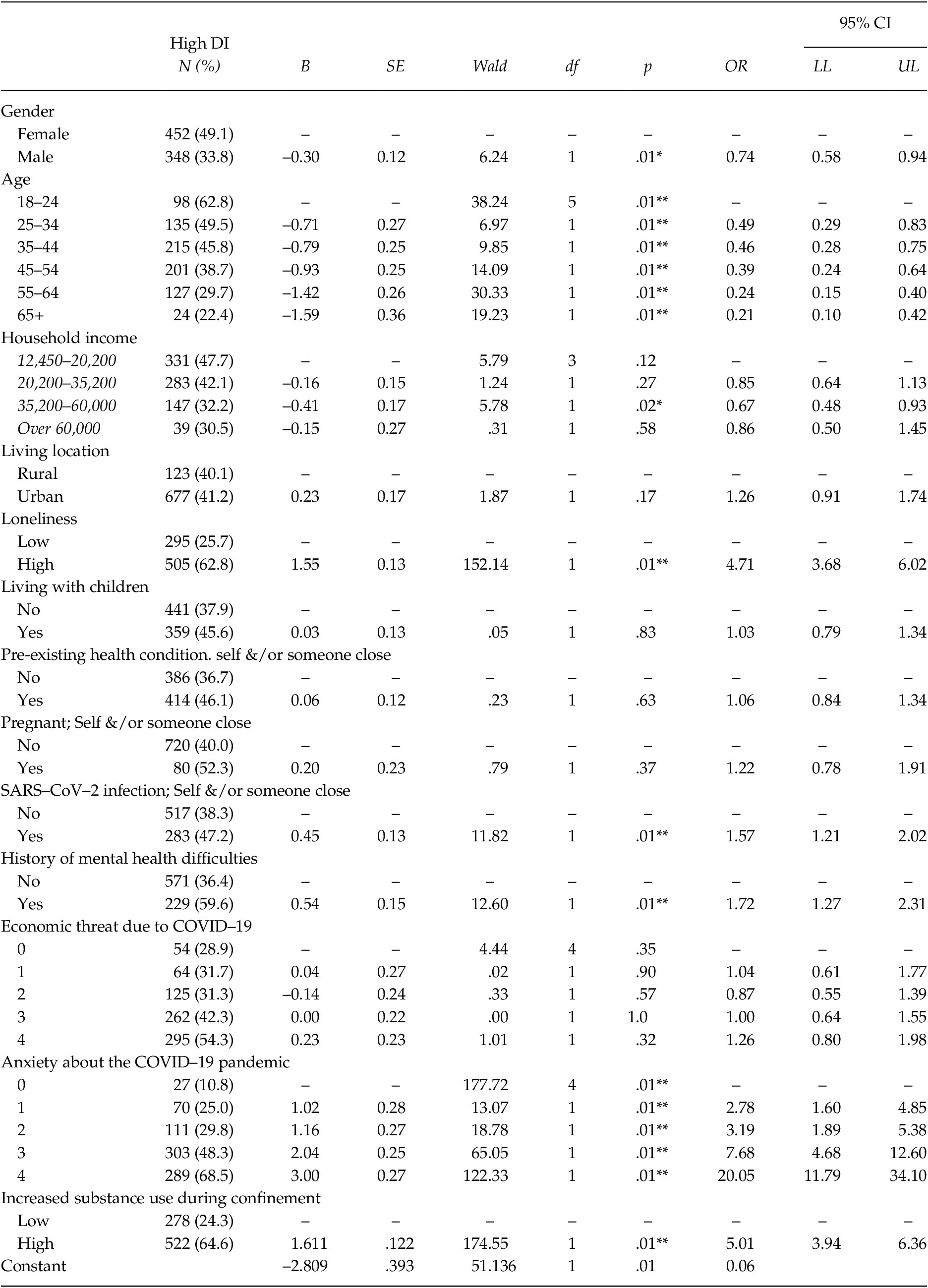
To identify overall predictors of distress, a direct logistic regression was performed to assess the impact of selected vulnerability factors on a combined index of depression and anxiety (i.e., DI was dichotomized by the mean to categorize individuals into high or low distress). The model contained 13 independent variables (sex, age, income, living in an urban area, loneliness, living with minors, health related risk factors, pregnancy, exposure to SARS–CoV–2, history of mental health difficulties, economic threat due to COVID–19, anxiety about the COVID–19 pandemic and increased substance use during confinement). The full model containing all predictors was statistically significant, χ2 (25, N = 1,951) = 892.837, p < .001, indicating that the model was able to distinguish between respondents who reported and did not report distress. The model as a whole, explained between 36.7% (Cox and Snell R square) and 49.5% (Nagelkerke R squared) of the variance in distress status, and correctly classified 78.7% of cases. As shown in Table 2, only seven of the independent variables made a unique statistically significant contribution to the model (i.e., gender, age, loneliness, exposure to SARS–CoV–2, history of mental health difficulties, anxiety about the COVID–19 pandemic and increased substance use during confinement).
Logistic Regression Results Predicting Distress Index (DI)

Note. DI = Distress Index.
* p < .05. ** p < .001.
As shown in Table 2, the strongest predictor of distress was high levels of anxiety about the COVID–19 pandemic, respondents who had it were over 20 times more likely to experience distress than those who did not have anxiety, controlling for all other factors in the model. The next best predictor was an increase in substance use during the confinement, with those that increased their substance use being over five times more likely to experience distress than those that did not. Additional strong predictors were loneliness, previously experienced mental health difficulties and direct exposure to the SARS–CoV–2. Those that experienced loneliness during the confinement were almost five times more likely, respondents who have had pre-existing mental health difficulties were almost two times more likely, while those that had been infected by the SARS–CoV–2 were over one and a half times more likely to suffer distress in comparison with those who did not. A reduced risk of showing general distress was found in the group of people over 65 years old in comparison with other age cohorts, and men were less likely to experience distress in comparison with women.
Well-Being
The sample had a mean score of overall retrospective well-being of 7.12 (SD = 1.60) and a mean of experienced well-being (i.e., number of positive or non-negative experiences in the last 24 hours) of 7.12 (SD = 1.60). Student’s t-test indicated that females had significantly less remembered well-being and experienced well-being. A one-way ANOVA showed that older respondents had significantly higher levels of well-being remembered and experienced (see Table S3 in supplementary material).
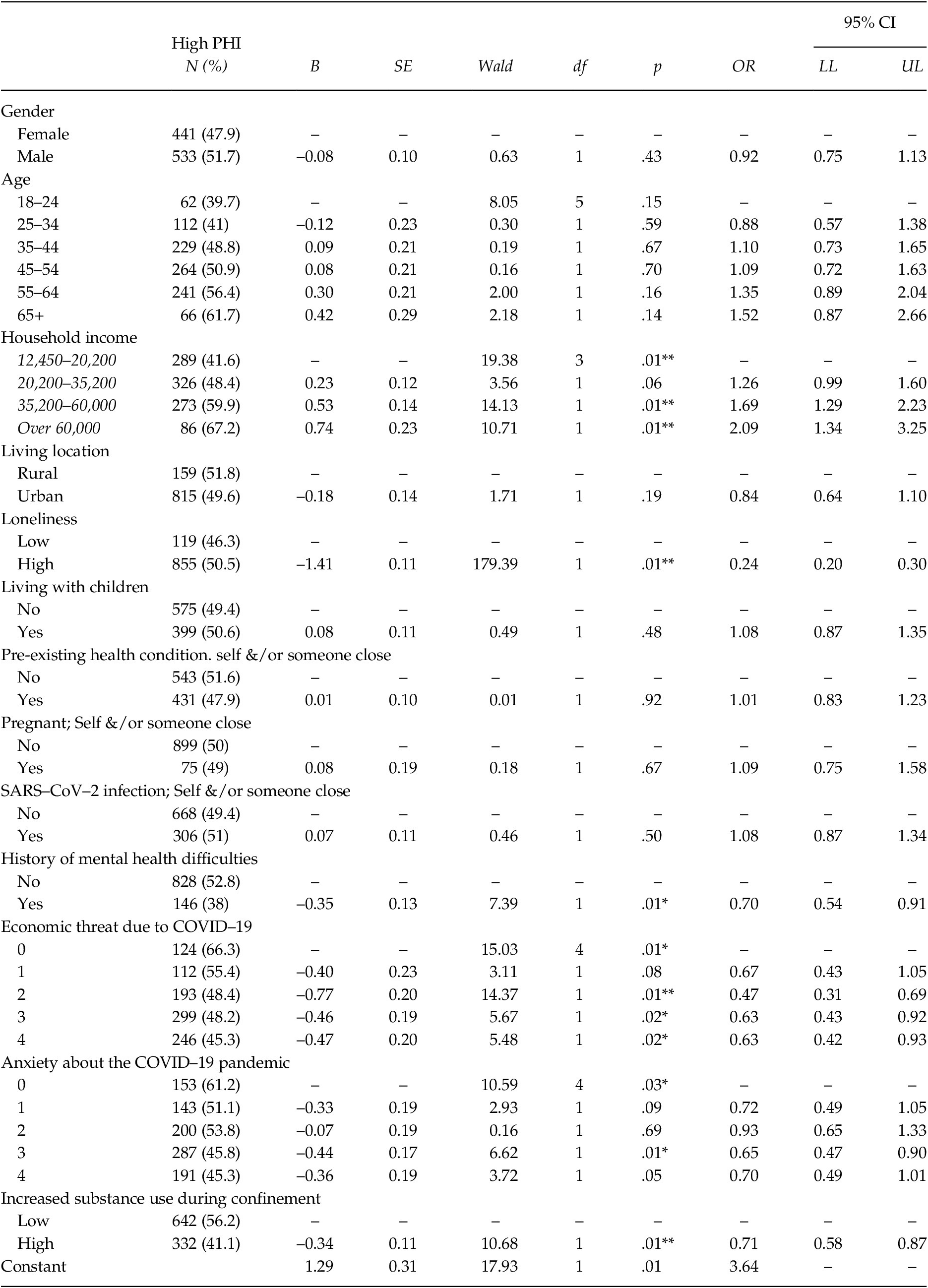
Direct logistic regression was performed to assess the impact of the same 13 potential vulnerability factors on the likelihood that respondents would have above the median score on the remembered well-being dimension of the PHI. Given that this scale does not have an established cut-off, we used the median as the cut-off point (i.e., a score of 7.27). The full model containing all predictors was statistically significant, χ2 (25, N = 1,951) = 352.861, p < .001, indicating that the model was able to distinguish between respondents who experience higher versus lower levels of well-being. The model as a whole explained between 16.5% (Cox and Snell R square) and 22.1% (Nagelkerke R squared) of the variance in well-being status, and correctly classified 68.9% of cases.
As shown in Table 3, the strongest predictors of well-being were gross annual income, indicating that respondents with higher income were over two times more likely to experience well-being than those with lower incomes, controlling for all other factors in the model. The rest of the predictors had values below one, indicating less probability of experiencing well-being. Respondents who experienced loneliness, those with pre-existing mental health difficulties, and those with an increase in substance use during confinement were less likely to experience well-being compared to those at the opposite end of these variables, respectively. Likewise, respondents with economic threat due to COVID–19 and anxiety due to COVID–19 were less likely to experience well-being compared to those with lower levels on those factors.
Logistic Regression Results Predicting Well-being (PHI)

Note. PHI = Pembertom Happiness Index.
* p < .05. ** p < .001.
Complete State of Mental Health: From Languishing to Flourishing in Life
As it is depicted in Figure 1 and using the conceptualisation by Keyes (Reference Keyes2005), most respondents of our study were flourishing (i.e., with high well-being and low distress) but a significant proportion were foundering (i.e., with low well-being and high distress). There were also individuals that were languishing (i.e., with low well-being and low distress) and some that were struggling (i.e., with high well-being and high distress).
Discussion
Our main objective was to assess the levels of anxiety, depression and well-being of the Spanish population in the midst of the COVID–19 pandemic. While there are previous studies on the negative psychological impact of past infectious pandemics (Cowling et al., Reference Cowling, Ng, Ip, Liao, Lam, Wu, Lau, Griffiths and Fielding2010; Zhu et al., Reference Zhu, Wu, Miao and Li2008), the present study measures distress (an index calculated from PHQ–9 and GAD–7 scales) in addition to well-being in a large population of Europeans during a virus outbreak. The study recruited participants at the peak of the pandemic in Spain while they were under severe confinement measures applied by the Spanish government.
In this study we found that the probable presence of distress, using validated cut-off scores, was 22.1% for depression and 19.6% for anxiety. These results suggest a slight increase of probable cases as compared to previous studies. For example, Henares Montiel et al., (Reference Henares Montiel, Ruiz-Pérez and Sordo2020) found, using the General Health Questionnaire (GHQ–12), that the overall psychic morbidity in Spain was 19.1% in 2017, with a higher frequency of psychic morbidity in women than in men. The results of the present study are similar to those found in other studies during this pandemic in Spain, Europe and China, and somewhat lower than those found in Wuhan, the epicentre of the epidemic (Lee et al., Reference Lee, Jobe and Mathis2020; Qian et al., Reference Qian, Wu, Wu, Hou, Liang, Cowling and Yu2020, Rodríguez-Rey et al., Reference Rodríguez-Rey, Garrido-Hernansaiz and Collado2020; Odriozola-González et al., Reference Odriozola-González, Planchuelo-Gómez, Irurtia-Muñiz and de Luis-García2020). A note of caution should be taken, as the presence of symptoms does not equate a diagnosable condition. There is meta-analytic evidence indicating that scales, such as PHQ–9, significantly overestimate the prevalence of depression when compared to validated semi-structured diagnostic interviews (Levis et al., Reference Levis, Benedetti, Ioannidis, Sun, Negeri, He, Wu, Krishnan, Bhandari, Neupane, Imran, Rice, Riehm, Saadat, Azar, Boruff, Cuijpers, Gilbody, Kloda and Thombs2020).
In regard to well-being, it is interesting to note that, despite the reported numbers of depression and anxiety, the results showed that the average remembered well-being score in our sample, as measured with the PHI, was even slightly higher than the average found in the scale validation study in a general population sample (N = 990) (Hervás & Vázquez, Reference Hervás and Vázquez2013). This fact might reflect that as remembered well-being is measured in the PHI (with items on life satisfaction and eudaimonic items related to enjoying a good life), it may offer relatively few, or slower, variations in response to specific environmental circumstances (Diener et al., Reference Diener, Kahneman, Tov, Arorad, Diener, Helliwell and Kahneman2010). Interestingly, results from the assessment of positive and negative emotional experiences happened in the last 24 hours, during the COVID–19 confinement, showed that the emotional daily scenario was characterised for having more positive than negative experiences. This result confirms that, both in individuals and collective traumas, positive emotions are also present and may be predictive of post-traumatic growth (Vázquez & Hervás, Reference Vázquez and Hervás2010) or feelings of emotional synchrony and shared identity with others (Páez et al., Reference Páez, Rimé, Basabe, Wlodarczyk and Zumeta2015). Of note, the mean of experienced well-being in the PHI was also somewhat higher than in the original validation study (Hervás & Vázquez, Reference Hervás and Vázquez2013).
Regarding predictors of mental health, our regression analysis for the distress index revealed that: (1) Anxiety about the COVID–19; (2) Increase in substance use; (3) Loneliness; (4) Mental health difficulties; (5) Direct exposure to the SARS–CoV–2; (6) Age and (7) Gender, were all factors or variables that significantly increased the likelihood of higher levels of distress. The strongest predictor by far was anxiety about the COVID–19. This result is in line with the results by Qian et al. (Reference Qian, Wu, Wu, Hou, Liang, Cowling and Yu2020) who found that subjective perception of susceptibility and severity of COVID–19 were associated with a higher likelihood of distress. Paradoxically, it was found, in line with previous finding in the UK and Spain (Shevlin et al., Reference Shevlin, McBride, Murphy, Miller, Hartman, Levita, Mason, Martinez, McKay, Stocks, Bennett, Hyland, Karatzias and Bentall2020; Odriozola-González et al., Reference Odriozola-González, Planchuelo-Gómez, Irurtia-Muñiz and de Luis-García2020) that those most at risk of the SARS–CoV–2 (i.e., men and older people) were less likely to experience distress (Wang et al., Reference Wang, Tang and Wei2020). In fact, our results fit well with both longitudinal (Charles et al., Reference Charles, Reynolds and Gatz2001) and cross-sectional research (Steptoe et al., Reference Steptoe, Deaton and Stone2015) showing that there are few age-related reductions in the frequency of positive emotions whereas negative emotions show a constant decline since late adolescence. The reduction of levels of distress as age increases, found in our study, seems also to be congruent with findings showing a better ability of emotion regulation associated to age (Carstensen & DeLiema, Reference Carstensen and DeLiema2018).
Moreover, against expectations, having been infected with SARS–CoV–2 or being a health risk group (i.e., diabetes, lung or heart disease) were not significantly related to a higher risk of overall distress. Gender differences found in our study are consistent with epidemiological studies showing that the lifetime prevalence of any affective disorder in women is almost twice as that of men (Eid et al., Reference Eid, Gobinath, Galea and Barreto2019) as well as with a recent study in Spain reporting that women showed more depression and anxiety than men during the lockdown (Ausín et al., Reference Ausín, González-Sanguino, Castellanos and Muñoz2020). Likewise, Henares Montiel et al., (2020) found, in three periods analysed, that the frequency of psychological morbidity was higher in women than in men: 26.7% vs. 15.3% in 2006, 26.1% vs. 17.5% in 2011, and 22.8% vs. 14.6% in 2017.
In line with recent research on the Spanish population (Odriola-González et al., Reference Odriozola-González, Planchuelo-Gómez, Irurtia-Muñiz and de Luis-García2020), we found that young people seem to be psychologically penalized by this pandemic despite not being a high-risk group for the transmission of COVID–19. Although it is still too soon to fully understand this finding, it is possible that given their developmental period, confinement poses a heavy emotional load on the lives of younger people. Also, the current and long-term expected economic consequences of the COVID–19 crisis makes a direct threat to their vital projects that does not occur in the older group. Also, in line with Shevlin et al., (Reference Shevlin, McBride, Murphy, Miller, Hartman, Levita, Mason, Martinez, McKay, Stocks, Bennett, Hyland, Karatzias and Bentall2020) people with a history of mental health problems should be a particularly targeted group because of their susceptibility and need for support. Finally, our study reported that vulnerable groups to experience distress were those that are lonely and those that tend to increase the substance use in times of stress, and it is noteworthy that both conditions are increased due to social distance and isolation due to the pandemic. Nonetheless, it is important to note that these variables could be both predictors as well as consequences of adjustment problems.
Our regression analysis for well-being revealed that: (1) Annual income; (2) Loneliness; (3) History of mental health difficulties; (4) Economic threat due to COVID–19; (5) Anxiety due to COVID–19 and (6) Increase in substance use, all significantly increased the likelihood of higher levels of well-being. The strongest and more specific predictors of well-being were income and the absence of economic threat associated with COVID–19. This finding is consistent with Rodríguez-Rey et al. (Reference Rodríguez-Rey, Garrido-Hernansaiz and Collado2020) who have found that Spaniards are especially concerned about the economic crisis during the pandemic. Diener et al., (Reference Diener, Tay and Oishi2013) indicated that the association between well-being and income increases when the latter improves material well-being, satisfaction with one’s finances and optimism. In contrast, there is evidence that the past financial crisis of 2008 and fears of the impending economic recession were reflected in the increasing depression in Spain (Chaves et al., Reference Chaves, Castellanos, Abrams and Vazquez2018). Also, a history of mental health difficulties, loneliness and increased substance use during confinement were important predictors of distress but also of well-being. Successful social relationships are essential to mental and physical health (Mushtaq et al., Reference Mushtaq, Shoib, Shah and Mushtaq2014), so it is not surprising that, in times of difficulties, loneliness will be associated with distress, while the presence of social relationships will be associated with well-being. In relation to substance use, there is extant evidence showing increased substance use after trauma (e.g., Pfefferbaum et al., Reference Pfefferbaum, Vinekar, Trautman, Lensgraf, Reddy, Patel and Ford2002). Pfefferbaum et al., (Reference Pfefferbaum and North2020) have suggested that some groups may be more vulnerable than others to the psychosocial effects of pandemics such as people with pre-existing medical, psychiatric, or substance use problems and are at an increased risk for adverse psychosocial outcomes. Our study also shows, although there is no clear previous published evidence, that increases in substance use also predicts lower levels of well-being.
Finally, this study supported the so-called ‘model of complete mental health’ proposed by Keyes’ (Reference Keyes2005). Almost 4 out of 10 Spaniards during the confinement showed a condition of flourishing (i.e., absence of probable mental distress while enjoying a state of high well-being) whereas 2 out of 10 showed a condition of languishing (i.e., absence of mental distress while experiencing low levels of well-being). In addition, almost 3 out of 10 have the least functional state (i.e., floundering) since while experiencing symptoms, they do not present well-being. Finally, slightly more than 1 in 10 Spaniards might experience a condition of struggling with high levels of distress and well-being during the confinement. Although this classification may vary, based on different operational criteria, it illustrates that the assessment of mental health difficulties and the definition of intervention targets may benefit from a more comprehensive approach that takes into account both negative and positive aspects of psychological functioning.
This study has both strengths and limitations. On the one hand, the study includes a large sample of Spaniards that were recruited during the peak of the pandemic. This study has also used validated standardised measures that address for the first time, as far as we know, negative and positive mental health outcomes in an infectious outbreak. However, all mental health assessments were based using self-reporting instruments that may show desirability biases and may lead, if not interpreted with caution, to an overestimation of prevalence rates as compared to interviews administered by clinicians. The cross-sectional nature of our research design does not allow a direct inference about causality. Finally, web panels or internet surveys are not necessarily representative of the population (Keinding & Louis, Reference Keiding and Louis2018), and this may affect the possibility of generalizing the present results, as internet access is not universal and, in particular, some vulnerable subgroups to the COVID–19 pandemic (e.g., the elderly or the poor) may not be well represented for most studies using internet-based procedures (Nieto et al., Reference Nieto, Navas and Vázquez2020). Nevertheless, in our case, although this limitation may be relevant, the sample was relatively large and was composed by stratified quotas representative of some important demographic characteristics (i.e., sex, age, and Autonomous communities of the country).
To sum up, we found that in the peak of the COVID–19 pandemic the Spanish population had high rates of probable cases of depression and anxiety but, interestingly, these symptoms did not necessarily dampen psychological well-being. These findings offer support, important for clinicians but also for policy makers (Brewin et al., Reference Brewin, DePierro, Pirard, Vazquez and Williams2020), for current models of mental health which believe that distress and well-being should be considered simultaneously when assessing and even intervening in mental health problems (Valiente et al., Reference Valiente, Espinosa, Trucharte, Nieto and Martínez-Prado2019; Vázquez, Reference Vázquez2017). In addition, we found a number of significant predictors (i.e., perception of loneliness, pre-existing mental health difficulties, anxiety due to COVID–19, and substance abuse) that are common for both types of outcomes. If confirmed in other studies on the current pandemic, or successive future outbursts, this finding might help to guide transdiagnostic preventive of therapeutic interventions aimed at reducing symptoms or enhancing well-being.
Supplementary Material
To view supplementary material for this article, please visit http://dx.doi.org/10.1017/SJP.2021.7.
Acknowledgments
We thank Jamie O’Grady for his help in editing and proof reading of the manuscript.