Introduction
The long-term and historically contingent transition from Palaeolithic to Neolithic lifeways—or Neolithisation—has long been a key issue in archaeological studies, and it remains the subject of ongoing debate (e.g. Kuzmin & Orlova Reference Kuzmin and Orlova2000; Kuzmin Reference Kuzmin2013; Uchiyama et al. Reference Uchiyama, Gillam, Hosoya, Lindström and Jordan2014; Gibbs & Jordan Reference Gibbs and Jordan2016). The emergence of pottery is often used to define the beginning of the Neolithic period, especially in Russia and Japan (Kuzmin Reference Kuzmin2013). In China, the pre-Holocene material culture associated with early pottery is often attributed to the Palaeolithic-to-Neolithic transition period (PNTP), although it is also sometimes described as late Upper Palaeolithic (Boaretto et al. Reference Boaretto, Wu, Yuan, Bar-Yosef, Chu, Pan, Liu, Cohen, Jiao, Li, Gu, Goldberg and Weiner2009; Wu et al. Reference Wu, Zhang, Goldberg, Cohen, Pan, Arpin and Bar-Yosef2012). In recent decades, studies of the Neolithisation process in China, Russia and Japan have begun to give greater attention to the importance of establishing more secure chronologies and to climatic and environmental contexts (e.g. Bar-Yosef Reference Bar-Yosef2011; Iizuka & Izuho Reference Iizuka and Izuho2017; Morisaki & Natsuki Reference Morisaki and Natsuki2017; Sato & Natsuki Reference Sato and Natsuki2017).
North-east China sits between the Korean Peninsula, the Russian Far East, north China and Hokkaido Island. Covering several geological areas, including the Khingan Mountains, Changbaishan Mountains, the Song-Nen Plain, the Sanjiang Plain and the Liaohe Plain, north-east China is separated from north China by the Great Wall. Previous research on this region and its abundant palaeoenvironmental evidence has revealed climatic and environmental changes in the terminal Late Pleistocene (Stebich et al. Reference Stebich, Mingram, Han and Liu2009; Wu & Shen Reference Wu and Shen2010; Wu & Liu Reference Wu and Liu2013; Wu et al. Reference Wu, Liu, Wang, Chu and Liu2016). Thus, the region offers an ideal context in which to study the adaptive behaviours of hunter-gatherers and the Neolithisation process. The PNTP industries of north-east China, however, are relatively poorly understood, due to a lack of intensive archaeological survey and excavation in the region. In recent years, this picture has gradually improved as archaeological materials have been identified in stratified, datable contexts, such as at the sites of Houtaomuga and Taoshan (Chang et al. Reference Chang, Hou, Yang, Zhang, Li, Hao, Wang, Qiu, Yue and Hu2016; Li Reference Li2016; Kunikita et al. Reference Kunikita, Wang, Onuki, Sato and Matsuzaki2017; Yue et al. Reference Yue, Hou, Yang, Chang, Zhang, Li, Hao, Wang and Qiu2017, Reference Yue, Yang, Hou, Potter, Li and Chang2018).
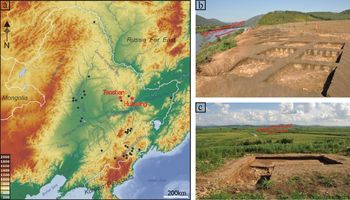
Over the last decade in the southern Lesser Khingan Mountains of north-east China, archaeologists from the Heilongjiang Provincial Institute of Cultural Relics and Archaeology have conducted a series of archaeological surveys in advance of local highway reconstruction projects (Li Reference Li2012, Reference Li2014, Reference Li2016). This work identified several archaeological sites with associated PNTP assemblages, leading to formal excavations at Huayang and Taoshan. Here, we present these two sites, with a particular focus on the lithic assemblages that extend across the PNTP boundary (Figure 1a). Both sites are stratified and securely dated, and contain cultural remains dating from c. 18–5 ka. Together, the sites offer a comprehensive view of the PNTP lithic industry, allowing an assessment of long-term human behaviour in this region. We synthesise these results in relation to the regional archaeological evidence and the context of pre-Holocene climatic and environmental changes in North-eastern Asia.
Topographic map of north-east China (a) and photograph showing the excavation areas of the Huayang (b) and Taoshan (c) sites (figure credit: Jian-ping Yue, You-qian Li & Shi-Xia Yang).

Huayang and Taoshan
Huayang site
The Huayang site (47.064444° north, 129.494444° east) is situated at approximately 180m asl and 20m above the local river, on the second terrace of the Tangwanghe River (Figure 1b). Discovered in 2011, the site was excavated the following year as a salvage archaeology project under the direction of one of the authors (Y.Q. Li). Three excavation areas and many test pits were opened, covering almost 1000m2 of the site, which itself is estimated to cover more than 70 000m2. The main excavation area, which is the focus of the present article, covers around 560m2, divided into 24 squares labelled from A–V. In addition, another square (MK, 1 × 5m2) was opened as an extension of square M, in response to the discovery of a high-density distribution of lithic artefacts.
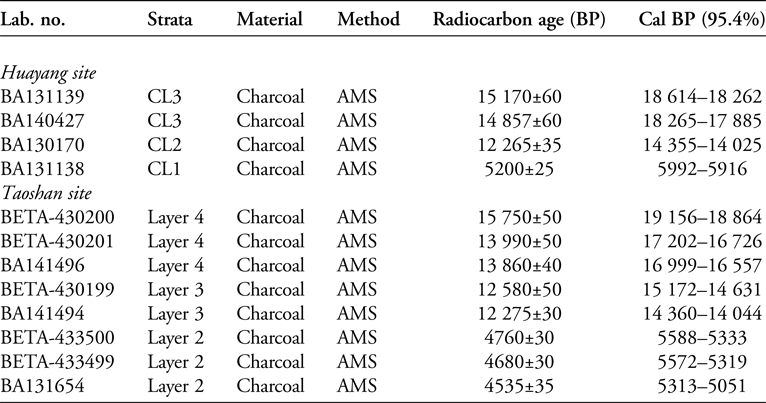
In addition to the modern plough soil, three prehistoric cultural layers were identified, labelled CL1, CL2 and CL3. AMS radiocarbon measurements date CL1 to 5992–5916 cal BP, CL2 to 14 355–14 025 cal BP and CL3 to 18 614–17 885 cal BP (Table 1). The PNTP cultural layer (CL2) yielded a few pottery sherds and a significant number of lithic artefacts (n = 25 090), the latter forming the principal lithic assemblage of the site.
Radiocarbon dates for the stratigraphic sequences of the Huayang and the Taoshan sites (Yue et al. Reference Yue, Hou, Yang, Chang, Zhang, Li, Hao, Wang and Qiu2017), calibrated with the OxCal 4.2 software (Bronk Ramsey Reference Ramsey2009) and the IntCal13 dataset (Reimer et al. Reference Reimer2013).

Taoshan site
The Taoshan site (47.1125° north, 128.378611° east) is located on the southern slope of the Taoshan Mountains, approximately 500m from the Hulan River (Figure 1c). The site is 241m asl and approximately 21m above the local river. Taoshan was discovered in 2011 and excavated in 2013–2014. A total of 36m2 was uncovered, yielding 2908 stone artefacts, 71 pottery sherds and five bead fragments made from amazonite (Yue et al. Reference Yue, Hou, Yang, Chang, Zhang, Li, Hao, Wang and Qiu2017). Three prehistoric layers were identified and AMS radiocarbon dated. From top to bottom, layer 2 dates to 5588–5051 cal BP, layer 3 dates to 15 172–14 044 cal BP and layer 4 dates to 19 156–16 557 cal BP (Table 1; Yue et al. Reference Yue, Hou, Yang, Chang, Zhang, Li, Hao, Wang and Qiu2017). Layer 3 corresponds with the PNTP and yielded 2281 lithic artefacts and 12 pottery sherds.
The PNTP lithic assemblage of Huayang
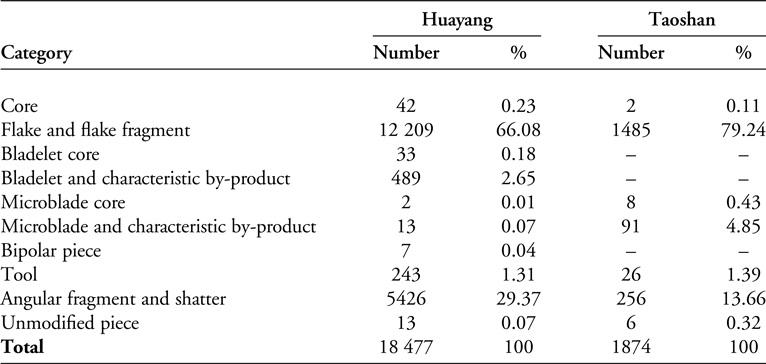
Analysis of the lithic assemblage from Huayang includes tools, blades, microblades and related fragments of all sizes. Due to the large quantity of debitage, lithics smaller than 10mm (n = 6613) are excluded. The material examined here therefore comprises 18 477 artefacts (>10mm) from CL2 (Table 2). The techno-typological approach is used to develop an understanding of lithic raw material procurement and exploitation, blank manufacture and tool production at the site.
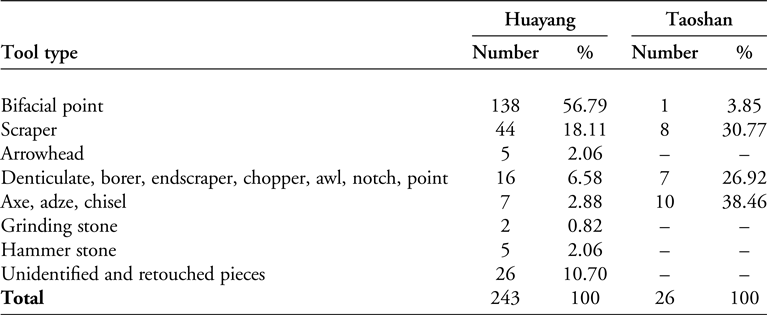
The PNTP lithic assemblage composition (>10mm) of the Huayang and Taoshan sites.

Raw material exploitation
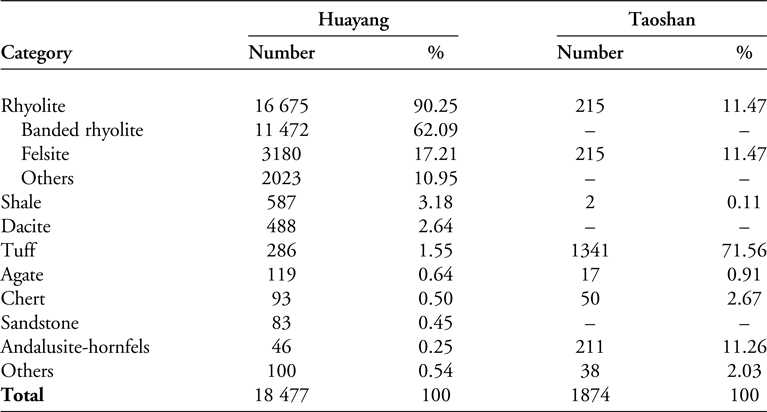
Rhyolites, comprising predominantly banded rhyolite and felsite, serve as the primary raw material at Huayang, accounting for 90.25 per cent of the lithic assemblage (Table 3). Shale, dacite and tuff were also procured in relatively large quantities. Other raw materials, such as agate, chert, sandstone and andalusite-hornfels, are present in small amounts. A geological survey of the site and surroundings and a follow-up petrological study were undertaken to document procurement sources. The results suggest that all the lithic raw materials at Huayang were available in close proximity (within 5km) to the site.
The PNTP lithic raw materials from the Huayang and Taoshan sites.

Cores and debitage
Several methods of debitage production are attested at the Huayang site. These can be classified largely into debitage from core-flake, bladelet and microblade production. The presence of predetermined products, such as blades and microblades, informs of the processes that produced the debitage. Although bipolar reduction was occasionally applied for agate and crystal exploitation at the site, it is relatively scarce.
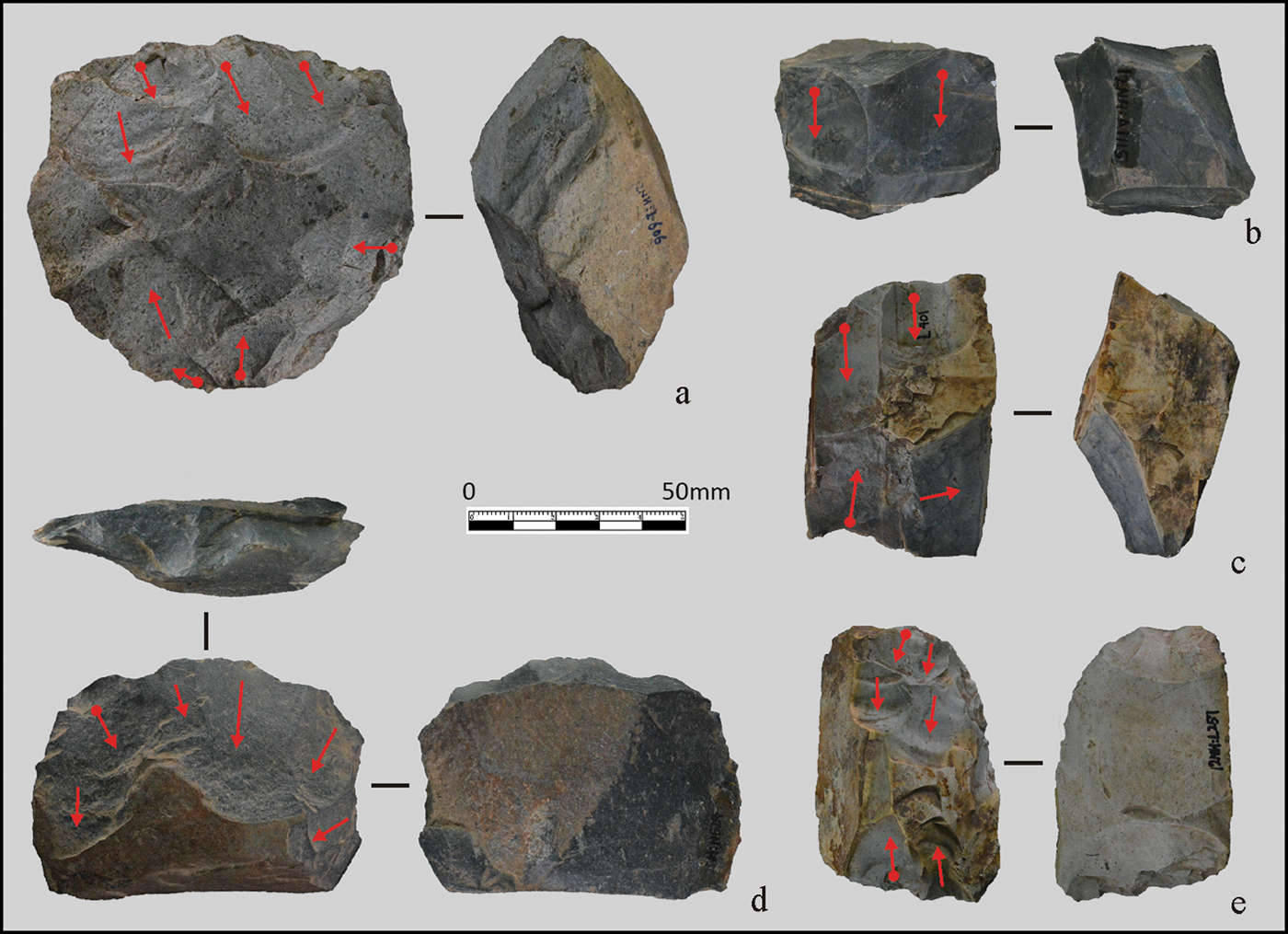
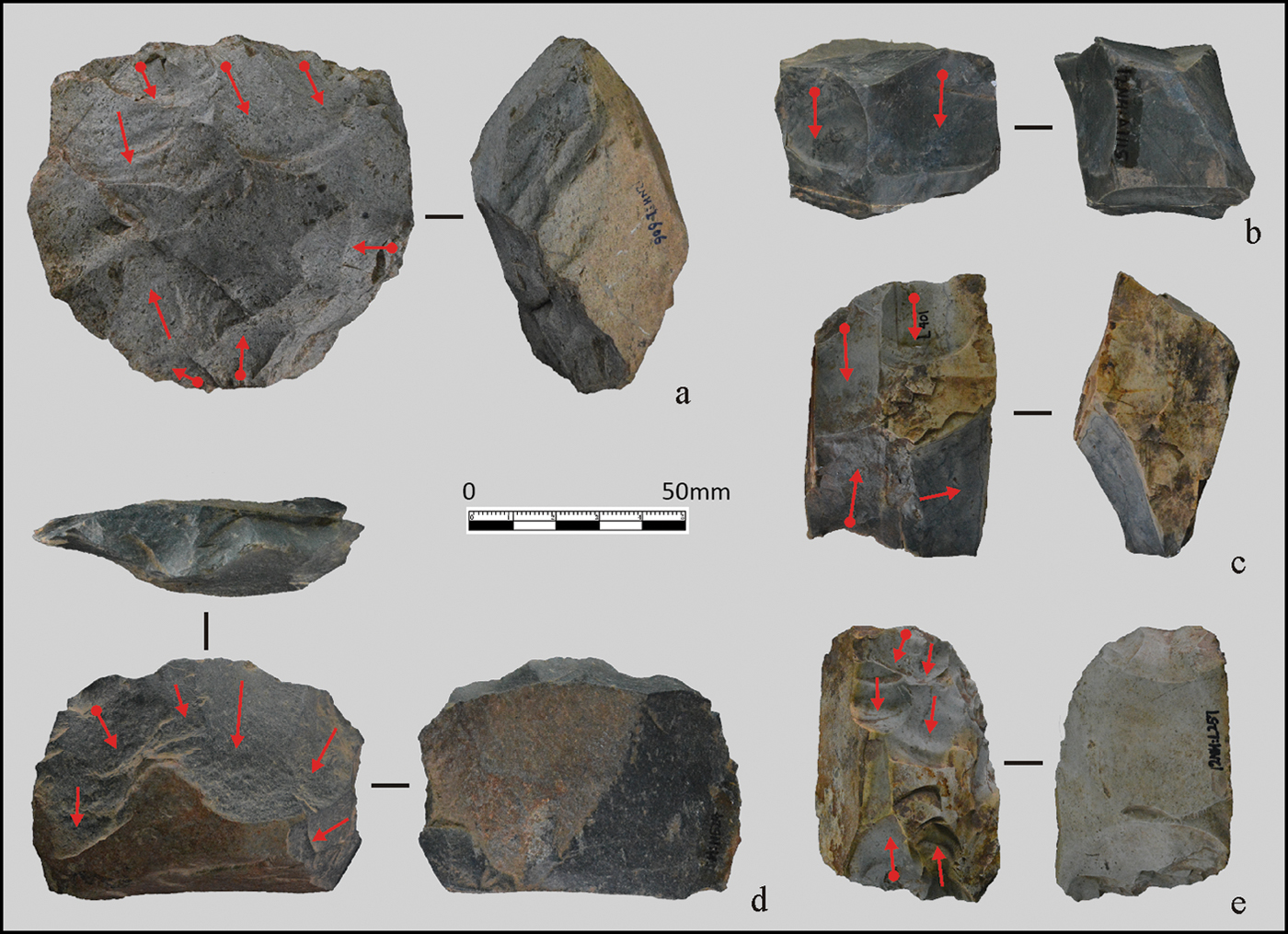
Core-flake reduction is particularly prominent at Huayang and is represented by cores, core fragments, flakes and flake fragments (Figure 2). Rhyolite, chert, dacite and a few other materials were procured. Pebbles, cobbles and blocks were preferentially selected for blanks, as well as some thick flakes. Most of the cores exhibit a simple debitage process, with one or two platforms present. Only two truncated-facetted pieces have been identified (Figure 2d–e); these are flakes that exhibit a truncation face, which serves as a platform for the removal of one or more small flakes (Dibble & McPherron Reference Dibble, McPherron and McPherron2007; Shalagina et al. Reference Shalagina, Krivoshapkin and Kolobova2015).
Cores from the Huayang site (figure credit: Jian-ping Yue, You-qian Li & Shi-Xia Yang).
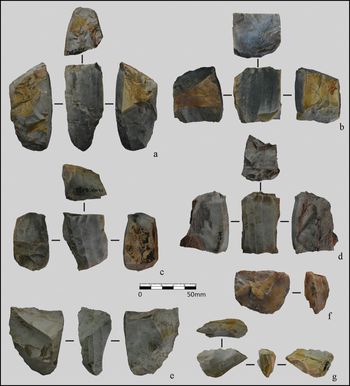
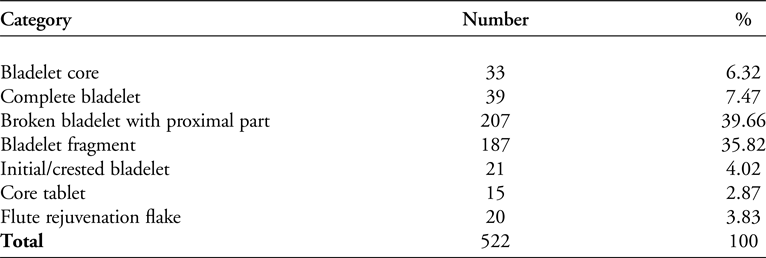
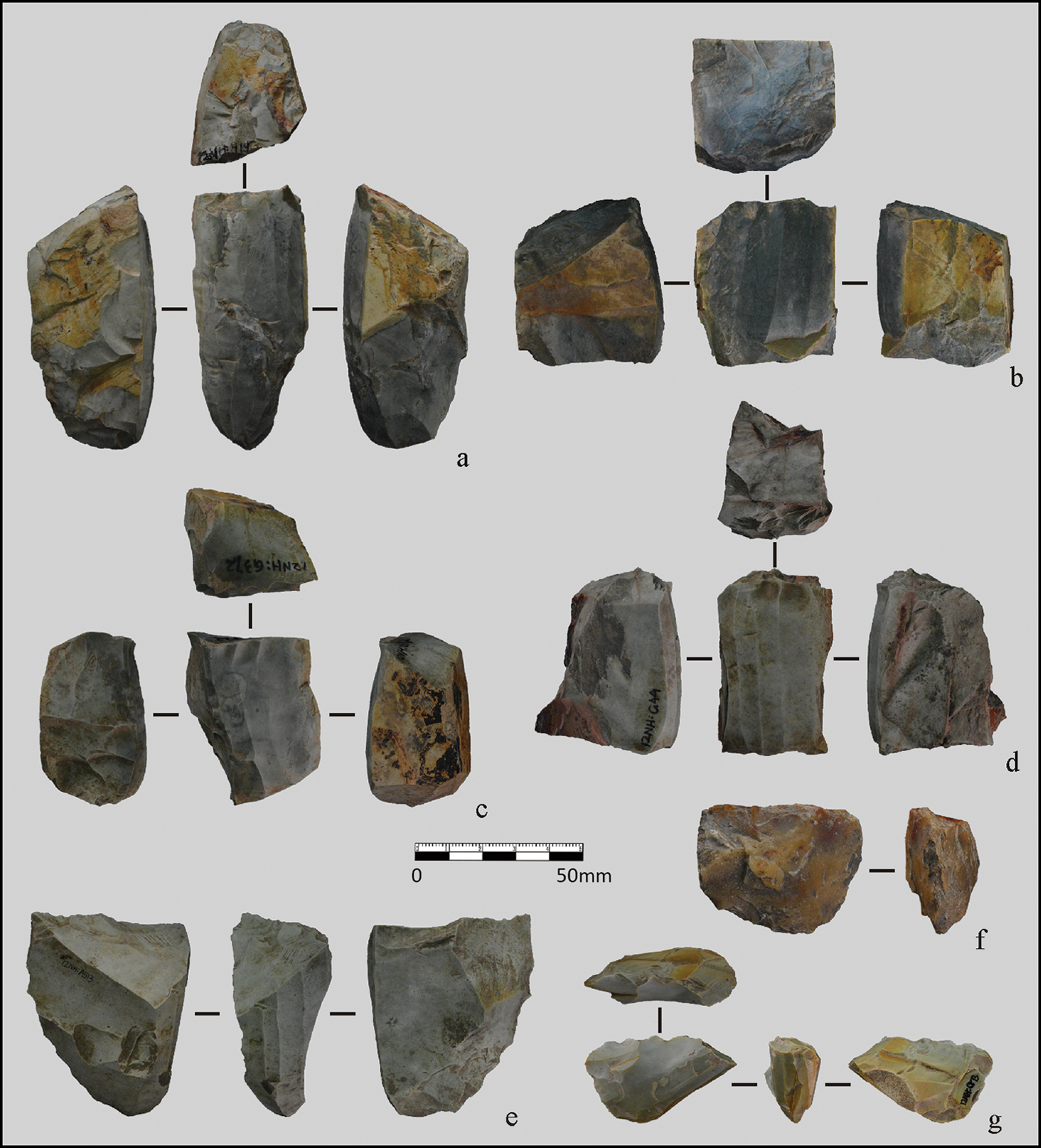
Bladelet production is well represented at the site (Table 4). The bladelet cores can be divided into two main types: prismatic and narrow-faced (Figure 3a–e). These cores appear to have been made exclusively on felsite blocks, and most exhibit a partially retained natural surface. The debitage indicates that full advantage was taken of blank morphology. The debitage surface was usually not elaborately prepared, and the initial blade extraction followed the natural convexities of the core. Preparation of the platform prior to blade removal was common. Indirect percussion was used for bladelet removal.
Bladelet and microblade cores from the Huayang site: a–e) bladelet core; f–g) microblade core (figure credit: Jian-ping Yue, You-qian Li & Shi-Xia Yang).
Bladelet cores and characteristic debitage products of Huayang.

Microblade debitage is present, although the number of microblades is small. The microblade cores—represented by two pieces—are bifacially shaped, exhibiting a wedge-like morphology (Figure 3f–g). Microblades were detached from the elaborately prepared platform along one end of the core.
Formal tools
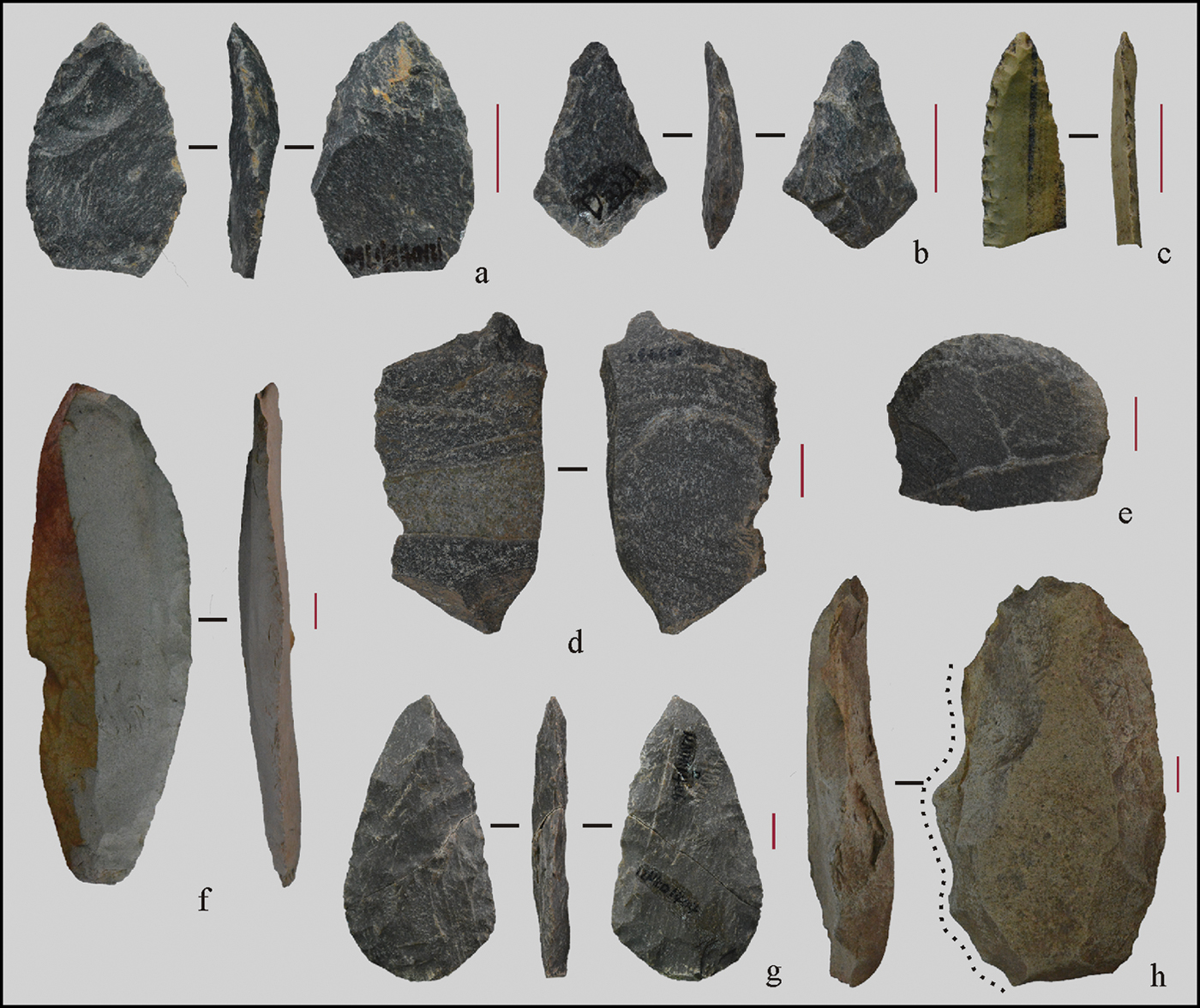
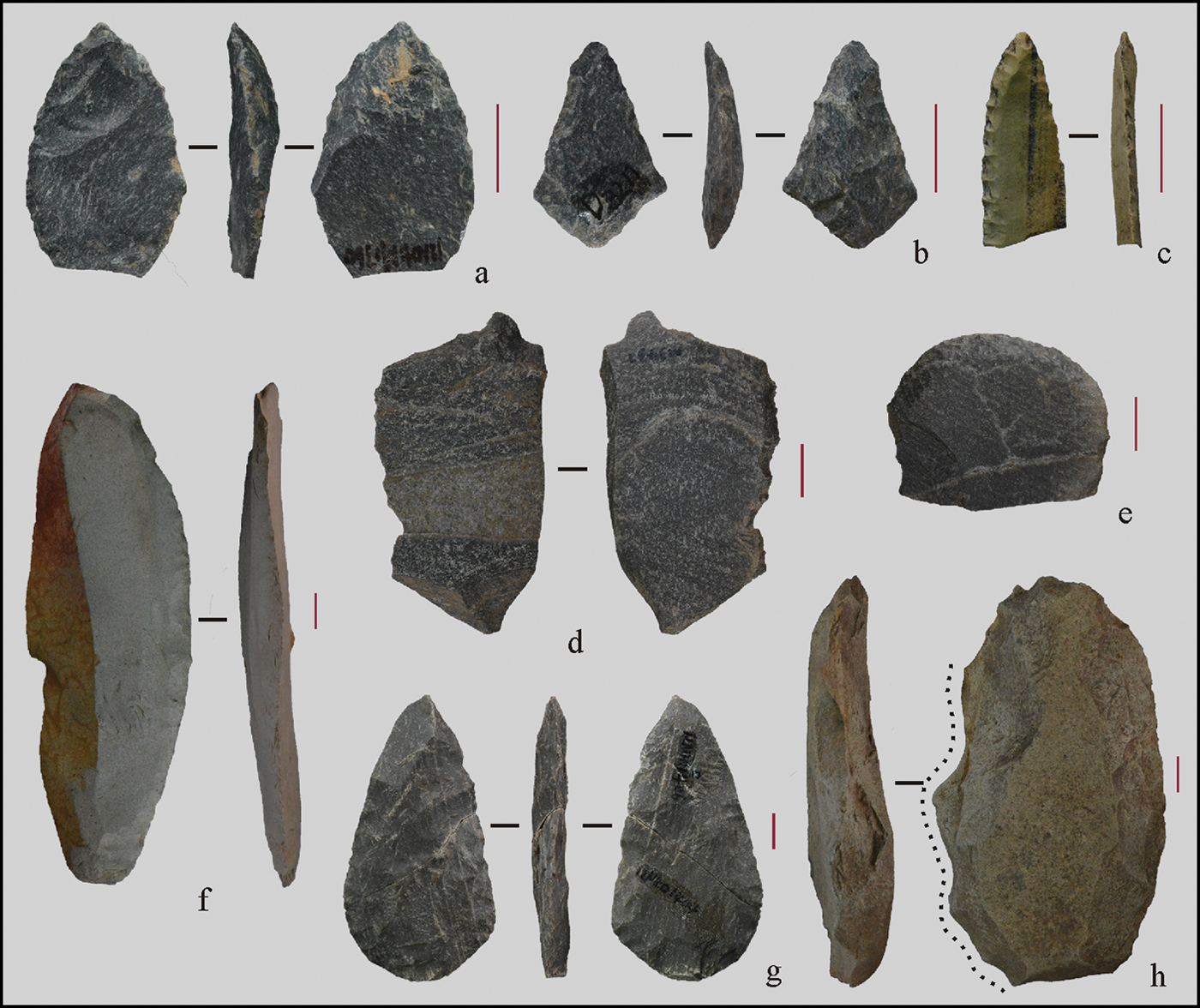
The toolkit at Huayang includes a great diversity of tool types and technical features (Table 5 & Figures 4–5). The most frequently represented tools are bifacial points, with 138 complete and broken pieces identified. Approximately 91.3 per cent of the bifacial points are broken and some can be conjoined. Banded rhyolite is the most frequently used raw material (94.93 per cent). The morphology of the points shows a high degree of standardisation, characterised by a pointed or elliptical base, and a V-shaped point with straight or slightly curved sides. Initially, the blanks were made by hard-hammer percussion, and subsequently retouched using a soft hammer.
Stone tools from the Huayang site: a–b) arrowhead; c) point on bladelet; d) borer; e–f) convex scraper; g) bifacial point; h) backed scraper. Dark red scale bars = 10mm (figure credit: Jian-ping Yue, You-qian Li & Shi-Xia Yang).
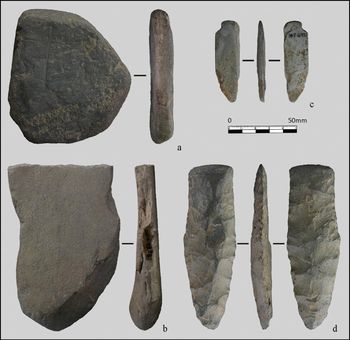
Grinding stones (a–b) and ground-stone chisels (c–d) from the Huayang site.

Stone tools of Huayang and Taoshan.

Scrapers are represented by 44 pieces, most of which have one cutting edge, with some showing continuous and elaborate retouch. Arrowheads (n = 5) are small with an average maximum length of 25.57mm. These pieces are partially bifacially retouched by soft-hammer percussion and pressure flaking. A small quantity of additional implements, such as notches, points, denticulates, choppers and awls, were also retrieved. Overall, most of the aforementioned formal tools selected flakes as blanks; only three pieces were manufactured on bladelets. Rhyolite dominates the assemblage, along with some chert, dacite and tuff.
Some PNTP tools, including axes, adzes and chisels, have also been identified at Huayang (Figure 5c–d). These pieces are made on tuffaceous sandstone, quartzite and diorite, reflecting different raw material preferences and exploitation strategies. Some pieces—particularly the stone chisels—also show evidence of grinding, which is further attested by the presence of two grinding stones (Figure 5a–b). Tabular cobbles in sandstone and quartzite sandstone were selected as grinding stones and show clear traces of ground-stone tool production.
The PNTP lithic assemblage of Taoshan
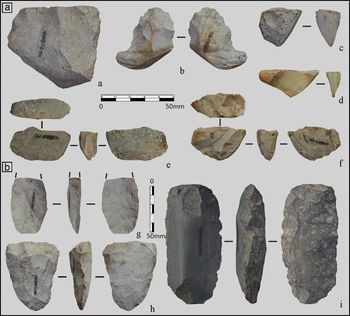
A total of 1874 lithic artefacts and related pieces (>10mm) from layer 3 of Taoshan site have been previously analysed (Table 2 & Figure 6; Chang et al. Reference Chang, Hou, Yang, Zhang, Li, Hao, Wang, Qiu, Yue and Hu2016; Yue et al. Reference Yue, Hou, Yang, Chang, Zhang, Li, Hao, Wang and Qiu2017, Reference Yue, Yang, Hou, Potter, Li and Chang2018). Thus, only a summary is presented here.
Lithic artefacts from the Taoshan site: a–b) flake core; c–f) microblade core; g) broken bifacial point; h) adze; i) axe (figure credit: Jian-ping Yue, You-qian Li & Shi-Xia Yang).

Raw material exploitation
The Taoshan lithic assemblage is dominated by crystal tuff, with lesser amounts of rhyolite and andalusite-hornfels (Table 3). Other raw material types (e.g. chert, quartz sandstone and agate) are present in smaller quantities. Field survey and statistical analysis of the presence of cortex indicate that almost all the raw materials were taken from the local riverbed (Yang et al. Reference Yang, Zhang, Li, Zhao, Li, Yue, Hou, Deng, Zhu and Petraglia2017).
Cores and debitage
Table 1 shows that flakes and flake fragments constitute the dominant artefact type at Taoshan, while cores of flake debitage are represented by only two pieces, showing a simple debitage method without preparation (Figure 6a–b). We therefore suggest that most of the flakes result from the shaping out of microcores—the primary activity at the site.
Microblade debitage is well represented by six wedge-shaped microblade cores and a series of characteristic debitage products (Figure 6c–f). The blanks are on cobbles or flakes and were shaped using bifacial percussion. The platform was formed with successive transverse preparation and subsequent removal of longitudinal spalls. Microblades were detached by pressure flaking, following the removal of the crested blade—the first bladelet that displays negatives of the bifacial shaping of the core.
Formal tools
Although the Taoshan assemblage contains a relatively small quantity of formal tools, various types have been identified and demonstrate similarities with those of Huayang (Table 5). Along with some retouched pieces, such as scrapers, denticulates, end-scrapers and notches, relatively large-sized domestic tools, including adzes and axes, have been identified (Figure 6h–i). These pieces were made on cobbles in tuff and andalusite-hornfels, and achieved morphological standardisation through progressive shaping, although they show no evidence of grinding. A single broken bifacial point was also recovered from Taoshan.
Discussion
Comparing the PNTP assemblages from Huayang and Taoshan
The sites of Huayang and Taoshan are located in the southern Lesser Khingan Mountains, approximately 100km from each other, and are almost contemporaneous, with assemblages exhibiting clear technological similarities. In terms of raw material procurement, igneous rocks were preferentially selected, followed by shale, chert, agate and andalusite-hornfels. All raw materials were obtained from local primary or secondary sources and show clear procurement management strategies. Banded rhyolite, for example, was primarily procured for bifacial point production, while felsite was mainly used for bladelets at Huayang. Several reduction sequences were used at both sites. Flake debitage demonstrates a predominantly simple reduction method, with little evidence for elaborate core preparation. Microblade debitage is characteristic of the bifacial shaping-out of wedge-shaped microblade cores. The toolkits of these two sites are also similar in the types of tool represented and in the evidence for the addition of new forms, including adzes, axes and chisels. There is also a notable presence of early pottery at both sites.
Nonetheless, there are some distinctions in blank debitage and tool production between the two sites (as shown in Tables 2 & 5). Bladelets and bifacial points, for example, constitute significant components of the Huayang PNTP assemblage, while at Taoshan the lithic industry is characterised by microblade technology, with no evidence of bladelets and only a single bifacial point. What, then, might explain the differences between the two assemblages? At other contemporaneous sites in north-east China, blade and microblade items serve as common features of the regional Late Pleistocene lithic industries (Chen & Wang Reference Chen and Wang2008; Chen et al. Reference Chen, Zhao, Fang and Wang2010; Tian et al. Reference Tian, Xu, Guan and Gao2017). It is worth noting that at the Huayang site, cores and tools of different raw material types, selected for their particular knapping qualities, are found in distinct parts of the excavation area. Felsite, for example, which was used predominantly for bladelet and core-flake production, is concentrated in the southern area, while banded rhyolite, which was used mainly for bifacial point production, concentrates in the western part. Regardless of the small excavation area at Taoshan, it is reasonable to deduce that an uneven spatial distribution of lithic artefacts could explain the lack of blade and bifacial points found at the site. In sum, the lithic assemblages of Huayang and Taoshan site can be clustered into the same techno-complex, which collectively represent the PNTP lithic industries in the southern Lesser Khingan Mountains.
Ecological adaptation in North-eastern Asia
The PNTP lithic evidence from Huayang and Taoshan demonstrates important technological innovations and developments of the earlier lithic industry, especially the production of adzes, axes and chisels and the initial application of grinding techniques. On the basis of a systematic analysis of the lithic raw materials of Taoshan, Yang et al. (Reference Yang, Zhang, Li, Zhao, Li, Yue, Hou, Deng, Zhu and Petraglia2017) propose a concurrent decrease in population mobility and greater exploitation of more local raw materials.
In addition to changes in tool types and mobility patterns, a transformation in subsistence strategies is also evidenced by the presence of early pottery in the PNTP cultural layers at Huayang and Taoshan. Sherds of sand-tempered vessels fired at low temperatures were recovered from both sites. The development of ceramic containers is suggested to have provided prehistoric hunter-gatherers with new strategies for storing, processing and consuming foodstuffs (Wu et al. Reference Wu, Zhang, Goldberg, Cohen, Pan, Arpin and Bar-Yosef2012; Craig et al. Reference Craig, Saul, Lucquin, Nishida, Taché, Clarke, Thompson, Altoft, Uchiyama, Ajimoto, Gibbs, Isaksson, Heron and Jordan2013; Kunikita et al. Reference Kunikita, Shevkomud, Yoshida, Onuki, Yamahara and Matsuzaki2013; Yoshida et al. Reference Yoshida, Kunikita, Miyazaki, Nishida, Miyao and Matsuzaki2013). Isotopic analysis of charred residues on the early pottery sherds (13–11ka cal BP) from the Houtaomuga site on the Song-Nen Plain of north-east China suggests that freshwater fish may have been a major component of the local diet (Kunikita et al. Reference Kunikita, Wang, Onuki, Sato and Matsuzaki2017).
Similar changes in technology and subsistence have also been identified in adjacent regions of North-eastern Asia, particularly the Russian Far East and Hokkaido. Early pottery has been widely reported in the Russian Far East, particularly from the Oshipovka Culture layers along the lower Amur River, at such sites as Gasya, Khummi, Goncharka 1, Novotroitskoe 10 and Oshinovaya-rechika 16. Together, these sites suggest a use-life ranging from c. 14–12 ka cal BP (Kuzmin & Jull Reference Kuzmin and Jull1997; Kuzmin Reference Kuzmin1998; Kunikita et al. Reference Kunikita, Shevkomud, Yoshida, Onuki, Yamahara and Matsuzaki2013; Sato & Natsuki Reference Sato and Natsuki2017). The earliest pottery on Hokkaido is reported from the Taisho 3 site, is associated with projectile points, burins and axes, and dates to 15 030–13 570 cal BP (Naoe Reference Naoe2014). New technological innovations, including stemmed points and axes, also developed contemporaneously in both Hokkaido and the Russian Far East, and are accompanied by the miniaturisation of microblades and a higher frequency in burin maintenance (Morisaki et al. Reference Morisaki, Izuho, Terry and Sato2015; Otsuka Reference Otsuka2016). Although local lithic raw materials replaced non-local materials, tool type and inter-site assemblage variability increased (Morisaki et al. Reference Morisaki, Izuho, Terry and Sato2015).
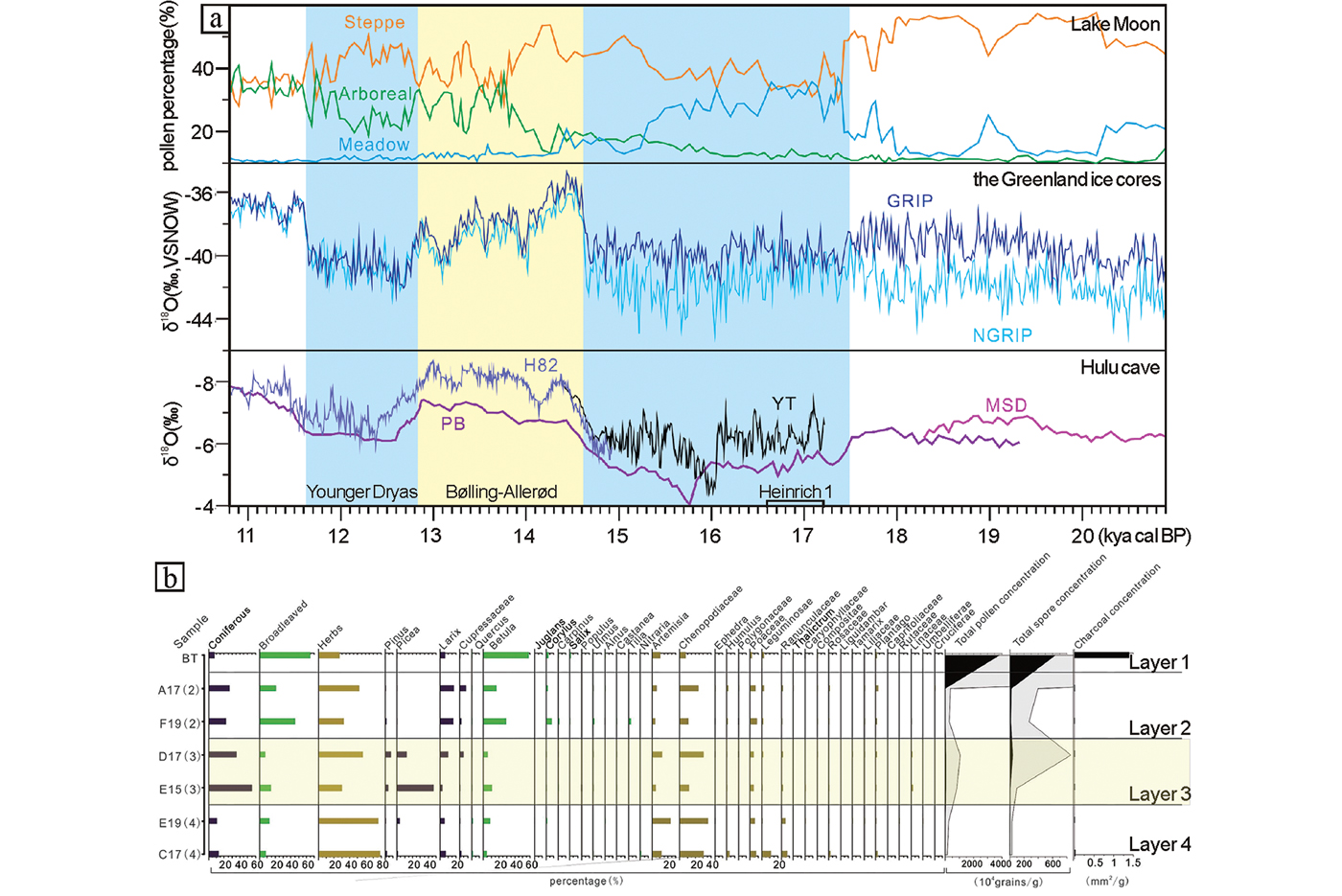
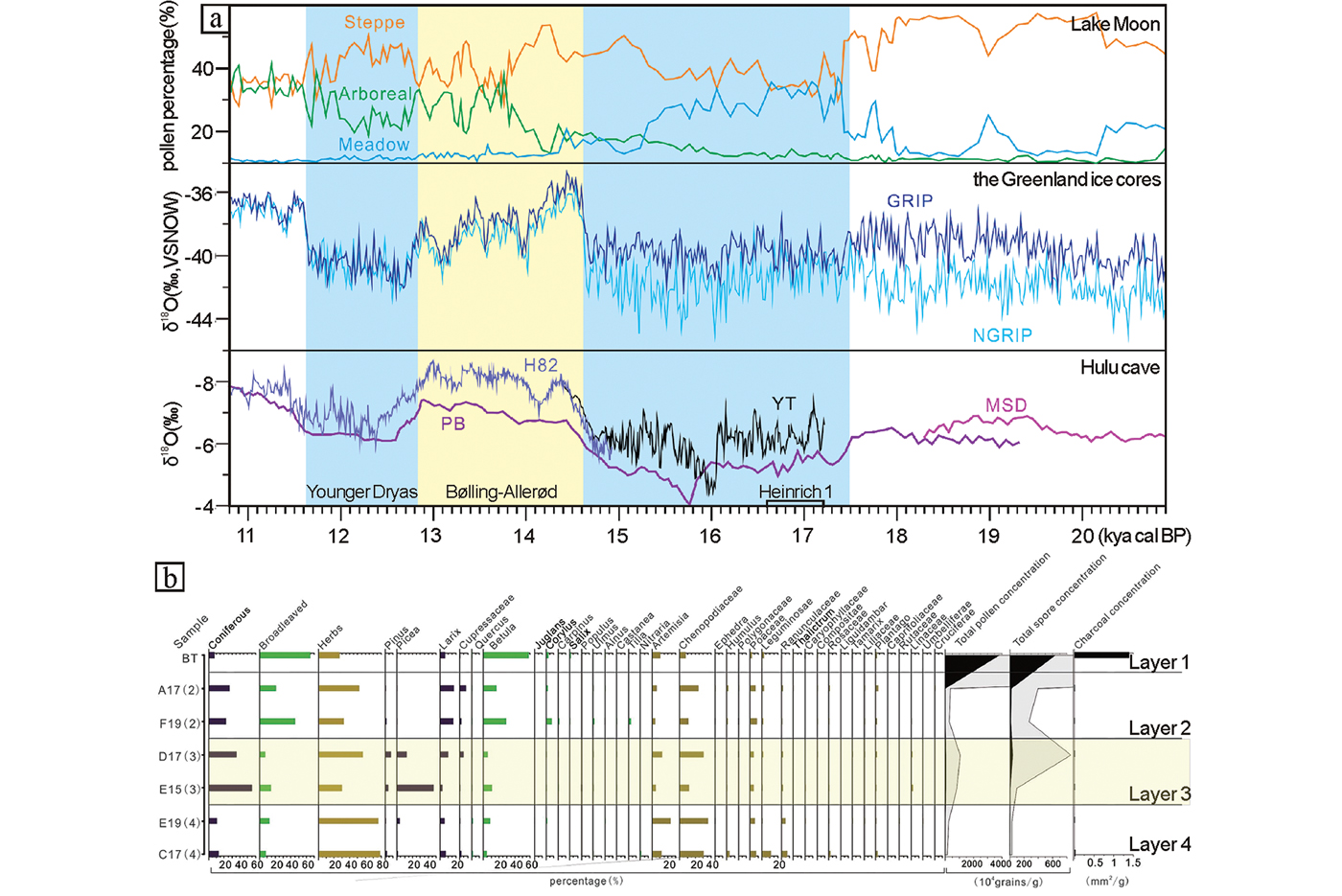
A combined focus on climatic conditions and cultural developments highlights the important role of environmental changes in the course of the Neolithisation of this region. North-eastern Asia is located on the northern boundary of the modern Asian monsoonal system and is highly sensitive to rapid changes in climate. A series of high-resolution palaeoclimatic records clearly characterise the vegetation history and climatic variability during the terminal Late Pleistocene, which includes prominent climatic phases, such as the Last Glacial Maximum, the Bølling-Allerød warm phase and the Younger Dryas cold event (Figure 7a; Mokhova et al. Reference Mokhova, Tarasov, Bazarova and Klimin2009; Stebich et al. Reference Stebich, Mingram, Han and Liu2009; Igarashi & Zharow Reference Igarashi and Zharow2011; Wu et al. Reference Wu, Liu, Wang, Chu and Liu2016). Pollen analysis of samples from Taoshan also reveals substantial change in vegetation from a steppe environment, during the layer 4 period (Last Glacial Maximum), to dense forest in layer 3 (Yang et al. Reference Yang, Zhang, Li, Zhao, Li, Yue, Hou, Deng, Zhu and Petraglia2017). This change is attributed to increasing precipitation and rising temperature concurrent with the start of the Bølling-Allerød warm phase (Yang et al. Reference Yang, Zhang, Li, Zhao, Li, Yue, Hou, Deng, Zhu and Petraglia2017; Figure 7b).
The palaeoclimatic and palaeoenvironmental background of north-east China: a) comparison of pollen records from Lake Moon in north-east China with the δ18O records from the Greenland ice core and Hulu cave stalagmite (Wu et al. Reference Wu, Liu, Wang, Chu and Liu2016); b) percentage pollen diagram, pollen concentration and charcoal content of the Taoshan site (Yang et al. Reference Yang, Zhang, Li, Zhao, Li, Yue, Hou, Deng, Zhu and Petraglia2017) (figure credit: Jian-ping Yue, You-qian Li & Shi-Xia Yang).
During the Late Glacial phase (c. 15–11.7 ka cal BP), climatic and environmental conditions changed significantly, which led to an improvement in landscape productivity and a noticeable alteration in plant and animal resources. The population density seems to have increased, as attested by the higher number of archaeological sites and larger amounts of intra-site material remains in the area (Kononenko Reference Kononenko2001; Kudo & Kumon Reference Kudo and Kumon2012; Yang et al. Reference Yang, Zhang, Li, Zhao, Li, Yue, Hou, Deng, Zhu and Petraglia2017). Thus, the imbalance between population and available resources could have accelerated over time. All of these factors probably contributed directly to the Neolithisation process, as they enabled local populations to develop new, innovative subsistence strategies and behaviours. During this period, the mobility of prehistoric populations tended to decrease while exploitation of locally available resources—not only faunal and floral resources but also lithic raw materials (see also Yang et al. Reference Yang, Zhang, Li, Zhao, Li, Yue, Hou, Deng, Zhu and Petraglia2017)—intensified. Several technologies indicative of resource intensification (e.g. pottery, axes and adzes) appeared in North-eastern Asia, signalling the beginning of a new period: the Neolithic.
Conclusion
Here, we have focused on the PNTP lithic assemblages from the Huayang and Taoshan sites in the southern Lesser Khingan Mountains of north-east China. Analysis of the assemblages in combination with contemporaneous material from adjacent regions—particularly the Russian Far East and Hokkaido Island—demonstrates both a uniformity of the trajectory of the Neolithisation process in North-eastern Asia and a close connection with environmental shifts during the Late Glacial phase. These analyses enrich our understanding of the nature, course and geographic extent of Neolithisation in both north-east China and North-eastern Asia more widely, and facilitate comparative study with neighbouring regions, such as north China, where the Neolithisation process followed a different trajectory.
Acknowledgements
This research is supported by the Strategic Priority Research Program of Chinese Academy of Sciences (XDB26000000) and the National Natural Science Foundation of China (41602021). S.X. Yang wishes to acknowledge the support of the Alexander von Humboldt Foundation and the Max Planck Society. We thank Y.X. Zhang from the University of Chinese Academy of Sciences for aiding in the identification of the lithic raw materials from the Huayang site. We would also like to acknowledge the anonymous reviewers for their comments.