INTRODUCTION
New product development (NPD) has become a crucial source of competitive advantage in today's dynamic era, but it is a long, burdensome and potentially erroneous task (Knudsen, Reference Knudsen2007). Many firms recognize that they need to seek out external knowledge to introduce innovative products successfully (Newey & Verreynne, Reference Newey and Verreynne2011; von der Heidt & Scott, Reference von der Heidt and Scott2011); especially including customers in the manufacturer's NPD process (Gupta & Wilemon, Reference Gupta and Wilemon1990). Customer participation in this study denotes the degree to which the original equipment manufacturing customer (OEM customer) is involved in a manufacturer's NPD activity, which we focus on in the business-to-business market. While customer participation can result in concrete gains such as products with new, attractive features or less frequent reworking throughout the NPD process, more fundamentally, involving customers in the NPD process treats them as a major source of innovation. As proposed by von Hippel (Reference von Hippel1988), lead users/customers, who face specific needs in advance of the general marketplace, become key sources of information necessary for innovation. McAdam and McClelland (Reference McAdam and McClelland2002) also observed that the most common and important source of new product ideas were customers. Salter and Gann (Reference Salter and Gann2003) found that customers were essential in solving problems and creating innovative ideas. Hence, a further understanding of customer participation in NPD is vital for manufacturing firms.
Numerous studies show that customer participation offers several benefits in such areas as time acceleration (Vandenbosch & Clift, Reference Vandenbosch and Clift2002; Langerak & Hultink, Reference Langerak and Hultink2008), cost reduction (Sioukas, Reference Sioukas1995; von Hippel, Reference Von Hippel1998) and product quality improvement (Tsai, Reference Tsai2009; Bonner, Reference Bonner2010), three of which are frequently discussed and regarded as key determinants of NPD success (Kessler & Chakrabarti, Reference Kessler and Chakrabarti1996; Flynn, Schroeder, & Flynn, Reference Flynn, Schroeder and Flynn1999; Kessler & Bierly, Reference Kessler and Bierly2002; Jayaram & Narasimhan, Reference Jayaram and Narasimhan2007; Wiesner, McDonald, & Heather, Reference Wiesner, McDonald and Heather2007). While these studies find that the relationships between customer participation and NPD outcomes are positive, other researchers report that they are negative or insignificant (Loof & Heshmati, Reference Loof and Heshmati2002; Belderbos, Carree, & Lokshin, Reference Belderbos, Carree and Lokshin2004; Knudsen, Reference Knudsen2007). These conflicting results signal the necessity of further investigation.
The major thrust of extant literature has been on the contributions of customer participation in NPD. However, recent work has devoted greater attention to the role of customers in value creation to clarify customer contributions (Lengnick-Hall, Reference Lengnick-Hall1996; Nambisan, Reference Nambisan2002). An understanding of diverse customer–NPD relationships is vital for manufacturing firms as customers transform from traditionally passive buyers into more active participants in the supplier's NPD process (Fang, Palmatier, & Evans, Reference Fang, Palmatier and Evans2008). They now not only provide valuable information but also co-create with the firms in the NPD process (Nambisan, Reference Nambisan2002; von der Heidt & Scott, Reference von der Heidt and Scott2011). In view of this, Fang (Reference Fang2008) distinguishes two dimensions of customer participation concerning the NPD context, customer participation as an information resource (CPI) and customer participation as a co-developer (CPC), and examines their effects on new product performance. Yet there is scant empirical evidence concerning the impact of these various forms of customer participation on NPD outcomes.
The inconsistency implies the existence of moderating factors in customer participation and its relationship to NPD outcomes. One line of research suggests that NPD projects should be distinguished by their degree of innovativeness because products that differ in innovativeness go through different types of innovation process, embody different types of task demands (Kessler & Chakrabarti, Reference Kessler and Chakrabarti1998) and hence require different management approaches (Griffin, Reference Griffin1997). Acquisition of external knowledge is a crucial determinant of NPD performance (Knudsen, Reference Knudsen2007; Suseno & Ratten, Reference Suseno and Ratten2007), especially in the context of customer participation in NPD activities. The two major categories of innovation generally used are radical and incremental.
These two types of innovation differ in number of key information-related aspects. Radical innovations involve more transfer of largely tacit knowledge than incremental innovations (Carmona-Lavado, Cuevas-Rodríguez, & Cabello-Medina, Reference Carmona-Lavado, Cuevas-Rodríguez and Cabello-Medina2010). In the knowledge-based view (hereafter KBV) of the firm, tacit knowledge tends to be either inherently hard to articulate (Polanyi, Reference Polanyi1966) or difficult to transfer to firms (Kogut & Zander, Reference Kogut and Zander1992). It is regarded as best conveyed through apprentice-like manner and hands-on interactions (Ganesan, Malter, & Rindfleisch, Reference Ganesan, Malter and Rindfleisch2005). Furthermore, researchers suggest that collaboration between organizations is essential under innovations using a great deal of tacit knowledge (Adams, Day, & Dougherty, Reference Adams, Day and Dougherty1998; Cavusgil, Calantone, & Zhao, Reference Cavusgil, Calantone and Zhao2003). These viewpoints raise the question of whether the effects of diverse patterns of customer interaction on NPD outcomes are different across the different levels of product innovativeness.
Empirical evidence has found that including more customer interaction in the NPD process could enhance quality performance only when developing a highly new product (Bonner, Reference Bonner2010). However, research has largely neglected the types of customer participation appropriate for NPD success under differing degrees of product innovativeness. In this article, we propose that the utilities of varied forms of customer participation are contingent upon product innovativeness based on the KBV, innovation management and marketing literatures. Our study focuses on the two specific customer–NPD roles and follows Fang (Reference Fang2008) in categorizing customer participation as CPI and CPC. We investigate the moderating role of product innovativeness on the relationship between the two forms of customer participation and NPD outcomes, including speed, cost and quality. An empirical study of 196 NPD projects of Taiwan manufacturing firms was conducted to test our proposal framework. The major contribution of the results is to demonstrate that intensive customer participation is not always better. Instead, the findings suggest that the impact of customer participation on NPD outcomes is contingent on the form of customer participation and the level of product innovativeness.
The study is structured as follows. First, the literature and theory are discussed and hypotheses are developed. Next, we craft our study setting and methodology. Finally, we present results, conclusions, limitations and implications.
LITERATURE AND HYPOTHESES
Customer participation
The concept of customer participation is an old idea with a rich body of literature in the innovation management and marketing fields. While numerous studies of these two academic domains focus on identifying the influences of customer participation (Sioukas, Reference Sioukas1995; Loof & Heshmati, Reference Loof and Heshmati2002; Belderbos, Carree, & Lokshin, Reference Belderbos, Carree and Lokshin2004; Knudsen, Reference Knudsen2007) and how firms benefit from customer participation (Carbonell, Rodriguez-Escudero, & Pujari, Reference Carbonell, Rodriguez-Escudero and Pujari2009), a portion of the research explores the roles of customers in the business market, differentiating customers as resource providers, co-producers, users, buyers and products (Lengnick-Hall, Reference Lengnick-Hall1996; Nambisan, Reference Nambisan2002). Particularly, the first two customer roles function in the input side of firm's NPD activity (Lengnick-Hall, Reference Lengnick-Hall1996). In line with this thinking, Fang (Reference Fang2008) defined the patterns of customer participation in the NPD process as CPI and CPC. The context of customer participation activities is similar to that of Fang (Reference Fang2008) in the current study. For example, Dell intensely participates in its vendors’ development of new materials and parts.
CPI relates to the extent to which OEM customers are involved in information sharing with manufacturers during the NPD process by means of individual interactions or group discussions. Feedback from OEM customers, especially feedback from influential OEM customers, is a critical source of new product ideas or product conceptualization, because such feedback provides valuable information regarding end consumer needs, potential competitive reactions and market trends stemming from their distributors and retailers (Fang, Reference Fang2008).
CPC, also known as collaboration (Loof & Heshmati, Reference Loof and Heshmati2002; Monjon & Waelbroeck, Reference Monjon and Waelbroeck2003; Mishra & Shah, Reference Mishra and Shah2009; Tsai, Reference Tsai2009), co-production (Lengnick-Hall, Reference Lengnick-Hall1996), co-creation (Nambisan, Reference Nambisan2002), or joint problem solving (Bonner, Reference Bonner2010) is another form of customer involvement in the input side of the NPD process, in which OEM customers and firms work together to accomplish development tasks, emphasizing a joint problem-solving approach throughout the NPD process (Sioukas, Reference Sioukas1995; Fang, Reference Fang2008; Bonner, Reference Bonner2010). Firms and OEM customers can either work respectively and dominate different stages, or organize a joint NPD team and cooperate across the NPD process to incorporate each party's expertise in specific areas (Fang, Reference Fang2008). CPC involves integration of actions, which creates a greater depth of interaction than CPI (Lengnick-Hall, Reference Lengnick-Hall1996; Nambisan, Reference Nambisan2002; Fang, Reference Fang2008; Fang, Palmatier, & Evans, Reference Fang, Palmatier and Evans2008). Hence the firms may establish new mechanisms for reconciling conflicts, coordinating efforts and controlling NPD efficiency (Lengnick-Hall, Reference Lengnick-Hall1996), including coordination through informal communications (lateral relations), the use of rules and procedures (standardization) and a social relations network (socialization) (Gerwin, Reference Gerwin2004).
Customer participation and NPD outcomes
It is generally accepted that the three primary NPD outcomes defining a project's success are speed, cost and quality (Kessler & Chakrabarti, Reference Kessler and Chakrabarti1996; Flynn, Schroeder, & Flynn, Reference Flynn, Schroeder and Flynn1999; Kessler & Bierly, Reference Kessler and Bierly2002; Jayaram & Narasimhan, Reference Jayaram and Narasimhan2007). NPD managers are interested in accelerating NPD with minimal costs and maximum product quality (Jayaram & Narasimhan, Reference Jayaram and Narasimhan2007). Development speed denotes the period of time in which an idea moves from conception to its first commercialization or introduction into the marketplace. Development cost refers to a project's total financial requirements and associated human resource expenditures (Kessler & Bierly, Reference Kessler and Bierly2002). The definition of product quality is the degree to which a product satisfies customer requirements in its performance, attributes or features (Kessler & Bierly, Reference Kessler and Bierly2002).
A number of studies contend that customer participation provides several benefits. Interacting with OEM customers and engaging in information sharing enables firms to not only minimize rework and clarify definitions of product requirements over the course of the project (Gupta & Wilemon, Reference Gupta and Wilemon1990; Carbonell, Rodriguez-Escudero, & Pujari, Reference Carbonell, Rodriguez-Escudero and Pujari2009), but also to identify latent needs and new market opportunities (Fang, Palmatier, & Evans, Reference Fang, Palmatier and Evans2008; Tsai, Reference Tsai2009). Furthermore, continual information sharing may enable projects to pace changing customer tastes and preferences (Mishra & Shah, Reference Mishra and Shah2009). Such accurate and complete market information helps firms minimize development task delays, save development costs, and integrate major issues and concerns with new products during the development process (Fang, Reference Fang2008). Vandenbosch and Clift (Reference Vandenbosch and Clift2002) find that frequent customer feedback during the NPD process can be an important accelerator of product development. Von Hippel (Reference Von Hippel1998) shows that an incomplete and inaccurate assessment of customer needs can result in extremely high development costs. Pelham and Wilson (Reference Pelham and Wilson1995) also report a positive relationship between information sharing and product quality.
However, firms face several problems in using CPI. Some researchers have argued that information sharing with OEM customers for idea generation facilitates understanding of how customer needs evolve and emerge (Fang, Palmatier, & Evans, Reference Fang, Palmatier and Evans2008), especially latent needs that OEM customers are unaware of or have difficulty articulating, thus illuminating new market opportunities (Tsai, Reference Tsai2009). Nevertheless, the recognition of such deeper customer needs is a major challenge because customers often find it difficult to articulate these needs accurately (Héliot & Riley, Reference Héliot and Riley2010), leading to faulty design of products. In addition, CPI may cause firms to concentrate on homogenous markets with limited variance in customer wants (Knudsen, Reference Knudsen2007). Loof and Heshmati (Reference Loof and Heshmati2002) found a negative impact of knowledge sourced from customers on NPD performance. Monjon and Waelbroeck (Reference Monjon and Waelbroeck2003) also demonstrate that sourcing of information from customers does not have a significant effect on innovation performance.
Similarly, CPC has both great potential and hidden costs. OEM customers functioning as co-developers can partition tasks, process priorities and metrics, and lead each party to focus on its specialized tasks (Nambisan, Reference Nambisan2002; Fang, Reference Fang2008). In addition, customers may provide engineering and technical expertise (Lengnick-Hall, Reference Lengnick-Hall1996), and alternative solutions that the firms have not discovered (Bonner, Reference Bonner2010). Thus, CPC may have a positive influence on NPD outcomes, and empirical evidence supports this notion as well (Sioukas, Reference Sioukas1995; Langerak & Hultink, Reference Langerak and Hultink2008; Mishra & Shah, Reference Mishra and Shah2009). By contrast, a portion of research has shown a negative relationship between customer participation and NPD outcomes (Knudsen, Reference Knudsen2007; Fang, Reference Fang2008) and no significant relationship between them (Belderbos, Carree, & Lokshin, Reference Belderbos, Carree and Lokshin2004). The reason is that integration of external knowledge may be problematic due to the different frames of references, standards and codes between customers and firms (Kessler, Bierly, & Gopalakrishnan, Reference Kessler, Bierly and Gopalakrishnan2000). In addition, coordination with customers and following new mechanisms to support their interactions may be costly (Sioukas, Reference Sioukas1995; Nambisan, Reference Nambisan2002), meaning that customer interactions have negative effects on NPD outcomes.
Product innovativeness
In the empirical work, the degree of product innovativeness is a widely used and typically acknowledged contingency factor (Kessler & Bierly, Reference Kessler and Bierly2002; Langerak & Hultink, Reference Langerak and Hultink2008) because the management activities, processes and outcomes involved in radical and incremental innovations are different (Griffin, Reference Griffin1997). Product innovativeness was defined as the degree to which the product being developed is new to the company and new to the market (Olson, Walker, & Ruekert, Reference Olson, Walker and Ruekert1995). At the high end of the spectrum (radical product innovation), a project team usually experiences fundamental technological changes, which are high in complexity and uncertainty (Kessler & Chakrabarti, Reference Kessler and Chakrabarti1998; García, Sanzo, & Trespalacios, Reference García, Sanzo and Trespalacios2008). At the other extreme (incremental product innovation), a project team performs development tasks related to minor product revisions or product line extensions for existing markets and customers (Chang & Cho, Reference Chang and Cho2008).
There are several differences between radical and incremental production innovation. Radical product innovation has a clear departure from existing practices in the firm, which tends to require new mental models. Conversely, incremental product innovation displays a variation in existing routines and practices, relying on existing mental models. Moreover, radical innovation has the potential to reshape industry architectureFootnote 1 (Gantumur & Stephan, Reference Gantumur and Stephan2011). Furthermore, incremental innovation has a clearer product concept statement than radical innovation (Kessler & Chakrabarti, Reference Kessler and Chakrabarti1996). Finally, incremental innovations are more associated with a simpler feedback cycle than radical innovation during implementation of development tasks (Gopalakrishnan & Bierly, Reference Gopalakrishnan and Bierly2001).
Product innovativeness and NPD outcomes
Several studies argue that there is a trade-off between product innovativeness and innovation speed (Griffin, Reference Griffin2002; Kessler & Bierly, Reference Kessler and Bierly2002; Langerak, Hultink, & Griffin, Reference Langerak, Hultink and Griffin2008). The literature suggests that project teams encounter greater difficulty and take more time in the development of higher innovative new products (Olson, Walker, & Ruekert, Reference Olson, Walker and Ruekert1995; Griffin, Reference Griffin2002). However, others find that innovation speed is positively associated with product innovativeness (Chen, Reilly, & Lynn, Reference Chen, Reilly and Lynn2005; Ganesan, Malter, & Rindfleisch, Reference Ganesan, Malter and Rindfleisch2005). Chen, Reilly, and Lynn (Reference Chen, Reilly and Lynn2005) contended that innovation speed is critical to the situation of uncertainty, arguing that uncertainty may provide benefits that enable a faster response. Further, accelerating the NPD development speed can reduce uncertainty.
With respect to development cost, researchers have argued that development cost is negatively related to product innovativeness since developing products with a higher degree of innovativeness is more uncertain, complex and risky (Sheremata, Reference Sheremata2000; Griffin, Reference Griffin2002). The linkage between product innovativeness and product quality presents conflicting results as well. While, initially, researchers found that product innovativeness positively influences product quality (Kessler & Bierly, Reference Kessler and Bierly2002; Carbonell & Rodriguez, Reference Carbonell and Rodriguez2006) due to adaptation to the customer needs and expectations, recent work has failed to find a significant relationship (Bonner, Reference Bonner2010). One argument for this is that highly innovative products may cause customers to fear economic loss, physical danger and reliability problems because of inexperience with the products (Ali, Reference Ali2000).
The moderating effects of product innovativeness on the CPI–NPD outcome link
This study proposes that product innovativeness has a moderating effect on the impact of the two forms of customer participation on NPD outcomes. More specifically, we argue that co-developing activities may help firms to successfully complete radical development tasks effectively by coordinating both parties’ efforts and additional support mechanisms (Anderson & Narus, Reference Anderson and Narus1990).
Radical innovation creates a much larger number of challenges than incremental innovation. Radical innovation is newer to both firms and represents a greater departure from existing practices, which causes firms to eradicate their existing mental models and create new mental models to discover new approaches to technologies and products (Li, Lin, & Chu, Reference Li, Lin and Chu2008). Moreover, radical innovation may lead to changes in the way the existing value chain works, enabling the industry architecture to change (Gantumur & Stephan, Reference Gantumur and Stephan2011). These changes reduce the speed of development. Vague product concepts may engender speculation and conflict about what is to be produced, leading to time-consuming readjustments and debates (Kessler & Chakrabarti, Reference Kessler and Chakrabarti1996). This problem also induces a series of feedback and feedforward loops, delaying the development schedule.
In addition to these challenges, the two types of innovation differ in the types of knowledge transfer, calling for different forms of interaction (Lettl, Reference Lettl2007). In the KBV, knowledge is characterized as explicit versus tacit (Polanyi, Reference Polanyi1966). Explicit knowledge is codified, well-documented, and thus more easily communicated and transmitted (Zander & Kogut, Reference Zander and Kogut1995). On the other hand, tacit knowledge is more complex, unarticulated even by experts, and ambiguous with respect to causal connections between actions and results (Zander & Kogut, Reference Zander and Kogut1995). Tacit knowledge is either inherently hard to articulate (Polanyi, Reference Polanyi1966) or difficult to transfer to firms (Kogut & Zander, Reference Kogut and Zander1992). Such noncodified knowledge, deeply rooted in action, is regarded as best conveyed through learning by doing as well as the intimate, apprentice-like, high-context and hands-on setting of interaction (Ganesan, Malter, & Rindfleisch, Reference Ganesan, Malter and Rindfleisch2005; Héliot & Riley, Reference Héliot and Riley2010).
When carrying out more radical new products, projects involve the transfer of largely tacit knowledge (Carmona-Lavado, Cuevas-Rodríguez, & Cabello-Medina, Reference Carmona-Lavado, Cuevas-Rodríguez and Cabello-Medina2010). Accordingly, firms may find it hard to understand how the new product will be used in the market (Narver, Slater, & MacLachlan, Reference Narver, Slater and MacLachlan2004) and require large amounts of information to respond to uncertainty. Even when OEM customers are willing to provide continual information, it may slow the transfer of tacit knowledge because the OEM customers are unable to effectively explain either the latent needs or the casual relationships between their actions and the associated outcomes. Hence, the impact of CPI on development speed would be reduced when product innovativeness is high.
By the same token, use of CPI may be more efficient when product innovativeness is low. Incremental innovation is associated with minor changes in technology, simple product improvements or line extensions, which enables firms to have a general understanding of the usage environment (Bonner, Reference Bonner2010). Incremental innovation is designed to broaden existing knowledge and reinforce existing skills by refining their capabilities, applying current knowledge and focusing on current activities in existing domains (Li, Lin, & Chu, Reference Li, Lin and Chu2008). Progress is mostly in the form of improvements to the initial set of components so that industry architecture becomes more stable (Gantumur & Stephan, Reference Gantumur and Stephan2011). Clear product concepts and simple feedback cycles can accelerate development efforts as well. When firms are engaging in incremental innovation, OEM customers can readily provide firms with accurate information about their requirements.
Moreover, incremental innovation is related to transfer of largely explicit knowledge (Carmona-Lavado, Cuevas-Rodríguez, & Cabello-Medina, Reference Carmona-Lavado, Cuevas-Rodríguez and Cabello-Medina2010), which facilitates the speed of knowledge transfer (Zander & Kogut, Reference Zander and Kogut1995) due to its knowledge characteristics. If OEM customers are involved in incremental innovation projects, firms have a general understanding of the usage or application context, and the OEM customers can provide the firms with well-known changes of products or accurate information about their needs in a timely manner (Bonner, Reference Bonner2010). We thus propose that a high degree of product innovativeness weakens the relationship between CPI and development speed. Therefore, we hypothesize the following:
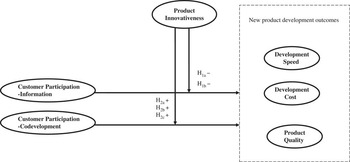
Hypothesis 1a: The higher the product innovativeness, the weaker the impact of CPI on development speed.
Similarly, with regard to development cost, when firms execute highly innovative development tasks using CPI, the lengthening development process stemming from inefficient knowledge transfer would increase development cost. Further, the KBV suggests that the characteristics of tacitness make knowledge transfer more difficult, costly and uncertain (Grant, Reference Grant1996). Development of new mental models calls for entirely different resources because prior capabilities and experiences may be inadequate. A series of feedback loops is time consuming and expensive because failure at different phases may occur, forcing projects to retreat to an earlier phase (Gopalakrishnan & Bierly, Reference Gopalakrishnan and Bierly2001). Inaccuracy and vagueness of the product concepts also would be unfavorable for the progress and result in increasing development resources. Consequently, the contribution of customer idea generation is diminished under condition of radical innovation.
Incremental innovations, by contrast, tend to operate with fixed capacity and tight schedules (Bonner, Reference Bonner2010) and are associated with explicit or codified knowledge which may more easily be transferred (Knudsen, Reference Knudsen2007). Intense CPI would lower development cost through minimizing rework and effective knowledge transfer due to the ease of sharing accurate market information. Further, the accuracy of market information provided by OEM customers minimizes development task delays and saves development costs, enabling firms to realize the benefits of CPI. Given this, we propose that the positive association of CPI and development cost is weaker when product innovativeness is high and stronger when product innovativeness is low. Therefore, we hypothesize the following:
Hypothesis 1b: The higher the product innovativeness, the weaker the impact of CPI on development cost.
Development of radical new products may be problematic because new dominant designs and standards are often based on new, less familiar areas of technical knowledge (Tushman & Anderson, Reference Tushman and Anderson1986). In the case of radical innovation, past knowledge and experience provides little guidance that creates causal ambiguity. New dominant designs restructure the product model, business models and the entire industry, which changes the industry architecture. Given today's global competition and rapid technological change (Härtel & Pearman, Reference Härtel and Pearman2010), firms may suffer frequent changes in the dominant designs and standards because of competitor activity or shifts in customer preferences (Tushman & Anderson, Reference Tushman and Anderson1986; Kessler & Bierly, Reference Kessler and Bierly2002). In such quickly changing environments, time-consuming knowledge transfer lengthens development cycles, raising the risk of obsolescence (Carbonell & Rodriguez, Reference Carbonell and Rodriguez2006). Further, it is more difficult to predict market changes over longer time periods (Kessler & Chakrabarti, Reference Kessler and Chakrabarti1996). Longer development processes may decrease the accuracy of forecasting and fail to generate a better customer fit (Kessler & Bierly, Reference Kessler and Bierly2002).
In the incremental innovations, market knowledge is easy to articulate and transfer so that complete and accurate demand information helps firms recognize potential problems as well as integrate major issues and concerns with new products during the development process (Fang, Reference Fang2008; Hartwell & Roth, Reference Hartwell and Roth2010), thereby minimizing poor definition of product requirements (Gupta & Wilemon, Reference Gupta and Wilemon1990; Carbonell, Rodriguez-Escudero, & Pujari, Reference Carbonell, Rodriguez-Escudero and Pujari2009). In addition, frequent information sharing may keep projects up to date on changing customer tastes and preferences (Mishra & Shah, Reference Mishra and Shah2009). Thus, a high degree of product innovativeness should weaken the effect of CPI on product quality, suggesting:
Hypothesis 1c: The higher the product innovativeness, the weaker the impact of CPI on product quality.
The moderating effects of product innovativeness on the CPC–NPD outcome link
In the KBV, tacit knowledge is hard to articulate, formalize and communicate (Polanyi, Reference Polanyi1966) so that its transfer and development results from learning-by-doing, hands-on and apprenticeship-like contexts. Collaborative experience may be appropriate for transmitting tacit knowledge (Bojica, Fuentes, & Gómez-Gras, Reference Bojica, Fuentes and Gómez-Gras2011). Adams, Day, and Dougherty (Reference Adams, Day and Dougherty1998) argue that acquisition of knowledge and skills through collaboration has been considered an effective and efficient way in pursuit of successful innovation. In a similar vein, Cavusgil, Calantone, and Zhao (Reference Cavusgil, Calantone and Zhao2003) indicate that collaboration between organizations plays a significant role in sharing tacit knowledge during radical innovations. Co-development with OEM customers in NPD allows both parties to create more areas for interaction, collaborating routines and joint problem solving within a specific context (Nambisan, Reference Nambisan2002; Fang, Reference Fang2008; Fang, Palmatier, & Evans, Reference Fang, Palmatier and Evans2008), thereby benefiting tacit knowledge transfer.
When performing radical innovation projects, the two parties must transfer a higher degree of tacit knowledge, requiring greater co-development activity. Intensive CPC facilitates the transfer of tacit knowledge more effectively and efficiently (Cavusgil, Calantone, & Zhao, Reference Cavusgil, Calantone and Zhao2003), which enables firms to innovate faster and successfully (Lynn, Skov, & Abel, Reference Lynn, Skov and Abel1999). In addition, highly radical innovations are uncertain and unanticipated. Introducing OEM customers’ knowledge and expertise into NPD projects could potentially reduce risk and uncertainty by ensuring a first-time-right approach, thereby shrinking long and challenging development tasks (Cavusgil, Calantone, & Zhao, Reference Cavusgil, Calantone and Zhao2003). Intense CPC is generally associated with additional mechanisms to support coordination actions (Gerwin, Reference Gerwin2004). Coordination mechanisms help organize and focus team interactions so that knowledge transfer is more quick and effective (Lengnick-Hall, Reference Lengnick-Hall1996; Montoya-Weiss, Massey, & Song, Reference Montoya-Weiss, Massey and Song2001).
However, CPC may be detrimental to development speed in incremental innovations. Incremental innovations require smaller amounts of information processing and are easy to plan and implement (Kessler & Chakrabarti, Reference Kessler and Chakrabarti1998). If OEM customers participate in such projects, integration of each party's action and coordination mechanisms would lengthen the time spent on the development task. Thus, transfer of much explicit knowledge is unlikely to be as efficient as transferring much tacit knowledge through co-development. Accordingly, the influence of CPC is strengthened when the degree of product innovativeness is high, suggesting:
Hypothesis 2a: The higher the product innovativeness, the stronger the impact of CPC on development speed.
Similarly, radical innovations increase knowledge needs, workloads and the number of people involved in projects (Kessler & Chakrabarti, Reference Kessler and Chakrabarti1996). Effective and efficient transfer of tacit knowledge by means of co-development activities leads firms to innovate rapidly and successfully (Lynn, Skov, & Abel, Reference Lynn, Skov and Abel1999), thereby reducing the risk of new product failure and lowering development cost. Moreover, collaboration with OEM customers for highly innovative products enables firms to demystify future trends effectively (Carbonell, Rodriguez-Escudero, & Pujari, Reference Carbonell, Rodriguez-Escudero and Pujari2009) and use the first-time-right approach to diminish redesign cost (Cavusgil, Calantone, & Zhao, Reference Cavusgil, Calantone and Zhao2003). Though CPC requires additional coordination costs to support such deep interactions, these mechanisms enable development tasks to be achieved more effectively through encouraging even more problem solving (Montoya-Weiss, Massey, & Song, Reference Montoya-Weiss, Massey and Song2001). Thus, the benefits from reducing losses due to product failures far surpass its potential costs (Mishra & Shah, Reference Mishra and Shah2009). Nevertheless, such benefits may not be diminished for incremental innovation projects, which are predictable as well as require greater efficiency and time compression. Co-development is unnecessary to complete such development tasks. Once customers participate, the costs of coordinating activities and mechanisms are expensive (Sioukas, Reference Sioukas1995; Nambisan, Reference Nambisan2002), leading firms to waste money. Hence, the influence of CPC on development cost is strengthened when the degree of product innovativeness is high.
Hypothesis 2b: The higher the product innovativeness, the stronger the impact of CPC on development cost.
Co-development activities may help firms to successfully accomplish radical development tasks that are less straightforward and nonroutine (Kessler & Chakrabarti, Reference Kessler and Chakrabarti1996). As a result, firms need more robust technological and market information to create new combinations (Chang & Cho, Reference Chang and Cho2008) in case the products evolve along an unexpected path (Kessler & Chakrabarti, Reference Kessler and Chakrabarti1998). When firms create radical new products, introducing OEM customer expertise and know-how into development tasks could reduce complexity and uncertainty by successfully transmitting more technical and conceptual information through co-development (Sioukas, Reference Sioukas1995; Cavusgil, Calantone, & Zhao, Reference Cavusgil, Calantone and Zhao2003), thus improving product quality. In addition, radical new products often call for complex solutions requiring experimentation and iterative problem solving (Kessler & Chakrabarti, Reference Kessler and Chakrabarti1998). Due to these back-and-forth and trial-and-error procedures, including OEM customers in projects may prevent the projects from following existing development paths, leading both parties to try alternative development procedures and routines (Fang, Reference Fang2008). Therefore, the impact of CPC on product quality is stronger as product innovativeness rises.
In the incremental projects, however, CPC might result in straying from what they already know and overemphasizing extraneous issues. Although intense CPC may be critical for radical projects where divergence is needed, it may be an obstacle to incremental projects because of an overemphasis on less important issues and a lack of convergence (Bonner, Reference Bonner2010). Furthermore, CPC involves coordinating and integrating each party's efforts, which lengthens the development cycle. In quickly changing environments, firms that take a long time to develop incremental products may risk facing a closed strategic window. The reason is that customers may be unlikely to postpone their purchase decision for minor improvements when they are already exposed to existing products, or competitors may have introduced comparable improvements by then (Ali, Reference Ali2000). Consequently, a high degree of product innovativeness strengthens the positive relationship between CPC and product quality.
Hypothesis 2c: The higher the product innovativeness, the stronger the impact of CPC on product quality.
The above hypotheses are shown in Figure 1. The conceptual framework will be empirically analyzed in the next section.
Conceptual framework

METHOD
Research setting and data collection
We selected the Taiwanese electronics industry as the context because these manufacturers, facing both competitive businesses market and short product life cycles, have established a worldwide reputation and place considerable importance on NPD. In addition, their influential OEM customers often participate in their NPD activities. A list of 697 high-tech manufacturing firms, which was obtained from the 2009 Taiwan Manufacturers Registry, published by the China Credit Information Service, which includes integrated circuits, telecommunications, precision machinery, electro-optical, electronic components, computers and peripherals, biotechnology and electronic chemicals. Initially, in-depth interviews with CEOs, vice presidents, R&D managers and project managers of seven firms were performed to delineate the phenomenon of customer participation in B2B markets (Appendix 1). We then focused on senior managers participating in NPD projects as the key informants, due to their intimate knowledge of firms’ NPD activities. The projects included in the study fit the following pre-specified criteria: they (1) were all recent and fully completed within the past 5 years; (2) contained significant technological components; (3) were regarded as typical for their respective companies; and (4) included influential and important OEM customers in the NPD process.
Two pretests guided the questionnaire development. The first pretest used Chinese-English two-way translations for a preliminary version of the survey instrument. The translations were done by a lecturer from Language Center of National Central University and a bilingual project manager. After modifying the measures, a quantitative test served as the second pretest using 28 senior managers in high-tech firms. The final version was obtained by identifying a satisfactory level of internal consistency for each construct.
In the first stage of data collection, we conducted a telephone prescreening of potential respondents to assess their suitability and willingness and explain in detail the purpose of this research before sending the questionnaire. Through this prescreening, we determined the correct addresses of firms and the names and titles of the respondents, and ascertained whether firms had involved their OEM customers in NPD processes. Prescreening these firms for verification resulted in a sample of 379 firms. We then distributed to each firm a cover letter, an anonymous questionnaire and a postage-paid return envelop. To increase the response rate, several procedures were conducted following Watkins, Ellinger, and Valentine (Reference Watkins, Ellinger and Valentine1999). The cover letter, from the head of a leading university-based NPD center, emphasized the survey's university affiliation, assured its confidentiality and explained the importance of the research. Moreover, pre-paid return envelopes and provision of research results were used. Two weeks later, reminder e-mail was sent and follow-up phone contact conducted to encourage responses. We received 248 questionnaires for a crude response rate of 65%. Of the 248 respondents, 52 were eliminated because the participation time of their customers in NPD activities were less than 1 year, informants’ tenures with their NPD project were less than 4 years, or inappropriate titlesFootnote 2, leaving a total of 196Footnote 3 usable responses for analysis.
The 52 deleted respondents were tested for response bias by comparing them with the retained data set. Independent t-tests were employed to examine six key variables in this study. All variables were strongly significant at the .01 level except product innovativeness (p = .16). Hence, the results indicated that deleted responses differ from usable responses and should be eliminated. In order to ensure that different data on customer participation time (‘between 1 and 2 years’ and ‘≥2 years’) could be combined, we used independent t-tests to examine the major study constructs (a discussion of the constructs’ measures will be presented in a later section) and found no difference between the two groups (development speed, p = .10; development cost, p = .82; product quality, p = .76; CPI, p = .75; CPC, p = .39; product innovativeness, p = .84). Hence, the two groups of different customer participation times were combined for further analysis. A χ2-test was conducted to evaluate the representativeness of the sample against the population using sales volume of firms. The result was not statistically significant (χ2 = 5.99, df = 3, asymptotic significance = 0.11), showing that the survey sample appears to be a fair representation of the population. As Armstrong and Overton (Reference Armstrong and Overton1977) recommend, no significant differences in the constructs were found between early (first quartile) and late (fourth quartile) respondents suggesting that nonresponse bias is not a problem (development speed, p = .55; development cost, p = .70; product quality, p = .63; CPI, p = .18; CPC, p = .46; product innovativeness, p = .23).
Our sample included telecommunications (22.4%), electro-optical (16.3%), electronic components (15.8%), integrated circuits (12.8%), computers and peripherals (12.8%), and others (19.9%). Although the sample was drawn from high-tech industry, sub-industries exist within this category. Analysis of variance was used to identify differences in the means of the main constructs. No significant differences for any of the constructs of the study across the sub-industries (smallest p = .25) were found, suggesting that industry-related bias was not a major problem. The respondents included 69 project managers (35.2%), 28 R&D managers (14.3%), 17 marketing managers (8.7%), 15 directors (7.7%), 13 vice presidents (6.6%), eight product managers (4.1%) and four CEOs (2%).
Measures
The measurement scales closely referred to previous research (Appendix 2) and used a 7-point Likert-type scale with 1 for ‘strongly disagree’ to 7 for ‘strongly agree.’
NPD outcomes
Development speed was represented by four items drawing on Lynn, Skov, and Abel (Reference Lynn, Skov and Abel1999). The higher the score, the faster the development speed. Referring to the scale of Kessler, Bierly, and Gopalakrishnan (Reference Kessler, Bierly and Gopalakrishnan2000) and Langerak, Hultink, and Griffin (Reference Langerak, Hultink and Griffin2008), development cost was measured by four items. The higher the score, the lower the development cost. For product quality, we slightly adapted the scales of Atuahene-Gima (Reference Atuahene-Gima1996) and Kessler and Bierly (Reference Kessler and Bierly2002) using four items. The higher the score, the better the product quality.
Customer participation
We referred to the work of Fang (Reference Fang2008) to distinguish two dimensions of customer participation, CPI and CPC. CPI was measured by four items stemming from Fang (Reference Fang2008). With respect to CPC, we used a slightly modified version of Fang's (Reference Fang2008) 3-item CPC scale and measured this construct by four items. Thus, higher scores on CPI and CPC represented higher degrees of CPI and CPC.
Product innovativeness
We adapted the scale of Bonner (Reference Bonner2010) consisting of five items to assess product innovativeness. Reverse coding was used in this construct so that higher scores indicated higher degrees of product innovativeness.
Control variables
Two control variables were also included. Firm size has a recognized effect on NPD outcomes due to access to resources and organizational bureaucratization. Larger firms have more resources that may accelerate the NPD process and improve product quality, but such firms may experience increased development costs since they commit more manpower, materials and communication expenditures to projects (Gupta & Wilemon, Reference Gupta and Wilemon1990; Kessler & Bierly, Reference Kessler and Bierly2002). However, Ahire and Dreyfus (Reference Ahire and Dreyfus2000) argued that smaller firms have flatter organizational structures and more informal communication channels, benefiting product quality. In an empirical study, Wu (Reference Wu2010) found a negative relationship between firm size and product quality, though the link was not statistically significant. We controlled for its effects on NPD outcomes and asked respondents to report firm size in terms of number of employees using a 6-point scale. Informant tenure played a vital role in determining NPD outcomes as well. Managers with longer tenure become more knowledgeable about the firm's resources, which enables them to focus resources on product development activities (Ancona & Caldwell, Reference Ancona and Caldwell1992). Furthermore, NPD teams with a concentration of specialists in the relevant experience have a higher probability of accomplishing project performance goals. Following the work of Ancona and Caldwell (Reference Ancona and Caldwell1992), Nakata, Zhu, and Izberk-Bilgin (Reference Nakata, Zhu and Izberk-Bilgin2011), and Rijsdijk and van den Ende (Reference Rijsdijk and van den Ende2011), informant tenure was included in the control variables and measured as the number of years in present position using a 6-point scale.
Analytical approach
Following Anderson and Gerbing (Reference Anderson and Gerbing1988), a two-stage approach was used to analyze the dataset. In the first stage, confirmatory factor analysis was conducted to evaluate validity of the measures using LISREL. Then, a structural equation modeling analysis was employed to investigate moderating effects.
ANALYSIS AND RESULTS
Measurement validation
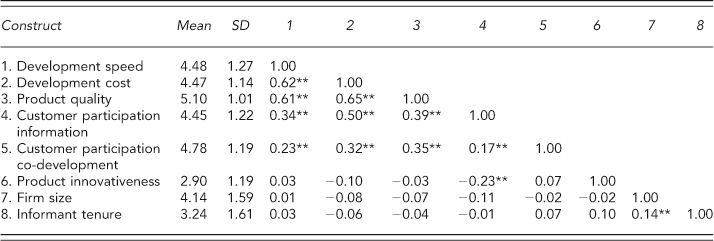
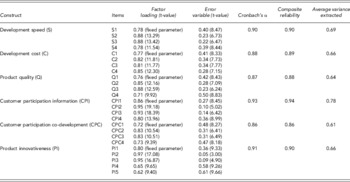
Table 1 displays the means, standard deviations and intercorrelations for all variables used in the study. Table 2 exhibits the results of the measurement analysis including factor loadings, Cronbach's α, composite reliabilities and average variance extracted. Cronbach's α can be calculated to test internal consistency reliabilities for each construct. An inspection of Cronbach's α showed that all values exceeded the generally accepted level of 0.70, indicating satisfactory levels of internal consistency (Table 2).
Means, standard deviations and correlations
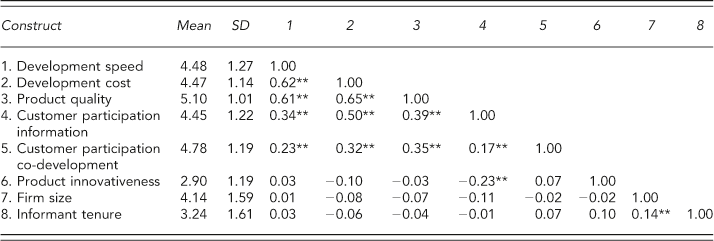
Note. **p < .01.
Results of confirmatory factor analysis and reliability coefficients
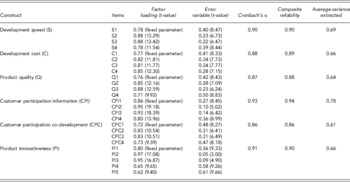
Note. CFI = comparative fit index; GFI = goodness-of-fit index; PGFI = parsimony goodness-of-fit index; NNFI = nonnormed fit index; RMSEA = root mean square error of approximation; SRMR = standardized root mean square residual.
All t-values are significant (p < .05); χ2 = 462.34 (df = 258), CFI = 0.94, GFI = 0.84, PGFI = 0.67, NNFI = 0.93, RMSEA = 0.06, SRMR = 0.05.
In addition, convergent validity was examined using confirmatory factor analysis. As recommended by Hair et al. (Reference Hair, Anderson, Tatham and Black1998), Table 2 shows that no negative error variances or nonsignificant error variances for any construct are present. The overall fit measures (χ2 = 462.34, df = 258, comparative fit index [CFI] = 0.94, goodness-of-fit index [GFI] = 0.84, parsimony goodness-of-fit index [PGFI] = 0.67, nonnormed fit index [NNFI] = 0.93, root mean square error of approximation [RMSEA] = 0.06, standardized root mean square residual [SRMR] = 0.05) are shown in Table 2 as well. Though the threshold value of the GFI is 0.90, Baumgartner and Homburg (Reference Baumgartner and Homburg1996) contend that a GFI value exceeding 0.80 is acceptable. Moreover, as Hu and Bentler (Reference Hu and Bentler1999) suggest, the combination of an SRMR below 0.08 with an RMSEA below 0.06 corresponds to a good fit. Following Anderson and Gerbing (Reference Anderson and Gerbing1988), the standardized factor loadings ranged from 0.62 to 0.97 and were statistically significant (p < .05) on their respective constructs.
The composite reliabilities was computed using the procedures that Fornell and Larcker (Reference Fornell and Larcker1981) suggest and the average variance extracted was calculated for each construct. The composite reliabilities ranged from 0.86 to 0.94, indicating adequate levels of reliability for the constructs (Fornell & Larcker, Reference Fornell and Larcker1981). In addition, the average variance extracted ranged from 0.61 to 0.78, exceeding the commended level of 0.50 (Bagozzi & Yi, Reference Bagozzi and Yi1988). All in all, the measurement model exhibited an adequate level of convergent validity.
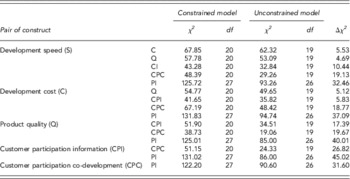
Next, the discriminant validity was examined by three tests. First, we calculated confidence intervals for the estimates of the inter-construct correlations. The results showed that none of the confidence intervals for the φ values in the measurement model included a value of 1.00. Next, discriminant validity was established by constraining the correlation between a pair of constructs in the measurement model, setting the correlation between the two constructs equal to one. We then performed a pairwise χ2-difference test comparing an unconstrained with a constrained structural equation model. The Δχ2 statistics given in Table 3 shows that all pairs of constructs were statistically significant. Finally, the average variance extracted of the constructs were greater than the square of the correlation between any pair of constructs (greatest square of correlation was 0.42). Together, the results of the tests indicate that discriminant validity was achieved.
Results of discriminant analysis

Note. 1 df with p = .05, χ2 = 3.84.
Common method variance
The use of self-reported data and a single key informant required evaluating the problem of common method variance. We conducted several procedures to decrease method biases. To increase honest answers and reduce item answer ambiguity, we used an anonymous questionnaire, respondent self-report with no right or wrong answer and careful development of the survey instrument (García, Sanzo, & Trespalacios, Reference García, Sanzo and Trespalacios2008). We employed two tests to detect CMV as well. First, Harman's single-factor test was conducted, in which all of the constructs are hypothesized to load onto a single factor. The result revealed that the first factor accounted for only 21.27% of the variance (total variance explained is 70.85%) and a clear indication of six total factors. In addition, following the suggestion of Podsakoff, MacKenzie, Lee, and Podsakoff (Reference Podsakoff, MacKenzie, Lee and Podsakoff2003), a confirmatory factor analysis approach to Harman's single-factor test was conducted. Compared to the measurement model (χ2 = 462.34, df = 258, CFI = 0.94, GFI = 0.84, NNFI = 0.93, RMSEA = 0.06), the results of the one-factor model showed an extremely poor fit: χ2 = 2,312.53, df = 273, CFI = 0.44, GFI = 0.48, NNFI = 0.38, RMSEA = 0.21. In sum, all of procedures and tests demonstrated that CMV did not appear to be a serious issue in this study.
Structural model
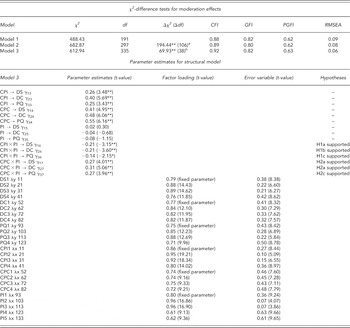
Moderating effect tests followed the work of Aiken and West (Reference Aiken and West1991) and Xueming and Bhattacharya (Reference Xueming and Bhattacharya2006). We mean-centered the CPI, CPC and product innovativeness constructs before generating the product terms among CPI, CPI and product innovativeness. Model 1 examined the direct effects of CPI and CPC on three of NPD outcomes, respectively. Model 2 added the direct effects of product innovativeness on NPD outcomes. Finally, model 3 included the product terms in model 2, representing the moderating effects of product innovativeness on the relationships between CPI and NPD outcomes as well as between CPC and NPD outcomes. As shown in Table 4, model 3 met the latter two conditions; hence, we concluded that model 3 was the most acceptable and most parsimonious model. Based on model 3, we proceeded to evaluate overall model fit and analyze the hypotheses.
SEM results for moderation effects

Note. 106 df with p = .05, χ2 = 131.03 and 38 df with p = .05, χ2 = 53.38.
aThe results of the difference between Model 1 and Model 2.
bThe results of the difference between Model 2 and Model 3.
CPC = customer participation co-development; CPI = customer participation information; DC = development cost; DS = development speed; PI = product innovativeness; PQ = product quality.
*p < .05; **p < .01.
In assessing overall model fit, the GFI for this model were as follows: χ2 = 612.94, df = 335, NFI = 0.85, NNFI = 0.91, GFI = 0.82, PGFI = 0.63, CFI = 0.92, RMSEA = 0.06, SRMR = 0.07. While the NFI value of 0.90 reflects a good fit, Baumgartner and Homburg (Reference Baumgartner and Homburg1996) suggest that an NFI value above 0.80 is acceptable. Furthermore, no negative error variances or nonsignificant error variances for any construct are present. Hence, the results indicate a reasonable fit of the model with the data. Table 4 also interpreted the standardized parameter estimates for the full structural model. Inspection of the standardized parameter estimates showed that the product term between CPI and product innovativeness significantly affected development speed (γ16 = −0.21, t = −3.15), development cost (γ26 = −0.21, t = −3.60) and product quality (γ36 = −0.14, t = −2.15), showing support for H1a, H1b and H1c. These results verify the notion that greater CPI is more critical for these three of NPD outcomes when developing a less innovative new product than when developing a radical new product. Further, the results of the product term between CPC and product innovativeness appeared to significantly influence development speed (γ17 = 0.27, t = 4.01), development cost (γ27 = 0.31, t = 5.06) and product quality (γ37 = 0.27, t = 3.96), supporting H2a, H2b and H2cFootnote 4.
DISCUSSIONS AND CONCLUSIONS
The primary aim of this study is to investigate the different effects of the two kinds of customer participation on the NPD outcomes under different degrees of product innovativeness. At first glance, our results appear to suggest that customer participation matters. The findings show that the main effects of CPI on NPD outcomes, as well as those of CPC on NPD outcomes are positive, which implies that customer participation, whether as an information provider or a co-developer, can improve NPD outcomes in such areas as development speed, development cost and product quality. These results are consistent with the many studies supporting customer participation involving NPD process.
However, our study further confirms that a high degree of product innovativeness negatively moderates the impacts of CPI on NPD outcomes, but positively moderates the impact of CPC on NPD outcomes. The findings of both Hypotheses 1 and 2 demonstrate the need to separate the distinct types of product innovativeness when examining the impact of varied forms of customer participation on NPD outcomes. Engaging in the development of more innovative products involves the transfer of much tacit knowledge, which is ambiguous and unarticulated. Our results indicate that intensive co-development with OEM customers enables incorporation of each party's expertise into the NPD process and facilitates more rapid and successful knowledge transfer, enhancing NPD outcomes. However, the findings show that less-innovative products may alleviate the impact of CPC on NPD outcomes. Our work also finds that knowledge is more easily transferred when developing less-innovative products, implying that frequent information sharing with OEM customers can improve NPD outcomes due to more timely and accurate knowledge acquisition. But our results suggest that when products are more innovative, the impact of CPI on NPD outcomes may be curtailed.
The research advances the literature on innovation management and marketing by providing a framework to show that the linkage between customer participation, defined as either CPI or CPC, and NPD outcomes differs with differing degrees of product innovativeness. Indeed, the findings show that developing a product with higher innovativeness enhances the effect of CPC on NPD outcomes and alleviates the effect of CPI on NPD outcomes, implying that exploration of the links among customer participation and the NPD outcomes should either distinguish various roles for customer participation or consider the moderating effect of product innovativeness. This article also shows how strategic decision making in NPD (in terms of customer participation activities and product innovativeness) can lead to success. In addition, our results support the theoretical framework of the KBV and are consistent with the work of Adams, Day, and Dougherty (Reference Adams, Day and Dougherty1998) and Cavusgil, Calantone, and Zhao (Reference Cavusgil, Calantone and Zhao2003), which find that the best way of transferring tacit knowledge is close collaboration with customers in innovative projects. Our findings also show that CPC is more appropriate for undertaking radical development tasks than CPI.
Our study provides empirical evidence that customer participation does not always lead to desirable outcomes. These findings are in line with recent study. For example, Bonner (Reference Bonner2010) finds that the impact of customer interactivity is greater for more innovative new products than for less-innovative new products. Our research provides further empirical evidence that various forms of customer participation would have different effects on NPD outcomes under different levels of product innovativeness. Moreover, Fang's (Reference Fang2008) findings also indicate the importance of accounting for the effect of CPI and CPC, whereas the extant literature does not clearly differentiate the impact of CPI and CPC. Our results also highlight the need to examine the influence of CPI and CPC separately.
For managers, the results from this study offer guidelines for high-tech firms that need to involve OEM customers in NPD activities or improve speed to market, cost and product quality through customer participation. This research shows that firms must carefully manage customer participation based on the specific nature of customer–NPD roles and the degree of product innovativeness. Based on our results, differing levels of product innovativeness call for different approaches to customer participation. CPC is called for when development projects undertake highly innovative projects because the benefits of customer contributions outweigh the costs of coordination mechanisms. Conversely, CPI is required when teams carry out incremental product development since their customer needs are easier to articulate.
Limitations and future research
There are several limitations to this study. First, this study adopts subjective measures of product quality. It is difficult to obtain objective measures of product quality from firms. Although the subjective values measured by multi-item scales are generally in line with objective measurements, subjective values may differ from objective data. Further, measurement of product quality is limited by single-source data, which was obtained from NPD managers. Even though statistical results indicated no common method bias problem in this study, further research may benefit from examining the issue using a dyadic study with data from both parties. OEM customers may perceive product quality, differently than NPD managers. Second, all NPD projects of this study were conducted with the involvement of one leading OEM customer; however, multiple customers involved in an NPD project or multiple businesses may lead to different relationships between the two forms of customer participation and NPD performance under differing levels of product innovativeness. Thus, examining the customer participation framework to consider the number of customer contacts may be a fruitful direction.
Another limitation of this research is that the study explores the moderating role of product innovativeness on the relationship between customer participation and NPD outcomes without distinguishing between the various stages of the development process. Dahlsten (Reference Dahlsten2004) argued that the earlier customer participation occurs in the NPD process, the more effective it is, implying that a limitation of our work is that it does not account for the timing of participation. Future research may examine the impact of the timing of customer participation on NPD outcomes using our CPC/CPI framework. In addition, the party who choose the mode of customer participation may influence the dyadic cooperation relationship between OEM customers and manufacturing firms. Further research to understand whether OEM customers or firms choose customer participation activities on the cooperation in NPD would be useful. Finally, the data are obtained from a set of high-tech manufacturers in Taiwan, which limits the generalizability of our findings to firms in other industries and countries. It would be interesting to examine whether the results of this paper may be extended to other industries and countries.
In this study, we focused on one important contingency effect of information sharing and co-development. However, the influence of customer participation activities may be contingent on several factors. Roxenhall and Ghauri (Reference Roxenhall and Ghauri2004) argued that closeness between the parties affects resource integration in a business exchange relationship. Further research may provide interesting insights into exploration of the relationship between customer participation activities and NPD outcomes under condition of inter-organization relationship between customers and suppliers. Another contingent factor is power in customer–supplier relationships. As suggested by Fang, Palmatier, and Evans (Reference Fang, Palmatier and Evans2008), power has a positive effect on a partner's ability to capture new product value. Fang, Palmatier, and Evans (Reference Fang, Palmatier and Evans2008) also found that exchange partners do not fully use their power to extract the maximum value from a jointly developed new product because coercing a partner would undermine the exchange. Although OEM customer–supplier cooperation is based on interdependence and reciprocity, future research may explore inter-organizational power in the issue of customer participation.
Finally, the forms of customer participation in this research was guided by Fang's (Reference Fang2008) scale, which is based on interaction patterns and distinguished two roles of customer: CPI and CPC. However, the scope of customer participation during the NPD process could take in a wide range of activities, including new concept generation, prototyping or product testing (Fang, Palmatier, & Evans, Reference Fang, Palmatier and Evans2008). The influence of these various activities may also be a useful area for investigation.
Acknowledgement
The authors are grateful to two anonymous reviewers, whose comments were helpful in refining this study.
APPENDIX 1 Information of the interviews

APPENDIX 2 Items in scales