Introduction
On January 12, 2010, a 7.0 magnitude earthquake struck Haiti, resulting in an estimated 220,500 deaths and injuring 300,000 people.Reference Brown and Ripp 1 , Reference Ripp and Bork 2 The epicenter was 25 km west of Port-au-Prince and, as a result, massively affected the health structures in the capital. Médecins Sans Frontières/Doctors Without Borders (MSF) has been working in Haiti for over 20 years. Prior to the earthquake in early 2010, MSF was operating a trauma center with a burn unit and rehabilitation facility in Port-au-Prince. At the time of the earthquake, MSF was involved in a response that established medical, mental health, and surgical programs.Reference Polonsky, Luquero and Francois 3
During the earthquake, the trauma center was destroyed and the rehabilitation unit was heavily damaged. Therefore, immediate triage and surgery were performed in the street, under provisional shelters, and inside converted shipping containers. Two weeks later, an inflatable full surgical hospital with two operating rooms and 120 beds was functioning on a sports field located on the grounds of the Saint Louis de Gonzague School. Within two months, it was expanded to over 220 beds, with an independent burn unit that included a third operating room. Activities in this program included physiotherapy, ambulatory follow up, psychological care and a rehabilitation center. Through its long established presence in Haiti and the speed at which a new surgical facility was able to be established, MSF had a very early view and unique perspective in assisting surgical patients.
This article describes the 248 patients and over 300 procedures carried out in the MSF-OCP (Operational Centre Paris, one of four MSF coordination centers running projects in Haiti) orthopedic program in the first three months post earthquake and the six month follow-up of these patients.
Methods
Inclusions and Exclusion Criteria
Surgeries described in this report were limited to orthopedic procedures carried out under general anesthesia. All patients who self-presented as surgical patients were included initially, in addition to a few known referrals from other MSF facilities. Exclusion factors included simple fracture reduction, debridement, dressing changes, and removal of hardware (eg, external fixators), even if carried out under general anesthesia. The data collection tool used the conventions used in other OCP surgical databases. Amputation of single digits is coded was extensive debridement (not as amputation) and was excluded from this analysis. The data presented includes neither visits to the physiotherapist nor dressing changes carried out in a specific dressing clinic.
Study Design, Data Collection and Analysis
The methodology of collecting this data included both prospective and retrospective data collection. Prospective inpatient data were collected using a data collection form that was designed promptly after the earthquake. A nurse who previously had worked on data collection in orthopedics did rounds on the wards to ensure comprehensive data collection. The follow-up data was collected at the ambulatory orthopedic outpatient department (OPD). The same data collection tool was kept in each patient's chart and was updated at each follow-up visit by the same orthopedic nurse.
Follow-up data were analyzed for the final intervention from January 12-April 12, 2010, though all interventions are described. Two patients whose records had specific notes that their ambulatory care was carried out by the referring MSF section were excluded from the follow-up analysis.
In October 2010, a second nurse worked on retrospective data collection in order to update and complete data collection. Multiple information sources of information were used to identify orthopedic patients as part of this retrospective verification.
Ethical Approval
Ethical approval for this descriptive study was granted in 2010 by the Ethical Committee of the Comité National de Bioéthique, Haiti.
Data Entry and Analysis
Data entry was carried out by a dedicated data entry clerk and by the nurse carrying out the retrospective data collection. Data were entered into a data entry mask specifically designed for this purpose in EpiData 3.1 (EpiData Association, Odense, Denmark) and data was analyzed in Stata 12 (StataCorp, College Station, Texas, USA).
Results
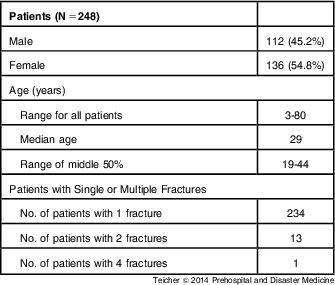
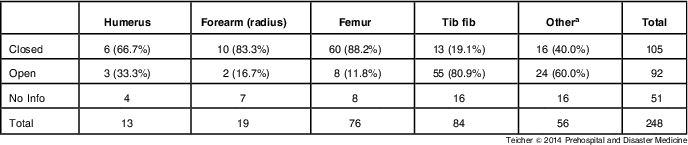
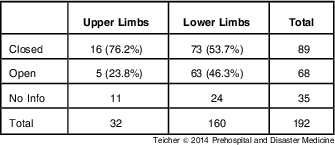
In total, 248 patients with 264 fractures underwent 333 orthopedic operations in an OCP MSF facility from January 12-April 12, 2010. Table 1 describes the demographics of the patient population. Of the 264 fractures, about three quarters (204) were fractures of the major long bones: humerus, radius, femur, tibia (Table 2). Of these 204 fractures of the major long bones, 34 (16.7%) were upper limb fractures and 170 (83.3%) were lower limb fractures (Table 3). There were 248 fractures initially treated in the operating theater. Seventy-three fractures needed to return to the operating theater for a second operation.
Orthopedic Patient Characteristics

Types and Locations of Injuries (for first operation)

aIncludes ankle, hip, other.
Long Bones by Fracture Type

Table 4 describes the fractures by site and by type according to Gustillo classification. This demonstrates a large number of open fractures of the lower limb (especially tib-fib fractures) and closed fractures of the upper limb. However the highest numbers of patients seen were lower limb closed femur fractures.
Intervention Type by Fracture Type

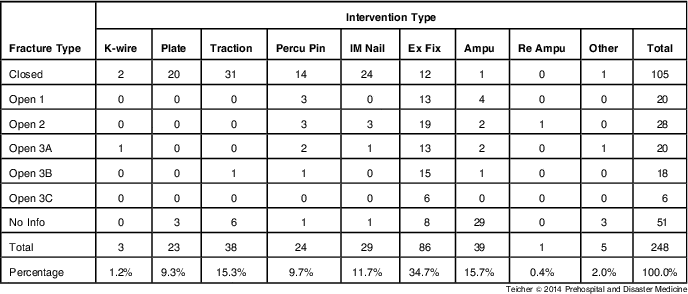
Abbreviations: Ampu, Amputation; IM Nail, Intramedullary Nail; Percu Pin, Percutaneous Pin; Re Ampu, reamputation
Fractures were treated according to their location and type. Of the 194 long bone fractures, the most common intervention was external fixation (36.5%) followed by traction (16.7%), nailing (15.1%), amputation (14.6%), and plating (9.9%).
Amputations
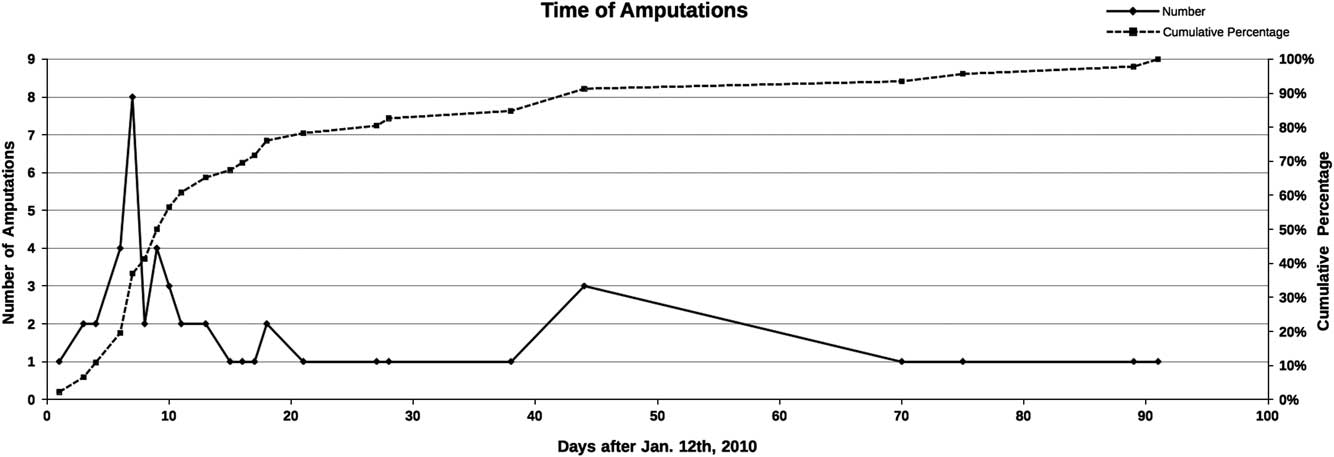
Among the 46 amputations performed, 31 were between day 3 and day 16 (Figure 1). By two weeks post earthquake, the program already had performed 65% of the cumulative amputations in the three-month postearthquake period. Thirty-eight were performed as primary interventions and seven performed as second interventions. Of the 42 patients with amputations, the median age was 30 years (range = 3-80 years). Of the 46 amputations, 29 were for females and 17 were for males (Table 1).
Timing of Amputations

Patient Follow-up
With the exception of the two patients who were referred back to another MSF center for surgical follow-up once discharged from the hospital, all patients had the option to be followed free of charge in the OCP orthopedic surgical program's outpatient clinic.
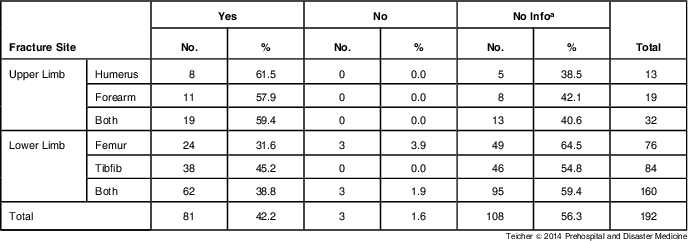
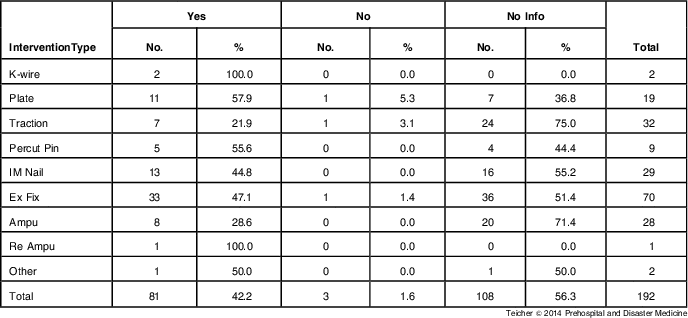
Follow-up attendance for upper limb injuries was deemed acceptable after the first intervention for patients with fractures of the humerus and radius. Attendance in the follow-up clinic was lower for lower limb injuries. For the first surgical intervention, attendance at follow-up was demonstrated to be highest for those with lower limb injuries (Table 5). When looking at attendance in terms of type of intervention, 44.8% of internal fixation IM nail patients presented for follow up within 90 days of their interventions (Table 6).
Attendance at Follow-up of At Least 90 Days by Fracture Site (Long Bones, First Intervention)

a“No Info” here is a proxy for lost to follow-up
Attendance at Follow-up of At Least 90 Days by Intervention Type (Long Bones, First Intervention)

Abbreviations: K-wire, Kirschner wires, Ampu, Amputation; IM Nail, Intramedullary Nail; Percu Pin, Percutaneous Pin; Ex Fix, External Fixation; Re Ampu, reamputation
Patient Complications
Due to the difficult nature of data collection in this environment, the complications discussed below may not reflect the total number of complications. In the 248 patients, there were both medical and surgical complications reported.
Two patients were reported to have had pulmonary emboli. One patient was reported to have had an embolus six weeks post operation as per chart review. The second patient was reported to have had an embolus six weeks post operation, after an external fixator was placed on a fractured tibia. Both patients survived the emboli, but were lost to follow-up before discharge from the program.
Surgical complications included implant complications and infections. Four of 80 (5.0%) patients with internal fixation required repeated internal fixation. Two patients fell during their postoperative courses and had the plate and screw of the femoral and humerus fracture replaced. One patient had an IM nail in the tibia that was poorly positioned and subsequently replaced. There was no further documentation for a fourth patient who had a plate and screw replaced in the radius. All four patients had a second operation for internal fixation within three weeks of the initial operation.
Infections Associated with Internally Fixed Patients
Two of 36 patients (5.5%) had infections following IM nail insertion for a closed femoral fracture. Bacterial etiology for both these patients was reported as Staphylococcus aureus. No antibiotic sensitivity data was documented. One of the patients with a known infection had a confirmed presence of gram positive cocci and the culture was positive for Staphylococcus aureus. The patient was treated with cloxacillin and gentamycin for 15 and 10 days respectively. The other patient's clinical records were incomplete but it was documented that this patient had an external fixator on his femur prior to having internal fixation with an IM nail. There was no other follow-up information on these two patients post antibiotic treatment.
Patient Outcomes
Due to complications with data documentation, a limited amount of patient outcome data was available. In total, there were 96 patients with 103 fractures discharged from the OCP ambulatory program. Of these fractures, good callus was recorded for 68 fractures (66%), yet data were incomplete for the other fractures. Good callus was defined as satisfactory bone healing, to the extent that the patient did not need any more fixation to perform weight-bearing functions. Data on other outcome measures such as potential to return to professional life, strength, and mobility were recorded for less than one third of these fractures.
Deaths
In total, six patients died, all of whom had been injured during the earthquake. Two patients with amputations died within 10 days of the earthquake due to septic shock, as per the patient records. One of these patients had bilateral below the knee amputations prior to his death. The next two cases occurred in February, but were admitted to the facility in late January. Both deaths were due to septicemia post amputations.
The last two recorded deaths for this cohort occurred in April. One patient presented with septicemia that was unrelated to his orthopedic pathology but related to complications from a visceral trauma requiring a colostomy. The other patient presented with diarrhea, apathy and denutrition prior to his death.
Discussion
Médecins Sans Frontières continues to demonstrate that it is possible to efficaciously provide quality surgical treatment in limited-resource disaster settings. The overall characteristics of the population described in this report are consistent with those described in other Haitian postearthquake hospital cohorts.Reference Hotz 4 The results demonstrate a large number of open fractures of the lower limb and closed fractures of the upper limb, which is consistent with musculoskeletal injuries resulting from earthquakes reported in a review of data on postearthquake injuries.Reference Bartels and Van Rooyen 5 , Reference Clover 6 The high proportion of lower limb injuries seen by MSF's program is also consistent with other postearthquake hospital teams in Port-au-Prince.Reference Bar-On 7 , Reference Lebel 8 This cohort demonstrates that if an appropriate field hospital can be established, then advanced surgical interventions can and should be used to prevent further morbidity and mortality in postdisaster, resource-poor settings. If the prerequisites for internal fixation care can be implemented, then it is clear that advanced surgical techniques should be utilized to reduce postdisaster morbidity.
Complications
The procedures were carried out in an inflatable tent complex. Although there are limitations, the results from this analysis show that the physical environment in which the procedures were carried out was adequate for this surgical intervention.
Eleven patients were documented as having external fixators that were converted to internal fixators. Only one infection is documented for the 39 patients who had traction or other stabilization (not external fixation) prior to an IM nail. This result is similar to the infection rate reported from internal fixation done in US military field hospitals in Iraq and lower than those reported in patients with IM nails who attended any follow-up in the 32 country review in low- and middle-income countries.Reference Stinner 9 , Reference Young 10
The bacterial etiology of infection, although limited in this report, was consistent with the results of wound cultures carried on in survivors of the 2008 earthquake in Wenchuan, China.Reference Tao 11 The data recorded were insufficient to evaluate nosocomial infections.
Follow-up
Much of the literature that discusses surgical care in Haiti after the 2010 earthquake notes the importance of the surgical program staying in the region long after the initial disaster in order to look after the long-term follow-up care of surgical patients.Reference Sarani and Mehta 12 The proportion of patients returning for follow-up postearthquake was better than expected. Forty-two percent of patients with internal fixations returned for a 45-day follow-up and the majority presented for a 3-6 month follow-up appointment. Follow-up in resource-poor settings is complicated, yet these results exceed the results from a published review of SIGN IM nail follow-up compliance.Reference Young 10
In regard to patient follow-up, it is important to note the challenges involved in follow-up care in a natural disaster. The chaotic ambulatory clinic had a single orthopedic surgeon who was responsible for seeing up to 100 patients per day. Initially in this ambulatory clinic, there were no specific appointments given; therefore it was impossible to know if a patient had failed to appear for an appointment or for patient charts to be prepared in advance. In later months, patients who had not presented to the ambulatory clinic within two weeks of their given appointment were called to remind them that they had follow-up appointments. This adjustment may have had an influence on the high proportion of patients attending a 3-6 month follow-up appointment.
It is unknown how many of the patients who attended follow-up were in the OCP rehabilitation center. This could have had a positive impact on follow-up attendance. Another factor to note is that patients with upper limb fractures were more likely to come to follow-up appointments than patients with lower limb injuries.
The situation in the outpatient clinic had an impact on the quality of the functional evaluations of patients when discharged from the orthopedic ambulatory clinic. By early October 2010, functional evaluations were being performed more frequently, but the impact of this improvement was not quantitatively strong enough to be seen in this report.
Data Collection
Efforts were made to ensure data collection from the first day following the earthquake. Records existed of patients operated on January 12, 2010. However, data collection was understandably incomplete, particularly in the first weeks following the earthquake. Of the patients for whom data is available, data on fracture configuration were often missing, as there was no X-ray facility during the first two weeks. Initially, few sources of data were complete and during retrospective data collection, it was found that patients and surgical operations were missing from all sources, including the operating theater register, the larger surgery database, and ward registers. Based on this experience, it is recommended that a very simple data collection system be implemented for the initial phase of an emergency.
Some analyses could not be carried out due to incomplete data collection. While it is understandable that there was poor documentation during the first weeks post earthquake, data collection in some areas, including functional evaluation at completion of treatment, continued to be poor many months after routines were established and resources available. Médecins Sans Frontières recognized the need for improvement in orthopedic data collection and, as a result, has set up a new, specific, orthopedic follow-up data tool.
Previously, internal fixation was never considered the standard of care in such conditions. The experience of others during the earthquake speaks to the complicated nature of using complex technological solutions during a natural disaster in Haiti.Reference de Ville de Goyet 13 This cohort demonstrates that if an appropriate field hospital can be established, then advanced surgical interventions can and should be used to prevent further morbidly and mortality in post-disaster areas in resource-poor settings.
Conclusions
The number of fractures described in this report represents one of the larger orthopedic cohorts of patients treated in a single center in the aftermath of the January 12, 2010 earthquake in Haiti. Despite some missing data, a notable amount of information was collected amidst this disaster.
This analysis documents the work done by the OCP orthopedic teams in the three months following the Haiti earthquake in January 2010. The emergent surgical care described was carried out in difficult conditions, both in the hospital and in the greater community. While outcome and complication data were limited, the proportion of patients attending follow-up most likely exceeds expectations and may reflect the importance of the rehabilitation center. This data demonstrates the ability of surgical teams to perform highly-specialized surgeries in a disaster zone, and also emphasizes the need for access to essential and emergency surgical programs. This access is an essential part of public health in low- and medium-resource settings.
Acknowledgments
The authors would like to thank Agnes Decorne and Marlyne Jean-François for their help in the field. Additionally the authors would like to thank Patricia Kahn and April Shu for their assistance with this manuscript.