Introduction
Schizophrenia is a disabling mental disorder. However, the potential for recovery is increasingly being recognized. Schizophrenia affects approximately 0.7% of people at some point in their lives worldwide (World Health Organization, 2011). This translates to approximately five million people in China, representing over 20% of the total 24 million people suffering from the disorder worldwide (World Health Organization, 2011).
The primary treatment for schizophrenia continues to be pharmacotherapy (National Institute for Clinical Excellence, 2003). However, long-term pharmacotherapy is associated with a range of adverse effects and poor adherence (Velligan et al. Reference Velligan, Lam, Glahn, Barrett, Maples, Ereshefsky and Miller2006). It is limited in improving clinical symptoms, personal and social functioning and patients often have a high risk of relapse (Freeman et al. Reference Freeman, Garety, Fowler, Kuipers, Dunn, Bebbington and Hadley1998; Tarrier et al. Reference Tarrier, Lewis, Haddock, Bentall, Drake, Kinderman, Kingdon, Siddle, Everitt and Leadley2004; Rathod et al. Reference Rathod, Kingdon, Weiden and Turkington2008; Morrison, Reference Morrison2009; Morrison et al. Reference Morrison, Hutton, Wardle, Spencer, Barratt, Brabban, Callcott, Christodoulides, Dudley and French2011). Certain psychosocial treatments, such as cognitive–behavioural therapy (CBT), have been shown to have a beneficial effect on positive and negative symptoms, mood, social functioning and social anxiety and may be effective in reducing readmissions to hospital and duration of admission in Western clinical practice (Lysaker et al. Reference Lysaker, Lancaster, Nees and Davis2004; Wykes et al. Reference Wykes, Steel, Everitt and Tarrier2008).
CBT has been recommended as a standard treatment for patients with schizophrenia in Western countries (Kreyenbuhl et al. Reference Kreyenbuhl, Buchanan, Dickerson, Dixon and Dixon2010; National Institute for Health and Care Excellence, 2014). Guidelines for the use of CBT have been provided by the National Institute for Health and Clinical Excellence (2009) and the Schizophrenia Patient Outcomes Research Team (Kreyenbuhl et al. Reference Kreyenbuhl, Buchanan, Dickerson, Dixon and Dixon2010).
When using CBT as a treatment for schizophrenia, studies have focused on addressing positive and negative symptoms, mood and social anxiety (Wykes et al. Reference Wykes, Steel, Everitt and Tarrier2008). Emerging evidence indicates that deficits in social functioning are prominent in patients with schizophrenia (Apiquian et al. Reference Apiquian, Ulloa, Herrera-Estrella, Moreno-Gómez, Erosa, Contreras and Nicolini2009; Brissos et al. Reference Brissos, Palhavã, Marques, Mexia, Carmo, Carvalho, Dias, Franco, Mendes, Zuzarte, Carita, Molodynski and Figueira2012). Assessing social functioning is therefore important in the antipsychotic (American Psychiatric Association, 2000) and psychosocial treatment of schizophrenia (Burns & Patrick, Reference Burns and Patrick2007). Insight is also critical for compliance and engaging patients in a treatment process (Rathod et al. Reference Rathod, Kingdon, Weiden and Turkington2008).
Previous published studies used supportive therapy (ST) as a comparative group and demonstrated that both CBT and ST have an effect on improving symptoms of schizophrenia due to the non-specific elements such as support and treatment alliance (Tarrier et al. Reference Tarrier, Yusupoff, Kinney, McCarthy, Gledhill, Haddock and Morris1998; Penn et al. Reference Penn, Meyer, Evans, Wirth, Cai and Burchinal2009). It has also been confirmed that CBT is significantly more efficacious than ST (Turner et al. Reference Turner, Gaag, Karyotaki and Cuijpers2014). However, published studies vary in their methodological rigour, either through small sample sizes or inadequate blinding. CBT is not widely accessible to people with schizophrenia in China, although there are a limited number of studies on the effectiveness of CBT for Chinese schizophrenic patients (Wang et al. Reference Wang, Li, Zhao, Pan, Feng, Sun and Du2004; Jiang et al. Reference Jiang, Wei, Bia, Xu and Gu2008). All of these studies focused on teaching communication skills, promoting medication compliance and conducting psycho-education, that is, educating patients to recognize the nature and characteristics of schizophrenia (Jiang et al. Reference Jiang, Wei, Bia, Xu and Gu2008). A formally developed procedure based on CBT principles that target specific cognitive and behavioural skills for psychosis treatment is lacking and the therapists have not received regular training and supervision in China (Wang et al. Reference Wang, Li, Zhao, Pan, Feng, Sun and Du2004). There is no robust evidence involving multicentre randomized controlled trials with fully powered clinical samples that CBT is effective to reduce symptoms in Chinese patients with schizophrenia over and above the effects of comparative approaches. This study therefore tested the hypothesis that CBT is effective and has a beneficial effect in Chinese schizophrenia patients in comparison with ST on overall symptoms (primary outcome measure), positive and negative symptoms, disorganization symptoms, excitement and emotional distress, as well as insight and social functioning.
Method
Participants
This study was conducted at three specialized psychiatric hospitals in Beijing, China. Patients were recruited from in-patient units or out-patient departments. Eligible participants met the following inclusion criteria: aged between 18–60 years; diagnosed with schizophrenia through a Structured Clinical Interview for DSM-IV Axis I Disorders-Clinician Version (First & Gibbon, Reference First and Gibbon1997) by raters who were well-trained research psychiatrists; a Positive and Negative Syndrome Scale (PANSS) total score greater than 60 indicating at least a mild level of psychiatric symptoms (Zuo et al. Reference Zuo, Liu, Yi, Xie and Li2006; Alphs et al. Reference Alphs, Bossie, Sliwa, Fu, Ma and Hulihan2013); on an adequate dose of an antipsychotic medication for at least the prior 4 weeks; capable of providing written informed consent.
An adequate dose of antipsychotic medication was defined as regular use of antipsychotic medication with good adherence, at or above the equivalent of 300 mg chlorpromazine daily, including a minimum period of at least 2 weeks of treatment with the equivalent of 600 mg chlorpromazine.
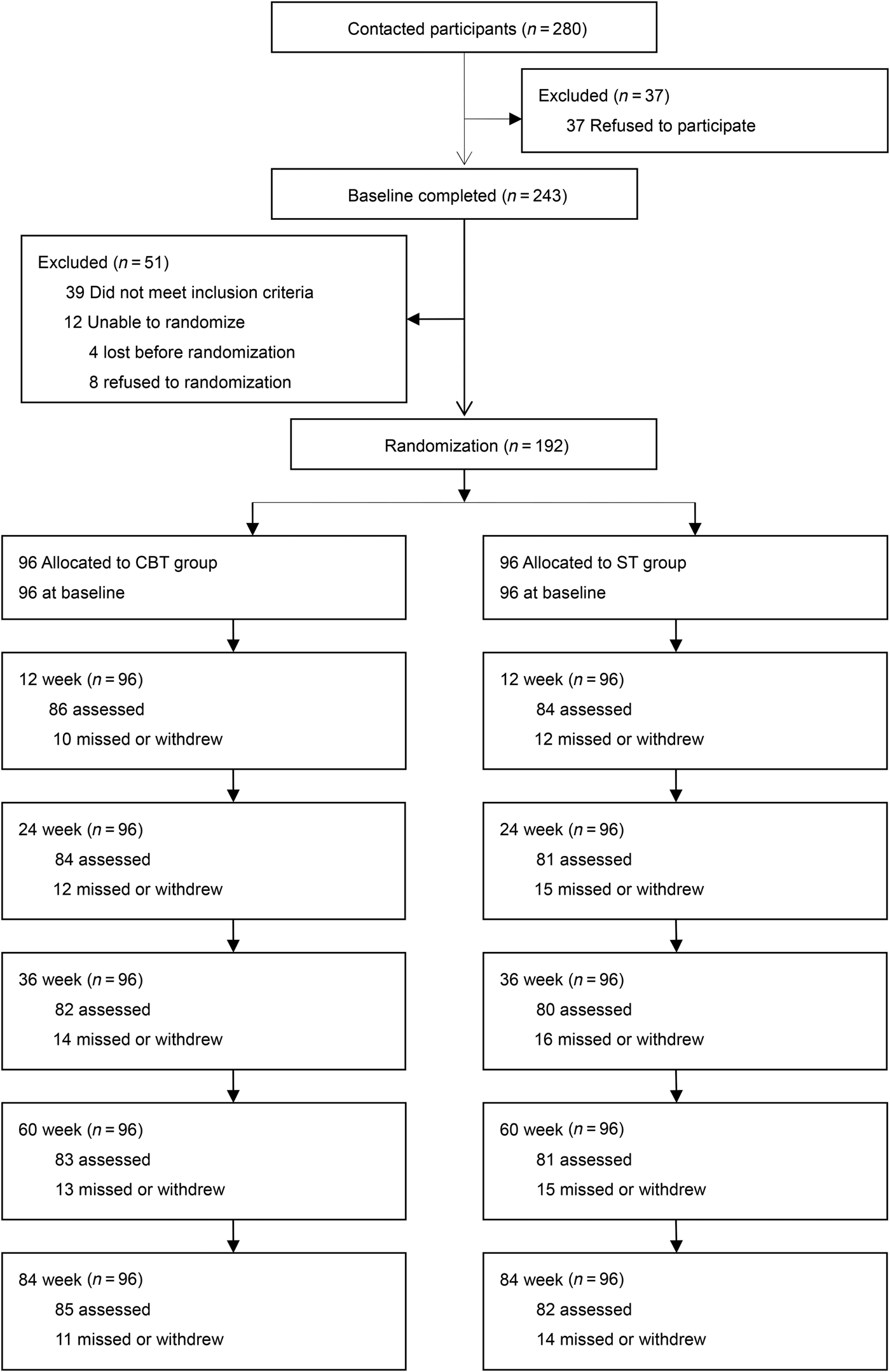
Participants were excluded if they met the following exclusion criteria: a co-morbid diagnosis of mental retardation or primary substance dependence; a score of ⩾5 (worse) of conceptual disorganization according to the PANSS, which included those who could not communicate, had poor rapport, or lack of spontaneity and flow of conversation; had received electroconvulsive therapy within the past 6 months prior to entry into the study; currently receiving other types of systematic psychotherapy. See Fig. 1 for the CONSORT (Consolidated Standards of Reporting Trials) diagram for the trial.
CONSORT (Consolidated Standards of Reporting Trials) diagram. CBT, Cognitive–behavioural therapy; ST, supportive therapy.

Sample-size calculation
The sample-size calculation was based on a previous randomized controlled trial of a similar design in the UK, which resulted in a recovery rate of 63% in the CBT group compared with 39% in the befriending group (recovery was defined as having a 50% or greater reduction in total scores of the Comprehensive Psychopathological Rating Scale by the end of treatment) (Sensky et al. Reference Sensky, Turkington, Kingdon, Scott, Scott, Siddle, O'Carroll and Barnes2000). Based on the difference between the two treatment groups of this trial, 80 patients across the two groups were required to achieve an α-value of 0.05 and a power of 80%. Assuming a 20% drop-out rate, a minimum sample of 96 patients was required for each group.
Procedures
Participants deemed eligible for the trial were randomly allocated to the CBT group or the ST group (1:1 randomization). Block randomization was conducted by computer-generated, random numbers to allocate the eligible participants to either of the two groups, stratified according to study site and performed at a geographically remote and independent location. The trial lasted for 84 weeks, with patients receiving 15 sessions of either CBT or ST over a 24-week period followed by 60 weeks of follow-up. The trial was registered in the China Clinical Trial Center with reference number ChiCTR-TRC-08000124 (http://www.chictr.org/cn/proj/search.aspx).
Interventions
Medications
Medication prescription was not affected by the trial protocol. The patients in both groups remained under their usual psychiatric care. The types or dose of medications were decided or adjusted by their primary treating teams based on clinical needs. The doses of antipsychotic medication were recorded and converted into equivalent doses of chlorpromazine (Sim et al. Reference Sim, Su, Fujii, Yang, Chong, Ungvari, Si, Chung, Tsang and Chan2004).
CBT
CBT is a manual-based treatment. In this study, it was delivered by therapists to patients who were allocated to the CBT group. There were 12 sessions in the first 12 weeks followed by three booster sessions in the subsequent 12 weeks. Each session lasted for about 40–50 min and flexibility on time was given depending on the attention, tolerance level and mental state of the participants.
The trial protocol for using CBT to treat schizophrenia was compiled in Chinese and based on the principles and practice developed by Kingdon & Turkington (Reference Kingdon and Turkington2004). This training manual was written in Chinese and translated to English before it was used as the training material for review by Kingdon and Turkington, and three CBT specialists in Hong Kong, Beijing and Changsha of China. Its cultural relevance and acceptability were tested on 10 patients with schizophrenia.
The first four sessions were delivered twice a week and focused on the introduction of the treatment, building a therapeutic alliance, psycho-education about the cognitive–behavioural model of psychosis and normalization of the experience of psychosis. The next six sessions in the intermediate stage were offered once a week. These sessions involved cognitive–behavioural work with delusions, hallucinations, negative symptoms and anxiety/depression. Homework was also assigned in a flexible manner after each session to consolidate what was learned in the session. The two sessions in the final phase were delivered once every 2 weeks. They included a discussion of attitudes to medication and relapse prevention work. Finally, three booster sessions were offered once monthly for reviewing patients’ progress and consolidating what patients had learned of CBT strategies for coping with future problems related to the recurrence of psychotic symptoms.
ST
ST was also in the form of manual-based treatment and comprised 12 sessions in the first 12 weeks followed by three consolidated sessions in the subsequent 12 weeks. Each session lasted for about 40–50 min. This intervention is based on supportive models of psychotherapy and has been reported to be the most widely practised form of individual psychotherapy in psychiatric services (Winston et al. 2004). The primary goal of the ST in the first 12 sessions was to provide patients with emotional support, knowledge of mental disorders, and provide suggestions to patients on preventing a relapse of the disease. Similar to the CBT approach, ST also focused on developing and maintaining therapeutic alliance and providing psycho-education to patients. However, ST did not have a therapeutic component and did not have a treatment structure. For example, patients could select session topics such as discussing interests, personal experiences and expressing feelings. Therapists were non-directive but used reflective listening and summarizing techniques to support patients in coping with current life events and in relapse prevention. No homework was given and no specific CBT techniques were used in ST.
Trial therapists
The eight therapists were experienced psychiatrists or psychologists with 5 to 20 years’ experience using psychotherapy in hospitals on patients with a mental disorder. They had been trained and supervised in the application of cognitive therapy for psychosis by experienced cognitive–behavioural therapists, and had special expertise in the application of CBT for psychosis using a translated Kingdon and Turkington manual (D.K., D.T. and R.M.K.N.) (Kingdon & Turkington, Reference Kingdon and Turkington2004). The on-site training courses of CBT for schizophrenia lasted more than 100 h throughout the trial period, including didactic teaching, case presentation, in vivo demonstration of skills and role play.
Supervision
Psychotherapy was supervised in three ways: peer supervision, expert supervision in CBT, and consultation on culturally related issues. During peer supervision, the therapists presented the case formulation, treatment plan and therapy progress for every CBT case during the first six sessions. The peer therapists also provided feedback and suggestions and selected sections of the individual case's session recordings for supervision. Supervision for ST also occurred for each participant focusing on the use of supportive methods and differentiating these from CBT. Expert supervision was provided for CBT only. Therapists submitted written case reports, case formulations, treatment plans, therapy processes and team members’ questions about the cases arising from the peer supervision sessions. Supervision was delivered once every 2 weeks by an expert therapist in CBT for psychosis (D.K.) from the UK via phone, Skype or email. The principal investigator (Z.-J.L.), a consultant psychiatrist with specific knowledge of CBT techniques and culture-related problems, also provided face-to-face supervision for all trial therapists on a monthly basis.
Ethical issues
The study protocol was approved by the Beijing Municipal Science & Technology Commission. The study was also approved by the institutional review boards of participating hospitals, the Research & Ethics Committee of Beijing Anding Hospital, Beijing Huilongguan Hospital and The Sixth Hospital of Peking University. The protocol was explained clearly and all the study participants signed informed consent forms before the baseline assessments were commenced. A participant could withdraw from the trial at any stage and this did not affect their clinical care.
Measures
Three outcomes – severity of psychopathology, insight and social functioning – were assessed by standardized measures through clinical interviews administered by the clinicians.
Severity of psychopathology
Severity of psychopathology was assessed according to the Chinese version of the PANSS (Kay et al. Reference Kay, Fiszbein and Opler1987; Si et al. Reference Si, Yang, Shu, Wang, Kong, Zhou, Li and Liu2004). This scale includes 30 items, each of which is scored on a seven-point Likert scale (1=absence of psychopathology; 7=very severe symptom). PANSS scores were calculated using five dimensions: positive symptoms, negative symptoms, disorganization symptoms, excitement and emotional distress validated by Citrome et al. (Reference Citrome, Meng and Hochfeld2011). The reliability of the total scale was high, with Cronbach's α of 0.87 and Cronbach α levels of 0.86, 0.89. 0.81, 0.90 and 0.74 for the five dimensions, respectively (Si et al. Reference Si, Yang, Shu, Wang, Kong, Zhou, Li and Liu2004). It also has a good level of construct validity, with the total variances explaining 59% of the variance about the symptoms in Chinese patients with schizophrenia (Si et al. Reference Si, Yang, Shu, Wang, Kong, Zhou, Li and Liu2004). The tool has demonstrated a high level of sensitivity to detect treatment effects in a number of clinical trials (Citrome et al. Reference Citrome, Meng and Hochfeld2011; Jerrell & Hrisko, Reference Jerrell and Hrisko2013).
Insight
Insight was assessed using the Schedule for Assessing Insight (SAI; David, Reference David1990). The SAI comprises of questions to assess three dimensions of insight: awareness, relabelling of symptoms, and attitudes to treatment. The SAI was translated into Chinese and back-translated into English to ensure the accuracy of the translation. The SAI includes seven items, each of which is scored on a three-point Likert scale from 0 (no insight) to 2 (good insight). The range of total score is from 0 to 14. For this study, the internal consistency of the total scale was high, with Cronbach's α of 0.89. The test–retest reliability score was 0.74 and the inter-rater reliability was 0.99 for the total scale. Correlation of the SAI with insight of the PANSS was −0.635 (Xu et al. Reference Xu, Guo, Fu, Wang and Zhang2013).
Social functioning
Social functioning was rated using the Personal and Social Performance Scale (PSP; Morosini et al. Reference Morosini, Magliano, Brambilla, Ugolini and Pioli2000). The PSP is reliable and well established, based on the most recent version of the DSM-IV Social and Occupational Functioning Assessment Scale. The Chinese version of the PSP was used for this study (Si et al. Reference Si, Shu, Su, Tian, Yan, Cheng, Li, Liu, Ma, Zhang and Zhang2011). The PSP comprised four functioning areas of patients with schizophrenia: (1) participation in socially useful activities; (2) personal and social relationships; (3) self-care; (4) interruptive or aggressive behaviour. Each functioning area is rated on a six-point Likert scale based on the degree of difficulties ranging from 0 (absence of difficulty) to 6 (severe difficulty). The overall rating system of 100 points is calculated based on the degree of difficulty across the four functioning areas, with a lower score indicating a lower level of social functioning. Trained mental health professionals assess patients through interviewing patients and the family members or carers who lived with or cared for the patients. The internal consistency (Cronbach's α=0.84) and the inter-rater reliability [intra-class correlation coefficient (ICC) = 0.94] were good. The test–retest reliability was 0.95. The scale showed good construct validity, with statistically significant correlations with the Global Assessment of Functioning Scale (ICC=0.95). The PSP score had a good negative correlation with the PANSS total score (correlation coefficient=−0.79) (Si et al. Reference Si, Shu, Su, Tian, Yan, Cheng, Li, Liu, Ma, Zhang and Zhang2011).
The raters were trained in the use of the above assessment instruments and were responsible for conducting face-to-face interviews with the participants. The five independent trained raters were blind to the allocation status of the participants. The ICC coefficients of the PANSS, SAI and PSP scales in this study were above 0.85 after training and before commencement of the study. All assessments were done at baseline, week 12, week 24 (post-therapy), week 36, week 60 and week 84.
Statistical analysis
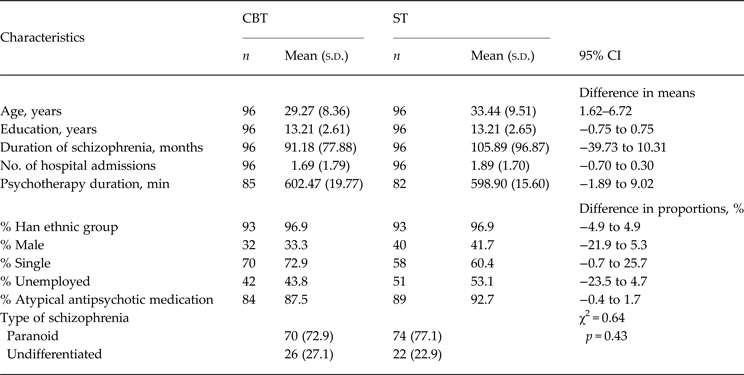
Analysis of the outcome measures followed an intention-to-treat framework implementing linear mixed models. The six time periods were treated as a six-level repeated measure in the analysis. Age was found to be a confounding factor (Table 1) and was controlled in all mixed models. Mixed models produce a fitted mean (intercept) for the reference level of each factor in the analysis (for these analyses, the reference treatment group was CBT and the reference time point was the baseline measures). The mixed-model analyses also calculated the estimates of the effect of each factor or a combination of factors on the intercept. Main effects of treatment group and time point and the interaction between treatment group and time point were also estimated. Differences in demographic characteristics between the groups were determined by examining 95% confidence intervals for the difference in means or proportions according to the distribution of the dependent variable. All tests were two-tailed with α set at 0.05. A 25% or greater improvement in scores of the PANSS, SAI and PSP between baseline and end-point was identified and used to support a clinically significant change. Within groups, effect sizes were calculated for the first 12 weeks, and it was calculated between groups across six assessment time points in all outcome measures.
Comparison of demographic and clinical data between treatment groups at baseline

CBT, Cognitive–behavioural therapy; ST, supportive therapy; CI, confidence interval; s.d., standard deviation.
Results
Sample characteristics
A total of 96 patients were recruited to each arm of the trial. Table 1 shows comparisons of the demographic characteristics of the two groups. Among the 96 patients in each group, 70 (72.9%) in the CBT group and 74 (77.1%) in the ST group were characterized as paranoid type, and 26 (27.1%) in the CBT group and 22 (22.9%) in the ST group were classed as having undifferentiated schizophrenia. The groups were evenly matched in terms of demographics, with the exception of age. The ST group was significantly older (mean age was 33.44 years) than the CBT group (mean age was 29.27 years). Age was therefore treated as a confounding factor in subsequent analyses.
In all, 85 participants (88.5%) in the CBT group and 82 participants (85.4%) in the ST group completed the 84-week study block. There was no significant difference between treatment groups in the proportion of participants failing to complete assessment at any individual time point. The majority of participants who dropped out of the study did so directly after their baseline assessment (n = 22, 88%). Of these participants, 12 (six in each group) completed more than six treatment sessions before discontinuing treatment. The remaining 10 (four in the CBT group and six in the ST group) participants failed to be engaged in treatment and completed a mean number of three sessions. There was no significant difference in demographic characteristics between the treatment groups among those participants who failed to complete the study.
Outcome measures
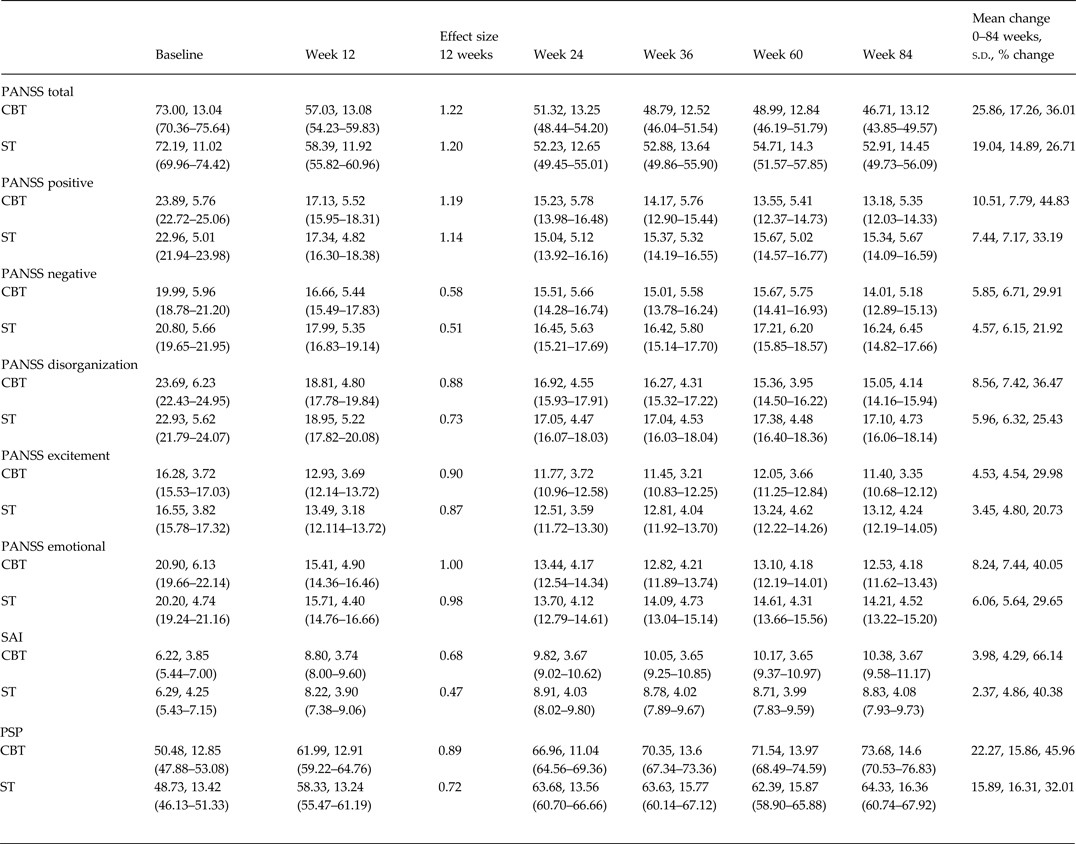
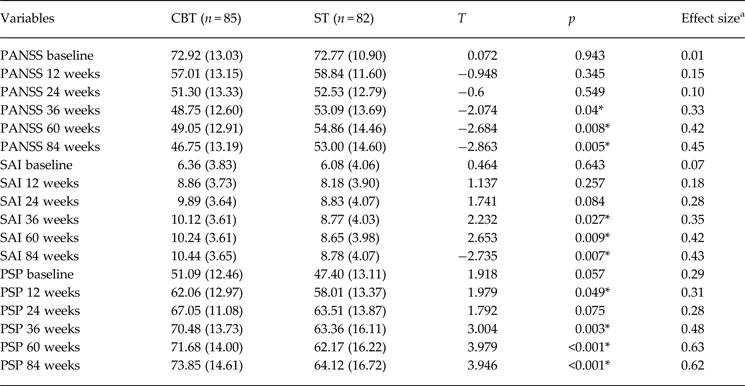
There were no differences in antipsychotic medication use at baseline to week 84, both in type and dosage of chlorpromazine equivalents. The CBT group took a 349–360 mg equivalent of chlorpromazine, and the ST group took a 313–321 mg equivalent of chlorpromazine from baseline to 84 weeks. There was also no significant difference in the number of patients who changed medications or dosages during the trial period. On average, CBT group patients spent 40.43 min (s.d. = 1.95, range 37.14–50 min) per session over the course of treatment, while ST group patients spent 40.06 min (s.d. = 0.83, range 37–45 min) per session. There were 80.2% of patients in the CBT group and 79.2% of patients in the ST group attending 15 treatment sessions. There was no significant difference in the total psychotherapy time (t = 1.64, p = 0.17) or proportion of patients attending the full treatment sessions during the course of the study (χ2 = 0.03, p = 0.86). Reduction in scores over time was observed in both the CBT and ST groups in all of the outcome measures, with the exception of the SAI and PSP in which a score increase over time was observed in both treatment groups (Table 2). The large effect measured by effect size occurred from 12 weeks and after for all measures of the PANSS when a comparison was made between the CBT and ST groups; the statistical significance became apparent from 36 to 84 weeks. However, CBT patients improved to a greater extent than the ST group over time, starting from week 36, and in all measures of the PANSS, PSP and SAI (see Table 3).
Assessment of the CBT and ST groups during the intervention and follow-up periods

Data are given as mean, s.d. (95% confidence interval).
CBT, Cognitive–behavioural therapy; ST, supportive therapy; s.d., standard deviation; PANSS, Positive and Negative Syndrome Scale; SAI, Schedule for Assessing Insight; PSP, Personal and Social Performance Scale.
Difference between CBT and ST group in PANSS, SAI and PSP scores from baseline to 84 weeks assessment

Data are given as mean (standard deviation).
CBT, Cognitive–behavioural therapy; ST, supportive therapy; PANSS, Positive and Negative Syndrome Scale; SAI, Schedule for Assessing Insight; PSP, Personal and Social Performance Scale.
a Effect size: 0.1–0.19, small effect size; 0.20–0.39, moderate level; 0.40 and more, large effect size.
* Statistical significance: p < 0.05.
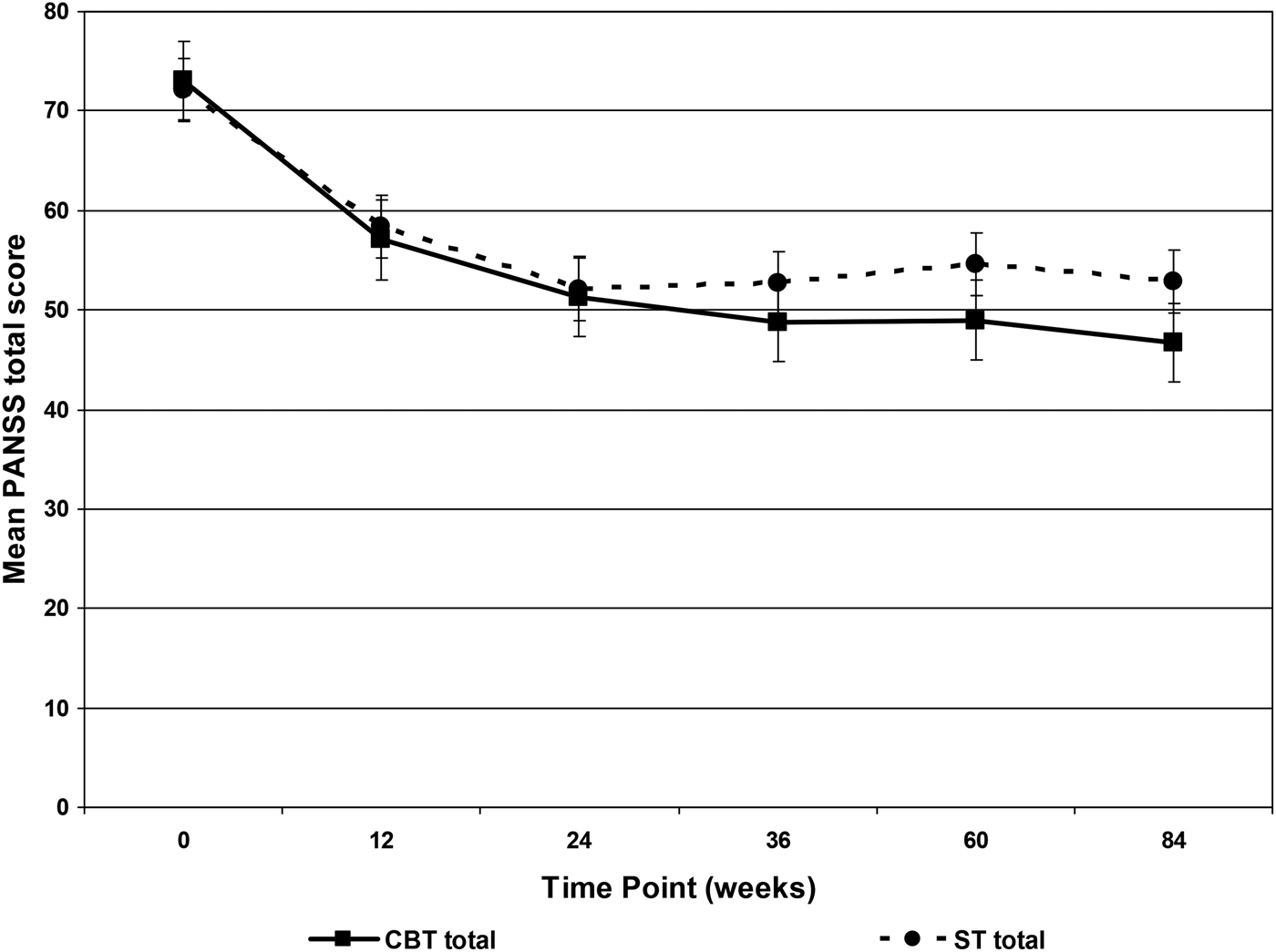
The mean PANSS total scores decreased significantly over time in both treatment groups [CBT mean change 25.86 points (36.01%, s.d. = 17.26), within-group Cohen's d = 1.51; ST mean change 19.04 points (26.71%, s.d. = 14.89), within-group Cohen's d = 1.30]. The mixed-model interaction term for treatment groups and the following times were significant (p = 0.045), showing that the CBT group had a significantly lower PANSS total score compared with the ST group in week 84 (adjusted CBT mean of 46.70, s.d. = 12.33; adjusted ST mean of 52.91, s.d. = 13.43, between-groups Cohen's d = 0.48). Fig. 2 shows the mean PANSS total scores by treatment group at each time point.
Mean (standard error) Positive and Negative Syndrome Scale (PANSS) total score by time point. Baseline means are raw means; all other means are adjusted to include values from the mixed models. CBT, Cognitive–behavioural therapy; ST, supportive therapy.

A significant decrease in PANSS positive and negative symptoms was observed in both groups from baseline to 84 weeks. For PANSS positive symptoms, the results were: CBT mean change 10.51 points (44.83%, s.d. = 7.79), within-groups Cohen's d = 1.36; ST mean change 7.44 points (33.19%, s.d. = 7.17), Cohen's d = 1.10. For PANSS negative symptoms, the results indicated a CBT mean change of 5.85 points (29.91%, s.d. = 6.71), within-groups Cohen's d = 0.83, and ST mean change was 4.57 points (21.92%, s.d. = 6.15), Cohen's d = 0.74.
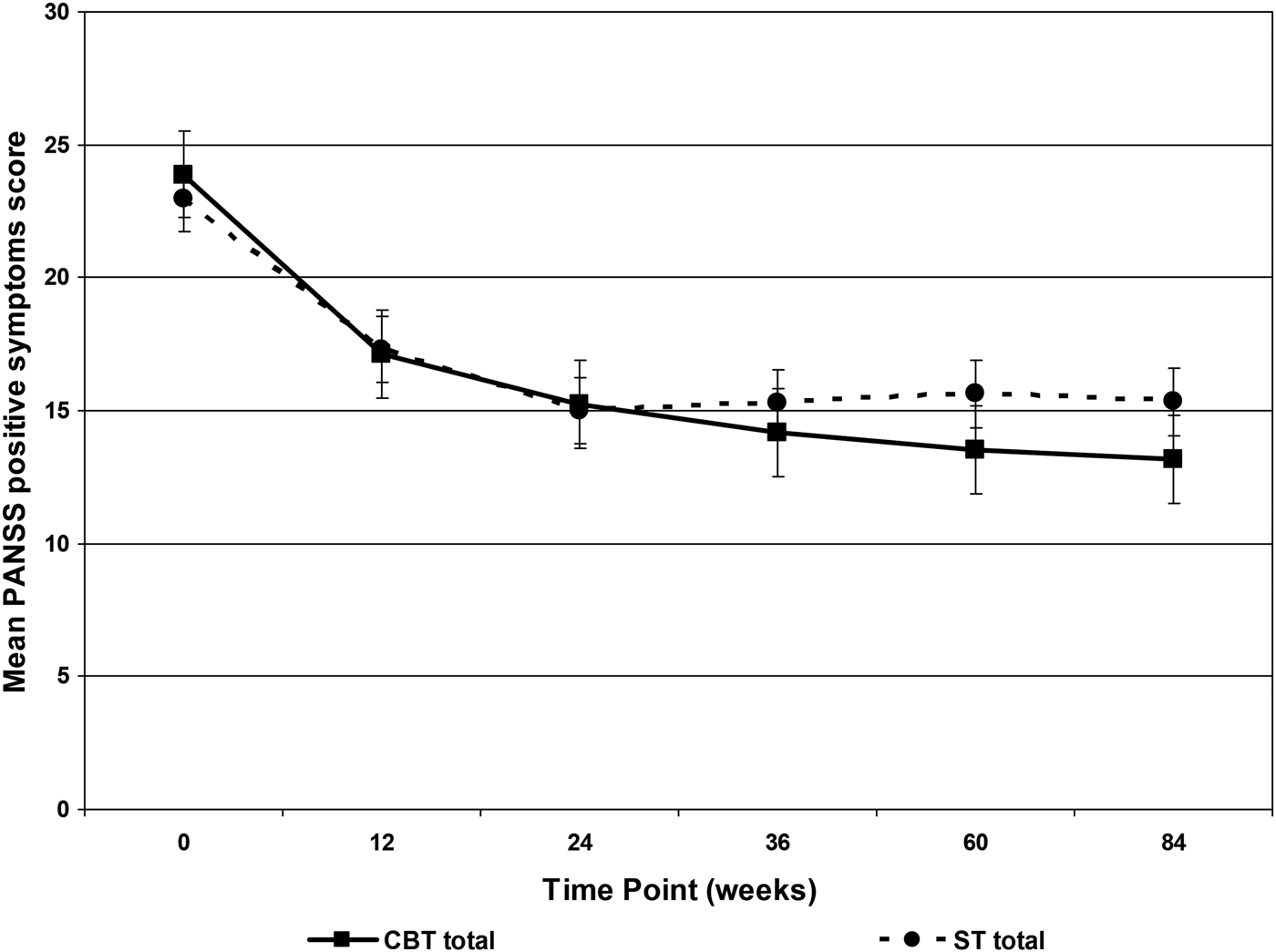
The interaction term of 84 weeks for the treatment group was significant for the positive symptoms (whereby p = 0.018). This demonstrates that the CBT group had a significantly lower PANSS positive symptoms score after 84 weeks compared with the ST group (adjusted CBT mean of 13.18, s.d. = 5.03; adjusted ST mean of 15.34, s.d. = 5.26, between-groups Cohen's d = 0.42; see Fig. 3). The interaction term of treatment group at 84 weeks was not significant for the negative symptoms subscale and therefore did not support a benefit of CBT over ST.
Mean (standard error) Positive and Negative Syndrome Scale (PANSS) positive symptoms score by time point. Baseline means are raw means; all other means are adjusted to include values from the mixed models. CBT, Cognitive–behavioural therapy; ST, supportive therapy.

There was also a significant decrease over time in PANSS disorganization symptoms, excitement and emotional distress in both treatment groups (Table 2). There was no evidence of a benefit of CBT over ST at 84 weeks in the above three symptoms.
The mean SAI total score increased significantly over time by an average of 3.98 points (66.14%, s.d. = 4.29) in the CBT group (within-groups Cohen's d=−0.97) and by 2.37 points (40.38%, s.d. = 4.86) in the ST group (d=−0.51). The interaction term of treatment group and time at 84 weeks approached statistical significance (p = 0.055), indicating further improvement in the SAI total score after 84 weeks in the CBT group compared with the ST group.
Over the study period, the mean PSP total score increased significantly by an average of 22.27 points (45.96%, s.d. = 15.86) in the CBT group (within-groups Cohen's d=−1.45) and 15.89 points (32.01%, s.d. = 16.31) in the ST group (Cohen's d=−0.95). The mixed model interaction term of treatment group at 84 weeks was significant (p = 0.037). This showed that the CBT group had a significantly higher PSP total score after 84 weeks of treatment compared with the ST group. The CBT group had an adjusted mean of 73.70 (s.d. = 13.73); the adjusted ST mean was 64.30 (s.d. = 15.16, between-groups Cohen's d = 0.64).
Over three-quarters (65, 76.5%) of the CBT group made a significant clinical improvement, showing a 25% or more reduction in PANSS total score from the baseline, compared with 53.70% in the ST group (χ2 = 9.35, p = 0.002).
Discussion
This was the first multicentre randomized controlled trial using standardized CBT adapted to suit patients with schizophrenia in China. Compared with ST, CBT showed a significantly greater and more durable effect on PANSS total score and PSP score from week 36.
The significant effect (as measured by effect size in most of the PANSS measures, SAI and PSP) suggested that rapid change occurred in both groups from baseline to weeks 12 and 24, while CBT had no significant advantages compared with ST in the treatment period. This is consistent with findings in a similar study in the UK, in which both CBT and ST led to significant clinical improvement at the end of treatment (Sensky et al. Reference Sensky, Turkington, Kingdon, Scott, Scott, Siddle, O'Carroll and Barnes2000). It suggests that the short-term effects may be due to non-specific psychotherapy factors (e.g. therapy alliance, befriending, talking about distressing experience) common to both CBT and ST. During treatment, the lack of significant difference between the two groups may be because cognitive and behavioural skills remain after the end of treatment maintaining the benefits gained.
This study demonstrated the superiority of CBT over ST on overall and positive symptoms in the long term; the positive effects emerged after the completion of therapy in week 36. This is also consistent with Sensky et al. (2000) who found that CBT continued to show improvements whereas ST began to lose effectiveness after it was discontinued. The positive effects may be due to the specific techniques of CBT such as normalization, modification of dysfunctional cognitions and behaviours (Warman & Beck, Reference Warman and Beck2003) by examining the evidence, compensating for reasoning biases by using disconfirmation strategies, and developing rational explanations (Kuipers et al. Reference Kuipers, Garety, Fowler, Freeman, Dunn and Bebbington2006). Those skills learned in the sessions could continue to be used by the patients after the end of treatment. Assigning and completing homework is a possible mechanism to lead to the changes (Kazantzis et al. Reference Kazantzis, Whittington and Dattilio2010). The CBT methods targeting medication compliance and relapse prevention might also have sustained the treatment effects from 36 to 84 weeks.
This study also showed that CBT could significantly improve social functioning in people with schizophrenia. CBT enhances personal coping strategies that allow patients to manage symptoms and daily hassles more effectively and combat dysfunctional ‘self-defeating’ beliefs or behaviours (Grant et al. Reference Grant, Huh, Perivoliotis, Stolar and Beck2012).
Compared with ST, CBT failed to demonstrate statistical superiority in negative symptoms, disorganization symptoms and excitement. ST has important but non-trivial effects on a variety of clinical outcomes which may have been relevant (Penn et al. Reference Penn, Mueser, Tarrier, Gloege, Cather, Serrano and Otto2004, Reference Penn, Meyer, Evans, Wirth, Cai and Burchinal2009).
This study integrated Chinese cultural values and practices into the use of CBT. For example, the more hierarchical approach to the doctor–patient relationship could be geared to the therapist's advantage in the early phase of engagement in CBT. However, the emphasis then needed to shift to a more collaborative relationship, with encouragement of the patient contributing to the therapy (Ng, Reference Ng2006). In Chinese culture, family members play an important role in providing care, and offering support but sometimes pressure for returning to or maintaining employment (Naeem & Kingdon, Reference Naeem and Kingdon2011). Family members were actively encouraged to participate in the therapy and help patients (although formal family work was not part of the intervention). This study also differed from patient presentation in Western studies, for example: the virtual absence of stimulant and cannabis misuse in the patient group.
The study had a number of limitations. The competence of the CBT therapists was not assessed with taped sessions and objective scales. However, all trial therapists were experienced psychiatrists or psychologists who had received substantial amounts of training and supervision in CBT by recognized experts in the field and had passed the criterion level of competence before commencing the trial. Furthermore, the absence of a treatment-as-usual arm did not rule out the benefits of CBT and ST being attributed to spontaneous remission with time (Penn et al. Reference Penn, Meyer, Evans, Wirth, Cai and Burchinal2009).
Conclusion
Both CBT and ST combined with medication had benefits on psychopathology, insight and social functioning of schizophrenia patients. CBT had superior effects to ST in positive and overall symptoms of the PANSS, as well as in social functioning as assessed by the PSP at 84 weeks. CBT is a useful adjunctive treatment to medication, with a durable effect at follow-up in people with schizophrenia in China.
Acknowledgements
We are very grateful to the patients who participated in this study. We express our gratitude to Dr Alison Brabban and Dr Sara Tai who are other trainers of CBT for schizophrenia for our therapists in this study. We also thank Professor Qian Mingyi and Professor Zhang Yalin who critically reviewed the CBT manual for this study. We acknowledge the collaboration of Dr Jenny Leishman in the comments on the statistical analysis. We also thank Dr Tang Yilang for his comments on the manuscript. This work was supported by the Beijing Municipal Science & Technology Commission (D0906001040391) and the Beijing Institute for Brain Disorders (BIBD-PXM2013_014226_07_000084), which were not involved in the study design, data collection, analysis and interpretation.
Declaration of Interest
None.