Introduction
Since the declaration of the Millennium Development Goals (MDGs), global effort to improve maternal and child health in developing countries has intensified. Health-related goals attract considerable attention, and the Sustainable Development Goals (SDGs) have extended the objectives to include overall health (Norheim et al., Reference Norheim, Jha, Admasu, Godal and Hum2015; WHO, 2016a). Despite global and national efforts to improve maternal care, progress in the utilization of maternal health care services has been uneven across and among countries (Magadi et al., Reference Magadi, Zulu and Brockerhoff2003; Say & Raine, Reference Say and Raine2007; Chopra et al., Reference Chopra, Lawn, Sanders, Barron, Karim and Bradshaw2009). Moreover, the extent of inequality has been found to be larger within countries than between them (Mohanty & Pathak, Reference Mohanty and Pathak2009; Ahmed et al., Reference Ahmed, Creanga, Gillespie and Tsui2010; Barros et al., Reference Barros, Ronsmans, Axelson, Loaiza, Bertoldi and França2012; Singh et al., Reference Singh, Rai, Alagarajan and Singh2012). Thus, inequality in access to, and utilization of, maternal health care services remains a significant challenge in many developing countries, including India.
According to the World Health Organization, an estimated 3 million maternal deaths occurred in 2015 due to preventable causes related to pregnancy and delivery, of which 99% were in developing countries (Alkema et al., Reference Alkema, Chou, Hogan, Zhang, Moller and Gemmill2016; WHO, 2016a). Improvement in maternal health care has been used as a strategy to reduce maternal and child mortality in many developing countries (Campbell et al., Reference Campbell and Graham2006; Bhutta et al., Reference Bhutta, Ahmed, Black, Cousens, Dewey and Giugliani2008; Loznao et al., Reference Lozano, Wang, Foreman, Rajaratnam, Naghavi and Marcus2011). A large number of studies, in India, Bolivia, China, Egypt, Honduras, Indonesia, Jamaica, Zimbabwe and other developing countries, have suggested that improvement in medical attention at birth significantly improves maternal and child survival (Goldie et al., Reference Goldie, Sweet, Carvalho, Natchu and Hu2010; Feng et al., Reference Feng, Guo, Hipgrave, Zhu, Zhang and Song2011). Improving access to prenatal, natal and postnatal health services for women can reduce socioeconomic inequality in the use of maternal health services. Though maternal care is a part of basic health services, it remained far from universal. Specifically, access to improved maternal care remains low among poor, less-educated rural women. Numerous studies haved suggested that reduction in inequality in the access to utilization of maternal health care services can improve maternal and child survival (Marmot et al., Reference Marmot, Friel, Bell, Houweling and Taylor2008; Bhutta et al., Reference Bhutta, Chopra, Axelson, Berman, Boerma and Bryce2010).
A decade ago, the state of maternal health in India was characterized by large inter-state variation, low level of maternal and health services and high inequality in the utilization of services. In 2005, the Government of India introduced the National Health Mission (NHM) with the key objective of reducing maternal and child deaths by improving the provision of maternal and health services in poorer states and among poor mothers. Under the NHM, the Janani Suraksha Yojana (JSY) and Janani Shishu Suraksha Karyakaram (JSSK) schemes were introduced. The JSY is the largest ever conditional cash transfer programme worldwide entitling people to cash benefits subject to delivery at public health centres. Similarly, the JSSK provides free health care services for women and children, national-level emergency referral systems, maternal death audits, improvements in transparency and accountability of public health services at all levels. Quality aspects of maternal health services have long been neglected in the public health system in India. With the launch of the NHM, the quality of maternal and child health care has been recognized at the policy and planning levels of the national health programmes (Nair & Panda, Reference Nair and Panda2011).
Recent studies have suggested that the NHM has been helpful in reducing maternal mortality and infant mortality and reducing out-of-pocket expenditure on maternal care (Bonu et al., Reference Bonu, Bhushan, Rani and Anderson2009; Lim et al., Reference Lim, Dandona, Hoisington, James, Hogan and Gakidou2010; Pathak et al., Reference Pathak, Singh and Subramanian2010; Randive et al., Reference Randive, Diwan and Costa2013; Marten et al., Reference Marten, McIntyre, Travassos, Shishkin, Longde, Reddy and Vega2014). The maternal mortality ratio in India decreased from 212 deaths per 100,000 live births in 2007 to 130 deaths per 100,000 live births in 2016 (RGI, 2018). Evidence suggests that utilization of four or more ANC visits increased from 37% in 2005–06 to 51% in 2015–16, while institutional births improved from 39% to 79% over the same period. Furthermore, postnatal care has also increased, from 37% to 65%, in the last decade in India (IIPS & ORC Macro, 2007; IIPS & ICF, 2017).
Previous research has found that education and wealth are the main contributors to inequality in maternal health care (Liu et al., Reference Liu, Gao and Yan2014; Li et al., Reference Li, Zeng, Dibley, Wang, Pei and Yan2015; Yaya et al., Reference Yaya, Bishwajit and Shah2016; Cai et al., Reference Cai, Coyte and Zhao2017). Maternal health care utilization has been found to increase with increased level of education of women, and with exposure to mass media. A few studies have observed that wealth has a positive and significant influence on the use of antenatal care services, even if the maternal health care services are provided free of charge, as people can incur out-of-pocket expenditure (Rai et al., Reference Rai, Singh and Singh2012; Mohanty & Kastor, Reference Mohanty and Kastor2017). Numerous studies have suggested that there is a substantial rich–poor gap in the utilization of maternal health services by rural–urban residence, low–high education levels and ethnicity (Ladusingh & Holendro Singh, Reference Ladusingh and Holendro Singh2007; Mohanty & Pathak, Reference Mohanty and Pathak2009; Ghosh, Reference Ghosh2015; Kumar & Singh, Reference Kumar and Singh2015; Kamal et al., Reference Kamal, Curtis, Hasan and Jamil2016).
Caste (Deshpande, Reference Deshpande2000) and religion are often considered to be markers of socio-cultural background and are expected to influence beliefs, norms and values about childbirth, and women’s status in society (Hajizadeh et al., Reference Hajizadeh, Alam and Nandi2014). These structural determinants have been found to be significantly associated with access to full antenatal care, institutional delivery and use of any modern method of contraception. Several studies have revealed that ethnic minorities, individuals with fewer physical assets, and those with lower social capital and residing in remote areas do not benefit from improved public health services (Goland et al., Reference Goland, Hoa and Målqvist2012; Saxena et al., Reference Saxena, Vangani, Mavalankar and Thomsen2013). Many researchers have also found that the use of postnatal care and skilled birth attendants remains disproportionately low among poor mothers in India, irrespective of place of residence and province (Mohanty & Pathak, Reference Mohanty and Pathak2009; Baru et al., Reference Baru, Acharya, Acharya, Kumar and Nagaraj2010; Pathak et al., Reference Pathak, Singh and Subramanian2010; Balarajan et al., Reference Balarajan, Selvaraj and Subramanian2011; Singh et al., Reference Singh, Rai, Alagarajan and Singh2012). In explaining these low levels of maternal health care use, only a few studies in India have focused on the socioeconomic factors that contribute to inequality in maternal health care (Pallikadavath et al., Reference Pallikadavath, Foss and Stones2004; Adhikari et al., Reference Adhikari, Sahu, Nair, Saha, Sharma and Pandey2016; Dehury, Reference Dehury2016). Maternal health care utilization is mostly affected by level of education, wealth, place of residence, distance, quality of health care and ability to pay.
Despite improvements in maternal health services in the last decade, India accounts for about one-fifth of maternal deaths worldwide, with large inter-state variations (Jat et al., Reference Jat, Ng and Sebastian2011). For instance, the maternal mortality ratio in 2014–16 was 173 per 100,000 live births in Madhya Pradesh, 237 in Assam, 165 in Bihar, 61 in Maharashtra, 74 in Andhra Pradesh and 201 in Uttar Pradesh (RGI, 2018). The variation in maternal and child mortality is associated with variations in the provision of maternal services among the states. Hence, understanding regional variation in the utilization of maternal health care services will help to improve service delivery. Second, though the average level in maternal care utilization has increased in the last decade, little is known about the extent of inequality in utilization of services across the states of India. One of the key objectives of the NHM has been to reduce the extent of inequality in maternal health care in India. Third, prior studies have suggested that although income levels are increasing, the distribution of income is becoming more unequal, and this affects health care utilization. Also, inequalities in educational attainment and urban–rural residence account for differentials in maternal health care as well. Fourth, disparities in the diffusion of modern medical services and attitudes towards modern medicine are also significant across the urban–rural dichotomy, with urban areas having better access and better-equipped services. Fifth, while the NHM has made efforts to address critical gaps associated with the quality of maternal health care in the public health system, there is much scope for improvement. In this context, this study examined inequality in, and quantified the relative contribution of socioeconomic factors to, the utilization of full antenatal care and postnatal care, and presence of skilled attendants at birth, in India over the period 2005 to 2016.
Methods
Data
Data were taken from the last two rounds of the National Family Health Survey (NFHS-3 in 2005–06; NFHS-4 in 2015–16). The NFHS provides the most reliable and comprehensive source of data on reproductive and maternal–child health issues in India. It is a large-scale, multi-round survey conducted in a representative sample of households throughout the country (IIPS & ICF, 2017). The survey is cross-sectional in design and follows a multistage stratified random sampling design by rural and urban areas. In addition to state-level estimates, NFHS-4 provides district-level data. More detail about the sampling design and sample size can be found in the survey reports (IIPS & ORC Macro, 2007; IIPS & ICF, 2017).
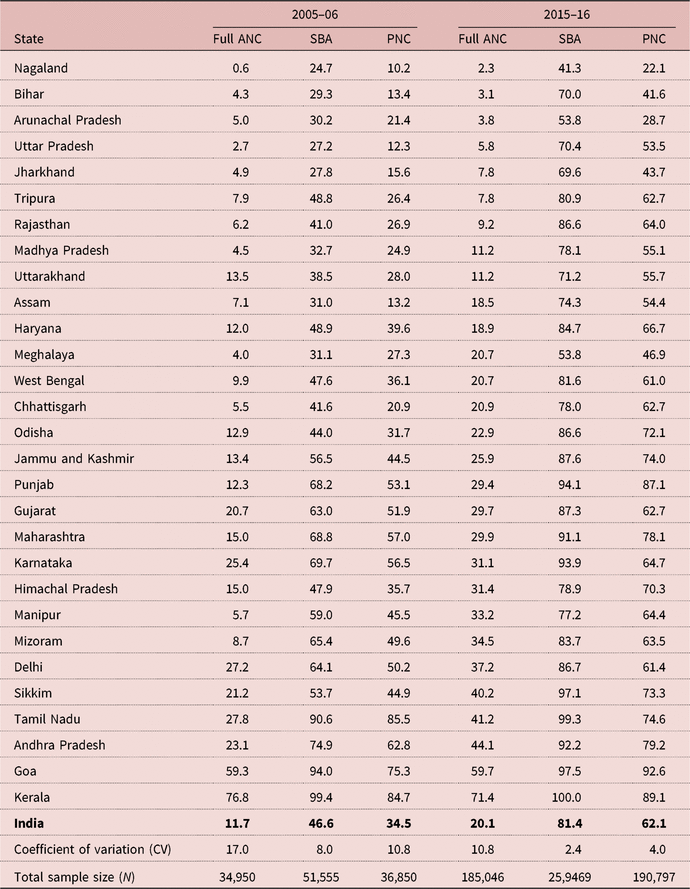
Each survey respondent completed a consent form before interview. The sample sizes for the present study were 249,967 women in the 2015–16 survey and 56,438 women in the 2005–06 survey. The sample included ever-married women aged 15–49 who had delivered their last birth in the 5 years preceding the survey. However, the sample size for each indicator varied depending on the type and context of the analyses (see Table 1).
Percentage of women utilizing full ANC, SBA and PNC in India, 2005–16

For state-level analysis, all 29 Indian states (excluding Telangana) were included and the National Capital Territory of Delhi as the state of Telangana was created after the NFHS-3. The states included in the analyses were: Uttar Pradesh (UP), Bihar (BH), Madhya Pradesh (MP), Maharashtra (MH), Andhra Pradesh (AP), Kerala (KE), Karnataka (KA), Tamilnadu (TN), Uttarakhand (UK), Jharkhand (JH), Rajasthan (R), Odisha (OR), Assam (AS), Gujrat (GJ), Chhattisgarh (CH), Punjab (PJ), Himachal Pradesh (HP), Jammu & Kashmir (JK), West Bengal (WB), Haryana (HR), Nagaland (NA), Goa (GO), Sikkim, Meghalaya (MG), Mizoram (MZ), Delhi (DL), Tripura (TR), Arunachal Pradesh (AR) and Manipur (MN).
Outcome variables
Three maternal health care outcome variables were considered: full antenatal care (ANC), presence of skilled birth attendants at birth (SBA) and postnatal care (PNC). ‘Full ANC’ was defined as a woman having four or more visits for ANC, having at least two tetanus injections and consuming 100 IFA (Iron and Folic Acid) tablets/syrup for their last birth. A woman had ‘SBA’ if her last delivery in the 5 years before the survey occurred in a medical institution or at home assisted by a skilled person (doctor/nurse/Lady Health Visitor (LHV)/Auxiliary Nurse Midwife (ANM)). A woman had ‘PNC’ if she had gone for a check-up at any health facility/doctor’s surgery within 2 days of delivery for their last birth within the 5 years preceding each survey. The NFHS-3 and NFHS-4 asked women two questions about postnatal care: ‘Did you have any check-up within 48 hours after delivery?’ and ‘How many days after delivery did the first check-up take place?’ for their last birth.
The maternal health care indicators (full ANC, SBA and PNC) were calculated for all states for both rounds of the NFHS by socioeconomic variables.
Explanatory socioeconomic variables
The explanatory variables were: Wealth Index, place of residence (urban, rural), age of mothers (15–24, 25–34 and 35–49), birth order (1, 2, 3 and above), mother’s education (no education, primary education, secondary education and higher education), caste (Scheduled Caste (SC), Scheduled Tribe (ST), Other Backward Caste (OBC) and Other) and religion (Hindu, Muslim, Other). In the absence of income and expenditure data, Wealth Index was used as a proxy indicator for household economic status. Both rounds of the NFHS provided Wealth Index in five categories, i.e. poorest, poorer, middle, richer, richest. To examine differentials in maternal health care utilization by wealth status, households belonging to the poorest and poorer quintiles were categorized as ‘poor’, and those belonging to the middle, richer and richest quintiles as ‘non-poor’.
Statistical analysis
A concentration index (CI) was calculated from the Wealth Index and used to examine the extent of inequality in maternal health care utilization. The CI quantifies the income-related inequality in a health variable. The concentration curve is defined as twice the area between the concentration curve and the line of equality. This has been used frequently to measure health inequality (Liu et al., Reference Liu, Gao and Yan2014; Makate & Makate, Reference Makate and Makate2017). The CI curve plots the cumulative percentage of the health outcome variable on the y-axis against the cumulative percentage of the sample population, ranked by socioeconomic status on the x-axis. The value of the CI varies between –1 and +1. If there is no socioeconomic-related inequality, the CI is zero. The index takes a positive value when it lies below the line of equality a, indicating the disproportionate concentration of the health variable among the rich, and vice versa.
Finally, using all-India data, Wagstaff decomposition analysis was used to quantify the extent of the relative contribution of explanatory variables to the inequality in maternal health care service use over time.
Decomposition of the concentration index
The CI measures the degree of income-related inequality in a health variable. It is computed as twice the covariance of the health variable and a population ranked by economic status, divided by the variable mean according to Equation (1). The value of the CI indicates the severity of socioeconomic inequality: the larger the CI, the higher the disparity.
 $$C = {2 \over \mu }cov\left( {{y_i},{R_i}} \right)$$
where C is the concentration index; y i is outcome variable index; R is the fractional rank of individual i in the distribution of socioeconomic position; μ is the mean of the outcome variable of the sample and cov denotes the covariance.
The CI for full ANC, SBA and PNC measures the degree of inequality, which can be decomposed into the contribution of various determinants. The health CI can be decomposed into the contributions of each factor to income-related health inequality, in which each contribution is the product of the sensitivity of health concerning that factor and the degree of income-related inequality in that factor. Based on the linear regression relationship between the outcome variable y i, the intercept α, the relative contribution of x ki and the residual error ϵ i, Equation (2) is given as:
 $${y_i} = \alpha + \sum {{\beta _k}{x_{ki}} + {\varepsilon _i}} $$
where ϵ i is an error term. Given the relationship between y i and x ki in Equation (2), the concentration index for y (C) can be rewritten as:
 $$C = \sum \left({{\beta _k {\overline{x}}_k }\over {\mu}}\right) C_k +{{GC_{\rm \varepsilon}} \over {\mu}} /\mu $$
where μ is the mean of y i,
 ${\overline x_ k}$
is the mean of x k, β k is the coefficient from a linear regression of outcome variables, C k is the concentration index for x k (defined analogously to C) and GC ϵ is the generalized concentration index for the error term (ϵ i).
Equation (2) shows that C is made up of two components. The first is a deterministic or ‘explained’ variable, equivalent to a weighted addition of the concentration indices of the regressors, where the weights are simply the elasticities. The second is a residual or ‘unexplained’ component which reflects the inequality in health that cannot be explained by systematic variation in x k across socioeconomic groups (Wagstaff et al., Reference Wagstaff, Doorslaer and Watanabe2003; Hosseinpoor et al., Reference Hosseinpoor, Doorslaer, Speybroeck, Naghavi, Mohammad and Majdzadeh2006; O’Donnell et al., Reference O’Donnell, Doorslaer, Wagstaff and Lindelow2007).
The decomposition analysis determines how each explanatory factor contributes to inequality in maternal health care utilization. The contribution of each predictor depends on how wealth is distributed in society and how the distribution of wealth affects the utilization of maternal health services. The absolute contribution indicates the extent of inequality from each explanatory variable. A negative value of absolute contribution indicates that the predictor contributes to pro-poor inequality and vice versa. Hence, pro-rich inequality indicates that the wealthier are using more maternal health care than the poor. As the explanatory variables are categorized, the contribution of each variable is generated by summing up contributions of predictors within each category.
Results
Table 1 presents the utilization of full ANC, SBA and PNC in the states of India in 2005–06 and 2015–16. In India, full ANC increased from 12% in 2005–06 to 20% in 2015–16, while SAB increased from 47% to 81% over the same period. Postnatal care also increased – from 35% to 62% – over the decade. Though each of these three indicators showed improvement in many of the states of India, inter-state variation remained large. For instance, in 2015–16 the utilization of full ANC varied from 2.3% in Nagaland to 71.4% in Kerala; that for SBA ranged between 41.3% in Nagaland and 100% in Kerala; and that for PNC varied between 22.1% in Nagaland to 92.6% in Goa. Over the period 2005–06 to 2015–16, the coefficient of variation for full ANC declined from 17 to 10.8, SBA declined from 8 to 2.4 and PNC declined from 10.8 to 4.0, suggesting a reduction in inter-state variation in maternal care.
The utilization of full ANC was less than 10% in north-eastern states, i.e. Nagaland, Arunachal Pradesh and Tripura, and the Empowered Action Group (EAG) states, namely Bihar, Uttar Pradesh, Jharkhand and Rajasthan. On the other hand, SBA showed an encouraging trend over time, with an improvement of about 35 percentage points. Nagaland, Arunachal Pradesh, Meghalaya and Jharkhand were the only states having less than 70% SBA utilization in 2015–16. Further, PNC coverage was also lower than 50% in the above states.
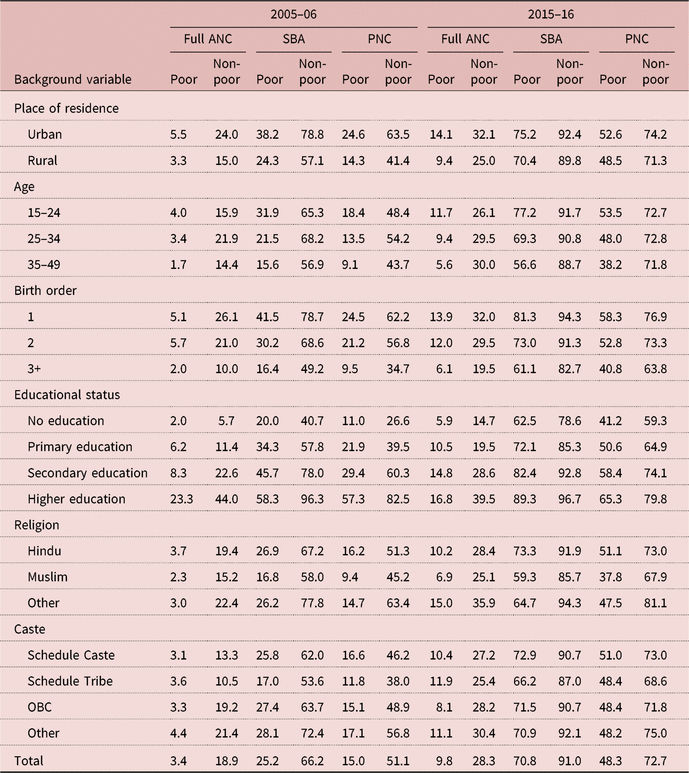
Table 2 presents the poor and non-poor differentials in the utilization of full ANC, SBA and PNC by the selected socio-demographic characteristics of women in India. Even though there was an increase in the use of maternal health care between 2005–06 and 2015–16, the gap between the poor and non-poor remained large for each independent variable. In 2005–06, only 1.7% of women in the poor category had availed full ANC compared with 14.4% of the non-poor. By 2015–16, only about 6% of poor women from the older cohort (35–49) reported full ANC compared with 30% among non-poor. The increase in full ANC was higher (in percentage points) among the non-poor than the poor. The pattern was similar for other independent variables such as birth order, educational attainment, caste and religion. In the case of SBA, the poor and non-poor differentials were of a lesser extent and narrowed over time. For example, among illiterate mothers, SBA was 20% among the poor and 41% among the non-poor in 2005–06. By 2015–16, the SBA among poor, illiterate mothers was 63% compared with 79% among illiterate, non-poor mothers. However, interestingly, there was not much variation in the utilization of SBA and PNC among poor women from different caste groups (except poor women from STs who had very low utilization). Even poor women from SCs had higher utilization of SBA and PNC than women from OBCs and General Castes in 2015–16. The pattern was similar to that of other characteristics. The pattern for PNC was similar to that of full ANC.
Differentials in the utilization of full ANC, SAB and PNC by poor/non-poor status and by socioeconomic characteristics in India, 2005–16
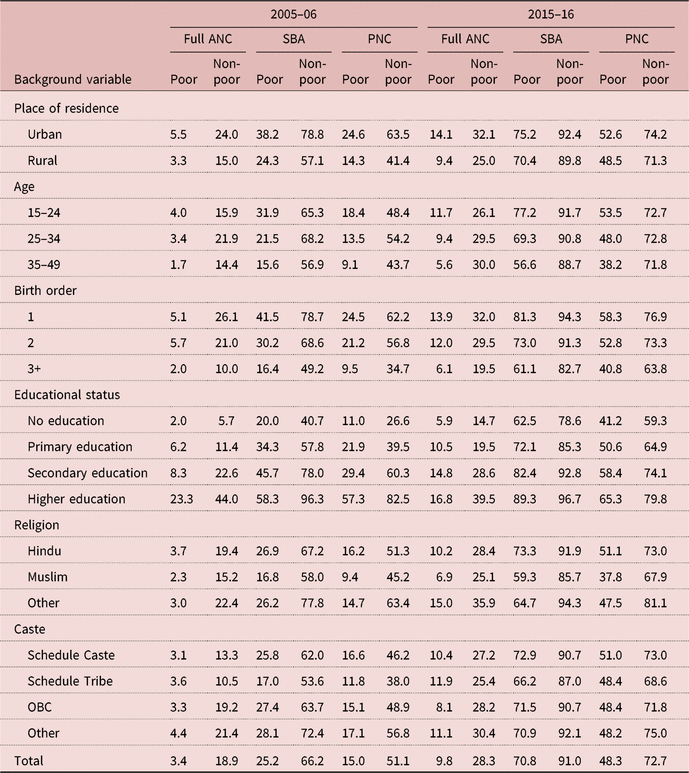
The gap in the utilization of maternal health care among poor and non-poor women had reduced over time. Interestingly, there was a large gap in maternal care utilization between poor and non-poor mothers with secondary and higher education in 2005–06, which in 2015–16 was more visible in women with no education. The gap in the utilization of maternal care between the poor and non-poor was higher in urban areas in 2005–06, but more in rural areas in 2015–16.
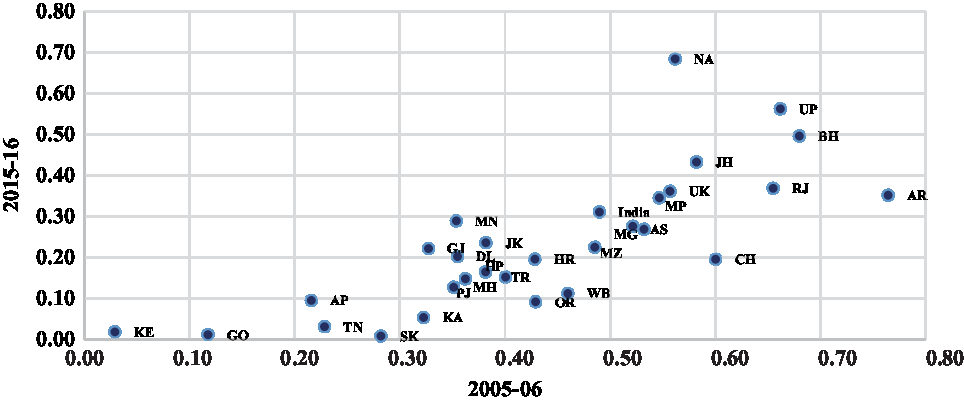
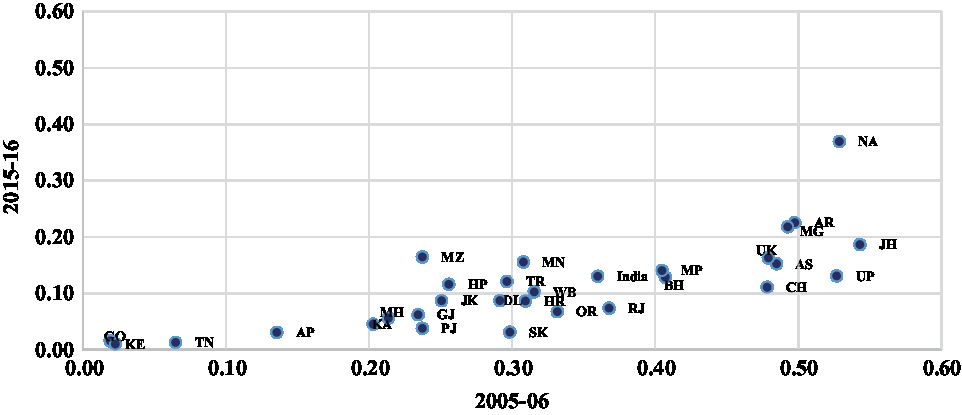
Figure 1 depicts the concentration index for the utilization of full ANC in the states of India in 2005–06 and 2015–16. The CI for full ANC for India declined from 0.49 in 2005–06 to 0.31 by 2015–16. The inequality in utilization of full ANC reduced over the period for all states except Nagaland. The CI was very low the southern states of Goa and Sikkim. Inequality in Arunachal Pradesh and Chhattisgarh reduced much faster compared with other states. The CI of most of the states varied between 0.10 and 0.30 in 2015–16 compared with 0.30 and 0.60 in 2005–06. Although Uttar Pradesh, Bihar, Jharkhand, Uttarakhand, Madhya Pradesh and Rajasthan showed some improvements in CI from 2005 to 2016, their level of inequality remained large.
Scatterplot of CI for utilization of full antenatal care in India and its states between 2005–06 and 2015–16.
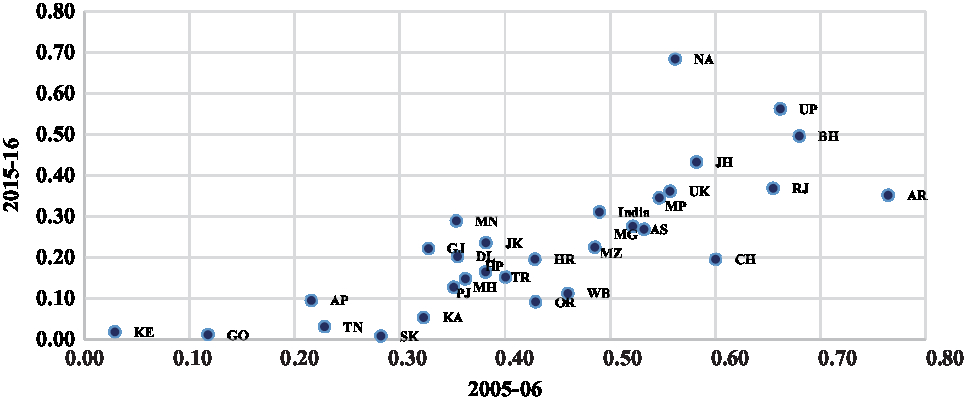
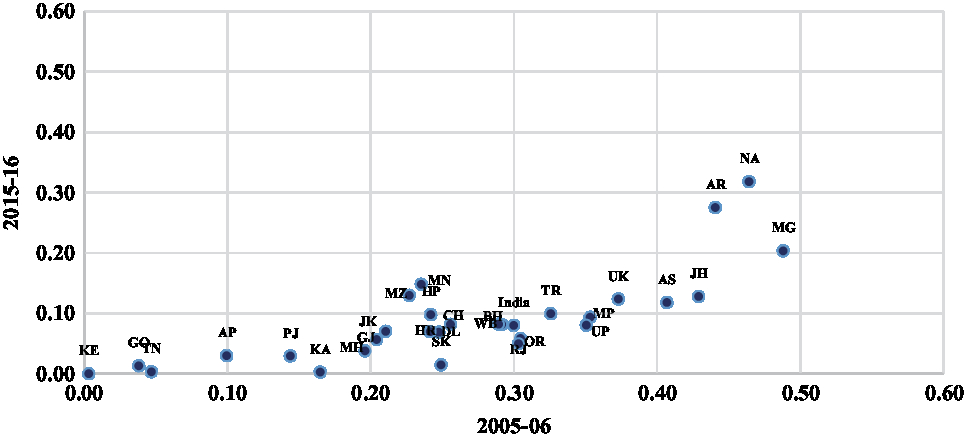
Figure 2 plots the CI of SBA in the states of India for 2005–06 and 2015–16. The CI of SBA for India declined from 0.3 to 0.08 over this period. The figure also shows that inequality in the utilization of skilled attendants at birth reduced in most states. In the southern states the CI values were low, suggesting lower levels of inequality in SBA. Nagaland, Arunachal Pradesh and Meghalaya were the only states where the CI was high, suggesting high inequality.
Scatterplot of CI for utilization of skilled attendants at birth in India and its states between 2005–06 and 2015–16.
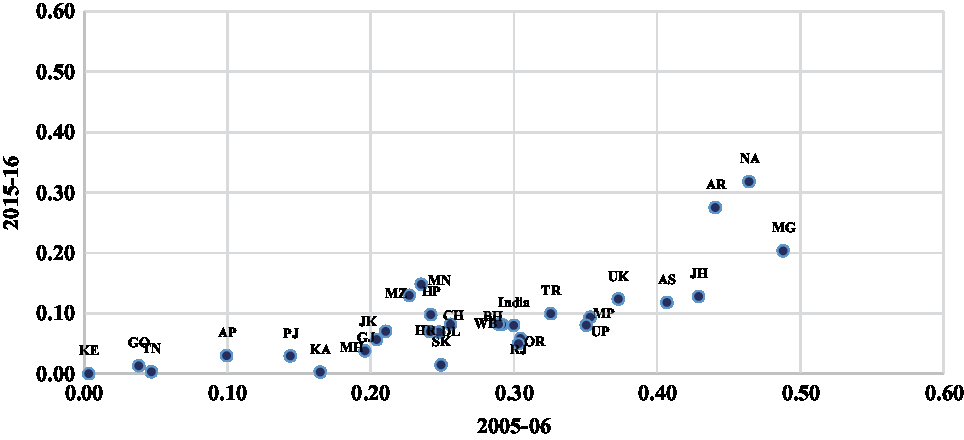
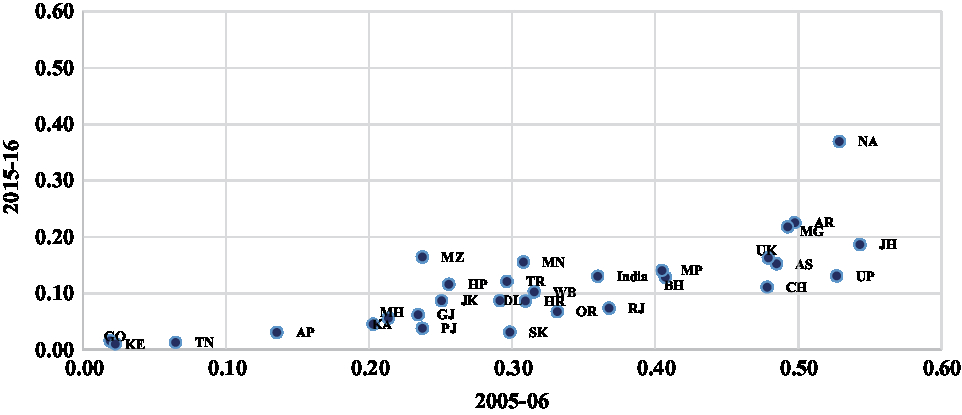
Figure 3 presents the CI of postnatal care utilization in the states of India during 2005–16. Inequality in PNC decreased in all states except Nagaland. The CI of PNC for India declined from 0.36 to 0.18 over this period. The southern states improved much more compared with the northern states. The CI for most of the states in 2015–16 was lower than 0.20, whereas it was between 0.20 and 0.50 in 2005–06. Nagaland, Meghalaya and Arunachal Pradesh still had CI values of more than 0.20 in 2015–16.
Scatterplot of CI for utilization of postnatal care in India and its states between 2005–06 and 2015–16.
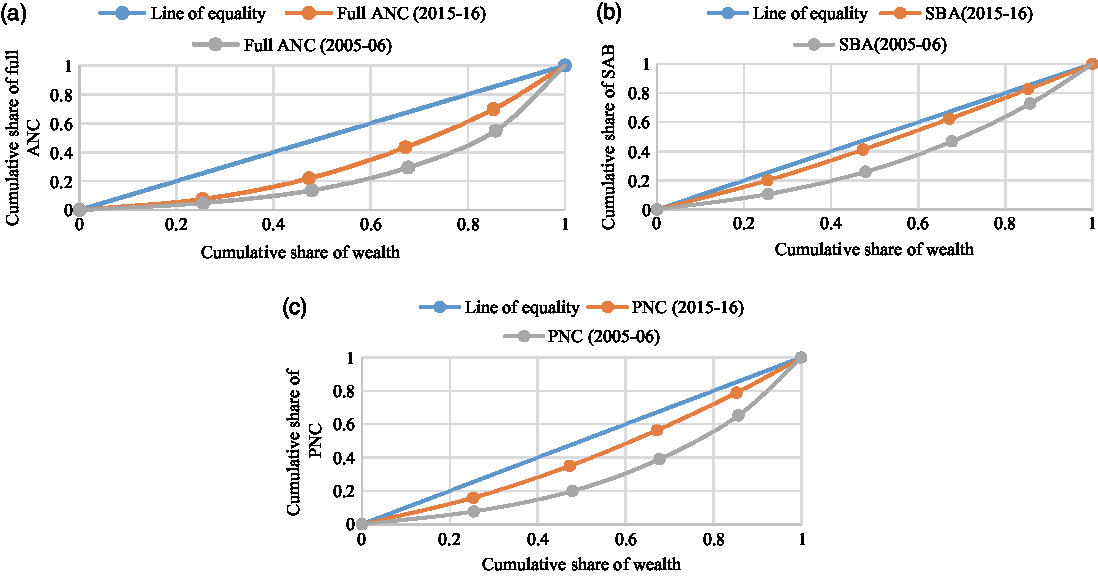
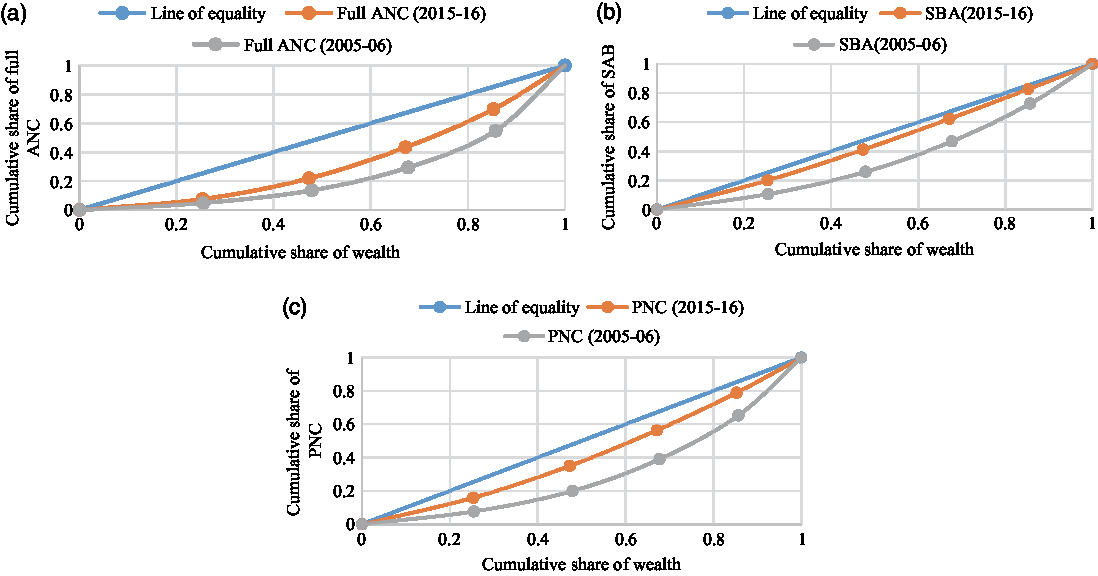
Concentration curves (graphical presentations of inequality in the utilization) of full ANC, SBA and PNC for India for 2005–06 and 2015–16 are presented in Fig. 4a, Fig. 4b and Fig. 4c respectively. The figures suggest a reduction in inequality in full ANC, SAB and PNC during 2005–06 and 2015–16 in India. However, inequality in the utilization of SBA declined much faster compared with that of full ANC and PNC over time.
Concentration curves for a) full antenatal care; b) skilled attendants at birth; c) postnatal care for India.
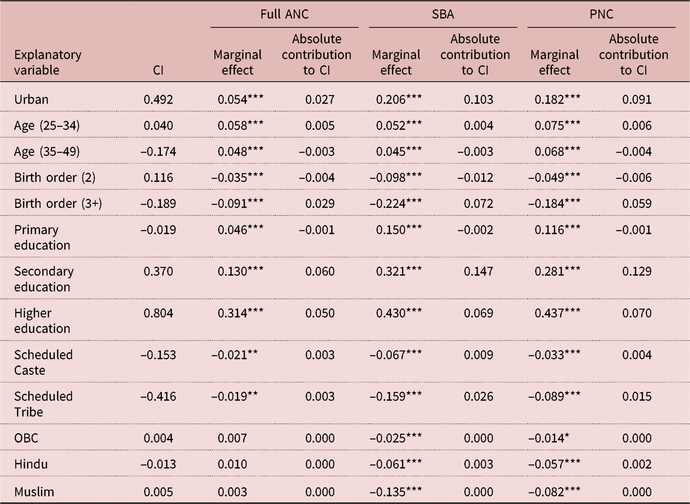
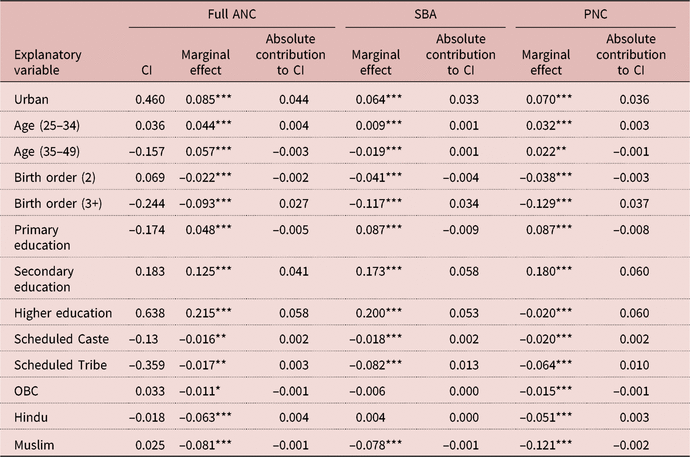
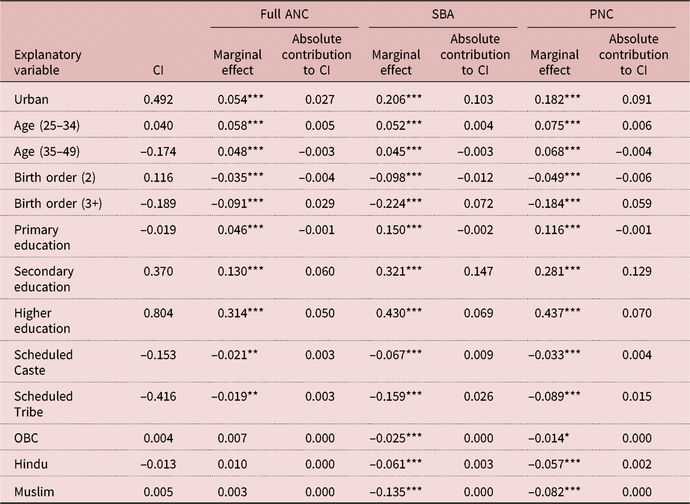
Tables 3 and 4 present the marginal effects and decomposition analyses of full ANC, SBA and PNC in India for 2005–06 and 2015–16, respectively. The decomposition analyses present the contribution to inequality in the utilization of full ANC, SBA and PNC explained by predictor variables, namely place of residence, age, women’s education, birth order, caste and religion. A positive marginal effect indicates that the explanatory factor has a positive association with a maternal health care outcome and indicates a higher likelihood of utilizing the health care service, and vice versa. The value of the absolute contribution indicates the extent of inequality contributed by the explanatory variable. For instance, urban women in both the rounds of the NFHS had more propensity to utilize full ANC, SBA and PNC. A positive value of CI means that the respondents with the characteristic in question were highly represented among the rich, and vice versa. A positive value of the relative contribution indicates pro-rich inequality, which means that rich individuals used more health care services compared with poor individuals, and vice versa.
Estimates of marginal effects and decomposition analysis of inequality in the utilization of full ANC, SBA and PNC in India, 2005–06
***p<0.001; **p<0.01; *p<0.05.
Estimates of marginal effects and decomposition analysis of inequality in the utilization of full ANC, SBA and PNC in India, 2015–16

***p<0.001; **p<0.01; *p<0.05.
The findings suggest that urban residence, secondary and higher education and younger mothers positively contributed to inequality. Mothers living in urban areas, with secondary or higher education, had a higher probability of using maternal health services, which was disproportionally concentrated among rich women. Women from Scheduled Castes and Scheduled Tribes were less likely to use maternal health services than women from other castes, and were more concentrated among poor strata of the population, so their combined contribution to health care inequality was also positive.
Discussion
The utilization of skilled birth attendants in India increased from 47% in 2005–06 to 81% by 2015–16, and the share of women having home deliveries decreased. It is noteworthy that deliveries attended by midwives, ANM/nurses and LHVs increased from 10% to 25% over this period (IIPS & ICF, 2017). The study found that maternal health care utilization had improved in most of the states in India from 2005 to 2016. The increase in utilization of skilled birth attendants was also accompanied by a reduction in the inter-state inequality in this. Further, larger improvements were observed among lower socioeconomic groups and in EAG states. However, some state variations were striking. The utilization of skilled birth attendants remained relatively low in north-eastern states, namely Nagaland, Arunachal Pradesh, Tripura and Meghalaya, and in EAG states, namely Jharkhand, Bihar Uttar Pradesh and Rajasthan in 2015–16.
Compared with SBA, large inequality existed in the use of full ANC and PNC in 2015–16. In India, only a fifth of women were availing four or more ANC visits. However, the latest recommendation from WHO (2016b) is to have eight ANC visits. Among the three components of full ANC, consumption of 100 or more IFA tablets and four or more ANC visits was lower, as IIPS and ICF (2017) reported only 30% of women took the recommended IFA tablets and 51% had four or more ANCs. Programmatic efforts could be made to increase these two components of full ANC.
As the NHM mainly focused on delivery care services, there was a large gap in the access to, and utilization of, full ANC services. This could be due to the cost of these services. Under the NHM, there is a conditional cash transfer scheme known as Janani Suraksha Yojana (JSY), in which cash incentives are offered to pregnant women if they opt for delivery in public or government-funded hospitals. This incentive has led to an increase in delivery care. Thus, higher achievement in the utilization of skilled birth attendants may be a result of this incentive under the JSY programme. However, this scheme has not significantly affected the utilization of full ANC and PNC services in India. It is suggested that a 48-hour stay in hospital is offered, free of charge, for delivery of other medical facilities, so that the costs could be covered during the postpartum period. It is essential that both mother and newborn receive crucial medical services free of charge, before and after delivery.
Even though inequality has reduced over time, there is still a significant gap in the utilization of full ANC and PNC services between poor and non-poor women. Women belonging to the upper strata of society tend to use more maternal health care services (Leone et al., Reference Leone, Cetorelli, Neal and Matthews2016; Memirie et al., Reference Memirie, Verguet, Norheim, Levin and Johansson2016). Despite improvement in coverage of maternal health care, inequality by wealth remains persistently high in India. This study’s findings suggest that in 2005–06 the higher gaps between the poor and non-poor were in urban areas, among those with secondary and higher education, those belonging to the General Caste and those delivering their first child. Affiliation with a Scheduled Tribe or Scheduled Caste increased the odds of SBA and significantly reduced the likelihood of receiving maternal health care services (Prusty et al., Reference Prusty, Gouda and Pradhan2015; Dehury, Reference Dehury2016).
Women with higher education, and from urban areas, had a higher propensity to use maternal health care services than women with less or no education and rural residents. Furthermore, maternal care services were more concentrated in the upper-income strata of society. Therefore their combined effects on health care inequality were positive. These findings are similar to those of previous studies on health inequality (Liu et al., Reference Liu, Gao and Yan2014; Makate & Makate, Reference Makate and Makate2017). Education can improve knowledge of the benefits of preventive health and awareness of health care services, enhance the ability of individuals to achieve better health by influencing their lifestyle, and increase the utilization of maternal health care services through improved knowledge, attitude and practice of maternal health care (Mezmur et al., Reference Mezmur, Navaneetham, Letamo and Bariagaber2017; Gao et al., Reference Gao, Zhou, Singh, Powell-Jackson, Nash and Yang2017). The finding that age, caste and birth order were the main contributors to inequality in maternal health care utilization in India is consistent with those of earlier studies (Adhikari et al., Reference Adhikari, Sahu, Nair, Saha, Sharma and Pandey2016). Women from SCs and STs had a lower propensity to use health care services and had higher concentration among the poor strata, therefore contributing positively to health care inequality. It is essential to understand that reducing wealth inequalities in the absence of other interventions cannot be an effective tool to reduce inequality in the utilization of maternal health care services. There is a need to tackle other social determinants also such as education, place of residence and caste (Sudha & Morrison, Reference Sudha and Morrison2011; Nair & Panda, Reference Nair and Panda2011; Rai et al., Reference Rai, Singh and Singh2012, Saxena et al., Reference Saxena, Vangani, Mavalankar and Thomsen2013; Sanneving et al., Reference Sanneving, Trygg, Saxena, Mavalankar and Thomsen2013).
In conclusion, the utilization of skilled birth attendants increased significantly more than that of full ANC and PNC over the study period. This improvement could be the result of the cash incentive programme initiated under the NHM. Despite the progress made over the decade 2005–16, this study has shown a considerable gap in the utilization of maternal health care between poor and non-poor women in India. Inequality in utilization of maternal health care significantly reduced in most states of India over this period. Furthermore, inequality in the utilization of SBA reduced considerably more than that in ANC and PNC. There was a higher contribution of place of residence, education and caste to inequality in maternal health care service utilization. In other words, inequality in service utilization due to the wealth distribution among these socioeconomic groups reduced over the period 2005–16. However, the poor and non-poor gap in maternal care utilization was more prominent in rural areas and among uneducated women, with inequality within rural area and among uneducated classes increasing. This study recommends strengthening the current government programme to focus especially on poor women from low social status groups. Furthermore, a programme similar to JSY and JSSK should be implemented to increase full ANC and PNC utilization.
Author ORCIDs
Preeti Dhillon, 0000-0001-9757-6492
Acknowledgments
The authors thank the reviewers for their comments and suggestions.
Funding
This research received no specific grant from any funding agency, commercial entity or not-for-profit organization.
Conflicts of interest
The authors have no conflicts of interest to declare.
Ethical Approval
The authors assert that all procedures contributing to this work comply with the ethical standards of the National Family Health Survey. NFHS-4 was conducted under the scientific and administrative supervision of the International Institute for Population Sciences (IIPS), Mumbai, India, which is associated with the Ministry of Health and Family Welfare (MoHFW), Government of India (GOI). The institute conducted an independent ethical review of the NFHS protocol.