Introduction
Pathological health anxiety is a growing problem in all medical settings, and is likely to increase in prevalence as people are encouraged to take more responsibility for their health. It has suffered through being regarded for many years as identical to hypochondriasis and disorders of somatic symptomatology (Scarella, Laferton, Ahern, Fallon, & Barsky, Reference Scarella, Laferton, Ahern, Fallon and Barsky2016; Stein et al., Reference Stein, Kogan, Atmaca, Fineberg, Fontenelle, Grant, Matsunaga and Reed2016). People with abnormal health anxiety fear undetected medical illness, leading to frequent medical consultations, requests for tests, reassurance from other health professionals and even relatives, to exclude the feared disease. Previous trials have demonstrated the benefits of cognitive behaviour therapy in patients in primary care, both in direct face to face or group treatment (Clark et al., Reference Clark, Salkovskis, Hackmann, Wells, Fennell, Ludgate, Ahmad and Gelder1998; McManus, Surawy, Muse, Vazquez-Montes, & Williams, Reference McManus, Surawy, Muse, Vazquez-Montes and Williams2012; Sørensen, Birket-Smith, Wattar, Buemann, & Salkovskis, Reference Sørensen, Birket-Smith, Wattar, Buemann and Salkovskis2011) and by internet-directed or web-based treatment (Hedman, Axelsson, Andersson, Lekander, & Ljótsson, Reference Hedman, Axelsson, Andersson, Lekander and Ljótsson2016; Hedman et al., Reference Hedman, Andersson, Andersson, Ljotsson, Ruck, Asmundson and Lindefors2011, Reference Hedman, Axelsson, Görling, Ritzman, Ronnheden, El Alaoui, Andersson and Ljótsson2014; Morriss et al., Reference Morriss, Patel, Malins, Guo, Higton, James, Wu and Tyrer2019). Almost all of these studies have been with patients who are already aware that they have health anxiety. This is very different from the circumstances in a secondary medical care where so many of these patients have had medical illnesses and present without realising their fears are pathological.
In the CHAMP (Cognitive behaviour therapy for Health Anxiety in Medical Patients) trial, these latter patients were recruited to a randomised trial of cognitive behaviour therapy adapted for health anxiety (CBT-HA) or standard care in the clinics. After 2 years, greater clinical benefit for anxiety symptoms was found in the CBT-HA group with partial cost offset for the treatment given (Tyrer et al., Reference Tyrer, Cooper, Salkovskis, Tyrer, Crawford, Byford, Dupont and Barrett2014). Because benefits were sustained the study received funding to extend to 8 years of follow-up after randomisation.
Method
The CHAMP study was a pragmatic randomised-controlled trial. It had two parallel arms with equal randomisation of eligible patients to (i) 5–10 sessions of CBT-HA or (ii) standard care as usual in the clinics. The primary outcome was set as reduction of symptoms of health anxiety, measured by the Short Health Anxiety Inventory (SHAI), after 1 year (Tyrer et al., Reference Tyrer, Cooper, Salkovskis, Tyrer, Crawford, Byford, Dupont and Barrett2014), but the intention at the outset was to carry out a long-term follow-up as there was uncertainty about the stability of health anxiety over time. Patients who had pre-existing medical illness were included if their health anxiety was considered to be independent; in this respect the study differed from many others in which people with physical illness were excluded.
As this was a pragmatic trial those allocated to CBT-HA were treated by professionals who might readily be available in hospital settings, including graduate research workers, nurses or related health professionals. Those interested were trained for this intervention in advance by attendance at two workshops, and during treatment were supervised by experienced staff. Therapists were not randomised and each patient allocated to CBT-HA was seen by the next available therapist.
The two main initial hypotheses, based upon the results of a pilot study (Seivewright et al., Reference Seivewright, Green, Salkovskis, Barrett, Nur and Tyrer2008), were that patients in the CBT-HA group would have lower levels of health anxiety (SHAI scores) 1 year after randomisation to the trial than those treated in standard care and that, from a health and social care perspective, the costs of the CBT-HA and standard groups would be equivalent at 2 years (i.e. costs of CBT-HA would be offset by savings in other areas).
Assessments of health anxiety, generalised anxiety, depression, social function, quality of life and costs were made over a 2 year period after randomisation. Several secondary hypotheses were also tested, including that health anxiety at other time points, generalised anxiety and depression, and social functioning would also differ between CBT-HA and standard care.
Randomisation and masking
Eligible patients who gave consent to be randomised were allocated in a 1:1 ratio to the two arms of the study according to a computer-generated random sequence using block randomisation with varying block-size of four and six. This was carried out independently with the allocation sequence not available to any member of the research team until final analysis. Research assistants who collected data had no knowledge of allocation at any time.
Settings and procedure
Patients attending cardiology, endocrine, gastroenterology, neurology and respiratory medicine clinics, in six general hospitals in the UK covering urban, suburban and rural areas, were considered for the study. All patients attending clinics of the collaborating consultants, apart from the specific exclusions below, were approached while waiting for their out-patient appointments and, after consent, given the SHAI (Salkovskis, Rimes, Warwick, & Clark, Reference Salkovskis, Rimes, Warwick and Clark2002), a self-rating scale of 14 questions that takes 5–10 min to complete. Those that scored 20 or more on the scale, a point that has been shown to discriminate between persistent worry over health and normal variation (Hedman et al., Reference Hedman, Lekander, Ljótsson, Lindefors, Rück, Andersson and Andersson2015; Salkovskis et al., Reference Salkovskis, Rimes, Warwick and Clark2002) were given a brief summary of the trial and offered the opportunity of further assessment, and, if they were interested, were then given an information sheet about the study. Those that agreed in principle to take part were then asked the questions in the Structured Clinical Interview for DSM-IV (First, Spitzer, Gibbon, & Williams, Reference First, Spitzer, Gibbon and Williams1996) in order to determine the diagnosis of hypochondriasis. Those that satisfied this diagnosis were asked for written consent to take part and baseline assessments completed. This, through necessity, involved a standard explanation of the nature and significance of health anxiety and so constituted a small intervention in all patients who entered the trial. After baseline assessment, randomisation was carried out by an independently operated computerised system.
Interventions
Each patient in the CBT-HA arm of the trial was offered between 5 and 10 sessions of treatment initially but booster sessions were also allowed, though few were taken up. Each therapist was supervised at least at 2–4 week intervals during treatment to ensure consistency in treatment. Possible bias in follow-up assessments was reduced by replacing the research assessor with another research assistant if at any time they were unwittingly informed about the patient's allocation status.
Training and fidelity of intervention
Four senior members of the CHAMP team trained the therapists at two workshops and also assessed treatment fidelity. Fifty percent of all treatment sessions were audio recorded. Fidelity was tested using the health anxiety modification of the Cognitive Therapy Rating Scale (CTRS-HAV) (Tyrer et al., Reference Tyrer, Salkovskis, Tyrer, Wang, Crawford, Dupont, Cooper and Barrett2017). Recordings were assessed by the local supervisor and a random sample sent to a supervisor at a different site to assess the level of agreement, with further training ending only when an agreement level of 0.80 κ was reached. An independent assessor involved in the development of the original treatment (Hilary Warwick) assessed any discordant ratings. Only one of the 17 therapists failed to reach the level of competence; this person saw only five patients (Tyrer et al., Reference Tyrer, Cooper, Salkovskis, Tyrer, Crawford, Byford, Dupont and Barrett2014).
The study was approved by the North Nottingham Ethics Committee (08/H0403/56) before data collection started, and for the extension period.
Inclusion and exclusion criteria
Those who satisfied the criteria for excessive health anxiety above were included if they were (i) aged between 16 and 75 years, (ii) permanent resident in the area, (iii) had sufficient understanding of English to read and complete study questionnaires and (iv) gave written consent for the interviews, audio-taping of 50% of treatment sessions and for access to their medical records. The presence of existing medical pathology, provided it was not a new diagnosis requiring further investigation, was not an exclusion criterion. Those with continuing major pathology that was considered too severe for them to take part in the study, including progressive cognitive impairment, terminal disorders and any major comorbid pathology that would interfere with psychological treatment, and those currently under psychiatric care were also excluded.
Assessments at baseline and at intervals to 8 years
Over the course of the 8 year follow–up, a standard set of assessments was carried out by research assistants unaware of treatment allocation. This was administered at baseline, 6 months, 12 months, 24 months, 5 years and 8 years. Some others, particularly linked to cost-effectiveness, could not be included at all time points. Health anxiety (SHAI) (Salkovskis et al., Reference Salkovskis, Rimes, Warwick and Clark2002), anxiety and depression (Hospital Anxiety and Depression Scale, HADS) (Zigmond & Snaith, Reference Zigmond and Snaith1983) and social function (SFQ) (Tyrer et al., Reference Tyrer, Nur, Crawford, Karlsen, McLean, Rao and Johnson2005) were selected as the standard assessment set; all of these were self-ratings.
The component of the study primarily reported here was the 8-year follow-up, and was given extra weight by the fact that CBT-HA was not generally available in the NHS so that none of the patients in standard care received this particular treatment over the 8-year period.
The original trial recruited 444 patients (219 to CBT-HA and 225 to standard care) between October 2008 and July 2010 from cardiology, endocrinology, gastroenterology, neurology and respiratory medicine clinics in five general hospitals in England.
The difference between the mean score on the short form of the Health Anxiety Inventory (SHAI) between baseline and 8 years was the primary outcome in this follow-up study, as indeed it was at all previous times of assessment. Secondary outcomes included (i) changes between scores in the two groups at 8 years and (ii) for changes in the HAI, HADS, and SFQ scores at 8 years and overall.
Statistical measures and outcomes
The primary endpoint was analysed using a mixed model with time, treatment and time × treatment interaction as fixed effects, baseline measurement as covariate, and patient as random effect. Missing data were treated as missing at random in the mixed model analysis. To assess the sensitivity of the result to missing values, the last observation carried forward strategy was used to compute the missing HAI at the follow-up visits. Other assessments were analysed in a similar way. In addition, covariate-adjusted analysis was performed on the primary outcome analysis by a mixed model controlling for three pre-specified potential covariates for primary endpoint (clinic type, site and age).
To compare the effects of the main therapy groups (nurses v. standard care, graduates and assistant psychologists), we used a mixed model which includes time, group (standard care, nurses, graduates and assistant psychologists) and time × group interaction as fixed effects, baseline measurement as covariate, and patient as random effect. From this model, the differences between nurses and other therapists (assistant psychologists and graduates) were derived.
All statistical analyses were based on the intention-to-treat principle using the statistical package SAS 9.3. Deaths were reported separately for each group. The CONSORT procedure was used for reporting patient flow through the trial and has been published previously (Tyrer et al., Reference Tyrer, Salkovskis, Tyrer, Wang, Crawford, Dupont, Cooper and Barrett2017).
Results
In total, 219 patients were randomised to CBT-HA and 225 to standard care. In total, 77% had an established physical diagnosis at baseline. In total, 103 (23.2%) of the 444 patients had no medical illness at baseline, with the percentage distributions by clinic; cardiac (17%), endocrinology (4%), gastroenterology (31%), neurology (41%) and respiratory medicine (31%). Patients were not randomised to therapists and were allocated on the basis of availability. Attrition rates and follow-up using the CONSORT procedure at 5 years have been reported earlier (Tyrer et al., Reference Tyrer, Salkovskis, Tyrer, Wang, Crawford, Dupont, Cooper and Barrett2017) when 308 patients provided data.
Clinic and site differences
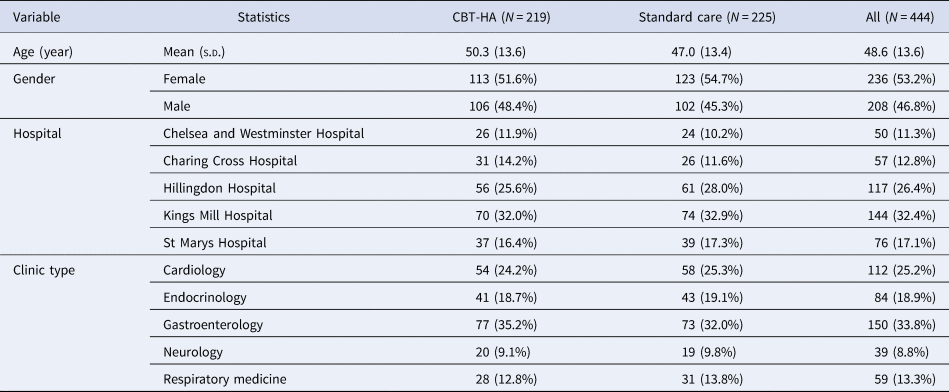
Table 1 shows the baseline data; the patients were evenly distributed by gender, with most coming from cardiology and gastroenterology clinics. Neurology clinics, which had the highest proportion of participants with no medical illness at baseline, only began recruitment late in the study so their numbers were smaller. The distribution of therapists varied greatly. In one site (King's Mill Hospital, Nottinghamshire), only nurses were employed as therapists, and no other sites had nurse therapists.
Baseline characteristics of patients randomised in study

Treatment differences
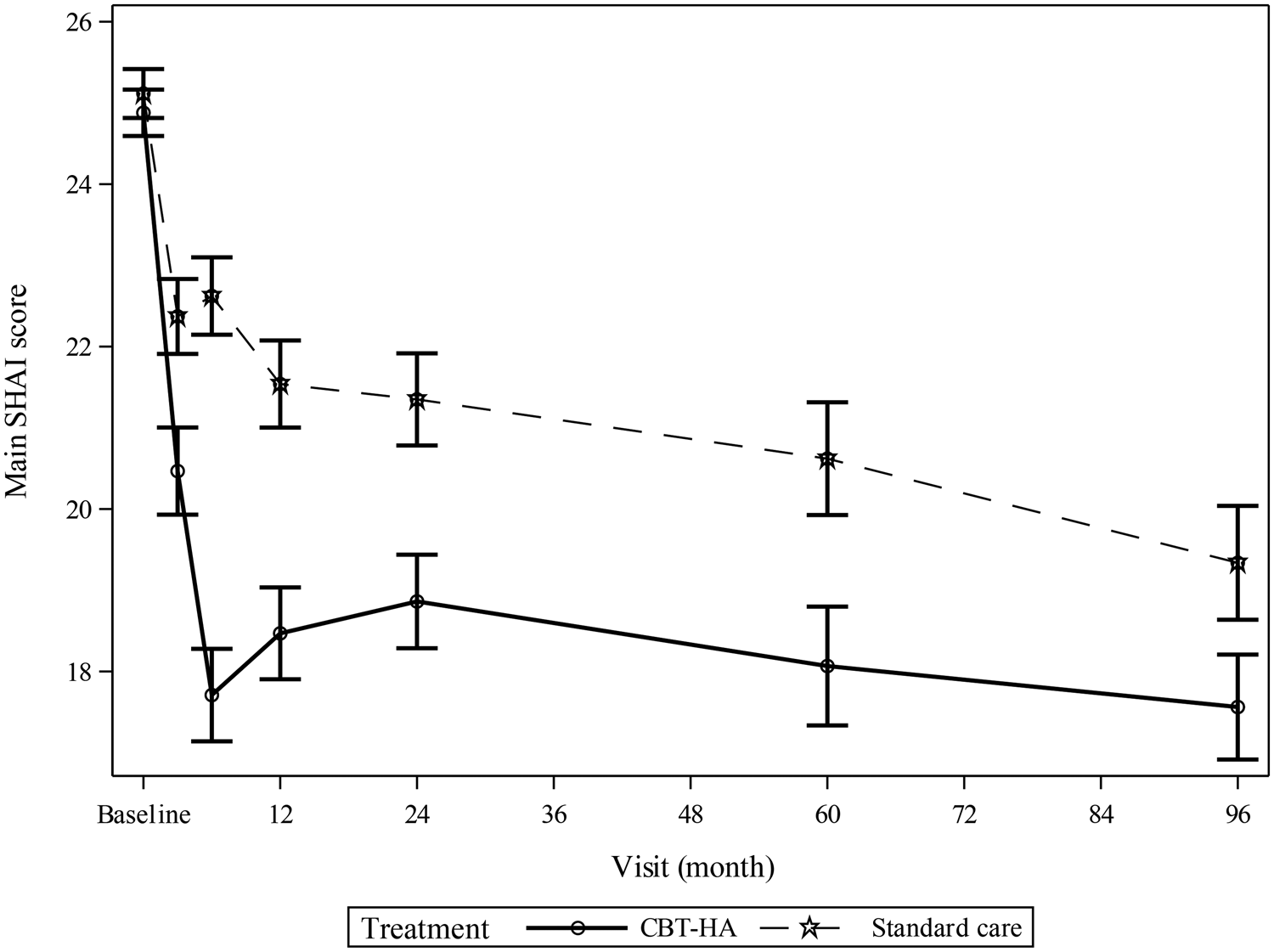
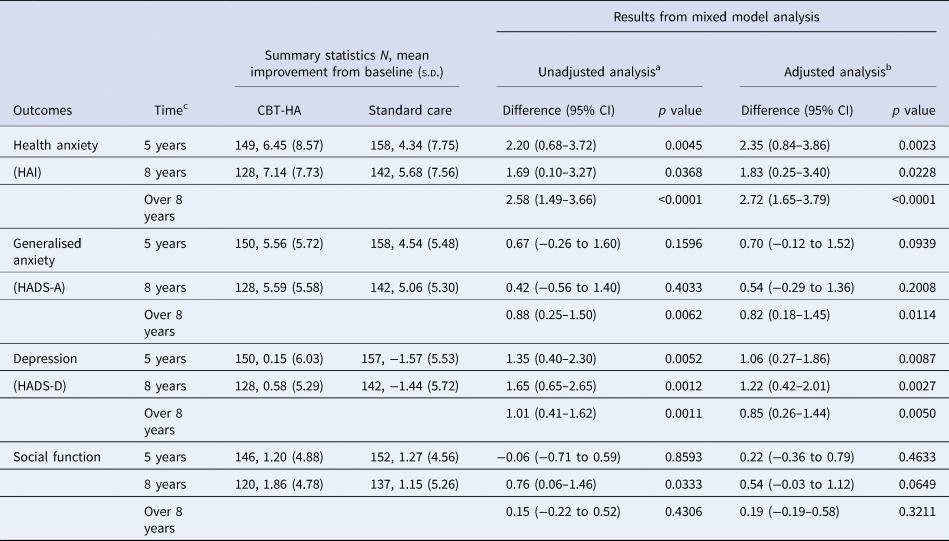
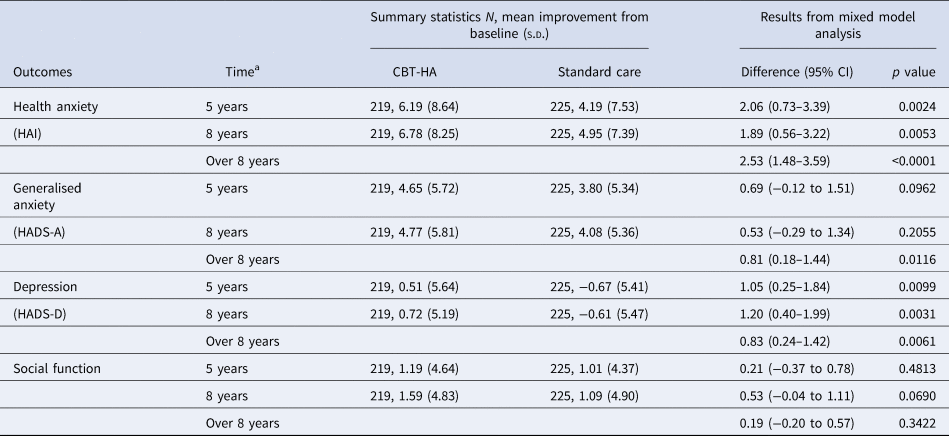
At 8 years, there were 36 deaths, 20 in the CBT-HA group (mean age at death: 61.1 years) and 16 in the standard care one (mean age at death: 60.1 years). The number of treatment sessions with CBT-HA was set originally at six but extra sessions were given if agreed by the therapist and supervisor, and overall a mean of 6.0 sessions (range: 0–22) was given. The complete results at 2 years have been reported previously (Tyrer et al. Reference Tyrer, Cooper, Salkovskis, Tyrer, Crawford, Byford, Dupont and Barrett2014); for the primary outcome (HAI score difference between groups at 1 year) the reduction in health anxiety scores was 2.97 points more in the CBT-HA group than those in standard care (p < 0.0001). These differences were maintained throughout the follow-up. After 8 years, there was still a clear significant difference in the adjusted HAI score in favour of CBT-HA over standard care [1.83, 95% confidence interval (CI) 0.25–3.40, p = 0.023] (Table 2), with no loss of efficacy between 2 and 8 years (Fig. 1).
Mean changes in SHAI scores in 270 patients allocated to CBT-HA (n = 128) or standard care (n = 142) over 8 years.

Summary statistics and results from the mixed model analysis of clinical outcomes at 5 and 8 years with outcomes at 3 months, 6 months, 12 months, 24 months, 5 years and 8 years combined (over 8 year differences)

a Unadjusted mixed model includes time, treatment and time × treatment interaction as fixed effects, baseline measurement as covariate, and patient as random effect.
b Unadjusted mixed model includes time, treatment and time × treatment interaction as fixed effects, baseline measurement, clinic type, site and age as covariates, and patient as random effect.
c Results at 3 months, 6 months, 1 year and 2 years are not reported here but included in ‘over 8 years’.
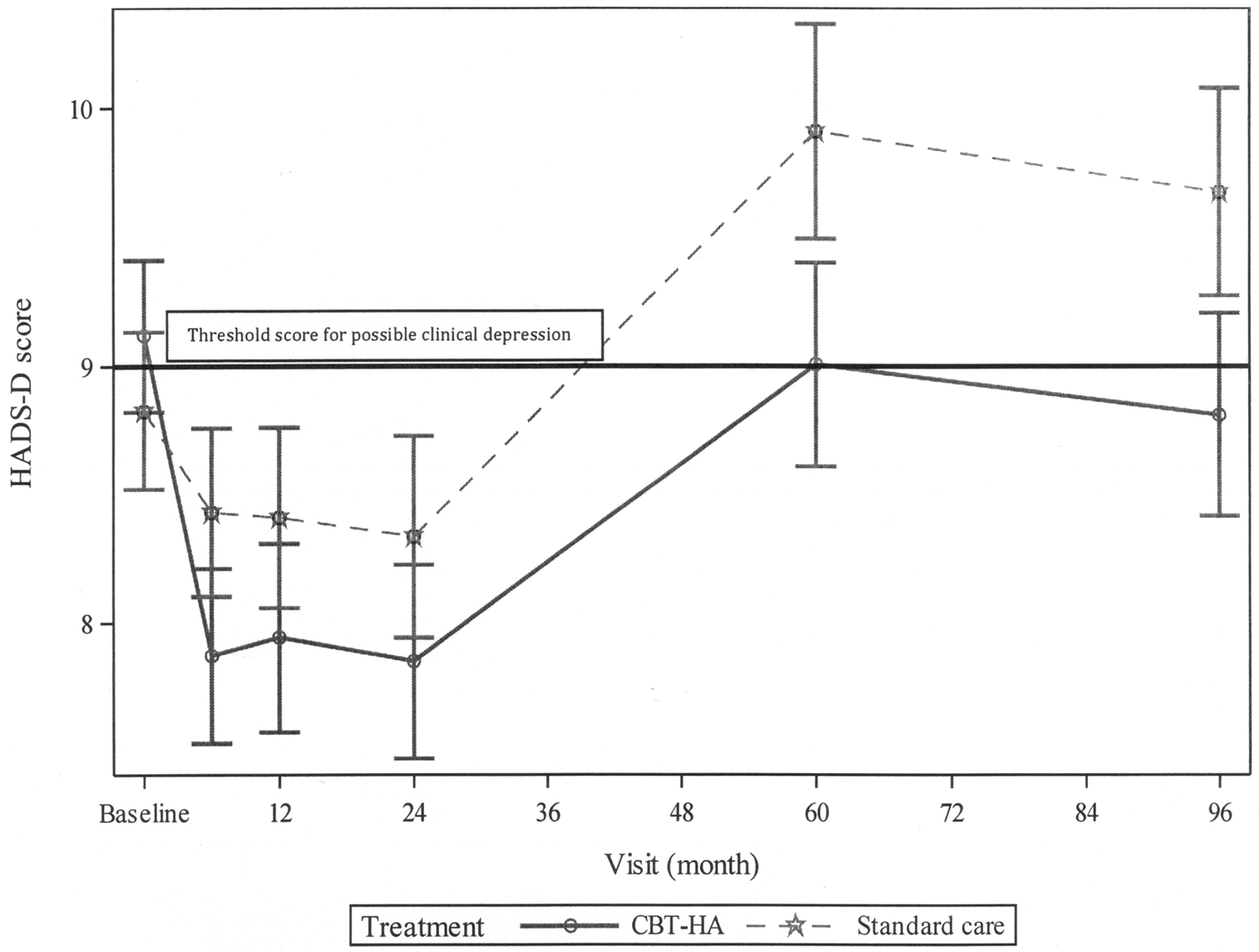
The findings between groups for generalised anxiety using the HADS anxiety scale were not significant after 8 years (0.54, 95% CI −0.29 to 1.36, p = 0.20, ns) (except in endocrinology patients) but HADS depression scores showed a mean gain of 1.22 points in those treated with CBT-HA compared with standard care (1.22, 95% CI 0.42–2.01, p < 0.003); this was mainly due to an increase in depression scores in those in standard care (Table 2). The mean score for HADS depression at 8 years in those allocated to standard care was 9.6, well within the category of clinical depression (Cameron et al., Reference Cameron, Cardy, Crawford, du Toit, Hay, Lawton, Mitchell and Reid2011) (Fig. 2). Over the whole 8 year period, scores for both generalised anxiety and depression were significantly lower in the CBT-HA group compared with standard care (Table 2). Social functioning showed little difference between groups except at 8 years with evidence of benefit appearing in those allocated to CBT-HA at 8 years (mean difference: 0.53, 95% CI −0.04 to 1.11, p < 0.07) (Table 2).
Mean changes in the depression scale of the Hospital Anxiety and Depression Scale (HADS-D) in 270 patients allocated to CBT-HA (n = 128) or standard care (n = 142) over 8 years (difference between groups p = 0.0031 at 8 years, p = 0.0061 over whole 8 year period). A score of 9 is an accepted threshold for the presence of clinical depression.18

Table 3 displays the results from the mixed model analysis of clinical outcomes at 5 and 8 years after the imputation of missing outcomes using the last observation forward strategy. The results remain similar to those from crude and adjusted analysis shown in Table 1. The findings remained similar after using multiple imputation by means of PROC MI in the SAS package.
Summary statistics and results from mixed model analysis of clinical outcomes at 5 and 8 years: LOCF imputation

LOCF, last observation carried forward.
a Results at 3 months, 6 months, 1 year and 2 years are not reported here.
Clinic differences
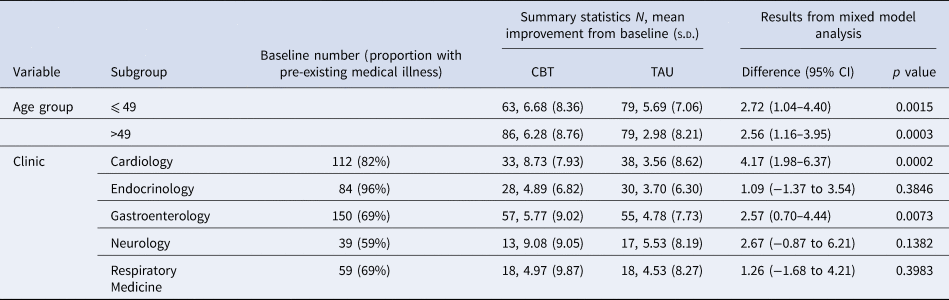
The outcome measured by change in SHAI scores separated by age and clinic type is shown in Table 4. Older patients in general responded better to CBT-HA than younger ones and patients seen at cardiology, neurology and gastroenterology clinics showed the largest differences at 8 year follow-up (although this was not significant for neurology as the numbers were lower). The presence of pre-existing illness did not affect response to CBT-HA, with the largest difference in SHAI scores between groups (5.17) (p = 0.0002) found in cardiology patients where 82% had a pre-existing medical disorder.
Summary results from mixed model analysis of change in SHAI scores from baseline at 8 years separated by age group and clinic type, with proportions of pre-existing medical illness

Therapist differences
Seventeen therapists were involved in treatment; of the 219 patients allocated to CBT-HA, 87 were seen by assistant psychologists, 66 to other health professional graduates and 66 to general nurses who had received no previous training in cognitive behaviour therapy.
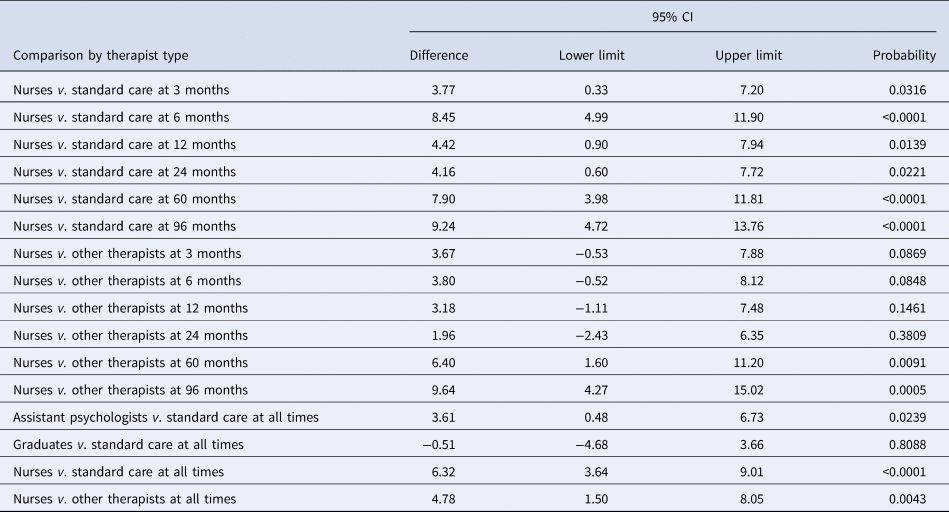
After 8 years, 128 patients in the CBT-HA group were assessed, but 20 had died, all from natural causes. Sixty (69%) (excluding 10 deaths) of those treated by assistant psychologists, 35 (53%) (excluding three deaths) by graduate therapists and 33 (50%) (excluding seven deaths) by nurses. The outcome by therapist type for changes in SHAI scores showed greater reduction in SHAI scores over the 8 year period, with the largest ones being shown at 5 and 8 years (Table 5). Additional analyses showed similar and statistically significant differences between nurse therapists and other groups for generalised anxiety (mean improvement: 2.67, 95% CI 1.07–4.28, p = 0.0011), depression (mean improvement: 1.75, 95% CI 0.10–3.40, p = 0.038) and social functioning scores (mean improvement: 1.22, 95% CI 0.04–2.41, p = 0.043). More treatment sessions were given by the nurses than by other groups (a mean of 2.5 more; Tyrer et al., Reference Tyrer, Tyrer, Lisseman-Stones, McAllister, Cooper, Salkovskis, Crawford and Wang2015) and this was associated with fewer drop-outs in this group.
Table of mean differences in SHAI from baseline in patients treated with CBT-HA by nurse therapists, other therapists and standard care over 8 years

Possible confounders by nurses only working in one site
Because of the imbalance in therapists and site, and the better outcome with nurse therapists, it could be argued that the differences between the outcomes in each clinic could be explained entirely by nurse therapists treating more patients in gastroenterology and cardiology groups. The tables provided in the online Supplementary Material section show that this could not be the case. Only eight patients in gastroenterology clinics were treated by nurses, and at 8 years the numbers (four) were too small for analysis, so the better outcome in the gastroenterology group (n = 78) is explained by other therapists. The tables provided in the online Supplementary Material section also show that the benefits for patients treated by nurse therapists compared with others were more marked at 5 and 8 years, suggesting greater consolidation over time.
Adverse events
All the 36 deaths occurred during the trial (20 CBT-HA and 16 standard care) were from natural causes; one patient in standard care made a serious suicide attempt 6 months after randomisation.
Discussion
The results of this trial demonstrate a sustained benefit for a brief psychological treatment given for a mean of only six sessions. This finding is robust and does not allow for any other explanation apart from continued efficacy, and is confirmed by appropriate statistical adjustment. Although the reasons for the maintenance of significant differences between CBT-HA and standard care cannot be determined formally it is possible, and may be likely, that standard care has a negative influence on health anxiety, as the normal resolution of untreated anxiety in long-term trials was not shown. The results also suggest that, unlike other forms of anxiety, untreated health anxiety persists. One reason for this is that in ordinary practice health anxiety is likely to be continually reinforced by a combination of reassurance and continued tests, which are mainly unnecessary but still promote the belief that the hospital staff must think there is an underlying disease. As a score on the SHAI of 10 can be regarded as normal (as it is wise to have some concern for your health), and one of 20 is pathological, the 2 point difference between scores at 8 years is likely to be clinically as well as statistically meaningful.
The increase in depressive symptoms in the standard care group over the long follow-up also suggests that untreated health anxiety is a disabling disorder. The findings here were not predicted in our original hypotheses, as we predicted that, as depression is often found with hypochondriasis, there might be some initial improvement in these symptoms. What was surprising was the steady increase in depressive symptoms from year 2 of follow-up onwards in the standard care group (Fig. 2), suggesting that the repeated strain of taking responsibility for your health takes its toll in the longer term.
The finding that the mean score for depression in the standard care group was 9.6 (well above the accepted score of 9 for clinical depression; Cameron et al., Reference Cameron, Cardy, Crawford, du Toit, Hay, Lawton, Mitchell and Reid2011), suggests that untreated health anxiety and should be treated actively. Anxiety disorders are also associated with a three-fold increase in suicidal behaviour (Kanwar et al., Reference Kanwar, Malik, Prokop, Sim, Feldstein and Wang2010) and the persistence of symptoms makes such behaviour more likely. There may also be other medical consequences of persistent health anxiety. Anxiety disorders in general lead to premature mortality, and this includes those who have excessive health anxiety after cardiac events (Van Beek et al., Reference Van Beek, Zuidersma, Lappenschaar, Pop, Roest, Van Balkom, Speckens and Voshaar2016).
The reason for the better outcomes in patients attending cardiovascular clinics may be related to advice given to those with cardiac symptoms, especially chest pain, to consult as soon as possible, and for A&E clinics to give such patients preference when they arrive. This advice is likely to promote health anxiety in susceptible patients and further reinforce symptoms. In the case of gastroenterology there is considerable concern about the high level of health anxiety associated with conditions such as the irritable bowel syndrome and the negative value of reassurance has been noted (Gasteiger et al., Reference Gasteiger, Sherriff, Fraser, Shedden-Mora, Petrie and Serlachius2018). There is also evidence that the rates of health anxiety in gastroenterology clinics are increasing (Tyrer, Cooper, Tyrer, Wang, & Bassett, Reference Tyrer, Cooper, Tyrer, Wang and Bassett2019), possibly provoked by Internet browsing for health worries (cyberchondria) (Te Poel, Baumgartner, Hartmann, & Tanis, Reference Te Poel, Baumgartner, Hartmann and Tanis2016; Mathes, Norr, Allan, Albanese, and Schmidt, Reference Mathes, Norr, Allan, Albanese and Schmidt2018) and are also likely to be a factor in preventing improvement.
The better outcome in patients allocated to nurse therapists, in all clinics (see online Supplementary Material) was not expected at the outset and the design of the study does not allow a complete explanation as therapists were not randomised. Nurses may have been seen as more appropriate therapists than others because of their training and perceived greater knowledge of medicine, and this may have improved their therapeutic relationships. If this was true, patients may be more appropriately treated by suitably trained nurses than psychologists or other professionals.
The main limitation of the findings is the selective nature of the participants in the trial. Only 444 were recruited out of 5224 screened, and most of the remaining 4780 were likely to have been eligible after excluding those who did not satisfy the trial criteria. This suggests that a large proportion of people who might be helped by this treatment are reluctant to try it. We can only guess what proportion of these reluctant patients might be helped, but the excellent response of those who did take part suggests that if there was better awareness of the value of this intervention, it would represent an important opportunity to expand a successful treatment. A similar study in general practice and hospital settings of repeat users of unscheduled care, using very similar methodology to CHAMP, recruited 33% of eligible patients and demonstrated very similar results at both 6 months and 1 year (Morriss et al., Reference Morriss, Patel, Malins, Guo, Higton, James, Wu and Tyrer2019). This suggests that our results are reasonably representative of the population at risk.
The fact that patients with pre-existing medical conditions were included did not seem to have a major impact on the results. In many cases, the medical problem was long-standing and the health anxiety was completely independent, and even when not independent (e.g. worry over cardiac function after being fitted with a stent successfully), the past medical history is highly germane to the development of health anxiety. The only clinic showing no better improvement with CBT-HA was the respiratory one, but even in this setting the nurse therapists were highly effective (online Supplementary Information).
There is a need for better awareness of health anxiety and its associated symptoms. This is not difficult to achieve, especially as our evidence suggests that the necessary expertise can be taught in general hospitals, not only to nurses but to all relevant staff. Because so many of the people who attend with these problems want answers from their physicians and nursing colleagues, these staff are best placed to both identify the problem and offer solutions, with mental health providers helping as secondary agencies.
Supplementary material
The supplementary material for this article can be found at https://doi.org/10.1017/S003329172000046X
Acknowledgements
The project was funded by the National Institute for Health Research (NIHR) under its Health Technology Assessment (HTA) Programme (Grant Reference Number 07/01/26). The views expressed are those of the authors and not necessarily of the NIHR or the Department of Health and Social Care. Paul Salkovskis, John Green, David Murphy, Barbara Barrett and Steven Reid were investigators, together with the present authors, in the original trial. We particularly thank the Mental Health Research Network, and especially Sandra O'Sullivan, for adopting and promoting the trial, and support for excess treatment costs from the Department of Health. The North London and East Midlands hubs of the Mental Health Research Network were invaluable in adopting, promoting and aiding recruitment in the trial, and it could not have been done without them. We thank Gene Paykel (chair) and later, John Brazier, Deborah Rutter and Paul Bassett of the Data Monitoring and Ethical Committee and Richard Mayou (chair), Amrit Sachar, Rosemary Davidson, Devaka Fernando and Roger Mulder of the Trial Steering Committee, and the many therapists who provided the treatment. Jayne Morton, Kevin Connolly, Mary Wyatt and Gail Marcuson acted as the support group (CHASSIS) in the study, and in addition to the main research assistants, Faye Cooper, Amy Murphy, Lorraine O'Connell, Kate Rhodes, Julie Sinclair, Brendon Stubbs, David Trevor and Gemma Walker were also active in recruitment. We also give special thanks to Ian Lovett, Keith Mitchelmore, Mary Tourette, Lotte Dinesen, and Sachin Thakrar for their help in ensuring complete hospital data over the 8 year period, and the 107 consultants, but especially John Rowley, Marcus Harbord, Derek Bell and Maurice Partridge, who supported the study from its outset. The complete data from this study are available by contacting Peter Tyrer, Michael Crawford (m.crawford@imperial.ac.uk) and Duolao Wang (Duolao.Wang@lstmed.ac.uk).
Authors' contributions
The follow-up study was initiated by PT and HT, who, with MC, SD and DW designed the structure and the analysis plan. SC was the trial coordinator and organiser of the recruitment strategy, and SN and VL carried out the 8 year assessments. Aaron Beck, MD (the inventor of CBT) acted as trial adviser. All authors read and approved the final manuscript.