

Introduction
While riding the commodities boom, the early-2000s “pink tide” saw an expansion of welfare policies across Latin America. However, as commodity prices receded, a new generation of conservative governments emerged, pledging fiscal discipline and labor market deregulation. Yet their strategies varied sharply. In Brazil, Michel Temer—a centrist and former vice president under the Workers’ Party (PT) government—enacted sweeping labor deregulation. In Argentina, Javier Milei and, before him, Mauricio Macri pursued more limited reforms, with costs disproportionately concentrated in the public sector, including cuts to public-sector wages and employment. The pattern is paradoxical: Lacalle Pou governed with a congressional majority yet reformed modestly; Temer, despite lacking electoral legitimacy, enacted the deepest reforms; and Milei, while combining radical rhetoric with a broad electoral mandate for market-oriented change, implemented labor policy changes that were far less far-reaching than Brazil’s. What explains this variation in labor reform?
This article explains cross-national variation in labor market deregulation through a path-dependent argument: inherited union empowerment and labor movement cohesion—shaped by 2000s left-wing governments—structure conservative reform strategies. Building on policy legacies theory (Pierson Reference Pierson1996; Skocpol Reference Skocpol1992), we conceptualize the “pink tide” as a critical juncture that reconfigured labor institutions and capacities. Following the union-weakening market reforms of the 1990s (Cook Reference Cook2007; Murillo Reference Murillo2001), some left-wing governments rebuilt union power and cohesion, whereas others failed to reverse disempowerment and fragmentation—or even reinforced the latter.
Inherited union empowerment and labor movement cohesion shape distinct dimensions of labor reform under right-wing governments: empowered unions become veto players with whom right-wing governments must negotiate, limiting the depth of reforms, while unempowered labor movements are unable to do that. High cohesion—defined as the labor movement’s ability to coordinate action across sectoral unions, sustained by encompassing confederations, shared partisan identities, and cross-sectoral bargaining institutions—enables coordinated action that limits unequal cuts, whereas low cohesion facilitates divide-and-rule strategies that concentrate costs on vulnerable groups, especially public-sector workers who represent the bulk of payroll costs.
To assess this argument, we conduct a comparative process-tracing analysis of conservative administrations in Brazil, Argentina, and Uruguay—the most similar cases with corporatist labor systems, previous left-wing governments with strong ties to unions, and post-boom fiscal strain—drawing on original protest data, primary sources, and 27 elite interviews.
The article proceeds as follows. The next section reviews existing literature on labor market deregulation and welfare retrenchment, labor politics, and policy legacies in Latin America. We then present our theoretical framework, followed by a comparative analysis of conservative governments in Brazil, Argentina, and Uruguay. We conclude by discussing the implications for the study of labor and welfare reform in unequal democracies.
Literature Review
This article builds on, and contributes to, scholarship on the political economy of social policy reform—most notably to theories of labor market deregulation and welfare retrenchment, policy legacies, labor market reforms, and power resource theory.
The Politics of Welfare Retrenchment
The welfare retrenchment literature distinguishes between two dimensions of change: mode and degree. Retrenchment may occur through institutional reform—visible legal changes (Pierson Reference Pierson1996)—or policy drift, whereby policies gradually lose effectiveness when not updated in line with social or economic change (Hacker Reference Hacker2004). The literature also distinguishes between moderate and radical reforms (Niedzwiecki and Pribble Reference Niedzwiecki and Pribble2017; Pierson Reference Pierson1996).
Building on this literature, we extend the distinction between reform modes in welfare retrenchment to labor market deregulation, where this variation has been less explored. Further, we introduce the new dimension of equitable and inequitable labor reforms—that is, whether costs are broadly shared across workers or concentrated on specific groups. This approach draws on welfare expansion research that distinguishes between universal and segmented policies (Arza et al. Reference Arza, Castiglioni, Franzoni, Niedzwiecki, Pribble and Sánchez-Ancochea2022; Pribble Reference Pribble2013), a perspective largely absent from retrenchment studies.
Policy Legacies and Power Resource Theories
Two strands of scholarship are central to this study. On the one hand, power resource theories show that union power has shaped both the expansion of welfare and labor policies (Etchemendy and Collier Reference Etchemendy and Collier2007; Korpi Reference Korpi1983; Pérez Ahumada Reference Pérez Ahumada2023) and their retrenchment (Carnes Reference Carnes2014; Huber and Stephens Reference Huber and Stephens2024; Niedzwiecki and Pribble Reference Niedzwiecki and Pribble2017). On the other hand, scholars highlight how inherited policy frameworks influence welfare reforms by shaping public support, structuring power relations, and constraining their political feasibility (Huber et al. Reference Huber, Dunn, Stephens, Garritzmann, Häusermann and Palier2022; Niedzwiecki and Pribble Reference Niedzwiecki and Pribble2017, Reference Niedzwiecki and Pribble2022; Thelen Reference Thelen2003).
Building on these literatures, this article makes three contributions. First, it brings labor politics back into the analysis of welfare development in Latin America. Extensive research has examined the labor reforms of the 1990s in the region (Cook Reference Cook2007; Murillo and Schrank Reference Murillo and Schrank2005), the expansion of pro-labor policies during the commodities boom (Etchemendy and Collier Reference Etchemendy and Collier2007; Pérez Ahumada Reference Pérez Ahumada2023), and retrenchment in social policies during the 2010s–20s (Arretche and Souza Reference Arretche and Souza2024; Fairfield and Garay Reference Fairfield and Garay2017; Niedzwiecki and Pribble Reference Niedzwiecki and Pribble2022; Vommaro and Gené Reference Vommaro and Gené2022). However, no studies analyze labor market deregulation in Latin America during the post-commodities boom period. This gap is striking in comparative perspective, as European research following the eurozone crisis has placed labor market deregulation at the center of the study of austerity politics (Branco et al. Reference Branco, Miró and Natili2024; Bulfone and Tassinari Reference Bulfone and Tassinari2021; Valdez Reference Valdez2021). Drawing on this scholarship (Huber and Stephens Reference Huber and Stephens2024), this article shows that labor movement strength shapes redistributive outcomes for wage earners during episodes of labor market deregulation under conservative governments.
The article’s second contribution is to complement power resource theory’s structural focus with a dimension of cross-sectoral worker solidarity. While classic formulations emphasize organizational and institutional labor power resources (Korpi Reference Korpi1983; Stephens Reference Stephens1979, Reference Stephens and Esping-Andersen1996), we argue these are necessary but insufficient for coordinating collective action. Building on studies of internal union dynamics (Chambers-Ju Reference Chambers-Ju2021; Murillo Reference Murillo2001; Tafel and Boniface Reference Tafel and Boniface2003), we shift the focus to intersectoral coordination and introduce the concept of labor movement cohesion to capture the extent to which shared partisan identities, encompassing organizational structures, and cross-sectoral bargaining experiences align unions’ distributive preferences, enabling coordinated cross-sectoral solidarity rather than fragmented strategies.
Third, rather than treating power resources as static or only gradually changing, we show how left governments can reshape labor movement empowerment and cohesion through policymaking in relatively short time windows, with lasting effects on unions’ mobilizational capacity. By expanding collective-bargaining rights and strengthening works councils, these reforms enhanced labor’s organizational capacity, while changes in the inclusiveness of bargaining institutions produced legacies that either reinforced cross-sectoral solidarity or deepened labor segmentation.Footnote 1
Bringing Labor Back into Austerity Politics: The Public–Private Divide
This article advances the literature on austerity politics by foregrounding a largely overlooked dimension: the distribution of adjustment costs across public- and private-sector workers as a central axis of political conflict. While the literature focused on labor market reform emphasizes insider–outsider segmentation based on contractual status in the private sector (Palier and Thelen Reference Palier and Thelen2010; Rueda Reference Rueda2007), the welfare-state retrenchment scholarship treats public employment mainly as an indicator of aggregate social spending or welfare provision capacity (Clayton and Pontusson Reference Clayton and Pontusson1998; Huber and Stephens Reference Huber and Stephens2001). However, both rarely consider public employees as a politically organized labor-market segment with distinct coalitional dynamics.Footnote 2
This under-theorized public–private divide is especially salient in Latin America, where limited financial-market access turns fiscal imbalances into pressures for public-sector wage and employment cuts.Footnote 3 At the same time, high labor-market dualization—marked by widespread informality—reduces the electoral costs of public-sector retrenchment, as large segments of the workforce remain excluded from public-sector employment and contributory welfare benefits (Arza et al. Reference Arza, Castiglioni, Franzoni, Niedzwiecki, Pribble and Sánchez-Ancochea2022; Feierherd Reference Feierherd2022; Holland and Schneider Reference Holland and Schneider2017). Under these conditions, public-sector workers become an attractive target of adjustment, particularly in polarized party systems (McCoy Reference McCoy2024) where organized labor is closely aligned with left-wing parties (Schipani Reference Schipani2019).
Theory
Drawing on path dependence and policy legacy theories (Collier and Collier Reference Collier and Collier1991; Pierson Reference Pierson1996; Skocpol Reference Skocpol1992), we conceptualize the arrival of left governments in the 2000s as a critical juncture through which their policies conditioned subsequent conservative labor reforms through two inherited mechanisms: labor movement empowerment and cohesion (Figure 1). These capture, respectively, unions’ capacity to moderate labor legislation and their ability to coordinate unified, cross-sectoral strategies—shaping distributive equity, namely, whether adjustment is broadly shared or concentrated on specific groups.
The Argument.

The Post-Neoliberal Juncture: Left-wing Governments and the Reconfiguration of Labor Politics
Union power was grounded in the mid-twentieth-century labor legislation (Collier and Collier Reference Collier and Collier1991), but these institutional arrangements were sharply disrupted during the 1990s through privatization, trade liberalization, fiscal adjustment, and labor market flexibilization, which reshaped the labor markets in which these institutions operated. These measures triggered layoffs, decentralized or suspended collective bargaining, and expanded employers’ discretion over hiring and firing (Galiani Reference Galiani2002; Pucci et al. Reference Pucci, Nión and Ciapessoni2014), eroding unions’ membership, organizational resources, and cohesion (Murillo Reference Murillo2001). As a result, the labor movement was weakened and, in some cases, politically marginalized from left or populist parties or displaced from decision-making arenas (Hunter Reference Hunter2010; Levitsky Reference Levitsky2003).
The arrival of leftist governments in Latin America in the early 2000s constituted a critical juncture, which was characterized by three conditions that relaxed structural constraints and enabled the new administrations to alter—or reproduce—inherited configurations of industrial relations (Collier and Collier Reference Collier and Collier1991; Mahoney Reference Mahoney2000). First, the late-1990s recession fueled demands for expanded social protection amid rising unemployment and informality (Baker and Greene Reference Baker and Greene2011; Portes and Hoffman Reference Portes and Hoffman2003; Silva and Rossi Reference Silva and Rossi2018). Second, the weakening of traditional parties opened executive access to new or long-excluded leftist and populist parties with limited governing experience (Hunter Reference Hunter, Levitsky and Roberts2011; Madrid Reference Madrid2012), encouraging policy innovation (Levitsky and Roberts Reference Levitsky and Roberts2011; Weyland Reference Weyland2009). Third, the 2000s commodity boom provided fiscal resources for redistribution (Weyland Reference Weyland, Levitsky and Roberts2011). Together, these conditions expanded leftist presidents’ room to maneuver to rebuild union power, enabling divergent institutional trajectories.
While antecedent conditions structured the organizational landscape (Slater and Simmons Reference Slater and Simmons2010) inherited by left governments, they did not predict labor reform trajectories. Concerning unions’ strength, countries where union power had been less eroded by neoliberal restructuring did not always pursue ambitious reforms.Footnote 4 Regarding party–labor linkages, major pro-union reforms sometimes occurred where unions had been politically marginalized.Footnote 5 The pink tide thus constitutes an activating critical juncture (Riedl and Roberts Reference Riedl, Roberts, Collier and Munck2022) in which contingency played a central role (Capoccia and Kelemen Reference Capoccia and Kelemen2007), with structural conditions partially shaping but not fixing the institutional trajectories.
Reproduction Mechanisms of Post-Neoliberal Labor Regimes: Union Empowerment and Labor Movement Cohesion (Independent Variables)
The reproduction mechanisms of the labor regimes established during the post-neoliberal juncture take the form of two labor movement features that constitute our independent variables explaining labor market deregulation under conservative governments: their levels of empowerment and cohesion.
Empowerment of the Labor Movement
First, labor movement empowerment conditioned the depth of subsequent labor market deregulation by shaping unions’ organizational capacity to defend existing regulations. Institutional labor reforms under the Left operated along three dimensions: (1) collective bargaining reforms that strengthened unions’ role in wage setting through tripartite councils, centralized negotiations, and expanded coverage; (2) measures establishing mandatory workplace delegates and stronger legal protections for union activists; and (3) changes in unions’ public funding. We then assess whether these reforms increased union power by examining formal-sector union density, mobilization capacity—in other words, strike and protest activity—and the number of collective agreements concluded before and after the 2000s leftist mandates.
Where left-wing governments empowered unions in the industrial arena, labor retained organizational capacity to defend labor institutions after partisan turnover, consistent with policy feedback arguments (Garay Reference Garay2007; Pierson Reference Pierson1996). By contrast, where governments did not reverse 1990s union disempowerment, organized labor remained weak, lowering the political costs of labor market deregulation for subsequent conservative administrations.
Degree of Labor Movement Cohesion
Second, labor movement cohesion conditioned the equity of labor market deregulation by shaping unions’ cross-sectoral coordination capacity. Unlike empowerment, which captures overall strength, cohesion reflects the preferences and capacities for coordinated rather than sectoral mobilization.
Labor movement cohesion comprises three interrelated dimensions: (1) the organizational encompassment of labor confederations, (2) unions’ partisan alignment, and (3) unions’ integration into shared collective-bargaining frameworks. Cohesion is highest when public and private workers are represented by a single confederation, unions share a common partisan orientation, and cross-sectoral bargaining institutions align distributive incentives across the workforce.
High labor movement cohesion constrained governments’ ability to impose inequitable, sector-specific adjustments by raising the risk of cross-sectoral labor resistance. Low cohesion, by contrast, enabled divide-and-rule strategies that concentrated adjustment costs on specific segments, particularly public-sector workers, who account for a large share of government spending.
Labor Market Deregulation after the Left Turn: The Conservative Aftermath (Dependent Variables)
After the 2000s labor reforms, an institutional consolidation phaseFootnote 6 embedded new arrangements in bargaining practices, workplace representation, and unions’ links with their bases. These arrangements narrowed or expanded the options available to subsequent conservative reforms depending on whether they strengthened unions’ bargaining power and cross-sectoral coordination. An aftermath phase unfolded as conservative governments contested these legacies through path-dependent reactions and counter-reactions (Collier and Collier Reference Collier and Collier1991; Collier and Munck Reference Collier and Munck2017; Riedl and Roberts Reference Riedl, Roberts, Collier and Munck2022), making labor market deregulation in the 2010s and early 2020s a reactive sequence (Mahoney Reference Mahoney2000) in which conservative governments’ labor policy choices were conditioned by the policies adopted during the critical juncture.
Labor market deregulation following the left turn unfolded in two stages. First, the depth of reforms—radical or moderate—depended on inherited union empowerment. Where left governments failed to reverse 1990s union disempowerment, unions remained weak, enabling conservative governments to implement radical labor market deregulation across both the public and private sectors. By contrast, where left governments strengthened labor, unions became veto players with whom conservative governments had to negotiate, resulting in more moderate reforms. Unable to enact radical changes, governments were pushed to attempt more targeted adjustment strategies, typically focused on public-sector employment, one of the largest discretionary components of government spending (Di Carlo et al. Reference Di Carlo, Ibsen and Molina2024).
However, conservative administrations’ ability to impose targeted labor market reforms—and thus shape reform equity—when facing empowered unions depended on labor movement cohesion. High cohesion—through encompassing confederations, shared partisan identities, and cross-sectoral bargaining—limited inequitable sectoral reforms by constraining governments’ ability to impose cuts on specific sectors without triggering broader resistance, as solidarity extended mobilization beyond directly affected groups. By contrast, low cohesion allowed governments to exploit internal divisions and concentrate costs on public-sector workers, enabling inequitable labor market deregulation.
Moderate vs. Radical Reforms
Extending the concept of privatization of social risk (Hacker Reference Hacker2004) to labor markets, we examine whether reforms shift authority over wages and working conditions from statutory regulation and collective bargaining toward individualized employer–worker negotiations, thereby transferring risks to workers (Peters Reference Peters2008). Concerning collective rights, radical reforms weaken unions’ intermediary role (Galvin Reference Galvin2019) by excluding worker categories from collective representation, severely constraining strike and associational rights (Cook Reference Cook2007; Peters Reference Peters2008), cutting funding, and decentralizing bargaining by removing sectoral unions from firm-level negotiations (Adascalitei and Pignatti Morano Reference Adascalitei and Pignatti Morano2016; Peters Reference Peters2008). In contrast, moderate reforms maintain union structures and core bargaining institutions intact while introducing targeted adjustments in three areas. First, they seek to modernize collective agreements by limiting ultra-activity (a norm under which agreements remain in force until renewed) and expanding renegotiable issues. Second, they preserve sectoral unions as the default actors in collective bargaining, but allow shop-floor organizations to negotiate complementarily. Third, they attempt to reconcile unionized workers’ rights with those of service users by tightening strike regulations in essential or socially critical sectors (Cook Reference Cook2007).
Concerning individual rights, radical reforms erode core labor protections by enabling contracts to override statutory standards and expanding non-standard employment—such as temporary, fixed-term, or outsourced contracts—with inferior wages and working conditions (Galvin Reference Galvin2019; Levy Reference Levy and Béland2021; Peters Reference Peters2008). These reforms weaken standard employment contracts through institutional layering (Hacker Reference Hacker2004), whereby non-standard contracts become increasingly prevalent. In contrast, moderate reforms preserve permanent employment contracts as the standard form of employment while modifying their terms and conditions. These reforms typically include changes to vacation and working time (e.g., working-time accounts), tighter medical leave conditions, longer probationary periods, revised severance pay calculations (e.g., excluding non-wage items), and lower payroll taxes (Galvin Reference Galvin2019).
Equitable vs. Inequitable Reforms
The second dependent variable captures the distributional equity of labor reforms—that is, the distribution of adjustment costs across sectors. Equitable reforms affect public- and private-sector workers similarly—for example, through uniform wage cuts or changes to collective-bargaining rights and dismissal rules—whereas inequitable reforms concentrate the burden on specific groups, usually public employees.
There may exist a tension between the depth and the distribution of labor market reforms: a highly targeted reform may spare the majority of the working class while imposing substantial costs on a specific segment—often public-sector workers—making inequitable reforms strategically attractive to stronger unions. This article does not focus on preferences across worker groups, but rather emphasizes the role of labor movement cohesion as a constraint on intra-movement cost shifting. Cohesive labor movements limit stronger unions’ ability to externalize costs onto weaker segments, akin to solidaristic logics in neo-corporatist bargaining where unions in stronger bargaining positions accept wage compression to raise the wages of more vulnerable workers (Cameron Reference Cameron and Goldthorpe1984; Schmitter Reference Schmitter and Berger1981).
Case Selection and Methods
We compare the conservative administrations of Michel Temer (2016–18) and Jair Bolsonaro (2019–2022) in Brazil, Mauricio Macri (2015–19) and Javier Milei (2023–2025) in Argentina, and Luis Lacalle Pou (2020–2025) in Uruguay. All three countries share corporatist labor systems with unions’ monopoly over worker representation. By the mid-2010s, each had experienced over a decade of leftist rule anchored in strong alliances with major labor confederations (Etchemendy and Collier Reference Etchemendy and Collier2007; Luna Reference Luna2007; Schipani Reference Schipani2022). In the aftermath of the commodity boom, they also faced sluggish economic growth and widening fiscal deficits, creating fertile ground for conservative governments seeking fiscal adjustment and labor market reform. At the time of writing (March 2026), Congress had just approved a labor reform under Milei. Because the reform is too recent for its implementation to be assessed and its legal status remains uncertain due to ongoing judicial challenges, it is not included in the comparative framework presented below. We nevertheless discuss the reform at the end of the Argentine case to assess the extent to which our argument applies.
Methodologically, we rely on process tracing (Bennett and Checkel Reference Bennett, Checkel, Bennett and Checkel2015), drawing on fieldwork in the three countries, including 27 semi-structured interviews with policymakers, legislators, union leaders, business representatives, and social movement activists; extensive primary sources, including newspapers, laws, court rulings, statements by legislators and state officials, and labor confederation documents; publicly available data on wages and employment; and an original union protest dataset covering one of our main variables.
Tables 1 and 2 summarize cross-national patterns of labor market deregulation, distinguishing measures by individual versus collective rights and by public versus private sectors. Later sections examine each case in detail to trace the processes behind these outcomes.
Labor Reform in the Private Sector by Country: Brazil (2016–22), Argentina (2015–19, 2023–25) and Uruguay (2020–25)

Table 1. Long description
A table comparing labor reform in the private sector across Brazil, Argentina, and Uruguay. The table has 12 rows and 4 columns. The columns are labeled Brazil, Argentina, and Uruguay. The rows are grouped into Individual Rights and Collective Rights, with subcategories under each. Individual Rights include Outsourcing, Hourly wage without minimum wage guarantee, Extended probationary period, Restricted access to labor courts, Flexibilization of working hours, Weaker maternity/paternity protections, and Weaker unemployment protections. Collective Rights include Funding and Collective Bargaining, with subcategories under each. Funding includes Limits on union funding. Collective Bargaining includes Union exclusion from bargaining over certain worker categories, Removal of selected statutory labor standards from collective bargaining, and Elimination of ultra-activity. Strike rights include Restrictions to strike rights. Each cell contains a check mark or an X indicating the presence or absence of specific labor reforms in each country.
Source: Authors’ Elaboration.
Labor Reform in the Public Sector by Country: Brazil (2016–22), Argentina (2015–19, 2023–25), and Uruguay (2020–25)

Table 2. Long description
The table compares labor market deregulation patterns across Brazil, Argentina, and Uruguay, focusing on individual and collective rights in the public sector. It has four rows and three columns. The columns are labeled Brazil, Argentina, and Uruguay. The rows are labeled Public Sector, Individual Rights, Collective Rights, Public Employment Variation, and Wage Evolution. Under Individual Rights, the table lists Regulations on sick leave, Outsourcing, and Weaker protection against dismissals. Under Collective Rights, it lists Curtailment of collective bargaining for public-sector workers. For Public Employment Variation, it lists Temer: +0.52 percent, Bolsonaro: -10.4 percent for Brazil; Macri: -18.5 percent, Milei: -19.24 percent (Nov. 2023–Jan. 2026) for Argentina; Lacalle Pou: -1.9 percent for Uruguay. For Wage Evolution, it lists Temer: +3.3 percentage points, Bolsonaro: -4.1 percentage points for Brazil; Macri: -3.0 percentage points, Milei: -15.6 percentage points for Argentina; Lacalle Pou: +1.7 percentage points for Uruguay.
Source: Authors’ Elaboration.
Alternative Explanations
The literature offers several alternative explanations for these outcomes. One line of argument holds that greater partisan fragmentation (Brooks Reference Brooks2002) and the absence of legislative majorities (Cox and Morgenstern Reference Cox and Morgenstern2001; Madrid Reference Madrid2005) hinder retrenchment by increasing the coordination costs of coalition-building. Although ideological alignment between the executive and its legislative partners may mitigate these coordination costs, this perspective still faces two empirical challenges. First, Brazil enacted the most radical labor reform despite having the most fragmented party system (Zucco and Power Reference Zucco and Power2021), with 17.44 effective parties in Congress by 2019, while Uruguay and Argentina—with 3.31 (2020) and 6.77 (2016) effective parties, respectivelyFootnote 7 —did not pass comparable reforms. Second, while the Brazilian case may be consistent with an account emphasizing the ideological composition of legislative coalitions, the Uruguayan case remains difficult to reconcile with expectations that lower fragmentation and stable legislative majorities facilitate retrenchment. President Lacalle Pou governed with the lowest level of fragmentation and the most stable legislative majority among the three cases, yet adopted the most moderate reform.
A second explanation argues that business sector instrumental and structural power constrain redistributive reforms in Latin America (Fairfield Reference Fairfield2010; Fernández Milmanda Reference Fernández Milmanda2024; Flores-Macías Reference Flores-Macías2012). Although Brazil’s business sector has maintained consistently high structural power (Schneider Reference Schneider2013), this fails to explain variation in labor reforms under pro-market governments, which ranged from moderate under Fernando Henrique Cardoso (FHC) to far-reaching under Michel Temer. Moreover, business-centered accounts overstate the role of instrumental power, as business organizations in Brazil are fragmented, weak, and poorly representative, especially in the industrial sector (Schneider Reference Schneider2004).
A third explanation points to adverse economic conditions—such as crises, high inflation, and capital shortages—which heighten reform urgency, increase tolerance for short-term costs, and often trigger pressure from international financial institutions for market-oriented reforms (Haggard and Kaufman Reference Haggard and Kaufman1995; Madrid Reference Madrid2005; Remmer Reference Remmer1998; Weyland Reference Weyland1999). From this perspective, Argentina should have been the most likely case of radical labor market deregulation: although Brazil’s 2015–16 recession was deeper than Argentina’s 2018–19 downturn, Macri’s administration inherited a larger fiscal deficit than the one faced by Temer in Brazil, and the country experienced major capital flight and very high inflation levels (54 percent by 2019), leading to pressures from the IMF to enact reforms—whereas no comparable intervention occurred in Brazil. Yet, Brazil enacted the most radical labor reform.Footnote 8
Lastly, another explanation emphasizes electoral pressure, arguing that retrenchment reforms are politically and electorally risky and are therefore pursued through blame-avoidance strategies (Hacker Reference Hacker2004; Niedzwiecki and Pribble Reference Niedzwiecki and Pribble2017; Pierson Reference Pierson1996). However, while electoral incentives have shaped social policies aimed at informal-sector swing voters in Latin America (Altamirano Reference Altamirano2019; Baker and Velasco-Guachalla Reference Baker and Velasco-Guachalla2018; Fairfield and Garay Reference Fairfield and Garay2017; Garay Reference Garay2016; Pribble Reference Pribble2013), they have not similarly shaped labor policies targeting unionized workers, who are core constituencies of the Left—making their opposition less electorally costly for right-wing governments. Furthermore, empirically, we should observe less labor market deregulation under greater electoral competition; yet we observe the opposite pattern. In Argentina, Mauricio Macri failed to advance labor reform despite securing a strong victory in the 2017 midterms—defeating Kirchnerism again—and reaching approval ratings of around 66 percent in October 2017 (Reynoso Reference Reynoso2017). By contrast, Michel Temer enacted the most far-reaching labor reform while serving as an interim president without an electoral mandate, with approval ratings around 11 percent upon taking office in mid-2016.
Brazil
Conservative governments in Brazil enacted the region’s most far-reaching labor market reforms. PT (Workers’ Party) government legacies failed to reverse the weakening effects of 1990s reforms on unions, enabling Temer’s sweeping private-sector changes and Bolsonaro’s cuts to public employment and wages.
The State of the Labor Movement at the Onset of Conservative Governments
Low Union Empowerment and Absence of Pro-Union Institutional Reforms
Unlike leftist parties in Argentina and Uruguay, the PT did not adopt legal measures to strengthen unions’ role in collective bargaining, expand legal protections for union activists, or extend collective-bargaining coverage (Schipani Reference Schipani2022). Table 3 shows Brazil’s relative lack of pro-union reforms during the “pink tide.”
Union Empowerment in Brazil, Argentina and Uruguay During the “Pink Tide”

Table 3. Long description
A table comparing union empowerment in Brazil, Argentina, and Uruguay. The table has 8 rows and 4 columns. The columns are labeled Brazil, Argentina, and Uruguay. The rows are labeled with different categories: Existence/Implementation of Collective Bargaining Rights at National Level, Centralization of Unions Bargaining Power, Union Inclusion in Minimum Wage Setting, Change in Workplace Delegate Protections and Institutional Rights, Change in Union Funding, and Empowerment of the Labor Movement. Each row contains specific data points for each country under the respective categories. For example, under the Existence/Implementation of Collective Bargaining Rights at National Level, the data points include ‘Already Existed/Implemented’ for Brazil’s Private Sector and ‘Implementation’ for Argentina’s Public Sector. The table provides a detailed comparison of the status and changes in union empowerment across the three countries.
Source: Schipani (Reference Schipani2019, Reference Schipani2020).
Note: The expanded version of the table, compiled by the authors, is presented in Appendix 2 (Supplementary Material).
1 Degree to which collective bargaining is centralized at higher levels and controlled by higher-level union actors.
During the 2000s, the PT did not support translating unions’ proposals—such as centralizing collective bargaining and strengthening shop-floor organization—into legislation. Further, Lula’s 2006 minimum wage valorization policy did little to strengthen the labor movement. Its technocratic indexation formula—linking adjustments to inflation and GDP growth (Melo et al. Reference Melo, Figueiredo, Mendonça and Mineiro2012)—left unions with little role in wage setting and had no effect on collectively bargained wages—already well above the minimum—(Schipani Reference Schipani2022). The only pro-union reform was a change to the union tax law, which increased funding for national confederations but did little to strengthen union power in the industrial arena. This outcome was possible because unions’ subordination to the PT predated the party’s rise to power and deepened as union leaders were incorporated into state positions during the 2000s (Schipani Reference Schipani2022), leaving union leaders increasingly unable—and unwilling—to mobilize against the state and the business sector (Interview 2).
Union Density, Mobilization, and Collective-Bargaining Power
The absence of pro-labor institutional reforms during the PT administrations provoked a sharp decline in the union density rate and the mobilization capacity of the labor movement.Footnote 9 For instance, union density among formal workersFootnote 10 in Brazil declined from 26 percent in 2003 to approximately 19 percent in 2016 (Figure 2), while unionization rates remained stable in Uruguay or even increased in Argentina.
Comparison of Union Density Rates Before and After Leftist Administrations.
Source: For Brazil, Instituto Brasileiro de Geografia e Estatística (IBGE n.d.); for Argentina, Tomada et al. (Reference Tomada, Schleser and Maito2018); for Uruguay, data provided by Graciela Mazzuchi with data from PIT–CNT reports.
Note: Union density rates refer to formal workers. For Argentina, the figures include only formal private-sector workers due to lack of available data for the public sector.

The decline in Brazil’s labor movement mobilization capacity was evident in the lack of general strikes (Figure 3) and in the decreasing number of strikes throughout the 2003–16 period, particularly during Lula’s administrations (Figure 4). This trend briefly reversed during the final years of Dilma Rousseff’s presidency in reaction to her austerity measures, but most of these strikes were defensive in nature, sectorally concentrated in the public sector, and did not surpass 1990s levels of labor mobilization.Footnote 11
Number of National Strikes During Leftist Mandates.
Note: Brazil (2003–16); Argentina (2003–15); Uruguay (2005–19).
Source: For Brazil, Folha de São Paulo. For Argentina, Bermolén (Reference Bermolén2025) from Universidad Austral. For Uruguay, Índice de Conflictividad Laboral by Universidad Católica del Uruguay (n.d.).

Number of Strikes per Year in Brazil (1983–2020).
Source: Data from DIEESE (Reference Di Carlo, Ibsen and Molinan.d.-a).

Brazilian unions’ low mobilization capacity can also be observed in the declining participation in the Workers’ Day events, the most important for the labor movement in Brazil. According to our original database, while unions mobilized approximately 2.5 million people in 2006, participation fell to around 600,000 by 2016 (Figure 5). Moreover, these numbers contrast with the high mobilization of anti-PT groups during 2014–16, according to our estimations (see Appendix 1, Supplementary Material).
Number of People Mobilized for May 1 Celebrations Organized by Brazilian Unions in São Paulo, by Year.
Source: Authors’ database based on Folha de São Paulo.

Low Labor Movement Cohesion
Brazil’s union structure remained poorly cohesive—with increasing fragmentation—throughout the administrations of the PT. Whereas before the PT’s mandates the system was largely concentrated around two dominant confederations—the CUT and Força Sindical—alongside a handful of weaker peripheral organizations, by the mid-2010s it had evolved into a far more fragmented landscape with eight major confederations. This process was driven by the introduction of public funding for national confederations in 2008 and by political competition for access to the state under the PT, encouraging both splintering and the creation of new confederations (Cardoso Reference Cardoso2015). The CTB emerged as a CUT splinter linked to the Communist Party of Brazil, while the UGT reflected the reorganization of non-CUT currents. Ideological conflict—directly linked to PT policies—also contributed to fragmentation, as sectors to the left of the PT broke away following the 2003 pension reform, giving rise to PSOL and its trade union expression in CSP-Conlutas. Consequently, the CUT—directly linked to the PT—declined from 2,800 affiliated unions in 2001 to 2,200 in 2013, a sharp contraction compared to other confederations like Força Sindical, which increased from 800 to 1,600 unions during the same period (Cardoso Reference Cardoso2015).
This fragmentation produced a sectorally segmented labor movement. Força Sindical—pragmatic and tied to centrist parties—has its roots in São Paulo’s industrial base. The UGT—results-oriented and linked to the center-right Social Democratic Party (PSD)—draws most of its support from the service sector. Both the CTB and CSP-Conlutas draw heavily on public-sector unions, particularly in education and state employment. The exception is the CUT, which encompasses both public- and private-sector unions. Further, collective-bargaining institutions in Brazil are separated by sector and governed by distinct frameworks for public- and private-sector workers, hindering cross-sectoral solidarity. These factors translated into low cohesion within the labor movement, making coordination across unions an exceedingly difficult task.
Labor Reform under Temer’s Administration
Dilma Rousseff was removed from office due to a presidential impeachment in 2016, ending the PT’s dominance (Hunter Reference Hunter2010) and ushering Vice President Michel Temer (PMDB) into the presidency. Facing a deep recession—with GDP contracting by 6.95 percent between 2014 and 2016—Temer pursued a structural adjustment agenda centered on fiscal discipline and labor reform.
The 2017 labor reform (Law 13,467) was the most radical since the labor law’s creation under Getúlio Vargas. Concerning collective labor rights, a key shift was giving precedence to collective agreements over legal provisions—even when less favorable to workers. The reform removed unions from key areas of labor regulation, shifting segments of labor negotiation from collective bargaining to individual employer–employee arrangements, thereby individualizing social risk. It eliminated the requirement for union approval in dismissals, allowed post-secondary educated, high-earning workers to negotiate certain contractual conditions directly with employers, and removed unions’ role in regulating working time by removing their gatekeeping role over deviations from the standard 8-hour workday, allowing 12-hour shifts to be agreed individually between employers and employees. Moreover, the new law removed legal restrictions on outsourcing, allowing firms to subcontract core activities with subsidiary responsibility, thereby weakening traditional unions’ representational sphere by enabling employers to shift core operations to sectors or regions with weaker union presence. The most severe blow to unions, however, was the abolition of mandatory union dues (imposto sindical), which reduced their income by around 90 percent in a single year (Interview 4).
Regarding individual rights, the reform reduced dismissal compensation.Footnote 12 It also introduced intermittent work contracts, enabling firms to hire workers on demand, without guaranteeing continuous employment or stable monthly income. Moreover, the reform weakened protections for pregnant and breastfeeding workers (later struck down by the Supreme Court) and increased litigation costs for workers filing unsuccessful claims in labor courts. Due to these procedural changes, labor lawsuits in Brazil fell by 20 percent in 2018 (Hannan and Pienknagura Reference Hannan and Pienknagura2025).
Although Temer coordinated closely with Congress throughout the reform’s congressional deliberation (Interview 3), business influence and the weakening of leftist parties in Congress further smoothed its passage. A key motivation for many legislators was to reduce unions’ political power and, by extension, that of its PT ally. According to a key advisor on the reform:
As soon as the end of mandatory union contributions was discussed, legislators realized that cutting this funding would weaken the political strength of their opponents—especially the Workers’ Party (PT). (Interview 3)
With weakened mobilization capacity, unions staged a national strike against the reform on April 28, 2017, paralyzing public transport and bringing 70,000 people to the streets in São Paulo (Veja 2017). However, this turnout was modest compared to the 100,000 who had mobilized against a more moderate labor reform under the FHC administration (Folha de São Paulo 2000). Moreover, unions failed to organize a second general strike on June 30, gathering only 40,000 in São Paulo, as CUT and Força Sindical held separate events due to disagreements over the union tax reform (Folha de São Paulo, 2017; Interview 2). The result was an ineffective resistance strategy, as one union leader acknowledged: “[Mobilization] had no effect (…) it changed nothing. (…) We lost our influence, and we couldn’t bring lawmakers to our side” (Interview 4). The reform was ultimately approved and took effect in November 2017.
Although Temer did not enact major changes to public wages (Figure 6), two reforms laid the groundwork for future labor market reforms in the public sector. First, a constitutional amendment (PEC 55/2016) imposed a fiscal ceiling, freezing federal spending in real terms and constraining public employment and wages. Second, Decree 9,507/2018 expanded public-sector outsourcing beyond ancillary functions.

Labor Reform under Bolsonaro’s Administration
Building on Temer’s reforms, Bolsonaro’s administration shifted the focus of adjustment to public employment and wages to restore fiscal balance. Federal employees fell by 10.42 percent (January 2019–December 2022, Figure 13). Moreover, public-sector wages declined by 7.64 percent between 2018 and 2022 (and by 9.89 percent between 2020 and 2022), compared to a 3.46 percent drop in the private sector (Figure 6). As a high-ranking official from the Brazilian Ministry of Economy noted, these reforms were key to Bolsonaro’s fiscal agenda:
It is very difficult to cut programs. So, what could be done? Freeze them. (…) when there was a need to increase certain expenditures it had to be accompanied by a counterpart. And most of that counterpart was the freezing of public servants’ salaries (…). There was also a reduction in the number of public servants by freezing new hires. (…). (Interview 1)
In contrast, Bolsonaro made minor adjustments to minimum wages by replacing the PT’s Minimum Wage Increase Policy—after the law expired—with annual adjustments through decrees. While this represented a shift from a rule-based mechanism to executive discretion, his administration preserved purchasing power relative to inflation, with only a 0.9 percent decline between 2018 and 2022. Following Schipani (Reference Schipani2025), this moderate change reflects the distinctive profile of minimum wage beneficiaries—primarily informal workers, low-income pensioners, and non-unionized formal voters that pivot between the left and the right—leaving Bolsonaro with little incentive to pursue an aggressive rollback.
Overall, the impact of the reforms was devastating for the labor movement, severely undermining its role as an intermediary between workers and employers. The union density rate among salaried formal workers dropped almost 25 percent in three years (from 18.6 percent in 2016 to 14 percent in 2019). As one union leader put it:
To this day, most of the labor movement in Brazil remains dismantled. (…) People were left without money. How are you supposed to run a wage campaign? How are you going to visit workplaces? (…) (In May 2017) we received 30 million reais from the union tax (…). The following year, we received one million. (Interview 4)
Argentina
The Macri and Milei governments scaled back their initial labor reform proposals in response to union pressure and implemented inequitable reforms that shifted adjustment costs onto the public sector, reflecting legacies partially inherited from Kirchnerism. While strong unions blocked radical reforms, fragmentation across confederations, partisan identities, and collective-bargaining institutions enabled governments to concentrate adjustment on public-sector workers.
The State of the Labor Movement at the Onset of Conservative Governments
High Union Empowerment and Adoption of Pro-Union Institutional Reforms
Under the pro-market administrations of Menem (1989–99) and De la Rúa (1999–2001), sectoral collective bargaining was banned, bargaining decentralized, and ultra-activity ended, though unions retained key power bases, including monopoly of representation and control of health funds (Murillo Reference Murillo2001; Etchemendy Reference Etchemendy2011). Argentina’s leftist governments in the 2000s reversed these changes, restoring ultra-activity and recentralizing negotiations (Law 25,877), while promoting collective bargaining through decrees that raised private-sector wages and required their incorporation into tripartite sectoral collective agreements (Etchemendy and Collier Reference Etchemendy and Collier2007).
Leftist governments further empowered unions by creating a new national sectoral bargaining system for teachers (Law 26,075; Decree 457/2007) (Gindin Reference Gindin and Gindin2011; Etchemendy and Lodola Reference Etchemendy and Lodola2024). This reform strengthened teachers’ unions affiliated with the Central de Trabajadores de la Argentina (CTA) (Chambers-Ju Reference Chambers-Ju2021) and underpinned a lasting political alliance with Kirchnerism. They also introduced, for the first time, a tripartite council to set the national minimum wage annually.
Union Density, Mobilization, and Collective-Bargaining Power
These reforms substantially empowered unions under the Kirchners. Union density among formal private-sector workers rose from 37 percent in 2005 to 40 percent in 2015 (Figure 2). Further, the number of collective agreements increased from 208 in 2002 to 2,038 in 2010 (Figure 7). Moreover, whereas sectoral-level contracts represented 13 percent of total agreements in 2002, by 2006 this number increased to 34.9 percent (Etchemendy and Collier 2007), showing the resurgence of sectoral bargaining and the strengthening of national unions vis-à-vis employers.
Annual Number of Collective Bargaining Agreements, Argentina (1990–2024).
Source: Boletín de Estadísticas Laborales from the Secretaría de Trabajo, Empleo y Seguridad Social, Ministry of Human Capital of Argentina.

Unlike in Brazil, union mobilization in Argentina intensified markedly, with a 151 percent increase in industrial strikes against employers comparing the 1995–2002 and 2003–11 periods (Figure 8), and the number of national strikes also increased (Figure 3).
Number of Strikes per Year in Argentina (1983–2020).
Source: Plataforma de estudios sobre movilización y protesta social (PEMPS) n.d. – UNSAM, UBA, and UMdP.

Low Labor Movement Cohesion
Until the 1990s, the Confederación General del Trabajo (CGT), aligned with the Peronist party, monopolized workers’ representation. Neoliberal reforms fractured this unity, giving rise to new, more militant confederations opposed to these reforms—most notably the CTA, rooted in the public sector, and a dissident CGT led by transport unions—while an official CGT continued to represent private-sector workers and broadly support market-oriented reforms. During the 2000s, Kirchnerism deepened fragmentation by empowering and allying with the CTA and the dissident CGT while sidelining the traditional CGT (Benes and Fernández Milmanda Reference Benes and Milmanda2012; Etchemendy Reference Etchemendy and Acuña2013; Schipani Reference Schipani2021). Furthermore, this strategy split the CTA into pro-government and nonpartisan factions. Kirchnerism thus left a labor movement divided into four confederations: two CTA factions and two CGTs—one pragmatic and one combative.
Kirchnerism further entrenched fragmentation between public and private unions—and within the public sector—through omission and design. It refused to establish a cross-sectoral collective-bargaining framework that could foster wage coordination among sectoral unions (Etchemendy Reference Etchemendy2019) and expanded labor rights in a segmented manner—including the aforementioned bargaining system for teachers, disconnected from other public-sector negotiations. In sum, left-wing governments deepened fragmentation by institutionalizing segmented bargaining institutions and by privileging targeted political alliances with particular unions over encompassing party–labor linkages (Schipani Reference Schipani2021).
Labor Reform under Macri’s Administration
In 2015, Mauricio Macri narrowly defeated Peronist candidate Daniel Scioli by 2.68 percentage points. He inherited a fragile economy marked by high inflation (26.9 percent), GDP stagnation since 2012, capital controls, and a 3.8 percent primary deficit. The narrow margin of victory and the absence of legislative majorities certainly constrained, at least partially, his capacity to pursue far-reaching reforms, but what ultimately shaped the trajectory of reform was the presence of a strong yet fragmented labor movement.
Unlike Temer’s radical reform in Brazil, which overhauled both collective and individual labor regulations, Macri’s 2017 reform proposal targeted only individual provisions. It aimed to exclude non-wage benefits from severance calculations, create an Austrian-style severance fund, and reduce and regularize employers’ social security contributions to encourage formalization (Bill No. PE-392/17). The government negotiated the bill for months with Peronist legislators from the Frente Renovador (a pivotal Peronist branch closely connected to labor unions)Footnote 13 and CGT leaders from the faction that had supported Menem in the 1990s, who were willing to back the reform in exchange for state subsidies to their deficit-ridden union health funds. As one senior official from Macri’s administration explained, the reform was extremely moderate in scope:
Macri was not a neoliberal; Macri was a pragmatist. That’s what guided our approach to labor reform (…) the union model was never under discussion—it was the last thing we would touch. (Interview 12)
Despite its moderate character, Macri’s reform failed in the face of an empowered yet fragmented labor movement. Negotiations collapsed when the longtime leader of the dissident CGT withdrew from the talks. According to a government official involved in the negotiations, “once they left the table, the rest of the unions followed” (Interview 12). Resistance was reinforced by massive mobilizations of CTA unions and informal workers’ movements, historically tied to and strengthened during Kirchnerism. On February 21, 2018, a protest by these “social movement coalitions”Footnote 14 —around 140,000 workers (Struminger Reference Struminger2018)Footnote 15 —prompted moderate unions and Peronist legislators to exit the talks, effectively ending the initiative due to the government’s fear of escalating protests (Interview 15).
After the failed reform, Macri’s administration turned to policy drift—primarily targeting the public sector. While real wages fell across the economy as inflation outpaced nominal increases, public-sector salaries were deliberately adjusted more slowly, falling 24.4 percent in real terms, compared to 21.4 percent in the private sector (November 2015–December 2019; Figure 9). Moreover, national public administration employment dropped by 18.5 percent during Macri’s term (Figure 13).
Real Wages, Argentina (November 2015–December 2019; November 2015 = 100; Constant February 2026 Pesos).
Source: Authors’ elaboration with data from INDEC n.d.-b. and IPC Bevacqua (2007–15).

Further, the creation of a separate bargaining system for teachers in state schools under Kirchnerism allowed Macri to suspend it in 2018 at low political cost (Decree 52/2018). In contrast, collective-bargaining institutions remained unchanged in the private sector. The decree withdrew the national executive from wage bargaining, decentralizing negotiations by requiring teacher unions to bargain separately with each province. The CGT neither mobilized nor objected to these measures aimed at the public sector, as its private-sector affiliates were unaffected and belonged to a different labor confederation.
Labor Reform under Milei’s Administration
After a Peronist interlude under Alberto Fernández (2019–23) marked by stagnation and high inflation, Javier Milei took office in December 2023. His radical libertarian agenda clashed with a lack of legislative majorities, forcing him to rely on decrees at the outset of his administration. An empowered but fragmented labor movement constrained reform, yielding a scaled-down (yet inequitable) labor reform relative to the government’s initial proposals and to the Brazilian experience.
Milei’s initial approach was more ambitious than Macri’s, aiming to overhaul both individual and collective labor rights. Mega-decree 70/2023 restricted strike rights in essential sectors, banned workplace picketing and assemblies that obstruct non-striking workers, and limited ultra-activity to normative clauses (e.g., working conditions) while ending it for obligatory ones (e.g., union dues). On individual rights, it extended probationary periods from three to six months,Footnote 16 enabled cooperative arrangements among independent workers, allowed the replacement of severance pay with Austrian-style schemes or unemployment insurance (with previous union-employer agreements as a necessary condition), and removed penalties for employers for unregistered employment. However, after writs of constitutional protection filed by the CGT and CTA, the National Labor Court—staffed with union-friendly judges appointed during the Kirchners’ administrations—declared unconstitutional all the labor-related provisions of the decree (La Nación 2024).
Facing union resistance that blocked unilateral change by decree, Milei’s administration presented the Ley Bases (Law 27,742). Passed in July 2024, this omnibus law delegated ample powers to the presidency, allowing reforms by decree in several areas. However, the law proposal withdrew most collective labor reforms proposed in Decree 70/2023, limiting the reform mostly to the decree’s individual labor provisions, which were far more moderate compared to the Brazilian reform. Consequently, its labor content remained comparatively moderate, with the aforementioned restriction of pickets and assemblies already included on Decree 70/2023 as the sole collective provision. Although the reform allowed sectoral union-employer agreements to replace severance pay with unemployment funds or Austrian-style schemes, no sector adopted them. Overall, labor’s mobilization capacity—evidenced by three national strikes in 18 months—and its institutional influence, mainly over labor tribunals, constrained the government’s attempts at radical reform.
In early 2026, Milei’s government advanced a second labor reform through the Labor Modernization Law (Law No. 27,802). The original proposal included only modest changes to individual labor legislation compared to Brazil’s 2017 labor reform, such as the introduction of working-time banks, the exclusion of non-wage benefits from severance calculations, and the creation of a new dismissal compensation fund financed through employer contributions. The reform draft also affected collective labor rights by partially modifying ultra-activity—altering obligational clauses while preserving normative clauses, as explained above—and allowing decentralization of collective bargaining only through union-employer agreements—establishing in such cases the predominance of lower-level agreements over sectoral-level ones. It also reintroduced earlier attempts to restrict strikes in essential services, originally included in Milei’s initial reform package and halted by the courts. Crucially, the most direct attack on unions targeted their financial power by eliminating fees levied on collective bargaining and reducing mandatory contributions to union-administered health funds, weakening the two central pillars of union financing.
However, rather than advancing unilaterally, the government chose to negotiate with unions to avoid an escalation of social conflict (Interview 26) and eliminated all provisions that curtailed unions’ financial resources, resulting in a final law that was considerably more moderate than initially proposed. The elimination of ultra-activity remained partial, while the possibility of decentralizing collective bargaining and restrictions on strikes in essential services were preserved. Whether these provisions will ultimately remain in force, however, remains uncertain. The CGT subsequently challenged the constitutionality of the reform in court and initially obtained a preliminary court order suspending the enforcement of 82 of the challenged provisions. Although that order was later overturned on appeal, the constitutional challenge remains unresolved. While the labor movement’s empowerment during leftist administrations presented a barrier to a more radical reform under Milei’s mandate, its fragmentation allowed the conservative administration to implement an agenda centered on fiscal adjustment through public-sector wage and employment cuts, as under Macri, but on a larger scale. A new decree facilitated the dismissal of permanent employees by creating a fast-track mechanism for layoffs during administrative restructuring. Between November 2023 and January 2026, national public administration employment fell by 19.24 percent (INDEC, n.d.-a.). In two years and three months, Milei surpassed Macri’s full-term reduction in public employment (Figure 13). Furthermore, while private-sector formal wages dropped 2.24 percent in real terms from November 2023 to January 2026, public-sector wages fell 17.86 percent (Figure 10). This stark gap in outcomes reflects the inequitable nature of Milei’s adjustment, which disproportionately targeted public-sector workers while sparing the private sector from comparable sacrifices.
Real Wages, Argentina (November 2022–January 2026; November 2022 = 100; Constant February 2026 Pesos).
Source: Authors’ Elaboration with data from INDEC n.d.-b.

Regarding public-sector collective bargaining, Milei repealed the decree establishing the Paritaria Nacional Docente, which Macri had only suspended (Decree 341/2025).Footnote 17 He also eliminated federal transfers to provinces for teachers’ wages (Decree 280/2024). Like under Macri, the CGT, composed of private-sector unions, did not mobilize in solidarity with public-sector teachers against these changes to their labor rights. Ultimately, despite Milei’s more radical ideology, the structure of Argentina’s labor movement—empowered but lacking cohesion—proved decisive, moderating reform relative to the initial bills and to Brazil, where reforms more radically targeted individual labor rights and undermined unions’ financial resources, while also leading the Argentine government to shift a disproportionate share of adjustment onto the public sector.
Uruguay
Lacalle Pou administration’s (2020–25) moderate and equitable labor market deregulation was shaped by two legacies of the Frente Amplio (FA) governments (2005–19): strong union empowerment and high internal cohesion. As in Argentina, strong unions blocked radical reform. Yet unlike Macri and Milei, Lacalle Pou faced an encompassing labor confederation that covered all major sectors, operated through encompassing collective-bargaining institutions that linked public- and private-sector workers, and was fully aligned with the FA. This convergence fostered cross-sectoral solidarity and enabled coordinated resistance to sector-specific reforms.
The State of the Labor Movement at the Onset of the Conservative Government
High Union Empowerment and Adoption of Pro-Union Institutional Reforms
The FA governments significantly strengthened unions by reactivating tripartite collective bargaining at the sectoral level—the wage councils that had been suspended since the early 1990s. Furthermore, the law institutionalized private-sector collective bargaining by curtailing executive veto power and removing the government’s gatekeeping role over wage councils. Last, the FA passed new legal protections for union activists (Law 17,940; Carneiro Reference Carneiro2019) and extended collective-bargaining rights beyond public enterprises to most public-sector employees, including teachers (Law 18,508), as well as to rural and domestic workers for the first time (Schipani Reference Schipani2019).
Union Density, Mobilization, and Collective-Bargaining Power
The aforementioned changes translated into greater union density, mobilization power, and a more active role in collective bargaining. From 2003 to 2018, union density in Uruguay rose slightly from 22.9 percent to 23.6 percent for formal workers, in a context where union membership highly increased—by 70.06 percent unionized workers from 2003 to 2018—but so did the number of formal workers—by 65.83 percent in the same period—resulting in only modest changes in overall union density (Figure 2). Furthermore, under the FA governments the PIT–CNT organized eight national strikes (Figure 3) and maintained a high number of strikes per year compared to previous periods, regardless of its alliance with the FA (Figures 3 and 11). Moreover, the number of collective agreements signed between unions and employers escalated from an annual average of 102 before the FA to 188 under left-wing governments (Figure 12).
Labor Conflictivity Index in Uruguay (1995 = 100).
Source: Universidad Católica del Uruguay (n.d.).

Figure 11. Long description
A line graph showing the Labor Conflictivity Index in Uruguay from 1995 to 2022. The horizontal axis represents the years from 1995 to 2022, and the vertical axis represents the index values ranging from 0 to 100. The graph includes two lines: one for global conflicts and one for sectoral conflicts. The global conflicts line shows fluctuations with peaks around 1996, 2000, 2004, 2010, and 2015, and troughs around 1998, 2002, 2006, 2012, and 2018. The sectoral conflicts line also shows fluctuations with peaks around 1996, 2000, 2004, 2010, and 2015, and troughs around 1998, 2002, 2006, 2012, and 2018. The graph is divided into three periods: Sanguinetti - Batlle (1995-2004), Vázquez I - Mujica - Vázquez II (2005-2014), and Lacalle Pou (2015-2022).
Number of Collective Agreements per Year, Uruguay (1990–2024).
Source: Data obtained through a public information request to the Ministry of Labor and Social Security of Uruguay.

High Labor Movement Cohesion
When Lacalle Pou took office, he confronted a labor movement that was not only strong but also highly cohesive, sustained by three reinforcing factors. First, Uruguay’s labor movement had long been organizationally unified under a single national confederation, the Plenario Intersindical de Trabajadores–Convención Nacional de Trabajadores (PIT–CNT), which encompassed both public- and private-sector unions and preserved a high degree of internal coordination (Bogliaccini Reference Bogliaccini2024; Senatore Reference Senatore2009). Second, this organizational unity was reinforced by partisan cohesion. The FA’s opposition to market reforms during the 1990s helped prevent the fragmentation that affected Argentina’s labor movement, keeping Uruguayan unions aligned behind the leftist party.
Third, the FA governments created two new supra-sectoral bargaining institutions, the Tripartite Superior Council (CST) for the private sector and the Superior Council for Public Sector Collective Bargaining (CSNCSP), that centralize collective bargaining by setting basic wage guidelines that are applied later during the sectoral negotiations at the wage councils (Etchemendy Reference Etchemendy2019). Although the two supra-sectoral collective-bargaining institutions operated separately, both councils established similar wage guidelines, aligning wage evolution in the public and private sectors and reinforcing cross-sectoral solidarity (Interview 9).
Labor Reform under Lacalle Pou’s Administration
Luis Lacalle Pou’s government ended 15 years of rule by the FA. He inherited a welfare state that had expanded under the FA, alongside deteriorating fiscal accounts and a virtually stagnant economy at the end of the FA’s final term (World Bank n.d.-d). The COVID-19 crisis delayed structural reforms but justified austerity measures, enabling the new center-right coalition to pursue fiscal adjustment and market deregulation.
Labor reform under Lacalle Pou was moderate, imposing equitable costs on formal workers. The Ley de Urgente Consideración (LUC, Law 19,889), passed in 2020 and upheld in a 2022 referendum, was broad in scope—covering security, education, and financial policy—but did not alter individual labor rights or collective-bargaining frameworks (Interview 8). Its only significant labor measure extended to the private sector was the ban on workplace occupations previously applied to the public sector by the FA governments (Decree 354/010). This limited content reflected the PIT–CNT’s mobilization threat, deterring deeper reform (Interview 11). As a top Labor Ministry official explained:
If we introduced all the reforms together, the conflict with the PIT–CNT would have exploded. The strategy we chose was to disperse the regulations—go part by part later on. If we tried everything at once, conflict would have blown up, and we wouldn’t have been able to pass anything. (Interview 7)
Public-sector workers were moderately affected by Lacalle Pou’s labor market reforms. Until 2020, they received full pay during unlimited medical leave, although absences exceeding 60 days within a year triggered an administrative review, while private-sector workers received no compensation for the first three days and only 70 percent of their salary thereafter. Law 20,075 capped public-sector sick leave: full pay now applies for up to nine days per year, with additional days compensated at 75 percent—with some extraordinary exemptions. As with the LUC—which equalized strike rights across sectors—this reform reduced fiscal costs not by placing a disproportionate burden on any particular group, but by harmonizing benefits between public- and private-sector workers.
Lacalle Pou’s administration also avoided dismantling the centralized wage bargaining system, opting instead for a negotiated wage restraint approach during the pandemic (Interview 11). In mid-2020, amid rising unemployment, the government and unions agreed in talks to temporarily reduce real wages in exchange for avoiding layoffs and a post-pandemic recovery of purchasing power (Interview 7; Interview 10). While there were disagreements over the timeline for recovering wage losses, these were handled within the framework of the wage councils and did not escalate into broader conflict (Interview 8). This agreement helped prevent mass layoffs and led to a modest 1.9 percent reduction in public employment in the central administration between 2019 and 2024 (ONSC n.d.)—unlike Macri’s and Milei’s sharp cuts (Figure 13).
Change in National Public-Sector Employment by Government Term (%).
Source: Authors’ Elaboration based on data from the Secretaria de Gestão de Pessoas n.d. (Temer and Bolsonaro), Secretaría de Modernización 2019 (Macri), INDEC n.d.-a. (Milei), and Oficina Nacional del Servicio Civil n.d. (Lacalle Pou).
Note: Temer (2015 mean–December 2018); Bolsonaro (December 2018–December 2022); Macri (2015 mean-2019 mean); Milei (November 2023–February 2026). Lacalle Pou (2019 mean–2024 mean).

This agreement is particularly noteworthy considering that it encompassed both public- and private-sector workers, even though Lacalle Pou had initially sought to focus labor market reforms on the former. For instance, a temporary solidarity tax on high-salaried public officials was created to fund the COVID-19 response, but this measure affected a small minority of the public administration. Moreover, as a consequence of the aforementioned agreements with the labor movement, real wages fell 4.6 percent in 2020 but recovered steadily thereafter, surpassing the 2019 levels of the last FA administration by 2024. Over the Lacalle Pou administration as a whole, real wages increased 2.03 percent—3.12 percent in the public and 1.41 percent in the private sector. As shown by Figure 14, wage trends moved in parallel across sectors due to the centralized bargaining system built under the FA.
Real Wages, Uruguay (2015–24; 2019 = 100; Constant August 2025 Pesos).
Source: Authors’ Elaboration based on INE n.d.

Unlike Macri and Milei, who could implement inequitable adjustments with limited cross-sector resistance, Lacalle Pou faced a unified labor confederation that represented both public- and private-sector unions that shared political alignment with the FA, making disproportionate adjustments on the public sector unfeasible. Any such attempt would have mobilized the PIT–CNT private-sector unions in solidarity—unlike in Argentina, where the CGT remained passive while public-sector workers were targeted with deep wage and employment cuts. Moreover, the public- and private-sector wage councils operated under similar tripartite rules, producing parallel bargaining dynamics across sectors. Finally, all public-sector unions were governed by a single collective-bargaining law, which made it impossible to isolate one group—such as teachers—without confronting the entire public workforce.
Lacalle Pou’s moderate approach was also reflected in the 2023 collective-bargaining reform (Law 20,145). The bill, paradoxically, had not been drafted by Lacalle Pou’s government but by the FA’s last Labor Minister. However, it stalled due to internal divisions within the party (Interview 10). Its revival was driven by ILO observations following complaints from business associations regarding the collective-bargaining law adopted in 2009 (Law 18,566). These complaints centered on demands to require unions to obtain legal status before accessing bargaining information, ban sectoral unions from negotiating in firms without unionized workers, allow unions and employers to determine bargaining levels without state oversight, limit wage councils to setting minimum wages, and end ultra-activity, which kept agreements in force until renewed.
The law proposed by Lacalle Pou excluded key employer demands, such as limiting collective bargaining to sectoral minimum wages (Interview 8) and allowing firms in financial distress to unilaterally exit collective agreements based on objective criteria (Interview 6). Further, according to senior officials, most of the reform was negotiated with unions, and some business demands were ignored due to a lack of consensus with the PIT–CNT (Interviews 7 and 11). Minor modifications were introduced—such as requiring legal recognition for unions to request bargaining-relevant information, limiting the automatic intervention of sectoral unions in firm-level negotiations by allowing worker-chosen representatives to participate in firm-level negotiations when no affiliated union exists within the company (but without necessarily displacing sectoral unions from the negotiations), and prohibiting the CST from intervening on matters related to the levels of tripartite and bipartite bargaining—but these changes did not affect unions’ collective power. Moreover, the removal of ultra-activity was also included. This element was neither central to employers nor a major concern for unions, as working conditions negotiated before the law’s approval would still benefit from ultra-activity protections (Interviews 9 and 10). Indeed, the PIT–CNT did not organize any demonstrations against the reform, and even the FA did not seek to reverse it in its 2025–30 platform (Interview 10). As a senior FA official who was a key union leader put it:
But the truth is that it didn’t have any negative effects on collective bargaining. In fact, if you asked me today whether, if we returned to government, I would change the collective-bargaining law to address the issue of ultra-activity, I’d say it makes no sense—I wouldn’t waste any ammunition on that. (Interview 10)
In summary, Lacalle Pou’s labor reforms were notably moderate and equitably applied across sectors. This is reflected in parallel wage trends, moderate public employment cuts, and labor-law changes that aligned conditions between public and private employees rather than imposing disproportionate costs on any particular group. Moreover, collective bargaining was maintained across all sectors—unlike in Argentina, where national teacher bargaining was suspended and later eliminated.
Conclusions
This article showed that the degree and mode of labor policy retrenchment pursued by conservative governments in Latin America were shaped by the policy legacies of the “pink tide.” In particular, we demonstrated that two reproduction mechanisms inherited from the 2000s—the extent to which leftist governments empowered unions and promoted their cohesion—played a central role in shaping deregulation outcomes by facilitating more moderate and equitable labor reforms.
This study advances understanding of labor reforms by jointly and systematically examining reforms in the public and private sectors, generally studied separately or treated descriptively. While scholarship on the politics of austerity in advanced democracies often separates fiscal consolidation from labor market deregulation, integrating them offers two theoretical advantages: it shifts attention from the extent of labor market reform to its distributional equity and introduces labor movement cohesion as a distinct explanatory variable accounting for how the costs of adjustment are distributed across the public and private sectors. Existing scholarship has typically conceptualized labor movement unity in terms of organizational centralization, using it primarily as a proxy for labor strength. We argue, however, that in fragmented labor markets, unity also depends on shared preferences and identities across segments of the working class, making labor movement cohesion a more appropriate lens for understanding unions’ interests and coordination capacity.
While this study focused on solidarity within the formal labor force, future studies could examine whether other forms of solidarity, such as alliances between formal and informal workers (Elbert Reference Elbert2012) or between labor market insiders and platform workers (Collier et al. Reference Collier, Dubal and Carter2018), also condition the equity and degree of labor market reforms and welfare retrenchment. This is especially relevant in Latin America, where social movement coalitions have been central to welfare expansion (Garay Reference Garay2016; Garay et al. Reference Garay, Palmer-Rubin and Poertner2020), but their roles in retrenchment processes remain understudied.Footnote 18 For instance, this variable may help explain why Javier Milei passed a labor reform while Mauricio Macri did not: the latter faced an empowered union–social movement coalition (Vommaro and Gené Reference Vommaro and Gené2022), whereas the former confronted weakened outsider movements after the government stripped them of their role administering workfare programs during the first year of his mandate (Schipani Reference Schipani2025).
The findings also qualify existing accounts of right-wing governance in Latin America. Research on non-contributory welfare emphasizes fear of electoral backlash and social movement mobilization, which often lead conservative governments to maintain or expand social programs (Garay Reference Garay2016; Fairfield and Garay Reference Fairfield and Garay2017; Niedzwiecki and Pribble Reference Niedzwiecki and Pribble2017). By contrast, right-wing governments face stronger incentives to advance labor market deregulation, as constraints stem less from electoral backlash than from the strength and cohesion of organized labor. This difference reflects the fact that different policy domains involve distinct constituencies whose electoral value for right-wing governments varies considerably: non-contributory policies target informal workers who may swing electorally, whereas labor reforms affect unionized formal workers forming the left’s core constituency (Schipani Reference Schipani2025). Accordingly, our findings show that there is no single pattern of social policy under right-wing governments in Latin America. Instead, retrenchment trajectories vary across policy domains because the constituencies affected by each reform differ in their electoral importance to right-wing governments.
Our argument builds on and expands recent research showing that the survival of redistributive social policies depends on how popular-sector actors engage the broader political arena—through mobilizational capacity, penetration into the state bureaucracy, and political alliances—enabling social movements to entrench redistributive policies beyond the tenure of left governments (Anria et al. Reference Anria, Garay and Rich2024). We add an internal organizational dimension to this literature by showing that the survival of labor institutions under conservative rule depends not only on how workers’ organizations engage their external political environment, but also on the degree of cohesion among different segments of the labor movement.
Extending this argument beyond Latin America, this article suggests that the public–private divide may become a key dimension of austerity policies under acute fiscal stress, with broader comparative implications. In post-2008 Europe, countries with stronger fiscal positions relied primarily on labor market deregulation in the private sector (Rathgeb and Tassinari Reference Rathgeb and Tassinari2022; Valdez Reference Valdez2021), whereas fiscally constrained Southern European economies combined such reforms with deeper public-sector adjustment (Afonso Reference Afonso2019; Afonso et al. Reference Afonso, Zartaloudis and Papadopoulos2015; Bach and Bordogna Reference Bach and Bordogna2013). Together with the Latin American cases, this pattern suggests that fiscal constraints may shape the relative emphasis austerity policies place on labor market deregulation in the private sector relative to cuts to public employment and reforms to public-sector wage-setting institutions.
Supplementary material
To view supplementary material for this article, please visit https://doi.org/10.1017/lap.2026.10070
Acknowledgments
We thank Juan Bogliaccini, Teri Caraway, Sebastián Etchemendy, Julia Lynch, Hannah Schwander and participants in the Special Issue “The Future of Labor” Workshop and the Comparative Labor Politics Workshop organized by the APSA Labor Politics Group for their valuable feedback and discussion. We are grateful to the anonymous reviewers for their constructive comments, which contributed considerably to improving the manuscript. Finally, we gratefully acknowledge financial support from Universidad de San Andrés.
Competing interests
The authors declare none.
Interviews
-
1. Interview with a high-ranking official from the Ministry of Economy, Brazil. São Paulo, June 30, 2025.
-
2. Interview with a high-ranking union leader, CUT, Brazil. São Paulo, June 30, 2025.
-
3. Interview with a senior policy advisor, Ministry of Labor. São Paulo, Brazil, July 2, 2025.
-
4. Interview with a high-ranking union leader, UGT, Brazil. São Paulo, June 23, 2025.
-
5. Interview with a high-ranking union leader, CUT, Brazil. São Paulo, June 30, 2025.
-
6. Interview with a high-ranking official of the Confederation of Business Chambers, Uruguay. Montevideo, October 8, 2024.
-
7. Interview with a high-ranking officer of the National Labor Directorate, Ministry of Labor, Uruguay. Montevideo, October 9, 2024.
-
8. Interview with a high-ranking leader of the PIT–CNT, Uruguay. Montevideo, October 7, 2024.
-
9. Interview with a high-ranking leader of the PIT–CNT, Uruguay. Montevideo, October 9, 2024.
-
10. Interview with a high-ranking leader of the PIT–CNT, Uruguay. Montevideo, October 11, 2024.
-
11. Interview with a high-ranking officer of the Ministry of Labor, Uruguay. Montevideo, October 7, 2024.
-
12. Interview with a senior official at the Ministry of Labor, Argentina. Ciudad Autónoma de Buenos Aires, May 30, 2025.
-
13. Interview with a high-ranking union leader, Força Sindical, Brazil. São Paulo, June 25, 2025.
-
14. Interview with a senior policy advisor, Ministry of Economy, Brazil. São Paulo, June 25, 2025.
-
15. Interview with a senior official at ANSES, Argentina. Ciudad Autónoma de Buenos Aires, June 11, 2025.
-
16. Interview with a high-ranking official at the Ministry of Labor, Uruguay. Montevideo, October 10, 2024.
-
17. Interview with a senior official at the Ministry of Social Development, Argentina. Ciudad Autónoma de Buenos Aires, January 24, 2023.
-
18. Interview with a senior official at the Ministry of Human Capital, Argentina. Ciudad Autónoma de Buenos Aires, June 4, 2025.
-
19. Interview with a high-ranking leader of an informal workers’ movement, Argentina. Ciudad Autónoma de Buenos Aires, June 9, 2025.
-
20. Interview with a high-ranking official from the Confederação Nacional da Indústria, Brazil. São Paulo, June 18, 2025.
-
21. Interview with a senior policy advisor at the Ministry of Social Development, Brazil. São Paulo, May 13, 2025.
-
22. Interview with a high-ranking officer of the Labor Ministry, Uruguay. Montevideo, October 11, 2024.
-
23. Interview with a high-ranking official from the Ministry of Social Development, Uruguay. Montevideo, October 10, 2024.
-
24. Interview with a high-ranking official from the Comisión de Expertos en Seguridad Social (CESS), Uruguay. Montevideo, October 9, 2024.
-
25. Interview with a high-ranking official from the Ministry of Social Development, Argentina. Ciudad Autónoma de Buenos Aires, May 8, 2023.
-
26. Interview with a senior official from the Milei administration. Ciudad Autónoma de Buenos Aires, Argentina, March 10, 2026.
-
27. Interview with a high-ranking official from the Ministry of Human Capital, Argentina. Ciudad Autónoma de Buenos Aires, March 7, 2026.
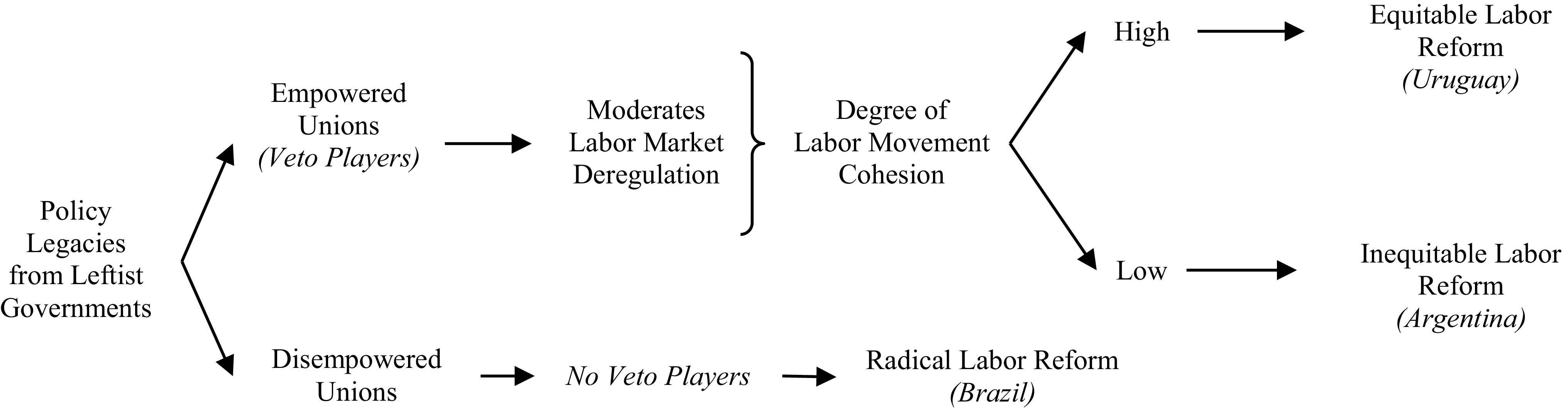
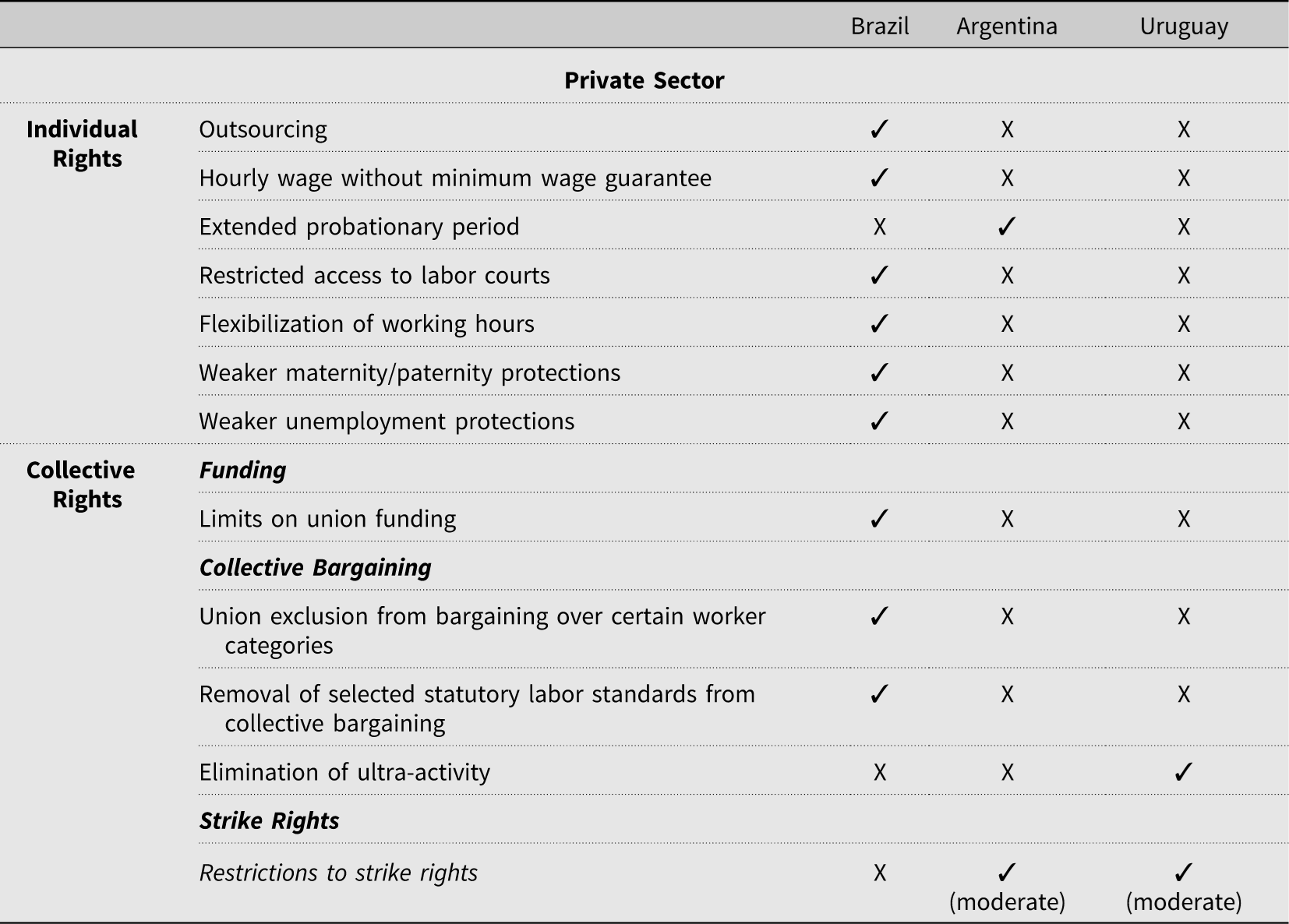
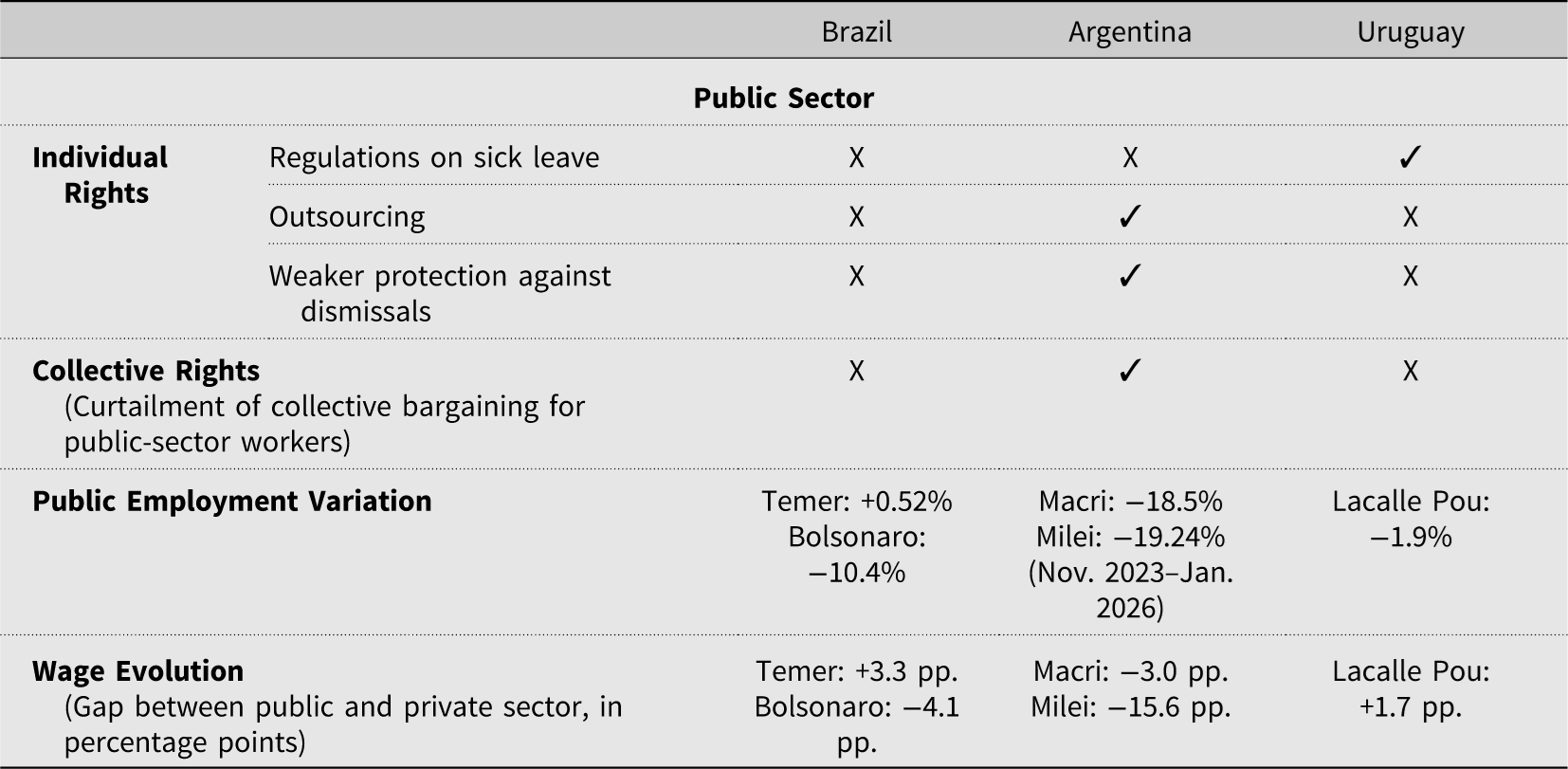

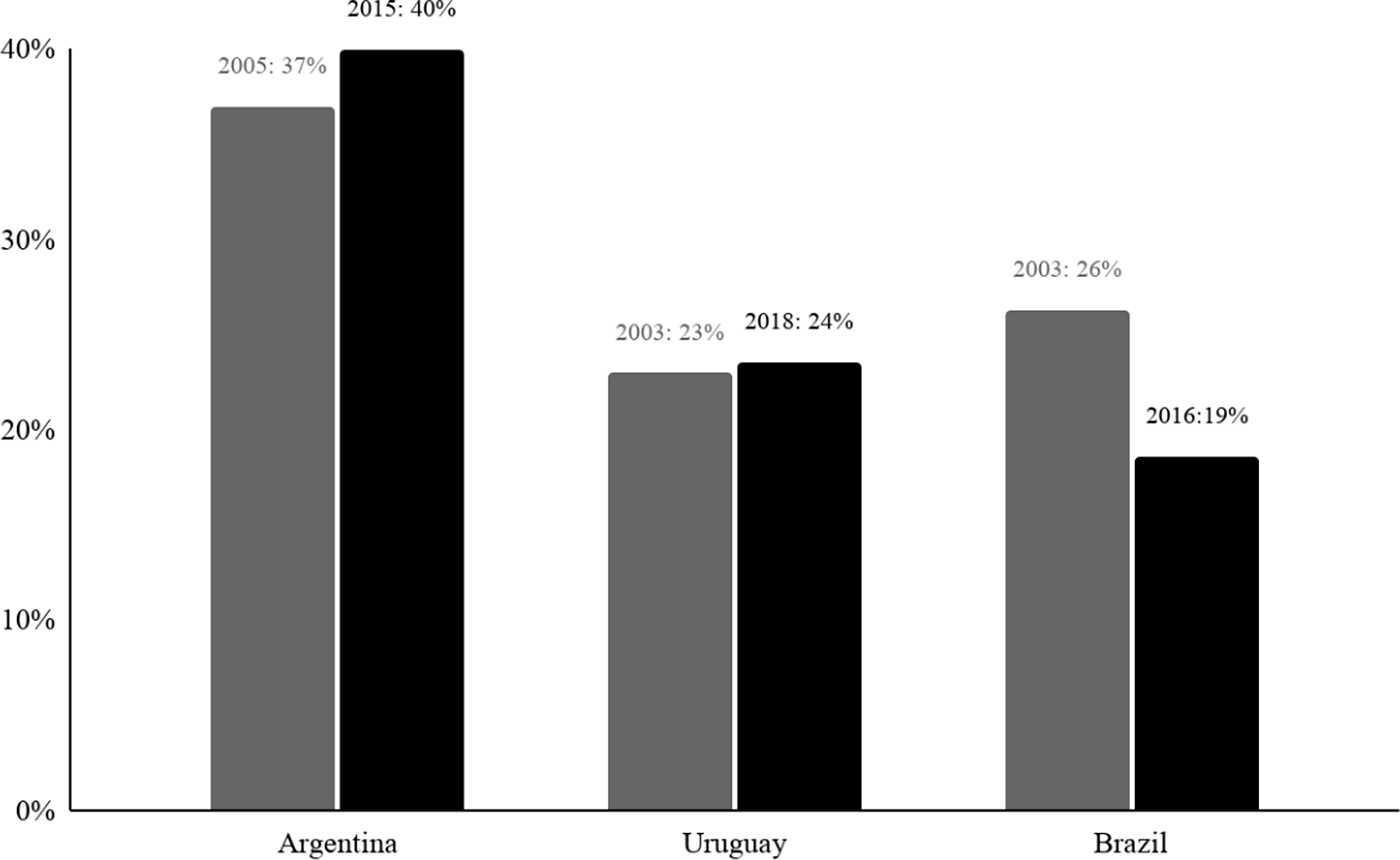
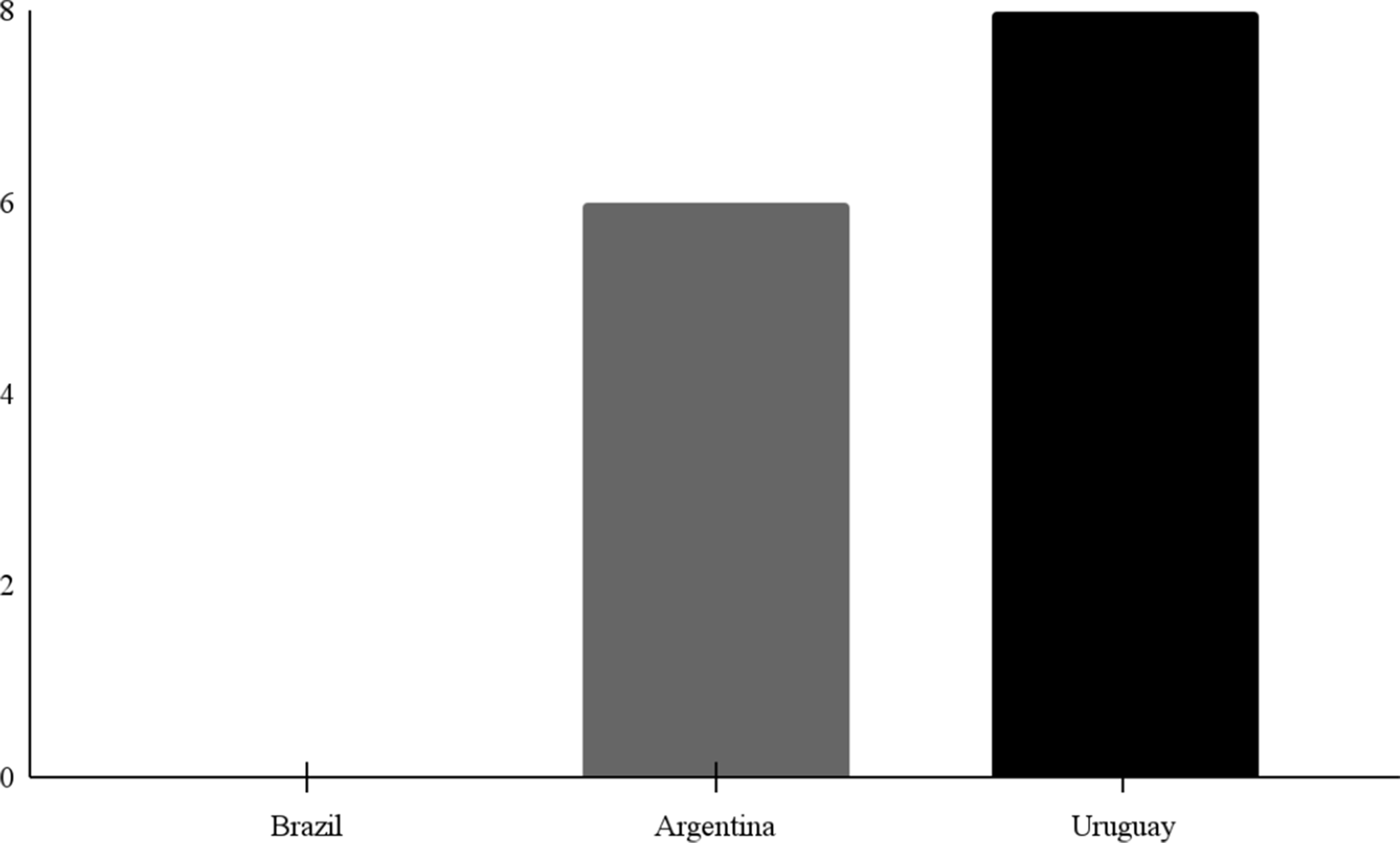
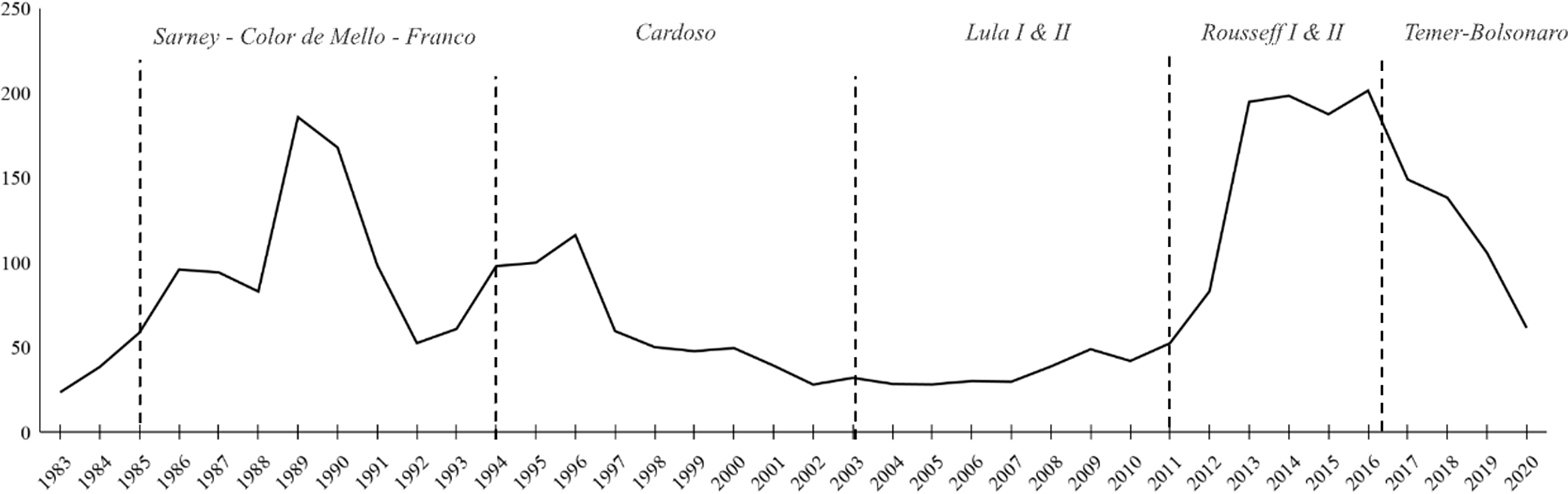
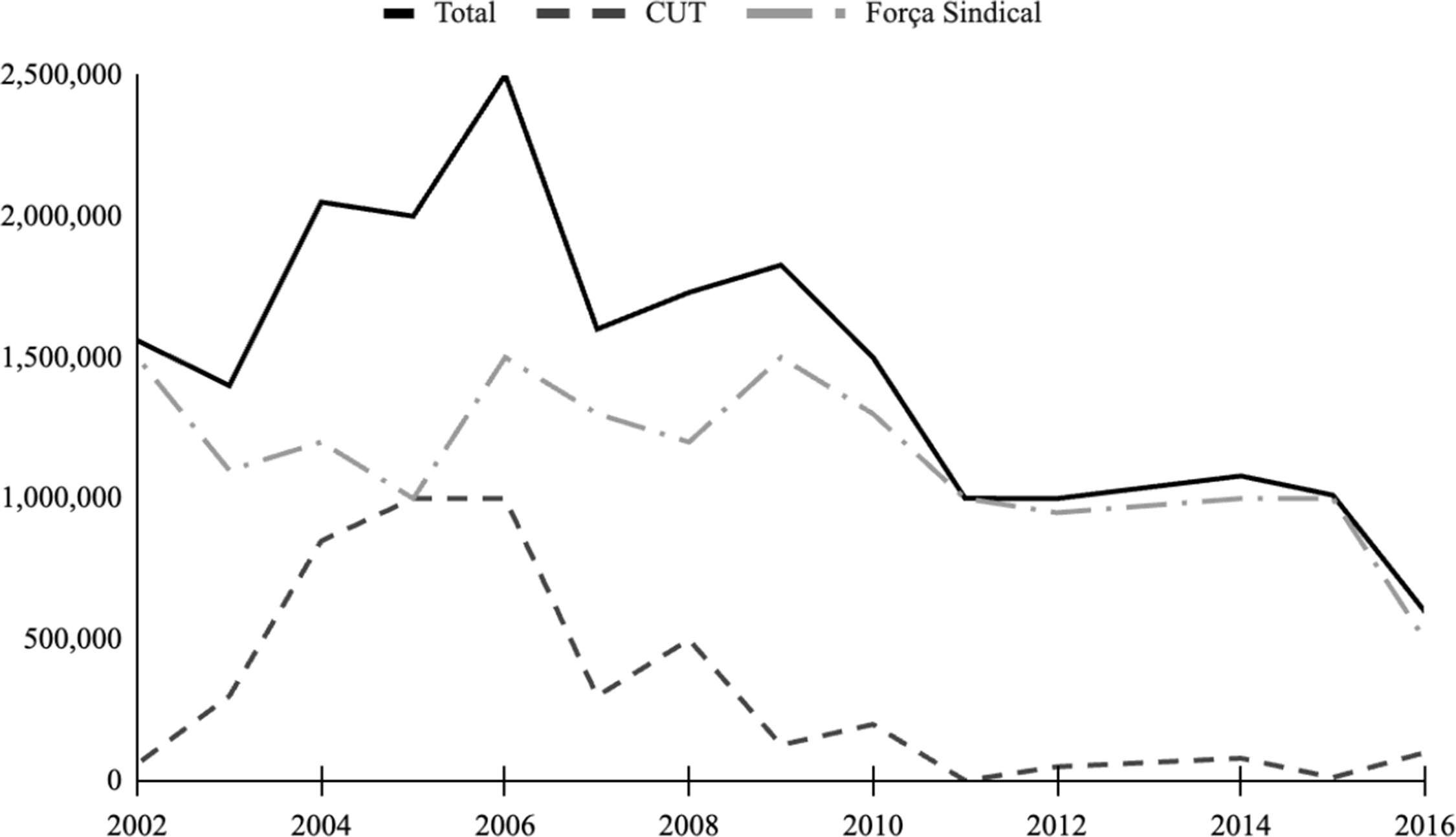
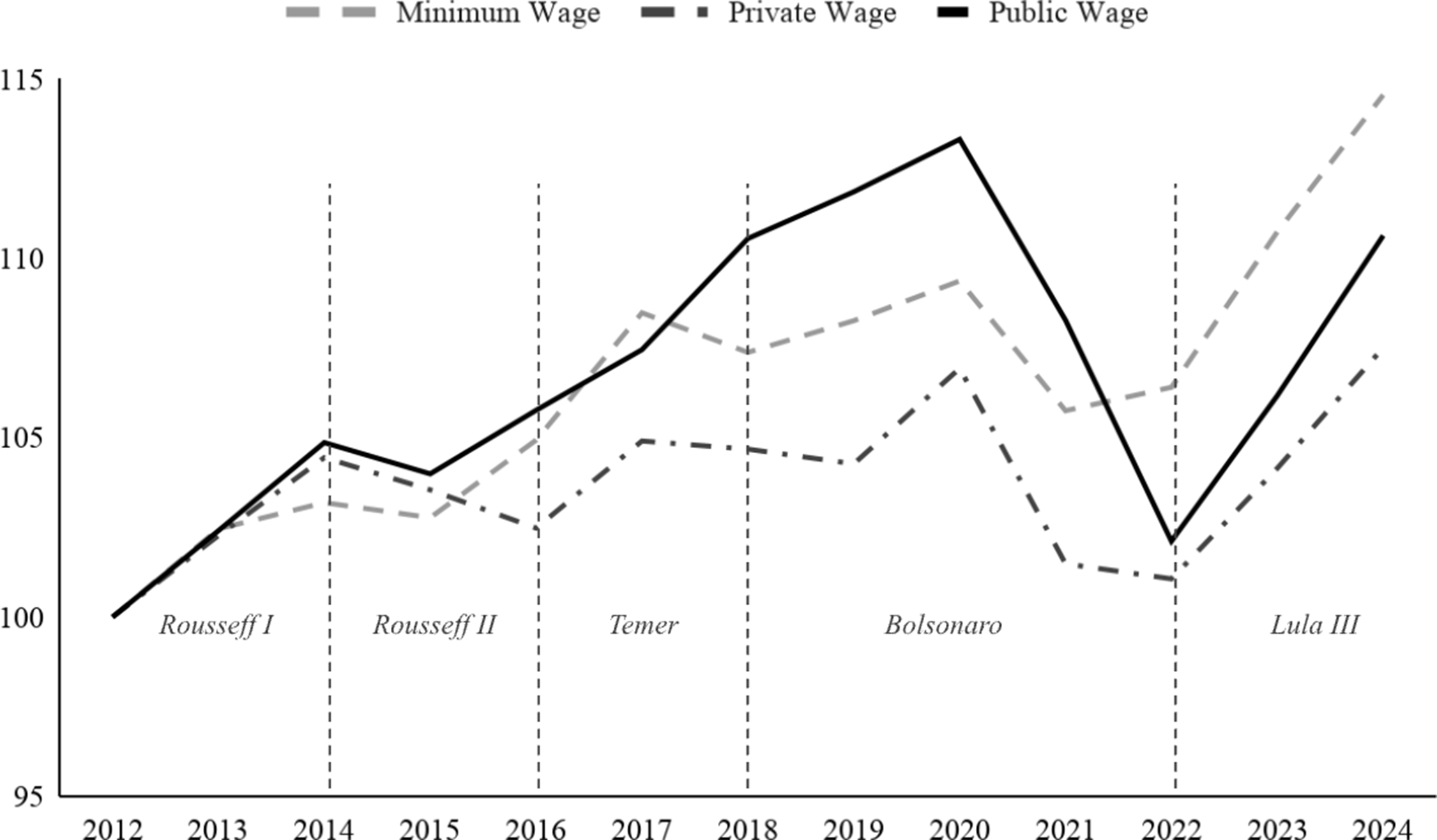
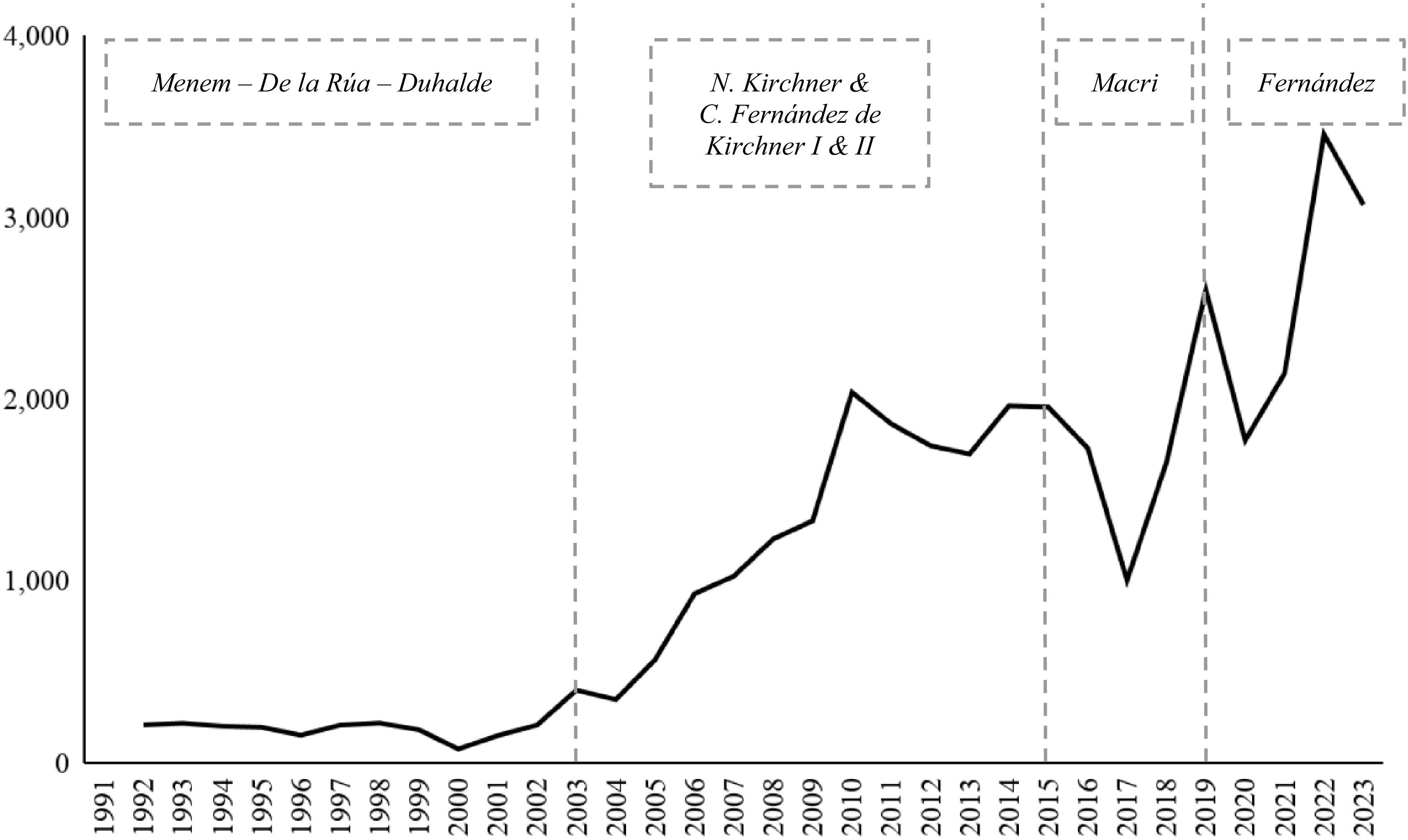
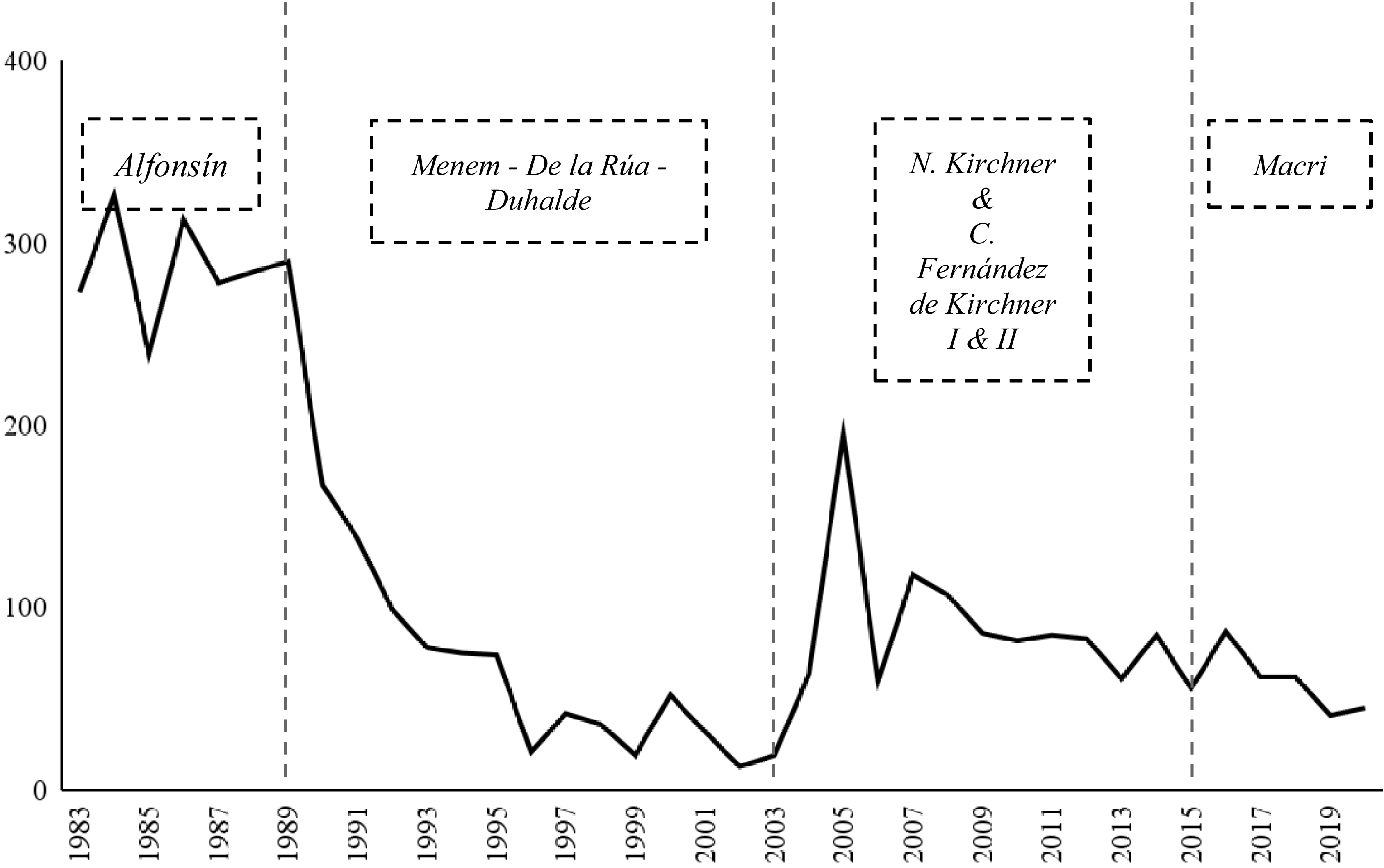
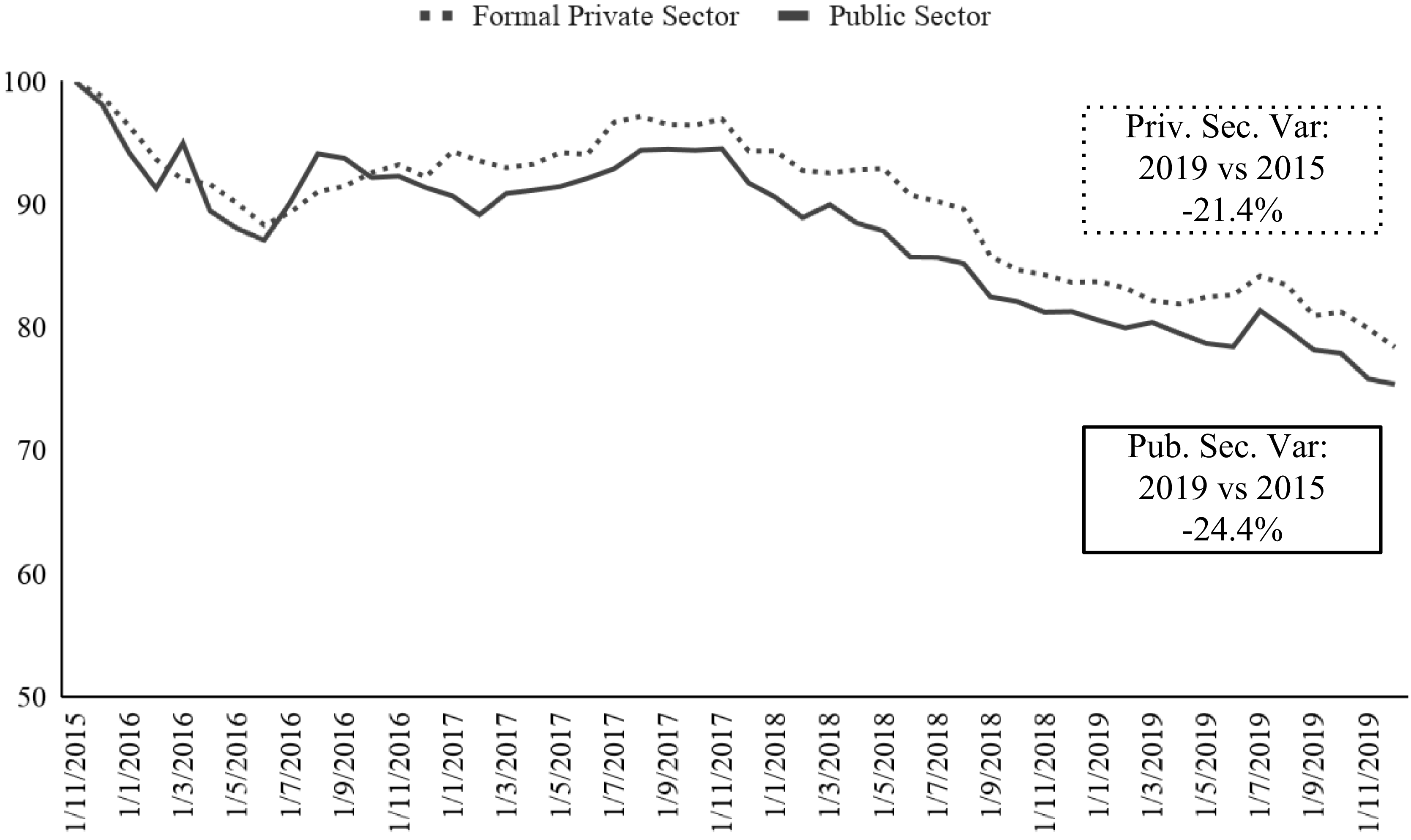
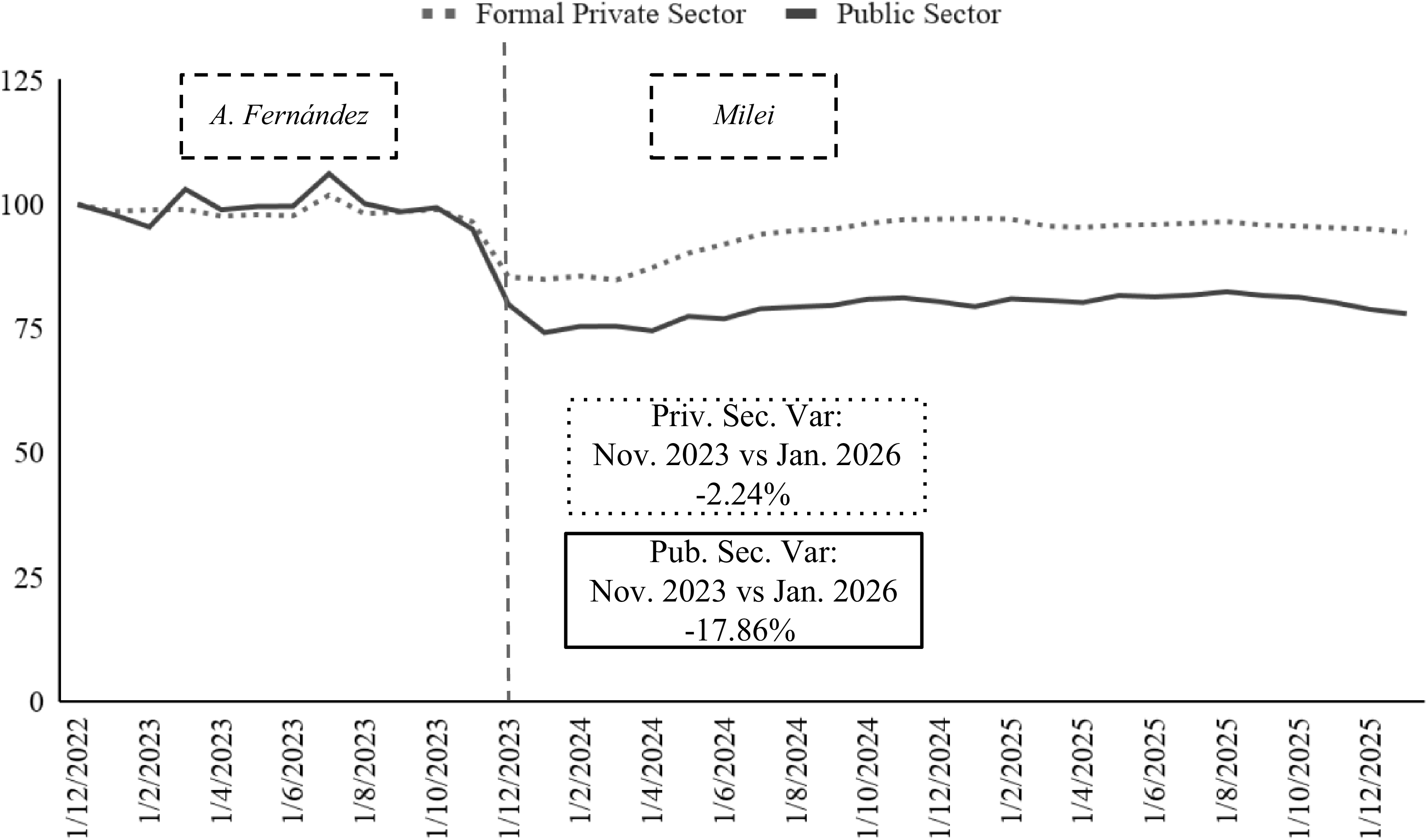
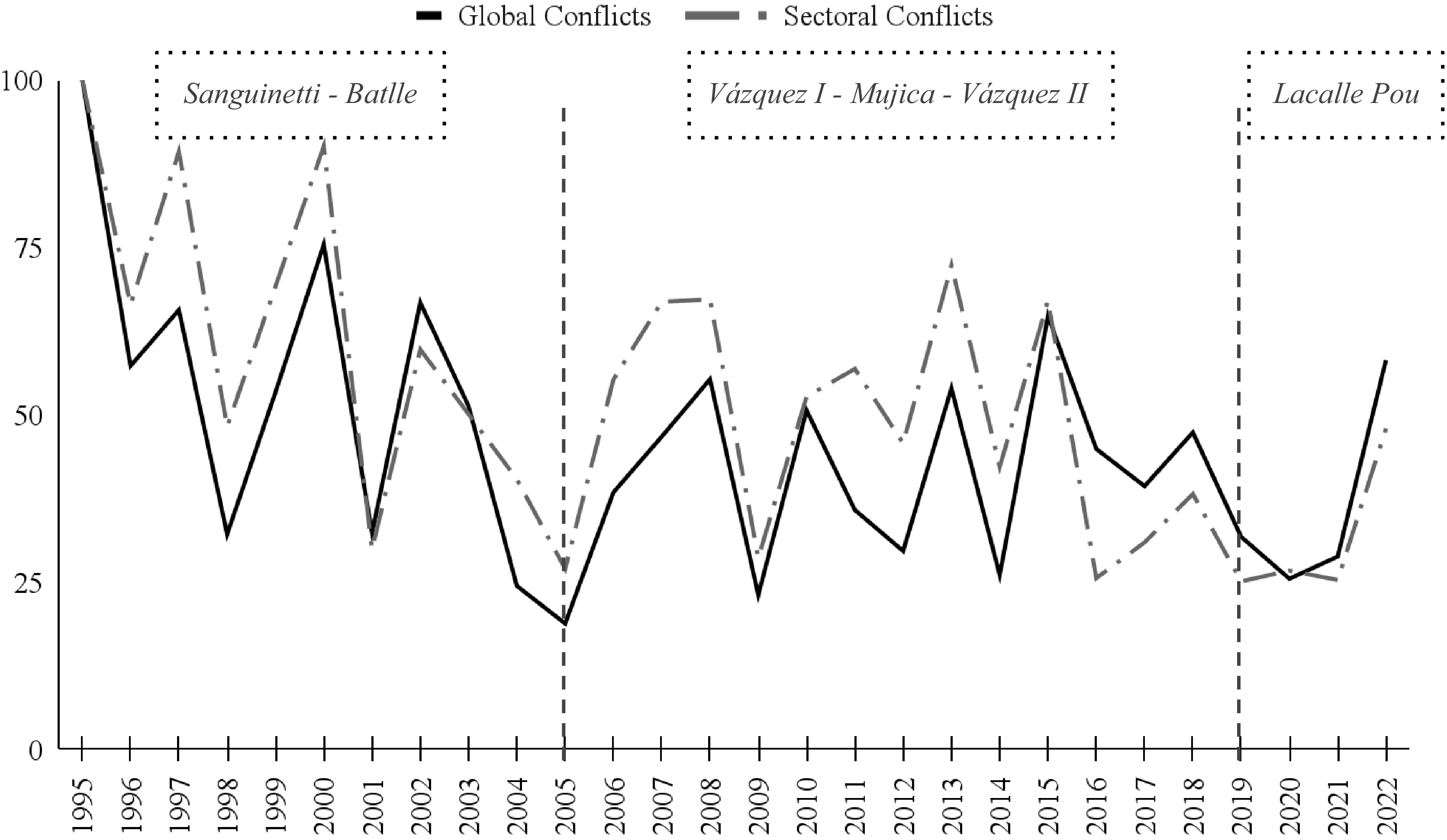
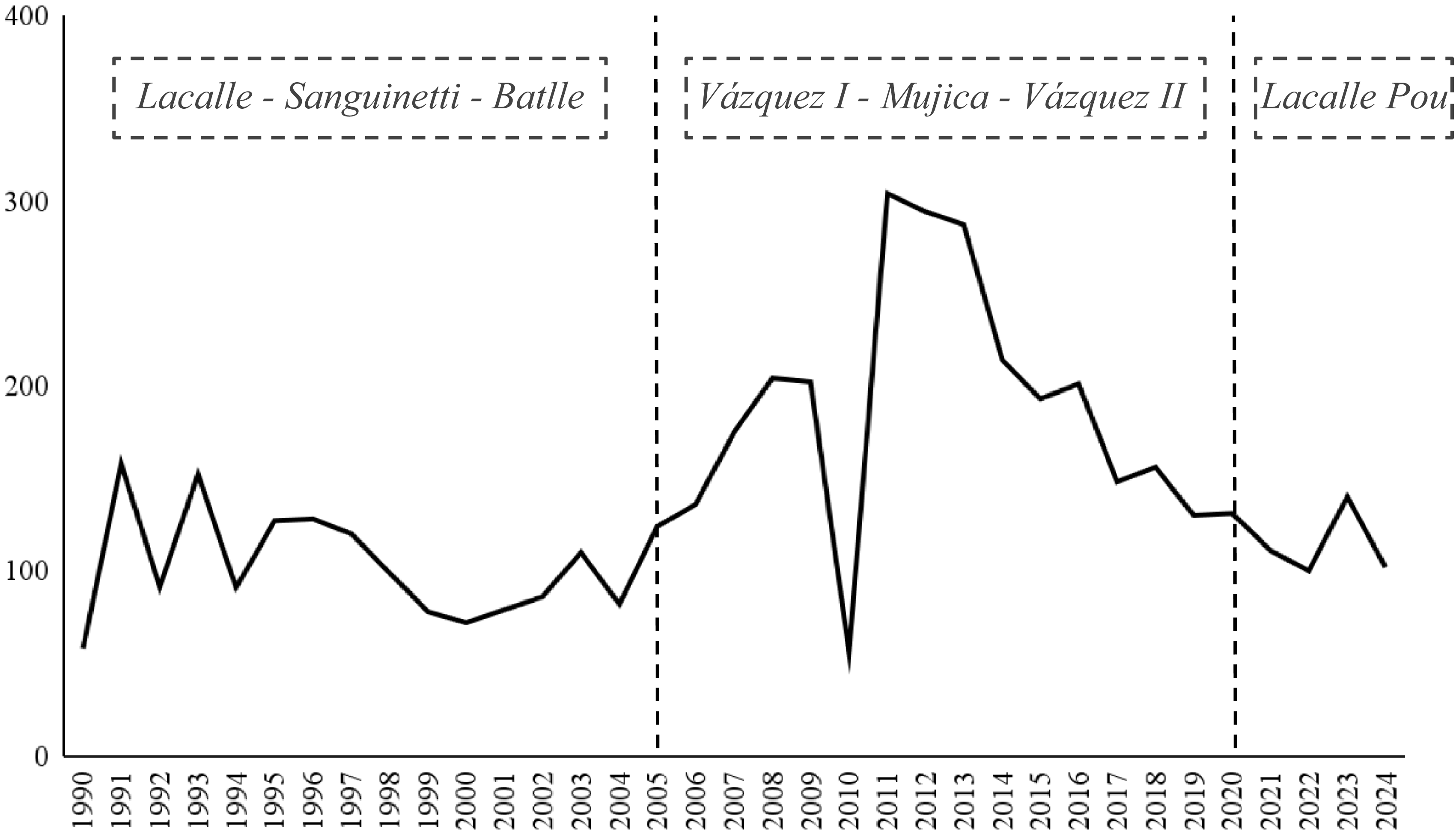
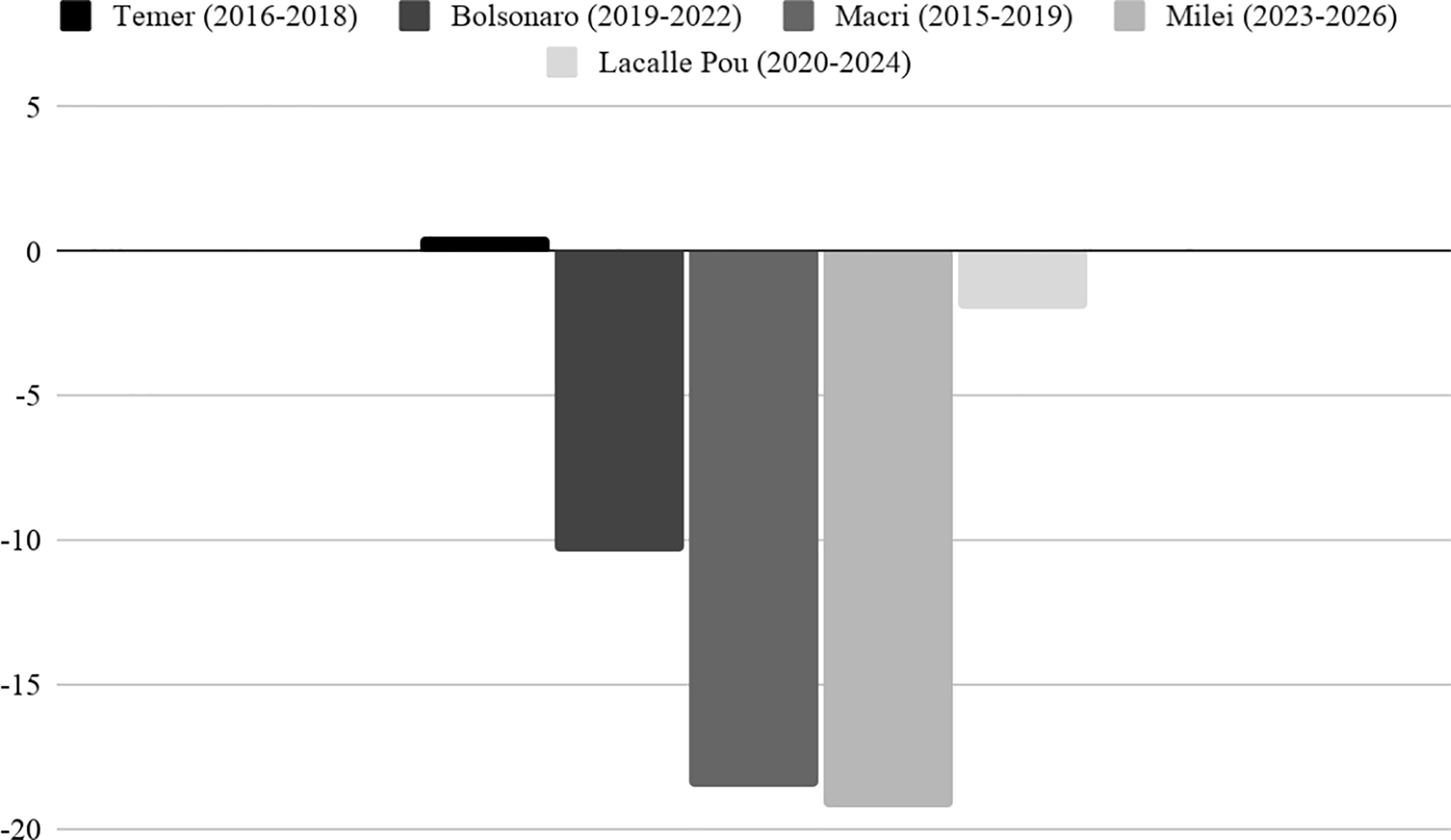
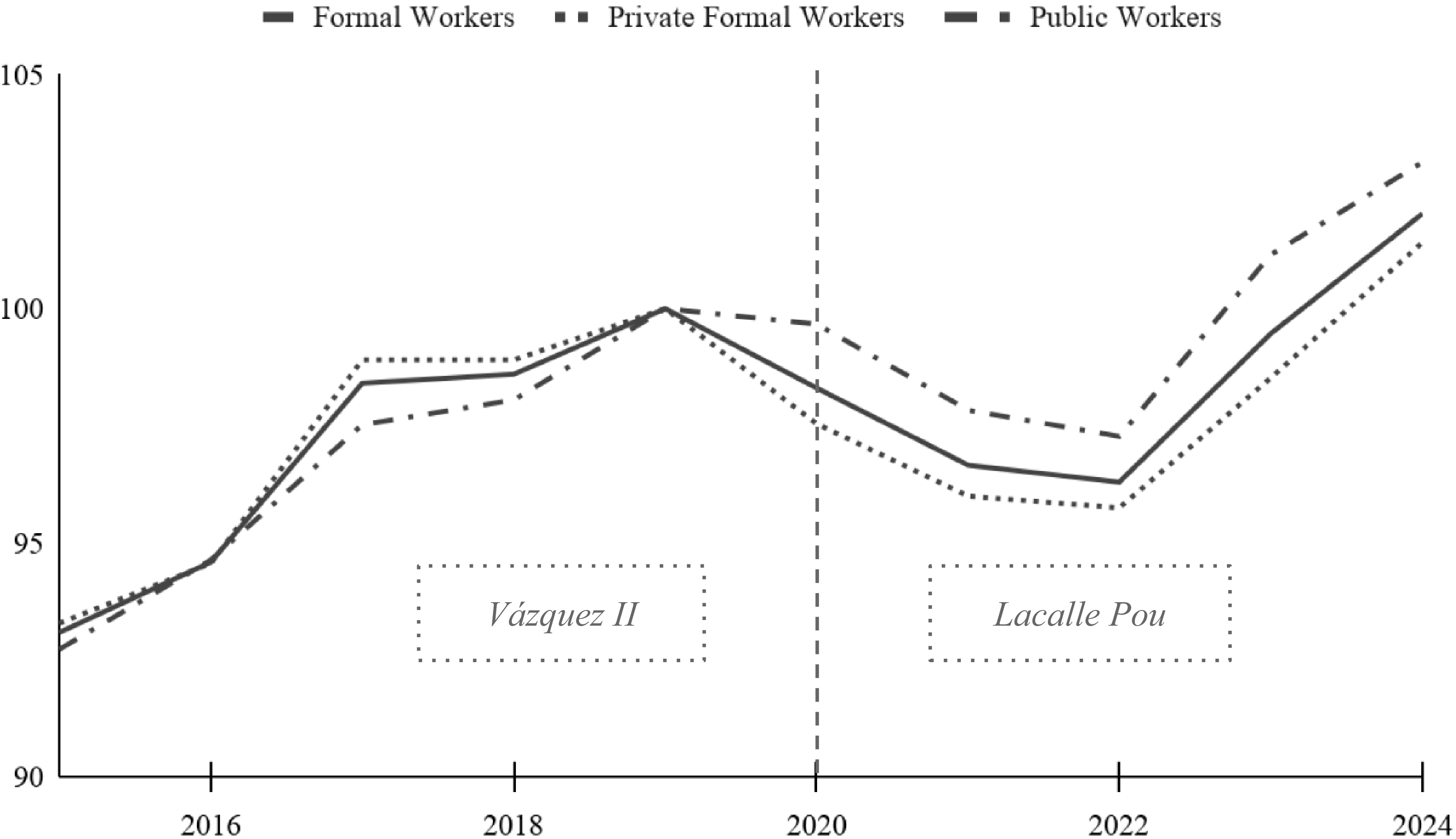


 Open access

