Introduction
Communication disability is an impaired ability in sending and receiving verbal, nonverbal and written information that has functional consequences for the person with the impairment (Owens, Farinella, & Metz, Reference Owens, Farinella and Metz2015). Acquired communication disabilities such as aphasia and dysarthria and cognitive communication disorders may occur secondary to acquired brain injuries (ABI) including stroke and traumatic brain injury (Owens et al., Reference Owens, Farinella and Metz2015). Acquired communication disabilities not only impact on the person themselves, but also their family members and significant others, including children (Grawburg, Howe, Worrall, & Scarinci, Reference Grawburg, Howe, Worrall and Scarinci2014). It is therefore important to consider the needs of children of people with acquired communication disability (PwCD) and the role a speech-language pathologist (SLP) may have in addressing these needs.
Parental ABI (both with and without communication disability) may lead to increased stress, mental health issues, distress and behavioural problems in children (Coppock, Ferguson, Green, & Winter, Reference Coppock, Ferguson, Green and Winter2018; Redolfi et al., Reference Redolfi, Bartolini, Gugliotta, Maietti, Pietrapiana, Sapienza and Mazzucchi2017; Ryan & Pitt, Reference Ryan and Pitt2018; Visser-Meily et al., Reference Visser-Meily, Post, Meijer, Van De PortMaas, Maas and Lindeman2005). A longitudinal study (Visser-Meily et al., Reference Visser-Meily, Post, Meijer, Van De PortMaas, Maas and Lindeman2005) of 82 children (aged 4–18) whose parents experienced a stroke found that 54% of children displayed depression and/or behavioural problems immediately following the event, and 29% displayed ongoing problems 12 months post-event. Although one-quarter of the included patients had communication problems (Visser-Meily et al., Reference Visser-Meily, Post, Meijer, Van De PortMaas, Maas and Lindeman2005), the type and severity were not reported. A more recent study (Redolfi et al., Reference Redolfi, Bartolini, Gugliotta, Maietti, Pietrapiana, Sapienza and Mazzucchi2017) into the impact of moderate–severe parental ABI (48% had language or communication deficits) showed that 63% of 35 children (aged 3–14 years) displayed signs of emotional distress. Coppock et al. (Reference Coppock, Ferguson, Green and Winter2018) also found that children (aged 8–16) described feelings of stress, anxiety and loss and expressed a change in their family roles after parental stroke. Such feelings of fear, anxiety and stress were echoed by a young child whose mother suffered a stroke that resulted in mild aphasia (Ryan & Pitt, Reference Ryan and Pitt2018). Although evidence of the impacts of parental ABI on children of PwCD is limited by small sample sizes, variability in severity and unclear reporting of the nature of communication disability, literature suggests that children’s well-being is at risk (Tiar & Dumas, Reference Tiar and Dumas2015).
SLPs use a biopsychosocial approach (i.e., the International Classification of Functioning, Disability and Health (ICF); World Health Organisation (WHO, 2001) to providing intervention to PwCD (Threats, Reference Threats2008). Effort to support families in terms of the impact of acquired communication disabilities on family units is an important corollary of a biopsychosocial approach. SLPs play a large role in the rehabilitation of PwCD and their roles are likely to extend to a family’s access to health information and counselling-type support where needed (Baker, Worrall, Rose, & Ryan, Reference Baker, Worrall, Rose and Ryan2019; Northcott, Simpson, Moss, Ahmed, & Hilari, Reference Northcott, Simpson, Moss, Ahmed and Hilari2018; Ryan, Bohan, & Kneebone, Reference Ryan, Bohan and Kneebone2019). However, it is unknown how the SLP role in this area currently extends to addressing the needs of children of PwCD. Thus, the current practice of SLPs in this area should be a focus of research.
There is emerging evidence that SLPs face barriers in addressing the needs of children of PwCD (for both adult and young children). Such barriers include lack of contact (Hallé, Le Dorze, & Mingant, Reference Hallé, Le Dorze and Mingant2014), lack of time and the perception that their involvement in rehabilitation will place additional burden (Hallé et al., Reference Hallé, Le Dorze and Mingant2014; Manders, Marien, & Jansse, Reference Manders, Marien and Jansse2011). However, these studies had a broader focus on significant others as a whole and did not specifically investigate the inclusion of young children in rehabilitation. To date, studies in this area (e.g., Hallé et al., Reference Hallé, Le Dorze and Mingant2014; Manders et al., Reference Manders, Marien and Jansse2011) have not utilised behaviour-change theories to inform study design or interpret findings. The use of behaviour-change theory is important to identify factors influencing behaviour, determine causal pathways to changing behaviours and inform the design of tailored strategies to improve implementation (Baker et al., Reference Baker, Camosso-Stefinovic, Gillies, Shaw, Cheater, Flottorp and Robertson2010; Eccles et al., Reference Eccles, Grimshaw, Johnston, Steen, Pitts, Thomas and Walker2007; Michie et al., Reference Michie, Johnston, Abraham, Lawton, Parker, Walker and Psychological Theory2005). Hence, a theory-informed understanding of the factors influencing SLPs’ practice is necessary (Baker et al., Reference Baker, Camosso-Stefinovic, Gillies, Shaw, Cheater, Flottorp and Jäger2015; Michie, Atkins, & West, Reference Michie, Atkins and West2014).
The use of a behaviour change framework such as COM-B can assist in this process of identifying factors influencing clinicians’ behaviour (Michie et al., Reference Michie, Atkins and West2014). COM-B explores Capability, Opportunity and Motivation as necessary conditions for volitional behaviour to occur (Michie, van Stralen, & West, Reference Michie, van Stralen and West2011; Nilsen, Reference Nilsen2015). Capability refers to an individual’s psychological and physical capacity for achieving behaviour, including knowledge and skills (Michie et al., Reference Michie, van Stralen and West2011). Opportunity includes factors that prompt behaviour and make it possible (e.g., physical environment, context, resources and social influences) (Michie et al., Reference Michie, van Stralen and West2011). Motivation comprises reflective and automatic processes (e.g., intentions and emotions) (Michie et al., Reference Michie, van Stralen and West2011). COM-B can be used to identify factors that act as barriers or facilitators in achieving desired behaviour (e.g., Barker, Atkins, & de Lusignan, Reference Barker, Atkins and de Lusignan2016; Handley et al., Reference Handley, Harleman, Gonzalez-Mendez, Stotland, Althavale, Fisher and Rios2016).
This study aimed to explore Australian SLPs’ current practices in working with young children under the age of 18 years, following parental acquired communication disability. Specifically, we aimed to determine SLPs’ practices in providing information and/or counselling to young children, the perceived barriers and facilitators using the COM-B and identify SLPs’ perceived needs in this area.
Methods
Design
An online survey design was employed and ethical approval gained through The University of Queensland Heath and Behavioural Sciences, Low and Negligible Risks Ethics Sub-Committee (approval number: 2017002123). The online survey was designed in accordance with the Checklist for Reporting Results of Internet E-Surveys (CHERRIES) to support transparent survey construction and reporting (Eysenbach & Schonlau, Reference Eysenbach and Schonlau2004).
Participants
Participants were eligible if they were a current SLP working in Australia in the area of adult acquired communication disability.
Survey development
The survey was constructed by the research team using the online survey tool SurveyMonkey (SurveyMonkey Inc., 2018). The survey consisted of four sections: demographic information, providing information and education, providing support and/or counselling and barrier statements according to the COM-B framework. In total the survey consisted of 38 questions over 12 pages and took approximately 20 min to complete. All questions were voluntary and respondents were unable to change their responses once submitted. A full copy of the survey is available in the supplementary materials.
Section 1 of the survey collected demographic information including age, gender, years of experience working as an SLP with PwCD, highest level of qualification, location and setting of current workplace and dominant caseload. Participants were asked how many of their clients in the last six months had had children under the age of 18 years old living in the same household and the ages of these children.
Participants were also asked to describe their current practice in providing (a) information and education (Section 2 of survey) and (b) counselling and/or support to children (Section 3 of survey) of PwCD in an open-ended format. This was followed up with further questions rating participants’ knowledge and confidence in these areas of practice on a five-point rating scale ranging from ‘Very limited/Very unconfident’ to ‘Very good/Very confident’. Participants rated the frequency of their practice in these areas on a five-point scale ranging from ‘Never’ to ‘Very frequently’ and then listed current barriers and facilitators to their practice in these areas in an open-ended format.
Section 4 of the survey was designed to identify specific barriers and facilitators according to the COM-B framework (Michie et al., Reference Michie, van Stralen and West2011). Participants selected their level of agreement with a set of statements on a five-point scale, ranging from ‘Strongly agree’ to ‘Strongly disagree’. Statements related to each of the three areas of the COM-B model, Capability, Opportunity and Motivation (e.g., ‘I make plans to provide information and education/counselling and/or support to children of people with communication disability’ (Motivation)). There were three questions relating to Capability, three questions relating to Opportunity and four questions relating to Motivation, with questions ordered randomly to reduce order bias.
The survey was piloted in two rounds, firstly, by four final-year undergraduate SLP students and then two SLPs experienced in working with PwCDs. After the first round of piloting minor changes was made to the wording of some questions, some questions were removed, and additional questions were added to improve the clarity of the questions and reduce the survey length. No additional changes were required after the second round of piloting.
Procedure
Participants were recruited through convenience sampling with the survey being distributed on social media (Facebook and Twitter), through email groups and newsletters (e.g., Speech Pathology Email Chat, SPECS, an email-based forum with >1500 SLPS working with adults, 2016; the Australasian Society for the Study of Brain Impairment) and an Australian speech pathology conference. Further participants were recruited by snowball sampling (Sedgwick, Reference Sedgwick2013) with participants being asked to forward the survey onto other eligible SLPs. Participants were required to read the participant information sheet and consent form which was attached to the SurveyMonkey online survey and provide consent prior to commencing the survey questions. Participants were advised the survey was voluntary on the survey welcome page. Participants’ responses were not identifiable. There were two rounds of data collection for this survey. The first occurred in the middle of 2018 and the second commenced in November 2018. This first phase of data collection resulted in 26 responses. No incentives to participants were used during this first phase. Due to the lower response rate in round one, a monetary incentive was used for the second phase. Participants were provided an opportunity to enter a draw to win a voucher to the value of $100 AUD upon completion of the survey. The same survey content and link were used in both data collection phases. Hence, the data reported includes all responses collected between the 7 June 2018 and 10 April 2019.
Data analysis
Surveys were included for analysis if participants answered the questions in the demographic information section, as they reported on their service provision for the target population. Determination of respondents’ IP address was captured by SurveyMonkey. The researchers allowed repeated use of IP addresses provided that the demographic information provided was different, as SLPs often share workplace computers. Data were exported from SurveyMonkey into a Microsoft Excel file for descriptive analysis. Data from the demographic section and questions that used Likert ratings scales were analysed using frequency counts and percentage calculations. For Likert rating scales, responses were split into groups, for example, grouping ‘Very limited’ and ‘Limited’.
Responses to open-ended questions were analysed using qualitative conventional content analysis (Hsieh & Shannon, Reference Hsieh and Shannon2005). Responses were first read as a whole and then read word by word to derive codes that captured key thoughts (Hsieh & Shannon, Reference Hsieh and Shannon2005). These codes were then placed into categories that linked related codes (Hsieh & Shannon, Reference Hsieh and Shannon2005). As a further step, these categories were mapped onto the COM-B model so that barriers and facilitators could be identified as being related to the areas of Capability, Opportunity or Motivation (Michie et al., Reference Michie, van Stralen and West2011). This coding process was completed by author KT and checked by the research team.
Similar to Dyson et al (Reference Dyson, Lawton, Jackson and Cheater2013), an ‘overall agreement’ score was calculated for each COM-B domain by calculating the average ratings of all statements per domain (i.e., mean overall agreement/disagreement with statements relating to each area of the COM-B). Responses of ‘Strongly agree’ and ‘Agree’ were grouped as ‘Agreement’ and responses ‘Strongly disagree’, ‘Disagree’ and ‘Neutral’ were grouped ‘Disagreement’ for this component.
Results
In total 98 participants began the survey. Following application of the inclusion criteria, 76 surveys were included in analysis, with 53 participants completing all questions (completion rate = 70.67%).
Demographic information
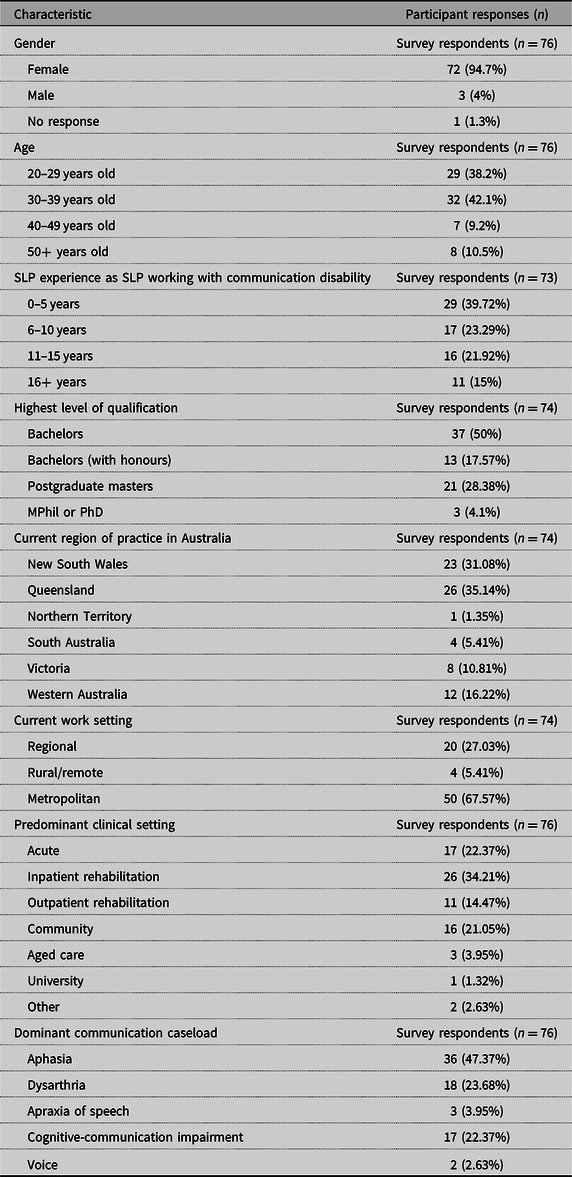
Participant demographic information is shown in Table 1. The majority of participants were females aged between 20 and 39 years with over 5 years’ experience working with PwCD. The predominant clinical setting for most respondents was ‘inpatient rehabilitation’, and most reported ‘aphasia’ as their dominant communication caseload.
Participants’ demographic information

Current practice and perceived needs
The majority of SLPs (n = 61; 83.56%) reported that they had seen PwCD who had children under the age of 18 years in the past 12 months. Age ranges of the children seen during this period included 0–3 years (seen by 34% of SLPs), 4–6 years (seen by 38% of SLPs), 7–12 years (seen by 45% of SLPs) and 13–17 years (seen by 72% of SLPs). Most SLPs ‘never’ or ‘rarely’ provided information and education to the children of PwCD (n = 44; 75.86%). Participants’ descriptions of their current practice in providing information and education to children of PwCD most frequently included providing education either directly (n = 20) to the child or indirectly through the PwCD or significant other (n = 13), providing communication partner training (n = 9) or ad hoc education or information when children were available (n = 7).
Similarly, the majority of participants reported they ‘never’ or ‘rarely’ provided support and/or counselling to children of PwCD (n = 45; 83.33%). Participants’ descriptions of current practice in providing support and/or counselling to children of PwCD most frequently included providing counselling to the child directly (n = 5), providing collaborative support alongside another health professionals such as social work (n = 4), referring the child to another service (n = 4) or providing informal support (n = 2). Approximately 75% of participants (n = 57) indicated that they believed there is a need to improve the services provided to children of PwCD. These participants described the needs as improved resources for children (n = 8), better access to children (n = 2), provision of more holistic services to the PwCD (n = 2), provision of education and support (n = 6) and more focus on the needs of the child (n = 8). Participants who were unsure as to whether services needed to be improved described their reasons for this as limited awareness of services currently provided to children (n = 4), challenges accessing children (n = 1), limited prevalence of PwCD who have children (n = 5), families not needing improved services (n = 1) and that they currently provide adequate services (n = 1).
Providing information and education: Barriers & facilitators
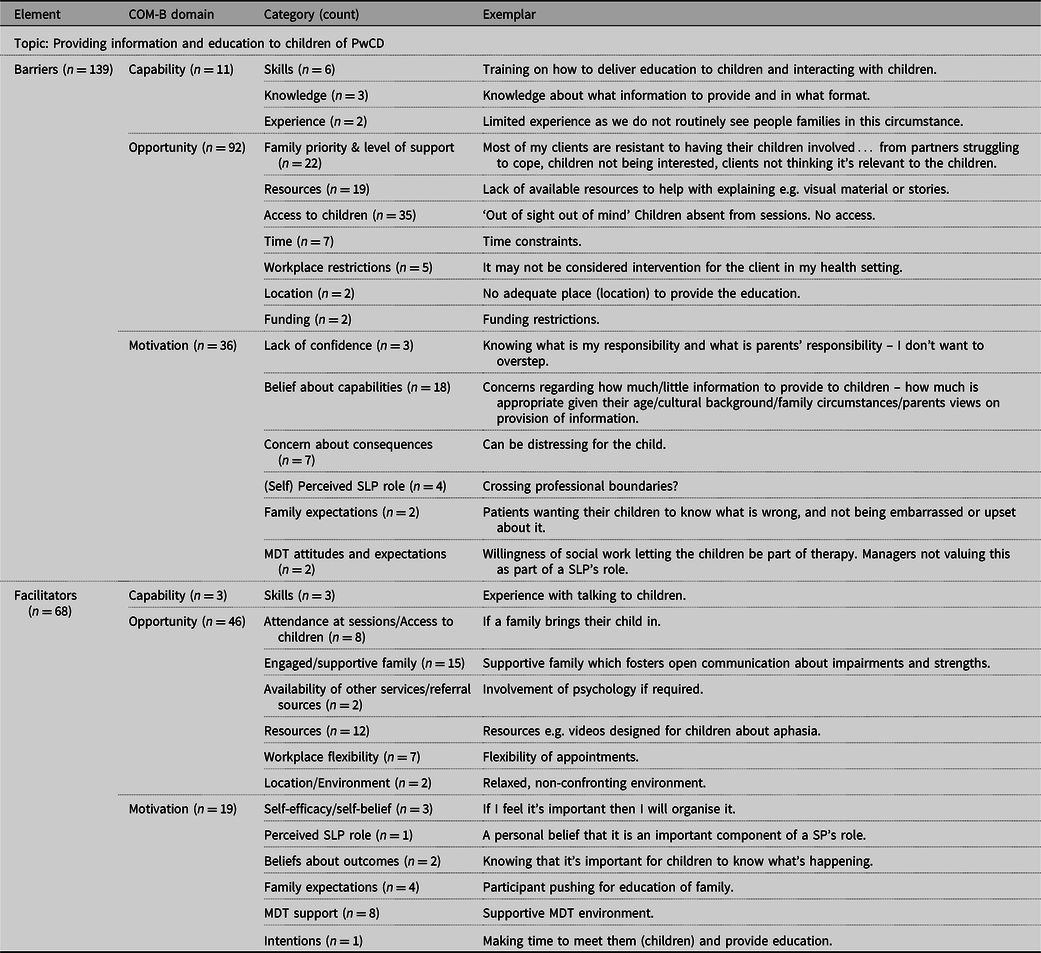
Responses to the open-ended questions about barriers (n = 139) and facilitators (n = 68) to providing information and education to the children of PwCD were mapped to the COM-B model and are presented in Table 2. The most commonly identified barriers related to the ‘Opportunity’ domain, with access to the children being the most frequently reported barrier, followed by the family’s priority. One participant explained how the lack of access to the children resulted in a lack of attentiveness about the need to provide education to this population, describing it as ‘Out of sight, out of mind’. ‘Motivation’ barriers were reported less commonly but frequently related to a lack of SLP self-confidence in providing education and information to this population, with some questioning how much information was appropriate. Some SLPs also reported concerns about the boundaries of their professional role and didn’t want to be perceived as ‘overstepping’ parents’ or other health professionals’ roles. This was exemplified by one participant who stated, ‘I find most of my clients are resistant to having their children involved. I always offer for them to be involved and provide specific resources but so far have not had a family really take this on board’.
Barriers and facilitators to SLP provision of information and education mapped to the COM-B

Note. Counts are provided in brackets
‘Opportunity’ facilitators were reported most commonly, related to family support and engagement, appropriate educational resources and access to children in appointments. An additional common facilitator was a supportive multidisciplinary team, related to the ‘Motivation’ domain of the COM-B.
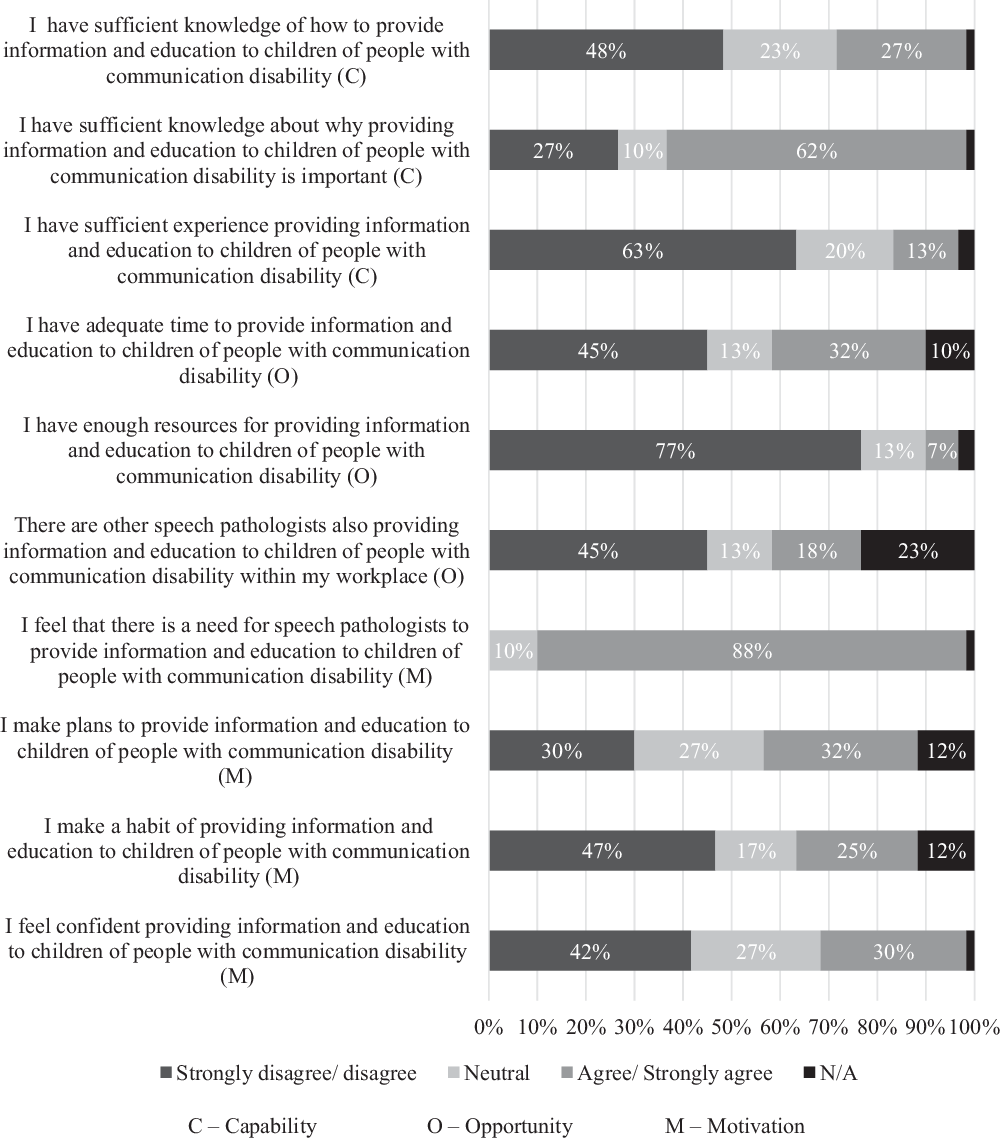
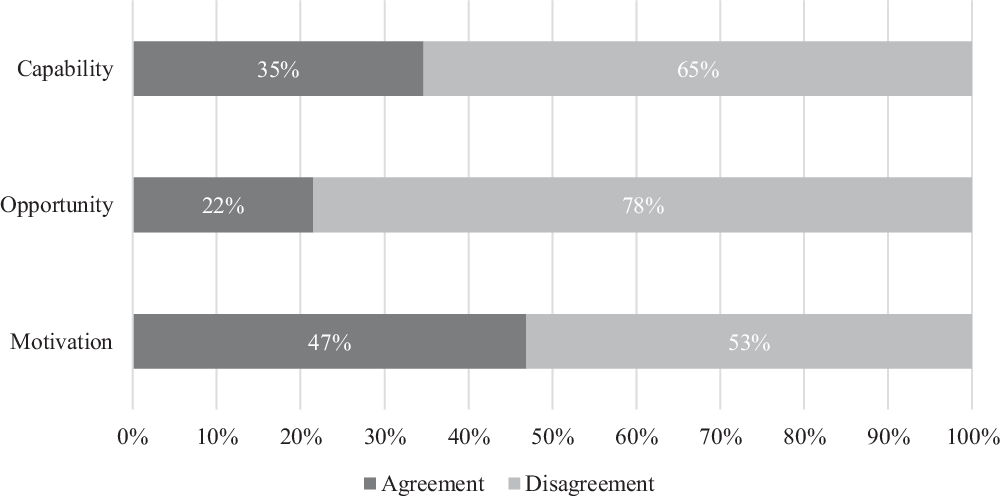
Results of responses to the COM-B barrier and facilitator statements are displayed in Fig. 1. Most participants agreed there is a need to provide information and education to children (‘Motivation’ domain) and agreed they had sufficient knowledge about why it is important to do so (‘Capability’ domain). However participants disagreed most strongly with statements related to resources (‘Opportunity’ domain) and experience (‘Capability’ domain). Participants’ overall agreement with statements relating to each COM-B domain (i.e., mean domain agreement) is presented in Fig. 2, showing disagreement for all domains with the ‘Opportunity’ domain having the highest rate of disagreement (78%).
SLP practice in providing information and education to children of PwCD: Agreement with individual COM-B statements.

SLP practice in providing information and education to children of PwCD: Overall agreement with COM-B domains.

Providing support and/or counselling: Barriers & facilitators
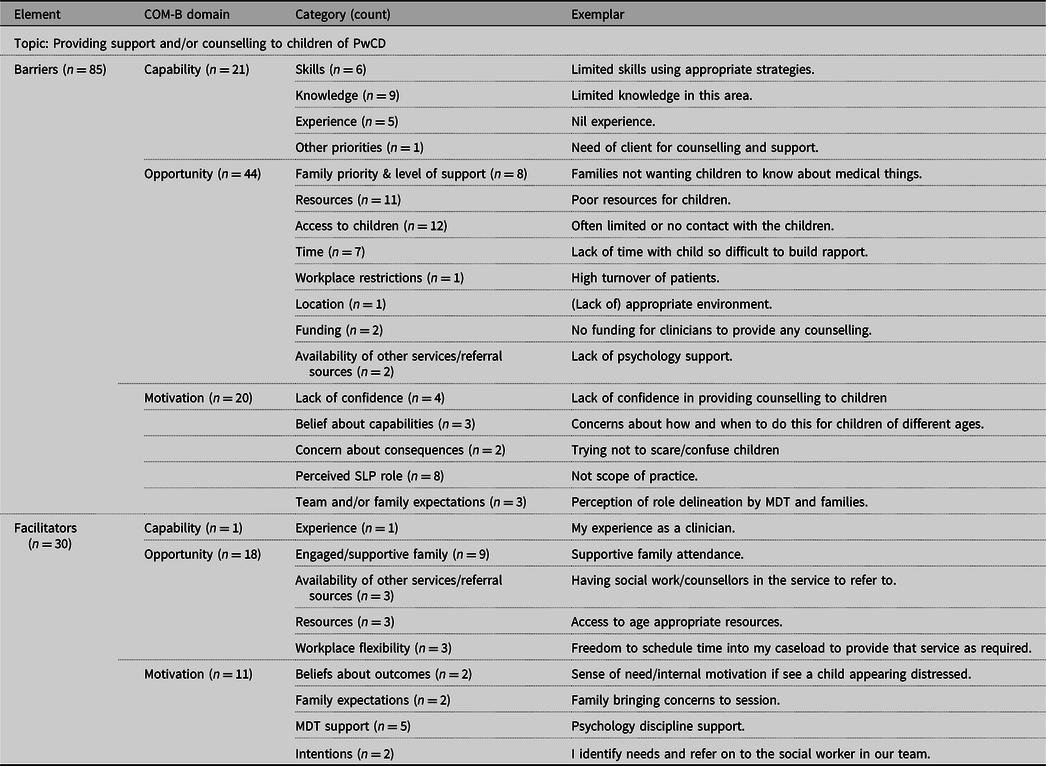
Responses to the open-ended questions about barriers (n = 85) and facilitators (n = 30) to providing support and/or counselling to children of PwCD were mapped to the COM-B model and are presented in Table 3. The most commonly identified barriers related to ‘Opportunity’, with access to children being the most frequently reported barrier, followed by resources. In addition ‘Opportunity’ barrier was a perceived lack of support by families, with some ‘Families refusing assistance and not wanting children to “know too much”’. Participants also identified a range of ‘Capability’ (e.g., limited knowledge and skills) and ‘Motivation’ barriers. Similar to the ‘education and information’ practice, SLPs expressed concerns about their role delineation in providing support or counselling to children. Several SLPs stated that counselling was not within their ‘scope of practice’ or that they were uncertain about their role: ‘Is it in our scope of practice?’. In addition, several SLPs stated that their practice was inhibited by organisation constraints such as a ‘workplace belief that this is not part of my role’.
Barriers and facilitators to SLP provision of support and/or counselling mapped to the COM-B

Facilitators to practice related to the ‘Opportunity’ domain most frequently and included family support and engagement and availability of services to refer onto as needed. This was illustrated by one participant who stated their practice was facilitated by ‘Family bringing concerns to (the) session and talking through emotional difficulties related to communication concerns; Having psychologists or social workers on site to talk to family’. Few ‘Motivation’ (n = 11) or ‘Capability’ (n = 1) facilitators were reported.
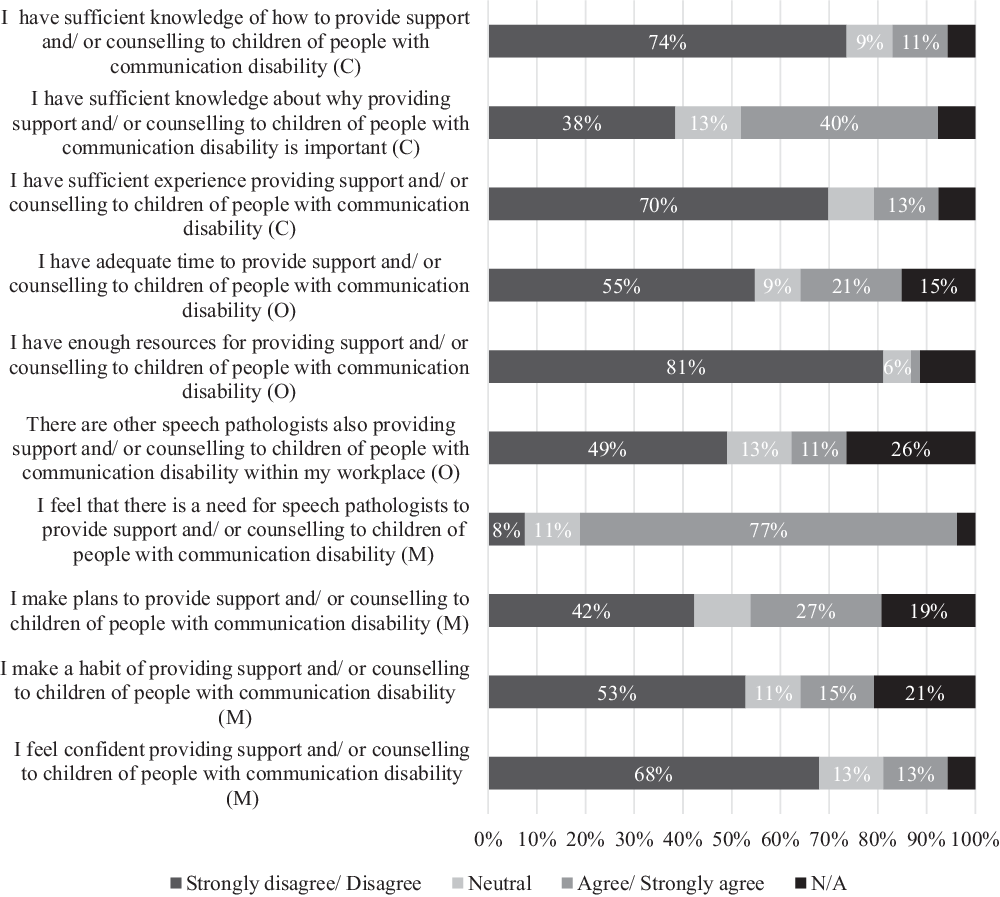
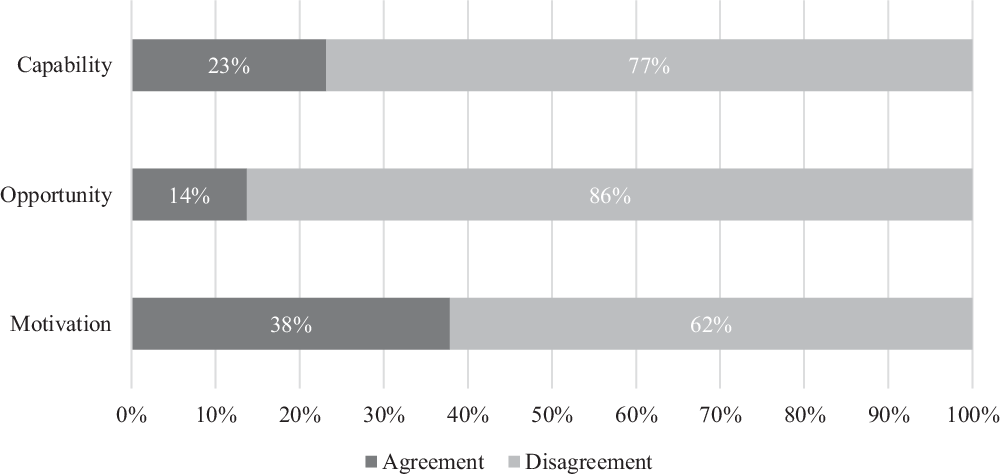
Results of responses to the COM-B barrier and facilitator statements are displayed in Fig. 3. Most participants agreed there is a need to support and/or counsel children (‘Motivation’ domain); however, they felt they did not have the knowledge of how to do so (‘Capability’ domain), had insufficient experience (‘Capability’ domain), and a lack of resources (‘Opportunity’ domain). SLPs also lacked confidence with this practice ‘(Motivation’ domain). Participants’ overall agreement with statements relating to each COM-B domain (i.e., mean domain agreement) is presented in Fig. 4, showing participants were predominantly in disagreement across all domains, with the ‘Opportunity’ domain having the highest disagreement (86%).
SLP practice in providing support and/or counselling to children of PwCD: Agreement with individual COM-B statements.

SLP practice in providing support and/or counselling to children of PwCD: Overall agreement with COM-B domains.

Discussion
To the best of our knowledge this study is the first study to explore Australian SLPs perceived needs, current practices and barriers and facilitators to working with children (<18 years of age) following parental acquired communication disability. Key findings from this study indicate that SLPs working with adult clients are likely to have PwCD on their caseloads and that there is potential to include their children in rehabilitation. However, the majority of SLPs reported rarely providing services to children of PwCD. Of the limited SLPs who reported engaging in this practice area, services most often involved information provision (directly or indirectly) and communication partner training. Reports of counselling-type services, and referral to other health professionals, were limited. Hence, it is likely that health services, and in particular SLP services, are currently underserving this population and that there is an urgency for improvement. It will be important for future studies to consider other health professionals’ current practice in this area to confirm this finding.
Our findings can be considered within the context of COM-B, which suggests that both ‘Capability’ and ‘Opportunity’ influence ‘Motivation’ and in turn impact ‘Behaviour’ (Michie et al., Reference Michie, van Stralen and West2011). An overwhelming majority of SLPs reported that they rarely undertook either of the behaviours that we investigated (i.e. providing information and/or counselling to young children of PwCD). The most dominant barriers were in the ‘Opportunity’ domain, followed by ‘Capability’ and ‘Motivation’. The disparity between the perceived need for these services and SLPs’ limited current practice may therefore be explained by the multiple, high-value barriers across all COM-B domains. It may also suggest that leveraging SLPs’ ‘Motivation’, in combination with addressing key ‘Opportunity’ and ‘Capability’ barriers, may facilitate improved practice. For example, a behaviour-change intervention could incorporate strategies to address ‘Opportunity’ barriers by encouraging PwCD to bring their children to information/counselling sessions and ‘Capability’ barriers by training SLPs in providing information and support to this population.
‘Opportunity’ barriers were identified most commonly, consistent with previous literature, including limited access to children of PwCD in therapy sessions and a lack of resources, funding and time (Hallé et al., Reference Hallé, Le Dorze and Mingant2014; Manders et al., Reference Manders, Marien and Jansse2011). Interestingly, participants also reported a continuum of client/family involvement that influenced their practice (i.e., acting as either a barrier or facilitator). Some SLPs reported that when families were engaged and supportive, this facilitated SLPs’ service provision to children of PwCD. However, a lack of family support was a key a barrier to providing information and support to children of PwCD, with SLPs describing some families as ‘resistant’ to having children involved. This supports the findings of Coppock and colleagues (Reference Coppock, Ferguson, Green and Winter2018), who found that children’s lack of knowledge was, in part, perpetuated by their parents seeking to protect them. This phenomenon perhaps needs further exploration to understand the impact of preventing or restricting child involvement in parental SLP services in the long term.
In the current study, SLPs identified a lack of education and training as barriers to engaging children in services, indicating that further education and training are needed to enhance SLPs’ ‘Capability’ in these areas. Such education may then address SLPs’ concerns about whether the information and support provided is appropriate and accessible for children.
In addition, participants identified ‘Motivation’ barriers that related to lack of certainty about their role in providing counselling and support services to children of PwCD. This lack of clarity around the SLPs’ role in counselling may reflect the developing SLP role in this area. For example, the current Speech Pathology Australia Competency-Based Occupational Standards state that speech pathologists should ‘identify and respond to the client’s, significant other’s and/or family’s need for counselling’ and ‘provide referral to specialist professionals when necessary’ (Speech Pathology Australia, 2011, page 26). However, there is little guidance about when it is necessary to refer to specialists; further clarification around this issue is needed. For example, detailed clinical pathways that clarify timing and professional roles may be helpful. Clinical pathways that have such detail have been developed in other areas of chronic diseases such as cancer care (Butow et al., Reference Butow, Price, Shaw, Turner, Clayton, Grimison and Kirsten2015).
Implications and future directions
This preliminary study highlights a perceived need in providing information and/or counselling support to young children of PwCD. There is an identified gap in this area, which has the potential to negatively impact outcomes for children of PwCD and their families. There is also a need to explore the impact of limited child involvement in parental SLP services. Future research should explore the perspectives of PwCD, their families and children, about their service needs and how these services should be provided. Further research into ways to address SLPs’ ‘Capability’, ‘Opportunity’ and ‘Motivation’ barriers is also required to enable effective behaviour-change strategies in the future.
Limitations
The use of a survey design may have had limitations, as participants were unable to expand their responses and provide the same depth of response that may be achieved in another designs such as semistructured interviews. In addition, the nature of the self-reported practice may be subject to social desirability bias (Adams, Soumerai, Lomas, & Ross-Degnan, Reference Adams, Soumerai, Lomas and Ross-Degnan1999). Also it was not possible to ensure that an individual participant did not complete the survey more than once (as it was distributed at two separate timepoints), leading to a slight possibility that some results have been duplicated. Finally, the focus of the survey was on SLP practice with children living in the same households as their parents, which does not take into account other living arrangements that may be expected in a diverse Australian society. These factors may impact the generalisability of the results to all Australian SLPs and their clients. However, this was a preliminary study that has provided a useful basis to explore the findings in more depth in future. Additionally, a strength of this study is that the survey was designed and analysed using a theoretical framework, which will permit future development of a tailored behaviour-change strategy (Michie et al., Reference Michie, Johnston, Francis, Hardeman and Eccles2008).
Conclusions
The findings of this study demonstrate that Australian SLPs believe there is a need to improve services for children of PwCD. However, SLPs are currently rarely providing education or counselling support to children of PwCD, due to barriers across all domains of the COM-B. Further research is needed to identify ways to overcome these barriers, the perceived needs of PwCD and their families and the impact of continuing to overlook this unmet need.
Acknowledgments
The authors would like to thank and acknowledge the speech language pathologists who participated in this study.
Financial Support
This research received no specific grant from any funding agency, commercial or not-for-profit sectors.
Conflicts of Interest
None.
Ethical Standards
The authors assert that all procedures contributing to this work comply with the ethical standards of the relevant national and institutional committees on human experimentation and with the Helsinki Declaration of 1975, as revised in 2008.
Supplementary material
To view supplementary material for this article, please visit https://doi.org/10.1017/BrImp.2020.11