Introduction
After resettling nearly 500,000 squatters in a strategic move against a communist-led insurgency that broke out in 1948, the Malayan authorities then enlisted hundreds of overseas Christian missionaries to serve in the new villages they created. It was an enterprise of considerable significance in the war against the insurgents as well as on the Church's overall evangelical efforts. Over 400 missionaries from more than a dozen mission boards came during the Emergency period to serve an estimated 333 New Villages accessible to them. Never before or since then has the government in Malaya (Malaysia) funded, partially at least, so many missionaries to serve in the country. The missionaries opened up the mission field by providing medical, education, and other welfare programmes to an estimated one-third of the Chinese in the country or 10 per cent of the total population. It laid the foundation for greater local Christian participation and a more vigorous Chinese Church in the rural expanse of Malaya.
This paper, in examining colonial initiatives, mission response, Malay reaction, and the work and impact of missionaries in the New Villages, discusses a subject that has been largely neglected in the larger studies of this period. This neglect could be explained by scholars’ preoccupation with the military aspects of the Emergency and hence they missed the missionaries’ important role in the social welfare area. It was Anthony Short in his study, The Communist Insurrection in Malaya, who briefly drew attention to the efforts of missionaries in the New Villages. Short wrote of the missionary efforts in New Villages:
Most of them specified in their reports that their work was evangelistic as well as medical or educational and although this may possibly be considered an ulterior motive it is hard to avoid the conclusion that without the work of these voluntary associations the New Villages would have rotted away.Footnote 1
Richard Stubbs’ study on the ‘battle for hearts and mind’ briefly mentioned an ex-China missionary successfully bringing ‘a small but steady stream of missionary workers’.Footnote 2 But the stream of missionary workers, as this study shows, was not small. John Cloakes’ biography of Sir Gerald Templer did not dwell at length on the general's role even though, as High Commissioner, Templer had encouraged large numbers of missionaries into Malaya. Cloake wrote of the initial difficulties of recruiting missionaries and of Templer having personally to appeal to the Vatican, the Conference of Missionary Societies, and the Methodist Church in the United States. Likewise, on the other side, Chin Peng, the leader of the Malayan Communist Party, made no mention of missionaries in his memoirs or in the dialogue he had with C. C. Chin and Karl Hack either because he knew little of it or he did not consider them important.Footnote 3 On the New Villages, Chin Peng acknowledged that the resettlement had disrupted the Party's overall strategy.Footnote 4 It is only recently that Tim Harper drew the missionaries’ role closer to the centre of the Emergency discourse when he described the resettlement as the greatest developmental project of any colonial state in his book, The End of Empire and the making of Malaya.Footnote 5
Mention must be made of several published accounts by missionaries who had served in the New Villages and who wrote of their experiences and their work. Most of these publications, however, focused on evangelical and social efforts. These include G. D. James, a Malaysian evangelist as well as China Inland Mission missionaries such as Kathleen Carpenter, Dorothy MacIntosh and Alan Cole.Footnote 6 More scholarly efforts among these are works by Ray Nyce, a Lutheran missionary and a sociologist, who worked among the Chinese in the new settlements and George Hood who was with the Presbyterian church in Singapore during the Emergency period. Nyce described the Church as an emerging part of New Village community life whilst Hood set the deployment of missionaries against the context of the withdrawal of Christian missions from China.
The narrative of the Emergency in Malaya shows how mission and secular history have overlooked the complexities of the intersection of missions and empire because each approach is primarily interested in its respective concerns. Yet Andrew Porter, in his study Religion versus Empire, has reminded us that there is a connectedness of mission enterprises, colonial expansion, and emerging local consciousness and this needs to be recognized and re-interpreted afresh.Footnote 7 This may not be easy but it is particularly important in a study of Malaysia, a Muslim-majority nation where Christians form 9.2 per cent of a 28.3 million-strong population, and where the Christian Church has been an integral part of education and nation-building through much of its modern history.
This paper, drawing upon archival records including missionary sources, deals with an episode when colonial interest intersected with Christian mission in Malaya as the state turned to the Christian missionaries to counter communist influence in the New Villages. Such connectedness is not new as the colonial government had always relied on Christian missions’ educational and welfare programmes to ensure social improvement and stability. Still, colonial governments were always vigilant towards activities of missionaries, less overzealous evangelism could provoke hostile reaction from indigenous non-Christian communities. The British in Malaya were careful about local sensitivities towards the Christian mission and this was expressed in the 1874 treaty with Malay rulers which had provisions safeguarding the position of Islam and Malay culture.Footnote 8 There existed, therefore, an ambiguity in relations between the colonial state and Christian missions.
The Emergency and the creation of New Villages
In June 1948, the Malayan government declared a state of emergency throughout the country following the killing of three British planters in Perak by members of the Malayan Communist Party. The Party which had fought the Japanese during the war with the support of Allied forces had sought, unsuccessfully, a political role in post-war Malaya. Following the emergency declaration, three to four thousand armed Malayan Communist Party members, mainly Chinese, went into the jungle. The insurgents targeted rubber estates and tin mines for attacks, hoping to paralyze the economy and through this to defeat the British. The communists also laid ambushes along roads and railways. In 1948 alone 315 civilians and 149 security personnel were killed. In 1949, 334 civilians and 229 security personnel died. And up to 1952 there were 100 European civilians killed, of whom 82 were planters. This figure represented almost six per cent of the total number of European planters in the country. On the Malayan Communist Party side, 374 were killed in 1948 and 619 in 1949.Footnote 9
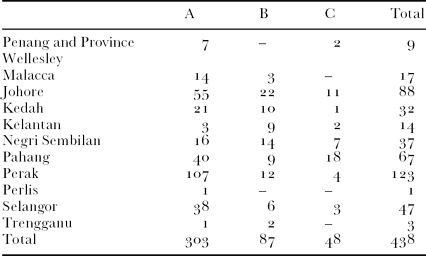
During the Emergency, many Chinese in rural areas were suspected of supplying food and information to the communists, either out of sympathy or because of intimidation. In June 1950, General Harold Briggs, the new Director of Operations in the war against the communists, forcibly resettled thousands of rural squatters and placed them behind protective fences in New Villages to cut them off from contact with the insurgents. Over a period of time, around 500,000 rural Chinese squatters were re-located to nearly 500 New Villages.Footnote 10 There was great resentment among the villagers as many lost their homes and others saw their rubber or vegetable plots they had been working for years destroyed. Even though they were given new land, the villagers had to start all over again on smaller plots. They were placed in a new environment where social amenities were lacking. Consequently, even where villagers were not supporters or sympathizers of the Malayan Communist Party, they became politically alienated from the authorities. Furthermore, intelligence reports claimed that insurgents had infiltrated into many of the resettled areas. Criminal elements of secret societies had also moved in to take advantage of weak law enforcement. With the war against the communists not progressing well, the colonial government soon became anxious over the situation in the New Villages (see Table 1).Footnote 11
New Villages in Malaya, 1954

A: Supposedly permanent.
B: Intermediate.
C: Supposedly impermanent and likely to disappear with the Emergency.
Source: A general survey of New Villages Report to His Excellency Sir Donald Macgillivray, 1954. Ref: 2006/007909, National Archives, Kuala Lumpur.
Some welfare projects were undertaken by the government to improve conditions in the New Villages but much of the efforts were left to volunteer organizations. The most important of these was the Malayan Chinese Association formed in 1949 and which saw the New Villages as an important political constituency. But the Association's efforts were hampered by the lack of trained personnel and it was dependent on running a lottery, which was withdrawn in 1953, for funds. Its efforts were also seen as politically-driven and Association members in the New Villages and other rural regions were targeted for assassination by insurgents.Footnote 12
At this point, the departure of several thousand Christian missionaries from China gave Sir Henry Gurney, the High Commissioner, the idea of where he could source for help in this ‘battle of the hearts and minds’ of the resettled villagers. In October 1949 the Chinese Communist Party gained power in China and Western Christian missionaries were forced to leave the country.Footnote 13 The new regime allowed some missionaries to stay on until 1952 and by November of that year, an estimated 3,500 foreign missionaries had left the country.Footnote 14 The new Beijing government wanted the Church, both Catholic and Protestant, to be led by the Chinese themselves.Footnote 15 On learning about the evacuation of Christian missionaries from China, the colonial government in Kuala Lumpur wrote in August 1950 to the Conference of Missionaries Societies in Great Britain. Then later that year when Sir Henry visited London on official business he offered to talk to mission societies.Footnote 16
The recruitment move was unprecedented. The colonial authorities previously only gave assistance known as grants-in-aid to teachers in missionary schools. But now the government recruited and partially paid missionaries for welfare work in the New Villages and permitted them to evangelize. Sir Henry believed that the expelled missionaries with their years of long service in China and possession of language and medical skills could bring welfare improvements to the New Villages. He likened one missionary as equivalent to a brigade of troops in this social offensive against the communists.Footnote 17
Sir Gerald Templer, succeeding Gurney who was assassinated in a communist ambush, personally pushed for the recruitment of former China missionaries. He wrote directly to mission boards as well as calling on contacts to ask for missionaries from reluctant institutions including the Vatican. His forceful personality prevailed over those who had doubts about the programme. To him these missionaries, because of their China experience, were familiar with a political ideology that the colonial authorities were then battling in the New Villages. Some British officials were even keen to place these ex-China missionaries as Resettlement Officers. In fact, a few were taken into government service. Templer set up and attended the first meeting of the committee to coordinate the New Village welfare programmes.
Nevertheless within official circles, some officials warned of Muslim sensitivities to the government's recruitment of Christian missionaries. The arrival of Western missionaries from China and possibly Chinese Christians could cause unease among the Malays who held various fears—of expanding Christian influence, the continuing communist threat, and the demographic implications with possible entry of Chinese Christians.
There was also the international relations dimension. Some colonial officials were unsure how the new Chinese authorities in Beijing might react to the deployment of ex-China missionaries in programmes in Malaya against the Malayan Communist Party which had fraternal links with the Chinese Communist Party. The recruitment of the missionaries took place at what was probably a most tricky point in Sino-British relations. Here was Malaya engaged in a war against the Malayan Communist Party whilst in China, the Communist Party had gained power and London had just recognized the new government. In the meantime, as claimed by the colonial government in Kuala Lumpur, China was supporting the Malayan armed communists.Footnote 18
Discussions to recruit ex-China missionaries involved the highest official levels. The initiatives came from the High Commissioner's office.Footnote 19 These were supported by senior civil and military officers in the Federation of Malaya government, including the Chief Secretary to the government. Templer kept the British Prime Minister, Sir Winston Churchill, the Foreign Office in London, the Secretary of State for the Colonies, and the Commissioner-general for Southeast Asia, Malcolm MacDonald, regularly informed of progress on the missionary project.Footnote 20 The Foreign Office of the United Kingdom took the responsibility of communicating with the Holy See in Rome. Also involved in the discussions, largely through correspondence, were the governors of Hong Kong, Sarawak, Singapore, and North Borneo.
Templer, in his review to Malcolm MacDonald of the recruitment scheme, on 21 April 1953, explained that under the programme, the Malayan Government would pay recruited missionaries half the salary and allowances that serving public servants with equivalent qualifications and experience were then entitled to. However, the government would not provide air fares and other travel expenses. Missionaries were recruited primarily to serve in the medical, educational and welfare fields. They were to devote a substantial part of their time to the responsibilities assigned them but were allowed to undertake missionary work. Recruitment was made through the various mission organizations which submitted applications of those wanting to enter Malaya.Footnote 21 On 27 September 1952 Templer reported that the Anglicans and the Methodists had responded positively to the government's request.Footnote 22
Response of Mission Boards
Christian mission boards generally welcomed the colonial government's invitation to work in the New Villages. The resettlement programme had brought squatters, previously widely dispersed and inaccessible to mission efforts, into settlements that were now within easy reach. Chinese villagers were a group with which Christian missions had made very little progress, and following the government's offer and the availability of ex-China missionaries that task now appeared to be easier. Indeed, even before the government's offer, mission boards had already seen opportunities in the settlements. As it turned out, interest in the programme among mission boards was not confined to those with missionaries who had served in China.Footnote 23
Anglicans, Presbyterians, and Methodists were the first to respond to the government's request for missionaries. They were soon joined by American Lutherans, Southern Baptists, and the inter-denominational China Inland Mission. The Presbyterian Church of England and the London Missionary Society soon formed the Joint Malaya Group for this New Village mission effort and in April 1952 the group wrote to S. H. Dixon, secretary of the Conference of Mission Societies in Britain:
The Group has had under discussion the possibility of appointing missionaries to work in resettled areas. This consideration has arisen quite apart from the High Commissioner's approach. It springs from the recognition of the Church's evangelistic and pastoral responsibility towards the people amongst whom it is at work in Malaya, including those living in resettled areas.Footnote 24
Some mission groups saw work in the New Village also through political lenses and supported the colonial government's battle against the insurgency. The secretary of the Church Missionary Society who, when writing to the Colonial Office in London, therefore referred to mission work as the Church's effort in combating Communist agents’ influence: ‘I am quite certain that there are many Communist agents working amongst overseas Chinese, and it would be regrettable were the Christian Church to be less energetic.’Footnote 25 Others cast the missionaries’ work in the New Villages as a battle of the gospel versus the evil of communism. They believed that more than just creating a better society through improving the living conditions of those in the New Villages the gospel would bring deliverance of villagers from spiritual death and darkness. Alongside such thinking was also a nineteenth century echo that the Church was part of the Western civilizing mission overseas.Footnote 26
Nevertheless, there remained reservations among some Christian missions who were worried that serving under a government scheme could compromise the church in the eyes of the wider community. The Church risked being accused of collaborating with the government in a politically driven agenda. Missionaries familiar with Malaya further cautioned that Chinese villagers, irrespective of whether they were sympathetic to the communists or not, had always been wary of Westerners including missionaries. The deployment of missionaries who had been forced to leave China, and now recruited by a colonial regime, would only heighten villagers’ suspicion of motives, and that this could seriously hinder gospel efforts.Footnote 27
There was also concern among mission boards, and even within colonial circles, about negative reaction from the new Chinese government and possible repercussions. Collaboration of Christian missionaries with the Malayan authorities in the New Villages against the Malayan Communist Party would only lend weight to accusations that Christian missionaries were agents of Western imperialism.Footnote 28 In May 1953 the Governor in Hong Kong wrote to the Secretary of State for the Colonies in London warning that colonial links with Chinese Christians or missionaries could endanger Christians in China.
It is possible that such a development might even affect adversely the position both of these foreign missionaries who are still in China and also of the Chinese Christian communities who still enjoy a limited degree of tolerance.Footnote 29
Meanwhile, the recruitment of Catholic personnel for New Village work was taken up by the Colonial Office which exchanged correspondence with the Apostolic Delegate in London whilst the British legation in Rome held discussions with the Holy See.Footnote 30 British officials from Malaya also made efforts to call on the Vatican. Eventually, J. F. Hogan, Attorney-General of the Malayan Government, managed to meet the Cardinal Prefect of the Missionary Department of the Holy See.
The Congregation de Propaganda Fide in charge of Vatican's overseas mission was supportive of the Malayan request. It informed British officials that the Paris Foreign Mission (Missions Étrangères de Paris, or MEP) could make available 40 ex-China missionaries as well as a number of Chinese seminarians from Penang. It pointed out, however, that the work of Roman Catholic missions in Southeast Asia came under different jurisdictions such as the Jesuit Brothers, De la Salle Brothers, the Mary-Knoll Society, the Missionary Society of St Columban, and the Franciscan Mission of Mary.Footnote 31 The Vatican added that the Jesuits and the De la Salle Brothers, whose focus was on education and youth efforts in urban centres, might not be of much use in rural settings such as the New Villages.
The Vatican also informed the British Foreign Office that its ex-China missionaries might not have the appropriate language ability required in Malaya. Only two groups of ex-China missionaries spoke English and these were from Ireland and Canada. Furthermore, the Canadian group of missionaries had served in Tianjin and did not know the southern dialects spoken by the Chinese in the Malayan New Villages. Only those from Ireland based in Hong Kong were likely to speak Cantonese, a dialect widely used in Malaya.Footnote 32 Protestant mission boards had likewise pointed out that many of their missionaries had worked in northern China where conditions and dialects there were different from those in New Villages in Malaya, and also that the Chinese in the New Villages were not homogenous in dialect use.Footnote 33
The Kuala Lumpur authorities expressed frustration that the Catholic Church was slow in taking up the New Village scheme.Footnote 34 But in fact the Vatican had also to meet pressing requests for missionaries from other countries in Southeast Asia. Other dioceses in Southeast Asia also wanted missionaries. But the Kuala Lumpur authorities insisted that the situation they faced was more urgent because of an ongoing military conflict. Finally, in April 1953, Bishop Charles van Melcheke, who had served as Vicar Apostolic of Ningxia in China was sent by the Vatican to ascertain the kind of assistance needed in the New Villages.Footnote 35 The visit was, however, not entirely welcomed by the Bishop of Malacca who was unhappy that he was left out in the discussions between the colonial authorities and Rome on deployment of missionaries in Malaya. For his part, the Vatican's special envoy maintained a low profile during his visit to Malaya. He politely turned down Templer's invitation to stay at King's House, the High Commissioner's residence, and also did not want any public contact with government officials.Footnote 36
The sentiments of the Bishop of Malacca reflected the misgivings of some local Church leaders over the government's direct dealing with overseas mission boards in recruiting missionaries. The independent Christian groups resented the fact that the established churches had a more dominant say including membership in the Chief Secretary's committee set up to coordinate the New Village work. On the other hand, the more established churches, as Tim Harper noted, were uncomfortable with the evangelical and fundamentalist groups who went their own way in village work.Footnote 37 The inter-denominational China Inland Mission, for instance, did not associate itself with the New Village programme of the Malayan Christian Council.
The Malayan Government had also turned to the Crown Agent in London to recruit ex-China missionaries. Here, the Crown Agent was not successful and the Malayan authorities then tried sending officers to Britain to attract missionaries. In January 1952 the Colonial Office in London asked Dr J. Cameron of the Malayan Health Service, whilst on a visit to the United Kingdom, to address a small conference of the China Inland Mission. F. Mitchell, the Home Director of the Mission, welcomed the visit as he believed that this would help the recruitment effort if conference participants were briefed by a senior officer from Malaya about living conditions and mission needs in Malaya. Cameron, however, declined citing a busy schedule.Footnote 38
Meanwhile, other sectors in Malaya such as the plantations were also seeking ex-Chinese-speaking missionaries. Ray Dawson, a Baptist missionary who had served in pre-war China had independently joined the Malayan Government service as a Resettlement Officer, and he was sent to Britain to encourage former colleagues to work in Malaya.Footnote 39 Dawson's trip in December 1950 was organized following a memorandum from the Planters’ Association of Negeri Sembilan forwarded through M. C. Sheppard, the British Resident, in which it expressed deep concern about the security situation and communist influence in the state. There was a shortage of Chinese-speaking British officials, and Sheppard in his accompanying comments suggested placing ex-China missionaries as Labour Department officers and inspectors of Chinese schools. To him, the deployment of such officers was urgently needed to counter the influence of the communists.Footnote 40
Despite new evangelical opportunities opened up by the Malayan government, response, especially from expelled China missionaries, was mixed. There are no reliable figures of the number of Western missionaries who left China during this period. In 1949 before the departure, there were an estimated 2,500 Protestant missionaries in China. Of Catholics, the Vatican gave a figure of 2,000 priests who returned to Europe. But many of the returning missionaries were reportedly in poor health and a number were recuperating in Hong Kong. Some of them were not ready or willing to return to the mission field so soon or at all. A number were elderly and chose to retire.Footnote 41
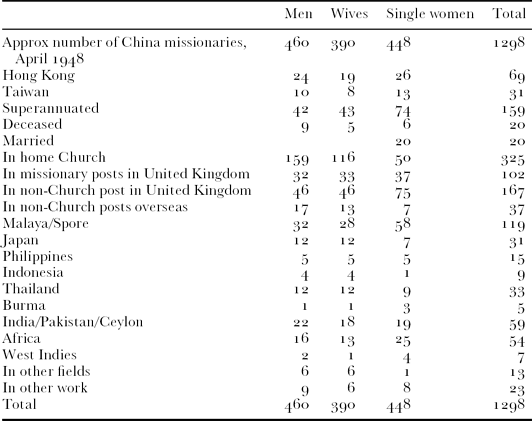
Of those whom mission boards could re-deploy, Malaya was not often the preferred destination. A number of ex-China missionaries had taken on new pastoral assignments at home. Of those willing to return to Asia, there were mission opportunities elsewhere. Several missionaries went, for instance, to Thailand and a number to Singapore. A few ex-China missionaries including Chinese Christian workers had gone to Sarawak which had a strong Chinese Christian community, mainly Fuzhou, whose history went back to the beginning of the twentieth century. The Governor of Sarawak welcomed the new arrivals to Sibu where they were engaged in youth, education and medical fields. The Governor was so impressed by their work that he sent his Deputy Director of Education to Britain to seek out more ex-China missionaries.Footnote 42 Then there were the missionaries who had gone to secular jobs. A few came to Malaya to become Resettlement Officers in the New Villages scheme (see Table 2).
Ex-China missionaries of British Mission Boards serving in Malaya and elsewhere, December 1952
Source: George Hood, Neither Bang Nor Whimper: The end of a missionary era in China, Singapore: Presbyterian Church in Singapore, 1991, p. 156.
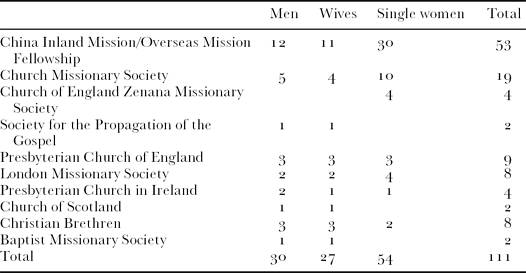
Nevertheless, of the 1,298 ex-China missionaries of British mission boards listed in December 1952, 119 went to Malaya. This was by far the biggest group from those who went back to the mission field, almost double those who proceeded to India or to Africa. Of those who came to Malaya, 53, or half, of those from British mission boards were from the China Inland Mission, being the largest and most active of the mission groups involved in New Village work. It was a mission enterprise started by James Hudson Taylor in 1864 with a focus on China where it had sent large numbers of missionaries. In November 1951 the Mission reported that some 1,600 of its missionaries had been withdrawn from China.
Work of the Mission
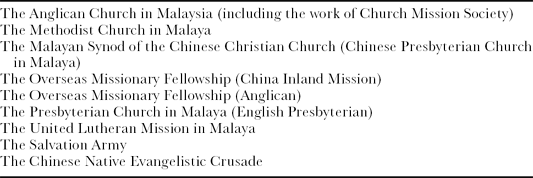
At least 15 Protestant missionary groups and the Catholic Church were directly involved in the New Villages. The main Protestant churches participated and these included the Anglican Church, the Methodists, the Presbyterians, and the Lutherans.Footnote 43 The Methodists concentrated their work in the New Villages in Perak and in Selangor. In 1952 the Methodist Mission of Malaya did a survey of New Village needs in seven states. In May that year, Reverend Harry Haines, chairman of the survey committee, reported that the Methodist mission was engaged in welfare work in 42 New Villages and that appeals had been made to the United States for more missionaries. The large Chinese Methodist Church in Sitiawan, Perak, played a key supporting role.Footnote 44
The China Inland Mission, having evacuated from China, now shifted its regional headquarters to Singapore and re-named its mission as the Overseas Mission Fellowship. It divided its work in Malaya into the North Malaya section based in Kuala Lumpur and South Malaya section based in Singapore. In reporting this to R. J. Minnett of the Colonial Office in March 1952, F. Mitchell, the Mission's Home Director, also informed that several of their missionaries had recently left for Malaya. A regional director in Singapore, P. Moore, was later appointed to oversee its Malayan work. The Mission, at the start, sent 50 missionaries to 25 New Villages of whom seven were in Selangor and nine each in Johor and Perak. At its height, the Mission had an estimated 200 missionaries at any one time in the New Villages.Footnote 45 According to Alan Cole, one of the first China Inland missionaries to arrive in Malaya, many of the ex-China missionaries had served in east Sichuan in China.Footnote 46 The New Village effort was the first of the Mission's Malaya mission and this laid the foundation for its subsequent work in other parts of the country (see Tables 3, 4 and 5).
Ex-China missionaries of British Mission Boards in Malaya, December 1952
Source: George Hood, Neither Bang Nor Whimper: The end of a missionary era in China, Singapore: Presbyterian Church in Singapore, 1991, p. 152.
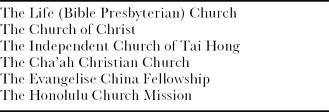
Churches involved in New Village work which are members of the Malayan Christian Council New Village Co-ordinating Council
Source: International Missionary Council Archives, Geneva (H-10, 016) Box 26.5.116, Malaysia, Country Files No. 9, NAF 00183-1, National Archives, Singapore.
Churches involved in New Village work which are not members of the Malayan Christian Council New Village Co-ordinating Council
Source: International Missionary Council Archives, Geneva (H-10, 016) Box 26.5.116, Malaysia, Country Files No. 9, NAF 00183-1, National Archives, Singapore.
The Malayan Christian Council, in one of its first reports in 1955, listed in that year 96 Western missionaries and 55 Asian missionaries assigned to 92 New Villages. There were another 150 part-time voluntary workers.Footnote 47 In its report of 1958 the Council stated that of the 410 New Villages accessible to Christian missionaries, mission work was carried out in 333 of them, or more than three-fifths the total number of villages. New Villages that were predominantly Malay, of which there were a few, were off-limit to the missionaries whilst other villages were not accessible because of security reasons. Perak, Johor and Selangor with a very high incidence of insurgency activities had the largest number of New Villages and these three states received most attention from mission boards.Footnote 48 There was mission work in 81 of the 107 accessible New Villages in Perak. In Johor there was Protestant work in 56 of the 105 New Villages accessible whilst the Catholics were in 22 New Villages. In some villages, a Church was set up or had a missionary stationed there whereas other places were served by visiting missionaries who covered several villages within their jurisdiction. About half the 333 New Villages had a resident Christian worker. Protestant missions had an unwritten understanding of geographically dividing New Village work amongst themselves but in many places there was overlap. There was even more overlap of Protestant and Catholic mission work.
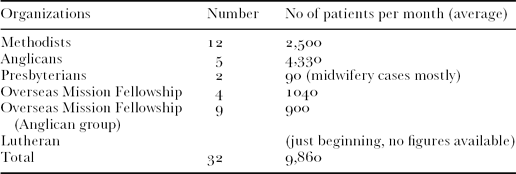
The missionaries were expected to improve the education, medical, and social lives of the villagers, and the provision of medical services was considered to be the most important part of their work. Government clinics or mobile medical units were insufficient in many New Villages, particularly in Perak and Pahang. According to a Malayan Christian Council survey of 1957, there were clinics in 100 out of the 156 New Villages in Perak in that year. Of these, 32 were run by Protestant missions whilst 18 were run by the Catholic Church and the other 50 by the local government. In an average mission clinic at any one session, there could be as many as 100 patients whilst attendance of 50 or 60 was common (see Table 6). Mobile clinics operated from a New Village chapel or an area partitioned off from the main church hall. Where there was no chapel, a shop house or village school was used. Patients were charged a uniform fee of 20 cent (sen) a visit but sometimes they were asked to pay only for medicine prescribed. Clinics were often also entrusted with distribution of relief supplies. Powdered milk was given to mothers where there was evidence of malnutrition. Flour, corn meal, and food supplements were also given out by clinics.
Churches involved in New Village medical work
Source: Malayan Christian Council Progress Report No 7, Minutes of the 22nd Meeting of the Federal Co-ordinating Committee for Work in New Villages, Ref: 1967/,0000435, National Archives, Kuala Lumpur.
The China Inland Mission was keen to set up a 60-bed hospital that could serve a number of New Villages. However, the state medical authorities were lukewarm to the hospital proposal. Dr H. Lester, the new Director of Medical Services, was against the setting up and running of a mission hospital requiring government funding. If approved, he claimed, other mission boards would go about setting up hospitals, and the government would not only have to take up a growing budget but have to deal with political and religious sensitivities arising from such institutions in a multi-racial society.Footnote 49
There was also the question of the qualifications of missionaries. Whilst the colonial government was keen to tap into the skills and experience of missionaries, including those who had served in China, it did not relax on qualification requirements. At this time, as the Director of Medical Services in Malaya, Dr J. Cameron, acknowledged, there were vast medical and health problems to be dealt with but there was a serious shortage of staff. In all, Malaya then had more than 100 vacancies for doctors and other medical personnel. However, because many of the missionaries either did not possess the required qualifications or their training was not recognized by the Malayan authorities, they could not be accepted into government medical service.Footnote 50
There was also the problem of language because most people in the New Villages then communicated in dialects. Cole pointed out that no village was solely of one dialect group. The China Inland Mission appointed a teacher to teach Hakka to its missionaries but subsequent arrivals were taught Cantonese which was one of two dominant dialects in the New Villages. Even Mandarin used in the New Villages, according to Cole, was a southern version with tones, pronunciation and idioms different from those the ex-China missionaries were familiar with.Footnote 51
Literacy work was an area given emphasis in almost every village where there was a resident Evangelist. Literacy was essential to carry out evangelism. But a report of the Malayan Christian Council also noted that given the high drop-out rate from formal schools as well as high unemployment among the youth, what was urgently needed in the New Villages was creating jobs and providing trade and skill training. The Christian missions therefore proposed setting up cottage industries, cooperatives, and crèch amenities but given the dispersed nature of the New Villages, organizing such facilities and training was difficult.Footnote 52
Women were a major component in the missionary effort in the New Village. Women comprised 86 of 119 missionaries sent out to Malaya by Britian mission boards, of whom 58 were single. Many took a lead in medical or teaching work in the New Villages. Women villagers in the new settlements were more willing to approach lady missionaries for medical or educational help. One of the first mission workers sent out by the China Inland Mission in December 1951 was Doris Madden a fully trained nurse, midwife and qualified health visitor. She had served in China for about 20 years and besides practical health work and midwifery could also teach health subjects.Footnote 53
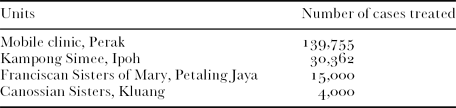
Despite the seemingly slow response of the Catholic Church, Templer was able to report in April 1953 that four German priests with medical qualifications had started work in Perak. Later that year, a number of Franciscan Order priests left for Malaya. Three priests, two of whom were Chinese and with experience in China, were also serving in 12 New Villages and in a nearby town. Later the Catholics sent another small batch of missionaries with nursing experience and they were immediately assigned to Perak New Villages.Footnote 54 By 1954 there were 36 full time Catholic workers including 18 missionaries in 59 villages. In addition there were 19 missionaries and lay workers who served part-time in 112 New Villages. By 1959 the Catholic Welfare service reported that it had 56 workers serving 176 New Villages with its work concentrated largely in Perak, Kedah and Johor. The Catholic work included three medical units serving Perak, Johor, and the Kuala Lumpur suburb of Petaling Jaya (see Table 7).Footnote 55
Catholic Medical Care in New Villages, 1954
Source: ‘Catholic Welfare Services Annual Report 1954, Rev Fr A. Khaw, 6 January 1955’, Minutes of the 22nd Meeting of the Federal Co-ordinating Committee for work in New villages, 21 January, 1955, Ref: 1967/,0000435, National Archives, Kuala Lumpur.
Missionaries, as it soon turned out, related well to the local Chinese community. When the Catholics, for instance, built an Old Folks Home in Kampong Simee village near Ipoh, supplies were donated by saw-millers and hardware dealers as well as cash from the Perak Chinese Welfare Association. The Home was maintained and funded by the Church but the local community made regular financial contributions. Where there was an encouraging response to the gospel in a village, a resident worker was stationed. A piece of land would be obtained to build a chapel and a house for the worker. Once a local church leadership had emerged and was able to take over, mission boards would withdraw their missionary.
Many missionaries, including ex-China missionaries, found the situation in Malaya challenging. There was, firstly, the security situation. Missionaries had to travel along routes that were exposed to attack or ambush by insurgents. George Henderson, Secretary of the Bible Societies in Malaya, in his report of a mission tour around the peninsula during this period gave a sense of the risky conditions then:
The first real terrorist ambush for over a year took place on the main road the day after we would have travel[l]ed that way had we not decided to take the coast road going north . . . .
A number of ‘New Villages’ mission stations were visited and also one Leper Settlement where Ian Morrison and the Society have had interesting contacts in years past.Footnote 56
A number of high security risk New Villages were off limit to them. Tight security ringed even the accessible villages. Within the New Villages were supporters of the insurgency, some of whom had infiltrated amongst the earlier squatters. Then there were secret society elements who operated their own system of law and order in the New Village community. The villages also lacked a community character or historical coherence. These were squatters from disparate groups who had been rounded up by security forces and placed together in a fenced village. Traumatized by the process they were therefore wary of strangers especially Westerners. Significantly though, there were no reports of attacks on missionaries either by armed insurgents or secret society members. It is likely that missionaries were not targeted because their medical and educational services were valued. Killings were carried out against mainly members of the Malayan Chinese Association or Home-guards who were seen as actively hostile to the insurgents.
To coordinate the work of missionaries and other voluntary organizations in the New Villages, Sir Gerald Templer set up a committee chaired by the Chief Secretary to the government. The committee was made up of representatives of the government, voluntary organizations, and churches and missionary bodies. The committee, whilst primarily to coordinate efforts, also enabled the government to allocate funding quickly to where it was most needed. Templer attended the first meeting on 29 February 1952 in Kuala Lumpur and the committee met monthly thereafter.Footnote 57 The Malayan Chinese Association, which was undertaking a share of New Village work, was represented, as were volunteer organizations such as the St John's Ambulance, the British Red Cross, the Federation of Malaya Boy Scouts Association and the Federation of Malaya Girl Guides Association. The government had officials from the Chinese Affairs Department and the Internal Security Department. By far the most active and vocal in the meetings were representatives from the Church Missionary Society of Malaya, the Methodist Mission, the Malayan Christian Council and the Catholic Church of Malaya. As a group, they outnumbered the others. The Malayan Christian Council is an umbrella body for many of the churches in Malaya and it played a significant role in the New Village work. It formed a committee to coordinate the New Village work of the different mission bodies and regularly collected relevant information that were made available to mission boards as well as to the government.Footnote 58
The matter of funds was frequently raised during meetings of the coordinating committee. Government grants-in-aid were paid to mission bodies and not to individual missionaries. Missionaries received half the lowest basic salary of the government service schemes. Some mission boards preferred to fund their own personnel rather than to rely on government grants. Others sought government funding only for social work they were undertaking. Reverend J. R. Fleming, secretary of the Malayan Christian Council, pointed out to the Chief Secretary's committee that grants-in-aid were for personnel engaged in education, medical, and welfare work. ‘They were not used to subsidize religious work’.Footnote 59 Still, it was not easy to separate clearly the medical service of a missionary from his pastoral responsibilities that were religious in nature.
Likewise the Joint Malaya Group of the Presbyterian Church and London Missionary Society wrote that the Church would fund religious activities but:
Should it be possible, however, at any time to undertake educational or medical services in the resettlement areas, the Group would be glad to avail itself of the preferred financial assistance in respect of such work.Footnote 60
In seeking other financing, the Joint Malaya Group of the Presbyterian Church and London Missionary Society proposed that funds earmarked for the Nanking Theological Seminary in China be re-directed to their work in Malaya but was not sure whether the terms of the bequest was applicable for ‘Chinese outside of China’.Footnote 61
The Catholic Welfare Service raised its own funds to provide food and medicine to New Villages in Perak, Kedah, and Johor. Some of these supplies which included milk powder and clothing came from the National Catholic Welfare Conference of America. It was reported that in 1954 $110,000 worth of supplies were received but local Catholics had to spend $10,000 to transport the gifts from Singapore. Reverend Father A. Khaw in his annual report described that the scope of the Catholic welfare work included:
medical and clinical attention, relief for the needy, visits to homes, free adult education, instructions for children, free cinema shows, scouting, needlework and sewing classes, care of the aged and blind, religious services in the villages, care of detainees’ families, paying school fees for poor children, burial for the dead, secure jobs for the unemployed.Footnote 62
Malay reaction
The colonial administration was aware of possible hostile reaction from the Malay community to government recruitment of Christian missionaries. W. L. Blythe, Colonial Secretary in Singapore, writing to Malcolm Macdonald, Commissioner-general of the United Kingdom for Southeast Asia, called for great care in the matter of ex-China missionaries to avoid offending Malay and Indonesian Muslims.Footnote 63 There was still anger within the Malay community over the Maria Hertogh case. In December 1950 a Singapore court decision to return a Dutch girl, Maria Hertogh, to her natural parents led to riots on the island state by Muslims. Maria had been placed in the care of a Malay couple during the war and had subsequently converted to Islam and married a Malay. The riots were initially directed against Westerners and several people were killed with many seriously injured.Footnote 64
Likewise, the Director of Medical Services in responding to the China Inland Mission's proposal to set up a 60-bed hospital warned of possible political and religious objections:
We feel that as there may be political or religious objections from some of the States, the actual siting of any Mission Hospital ought to be a matter between the State Authorities and the Mission.Footnote 65
State authorities which were headed by a Menteri Besar or Chief Minister refused to grant land to Christian mission bodies especially if the proposed use is for a hospital or church in the vicinity of Muslim areas. Matters of land as well as Islamic affairs came under state jurisdiction. Indeed, by 1957, meetings with state authorities in Johor and Perak over applications for church land for New Villages broke down.
Without doubt there was Malay unease at the government move to bring Christian mission efforts to the New Villages. The Malays were worried that the entry of large numbers of missionaries might lead to Christian proselytizing efforts among Muslims.Footnote 66 Tim Harper pointed out that when a mobile film unit toured villages with the slogan ‘Jesus Christ, son of God, Saviour’, in several languages, the Malay version had to be deleted.Footnote 67 There was concern that missionary drive could spill into a few of the predominantly Malay New Villages even though Malays had been assured by long standing practice of the authorities in not allowing Christian evangelical work to enter Muslim areas. In 1954, it was estimated that some nine per cent of those in the New Villages were Malays. The largest number were in New Villages in Malacca, Johor, and Kedah.
Even work among aboriginal groups known as Orang Asli had become politically sensitive to Malay nationalists. Requests by mission boards to extend their work to Orang Asli regions were turned down by the Home Affairs Department. The department, then under Dato Onn Jaffar who was once President of the United Malay National Organization, the main Malay political party, claimed that there were not enough facilities to air-drop missionaries into aboriginal areas, many of which were deep in the jungles. The chairman of the Coordinating Committee for New Villages had pointed out that state governments which were in control of aboriginal affairs ‘will not allow, and are not willing at the moment to entertain, any interference in this connection except through Government agencies’.Footnote 68
The Malays were also unhappy because the resettlement programme seemed to them an appeasement to a community from which most of the armed members of the Malayan Communist Party came. When the New Village resettlement programme for Chinese squatters was brought before the Federal Legislative Council, a Malay member, Datoh Hj Mohamed Eusoff, alleged that there were communist elements within the New Villages.Footnote 69 He pointed out that those who joined the armed forces to fight the communists were Malays and they received little in the way of reward from the government. Captain Hussein Onn, son of the Malay nationalist leader, Dato Onn Jaafar, drew attention to the 83,000 Special Constables most of whom were Malays. If squatters were getting land free of cost, ‘I do not see any reason why similar facilities should not be given to these 83,000’.Footnote 70
There was also anxiety that recruitment of ex-China missionaries could lead to an influx of Chinese into Malaya. Mission boards had floated the idea with the Malayan government of allowing Chinese Christians from China to serve in the New Villages in capacities similar to Western missionaries. In fact the Governor of Sarawak reported that a number of such Christians had arrived in his state with status as missionaries or as refugees.Footnote 71 The Malayan government, however, allowed Chinese missionaries a one-year entry permit which could be renewed but they were expected to work under the supervision of Western missionaries. Malay political groups, particularly Dato Onn Jaafar, feared that unchecked immigration from China could upset the demographic balance in the country leading to Malays becoming a minority. Hence, in the post-war period, immigration from China came to an official end. Furthermore, following the communist takeover of China, there was also the fear of political infiltration if Chinese from China were allowed to enter the country.Footnote 72
The colonial administration took note of the Malay unease and so the government-sponsored Central Welfare Council, because of Muslim objection, initially refused to provide direct financial grants to church social work and only relented when the churches maintained that their work was of ‘great social value and was part of the campaign against Communism’. It then decided that similar grants would be made available to other religious organizations. The mission gave assurance that social work would form the preponderant part of activities and that evangelism should be secondary in the use of the funds. Meanwhile, Templer gave an assurance to the Menteri Besars that Red Cross teams providing medical assistance would spend just as much time amongst the Malays as in the Chinese New Villages.
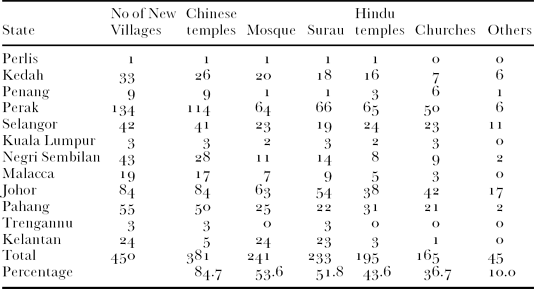
Two other reasons kept the Christian mission and New Villages from becoming a major political issue among the Malays. First, the British took steps to improve the Malay economic position by setting up the Rural Industrial Development Authority in 1951 with Dato Onn appointed as its head, to provide training and loans to small Malay businessmen.Footnote 73 Second, Malay leaders saw the communist-led insurgency as a much greater threat that had to be defeated with all resources and means possible, admittedly even with Christian missionary support (see Table 8).Footnote 74
New Villages with places of worship, 2002
Source: Lim Hin Fui and Fong Tian Yong, The New Villages in Malaysia: The journey ahead, Kuala Lumpur, Institute of Strategic and Policy Research, 2005, p. 129.
Conclusion
In the last years of its rule and facing one of its most serious political challenges, the colonial authorities sought out Church support in a social offensive against a communist-led insurrection. Never before or since has the Church in Malaysia been drawn into supporting a state-driven political programme. The Christian missions’ role for New Village work took place amidst momentous political events in the country with the outbreak of the first nation-wide armed struggle by a largely non-Malay movement against colonial rule. There was also the rise of Malay nationalism. Malay unease saw New Village work as appeasing a community deeply implicated in the insurrection and feared risks of further Christian and Chinese influence. There was an international relations dimension as the recruitment of ex-China missionaries engaged the High Commissioner in Malaya, the Colonial Office in London as well as the Vatican amidst a developing Cold War atmosphere with China emerging as a growing influence.
For their part, the mission boards were mostly convinced that their work remained distinct from the government military campaign and saw the New Villages and Chinese squatters, a community long neglected, as primarily a social and evangelizing effort. The resettlement brought Chinese squatters, once widely dispersed, within easier reach of the mission. The creation of the New Villages, by cutting off supplies to the insurgents, was a major contributing factor to ending the Emergency. It was the improvement in living conditions through welfare and educational work such as those carried out by the missionaries which gradually transformed disparate and politically-alienated squatter groups into a community that now held new political hope and expectations. The medical, educational, and welfare work of the missionaries did touch the lives of villagers where these were most needed. The call of the New Villages forced Christian missions to engage in areas of social work they had mostly neglected in the past. It also pushed Christian missions to move out from their urban fastness into the rural New Villages and to draw local Christians into greater participation. Tim Harper observed that Christian missions, consequently, carried out by far the largest and most important voluntary work in the New Villages compared with their earlier efforts and those of others.Footnote 75
From the Christian mission viewpoint, the Emergency work led to tangible results. What had been achieved there became seeds for further mission work. A survey in 2002 listed 165 out of 300 New Villages where missionaries had served during the Emergency as having a church.Footnote 76 This figure represents slightly more than half the New Villages where social and evangelical efforts had been carried out and 36.7 per cent of the total number of New Villages. Several churches in New Villages, particularly those nearer to large towns such as Jinjang, Petaling Jaya, and Cheras, expanded and in turn have launched their own mission and social programmess. More significantly, the New Village work has strengthened the Chinese language churches particularly those in the rural and semi-rural areas. At the same time, the New Village initiative encouraged ecumenical cooperation and led to the entry into Malaya of new missionary groups such as the China Inland Mission. Churches and denominations worked more closely through the New Village effort either in the Coordinating Committee or in the Malayan Council of Churches which coordinated missionary work in the New Villages.
This paper has touched on the often ambiguous relationship between Christian missions and the colonial state. On this occasion, the New Villages presented a problem to the colonial state but provided an opportunity to the mission. Consequently, both sides saw the advantage in working together. But in doing so during the Emergency, on a quite unprecedented scale, they nevertheless remained sensitive to the implications as well as the reactions which the collaboration could have on the wider society. This interconnectedness of Christian mission with the wider social and political process in Malaysia has, however, not appeared in many missionary recollections or academic accounts. This has perhaps to do with the nature of missionary reports and government records which have different concerns, and therefore determining where the threads of mission and the broader society have intertwined is not easy. But as this study shows, an integration of two apparently separate strands of narrative is possible if such a perspective is sought and use of both mission and official records made. The result would be a richer narrative of the period.