Worldwide, institutional care remains a common form of care for abandoned and maltreated children. As many as eight million children worldwide who are less than 18 years of age are currently living in institutional care (Lumos Foundation, 2015). Research on the negative effect of institutional care across domains of functioning (i.e., cognitive, biological, and socioemotional) is well established, as is the capacity for altered trajectories towards more positive developmental outcomes when children are removed from institutional care and placed into families (for a review, see Nelson, Fox, & Zeanah, Reference Nelson, Fox and Zeanah2014). However, the majority of research concerning the effects of institutional care on development has been conducted with young children. Given the large population of children growing up in institutional care, it is imperative to understand the effects of early psychosocial deprivation in adolescence as well as the conditions that support typical development from middle childhood to adolescence following this unique and particularly harmful form of adversity.
What constitutes “typical” development following adversity varies throughout the developmental literature. One study examined “resilience” in young adulthood following childhood abuse and neglect, which was defined as achieving success in six out of eight domains of functioning: employment, homelessness, education, social activity, psychiatric disorder, substance abuse, arrests, and self-reported violent behavior (McGloin & Widom, Reference McGloin and Widom2001). Based on their criteria, 22% of the adults who had experienced maltreatment in childhood met the threshold for resilient functioning, compared with 41% of the comparison adults. The authors also found that females were more likely than males were to demonstrate resilient functioning. This person-centered approach to assessing functioning across a wide variety of domains allows for greater flexibility in how children come to be classified as functioning adequately than does using a single indicator of competent functioning.
Few studies have examined the functioning of adolescents following exposure to early deprivation. Deficits in social relationships are perhaps among the clearest in finding associations between institutional care in childhood and functioning in adolescence. Adolescents who experience early psychosocial deprivation in the form of institutional care often experience difficulties in their relationships with caregivers (Guyon-Harris, Humphreys, Degnan, et al., Reference Guyon-Harris, Humphreys, Degnan, Fox, Nelson and Zeanah2018; Guyon-Harris, Humphreys, Fox, Nelson, & Zeanah, Reference Guyon-Harris, Humphreys, Fox, Nelson and Zeanah2018; Hodges & Tizard, Reference Hodges and Tizard1989; Humphreys, Nelson, Fox, & Zeanah, Reference Humphreys, Nelson, Fox and Zeanah2017; Vorria, Ntouma, & Rutter, Reference Vorria, Ntouma and Rutter2015) as well as with peers and other family members (Guyon-Harris, Humphreys, Fox, Nelson, & Zeanah, Reference Guyon-Harris, Humphreys, Fox, Nelson and Zeanah2019; Hodges & Tizard, Reference Hodges and Tizard1989). Increased risk for psychopathology during adolescence following institutional care has also been reported. Children that are raised in institutional settings have, on average, higher levels of internalizing and externalizing behavior in adolescence (Colvert et al., Reference Colvert, Rutter, Beckett, Castle, Groothues, Hawkins and Sonuga-Barke2008; Humphreys et al., Reference Humphreys, Gleason, Drury, Miron, Zeanah, Zeanah and Fox2015; Wade, Fox, Zeanah, & Nelson, Reference Wade, Fox, Zeanah and Nelson2018) as well as high rates of inattention and overactivity, particularly among males (Humphreys et al., Reference Humphreys, Gleason, Drury, Miron, Zeanah, Zeanah and Fox2015; Stevens et al., Reference Stevens, Sonuga-Barke, Kreppner, Beckett, Castle, Colvert and Rutter2008). Additionally, poorer school performance among adolescents with a history of institutional care compared with those who are reared in their biological family has also been reported (Attar-Schwartz, Reference Attar-Schwartz2009; Vorria et al., Reference Vorria, Ntouma and Rutter2015). Aside from psychological and academic concerns, children with a history of institutional care are also more likely than their never-institutionalized peers to have health difficulties in early adolescence that limit their ability to function (Humphreys et al., Reference Humphreys, Miron, McLaughlin, Sheridan, Nelson, Fox and Zeanah2018). In sum, deficits in social, psychological, academic, and physical functioning in adolescence have been reported among adolescents with a history of institutional care.
Despite the substantial increased risk for negative outcomes following institutional care in adolescence, some adolescents attain positive outcomes despite early adversity. In a sample of young adolescents (age 13 years) who received institutional care in infancy, more favorable outcomes across four domains (attachment relationships, cognition, behavioral adjustment, and use of psychological services) were associated with higher quality of care received in the institution and spending less time in institutional care (i.e., being adopted out of the institution at an earlier age; Vorria et al., Reference Vorria, Ntouma and Rutter2015). The care that was received in the institution was measured as the amount and quality of appropriate interactions between the child and institution staff as well as sensitive caregiving that was received by the child. Furthermore, being adopted after age 24 months, relative to prior to this age, was associated with more hyperactive behavior and greater use of psychological services compared with children who were adopted prior to age 24 months or those who were raised in their biological families.
In a previous report, competent functioning was examined cross-sectionally, drawing from the Bucharest Early Intervention Project (BEIP). The BEIP is a randomized controlled trial (RCT) of high-quality foster care as an alternative to institutional care. The BEIP sample was initially assessed during infancy and early childhood (mean age = 22 months). Following a baseline assessment, institutionalized children were randomized to foster care or to care as usual in the institution. Assessments were conducted at 30, 42, and 54 months, at which time the RCT officially concluded. Follow-up assessments were conducted at ages 8, 12, and 16 years, making the BEIP a useful study for exploring the influence of early caregiving on the stability of competent functioning across adolescence following institutional care.
In the previous analysis of the BEIP sample, 12-year-old children were evaluated on a composite of competent functioning across seven domains: family relationships, peer relationships, physical health, mental health, academic performance, substance use, and risk-taking behavior. Children that were randomized to removal from institutional care and placement into foster families, particularly prior to age 20 months, had higher rates of overall adaptive functioning than those who were placed in family care at later ages or those who remained in institutional care. Our goal for the present study was to provide a longitudinal perspective on these findings. Therefore, the present study extends past work that has used the BEIP sample, which examined competence only at age 12 years (e.g., Humphreys et al., Reference Humphreys, Miron, McLaughlin, Sheridan, Nelson, Fox and Zeanah2018), by including competence data at two additional points across childhood and adolescence (ages 8 and 16 years). In addition, we examined the associations between the stability (and instability) of competent functioning across time and in relation to caregiving quality.
To our knowledge, only one study has examined the factors that are involved in attaining and maintaining competent functioning following severe early deprivation. Kreppner and colleagues (Reference Kreppner, Rutter, Beckett, Castle, Colvert, Groothues and Sonuga-Barke2007) examined the conditions that are necessary to maintain “normal” functioning from childhood (age 6 years) into early adolescence (age 11 years) across seven domains: quasi-autistic patterns, cognitive impairment, inattention/overactivity, disinhibited attachment behavior, conduct problems, peer problems, and emotional problems. They reported that patterns of normality and impairment were established early (by 6 months of age) and continuity was common. Children who were adopted out of institutional care before age 6 months, were significantly more likely to maintain normal functioning (defined as the absence of psychiatric disorders and cognitive impairment) from childhood to early adolescence than were children who remained institutionalized beyond age 6 months. Therefore, reducing the amount of time that children spend in institutional care may help children maintain competent functioning from childhood into early adolescence.
Adolescence represents a period of rapid change both behaviorally and neurobiologically (Blakemore & Mills, Reference Blakemore and Mills2014; Fuhrmann, Knoll, & Blakemore, Reference Fuhrmann, Knoll and Blakemore2015; Sawyer et al., Reference Sawyer, Afifi, Bearinger, Blakemore, Dick, Ezeh and Patton2012). Furthermore, adolescence is a time of dramatic social role changes that are critical to the successful transition to young adulthood. Although a handful of studies have begun to examine the conditions that support competent functioning in adolescence among previously institutionalized adolescents, we are not aware of any studies that have examined the conditions that are necessary to maintain competent functioning from middle childhood into adolescence. Given that resilience (i.e., the development of competence despite exposure to early deprivation) is believed to be a dynamic process that is subject to adaptation and change over time (Masten, Reference Masten2014; Masten & Cicchetti, Reference Masten and Cicchetti2010), it is important to consider functioning following adversity at multiple points across development. Furthermore, past work has focused heavily on the age at which children are adopted out of the institution as an indicator of early caregiving experiences, though other factors such as the quality of care that children receive may plausibly be involved. In the present study, we examined patterns of competent functioning across three points (ages 8, 12, and 16 years) and several indicators of early caregiving quality (observed caregiver interactive behavior, percentage of time in institutional care, and placement disruptions) as predictors of longitudinal stability of competent functioning.
Previous findings (reviewed above) have suggested that children with a history of institutional care tend to have lower levels of competent functioning in early adolescence than do community children who have never been institutionalized (Humphreys et al., Reference Humphreys, Miron, McLaughlin, Sheridan, Nelson, Fox and Zeanah2018). Furthermore, children who are adopted out of institutional care at a younger age tend to have higher levels of competence and more sustained competence in adolescence than do children who remain in institutional care for longer periods (Humphreys et al., Reference Humphreys, Miron, McLaughlin, Sheridan, Nelson, Fox and Zeanah2018; Kreppner et al., Reference Kreppner, Rutter, Beckett, Castle, Colvert, Groothues and Sonuga-Barke2007; Vorria et al., Reference Vorria, Ntouma and Rutter2015), but in one study, they demonstrated similar levels of competence to adolescents who have never been institutionalized (Vorria et al., Reference Vorria, Ntouma and Rutter2015).
Hypothesis 1: History of Institutional Care (i.e., ever- vs. never-institutionalized groups)
Our first goal was to examine differences in the consistency of competent functioning from age 8 to 16 years between children with a history of institutional care (ever-institutionalized group) and comparison children from the community (never-institutionalized group) who had no history of institutional care. We hypothesized that adolescents with histories of institutional rearing would be less likely than those who were in the never-institutionalized group to be consistently competent (i.e., competent at all assessments) across middle childhood and adolescence.
Hypothesis 2: Intent to Treat (ITT; meaning care as usual group vs. foster care group)
Second, we examined the differences in longitudinal competence between the care as usual group and the foster care group. As a test of the RCT intervention, we hypothesized that adolescents in the care as usual group would be less likely than those in the foster care group to be consistently competent across middle childhood and adolescence.
Hypothesis 3: Placement
Third, we examined differences in longitudinal competence between foster care group children who were placed early (i.e., prior to the age of 20 months) versus later and between those who remained in a stable foster care placement through age 16 years and those who did not.
Hypothesis 3a—Age at placement
Given that past work has highlighted the importance of early removal from institutional care for promoting later competent functioning, foster care group adolescents that were placed into foster care prior to the age of 20 months would be more likely to be consistently competent across middle childhood and adolescence than were adolescents in the foster care group who were placed at or following the age of 20 months.
Hypothesis 3b—Stability of placement
As a test of the importance of caregiving stability, foster care group adolescents who remained in their original BEIP foster care placement (stable foster care group) would be more likely to be consistently competent across middle childhood and adolescence that were foster care group adolescents who had experienced a disruption from their original foster care placement (disrupted foster care group).
Hypothesis 4—Early Experiences
Our fourth and final goal was to examine early experiences as predictors of longitudinal competence. We hypothesized that early experiences, as assessed by observed ratings of higher quality caregiving, less time spent in institutional care, and fewer placement disruptions, would predict the consistency of competent functioning from 8 to 16 years of age among adolescents with a history of institutional care.
Method
Participants
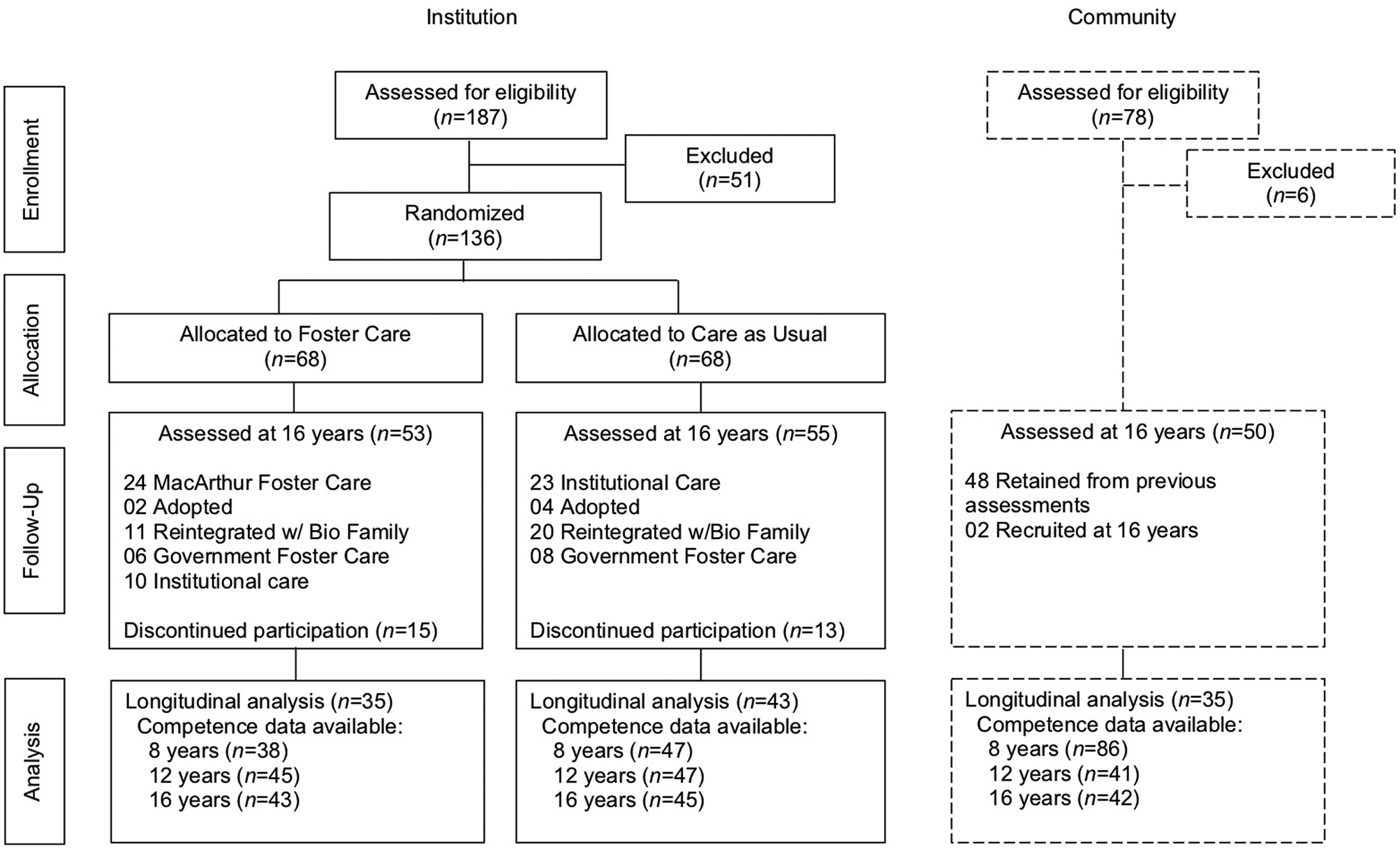
The original BEIP trial included 136 children who had been placed in institutional care at or shortly following birth as well as 72 children who had never been institutionalized. The 136 children with a history of institutional care are referred to collectively as the ever-institutionalized group. The first assessment (baseline) occurred when the children were, on average, 22 months of age (range = 6–31 months). Follow-up assessments were conducted at ages 30, 42, and 54 months, at which time the RCT officially ended. Additional follow-up data were collected at ages 8, 12, and 16 years. Additional community comparison children were recruited to supplement the never-institutionalized group and ages 8 (n = 61) and 16 (n = 2) years. Across ages 8, 12, and 16 years, complete data are available on 78 ever-institutionalized children and 35 never-institutionalized children (see Figure 1).
CONSORT flow diagram.

Procedures
Following the baseline assessment, children were randomly assigned to either the foster care group (n = 68) or the care as usual group (n = 68), who remained in institutional care. The RCT followed an ITT design, so the analyses were based on the original randomization group. The study deferred all decisions about placement to the Romanian child protection authorities, and over time, there were a number of changes in placement, as indicated in Figure 1. Foster parents were recruited in Romania and trained by BEIP personnel to provide high quality care to the children, which included explicit encouragement to care for the children as if they were their own (Smyke, Zeanah, Fox, & Nelson, Reference Smyke, Zeanah, Fox and Nelson2009; Zeanah et al., Reference Zeanah, Nelson, Fox, Smyke, Marshall, Parker and Koga2003). The foster parents were supported by social workers in Bucharest, Romania throughout the trial who regularly received consultation from clinicians in the United States. Consent for participation was obtained at the beginning of the study and at each subsequent assessment from each child's legal guardian. Assent was obtained from each participant at ages 8, 12, and 16 years.
The data for the present study were drawn from adolescent (at ages 12 and 16 years), caregiver (at ages 42 and 54 months, and ages 8, 12, and 16 years), and teacher (at age 8 years) reports. Caregiver reports were completed by the biological, foster, or adoptive mother in the case of foster care group adolescents as well as for the care as usual group adolescents who were placed into families throughout the course of the study. For the adolescents in institutions, caregiver reports were completed by the staff member who best knew the adolescent. Teacher reports were completed by the adolescent's primary teacher at the time of assessment. All of the questionnaires were translated into Romanian and then back translated into English, and they were assessed for meaning at each step by bilingual research staff. Observations of the children interacting with their preferred caregiver were videotaped at age 42 months and later coded by raters who were masked to participant status or study design (see McGoron et al., Reference McGoron, Gleason, Smyke, Drury, Nelson, Gregas and Zeanah2012).
Measures
Competence measures
Social Skills Rating System (SSRS; Gresham & Elliott, Reference Gresham and Elliott1990)
The SSRS is a caregiver report of social and behavioral functioning. Internal consistency and good convergent validity have been established (Gresham, Elliott, Vance, & Cook, Reference Gresham, Elliott, Vance and Cook2011). Items from the SSRS contributed to the family relations domain of competent functioning at ages 8 (α = .74), 12 (α = .77), and 16 years (α = .89).
MacArthur Health and Behavior Questionnaire (HBQ; Essex et al., Reference Essex, Boyce, Goldstein, Armstrong, Kraemer, Kupfer and Group2002)
The HBQ is a report of child health and emotional and behavioral adjustment. A report from teachers only was obtained at age 8 years. Caregiver and teacher reports were obtained at ages 12 and 16 years. The HBQ has been used with institutionally reared children (Wiik et al., Reference Wiik, Loman, Van Ryzin, Armstrong, Essex, Pollak and Gunnar2011) and has demonstrated good psychometric properties (Ablow et al., Reference Ablow, Measelle, Kraemer, Harrington, Luby, Smider and Kupfer1999). Items from the HBQ contributed to assessments of the peer relations (8 years α = .84, 12 years α = .81, 16 years α = .89), academic performance (8 years α = .91, 12 years α = .91, 16 years α = .88), physical health (a single item was used, no alpha value available), and mental health impairment (8 years α = .92, 12 years α = .87, 16 years α = .91) domains at ages 8, 12, and 16 years.
Academic performance
The academic performance competence domain at ages 8, 12, and 16 years was based on information from two sources. The first source consisted of BEIP staff reports of whether the adolescent was in a regular or special school setting. The second source consisted of three items from the HBQ pertaining to school performance in math, reading/language arts, and general school performance, assessed at ages 8 (teacher report), 12 (caregiver report), and 16 (caregiver report) years (see values for internal consistency above). Adolescents were classified as competent in the academic performance domain if they were in a regular school setting and also scored within one standard deviation of community comparison adolescents on the items from the HBQ that pertain to school performance.
Self-Endangering Behavior Scale (SEBS; Schechter & Fisher, Reference Schechter and Fisher2006)
The SEBS is a caregiver report of self-endangering behavior (e.g., climbing high on furniture or trees, putting objects into electrical sockets). Psychometric data on this scale are limited; however, good internal consistency was demonstrated across all 27 items in the present sample (α = .71). The SEBS was administered at age 8 years. Twenty items from the SEBS contributed to the risk-taking behavior domain at age 8 years (α = .60).
Youth Risk Behavior Survey (YRBS; Centers for Disease Control and Prevention, 2001)
The YRBS is an adolescent report of engagement in risky behavior including drug and alcohol use and general risk-taking (e.g., not wearing a seatbelt), supplemented with culturally relevant risk-taking behaviors among adolescents in Romania (e.g., provoking street dogs). The YRBS was administered at ages 12 and 16 years. At age 16 years, items regarding risky sexual behavior were added to the survey (e.g., engaging in sexual intercourse without a condom). The successful use of the YRBS in previous research has been documented (Aklin, Lejuez, Zvolensky, Kahler, & Gwadz, Reference Aklin, Lejuez, Zvolensky, Kahler and Gwadz2005; Lejuez, Aklin, Zvolensky, & Pedulla, Reference Lejuez, Aklin, Zvolensky and Pedulla2003; MacPherson, Magidson, Reynolds, Kahler, & Lejuez, Reference MacPherson, Magidson, Reynolds, Kahler and Lejuez2010). Items from the YRBS contributed to the substance use and risking-behavior domains at ages 12 (α = .64) and 16 years (α = .80).
Competent functioning
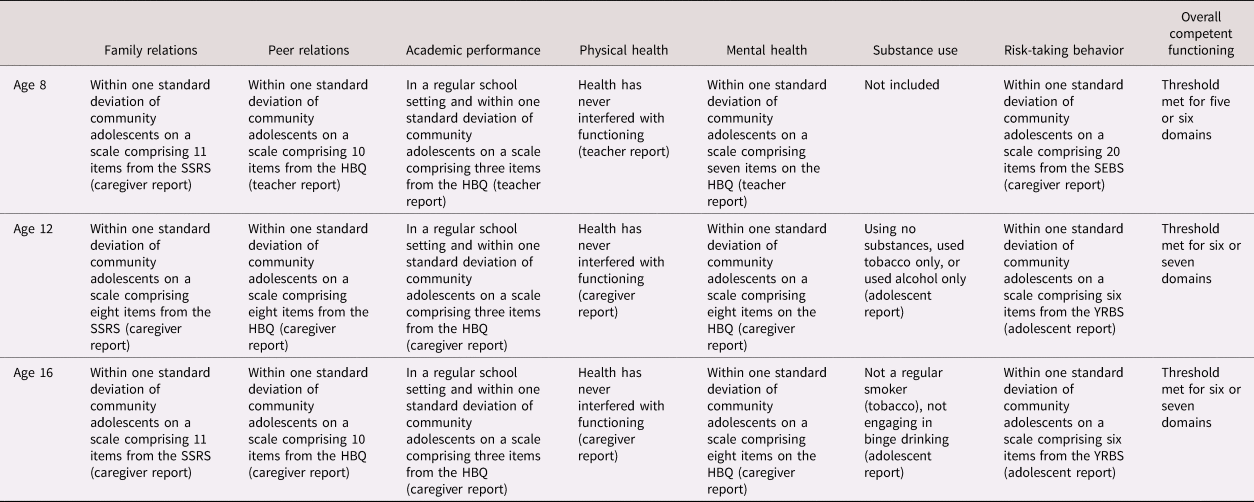
Prior to conducting the main study analyses, we created a composite of competent functioning at each age (8, 12, and 16 years) based on functioning in the domains of family relations, peer relations, academic performance, physical health, mental health, substance use, and risk-taking behavior. However, substance use was not included in the 8-year composite, which was based on six domains (i.e., family relations, peer relations, academic performance, physical health, mental health, and risk-taking behavior). Details regarding how competence was assessed in each domain are presented in Table 1 (descriptive information for each competence domain is available in supplemental Table 1).
Competence domain assessment across waves

Note: SSRS = Social Skills Rating System; HBQ = MacArthur Health and Behavior Questionnaire; YBRS = Youth Risk Behavior Survey.
At age 8 years, each participant was grouped based on whether their composite score was above the threshold for competent functioning (i.e., competent in at least five of the six domains). A binary variable was created with a score of “0” indicating adolescents who did not meet the threshold of at least five domains and “1” indicating adolescents who met the overall competence threshold. At ages 12 and 16, a composite score was created based on seven domains and adolescents were grouped based on whether they met the threshold for competent functioning (i.e., competent in at least six of the seven domains). A binary variable was created separately for ages 12 and 16 years with a score of “0” indicating adolescents who did not meet the threshold of at least six domains and “1” indicating adolescents who met the overall competence threshold. A descriptive report is provided of the number and percentage of adolescents who met the threshold for competent functioning at each assessment (i.e., ages 8, 12, and 16).
The threshold for competent functioning at age 12 (i.e., at least six domains out of seven) was previously established in Humphreys and colleagues (Reference Humphreys, Miron, McLaughlin, Sheridan, Nelson, Fox and Zeanah2018) and validated against IQ and physiological reactivity to stress. Children who met the threshold for competence had high IQ scores and greater diastolic blood pressure and pre-ejection period reactivity. In determining a cutoff, the goal was to adopt a threshold that classified individuals who were doing well in all or nearly all of the areas of competence as being competent overall. Multiple cutoffs were examined, and it was ultimately discovered that at least six domains for ages 12 and 16 years and at least five domains for age 8 years were the thresholds that were neither too lenient nor too restrictive.
The binary competence variables (0 = not competent and 1 = competent) that were created at ages 8, 12, and 16 years were used to create two longitudinal competence comparisons: Always competent versus not always competent and never competent versus ever competent. The always competent category comprised adolescents who met the threshold for competent functioning at ages 8, 12, and 16 years, whereas as the not always competent category comprised adolescents who were competent at zero, one, or two assessments. The never competent category comprised adolescents who never met the threshold for competent functioning at age 8, 12, or 16 years, whereas the ever competent category comprised adolescents who met the threshold for competent functioning at one, two, or three of the points.
Measures for the predictor variables
Observational Record of the Caregiving Environment (ORCE; NICHD early child care research network, 1996)
Caregiving quality at age 42 months was assessed using the ORCE, which is an observational measure of caregiver behavior that is coded from videotaped interactions between a child and their preferred caregiver. An overall caregiving quality variable was created by averaging qualitative scores for sensitivity, stimulation of development, positive regard for the child, flat affect (reverse coded), and detachment (reverse coded). A detailed report of the use of this measure in the BEIP is available elsewhere (Smyke et al., Reference Smyke, Koga, Johnson, Fox, Marshall, Nelson and Zeanah2007).
Percent time in institutional care and placement disruptions
For each child, we determined the placement history, including the number of months spent in institutional care. This information was used to calculate the percentage of the child's life that was spent in institutional care from placement into the institution through age 54 months. We also tracked each change (disruption) in placement (e.g., from a foster placement back to the institution, from the institution into a biological family, etc.) for each child through age 54 months.
Other measures
Wechsler Preschool and Primary Scale of Intelligence-Revised
Child cognitive ability at age 54 months years was assessed using the Wechsler Preschool and Primary Scale of Intelligence-Revised (WPPSI-R; Wechsler, Reference Wechsler1989). The WPPSI-R is a widely used performance-based assessment of cognitive abilities in young children ages 36–87 months. For the purposes of the present study, the estimated full-scale IQ score was used.
Preschool Aged Psychiatric Assessment
Total psychiatric symptoms (internalizing, externalizing, and ADHD) were assessed at age 54 months using the Preschool Aged Psychiatric Assessment (PAPA; Egger et al., Reference Egger, Erkanli, Keeler, Potts, Walter and Angold2006), which is a caregiver report. For the purposes of the current report, a total symptom score was used.
Ethical Considerations
The BEIP study design was reviewed and approved by the three institutional review boards of the principle investigators as well as the local Commission on Child Protection in Bucharest, Romania. Additionally, the BEIP was conducted in collaboration with the Institute of Maternal and Child Health of the Romanian Ministry of Health. The special ethical considerations of this study have been extensively reviewed and discussed by us and by others (Miller, Reference Miller2009; Millum & Emanuel, Reference Millum and Emanuel2007; Nelson et al., Reference Nelson, Fox and Zeanah2014; Rid, Reference Rid2012; Zeanah, Fox, & Nelson, Reference Zeanah, Fox and Nelson2012).
Data Analysis
We required complete competence data across all three waves of assessment for inclusion in the present report, and no data estimation procedures were used. This resulted in a large loss of participants but greater accuracy in reporting competence. Of the 55 adolescents who were assigned to the care as usual group and were assessed at age 16 years, 35 (64%) had complete competence data for ages 8 through 16 years. Of the 53 children in the foster care group who were assessed at age 16 years, 43 (81%) had complete competence data. Of the available 50 adolescents who had never been institutionalized and were assessed at age 16, 35 (70%) had complete competence data. See Figure 1 for more information on attrition. All of the following analyses were based on the longitudinal competence comparisons: always competent versus not always competent and never competent versus ever competent.
Prior to the main study analyses, differences across the longitudinal competence categories (always versus not always and never versus ever) among the entire sample and within the ever-institutionalized group only were reported based on sex (male vs. female). Cross tabulations of sex by longitudinal competence category were analyzed by using a chi-square test.
For hypothesis 1 (ever-institutionalized group vs. never-institutionalized group), the number and percentage of never-institutionalized and ever-institutionalized children who were always versus not always competent and never versus ever competent were compared by using the chi-square test. For hypothesis 2 (ITT), to test for intervention effects, these analyses were repeated comparing the number and percent of foster care group and care as usual group adolescents by each longitudinal competence category.
The analyses for hypothesis 3 were conducted within the foster care group by using a chi-square test. For hypothesis 3a (early placement) foster care group adolescents who had been placed into foster care prior to age 20 months were compared with respect to the longitudinal competence categories with foster care group adolescents who had been placed at or after 20 months.
Not all of the children who were initially randomized to the foster care group remained in their original MacArthur Foster Care network (MFC) placement throughout the course of the study. At ages 8, 12, and 16 years, each child was classified based on whether they were unstable in their placement (disrupted foster care), that is, removed from their original MFC placement and placed into another family or returned to institutional care, or stable (stable foster care), indicating that the child was still residing in their original MFC placement. Participants receiving disrupted foster care and stable foster care were compared with respect to their competence. However, prior to the analyses, we first determined whether a child's remaining in their original foster placement or being disrupted was dependent upon their level of functioning. Therefore, the participants in disrupted foster care and stable foster care were compared on measures of total psychiatric symptoms and cognitive ability at age 54 months as well as percentage of time in institutional care through age 54 months. Mean differences between the groups were examined with independent samples t tests. For hypothesis 3b (stability of placement), pending no significant group differences, the number and percentage of children in each longitudinal competence category for the disrupted foster care and stable foster care were compared by using a chi-square test.
Finally, for hypothesis 4 (early experiences), differences in early caregiving quality, percentage of time in institutional care, and placement disruptions based on longitudinal competence category were examined by using independent samples t tests with a Bonferroni correction of .025.
For all for the chi-square analyses, chi-square values, significance values at alpha level .05, and effect sizes (Cramer V) were reported. For the independent samples t tests, means and standard deviations for each group were provided along with t statistics, significance values at alpha level .05, 95% confidence intervals, and effect sizes (Cohen d) were provided.
Results
Cross-sectional data on the number and percentage of children that were classified as competent at ages 8, 12, and 16 years are presented in supplemental Table 2.
Comparisons between always and not always competent and never and ever competent on caregiving variables

Prior to the main study analyses, sex differences in competence were explored to determine whether sex should be included as a covariate in later analyses. Across the entire sample (never- and ever-institutionalized children combined), there were sex differences in the proportion of adolescents in the always competent versus not always competent categories, χ2(1) = 4.64, p = .031; V = .203. Upon further probing, never-institutionalized girls were more likely to be always competent (n = 15, 79%) compared with never-institutionalized boys (n = 6, 40%). There were no sex differences for the never competent versus ever competent comparison, χ2(1) = 1.45, p = .228; V = .113). Among the ever-institutionalized group only, there were no sex differences between the always versus not always competent categories, χ2(1) = 0.83, p=.362; V = .103, and never versus ever competent, χ2(1) = 0.63, p = .429; V = .090, categories. Given that there were no sex differences in competence in the primary population of interest (ever-institutionalized children) and that the effect size for a sex difference among the never institutionalized group was small, child sex was not included in the analyses.
Never-Institutionalized vs. Ever-Institutionalized
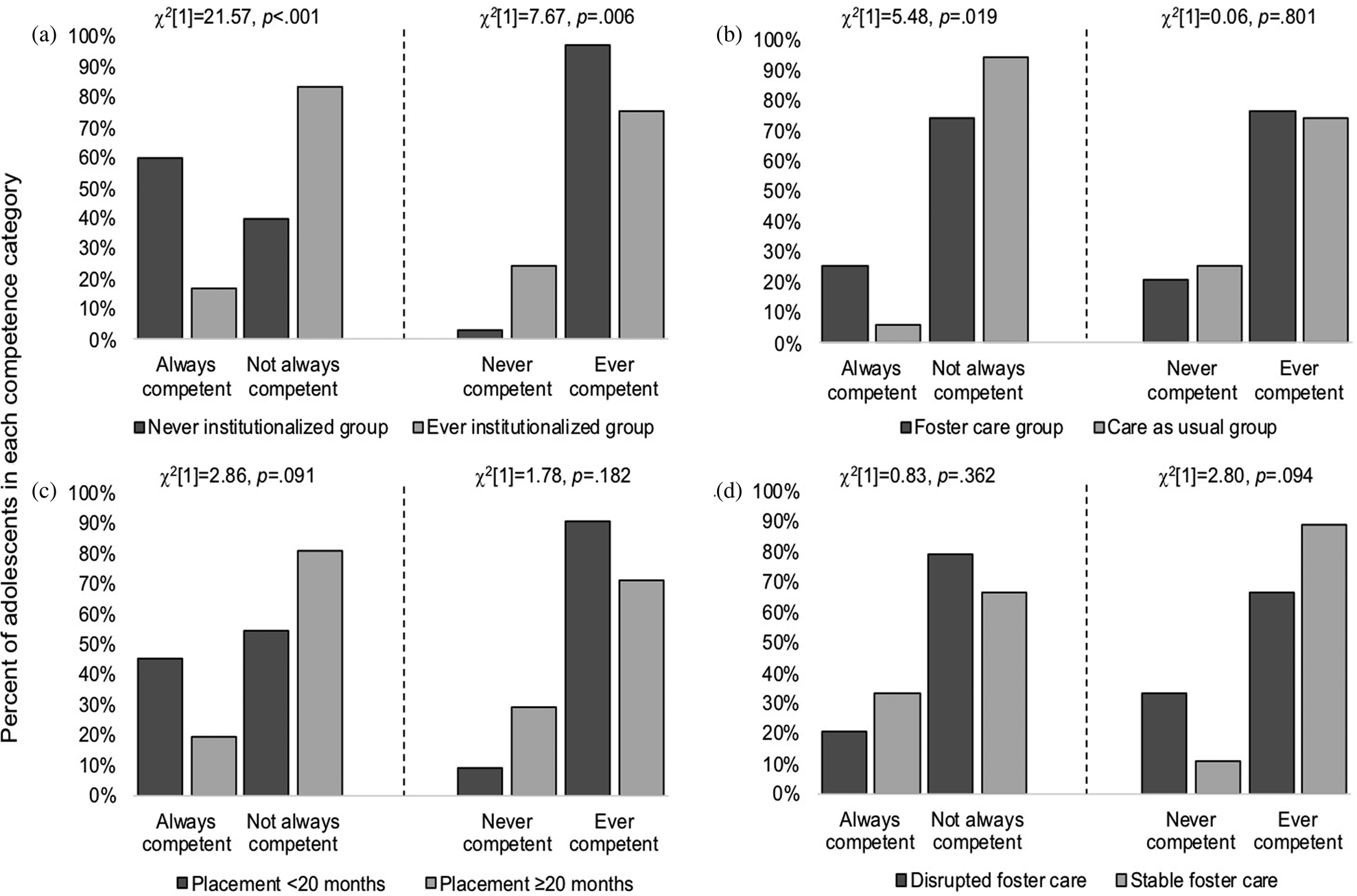
The always competent versus not always competent comparison was examined first. From 8 to 16 years of age, never-institutionalized group adolescents were more likely to be consistently (always) competent compared with ever-institutionalized adolescents, χ2(1) = 21.57, p < .001; V=.437, (see Figure 2). In fact, 60% (n = 21) of never-institutionalized group adolescents were in the always competent category compared with just 17% (n = 13) of the ever-institutionalized adolescents. Furthermore, ever-institutionalized adolescents were more likely to be never competent compared with never-institutionalized adolescents, χ2(1) = 7.67, p = .006; V = .260; see Figure 2). Only 3% (n = 1) of the never-institutionalized group adolescents were in the never competent category compared with 24% (n = 19) of the ever-institutionalized adolescents.
Percentage of adolescents classified as always competent versus not always competent and never competent versus ever competent by group: (a) never institutionalized compared to ever institutionalized, (b) foster care group compared to care as usual group, (c) early compared to late placement into foster care (ever institutionalized adolescents only), and (d) disrupted foster care placements compared to stable foster care placement (foster care group only).

Foster Care Group vs. Care as Usual Group
Adolescents in the foster care group were more than four times more likely to be always competent (26%, n = 11) compared with those in the care as usual group (6%, n = 2; χ2(1) = 5.48, p=.019; V = .265; see Figure 2). There were no statistical differences between the foster care and care as usual groups in the never versus ever competent comparison, χ2(1) = 0.06, p = .801; V = .028, (see Figure 2). Foster care group adolescents were just as likely to be never competent (23%, n = 10) as care as usual group adolescents were (26%, n = 9).
Early vs. Late Placement Into Foster Care
A total of 21 adolescents (32%) were placed into foster care prior to 20 months of age, and 44 (68%) were placed at or following 20 months of age. Despite differences in the proportions of early- (45%, n = 5) and late-placed (19%, n = 6) adolescents in the always competent category, the association between early placement and the always competent versus not always competent categories did not reach statistical significance, χ2(1) = 2.86, p = .091; V = .261, (see Figure 2). The comparison between never competent versus ever competent for early- and late-placed adolescents also failed to reach statistical significance, χ2(1) = 1.78, p = .182; V = .205).
Stable vs. Disrupted Foster Care Placement
Twenty-one (40%) adolescents remained in their original foster care placement through age 16 years and 32 (60%) were disrupted. There were no differences in the proportion of stable and disrupted placement adolescents between the always versus not always competent categories, χ2(1) = 0.83, p = .362; V = .141, (see Figure 2). Across middle childhood and adolescence, only 11% (n = 2) of adolescents with a stable placement were never competent compared with 33% (n = 8) of adolescents with a disrupted placement, but the test was not statistically significant, χ2(1) = 2.80, p = .094; V = .258.
As a check of the early childhood status of the disrupted and stable foster care groups at age 16 years, we compared these two groups at 54 months of age (prior to any disruptions) and found that there were no differences at that age between those who remained stable and those who subsequently were disrupted on measures of total psychiatric symptoms, t (47) = 1.95, p = .058, d = 0.59, cognitive ability, t (47) = -0.82, p = .414, d = 0.25, or percentage of time in institutional care through age 54 months, t (51) = -0.51, p = .610, d = 0.15.
Associations Between Early Caregiving Quality and Consistency of Competence
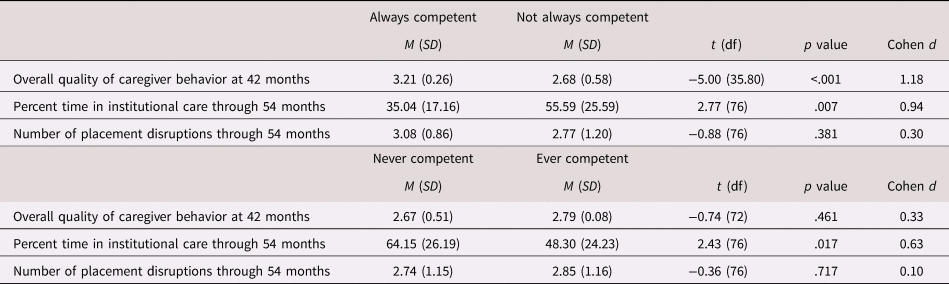
Among ever-institutionalized group adolescents, associations were explored between the longitudinal competence categories and caregiver quality at age 42 months, percentage of time in institutional care through age 54 months, and placement disruptions through age 54 months (Table 2).
Adolescents in the always competent category were more likely to have had higher quality of caregiving behavior at 42 months of age compared with not always competent adolescents, t (35.8) = -5.00, p < .001. Always competent adolescents were also more likely to have spent less time in institutional care through age 54 months, t (76) = 2.77, p = .007. Relatedly, never competent adolescents spent more time in institutional care through age 54 months than adolescents who were competent during at least one of the assessment periods across middle childhood and adolescence did, t (76) = 2.43, p =.017. There were no differences in the number of placement disruptions between adolescents in the always versus not always competent categories or the never versus ever competent categories.
Discussion
Patterns of competent functioning were examined across three points (ages 8, 12, and 16 years) along with several indicators of the early caregiving environment (observed quality of interactive behavior, percentage of time in institutional care, and placement disruptions). Adolescents with a history of institutional care were less likely to maintain competent functioning across middle childhood and adolescence than were community children. A minority of ever-institutionalized adolescents (17%) maintained competent functioning from age 8 to 16 years, but those who did maintain competent functioning were more likely to be in the group that was randomized to foster care than the care as usual group. Experiencing higher quality of early caregiving interactions and reduced exposure to institutional care were associated with sustained competence among this vulnerable group, highlighting the importance of not only limiting time spent in institutional care but also ensuring the quality of early parent–child interactions.
Never-Institutionalized vs. Ever-Institutionalized and Foster Care Group vs. Care as Usual Group
Previously, we demonstrated that children with a history of institutional care tend to have lower levels of competent functioning in adolescence (age 12 years) compared with never-institutionalized community children (Humphreys et al., Reference Humphreys, Miron, McLaughlin, Sheridan, Nelson, Fox and Zeanah2018), The present study extended these findings by assessing competence at two additional points (i.e., ages 8 and 16 years) in the interest of examining the consistency of competent functioning longitudinally from middle childhood through adolescence. Not surprisingly, children with a history of institutional care were significantly less likely to be consistently competent from middle childhood through adolescence than never-institutionalized community children were. These findings are similar to those that have been reported for competence following other types of adversity (e.g., severe pediatric medical conditions and physical disabilities), which have documented patterns of continuity and change in competent functioning across childhood and into adolescence (Masten & Tellegen, Reference Masten and Tellegen2012). However, a considerable number of children in the never-institutionalized community group demonstrated variability in competence over time; only 60% were consistently competent across all three waves. Furthermore, across domains (depicted in supplemental Table 2) similar proportions of never-institutionalized and foster care group children were competent in the domains of family relations, substance use, and risk-taking behavior. Thus, competence varied considerably both across and within groups. Future research is needed on the consistency of competent functioning across middle childhood and adolescence among children both with and without a history of institutional care to increase confidence in these findings and further explore the mechanisms that are involved in the maintenance of competent functioning over time.
Early Placement Into Foster Care and Stability of Foster Care Placement
It is possible that the variability in longitudinal competence among the children that were randomized to foster care could be partially explained by differences in the experiences of children in this group. We did not find support for the effect of early placement on consistency of competent functioning, despite the large proportion of early-placed adolescents with consistent competence (45%) compared with late-placed adolescents (19%) and a medium effect size. Therefore, we may have been underpowered in our ability to detect differences between these two groups. Notably, in the The English and Romanian Adoptee Study (ERA), there were higher rates of sustained “normal” functioning across childhood (from age 6 to 11 years) for children who had been placed early; however, they used an earlier placement threshold of 6 months of age (Kreppner et al., Reference Kreppner, Rutter, Beckett, Castle, Colvert, Groothues and Sonuga-Barke2007). We were not able to test the effect of placement prior to 6 months of age because no children in the BEIP were placed prior to 6 months of age.
We also failed to find an association between stability of foster care placement and longitudinal competence. However, there appeared to be meaningful differences in the proportion of adolescents who were never competent compared with those who were ever competent, with a medium effect size, despite that these differences were not statistically significant. Again, we may have lacked the statistical power to detect differences between groups.
Associations Between Early Caregiving Quality and Consistency of Competent Functioning
There was substantial variability in competence across middle childhood and adolescence following a history of institutional care, in part explained by randomization to foster care. In addition, we found that two of the three measures of children's early experiences—quality of early caregiving and percentage of time living in institutions through 54 months—predicted consistent competence (i.e., competence at all three waves across ages 8, 12, and 16 years). Additionally, percentage of time in institutional care also differentiated those children who were ever or never competent (i.e., competent at one or more assessment waves). Therefore, quality of caregiving, rather than percentage of time in institutional care, may be a better predictor of stable patterns of competence. Our study replicates and extends previous work (Humphreys et al., Reference Humphreys, Miron, McLaughlin, Sheridan, Nelson, Fox and Zeanah2018; Kreppner et al., Reference Kreppner, Rutter, Beckett, Castle, Colvert, Groothues and Sonuga-Barke2007; Vorria et al., Reference Vorria, Ntouma and Rutter2015) by demonstrating that children who receive higher quality caregiving early in life and spend less time being raised in institutions are not only more likely to achieve but also more likely to maintain competent functioning.
Of course, there may be variability in profiles of competence within children. For example, some children may be more socially or emotionally competent, whereas others may be more competent in academics. An important future direction for this work is to first examine whether different profiles of competence exist. Furthermore, associations should be examined between profiles of competent functioning and early adversity in caregiving as well as how differences relate to outcomes in adolescence and adulthood.
The link between sustained competence and early caregiving that we found is similar to the report by Vorria and colleagues (Reference Vorria, Ntouma and Rutter2015) that quality interactions between children and institutional staff that were characterized by appropriate and sensitive caregiving were associated with more favorable outcomes at age 13 years. Again, our findings extend this observation by indicating that early experiences predict consistent competence into middle adolescence. The importance of high quality, early interactions with caregivers and other important adults to the development of competent functioning also aligns with work on competence following other types of stress and adversity from the Project Competence Longitudinal Study (Garmezy, Masten, & Tellegen, Reference Garmezy, Masten and Tellegen1984; Masten & Tellegen, Reference Masten and Tellegen2012). Therefore, it is important for foster and adoptive families raising children with a history of institutional care to receive training and support as early as possible to ensure they are caring for children in a way that will foster healthy development. Caregiving quality in early childhood is a potentially important target of intervention for families that are caring for children with histories of institutional rearing.
There are a number of limitations of this study to be noted. Most importantly, the study is underpowered to detect a number of potentially important predictors of competence due to the available sample size from this longitudinal RCT. We are unable to recruit new participants for this trial, so we have emphasized effect sizes in conjunction with traditional Fisherian approaches. Second, our definition of competent functioning was externally validated at 12 years (Humphreys et al., Reference Humphreys, Miron, McLaughlin, Sheridan, Nelson, Fox and Zeanah2018), but not previously at 8 or 16 years. Third, our results may not be generalizable to children who are raised in settings other than Romanian institutions. However, we believe this work provides a framework for studying competence following deprivation in other cultures.
In conclusion, we find that institutional care is associated with reduced competence in middle childhood and adolescence and that maintaining competence across this period may be uncommon. For children with a history of institutional care, time spent in institutional care as well as the care they receive when they are interacting with their caregivers appear to be associated with greater resilience to early adversity. Although removal from institutional care as early as possible remains an important recommendation, it is also necessary to ensure that children are receiving high quality care from their caregivers as early as possible.
Supplementary Material
The supplementary material for this article can be found at https://doi.org/10.1017/S0954579419001500.