Introduction
Acknowledged gaps in mental health services in Australia and internationally mean people with mental illnesses do not always receive timely support of the type and quantity required (National Mental Health Commission, 2014). While it may not be ideal, informal carers currently play a significant role in filling these gaps. Mental health carers are family members or friends who provide regular, ongoing and unpaid assistance to a person with mental illness (Australian Bureau of Statistics, 2014). Ongoing caring can have a negative impact on carers’ own physical and mental health, employment, finances, family and social relationships (Harris et al., Reference Harris, Diminic, Marshall, Stockings and Degenhardt2015; Poon et al., Reference Poon, Harvey, Mackinnon and Joubert2017). Hence a range of carer support services are funded, including respite care, counselling and financial assistance; however, these are not always accessible to or suitable for mental health carers, and there is limited evidence for which interventions are effective (Yesufu-Udechuku et al., Reference Yesufu-Udechuku, Harrison, Mayo-Wilson, Young, Woodhams, Shiers, Kuipers and Kendall2015). Information about the number of mental health carers in the community, their characteristics and support needs is required to plan and evaluate these services. In Australia, numerous funders, programmes and providers deliver carer services, including programmes for all carers like the National Respite for Carers Programme (Department of Social Services, 2014), and those specific to mental health carers (e.g., Mental Health Respite: Carer Support; Department of Social Services, 2015). Due to this fragmentation, data with broad coverage are more easily sourced from carer surveys than administrative datasets.
National mental health and disability surveys have provided an important picture of Australian mental health carers. They highlight the substantial number of carers supporting people with mental illness, estimated at up to 15% of all adults, or anywhere from 76 000 to 2.4 million people (Pirkis et al., Reference Pirkis, Burgess, Hardy, Harris, Slade and Johnston2010; Australian Bureau of Statistics, 2012, 2014; Harris et al., Reference Harris, Diminic, Marshall, Stockings and Degenhardt2015). Roughly two-thirds of these carers are aged 35–64 years and two-thirds are female (Australian Bureau of Statistics, 2008, 2012; Pirkis et al., Reference Pirkis, Burgess, Hardy, Harris, Slade and Johnston2010). These surveys also reveal the significant extent of caring, with 59–66% of co-resident primary mental health carers providing more than 40 h of care each week (Australian Bureau of Statistics, 2008, 2012). Across surveys, between 60% and 92% of mental health carers report providing emotional assistance to their care recipient, 38–71% assistance with practical tasks like transport and housework, and 12–55% help with basic self-care (Pirkis et al., Reference Pirkis, Burgess, Hardy, Harris, Slade and Johnston2010; Australian Bureau of Statistics, 2012). Analysis of carer service use has focused on respite care, with only 10.9% of primary mental health carers using respite in the past 3 months and 21.2% reporting unmet needs for respite care (Harris et al., Reference Harris, Diminic, Marshall, Stockings and Degenhardt2015).
National estimates are complemented by studies of carers recruited through mental health services, carer services and support networks. While these results do not necessarily represent all mental health carers, particularly those not in contact with services, they provide greater depth than is currently available from national surveys. These studies suggest that mental health carers account for 13.9% of all informal carers (Cummins et al., Reference Cummins, Hughes, Tomyn, Gibson, Woerner and Lai2007; Hammond et al., Reference Hammond, Weinberg and Cummins2014), or 11–28% of people receiving government income support, such as Carer Payment and Carer Allowance (Edwards et al., Reference Edwards, Higgins, Gray, Zmijewski and Kingston2008; Harmer, Reference Harmer2008; Carers Victoria, 2013). The most common conditions cared for tend to be depressive and anxiety disorders (Mental Health Council of Australia, 2011; Mental Health Carers Tasmania, 2015). Mental health carers report providing on average anywhere from 53 to 104 h of care per week (Mental Health Council of Australia and Carers Association of Australia, 2000; Jardim and Pakenham, Reference Jardim and Pakenham2009, Reference Jardim and Pakenham2010a; Mackay and Pakenham, Reference Mackay and Pakenham2012; Loi et al., Reference Loi, Dow, Moore, Hill, Russell, Cyarto, Malta, Ames and Lautenschlager2015). Some mental health carer samples report high use of services, such as 78.6% using carer support groups (Mental Health Council of Australia, 2010), and 20–26% receiving Carer Payment (Mental Health Council of Australia, 2010; Carers Victoria, 2013), while others have found the majority of carers did not access support (Lawn and McMahon, Reference Lawn and McMahon2015). Reported lifetime use of respite care is higher in these studies than national surveys, at 18–36% of carers (Jardim and Pakenham, Reference Jardim and Pakenham2010a; Mental Health Council of Australia, 2012). Mental health carers report wanting more involvement in discharge and treatment processes and to receive more information from mental health services (Lawn and McMahon, Reference Lawn and McMahon2015; Coker et al., Reference Coker, Williams, Hayes, Hamann and Harvey2016; Poon et al., Reference Poon, Joubert and Harvey2018); in one study around half reported not receiving any information (Cleary et al., Reference Cleary, Freeman, Hunt and Walter2005). Another study found 50% of carers wanted more support from services and 61% more information (Coker et al., Reference Coker, Williams, Hayes, Hamann and Harvey2016). Qualitative studies also emphasise unmet needs, including for carer support groups, financial assistance, support to manage crises, and respite care, particularly respite that is flexible and tailored to the specific needs of mental health carers (Jeon et al., Reference Jeon, Chenoweth and McIntosh2007; McAullife et al., Reference McAullife, Andriske, Moller, O'Brien, Breslin and Hickey2009; Jardim and Pakenham, Reference Jardim and Pakenham2010b; Poon et al., Reference Poon, Joubert and Harvey2018).
A significant limitation of published estimates for planning carer services is the wide variability across studies, particularly the number of mental health carers in the community. Ideally, data to support planning should be obtained from nationally representative sources and consider all types of carers and service needs. For example, while primary carers provide the main support to a person with mental illness, other carers including additional secondary carers, young carers and those not living with the care recipient may also provide significant input and require support (Mental Health Council of Australia, 2012). Several analyses of national surveys have been limited to primary, co-resident carers aged 15 years or over, excluding these other carers (Australian Bureau of Statistics, 2008, 2012; Harris et al., Reference Harris, Diminic, Marshall, Stockings and Degenhardt2015). The boundaries of what is considered mental illness also vary, often including diagnoses like intellectual disability, dementia and substance use disorders which are generally supported by separate service systems in Australia, and sometimes including carers of people with only a secondary mental illness, whose principal condition could be supported by other services (e.g., Pirkis et al., Reference Pirkis, Burgess, Hardy, Harris, Slade and Johnston2010; Australian Bureau of Statistics, 2014). There is currently no nationally representative estimate of the number of carers of people with primary mental health diagnoses in Australia which encompasses primary, secondary, non-co-resident and young carers.
Some disability and carer programmes are provided for all conditions (including the recent National Disability Insurance Scheme (NDIS)) and some are specifically targeted towards mental health carers. A better understanding of similarities and differences in the caring role and service needs of mental health carers compared with other carers would inform better tailoring of services. Previous research has identified differences across disability types, particularly that mental health carers have poorer subjective wellbeing (Hammond et al., Reference Hammond, Weinberg and Cummins2014), family functioning (Edwards et al., Reference Edwards, Higgins, Gray, Zmijewski and Kingston2008), physical and mental health (Vecchio et al., Reference Vecchio, Stevens and Cybinski2008). Few studies have compared the caring role or service needs. In a sample of carers aged 55 and over caring for older Australians, Loi et al. (Reference Loi, Dow, Moore, Hill, Russell, Cyarto, Malta, Ames and Lautenschlager2015) found that mental health carers reported the fewest average weekly hours of care, only half those of stroke carers. Other studies suggest more mental health carers may have overall unmet needs for services (Vecchio et al., Reference Vecchio, Stevens and Cybinski2008, Reference Vecchio, Cybinski and Stevens2009), and may prefer different types of support (AMR Research, 2015).
This study aimed to provide a detailed profile of mental health carers for planning purposes, using a national household survey, the 2012 Survey of Disability, Ageing and Carers (SDAC). Specifically the study sought to:
(1) estimate the number of mental health carers in Australia;
(2) describe their characteristics and caring role;
(3) quantify their service use and unmet service needs; and
(4) compare the caring roles and service needs of mental health carers and other disability carers.
Method
Data source
The SDAC (Australian Bureau of Statistics, 2013) is a nationally representative household survey conducted by the Australian Bureau of Statistics (ABS) between August 2012 and March 2013. Households were selected from a stratified, multi-stage area sample developed by the ABS. Trained interviewers collected data using a Computer-Assisted Personal Interview. The final sample included 27 928 households comprising 68 802 persons (90% response rate).
A responsible adult in each selected household provided basic demographic data for all household members, including their sex, age, marital status, country of birth, main language spoken at home, area of residence (state capital city v. other), highest level of education, and labour force status. The responsible adult also answered screening questions to determine the presence of one or more carers and/or persons with disability in the household. Where possible, a personal interview was completed for persons in these populations. Proxy interviews were conducted for children aged below 15 years, those aged 15–17 years without parental consent to be interviewed, and others unable to be interviewed due to language or impairment.
Persons with a disability
Persons with a disability were identified through detailed household screening questions (e.g., ‘Does anyone in the household have a (nervous or emotional condition) that has lasted, or is likely to last for 6 months or more?’, ‘Are they restricted in everyday activities because of this condition?’, ‘Does anyone in the household need to be helped or supervised in doing things because of a mental illness or condition?’, ‘Is anyone in the household receiving treatment or medication for any long-term conditions or ailments?’, ‘What is the name of the condition they have?’). Those identified as having a disability were interviewed to collect additional information, including their main disabling condition, all disability types, level of activity limitations and number of informal carers.
All carers
Carers were identified by the responsible adult through detailed household screening questions (e.g., ‘Does anyone in the household help or supervise (another member of the household)/(someone living elsewhere) who has a long-term health condition or disability with everyday types of activities?’, ‘Do they provide this help on a regular, unpaid, informal basis?’). Carers could also be subsequently identified by a person with disability living in the household (e.g., ‘Have you received, or do you expect to receive, assistance to help with these tasks from a partner or spouse/parent, family, friends or neighbours for 6 months or more?’, ‘Which of your family, friends or neighbours provide this unpaid assistance?’). The SDAC classified household members as carers where they provided support to someone with a limitation to their mobility, communication or self-care and this support was ongoing, or likely to be ongoing, for at least 6 months. The informant questions included information on the relationship of the carer to care recipient, number of recipients and types of assistance provided. Information on the disability type of their care recipient was only available for co-resident carers.
Confirmed primary carers
The SDAC identified carers as possible primary carers if the household informant indicated they were the person providing the most assistance to the recipient. Persons identified as possible primary carers and aged 15 years or over were interviewed to confirm their primary carer status. Confirmed primary carers were asked additional questions about their care, including years caring; average hours spent caring each week (<20, 20–29, 30–39, 40+ h); receipt of Carer Payment, a government income support payment; detailed types of assistance provided to their main recipient of care; and their use of, need for and satisfaction with assistance in their caring role.
Key study variables
Mental health carers
For this study, SDAC respondents identified as carers were classified as mental health carers if they provided assistance to a care recipient aged 15 years or over whose main disabling condition was one of: schizophrenia, depression/mood affective disorders (excluding postnatal depression), phobic and anxiety disorders, nervous tension/stress, attention-deficit disorder/hyperactivity, other mental and behavioural disorders, or mental and behavioural disorders not further described. Caring for recipients aged under 15 years was excluded due to the substantially different profile of mental and behavioural disorders in children, and difficulties disentangling the extra responsibilities of informal caring from normal parenting (Merikangas et al., Reference Merikangas, Nakamura and Kessler2009).
Other disability carers
For comparison, remaining carers of people aged 15 years or over were grouped into those caring for a recipient whose main disabling condition was: (1) an ‘other cognitive/behavioural’ disorder (autism and related disorders, mental retardation/intellectual disability, intellectual and developmental disorders not elsewhere classified, speech impediment, Alzheimer's disease, dementia and head injury/acquired brain damage); or (2) a ‘physical condition’ (all other conditions, including musculoskeletal, cardiovascular, neurological, congenital and sensory disorders – see Supplementary material for full list).
Primary carers
Within each disability group, additional caring data were available for a subgroup of confirmed primary carers who were aged 15 years or over, whose main recipient of care met the above group criteria, and who lived with that main recipient of care.
Data analysis
Data were obtained from the ABS in the form of a Confidentialised Unit Record File (CURF; May 2014 version) and analysed using Stata 11 (StataCorp, 2009). Person-level and recipient-level data files were merged to obtain estimates for all co-resident mental health carers and their recipients. Data were weighted by the ABS to account for possible selection and non-response biases, and differences between the sample and the Australian population. Jackknife repeated replication was used to calculate standard errors and 95% confidence intervals (CIs) to account for the complex sample selection procedures. Analyses were descriptive, involving calculation of proportions. Unweighted Pearson χ 2 statistics, weighted F-statistics and corresponding p-values were computed for between-group differences. Ethics approval was obtained from The University of Queensland Behavioural & Social Sciences Ethical Review Committee (approval number 2015001907).
Results
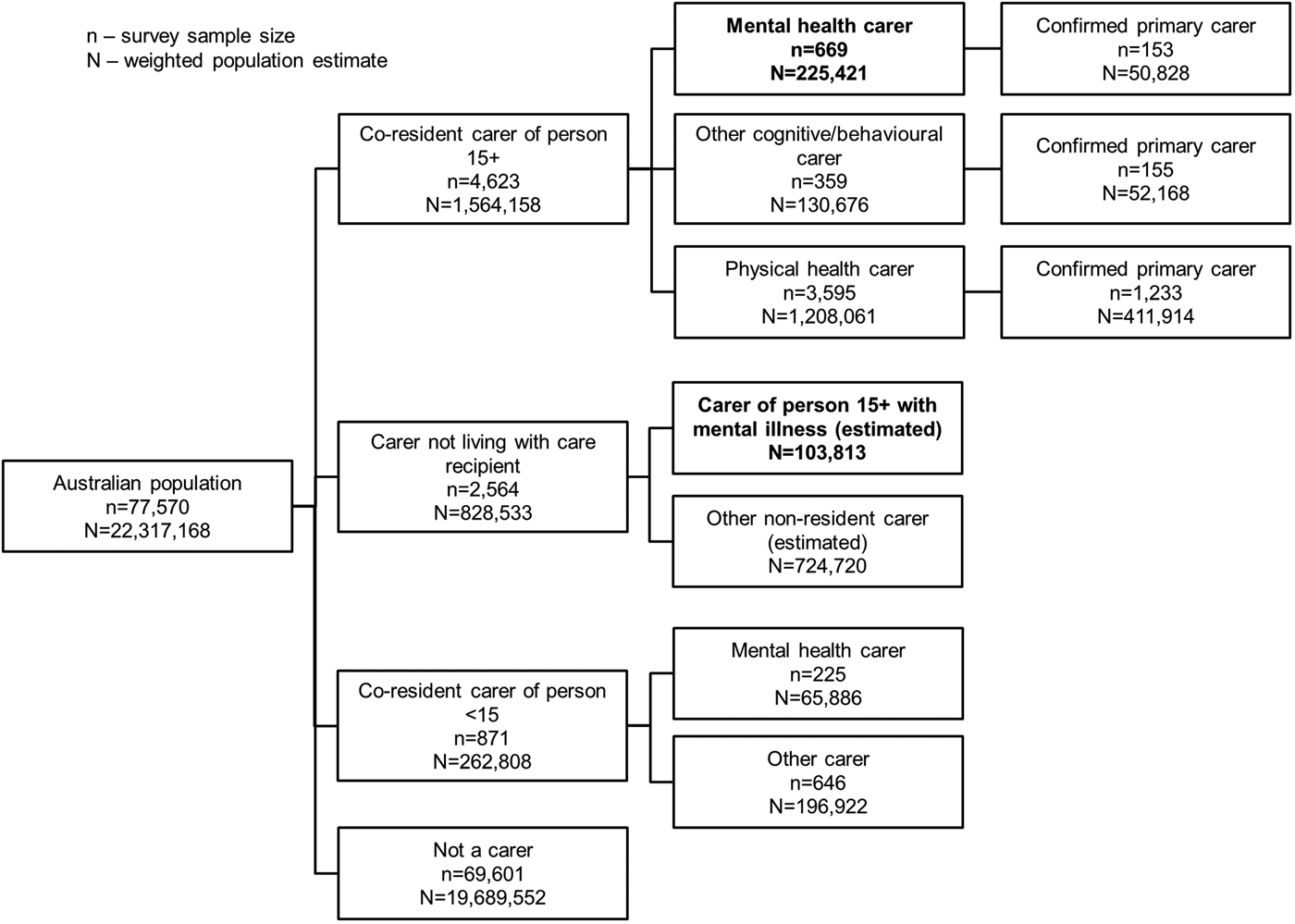
In 2012, there were an estimated 225 421 co-resident carers of adults with mental illness in Australia (Fig. 1), representing 1.0% (95% CI 0.9–1.1) of the Australian population or 14.0% (95% CI 12.8–15.1) of all co-resident carers of adults with a disability. A subset of 50 828 (0.2% of the population, 95% CI 0.2–0.3) were confirmed primary mental health carers. Age and diagnosis of care recipients were not available for non-resident carers. However, if the relative proportions were equivalent to co-resident carers, there would have been a further 103 813 non-resident carers of adults with mental illness in 2012.
Overview of carer sample from 2012 Survey of Disability, Ageing and Carers.

Carer and recipient characteristics
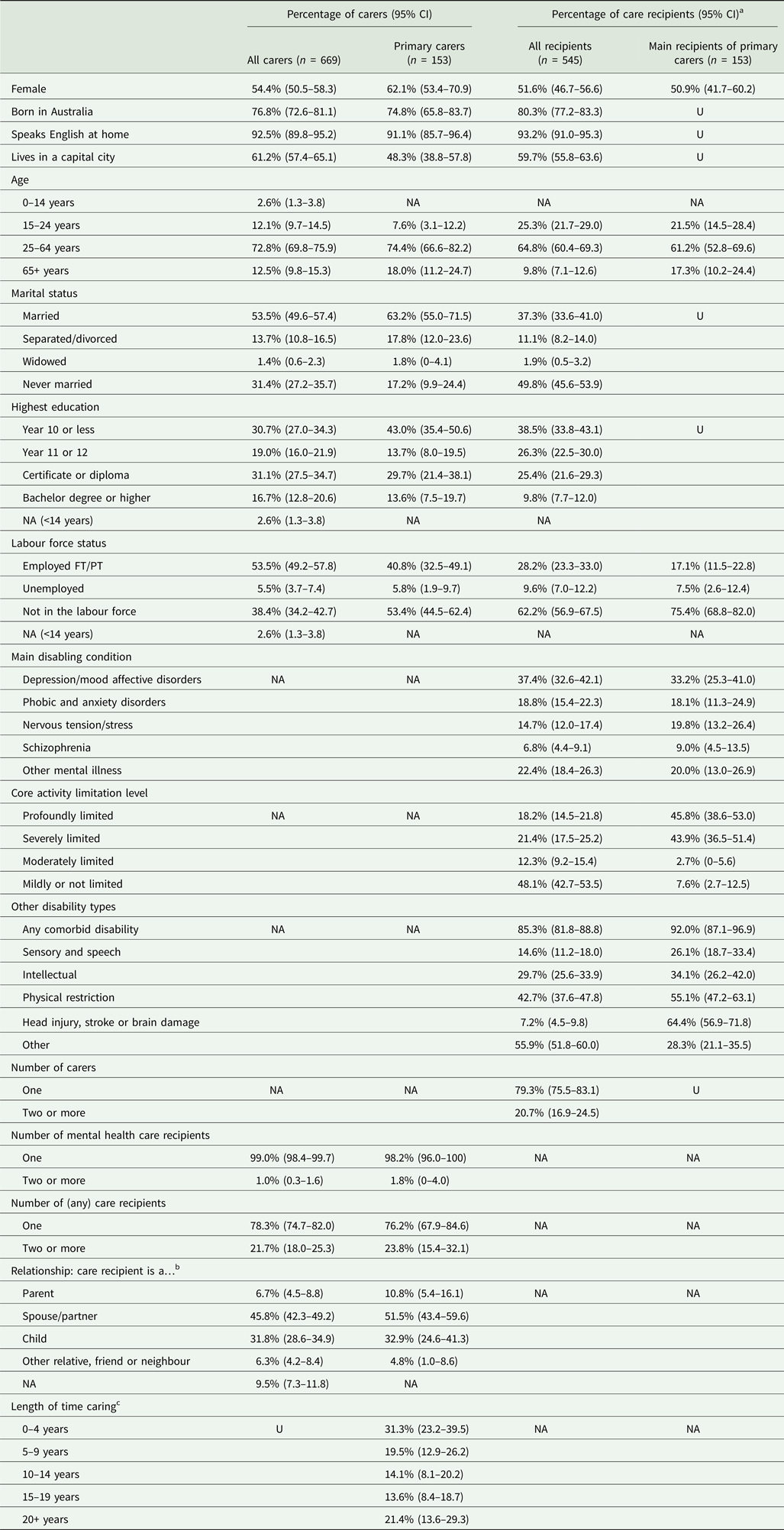
Table 1 shows the demographic characteristics of mental health carers. Most were of working age, but nearly 15% were aged below 25 years, with the youngest only 8 years old. The majority were female, married and living in a capital city. Primary mental health carers had lower levels of education and employment.
Characteristics of Australian co-resident mental health carers and their care recipients

NA, not applicable; U, unavailable in the SDAC CURF dataset; FT, full time; PT, part time.
a Excludes five recipients with missing identifier variables.
b For all carers carer–recipient relationship, n = 680 because 11 carers cared for two recipients with mental illness and both dyads are counted here.
c For primary carers, n = 152 (one response of ‘does not know’ excluded).
Care recipients had a similar demographic profile to mental health carers, with a slightly younger age distribution (Table 1). The majority were of working age, although 25.3% were aged 15–24 years. Half had never been married, only 28.2% were employed, and less than one in ten had completed tertiary qualifications. The most frequently reported main disabling conditions were mood disorders (37.4%) and anxiety disorders (18.8%). The majority of recipients also had other disabilities; most commonly a physical restriction, reported by 42.7%.
Main recipients of care from primary mental health carers had poorer functioning than the broader group of care recipients of all mental health carers. Only 17.1% were employed, and the vast majority (89.7%) were profoundly or severely limited in the core activities of mobility, communication and self-care. While the profile of main disabling mental illnesses was similar to that of all recipients, nearly two-thirds of these main recipients also had a head injury, stroke or brain damage.
Caring role
Most care recipients reported having only one carer; however, 21.7% of mental health carers were providing care to more than one individual, mainly with non-mental health primary conditions (Table 1). Mental health care recipients aged 15 years or more were commonly the carer's spouse/partner (45.8%) or adult child (31.8%). Half of primary carers had been caring for 10 or more years.
Hours of care
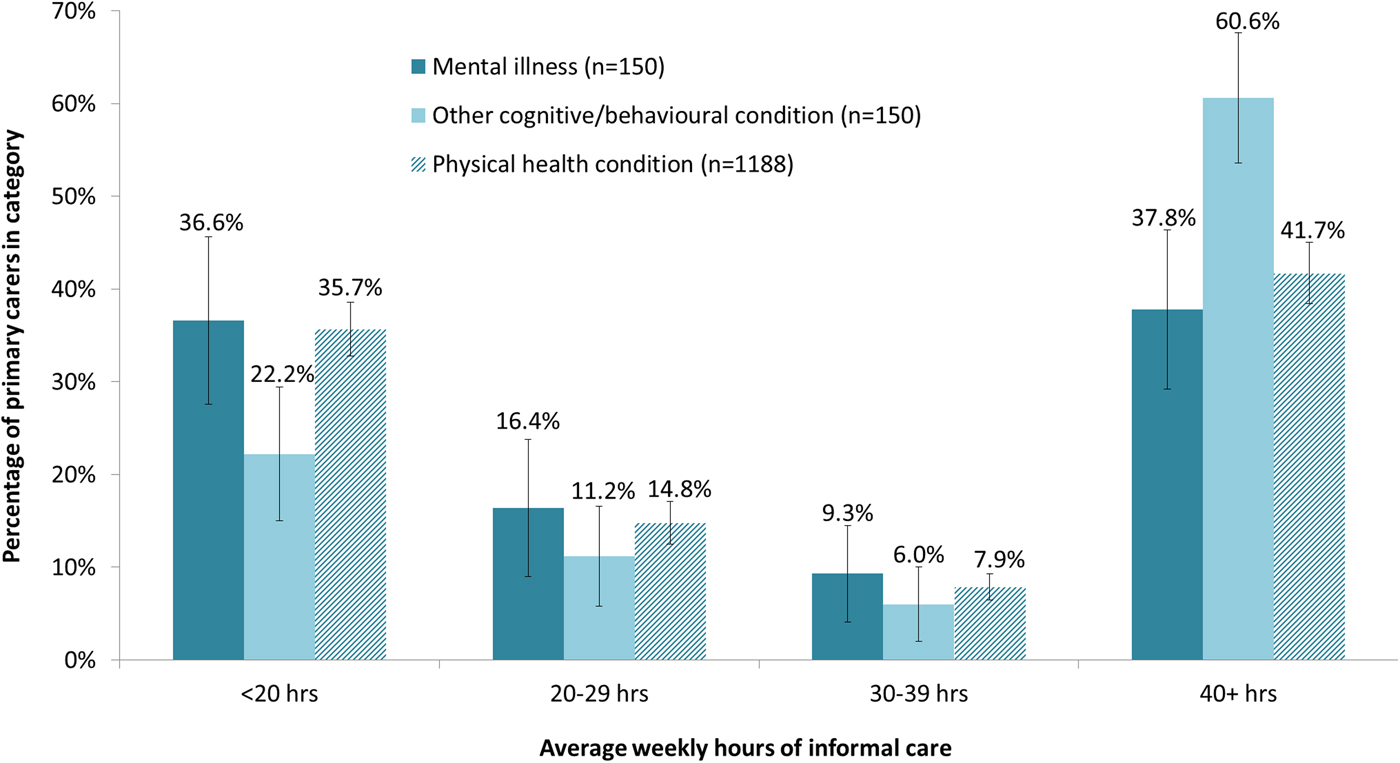
Figure 2 shows that 37.8% of primary mental health carers provided 40 or more weekly hours of care, and a similar proportion <20 h. The distribution of average hours of care was similar for primary mental health and physical health carers. However, disability type was significantly related to caring for 40 or more hours per week (χ 2(2, N = 1488) = 1123.25, p < 0.001), with a greater proportion of primary carers for people with other cognitive/behavioural conditions in this category.
Average caring hours for primary carers of people aged 15+ years, grouped by care recipient's main condition (error bars represent 95% CIs).

Caring tasks
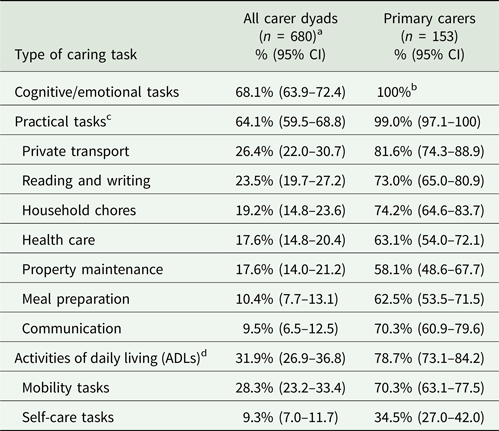
Most mental health carers (68.1%) and all primary mental health carers provided emotional support to their care recipient (Table 2). Most mental health carers also assisted their care recipient with practical tasks (64.1%), especially providing private transport, assisting with reading and writing, and with household chores. In contrast, only 31.9% of mental health carers assisted with activities of daily living (ADLs), more so with mobility than self-care. Compared with all mental health carers, a much greater proportion of primary mental health carers performed all types of caring tasks (Table 2); however, assistance with ADLs was also less common for primary carers than other tasks.
Types of caring tasks performed by mental health carers

a Includes 669 carers and 680 carer–recipient dyads, where 11 carers are counted twice because they each had two care recipients with mental illness.
b Excludes 28 primary carers who did not answer the question.
c In addition to listed tasks, practical tasks for primary carers include transport tasks, using public transport, letter writing, financial management, heavy housework, light housework, laundry, gardening, home maintenance, footcare, health care other than footcare, communicating with family and friends, decision making or problem solving, accompanying when going out, making or maintaining relationships, manipulating limbs or exercising.
d In addition to listed tasks, ADLs for primary carers include getting into or out of a bed or chair, moving about the house, moving around away from home, bathing or showering, dressing, eating or feeding, toileting, managing incontinence.
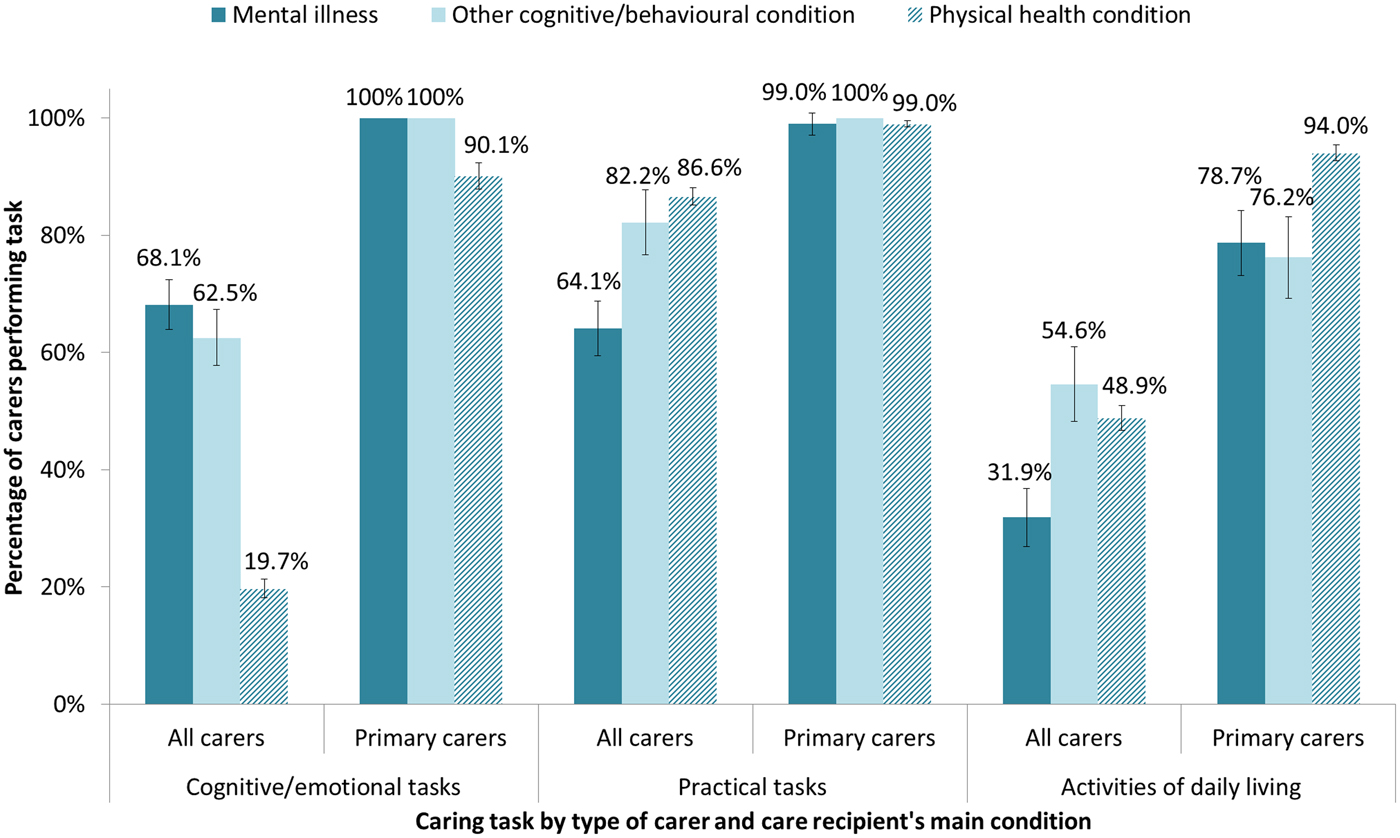
Caring tasks were compared across different types of conditions (Fig. 3). The care recipient's main condition was significantly related to the proportion of carers providing emotional support (χ 2(2, N = 4861) = 1024.84, p < 0.001), practical assistance (χ 2(2, N = 4861) = 245.79, p < 0.001) and ADLs (χ 2(2, N = 4861) = 90.66, p < 0.001). Fewer mental health carers assisted their care recipient with practical tasks and ADLs compared with other conditions, but a much greater proportion than physical health carers provided emotional support. For the sub-group of primary carers, nearly all primary carers across the three groups assisted with emotional and practical tasks, but there were significant differences in assistance with ADLs (χ 2(2, N = 1541) = 4090.31, p < 0.001). More primary physical health than mental health carers helped with ADLs.
Types of caring tasks performed by all carers and primary carers of people aged 15+ years, grouped by care recipient's main condition (error bars represent 95% CIs).

Episodic care
Data on whether carers provided continuous or episodic care were only available for primary carers. There were significant differences across the three disability groups (χ 2(2, N = 1541) = 1216.66, p < 0.001). A greater proportion of primary mental health carers (25.6%, 95% CI 18.0–33.2) provided episodic care compared with primary other cognitive/behavioural condition carers (6.5%, 95% CI 3.2–9.8), but not physical health carers (23.2%, 95% CI 20.6–25.8).
Support services
Service use
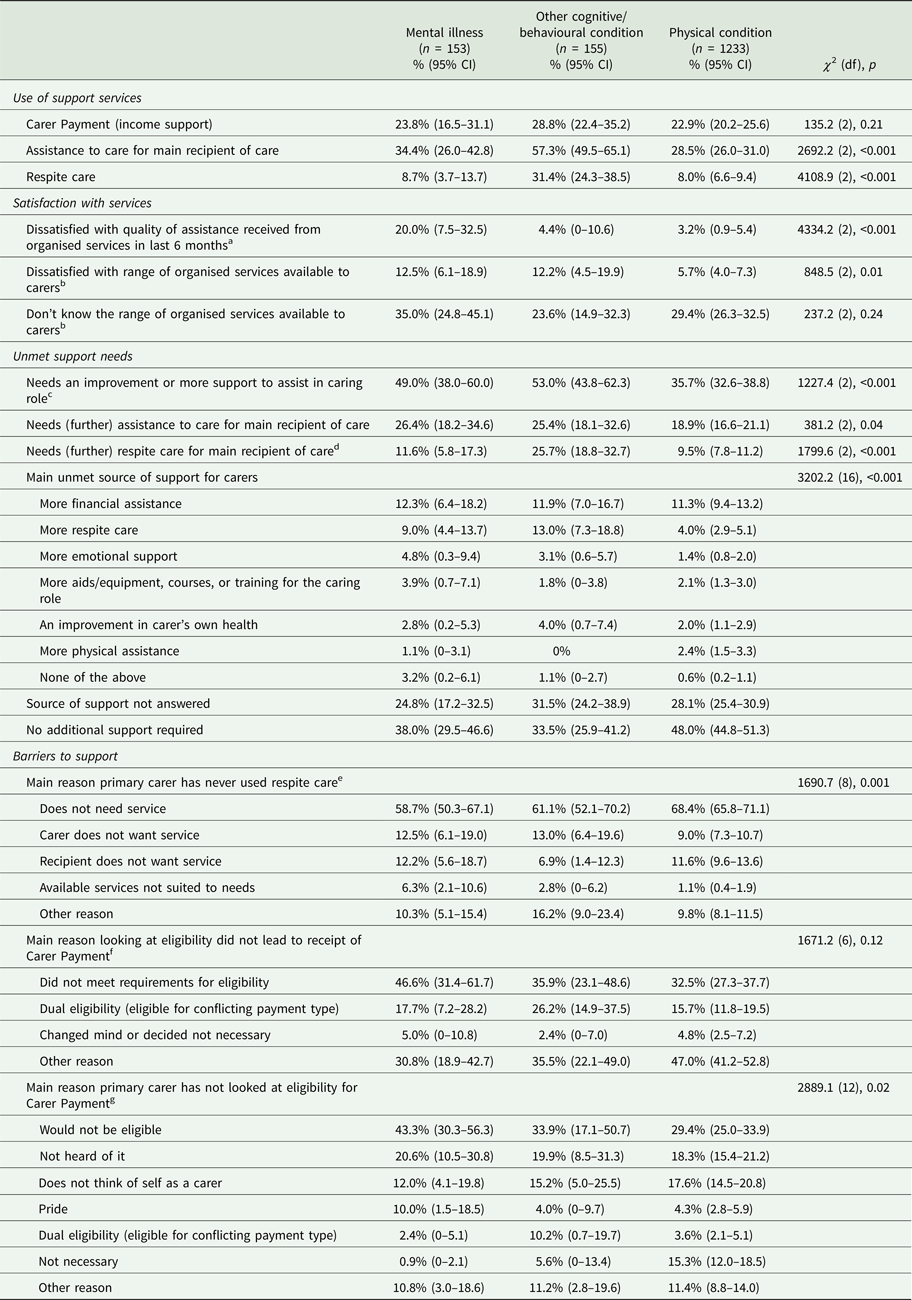
As shown in Table 3, only 23.8% of primary mental health carers reported receiving government income support (i.e., Carer Payment). Further, only 34.4% received assistance to care for their main recipient of care, and <9% had ever used respite care. There was a significant variation in receipt of assistance and respite across conditions, with fewer primary mental health carers receiving services compared with primary other cognitive/behavioural condition carers.
Primary carer need and receipt of support services for care recipients aged 15+ years, grouped by main condition of main recipient of care

NA, not applicable.
a Excludes 33 mental health, 43 other cognitive/behavioural and 313 physical health carers who did not answer, and 75 mental health, 48 other cognitive/behavioural and 660 physical health carers who had never received assistance from organised services.
b Excludes 35 mental health, 44 other cognitive/behavioural and 335 physical health carers who did not answer.
c Excludes 33 mental health, 43 other cognitive/behavioural and 314 physical health carers who did not answer.
d Excludes ten mental health, 14 other cognitive/behavioural and 94 physical health carers for whom the question was not applicable (may not have answered a previous relevant question).
e Excludes 17 mental health, 61 other cognitive/behavioural and 136 physical health carers who had used respite care.
f Excludes 104 mental health (67.6%), 98 other cognitive/behavioural (64.2%) and 890 physical health carers (72.1%) who received Carer Payment or had not looked at their eligibility.
g Excludes 87 mental health (56.2%), 98 other cognitive/behavioural (64.6%) and 613 physical health carers (50.8%) who had received or looked at eligibility for Carer Payment.
Satisfaction with services
One-fifth of primary mental health carers who had used services were dissatisfied with the quality of assistance received, and this was significantly higher than for other primary carers (Table 3). A small proportion of primary carers, regardless of service use, were dissatisfied with the range of available services, while a more substantial 35.0% of primary mental health carers did not know what services were available.
Unmet needs
Half (49.0%) of the primary mental health carer group reported needing an improvement or more support in their caring role. For those with unmet support needs, financial assistance, respite care and emotional support were the most important areas of unmet need. However, fewer primary mental health carers than primary other cognitive/behavioural condition carers reported needing more respite care (Table 3).
Service barriers
The majority of primary mental health carers who had never accessed respite care (91.3% of carers) reported not needing or wanting the service, with only 6.3% indicating available services did not suit their needs. Most primary mental health carers not receiving Carer Payment were either not eligible or thought they would not be. Of the 43.8% who had not looked at their eligibility, a further 20.6% had not heard of Carer Payment.
Discussion
In 2012, a sizable population of approximately 329 000 Australians were caring for an adult with mental illness, with 23% of co-resident carers confirmed as the primary carer. Even among primary mental health carers, relatively small proportions were accessing support services and more than a third were unaware of available supports. Since primary carers generally have a more intensive caring role, it can be assumed that the proportion of all mental health carers (including young, secondary and non-resident carers) accessing support services is even smaller. The low levels of service use and relatively high unmet support needs reported by mental health carers in this community survey provide additional quantitative support for findings from previous smaller scale and qualitative studies of carers, which have identified a similar range of unmet needs for information and support (Lawn and McMahon, Reference Lawn and McMahon2015; Poon et al., Reference Poon, Joubert and Harvey2018). For example, Poon et al. (Reference Poon, Joubert and Harvey2018) found that carers of people with psychotic disorders also reported needs for financial support, respite care and emotional support, consistent with the main unmet needs identified by mental health carers in the 2012 SDAC.
While previous studies have highlighted the importance of emotional support tasks for mental health carers (Pirkis et al., Reference Pirkis, Burgess, Hardy, Harris, Slade and Johnston2010; Carers Victoria, 2013), to our knowledge, this is the first study to quantify differences in caring tasks for mental health v. other disability carers; specifically that more mental health carers provide emotional support but fewer assist with practical tasks and ADLs. This is consistent with the needs of people with mental illness compared with other conditions, such as a greater focus on emotional and crisis support, reminders to complete activities, assistance with managing day-to-day life and help re-engaging with the community (McAullife et al., Reference McAullife, Andriske, Moller, O'Brien, Breslin and Hickey2009). This type of behaviour monitoring, mentoring and being constantly available for ad hoc support has been identified as stressful and exhausting for carers (McAullife et al., Reference McAullife, Andriske, Moller, O'Brien, Breslin and Hickey2009; Hielscher et al., Reference Hielscher, Diminic, Kealton, Harris, Lee and Whiteford2018), and may contribute to the high proportion of mental health carers who reported unmet support needs in this study. Carers of people with other cognitive/behavioural conditions, often combined with mental illness in previous studies, had a significantly different caring profile including greater caring hours, more continuous care, and higher use of and unmet need for services. These differences may account for higher estimates of mental health caring hours in previous work (e.g., Australian Bureau of Statistics, 2008; 2012).
The identified characteristics of mental health carers and their care recipients are broadly consistent with those described in previous reports (e.g., Mental Health Council of Australia, 2010; Pirkis et al., Reference Pirkis, Burgess, Hardy, Harris, Slade and Johnston2010; Carers Victoria, 2013; Harris et al., Reference Harris, Diminic, Marshall, Stockings and Degenhardt2015). A notable difference is the large minority of young mental health carers highlighted in this study who are largely absent from prior analyses (e.g., Carers Victoria, 2013; Hunter Institute of Mental Health, 2013). Young carers aged below 25 years have been identified as a priority group for research and support services; they often take on significant responsibilities beyond those of their peers and this can negatively impact on normal social, educational and vocational engagement during a critical development period (Cass et al., Reference Cass, Smyth, Hill, Blaxland and Hamilton2009; Hill et al., Reference Hill, Smyth, Thomson and Cass2009). Use of and need for formal carer services is likely to be different for younger mental health carers; however, to date there has been little research to quantify the caring role and support needs of these carers. Another surprising finding was the high proportion of primary carers’ main care recipients who reported a disabling head injury, stroke or other brain damage. These conditions were among the prompts used to identify disabling illnesses in the 2012 SDAC, and it may be that some respondents with mental illness identified their condition as a form of ‘brain damage’. However, the 2012 SDAC definitions for primary carers and their main care recipients focus on core activity limitations to mobility, communication and self-care, so it is also possible that this was a particularly disabled group experiencing multiple comorbidities.
Strengths and limitations
This study provides an estimate of the number of Australian mental health carers drawn from a recent, nationally representative household survey and based on a definition of mental health caring matched to the population likely to require support. Unlike previous studies, we were able to enumerate and describe not only the characteristics of primary carers but also the wider population of people caring for someone with mental illness, including carers of all ages, levels of care (primary and secondary) and relationships to the care recipient (family or unrelated). The limitations of the survey structure meant we could not identify the characteristics and support needs of mental health carers not living with their care recipients; however, we were able to provide a reasonable estimate of the size of this population. Some non-resident carers likely provide a lower intensity of support than those who live with their care recipient, but they may face additional challenges to gaining recognition of and support for their caring role. It is unclear how well the caring role and support needs described here for co-resident mental health carers apply to non-resident carers.
Several other limitations should be noted. The estimated number of mental health carers may be conservative because the survey required household informants to identify carers; in certain cases, care recipients, carers and their families may be reluctant or unable to recognise the caring role (McMahon et al., Reference McMahon, Hardy and Carson2010). For Aboriginal and Torres Strait Islander or culturally and linguistically diverse populations in particular, cultural expectations to provide family support may serve as a barrier to self-identifying as a carer and to accessing services (Kokanovic et al., Reference Kokanovic, Petersen and Klimidis2006). Unfortunately, carer ethnicity was not available in the SDAC. The survey methods also underestimate the number of primary carers. Primary carers aged below 15 years, not living with their care recipient or who care for a secondary care recipient with mental illness (where the main care recipient has a different condition) were not included in the SDAC confirmed primary carer group. Questions on carer service use were only available for primary carers and may not reflect the service use and needs of all mental health carers. Given their higher average hours of care and principal caring role, primary carers would generally have greater use of and need for services than other carers. Finally, differences in the total hours of support across different disability carers should be interpreted with caution as these may be influenced by the availability of formal health services for each condition.
Implications
Provision of carer services such as income support, respite, information and counselling is important to ensure carers are supported in their significant caring roles and to maintain own health and wellbeing. Despite funding of these services through Australian programmes like Carer Payment and Allowance (Department of Human Services, 2016) and Mental Health Respite: Carer Support (Department of Social Services, 2015), many mental health carers reported poor awareness of available services and unmet needs for support, both financial and practical. Unmet financial needs suggest mental health carers would benefit from more accessible income support or other financial assistance. Greater dissatisfaction with services also suggests that available supports are not as well tailored for mental health carers as other carers. This may be a reflection of the focus of mental health caring on different types of support to that provided for physical conditions; for example, mental health carers report needing more suitable and flexible respite options (Jardim and Pakenham, Reference Jardim and Pakenham2010b), and assessment tools for accessing carer payments that take into account the greater focus on emotional support (Carers Victoria, 2013; Royal Australian and New Zealand College of Psychiatrists, 2015). While some mental health carers reported needing no further assistance, results indicate that the system is failing to meet the needs of all mental health carers and that these carers could be better informed about available supports. Further research is also warranted to identify the specific needs of young mental health carers and non-resident carers which were not explored in this study; these carers may require different kinds of assistance in their caring roles.
The recent roll-out of the National Carer Gateway (a national online and telephone service; Australian Government, 2015) may help to improve mental health carers’ knowledge and pathways into services, but a more proactive approach is likely needed to identify and offer information and support to carers. Since the 2012 SDAC, the NDIS has been progressively rolled out, moving disability services for severe and persistent mental illness from block funding to individual budgets. There have been widespread concerns about the suitability of assessment and planning processes for people with psychosocial disability given their different needs (Joint Standing Committee on the National Disability Insurance Scheme, 2017; Smith-Merry et al., Reference Smith-Merry, Hancock, Bresnan, Yen, Gilroy and Llewellyn2018). Nevertheless, the NDIS has the potential to improve the amount, suitability and coordination of supports provided, which may in turn reduce demands on carers. As funding for historical mental health carer support programmes is transitioned across to the NDIS, concerns have been raised about future access to carer supports (Smith-Merry et al., Reference Smith-Merry, Hancock, Bresnan, Yen, Gilroy and Llewellyn2018), including for mental health carers supporting people who are not NDIS-eligible. The NDIS requires support for carers to be requested by the care recipient, creating new barriers to identifying and assisting these carers, and this may be particularly challenging where there is poor insight or a fractured relationship caused by mental illness. This study has highlighted the large numbers of carers providing unpaid support to people with mental illness, the different role of mental health carers, and their substantial unmet needs for information and support prior to the NDIS. It is clear that a standardised assessment process for carers of all disability types is unlikely to meet mental health carers’ needs, and particularly concerning that access to services may become more challenging under new arrangements. Improved pathways for providing information and assistance to carers of people with mental illness who do and do not meet NDIS criteria will be critical to ensure that carers can continue their valuable roles.
Supplementary material
The supplementary material for this article can be found at https://doi.org/10.1017/S2045796018000446.
Acknowledgements
This analysis used data drawn from the 2012 Survey of Disability, Ageing and Carers which was funded by the Australian Government Department of Health and conducted by the Australian Bureau of Statistics. Many thanks to members of the reference group established by Mind – Frances Sanders, Margaret Grigg, Philip Norman and Gerry Naughtin – for their advice on the overarching study, Jaclyn Schess for identifying several relevant references and for comments on parts of the analysis, and Leigh Tooth for her comments on an earlier version of this manuscript.
Financial support
This research was funded by Mind under the Mind Carer Development Fund as part of a broader project to estimate the replacement cost of mental health caring.
Conflict of interest
None.
Ethical standards
The authors assert that all procedures contributing to this work comply with the ethical standards of the relevant national and institutional committees on human experimentation and with the Helsinki Declaration of 1975, as revised in 2008.
Availability of data and materials
The 2012 Survey of Disability, Ageing and Carers is available from the Australian Bureau of Statistics. For more information about applying for access, see http://www.abs.gov.au/AUSSTATS/abs@.nsf/allprimarymainfeatures/0C4E74744D0152AAAA25804F000F6387?opendocument.