Shrimp farming has been one of the fastest growing and most profitable food systems in Southeast Asia over the past three decades. Its development has been marked, however, by repeated boom-and-bust cycles and a host of negative social and environmental impacts.Footnote 1 Addressing these issues has proven difficult given the structure of the shrimp farming industry in countries such as Thailand, Vietnam, and Indonesia, which are dominated by small, independent farmers with relatively limited access to information, capital and markets.Footnote 2 Some researchers argue for a ‘transition to sustainable intensification’ where small farms are replaced by larger, more sophisticated operations that are capable of sustaining or even increasing harvests through sophisticated technologies while imposing a smaller environmental footprint.Footnote 3 This approach could potentially allow existing global supply chains to continue satisfying the international demand for shrimp in a more environmentally responsible manner. A case can also be made that de-intensification (that is, reduced production intensity, a focus on local markets and higher value species, and organic farming) could also improve environmental and social outcomes. Small independent shrimp farmers in Southeast Asia are unlikely to be able to afford the substantial capital investments associated with technologically advanced intensification culture techniques, but could adopt de-intensification strategies to market sustainable seafood to domestic markets that can now afford the higher costs associated with this type of production.
Community supported fisheries (CSF) represent potential support for de-intensified seafood production, and have the potential to assist small independent shrimp farmers produce high quality, low impact seafood for local markets. The opportunities and impediments facing CSF development in Southeast Asia remain under-researched. Alternative marketing models certainly cannot address all of the well-recognised socioeconomic and environmental concerns associated with shrimp production in Southeast Asia, particularly those associated with large-scale industrial operations, but CSF could potentially provide small independent farmers with an alternative to the global commodity chain which often serves corporate interests at the expense of small commodity producers.Footnote 4 CSF could also potentially support the ongoing economic viability of small-scale farming in the face of major intensification efforts led by corporate seafood interests in Southeast Asia.Footnote 5 This article explores opportunities for CSF to support de-intensified forms of small-scale shrimp farming in Southeast Asia. It provides a brief overview of shrimp aquaculture in the region, summarises key issues that hinder movement toward more sustainable environmental practices, and discusses the potential role of CSF and social capital research in supporting socially responsible and economically viable small-scale shrimp farming in Southeast Asia.
Shrimp aquaculture in Southeast Asia
The farming of fish, crustaceans, shellfish or plants (aquaculture) has been practised in a variety of forms and locations in Asia for at least 3,000 years.Footnote 6 As just one example, the farming of common carp (Cyrinus carpio) in freshwater ponds began in China as early as 500 BCE, and knowledge of these pond culture techniques was transferred to Southeast Asia by migrating Chinese in the fifteenth century CE.Footnote 7 While agriculture long ago replaced hunting and gathering as the primary source of terrestrial food production, aquaculture was a minor component of global seafood production until recently. Significant growth began in the 1980s as global capture fisheries reached maximum sustainable yield, and blossomed in the last decade of the twentieth century. Aquaculture now represents approximately 50 per cent of total global seafood production, and this trend shows no sign of slowing in the foreseeable future.Footnote 8 It is further expected that aquaculture will continue to expand to satisfy expected future demands for seafood in global markets.Footnote 9
The pattern of stable capture fisheries output and increasing aquaculture production seen in the broader seafood market is mirrored in global shrimp production. The harvest of wild shrimp increased slowly during the latter decades of the twentieth century and stabilised at approximately 3 million tons per year since 2003. In contrast, global farmed shrimp harvests totalled only 172,000 tons in 1984, but increased to 928,000 tons in 1995, and then exploded to over 4,000,000 tons by 2016.Footnote 10 Approximately 56 per cent of all shrimp produced in 2016 was farmed, with Southeast Asia representing the second most important production region in the world after China. The Southeast Asian shrimp farming industry originally used native species such as the black tiger shrimp, but this changed in 2001 with the importation of specific pathogen-free (SPF) Pacific white shrimp from the United States. SPF shrimp are domesticated, genetically improved for aquaculture, and have passed through quarantine and disease-screening processes to be free of viruses that have historically affected the Southeast Asian aquaculture industry. SPF Pacific white shrimp quickly displaced native species in Southeast Asian shrimp farming in the early years of the twenty-first century, and their resistance to viral diseases allowed for shrimp production from Southeast Asian farms to increase by more than 100 per cent by 2011.10
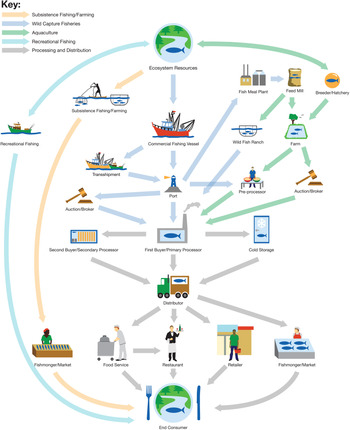
Farmed shrimp in Southeast Asian countries such as Thailand, Indonesia, and Vietnam are typically exported to international seafood markets via a global commodity chain. A commodity chain describes a network constructed between companies and their suppliers to produce and distribute a product to a final buyer.Footnote 11 This network includes all of the resources, activities, people, information, and steps required to transform raw materials into a state desired by customers. Commodity chains are developed to increase efficiency, reduce costs, and enhance competitiveness. Connecting small family shrimp farms in rural Southeast Asia with seafood consumers generally located in the global north requires complex commodity chains that developed in tandem with the seafood industry's expansion during the latter half of the twentieth century. A simple seafood commodity chain includes harvesting (fisheries or aquaculture) and a combination of primary processing, secondary processing, distribution, marketing, and finally, consumption (fig. 1).
Neoliberal trade policies focusing on privatisation, deregulation and free trade supported the development of global seafood commodity chains, and price played a key role in transforming seafood, such as shrimp, from an expensive, locally-sourced niche product into a cheap, ubiquitous international seafood commodity during the final decades of the twentieth century.Footnote 12 Retail prices of shrimp during the expansion phase in the 1990s were generally in the range of US$14–$16 per kilo. The price of shrimp dropped to only US$10 per kilo during the 2001 economic recession, and never rebounded with the exception of a brief period in 2014 when production in Southeast Asia dropped significantly in response to renewed disease outbreaks. Global prices at this time increased to levels not seen since 2001, but quickly dropped back to the US$10–$12 per kilo range as global production recovered.Footnote 13 A current glut in the global supply of shrimp has also been exacerbated by the COVID-19 pandemic, with cold storage facilities in the United States and other importing countries possessing multiple months of supply.Footnote 14
In his authoritative overview of globalisation, Peter Dicken describes food production as a powerfully local process that is tied to specific climate, soil and sociocultural conditions, while also being subject to globalised influences stemming from its distribution and consumption.Footnote 15 Global shrimp production is inherently local, but largely situated within tropical developing nations, and embedded within highly diverse globalised commodity chains that include both large, vertically integrated corporate operations that typify South American production, and the small family farms (2 hectares or less) that are common in Southeast Asia.Footnote 16 Significant differences in production and social organisation exist even within countries, where for example, larger integrated corporate farms are more common in southern Thailand, while smaller family farms are more typical in the central region. In this latter model, corporate interests have focused on activities both upstream (for example, feed and hatcheries) and downstream (purchasing and processing) of the small independent growers.Footnote 17
The situation in central Thailand is illustrated by the story of ‘Koong’, a shrimp farmer who returned to his family's farm in 1996 to raise black tiger shrimp after graduating from a local university with a degree in aquatic science and working for a shrimp feed company.Footnote 18 With his background and training, Koong should have been an ideal representative of a new generation of successful small commodity producers in central Thailand whose small farms were family-owned and managed with little outside labour, except for short-term help hired specifically for harvesting.Footnote 19 It seemed a foregone conclusion that Koong would succeed in raising shrimp to satisfy the fast-expanding global shrimp market that Thailand dominated during this period. Central Thailand has a long history of aquaculture, mostly freshwater fish polyculture, but the high prices offered by local brokers associated with the rapidly developing seafood-processing complex in Samut Sakhon province outside Bangkok convinced many farmers in the late 1990s to raise black tiger shrimp. Koong's shrimp farm was very profitable during its first two years of production, but like many other farmers in central Thailand, he suffered multiple failures after his shrimp were infected with viruses such as yellow head and white spot that attack farmed crustaceans. With little bio-security and shared water supplies, the viruses quickly spread between ponds in densely crowded farming areas, and crop losses soon outstripped the early profits. To compound matters, global shrimp prices crashed as production from other countries such Ecuador, Mexico, and Vietnam entered the global market. This confluence of factors led to widespread farm failures in central Thailand, and Koong responded in the same way as many other farmers who suffered heavy financial losses. He turned to off-farm employment to pay off his debts. Since leaving his own farm, Koong has applied his skills and training to become the manager of larger commercial aquaculture operations in central Thailand that were better capitalised and adopted technologies that limited losses during the first wave of disease outbreaks. While farmers without his educational and professional background were forced to seek employment outside the sector to service their debts, Koong's training allowed him to continue working in aquaculture, and he still hopes to restart his family farm at some point in the future. This story is common across rural Southeast Asia, and indeed, Koong's determination to restart his family farm in spite of the challenges and financial burdens is familiar to researchers studying agrarian change.Footnote 20
In spite of the substantial increases in production achieved by the Southeast Asian aquaculture industry, small-scale seafood-producing communities regularly suffer social, economic and environmental dislocations stemming from relentless price pressures imposed by neoliberal economic policies and globalisation.Footnote 21 Pressures from falling prices paid by middlemen and processing plants have created a host of negative economic, social and environmental issues in coastal communities.Footnote 22 Illegal, unreported, and unregulated fishing deprives coastal communities of US$23 billion annually,Footnote 23 while environmental damage such as pollution, deforestation, and land salinisation associated with shrimp farming have all been well documented.Footnote 24 Food safety violations and human rights abuses on fishing boats that supply feed inputs and in packing plants that process shrimp for export have also been driven by the relentless downward price pressures associated with the globalised seafood commodity chain.Footnote 25 All shrimp farming regions in Southeast Asia, without exception, have suffered production booms and busts since the introduction of modern shrimp farming systems which require high pond-stocking rates, commercial feeds and the use of chemotherapeutants to maintain production.Footnote 26 Most of these crashes were the result of viral disease outbreaks that are a common by-product of intensive production systems, but poor husbandry and the environmental degradation of land and water resources in shrimp farming areas were also responsible.Footnote 27 Southeast Asia recently experienced another decline in shrimp production caused by a new virus referred to as the Early Mortality Syndrome (EMS).Footnote 28 This outbreak now seems to be under control in the worst affected areas, such as Thailand and Vietnam, but it is a stark reminder of the unresolved environmental issues associated with shrimp farming in Southeast Asia, and the socioeconomic instability this creates in farming communities.
Shrimp farming in Southeast Asia has been touted as a globalisation success story as Thailand, Vietnam, and Indonesia rose to the top rank of nations producing farmed shrimp for international seafood markets. But this achievement has not been without cost. The financial losses sustained by many small-scale shrimp farmers, as described above, is juxtaposed by the consistently strong profits earned by feed and chemical companies, middlemen, seafood processing plants and retailers.Footnote 29 The financial success of large corporate actors both upstream and downstream of small-scale farmers in Southeast Asia reveals much about globalised seafood markets. Costs associated with the repeated ‘boom and bust’ cycles characterising the Southeast Asian shrimp industry have been largely borne by small-scale farmers. The desire for short-term profit can also overwhelm issues of long-term socioeconomic stability and environmental protection.Footnote 30
Critics of shrimp farming have anticipated the demise of the industry during each of these busts, but each time, the crisis was resolved by relocating production to new areas or through technological innovations. Shifting cultivation and technology has allowed unsustainable production systems and the export-focus of the industry to remain largely unchanged. These tactics lose their effectiveness, however, after most coastal land suitable for shrimp farming is exploited and technological innovations become more difficult to develop.Footnote 31 The latest threat associated with the EMS virus is just one of a series of crises that have affected shrimp farming communities, and it is reasonable to wonder if the latest crisis will finally be a catalyst for change that creates more sustainable production systems. Perhaps, but recent developments suggest that large corporate actors in Southeast Asia are set to massively increase the scale and intensity of shrimp production (so-called sustainable intensification). This strategy could potentially increase production yet again and regain Southeast Asia's global market share, but may leave the region's small-scale farmers uncompetitive and shut out of the global shrimp market.Footnote 32
CSF as an alternative model
Small-scale seafood producers face a range of economic and social pressures from globalised competition and neoliberal economic policies.Footnote 33 Unrestrained flows of cheap seafood tend to depress prices and strain the ability of small-scale farmers and fishers to profit.Footnote 34 Neoliberal fisheries policies, such as transferable quota systems or auctions, give large-scale fishing operations an advantage via their ability to dominate the industry and crowd small-scale producers out of the market.Footnote 35 These factors drive consolidation, which can eventually push small-scale operators out of the industry and consolidate land-based processing into a small number of geographical centres.Footnote 36 Small seafood communities are relegated to the periphery and the number of communities that produce seafood declines.Footnote 37
One strategy employed by small-scale seafood producers in North America facing these socioeconomic pressures is participation in CSF. This alternative marketing strategy is essentially an effort to de-intensify seafood production and re-engage consumers with local fishing and farming communities to support small-scale industry.Footnote 38 CSF are a type of direct marketing strategy that connects seafood producers with local consumers, bypassing the long global supply chains that characterise mainstream seafood markets.Footnote 39 Modelled after community supported agriculture (CSA) programmes, CSF have similar goals and structures as their terrestrial counterparts. For example, like CSA programmes, CSF can use advance payments to provide a stable, guaranteed income stream to producers in exchange for regularly-scheduled deliveries of fresh seafood products to customers. This strategy allows customers and producers to share in the risk of catching or farming high-quality seafood. CSF can directly connect seafood producers with consumers, or facilitate this connection via an intermediary organisation.Footnote 40 This reduces the length of the supply chain and allows producers to capture a higher percentage of profits associated with their seafood. Additionally, CSF tend to give producers set prices over the course of a season, shielding them from price fluctuations common to many seafood products.Footnote 41 By re-localising the seafood supply chain, CSF can address some of the economic challenges faced by small-scale producers, improve food quality, and promote the environmental sustainability objectives of both producers and consumers.Footnote 42
All CSF share core values in the areas of environmental sustainability, traceability, and shortening the seafood supply chain; but business structures falling under the CSF umbrella differ markedly. CSF have been classified into three broad categories based on the particular focus of their business. Harvester-focused CSF are intended to directly improve benefits for the seafood producers themselves. These types of businesses are typically run by fishers or farmers, distribute seafood as it becomes available rather than at set times, and tend to define ‘local’ by where the products are caught or produced. Consumer-focused CSF engage in consumer education regarding seafood and seafood-related issues. These operations tend to be intermediary operations, which receive products from producers and redistribute it to the community. Products are provided on a weekly or bi-weekly basis and ‘local’ is usually defined by where the seafood is landed or produced. Species-focused CSF tend to connect producers selling a low number of high-value seafood products to consumers who are much further away, and these operations use a social definition of ‘local’ to indicate a regional seafood community.Footnote 43
Community supported fisheries can facilitate social cohesion and bestow multiple social benefits on small-scale seafood producers. Participation in a CSF facilitates organisation and the strengthening of ties amongst its members. This can engender greater resilience in response to social and environmental disturbances via information sharing and cooperation. Community supported fisheries can also put fishers or aquatic farmers in direct contact with their customers, creating advocates in the broader community, and can bolster the social position of seafood producers by building stronger connections within their communities.Footnote 44 On the consumption side, many seafood consumers have become increasingly concerned about the environmental impacts of the seafood industry, as well as concerns related to seafood traceability, safety and quality.Footnote 45 By participating in a CSF, consumers can access seafood typically of a higher quality and access a more transparent supply chain. Up-front payments and price premiums encourage the production of high quality seafood, while shorter supply chains and contact with producers allow for a level of openness unattainable via the global commodity chain.Footnote 46
Community supported fisheries can also address concerns over degradation in the environment. Small-scale fishers or farmers supplying the global supply chain are pushed toward intensive production systems to maintain viability in the face of increasingly lower farmgate prices offered by the multinational companies that dominate the global seafood trade. This results in environmental damage through destructive fishing techniques or overly-intensive aquaculture practices that create environmental damage in farming areas.Footnote 47 In contrast, CSF allow producers to capture a greater percentage of profits from their harvest, which eases environmental pressure on both wild fisheries and the environments supporting aquaculture.Footnote 48 CSF can also create markets for seafood underutilised by mainstream markets and give preference to fishers and farmers utilising sustainable practices. This reduces food waste, negative ecological impacts, and the food miles associated with CSF products compared to seafood produced by the global supply chain.Footnote 49
Although holding much potential, CSF face a number of challenges given their small scale and limited resources. These include: start-up costs, seasonality, the need for additional labour to support retail operations, and challenges associated with logistics and processing.Footnote 50 As a decentralised alternative to mainstream supply chains, CSF participants are in direct competition with large national and international seafood producers and retailers. These large operations commonly benefit from national subsidies and work at substantial economies of scale that allow for the sale of seafood at prices which are generally unsustainable for small-scale producers.Footnote 51 Price advantages achieved by large mainstream seafood companies are particularly challenging for CSF attempting to serve lower-income communities.Footnote 52 CSF can be susceptible to co-optation from larger companies, and scaling-up successful operations can lead to the sacrifice of core values in an effort to expedite growth.Footnote 53 These challenges represent both a barrier to the creation of new CSF and restrict the growth of existing operations.Footnote 54
There is ample research on the negative effects of seafood production through the global commodity chain,Footnote 55 and CSF should not be characterised as the answer to all existing ecological, economic and cultural concerns. Sustainability tools and approaches imported from the global north have also been accused of extraterritoriality, replicating colonial practices, and violating local sovereignty in Thailand and elsewhere.Footnote 56 Yet aquaculture seems an inevitable part of seafood production in the twenty-first century, and studying the benefits and shortcomings of alternative modes of production such as CSF and cooperatives is critical if small-scale producers are to remain part of the seafood system in an age of corporate-led intensification of seafood production.
CSF in Southeast Asia
Recent research suggests that small-scale seafood producers participating in alternative marketing strategies such as CSF can both participate in, and resist, markets dominated by neoliberal policies and objectives.Footnote 57 Fishers and farmers can continue to engage markets dominated by neoliberal, market-based policies where this is economically beneficial, but participating in a CSF provides options to resist market-based systems and promote a broader set of non-market benefits.Footnote 58 This flexibility to participate in either the global commodity chain or local alternative markets could be an important advantage to small-scale producers in Southeast Asia who require time, experience and support to understand and develop alternative markets for their products.
Although the CSF model was largely developed in North America, there is reason to believe it is a viable approach in Southeast Asia. Much of the social infrastructure necessary for CSF is already in place. For example, small-scale community-based aquaculture operations in Thailand have been formed by individual farmers who are vulnerable to exploitation as a result of their limited negotiating power.Footnote 59 Organising themselves into community groups allows these shrimp and fish farmers to negotiate lower prices with suppliers, set higher prices from buyers, share information, and process their products to increase value. In the Philippines, high-end hotels have been working with small-scale producers to promote sustainable harvesting practices,Footnote 60 and non-governmental organisations promote sustainable practices and economic security through programmes such as Fish Forever.Footnote 61 The Fish Forever programme achieves its goals by building community engagement to support local decision-making, enabling the adoption of more sustainable and better-regulated fishing behaviour, training local fishers to produce value-added products, and incentivising sustainable catch by purchasing fish that followed sustainability criteria at a higher-than-market price. In Indonesia, the Seafood Savers Program is another example where improved farming practices and de-intensification can increase the income of small farmers by raising premium-grade black tiger shrimp in large, low-density ponds. The Seafood Savers Program is organised by PT Mustika Minanusa Aurora (MMA) which relies on personal relationships with individual farmers (rather than contracts) to supply premium black tiger shrimp to markets in Indonesia and across Asia. Finally, the Selva Shrimp® programme in Vietnam works with thousands of small-scale farmers in Ca Mau province to use silvofishery techniques that combine prawn farming and mangrove forestry.Footnote 62 De-intensification on these small family-owned shrimp farms is characterised by the use of native black tiger shrimp, pond-stocking densities similar to wild conditions, and avoiding the use of chemicals and supplemental feeds.
These examples demonstrate interest in Southeast Asian countries for seafood from CSF, and the ability of small-scale producers to organise and meet the food quality demands of local markets. Tourism is already an important component of the economy in many Southeast Asian countries, and the food tourism sub-sector has grown rapidly as a result of the widespread recognition of Vietnamese, Thai, Indonesian, and other Southeast Asian cuisines. Food tourists globally spend over US$150 billion each year, and in collaboration with CSF, this market could potentially support small-scale shrimp farmers and other seafood producers attempting to engage in the sustainable, low intensity production of crustaceans, fish, and aquatic plants.Footnote 63 Many of the best restaurants in Bangkok, Hanoi and Singapore now seek out high quality, locally sourced seafood for both local and foreign diners, and a rapidly growing organic farming community that utilises low-intensity techniques has emerged to supply food tourism markets. The potential of seafood tourism to support sustainable production and rural livelihoods is also starting to be recognised in the Philippines through events such as Manila's Sustainable Seafood Week.Footnote 64 This annual event, coordinated by Meliomar, which is a premium seafood distributor in Manila, includes promotional events and workshops with smaller seafood producers and tourism operators such as hotels and other culinary institutions. Seafood festivals are starting to appear as popular tourist events in countries such as Thailand, and events such as the Saigon Seafood Festival could also be a natural local market for shrimp grown in Vietnam using the silvofishery system.Footnote 65 The growth of food tourism highlights the potential of CSF initiatives in Southeast Asia, but public concerns over environmental conditions in farming/fishing areas, seafood safety issues, and a lack of certifiable high-quality local products must be addressed for small-scale producers to access this market.
CSF and social capital
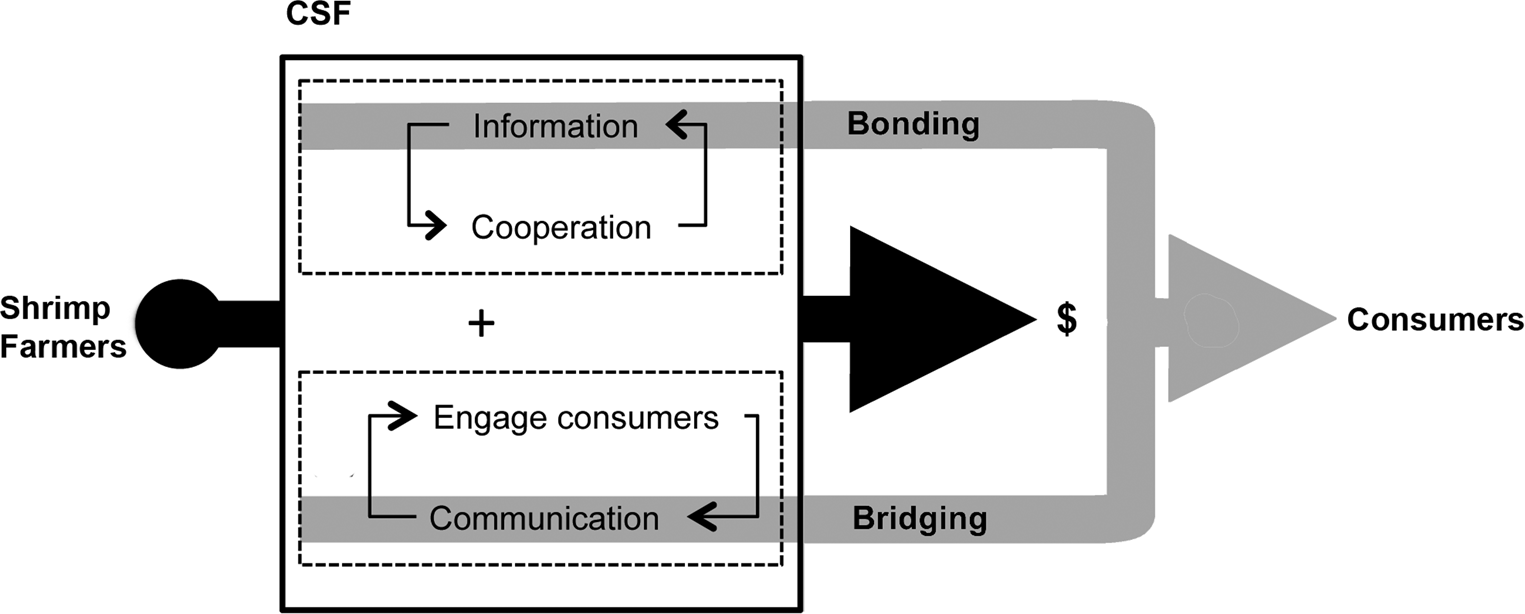
Although more examples of CSF are appearing in Southeast Asia each year, this alternative marketing model is desperately in need of more research and support. A key research area which could facilitate the growth of CSF is social capital. In a widely cited 2015 study, Stoll et al. outline a conceptual model where direct marketing arrangements such as CSF can support economic development in seafood communities by linking producers and consumers, and acting as ‘mechanisms for the production of bonding and bridging capital’.Footnote 66 Small-scale shrimp producers, such as those in central Thailand, generally manage their operations individually as family farms as defined by Bernstein.Footnote 67 These farmers are under consistent pressure as a result of their reliance on the global seafood commodity chain, which supports large amounts of unproductive labour.Footnote 68 Direct marketing arrangements such as CSF have the potential to increase the share of surplus value these small commodity producers retain, but additional bonding and bridging social capital are required to exploit these opportunities (fig. 2).Footnote 69
Figure 2.Social capital model for Community Supported Fisheries
Source: Adapted from Joshua Stoll, Bradford Dubik and Lisa Campbell, ‘Local seafood: Rethinking the direct marketing paradigm’, Ecology and Society 20, 2 (2015): fig. 2; http://dx.doi.org/10.5751/ES-07686-200240.
With respect to bonding social capital, shrimp farming communities must cooperate to identify markets and create a predictable supply of seafood for consumers and intermediaries that they deal with. Farmers must also share information to determine market prices and establish equitable profit-sharing arrangements.Footnote 70 A bonding social capital deficit may persist without consistent leadership, clear regulations, information sharing, and cooperation among members. These issues can be addressed, however, by developing partnerships with academic institutions, NGOs, or domestic industry associations.Footnote 71
Bridging social capital is expressed through engagement and communication with outside groups and individuals, and a deficit in this area is characterised by inadequate connections between producers and consumers or other important outside groups.Footnote 72 Regular communication between shrimp farming communities and consumers is necessary to both build and sustain markets, but interactions with other groups such as aquaculture experts, government officials, funding agencies and the media are also important. Non-market benefits increase with greater interaction between producers and consumers, and in the case of small-scale shrimp producers in Southeast Asia, contact between farmers and local consumers could potentially translate into new alliances and political support on sustainable seafood issues.
CSF provide both economic and non-economic benefits, and as local institutions, they succeed by incentivising cooperation, communication, and by building, maintaining and managing bonding and bridging social capital.Footnote 73 Social capital among shrimp farming communities in Southeast Asia is relatively under-developed, and alternative marketing schemes imposed from the outside can often fail when external expertise and/or funding inevitably ends.Footnote 74 Socioeconomic and environmental issues can spur shrimp farming communities to explore collective action, but without the creation of social capital within these communities, cooperative efforts to develop alternatives to the global commodity chain are unlikely to succeed.Footnote 75 This reality emphasises the importance of social capital research within the context of CSF if alternative marketing strategies that support de-intensified production and improved sustainability are to succeed in Southeast Asia.
Conclusion
Behind the charts and figures tracking the production and profitability of farmed shrimp in Southeast Asia are ordinary people and rural communities enmeshed in complex international seafood supply chains that transport their uncertain harvests to unknown consumers in Japan, Europe and North America. Small-scale family shrimp farms in Southeast Asia struggle with pressures created by globalised commodity chains that dictate what they produce, how they produce, and the rewards for their labour.
In a recent interview, a Cargill executive stated that ‘most shrimp farmers in Thailand do not understand their role as part of the global food supply chain’.Footnote 76 This statement is perhaps more revealing than the interviewee realises. Small-scale shrimp farmers in Southeast Asia have suffered repeated dislocations as shrimp production has evolved from a small, low-intensity system supplying local markets, into a multi-billion dollar international seafood complex. This model has well served the international seafood conglomerates that dominate the global commodity chain; but small-scale farmers in Southeast Asia, the communities they live in, and the environments that support this production have all suffered in the name of productivity, profitability and competitiveness. Initiatives such as sustainable intensification,Footnote 77 aquaculture improvement projects,Footnote 78 and responsible management practicesFootnote 79 may have the potential to improve the environmental and social performance of large corporate farms that serve export markets, but it is unlikely this approach will provide similar benefits to Southeast Asia's small family-owned shrimp farms.
Recent industry research suggests that small-scale shrimp farmers can only compete by implementing additional technology and adopting further neoliberal economic reforms, and in the long-term, there may be no place at all for small-scale independent shrimp farmers in countries such as Thailand, Indonesia and Vietnam.Footnote 80 High-intensity, high-volume, closed-system indoor shrimp farms are being developed by seafood conglomerates such as Charoen Pokphand Foods and the Viet UC Group.Footnote 81 These companies are investing heavily in large indoor farming complexes, and plan to shift all of their production to indoor ponds that can achieve very high levels of production and meet international seafood certification requirements. Indoor farming technologies will be the exclusive reserve of large-scale integrated corporate producers because of their scale, technical sophistication and high capital investment requirements. Full implementation of this approach will also likely result in Southeast Asia's small-scale independent shrimp farmers being excluded from international seafood markets.Footnote 82
Like Alice in the Red Queen's race, small-scale shrimp farmers in Southeast Asia have spent a generation running as fast as possible to maintain their position in the global seafood marketplace. The social and environmental costs of this effort have been substantial, and perhaps the time has finally come to consider alternatives to neoliberal seafood production policies in Southeast Asia. We encourage further research on the viability of alternative marketing models such as CSF to support small-scale shrimp farmers and improve social and environmental conditions in their communities. Research that investigates social capital conditions in rural aquaculture communities is particularly needed to outline development opportunities and provide farmers with alternatives to existing market models. By supporting and incentivising the development of less intensive sustainable production models, CSF have the potential to provide an option to the global commodity chain, and these types of alternatives would be welcomed by both small-scale seafood producers and seafood consumers in Southeast Asia.




 You have Access
Shrimp farming has been one of the fastest growing and most profitable food systems in Southeast Asia over the past three decades. Its development has been marked, however, by repeated boom-and-bust cycles and a host of negative social and environmental impacts.Footnote 1 Addressing these issues has proven difficult given the structure of the shrimp farming industry in countries such as Thailand, Vietnam, and Indonesia, which are dominated by small, independent farmers with relatively limited access to information, capital and markets.Footnote 2 Some researchers argue for a ‘transition to sustainable intensification’ where small farms are replaced by larger, more sophisticated operations that are capable of sustaining or even increasing harvests through sophisticated technologies while imposing a smaller environmental footprint.Footnote 3 This approach could potentially allow existing global supply chains to continue satisfying the international demand for shrimp in a more environmentally responsible manner. A case can also be made that de-intensification (that is, reduced production intensity, a focus on local markets and higher value species, and organic farming) could also improve environmental and social outcomes. Small independent shrimp farmers in Southeast Asia are unlikely to be able to afford the substantial capital investments associated with technologically advanced intensification culture techniques, but could adopt de-intensification strategies to market sustainable seafood to domestic markets that can now afford the higher costs associated with this type of production.
Community supported fisheries (CSF) represent potential support for de-intensified seafood production, and have the potential to assist small independent shrimp farmers produce high quality, low impact seafood for local markets. The opportunities and impediments facing CSF development in Southeast Asia remain under-researched. Alternative marketing models certainly cannot address all of the well-recognised socioeconomic and environmental concerns associated with shrimp production in Southeast Asia, particularly those associated with large-scale industrial operations, but CSF could potentially provide small independent farmers with an alternative to the global commodity chain which often serves corporate interests at the expense of small commodity producers.Footnote 4 CSF could also potentially support the ongoing economic viability of small-scale farming in the face of major intensification efforts led by corporate seafood interests in Southeast Asia.Footnote 5 This article explores opportunities for CSF to support de-intensified forms of small-scale shrimp farming in Southeast Asia. It provides a brief overview of shrimp aquaculture in the region, summarises key issues that hinder movement toward more sustainable environmental practices, and discusses the potential role of CSF and social capital research in supporting socially responsible and economically viable small-scale shrimp farming in Southeast Asia.
Shrimp aquaculture in Southeast Asia
The farming of fish, crustaceans, shellfish or plants (aquaculture) has been practised in a variety of forms and locations in Asia for at least 3,000 years.Footnote 6 As just one example, the farming of common carp (Cyrinus carpio) in freshwater ponds began in China as early as 500 BCE, and knowledge of these pond culture techniques was transferred to Southeast Asia by migrating Chinese in the fifteenth century CE.Footnote 7 While agriculture long ago replaced hunting and gathering as the primary source of terrestrial food production, aquaculture was a minor component of global seafood production until recently. Significant growth began in the 1980s as global capture fisheries reached maximum sustainable yield, and blossomed in the last decade of the twentieth century. Aquaculture now represents approximately 50 per cent of total global seafood production, and this trend shows no sign of slowing in the foreseeable future.Footnote 8 It is further expected that aquaculture will continue to expand to satisfy expected future demands for seafood in global markets.Footnote 9
The pattern of stable capture fisheries output and increasing aquaculture production seen in the broader seafood market is mirrored in global shrimp production. The harvest of wild shrimp increased slowly during the latter decades of the twentieth century and stabilised at approximately 3 million tons per year since 2003. In contrast, global farmed shrimp harvests totalled only 172,000 tons in 1984, but increased to 928,000 tons in 1995, and then exploded to over 4,000,000 tons by 2016.Footnote 10 Approximately 56 per cent of all shrimp produced in 2016 was farmed, with Southeast Asia representing the second most important production region in the world after China. The Southeast Asian shrimp farming industry originally used native species such as the black tiger shrimp, but this changed in 2001 with the importation of specific pathogen-free (SPF) Pacific white shrimp from the United States. SPF shrimp are domesticated, genetically improved for aquaculture, and have passed through quarantine and disease-screening processes to be free of viruses that have historically affected the Southeast Asian aquaculture industry. SPF Pacific white shrimp quickly displaced native species in Southeast Asian shrimp farming in the early years of the twenty-first century, and their resistance to viral diseases allowed for shrimp production from Southeast Asian farms to increase by more than 100 per cent by 2011.10
Farmed shrimp in Southeast Asian countries such as Thailand, Indonesia, and Vietnam are typically exported to international seafood markets via a global commodity chain. A commodity chain describes a network constructed between companies and their suppliers to produce and distribute a product to a final buyer.Footnote 11 This network includes all of the resources, activities, people, information, and steps required to transform raw materials into a state desired by customers. Commodity chains are developed to increase efficiency, reduce costs, and enhance competitiveness. Connecting small family shrimp farms in rural Southeast Asia with seafood consumers generally located in the global north requires complex commodity chains that developed in tandem with the seafood industry's expansion during the latter half of the twentieth century. A simple seafood commodity chain includes harvesting (fisheries or aquaculture) and a combination of primary processing, secondary processing, distribution, marketing, and finally, consumption (fig. 1).
Globalized seafood supply chain
Source: FishWise, Advancing traceability in the seafood industry: Assessing challenges and opportunities, Feb. 2018; https://fishwise.org/traceability/advancing-traceability-in-theseafood-industry-assessing-challenges-and-opportunities/.
Neoliberal trade policies focusing on privatisation, deregulation and free trade supported the development of global seafood commodity chains, and price played a key role in transforming seafood, such as shrimp, from an expensive, locally-sourced niche product into a cheap, ubiquitous international seafood commodity during the final decades of the twentieth century.Footnote 12 Retail prices of shrimp during the expansion phase in the 1990s were generally in the range of US$14–$16 per kilo. The price of shrimp dropped to only US$10 per kilo during the 2001 economic recession, and never rebounded with the exception of a brief period in 2014 when production in Southeast Asia dropped significantly in response to renewed disease outbreaks. Global prices at this time increased to levels not seen since 2001, but quickly dropped back to the US$10–$12 per kilo range as global production recovered.Footnote 13 A current glut in the global supply of shrimp has also been exacerbated by the COVID-19 pandemic, with cold storage facilities in the United States and other importing countries possessing multiple months of supply.Footnote 14
In his authoritative overview of globalisation, Peter Dicken describes food production as a powerfully local process that is tied to specific climate, soil and sociocultural conditions, while also being subject to globalised influences stemming from its distribution and consumption.Footnote 15 Global shrimp production is inherently local, but largely situated within tropical developing nations, and embedded within highly diverse globalised commodity chains that include both large, vertically integrated corporate operations that typify South American production, and the small family farms (2 hectares or less) that are common in Southeast Asia.Footnote 16 Significant differences in production and social organisation exist even within countries, where for example, larger integrated corporate farms are more common in southern Thailand, while smaller family farms are more typical in the central region. In this latter model, corporate interests have focused on activities both upstream (for example, feed and hatcheries) and downstream (purchasing and processing) of the small independent growers.Footnote 17
The situation in central Thailand is illustrated by the story of ‘Koong’, a shrimp farmer who returned to his family's farm in 1996 to raise black tiger shrimp after graduating from a local university with a degree in aquatic science and working for a shrimp feed company.Footnote 18 With his background and training, Koong should have been an ideal representative of a new generation of successful small commodity producers in central Thailand whose small farms were family-owned and managed with little outside labour, except for short-term help hired specifically for harvesting.Footnote 19 It seemed a foregone conclusion that Koong would succeed in raising shrimp to satisfy the fast-expanding global shrimp market that Thailand dominated during this period. Central Thailand has a long history of aquaculture, mostly freshwater fish polyculture, but the high prices offered by local brokers associated with the rapidly developing seafood-processing complex in Samut Sakhon province outside Bangkok convinced many farmers in the late 1990s to raise black tiger shrimp. Koong's shrimp farm was very profitable during its first two years of production, but like many other farmers in central Thailand, he suffered multiple failures after his shrimp were infected with viruses such as yellow head and white spot that attack farmed crustaceans. With little bio-security and shared water supplies, the viruses quickly spread between ponds in densely crowded farming areas, and crop losses soon outstripped the early profits. To compound matters, global shrimp prices crashed as production from other countries such Ecuador, Mexico, and Vietnam entered the global market. This confluence of factors led to widespread farm failures in central Thailand, and Koong responded in the same way as many other farmers who suffered heavy financial losses. He turned to off-farm employment to pay off his debts. Since leaving his own farm, Koong has applied his skills and training to become the manager of larger commercial aquaculture operations in central Thailand that were better capitalised and adopted technologies that limited losses during the first wave of disease outbreaks. While farmers without his educational and professional background were forced to seek employment outside the sector to service their debts, Koong's training allowed him to continue working in aquaculture, and he still hopes to restart his family farm at some point in the future. This story is common across rural Southeast Asia, and indeed, Koong's determination to restart his family farm in spite of the challenges and financial burdens is familiar to researchers studying agrarian change.Footnote 20
In spite of the substantial increases in production achieved by the Southeast Asian aquaculture industry, small-scale seafood-producing communities regularly suffer social, economic and environmental dislocations stemming from relentless price pressures imposed by neoliberal economic policies and globalisation.Footnote 21 Pressures from falling prices paid by middlemen and processing plants have created a host of negative economic, social and environmental issues in coastal communities.Footnote 22 Illegal, unreported, and unregulated fishing deprives coastal communities of US$23 billion annually,Footnote 23 while environmental damage such as pollution, deforestation, and land salinisation associated with shrimp farming have all been well documented.Footnote 24 Food safety violations and human rights abuses on fishing boats that supply feed inputs and in packing plants that process shrimp for export have also been driven by the relentless downward price pressures associated with the globalised seafood commodity chain.Footnote 25 All shrimp farming regions in Southeast Asia, without exception, have suffered production booms and busts since the introduction of modern shrimp farming systems which require high pond-stocking rates, commercial feeds and the use of chemotherapeutants to maintain production.Footnote 26 Most of these crashes were the result of viral disease outbreaks that are a common by-product of intensive production systems, but poor husbandry and the environmental degradation of land and water resources in shrimp farming areas were also responsible.Footnote 27 Southeast Asia recently experienced another decline in shrimp production caused by a new virus referred to as the Early Mortality Syndrome (EMS).Footnote 28 This outbreak now seems to be under control in the worst affected areas, such as Thailand and Vietnam, but it is a stark reminder of the unresolved environmental issues associated with shrimp farming in Southeast Asia, and the socioeconomic instability this creates in farming communities.
Shrimp farming in Southeast Asia has been touted as a globalisation success story as Thailand, Vietnam, and Indonesia rose to the top rank of nations producing farmed shrimp for international seafood markets. But this achievement has not been without cost. The financial losses sustained by many small-scale shrimp farmers, as described above, is juxtaposed by the consistently strong profits earned by feed and chemical companies, middlemen, seafood processing plants and retailers.Footnote 29 The financial success of large corporate actors both upstream and downstream of small-scale farmers in Southeast Asia reveals much about globalised seafood markets. Costs associated with the repeated ‘boom and bust’ cycles characterising the Southeast Asian shrimp industry have been largely borne by small-scale farmers. The desire for short-term profit can also overwhelm issues of long-term socioeconomic stability and environmental protection.Footnote 30
Critics of shrimp farming have anticipated the demise of the industry during each of these busts, but each time, the crisis was resolved by relocating production to new areas or through technological innovations. Shifting cultivation and technology has allowed unsustainable production systems and the export-focus of the industry to remain largely unchanged. These tactics lose their effectiveness, however, after most coastal land suitable for shrimp farming is exploited and technological innovations become more difficult to develop.Footnote 31 The latest threat associated with the EMS virus is just one of a series of crises that have affected shrimp farming communities, and it is reasonable to wonder if the latest crisis will finally be a catalyst for change that creates more sustainable production systems. Perhaps, but recent developments suggest that large corporate actors in Southeast Asia are set to massively increase the scale and intensity of shrimp production (so-called sustainable intensification). This strategy could potentially increase production yet again and regain Southeast Asia's global market share, but may leave the region's small-scale farmers uncompetitive and shut out of the global shrimp market.Footnote 32
CSF as an alternative model
Small-scale seafood producers face a range of economic and social pressures from globalised competition and neoliberal economic policies.Footnote 33 Unrestrained flows of cheap seafood tend to depress prices and strain the ability of small-scale farmers and fishers to profit.Footnote 34 Neoliberal fisheries policies, such as transferable quota systems or auctions, give large-scale fishing operations an advantage via their ability to dominate the industry and crowd small-scale producers out of the market.Footnote 35 These factors drive consolidation, which can eventually push small-scale operators out of the industry and consolidate land-based processing into a small number of geographical centres.Footnote 36 Small seafood communities are relegated to the periphery and the number of communities that produce seafood declines.Footnote 37
One strategy employed by small-scale seafood producers in North America facing these socioeconomic pressures is participation in CSF. This alternative marketing strategy is essentially an effort to de-intensify seafood production and re-engage consumers with local fishing and farming communities to support small-scale industry.Footnote 38 CSF are a type of direct marketing strategy that connects seafood producers with local consumers, bypassing the long global supply chains that characterise mainstream seafood markets.Footnote 39 Modelled after community supported agriculture (CSA) programmes, CSF have similar goals and structures as their terrestrial counterparts. For example, like CSA programmes, CSF can use advance payments to provide a stable, guaranteed income stream to producers in exchange for regularly-scheduled deliveries of fresh seafood products to customers. This strategy allows customers and producers to share in the risk of catching or farming high-quality seafood. CSF can directly connect seafood producers with consumers, or facilitate this connection via an intermediary organisation.Footnote 40 This reduces the length of the supply chain and allows producers to capture a higher percentage of profits associated with their seafood. Additionally, CSF tend to give producers set prices over the course of a season, shielding them from price fluctuations common to many seafood products.Footnote 41 By re-localising the seafood supply chain, CSF can address some of the economic challenges faced by small-scale producers, improve food quality, and promote the environmental sustainability objectives of both producers and consumers.Footnote 42
All CSF share core values in the areas of environmental sustainability, traceability, and shortening the seafood supply chain; but business structures falling under the CSF umbrella differ markedly. CSF have been classified into three broad categories based on the particular focus of their business. Harvester-focused CSF are intended to directly improve benefits for the seafood producers themselves. These types of businesses are typically run by fishers or farmers, distribute seafood as it becomes available rather than at set times, and tend to define ‘local’ by where the products are caught or produced. Consumer-focused CSF engage in consumer education regarding seafood and seafood-related issues. These operations tend to be intermediary operations, which receive products from producers and redistribute it to the community. Products are provided on a weekly or bi-weekly basis and ‘local’ is usually defined by where the seafood is landed or produced. Species-focused CSF tend to connect producers selling a low number of high-value seafood products to consumers who are much further away, and these operations use a social definition of ‘local’ to indicate a regional seafood community.Footnote 43
Community supported fisheries can facilitate social cohesion and bestow multiple social benefits on small-scale seafood producers. Participation in a CSF facilitates organisation and the strengthening of ties amongst its members. This can engender greater resilience in response to social and environmental disturbances via information sharing and cooperation. Community supported fisheries can also put fishers or aquatic farmers in direct contact with their customers, creating advocates in the broader community, and can bolster the social position of seafood producers by building stronger connections within their communities.Footnote 44 On the consumption side, many seafood consumers have become increasingly concerned about the environmental impacts of the seafood industry, as well as concerns related to seafood traceability, safety and quality.Footnote 45 By participating in a CSF, consumers can access seafood typically of a higher quality and access a more transparent supply chain. Up-front payments and price premiums encourage the production of high quality seafood, while shorter supply chains and contact with producers allow for a level of openness unattainable via the global commodity chain.Footnote 46
Community supported fisheries can also address concerns over degradation in the environment. Small-scale fishers or farmers supplying the global supply chain are pushed toward intensive production systems to maintain viability in the face of increasingly lower farmgate prices offered by the multinational companies that dominate the global seafood trade. This results in environmental damage through destructive fishing techniques or overly-intensive aquaculture practices that create environmental damage in farming areas.Footnote 47 In contrast, CSF allow producers to capture a greater percentage of profits from their harvest, which eases environmental pressure on both wild fisheries and the environments supporting aquaculture.Footnote 48 CSF can also create markets for seafood underutilised by mainstream markets and give preference to fishers and farmers utilising sustainable practices. This reduces food waste, negative ecological impacts, and the food miles associated with CSF products compared to seafood produced by the global supply chain.Footnote 49
Although holding much potential, CSF face a number of challenges given their small scale and limited resources. These include: start-up costs, seasonality, the need for additional labour to support retail operations, and challenges associated with logistics and processing.Footnote 50 As a decentralised alternative to mainstream supply chains, CSF participants are in direct competition with large national and international seafood producers and retailers. These large operations commonly benefit from national subsidies and work at substantial economies of scale that allow for the sale of seafood at prices which are generally unsustainable for small-scale producers.Footnote 51 Price advantages achieved by large mainstream seafood companies are particularly challenging for CSF attempting to serve lower-income communities.Footnote 52 CSF can be susceptible to co-optation from larger companies, and scaling-up successful operations can lead to the sacrifice of core values in an effort to expedite growth.Footnote 53 These challenges represent both a barrier to the creation of new CSF and restrict the growth of existing operations.Footnote 54
There is ample research on the negative effects of seafood production through the global commodity chain,Footnote 55 and CSF should not be characterised as the answer to all existing ecological, economic and cultural concerns. Sustainability tools and approaches imported from the global north have also been accused of extraterritoriality, replicating colonial practices, and violating local sovereignty in Thailand and elsewhere.Footnote 56 Yet aquaculture seems an inevitable part of seafood production in the twenty-first century, and studying the benefits and shortcomings of alternative modes of production such as CSF and cooperatives is critical if small-scale producers are to remain part of the seafood system in an age of corporate-led intensification of seafood production.
CSF in Southeast Asia
Recent research suggests that small-scale seafood producers participating in alternative marketing strategies such as CSF can both participate in, and resist, markets dominated by neoliberal policies and objectives.Footnote 57 Fishers and farmers can continue to engage markets dominated by neoliberal, market-based policies where this is economically beneficial, but participating in a CSF provides options to resist market-based systems and promote a broader set of non-market benefits.Footnote 58 This flexibility to participate in either the global commodity chain or local alternative markets could be an important advantage to small-scale producers in Southeast Asia who require time, experience and support to understand and develop alternative markets for their products.
Although the CSF model was largely developed in North America, there is reason to believe it is a viable approach in Southeast Asia. Much of the social infrastructure necessary for CSF is already in place. For example, small-scale community-based aquaculture operations in Thailand have been formed by individual farmers who are vulnerable to exploitation as a result of their limited negotiating power.Footnote 59 Organising themselves into community groups allows these shrimp and fish farmers to negotiate lower prices with suppliers, set higher prices from buyers, share information, and process their products to increase value. In the Philippines, high-end hotels have been working with small-scale producers to promote sustainable harvesting practices,Footnote 60 and non-governmental organisations promote sustainable practices and economic security through programmes such as Fish Forever.Footnote 61 The Fish Forever programme achieves its goals by building community engagement to support local decision-making, enabling the adoption of more sustainable and better-regulated fishing behaviour, training local fishers to produce value-added products, and incentivising sustainable catch by purchasing fish that followed sustainability criteria at a higher-than-market price. In Indonesia, the Seafood Savers Program is another example where improved farming practices and de-intensification can increase the income of small farmers by raising premium-grade black tiger shrimp in large, low-density ponds. The Seafood Savers Program is organised by PT Mustika Minanusa Aurora (MMA) which relies on personal relationships with individual farmers (rather than contracts) to supply premium black tiger shrimp to markets in Indonesia and across Asia. Finally, the Selva Shrimp® programme in Vietnam works with thousands of small-scale farmers in Ca Mau province to use silvofishery techniques that combine prawn farming and mangrove forestry.Footnote 62 De-intensification on these small family-owned shrimp farms is characterised by the use of native black tiger shrimp, pond-stocking densities similar to wild conditions, and avoiding the use of chemicals and supplemental feeds.
These examples demonstrate interest in Southeast Asian countries for seafood from CSF, and the ability of small-scale producers to organise and meet the food quality demands of local markets. Tourism is already an important component of the economy in many Southeast Asian countries, and the food tourism sub-sector has grown rapidly as a result of the widespread recognition of Vietnamese, Thai, Indonesian, and other Southeast Asian cuisines. Food tourists globally spend over US$150 billion each year, and in collaboration with CSF, this market could potentially support small-scale shrimp farmers and other seafood producers attempting to engage in the sustainable, low intensity production of crustaceans, fish, and aquatic plants.Footnote 63 Many of the best restaurants in Bangkok, Hanoi and Singapore now seek out high quality, locally sourced seafood for both local and foreign diners, and a rapidly growing organic farming community that utilises low-intensity techniques has emerged to supply food tourism markets. The potential of seafood tourism to support sustainable production and rural livelihoods is also starting to be recognised in the Philippines through events such as Manila's Sustainable Seafood Week.Footnote 64 This annual event, coordinated by Meliomar, which is a premium seafood distributor in Manila, includes promotional events and workshops with smaller seafood producers and tourism operators such as hotels and other culinary institutions. Seafood festivals are starting to appear as popular tourist events in countries such as Thailand, and events such as the Saigon Seafood Festival could also be a natural local market for shrimp grown in Vietnam using the silvofishery system.Footnote 65 The growth of food tourism highlights the potential of CSF initiatives in Southeast Asia, but public concerns over environmental conditions in farming/fishing areas, seafood safety issues, and a lack of certifiable high-quality local products must be addressed for small-scale producers to access this market.
CSF and social capital
Although more examples of CSF are appearing in Southeast Asia each year, this alternative marketing model is desperately in need of more research and support. A key research area which could facilitate the growth of CSF is social capital. In a widely cited 2015 study, Stoll et al. outline a conceptual model where direct marketing arrangements such as CSF can support economic development in seafood communities by linking producers and consumers, and acting as ‘mechanisms for the production of bonding and bridging capital’.Footnote 66 Small-scale shrimp producers, such as those in central Thailand, generally manage their operations individually as family farms as defined by Bernstein.Footnote 67 These farmers are under consistent pressure as a result of their reliance on the global seafood commodity chain, which supports large amounts of unproductive labour.Footnote 68 Direct marketing arrangements such as CSF have the potential to increase the share of surplus value these small commodity producers retain, but additional bonding and bridging social capital are required to exploit these opportunities (fig. 2).Footnote 69
Social capital model for Community Supported Fisheries
Source: Adapted from Joshua Stoll, Bradford Dubik and Lisa Campbell, ‘Local seafood: Rethinking the direct marketing paradigm’, Ecology and Society 20, 2 (2015): fig. 2; http://dx.doi.org/10.5751/ES-07686-200240.
With respect to bonding social capital, shrimp farming communities must cooperate to identify markets and create a predictable supply of seafood for consumers and intermediaries that they deal with. Farmers must also share information to determine market prices and establish equitable profit-sharing arrangements.Footnote 70 A bonding social capital deficit may persist without consistent leadership, clear regulations, information sharing, and cooperation among members. These issues can be addressed, however, by developing partnerships with academic institutions, NGOs, or domestic industry associations.Footnote 71
Bridging social capital is expressed through engagement and communication with outside groups and individuals, and a deficit in this area is characterised by inadequate connections between producers and consumers or other important outside groups.Footnote 72 Regular communication between shrimp farming communities and consumers is necessary to both build and sustain markets, but interactions with other groups such as aquaculture experts, government officials, funding agencies and the media are also important. Non-market benefits increase with greater interaction between producers and consumers, and in the case of small-scale shrimp producers in Southeast Asia, contact between farmers and local consumers could potentially translate into new alliances and political support on sustainable seafood issues.
CSF provide both economic and non-economic benefits, and as local institutions, they succeed by incentivising cooperation, communication, and by building, maintaining and managing bonding and bridging social capital.Footnote 73 Social capital among shrimp farming communities in Southeast Asia is relatively under-developed, and alternative marketing schemes imposed from the outside can often fail when external expertise and/or funding inevitably ends.Footnote 74 Socioeconomic and environmental issues can spur shrimp farming communities to explore collective action, but without the creation of social capital within these communities, cooperative efforts to develop alternatives to the global commodity chain are unlikely to succeed.Footnote 75 This reality emphasises the importance of social capital research within the context of CSF if alternative marketing strategies that support de-intensified production and improved sustainability are to succeed in Southeast Asia.
Conclusion
Behind the charts and figures tracking the production and profitability of farmed shrimp in Southeast Asia are ordinary people and rural communities enmeshed in complex international seafood supply chains that transport their uncertain harvests to unknown consumers in Japan, Europe and North America. Small-scale family shrimp farms in Southeast Asia struggle with pressures created by globalised commodity chains that dictate what they produce, how they produce, and the rewards for their labour.
In a recent interview, a Cargill executive stated that ‘most shrimp farmers in Thailand do not understand their role as part of the global food supply chain’.Footnote 76 This statement is perhaps more revealing than the interviewee realises. Small-scale shrimp farmers in Southeast Asia have suffered repeated dislocations as shrimp production has evolved from a small, low-intensity system supplying local markets, into a multi-billion dollar international seafood complex. This model has well served the international seafood conglomerates that dominate the global commodity chain; but small-scale farmers in Southeast Asia, the communities they live in, and the environments that support this production have all suffered in the name of productivity, profitability and competitiveness. Initiatives such as sustainable intensification,Footnote 77 aquaculture improvement projects,Footnote 78 and responsible management practicesFootnote 79 may have the potential to improve the environmental and social performance of large corporate farms that serve export markets, but it is unlikely this approach will provide similar benefits to Southeast Asia's small family-owned shrimp farms.
Recent industry research suggests that small-scale shrimp farmers can only compete by implementing additional technology and adopting further neoliberal economic reforms, and in the long-term, there may be no place at all for small-scale independent shrimp farmers in countries such as Thailand, Indonesia and Vietnam.Footnote 80 High-intensity, high-volume, closed-system indoor shrimp farms are being developed by seafood conglomerates such as Charoen Pokphand Foods and the Viet UC Group.Footnote 81 These companies are investing heavily in large indoor farming complexes, and plan to shift all of their production to indoor ponds that can achieve very high levels of production and meet international seafood certification requirements. Indoor farming technologies will be the exclusive reserve of large-scale integrated corporate producers because of their scale, technical sophistication and high capital investment requirements. Full implementation of this approach will also likely result in Southeast Asia's small-scale independent shrimp farmers being excluded from international seafood markets.Footnote 82
Like Alice in the Red Queen's race, small-scale shrimp farmers in Southeast Asia have spent a generation running as fast as possible to maintain their position in the global seafood marketplace. The social and environmental costs of this effort have been substantial, and perhaps the time has finally come to consider alternatives to neoliberal seafood production policies in Southeast Asia. We encourage further research on the viability of alternative marketing models such as CSF to support small-scale shrimp farmers and improve social and environmental conditions in their communities. Research that investigates social capital conditions in rural aquaculture communities is particularly needed to outline development opportunities and provide farmers with alternatives to existing market models. By supporting and incentivising the development of less intensive sustainable production models, CSF have the potential to provide an option to the global commodity chain, and these types of alternatives would be welcomed by both small-scale seafood producers and seafood consumers in Southeast Asia.