Exposure to violence, both witnessed and experienced directly, is a tragic reality for many children and adolescents living throughout the United States. This violence can occur as a mass shooting that attracts significant media attention or as a less publicized yet more frequently occurring incident of injury or murder in a high-crime, poor community. Community violence, defined as deliberate acts intended to cause physical harm against a person or persons in a community (Lynch, Reference Lynch2003), is a major public health concern. The 2008 National Survey of Children's Exposure to Violence (Finkelhor, Turner, Shattuck, & Hamby, Reference Finkelhor, Turner, Shattuck and Hamby2015) indicated a 60.6% exposure rate to at least one event of violence over the period of just one year. African American urban families and youth living in poverty experience high rates of exposure to community violence (Bureau of Justice Statistics, 2011).
Exposure to violence, posttraumatic stress, and negative affective states
Numerous studies have documented that mental health problems may follow exposure to violence during adolescence (Moed, Gershoff, & Bringewatt, Reference Moed, Gershoff and Bringewatt2017; Russell, Vasilenko, & Lanza, Reference Russell, Vasilenko and Lanza2016). The results from a meta-analysis on the outcomes of exposure to community violence found a strong link specifically with posttraumatic stress disorder (PTSD) and posttraumatic stress symptoms (Fowler, Tompsett, Braciszewski, Jacques-Tiura, & Baltes, Reference Fowler, Tompsett, Braciszewski, Jacques-Tiura and Baltes2009). Children and adolescents living in low-income, high-crime neighborhoods frequently report experiencing subclinical symptoms of PTSD (Luthar & Goldstein, Reference Luthar and Goldstein2004), without meeting all criteria requisite for a diagnosis. Previous research indicates that experiencing only some posttraumatic stress symptoms also has significant negative effects on development (Mazza & Reynolds, Reference Mazza and Reynolds1999). Thus, examination of posttraumatic stress symptoms in the absence of a diagnosis can have important implications for outcomes and treatments. Moreover, researchers distinguish between single traumatic events and chronic or cumulative trauma exposure among children. The majority of research examining the risk of development of posttraumatic stress symptoms has not focused on chronic trauma exposure (Luthra et al., Reference Luthra, Newcorn, Schmeidler, Nomura, Chemtob, Abramovitz and Greenberg2009), which is disproportionately experienced by youth living in low-income, urban environments. Moreover, while the link between violence exposure over time and the development of PTSD has been established, less is known about the immediate effects of multiple experiences of violence exposure on these symptoms. It would be clinically useful to understand the timing of these effects.
In addition to experiencing posttraumatic stress symptoms, exposure to violence can have immediate effects on negative affective states, which can increase vulnerability for the development of internalizing and externalizing disorders. Both internalizing and externalizing disorders have been strongly linked with exposure to community violence (Moed et al., Reference Moed, Gershoff and Bringewatt2017; Li, Nussbaum, & Richards, Reference Li, Nussbaum and Richards2007). Elevated levels of distress linked with violence exposure have been reported, including depression and anxiety symptoms (Zinzow et al., Reference Zinzow, Ruggiero, Resnick, Hanson, Smith, Saunders and Kilpatrick2009). Moreover, behavioral problems and aggression have been linked with being exposed to violence among youth living in these communities (McCabe, Lucchini, Hough, Yeh, & Hazen, Reference McCabe, Lucchini, Hough, Yeh and Hazen2005; Russell et al., Reference Russell, Vasilenko and Lanza2016). While there is extensive literature on the relation between violence exposure and psychopathology, less is known about the link between exposure and daily affective states, though at least one study has demonstrated that increased severity of violence exposure is associated with increased negative affective states (Goldner, Ragsdale, Richards, & Gross, Reference Goldner, Ragsdale, Richards and Gross2015). Of note, the literature on this topic employs a variety of terms interchangeably to describe psychological experiences, including “feeling state,” “mood,” “affective response,” and “emotional state.” When referring to the immediate emotional experiences that a person feels in a given moment, this paper will use the term “affective state,” as this term appropriately captures the short-term, situation-induced changes in emotional state (Heller, Komar, & Lee, Reference Heller, Komar and Lee2007). Immediate negative affective states, including depressed, anxious, and hostile affect, have been associated with aggressive behavior) as well as clinical anxiety and/or depressive disorders (Henker, Whalen, Jamner, & Delfino, Reference Henker, Whalen, Jamner and Delfino2002; Luebbe & Bell, Reference Luebbe and Bell2014).
The role of affective state variability
Adolescence is a period of development marked by emotional turbulence as adolescents experience more variable affective states and a broader range of emotions than their adult counterparts (Silk et al., Reference Silk, Forbes, Whalen, Jakubcak, Thompson, Ryan and Dahl2011). This increased affective state variability and intensity may be due to the biological changes that occur with the onset of puberty, which influences mood through hormonal changes and brain development (Forbes, Phillips, Silk, Ryan, & Dahl, Reference Forbes, Phillips, Silk, Ryan and Dahl2011) as well as heightened levels of stress (Larson, Moneta, Richards, & Wilson, Reference Larson, Moneta, Richards and Wilson2002). Indeed, increased affective state variability has been linked with increased emotional maladjustment in adolescents, including depressive feelings (Silk et al., Reference Silk, Forbes, Whalen, Jakubcak, Thompson, Ryan and Dahl2011), posttraumatic stress symptoms (Ortiz, Richards, Kohl, & Zaddach, Reference Ortiz, Richards, Kohl and Zaddach2008), and aggression (Mushe-Eizenmen et al., Reference Mushe-Eizenmen, Boxer, Danner, Dubow, Goldstein and Heretick2004).
Feng et al. (Reference Feng, Shaw, Kovacs, Lane, O'Rourke and Alarcon2008) identify the capacity to regulate emotions as an integral component of healthy development. They define emotion regulation as the “ability to initiate, maintain, and modulate emotional arousal in order to accomplish individual goals and facilitate adaptation to the social environment.” Thus, emotion regulation may serve as a moderator for youth exposed to multiple stressors and violence (Buckner, Mezzacappa, & Beardslee, Reference Buckner, Mezzacappa and Beardslee2003; Kliewer, Reid-Quinones, Shields, & Foutz, Reference Kliewer, Reid-Quinones, Shields and Foutz2009; Silk, Shaw, Forbes, Lane, & Kovacs, Reference Silk, Shaw, Forbes, Lane and Kovacs2006). Emotion regulation may allow for individuals to manage negative affect or substitute maladaptive responses with adaptive ones.
Several studies have demonstrated that developed emotion regulation may serve as a protective stabilizing force; one that results in sustaining regulation despite increasing risk among adolescents exposed to violence (Luthar, Cicchetti, & Becker, Reference Luthar, Cicchetti and Becker2000). In one longitudinal study among low-income African American adolescents, caregiver ratings of youth emotion regulation skill reduced the association between community violence exposure and internalizing symptoms (Kliewer et al., Reference Kliewer, Cunningham, Diehl, Parrish, Walker, Atiyeh and Mejia2004). This moderating effect of emotion regulation has also been found in the relation between violence victimization and cortisol biological stress response in another low-income largely African American adolescent sample (Kliewer, Reference Kliewer2016). Similarly, Buckner, Mezzacappa, & Beardslee (Reference Buckner, Mezzacappa and Beardslee2003) found that children aged 8 to 17 who were classified as resilient demonstrated higher emotional stability compared to those that were classified as less resilient.
Children and adolescents experiencing chronic violence exposure may be at significant risk of disruption to emotion processing and regulation in the developing brain, which may result in dysregulated neurobiological responses to subsequent traumas (De Bellis & Van Dillen, Reference De Bellis and Van Dillen2005). Previous literature has suggested that individual characteristics of adolescents, such as impulsivity and emotion dysregulation, and not only environmental factors, predict violence exposure (Elwood et al., Reference Elwood, Smith, Resnick, Gudmundsdottir, Amstadter, Hanson and Kilpatrick2011; Sweeney, Goldner, & Richards, Reference Sweeney, Goldner and Richards2011). Importantly, these same characteristics that increase the likelihood of exposure to violence may also serve to increase the vulnerability for development of posttraumatic stress symptoms (Milan, Zona, Acker, & Turcios-Cotto, Reference Milan, Zona, Acker and Turcios-Cotto2013). There is some evidence suggesting that intra-individual variability in affective states (i.e., fluctuations) may predict later development of PTSD. For example, Benoit, Bouthillier, Moss, Rousseau, and Brunet (Reference Benoit, Bouthillier, Moss, Rousseau and Brunet2010) identified the mediating role of emotion regulation in the later development of PTSD following trauma. Few studies have examined the patterns of affective state variability in daily life, and only very few have examined the subsequent posttraumatic stress symptoms and negative affective states among youth exposed to violence.
Daily experience: Benefits of time sampling techniques
Most research examining children and adolescents’ exposure to community violence or subsequent emotional functioning and expression of posttraumatic stress symptoms relies on retrospective questionnaires. This classical methodology has several drawbacks. First, retrospective reports are prone to biases, such as over- or underestimation, and errors, including invalid responses due to poor memory (Schwarz, Reference Schwarz, Stone, Shiffman, Atienza and Nebeling2007). In the case of violence exposure, youth may minimize report of exposure as a form of self-protection (Guterman & Cameron, Reference Guterman and Cameron1997). In spite of assurances of privacy and confidentiality, youth have been observed to underreport experiences they fear may place them at risk of stigmatization, physical harm, parental punishment, or legal problems (Guterman, Cameron, & Staller, Reference Guterman, Cameron and Staller2000). Second, negative affective states, including feelings of hostility, depression, anxiety, and symptoms of posttraumatic stress, might be disproportionately exaggerated in retrospective reports as compared with positive affective states (Sato & Kawahara, Reference Sato and Kawahara2011). Third, recall of community violence events tends to weaken over time (Wolfer, Reference Wolfer1999), which may be attributable to typical memory deterioration, but may also be related to imprecise recall given the influence of traumatic symptoms, such as numbing, re-experiencing, and dissociation (Guterman et al., Reference Guterman, Cameron and Staller2000).
Given these limitations, studies have increasingly relied on different types of daily life measurements, known as time sampling techniques or ambulatory assessments, which measure these variables among individuals in their real-world environments (Trull & Ebner-Priemer, Reference Trull and Ebner-Priemer2009). These methods include experience sampling method (ESM), otherwise known as ecological momentary assessment, as well as daily diaries. Using these forms of measurement reduces errors of recall bias (Bolger, Davis, & Rafaeli, Reference Bolger, Davis and Rafaeli2003), results in stronger ecological validity (Schwarz, Reference Schwarz, Mehl and Conner2012), and allows for investigation of fluctuations in symptoms as participants report events as they occur or day-by-day (Reis & Gable, Reference Reis, Gable, Reis and Judd2000). Additionally, time sampling allows investigators to examine within-person variability (Hamaker, Reference Hamaker, Mehl and Conner2012), which provides a more accurate estimation of daily life variables, such as posttraumatic stress symptoms and daily affective states. In a study using the same sample as the current study, frequencies of daily violence were assessed, revealing that youth experienced a total of approximately seven violent incidents on average over the course of a week, and information about timing and location were collected (Richards et al., Reference Richards, Romero, Zakaryan, Carey, Deane, Quimby and Burns2015). While violence exposure has been linked with several negative outcomes summarized above, there is a notable gap in the literature investigating the relation between daily violence exposure to immediate and short-term emotional and psychological outcomes for youth given methodological limitations, including recall biases and temporal inconsistencies.
Current study
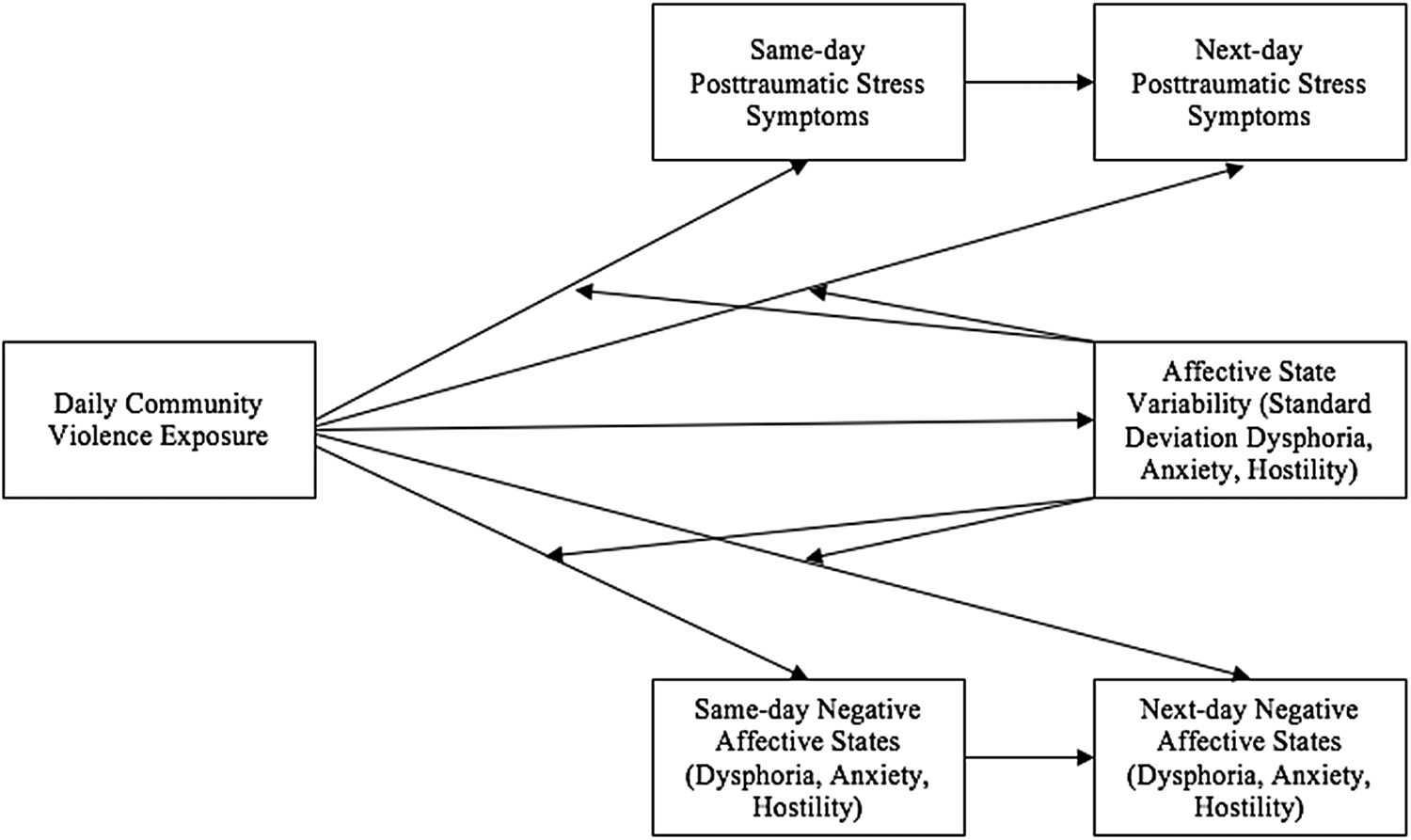
The overarching purpose of the current study is to examine the immediate and short-term impact of daily exposure to community violence on same-day and next-day levels of posttraumatic stress symptoms and various affective states (i.e., dysphoria, hostility, and anxiety), as well as the moderating influence of affective state variability (i.e., within-person fluctuations) on these associations. The current study employed ESM and daily sampling in a sample of African American adolescents living in urban, low-income, high-violence neighborhoods. No study, to the authors’ knowledge, has examined the interactions among these variables using this methodology with this population. The present study has two specific hypotheses. Figure 1 provides a graphical representation of the hypothesized model.
Hypothesis 1. It is predicted that elevated daily violence exposure will be associated with higher mean levels of same-day posttraumatic symptoms and increased next-day posttraumatic stress symptoms. Moreover, it is predicted that elevated daily violence exposure will be associated with higher mean levels of same-day negative affective states (dysphoria, anxiety, and hostility) and increased next-day negative affective states.
Hypothesis 2. It is hypothesized that youth reporting fluctuating affective states (affective state variability), using standard deviation of anxiety, hostility, and dysphoria, will be more susceptible to the negative effects of exposure to a violent incident by exhibiting increased traumatic symptoms and negative affective states via a two-way interaction. Under conditions of elevated affective state variability, exposure to violence that day will lead to elevated mean posttraumatic stress and negative affective states on the same day and on the next day.
Hypothesized guiding model.

Method
Participants
A sample of 268 low-income, African American sixth grade students was recruited from six urban Chicago public schools for a three-year longitudinal study investigating the predictors and effects of exposure to community violence. Consistent with previous studies using a similar sample, 58% of the participants recruited for the study agreed to participate (e.g., Cooley-Quille & Lorion, Reference Cooley-Quille and Lorion1999). Chicago Police Department statistics obtained for the calendar year prior to the study's commencement reveal that these schools were located within high-crime areas (https://data.cityofchicago.org/). A previous study examining a retrospective self-report questionnaires reported that the same sample reported being exposed to between four and five acts of violence over the previous year (Richards et al., Reference Richards, Larson, Miller, Parrella, Sims and McCauley2004). Fifty-nine percent of the participants were female, with an average age of 11.65 years (SD = .70). Nearly half of the participants (48%) lived in single-parent households. The median household size of the sample was five people. In terms of parental education level, 83% reported having at least a high school degree, with 10% reporting having either a college or graduate/professional degree. Participants’ median family income was $19,132 per year.
Procedure
All participants provided assent and parent or guardian consent before data collection began. As an incentive to participate, students received up to $40 for participation. The students and parents or guardians were informed at the outset of forms of compensation that would be received. Questionnaire data completed by students measuring violence exposure and posttraumatic stress symptoms were administered and collected by trained research staff over the course of five to seven consecutive days for each year of the study.
To measure daily experience, information about students’ current location, activity, thoughts and affect, and companionship was collected using ESM (see Csikszentmihalyi & Larson, Reference Csikszentmihalyi and Larson1987). Trained research staff met with small groups of participants for a training session to practice and explain how to respond to time sampling prompts, and students took part in a short trial run in which research staff checked for accuracy prior to initiation of data collection. For a one-week period, participants carried notebooks and watches programmed to signal at random times every 1.5 hr while the students were out of school, and twice per day while in school. When the watch signaled during this one-week period, participants were asked to record information about who and what they were surrounded by, what activities they were engaged in, and what they were thinking and feeling at that exact moment. Research staff members met at the end of each school day with the students to ensure compliance with the ESM. Over the course of each week-long data collection period, participants received a total of 51 signals. The median response rate to the signals was 42, or 82%. Students had to respond to at least 15 signals to be included in the study (Richards et al.,, Reference Richards, Romero, Zakaryan, Carey, Deane, Quimby and Burns2015).
Measures
Daily exposure to community violence
Daily exposure to community violence was measured using a daily diary booklet containing an 18-item self-report Daily Exposure to Violence (DEV) measure, which was adapted from the My Exposure to Violence Interview (Buka, Selner-O'Hagan, Kindlon, & Earls, Reference Buka, Selner-O'Hagan, Kindlon and Earls1997). Youth indicated whether they had been exposed to each of 18 types of violent acts that day, who committed the violence, who was victimized, and the time and location of each exposure. Total score of daily violence exposure was computed by summing endorsements of being victimized or witnessing violence across the 18 items for each day. Sample exposure events included, “Someone getting stabbed or shot,” “A gun being shot,” and “Fighting involving pushing, slapping, kicking, or punching.” Response rate for the daily report of violence was 89%, which is consistent with ESM results (see Larson, Richards, Sims, & Dworkin, Reference Larson, Richards, Sims and Dworkin2001).
Daily affective states
Using ESM, youth reported affective states rated on unipolar (i.e., worried, nervous, disappointed, feel like yelling, feel like hitting, angry) or bipolar scales (i.e., sad, disrespected, unfriendly, scared). Unipolar items consisted of a 4-point response range (e.g., 1 = not worried to 4 = very worried) and bipolar items consisted of a 7-point range (e.g., 1 = very sad to 7 = very happy). In order to create empirically driven daily affective state subscales, Sweeney et al. (Reference Sweeney, Goldner and Richards2011) submitted all ESM affective state items to a factor analysis for all three years of study, resulting in three subscales of interest to the current study: dysphoric, hostile, and anxious affective states. These scales have been found to relate to measures of psychopathology including depression (Hammack, Ross, Sturdivant, & Richards, Reference Hammack, Ross, Sturdivant and Richards2001) and posttraumatic stress symptoms (Ortiz et al., Reference Ortiz, Richards, Kohl and Zaddach2008). The scales consisted of mean scores within each day, including feeling sad, unfriendly, and disrespected (Dysphoria), feeling scared, worried, disappointed, and nervous (Anxiety), and feeling like yelling, hitting, or angry (Hostility). Cronbach alphas for the three subscales were the following: Hostility (.91), Dysphoria (.57), and Anxiety (.72). In addition to mean levels of affective states, standard deviations across the week were measured to assess affective state variability. In order to obtain this value, the standard deviation of feeling states over all daily ESM assessments within one individual were created, and then a weekly average standard deviation value for each individual was calculated.
Posttraumatic stress symptoms
Youth levels of posttraumatic stress were assessed once per day for five consecutive days with the Trauma Symptom Questionnaire (TSQ), adapted from the Checklist of Child Distress Symptoms (Richters & Martinez, Reference Richters and Martinez1990), and the Trauma Symptom Checklist for Children (TSCC; Briere, Reference Briere1996). This questionnaire consists of five subscales considered important to a diagnosis of PTSD: hyperarousal (e.g., “I felt really jumpy or scared when I heard loud noises or when someone came up behind me,”), avoidance (“Tried very hard not to think about something bad or scary that happened to me or someone else”), numbing (“Unable to laugh or feel happy, even when something really good or funny happened”), dissociation (“Felt like things weren't real”), and intrusion (“I remembered something scary even when I didn't want to.”). The TSQ is composed of 25 items ranging from 0 (not true at all) to 3 (very true) for each symptom. Internal reliability for the total score was .86.
Analytic procedure
To test the current study's hypotheses involving diary data, hierarchical linear modeling (HLM) using HLM 7 software was employed (Scientific Software International, Inc.). Torres, Ong, and Zárate (Reference Torres, Ong and Zárate2010) highlight a few advantages to using this approach, which apply to the current study. Firstly, this analytic procedure is appropriate for diary data. Analysis of ESM and diary data can be complex as it consists of repeated measures nested within participants that occur at semi-random time points with occasional missing values. The current study contains data with a hierarchical structure with up to 18 observations for ESM data and seven observations for daily diary measures within each of 268 students. Secondly, HLM provides precision weighting, in which more reliable reporters of information contribute more to the estimation of parameters than less reliable participants (Raudenbush & Bryk, Reference Raudenbush and Bryk2002). Thirdly, data from students with differing entry points or missing data from certain days can be used (Bolger et al., Reference Bolger, Davis and Rafaeli2003; Schwartz & Stone, Reference Schwartz, Stone, Stone, Shiffman, Atienza and Nebeling2007). Thus, list-wise deletion does not occur when data are missing at Level 1, all participants are retained in the analysis, and data imputation was not employed. Finally, this approach allows for the simultaneous estimation of Level 1 or within-participant effects as well as Level 2 or between-person effects. Thus, HLM allows for a test of heterogeneous variability by directly assessing differences in Level 1 variance across Level 2 units.
In the present study, daily diary ratings of community violence exposure, and posttraumatic stress symptoms as well as the multiple ESM ratings of affective states represent the Level 1 data. The Level 2 data are the individual participant, with aggregated daily affective state variability across the week. To test the prediction that daily violence exposure will predict increases in posttraumatic stress and negative affective states over time, a 1-day lagged multilevel modeling procedure was used. Previous-day violence exposure, posttraumatic stress levels, and negative affective states were included in the model as control variables in order to test for change in these variables. In order to test whether each day relation between violence exposure and posttraumatic stress/negative affective states vary as a function of person-level differences in variable affective states, partial regression coefficients from the aforementioned analyses provided estimates of the mean change in posttraumatic stress and negative affective states at average levels of affective states. Thus, each participant's weekly mean of daily Level 1 predictor was included at Level 2 in each model to disaggregate between-person and within-person effects (Bolger & Laurenceau, Reference Bolger and Laurenceau2013). A grand-mean centering approach for predictors at Levels 1 and 2 was utilized in the present analyses in order to improve interpretability (see Raudenbush & Bryk, 2002).
Level 1 daily violence exposure was entered as an independent variable, consisting of seven daily diary ratings. A stepwise approach was used for all models in which main effects were tested first followed by tests of interactions, including exposure to violence × affective states variability (controlling for main effect of daily exposure to violence mean), with both posttraumatic stress symptoms and negative affective states as outcomes. In conjunction with the same-day models, next-day models were run to examine main and interactive effects in a time-lagged context. A total of three moderation models were run with both same-day and next-day outcome variables. All significant interactions were probed and graphed utilizing Rweb (see Preacher, Curran, & Bauer, Reference Preacher, Curran and Bauer2006). This next-day model example equation is testing a cross-level interaction, with the dependent variable interpreted as the change in posttraumatic stress levels from the previous day to the next day with dysphoria variability as a moderator:
-
Level 1: (posttraumatic stress)ti = π0i + π1i(previous-day violence exposure)ti + π2i(previous-day posttraumatic stress)ti + eti
-
Level 2: π0i = β00 + β01(dysphoria variability)i + β03(weekly mean violence exposure)i + r0i π1i = β10 (dysphoria variability) π2i = β20
Results
Preliminary analyses
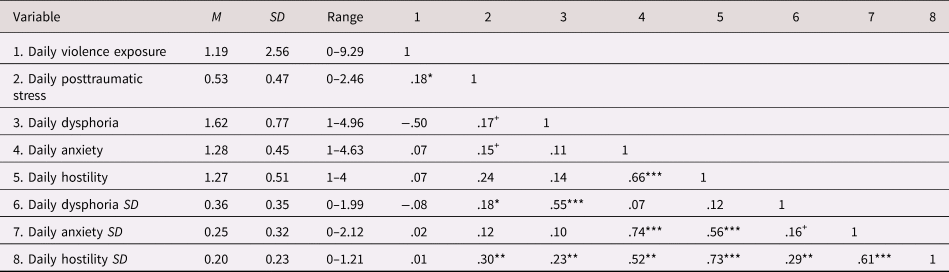
As recommended by Woltman, Feldstain, Mackay, and Rocchi (Reference Woltman, Feldstain, Mackay and Rocchi2012) the present study examined intraclass correlations (ICC) prior to performing the primary analyses to ensure adequate variation to proceed with HLM analyses. The ICC for daily posttraumatic stress was 0.57, while ESM dysphoria, anxiety, and hostility demonstrated ICCs of 0.67, 0.66, and 0.63, respectively. This indicates that variance existed at both the person-level and day-level for each outcome variable. Table 1 presents the Level 1 (day-level) and Level 2 (person-level) means, standard deviations, and intercorrelations. Descriptive statistics and correlation coefficients for day-level variables were computed by averaging across the week. Youth reported, on average, exposure to slightly more than one violent event during the week.
Descriptive statistics and correlations for variables under study

Note: +p < .10. *p < .05. **p < .01. ***p < .001. For daily report variables, correlation coefficients were calculated using the weekly mean averages for each day.
HLM analyses
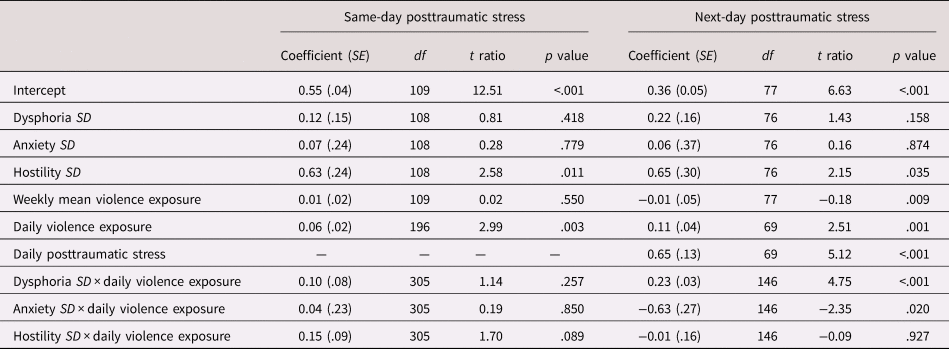
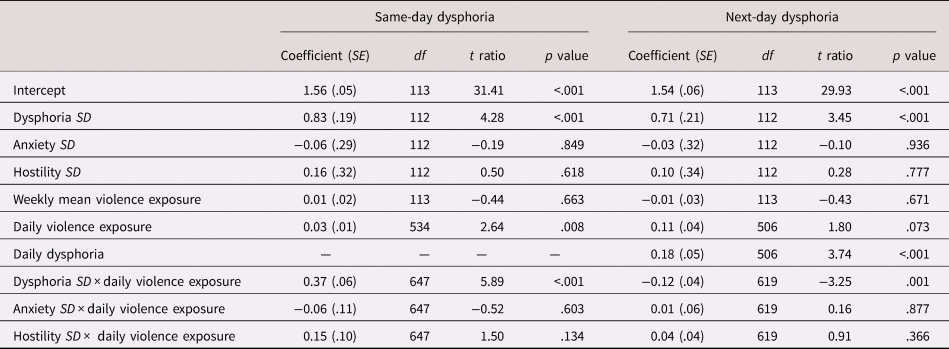
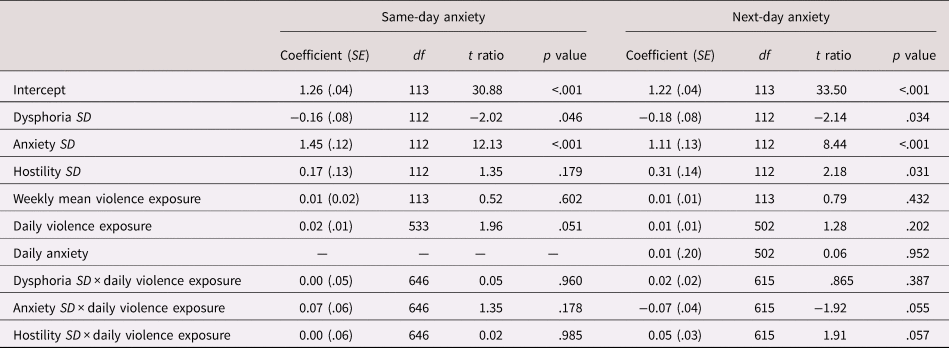
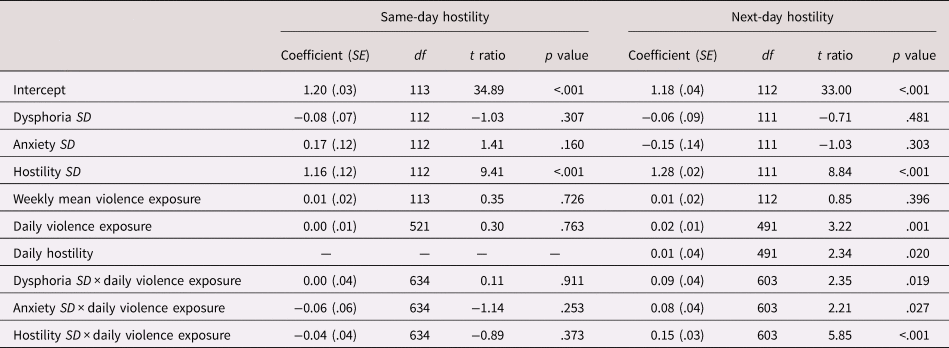
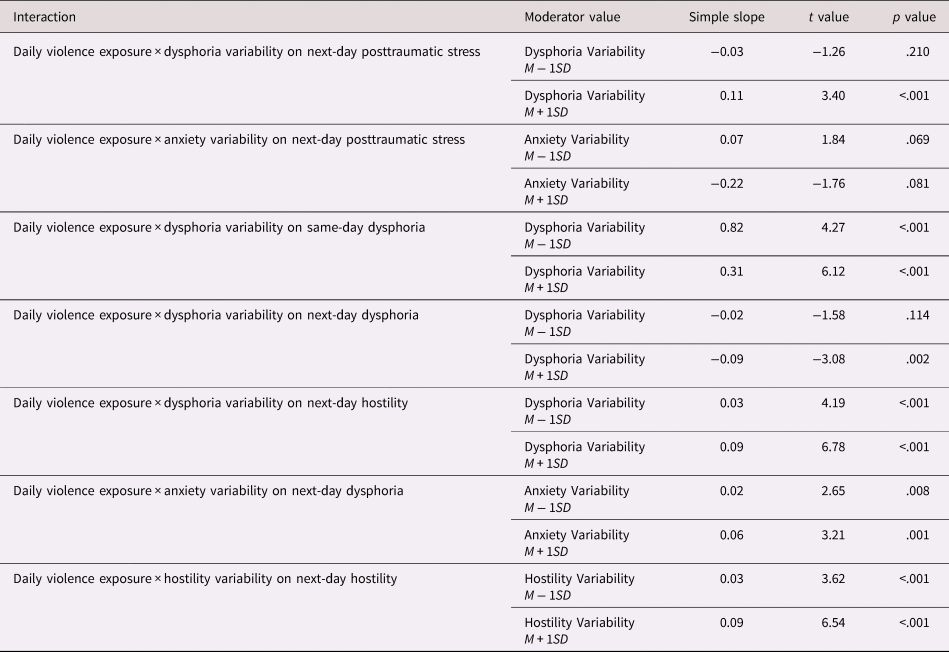
The results of the HLM models are presented separately by outcomes in Tables 2–5. Simple slopes at one standard deviation above and below the mean level of the moderator for all significant two-way interactions can be found in Table 6. The first aim of the study was to examine the relation between daily community violence exposure and same-day and next-day posttraumatic stress and negative affective states. Hypothesis 1 predicted that violence exposure would significantly predict higher concurrent and next-day negative symptomatology after controlling for weekly mean violence exposure. This hypothesis was partially supported (see Tables 2–5 for a summary of these regression equations). Violence exposure was significantly related to elevated same-day posttraumatic stress (β = .06, p < .01), same-day dysphoria (β = .03, p < .01), increased next-day posttraumatic stress (β = .11, p < .01), and increased next-day hostility (β = .02, p < .01). Exposure to violence was approaching significance for same-day anxiety (β = .02, p = .051) and increased next-day dysphoria (β = .11, p = .073). No relation between violence exposure and same-day hostility or next-day anxiety emerged as significant.
Hierarchical linear models for posttraumatic stress as the outcome with affective state variability moderation
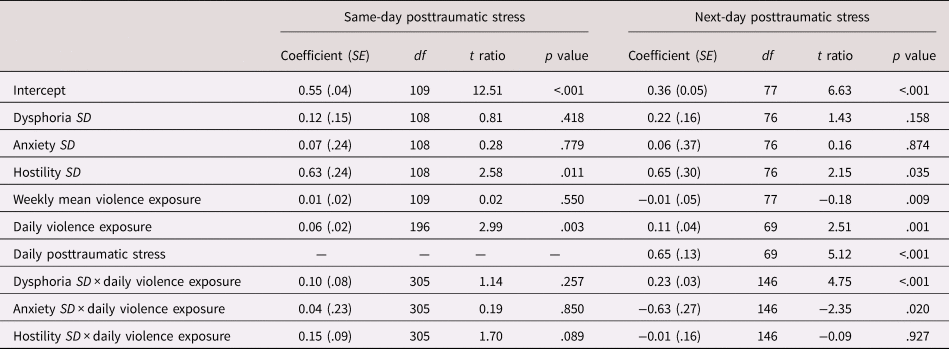
Note: Main effects are results of models that did not include interactive effects. Interactions were tested sequentially while controlling for main effect of weekly violence exposure.
Hierarchical linear models for dysphoria as the outcome with affective state variability moderation

Note. Main effects are results of models that did not include interactive effects. Interactions were tested sequentially while controlling for main effect of weekly violence exposure.
Hierarchical linear models for anxiety as the outcome with affective state variability moderation

Note: Main effects are results of models that did not include interactive effects. Interactions were tested sequentially while controlling for main effect of weekly violence exposure.
Hierarchical linear models for hostility as the outcome with affective state variability moderation

Note: Main effects are results of models that did not include interactive effects. Interactions were tested sequentially while controlling for main effect of weekly violence exposure.
Simple slopes at ±1.0SD of the moderator for hierarchical linear models

The second aim of the study was to examine the role of fluctuating affective states, or affective state variability, in the relation between community violence exposure and concurrent and subsequent posttraumatic stress and negative affective states. Hypothesis 2 predicted that high affective state variability, operationalized as the standard deviation of dysphoria, anxiety, and hostility, would exacerbate the harmful impact of violence exposure on same-day and next-day posttraumatic stress and negative affective states. Tables 2–5 present the results of these two-way interactions.
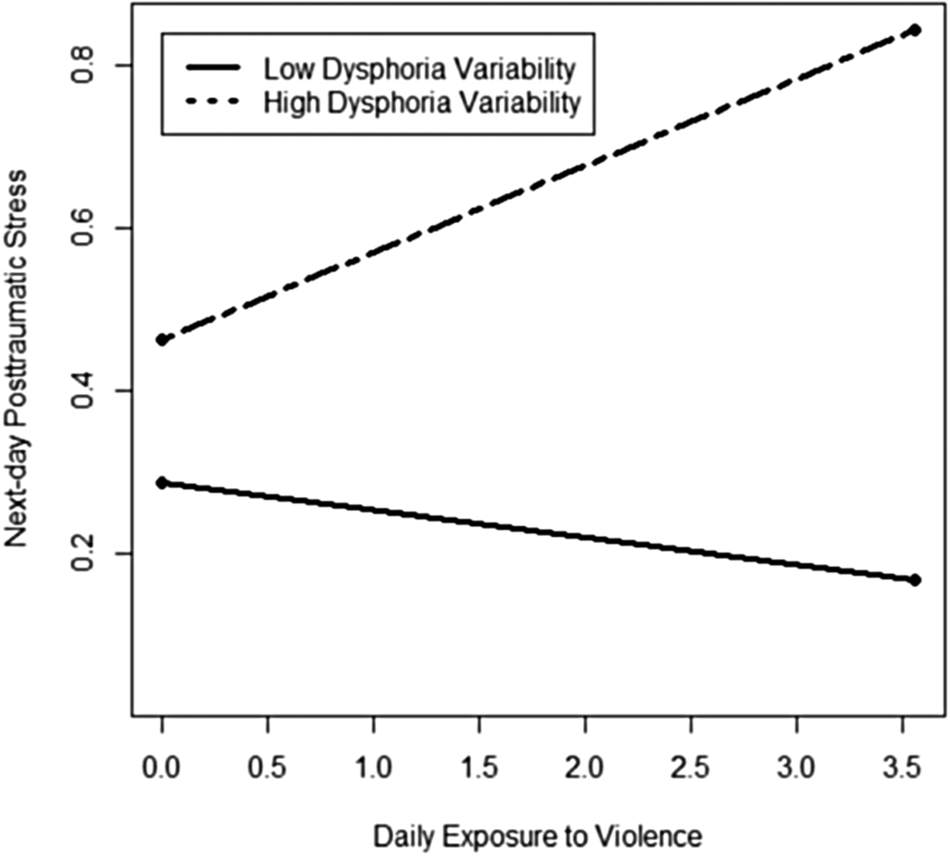
There was a significant interaction between daily violence exposure and both dysphoria and anxiety variability on next-day posttraumatic stress levels (see Figure 2). As hypothesized, for youth with higher levels of dysphoria variability, elevated violence exposure that day resulted in increased levels of subsequent posttraumatic stress. Youth with lower dysphoria variability did not experience a significant change in subsequent posttraumatic stress with violence exposure. Contrary to hypothesis 2, higher anxiety variability appeared to buffer the negative effects of violence exposure on next-day posttraumatic stress; however, neither simple slope was statistically significant at high or low levels of the moderator, limiting the interpretation of this finding. Because the simple slopes were not significant at ±1SD, the region of significance for this interaction was also examined. Simple slopes were significant outside of −0.012 at the lower bound and 0.686 at the upper bound of the region.
Daily violence exposure × dysphoria variability on next-day posttraumatic stress.

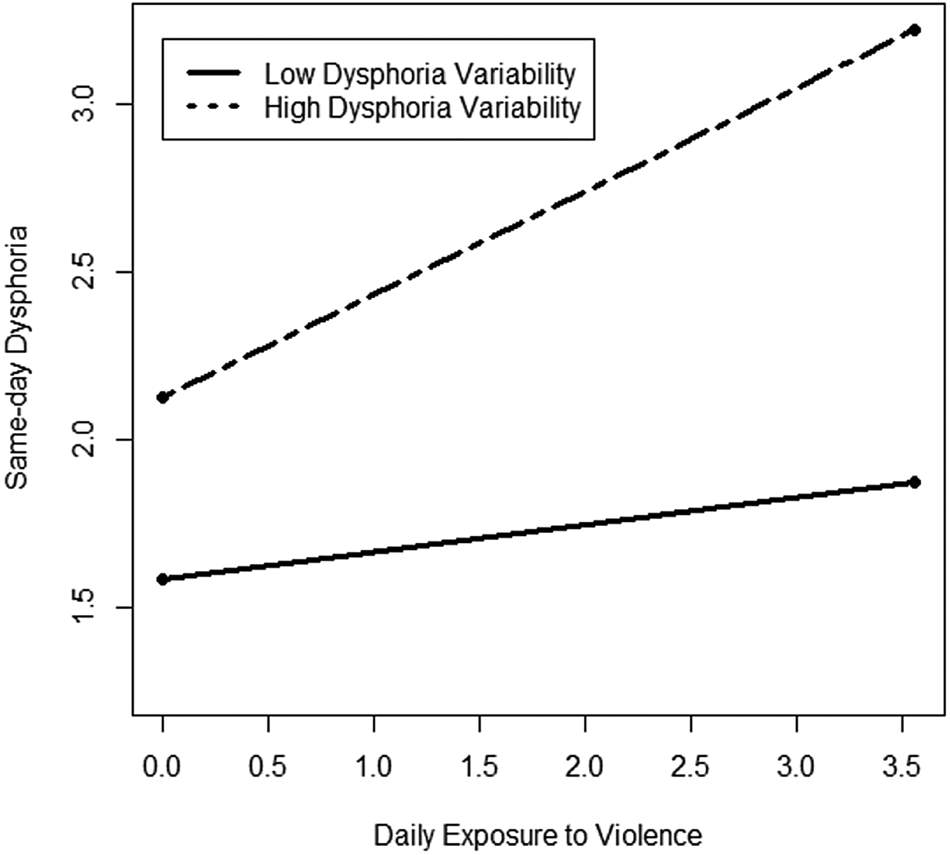
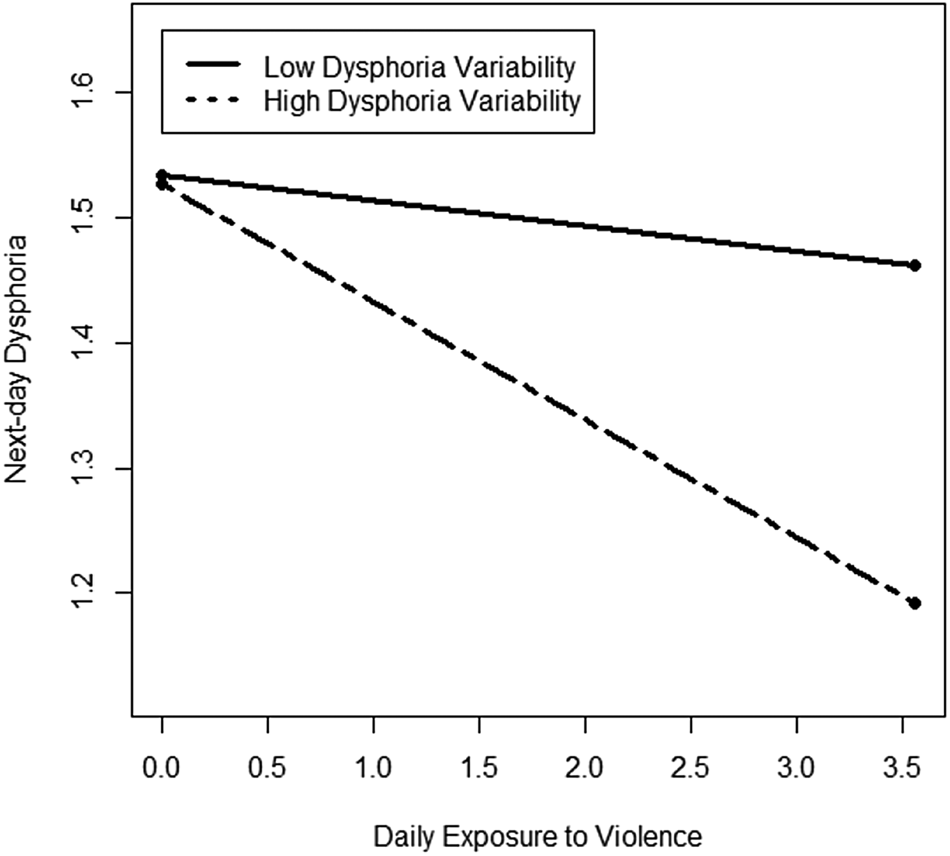
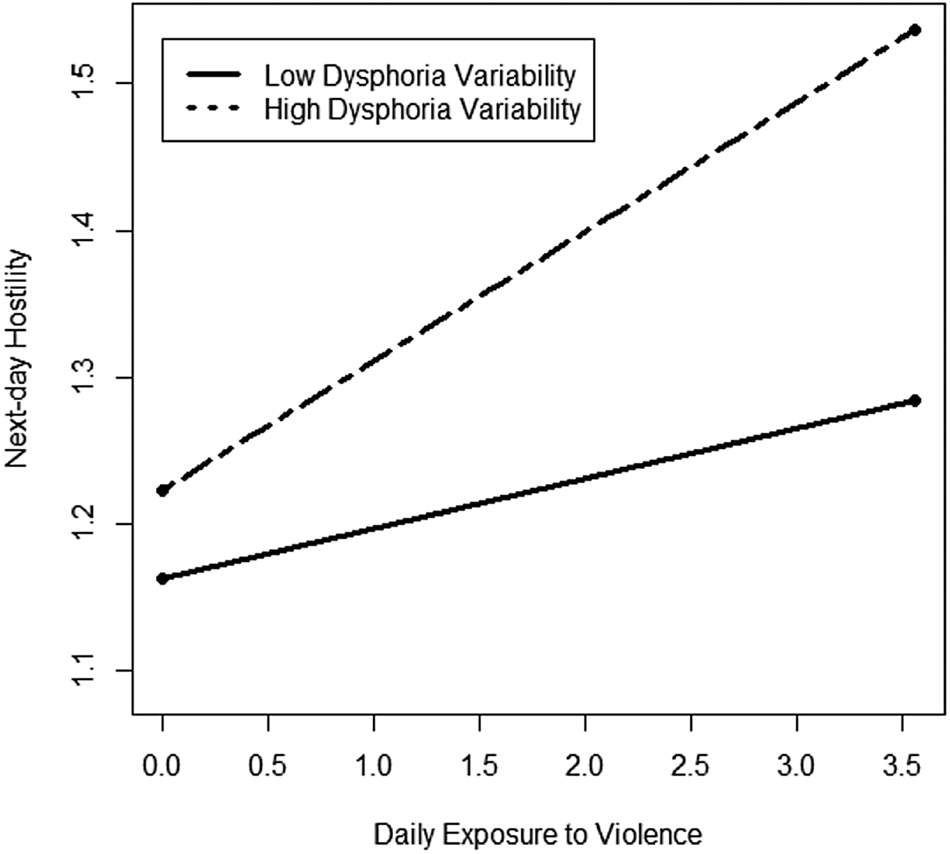
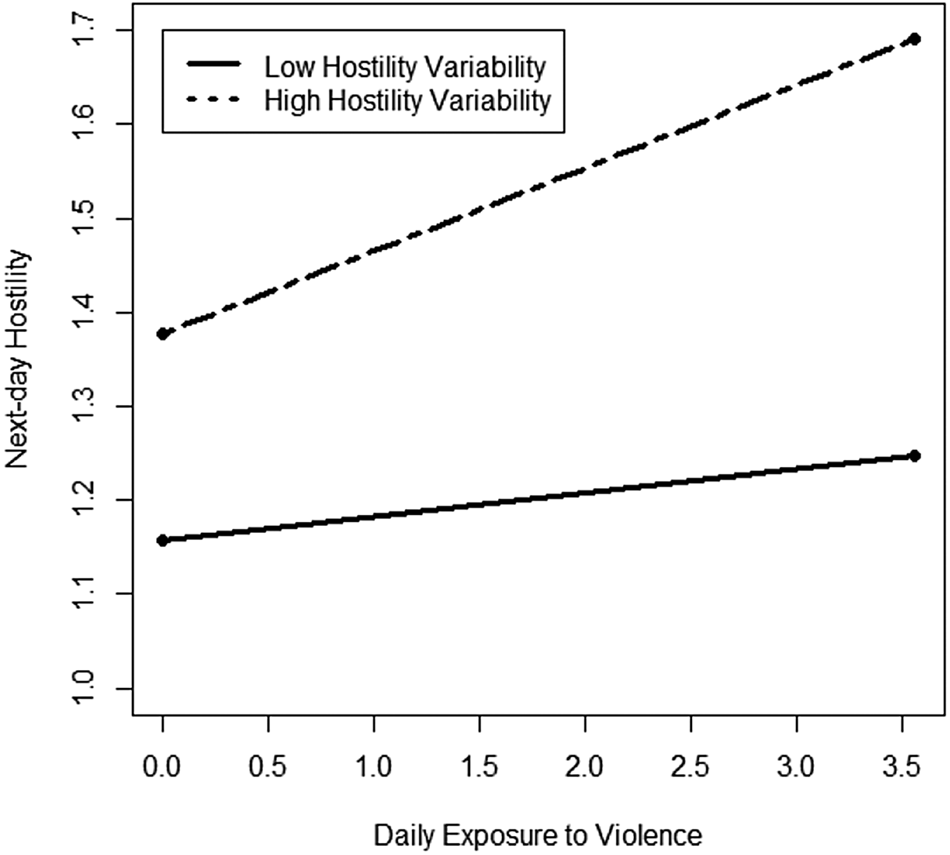
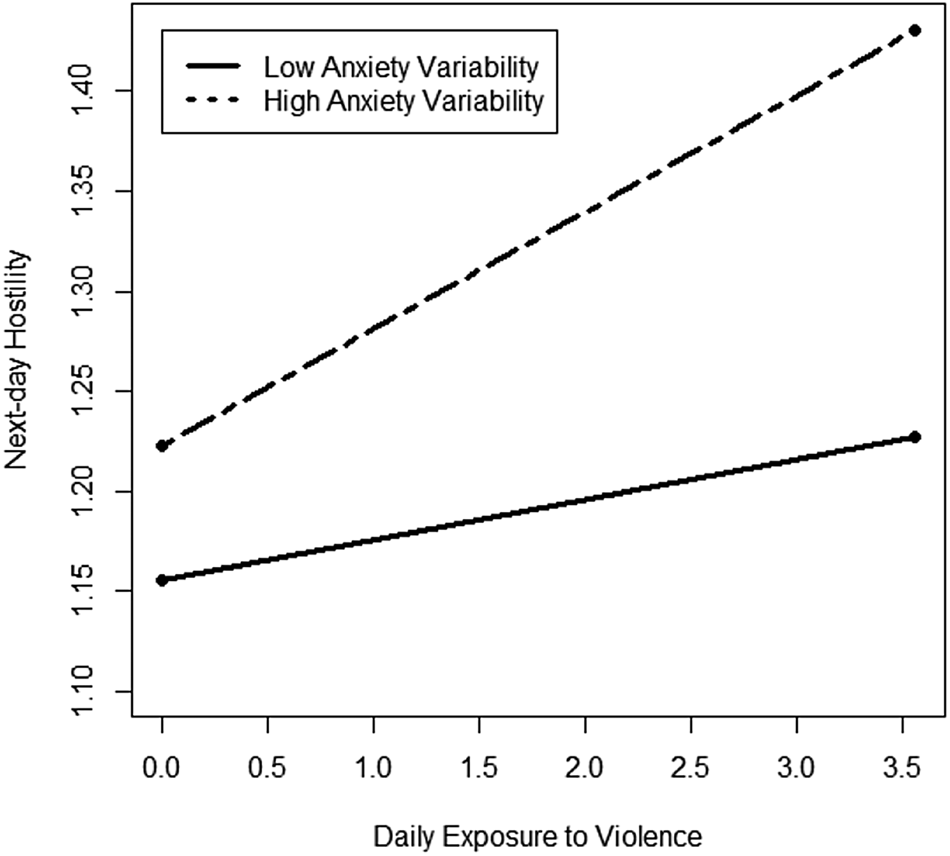
A significant interaction was observed between violence exposure and dysphoria variability in both same-day and next-day dysphoria models (see Figures 3 and 4). As hypothesized, for youth with high levels of dysphoria variability, violence exposure resulted in elevated same-day dysphoria. Notably, a significant, but weaker, relation also emerged for youth reporting lower levels of dysphoria variability. Contrary to the hypothesis, lower levels of dysphoria variability resulted in increased levels of next-day dysphoria when violence exposure occurred the day before. Finally, in next-day hostility models, there was a significant interaction between violence exposure and all three affective state fluctuations, including dysphoria, anxiety, and hostility variability (see Figures 5–7). For youth with both high and low levels of affective state variability, elevated violence exposure resulted in increased levels of next-day hostility; however, this relation was stronger among those with higher affective state variability in each next-day model.
Daily violence exposure × dysphoria variability on same-day dysphoria.

Daily violence exposure × dysphoria variability on next-day dysphoria.

Daily violence exposure × dysphoria variability on next-day hostility.

Daily violence exposure × hostility variability on next-day hostility.

Daily violence exposure × anxiety variability on next-day hostility.

Discussion
The current study expands on previous research by utilizing a daily diary and ESM approach to examine the daily experiences of community violence exposure, posttraumatic stress, and affective experiences among urban African American youth. No previous studies have examined the interrelations of these variables among this population using a time sampling and time-lagged approach. The results of the current study have important implications and strengths that extend the exposure to violence and trauma literature using a daily diary and ESM approach that captures in vivo information about the levels and variability of adolescents’ daily experiences. The use of this time sampling approach within a non-clinical, community-based, and comparatively increased risk population adds information about how youth experience violence and emotions in a daily context, while limiting recall bias and avoiding potential underestimation of these variables using traditional questionnaires.
Community violence exposure was positively associated with posttraumatic stress symptoms, which is consistent with prior research (Fowler et al., Reference Fowler, Tompsett, Braciszewski, Jacques-Tiura and Baltes2009). In particular, daily exposure to community violence had immediate and short-term effects on reports of posttraumatic stress symptoms in this sample. To the authors’ knowledge, this is the first study demonstrating the immediate experience of posttraumatic stress following daily reports of violence exposure among youth. Although PTSD is typically viewed as a long-term outcome of exposure to trauma, these findings suggest that symptoms of the disorder may commence almost immediately for youth. This has important ramifications for clinical assessments and interventions, such as the implementation of initial posttraumatic stress screening and incorporation of preventative treatments among those more at risk of violence exposure, including low-income, urban, African American youth (Bureau of Justice Statistics, 2011; Stein, Jaycox, Kataoka, Rhodes, & Vestal, Reference Stein, Jaycox, Kataoka, Rhodes and Vestal2003). Moreover, evidence-based approaches, such as trauma-focused cognitive behavioral therapy (TF-CBT), may be appropriate for youth at greater risk of developing posttraumatic stress symptoms (Litz, Gray, Bryant, & Adler, Reference Litz, Gray, Bryant and Adler2002) in order to facilitate healthy adaptation to trauma.
Exposure to community violence was also positively associated with negative affective states in this sample, which is largely consistent with previous research (e.g., McCabe et al., Reference McCabe, Lucchini, Hough, Yeh and Hazen2005; Bradshaw, Rodgers, Ghandour, & Garbarino, Reference Bradshaw, Rodgers, Ghandour and Garbarino2009; Zinzow et al., Reference Zinzow, Ruggiero, Resnick, Hanson, Smith, Saunders and Kilpatrick2009). Daily exposure to violence exhibited an immediate or short-term effect on youth dysphoria, anxiety, and hostility levels throughout the week. Interventions targeted to address the needs of African American youth exposed to community violence may benefit from including modules targeted at hostility and emotion regulation due to elevations in dysphoria and anxiety following exposure. Understanding the next-day effects of exposure on negative affective states would be useful for clinicians working with this population in preventing the ultimate development of psychopathology, such as clinical depression or anxiety. For example, cognitive approaches within psychotherapy emphasize awareness of immediate emotional experience and affective states. Adolescents who recognize the change in affective state following exposure may be better able to identify this experience and alter cognition or behavior immediately preceding these negative affective states (Kring, Persons, & Thomas, Reference Kring, Persons and Thomas2007).
The results of the current study reveal several important findings that highlight the value of examining the interaction of affective state variability in influencing the relation between violence exposure and deleterious outcomes. Youth variability in dysphoria exacerbated the effect of daily violence exposure on concurrent or next-day posttraumatic stress, dysphoria, and hostility. Moreover, variability in anxiety and hostility exacerbated the experience of next-day hostility. These findings are consistent with previous research, indicating that greater affective fluctuations are associated with emotional maladjustment within adolescents (Silk et al., Reference Silk, Forbes, Whalen, Jakubcak, Thompson, Ryan and Dahl2011). For example, youth who have difficulty appraising and regulating their own emotional states may have difficulty responding emotionally, and instead react physically with aggression or hostility (van der Kolk et al., Reference Van Der Kolk2005). The differential vulnerability hypothesis (Milan et al., Reference Milan, Zona, Acker and Turcios-Cotto2013) posits that certain factors increase the likelihood for a negative reaction following exposure, including increased emotion dysregulation. Emotion regulation may be central for youth to adequately appraise surroundings and adapt to stressful circumstances, such as violence exposure (van der Kolk, Reference van der Kolk2005). Due to the importance of context in mental health outcomes, examination of emotional variations in every-day situations provides insights into risk processes more than examining negative affect levels alone. In summary, daily affective variability appears to be a sensitive indicator of vulnerability to negative outcomes for youth exposed to violence.
While affective state variability tended to exacerbate the deleterious effects of exposure to violence in this study, it was revealed that violence exposure was more strongly associated with lower same-day dysphoria at higher levels of dysphoria variability, which is contrary to the stated hypotheses. It may be that low dysphoria variability is reflective of youth staying in a relatively consistent dysphoric state across the day. Indeed, the current sample reported higher levels of dysphoria compared to other measures of negative affect, suggesting that this may have been a contributing factor. This may also be an artifact of the methodological approach, which is discussed in the limitations section below.
Changes in emotion through time represent the very purpose of why emotions even exist: to highlight important changes and events occurring in the environment and to prompt a response to address these changes (Kuppens & Verduyn, Reference Kuppens and Verduyn2015; Larsen, Reference Larsen2000; Scherer, Reference Scherer2009). Enhanced emotional reactivity largely reflects an adaptive response to residing in a threatening and dangerous environment (Ellis, Bianchi, Griskevicius, & Frankenhuis, Reference Ellis, Bianchi, Griskevicius and Frankenhuis2017). However, high levels of reactivity, or decreased emotion regulation, can be maladaptive in contexts that are safe and sustained large levels of emotional variability through time are associated with the development of a mood disorder and other problems (Peeters, Berkhof, Delespaul, Rottenberg, & Nicholson, Reference Peeters, Berkhof, Delespaul, Rottenberg and Nicholson2006; Thompson et al., Reference Thompson, Mata, Jaeggi, Buschkuehl, Jonides and Gotlib2012). Youth who exhibit increased variability in dysphoria, anxiety, or hostility may have limited ability to understand their affective states in the context of an emotionally laden situation (van Roekel et al., Reference Van Roekel, Ha, Verhagen, Kuntsche, Scholte and Engels2015), and may therefore have increased negative reactions following exposure to community violence. Therefore, preventative interventions should focus on fostering stable, safe, and structured school and after-school activity environments for youth to express their emotions (e.g., theater, spoken word, and arts programs) and promote healthy emotion regulation skills. These types of activities and contexts are often not available to low-income, urban youth, however, which is problematic given the aforesaid increased risk of violence exposure.
Limitations of the current study
While the current research yielded several important findings relating to the interrelations between daily violence exposure and immediate negative outcomes, it also contains limitations regarding design, methodology, and statistical approach that should be considered. Firstly, while it is imperative to examine this topic as it relates to African American youth living in low-income, urban environments, the specificity of this population and results of the investigation may not generalize to other populations. Secondly, the results of the current study focus on a group of 6th grade students and thus generalizations to younger children or older adolescents should be made with caution. Thirdly, all factors examined in the current study were measured by self-report. While this provides a noninvasive and cost-effective approach, future studies may consider the inclusion of multi-method and multi-source design. Also, while the daily diary and ESM design and HLM approach allow for repeated measures and augmented statistical power as well as fewer Type 1 errors compared with other statistical approaches (Larson, Reference Larson and Larson2013), conducting numerous moderation models may increase the likelihood of Type 1 error.
There are a number of limitations regarding the ESM approach and assessment of variability that warrant comment. While the daily diary and ESM approach is a unique contribution and strength of the current study's design, the study's short duration may underemphasize or overlook the effects of violence exposure and affective state variability over longer durations of time. It should also be noted that while using intra-individual variability as a measure of overall variations in emotional experience is a frequently employed technique in the emotion literature, it can confound change in intensity with changes in frequency. The daily negative affect means within the current sample are generally low and it should be noted that interpretations could be different in samples with higher levels of negative affective states. A larger standard deviation can result from infrequent large changes as equally as from frequent small changes. While it is theoretically possible that high emotional sensitivity could result in a continuous high level of a particular emotion that results in low affective state variability, the levels and variability of affective states are positively correlated, indicating that the occurrence of sustained high levels of negative affect is infrequent. Further, previous research using ESM has demonstrated that previous violence exposure is more closely related with measures of feeling state variability rather than ESM measures of mean levels of feeling states (Sweeney et al., Reference Sweeney, Goldner and Richards2011). Regardless, the measurement of affective state variability and daily ratings of affect would ideally come from non-overlapping measurement periods. Likewise, because daily violence and same-day outcomes were collected concurrently, a causal relationship between these variables cannot be established and interpretations should be made with caution.
Future research directions
Future studies would benefit from examining the current study's constructs while addressing the limitations noted above. The inclusion of a mixed-method design (e.g., qualitative methods, measuring salivary cortisol levels) as well as mixed source (e.g., teacher report, parent report) would be useful in (a) gathering a more refined understanding of the interrelation of the variables under study, (b) differentiating alternative explanations for findings as well as (c) reducing potential spurious variance due to the measurement method or other systematic error (Holmbeck, Li, Schurman, Friedman, & Coakley, Reference Holmbeck, Li, Schurman, Friedman and Coakley2002). In terms of sample, it would be beneficial to examine differing populations to identify whether the immediate effects of violence exposure and the role of affective state variability applies across various socioeconomic, geographic, and racial groups. Relatedly, future studies should also longitudinally examine what variables contribute to the development of PTSD and psychopathology over time. Additionally, while adolescence is an important period to examine the effects of violence exposure and its relation to affective state variability given the integral nature of these variables at this point in development, there is evidence that violence exposure disrupts these processes at an earlier stage of development (De Bellis & Van Dillen, Reference De Bellis and Van Dillen2005). Thus, it is essential to examine these variables longitudinally from childhood through adolescence to thoroughly understand the development and disruption of these skills over time. The pervasiveness and effect of exposure to community violence and associated affective state variability, negative affective states, and posttraumatic stress symptomatology on the lives of youth, particularly those residing in low-income, urban environments, validate the necessity for sustained research and continued informing of theory, intervention approach, and overarching policy connected to youth exposure to community violence.