Implications
In most European countries, male piglets are physically castrated to avoid boar taint, that is, the unpleasant odour or flavour that consumers may detect if pork from entire male pigs is heated. This study investigates consumer response to the vaccine method, which is an equally effective and more welfare-friendly alternative to physical castration. The study shows that pork consumers in Belgium, France, Germany and the Netherlands strongly prefer the vaccine method over physical castration with anaesthesia, irrespective of their main motivation for purchasing pork. Therefore, the adoption of the vaccine method is unlikely to result in marketplace loss of any particular target market.
Introduction
Boar taint is the unpleasant odour or flavour that consumers may detect if pork meat from male pigs that have reached puberty is cooked and/or heated. The off-flavour is caused by the accumulation of certain substances, particularly skatole and androstenone in the fat tissue of male pigs. Skatole associates with a faecal odour and off-flavour, whereas androstenone gives a urine or sweat odour. Despite being harmless to human health, the off-flavour strongly impairs the meat quality and is prohibited by food quality regulations in most countries. In the vast majority of European countries, male piglets are physically castrated (most often still without anaesthesia or analgesia) to avoid boar taint and to safeguard the product sensory quality. Though this method can be very effective in eliminating boar taint, it is very much contested and subject to public concern because of its negative impact on the animal's welfare and integrity. As such, it is very unlikely to be tenable as a future practice within the European Union (EU; de Roest et al., Reference de Roest, Montanari, Fowler and Baltussen2009). For instance, Norway (since 2002), Switzerland (since 2010) and the organic farming sector in the Netherlands (since July 2007) have already banned physical castration without anaesthesia. In addition, market forces and marketing actions have emerged, such as large retail companies refusing meat from pigs not given pain relief before castration. Recently, the largest Belgian supermarket chain Colruyt even decided to sell only pork from non-physically castrated but vaccinated pigs from 2011 onwards.
The discussion on the practice and the public concern have been the direct reason for a review report by the European Food Safety Authority (EFSA) on the welfare aspects of piglet castration (EFSA, 2004). Following on the report, the PIGlet CAStration in Europe (PIGCAS) consortium (http://w3.rennes.inra.fr/pigcas) aimed to provide information on piglet castration and the possible alternatives to support EU policy development. A special issue of the journal Animal (2009, volume 11) has been devoted to some results of this project. This has been the prelude of more scientific research for alternative methods that should be equally efficient in eliminating boar taint, enhancing animal welfare and being economically feasible (for a review, see von Borell et al., Reference von Borell, Oliver, Fredriksen, Edwards and Bonneau2008).
In general, three important alternatives are distinguished: the vaccine method; physical castration with anaesthesia or analgesia; and no castration (rearing entire male piglets, eventually after genetic control for boar taint; Zamaratskaia and Squires, Reference Zamaratskaia and Squires2009). The vaccine method (also referred to as immunocastration or immunisation) pertains to a two-shot vaccine that stimulates the pig's immune system to produce specific antibodies against gonadotropin-releasing hormone (Adams, Reference Adams2005; Zamaratskaia et al., Reference Zamaratskaia, Rydhmer, Andersson, Chen, Lowagie, Andersson and Lundström2008). This inhibits the function of the testicles and thus the production of androstenone and the accumulation of skatole, both identified as the major causes of the development of boar taint in pigs. The moment for the first injection is flexible, but should be at least 4 weeks before the second injection. The second injection is given 4 to 6 weeks before slaughter (Mackinnon and Pearce, Reference Mackinnon and Pearce2007).
In this study, we will concentrate on the vaccine method, more specifically on consumer response to the method, as opposed to physical castration with anaesthesia. Both are possible and economically feasible solutions in the short run for the contested current practice of physical castration without anaesthesia. The vaccine (Improvac®, Pfizer GmbH, Pfizer Animal Health S.A., Louvain-la-Neuve, Belgium) has recently been registered and is thus available for use on the market in more than 50 countries around the world, including those of the EU and Japan (Allison, Reference Allison2010). The vaccine method has been associated with higher daily weight gain, better feed conversion and a higher percentage of lean meat (Prunier et al., Reference Prunier, Bonneau, von Borell, Cinotti, Gunn, Fredriksen, Giersing, Morton, Tuyttens and Velarde2006; Fàbrega et al., Reference Fàbrega, Velarde, Cros, Gispert, Suárez, Tibau and Soler2010). In addition, von Borell et al. (Reference von Borell, Baumgartner, Giersing, Jaggin, Prunier, Tuyttens and Edwards2009) reported a positive effect on welfare in relation to pain during and after castration for immunocastration, and Baumgartner et al. (Reference Baumgartner, Laister, Koller, Pfützner, Grodzycki, Andrews and Schmoll2010) concluded that the behaviour of vaccinated male pigs does not create additional problems during the fattening period, when compared with surgically castrated pigs. With regard to economic implications, de Roest et al. (Reference de Roest, Montanari, Fowler and Baltussen2009) concluded that the improvement in feed efficiency may compensate almost entirely for the cost of the vaccination and it is noted that the vaccine is sold with the claim of providing a positive economic return to pig farmers. The benefits in terms of the animal's welfare, though little investigated (von Borell et al., Reference von Borell, Baumgartner, Giersing, Jaggin, Prunier, Tuyttens and Edwards2009), are widely recognised. Recently, Fàbrega et al. (Reference Fàbrega, Velarde, Cros, Gispert, Suárez, Tibau and Soler2010) confirmed improved welfare aspects such as reduced aggression and reduced mounting behaviour.
The pig industry, however, is rather reserved towards the vaccine method, because of uncertainties regarding the marketplace and consumer acceptance or rejection of the method. The alleged reasons for concern relate to the possible perception of a (false) link with hormone treatment (Heinritzi et al., Reference Heinritzi, Ritzmann and Otten2006; Prunier and Bonneau, Reference Prunier and Bonneau2006; de Roest et al., Reference de Roest, Montanari, Fowler and Baltussen2009), which is a very sensitive issue among European meat consumers (Verbeke et al., Reference Verbeke, Viaene and Guiot1999 and Reference Verbeke, Frewer, Scholderer and De Brabander2007). Clinical research has shown that the consumption of meat from vaccinated pigs does not involve any risk to human health, which would also be anticipated from the protein composition and immunological mode of action (Clarke et al., Reference Clarke, Walker, Hennessy, Kreeger, Nappier and Crane2008).
A positive consumer perception is a key determinant for the applicability of a new method (Frewer, Reference Frewer1999; Huber-Eicher and Spring, Reference Huber-Eicher and Spring2008), especially in a demand-driven market and economy. As discussed before, consumer acceptance is also put forward as the key to market success of the vaccine method. Several studies already concentrated on investigating consumer acceptance and perception of boar meat, mainly through sensory experiments with experts, lay consumers or a combination of both (see Allison et al. (Reference Allison, McKeith, Souza, Boler, Killefer and Hennessy2009) and Heid and Hamm (Reference Heid and Hamm2009) for a review). The studies that also investigated consumer perceptions of pork from vaccinated pigs (e.g. Font i Furnols et al., Reference Font i Furnols, Gispert, Guerrero, Velarde, Tibau, Soler, Hortos, Garcia-Regueiro, Pérez, Suarez and Oliver2008) indicated that pork meat from vaccinated pigs was experienced as at least equally good as pork meat from castrated and/or female pigs. In contrast, pork meat from entire boars was most often evaluated as worse than meat from vaccinated or castrated pigs. Hence, there appears to be no increased likelihood of dissatisfying consumers in terms of sensory properties of the meat compared with current practice. The challenge that will be addressed in this study is to investigate the likelihood that EU consumers would not be willing to accept or purchase pork from immunised pigs for reasons of perceived food safety risk (e.g. fear for residuals among Norwegian consumers as reported by Fredriksen et al. (Reference Fredriksen, Sibeko Johnsen and Skuterud2010)). Few studies have concentrated on such pre-purchase attitudes and decision processes, and the available studies pertain to survey approaches on a single country level, for example, Hennessy and Newbold (Reference Hennessy and Newbold2004; Australia), Lagerkvist et al. (Reference Lagerkvist, Carlsson and Viske2006) and Liljenstolpe (Reference Liljenstolpe2008; Sweden), Giffin et al. (Reference Giffin, Allison, Martin, Ward and Tschopp2008) and Huber-Eicher and Spring (Reference Huber-Eicher and Spring2008; Switzerland), Vanhonacker et al. (Reference Vanhonacker, Verbeke and Tuyttens2009; Belgium) and Fredriksen et al. (Reference Fredriksen, Sibeko Johnsen and Skuterud2010; Norway).
The lack of cross-national comparison and analysis in previous studies is a major limitation in an international economic context. The PIGCAS project followed an international approach, though the results were based on a limited number of representatives of the different stakeholders, a shortcoming that has been acknowledged by the project consortium (Fredriksen et al., Reference Fredriksen, Font i Furnols, Lundström, Migdal, Prunier, Tuyttens and Bonneau2009). Consumer opinion was investigated through interviewing consumer organisations, which does not necessarily coincide with individual views of consumers. Except for the Swiss study by Huber-Eicher and Spring (Reference Huber-Eicher and Spring2008), Liljenstolpe (Reference Liljenstolpe2008; who did not specifically address the vaccine method) and Fredriksen et al. (Reference Fredriksen, Sibeko Johnsen and Skuterud2010) in Norway (who used the term ‘medical castration’ and presented the use of anaesthesia as the standard procedure), previous studies mostly provided reassurance to the pig industry, denoting a favourable consumer attitude with regard to the vaccine method. Vanhonacker et al. (Reference Vanhonacker, Verbeke and Tuyttens2009) linked this favourable attitude mainly to a better perception score on animal welfare and a higher consumer acceptance, in spite of some uncertainty among consumers related to price. Several studies have pointed towards the importance that communication and information provision about the method will play on how consumers respond to the method (Heid and Hamm, Reference Heid and Hamm2009; Spring et al., Reference Spring, Kupper and Pauly2009). Given that consumers are only scarcely aware of piglet castration, and only a few consumers even heard of the vaccine method, large-scale surveys need to inform participants before attitudes can be measured. As such, differences between the findings of different studies are probably partly related to the design of the study, including differences in the ex-ante information provision to participants, as well as to eventual cross-cultural differences. In this perspective, there is a need for cross-country studies that evaluate the consumers’ acceptance of the vaccine method, their (non-) preference for the method over physical castration with anaesthesia (as the most feasible alternative short-term solution at the present moment) and their likelihood to actively seek out or avoid pork produced with this method.
The objective of this study was to investigate consumer response, preference and purchasing intention in four member states of the EU: Belgium, France, Germany and the Netherlands. The study herewith focuses on a cluster of four neighbouring West European countries, which are important players in terms of pig production, pork consumption and intra-EU or international pork trade. Eventual differences between and within countries will be presented and discussed. This study tackles the key issue that dominates the present (year 2010) debate about the vaccine method, namely the uncertainty about the pre-purchase consumer acceptance or rejection of meat from vaccinated pigs. Covering different countries matches with international business goals, market organisations and trade economies, and rules out a possible framing effect from comparing methodologically different national studies.
Material and methods
Research approach and sampling
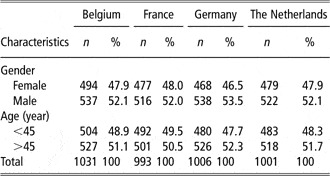
A large-scale consumer survey was carried out in France, Germany and the Netherlands between 21 January and 4 February 2008, and further in Belgium between 19 and 24 November 2009. A total of 4031 online interviews were conducted among pork consumers (individuals who consume pork at least two or three times a month). Participants were randomly recruited in each country from online consumer panels established and managed by Lieberman Research Worldwide (LRW Inc., Los Angeles, CA, USA), the international market research company that carried out the fieldwork data collection. The survey took approximately 15 min in duration. In order to maximise the representativeness of the data for the overall population, data were weighted per country to reflect the population demographics in terms of age, gender and education. Age and gender characteristics of the final samples are provided in Table 1.
Sample characteristics per country (total n = 4031)

The international market research company LRW Inc. abides by the ICC/ESOMAR International Code on Market and Social Research with regard to ethics in social sciences research (ICC/ESOMAR, 2008). In line with this code of conduct, all relevant international guidelines and ethical standards relating to privacy and the collection of personal data from human beings have been respected. Participants in the survey were adult healthy volunteers who were informed about the scope of the study and provided their written informed consent and agreement to participate. Data were anonymous and they were stored in a non-identifiable format for analysis.
Measurement and scaling
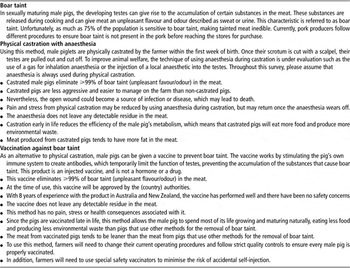
Participants were asked to complete a self-administered, structured, electronic questionnaire, which consisted of two parts, separated from each other by information provision on boar taint, on physical castration with anaesthesia and on the vaccine method as alternative methods to eliminate boar taint.
In the first part of the questionnaire, next to some general questions related to the socio-demographic profile of the respondents, pork consumption frequency and product attribute importance in the purchase decision process of pork were assessed. Response categories for consumption frequency were ‘more than once a week’, ‘once a week’ and ‘two to three times a month’. Perceived product attribute importance was measured for price, taste, health, animal welfare and environmental friendly production. The selection of these five attributes was informed by previous studies (Verbeke and Viaene, Reference Verbeke and Viaene1999; Grunert et al., Reference Grunert, Bredahl and Brunsø2004; Vanhonacker and Verbeke, Reference Vanhonacker and Verbeke2009; Verbeke, Reference Verbeke2009), and by the possible perceived relationship between the vaccine method and each of these attributes in the consumers’ perception. The importance of ‘reasonably priced’, ‘tastes good’, ‘is healthy for your diet’, ‘animal was treated as humanely as possible’ and ‘production of meat is done in an environmental friendly way’ was measured on a 7-point Likert interval scale that ranged from ‘not at all important’ (1) to ‘extremely important’ (7).
In order to account for country-specific and individual-specific scale use, the raw data were centred around the individual. As such, the respondent's original score was replaced by a relative individual score that ranges from −1 to +1. These relative product importance scores will be used to identify market segments in our sample and to investigate how eventual market segments with different purchase motives differ in terms of acceptance of, preference for and purchasing intention in relation to pork from vaccinated v. physically castrated pigs. Before the second part of the survey, participants were informed by means of a textual message about boar taint, and the two alternative methods (of interest in this study) to avoid the development of boar taint, that is, physical castration with anaesthesia and the vaccine method (Table 2).
Textual information provided to the study participants

After exposure to the information, participants were asked about their (aided) awareness of boar taint and the two alternative methods. Response categories were ‘I have never heard of it’, ‘I have heard of it but do not know much about it’ and ‘I have heard of it and know about this issue’. Next, acceptance of the two methods was measured on a 7-point scale that ranged from ‘completely unacceptable’ (1) to ‘completely acceptable’ (7). The respondents’ confidence in the efficiency of the method with regard to eliminating boar taint was measured on a 5-point scale, ranging from ‘not at all confident’ (1) to ‘very confident’ (5). A 5-point scale was also used to measure the respondents’ likelihood of seeking out or avoiding pork produced using either method, where 1 corresponded with ‘definitely avoid’ and 5 with ‘definitely seek out’. The scale's mid-point was anchored with ‘neither seek out nor avoid’. This variable will be analysed as a categorical variable. Willingness-to-pay a moderate price premium for pork raised with either method was registered on a 7-point scale that ranged from ‘definitely would not pay a slight premium’ (1) to ‘definitely would pay a slight premium’ (7). Willingness-to-pay for pork from the vaccine method (physical castration method) was only registered for people who had expressed a preference for the vaccine method (physical castration method).
Finally, two questions directly opposed the two alternative methods one to another. First, respondents were asked to indicate their preference on a 7-point scale that ranged from ‘strongly prefer the physical castration method’ (1) to ‘strongly prefer the vaccine method’ (7), with ‘neutral’ being the scale's mid-point (4). Second, they had to indicate their choice between the following four response categories relating to purchasing intention: ‘I will try to only eat pork produced using the vaccine method’, ‘I am happy to eat pork produced using either method’, ‘I will try to only eat pork produced using the physical castration method’ and ‘I will not eat pork using either method (i.e. I will no longer eat pork)’.
Statistical analyses
Data were analysed using Statistical Package for the Social Sciences version 15.0. Descriptive analyses were used to report and discuss the responses to the different questions at the country level. Hierarchical clustering with Ward's method and squared Euclidean distance was measured using the product attribute importance scores on taste, price, health and ethics (animal welfare and environmental friendly) as segmentation variables, followed by a K-Means cluster analysis with initial cluster centres that resulted from the hierarchical procedure. The optimal number of clusters (so-called segments) was based on an increase in distance indices, together with a split-run procedure. Cross-tabulations with χ 2 statistics are used to profile the segments in terms of socio-demographics and pork consumption frequency. Eventual differences in terms of preference and acceptance measures between market segments and different socio-demographic consumer groups were analysed through bivariate analyses (one-way ANOVA and independent sample t-tests).
Results
Descriptive analyses
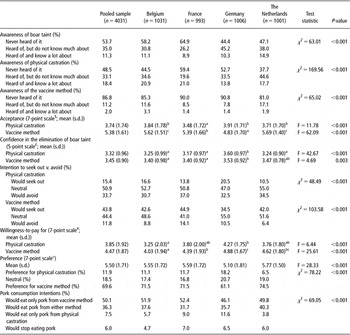
Consumers’ aided awareness of boar taint and the methods to eliminate its development was very limited (Table 3). More than half of the total sample indicated having never heard of boar taint. The low level of awareness with regard to boar taint was most evident in France and Belgium. The vaccine method was completely unknown to a large majority of the sample and less known than the physical castration method. French and German consumers were the least aware of both methods.
Descriptive analyses for the different countries

a,b,cScores in a row with different superscripts are significantly different at P < 0.05 (one-way ANOVA and post hoc Bonferroni multiple comparison test).
$1 = completely unacceptable, 7 = completely acceptable.
£1 = not at all confident, 5 = very confident.
1 = definitely would not pay a slight premium, 7 = definitely would pay a slight premium.
°1 = strongly prefer physical castration with anaesthesia, 7 = strongly prefer the vaccine method.
Overall, once consumers were made aware of the two alternative methods, the acceptance score for the vaccine method surpassed the acceptability of the physical castration method. Differences in absolute acceptance scores between both methods were most pronounced in Belgium, France and the Netherlands. German responses were characterised by a higher number of neutral answers on both questions. For both methods, a similar degree of confidence was expressed with regard to eliminating boar taint. Absolute confidence scores were slightly in favour of the physical castration method in Germany, whereas the opposite was found in all other countries. Mean confidence scores were in the range of 3.2 to 3.5 on the 5-point scale, thus on the positive side but with a high share of neutral responses (39.4% and 39.2% for physical castration and the vaccine method, respectively), which is in line with the reported unawareness about boar taint and both presented methods to prevent it. Similar results were found for the degree of seeking out or avoiding pork from either method. Although consumers in all countries were strongly in favour of the vaccine method, this was the least pronounced in Germany. Responses to the question about the preference for one method over the other were characterised by a relatively high share of the German sample preferring physical castration (18.2%) or taking a neutral position (20.7%). Except by German consumers, a negative willingness-to-pay a price premium for pork from physically castrated pigs was expressed (absolute score below 4; significantly in Belgium). Small positive willingness-to-pay figures were found with respect to the vaccine method (absolute scores above 4; significantly in France, Germany and the Netherlands).
Directly probing for the respondent's preference for one method over another resulted in a clear preference for the vaccine method. About 70% of the total sample expressed a preference for the vaccine method, whereas about 12% favoured the physical castration method. Finally, about half of the sample reported the intention to eat only pork from vaccinated pigs. A minority of between 11.6% in Germany and 3.8% in the Netherlands reported an intention to eat only pork from physically castrated pigs.
Segmentation analysis
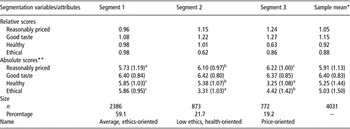
Consumer preferences do not stop at the country's borders. Therefore, a cross-country segmentation analysis on the total sample has been performed in order to provide a more realistic and economically relevant picture of the market structure. Following the clustering procedure as described in the analysis section, a three-cluster solution came out as most optimal. The respective size of the clusters and the scores on the segmentation variables are reported in Table 4.
Profile of consumer segments on segmentation variables: relative (sum across attributes equals 4) and absolute importance scores

*Reference value.
**Scale: 1 = not at all important, 7 = extremely important.
a,b.cScores in a row with a different superscript are significantly different at P < 0.05 (one-way ANOVA and post hoc Bonferroni multiple comparison test).
Segment 1 (59.1% of the sample) can be typified as ethics-oriented consumers or citizens. The relative importance of the ethical attributes was the highest in this segment and these attributes were rated equally important as price and health. Taste received the highest relative importance score within this segment as compared with other attributes, but was the lowest as compared with the other segments. Given the high reported importance of ethical issues relative to other segments, and the contrast with market shares of meat with enhanced ethical characteristics, it can realistically be assumed that individuals belonging to this segment have reflected a citizen rather than consumer opinion (Vanhonacker et al., Reference Vanhonacker, Verbeke, Van Poucke and Tuyttens2007; Krystallis et al., Reference Krystallis, Dutra de Barcellos, Kügler, Verbeke and Grunert2009). The second segment (21.7% of the sample) is strongly taste and price-oriented, and reports a very low relative importance attached to ethical issues. Compared with both the other segments, health as a product attribute is deemed relatively more important. Consumers belonging to the third segment (19.2% of the sample) focus strongly on taste and price. The minor importance of health is especially remarkable in this segment. The relative importance attached to ethical issues by segment 3 corresponded with the sample's average.
When the absolute scores of the segmentation variables were considered, the mean scores for perceived importance of taste did not differ between the three segments (F = 0.99, P = 0.371); taste was considered the most important product attribute across all consumer segments. In segment 1, each of the four attributes was deemed very important, with reasonably priced receiving the lowest score in absolute terms. Segment 2 attributed very high importance to both taste and a reasonable price. A healthy diet, though perceived as important, was somewhat subordinate to both taste and price. Ethical issues were unimportant to this segment. Segment 3 differs from segment 2 because of its low rating on the perceived importance of health. In this segment, taste and price appeared to be the most relevant attributes taken into account. On the basis of these profiles, the segments will further be referred to as (i) ‘average, ethics-oriented’, (ii) ‘low ethics, health-oriented’ and (iii) ‘price-oriented’.
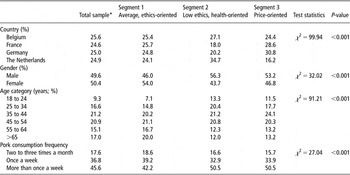
Differences in country distribution were mainly related to segments 2 and 3 (χ 2 = 99.94, P < 0.001; Table 5). Segment 2 was characterised by a higher share of Dutch and a lower share of Germans and French. The opposite was found for segment 3. Males were slightly overrepresented in segments 2 and 3, and females in segment 1 (χ 2 = 32.02, P < 0.001). With regard to age, differences were mainly related to the youngest (<35 years) v. the oldest age categories (>55 years). The youngest belonged more to segment 2, and less to segment 1. The oldest on the other hand were found more in segment 1, and less in the two other segments. In terms of pork consumption frequency, the highest consumption frequency was found in segments 2 and 3 (χ 2 = 27.04, P < 0.001). Nevertheless, all respondents consumed pork regularly given that this variable was an inclusion criterion.
Profile of the different segments in terms of socio-demographics, pork consumption frequency and absolute product importance scores

*Reference value.
Between-group comparisons
Central questions in the analyses were the respondents’ self-reported acceptance of both methods, the preference for one method over the other, the extent to which respondents would seek out or avoid pork from either method and their claimed pork purchasing intention. These questions will be related to the three market segments, the respondent's demographic profile, awareness and confidence in the methods, in order to detect the underlying motivations for choosing one method over another. In the first part, the focus will be on acceptance and preference ratings; the second part will deal with the other two central questions that relate more to claimed purchasing intention.
Acceptance of both alternative methods
Acceptance ratings for the physical castration method were not significantly correlated with acceptance ratings for the vaccine method (r = 0.005, P = 0.753). Thus, a high acceptance for one method did not necessarily involve a rejection of the other method. After a recoding of the original 7-point scale into a categorical 3-point scale (1 = unacceptable, 2 = neutral, 3 = acceptable), it resulted in 73.4% of the respondents who accept the physical castration method also accepting the vaccine method (n = 942, 23.4% of the total sample). A minority of 3.8% of the sample (n = 154) accepts the physical castration method while rejecting the vaccine method. In contrast, 31.3% (n = 1261) accept the vaccine method and reject physical castration. Finally, 4.7% (n = 188) reject both methods.
The different market segments differed in their acceptance of physical castration (P < 0.001), with the lowest acceptance score in segment 1 (‘average, ethics-oriented’; mean = 3.59) and the highest acceptance in segment 2 (‘low-ethics, health-oriented’; mean = 4.05). For all three segments, significantly higher acceptance scores appeared for the vaccine method, but no differences were found between segments for the acceptance of the vaccine method (P = 0.110). Combining the two acceptance measures (in their categorical format) indicates that the ‘low-ethics, health-oriented’ segment does not have a strong preference for one method over the other, as long as the elimination of boar taint is guaranteed. This segment accounts for 26.2% and 26.0% of the consumers who are neutral to or accept both methods, respectively. These shares are significantly different from the segment's share of 21.6% in the total sample. Segment 1 (‘average, ethics-oriented’) was more pronounced in its opinion, with a lower presence in the double neutral group (50.4% as compared with the segment's share of 59.2% in the total sample). They appeared to be mostly rejecting physical castration, given the higher presence in response categories where physical castration was reported as unacceptable (around 65% compared with the segment's share of 59.2% in the total sample). Rather, Segment 3 was equally present across the different combinations.
The acceptance scores were strongly linked with the respondents’ confidence in an effective elimination of boar taint. Further, acceptance scores for the physical castration method were higher among men (P < 0.001), and did not differ between gender for the vaccine method (P = 0.155). Age did not associate with the acceptance of physical castration (P = 0.418), whereas the youngest respondents (18 to 24 years) indicated a higher acceptance of the vaccine method than respondents aged above 54 years (P < 0.001).
Preference for the vaccine method over physical castration
The preference score (the higher the score, the stronger the preference is for the vaccine method) differed significantly between segments (P = 0.004), with a lower mean score for segment 2 (‘low-ethics, health-oriented’; mean = 5.38) as compared with segment 1 (‘average, ethics-oriented’; mean = 5.58). In line with gender differences with respect to acceptance of both methods, a higher preference for the vaccine method was found among females (P < 0.001). In a similar vein, a higher preference score was found among younger (18 to 24 years) consumers as compared with consumers aged above 45 years (P < 0.001). No significant differences in acceptance and preference scores were found for different levels of pork consumption frequency (P > 0.05).
Associations with claimed pork purchasing intentions
On the question whether the respondent would seek out or avoid pork from either vaccinated or physically castrated pigs, about one-third of the sample (30.3%) answered neutral for both methods. This reflects that the method of eliminating boar taint in rearing male pigs is not at the top of the mind among a substantial share of consumers when purchasing pork. Nevertheless, 17% would avoid pork from physically castrated pigs while they would seek out pork from vaccinated pigs. In contrast, only 2.6% would actively seek pork from physically castrated pigs and avoid pork from vaccinated pigs. The ‘average, ethics-oriented’ segment 1 was underrepresented in the neutral groups, while being more strongly represented mainly in the group that would avoid pork from physically castrated pigs and the group that would seek out pork from vaccinated pigs (Table 6). The ‘low-ethics, health-oriented’ segment 2 was characterised by a higher presence in the neutral groups and an underrepresentation in the groups that would avoid or seek out either of both methods. Segment 3 could not be clearly profiled on these behavioural intention items.
Intention to seek out and avoidance of pork from physical castrated and vaccinated male pigs (% of consumers)

Similar results were found when the market segments were compared in relation to the question that asked about pork purchasing intentions (results not shown). The ‘average, ethics-oriented’ segment 1 appeared more strongly in the groups with a pronounced opinion, and thus less in the group that does not care about the method of castration. This indifferent response option was strongly reported by respondents from the ‘low-ethics, health-oriented’ segment 2. Segment 2 was also most absent in the group that indicated a desire to stop eating pork.
Respondents who claimed to try to eat only pork from vaccinated pigs had the highest preference score (i.e. highest preference for the vaccine method), as opposed to the lowest preference score for respondents who claimed to eat only pork from physically castrated pigs (Table 7). Positive acceptance scores (>4) were found for the group that did not care about the method used. Within the group that indicated a desire to stop eating pork, the lower acceptance score for pork from physically castrated pigs (mean = 2.75) as compared with pork from vaccinated pigs (mean = 3.62) revealed that rejection of physical castration was a much stronger potential motivation to stop eating pork than eventual rejection of the vaccine method. Confidence in the effectiveness of the method appeared to be related to the preferred method, and low confidence in the proper elimination of boar taint seemed to be a motive for refusal to eat pork.
Relation between pork consumption intentions and attitude measures related to pig castration

a,b,c,dScores in a row with different superscript are significantly different at P < 0.05 (one-way ANOVA and post hoc Bonferroni multiple comparison test).
°1 = strongly prefer physical castration with anaesthesia, 7 = strongly prefer the vaccine method.
$1 = completely unacceptable, 7 = completely acceptable
£1 = not at all confident, 5 = very confident.
With respect to age, there was a tendency that more elderly consumers would seek out pork from physically castrated pigs, and that more youngsters would seek out pork from vaccinated pigs. Men were more likely to seek out pork from physically castrated pigs, and females to seek out pork from vaccinated pigs. Females were also more present in the group that claimed to try to eat only pork from vaccinated pigs. Males were overrepresented in the group that would buy pork produced using either method.
Discussion
The aim of this study was to contribute to the contemporary debate on the castration of male piglets. At present (anno 2010), physical castration without anaesthesia or analgesia is still applied in the majority of European countries to eliminate the development of boar taint (Fredriksen et al., Reference Fredriksen, Font i Furnols, Lundström, Migdal, Prunier, Tuyttens and Bonneau2009), and is strongly contested for its negative impact on the pig's welfare and integrity. Many research efforts are invested in the search for alternative methods. This study has placed particular focus on the vaccine method relative to physical castration with anaesthesia. The vaccine method eliminates boar taint to the same degree as physical castration (von Borell et al., Reference von Borell, Baumgartner, Giersing, Jaggin, Prunier, Tuyttens and Edwards2009). It has shown beneficial figures in terms of growth performance, feed conversion and lean meat percentage (Turkstra et al., Reference Turkstra, Zeng, van Diepen, Jongbloed, Oonk, van de Wiel and Meloen2002; Jaros et al., Reference Jaros, Burgi, Stark, Claus, Hennessy and Thun2005) as well as pig welfare (Fàbrega et al., Reference Fàbrega, Velarde, Cros, Gispert, Suárez, Tibau and Soler2010). Immunisation makes use of a vaccine that obtained market approval in the EU and several other countries (Improvac®, Pfizer Inc.) and it is believed to have a minor or no impact on the product's price (de Roest et al., Reference de Roest, Montanari, Fowler and Baltussen2009). Published sensory studies at the national and cross-national levels did not report disfavour towards pork from vaccinated male pigs as compared with pork from physically castrated pigs and/or gilt pork. However, the vaccine method faces a reserved attitude among some stakeholders along the pig production chains (mainly slaughterhouses, food producers and retailers with some exceptions recently), at least partly because of uncertainty about public and consumer response to the method. To verify whether such a reserved attitude is justified based on end-user acceptance grounds, this large-scale cross-sectional consumer survey was conducted in four European countries. This study allows one to draw cross-national conclusions and herewith is an international comparison complement to the existing national studies, which often differ from each other in their design and information provision and are therefore hard to compare.
In this survey, comparison was made with physical castration with anaesthesia, given that both methods are considered as possible and economically feasible solutions in the short run to the reduction of boar taint (von Borell et al., Reference von Borell, Baumgartner, Giersing, Jaggin, Prunier, Tuyttens and Edwards2009). In this study, pre-purchase consumer attitudes and claimed purchasing behaviour with regard to (pork from) the vaccine method and physical castration with anaesthesia were investigated. A study of this scale about this topic with cross-country comparison and segmentation analysis is unprecedented. Cross-country differences observed in terms of awareness, acceptance and preference most likely reflect, first, (dis)similarities in terms of consumer familiarity with pig production and consumer interests when purchasing pork. This issue has been covered explicitly by means of the identification and profiling of cross-national consumer segments. Second, differences in the national pork markets and pork market environments, including policies in relation to piglet castration and related communications, may explain another part of the observed cross-cultural differences. Detailed analysis and discussion of the latter market-environmental factors fell outside the scope of this study.
Descriptive analyses showed a low consumer awareness of boar taint, probably related to the effective elimination and the very rare prevalence of tainted meat, and corroborates earlier findings (e.g. Hennessy and Newbold, Reference Hennessy and Newbold2004; Vanhonacker et al., Reference Vanhonacker, Verbeke and Tuyttens2009). A corresponding low awareness was found for physical castration as a method to eliminate boar taint. The vaccine method was even more unfamiliar to the large majority of the sample. A slightly larger percentage of consumers who claimed to be well aware of the vaccine method was found in Belgium (though this percentage was still very low), which is most likely due to the later data collection as compared with the other countries. Low awareness corresponds with consumer and citizen alienation from livestock production and livestock production practices (Harper and Henson, Reference Harper and Henson2001). An (ever) increasing degree of urbanisation and industrialisation of livestock production has led to a situation whereby consumers and citizens become less and less aware of how animals are actually reared and managed (De Tavernier et al., Reference De Tavernier, Lips and Aerts2005). In this perspective, any publicity and information that consumers will receive about the current practice of physical castration of piglets will be important and determinant in shaping their opinion, and possibly also influential on their purchasing behaviour. The sector is mainly concerned about false communications that relate the vaccine to a hormone treatment. Previous research has already indicated the strong negative impact such communication can have on consumer attitudes and meat purchasing behaviour (Verbeke and Ward, Reference Verbeke and Ward2001; Verbeke et al., Reference Verbeke, Ward and Avermaete2002). No such indications of adverse consumer responses to the vaccine method were found in this study. This is in correspondence with a previous study in Sweden. Lagerkvist et al. (Reference Lagerkvist, Carlsson and Viske2006) concluded from a consumer choice experiment that food safety risks were subordinate to animal welfare concerns, which were in turn dominated by food quality (i.e. taste) concerns. In contrast, Fredriksen et al. (Reference Fredriksen, Sibeko Johnsen and Skuterud2010) attributed Norwegian consumers’ scepticism towards the vaccine method to fear of residuals in meat from vaccinated pigs, and to their apparent contentment with the current local practice of physical castration with anaesthesia.
Taste was the dominant product attribute in the pork purchasing process in our study. A segmentation analysis based on product attribute importance resulted in three distinct segments, which however did not differ in their perceived importance of taste. This dominance was reflected throughout the survey findings, also in relation to the acceptance of, and preference for the vaccine method. Respondents were in the first place interested in meat with a high sensory quality (i.e. without boar taint). These findings herewith underscore the relevance of adequate monitoring of taste and sensory quality, including the prevention of off-flavours.
Only a very small number of respondents (4.7%) evaluated both methods (physical castration and the vaccine method) as unacceptable after being informed about the methods. The stronger taste was dominating the pork purchasing process, and the less important animal welfare was, the more neutral respondents were with regard to the method used to eliminate boar taint, as long as it was eliminated. Respondents preferring the physical castration method were not willing to pay a price premium for this meat. Respondents who preferred the vaccine method were only moderately willing to pay a price premium. Hence, it seems that the acceptance of the vaccine method will rely more on an effective elimination of boar taint and no impact on product price, rather than on animal welfare considerations during purchase. Although increasingly important, animal welfare is not at the top of the mind for most individuals during the food purchasing process (Verbeke, Reference Verbeke2009). The likelihood of consumers searching actively for pork that is produced using the vaccine method is thus rather small.
Our conclusion of the impact on pork price determining method acceptance is different from the conclusion of de Roest et al. (Reference de Roest, Montanari, Fowler and Baltussen2009), who researched the economic implications of the alternatives to physical castration without anaesthesia. They concluded that the improvement in feed efficiency will probably compensate for the costs associated with the vaccine, and therefore defined consumer acceptance of the vaccine method as a dependent factor for the economic feasibility of the method. Our findings indicate that acceptance and preference with respect to the vaccine method are not associated with consumers’ price orientation. Combining the results of both studies argues in favour of the vaccine method. The exact role of the different product attributes in shaping the preference for the vaccine method can be further researched in specifically adapted (e.g. conjoint) research designs.
Conclusions
This cross-country study shows that the pork sector's uncertainties with respect to consumer acceptance of the vaccine method in France, Germany, the Netherlands and Belgium are void. The vast majority of pork consumers in these four EU countries accept the vaccine method and strongly prefer this method over physical castration with anaesthesia, after being informed about both alternative methods for piglet castration. In addition, confidence that the vaccine method allows for proper elimination of boar taint, and acceptance and preference for the vaccine method did not differ significantly between pork market segments that are ethics-, health- or price-oriented. These findings indicate that the adoption of the vaccine method is unlikely to result in marketplace loss of any particular target market. In contrast, physical castration with anaesthesia is significantly less preferred in general, and even rejected by a substantial share of the pork consumers. The observed differences between the identified market segments suggest that in particular the majority segment of ethics-oriented consumers/citizens reacted negatively towards physical castration with anaesthesia. Furthermore, the study shows no evidence that providing consumers with information about the vaccine or immunisation method would evoke risk perceptions and adverse effects in terms of product acceptance. The conclusion of this cross-national European consumer study is that the vaccine method is the one most preferred by consumers, irrespective of their main motivation for purchasing pork. Therefore, from a market differentiation perspective, the vaccine method also presents itself as a more neutral alternative than physical castration with anaesthesia, in the sense that the application of the vaccine method might not differently affect different consumer segments in the pork market.
Acknowledgements
Pfizer Animal Health and Lieberman Research Worldwide are gratefully acknowledged for providing us with the possibility of analysing this data set. We also thank the journal editors and referees for their valuable comments on previous versions of the manuscript.