Introduction
Cognitive is common in elderly population, and cognitive impairment is a strong predictor of functional disability (Blaum et al., Reference Blaum, Ofstedal and Liang2002; Dodge et al., Reference Dodge, Kadowaki, Hayakawa, Yamakawa, Sekikawa and Ueshima2005). Because of the progressively disabling nature of cognitive decline, even subtle cognitive changes will place older adults at increased risk of functional decline, injuries and hospitalization (Weiler et al., Reference Weiler, Lubben and Chi1991; Sattin, Reference Sattin1992). Valid and reliable assessments to determine whether older persons are still capable of meeting the cognitive challenges of everyday living are crucial to ensure their safe and independent living in the community, especially for those who are living alone (Tierney et al., Reference Tierney2001). Furthermore, everyday problem solving, which involves the interplay of multiple cognitive processes, is important for maintaining independent living in the community (Burton et al., Reference Burton, Strauss, Hultsch and Hunter2009). Measures of everyday problem solving, examining the cognitive performance of older adults on tasks that are experienced in everyday situations, are considered to be more ecologically valid to reflect their everyday cognitive performance in the real world (Brandt et al., Reference Brandt2009).
In Hong Kong, the percentage of total population aged 65 years and above will increase from 12% (822,852) in 2006 to 26% (2,228,252) in 2036. A recent epidemiological study in Hong Kong has shown that the prevalence of dementia will double for every five years’ increase in age after the age of 60 years, from 1.2% in those aged 60–64 years to 32.1% in those aged 85 years and above (Lam et al., Reference Lam2008). The Department of Health in Hong Kong reported that the overall prevalence of dementia in persons aged 70 years and above was 9.3%. Therefore, about one in ten persons aged 70 years and above and about one in three persons aged 85 years and above in the community-dwelling elderly in Hong Kong had dementia (Ng and Chan, Reference Ng and Chan2009). Assuming the prevalence of dementia remains unchanged, it has been projected that the number of people aged 60 years and above with dementia will be more than double from 103,433 in 2009 to 332,688 in 2039 (Yu et al., Reference Yu2012).
Mild cognitive impairment (MCI) is commonly recognized as a state of cognitive decline greater than that expected for an individual's age and education level, but is not severe enough to meet the criteria for dementia (Gauthier et al., Reference Gauthier2006). Problem-solving ability is regarded as a higher order execution cognition that has been found impaired in MCI compared with cognitively normal elderly adults (Sánchez-Benavides et al., Reference Sánchez-Benavides2010). Significant decrease in the problem-solving ability in MCI patients has been identified as a strong risk factor for the imminent development of dementia (Brandt et al., Reference Brandt2009; Jin et al., Reference Jin2011). It would be of particular importance to have a validated problem-solving assessment tool for MCI to aid monitoring the potential risk of disease progression.
In a recent systematic review on instruments that assess the ability of everyday problem solving in elderly adults with cognitive impairment (Law et al., Reference Law, Barnett, Yau and Gray2012), the Assessment of Capacity for Everyday Decision Making (ACED) and the Problems in Everyday Living (PEDL) Test received the best rating for administration (scoring by hand and no extra resources/special equipment or test materials needed). The ACED has been translated into Chinese, but only one (financial management) out of three Instrumental Activities of Daily Living (IADL) components in the ACED has been validated with Chinese psychogeriatric patients in Hong Kong (Yu et al., Reference Yu, Lui, Lam, Chiu, Karlawish and Appelbaum2009). Therefore, a Chinese version of the complete instrument to assess everyday problem-solving ability is still unavailable. The PEDL, a 14-item test of practical everyday problem solving, is comparatively simpler to administer (Law et al., Reference Law, Barnett, Yau and Gray2012). The participant's answers are recorded exactly word for word and scored on a 3-point scale (0–2). The scoring system is simple and easy to use following the rating guidelines. The assessor asks the questions verbally and the first verbal solution produced by the participant is scored. This eliminates the potential difficulties that may pose on those with inadequate literacy, which is common in elderly population (Parker, Reference Parker2000). Furthermore, the PEDL had a stronger association with IADL (r = 0.71) compared with other similar tools (r = 0.19–0.36), with a comparatively higher reported inter-rater reliability (r = 0.944; Law et al., Reference Law, Barnett, Yau and Gray2012).
The PEDL has been validated for use in patients with Alzheimer's disease (AD). This instrument has been shown to have a moderate correlation with problem-focused coping strategies (r = 0.46; Beatty et al., Reference Beatty1998) and moderate association with Activities of Daily Living (ADL; r = 0.58; Leckey and Beatty, Reference Leckey and Beatty2002). The brevity of its administration favors its use as a screening tool, especially in busy clinical settings where convenience is a high priority. The translation and validation of the Chinese version of PEDL is important to promote both clinical and research developments of elderly care in Chinese population.
The aims of this study were to translate the PEDL into Chinese version (C-PEDL) and evaluate its reliability and validity. The specific objectives were as follows:
1. To study the content validity and cultural relevance of C-PEDL.
2. To evaluate the test-retest and inter-rater reliability of C-PEDL.
3. To evaluate the convergent validity of C-PEDL by correlating it with formal neuropsychological measures.
4. To evaluate the discriminant validity of C-PEDL in older adults with and without MCI.
5. To identify the cut-off scores of C-PEDL in differentiating elderly persons with and without MCI.
Methods
Translation and cultural adaptation of PEDL
Approval was first obtained from the publisher to translate the PEDL into Chinese and validate the translated Chinese version. The original version of PEDL was translated from English to Chinese by the first author and an independent professional translator to produce two initial drafts of C-PEDL. Then the two versions were collaboratively compared and discrepancies between these two were resolved through consensus to produce a single initial draft of C-PEDL. The C-PEDL was then back translated by a second independent, qualified bilingual expert from Chinese to English. The back-translated version was then reviewed by four native English speaking health professionals (one general practitioner, one nurse, and two occupational therapists) to check for any conceptual discrepancies with the original English version of the PEDL. Since no discrepancies were found, the initial version of C-PEDL was adopted for the study.
A seven-member expert panel consisting of one geriatrician, one clinical psychologist, one nursing specialist, two occupational therapists, and two bilingual older adults in Hong Kong were recruited to review the cultural relevance, content validity, and translation equivalence of C-PEDL in Hong Kong. The geriatrician and clinical psychologist in the expert panel had more than 15 years of clinical experience. The nursing specialist and two occupational therapists had more than ten years of experience in the rehabilitation field for elderly patients. The two older adult panel members had tertiary qualifications and were aged more than 75 years. A translation equivalence questionnaire was constructed for the panel members to identify and comment on the words and phrases of the Chinese version that did not reflect the semantic meaning of the English version. Subsequently, no modification of the translation was required in relation to this questionnaire.
Another two questionnaires were designed for the panel members to comment on their cultural relevance and to evaluate the content validity of the C-PEDL using a 4-point rating scale (from 1 = totally irrelevant to 4 = relevant). A content validity index (CVI) was calculated based on the total items rated by the experts as either 3 or 4. A CVI score of 80% or higher was considered to have good content validity (Lynn, Reference Lynn1986). The test items were further modified according to the suggestions of the expert panel before the C-PEDL was administered to participants for the study regarding its reliability and validity.
Pilot testing was conducted before the implementation of performance testing. Eight elderly patients with healthy cognition were recruited in the pilot testing to comment on the clarity of the wording and problems encountered during the administration process. All of the patients were able to complete the C-PEDL without any difficulties in understanding the questions in C-PEDL and were able to give appropriate verbal responses to the questions.
Performance testing and evaluation of concurrent validity and reliability
Participants
Potential participants with MCI (n = 40) were recruited from an occupational therapy outpatient clinic of a public hospital in Hong Kong. Patients with subjective memory complaint or suspected cognitive impairment were referred by the outpatient clinic of the Department of Medicine and Geriatric. Older adults (aged 60+ years) with mild cognitive decline living in the community were eligible for the study if they met the following inclusion criteria: (1) Subjective memory or cognitive complaint; (2) objective cognitive impairment as screened using the Mini-Mental State Examination (MMSE), and education-adjusted C-MMSE cut-off scores validated for Hong Kong Chinese older adults was adopted (≤18 for illiterate, and ≤22 for more than two years of schooling; Chiu et al., Reference Chiu1998); (3) reported intact personal self-care functions, screened by the Barthel Index (Leung et al., Reference Leung, Chan and Shah2007); and (4) no confirmed diagnosis of dementia. The exclusion criteria were: (1) history of brain lesion/psychoactive substance abuse/co-morbid medical condition associated with cognitive/functional decline; (2) clinically significant depression as screened by the Geriatric Depression Scale-15 (GDS-15) and patients with a score of 7 or higher were excluded (Lee et al., Reference Lee, Chiu, Kwok, Leung, Kwong and Chung1993); (3) known psychiatric cause of cognitive dysfunction such as clinically significant anxiety disorders or psychosis; (4) medical conditions that render patients unable to engage in physical activity, such as severe cardiac failure; and (5) significant impairment of vision, hearing, or communication that might affect testing.
Participants for the cognitively healthy control group (n = 40) were recruited from two social centers and a local church. The inclusion criteria were (1) no subjective memory/cognitive complaint; (2) no known history of cognitive impairment/brain lesion; and (3) living independently in the community. Those with significant impairment of vision, hearing, or communication that might affect testing were excluded. All the participants were screened with the Global Deterioration Scale (GDS; Reisberg et al., Reference Reisberg, Ferris, de Leon and Crook1982). The GDS is a seven-stage scale that provides caregivers an overview of the stages of cognitive function for persons suffering from primary degenerative dementia. This study was a part of a randomized controlled trial (RCT) study assessing the effect of functional tasks exercise on older adults with cognitive impairment. Ethics approval for this study was obtained from the James Cook University Human Research Ethics Committee and the Hospital Authority Research Ethics Committee. All the participants provided written informed consent. The participants did not receive any financial reimbursement for their time spent on the assessments. Training was conducted for raters to ensure consistency in the administration and rating of the C-PEDL.
Neuropsychological assessment
The C-PEDL was administered by trained raters. To evaluate test-retest reliability, the C-PEDL was administered to all the participants of the control group again two weeks later by the same rater. To assess inter-rater reliability, two raters rated on the same participants performed on the same test sessions during baseline assessments. All the participants who attended the outpatient clinic were tested with the Chinese version of MMSE (C-MMSE; Chiu et al., Reference Chiu, Lee, Chung and Kwong1994) and the Category Verbal Fluency Test (CVFT; Bryan and Luszcz, Reference Bryan and Luszcz2000). The C-MMSE was used as an index on the level of general cognition. With the education-adjusted C-MMSE cut-off scores, the C-MMSE has good sensitivity (94.9%) and specificity (85.6%) in detecting dementia. The inter-rater reliability is also good with an intra-class correlation of 0.9 (Chiu et al., Reference Chiu1998).
Verbal fluency has been identified as a predictor of competency in decision-making and everyday problem solving (Marson et al., Reference Marson, Cody, Ingram and Harrell1995; Reference Marson, Chatterjee, Ingram and Harrell1996). Both category verbal fluency and letter fluency decline in MCI and at a faster rate compared with the cognitively normal population (Nutter-Upham et al., Reference Nutter-Upham2008; Clark et al., Reference Clark, Chen, McCleary and Mack2009). A recent meta-analysis has revealed that older adults with AD are more impaired on category fluency than on letter fluency (Laws et al., Reference Laws, Duncan and Gale2010). Clark et al. (Reference Clark, Chen, McCleary and Mack2009) found that category fluency showed greater longitudinal decline than letter fluency in cognitively normal and AD populations. Animal naming is the most commonly used category verbal fluency measure that effectively detects possible MCI as well as distinguishes between persons with and without AD or dementia (Woodard et al., Reference Woodard, Dorsett, Cooper, Hermann and Sagar2005; Ardila et al., Reference Ardila, Ostrosky-Solis and Bernal2006; Sagar et al., Reference Sagar, Hernann, La Rue and Woodard2006).
The CVFT requires the participants to generate as many animal names as possible in one minute. This test is commonly used as an index of executive functions, language, speed to answer, mental organization, and search strategies (Roca et al., Reference Roca2012).
The CVFT has been shown to have a sensitivity of 67% and 86%, and a specificity of 70% and 78%, respectively, in distinguishing uneducated and educated Chinese populations with and without dementia (Salmon et al., Reference Salmon, Jin, Zhang, Grant and Yu1995). Henry and Crawford (Reference Henry and Crawford2004) also found that the severity of frontal lobe injuries was associated with deficits in category verbal fluency (r = 0.54). The CVFT has a good test-retest reliability in amnestic MCI (r = 0.89; Cooper et al., Reference Cooper, Lacritz, Weiner, Rosenberg and Cullum2004), and has moderate correlation (r = 0.40) with the Digit Symbol subtest of the Wechsler Adult Intelligence Scale, third edition (WAIS-III; Nutter-Upham et al., Reference Nutter-Upham2008).
Statistical analysis
Demographic data were compared between the patient group and the cognitively healthy control group using Independent Samples t-test and Fisher's Exact Test as appropriate. Pearson's and Spearman's correlation coefficients were used to examine relationship between the C-PEDL and the demographic variables of age, gender, and education. The internal consistency of the C-PEDL was estimated by calculating Cronbach's α. Both Pearson's correlation coefficient (r) and the intra-class correlation coefficient (ICC) were used to estimate test-retest and inter-rater reliabilities. The concurrent validity was assessed by using Pearson's correlation test, comparing the C-PEDL with the MMSE and Verbal Fluency Test. One-Way Analysis of Variance (ANOVA) was conducted to evaluate the discriminant validity of C-PEDL in the cognitively impaired patients and the cognitively healthy control group using stratified analysis to control for the confounding effects of age and education. Based on the cut-off scores of C-MMSE for the identification of MCI, we would identify the cut-off scores of C-PEDL using the Receiver Operating Characteristics (ROC) curve.
Results
Content validity and cultural relevance
The CVI was found to be 86% for items 3, 6, 7, 12, and 13, and 100% for all the other items of the C-PEDL, indicating a high content validity of C-PEDL as a tool to assess everyday problem-solving ability.
With regard to cultural relevance, the review panel concluded that the C-PEDL was culturally relevant for Chinese older adults in Hong Kong with modifications for the items listed below:
1. Item 2: “Coffee maker” was changed to “electric water kettle.”
2. Item 4: “A bowl of cereal with milk, a glass of orange juice, and a cup of coffee” were changed to “a bowl of oatmeal,” and “you don't have any milk” was changed to “you don't have any water.”
3. Item 5: “Taking a college class for credit” was changed to “taking an interest class which you are keen on.”
4. Item 7: “Have $100 more” was changed to “have $10,000 more.”
5. Item 8A: “Friday evening” was changed to “Saturday evening,” and “oven” was changed to “gas stove.”
6. Item 13: “Lost in the forest” was changed to “get lost during hiking.”
No changes were made to the scoring system and the rating criteria. The final versions of C-PEDL and the rating criteria are presented in the Appendix.
Participants and relationship of C-PEDL to demographic variables
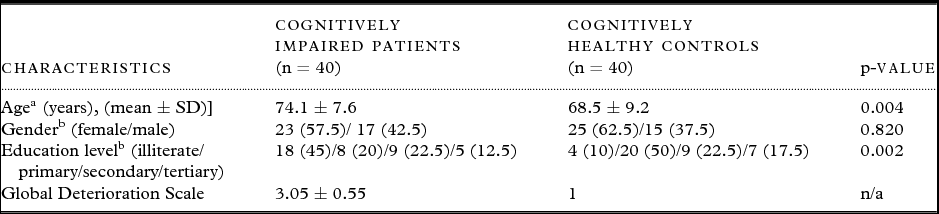
A total of 80 participants (40 patients and 40 controls) were recruited. The age of the participants in the control group ranged from 55–85 years (mean age = 68.5 ± 9.2 years) and that of the patients ranged from 60–88 years (mean age = 74.1 ± 7.6 years). A comparison of demographic characteristics is presented in Table 1. Significant association was found between the C-PEDL and education (r = 0.34, p = 0.002), indicating that better performance on the C-PEDL is associated with higher education level. No significant associations were found between the C-PEDL and age (r = –0.14, p = 0.22) and gender (r = 0.05, p = 0.67).
Baseline demographics of cognitively impaired group and control group

Notes:aIndependent sample t-test.
bFisher's Exact Test.
All data are shown as mean (SD) or n (%) as appropriate.
n/a = Not applicable.
Internal consistency and reliability
The internal consistency of C-PEDL was acceptable (Chronbach's α = 0.69; standardized α = 0.73). Cronbach's α has not been reported in the original PEDL. Test-retest was conducted two weeks apart at community sites. The test-retest reliability of C-PEDL was high (r = 0.91, p < 0.001) and the ICC was 0.95 (95% CI = 0.91–0.98). The inter-rater reliability was also high (r = 0.98, p < 0.001) and the ICC was 0.99 (95% CI = 0.98–0.99). The result on inter-rater reliability is comparable with that of the PEDL reported by Beatty et al. (Reference Beatty1998; r = 0.94). The test-retest reliability was not reported in the original version of PEDL.
Concurrent validity
The C-PEDL showed moderate correlations with the MMSE (r = 0.45, p = 0.004) and the CVFT (r = 0.40, p = 0.012). The C-PEDL also had a moderate negative Spearman's correlation with the Global Deteriorating Scale (r = –0.42, p = 0.007). These correlations were not reported in the previous studies of PEDL (Beatty, et al., Reference Beatty1998; Leckey and Beatty, Reference Leckey and Beatty2002).
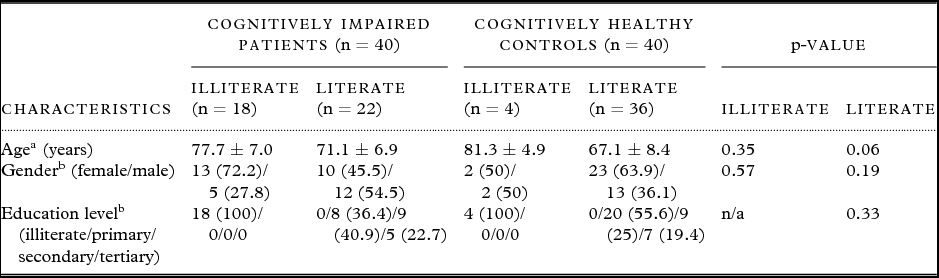
Stratified analysis was undertaken to control for the confounding effects of education. The data were stratified with education level into subsets of illiterate (0–2 years of education) and literate (>2 years of education) participants (Li, Reference Li and Yi2008; Cavaco et al., Reference Cavaco2013). There were no significant differences between the cognitively impaired patient group and the control group for age, education level, and gender after stratification. The demographic characteristics after stratification are illustrated in Table 2.
Baseline demographics of cognitively impaired and control groups stratified by education level
Notes:aIndependent sample t-test.
bFisher's Exact Test.
All data are shown as mean (SD) or n (%) as appropriate.
n/a = Not applicable.
Discriminant validity
Results of ANOVA revealed significant group differences on performance of C-PEDL between the cognitively impaired group and the control group (F(1, 56) = 9.96, p = 0.003) in the educated subset of the study population. Bonferroni post hoc comparison of the two groups indicated that the cognitively impaired group (M = 20.00, 95% CI = 18.57, 21.43) had significantly lower performance compared with the cognitively healthy group (M = 22.86, 95% CI = 21.74, 23.98, p = 0.003). There were no significant effects of education (F (2, 55) = 0.27, p = 0.76) or age (p = 0.32). For the illiterate population, results of ANOVA also indicated a significant difference in the performance of C-PEDL between the cognitively impaired group and the control group (F (1, 20) = 10.43, p = 0.004). Bonferroni post hoc comparison of the two groups identified that the cognitively impaired group (M = 16.67, 95% CI = 14.79–18.55) had significantly lower performance compared with the cognitively healthy group (M = 23.50, 95% CI = 19.51–27.49, p = 0.004). There was no significant effect of age (p = 0.54). Comparison of the C-PEDL performance between the cognitively impaired patients and the controls is illustrated in Table 3.
Results of C-PEDL scores comparison between cognitively impaired patients and controls

Note: *p < 0.005.
n/a: not applicable.
C-PEDL cut-off score for identification of MCI
Using the MMSE cut-off score of 22, we categorized the participants as having MCI if their MMSE score is 22 or below and not having MCI if their score is more than 22. We then constructed the ROC curve of C-PEDL for classifying participants with and without MCI based on the MMSE cut-off score (Figure 1). The area under the ROC curve was 0.74 (SE = 0.09, p = 0.02). Examining the coordinates of the curve, a C-PEDL cut-off score of 21 is most likely to obtain the optimal trade-off between sensitivity and specificity. Participant with a score of 21 or below is classified as having MCI, while a participant with a score of above 21 is classified as not having MCI. A cut-off score has not been reported in the original PEDL.
Receiver operating characteristic (ROC) curve of C-PDEL for classifying participants with and without MCI.
Discussion
This is the first attempt to translate the PEDL into Chinese and evaluate the validity and reliability of C-PEDL in assessing everyday problem-solving ability in Chinese elderly population in Hong Kong. The C-PEDL has demonstrated good psychometric properties that further strengthen the psychometric quality of C-PEDL in clinical applications.
In the present study, the finding of an association between C-PEDL and education is consistent with previous reports that problem-solving performance is affected by the level of education (Diehl et al., Reference Diehl, Willis and Schaie1995; Thornton and Dumke, Reference Thornton and Dumke2005). However, this study found that there is no significant association between C-PEDL and age. Theories regarding the impact of age on everyday problem-solving abilities have suggested that everyday problem-solving processes are primarily compiled from cognitive abilities. However, accumulated experience and knowledge are also important in coping with the challenging demands in everyday environment (Willis, Reference Willis, Birren and Schaie1996; Baltes, Reference Baltes1997). Age-related decline in cognitive functions, including memory, executive functions, processing speed, and reasoning, have been reported from middle age onwards or even in early age (Hedden and Gabrieli, Reference Hedden and Gabrieli2004; Der and Deary, Reference Der and Deary2006; Park and Reuter-Lorenz, Reference Park and Reuter-Lorenz2009). With advances in neuroimaging, recent studies have provided a better understanding of associations between the age-related cognitive declines and the underlying neural changes. Age-related brain volume reduction across different regions has also been identified in normal aging and in persons with cognitive impairment, with the pre-frontal regions most severely affected (Resnick et al., Reference Resnick, Pham, Kraut, Zonderman and Davatzikos2003; Raz and Rodrigue, Reference Raz and Rodrigue2006). The frontal lobe is well known as an important region mediating executive cognition, working memory, problem solving, and conceptual abilities (Brandt et al., Reference Brandt2009; Espinosa et al., Reference Espinosa2009; Roca et al., Reference Roca2010). These previous findings appear as supporting the cognitive aging theory that both cognitive and cerebral declines increased with age. Nevertheless, despite the underlying cognitive decline in normal aging, there are older adults who are still independent and well adjusted in their everyday living (Westerhof et al., Reference Westerhof, Dittman-Kohli and Thissen2001; Mienaltowski, Reference Mienaltowski2011). It has been proposed that everyday problem solving is multidimensional (Marsiske and Willis, Reference Marsiske and Willis1995) which occurs in meaningful context and cannot be examined as an isolated act of pure cognition (Willis, Reference Willis, Birren and Schaie1996; Berg et al., Reference Berg, Strough, Calderone, Sansone and Weir1998). Advocates of the contextual and life span theories have emphasized the conceptions of pragmatic demands in real life problem solving that draw largely on an individual's accumulated knowledge and experience to reach effective solutions and successful adaptation in everyday challenging environment (Blanchard-Fields and Mienaltowski, Reference Blanchard-Fields, Mienaltowski, Schaie and Birren2006; Berg, Reference Berg, Hofer and Alwin2008). This pragmatic experience and knowledge continue to grow throughout the life span and increase with age. Age-related increase in everyday problem-solving performance can still be found (Baltes, Reference Baltes1993; Mienaltowski, Reference Mienaltowski2011). Thornton and Dumke (Reference Thornton and Dumke2005) have reported in a review that the confounding effects of “age appropriate problem content” in everyday problem-solving tests may further cause difference in findings. In addition, the performance in everyday problem solving is further complicated by variation in domains and formats in the tests (Thornton and Dumke, Reference Thornton and Dumke2005; Kimbler, Reference Kimbler2013). Therefore, there are still no definitive conclusions regarding age-related effects in everyday problem-solving performance.
The internal consistency of C-PEDL was acceptable and this was not reported for the original version of the PEDL. The Cronbach's α for internal consistency is highly affected by the length (number of items) and the dimensionality (constructs) of the test (Cortina, Reference Cortina1993). Although the calculation of Cronbach's α has become a common practice in research for easy comparison with other estimates (Chu et al., Reference Chu, Chiu, Wong, Tang and Lau2004; Tavakol and Dennick, Reference Tavakol and Dennick2011), it is suggested to use and interpret Cronbach's α with caution (Cortina, Reference Cortina1993; Schmitt, Reference Schmitt1996). Everyday problem solving is a multidimensional construct that demands complex cognitive interplay to interact with everyday challenges in real-world environment (Marsiske and Willis, Reference Marsiske and Willis1995; Willis, Reference Willis, Birren and Schaie1996). Regarding PEDL as a tool to measure everyday problem-solving ability, the items may be measuring more than a single dimension. As the PEDL is a short test with few items, it is understandable to find that Cronbach's α of PEDL was not very high, and this violation in the assumption of unidimensionality in the test items may lead to a major underestimate of the reliability of PEDL (Tavakol and Dennick, Reference Tavakol and Dennick2011).
The C-PEDL has shown good concurrent validity as revealed by significant relationships with formal neuropsychological measures. The C-PEDL showed a moderate Pearson's correlation with C-MMSE. The strength of correlation identified in the present study is comparable with that of similar instruments reported in previous studies (Law et al., Reference Law, Barnett, Yau and Gray2012). Studies have shown that fluid intelligence is the strongest correlate of participants’ everyday problem-solving performance (Willis et al., Reference Willis, Jay, Diehl and Marsiske1992; Diehl et al., Reference Diehl, Willis and Schaie1995). It is also considered as a higher order executive function that involves working memory, reasoning, processing speed, and cognitive flexibility for successful performance (Morris et al., Reference Morris, Miotto, Feigenbaum, Bullock and Polkey1997; Zook et al., Reference Zook, Davalos, Delosh and Davis2004; Sánchez-Benavides et al., Reference Sánchez-Benavides2010). Verbal Fluency Test is widely used as a test of executive function and cognitive flexibility (Troyer et al., Reference Troyer, Moscovitch and Winocur1997; Bryan and Luszcz, Reference Bryan and Luszcz2000; Gyurak et al., Reference Gyurak, Goodkind, Madan, Kramer, Miller and Levenson2009), and has been found closely related to processing speed (Elgamal et al., Reference Elgamal, Roy and Sharratt2011; McDowd et al., Reference McDowd2011) as well as fluid intelligence (Roca et al., Reference Roca2012). The significant correlation of C-PEDL with Verbal Fluency Test further confirms its validity in measuring performance of everyday problem solving. In addition, the high test-retest reliability found in this present study, which has not been reported before, further supports the reliability of C-PEDL in clinical use.
A previous study by Leckey and Beatty (Reference Leckey and Beatty2000) showed significant differences in the PEDL performance between AD patients and cognitively healthy controls. The significant difference in the C-PEDL performance between the patients with MCI and the cognitively healthy controls found in the present study further supports its clinical application in population with cognitive impairment.
The C-PEDL has demonstrated good psychometric properties. Its ease of administration and simple scoring system may further encourage the use of C-PEDL as a screening tool in busy clinical settings where time or other assessment-related resources are limited. It is also more favorable to use compared with other paper-and-pencil tools that may pose difficulty for illiterate patients. Nevertheless, further studies are needed to clarify the specific constructs and dimensionality of C-PEDL. In addition, sensitivity to measure changes over time, which is crucial and meaningful to clients, is also an important property of outcome measures (Law et al., Reference Law, Barnett, Yau and Gray2012). More longitudinal studies to evaluate the sensitivity of C-PEDL to measure changes over time are needed.Limitations
One limitation of the current study was that only a global measure of general cognitive function and a single measure of executive functions were used. More specific cognitive and functional measures should be included in future validation studies. Another limitation was the small sample size that did not allow stratification of patients into more precise education sub-groups to identify potential difference or interaction in the C-PEDL performance. Due to the small sample size and the short time interval for test-retest administration, one should interpret and generalize the present findings with caution. Further studies with larger sample size and longer test-retest time interval are needed to further validate and obtain more evidence on the psychometric properties of the C-PEDL. Moreover, the present study did not conduct a bilingual test-retest to validate the translation equivalence of the translated version and the original PEDL, which is suggested in future studies.
Furthermore, the present study population was limited to MCI only; further validation studies in populations with AD or other dementias are recommended to improve the clinical utility and local application of C-PEDL. In addition, practical limitation in the community settings did not allow detailed baseline cognitive screening with neuropsychological measures in the cognitively healthy participants.
Conclusions
The PEDL is a commonly used valid and easily administered test of cognition; thus it was chosen as the tool to translate and validate into a Chinese version (C-PEDL). In conclusion, the C-PEDL is a valid and reliable test for assessing the everyday problem-solving ability in Chinese older population with MCI. In view of the limited number of tools available to assess everyday problem-solving ability in Chinese older population, the results in this study could facilitate clinical decision makers in examining everyday problem-solving performance of patients as well as encourage further validation studies related to everyday problem-solving competence.
Conflicts of interest
None.
Description of authors’ role
L. Law was involved in the design, data collection, statistical analysis, and writing of the manuscript. F. Barnett and A. Siu assisted in the statistical analysis and writing of the manuscript. M. Gray and M. Yau assisted in the writing of the manuscript.
Acknowledgments
The authors thank Maurice Wan and Louisa Ma for their support to conduct the study at Occupational Therapy Department of United Christian Hospital; Sally Liu CF and Samantha Leung for their assistance in the data collection. This research received no specific grant from any funding agency in the public, commercial, or not-for-profit sectors.
Appendix. Chinese version of the Problems in Everyday Living Test (C-PEDL)
日常生活難題測試
給參與者讀出問題 , 並將題目印刷於咭紙上以便參加者閱覽◦
咭紙上僅會印上擬測試的問題 , 可能的答案及參加者所得分數只會列舉如下:
1. 當察覺你的犬隻行起來一瘸一拐的時候 , 你會怎麼辦?
(2) 於採取進一步行動前 , 先瞭解情況
- 檢查犬隻的腳爪
- 觀察犬隻
(1) 直接採取行動以達到解決方案 , 而事先沒有尋求其他解決方法
- 致電予獸醫
- 怱怱帶犬隻前往獸醫診所
(0) 開始行動(與問題無關) , 或甚至不採取任何行動
- 餵它
- 不理會它
2. 你在上個月購買了一個新的電熱水壺。但經過約三個星期的良好操作後 , 它的發熱器便熱不起來。你會怎麼辦?
(2) 清楚賣家或製造商的責任
- 退回購買電熱水壺的地點
- 嘗試尋找保養證 , 按保養證上指示把電熱水壺送回安排維修
- 根據自己對電子認識 , 嘗試拆開並進行維修
(1) 不理會製造廠的責任 , 作出任何能解決問題的行動
- 不管自己對電子毫無認識 , 嘗試把它拆開並進行維修
- 扔掉它並買一台新電熱水壺
(0) 以適應當前形勢來避免解決問題
- 使自己適應使用一個燒壞了的電熱水壺
3. 你看日曆時發覺上星期為你好友的生日 , 而你忘了祝賀她。你會怎麼辦?
(2) 承認自己忘記了 , 並聯絡好友
- 致電好友道歉
- 送出遲來的祝賀
(1) 聯繫朋友 , 但不承認自己忘了
- 假裝已聯絡過好友
(0) 避免任何觸及有關問題
- 不理會有關問題 , 並希望她沒有注意或不會在意
4. 通常你的早餐會吃一碗麥 皮 , 一天早晨 , 當你正預備做早餐時發覺沒有水 , 你會怎麼辦?
(2) 嘗試其他選擇
- 以其他食物作早餐
(1) 作出一個解決方案而無需改變您的習慣
- 向鄰居借一些水
- 外出購買一瓶水
(0) 在沒有解決問題情況下 , 繼續吃慣常的早餐
- 乾吃麥皮
5. 你正在上一個你非常喜歡的興趣班 , 但每一課是密切相關的 , 你需要出席每一堂課才能明白下一課。三星期後 , 你因病缺席一堂課◦你會怎麼辦?
(2) 知道要取回缺課的資料
- 向講師查詢
- 向同學查詢
(1) 嘗試自己準備
- 確定自己已閱讀相關課本
(0) 不會作任何努力以彌補缺席課程
- 退選該課程
- 希望錯過的資料於下次測驗中不會需要
6. 你在信箱發現一封郵遞錯誤的信件 , 該信件應是投入你隔壁鄰居的信箱 的。你會怎麼辦?
(2) 明白應把信件送回鄰居
- 致電給鄰居 , 通知他你管有他的信件
- 前往鄰居的家 , 把信件送回
- 於信封寫上“郵遞錯誤”並退回信件
(1) 理解信件為他人財物
- 致電給鄰居 , 通知他前來取回他的信件
(0) 作出沒有導致即時解決問題的行動
- 打開那信件
- 扔掉它
7. 當您查看您的銀行存摺 , 你發現你的銀行儲蓄帳戶多了 $10,000 元。你會怎麼辦?
(2) 明白這可能不是屬於你的錢 , 並設法立即解決問題
- 再次核對你的計算
- 致電給銀行
(1) 明白這可能不是屬於你的錢 , 你不能使用
- 放在一邊 , 不會使用
(0) 不明白問題所在及進一步後果
- 用掉它
8. A. 現在是星期六黃昏 , 你發現煤氣爐壞了 , 無法煮食。你會怎麼辦?
B. 現在是星期六黃昏 , 你發現電冰箱己於一兩天前的某時段失靈了◦電冰箱內載滿數百元的肉類及昂貴食品。你會怎麼辦?
(2) 以最低的成本達到解決方法(與人接觸亦計算在內)
A - 暫時使用微波爐 ; 等候到下星期一
A - 找你的鄰居或朋友幫忙
A - 暫時出外用膳
B - 嘗試將所有食物移走 , 並等候到下星期一
A or B - 以修理家電的認識 , 進行修理
(1) 不計較成本的解決方法
- 電召家電維修服務
- 買一個新的
(0) 不去解決問題 , 使自己適應這種情況
- 繼續如常生活 , 縱使以後沒有該家電使用
9. 你有一位好朋友 , 你和她只會每兩個月左右才談上一次話。有一天你致電給她 , 只得電話錄音回應要求你留言 , 但你知道這位朋友從來沒有電話錄音。你會怎麼辦?
(2) 儘力確認電話號碼
- 再次核對電話號碼
- 留下明確的訊息 , 請您的朋友回電
(1) 意識到你記錄的電話號碼可能錯誤
- 致電予一位共同認識的朋友
(0) 沒有意識到錯誤的可能性或是放棄算了
- 掛線及不再嘗試
10. 你匆匆離家並僅夠時間趕及一個重要約會。當你向身下一看 , 發覺穿上一隻 藍色襪子 , 一隻黑色襪子。你會怎麼辦?
(2) 立即解決問題
- 回家替換你的襪子和致電通知他人有機會延誤
(1) 嘗試應付局面 , 但沒有解決實際問題
- 直接赴會 ; 並解釋情況
(0) 置問題不理
- 直接赴會 ; 並希望沒有人會注意到
- 脫掉襪子(如果參與者清楚地表明休閒服飾合符約會的環境 , 此 方法可值 2 分)
11. 如果你在街上發現一張別人遺下的證件 , 你該怎樣做?
(2) 明白應立即把該證件送回失主
- 交給警察. . . 嘗試尋找物主
(1) 明白該信件為他人重要財物 ; 但處理方法並不妥善
- 把它送回郵局....放入就近郵箱....交給郵差
(0) 不懂如何處理或不知道該信件為他人財物
- 置諸不理. . . 扔掉它
12. 在電影播放途中 , 您如果是第一人發現有少處煙火, 你該怎樣做?
(2) 明白應通知現場的負責人 , 如經理或帶位員
- 通知帶位員 . . . 通知經理 . . . 通知點票員
(1) 明白應採取行動 (雖則非即時有效)
- 打響火警鐘. . .嘗試把火撲滅 , 或致電消防處。
(0) 描述作出一些會引致恐慌 , 或不能避免災難的行動
- 喊叫 , '著火啊 !”. . . 我會盡力走出去 . . . 保持冷靜 (Q). . .警告其 他人 (Q). . .跑出去 . . . 行到最近的出口. . .盡力取得水
13. 如果你於白天在行山時迷路 , 你將怎樣找到你的出路?
(2) 任何透過解釋以運用自然現象找到出路 , 或有系統地處理問題
- 利用太陽嘗試往一個方向走 (或溪流). . . 利用太陽取得你的方向 . . . 以手表用作指南針(詳盡解釋) . . .尋找溪流或小徑 , 沿著走以避免繞圈
(1) 提及一些雜亂無章的走出方案 , 或部分以上 (2分) 的回應但缺少解釋
- 靠太陽 (Q). . .沿著溪流 (Q). . .沿著小徑 (Q). . . 沿太陽方向 (Q). . .爬到最 高的樹的頂部 , 並嘗試查找一個地標. . .尋找地標定方位 (Q)
(0) 使用不可靠或不合理的的現象 , 或依賴他人
- 嘗試找一個警員來幫你找出路. . .繼續前行. . .嘗試尋找原先進來的 路徑. . . 等候森林管理員. .我通常察看我進來的路 , 並跟從月 亮. . .我會喊叫