Improving the effectiveness in psychotherapeutic treatments is one of the greatest challenges in clinical psychology. Studies have focused primarily on: a) Comparing the results obtained from different interactions; and, b) determining the criteria that lead to a specific treatment being deemed effective. The concept of effectiveness is closely-related both to the efficacy of a treatment, which is defined as the effects of a given treatment in relation to achieving the therapeutic objectives in optimum or ideal conditions (Echeburúa & Corral, Reference Echeburúa and Corral2001), and treatment efficiency, which refers to minimizing financial cost, time, and patient suffering (Turner, Beidel, Spaulding, & Brown, Reference Turner, Beidel, Spaulding and Brown1995). With inclusion of a consideration of the generalizability and cost/benefit ratio of the treatment (Bados-López, García-Grau, & Fusté-Escolano, Reference Bados-López, García-Grau and Fusté-Escolano2002), effectiveness can be defined in terms of achieving therapeutic objectives in the habitual clinical practice (Echeburúa & Corral, Reference Echeburúa and Corral2001). Hence, the parameters of effectiveness, efficacy and efficiency constitute three closely-interrelated criteria.
Though progress has been made in our understanding of the effectiveness of psychotherapy, it is not yet completely clear precisely what clinicians need to do to achieve treatments that improve these parameters. There is a broad consensus in the literature that the personal qualities or characteristics of therapists are intimately related to better clinical practice (see Baldwin & Imel, Reference Baldwin and Imel2013; Schöttke, Flückiger, Goldberg, Eversmann, & Lange, Reference Schöttke, Flückiger, Goldberg, Eversmann and Lange2017; Stangier, Reference Stangier2015). This perspective underscores the importance of individual or particular forms of professional work for therapeutic process. Without denying the importance of this factor, characterizing clinicians’ abilities in this way precludes the possibility of accurately replicating the effectiveness of their performance. To reach this goal, analysis needs to focus on what therapists do, and when and how they do it, as suggested by Froján-Parga, Ruiz-Sancho, Montaño-Fidalgo, Calero-Elvira, and Alpañes-Freitag (Reference Froján Parga, Pardo Cebrián, Vargas de la Cruz and Linares Carmona2011). Since most of therapists’ performance is verbal, analyzing their verbal behavior may be the best way to expand our knowledge of what constitutes better performance in the clinical setting. In this vein, the research by Froján-Parga, Ruiz-Sancho, et al. (2011), based on an observational methodology, led to a proposal to undertake functional analyses of verbal behavior in therapy.
The present study thus focuses on a specific type of rules emitted by therapists: What Skinner (Reference Skinner and Kleinmuntz1966) called a “rule” or “contingency specifying stimulus”. This is understood morphologically as describing the relationship of a situation, a behavior, and their consequences. The defining criteria of rules described in previous studies (Froján Parga, Pardo Cebrián, Vargas de la Cruz, & Linares Carmona, 2011; Vargas-de la Cruz & Pardo-Cebrián, 2014) are that a) they describe this contingent relationship (including, perhaps, some implicit elements that are not described explicitly); and that b) they describe a generality or regularity: That is, that they suggest a wide variety of circumstances (see Martínez & Tamayo, Reference Martínez and Tamayo2005). It is important to note that, while a rule must be defined functionally, the initial criteria applied are morphological. This is because if we analyze only the verbalizations emitted within-session, we cannot know with certainty if a verbal stimulus functions as an antecedent if the behavior involved is not visible or vocalized; we can only state that the verbalization in question satisfied the formal criteria of a rule. However, the morphological study of rules can be an important step toward their subsequent functional analysis (Schlinger, Reference Schlinger1990). A rule in the case of a patient who has a problem with public speaking, for example, might be: “The next time you have to speak in public, if you stay in the situation until you calm down, and then speak instead of remaining quiet and running away, you can overcome your fear and your speaking will improve.” In this way, a “public-speaking” situation can potentially change its function from an aversive stimulus to a discriminative stimulus that signals a behavior (i.e., staying in place and speaking) which may be reinforced positively (speaking better) or negatively (overcoming fear). Thus, the definition of rules proposed herein includes verbalizations that describe a situation, a behavior and a consequence, and can be applied to different situations.
We chose to focus our study on rules because these types of verbalizations have been identified as an important factor for understanding, explaining and fostering clinical change (Guinther & Dougher, Reference Guinther, Dougher, Madden, Dube, Hackenberg, Hanley and Lattal2013; Kanter, Cautilli, Busch, & Baruch, Reference Kanter, Cautilli, Busch and Baruch2011; Kensche & Schweiger, Reference Kensche and Schweiger2015; Sturmey, Ward-Horner, Marroquin, & Doran, Reference Sturmey, Ward-Horner, Marroquin, Doran and Sturmey2007; Törneke, Luciano, & Valdivia, Reference Törneke, Luciano and Valdivia2008;). In clinical practice, the study of rules has been applied to the treatment of several disorders (see Benedick & Dixon, Reference Benedick and Dixon2009; Cuper, Merwin, & Lynch, Reference Cuper, Merwin, Lynch and Sturmey2007; Merwin et al., Reference Merwin, Timko, Moskovich, Ingle, Bulik and Zucker2010; López, Muñoz, & Ballesteros, Reference López, Muñoz and Ballesteros2005); indeed, it has even been proposed that a fundamental part of clinical treatment consists in teaching clients the appropriate rules (Plaud & Plaud, Reference Plaud and Plaud1998; Poppen, Reference Poppen and Hayes1989; Zettle & Hayes, Reference Zettle and Hayes1983). This suggests that the process through which clients learn new rules is a key to reinforcing clinical change, and that studying how therapists formulate the rules they “transmit” to their clients may be fundamental to understanding clinical change and achieving more effective treatments. In this perspective, the variation in the effectiveness, efficacy and efficiency of different therapists is likely to be related, at least in part, to how they formulate and transmit rules.
The present study analyzes whether a certain pattern of rule emission is related to two features that promote better therapeutic practice: brevity of treatment and clinical experience. Clinical experience has been linked to greater efficacy in therapy; research has shown that the therapist’s years of experience can propitiate favorable outcomes in the clinical field (Labrador, Echeburúa, & Becoña, Reference Labrador, Echeburúa and Becoña2000; Orlinsky et al., Reference Orlinsky, Ronnestad, Ambühl, Willutzki, Botersman and Cierpka1999). Previous studies have also found differences in performance related to therapist experience that could provide insights into making treatment more effective (Froján-Parga, Ruiz-Sancho, et al., Reference Froján Parga, Pardo Cebrián, Vargas de la Cruz and Linares Carmona2011).
Brevity of treatment has been related to greater efficiency, and shorter duration without sacrificing efficacy is desirable (Labrador, De Quirós, & Estupiñá, Reference Labrador, De Quirós and Estupiñá2011). Shorter treatment means lower costs (less investment in time and money, less movement required), which leads to greater benefit. If we take the cost/benefit ratio as a basic criterion for judging a treatment as efficient, then the shorter the treatment, the greater its efficiency. Thus, it is feasible to assume that the performance of therapists whose treatments show the characteristics associated with better clinical practice will differ from that of therapists whose approaches lack these features.
Hence, we asked if it would be possible to identify a pattern of rule emission in treatments that manifests the characteristics that have been linked to better therapeutic practice. This study attempted to identify a pattern of rule emitted by therapists that can be related to treatments whose characteristics (more experience and shorter treatment) have been linked to better therapeutic practice. We evaluate two variables: Therapist experience and length of the treatment. We first analyzed the differences during treatment between the patterns of rules emitted by experienced and less experienced therapists. Secondly, we examined the differences during treatment between the patterns of rules emitted by therapists with more extensive clinical cases and those of therapists with shorter cases.
To achieve this goal, we employed an observational methodology similar to that of previous studies examining the use of rules in clinical field (Vargas-de la Cruz & Pardo-Cebrian, 2014). The strategy used the system of morphological categories called the Category System of Rules emitted by the Therapist (SISC-RULES-T), whose elaboration is described in the studies mentioned above.
Method
Sample
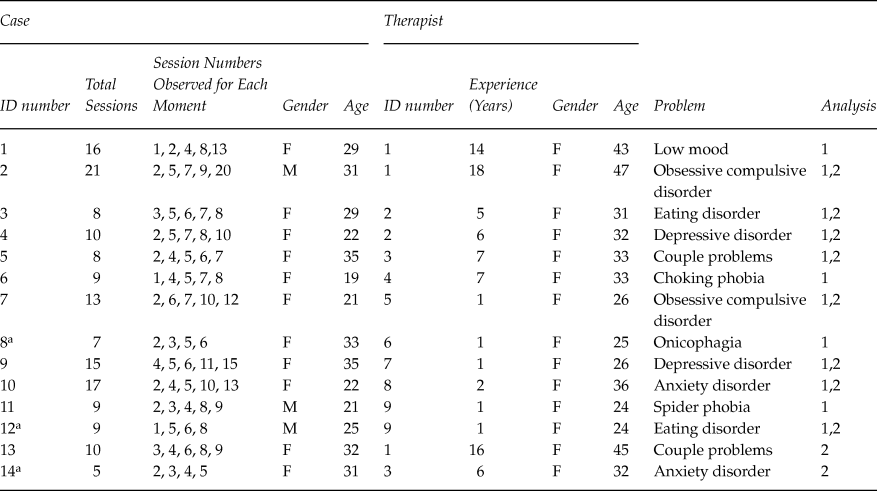
The first part of the study compared the rules emitted by expert and inexpert therapists, by analyzing 58 recordings of clinical sessions from 12 different cases of 9 cognitive behavioral therapists. All interventions were individual, involved adults and lasted approximately one hour. Sessions were held on a variable schedule depending on the client’s availability to attend therapy. In all cases, the clients were discharged once the treatment objectives were reached, in other words, it was obtained the desired clinical change.
The second part of the study compared the rules emitted by therapists whose treatment included fewer sessions with those whose treatment was longer term. In this part, we analyzed 48 sessions from 10 clinical cases.
Table 1 shows the characteristics of the therapists, clients and recordings for the two parts of the study. All sessions were held at the Therapeutic Institute of Madrid, where the participating therapists were employed.
Characteristics of the Recordings Analyzed

Notes: F = Female, M = Male.
a The session corresponding to the final moment of treatment (T III) could not be recorded or analyzed.
Variables and Instruments
Variables. It was considered the variable related to the type of rule and two independent variables: 1) therapist experience; and 2) length of treatment.
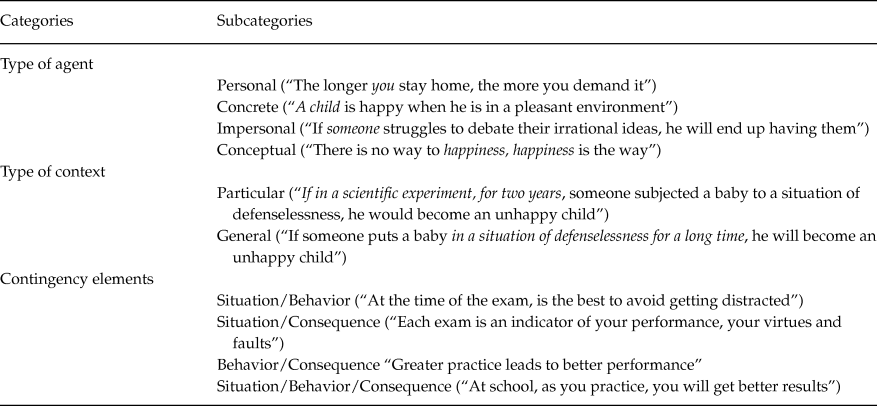
Type of rule. Rules emitted by the therapist were categorized according to the SISC-RULES-T which consider type of agent (personal, concrete, impersonal and conceptual), context (particular and general), and the explicit elements of contingency (situation, behavior and consequence).
Therapist experience. Therapist experience was classified in one of two categories: Expert or inexperienced therapists. To establish this parameter, we applied two criteria to identify “experts”: (a) Years of clinical practice (over five); and, (b) the frequency of cases treated during this period (mean of 5 cases per week). These criteria were based on past studies that identified significant differences in therapists with more than five years of experience (see Froján-Parga, Ruiz-Sancho, et al., Reference Froján Parga, Pardo Cebrián, Vargas de la Cruz and Linares Carmona2011).
Length of treatment. Length of the treatment was classified in terms of the number of sessions. Two cases were identified for each type of psychological problem according to two criteria: (a) Each dealt with a similar problem (i.e., depression) so that they would have the same objectives and involve similar techniques; and, (b) that the number of sessions varied. The cutoff to classify was different in each case. For example, one case of obsessive-compulsive disorder required 13 sessions, while another case of obsessive-compulsive disorder required 21. The first was classified as a treatment with fewer sessions, the second as having a larger number of sessions. For another type of disorders, however, the cutoff was different. In some cases (Case 3, 5 and 14 according to Table 1), the expert therapist had a smaller number of sessions.
Instruments. Recordings were made with closed-circuit of video cameras. SISC-RULES-T and Observer XT 7.0 software were then used to codify the therapists’ rules. The existing categories, such as tracking, pliance and augmenting (see Hayes, Zettle, & Rosenfarb, Reference Hayes, Zettle, Rosenfarb and Hayes1989; Törneke, et al., Reference Törneke, Luciano and Valdivia2008), or command and tact (Skinner, 1957/1981) were disregarded, given that they are based on a functional, non-morphological categorization in which classifying phenomena into categories presupposes identifying the part that controls the behavior: For example, whether control is exercised through mediation by others, by the form of the action performed, or by the transformed stimulus functions. SISC-RULES-T, meanwhile, specifies the following categories: (a) Type of agent, which refers to the subject(s) who perform the behavior indicated in the rule; and (b) type of context, which refers to the environment in which the behavior is performed. Table 2 shows the SISC-RULES-T´s categories.
Rule Categories and Examples under the SISC-RULES-T System

Note: Rule categories are defined by a type of agent, a type of context (except when it is a conceptual, where the context is not relevant) and the explicitness of one, two or three contingency elements. The part that indicates the element in question is highlighted in italics.
As Table 2 shows, the agent is coded as “personal” when the contingency agent is the client; “concrete” when the agent is a specific individual or collective; and “impersonal” when the agent is imprecise (in previous studies this category has been labeled “indefinite”, but we prefer “impersonal” to avoid confusions, since “indefinite” seems to suggest that the rules have not been classified). Finally, we use the category “conceptual” when the agent is an abstract entity. With respect to environment, when the action took place in an imprecise setting, we categorized the rule as “general context”. When it occurred in a determined environment, but without reference to a specific situation, we labeled the context “particular”.
This system includes categories related to the contingency elements specified in a rule: namely, “situation” (sit), “behavior” (bh), and “consequence” (csq). For example, in the rule, “If I reproach my boyfriend every time he calls me, he will eventually stop calling me”, the agent is “the person who reproaches”, and the context is general: “Every occasion on which the boyfriend calls”. The contingency elements would be: “The boyfriend’s call” as the situation (sit); “reproach” as the client’s behavior (bh); and “will stop calling me”, as the consequence (csq). The coding system details particular criteria and examples to deal with verbalizations in which an element was not explicitly stated. However, the general approach in this kind of verbalizations was to consider the context in which the verbalization was made. In this sense, even if the rule was not complete, the missing element could be understood by taking the context into account.
SPSS 20.0 software was used for statistical analyses.
Process
The study was approved by the Research Ethics Committee of the Autonomous University of Madrid. Written informed consent was obtained from the therapists and clients before recording began.
The first step in the selection process consisted in identifying the functional analysis session, which occurred between the second and the sixth session according to each case. The principal objective of this session is to explain the genesis of the problem, its maintenance and the intervention program. Sessions prior to the functional analysis session were classified as “evaluation” sessions. Subsequent sessions were classified as “treatment” sessions and divided into three equal parts or moments: First (TI), intermediate (TII) and final (TIII). One session of each moment was selected at random for analysis: evaluation, functional analysis, TI, TII and TIII.
The next step was to identify the rules emitted by the therapist and codify them following SISC-RULES-T. Periodic analyses of observer reliability were performed by calculating the degree of intra- and inter-observer agreement after each evaluator had reviewed the sessions independently. The percentage of agreement, Cohen kappa index, and the percentage of theoretical accuracy of the observers associated with each Cohen kappa index (Bakeman, Quera, McArthur, & Robinson, Reference Bakeman, Quera, McArthur and Robinson1997) were calculated. In cases where a session was codified twice by the same observer, the observations were separated by an interval of 10 days. Calculations of reliability were performed in 26 sessions (13 each for intra-observer and inter-observer agreement). For the same observer, the percentage of agreement ranged from 78 to 92%; while for different observers, it ranged from 63% to 90%. The kappa coefficients ranged from .90 to .68 for the same observer and from 0.84 to 0.60 for different observers. The degree of agreement indicated by the kappa coefficients ranged from "good" to "excellent" according to the criteria of Bakeman (Reference Bakeman, Reis and Judd2000). All analyses were statistically significant at the 0.01 level, which justifies rejecting the hypothesis that the agreements observed were due to chance. The associated accuracy percentages ranged from 77% to 96% and were therefore “adequate” by the criteria of Bakeman et al. (Reference Bakeman, Quera, McArthur and Robinson1997).
The first analysis in each case compared the type of rule given and the elements of contingency in the sessions of expert and inexperienced therapists at a specific moment of therapy. Briefly, it was the sessions of the therapists which was compared. The first, second, third, fourth and fifth comparisons were made between the rules emitted by the expert and the inexperienced therapists at evaluation, functional analysis, TI, TII and TIII, respectively. The sixth comparison was made between the rules emitted by the expert and the inexperienced therapists at all the moments of therapy. Each comparison took into account the type of rule given and the contingency elements of expert and inexperienced therapists. The sample in each group of comparison was n = 12 (6 experts and 6 inexperienced therapists). These comparisons were made using the Mann-Whitney U test. This non-parametric test was used because of the small sample size of the groups and because some variables (particular and concrete rules) did not satisfy normality assumptions according to the Kolmogorov-Smirnov test.
The second analysis followed the same procedure as the first, but the factors compared were the type of rules given and contingency elements of the therapists whose cases had more sessions versus therapists whose cases had fewer sessions. The sample in each group of comparison was n = 10 (5 therapists whose cases had fewer sessions and 5 therapists whose cases had more sessions). These comparisons were made using the non-parametric Mann-Whitney U test, again because of the small sample size of the groups and because some variables (particular and concrete rules) did not satisfy normality assumptions according to the Kolmogorov-Smirnov test.
Results
Results related to Therapist Experience
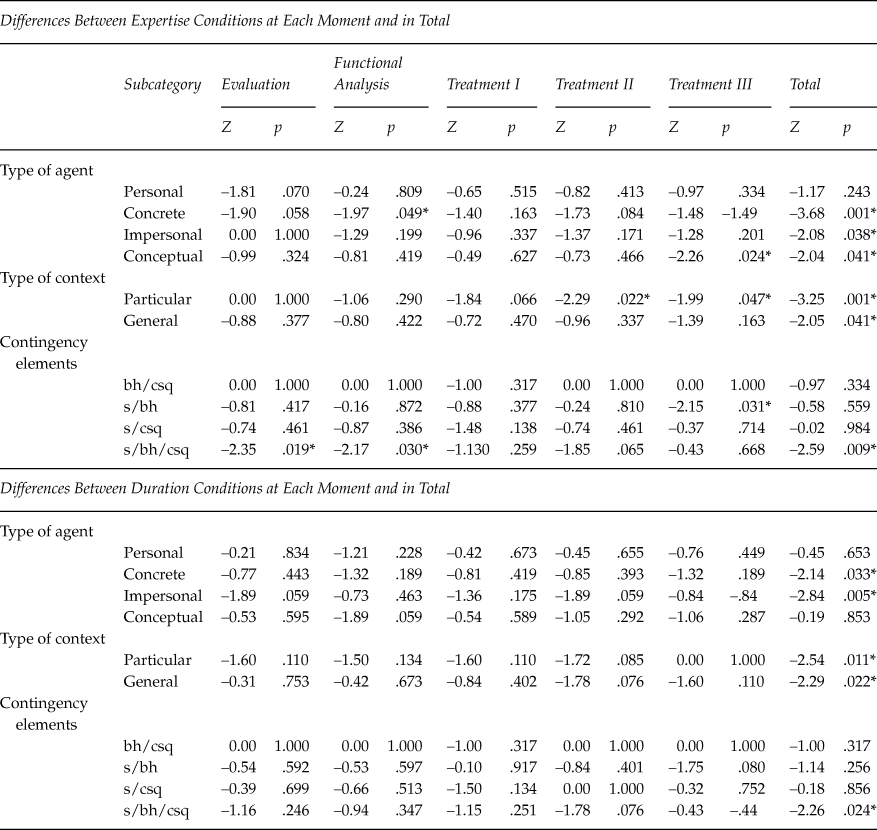
The upper panel of Table 3 shows the statistically significant difference between the rules emitted by expert versus inexperienced therapists in each moment of the therapy. The last column on the right shows the total number of rules emitted throughout treatment. There was no correction for familywise error in the analysis related to therapist experience or length of treatment. We focused in pointing out the modest differences between the rules emitted by different therapists, differences that would not be seen if such correction were made. We recognize, however, that this is an important limitation of the study.
Statistical Results for between-subjects Effects at Each Moment of Therapy

Notes: s = situation, bh = behavior, csq = consequence.
* statistically significant p < .05.
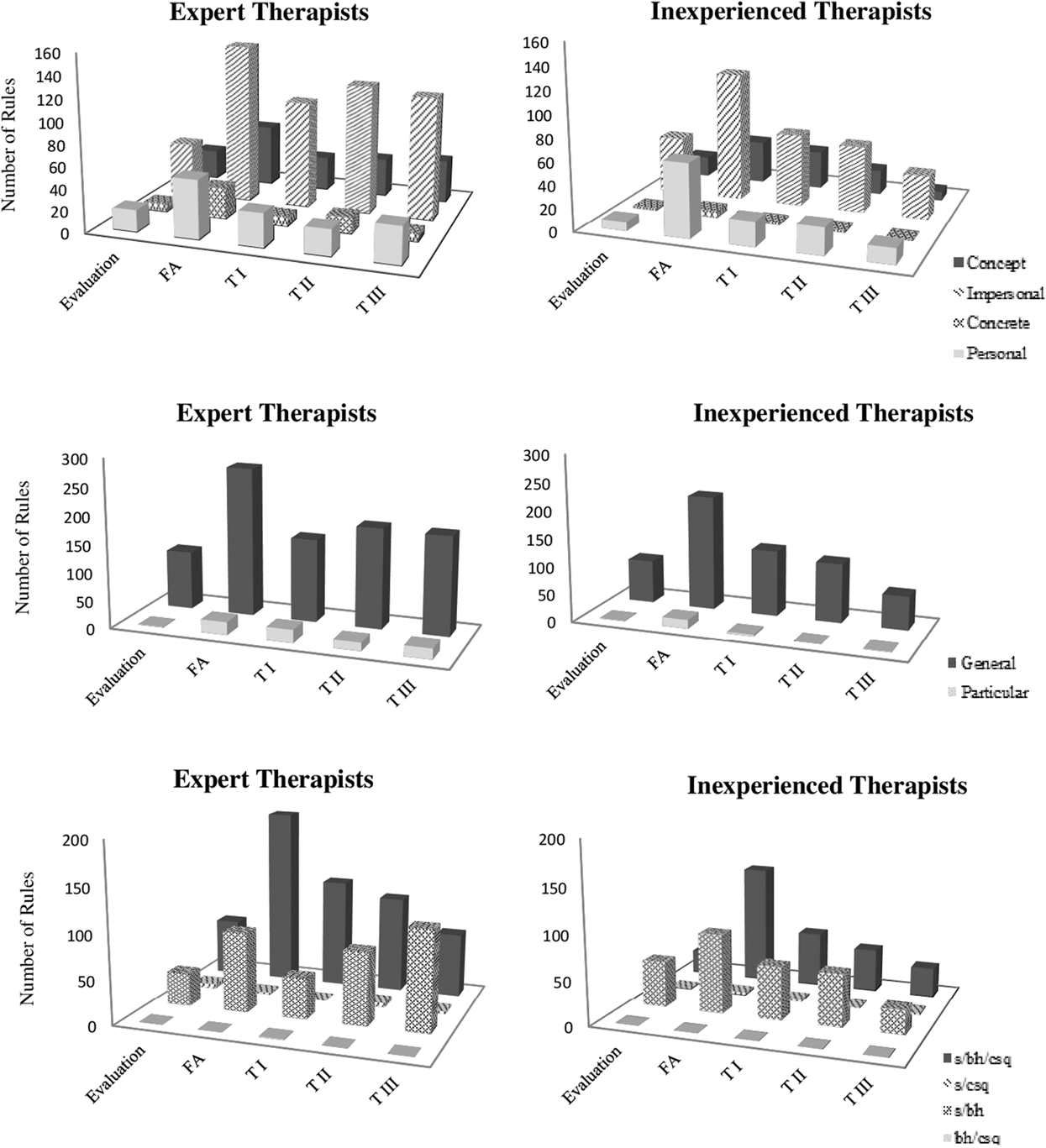
Figure 1 shows the frequency of rules in graph form: The upper panel shows the rules according to type of agent; the middle panel those that represent the type of context; and the lower panel those that refer to contingency elements. The three graphs on the right show the rules emitted by the expert therapists, while the three on the left show those of the inexperienced ones. The x-axes of the graphs represent the moments of therapy and the y-axes, the number of rules emitted.
Frequency of Rules Emitted by Expert Therapists and Inexperienced Therapists.
FA = Functional Analysis; TI = Treatment 1; TII = Treatment 2; TIII = Treatment 3.

Comparison of all the rules emitted by expert and inexperienced therapists, regardless of the specific moment of therapy, showed the following (see also upper panel of Figure 1): Concrete (Z = –3,68, p = .001), impersonal (Z = –2,08, p = .038) and conceptual rules (Z = –2.04, p = .041) were statistically significant greater among the expert therapists. Also, as seen in the middle panel of Figure 1, general (Z = –2.05, p = .041) and particular rules (Z = –3.25, p = .001) were significantly greater among the expert therapists.
As seen in the upper panel of Figure 1, comparison of the rules emitted by the expert and inexperienced therapists at each moment of therapy shows a statistically significantly greater number of concrete rules in the functional analysis (Z = –1.97, p = .049) and conceptual rules in TIII moment (Z = –2.26, p = .024) emitted by the expert therapists (shown in the hatched and darker bars of the upper graphs). The middle panel of Figure 1 shows a significantly greater number of particular rules in TII (Z = –2.29, p = .022) and TIII (Z = –1.99, p = .047) emitted by the expert therapists (see the lighter bars of the middle graphs).
With respect to the contingency elements, as seen in the lower panel of Figure 1, there was a statistically significant greater number of rules emitted by the expert therapist that made explicit the three elements, Z = –2.59, p = .009, (see the darker bars of the lower graphs). In the comparison of each moment of therapy, expert therapists also had a statistically significant greater number of rules specifying the three contingency elements during evaluation (Z = –2.35, p = .019) and functional analysis (Z = –2.17, p = .030), as well as more rules specifying the situation and behavior during TIII (Z = –2.15, p = .031) than their less experienced counterparts (see the darker and hatched bars of the lower graphs).
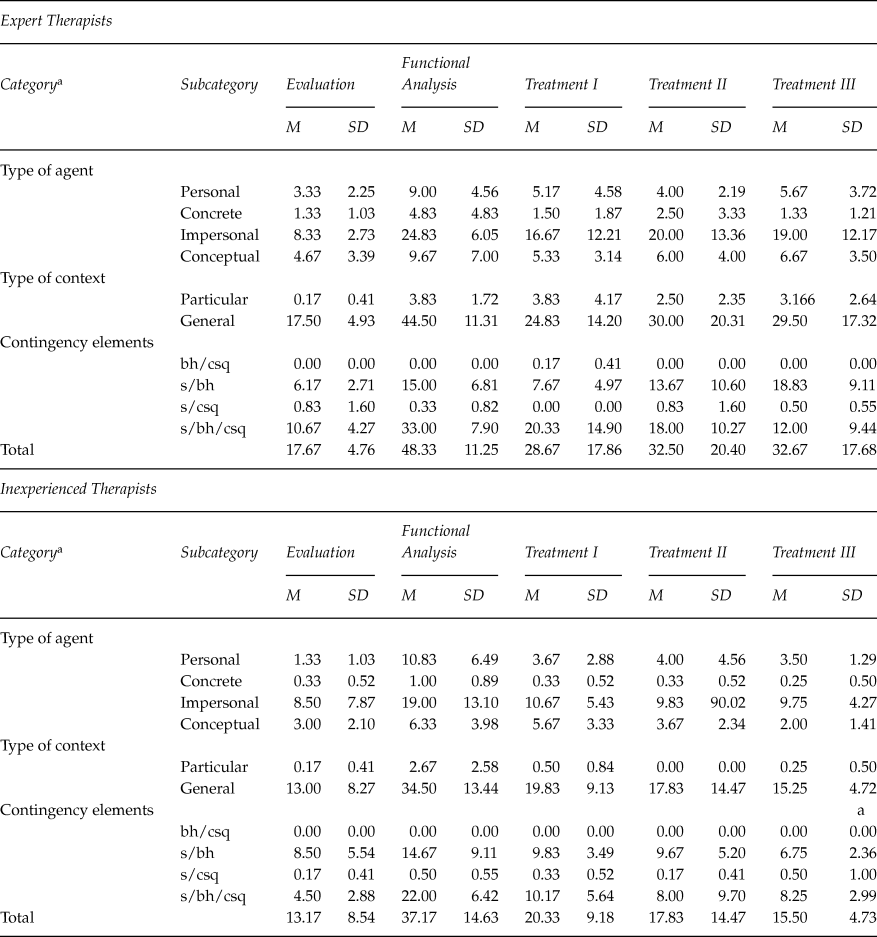
Table 4 shows the mean and standard deviation of the number of rules in each moment of therapy.
Descriptive Statistics of Categories corresponding to the Rules Emitted by Expert and Inexperienced Therapists at Different Moments of Therapy

Notes: s = situation; bh = behavior; csq = consequence.
a Variable measured in frequency.
The upper panel shows the data for the rules emitted by the expert therapists and the lower one, that of the inexperienced therapists. The lower row of each section shows the total number of rules emitted at each moment of therapy.
Results related to Length of Treatment
The lower panel of Table 4 shows the statistically significant differences between rules emitted by the therapists whose cases were less extensive and those whose cases were more extensive at different moments of therapy. The last column shows the total number of rules emitted throughout treatment.
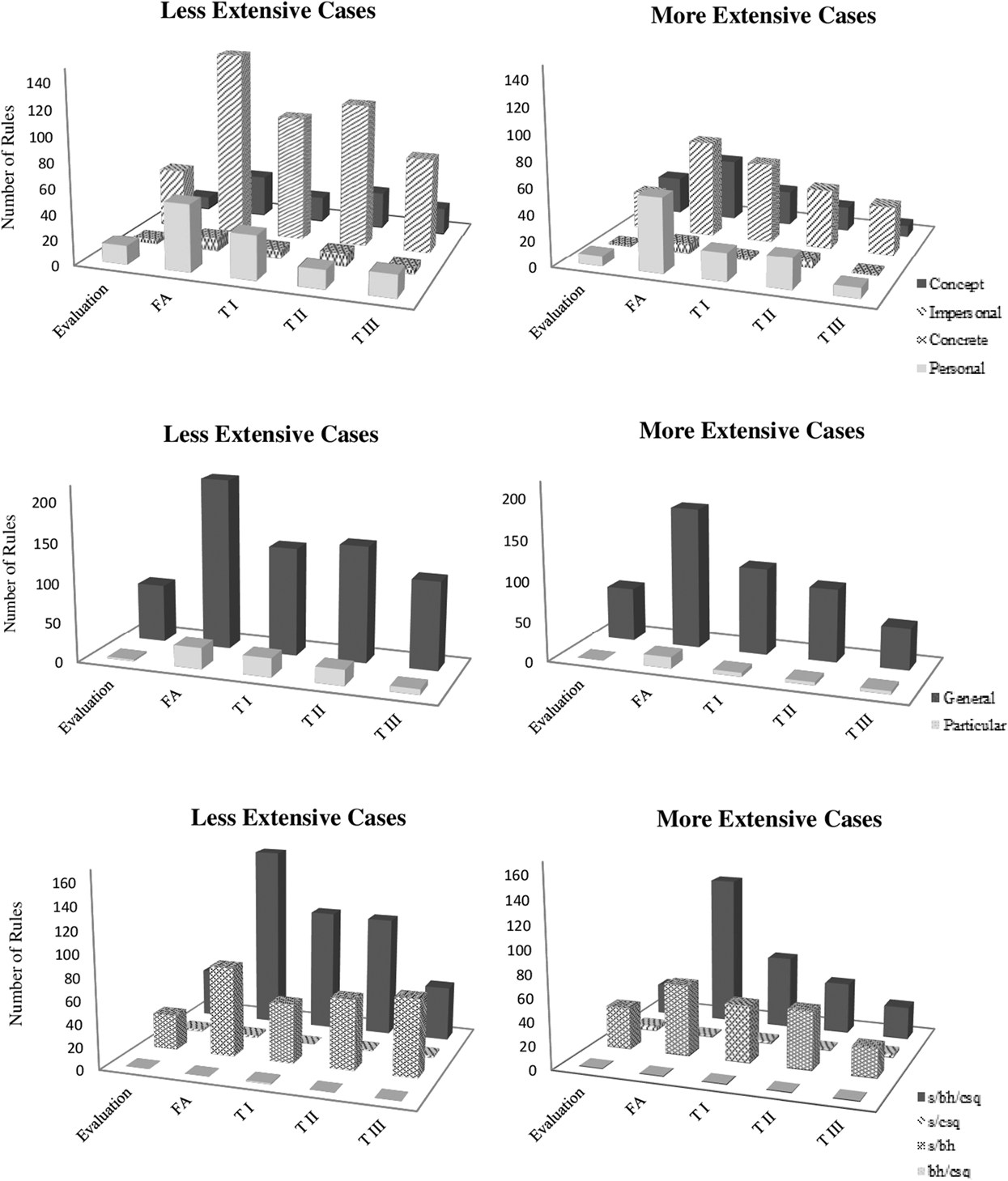
The upper panel of Figure 2 shows rules according to type of agent, the middle part rules according to type of context, and the lower part rules according to explicit contingency elements. The three graphs on the left show the rules of therapists with fewer sessions and those on the right show the rules of the therapists with more extensive cases. The x-axes of the graphs represent the moment of the therapy and the y-axes, the number of rules emitted.
Frequency of Rules Emitted by the Therapists with Less Extensive Cases and More Extensive Cases.
FA = Functional Analysis; TI = Treatment 1; TII = Treatment 2; TIII = Treatment 3.

In the general comparison, as the upper panel of Figure 2 reveals, we found a statistically significant greater number of concrete (Z = –2.14, p = .033) and impersonal (Z = –2.84, p = .005) rules in therapists whose cases had fewer sessions than in those with more sessions (see the hatched and striped bars of the upper graphs). The middle panel shows a statistically significant greater emission of particular (Z = –2.54, p = .011) and general (Z = –2.29, p = .022) rules among therapists with fewer sessions. The lower panel shows that therapists with fewer sessions emitted a significantly greater number of rules with the three contingency elements (Z = –2.26, p = .024) (see the darker bars of the lower graphs). The comparisons of each moment of therapy showed no significant differences.
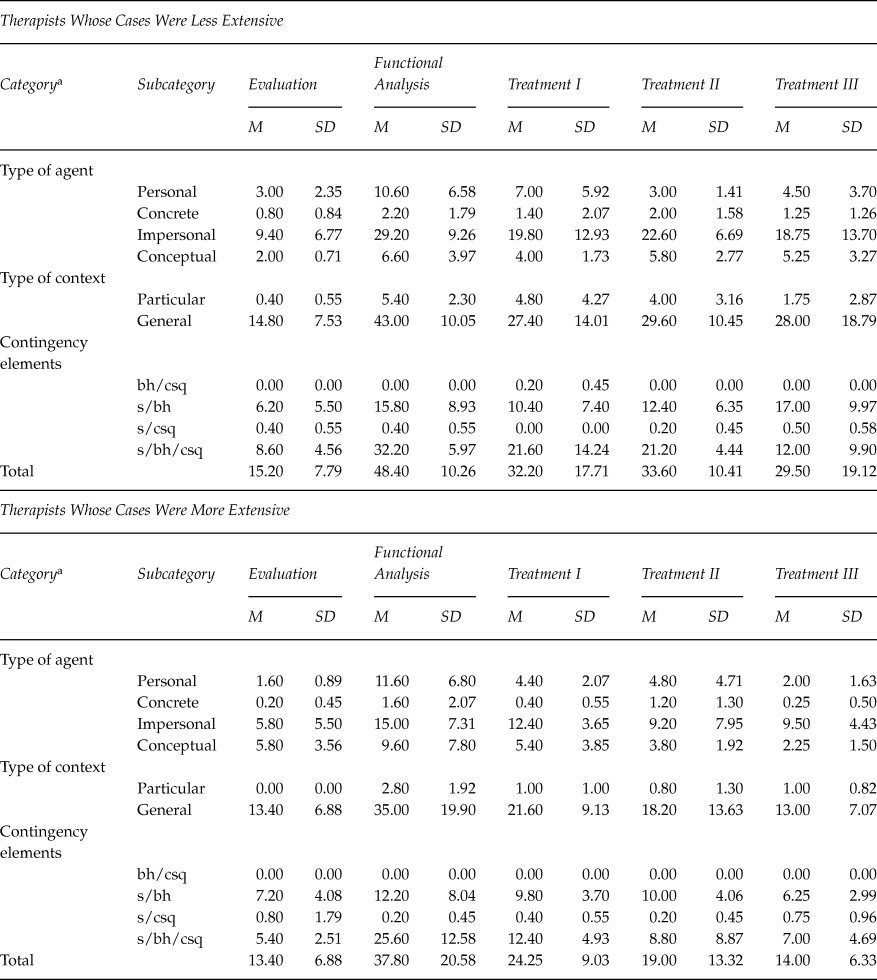
Table 5 presents the means and standard deviations of the emissions according to the type of rule and moment of the therapy.
Descriptive Statistics of the Categories corresponding to the Rules Emitted by the Therapists whose Cases Were Less Extensive and those whose Cases Were More Extensive at Different Moments of Therapy

Notes: s = situation; bh = behavior; csq = consequence.
a Variable measured in frequency.
The upper section shows the data for the emissions of the therapists whose cases were less extensive, whereas the lower one presents those of the therapists whose cases continued for longer times. The lower row of each section shows the total number of rules emitted in each moment of therapy.
Discussion
The objective of this study was to identify a pattern in the rules emitted by therapists related to treatments associated with better clinical practice. The characteristics analyzed were: (a) More therapist experience (measured in years of therapy and number of cases); and, (b) shorter case extension (measured by number of sessions). These two parameters were chosen for their association with better therapeutic work. The pattern was sought in characteristics of expert therapists with those of therapists with shorter cases. To achieve this objective, we conducted two analyses: We first compared the rules of expert and inexperienced therapists. We then compared the rules of therapists whose cases were more extensive and whose cases were less extensive.
The comparison between the rules emitted by expert and inexpert therapists showed a pattern of rule related to the performance of those with greater experience. Although the differences in rules were unobtrusive, they had clear clinical significance.
The most notable difference was the greater number of rules emitted by the expert therapists, in comparison to their inexperienced colleagues. These included a greater emission of concrete and particular rules compared to the almost null emission of these types of rules given by their less experienced counterparts. Specifically, the emission of concrete rules stood out in the explanation of the functional analysis. Session, whose purpose is to explain the genesis and maintenance of the problem and propose a program of intervention, and includes greater verbal intervention on the part of the therapist than other sessions. The expert therapists’ use of these rules may be related to the introduction of examples, since these cases seem to require descriptions in which the agents of action are people or well-defined collectives. This introduction of examples is especially important in the explanation of the functional analysis. In light of this greater inclusion of types of rules, the expert therapists appeared to show greater variation in the types of rules they emit. This variation may have enabled therapists to help clients better understand the contingency relationship associated with their problems, which was what the therapist wished to transmit. It might be easier for the client to identify a contingency relationship if it is tested with different expressions, specified, and exemplified in various ways.
In addition to constituting a way of adapting discourse so that the client finds it more comprehensible, the use of examples allows her/him to discriminate a relationship in specific situations. This would form a base from which the clients could later elaborate their own rules and apply the relationship they learned to other situations. The lesser variation in the rules emitted by inexperienced therapists could be explained by a less developed capacity for expressiveness and exposure capacity due to their limited experience.
The fact that the expert therapists began by explicitly stating the three contingency elements, but then ceased to do so and in the final moment of therapy specified only the situation and behavior, may mean that highlighting the consequences allows the contingency to be identified more accurately. However, as treatment progresses, it becomes less necessary to present the consequences explicitly, suggesting that perhaps the contingency relationship has been established. The use of concrete rules and specification of the three contingency elements at the beginning of treatment onset may facilitate the client’s contact with direct contingencies, which provides the basis for learning new behavioral repertoires. The inexperienced therapists may emit fewer rules specifying the three contingency elements because they assume that the client understands the message they seek to transmit, even though it is not expressed in the most complete and therefore clearest way possible.
The statistically significant higher number of conceptual rules given by the expert therapists in the final moment of the therapy may reflect that by explaining the contingencies related to the clients’ problem in an increasingly general or abstract way, the therapist allows the clients to generalize what was learned in different situations, including some not necessarily addressed during treatment. Less experienced therapists may have given fewer rules of this kind at the end of therapy because they focused on changing the problematic behavior and not on generalizing the acquired knowledge.
Clinically-significant differences were found in the comparison of rules emitted by therapists with more extensive cases and whose cases were less extensive, although our findings must be taken with caution. The most salient difference was the greater number of rules emitted by the therapists with less extensive cases. This difference could be due to the continuous emphasis they placed on the contingencies directed to the therapeutic change that accompanies the prescription of the tasks to be performed. This emphasis could lead to an appropriate identification of the function of these tasks, and therefore to greater adherence by clients and the more rapid achievement of positive results. Greater explicitness of the three contingency elements would also contribute to achieving the same objective.
The greater number of concrete and particular rules given by therapists with less extensive cases might suggest greater variation in the types of rules. This variation can produce better contact with the contingency, since the same relation of contingencies is explained in different ways through different contexts and agents. This facilitates the discrimination and abstraction of the contingency relationship that the therapist wishes to show the client.
Since the pattern of rules used by expert therapists and by therapists with less extensive cases shared important similarities, we can describe a pattern in the use of rules that embraces these similarities, taking into account only the statistically significant differences. First, the pattern is characterized by a larger number of rules, which suggests that to achieve better clinical results, a large number of rules are utterly necessary. Continuous emphasis on the contingencies that favor achieving therapeutic change could allow the client to better identify the function of the tasks to be performed, lead to better adherence during follow-up on the tasks and thus to a treatment that is not extended unnecessarily.
Second, this pattern features greater variation in the types of rules used. Both the expert therapists and those whose cases had fewer sessions emitted more concrete and particular rules. This variation could be related to their efforts to facilitate the discrimination and abstraction of the contingency relationship through the use of examples or analogies, and the inclusion of different agents in distinct contexts.
Besides these characteristics, there are some tendencies in the pattern that could be extracted taking into account the non-significant differences in each comparison (expert versus inexperienced therapists/ therapists with shorter cases versus longer cases). In this sense, the inexpert therapists and those with longer cases tended to gradually reduce the number of almost all kinds of rules after the functional analysis session (see the upper and middle graphs of Figures 1 and 2). On the contrary, their expert counterparts and those with shorter cases tended to use rules throughout the therapeutic process and even increased their use in certain moments of therapy (see the upper and middle graphs of Figures 1 and 2). This trend could mean that to achieve better results in therapy, it is necessary not only to use a large number of rules, but to use them throughout the therapeutic process.
Another trend was related to the elements of the contingency. As mentioned above, expert therapists showed a greater statistically significant emission of the three contingency elements at the onset of treatment and specified only situation and behavior in the final moment of therapy. Although the therapists with shorter cases did not show these statistically significant differences, they did show a tendency to explicit the three contingency elements at treatment onset and gradually decreased as treatment progressed (see the lower graphs of Figure 2). In this regard, the expert therapists and those with shorter cases could focus on facilitating the discrimination of the contingency relationship to be taught. However, as treatment progresses, perhaps once the client has learned to discriminate and apply the contingency relationship, most rules can be emitted without any need to mention the three contingency elements.
It was also observed that expert therapists and those with shorter cases tended to decrease the use of concrete and particular rules and increase the use of general and conceptual rules towards the end of treatment (see upper and middle graphs of Figure 1 and 2). The use of concrete and particular rules could be of fundamental importance at treatment onset to facilitate the discrimination of the contingency relationship that the therapist wishes to teach by applying them in different well-delimited situations. On the other hand, as Hayes, Blackedge, and Barnes-Holmes (Reference Hayes, Blackledge, Barnes-Holmes, Hayes, Barnes-Holmes and Roche2001) have pointed out, it is more difficult to make contact with direct contingencies if the consequences described in a rule are abstract. Hence, beginning treatment with rules that are explicit and concrete seems to promote better contact with direct contingencies and improve discrimination of the contingency relationship. However, as treatment progresses, and once the client has been succeeded in discriminating the contingency relationship, the therapist can emphasize more general or abstract rules to “push” client to apply it to non-learned contexts and develop their own rules. The importance of rule extraction by the client to achieve generalization of change outside the therapeutic context has been well documented (Abreu, Costa Hüber, & Lucchese, 2012; Palmer, Reference Palmer2012). Ribes Iñesta (1990) similarly emphasized the importance of developing a high degree of abstraction to better cope with a health problem. These approaches provide logical support for the use of abstract rules at the end of therapy.
One variable that would be interesting to analyze is the extent to which the therapists’ use of rules occurs in the form of reflective listening (e.g., parroting back a rule provided by the client) versus being newly generated by the therapist. Perhaps clients who generate their own rules (and are therefore more likely to have rules reflected back to them by their therapists) are better at tracking the contingencies of their own behavior, and thus have shorter treatments. Perhaps expert therapists are more prone to reflective listening than less experienced therapists, and these reflections have a significant impact. Furthermore, it would be interesting to analyze whether it is possible to achieve equally effective results in fewer sessions by helping the client better understand the contingency relationship with a greater number of rules and more varied forms.
One important limitation in this study is the size and variability of the samples examined. Although this limitation means the results must be taken with caution, they do show a tendency in the pattern of rules used that may be related to shorter therapeutic practice performed by therapists with more experience. The differences identified herein could help identify a pattern of rules that may be more effective, though this affirmation requires additional empirical support and more cases to verify whether these tendencies persist in a larger, more varied sample. Future research in this direction should include an investigation of whether specific types of rules are related to the development of the client’s own rules and the generalization of change. Another important limitation of the study was the lack of a familywise error correction, which could change the significance level of the results obtained. As the main goal in the study was to deepen in the differences between the rules emitted by different therapists, we focused in pointing out small differences that would not be seen if such correction was used. However, we recognize that this is an important limitation of the study.
The study was also limited by being based on correlational data. In this respect, we can only highlight the finding that some rules may be related to improved clinical practice, but we cannot assume that any specific type of rule causes a difference in the effectiveness of treatment.
In summary, the present work contributes to clarifying the role of the linguistic variables related to improved therapeutic practice. Even for the therapists with extensive clinical experience, the use of rules in the application of treatment can make a significant difference in terms of producing change outside the therapeutic process. According to Hung (Reference Hung2006), therapeutic intervention consists not only in emitting verbalizations, but also, crucially, in how these are applied during treatment. The study of rules may contribute to discovering more effective ways of establishing repertoires of behavior that lead to therapeutic change. In this context, we assume that the rules given by the therapist are an important therapeutic tool for achieving such change.